

ISO 5630-1:1991
(Main)Paper and board — Accelerated ageing — Part 1: Dry heat treatment at 105 degrees C
General Information
- Abstract
Specifies a method by dry heat treatment at 105 °C. Is not applicable to certain high purity papers such as are used for insulation in electrical equipment for which ISO 5630-4 is more suitable. Does not give any preference for the test to be made. It is left to the parties concerned to determine which tests are appropriate for the type being evaluated.
- Status
- Published
- Publication Date
- 23-Jan-1991
- Technical Committee
- ISO/TC 6/SC 2 - Test methods and quality specifications for paper and board
- Current Stage
- 9093 - International Standard confirmed
- Start Date
- 29-Jun-2023
- Completion Date
- 29-Aug-2026
Buy Documents
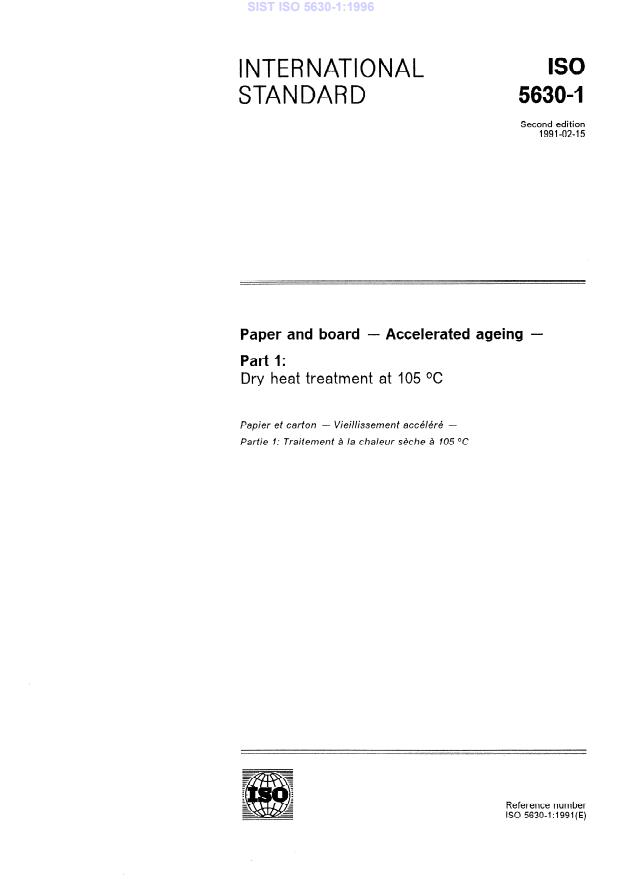

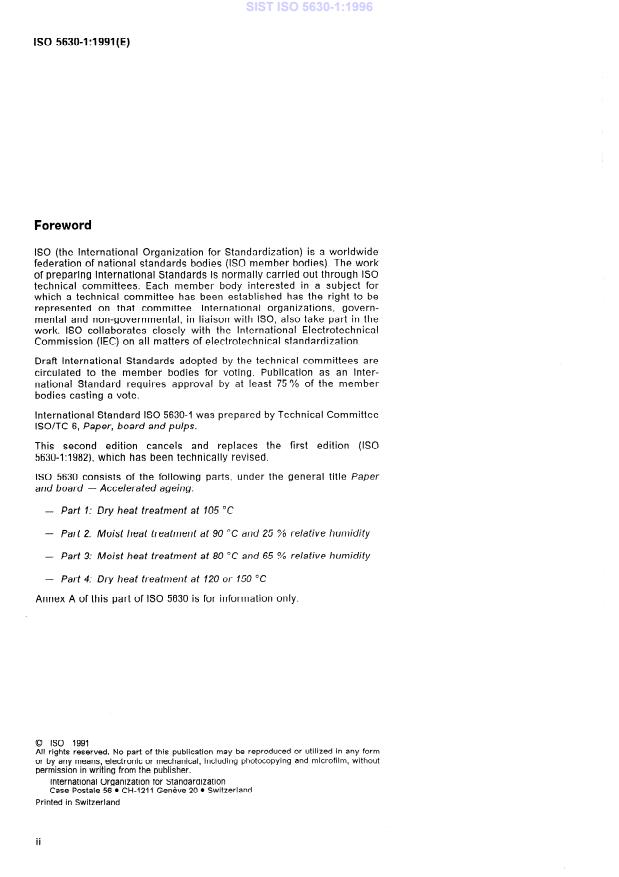

ISO 5630-1:1991 - Paper and board — Accelerated ageing — Part 1: Dry heat treatment at 105 degrees C Released:1/24/1991
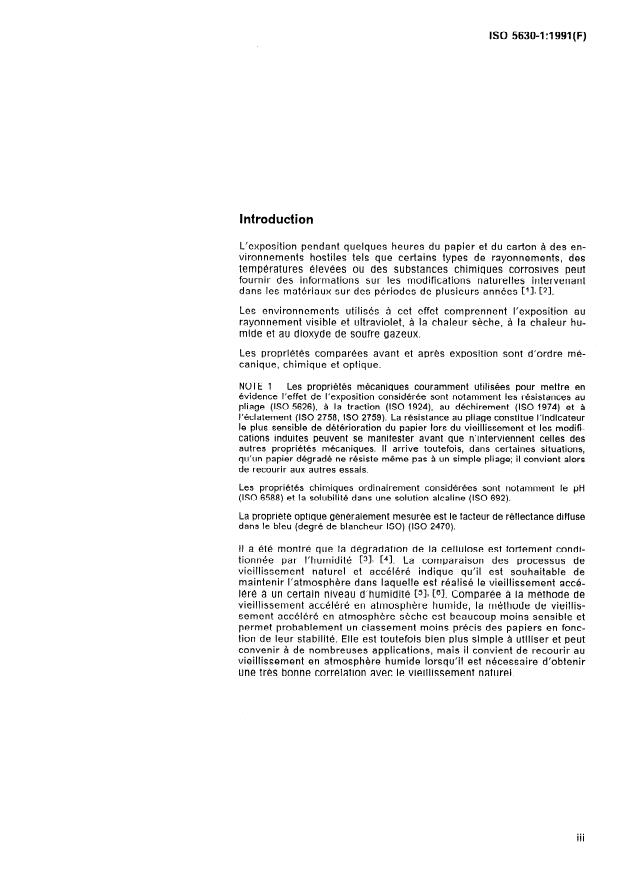
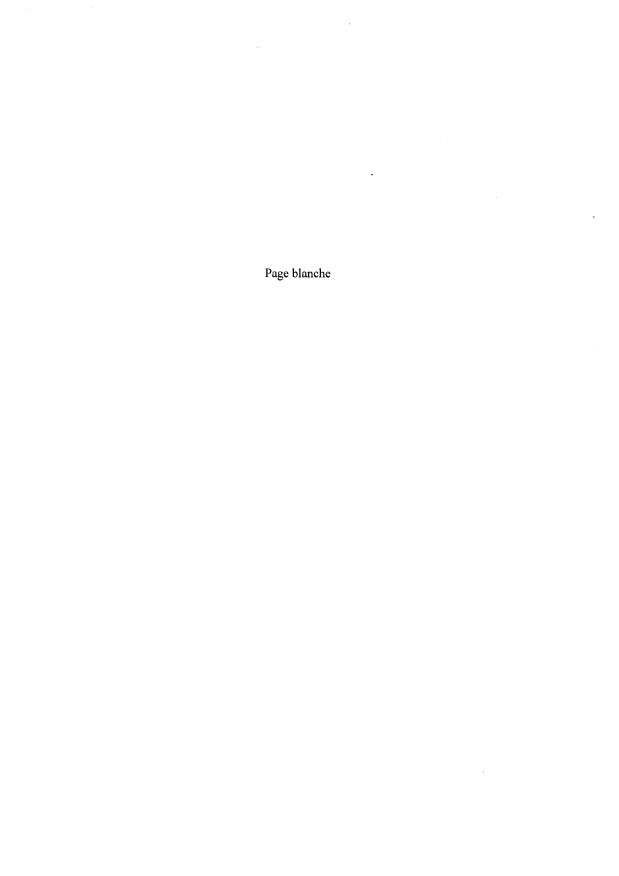
ISO 5630-1:1991 - Papier et carton — Vieillissement accéléré — Partie 1: Traitement a la chaleur seche a 105 degrés C Released:1/24/1991
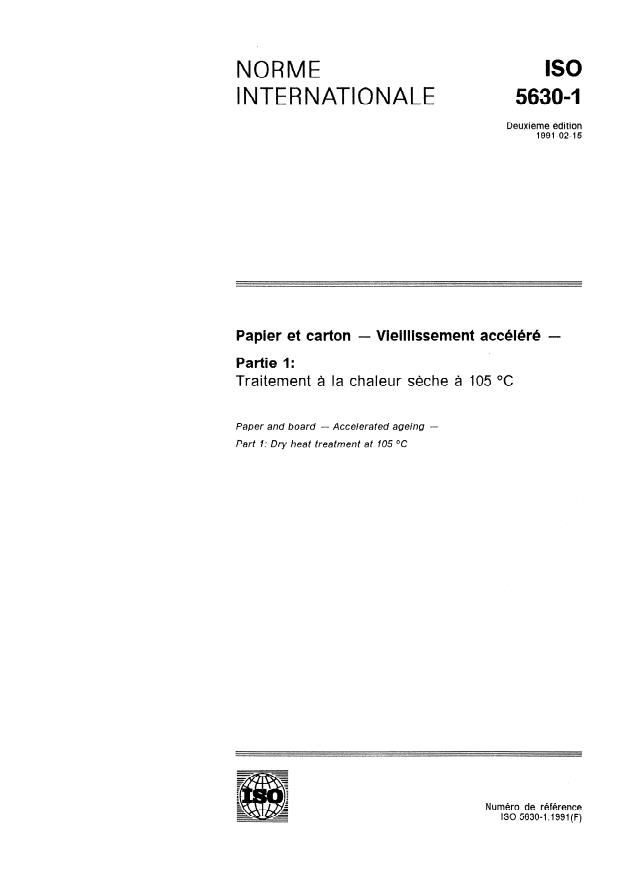
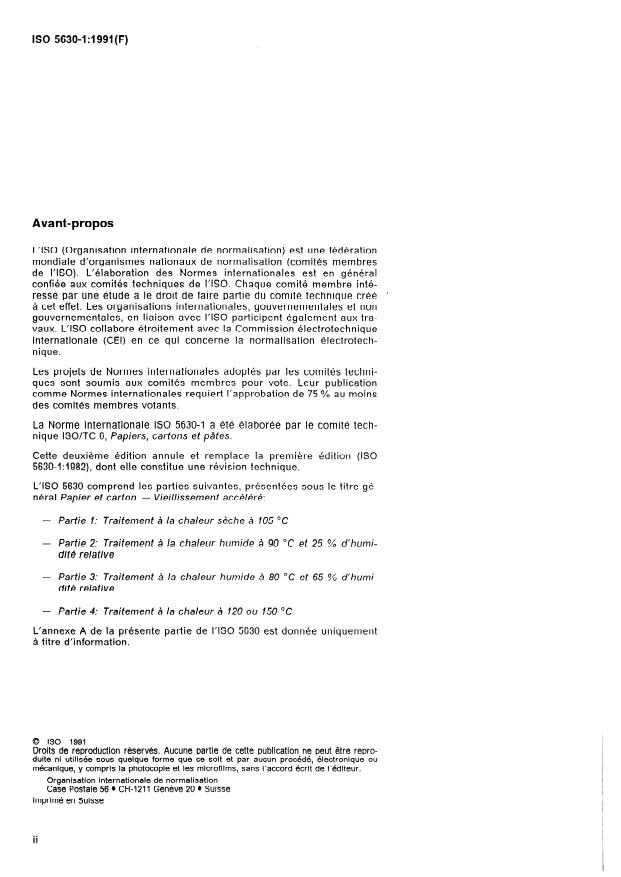
ISO 5630-1:1991 - Papier et carton — Vieillissement accéléré — Partie 1: Traitement a la chaleur seche a 105 degrés C Released:1/24/1991
Overview
ISO 5630-1:1991 - "Paper and board - Accelerated ageing - Part 1: Dry heat treatment at 105 °C" specifies a standardized method for accelerating the ageing of paper and board by dry heat treatment at 105 °C. The method is intended to provide comparative information on mechanical, chemical and optical property changes after exposure to elevated temperature in the dark. It is not applicable to certain high-purity papers (e.g., electrical insulation papers) for which ISO 5630-4 is more suitable. The standard does not mandate which end-point tests to run - that choice is left to the contracting parties.
Key topics and technical requirements
- Treatment conditions
- Dry heat in a ventilated oven at 105 °C ± 2 °C.
- Oven air renewal rate ≥ 10 air changes per hour to ensure uniform exposure.
- Samples suspended so they do not touch and are ≥ 100 mm from oven walls; avoid direct radiation from heating elements.
- Tests performed in the dark to eliminate light-induced changes.
- Recommended durations
- Preferred: 72 h ± 1 h. Alternatives (by agreement): 24 h, 48 h or 144 h ± 1 h.
- It is acceptable to run multiple durations (e.g., to plot properties vs. time) if sufficient sample sets are available.
- Conditioning
- At least 2 h before end of treatment, place untreated samples in a desiccator or preconditioning device at 10–35% RH.
- After treatment, transfer treated and untreated samples to the same conditioning atmosphere per ISO 187 before testing.
- Reporting requirements
- Include standard reference, sample identification, date/place, temperature and duration, atmosphere conditions (temperature/RH), number of tests, mean and standard deviation for treated and untreated results, and any deviations or influencing factors.
- Suggested property measurements
- Mechanical: folding endurance (ISO 5626), tensile (ISO 1924), tear (ISO 1974), burst (ISO 2758/2759).
- Chemical: pH (ISO 6588), alkali solubility (ISO 692).
- Optical: diffuse blue reflectance (ISO 2470).
Applications and users
ISO 5630-1 is used for:
- Quality control and R&D in paper and board manufacturing
- Comparative stability testing for packaging, printing papers, and book papers
- Conservation labs, archives and libraries assessing paper permanence (as a comparative, accelerated indicator)
- Suppliers and buyers establishing contractual test methods for material stability
Note: For close correlation with natural ageing, humid ageing methods (ISO 5630-2/3) may be preferred; for high-temperature insulation papers use ISO 5630-4.
Related standards
- ISO 5630 (series): Parts 2, 3 (humid heat methods) and 4 (high-temperature heat)
- ISO 187 (conditioning and testing atmosphere)
- ISO 186 (sampling)
- Referenced property test standards: ISO 5626, ISO 1924, ISO 1974, ISO 2758/2759, ISO 6588, ISO 692, ISO 2470
Keywords: ISO 5630-1, accelerated ageing, dry heat treatment, paper and board, 105°C, paper aging test, archival paper stability, quality control.
Relations
- Effective Date
- 06-Jun-2022
- Effective Date
- 15-Apr-2008
Buy Documents
ISO 5630-1:1991 - Paper and board — Accelerated ageing — Part 1: Dry heat treatment at 105 degrees C Released:1/24/1991
ISO 5630-1:1991 - Papier et carton — Vieillissement accéléré — Partie 1: Traitement a la chaleur seche a 105 degrés C Released:1/24/1991
ISO 5630-1:1991 - Papier et carton — Vieillissement accéléré — Partie 1: Traitement a la chaleur seche a 105 degrés C Released:1/24/1991
Get Certified
Connect with accredited certification bodies for this standard

Control Union Certifications
Global certification for agriculture and sustainability.

Gozdarski inštitut Slovenije
Slovenian Forestry Institute. Forest management certification support, timber testing.
Sponsored listings
Frequently Asked Questions
ISO 5630-1:1991 is a standard published by the International Organization for Standardization (ISO). Its full title is "Paper and board — Accelerated ageing — Part 1: Dry heat treatment at 105 degrees C". This standard covers: Specifies a method by dry heat treatment at 105 °C. Is not applicable to certain high purity papers such as are used for insulation in electrical equipment for which ISO 5630-4 is more suitable. Does not give any preference for the test to be made. It is left to the parties concerned to determine which tests are appropriate for the type being evaluated.
Specifies a method by dry heat treatment at 105 °C. Is not applicable to certain high purity papers such as are used for insulation in electrical equipment for which ISO 5630-4 is more suitable. Does not give any preference for the test to be made. It is left to the parties concerned to determine which tests are appropriate for the type being evaluated.
ISO 5630-1:1991 is classified under the following ICS (International Classification for Standards) categories: 85.060 - Paper and board. The ICS classification helps identify the subject area and facilitates finding related standards.
ISO 5630-1:1991 has the following relationships with other standards: It is inter standard links to ISO 11721-1:2001, ISO 5630-1:1982. Understanding these relationships helps ensure you are using the most current and applicable version of the standard.
ISO 5630-1:1991 is available in PDF format for immediate download after purchase. The document can be added to your cart and obtained through the secure checkout process. Digital delivery ensures instant access to the complete standard document.
Standards Content (Sample)
SLOVENSKI STANDARD
01-april-1996
Papir, karton in lepenka - Umetno staranje - 1. del: Suha toplotna obdelava pri 105
°C
Paper and board -- Accelerated ageing -- Part 1: Dry heat treatment at 105 degrees C
Papier et carton -- Vieillissement accéléré -- Partie 1: Traitement à la chaleur sèche à
105 degrés C
Ta slovenski standard je istoveten z: ISO 5630-1:1991
ICS:
85.060 Papir, karton in lepenka Paper and board
2003-01.Slovenski inštitut za standardizacijo. Razmnoževanje celote ali delov tega standarda ni dovoljeno.
Is0
INTERNATIONAL
STANDARD
Second edition
1991-02-15
Paper and board - Accelerated ageing -
Part 1:
Dry heat treatment at 105 OC
Papier et carton - Vieillissement accfY&6 -
Partie 1: Traitement 3 la chaleur s&he 3 105 OC
Reference number
IS0 5630-l : 1991 (E)
IS0 56304:1991(E)
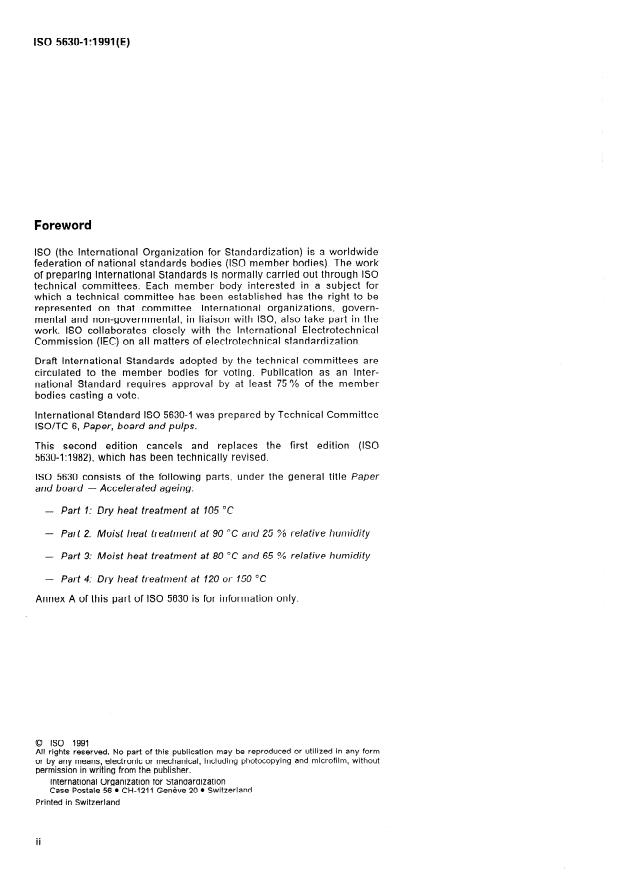
Foreword
IS0 (the International Organization for Standardization) is a worldwide
federation of national standards bodies (IS0 member bodies). The work
of preparing International Standards is normally carried out through IS0
technical committees. Each member body interested in a subject for
which a technical committee has been established has the right to be
International organizations, govern-
represented on that committee.
mental and non-governmental, in liaison with ISO, also take part in the
work. IS0 collaborates closely with the International Electrotechnical
Commission (IEC) on all matters of electrotechnical standardization.
Draft International Standards adopted by the technical committees are
circulated to the member bodies for voting. Publication as an lnter-
national Standard requires approval by at least 75 % of the member
bodies casting a vote.
International Standard IS0 5630-l was prepared by Technical Committee
ISO/TC 6, Paper, board and pulps.
This second edition cancels and replaces the first edition (IS0
5630-1:1982), which has been technically revised.
IS0 5630 consists of the following parts, under the general title Paper
and board - Accelerated ageing:
- Part 1: Dry heat treatment at 105 “C
- Part 2: Moist heat treatment at 90 “C and 25 % relative humidity
- Part 3: Moist heat treatment at 80 T and 65 % relative humidity
- Part 4: Dry heat treatment at 120 or 150 “C
Annex A of this part of IS0 5630 is for information only.
0 IS0 1991
All rights reserved. No part of this publication may be reproduced or utilized in any form
or by any means, electronic or mechanical, including photocopying and microfilm, without
permission in writing from the publisher.
International Organization for Standardization
Case Postale 56 * CH-1211 Geneve 20 l Switzerland
Printed in Switzerland
ii
IS0 5630=1:1991(E)
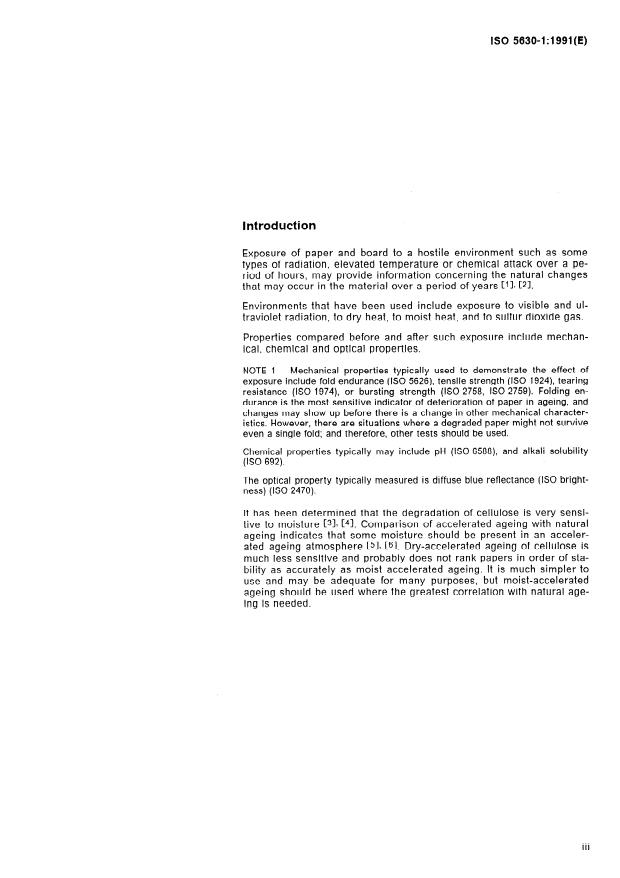
Introduction
Exposure of paper and board to a hostile environment such as some
types of radiation, elevated temperature or chemical attack over a pe-
riod of hours, may provide information concerning the natural changes
that may occur in the material over a period of years CQ PI.
Environments that have been
used include exposure to visible and ul-
traviolet radiation, to dry heat, to moist heat, and to sulfur dioxide gas.
Prope rties compared before and after such exposure include mechan-
ical, c hemi cal and optical propert ies.
NOTE 1 Mechanical properties typically used to demonstrate the effect of
exposure include fold endurance (IS0 5626), tensile strength (IS0 1924), tearing
resistance (IS0 1974), or bursting strength (IS0 2758, IS0 2759). Folding en-
durance is the most sensitive indicator of deterioration of paper in ageing, and
changes may show up before there is a change in other mechanical character-
istics. However, there are situations where a degraded paper might not survive
even a single fold; and therefore, other tests should be used.
Chemical properties typically may include pH (IS0 6588), and alkali solubility
(IS0 692).
The optical property typically measured is diffuse blue reflectance (IS0 bright-
ness) (IS0 2470).
It has been determined that the degradation of cellulose is very sensi-
tive to moisture PI9 PI. Comparison of accelerated ageing with natural
ageing indicates that some moisture should be present in an acceler-
ated ageing atmosphere LX IN. Dry-accelerated ageing of cellulose is
much less sensitive and probably does not rank papers in order of sta-
bility as accurately as moist accelerated ageing. It is much simpler to
use and may be adequate for many purposes, but moist-accelerated
ageing should be used where the greatest correlation with natural age-
ing is needed.
This page intentionally left blank
_---~~~
IS0 56304:1991(E)
INTERNATIONAL STANDARD
- Accelerated ageing -
Paper and board
Part 1:
Dry heat treatment at 105 *C
3 Principle
I scope
Samples of paper or board are heated in a venti-
This part of IS0 5630 specifies a method for accel-
lated oven for a specified time at 105 OC. Agreed
erating the ageing of paper and board by dry heat
properties of the sample are compared before and
treatment at 105 OC.
after this treatment.
This procedure is not applicable to certain high pu-
rity papers such as are used for insulation in elec-
4 Apparatus
trical equipment for which IS0 5630-4 is more
suitable.
4.1 Oven, ventilated, with a rate of air change of not
This part of IS0 5630 does not give any preference
less than IO per hour, capable of maintaining a
for the tests to be made on the paper or board. It is
temperature of 105 OC + 2 OC and so designed that
left to the parties concerned to determine which
during the test, test samples ar
...
Is0
INTERNATIONAL
STANDARD
Second edition
1991-02-15
Paper and board - Accelerated ageing -
Part 1:
Dry heat treatment at 105 OC
Papier et carton - Vieillissement accfY&6 -
Partie 1: Traitement 3 la chaleur s&he 3 105 OC
Reference number
IS0 5630-l : 1991 (E)
IS0 56304:1991(E)
Foreword
IS0 (the International Organization for Standardization) is a worldwide
federation of national standards bodies (IS0 member bodies). The work
of preparing International Standards is normally carried out through IS0
technical committees. Each member body interested in a subject for
which a technical committee has been established has the right to be
International organizations, govern-
represented on that committee.
mental and non-governmental, in liaison with ISO, also take part in the
work. IS0 collaborates closely with the International Electrotechnical
Commission (IEC) on all matters of electrotechnical standardization.
Draft International Standards adopted by the technical committees are
circulated to the member bodies for voting. Publication as an lnter-
national Standard requires approval by at least 75 % of the member
bodies casting a vote.
International Standard IS0 5630-l was prepared by Technical Committee
ISO/TC 6, Paper, board and pulps.
This second edition cancels and replaces the first edition (IS0
5630-1:1982), which has been technically revised.
IS0 5630 consists of the following parts, under the general title Paper
and board - Accelerated ageing:
- Part 1: Dry heat treatment at 105 “C
- Part 2: Moist heat treatment at 90 “C and 25 % relative humidity
- Part 3: Moist heat treatment at 80 T and 65 % relative humidity
- Part 4: Dry heat treatment at 120 or 150 “C
Annex A of this part of IS0 5630 is for information only.
0 IS0 1991
All rights reserved. No part of this publication may be reproduced or utilized in any form
or by any means, electronic or mechanical, including photocopying and microfilm, without
permission in writing from the publisher.
International Organization for Standardization
Case Postale 56 * CH-1211 Geneve 20 l Switzerland
Printed in Switzerland
ii
IS0 5630=1:1991(E)
Introduction
Exposure of paper and board to a hostile environment such as some
types of radiation, elevated temperature or chemical attack over a pe-
riod of hours, may provide information concerning the natural changes
that may occur in the material over a period of years CQ PI.
Environments that have been
used include exposure to visible and ul-
traviolet radiation, to dry heat, to moist heat, and to sulfur dioxide gas.
Prope rties compared before and after such exposure include mechan-
ical, c hemi cal and optical propert ies.
NOTE 1 Mechanical properties typically used to demonstrate the effect of
exposure include fold endurance (IS0 5626), tensile strength (IS0 1924), tearing
resistance (IS0 1974), or bursting strength (IS0 2758, IS0 2759). Folding en-
durance is the most sensitive indicator of deterioration of paper in ageing, and
changes may show up before there is a change in other mechanical character-
istics. However, there are situations where a degraded paper might not survive
even a single fold; and therefore, other tests should be used.
Chemical properties typically may include pH (IS0 6588), and alkali solubility
(IS0 692).
The optical property typically measured is diffuse blue reflectance (IS0 bright-
ness) (IS0 2470).
It has been determined that the degradation of cellulose is very sensi-
tive to moisture PI9 PI. Comparison of accelerated ageing with natural
ageing indicates that some moisture should be present in an acceler-
ated ageing atmosphere LX IN. Dry-accelerated ageing of cellulose is
much less sensitive and probably does not rank papers in order of sta-
bility as accurately as moist accelerated ageing. It is much simpler to
use and may be adequate for many purposes, but moist-accelerated
ageing should be used where the greatest correlation with natural age-
ing is needed.
This page intentionally left blank
_---~~~
IS0 56304:1991(E)
INTERNATIONAL STANDARD
- Accelerated ageing -
Paper and board
Part 1:
Dry heat treatment at 105 *C
3 Principle
I scope
Samples of paper or board are heated in a venti-
This part of IS0 5630 specifies a method for accel-
lated oven for a specified time at 105 OC. Agreed
erating the ageing of paper and board by dry heat
properties of the sample are compared before and
treatment at 105 OC.
after this treatment.
This procedure is not applicable to certain high pu-
rity papers such as are used for insulation in elec-
4 Apparatus
trical equipment for which IS0 5630-4 is more
suitable.
4.1 Oven, ventilated, with a rate of air change of not
This part of IS0 5630 does not give any preference
less than IO per hour, capable of maintaining a
for the tests to be made on the paper or board. It is
temperature of 105 OC + 2 OC and so designed that
left to the parties concerned to determine which
during the test, test samples are not exposed to light
tests are appropriate for the type of paper or board
or to direct radiation from heating elements.
being evaluated.
The design should be such that the test samples are
uniformly exposed to the oven conditions. Not more
than 15 min should be required to bring the oven
back to working conditions after loading.
4.2 Test equipment, complying with the relevant
International Standard, if any, or with another ap-
2 Normative references
propriate standard method.
...
NORME
INTERNATIONALE
Deuxième édition
1991-02-15
Papier et carton - Vieillissement accéléré -
Partie 1:
Traitement à la chaleur sèche à 105 OC
Paper and board - Accelerated ageing -
Part 1: Dry heat treatment at 105 OC
Numéro de référence
ISO 56304:1991(F)
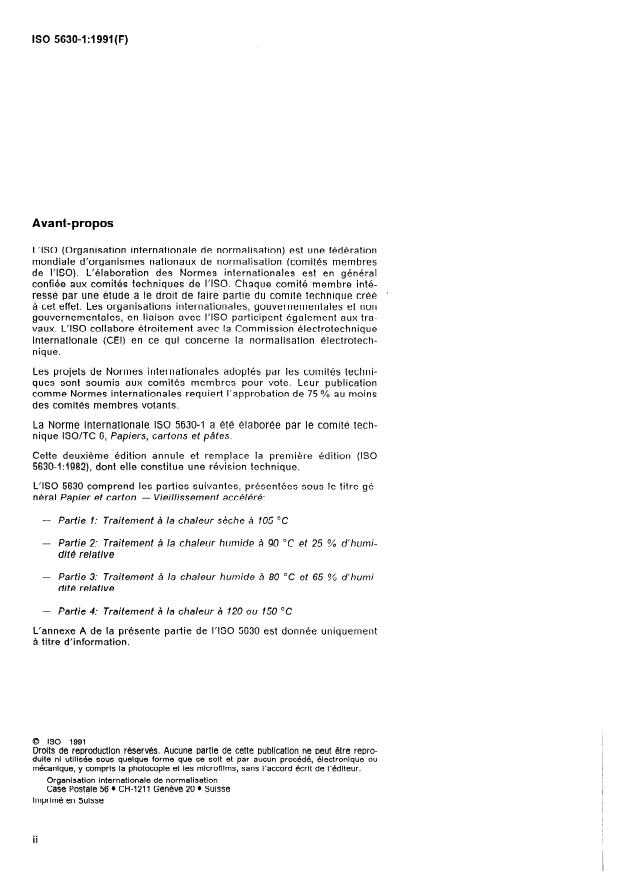
Avant-propos
L’ISO (Organisation internationale de normalisation) est une fédération
mondiale d’organismes nationaux de normalisation (comités membres
de I’ISO). L’élaboration des Normes internationales est en générai
confiée aux comités techniques de I’ISO. Chaque comité membre inté-
ressé par une étude a le droit de faire partie du comité technique créé l
à cet effet. Les organisations internationales, gouvernementales et non
gouvernementales, en liaison avec I’ISO participent également aux tra-
vaux. L’ISO collabore étroitement avec la Commission électrotechnique
internationale (CEI) en ce qui concerne la normalisation électrotech-
nique.
Les projets de Normes internationales adoptés par les comités techni-
ques sont soumis aux comités membres pour vote. Leur publication
comme Normes internationales requiert l’approbation de 75 % au moins
des comités membres votants.
La Norme internationale ISO 5630-l a été élaborée par le comité tech-
nique ISO/TC 6, Papiers, cartons et pâtes.
Cette deuxième édition annule et remplace la première édition (ISO
5630~1:1982), dont elle constitue une révision technique.
L’ISO 5630 comprend les parties suivantes, présentées sous le titre gé-
néral Papier et carton - Vieillissement accéléré:
- Partie 1: Traitement à la chaleur sèche à 105 “C
- Partie 2: Traitement à la chaleur humide à 90 “C et 25 % d’humi-
dité relative
- Partie 3: Traitement à la chaleur humide à 80 “C et 65 % d’humi-
dité relative
- Partie 4: Traitement à la chaleur à 120 ou 150 “C
L’annexe A de la présente partie de I’ISO 5630 est donnée uniquement
à titre d’information.
8 iso 1991
Droits de reproduction réservés. Aucune partie de cette publication ne peut être repro-
duite ni utilisée sous quelque forme que ce soit et par aucun procédé, électronique ou
mécanique, y compris la photocopie et les microfilms, sans l’accord écrit de l’éditeur.
Organisation internationale de normalisation
Case Postale 56 l CH-121 1 Genève 20 l Suisse
imprimé en Suisse
ii
ISO 56304:1991(F)
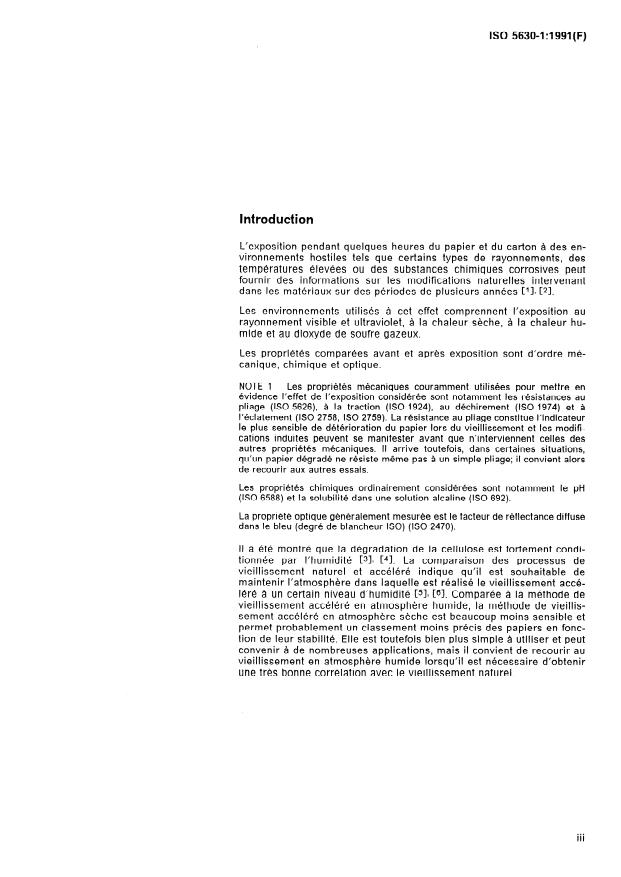
Introduction
L’exposition pendant quelques heures du papier et du carton à des en-
vironnements hostiles tels que certains types de rayonnements, des
températures élevées ou des substances chimiques corrosives peut
fournir des informations sur les modifications naturelles intervenant
dans les matériaux sur des périodes de plusieurs années CII9 Pl.
Les environnements utilisés à cet effet comprennent l’exposition au
rayonnement visible et ultraviolet, à la chaleur sèche, à la chaleur hu-
mide et au dioxyde de soufre gazeux.
Les propriétés camp arées avant et après exposition sont d’ordre mé-
cani que, chimique et optiqu e.
NOTE 1 Les propriétés mécaniques couramment utilisées pour mettre en
évidence l’effet de l’exposition considérée sont notamment les résistances au
pliage (ISO 5626), à la traction (ISO 1924), au déchirement (ISO 1974) et à
l’éclatement (ISO 2758, ISO 2759). La résistance au pliage constitue l’indicateur
le plus sensible de détérioration du papier lors du vieillissement et les modifi-
cations induites peuvent se manifester avant que n’interviennent celles des
autres propriétés mécaniques. Il arrive toutefois, dans certaines situations,
qu’un papier dégradé ne résiste même pas à un simple pliage; il convient alors
de recourir aux autres essais.
Les propriétés chimiques ordinairement considérées sont notamment le pH
(ISO 6588) et la solubilité dans une solution alcaline (ISO 692).
La propriété optique généralement mesurée est le facteur de réflectance diffuse
dans le bleu (degré de blancheur ISO) (ISO 2470).
II a été montré que la dégradation de la cellulose est fortement condi-
tionnée par l’humidité PI1 Pl. La comparaison des processus de
vieillissement naturel et accéléré indique qu’il est souhaitable de
maintenir l’atmosphère dans laquelle est réalisé le vieillissement accé-
léré à un certain niveau d’humidité IX FI. Comparée à la méthode de
vieillissement accéléré en atmosphère humide, la méthode de vieillis-
sement accéléré en atmosphère sèche est beaucoup moins sensible et
permet probablement un classement moins précis des papiers en fonc-
tion de leur stabilité. Elle est toutefois bien plus simple à utiliser et peut
convenir à de nombreuses applications, mais il convient de recourir au
vieillissement en atmosphère humide lorsqu’il est nécessaire d’obtenir
une très bonne corrélation avec le vieillissement naturel.
. . .
iii
Page blanche
_---- ----. -
NORME INTERNATIONALE ISO 5630-1:1991(F)
Papier et carton - Vieillissement accéléré -
Partie 1:
Traitement à la chaleur sèche à 105 OC
de surveillance de l’atmosphère et de condition-
1 Domaine d’application
nement des échantillons.
La présente partie de I’ISO 5630 prescrit une mé-
thode pour l’accélération du vieillissement du papier
3 Principe
et du carton, par traitement à la chaleur sèche à
105 “C.
Des échantillons de papier ou de carton sont chauf-
fés dans une étuve ventilée, pendant un temps
La méthode n’est pas applicable à certains papiers
donné et à 105 OC. Certaines propriétés convenues
de grande pureté tels que ceux qui servent à I’iso-
de l’échantillon sont comparées avant et après ce
lation électrique. L’ISO 5630-4 est mieux adaptée
traitement.
dans ce cas.
La présente partie de I’ISO 5630 ne privilégie aucun
4 Appareillage
essai à effectuer sur le papier ou le carton. II ap-
partient aux parties concernées de déterminer quels
4.1 Étuve ventilée, avec taux de renouvellement de
essais sont appropriés au type de papier ou de car-
l’air au moins égal à 10 par heure, assurant le
ton évalué.
maintien d’une température de 105 OC + 2 OC, et
-
conque de facon à éviter l’exposition des éprou-
vettes à la lumière ou au rayonnement direct d’élé-
ments de chauffage au cours de l’essai.
La conception de l’étuve doit permettre l’exposition
2 Références normatives
uniforme des éprouvettes à la chaleur. Le temps
nécessaire pour ramener l’étu
...
NORME
INTERNATIONALE
Deuxième édition
1991-02-15
Papier et carton - Vieillissement accéléré -
Partie 1:
Traitement à la chaleur sèche à 105 OC
Paper and board - Accelerated ageing -
Part 1: Dry heat treatment at 105 OC
Numéro de référence
ISO 56304:1991(F)
Avant-propos
L’ISO (Organisation internationale de normalisation) est une fédération
mondiale d’organismes nationaux de normalisation (comités membres
de I’ISO). L’élaboration des Normes internationales est en générai
confiée aux comités techniques de I’ISO. Chaque comité membre inté-
ressé par une étude a le droit de faire partie du comité technique créé l
à cet effet. Les organisations internationales, gouvernementales et non
gouvernementales, en liaison avec I’ISO participent également aux tra-
vaux. L’ISO collabore étroitement avec la Commission électrotechnique
internationale (CEI) en ce qui concerne la normalisation électrotech-
nique.
Les projets de Normes internationales adoptés par les comités techni-
ques sont soumis aux comités membres pour vote. Leur publication
comme Normes internationales requiert l’approbation de 75 % au moins
des comités membres votants.
La Norme internationale ISO 5630-l a été élaborée par le comité tech-
nique ISO/TC 6, Papiers, cartons et pâtes.
Cette deuxième édition annule et remplace la première édition (ISO
5630~1:1982), dont elle constitue une révision technique.
L’ISO 5630 comprend les parties suivantes, présentées sous le titre gé-
néral Papier et carton - Vieillissement accéléré:
- Partie 1: Traitement à la chaleur sèche à 105 “C
- Partie 2: Traitement à la chaleur humide à 90 “C et 25 % d’humi-
dité relative
- Partie 3: Traitement à la chaleur humide à 80 “C et 65 % d’humi-
dité relative
- Partie 4: Traitement à la chaleur à 120 ou 150 “C
L’annexe A de la présente partie de I’ISO 5630 est donnée uniquement
à titre d’information.
8 iso 1991
Droits de reproduction réservés. Aucune partie de cette publication ne peut être repro-
duite ni utilisée sous quelque forme que ce soit et par aucun procédé, électronique ou
mécanique, y compris la photocopie et les microfilms, sans l’accord écrit de l’éditeur.
Organisation internationale de normalisation
Case Postale 56 l CH-121 1 Genève 20 l Suisse
imprimé en Suisse
ii
ISO 56304:1991(F)
Introduction
L’exposition pendant quelques heures du papier et du carton à des en-
vironnements hostiles tels que certains types de rayonnements, des
températures élevées ou des substances chimiques corrosives peut
fournir des informations sur les modifications naturelles intervenant
dans les matériaux sur des périodes de plusieurs années CII9 Pl.
Les environnements utilisés à cet effet comprennent l’exposition au
rayonnement visible et ultraviolet, à la chaleur sèche, à la chaleur hu-
mide et au dioxyde de soufre gazeux.
Les propriétés camp arées avant et après exposition sont d’ordre mé-
cani que, chimique et optiqu e.
NOTE 1 Les propriétés mécaniques couramment utilisées pour mettre en
évidence l’effet de l’exposition considérée sont notamment les résistances au
pliage (ISO 5626), à la traction (ISO 1924), au déchirement (ISO 1974) et à
l’éclatement (ISO 2758, ISO 2759). La résistance au pliage constitue l’indicateur
le plus sensible de détérioration du papier lors du vieillissement et les modifi-
cations induites peuvent se manifester avant que n’interviennent celles des
autres propriétés mécaniques. Il arrive toutefois, dans certaines situations,
qu’un papier dégradé ne résiste même pas à un simple pliage; il convient alors
de recourir aux autres essais.
Les propriétés chimiques ordinairement considérées sont notamment le pH
(ISO 6588) et la solubilité dans une solution alcaline (ISO 692).
La propriété optique généralement mesurée est le facteur de réflectance diffuse
dans le bleu (degré de blancheur ISO) (ISO 2470).
II a été montré que la dégradation de la cellulose est fortement condi-
tionnée par l’humidité PI1 Pl. La comparaison des processus de
vieillissement naturel et accéléré indique qu’il est souhaitable de
maintenir l’atmosphère dans laquelle est réalisé le vieillissement accé-
léré à un certain niveau d’humidité IX FI. Comparée à la méthode de
vieillissement accéléré en atmosphère humide, la méthode de vieillis-
sement accéléré en atmosphère sèche est beaucoup moins sensible et
permet probablement un classement moins précis des papiers en fonc-
tion de leur stabilité. Elle est toutefois bien plus simple à utiliser et peut
convenir à de nombreuses applications, mais il convient de recourir au
vieillissement en atmosphère humide lorsqu’il est nécessaire d’obtenir
une très bonne corrélation avec le vieillissement naturel.
. . .
iii
Page blanche
_---- ----. -
NORME INTERNATIONALE ISO 5630-1:1991(F)
Papier et carton - Vieillissement accéléré -
Partie 1:
Traitement à la chaleur sèche à 105 OC
de surveillance de l’atmosphère et de condition-
1 Domaine d’application
nement des échantillons.
La présente partie de I’ISO 5630 prescrit une mé-
thode pour l’accélération du vieillissement du papier
3 Principe
et du carton, par traitement à la chaleur sèche à
105 “C.
Des échantillons de papier ou de carton sont chauf-
fés dans une étuve ventilée, pendant un temps
La méthode n’est pas applicable à certains papiers
donné et à 105 OC. Certaines propriétés convenues
de grande pureté tels que ceux qui servent à I’iso-
de l’échantillon sont comparées avant et après ce
lation électrique. L’ISO 5630-4 est mieux adaptée
traitement.
dans ce cas.
La présente partie de I’ISO 5630 ne privilégie aucun
4 Appareillage
essai à effectuer sur le papier ou le carton. II ap-
partient aux parties concernées de déterminer quels
4.1 Étuve ventilée, avec taux de renouvellement de
essais sont appropriés au type de papier ou de car-
l’air au moins égal à 10 par heure, assurant le
ton évalué.
maintien d’une température de 105 OC + 2 OC, et
-
conque de facon à éviter l’exposition des éprou-
vettes à la lumière ou au rayonnement direct d’élé-
ments de chauffage au cours de l’essai.
La conception de l’étuve doit permettre l’exposition
2 Références normatives
uniforme des éprouvettes à la chaleur. Le temps
nécessaire pour ramener l’étu
...