


EN 2997-1:1997
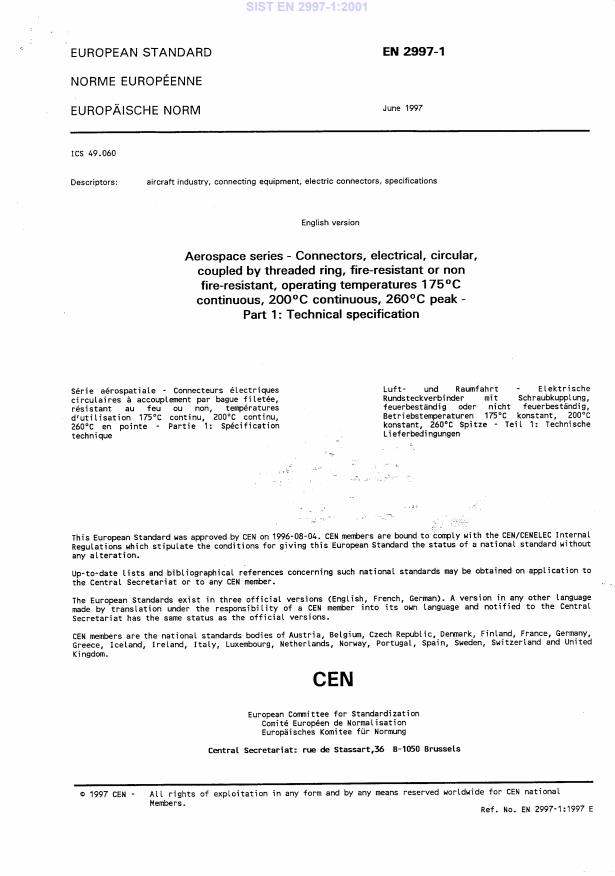
(Main)Aerospace series - Connectors, electrical, circular, coupled by threaded ring, fire-resistant or non fire-resistant, operating temperatures 175°C continuous, 200°C continuous, 260°C peak - Part 1: Technical specification
Aerospace series - Connectors, electrical, circular, coupled by threaded ring, fire-resistant or non fire-resistant, operating temperatures 175°C continuous, 200°C continuous, 260°C peak - Part 1: Technical specification
This standard specifies the general characteristics, the conditions for qualification, acceptance and quality assurance, as well as the test programs and groups for threaded ring coupling circular connectors, fire-resistant or non fire-resistant, intended for use in a temperature range from -65°C to 175°C continuous, 200°C continuous or 260°C peak according to the classes and models.
Luft- und Raumfahrt - Elektrische Rundsteckverbinder mit Schraubkupplung, feuerbeständig oder nicht feuerbeständig, Betriebstemperaturen 175°C konstant, 200°C konstant, 260°C Spitze - Teil 1: Technische Lieferbedingungen
Diese Norm legt die allgemeinen Eigenschaften, die Qualifikations-, Annahme- und Qualitätssicherungsbedingungen sowie die Prüfprogramme und -gruppen von Rundsteckverbinden mit Schraubkupplung, feuerbeständig oder nicht feuerbeständig, verwendbar bis zu einer Frequenz von 3 MHz, für den Einsatz im Temperaturbereich von -65°C bis 175°C konstant, 200°C konstant oder 260°C Spitze, je nach Klasse oder Bauform, fest.
Série aérospatiale - Connecteurs électriques circulaires à accouplement par bague filetée, résistant au feu ou non, températures d'utilisation 175°C continu, 200°C continu, 260°C en pointe - Partie 1: Spécification technique
La présente norme spécifie les caractéristiques générales, les conditions de quallification, de réception et d'assurance qualité ainsi que les programmes et les groupes d'essais des connecteurs circulaires à accouplement par bague filetée, résistant au feu ou non, utilisables dans une plage de températures de -65°C à 175°C continu, 200°C continu ou 260°C en pointe suivant les classes et modèles.
Aerospace series - Connectors, electrical, circular, coupled by threaded ring, fire-resistant or non fire-resistant, operating temperatures 175°C continuous, 200°C continuous, 260°C peak - Part 1: Technical specification
General Information
- Status
- Withdrawn
- Publication Date
- 17-Jun-1997
- Withdrawal Date
- 17-Oct-2006
- Technical Committee
- ASD/ELEC - Electrical
- Drafting Committee
- ASD/ELEC - Electrical
- Current Stage
- 9960 - Withdrawal effective - Withdrawal
- Start Date
- 18-Oct-2006
- Completion Date
- 18-Oct-2006
Relations
- Effective Date
- 22-Dec-2008

Get Certified
Connect with accredited certification bodies for this standard

DEKRA North America
DEKRA certification services in North America.

Eagle Registrations Inc.
American certification body for aerospace and defense.

Element Materials Technology
Materials testing and product certification.
Sponsored listings
Frequently Asked Questions
EN 2997-1:1997 is a standard published by the European Committee for Standardization (CEN). Its full title is "Aerospace series - Connectors, electrical, circular, coupled by threaded ring, fire-resistant or non fire-resistant, operating temperatures 175°C continuous, 200°C continuous, 260°C peak - Part 1: Technical specification". This standard covers: This standard specifies the general characteristics, the conditions for qualification, acceptance and quality assurance, as well as the test programs and groups for threaded ring coupling circular connectors, fire-resistant or non fire-resistant, intended for use in a temperature range from -65°C to 175°C continuous, 200°C continuous or 260°C peak according to the classes and models.
This standard specifies the general characteristics, the conditions for qualification, acceptance and quality assurance, as well as the test programs and groups for threaded ring coupling circular connectors, fire-resistant or non fire-resistant, intended for use in a temperature range from -65°C to 175°C continuous, 200°C continuous or 260°C peak according to the classes and models.
EN 2997-1:1997 is classified under the following ICS (International Classification for Standards) categories: 49.060 - Aerospace electric equipment and systems. The ICS classification helps identify the subject area and facilitates finding related standards.
EN 2997-1:1997 has the following relationships with other standards: It is inter standard links to EN 2997-001:2006. Understanding these relationships helps ensure you are using the most current and applicable version of the standard.
EN 2997-1:1997 is available in PDF format for immediate download after purchase. The document can be added to your cart and obtained through the secure checkout process. Digital delivery ensures instant access to the complete standard document.
Standards Content (Sample)
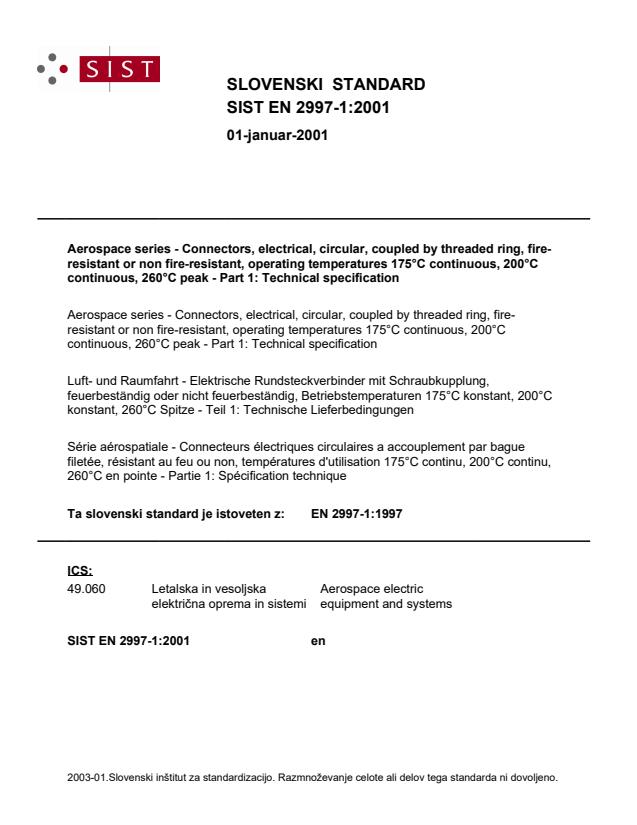
2003-01.Slovenski inštitut za standardizacijo. Razmnoževanje celote ali delov tega standarda ni dovoljeno.Aerospace series - Connectors, electrical, circular, coupled by threaded ring, fire-resistant or non fire-resistant, operating temperatures 175°C continuous, 200°C continuous, 260°C peak - Part 1: Technical specificationLuft- und Raumfahrt - Elektrische Rundsteckverbinder mit Schraubkupplung, feuerbeständig oder nicht feuerbeständig, Betriebstemperaturen 175°C konstant, 200°C konstant, 260°C Spitze - Teil 1: Technische LieferbedingungenSérie aérospatiale - Connecteurs électriques circulaires a accouplement par bague filetée, résistant au feu ou non, températures d'utilisation 175°C continu, 200°C continu, 260°C en pointe - Partie 1: Spécification techniqueAerospace series - Connectors, electrical, circular, coupled by threaded ring, fire-resistant or non fire-resistant, operating temperatures 175°C continuous, 200°C continuous, 260°C peak - Part 1: Technical specification49.060Aerospace electric equipment and systemsICS:Ta slovenski standard je istoveten z:EN 2997-1:1997SIST EN 2997-1:2001en01-januar-2001SIST EN 2997-1:2001SLOVENSKI
STANDARD
...
Questions, Comments and Discussion
Ask us and Technical Secretary will try to provide an answer. You can facilitate discussion about the standard in here.
Loading comments...