


EN 1151:1999
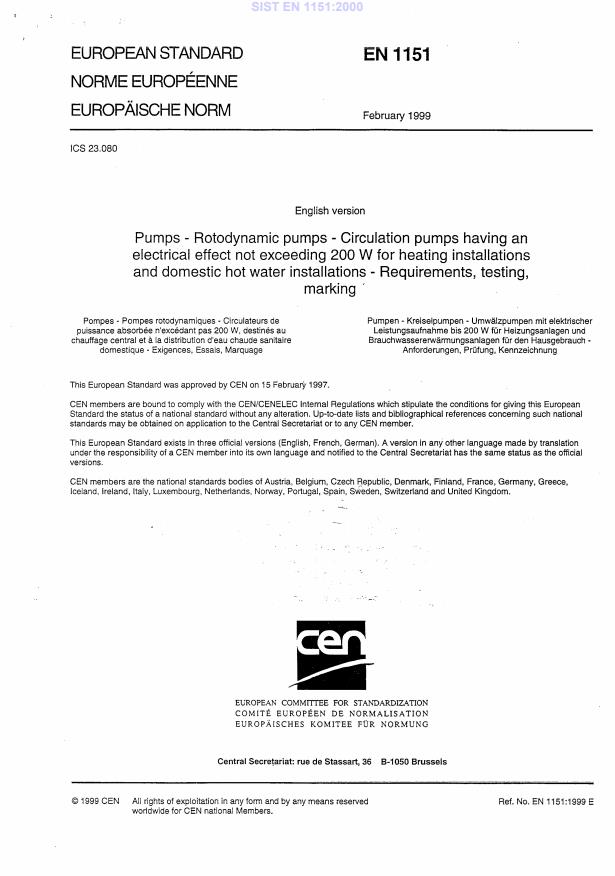
(Main)Pumps - Rotodynamic pumps - Circulation pumps having an electrical effect not exceeding 200 W for heating installations and domestic hot water installations - Requirements, testing, marking
Pumps - Rotodynamic pumps - Circulation pumps having an electrical effect not exceeding 200 W for heating installations and domestic hot water installations - Requirements, testing, marking
This draft European Standard establishes general principles for the construction, use and testing of circulation pumps having an electrical power input P1 smaller than or equal to 200 W, intended to be used in heating installations and domestic hot water service installations. The requirements of this European Standard may apply to circulation pumps for domestic use having an electrical power input above 200 W up to and including 300 W. However,this decision depends on agreement between the supplier and purchaser.
Pumpen - Kreiselpumpen - Umwälzpumpen mit elektrischer Leistungsaufnahme bis 200 W für Heizungsanlagen und Brauchwassererwärmungsanlagen für den Hausgebrauch - Anforderungen, Prüfung, Kennzeichnung
Dieser Europäische Normentwurf stellt allgemeine Grudsätze für Umwälzpumpen mit elektrischer Leistungsaufnahme P1 < 200 W für Heizungs- und Brauchwasserwärmerungsanlagen auf, wie sie für die Konstruktion, die Verwendung, die Prüfung benötigt werden. Ergänzend zu prEN 809:1992 enthält diese Norm besondere sicherheitstechnische Anforderungen. Für sicherheitstechnische Anforderungen an den elektrotechnischen Teil der Umwälzpumpen gilt EN 60 335-2-51.
Pompes - Pompes rotodynamiques - Circulateurs de puissance absorbée n'excédant pas 200 W, destinés au chauffage central et à la distribution d'eau chaude sanitaire domestique - Exigences, Essais, Marquage
Ce projet de Norme Européenne définit des principes généraux pour la construction, l'utilisation et les essais des circulateurs de puissance absorbée P1 inférieure ou égale à 200 W, destinées aux installations de chauffage et aux installations d'eau chaude sanitaire. Les exigences de cette norme peuvent s'appliquer aux circulateus pour utilisation domestique ayant une puissance absorbée supérieure à 200 W jusqu'à et y compris 300 W. De plus, cettedécision dépend de l'accord avec le fournisseur et l'acheteur.
Pumps - Rotodynamic pumps - Circulation pumps having an electrical effect not exceeding 200 W for heating installations and domestic hot water installations - Requirements, testing, marking
General Information
- Status
- Withdrawn
- Publication Date
- 16-Feb-1999
- Withdrawal Date
- 18-Apr-2006
- Technical Committee
- CEN/TC 197 - Pumps
- Drafting Committee
- CEN/TC 197/SC 4 - Rotodynamic pumps
- Current Stage
- 9960 - Withdrawal effective - Withdrawal
- Start Date
- 19-Apr-2006
- Completion Date
- 19-Apr-2006
Relations
- Effective Date
- 22-Dec-2008
- Effective Date
- 22-Dec-2008
- Referred By
EN 12162:2001+A1:2009 - Liquid pumps - Safety requirements - Procedure for hydrostatic testing - Effective Date
- 28-Jan-2026

Get Certified
Connect with accredited certification bodies for this standard

Institut za varilstvo d.o.o. (Welding Institute)
Slovenia's leading welding institute since 1952. ISO 3834, EN 1090, pressure equipment certification, NDT personnel, welder qualification. Only IIW Au
Sponsored listings
Frequently Asked Questions
EN 1151:1999 is a standard published by the European Committee for Standardization (CEN). Its full title is "Pumps - Rotodynamic pumps - Circulation pumps having an electrical effect not exceeding 200 W for heating installations and domestic hot water installations - Requirements, testing, marking". This standard covers: This draft European Standard establishes general principles for the construction, use and testing of circulation pumps having an electrical power input P1 smaller than or equal to 200 W, intended to be used in heating installations and domestic hot water service installations. The requirements of this European Standard may apply to circulation pumps for domestic use having an electrical power input above 200 W up to and including 300 W. However,this decision depends on agreement between the supplier and purchaser.
This draft European Standard establishes general principles for the construction, use and testing of circulation pumps having an electrical power input P1 smaller than or equal to 200 W, intended to be used in heating installations and domestic hot water service installations. The requirements of this European Standard may apply to circulation pumps for domestic use having an electrical power input above 200 W up to and including 300 W. However,this decision depends on agreement between the supplier and purchaser.
EN 1151:1999 is classified under the following ICS (International Classification for Standards) categories: 23.080 - Pumps. The ICS classification helps identify the subject area and facilitates finding related standards.
EN 1151:1999 has the following relationships with other standards: It is inter standard links to EN 1151-2:2006, EN 1151-1:2006, EN 12162:2001+A1:2009. Understanding these relationships helps ensure you are using the most current and applicable version of the standard.
EN 1151:1999 is available in PDF format for immediate download after purchase. The document can be added to your cart and obtained through the secure checkout process. Digital delivery ensures instant access to the complete standard document.
Standards Content (Sample)
2003-01.Slovenski inštitut za standardizacijo. Razmnoževanje celote ali delov tega standarda ni dovoljeno.Pumps - Rotodynamic pumps - Circulation pumps having an electrical effect not exceeding 200 W for heating installations and domestic hot water installations - Requirements, testing, markingPumpen - Kreiselpumpen - Umwälzpumpen mit elektrischer Leistungsaufnahme bis 200 W für Heizungsanlagen und Brauchwassererwärmungsanlagen für den Hausgebrauch - Anforderungen, Prüfung, KennzeichnungPompes - Pompes rotodynamiques - Circulateurs de puissance absorbée n'excédant pas 200 W, destinés au chauffage central et a la distribution d'eau chaude sa
...
Questions, Comments and Discussion
Ask us and Technical Secretary will try to provide an answer. You can facilitate discussion about the standard in here.
Loading comments...