

ASTM B233-97(2021)
(Specification)Standard Specification for Aluminum 1350 Drawing Stock for Electrical Purposes
General Information
- Abstract
ABSTRACT
This specification covers aluminium 1350 drawing stock for electrical purposes. The stock shall conform to the chemical composition requirements. The stock shall be uniform in quality and temper and shall be suitable for drawing into wire. The tensile strength tests and requirements for the respective tempers of stock are presented in details. The stock shall be furnished in continuous-length coils without joints, unless otherwise agreed upon between the manufacturer and purchaser. The electrical resistivity tests shall be made on full-section samples of the stock.
SCOPE
1.1 This specification covers aluminum 1350 drawing stock 0.375 in. (9.52 mm) to 1.000 in. (25.40 mm) in diameter, in the tempers shown in Table 1, for drawing into wire for electrical conductors (Explanatory Note 1 and Note 2).
1.2 The SI values of density and resistivity are to be regarded as the standard. For all other properties the inch-pound values are to be regarded as standard and the SI units may be approximate.
Note 1: Prior to 1975, aluminum 1350 was designated as EC aluminum.
Note 2: The aluminum and temper designations conform to ANSI H35.1. Aluminum 1350 corresponds to unified numbering system A91350 in accordance with Practice E527.
1.3 This international standard was developed in accordance with internationally recognized principles on standardization established in the Decision on Principles for the Development of International Standards, Guides and Recommendations issued by the World Trade Organization Technical Barriers to Trade (TBT) Committee.
- Status
- Published
- Publication Date
- 30-Sep-2021
- Technical Committee
- B01 - Electrical Conductors
- Drafting Committee
- B01.07 - Conductors of Light Metals

Overview
ASTM B233-97(2021): Standard Specification for Aluminum 1350 Drawing Stock for Electrical Purposes establishes the requirements for aluminum 1350 stock used in the manufacture of electrical wire and conductors. Developed under the guidance of ASTM International, this specification ensures consistent quality and performance of aluminum drawing stock within defined chemical, mechanical, and electrical properties. Covering diameters from 0.375 in. (9.52 mm) to 1.000 in. (25.40 mm), ASTM B233-97(2021) is a critical reference for manufacturers, suppliers, and buyers of aluminum wire products for electrical applications.
Key Topics
- Material Requirements: Specifies chemical composition, ensuring aluminum 1350 (minimum 99.50% Al) with tightly controlled impurities.
- Mechanical Properties: Details tensile strength requirements for different tempers, supporting material performance during the wire drawing process.
- Electrical Conductivity: Sets minimum values for conductivity and maximum electrical resistivity, making the stock suitable for efficient electrical conduction.
- Dimensional Tolerances: Defines diameter tolerances and uniformity to guarantee compatibility in downstream manufacturing.
- Workmanship and Quality: Outlines standards for surface quality, absence of defects, and finish, ensuring the material is suitable for drawing into fine wire.
- Testing and Inspection: Requires tensile, resistivity, and chemical composition testing, with protocols for inspection, retesting, and lot rejection if standards are not met.
- Packaging and Marking: Specifies coiling, wrapping, tagging, and shipping requirements for product identification and protection.
Applications
Aluminum 1350 drawing stock produced in compliance with ASTM B233-97(2021) is widely used in:
- Manufacture of Electrical Conductors: Drawing stock is the starting material for producing bare and insulated aluminum wires and cables used in power transmission and distribution.
- Power Infrastructure: Utilized by utilities and cable manufacturers for high-voltage overhead lines, distribution lines, and other electrical grid components.
- Electrical Equipment: Forms the basis for components in transformers, motors, and generator windings where high conductivity and lightweight are essential.
- Industrial Wiring: Supports a range of applications in commercial and industrial environments where reliable electrical performance is required.
By meeting ASTM B233-97(2021) requirements, manufacturers contribute to safe, efficient, and durable electrical infrastructure.
Related Standards
- ASTM B193 – Test Method for Resistivity of Electrical Conductor Materials
- ASTM B557 – Test Methods for Tension Testing Wrought and Cast Aluminum- and Magnesium-Alloy Products
- ASTM B354 – Terminology Relating to Uninsulated Metallic Electrical Conductors
- ASTM B830 – Specification for Uniform Test Methods and Frequency (Statistical Process Control)
- ANSI H35.1 – Alloy and Temper Designation Systems for Aluminum
- NBS Handbook 100 – Copper Wire Tables
- ASTM E55 – Sampling Wrought Nonferrous Metals and Alloys for Determination of Chemical Composition
Practical Value
Utilizing ASTM B233-97(2021) ensures that aluminum drawing stock for electrical purposes meets global standards for quality, safety, and performance. This specification supports manufacturers and end-users by:
- Enhancing product consistency across international markets.
- Reducing risks of failure in critical electrical applications.
- Promoting effective supply chain communication through standardized ordering and testing protocols.
- Supporting compliance with industry and regulatory requirements for electrical materials.
Keywords: ASTM B233, Aluminum 1350, electrical drawing stock, aluminum wire, electrical conductivity, tensile strength, power cable, electrical conductor standards.
Relations
- Effective Date
- 15-Jun-2018
- Effective Date
- 01-Sep-2016
- Effective Date
- 01-Apr-2016
- Effective Date
- 15-May-2014
- Effective Date
- 01-Apr-2014
- Effective Date
- 01-Dec-2012
- Effective Date
- 01-Oct-2011
- Refers
ASTM E34-11 - Standard Test Methods for Chemical Analysis of Aluminum and Aluminum-Base Alloys - Effective Date
- 01-Jul-2011
- Effective Date
- 01-Jul-2010
- Effective Date
- 01-Sep-2008
- Effective Date
- 01-May-2006
- Effective Date
- 01-Oct-2005
- Effective Date
- 01-Mar-2005
- Effective Date
- 01-Oct-2003
- Effective Date
- 10-Apr-2003
Get Certified
Connect with accredited certification bodies for this standard

Element Materials Technology
Materials testing and product certification.

Inštitut za kovinske materiale in tehnologije
Institute of Metals and Technology. Materials testing, metallurgical analysis, NDT.
Sponsored listings
Frequently Asked Questions
ASTM B233-97(2021) is a technical specification published by ASTM International. Its full title is "Standard Specification for Aluminum 1350 Drawing Stock for Electrical Purposes". This standard covers: ABSTRACT This specification covers aluminium 1350 drawing stock for electrical purposes. The stock shall conform to the chemical composition requirements. The stock shall be uniform in quality and temper and shall be suitable for drawing into wire. The tensile strength tests and requirements for the respective tempers of stock are presented in details. The stock shall be furnished in continuous-length coils without joints, unless otherwise agreed upon between the manufacturer and purchaser. The electrical resistivity tests shall be made on full-section samples of the stock. SCOPE 1.1 This specification covers aluminum 1350 drawing stock 0.375 in. (9.52 mm) to 1.000 in. (25.40 mm) in diameter, in the tempers shown in Table 1, for drawing into wire for electrical conductors (Explanatory Note 1 and Note 2). 1.2 The SI values of density and resistivity are to be regarded as the standard. For all other properties the inch-pound values are to be regarded as standard and the SI units may be approximate. Note 1: Prior to 1975, aluminum 1350 was designated as EC aluminum. Note 2: The aluminum and temper designations conform to ANSI H35.1. Aluminum 1350 corresponds to unified numbering system A91350 in accordance with Practice E527. 1.3 This international standard was developed in accordance with internationally recognized principles on standardization established in the Decision on Principles for the Development of International Standards, Guides and Recommendations issued by the World Trade Organization Technical Barriers to Trade (TBT) Committee.
ABSTRACT This specification covers aluminium 1350 drawing stock for electrical purposes. The stock shall conform to the chemical composition requirements. The stock shall be uniform in quality and temper and shall be suitable for drawing into wire. The tensile strength tests and requirements for the respective tempers of stock are presented in details. The stock shall be furnished in continuous-length coils without joints, unless otherwise agreed upon between the manufacturer and purchaser. The electrical resistivity tests shall be made on full-section samples of the stock. SCOPE 1.1 This specification covers aluminum 1350 drawing stock 0.375 in. (9.52 mm) to 1.000 in. (25.40 mm) in diameter, in the tempers shown in Table 1, for drawing into wire for electrical conductors (Explanatory Note 1 and Note 2). 1.2 The SI values of density and resistivity are to be regarded as the standard. For all other properties the inch-pound values are to be regarded as standard and the SI units may be approximate. Note 1: Prior to 1975, aluminum 1350 was designated as EC aluminum. Note 2: The aluminum and temper designations conform to ANSI H35.1. Aluminum 1350 corresponds to unified numbering system A91350 in accordance with Practice E527. 1.3 This international standard was developed in accordance with internationally recognized principles on standardization established in the Decision on Principles for the Development of International Standards, Guides and Recommendations issued by the World Trade Organization Technical Barriers to Trade (TBT) Committee.
ASTM B233-97(2021) is classified under the following ICS (International Classification for Standards) categories: 77.150.10 - Aluminium products. The ICS classification helps identify the subject area and facilitates finding related standards.
ASTM B233-97(2021) has the following relationships with other standards: It is inter standard links to ASTM B830-18, ASTM B354-16, ASTM B193-16, ASTM B557-14, ASTM B193-02(2014), ASTM B354-12, ASTM B830-11, ASTM E34-11, ASTM B557-10, ASTM B193-02(2008), ASTM B557-06, ASTM E55-91(2005), ASTM B354-05, ASTM B830-97(2003), ASTM E527-83(2003). Understanding these relationships helps ensure you are using the most current and applicable version of the standard.
ASTM B233-97(2021) is available in PDF format for immediate download after purchase. The document can be added to your cart and obtained through the secure checkout process. Digital delivery ensures instant access to the complete standard document.
Standards Content (Sample)
This international standard was developed in accordance with internationally recognized principles on standardization established in the Decision on Principles for the
Development of International Standards, Guides and Recommendations issued by the World Trade Organization Technical Barriers to Trade (TBT) Committee.
Designation:B233 −97 (Reapproved 2021)
Standard Specification for
Aluminum 1350 Drawing Stock for Electrical Purposes
This standard is issued under the fixed designation B233; the number immediately following the designation indicates the year of
original adoption or, in the case of revision, the year of last revision. A number in parentheses indicates the year of last reapproval. A
superscript epsilon (´) indicates an editorial change since the last revision or reapproval.
1. Scope E34 Test Methods for Chemical Analysis of Aluminum and
Aluminum-Base Alloys (Withdrawn 2017)
1.1 This specification covers aluminum 1350 drawing stock
E55 Practice for Sampling Wrought Nonferrous Metals and
0.375 in. (9.52 mm) to 1.000 in. (25.40 mm) in diameter, in the
Alloys for Determination of Chemical Composition
tempers shown in Table 1, for drawing into wire for electrical
E227 Test Method for Optical Emission Spectrometric
conductors (Explanatory Note 1 and Note 2).
Analysis of Aluminum and Aluminum Alloys by the
1.2 The SI values of density and resistivity are to be 3
Point-to-Plane Technique (Withdrawn 2002)
regarded as the standard. For all other properties the inch-
E527 Practice for Numbering Metals and Alloys in the
pound values are to be regarded as standard and the SI units
Unified Numbering System (UNS)
may be approximate.
2.3 ANSI Standard:
ANSI H35.1 Alloy and Temper Designation Systems for
NOTE 1—Prior to 1975, aluminum 1350 was designated as EC
aluminum. Aluminum
NOTE 2—The aluminum and temper designations conform to ANSI
2.4 National Bureau of Standards:
H35.1.Aluminum 1350 corresponds to unified numbering systemA91350
NBS Handbook 100Copper Wire Tables
in accordance with Practice E527.
1.3 This international standard was developed in accor-
3. Ordering Information
dance with internationally recognized principles on standard-
3.1 Orders for material under this specification shall include
ization established in the Decision on Principles for the
the following information:
Development of International Standards, Guides and Recom-
3.1.1 Quantity,
mendations issued by the World Trade Organization Technical
3.1.2 Diameter (see 11.1),
Barriers to Trade (TBT) Committee.
3.1.3 Temper (see Table 1 and Explanatory Note 1 and Note
2),
2. Referenced Documents
3.1.4 Whether joints are permitted (see 8.1),
2.1 The following documents of the issue in effect on date
3.1.5 Whether tests of joints are required and number of
of material purchase form a part of this specification to the
specimens (see 8.2),
extent referenced herein:
3.1.6 Coil size and weight (see 14.2),
2.2 ASTM Standards:
3.1.7 Whether wrapping of coils is required (see 14.3),
B193 Test Method for Resistivity of Electrical Conductor 3.1.8 Special marking on tags, if required (see 14.4), and
Materials
3.1.9 Whether inspection or witness of inspection and tests
B354 Terminology Relating to Uninsulated Metallic Electri- by purchaser’s representative is required prior to shipment (see
cal Conductors
Section 13).
B557 Test Methods for Tension Testing Wrought and Cast
4. Manufacture
Aluminum- and Magnesium-Alloy Products
B830 Specification for Uniform Test Methods and Fre-
4.1 Unless otherwise agreed upon at the time of placing the
quency
order, the manufacturer shall have the option of producing the
stock from either individually cast ingots or continuously cast
1 bars. Only one method of production shall be used on any
This specification is under the jurisdiction of ASTM Committee B01 on
Electrical Conductors and is the direct responsibility of Subcommittee B01.07 on
given order.
Conductors of Light Metals.
Current edition approved Oct. 1, 2021. Published October 2021. Originally
approved in 1948. Last previous edition approved in 2016 as B233 – 97 (2016). The last approved version of this historical standard is referenced on
DOI: 10.1520/B0233-97R21. www.astm.org.
2 4
For referenced ASTM standards, visit the ASTM website, www.astm.org, or Available fromAmerican National Standards Institute (ANSI), 25 W. 43rd St.,
contact ASTM Customer Service at service@astm.org. For Annual Book of ASTM 4th Floor, New York, NY 10036, http://www.ansi.org.
Standards volume information, refer to the standard’s Document Summary page on Available from National Technical Information Service (NTIS), 5301 Shawnee
the ASTM website. Rd., Alexandria, VA 22312, http://www.ntis.gov.
Copyright © ASTM International, 100 Barr Harbor Drive, PO Box C700, West Conshohocken, PA 19428-2959. United States
B233−97 (2021)
A
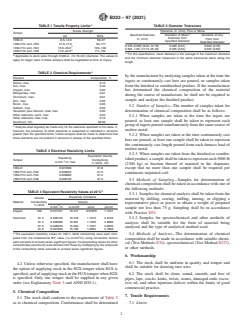
TABLE 1 Tensile Property Limits TABLE 5 Diameter Tolerances
Tensile Strength
Tolerance, in. (mm), Plus or Minus
Temper
A
Specified Diameter, Deviation of Mean Deviation at Any
ksi MPa
Diameter from
in. (mm) Point from
1350-O 8.5–14.0 59–97
Specified Diameter
Specified Diameter
1350-H12 and -H22 12.0–17.0 83–117
0.375–0.500 (9.52–12.70) 0.020 (0.51) 0.030 (0.76)
A
1350-H14 and -H24 15.0–20.0 103–138
0.501–1.00 (12.73–25.40) 0.025 (0.64) 0.035 (0.89)
A
1350-H16 and -H26 17.0–22.0 117–152
A
For this specification, mean diameter is the average of the maximum diameter
A
Applicable to stock sizes through 0.500-in. (12.70-mm) diameter. The values to
and the minimum diameter measured in the same transverse plane along the
apply for larger sizes in these tempers shall be negotiated at time of inquiry.
length.
A
TABLE 2 Chemical Requirements
by the manufacturer by analyzing samples taken at the time the
Element Composition, %
ingots or continuously cast bars are poured, or samples taken
Silicon, max 0.10
from the finished or semifinished product. If the manufacturer
Iron, max 0.40
Copper, max 0.05
has determined the chemical composition of the material
Manganese, max 0.01
during the course of manufacture, he shall not be required to
Chromium, max 0.01
sample and analyze the finished product.
Zinc, max 0.05
Boron, max 0.05
5.2 Number of Samples—The number of samples taken for
Gallium, max 0.03
determination of chemical composition shall be as follows:
Vanadium plus titanium, total, max 0.02
Other elements, each, max 0.03
5.2.1 When samples are taken at the time the ingots are
Other elements, total, max 0.10
poured, at least one sample shall be taken to represent each
Aluminum, min 99.50
groupofingotspouredsimultaneouslyfromthesamesourceof
A
Analysis shall regularly be made only for the elements specified in this table. If,
molten metal.
however, the presence of other elements is suspected or indicated in amounts
greater than the specified limits, further analysis shall be made to determine that
5.2.2 When samples are taken at the time continuously cast
these elements are not present in amounts in excess of the specified limits.
bars are poured, at least one sample shall be taken to represent
the continuously cast length poured from each furnace load of
molten metal.
TABLE 3 Electrical Resistivity Limits
5.2.3 When samples are taken from the finished or semifin-
Equivalent Volume
Resistivity,
ishedproduct,asampleshallbetakentorepresenteach5000 lb
Temper Conductivity,
Ω·mm /m, max
% IACS, min (2300 kg) or fraction thereof of material in the shipment,
1350-O 0.027899 61.8 except that no more than one sample shall be required per
1350-H12 and -H22 0.028035 61.5
continuous unjointed coil.
1350-H14 and -H24 0.028080 61.4
1350-H16 and -H26 0.028126 61.3
5.3 Methods of Sampling—Samples for determination of
chemical composition shall be taken in accordance with one of
the following methods:
A
TABLE 4 Equivalent Resistivity Values at 20°C
5.3.1 Samples for chemical analysis shall be taken from the
Resistivity Constants
Volume
material by drilling, sawing, milling, turning, or clipping a
Material Conductivity, Volume
representative piece or pieces to obtain a weight of prepared
% IACS 2
Ω·mm /m Ω·cmil/ft µΩ·in. µΩ·cm
sample not less than 75 g. Sampling shall be in accordance
Copper 100 0.017241 10.371 0.67879 1.7241
with Practice E55.
5.3.2 Samples for spectrochemical and other methods of
Aluminum 61.3 0.028126 16.919 1.1073 2.8126
61.4 0.028080 16.891 1.1055 2.8080
analysis shall be suitable for the form of material being
61.5 0.028035 16.864 1.1037 2.8035
analyzed and the type of analytical method used.
61.8 0.027899 16.782 1.0984 2.7899
A
5.4 Methods of Analysis—The determination of chemical
The equivalent resistivity values for 100 % IACS conductivity were each com-
1 2
puted from the fundamental IEC value ( ⁄58Ω·mm /m) using conversion factors
composition shall be made in accordance with suitable chemi-
each accurate to at least seven significant figures. Corresponding values for other
cal (Test Methods E34), spectrochemical (Test Method E227),
conductivities (aluminum) were derived from these by multiplying by the reciprocal
or other methods.
of the conductivity ratios accurate to at least seven significant figures.
6. Workmanship
6.1 The stock shall be uniform in quality and temper and
4.2 Unles
...