

ASTM D7098-21
(Test Method)Standard Test Method for Oxidation Stability of Lubricants by Thin-Film Oxygen Uptake (TFOUT) Catalyst B
General Information
- Abstract
SIGNIFICANCE AND USE
5.1 This test method was originally developed to evaluate oxidation stability of lubricating base oils combined with additives chemistries similar to those found in gasoline engine oils and service.2
5.2 This test method is useful for screening formulated oils before engine tests. Within similar additive chemistries and base oil types, the ranking of oils in this test appears to be predictive of ranking in certain engine tests. When oils having different additive chemistries or base oil type are compared, results may or may not reflect results in engine tests. Only gasoline engine oils were used in generating the precision statements in this test method.
SCOPE
1.1 This test method covers the oxidation stability of lubricants by thin-film oxygen uptake (TFOUT) Catalyst B. This test method evaluates the oxidation stability of petroleum products, and it was originally developed as a screening test to indicate whether a given re-refined base stock could be formulated for use as automotive engine oil3 (see Test Method D4742). The test is run at 160 °C in a pressure vessel under oxygen pressure, and the sample contains a metal catalyst package, a fuel catalyst, and water to partially simulate oil conditions in an operating engine. In addition, the test method has since been found broadly useful as an oxidation test of petroleum products.4
1.2 The applicable range of the induction time is from a few minutes up to several hundred minutes or more. However, the range of induction times used for developing the precision statements in this test method was from 40 min to 280 min.
1.3 The values stated in SI units are to be regarded as standard. No other units of measurement are included in this standard.
1.3.1 Exception—Pressure units are provided in psig, and dimensions are provided in inches in Annex A1 and Annex A2, because these are the industry accepted standard and the apparatus is built according to the figures shown.
1.4 This standard does not purport to address all of the safety concerns, if any, associated with its use. It is the responsibility of the user of this standard to establish appropriate safety, health, and environmental practices and determine the applicability of regulatory limitations prior to use.
1.5 This international standard was developed in accordance with internationally recognized principles on standardization established in the Decision on Principles for the Development of International Standards, Guides and Recommendations issued by the World Trade Organization Technical Barriers to Trade (TBT) Committee.
- Status
- Published
- Publication Date
- 30-Sep-2021
- Technical Committee
- D02 - Petroleum Products, Liquid Fuels, and Lubricants
- Drafting Committee
- D02.09.0G - Oxidation Testing of Engine Oils
Buy Documents
ASTM D7098-21 - Standard Test Method for Oxidation Stability of Lubricants by Thin-Film Oxygen Uptake (TFOUT) Catalyst B
REDLINE ASTM D7098-21 - Standard Test Method for Oxidation Stability of Lubricants by Thin-Film Oxygen Uptake (TFOUT) Catalyst B
Overview
ASTM D7098-21 is the Standard Test Method developed by ASTM International for evaluating the oxidation stability of lubricants through the Thin-Film Oxygen Uptake (TFOUT) Catalyst B method. This test provides a means to assess the resistance of lubricants, particularly petroleum products such as base oils and formulated engine oils, to oxidation under controlled laboratory conditions that simulate aspects of engine environments.
Originally designed as a screening method to predict the oxidation stability of lubricating base oils with additives similar to those in gasoline engine oils, this procedure has broader applications across the industry for petroleum product evaluation. The test involves exposing a thin film of the oil sample to oxygen at elevated temperatures in the presence of a metal catalyst, a fuel component, and water, mimicking the oxidative stresses encountered in actual engine operation.
Key Topics
- Oxidation Stability Measurement: The test determines the induction time before rapid oxidation occurs in lubricants, indicating how well a lubricant resists oxidative degradation.
- Test Procedure: Oils are mixed with fuel and metal catalyst components, then placed in a pressure vessel which is charged with oxygen and heated to 160°C. The pressure is monitored to identify the "break point"-the onset of rapid oxygen absorption by the oil.
- Catalyst Package: Utilizes Catalyst B, simulating conditions found in standardized engine tests.
- Precision and Predictive Value: Within groups of oils having similar additives and base oil chemistry, TFOUT results tend to predict performance rankings in certain engine simulation tests.
- Operational Range: Induction times can vary widely, but the standard supports a validated range between 40 and 280 minutes.
- Screening Tool: The method is valuable for initial evaluation and comparison before proceeding to more extensive and costly engine testing.
Applications
ASTM D7098-21 is most commonly applied in:
- Automotive Lubricant Development: Used by manufacturers and formulators to screen base oils and additives for gasoline engine oils to assess oxidation resistance before costly engine bench testing.
- Petroleum Product Testing: Provides a standardized approach to compare the oxidation stability of various re-refined or virgin base stocks.
- Quality Control: Ensures consistency and performance of oil batches within manufacturing environments by monitoring changes in oxidation resistance.
- Research & Development: Offers researchers a reliable method to test the impact of additive packages on oxidation stability in prototype oil formulations.
- Regulatory Compliance: Assists in meeting specifications requiring evidence of oxidation stability for certain lubricant classifications.
Related Standards
Several ASTM and international standards relate closely to the TFOUT Catalyst B method:
- ASTM D4742: Standard Test Method for Oxidation Stability of Gasoline Automotive Engine Oils by Thin-Film Oxygen Uptake (TFOUT) - an alternative standard for similar types of oils and testing.
- ASTM D2272: Standard Test Method for Oxidation Stability of Steam Turbine Oils by Rotating Pressure Vessel.
- ASTM D664: Used for measuring acid number-important when preparing certain test components.
- ASTM E144/E1: Standards for safe operation and accurate measurement (combustion vessels, thermometers).
- ASTM D8164/D8278: Guidance for digital contact thermometers used in petroleum labs.
By following ASTM D7098-21, laboratories and manufacturers can confidently assess and improve lubricant formulations for optimal oxidation stability, supporting product reliability and regulatory requirements. This standard is vital for industries seeking enhanced engine oil performance and long-term lubricant durability.
Relations
- Effective Date
- 01-Nov-2023
- Effective Date
- 01-Feb-2020
- Effective Date
- 01-Feb-2019
- Effective Date
- 01-Jul-2018
- Effective Date
- 01-Apr-2018
- Effective Date
- 01-May-2017
- Effective Date
- 01-Dec-2016
- Effective Date
- 01-Jun-2016
- Effective Date
- 01-Dec-2015
- Effective Date
- 15-Jul-2015
- Effective Date
- 01-Apr-2015
- Effective Date
- 01-Dec-2014
- Effective Date
- 01-Dec-2014
- Effective Date
- 01-Jul-2014
- Effective Date
- 01-Oct-2013
Buy Documents
ASTM D7098-21 - Standard Test Method for Oxidation Stability of Lubricants by Thin-Film Oxygen Uptake (TFOUT) Catalyst B
REDLINE ASTM D7098-21 - Standard Test Method for Oxidation Stability of Lubricants by Thin-Film Oxygen Uptake (TFOUT) Catalyst B
Get Certified
Connect with accredited certification bodies for this standard

Element Materials Technology
Materials testing and product certification.

ABS Group Brazil
ABS Group certification services in Brazil.

ABS Quality Evaluations Inc.
American Bureau of Shipping quality certification.
Sponsored listings
Frequently Asked Questions
ASTM D7098-21 is a standard published by ASTM International. Its full title is "Standard Test Method for Oxidation Stability of Lubricants by Thin-Film Oxygen Uptake (TFOUT) Catalyst B". This standard covers: SIGNIFICANCE AND USE 5.1 This test method was originally developed to evaluate oxidation stability of lubricating base oils combined with additives chemistries similar to those found in gasoline engine oils and service.2 5.2 This test method is useful for screening formulated oils before engine tests. Within similar additive chemistries and base oil types, the ranking of oils in this test appears to be predictive of ranking in certain engine tests. When oils having different additive chemistries or base oil type are compared, results may or may not reflect results in engine tests. Only gasoline engine oils were used in generating the precision statements in this test method. SCOPE 1.1 This test method covers the oxidation stability of lubricants by thin-film oxygen uptake (TFOUT) Catalyst B. This test method evaluates the oxidation stability of petroleum products, and it was originally developed as a screening test to indicate whether a given re-refined base stock could be formulated for use as automotive engine oil3 (see Test Method D4742). The test is run at 160 °C in a pressure vessel under oxygen pressure, and the sample contains a metal catalyst package, a fuel catalyst, and water to partially simulate oil conditions in an operating engine. In addition, the test method has since been found broadly useful as an oxidation test of petroleum products.4 1.2 The applicable range of the induction time is from a few minutes up to several hundred minutes or more. However, the range of induction times used for developing the precision statements in this test method was from 40 min to 280 min. 1.3 The values stated in SI units are to be regarded as standard. No other units of measurement are included in this standard. 1.3.1 Exception—Pressure units are provided in psig, and dimensions are provided in inches in Annex A1 and Annex A2, because these are the industry accepted standard and the apparatus is built according to the figures shown. 1.4 This standard does not purport to address all of the safety concerns, if any, associated with its use. It is the responsibility of the user of this standard to establish appropriate safety, health, and environmental practices and determine the applicability of regulatory limitations prior to use. 1.5 This international standard was developed in accordance with internationally recognized principles on standardization established in the Decision on Principles for the Development of International Standards, Guides and Recommendations issued by the World Trade Organization Technical Barriers to Trade (TBT) Committee.
SIGNIFICANCE AND USE 5.1 This test method was originally developed to evaluate oxidation stability of lubricating base oils combined with additives chemistries similar to those found in gasoline engine oils and service.2 5.2 This test method is useful for screening formulated oils before engine tests. Within similar additive chemistries and base oil types, the ranking of oils in this test appears to be predictive of ranking in certain engine tests. When oils having different additive chemistries or base oil type are compared, results may or may not reflect results in engine tests. Only gasoline engine oils were used in generating the precision statements in this test method. SCOPE 1.1 This test method covers the oxidation stability of lubricants by thin-film oxygen uptake (TFOUT) Catalyst B. This test method evaluates the oxidation stability of petroleum products, and it was originally developed as a screening test to indicate whether a given re-refined base stock could be formulated for use as automotive engine oil3 (see Test Method D4742). The test is run at 160 °C in a pressure vessel under oxygen pressure, and the sample contains a metal catalyst package, a fuel catalyst, and water to partially simulate oil conditions in an operating engine. In addition, the test method has since been found broadly useful as an oxidation test of petroleum products.4 1.2 The applicable range of the induction time is from a few minutes up to several hundred minutes or more. However, the range of induction times used for developing the precision statements in this test method was from 40 min to 280 min. 1.3 The values stated in SI units are to be regarded as standard. No other units of measurement are included in this standard. 1.3.1 Exception—Pressure units are provided in psig, and dimensions are provided in inches in Annex A1 and Annex A2, because these are the industry accepted standard and the apparatus is built according to the figures shown. 1.4 This standard does not purport to address all of the safety concerns, if any, associated with its use. It is the responsibility of the user of this standard to establish appropriate safety, health, and environmental practices and determine the applicability of regulatory limitations prior to use. 1.5 This international standard was developed in accordance with internationally recognized principles on standardization established in the Decision on Principles for the Development of International Standards, Guides and Recommendations issued by the World Trade Organization Technical Barriers to Trade (TBT) Committee.
ASTM D7098-21 is classified under the following ICS (International Classification for Standards) categories: 75.100 - Lubricants, industrial oils and related products. The ICS classification helps identify the subject area and facilitates finding related standards.
ASTM D7098-21 has the following relationships with other standards: It is inter standard links to ASTM A314-23, ASTM E144-14(2020), ASTM A314-19, ASTM D8164-18a, ASTM D8164-18, ASTM D664-11a(2017), ASTM D7962-16, ASTM D4742-16, ASTM D7962-15a, ASTM A314-15, ASTM D7962-15, ASTM E144-14e1, ASTM E144-14, ASTM D2272-14, ASTM A314-13a. Understanding these relationships helps ensure you are using the most current and applicable version of the standard.
ASTM D7098-21 is available in PDF format for immediate download after purchase. The document can be added to your cart and obtained through the secure checkout process. Digital delivery ensures instant access to the complete standard document.
Standards Content (Sample)
This international standard was developed in accordance with internationally recognized principles on standardization established in the Decision on Principles for the
Development of International Standards, Guides and Recommendations issued by the World Trade Organization Technical Barriers to Trade (TBT) Committee.
Designation: D7098 − 21
Standard Test Method for
Oxidation Stability of Lubricants by Thin-Film Oxygen
1,2
Uptake (TFOUT) Catalyst B
This standard is issued under the fixed designation D7098; the number immediately following the designation indicates the year of
original adoption or, in the case of revision, the year of last revision. A number in parentheses indicates the year of last reapproval. A
superscript epsilon (´) indicates an editorial change since the last revision or reapproval.
1. Scope* 1.4 This standard does not purport to address all of the
safety concerns, if any, associated with its use. It is the
1.1 This test method covers the oxidation stability of
responsibility of the user of this standard to establish appro-
lubricants by thin-film oxygen uptake (TFOUT) Catalyst B.
priate safety, health, and environmental practices and deter-
This test method evaluates the oxidation stability of petroleum
mine the applicability of regulatory limitations prior to use.
products, and it was originally developed as a screening test to
1.5 This international standard was developed in accor-
indicate whether a given re-refined base stock could be
dance with internationally recognized principles on standard-
formulated for use as automotive engine oil (see Test Method
ization established in the Decision on Principles for the
D4742). The test is run at 160 °C in a pressure vessel under
Development of International Standards, Guides and Recom-
oxygen pressure, and the sample contains a metal catalyst
mendations issued by the World Trade Organization Technical
package, a fuel catalyst, and water to partially simulate oil
Barriers to Trade (TBT) Committee.
conditions in an operating engine. In addition, the test method
has since been found broadly useful as an oxidation test of
2. Referenced Documents
petroleum products.
2.1 ASTM Standards:
1.2 The applicable range of the induction time is from a few
A314 Specification for Stainless Steel Billets and Bars for
minutes up to several hundred minutes or more. However, the
Forging
range of induction times used for developing the precision
B211 Specification for Aluminum and Aluminum-Alloy
statements in this test method was from 40 min to 280 min.
Rolled or Cold-Finished Bar, Rod, and Wire (Metric)
B0211_B0211M
1.3 The values stated in SI units are to be regarded as
standard. No other units of measurement are included in this D664 Test Method for Acid Number of Petroleum Products
by Potentiometric Titration
standard.
D1193 Specification for Reagent Water
1.3.1 Exception—Pressure units are provided in psig, and
D2272 Test Method for Oxidation Stability of Steam Tur-
dimensionsareprovidedininchesinAnnexA1andAnnexA2,
bine Oils by Rotating Pressure Vessel
because these are the industry accepted standard and the
D4742 Test Method for Oxidation Stability of Gasoline
apparatus is built according to the figures shown.
Automotive Engine Oils by Thin-Film Oxygen Uptake
(TFOUT)
D7962 Practice for Determination of Minimum Immersion
This test method is under the jurisdiction of ASTM Committee D02 on
Depth and Assessment of Temperature Sensor Measure-
Petroleum Products, Liquid Fuels, and Lubricants and is the direct responsibility of
ment Drift
Subcommittee D02.09.0G on Oxidation Testing of Engine Oils.
Current edition approved Oct. 1, 2021. Published November 2021. Originally
D8164 Guide for Digital Contact Thermometers for Petro-
approved in 2005. Last previous edition approved in 2015 as D7098 – 08 (2015).
leum Products, Liquid Fuels, and Lubricant Testing
DOI: 10.1520/D7098-21.
2 D8278 Specification for Digital Contact Thermometers for
While Catalyst B can be used for testing oxidation stability of many lubricant
types, the mixture of fuel, nitro-paraffin, and catalyst components used in this test
Test Methods Measuring Flow Properties of Fuels and
method simulates the Sequence IIIE Engine Test. Test results on several ASTM
Lubricants
reference oils have been found to correlate with Sequence IIIE engine tests in hours
E1 Specification for ASTM Liquid-in-Glass Thermometers
for a 375 % viscosity increase. (See Ku, Chia-Soon, Pei, Patrick T., and Hsu,
E144 Practice for Safe Use of Oxygen Combustion Vessels
Stephen M., “A Modified Thin-Film Oxygen Uptake Test (TFOUT) for the
Evaluation of Lubricant Stability in ASTM Sequence IIIE Test, SAE Technical
Paper Series 902121, Tulsa, OK, Oct. 22-25, 1990.)
Ku, C. S. and Hsu, S. M., “A Thin Film Uptake Test for the Evaluation of
Automotive Lubricants,” Lubrication Engineering, 40, 2, 1984, pp. 75–83. For referenced ASTM standards, visit the ASTM website, www.astm.org, or
Selby, Theodore W., “Oxidation Studies with a Modified Thin-Film Oxygen contact ASTM Customer Service at service@astm.org. For Annual Book of ASTM
Uptake Test”, SAE Technical Paper Series 872127, Toronto, Ontario, Nov. 2-5, Standards volume information, refer to the standard’s Document Summary page on
1987. the ASTM website.
*A Summary of Changes section appears at the end of this standard
Copyright © ASTM International, 100 Barr Harbor Drive, PO Box C700, West Conshohocken, PA 19428-2959. United States
D7098 − 21
5.2 This test method is useful for screening formulated oils
before engine tests. Within similar additive chemistries and
base oil types, the ranking of oils in this test appears to be
predictive of ranking in certain engine tests. When oils having
different additive chemistries or base oil type are compared,
results may or may not reflect results in engine tests. Only
gasoline engine oils were used in generating the precision
statements in this test method.
6. Apparatus
6.1 Oxidation Bath and Pressure Vessel—See appropriate
6 7
Annex (Annex A1 or Annex A2 ) for detailed description of
apparatus and accessories for equipment described in this test
method.
NOTE1—Toreducevaporodorswhenopeningpressurevesselafteruse,
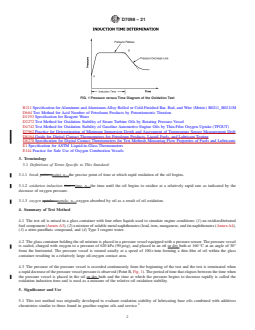
FIG. 1 Pressure versus Time Diagram of the Oxidation Test
a hood may be desirable.
6.2 Precision Pressure Gauge—Use a certified precision
pressure gauge to accurately control the oxygen feed to the
3. Terminology
pressure vessel. The gauge shall have a sufficient range to
encompass 0 kPa to 650 kPa (~90 psig) required by the test
3.1 Definitions of Terms Specific to This Standard:
method with division 2.0 kPa (~0.5 psig) or better to enable
3.1.1 break point, n—the precise point of time at which
readings to be made to 2.0 kPa (~0.25 psig).
rapid oxidation of the oil begins.
6.3 Thermometer, digital (DCT) or liquid-in-glass styles
3.1.2 oxidation induction time, n—the time until the oil
shall be used to check the bath temperature monthly at a
begins to oxidize at a relatively rapid rate as indicated by the
minimum. The thermometer shall be able to be read with an
decrease of oxygen pressure.
accuracy of 60.1 °C at the level of 160 °C, such as D02-
3.1.3 oxygen uptake, n—oxygen absorbed by oil as a result
DCT-06 in Specification D8278. Thermometers, digital (DCT)
of oil oxidation.
oranalog,needtobecheckedforaccuracyatleastonetimeper
year. See Specification E1 and Practice D7962 for guidance.
4. Summary of Test Method
4.1 The test oil is mixed in a glass container with four other 7. Reagents
liquids used to simulate engine conditions: (1) an oxidized/
7.1 Purity of Reagents—Reagent grade chemicals shall be
nitrated fuel component (Annex A3), (2) a mixture of soluble
used in all tests. Unless otherwise indicated, it is intended that
metal naphthenates (lead, iron, manganese, and tin naphthen-
all reagents shall conform to the specifications of the Commit-
ates (AnnexA4), (3) a nitro-paraffinic compound, and (4)Type
teeonAnalyticalReagentsoftheAmericanChemicalSociety.
I reagent water.
7.2 Purity of Water—Unless otherwise indicated, references
4.2 The glass container holding the oil mixture is placed in
to reagent water shall be understood to mean distilled water
apressurevesselequippedwithapressuresensor.Thepressure
meeting requirements of reagent water as defined by Type I of
vessel is sealed, charged with oxygen to a pressure of 620 kPa
Specification D1193.
(90 psig), and placed in an oil or dry bath at 160 °C at an angle
7.3 Acetone, CH COCH .
3 3
of 30° from the horizontal. The pressure vessel is rotated
axially at a speed of 100 r⁄min forming a thin film of oil within 7.4 Air, containing 2000 ppm nitrogen dioxide, NO (com-
the glass container resulting in a relatively large oil-oxygen mercially available compressed gas mixture, certified within
65 %).
contact area.
4.3 The pressure of the pressure vessel is recorded continu-
The sole source of supply of the apparatus known to the committee at this time
ously from the beginning of the test and the test is terminated
is Koehler Instrument Co., Inc., 1595 Sycamore Ave., Bohemia, NY11716 and
when a rapid decrease of the pressure vessel pressure is
Stanhope-Seta, London St., Chertsey, Surrey, KT16 8AP, U.K. If you are aware of
observed (Point B, Fig. 1). The period of time that elapses
alternative suppliers, please provide this information to ASTM International
Headquarters.Your comments will receive careful consideration at a meeting of the
between the time when the pressure vessel is placed in the oil
responsible technical committee, which you may attend.
or dry bath and the time at which the pressure begins to
The sole source of supply of the apparatus known to the committee at this time
decrease rapidly is called the oxidation induction time and is
is Tannas Co., 4800 James Savage Rd., Midland, MI 48642. If you are aware of
used as a measure of the relative oil oxidation stability. alternative suppliers, please provide this information to ASTM International
Headquarters.Your comments will receive careful consideration at a meeting of the
responsible technical committee, which you may attend.
5. Significance and Use
ACS Reagent Chemicals, Specifications and Procedures for Reagents and
Standard-Grade Reference Materials, American Chemical Society, Washington,
5.1 This test method was originally developed to evaluate
DC. For suggestions on the testing of reagents not listed by theAmerican Chemical
oxidation stability of lubricating base oils combined with
Society, see Analar Standards for Laboratory Chemicals, BDH Ltd., Poole, Dorset,
additives chemistries similar to those found in gasoline engine
U.K., and the United States Pharmacopeia and National Formulary, U.S. Pharma-
oils and service. copeial Convention, Inc. (USPC), Rockville, MD.
D7098 − 21
NOTE 6—Replace O-rings when reassembling the pressure transducers.
7.5 Cyclo-hexane, C H , Practical Grade or other suitable
6 12
hydrocarbon solvent. (Warning—Highly flammable. Skin ir-
9.4 Periodicallypressuretestthepressurevesselsat690 kPa
ritant on repeated contact. Aspiration hazard.)
(~100 psi) with air or oxygen. If the pressure drops more than
0.690 kPa (~0.1 psi) on the pressure gauge within 60 s, replace
7.6 Isopropyl Alcohol, CH CH(CH )OH.
3 3
the O-ring seals and inspect the valve seals according to
7.7 Oxygen, 99.8 %.
manufacturer’sdirections.Iftheproblemcontinues,contactthe
specific equipment manufacturer.
8. Materials
NOTE 7—Previous versions of this test method have called for hydro-
8.1 TFOUT Catalyst B Package:
static testing of the pressure vessel. This was found unnecessary at the
relatively low pressures involved in running this test method.
8.1.1 Fuel Component—The fuel component is a nitrated
gasoline fraction or organic equivalent. This component may
9.5 Cleaning of Catalyst Syringes—Use individual catalyst
be prepared in accordance with the procedures described in
syringes for each catalyst component. Thoroughly clean and
Annex A3.
dry syringes prior to each use. (See Annex A5 for recom-
8.1.2 Soluble Metal Catalyst Mixture—This catalyst is a
mended procedure.)
mixture of soluble metal catalysts (lead, iron, manganese, and
10. Procedure
tin). The catalyst may be prepared according to the procedures
described in Annex A4.
10.1 Weighing and Mixing Sample and Catalyst Compo-
8.1.2.1 Other oxidation stability test methods have demon-
nents:
strated that soluble metal catalyst supplies may be inconsistent
10.1.1 Place the clean glass sample container onto the
and have significant effects on the test results. Thus, for test
precision balance and tare.
comparisons, the same source and same batch of metal
10.1.2 Weigh 1.500 g 6 0.001 g of oil sample into the
naphthenates shall be used.
container and tare.
10.1.3 Add 0.045 g 6 0.001 g of the soluble metal catalyst
NOTE 2—It is good research practice to use the same batches of catalyst
components when closely comparing engine oils. mixture into the glass sample container and tare.
NOTE 3—Slow, steady reactivity of some of the catalyst chemicals can
10.1.4 Add 0.030 g 6 0.001 g each of the fuel component,
beaproblem.Suchproblemscanbereducedbystoringtheclosedcatalyst
nitro-paraffin and reagent water to the glass sample container
vials in a refrigerator at approximately 5 °C. The catalyst chemicals
and tare each time. It is easiest to add the distilled water last
remain effective up to six months after the septum is punctured, if they are
and place on top of the oil sample.
stored as noted above.
10.1.5 Just prior to inserting the glass sample container into
8.1.3 Nitro-paraffın—This compound is made up of a nitri-
the pressure vessel, thoroughly mix the catalyst components
alkane blend.
within the sample container by hand-rotation (approximately
NOTE 4—Suitably prepared catalyst packages may be purchased from
five rotations) and proceed immediately to 10.2. Delay may
Tannas Co.
result in variation of results.
8.2 Varnish and Deposit Remover, water-soluble varnish
10.2 Pressure Vessel Assembly and Charging—Immediately
remover or other engine varnish/deposit removers.
and rapidly assemble and charge the pressure vessel in accor-
8.3 Silicone Stopcock Grease. dance with apparatus type (see A1.2 or A2.7).
NOTE 8—Avoid releasing the oxygen too rapidly by decreasing the
pressure to atmospheric in no less than 1 min to avoid possible foaming
9. Preparation of Apparatus
and overflow of the sample from the glass sample container.
9.1 Glass Sample Container—A clean glass sample con-
10.3 Oxidation—Before starting the test, bring the heating
tainer is important for obtaining repeatable results. Thorough
bath to the test temperature at 160 °C and insert the pressure
cleaning can be accomplished by (a) rinsing with cyclo-hexane
vessel(s)inaccordancewithapparatustype(seeA1.3orA2.8).
or other suitable hydrocarbon solvent, (b) soaking in concen-
10.3.1 Allow the bath temperature to level out at the test
trated solution of a water-soluble varnish remover, (c) thor-
temperature, which must occur within 15 min after insertion of
oughly rinsing with water, (d) rinsing with acetone, (e) and
thepressurevessel.Maintainingthetesttemperaturewithinthe
permitting to dry.
specified limits of 160 °C 6 0.3 °C during the entire test run is
NOTE 5—A segmented glass reaction dish has been found suitable to
themostimportantsinglefactorensuringbothrepeatabilityand
prevent premature mixing of the catalyst components (see Fig. A2.4)
reproducibility of test results. If the test temperature cannot be
9.2 Cleaning of Pressure Vessel—Fill with concentrated
maintained as specified, the test results shall not be considered
solution of a water-soluble varnish remover and soak for
valid.
suitable time, rinse with water, rinse with acetone, and permit
to dry.
NOTE 9—The time for the bath to reach the operating temperature after
insertion of the pressure vessel may differ for different apparatus assem-
9.3 Cleaning of Pressure Vessel Stem—Periodically
blies and shall be observed for each unit (a unit may carry one, two, three,
disassemble, inspect, and clean the pressure vessel stem. Rinse
orfourpressurevessels).Theobjectiveistofindasetofconditions,which
theinsideofthestemwithisopropylalcoholandblowdrywith
does not permit a drop of more than 2 °C after insertion of the pressure
vessel(s) and allows the pressure vessel pressure to reach plateau within
oil free compressed air. For users of apparatus described in
15 min.
Annex A1, periodically insert a dry pipe cleaner into the
transducer line opening for removal of potential residue 10.4 Keep the pressure vessel completely submerged and
buildup. maintain continuous and uniform rotation throughout the test.
D7098 − 21
Astandardrotationalspeedof100 r⁄min 65 r⁄minisrequired; 12. Precision and Bias
any variation in this speed could cause erratic results.
12.1 The precision of this test method, as determined by
statistical examination of interlaboratory results on break point
10.5 Monitor the pressure of the pressure vessel preferably
time, is as follows:
using a strip chart or some other form of electronic data
12.1.1 Repeatability—The difference between successive
collection program. If a dial pressure gauge is used, make
results, obtained by the same operator with the same apparatus
readings at least every 5 min. (The maximum pressure must be
under constant operating conditions on identical test material,
reachedwithin15 min.)Afteratestperiod(theinductiontime),
would in the long run, in the normal and correct operation of
thepressuredecreasesbecauseofoxygenabsorptionbyoil(the
the test method, exceed the following values only in one case
break point).
in twenty:
10.5.1 When the oil reaches the break point, the pressure
14 % of mean
decreases rapidly as oxygen is absorbed rapidly by the test oil.
12.1.2 Reproducibility—The difference between two single
Thetestcanbeterminatedassoonassufficientinformationhas
and independent results obtained by different operators work-
been collected to form a tangent to the decreasing pressure
ing in different laboratories on identical test material would, in
trace (see 10.6) or, if desired, continued until pressure de-
the long run, in the normal and correct operation of the test
creases to some further level.
method, exceed the following values only in one case in
NOTE 10—The pressure within the pressure vessel increases at the
twenty:
beginning because of gas expansion accompanying the temperature
39 % of mean
increase of the pressure vessel. Following this rise, the pressure reaches a
plateau as shown in Fig. 1. This pressure may gradually drop slightly
12.2 The range of induction times used for developing this
during the test.Agradual decrease of the pressure is not unusual and does
precision statement was from 40 min to 280 min.
not invalidate the test. The time between initiating the test and the break
point is called the oxidation induction time.
12.3 Bias—No information can be presented on the bias of
NOTE 11—If a break in pressure does not occur within 300 min to
the procedure in this test method for measuring oxidation
500 min, the operator may elect to terminate the test. A slow decrease in
stability because no material having an accepted reference
pressure may also indicate a small leak from the pressure vessel, which is
value is available.
why it is a good practice to occasionally determine whether a slow leak is
present.
12.4 The precision statements in 12.1.1 and 12.1.2 were
determined from an interlaboratory study using the same batch
10.6 Recordthetimeatwhichthepressurestartstodecrease
of soluble metal mixture (TFOUT Catalyst B Package of
rapidly at the break point (Point B, Fig. 1), which is marked as
Tannas Co.).
the intersection of the tangent of the pressure plateau line
during the final 20 min before the break point and the tangent
13. Keywords
of the pressure decrease line following the break point as
13.1 oxidation stability; sequence IIIE engine simulation;
shown in Fig. 1.
TFOUT
11. Report
Supporting data have been filed at ASTM International Headquarters and may
11.1 Report the oxidation induction time in minutes. Deter-
be obtained by requesting Research Report RR:D02-1571, including the raw data
mine the induction time as the time period from the beginning
and the statistical treatment of data. Contact ASTM Customer Service at
of the test (PointA, Fig. 1) to the break point (Point B, Fig. 1). service@astm.org.
ANNEXES
(Mandatory Information)
A1. THIN FILM OXYGEN UPTAKE TEST USING THE RBOT/TFOUT APPARATUS
INTRODUCTION
Two types of TFOUT instruments were used in generating the precision data given in this test
method. The first was the modified RBOT (now known as RPVOT) instrument originally used to
develop the test procedure and for distinction is called the RBOT/TFOUT apparatus. The second was
an instrument designed specifically to run the TFOUT test and later modified to permit running the
RPVOT test.
NOTE A1.1—This annex utilizes two modified RPVOT (Test Method strain-gauge pressure transducers and a computer were incorporated into
D2272)apparatusofsimilardesignforrunningtheTFOUTtest.However, the
...
This document is not an ASTM standard and is intended only to provide the user of an ASTM standard an indication of what changes have been made to the previous version. Because
it may not be technically possible to adequately depict all changes accurately, ASTM recommends that users consult prior editions as appropriate. In all cases only the current version
of the standard as published by ASTM is to be considered the official document.
Designation: D7098 − 08 (Reapproved 2015) D7098 − 21
Standard Test Method for
Oxidation Stability of Lubricants by Thin-Film Oxygen
1,2
Uptake (TFOUT) Catalyst B
This standard is issued under the fixed designation D7098; the number immediately following the designation indicates the year of
original adoption or, in the case of revision, the year of last revision. A number in parentheses indicates the year of last reapproval. A
superscript epsilon (´) indicates an editorial change since the last revision or reapproval.
1. Scope Scope*
1.1 This test method covers the oxidation stability of lubricants by thin-film oxygen uptake (TFOUT) Catalyst B. This test method
evaluates the oxidation stability of petroleum products, and it was originally developed as a screening test to indicate whether a
given re-refined base stock could be formulated for use as automotive engine oil (see Test Method D4742). The test is run at
160 °C in a pressure vessel under oxygen pressure, and the sample contains a metal catalyst package, a fuel catalyst, and water
to partially simulate oil conditions in an operating engine. In addition, the test method has since been found broadly useful as an
oxidation test of petroleum products.
1.2 The applicable range of the induction time is from a few minutes up to several hundred minutes or more. However, the range
of induction times used for developing the precision statements in this test method was from 40 min to 280 min.
1.3 The values stated in SI units are to be regarded as standard. No other units of measurement are included in this standard.
1.3.1 Exception—Pressure units are provided in psig, and dimensions are provided in inches in Annex A1 and Annex A2, because
these are the industry accepted standard and the apparatus is built according to the figures shown.
1.4 This standard does not purport to address all of the safety concerns, if any, associated with its use. It is the responsibility
of the user of this standard to establish appropriate safety safety, health, and healthenvironmental practices and determine the
applicability of regulatory limitations prior to use.
1.5 This international standard was developed in accordance with internationally recognized principles on standardization
established in the Decision on Principles for the Development of International Standards, Guides and Recommendations issued
by the World Trade Organization Technical Barriers to Trade (TBT) Committee.
2. Referenced Documents
2.1 ASTM Standards:
A314 Specification for Stainless Steel Billets and Bars for Forging
This test method is under the jurisdiction of ASTM Committee D02 on Petroleum Products, Liquid Fuels, and Lubricants and is the direct responsibility of Subcommittee
D02.09.0G on Oxidation Testing of Engine Oils.
Current edition approved Oct. 1, 2015Oct. 1, 2021. Published December 2015November 2021. Originally approved in 2005. Last previous edition approved in 20082015
ε1
as D7098 – 08 (2015). . DOI: 10.1520/D7098-08R15.10.1520/D7098-21.
While Catalyst B can be used for testing oxidation stability of many lubricant types, the mixture of fuel, nitro-paraffin, and catalyst components used in this test method
simulates the Sequence IIIE Engine Test. Test results on several ASTM reference oils have been found to correlate with Sequence IIIE engine tests in hours for a 375 %
viscosity increase. (See Ku, Chia-Soon, Pei, Patrick T., and Hsu, Stephen M., “A Modified Thin-Film Oxygen Uptake Test (TFOUT) for the Evaluation of Lubricant Stability
in ASTM Sequence IIIE Test, SAE Technical Paper Series 902121, Tulsa, OK, Oct. 22-25, 1990.)
Ku, C. S. and Hsu, S. M., “A Thin Film Uptake Test for the Evaluation of Automotive Lubricants,” Lubrication Engineering, 40, 2, 1984, pp. 75–83.
Selby, Theodore W., “Oxidation Studies with a Modified Thin-Film Oxygen Uptake Test”, SAE Technical Paper Series 872127, Toronto, Ontario, Nov. 2-5, 1987.
For referenced ASTM standards, visit the ASTM website, www.astm.org, or contact ASTM Customer Service at service@astm.org. For Annual Book of ASTM Standards
volume information, refer to the standard’s Document Summary page on the ASTM website.
*A Summary of Changes section appears at the end of this standard
Copyright © ASTM International, 100 Barr Harbor Drive, PO Box C700, West Conshohocken, PA 19428-2959. United States
D7098 − 21
FIG. 1 Pressure versus Time Diagram of the Oxidation Test
B211 Specification for Aluminum and Aluminum-Alloy Rolled or Cold-Finished Bar, Rod, and Wire (Metric) B0211_B0211M
D664 Test Method for Acid Number of Petroleum Products by Potentiometric Titration
D1193 Specification for Reagent Water
D2272 Test Method for Oxidation Stability of Steam Turbine Oils by Rotating Pressure Vessel
D4742 Test Method for Oxidation Stability of Gasoline Automotive Engine Oils by Thin-Film Oxygen Uptake (TFOUT)
D7962 Practice for Determination of Minimum Immersion Depth and Assessment of Temperature Sensor Measurement Drift
D8164 Guide for Digital Contact Thermometers for Petroleum Products, Liquid Fuels, and Lubricant Testing
D8278 Specification for Digital Contact Thermometers for Test Methods Measuring Flow Properties of Fuels and Lubricants
E1 Specification for ASTM Liquid-in-Glass Thermometers
E144 Practice for Safe Use of Oxygen Combustion Vessels
3. Terminology
3.1 Definitions of Terms Specific to This Standard:
3.1.1 break point—point, n—the precise point of time at which rapid oxidation of the oil begins.
3.1.2 oxidation induction time—time, n—the time until the oil begins to oxidize at a relatively rapid rate as indicated by the
decrease of oxygen pressure.
3.1.3 oxygen uptake—uptake, n—oxygen absorbed by oil as a result of oil oxidation.
4. Summary of Test Method
4.1 The test oil is mixed in a glass container with four other liquids used to simulate engine conditions: (1) an oxidized/nitrated
fuel component (Annex A3), (2) a mixture of soluble metal naphthenates (lead, iron, manganese, and tin naphthenates (Annex A4),
(3) a nitro-paraffinic compound, and (4) Type I reagent water.
4.2 The glass container holding the oil mixture is placed in a pressure vessel equipped with a pressure sensor. The pressure vessel
is sealed, charged with oxygen to a pressure of 620 kPa (90 psig), and placed in an oil or dry bath at 160 °C at an angle of 30°
from the horizontal. The pressure vessel is rotated axially at a speed of 100 r ⁄min forming a thin film of oil within the glass
container resulting in a relatively large oil-oxygen contact area.
4.3 The pressure of the pressure vessel is recorded continuously from the beginning of the test and the test is terminated when
a rapid decrease of the pressure vessel pressure is observed (Point B, Fig. 1). The period of time that elapses between the time when
the pressure vessel is placed in the oil or dry bath and the time at which the pressure begins to decrease rapidly is called the
oxidation induction time and is used as a measure of the relative oil oxidation stability.
5. Significance and Use
5.1 This test method was originally developed to evaluate oxidation stability of lubricating base oils combined with additives
chemistries similar to those found in gasoline engine oils and service.
D7098 − 21
5.2 This test method is useful for screening formulated oils before engine tests. Within similar additive chemistries and base oil
types, the ranking of oils in this test appears to be predictive of ranking in certain engine tests. When oils having different additive
chemistries or base oil type are compared, results may or may not reflect results in engine tests. Only gasoline engine oils were
used in generating the precision statements in this test method.
6. Apparatus
6 7
6.1 Oxidation Bath and Pressure Vessel—See appropriate Annex (Annex A1 or Annex A2 ) for detailed description of apparatus
and accessories for equipment described in this test method.
NOTE 1—To reduce vapor odors when opening pressure vessel after use, a hood may be desirable.
6.2 Precision Pressure Gauge—Use a certified precision pressure gauge to accurately control the oxygen feed to the pressure
vessel. The gauge shall have a sufficient range to encompass 0 kPa to 650 kPa (~90 psig) required by the test method with division
2.0 kPa (~0.5 psig) or better to enable readings to be made to 2.0 kPa (~0.25 psig).
6.3 Thermometer, digital (DCT) or liquid-in-glass styles shall be used to check the bath temperature monthly at a minimum. The
thermometer shall be able to be read with an accuracy of 60.1 °C at the level of 160 °C, such as D02-DCT-06 in Specification
D8278. Thermometers, digital (DCT) or analog, need to be checked for accuracy at least one time per year. See Specification E1
and Practice D7962 for guidance.
7. Reagents
7.1 Purity of Reagents—Reagent grade chemicals shall be used in all tests. Unless otherwise indicated, it is intended that all
reagents shall conform to the specifications of the Committee on Analytical Reagents of the American Chemical Society.
7.2 Purity of Water—Unless otherwise indicated, references to reagent water shall be understood to mean distilled water meeting
requirements of reagent water as defined by Type I of Specification D1193.
7.3 Acetone, CH COCH .
3 3
7.4 Air, containing 2000 ppm nitrogen dioxide, NO (commercially available compressed gas mixture, certified within 65 %).
7.5 Cyclo-hexane, C H , Practical Grade or other suitable hydrocarbon solvent. (Warning—Highly flammable. Skin irritant on
6 12
repeated contact. Aspiration hazard.)
7.6 Isopropyl Alcohol, CH CH(CH )OH.
3 3
7.7 Oxygen, 99.8 %.
8. Materials
8.1 TFOUT Catalyst B Package:
8.1.1 Fuel Component—The fuel component is a nitrated gasoline fraction or organic equivalent. This component may be prepared
in accordance with the procedures described in Annex A3.
The sole source of supply of the apparatus known to the committee at this time is Koehler Instrument Co., Inc., 1595 Sycamore Ave., Bohemia, NY11716 and
Stanhope-Seta, London St., Chertsey, Surrey, KT16 8AP, U.K. If you are aware of alternative suppliers, please provide this information to ASTM International Headquarters.
Your comments will receive careful consideration at a meeting of the responsible technical committee, which you may attend.
The sole source of supply of the apparatus known to the committee at this time is Tannas Co., 4800 James Savage Rd., Midland, MI 48642. If you are aware of alternative
suppliers, please provide this information to ASTM International Headquarters. Your comments will receive careful consideration at a meeting of the responsible technical
committee, which you may attend.
Reagent Chemicals, American Chemical Society Specifications,ACS Reagent Chemicals, Specifications and Procedures for Reagents and Standard-Grade Reference
Materials, American Chemical Society, Washington, DC. For Suggestionssuggestions on the testing of reagents not listed by the American Chemical Society, see
AnnualAnalar Standards for Laboratory Chemicals, BDH Ltd., Poole, Dorset, U.K., and the United States Pharmacopeia and National Formulary, U.S. Pharmacopeial
Convention, Inc. (USPC), Rockville, MD.
D7098 − 21
8.1.2 Soluble Metal Catalyst Mixture—This catalyst is a mixture of soluble metal catalysts (lead, iron, manganese, and tin). The
catalyst may be prepared according to the procedures described in Annex A4.
8.1.2.1 Other oxidation stability test methods have demonstrated that soluble metal catalyst supplies may be inconsistent and have
significant effects on the test results. Thus, for test comparisons, the same source and same batch of metal naphthenates shall be
used.
NOTE 2—It is good research practice to use the same batches of catalyst components when closely comparing engine oils.
NOTE 3—Slow, steady reactivity of some of the catalyst chemicals can be a problem. Such problems can be reduced by storing the closed catalyst vials
in a refrigerator at approximately 5 °C. The catalyst chemicals remain effective up to six months after the septum is punctured, if they are stored as noted
above.
8.1.3 Nitro-paraffın—This compound is made up of a nitrialkane blend.
NOTE 4—Suitably prepared catalyst packages may be purchased from Tannas Co.
8.2 Varnish and Deposit Remover, water-soluble varnish remover or other engine varnish/deposit removers.
8.3 Silicone Stopcock Grease.
9. Preparation of Apparatus
9.1 Glass Sample Container—A clean glass sample container is important for obtaining repeatable results. Thorough cleaning can
be accomplished by (a) rinsing with cyclo-hexane or other suitable hydrocarbon solvent, (b) soaking in concentrated solution of
a water-soluble varnish remover, (c) thoroughly rinsing with water, (d) rinsing with acetone, (e) and permitting to dry.
NOTE 5—A segmented glass reaction dish has been found suitable to prevent premature mixing of the catalyst components (see Fig. A2.4)
9.2 Cleaning of Pressure Vessel—Fill with concentrated solution of a water-soluble varnish remover and soak for suitable time,
rinse with water, rinse with acetone, and permit to dry.
9.3 Cleaning of Pressure Vessel Stem—Periodically disassemble, inspect, and clean the pressure vessel stem. Rinse the inside of
the stem with isopropyl alcohol and blow dry with oil free compressed air. For users of apparatus described in Annex A1,
periodically insert a dry pipe cleaner into the transducer line opening for removal of potential residue buildup.
NOTE 6—Replace O-rings when reassembling the pressure transducers.
9.4 Periodically pressure test the pressure vessels at 690 kPa (~100 psi) with air or oxygen. If the pressure drops more than
0.690 kPa (~0.1 psi) on the pressure gauge within 60 s, replace the O-ring seals and inspect the valve seals according to
manufacturer’s directions. If the problem continues, contact the specific equipment manufacturer.
NOTE 7—Previous versions of this test method have called for hydrostatic testing of the pressure vessel. This was found unnecessary at the relatively low
pressures involved in running this test method.
9.5 Cleaning of Catalyst Syringes—Use individual catalyst syringes for each catalyst component. Thoroughly clean and dry
syringes prior to each use. (See Annex A5 for recommended procedure.)
10. Procedure
10.1 Weighing and Mixing Sample and Catalyst Components:
10.1.1 Place the clean glass sample container onto the precision balance and tare.
10.1.2 Weigh 1.500 g 6 0.001 g of oil sample into the container and tare.
D7098 − 21
10.1.3 Add 0.045 g 6 0.001 g of the soluble metal catalyst mixture into the glass sample container and tare.
10.1.4 Add 0.030 g 6 0.001 g each of the fuel component, nitro-paraffin and reagent water to the glass sample container and tare
each time. It is easiest to add the distilled water last and place on top of the oil sample.
10.1.5 Just prior to inserting the glass sample container into the pressure vessel, thoroughly mix the catalyst components within
the sample container by hand-rotation (approximately five rotations) and proceed immediately to 10.2. Delay may result in
variation of results.
10.2 Pressure Vessel Assembly and Charging—Immediately and rapidly assemble and charge the pressure vessel in accordance
with apparatus type (see A1.2 or A2.7).
NOTE 8—Avoid releasing the oxygen too rapidly by decreasing the pressure to atmospheric in no less than 1 min to avoid possible foaming and overflow
of the sample from the glass sample container.
10.3 Oxidation—Before starting the test, bring the heating bath to the test temperature at 160 °C and insert the pressure vessel(s)
in accordance with apparatus type (see A1.3 or A2.8).
10.3.1 Allow the bath temperature to level out at the test temperature, which must occur within 15 min after insertion of the
pressure vessel. Maintaining the test temperature within the specified limits of 160 °C 6 0.3 °C during the entire test run is the
most important single factor ensuring both repeatability and reproducibility of test results. If the test temperature cannot be
maintained as specified, the test results shall not be considered valid.
NOTE 9—The time for the bath to reach the operating temperature after insertion of the pressure vessel may differ for different apparatus assemblies and
shall be observed for each unit (a unit may carry one, two, three, or four pressure vessels). The objective is to find a set of conditions, which does not
permit a drop of more than 2 °C after insertion of the pressure vessel(s) and allows the pressure vessel pressure to reach plateau within 15 min.
10.4 Keep the pressure vessel completely submerged and maintain continuous and uniform rotation throughout the test. A standard
rotational speed of 100 r ⁄min 6 5 r ⁄min is required; any variation in this speed could cause erratic results.
10.5 Monitor the pressure of the pressure vessel preferably using a strip chart or some other form of electronic data collection
program. If a dial pressure gauge is used, make readings at least every 5 min. (The maximum pressure must be reached within
15 min.) After a test period (the induction time), the pressure decreases because of oxygen absorption by oil (the break point).
10.5.1 When the oil reaches the break point, the pressure decreases rapidly as oxygen is absorbed rapidly by the test oil. The test
can be terminated as soon as sufficient information has been collected to form a tangent to the decreasing pressure trace (see 10.6)
or, if desired, continued until pressure decreases to some further level.
NOTE 10—The pressure within the pressure vessel increases at the beginning because of gas expansion accompanying the temperature increase of the
pressure vessel. Following this rise, the pressure reaches a plateau as shown in Fig. 1. This pressure may gradually drop slightly during the test. A gradual
decrease of the pressure is not unusual and does not invalidate the test. The time between initiating the test and the break point is called the oxidation
induction time.
NOTE 11—If a break in pressure does not occur within 300 min to 500 min, the operator may elect to terminate the test. A slow decrease in pressure may
also indicate a small leak from the pressure vessel, which is why it is a good practice to occasionally determine whether a slow leak is present.
10.6 Record the time at which the pressure starts to decrease rapidly at the break point (Point B, Fig. 1), which is marked as the
intersection of the tangent of the pressure plateau line during the final 20 min before the break point and the tangent of the pressure
decrease line following the break point as shown in Fig. 1.
11. Report
11.1 Report the oxidation induction time in minutes. Determine the induction time as the time period from the beginning of the
test (Point A, Fig. 1) to the break point (Point B, Fig. 1).
D7098 − 21
12. Precision and Bias
12.1 The precision of this test method, as determined by statistical examination of interlaboratory results on break point time, is
as follows:
12.1.1 Repeatability—The difference between successive results, obtained by the same operator with the same apparatus under
constant operating conditions on identical test material, would in the long run, in the normal and correct operation of the test
method, exceed the following values only in one case in twenty:
14 % of mean
12.1.2 Reproducibility—The difference between two single and independent results obtained by different operators working in
different laboratories on identical test material would, in the long run, in the normal and correct operation of the test method,
exceed the following values only in one case in twenty:
39 % of mean
12.2 The range of induction times used for developing this precision statement was from 40 min to 280 min.
12.3 Bias—No information can be presented on the bias of the procedure in this test method for measuring oxidation stability
because no material having an accepted reference value is available.
12.4 The precision statements in 12.1.1 and 12.1.2 were determined from an interlaboratory study using the same batch of soluble
metal mixture (TFOUT Catalyst B Package of Tannas Co.).
13. Keywords
13.1 oxidation stability; sequence IIIE engine simulation; TFOUT
ANNEXES
(Mandatory Information)
A1. THIN FILM OXYGEN UPTAKE TEST USING THE RBOT/TFOUT APPARATUS
INTRODUCTION
Two types of TFOUT instruments were used in generating the precision data given in this test
method. The first was the modified RBOT (now known as RPVOT) instrument originally used to
develop the test procedure and for distinction is called the RBOT/TFOUT apparatus. The second was
an instrument designed specifically to run the TFOUT test and later modified to permit running the
RPVOT test.
NOTE A1.1—This annex utilizes two modified RPVOT (Test Method D2272) apparatus of similar design for running the TFOUT test. However,
strain-gauge pressure transducers and a computer were incorporated into the later version.
A1.1 Pressure Vessel,with lid, cap, and stem is constructed as shown in Fig. A1.1. The pressure vessel has the same dimensional
specifications as the RPVOT pressure vessel (see Test Method D2272). Therefore, the pressure vessel for RPVOT can be used for
this test. However, in the test an aluminum insert and a gla
...