

ASTM F3278-20
(Specification)Standard Performance Specifications and Test Methods for Hand-Held Metal Detectors Used in Safety and Security
General Information
- Abstract
ABSTRACT
This specification establishes the acceptance requirements and performance testing procedures for all hand-held metal detectors (HHMDs) used to find metal contraband concealed or hidden on people or other objects with accessible surfaces. It covers baseline performance requirements, including metal object detection performance, safety (electrical, mechanical, fire), electromagnetic compatibility, environmental conditions and ranges, and mechanical durability. This performance specification describes the use of spherical test objects, instead of actual threat objects or exemplars of threat objects, to test the detection performance of HHMDs. The spherically shaped test objects are constructed of either aluminum or steel. Their diameters and the metal used for the different classification of HHMD performance are covered by this specification, along with the electrical conductivity and magnetic relative permeability of the metals used in the construction of the test objects. The specification also defines the distance between the measurement plane and the detector plane for the different HHMD size classes, as well as the x-axis scan range.
SCOPE
1.1 This standard applies to all hand-held metal detectors (HHMDs) used to find metal contraband concealed or hidden on people or other objects with accessible surfaces. This standard describes baseline performance requirements, which includes metal object detection performance, safety (electrical, mechanical, fire), electromagnetic compatibility, environmental conditions and ranges, and mechanical durability. The requirements for metal detection performance are unique and, therefore, test methods for these parameters are provided, including the design of test objects. An agency or organization using this standard is encouraged to add their unique operationally-based requirements to those requirements listed in this baseline performance specification.
1.2 This standard describes the use of spherical test objects, instead of actual threat objects or exemplars of threat objects, to test the detection performance of hand-held metal detectors. Spherical test objects are used because the detectability of spherical test objects is not orientation dependent, whereas this is not true for non-spherical test objects. This orientation-dependent detectability of non-spherical test objects may allow a HHMD to be incorrectly attributed a higher performance capability than that HHMD is capable of providing. To aid agencies wishing to add specific threat objects to their detection performance requirements, included in Appendix X1 is the analysis of the probability of detection for different orientations of agency-specific threat objects.
1.3 This standard does not purport to address all of the safety concerns, if any, associated with its use. It is the responsibility of the user of this standard to establish appropriate safety, health, and environmental practices and determine the applicability of regulatory limitations prior to use.
1.4 This international standard was developed in accordance with internationally recognized principles on standardization established in the Decision on Principles for the Development of International Standards, Guides and Recommendations issued by the World Trade Organization Technical Barriers to Trade (TBT) Committee.
- Status
- Published
- Publication Date
- 30-Nov-2020
- Technical Committee
- F12 - Security Systems and Equipment
- Drafting Committee
- F12.60 - Controlled Access Security, Search, and Screening Equipment
Buy Documents
ASTM F3278-20 - Standard Performance Specifications and Test Methods for Hand-Held Metal Detectors Used in Safety and Security
REDLINE ASTM F3278-20 - Standard Performance Specifications and Test Methods for Hand-Held Metal Detectors Used in Safety and Security
Overview
ASTM F3278-20, "Standard Performance Specifications and Test Methods for Hand-Held Metal Detectors Used in Safety and Security," defines essential requirements and test methods for hand-held metal detectors (HHMDs) designed for the detection of concealed metal contraband. This international standard, developed by ASTM Committee F12 on Security Systems and Equipment, emphasizes both performance and safety in environments where metal detection is critical for public safety, such as security screening checkpoints, corrections, law enforcement, and loss prevention.
By establishing baseline performance requirements and test procedures, the standard ensures that HHMDs reliably detect metal objects, comply with safety regulations, and perform under various environmental conditions.
Key Topics
- Baseline Performance Specifications: Includes requirements for detection sensitivity, detection speed, and probability of detection, ensuring HHMDs perform consistently across object sizes classified as very small, small, medium, and large.
- Safety and Electromagnetic Compatibility: Covers electrical, mechanical, and thermal safety, aligning with international standards such as IEC 61010-1 for electrical equipment safety and IEC 61000 series for electromagnetic compatibility (EMC).
- Environmental and Durability Testing: Specifies operational ranges for temperature and humidity and references military and IEC environmental standards for shock, vibration, and ingress protection (IP54 and higher) to confirm operational durability.
- Test Methods: Recommends the use of spherical aluminum or steel test objects to provide orientation-independent detectability. The testing includes defined distances between measurement and detector planes and prescribed scan ranges for comprehensive evaluation.
- Alarm Requirements: Mandates at least one form of alarm-audible, visual, or vibratory-to ensure clear operator notification upon detection.
- Interference Assessment: Evaluates the likelihood of false alarms in proximity to people (using body simulants) or metal panels, and checks susceptibility to electromagnetic interference per CISPR 22 and IEC 61000.
Applications
ASTM F3278-20 is fundamental to organizations seeking to:
- Optimize Security Screening: Enables airports, courthouses, event venues, and correctional facilities to select and validate HHMDs that meet calibrated performance and safety benchmarks.
- Ensure Operational Safety and Compliance: Supports procurement decisions for agencies concerned about electrical, thermal, or mechanical risks and electromagnetic compatibility with other devices, including medical equipment.
- Standardize Testing and Procurement: Provides a repeatable, internationally recognized HHMD evaluation process-essential for tenders, quality assurance, and agency-specific performance customization.
- Enhance Detection Consistency: The use of spherical test objects eliminates variation due to object orientation, ensuring consistent and fair assessment across different devices and scenarios.
Related Standards
Several standards are referenced within ASTM F3278-20, supporting harmonization and broader compliance:
- ASTM F3356: Practice for Conformity Assessment of Metal Detectors Used in Safety and Security
- ISO 17025: Competence requirements for testing and calibration laboratories
- ISO 10012: Measurement management systems-measurement processes and equipment
- IEC 61010-1: Safety requirements for electrical equipment
- IEC 61000 Series: Standards for electromagnetic compatibility (EMC)
- MIL-STD-810G: Environmental engineering and laboratory test methods (temperature, humidity)
- IEC 60529: Degrees of protection provided by enclosures (IP Code, such as IP54)
- CISPR 22: Information technology equipment-radio disturbance characteristics
By adhering to ASTM F3278-20 and its referenced standards, organizations can drive consistent, high-quality deployment and validation of hand-held metal detectors, fostering safer, more secure public and private environments.
Keywords: ASTM F3278-20, hand-held metal detectors, HHMD, safety and security, metal detection, test methods, performance specification, electromagnetic compatibility, IP54, security screening, false alarms, standards compliance.
Relations
- Effective Date
- 01-Aug-2019
- Effective Date
- 01-Apr-2019
- Effective Date
- 01-Dec-2018
Buy Documents
ASTM F3278-20 - Standard Performance Specifications and Test Methods for Hand-Held Metal Detectors Used in Safety and Security
REDLINE ASTM F3278-20 - Standard Performance Specifications and Test Methods for Hand-Held Metal Detectors Used in Safety and Security
Get Certified
Connect with accredited certification bodies for this standard

CIS Institut d.o.o.
Personal Protective Equipment (PPE) certification body. Notified Body NB-2890 for EU Regulation 2016/425 PPE.

Kiwa BDA Testing
Building and construction product certification.
Kmetijski inštitut Slovenije
Agricultural Institute of Slovenia. Soil testing, plant health, agricultural product analysis.
Sponsored listings
Frequently Asked Questions
ASTM F3278-20 is a technical specification published by ASTM International. Its full title is "Standard Performance Specifications and Test Methods for Hand-Held Metal Detectors Used in Safety and Security". This standard covers: ABSTRACT This specification establishes the acceptance requirements and performance testing procedures for all hand-held metal detectors (HHMDs) used to find metal contraband concealed or hidden on people or other objects with accessible surfaces. It covers baseline performance requirements, including metal object detection performance, safety (electrical, mechanical, fire), electromagnetic compatibility, environmental conditions and ranges, and mechanical durability. This performance specification describes the use of spherical test objects, instead of actual threat objects or exemplars of threat objects, to test the detection performance of HHMDs. The spherically shaped test objects are constructed of either aluminum or steel. Their diameters and the metal used for the different classification of HHMD performance are covered by this specification, along with the electrical conductivity and magnetic relative permeability of the metals used in the construction of the test objects. The specification also defines the distance between the measurement plane and the detector plane for the different HHMD size classes, as well as the x-axis scan range. SCOPE 1.1 This standard applies to all hand-held metal detectors (HHMDs) used to find metal contraband concealed or hidden on people or other objects with accessible surfaces. This standard describes baseline performance requirements, which includes metal object detection performance, safety (electrical, mechanical, fire), electromagnetic compatibility, environmental conditions and ranges, and mechanical durability. The requirements for metal detection performance are unique and, therefore, test methods for these parameters are provided, including the design of test objects. An agency or organization using this standard is encouraged to add their unique operationally-based requirements to those requirements listed in this baseline performance specification. 1.2 This standard describes the use of spherical test objects, instead of actual threat objects or exemplars of threat objects, to test the detection performance of hand-held metal detectors. Spherical test objects are used because the detectability of spherical test objects is not orientation dependent, whereas this is not true for non-spherical test objects. This orientation-dependent detectability of non-spherical test objects may allow a HHMD to be incorrectly attributed a higher performance capability than that HHMD is capable of providing. To aid agencies wishing to add specific threat objects to their detection performance requirements, included in Appendix X1 is the analysis of the probability of detection for different orientations of agency-specific threat objects. 1.3 This standard does not purport to address all of the safety concerns, if any, associated with its use. It is the responsibility of the user of this standard to establish appropriate safety, health, and environmental practices and determine the applicability of regulatory limitations prior to use. 1.4 This international standard was developed in accordance with internationally recognized principles on standardization established in the Decision on Principles for the Development of International Standards, Guides and Recommendations issued by the World Trade Organization Technical Barriers to Trade (TBT) Committee.
ABSTRACT This specification establishes the acceptance requirements and performance testing procedures for all hand-held metal detectors (HHMDs) used to find metal contraband concealed or hidden on people or other objects with accessible surfaces. It covers baseline performance requirements, including metal object detection performance, safety (electrical, mechanical, fire), electromagnetic compatibility, environmental conditions and ranges, and mechanical durability. This performance specification describes the use of spherical test objects, instead of actual threat objects or exemplars of threat objects, to test the detection performance of HHMDs. The spherically shaped test objects are constructed of either aluminum or steel. Their diameters and the metal used for the different classification of HHMD performance are covered by this specification, along with the electrical conductivity and magnetic relative permeability of the metals used in the construction of the test objects. The specification also defines the distance between the measurement plane and the detector plane for the different HHMD size classes, as well as the x-axis scan range. SCOPE 1.1 This standard applies to all hand-held metal detectors (HHMDs) used to find metal contraband concealed or hidden on people or other objects with accessible surfaces. This standard describes baseline performance requirements, which includes metal object detection performance, safety (electrical, mechanical, fire), electromagnetic compatibility, environmental conditions and ranges, and mechanical durability. The requirements for metal detection performance are unique and, therefore, test methods for these parameters are provided, including the design of test objects. An agency or organization using this standard is encouraged to add their unique operationally-based requirements to those requirements listed in this baseline performance specification. 1.2 This standard describes the use of spherical test objects, instead of actual threat objects or exemplars of threat objects, to test the detection performance of hand-held metal detectors. Spherical test objects are used because the detectability of spherical test objects is not orientation dependent, whereas this is not true for non-spherical test objects. This orientation-dependent detectability of non-spherical test objects may allow a HHMD to be incorrectly attributed a higher performance capability than that HHMD is capable of providing. To aid agencies wishing to add specific threat objects to their detection performance requirements, included in Appendix X1 is the analysis of the probability of detection for different orientations of agency-specific threat objects. 1.3 This standard does not purport to address all of the safety concerns, if any, associated with its use. It is the responsibility of the user of this standard to establish appropriate safety, health, and environmental practices and determine the applicability of regulatory limitations prior to use. 1.4 This international standard was developed in accordance with internationally recognized principles on standardization established in the Decision on Principles for the Development of International Standards, Guides and Recommendations issued by the World Trade Organization Technical Barriers to Trade (TBT) Committee.
ASTM F3278-20 is classified under the following ICS (International Classification for Standards) categories: 13.320 - Alarm and warning systems. The ICS classification helps identify the subject area and facilitates finding related standards.
ASTM F3278-20 has the following relationships with other standards: It is inter standard links to ASTM F3356-19a, ASTM F3356-19, ASTM F3356-18. Understanding these relationships helps ensure you are using the most current and applicable version of the standard.
ASTM F3278-20 is available in PDF format for immediate download after purchase. The document can be added to your cart and obtained through the secure checkout process. Digital delivery ensures instant access to the complete standard document.
Standards Content (Sample)
This international standard was developed in accordance with internationally recognized principles on standardization established in the Decision on Principles for the
Development of International Standards, Guides and Recommendations issued by the World Trade Organization Technical Barriers to Trade (TBT) Committee.
Designation:F3278 −20
Standard Performance Specifications and Test Methods for
Hand-Held Metal Detectors Used in Safety and Security
This standard is issued under the fixed designation F3278; the number immediately following the designation indicates the year of
original adoption or, in the case of revision, the year of last revision.Anumber in parentheses indicates the year of last reapproval.A
superscript epsilon (´) indicates an editorial change since the last revision or reapproval.
1. Scope mendations issued by the World Trade Organization Technical
Barriers to Trade (TBT) Committee.
1.1 This standard applies to all hand-held metal detectors
(HHMDs) used to find metal contraband concealed or hidden
2. Referenced Documents
on people or other objects with accessible surfaces. This
2.1 ASTM Standards:
standard describes baseline performance requirements, which
F3356Practice for Conformity Assessment of Metal Detec-
includes metal object detection performance, safety (electrical,
tors Used in Safety and Security
mechanical, fire), electromagnetic compatibility, environmen-
2.2 ISO Standards:
tal conditions and ranges, and mechanical durability. The
ISO 17025:2005General Requirements for the Competence
requirements for metal detection performance are unique and,
of Testing and Calibration Laboratories
therefore, test methods for these parameters are provided,
ISO 10012:2003Measurement Management Systems–Re-
including the design of test objects.An agency or organization
quirements for Measurement Processes and Measuring
using this standard is encouraged to add their unique
Equipment
operationally-based requirements to those requirements listed
ISO 14117:2012 Active Implantable Medical De-
in this baseline performance specification.
vices–Electromagnetic Compatibility–EMC Test Proto-
1.2 This standard describes the use of spherical test objects,
cols for Implantable Cardiac Pacemakers, Implantable
instead of actual threat objects or exemplars of threat objects,
Cardioverter Defibrillators, and Cardiac Resynchroniza-
to test the detection performance of hand-held metal detectors.
tion Devices
Spherical test objects are used because the detectability of
ISO 14708-1:2000Implants for Surgery–Active Implant-
sphericaltestobjectsisnotorientationdependent,whereasthis
able Medical Devices–Part 1: General Requirements for
is not true for non-spherical test objects. This orientation-
Safety,MarkingandforInformationtobeProvidedbythe
dependentdetectabilityofnon-sphericaltestobjectsmayallow
Manufacturer
a HHMD to be incorrectly attributed a higher performance
ISO 14708-2:2012Implants for Surgery–Active Implant-
capability than that HHMD is capable of providing. To aid
able Medical Devices–Part 2: Cardiac Pacemakers
agencies wishing to add specific threat objects to their detec-
ISO 14708-3:2017Implants for Surgery–Active Implant-
tionperformancerequirements,includedinAppendixX1isthe
able Medical Devices–Part 3: Implantable Neurostimu-
analysisoftheprobabilityofdetectionfordifferentorientations
lators
of agency-specific threat objects.
ISO 14708-4:2008Implants for Surgery–Active Implant-
1.3 This standard does not purport to address all of the
able Medical Devices – Part 4: Implantable Infusion
safety concerns, if any, associated with its use. It is the
Pumps
responsibility of the user of this standard to establish appro-
ISO 14708-5:2010Implants for Surgery–Active Implant-
priate safety, health, and environmental practices and deter-
able Medical Devices–Part 5: Circulatory Support De-
mine the applicability of regulatory limitations prior to use.
vices
1.4 This international standard was developed in accor-
ISO 14708-6:2010Implants for Surgery–Active Implant-
dance with internationally recognized principles on standard-
able Medical Devices–Part 6: Particular Requirements
ization established in the Decision on Principles for the
forActive Implantable Medical Devices Intended toTreat
Development of International Standards, Guides and Recom-
Tachyarrhythmia (Including Implantable Defibrillators)
For referenced ASTM standards, visit the ASTM website, www.astm.org, or
This standard is under the jurisdiction of ASTM Committee F12 on Security contact ASTM Customer Service at service@astm.org. For Annual Book of ASTM
Systems and Equipment and is the direct responsibility of Subcommittee F12.60 on Standards volume information, refer to the standard’s Document Summary page on
Controlled Access Security, Search, and Screening Equipment. the ASTM website.
Current edition approved Dec. 1, 2020. Published December 2020. Originally Available from International Organization for Standardization (ISO), ISO
approved in 2017. Last previous edition approved in 2019 as F3278–19a. DOI: Central Secretariat, BIBC II, Chemin de Blandonnet 8, CP 401, 1214 Vernier,
10.1520/F3278-20. Geneva, Switzerland, http://www.iso.org.
Copyright © ASTM International, 100 Barr Harbor Drive, PO Box C700, West Conshohocken, PA 19428-2959. United States
F3278−20
ISO 14708-7:2013Implants for Surgery–Active Implant- 3.1.1 alarm—an indication (which may be audible, visual,
able Medical Devices–Part 7: Particular Requirements orvibratory,orcombinationsthereof)thatinformstheoperator
for Cochlear Implant Systems of an event, such as metal detection or a detector (HHMD)
status change.
2.3 IEC Standards:
IEC 60529 2001-2Degrees of Protection Provided by En-
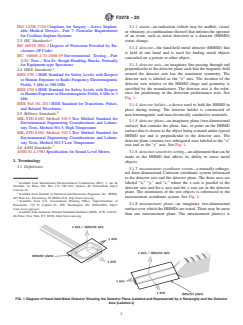
3.1.2 detector—the hand-held metal detector (HHMD) that
closures (IP Code)
is held in one hand and is used for finding metal objects
IEC 60068-2-31:2008-05 Environmental Testing – Part
concealed on a person or other object.
2:31: Tests–Test Ec: Rough Handling Shocks, Primarily
3.1.3 detector axis—an imaginary line passing through and
for Equipment-type Specimens
perpendiculartothedetectorplanesuchthatthemagneticfield
2.4 IEEE Standards:
around the detector axis has the maximum symmetry. The
IEEE C95.1IEEE Standard for Safety Levels with Respect
detector axis is labeled as the “z” axis. The location of the
to Human Exposure to Radio Frequency Electromagnetic
detector axis relative to the HHMD shape and geometry is
Fields, 3 kHz to 300 GHz
specified by the manufacturer. The detector axis is the refer-
IEEE C95.6IEEE Standard for Safety Levels with Respect
ence for positioning in the detection performance tests. See
to Human Exposure to Electromagnetic Fields, 0 kHz to 3
Fig. 1.
kHz
IEEE Std 181-2011IEEE Standard for Transitions, Pulses,
3.1.4 detector holder—a device used to hold the HHMD in
and Related Waveforms
place during testing. The detector holder is constructed of
2.5 Military Standards:
non-ferromagnetic and non-electrically conductive materials.
MIL-STD-810G Method 501.5Test Method Standard for
3.1.5 detector plane—an imaginary plane (two-dimensional
Environmental Engineering Considerations and Labora-
surface) that contains the plane, line, or point on the HHMD
tory Tests, Method 501.5, High Temperature
surfacethatisclosesttotheobjectbeingscannedundertypical
MIL-STD-810G Method 502.5Test Method Standard for
HHMD use and is perpendicular to the detector axis. The
Environmental Engineering Considerations and Labora-
detector plane contains two orthogonal axes labeled as the “x”
tory Tests, Method 502.5 Low Temperature
axis and as the “y” axis. See Fig. 1.
2.6 ANSI Standards:
3.1.6 detectionsensitivitysetting—anadjustmentthatcanbe
ANSI S1.4-1983Specification for Sound Level Meters
made to the HHMD that affects its ability to sense metal
3. Terminology
objects.
3.1 Definitions:
3.1.7 measurement coordinate system—a mutually orthogo-
nal three-dimensional Cartesian coordinate system referenced
to the detector axis and the detector plane. The three axes are
Available from International Electrotechnical Commission (IEC), 3, rue de
labeled “x,” “y,” and “z,” where the z axis is parallel to the
Varembé, 1st Floor, P.O. Box 131, CH-1211, Geneva 20, Switzerland, http://
detector axis and the x axis and the y axis are in the detector
www.iec.ch.
5 plane. The orientation of the test objects is referenced to the
Available from Institute of Electrical and Electronics Engineers, Inc. (IEEE),
measurement coordinate system. See Fig. 2.
445 Hoes Ln., Piscataway, NJ 08854-4141, http://www.ieee.org.
Available from U.S. Government Printing Office, Superintendent of
3.1.8 measurement plane—an imaginary two-dimensional
Documents, 732 N. Capitol St., NW, Washington, DC 20401-0001, http://
www.access.gpo.gov. surface over which the HHMDs are tested.There may be more
Available fromAmerican National Standards Institute (ANSI), 25 W. 43rd St.,
than one measurement plane. The measurement plane(s) is
4th Floor, New York, NY 10036, http://www.ansi.org.
FIG. 1 Diagram of Hand-held Metal Detector Showing the Detector Plane (Labeled and Represented by a Rectangle) and the Detector
Axis (Labeled z)
F3278−20
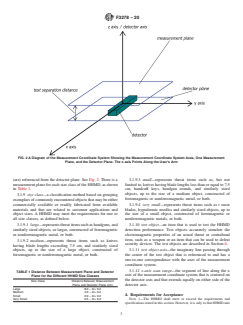
FIG. 2 A Diagram of the Measurement Coordinate System Showing the Measurement Coordinate System Axes, One Measurement
Plane, and the Detector Plane. The x axis Points Along the User’s Arm
(are) referenced from the detector plane. See Fig. 2. There is a 3.1.9.3 small—represents threat items such as, but not
measurementplaneforeachsizeclassoftheHHMD,asshown limitedto,kniveshavingbladelengthslessthanorequalto7.5
in Table 1. cm, handcuff keys, handgun rounds, and similarly sized
objects, up to the size of a medium object, constructed of
3.1.9 size class—a classification method based on grouping
ferromagnetic or nonferromagnetic metal, or both.
exemplarsofcommonlyencounteredobjectsthatmaybeeither
commercially available or readily fabricated from available 3.1.9.4 very small—represents threat items such as t razor
materials and that are related to customer applications and blades, hypodermic needles and similarly sized objects, up to
object sizes. A HHMD may meet the requirements for one or the size of a small object, constructed of ferromagnetic or
all size classes, as defined below. nonferromagnetic metals, or both.
3.1.9.1 large—representsthreatitemssuchashandguns,and 3.1.10 test object—an item that is used to test the HHMD
similarly sized objects, or larger, constructed of ferromagnetic detection performance. Test objects accurately simulate the
or nonferromagnetic metal, or both. electromagnetic properties of an actual threat or contraband
item, such as a weapon or an item that can be used to defeat
3.1.9.2 medium—represents threat items such as knives
security devices. The test objects are described in Section 6.
having blade lengths exceeding 7.5 cm, and similarly sized
objects, up to the size of a large object, constructed of 3.1.11 test object axis—the imaginary line passing through
ferromagnetic or nonferromagnetic metal, or both. the center of the test object that is referenced to and has a
one-to-one correspondence with the axes of the measurement
coordinate system.
3.1.12 x-axis scan range—the segment of line along the x
TABLE 1 Distance Between Measurement Plane and Detector
axis of the measurement coordinate system that is centered on
Plane for the Different HHMD Size Classes
the detector axis and that extends equally on either side of the
Size Class Distance Between Measurement
Plane and Detector Plane (cm) detector axis.
Large 8.0 – 0/+ 0.2
Medium 4.0 – 0/+ 0.2
4. Requirements for Acceptance
Small 2.0 – 0/+ 0.2
Very Small 0.5 – 0/+ 0.2 NOTE 1—The HHMD shall meet or exceed the requirements and
specificationsstatedinthissection.However,itisonlytothatHHMDunit
F3278−20
TABLE 2 X-axis Scan Range for the Different HHMD Size Classes
4.3.1 Battery Life—The HHMD shall meet the detection
X-axis Scan Range performance specification given in 4.4 after operating for at
Size Class
lower limit (cm) upper limit (cm)
least 10 h as tested in accordance with 5.4 and while using a
Large –7.5 ± 0.1 7.5 ± 0.1
battery of the type and model recommended by the manufac-
Medium –6.0 ± 0.1 6.0 ± 0.1
Small –5.7 ± 0.1 5.7 ± 0.1 turer.
Very small –5.4 ± 0.1 5.4 ± 0.1
4.4 Detection Performance Specifications—The ability of
theHHMDtosensethepresenceofatestobjectwillvarywith
the material and geometry of the test object and the distance
between the test object and the HHMD. In this performance
under test and at the time of test that a pass/fail assignment can be made
specification, the test objects are spherical to avoid the possi-
with confidence.
bilityofincorrectlyattributingahigherperformancecapability
NOTE 2—To have confidence that the HHMD unit under test will
to a HHMD than that HHMD is capable of providing.The test
pass/fail at times other than the time of the initial test or that other units
objects are grouped according to their size class and the
of the same model will pass/fail requires model evaluation based on a
product conformity assessment program, such as that described in HHMDs are tested for their ability to detect test objects from
Specification F3356 for ConformityAssessment of Metal Detectors Used
within these different size classes. The detection performance
in Safety and Securuity.
specifications shall be tested using the detection sensitivity
NOTE 3—Recommended test report forms are given in Appendix X5.
setting,ifapplicable,thatisspecifiedbythemanufacturertobe
4.1 General Test Conditions and Requirements:
appropriate for each test object size class. All the tests of 5.2,
4.1.1 Testing and Calibration Laboratories—Laboratories
5.3, and 5.4 requirements shall be performed within an 8 h 6
performing testing and calibration of the HHMD or its
0.5 h period without adjusting the detector sensitivity setting
components, or both, shall meet the requirements of ISO
between tests. The detector sensitivity setting shall not be
17025, as amended.
readjustedduringtesting,orafterchangingthebattery.Thetest
4.1.2 Measurement Equipment and Processes—All mea-
objects are given in Section 6.
surement equipment and processes shall be certified to ISO
4.4.1 Detection Sensitivity—The HHMD shall exhibit an
10012, as amended.
averageprobabilityofdetection, p ≥0.95withanaverage
d,sens,
4.2 Safety Specifications and Requirements: confidence level of 0.95 for the test objects in each size class,
4.2.1 Magnetic Field Exposure—Themagnitudeoftheelec-
when each object in the size class is positioned in the
tromagneticfieldgeneratedbytheHHMDshallbelessthanthe appropriate measurement plane (see Table 1) and moving over
exposure limits specified for general public exposure in the
the appropriate x-axis scan range (see Table 2) at a speed of
8, 9
ICNIRP guidelines (see Appendix X4). These measure-
0.5m⁄s 6 0.05m⁄s and tested in accordance with 5.2.2. This
ments shall be made at points on grid lines that are (1)
requirement is met when p ≥ p as computed per 5.2.2.
LB d,sens
tangential to the current-carrying coil of the HHMD and (2)
4.4.2 Detection Speed—The HHMD shall exhibit an aver-
parallel to the surfaces of an outward projection from the
age probability of detection, p ≥ 0.95 with an average
d,sp-sens,
smallest imaginary rectangular prism enclosing that part of the
confidence level of 0.95 for the test objects in each size class,
HHMD encasing the current-carrying coils. The separation,
when each object in the size class is positioned in the
s ,betweenpointsonthesegridlinesshallbe5mm 61mm
appropriate measurement plane (see Table 1) and moving over
grid
and between any parallel tangential lines shall be 5mm 6
the appropriate x-axis scan range (see Table 2) for each
1mm. The separation between the outward-projected surface
required orientation (see Table 2) of the test object axes with
and the smallest imaginary rectangular prism shall be 5mm 6
respect to the measurement coordinate system at a speed of
1mm. A three-axis magnetic field probe with a –3 dB analog
0.05 m/s 6 0.01 m/s, 0.2 m/s 6 0.01 m/s, 0.5 m/s 6 0.01 m/s,
bandwidth of 0.1f ≤ f ≤ 10f , where f is the nominal center
c c c c and 1.0 m/s 6 0.01 m/s as tested in accordance with 5.2.2
frequency of the generated magnetic field, shall be used for
under the following conditions: (1) the delay between subse-
measuring the magnetic field, and the size of its active
quent tests of a given test object shall be no more than 5 s 6
elements shall be within a volume no larger than 2s ×2s
grid grid 0.5 s; and (2) the detector sensitivity setting shall not be
×2s . If the HHMD has not been demonstrated to meet this
grid readjusted between tests of a given test object or between tests
requirement,themanufacturershallprovideawarningwiththe
ofthetestobjectsofagivensizeclass.Thisrequirementismet
HHMD instructions that states “This device has not been
when p ≥ p as computed per 5.2.3.
LB,sp d,sp-sens
demonstrated as being safe or unsafe for use on people with
4.5 Interference Specifications and Requirements:
active implanted or body-worn medical devices, or both.”
4.5.1 Metal Interference—The HHMD, without adjusting
4.3 Power Requirement:
the detection sensitivity settings used for the tests given in 4.4,
shall exhibit a probability of false alarm, p ≤ 0.05 with a
fa,m,
confidence level of 0.95 when operating near a large metal
ICNIRP “Guidelines for Limiting Exposure to Time-varying Electric,
plate,astestedinaccordancewith5.3.Thisrequirementismet
Magnetic, and Electromagnetic Fields (up to 300 GHz),” International Commission
when p ≤ p as computed per 5.3.2.
UB fa,m
on Non-Ionizing Radiation Protection (ICNIRP), Health Physics, April 1998,
Volume 74, No. 4, pp. 494–522.
4.6 Environmental Ranges and Conditions—The HHMD or
ICNIRP“GuidelineforLimitingExposuretoTime-VaryingElectric,Magnetic,
all of its components and their interconnections shall meet all
and Electromagnetic Fields (1 Hz – 100 GHz), Health Physics, Vol 99 (6), pp.
818–836, 2010. of the requirements listed in this section. The HHMD shall
F3278−20
exhibit no observable changes in the detection performance 5.1.1 Test Location—Thedistancebetweenanymetalobject
specificationgivenin4.4.2forthex-axisscanpositionof0cm other than a test object (see Section 6) and the closest part of
and using the limited set of test objects listed in Section 6.The the HHMD shall be greater than 1.0 m.
requirements given in this section shall be applied appropri-
5.1.2 Environment—At the time of the tests, the ambient
ately for either indoor or indoor/outdoor HHMD models. The
temperature shall be in the range specified in 4.6 for the
tests for the requirements listed in this section shall be
appropriate application (indoor or indoor/outdoor); the relative
performed on the same unit.
humidity shall be noncondensing.
4.6.1 Temperature Stability and Range:
5.1.3 Preparations—New or fully-charged batteries of the
4.6.1.1 Indoor—The HHMD shall operate over the ambient
type listed in the operator’s manual shall be installed at the
temperature range of at least 0°C to 46°C. The HHMD shall
beginningofthetestsandasinstructedinanytestmethod.Any
betestedinaccordancewithMIL-STD-810GMethod501.5,as
setup or calibration adjustments specified in the operator’s
amended, Procedure II, Steps 1 through 6, relative humidity
manual shall be performed if required. In any stand-by feature
6% 63%,at46°C 6 3°C.The HHMD then shall be cooled
is available on the HHMD, this feature shall be disabled.
to 0°C 6 3°C within 4 h 6 0.5 h and tested in accordance
5.2 Detection Performance Tests—The detection perfor-
withMIL-STD-810GMethod502.5,asamended,ProcedureII,
mance test methods described in this section are based on the
Steps 1 through 7.
use of a computer-controlled three-axis positioning system to
4.6.1.2 Indoor/Outdoor—TheHHMDshalloperateoverthe
control the motion and displacement of the test object relative
ambient temperature range of at least –21°C to 65°C. The
to the HHMD. Other means of controlling this motion and
HHMD shall be tested in accordance with MIL-STD-810G
displacementareacceptableifthepositioningandspeedvalues
Method 501.5, as amended, Procedure II, Steps 1 through 6,
are within the tolerances specified in these test methods. If the
relative humidity 6% 6 3% at 65°C 6 3°C. The HHMD
HHMD can be adjusted to provide an alarm for more than one
then shall be cooled to –21°C 6 3°C within 4 h 6 0.5 h and
size class, the detection performance test shall be performed
tested in accordance with MIL-STD-810G Method 502.5, as
for each size class. The detection performance shall be evalu-
amended Procedure II, Steps 1 through 7.
ated by the test methods described in this section. The
4.6.2 Ingress Protection:
distinction in testing between the different size classes is the
4.6.2.1 Indoor—The HHMD shall meet or exceed the re-
difference in the test separation distance between the measure-
quirements for compliance with IEC 60529, as amended,
ment plane and the detector plane.
classification IP54.
5.2.1 Measurement System—The measurement system shall
4.7 Mechanical Specifications and Requirements—The
contain the components necessary to perform the tests de-
HHMD or all of its components and their interconnections
scribed herein.Adiagram of the measurement system showing
shall meet the requirements of the following standards. The
the electrical and mechanical connections between its compo-
requirements of 4.2 and 4.4 shall not be affected by the tests
nents shall be provided.
described in this section.All tests listed in this section shall be
5.2.2 Detection Sensitivity Test:
performed on the same unit. The HHMD shall exhibit no
5.2.2.1 Initial Procedures:
observable changes in the detection performance specification
(1)Turn on the measurement system and verify proper
givenin4.4.1forthex-axisscanpositionof0cmandusingthe
operation of the measurement system.
limited set of test objects listed in Section 6.
(2)Ensure that the HHMD is securely fixed to the detector
4.7.1 Free Fall—The detector shall be tested in accordance
holder and that the detector holder is fixed in position and
with the requirements of IEC 60068-2-31, Procedure 1, as
secured to the measurement system.
amended, for each direction of the detector axes, a fall height
(3)Attach the test object to the positioning component of
of 1 m, and for two drops for each direction of the orthogonal
the measurement system.
axes depicted in Fig. 2.
(4)Turn on the HHMD and ensure that its output is
4.8 Alarm Requirements—At least one alarm type, functioning properly by noting a change in the alarm output as
vibratory, audible, or visual, shall be provided and any alarm a metal object is brought near the HHMD.
provided shall meet the applicable requirement given in this (5)Ensure that the test object does not hit the detector
section. holder or any other objects while in motion.
(6)There is a minimum number of repeats of a given
4.8.1 Audible Alarm—The audible alarms (other than an
measurement that must be performed to meet the performance
earphone), if provided, shall produce an alarm-state sound
requirements for a given confidence interval. This minimum
pressure level of 75 dB 6 5 dB (where 0 dB =20µPa
SPL SPL
number of measurements, N , is given by:
root-mean-square in air) at 0.8 m 6 0.08 m from the HHMD
T
as measured in accordance with 5.5.1. The audible alarm shall 2
z p
c 0
N 5 ceil (1)
H J
beeitherafrequency-proportionalaudiblealarmor,optionally, T
1 2 p
a two-state audible alarm: active (alarm state) and inactive
(nonalarm state). where p is equal to the probability of detection specified in
4.4.2; z is the critical point of a standard normal distribution
c
and is fixed for a given confidence interval; and ceil{x} is a
5. Performance Testing Procedures
function that returns the smallest integer value that is greater
5.1 General Test Conditions: than x. The value of N includes the number of test objects
T
F3278−20
of a given test object class, and the number of scans per-
z
c
formed. For example, when p = 0.95 and the confidence p 1 2 p 1
~ !
0 2 k,i k,i
z 4n
c k,i
level = 0.95, N = 52. Values of N are provided for conve-
T T p 10.5 2 z
!
k,i c
n n
k,i k,i
nience in Appendix X3.
l 5 , (6)
k,i 2
z
c
(7)Determine the number, n of y-axis scans to perform
s,k,
n
k,i
at each x-axis position for a given test object and given the
where for these tests n = n as computed in 5.2.2.1. For a
k,i s,k
number, n , of practicable x-axis positions, and the total
x
95% confidence interval, z = 1.645 and for a 99% confi-
c
number of required scans, N . The values of n is computed
T s,k
dence interval, z = 2.576.
c
using:
(11)Set p = P , and report this value.
d LB
N
T
5.2.3 Detection Speed Test:
n 5 max ,10 , (2)
H J
s,k
n
x
5.2.3.1 Initial Procedures:
(1)Turn on the measurement system and verify proper
where the function max{x,y} returns the maximum value of
operation of the measurement system.
x and y.
(2)Ensure that the HHMD is securely fixed to the detector
holder and that the detector holder is fixed in position and
5.2.2.2 Performing the Measurement:
secured relative to the positioning component of the measure-
(1)Preparethemeasurementsystemtoperformanx-yscan
ment system.
in the specified measurement plane at the specified speed. The
(3)Turn on the HHMD and ensure that its output is
center for the y-axis scans shall be the detector axis and the
functioning properly by noting a change in the alarm output as
y-axis scans shall each be no less than 40 cm 6 1 cm long.
a metal object is brought near the HHMD.
(2)Setthex-axispositiontothespecifiedlowerx-axisscan
(4)Ensure that the test object does not hit the detector
range limit.
holder or any other objects while in motion.
(3)Scan the y axis and record any alarm as the y-axis scan
(5)Use the value of N computed in Eq 1.
is being performed. T
(6)Determine the number, n of y-axis scans to perform
s,k,
(4)RepeatStep(3)n timestoperformatotalofn scans
s,k s,k
at each x-axis position for a given test object and given the
for the current x-axis scan position.
number, n ,ofpracticablex-axispositions,thenumber,andthe
x
(5)Compute the probability of alarm, p , where x
d,sens,obj x i
k, i
total number of required scans, N . The value of n is
T s,k
is the x-axis scan position and i is the x-axis scan index, and
computed using:
obj represents the test object of the given test object size class
k
with index k, using: N
T
n 5 max ,10 , (7)
H J
s,k
n n
s,k x
where the function max{x,y} returns the maximum value of
p 5 A (3)
d,sens,k,i ( Pos2sens,k,i,j
n
j51
s,k
x and y.
where the index abbreviations: k = obj , and i = x are used 5.2.3.2 Performing the Measurement:
k i
and A is an integer value representing the occur-
(1)Preparethemeasurementsystemtoperformanx-yscan
Pos-sens,k,i,j
rence of the alarm (0 for the nonalarm state and 1 for the
in the specified measurement plane at the specified speed. The
alarm state) for each x-axis scan position.
center for the y-axis scans shall be the detector axis and the
(6)Increment the x-axis position by 0.5 cm 6 0.1 cm.
scans shall each be no less than 40 cm 6 1 cm long.
(7)Repeat Steps (3) through (6) until the x-axis position is
(2)Setthex-axispositiontothespecifiedlowerx-axisscan
at the specified upper x-axis scan range limit and record the
range limit.
number of alarms at each x and N is the number of x-axi
...
This document is not an ASTM standard and is intended only to provide the user of an ASTM standard an indication of what changes have been made to the previous version. Because
it may not be technically possible to adequately depict all changes accurately, ASTM recommends that users consult prior editions as appropriate. In all cases only the current version
of the standard as published by ASTM is to be considered the official document.
Designation: F3278 − 19a F3278 − 20
Standard Performance Specifications and Test Methods for
Hand-Held Metal Detectors Used in Safety and Security
This standard is issued under the fixed designation F3278; the number immediately following the designation indicates the year of
original adoption or, in the case of revision, the year of last revision. A number in parentheses indicates the year of last reapproval. A
superscript epsilon (´) indicates an editorial change since the last revision or reapproval.
1. Scope
1.1 This standard applies to all hand-held metal detectors (HHMDs) used to find metal contraband concealed or hidden on people
or other objects with accessible surfaces. This standard describes baseline performance requirements, which includes metal object
detection performance, safety (electrical, mechanical, fire), electromagnetic compatibility, environmental conditions and ranges,
and mechanical durability. The requirements for metal detection performance are unique and, therefore, test methods for these
parameters are provided, including the design of test objects. An agency or organization using this standard is encouraged to add
their unique operationally-based requirements to those requirements listed in this baseline performance specification.
1.2 This standard describes the use of spherical test objects, instead of actual threat objects or exemplars of threat objects, to test
the detection performance of hand-held metal detectors. Spherical test objects are used because the detectability of spherical test
objects is not orientation dependent, whereas this is not true for non-spherical test objects. This orientation-dependent detectability
of non-spherical test objects may allow a HHMD to be incorrectly attributed a higher performance capability than that HHMD is
capable of providing. To aid agencies wishing to add specific threat objects to their detection performance requirements, included
in Appendix X1 is the analysis of the probability of detection for different orientations of agency-specific threat objects.
1.3 This standard does not purport to address all of the safety concerns, if any, associated with its use. It is the responsibility
of the user of this standard to establish appropriate safety, health, and environmental practices and determine the applicability of
regulatory limitations prior to use.
1.4 This international standard was developed in accordance with internationally recognized principles on standardization
established in the Decision on Principles for the Development of International Standards, Guides and Recommendations issued
by the World Trade Organization Technical Barriers to Trade (TBT) Committee.
2. Referenced Documents
2.1 ASTM Standards:
F3356 Practice for Conformity Assessment of Metal Detectors Used in Safety and Security
2.2 ISO Standards:
ISO 17025:2005 General Requirements for the Competence of Testing and Calibration Laboratories
ISO 10012:2003 Measurement Management Systems – Requirements for Measurement Processes and Measuring Equipment
ISO 14117:2012 Active Implantable Medical Devices – Electromagnetic Compatibility – EMC Test Protocols for Implantable
Cardiac Pacemakers, Implantable Cardioverter Defibrillators, and Cardiac Resynchronization Devices
This standard is under the jurisdiction of ASTM Committee F12 on Security Systems and Equipment and is the direct responsibility of Subcommittee F12.60 on
Controlled Access Security, Search, and Screening Equipment.
Current edition approved Aug. 1, 2019Dec. 1, 2020. Published September 2019December 2020. Originally approved in 2017. Last previous edition approved in 2019 as
F3278 – 19.F3278 – 19a. DOI: 10.1520/F3278-19A.10.1520/F3278-20.
For referenced ASTM standards, visit the ASTM website, www.astm.org, or contact ASTM Customer Service at service@astm.org. For Annual Book of ASTM Standards
volume information, refer to the standard’s Document Summary page on the ASTM website.
Available from International Organization for Standardization (ISO), ISO Central Secretariat, BIBC II, Chemin de Blandonnet 8, CP 401, 1214 Vernier, Geneva,
Switzerland, http://www.iso.org.
Copyright © ASTM International, 100 Barr Harbor Drive, PO Box C700, West Conshohocken, PA 19428-2959. United States
F3278 − 20
ISO 14708-1:2000 Implants for Surgery – Active Implantable Medical Devices – Part 1: General Requirements for Safety,
Marking and for Information to be Provided by the Manufacturer
ISO 14708-2:2012 Implants for Surgery – Active Implantable Medical Devices – Part 2: Cardiac Pacemakers
ISO 14708-3:2017 Implants for Surgery – Active Implantable Medical Devices – Part 3: Implantable Neurostimulators
ISO 14708-4:2008 Implants for Surgery – Active Implantable Medical Devices – Part 4: Implantable Infusion Pumps
ISO 14708-5:2010 Implants for Surgery – Active Implantable Medical Devices – Part 5: Circulatory Support Devices
ISO 14708-6:2010 Implants for Surgery – Active Implantable Medical Devices – Part 6: Particular Requirements for Active
Implantable Medical Devices Intended to Treat Tachyarrhythmia (Including Implantable Defibrillators)
ISO 14708-7:2013 Implants for Surgery – Active Implantable Medical Devices – Part 7: Particular Requirements for Cochlear
Implant Systems
2.3 IEC Standards:
IEC 61010-1 Safety Requirements for Electrical Equipment for Measurement, Control, and Laboratory Use – Part 1: General
Requirements
IEC 61000-6-1 Electromagnetic Compatibility (EMC) Part 6: Generic Standards – Section 1: Immunity for Residential,
Commercial, and Light-industrial Environments
IEC 61000-4-2 Electromagnetic Compatibilty (EMC) Part 4: Testing and Measurement Techniques – Section 2: Electrostatic
Discharge Immunity Test
IEC 61000-4-3 Electromagnetic Compatibilty (EMC) Part 4: Testing and Measurement Techniques – Section 3: Radiated,
Radio-frequency, Electromagnetic Field Immunity Test
IEC 61000-4-8 Electromagnetic Compatibilty (EMC) Part 4: Testing and Measurement Techniques – Section 8: Power
Frequency Magnetic Field Immunity Test
IEC 60529 2001-2 Degrees of Protection Provided by Enclosures (IP Code)
IEC 60068-2-27:2008-2 Environmental Testing – Part 2-27: Tests – Test Ea and Guidance: Shock
IEC 60068-2-31:2008-05 Environmental Testing – Part 2:31: Tests – Test Ec: Rough Handling Shocks, Primarily for
Equipment-type Specimens
CISPR 22 Information Technology Equipment – Radio Disturbance Characteristics – Limits and Methods of Measurement,
Class B, Radiated Disturbance
2.4 IEEE Standards:
IEEE C95.1 IEEE Standard for Safety Levels with Respect to Human Exposure to Radio Frequency Electromagnetic Fields, 3
kHz to 300 GHz
IEEE C95.6 IEEE Standard for Safety Levels with Respect to Human Exposure to Electromagnetic Fields, 0 kHz to 3 kHz
IEEE Std 181-2011 IEEE Standard for Transitions, Pulses, and Related Waveforms
2.5 Military Standards:
MIL-STD-810G Method 501.5 Test Method Standard for Environmental Engineering Considerations and Laboratory Tests,
Method 501.5, High Temperature
MIL-STD-810G Method 502.5 Test Method Standard for Environmental Engineering Considerations and Laboratory Tests,
Method 502.5 Low Temperature
MIL-STD-810G Method 507.5 Test Method Standard for Environmental Engineering Considerations and Laboratory Tests,
Method 507.5, Humidity
2.6 ANSI Standards:
ANSI S1.4-1983 Specification for Sound Level Meters
2.7 CIE Standards:
CIE Standard S 014-1/E:2006 Colorimetry – Part 1: CIE Standard Colorimetric Observers
3. Terminology
3.1 Definitions:
3.1.1 alarm—an indication (which may be audible, visual, or vibratory, or combinations thereof) that informs the operator of an
event, such as metal detection or a detector (HHMD) status change.
3.1.2 body simulant—a material engineered to simulate the average electrical conductivity and magnetic permeability of the
–6
human body. The average electrical conductivity is 0.8 S/m 6 0.2 S/m and the average magnetic permeability is 1.26×10 H ⁄m
–7
6 5×10 H/m.
Available from International Electrotechnical Commission (IEC), 3, rue de Varembé, 1st Floor, P.O. Box 131, CH-1211, Geneva 20, Switzerland, http://www.iec.ch.
Available from Institute of Electrical and Electronics Engineers, Inc. (IEEE), 445 Hoes Ln., Piscataway, NJ 08854-4141, http://www.ieee.org.
Available from U.S. Government Printing Office, Superintendent of Documents, 732 N. Capitol St., NW, Washington, DC 20401-0001, http://www.access.gpo.gov.
Available from American National Standards Institute (ANSI), 25 W. 43rd St., 4th Floor, New York, NY 10036, http://www.ansi.org.
F3278 − 20
3.1.2 detector—the hand-held metal detector (HHMD) that is held in one hand and is used for finding metal objects concealed on
a person or other object.
3.1.3 detector axis—an imaginary line passing through and perpendicular to the detector plane such that the magnetic field around
the detector axis has the maximum symmetry. The detector axis is labeled as the “z” axis. The location of the detector axis relative
to the HHMD shape and geometry is specified by the manufacturer. The detector axis is the reference for positioning in the
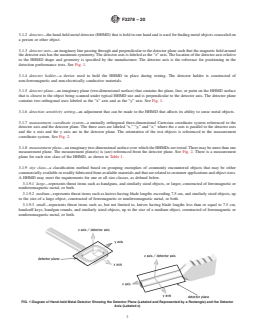
detection performance tests. See Fig. 1.
3.1.4 detector holder—a device used to hold the HHMD in place during testing. The detector holder is constructed of
non-ferromagnetic and non-electrically conductive materials.
3.1.5 detector plane—an imaginary plane (two-dimensional surface) that contains the plane, line, or point on the HHMD surface
that is closest to the object being scanned under typical HHMD use and is perpendicular to the detector axis. The detector plane
contains two orthogonal axes labeled as the “x” axis and as the “y” axis. See Fig. 1.
3.1.6 detection sensitivity setting—an adjustment that can be made to the HHMD that affects its ability to sense metal objects.
3.1.7 measurement coordinate system—a mutually orthogonal three-dimensional Cartesian coordinate system referenced to the
detector axis and the detector plane. The three axes are labeled “x,” “y,” and “z,” where the z axis is parallel to the detector axis
and the x axis and the y axis are in the detector plane. The orientation of the test objects is referenced to the measurement
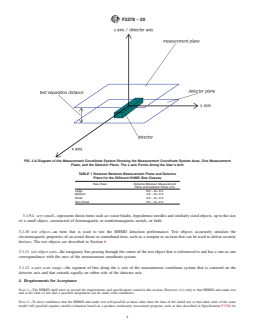
coordinate system. See Fig. 2.
3.1.8 measurement plane—an imaginary two-dimensional surface over which the HHMDs are tested. There may be more than one
measurement plane. The measurement plane(s) is (are) referenced from the detector plane. See Fig. 2. There is a measurement
plane for each size class of the HHMD, as shown in Table 1.
3.1.9 size class—a classification method based on grouping exemplars of commonly encountered objects that may be either
commercially available or readily fabricated from available materials and that are related to customer applications and object sizes.
A HHMD may meet the requirements for one or all size classes, as defined below.
3.1.9.1 large—represents threat items such as handguns, and similarly sized objects, or larger, constructed of ferromagnetic or
nonferromagnetic metal, or both.
3.1.9.2 medium—represents threat items such as knives having blade lengths exceeding 7.5 cm, and similarly sized objects, up
to the size of a large object, constructed of ferromagnetic or nonferromagnetic metal, or both.
3.1.9.3 small—represents threat items such as, but not limited to, knives having blade lengths less than or equal to 7.5 cm,
handcuff keys, handgun rounds, and similarly sized objects, up to the size of a medium object, constructed of ferromagnetic or
nonferromagnetic metal, or both.
FIG. 1 Diagram of Hand-held Metal Detector Showing the Detector Plane (Labeled and Represented by a Rectangle) and the Detector
Axis (Labeled z)
F3278 − 20
FIG. 2 A Diagram of the Measurement Coordinate System Showing the Measurement Coordinate System Axes, One Measurement
Plane, and the Detector Plane. The x axis Points Along the User’s Arm
TABLE 1 Distance Between Measurement Plane and Detector
Plane for the Different HHMD Size Classes
Size Class Distance Between Measurement
Plane and Detector Plane (cm)
Large 8.0 – 0/+ 0.2
Medium 4.0 – 0/+ 0.2
Small 2.0 – 0/+ 0.2
Very Small 0.5 – 0/+ 0.2
3.1.9.4 very small—represents threat items such as t razor blades, hypodermic needles and similarly sized objects, up to the size
of a small object, constructed of ferromagnetic or nonferromagnetic metals, or both.
3.1.10 test object—an item that is used to test the HHMD detection performance. Test objects accurately simulate the
electromagnetic properties of an actual threat or contraband item, such as a weapon or an item that can be used to defeat security
devices. The test objects are described in Section 6.
3.1.11 test object axis—the imaginary line passing through the center of the test object that is referenced to and has a one-to-one
correspondence with the axes of the measurement coordinate system.
3.1.12 x-axis scan range—the segment of line along the x axis of the measurement coordinate system that is centered on the
detector axis and that extends equally on either side of the detector axis.
4. Requirements for Acceptance
NOTE 1—The HHMD shall meet or exceed the requirements and specifications stated in this section. However, it is only to that HHMD unit under test
and at the time of test that a pass/fail assignment can be made with confidence.
NOTE 2—To have confidence that the HHMD unit under test will pass/fail at times other than the time of the initial test or that other units of the same
model will pass/fail requires model evaluation based on a product conformity assessment program, such as that described in Specification F3356 for
F3278 − 20
TABLE 2 X-axis Scan Range for the Different HHMD Size Classes
X-axis Scan Range
Size Class
lower limit (cm) upper limit (cm)
Large –7.5 ± 0.1 7.5 ± 0.1
Medium –6.0 ± 0.1 6.0 ± 0.1
Small –5.7 ± 0.1 5.7 ± 0.1
Very small –5.4 ± 0.1 5.4 ± 0.1
Conformity Assessment of Metal Detectors Used in Safety and Securuity.
NOTE 3—Recommended test report forms are given in Appendix X5.
4.1 General Test Conditions and Requirements:
4.1.1 Testing and Calibration Laboratories—Laboratories performing testing and calibration of the HHMD or its components, or
both, shall meet the requirements of ISO 17025, as amended.
4.1.2 Measurement Equipment and Processes—All measurement equipment and processes shall be certified to ISO 10012, as
amended.
4.2 Safety Specifications and Requirements:
4.2.1 Electrical—The HHMD shall comply with IEC 61010-1, Section 6, “Protection Against Electrical Shock,” as amended.
4.2.2 Mechanical—The HHMD shall meet the requirements of IEC 61010-1 Section 7, “Protection Against Mechanical Hazards,”
as amended.
4.2.3 Thermal—The HHMD shall meet the requirements of IEC 61010-1 Section 10, “Equipment Temperature Limits and
Resistance to Heat,” as amended.
4.2.1 Magnetic Field Exposure—The magnitude of the electromagnetic field generated by the HHMD shall be less than the
8, 9
exposure limits specified for general public exposure in the ICNIRP guidelines (see Appendix X4). These measurements shall
be made at points on grid lines that are (1) tangential to the current-carrying coil of the HHMD and (2) parallel to the surfaces
of an outward projection from the smallest imaginary rectangular prism enclosing that part of the HHMD encasing the
current-carrying coils. The separation, s , between points on these grid lines shall be 5 mm 6 1 mm and between any parallel
grid
tangential lines shall be 5 mm 6 1 mm. The separation between the outward-projected surface and the smallest imaginary
rectangular prism shall be 5 mm 6 1 mm. A three-axis magnetic field probe with a –3 dB analog bandwidth of 0.1f ≤ f ≤ 10f ,
c c c
where f is the nominal center frequency of the generated magnetic field, shall be used for measuring the magnetic field, and the
c
size of its active elements shall be within a volume no larger than 2s × 2s × 2s . If the HHMD has not been demonstrated
grid grid grid
to meet this requirement, the manufacturer shall provide a warning with the HHMD instructions that states “This device has not
been demonstrated as being safe or unsafe for use on people with active implanted or body-worn medical devices, or both.”
4.3 Power Requirement:
4.3.1 Battery Life—The HHMD shall meet the detection performance specification given in 4.4 after operating for at least 10 h
as tested in accordance with 5.55.4 and while using a battery of the type and model recommended by the manufacturer.
4.4 Detection Performance Specifications—The ability of the HHMD to sense the presence of a test object will vary with the
material and geometry of the test object and the distance between the test object and the HHMD. In this performance specification,
the test objects are spherical to avoid the possibility of incorrectly attributing a higher performance capability to a HHMD than
that HHMD is capable of providing. The test objects are grouped according to their size class and the HHMDs are tested for their
ability to detect test objects from within these different size classes. The detection performance specifications shall be tested using
the detection sensitivity setting, if applicable, that is specified by the manufacturer to be appropriate for each test object size class.
ICNIRP “Guidelines for Limiting Exposure to Time-varying Electric, Magnetic, and Electromagnetic Fields (up to 300 GHz),” International Commission on
Non-Ionizing Radiation Protection (ICNIRP), Health Physics, April 1998, Volume 74, No. 4, pp. 494–522.
ICNIRP “Guideline for Limiting Exposure to Time-Varying Electric, Magnetic, and Electromagnetic Fields (1 Hz – 100 GHz), Health Physics, Vol 99 (6), pp. 818–836,
2010.
F3278 − 20
All the tests of 4.45.2, 4.5.35.3, and 4.5.45.4 requirements shall be performed within an 8 h 6 0.5 h period without adjusting the
detector sensitivity setting between tests. The detector sensitivity setting shall not be readjusted during testing, or after changing
the battery. The test objects are given in Section 6.
4.4.1 Detection Sensitivity—The HHMD shall exhibit an average probability of detection, p ≥ 0.95 with an average
d,sens,
confidence level of 0.95 for the test objects in each size class, when each object in the size class is positioned in the appropriate
measurement plane (see Table 1) and moving over the appropriate x-axis scan range (see Table 2) at a speed of 0.5 m ⁄s 6 0.05 m ⁄s
and tested in accordance with 5.2.2. This requirement is met when p ≥ p as computed per 5.2.2.
LB d,sens
4.4.2 Detection Speed—The HHMD shall exhibit an average probability of detection, p ≥ 0.95 with an average confidence
d,sp-sens,
level of 0.95 for the test objects in each size class, when each object in the size class is positioned in the appropriate measurement
plane (see Table 1) and moving over the appropriate x-axis scan range (see Table 2) for each required orientation (see Table 2)
of the test object axes with respect to the measurement coordinate system at a speed of 0.05 m/s 6 0.01 m/s, 0.2 m/s 6 0.01 m/s,
0.5 m/s 6 0.01 m/s, and 1.0 m/s 6 0.01 m/s as tested in accordance with 5.2.2 under the following conditions: (1) the delay
between subsequent tests of a given test object shall be no more than 5 s 6 0.5 s; and (2) the detector sensitivity setting shall not
be readjusted between tests of a given test object or between tests of the test objects of a given size class. This requirement is met
when p ≥ p as computed per 5.2.3.
LB,sp d,sp-sens
4.5 Interference Specifications and Requirements:
4.5.1 Electromagnetic Emission:
4.5.1.1 Radiated Disturbance—The HHMD, when adjusted to meet the requirements of 4.4, shall meet the requirements of CISPR
22, Class B, radiated disturbance.
4.5.2 Electromagnetic Susceptibility/Immunity—The HHMD shall be tested in accordance with the requirements listed in Table 1
of IEC 61000-6-1, as amended, according to the following procedures:
4.5.2.1 Contact Discharge—The HHMD, after being adjusted to meet the requirements of 4.4, shall be tested in accordance with
IEC 61000-4-2, as amended, for Level 2, contact discharge, and ten trials; and shall subsequently meet the requirements of 4.4
without further adjustment and using the limited set of test objects listed in Section 6.
4.5.2.2 Radiated RF Electromagnetic Field Immunity—The HHMD, when adjusted to meet the requirements of 4.4, shall not
produce an alarm when tested in the absence of a test object and in accordance with IEC 61000-4-3, as amended, for Level 2.
4.5.2.3 60 Hz and 50 Hz Radiated Magnetic Field—The HHMD, when adjusted to meet the requirements of 4.4, shall not produce
an alarm when tested in the absence of a test object and in accordance with IEC 61000-4-8, as amended, for testing at 60 Hz and
50 Hz, Level 2, and continuous exposure for 30 min 6 5 min.
4.5.3 Body Interference—The HHMD, without adjusting the detection sensitivity settings used for the tests given in 4.4, shall
exhibit a probability of false alarm, p ≤ 0.05 with a confidence level of 0.95 when operating near the body or body simulant,
fa,b,
as tested in accordance with 5.3. This requirement is met when p ≤ p as computed per 5.3.2 and meets, without adjustment
UB fa,b
of the detector sensitivity, the requirements given in 4.4.
4.5.1 Metal Interference—The HHMD, without adjusting the detection sensitivity settings used for the tests given in 4.4, shall
exhibit a probability of false alarm, p ≤ 0.05 with a confidence level of 0.95 when operating near a large metal plate, as tested
fa,m,
in accordance with 5.45.3. This requirement is met when p ≤ p as computed per 5.4.25.3.2.
UB fa,m
4.6 Environmental Ranges and Conditions—The HHMD or all of its components and their interconnections shall meet all of the
requirements listed in this section. The HHMD shall exhibit no observable changes in the detection performance specification
given in 4.4.2 for the x-axis scan position of 0 cm and using the limited set of test objects listed in Section 6 and the electrical
safety specification given in 4.2.1. The requirements given in this section shall be applied appropriately for either indoor or
indoor/outdoor HHMD models. The tests for the requirements listed in this section shall be performed on the same unit.
4.6.1 Temperature Stability and Range:
4.6.1.1 Indoor—The HHMD shall operate over the ambient temperature range of at least 00 °C to 46°C.46 °C. The HHMD shall
be tested in accordance with MIL-STD-810G Method 501.5, as amended, Procedure II, Steps 1 through 6, relative humidity 6 %
F3278 − 20
6 3 %, at 46°C46 °C 6 3°C.3 °C. The HHMD then shall be cooled to 0°C0 °C 6 3°C3 °C within 4 h 6 0.5 h and tested in
accordance with MIL-STD-810G Method 502.5, as amended, Procedure II, Steps 1 through 7.
4.6.1.2 Indoor/Outdoor—The HHMD shall operate over the ambient temperature range of at least –21°C–21 °C to 65°C.65 °C.
The HHMD shall be tested in accordance with MIL-STD-810G Method 501.5, as amended, Procedure II, Steps 1 through 6,
relative humidity 6 % 6 3 % at 65°C65 °C 6 3°C.3 °C. The HHMD then shall be cooled to –21°C–21 °C 6 3°C3 °C within 4
h 6 0.5 h and tested in accordance with MIL-STD-810G Method 502.5, as amended Procedure II, Steps 1 through 7.
4.6.2 Relative Humidity Stability and Range—The HHMD shall be tested in accordance with the requirements of MIL-STD-810
G Method 507.5, as amended, Procedure I, ten cycles of Cycle B1, as amended.
4.6.2 Ingress Protection:
4.6.2.1 Indoor—The HHMD shall meet or exceed the requirements for compliance with IEC 60529, as amended, classification
IP54.
4.7 Mechanical Specifications and Requirements—The HHMD or all of its components and their interconnections shall meet the
requirements of the following standards. The requirements of 4.2 and 4.4 shall not be affected by the tests described in this section.
All tests listed in this section shall be performed on the same unit. The HHMD shall exhibit no observable changes in the detection
performance specification given in 4.4.24.4.1 for the x-axis scan position of 0 cm and using the limited set of test objects listed
in Section 6 and the electrical safety specification given in 4.2.1.
4.7.1 Shock—The HHMD shall be tested in accordance with the requirements of IEC 60068-2-27:2008, as amended, using 100
6 5 half-sine shock pulses applied to the HHMD along the six directions (1, 0, 0), (0, 1, 0), (0, 0, 1), (–1, 0, 0), (0, –1, 0), and
(0, 0, –1) of the measurement coordinate system and with each shock pulse having a nominal peak acceleration of 40.0 g (392 m/s )
and a nominal pulse duration of 6 ms.
4.7.1 Free Fall—The detector shall be tested in accordance with the requirements of IEC 60068-2-31, Procedure 1, as amended,
for each direction of the detector axes, a fall height of 1 m, and for two drops for each direction of the orthogonal axes depicted
in Fig. 2.
4.8 Alarm Requirements—At least one alarm type, vibratory, audible, or visual, shall be provided and any alarm provided shall
meet the applicable requirement given in this section.
2 2
4.8.1 Vibratory Alarm—The vibratory alarm shall produce an acceleration in the range of 0.2 m/s to 1.0 m/s over a frequency
range of 10 Hz to 300 Hz as measured in accordance with 5.6.1.
4.8.1 Audible Alarm—The audible alarms (other than an earphone), if provided, shall produce an alarm-state sound pressure level
of 75 dB 6 5 dB (where 0 dB = 20 μPa root-mean-square in air) at 0.8 m 6 0.08 m from the HHMD as measured in
SPL SPL
accordance with 5.6.25.5.1. The audible alarm shall be either a frequency-proportional audible alarm or, optionally, a two-state
audible alarm: active (alarm state) and inactive (nonalarm state).
4.8.2.1 Frequency Range—The frequency range of the audible alarm shall be ≥100 Hz and ≤4 kHz as tested in accordance with
5.6.3.
4.8.3 Visual Alarm—The visible alarm, if provided, shall produce an alarm-state light level ≥10 lx when tested in accordance with
5.6.4. The visual alarms shall be a two-state visual alarm: active (illuminating) and inactive (nonilluminating).
4.8.4 Alarm Delays—The maximum delay between activation of all alarms (visual, audible, and vibratory) shall be 200 ms and
the maximum difference in duration among all alarms shall be 200 ms, as tested in accordance with 5.7.
5. Performance Testing Procedures
5.1 General Test Conditions:
5.1.1 Test Location—The distance between any metal object other than a test object (see Section 6) and the closest part of the
HHMD shall be greater than 1.0 m.
F3278 − 20
5.1.2 Environment—At the time of the tests, the ambient temperature shall be in the range specified in 4.6 for the appropriate
application (indoor or indoor/outdoor); the relative humidity shall be noncondensing.
5.1.3 Preparations—New or fully-charged batteries of the type listed in the operator’s manual shall be installed at the beginning
of the tests and as instructed in any test method. Any setup or calibration adjustments specified in the operator’s manual shall be
performed if required. In any stand-by feature is available on the HHMD, this feature shall be disabled.
5.2 Detection Performance Tests—The detection performance test methods described in this section are based on the use of a
computer-controlled three-axis positioning system to control the motion and displacement of the test object relative to the HHMD.
Other means of controlling this motion and displacement are acceptable if the positioning and speed values are within the
tolerances specified in these test methods. If the HHMD can be adjusted to provide an alarm for more than one size class, the
detection performance test shall be performed for each size class. The detection performance shall be evaluated by the test methods
described in this section. The distinction in testing between the different size classes is the difference in the test separation distance
between the measurement plane and the detector plane.
5.2.1 Measurement System—The measurement system shall contain the components necessary to perform the tests described
herein. A diagram of the measurement system showing the electrical and mechanical connections between its components shall be
provided.
5.2.2 Detection Sensitivity Test:
5.2.2.1 Initial Procedures:
(1) Turn on the measurement system and verify proper operation of the measurement system.
(2) Ensure that the HHMD is securely fixed to the detector holder and that the detector holder is fixed in position and secured
to the measurement system.
(3) Attach the test object to the positioning component of the measurement system.
(4) Turn on the HHMD and ensure that its output is functioning properly by noting a change in the alarm output as a metal
object is brought near the HHMD.
(5) Ensure that the test object does not hit the detector holder or any other objects while in motion.
(6) There is a minimum number of repeats of a given measurement that must be performed to meet the performance
requirements for a given confidence interval. This minimum number of measurements, N , is given by:
T
z p
c 0
N 5 ceil (1)
H J
T
12 p
where p is equal to the probability of detection specified in 4.4.2; z is the critical point of a standard normal distribution and
0 c
is fixed for a given confidence interval; and ceil{x} is a function that returns the smallest integer value that is greater than x.
The value of N includes the number of test objects of a given test object class, and the number of scans performed. For
T
example, when p = 0.95 and the confidence level = 0.95, N = 52. Values of N are provided for convenience in Appendix
0 T T
X3.
(7) Determine the number, n of y-axis scans to perform at each x-axis position for a given test object and given the number,
s,k,
n , of practicable x-axis positions, and the total number of required scans, N . The values of n is computed using:
x T s,k
N
T
n 5 max , 10 , (2)
H J
s,k
n
x
where the function max{x,y} returns the maximum value of x and y.
5.2.2.2 Performing the Measurement:
(1) Prepare the measurement system to perform an x-y scan in the specified measurement plane at the specified speed. The
center for the y-axis scans shall be the detector axis and the y-axis scans shall each be no less than 40 cm 6 1 cm long.
(2) Set the x-axis position to the specified lower x-axis scan range limit.
(3) Scan the y axis and record any alarm as the y-axis scan is being performed.
(4) Repeat Step (3) n times to perform a total of n scans for the current x-axis scan position.
s,k s,k
(5) Compute the probability of alarm, p , where x is the x-axis scan position and i is the x-axis scan index, and obj
d,sens,obj x i k
k, i
represents the test object of the given test object size class with index k, using:
n
s,k
p 5 A (3)
d,sens,k,i ( Pos2sens,k,i,j
n
j51
s,k
F3278 − 20
where the index abbreviations: k = obj , and i = x are used and A is an integer value representing the occurrence of
k i Pos-sens,k,i,j
the alarm (0 for the nonalarm state and 1 for the alarm state) for each x-axis scan position.
(6) Increment the x-axis position by 0.5 cm 6 0.1 cm.
(7) Repeat Steps (3) through (6) until the x-axis position is at the specified upper x-axis scan range limit and record the number
of alarms at each x and N is the number of x-axis positions scanned.
i x
(8) Repeat Step (7) for each of the remaining K–1 – 1 test objects of a given size class, where K is the number of test objects
in the size class.
(9) Upon completion of Step (8), compute the average probability of detection, p using:
d,sens,
K N
x
p 5 p . (4)
d,sens (( d,sens,k,i
KN
k51i51
x
(10) Compute and record the average lower bound, p , of p using:
LB d,sens
K N
x
Σ Σ ~p 2 l !
Œ
d,sens,k,i k,i
k51i51
p 5 p 2 , (5)
LB d,sens
KN
x
where
z
c
p ~1 2 p !1
k,i k,i
z 4n
c k,i
p 10.5 2 z
!
k,i c
n n
k,i k,i
l 5 , (6)
k,i 2
z
c
n
k,i
where for these tests n = n as computed in 5.2.2.1. For a 95 % confidence interval, z = 1.645 and for a 99 % confidence
k,i s,k c
interval, z = 2.576.
c
(11) Set p = P , and report this value.
d LB
5.2.3 Detection Speed Test:
5.2.3.1 Initial Procedures:
(1) Turn on the measurement system and verify proper operation of the measurement system.
(2) Ensure that the HHMD is securely fixed to the detector holder and that the detector holder is fixed in position and secured
relative to the positioning component of the measurement system.
(3) Turn on the HHMD and ensure that its output is functioning properly by noting a change in the alarm output as a metal
object is brought near the HHMD.
(4) Ensure that the test object does not hit the detector holder or any other objects while in motion.
(5) Use the value of N computed in Eq 1.
T
(6) Determine the number, n of y-axis scans to perform at each x-axis position for a given test object and given the number,
s,k,
n , of practicable x-axis positions, the number, and the total number of required scans, N . The value of n is computed using:
x T s,k
N
T
n 5 max , 10 , (7)
H J
s,k
n
x
where the function max{x,y} returns the maximum value of x and y.
5.2.3.2 Performing the Measurement:
(1) Prepare the measurement system to perform an x-y scan in the specified measurement plane at the specified speed. The
center for the y-axis scans shall be the detector axis and the scans shall each be no less than 40 cm 6 1 cm long.
(2) Set the x-axis position to the specified lower x-axis scan range limit.
(3) Scan the y axis and record any alarm as the y-axis scan is being performed.
(4) Repeat Step (3) n times to perform a total of n scans for the current x-axis scan position.
s,k s,k
(5) Compute the probability of alarm, p , where x is the x-axis scan position and i is the x-axis scan index, obj
d,sens,obj x s i k
k, i, m
represents the test object of the given test object size class with index k, and s represents the different speeds with index m, using:
m
n
s
p 5 A (8)
d,sens,k,i,m ( Pos2sens,k,i,m,j
n
j51
s
where the index abbreviations: k = obj ,i = x , and m = s are used and A is an integer value representing the oc-
k i m Pos-sens,k,i,m,j
currence of the alarm (0 for the nonalarm state and 1 for the alarm state) for each x-axis scan position.
(6) Increment the x-axis position by 0.5 cm 6 0.1 cm.
(7) Repeat Steps (3) through (6) until the x-axis position is at the specified upper x-axis scan range limit and record the number
of alarms at each x , and N is the number of x-axis positions scanned.
i x
F3278 − 20
(8) Repeat Step (7) for each of the remaining K-1 – 1 test objects of a given size class, where K is the number of test objects
in a given size class.
(9) Repeat Step (8) for each of the M test speeds.
(10) Upon completion of Step i, compute the average probability of detection, p using:
d,sp-sens,
K N M
1 x
p 5 Σ Σ Σ p . (9)
d,sp2sens d,sens,k,i,m
KN M
k51i51m51
x
(11) Compute the average lower bound, p of
LB,sp,
p using:
d,sp-sens
K N M
x
Σ Σ Σ ~p 2 l !
Œ
d,sens,k,i,m k,i,m
k51i51m51
p 5 p 2 , (10)
LB,sp d,sp2sen
KN M
x
where:
z
c
p ~1 2 p !1
2 k,i,m k,i,m
z 4n
c k,i,m
p 10.5 2 z
!
k,i,m c
n n
k,i,m k,i,m
l 5 , (11)
k,i,m 2
z
c
n
k,i,m
where for these tests n = k as computed in 5.2.2.1. For a 95 % confidence interval, z = 1.645 and for a 99 % confidence
k,i,m s,k c
interval z = 2.576.
c
(12) Record and report p .
LB,sp
5.3 Body Interference Test—This test may be performed using a body simulant test object or a clean torso. A clean torso is defined
here as the torso of a person that is free of any metal objects.
5.3.1 Initial Procedures:
(1) The body simulant test object, if used, shall be constructed of a material exhibiting an electrical conductivity of 0.8 S/m
–6 –7
6 0.2 S/m and magnetic permeability of 1.26×10 H ⁄m 6 5×10 H/m and be a rectangular prism with a thickness (direction
parallel to z axis) of 3 cm 6 0.5 cm, a length (direction parallel to x axis) of 20 cm 6 0.5 cm, and a width (direction parallel to
y axis) of 10 cm 6 0.5 cm.
(2) Use the value of N computed in Eq 1.
T
(3) Turn on the measurement system and verify proper operation of the measurement system. Ensure that the HHMD is
securely held by a clean hand, which is a hand free of any metal, from the tips of the fingers of that hand to the elbow of the same
arm as the hand being used. Turn on the HHMD and ensure that its output is functioning properly by noting a change in the alarm
output as a metal object is brought near the HHMD.
5.3.2 Performing the Measurement:
(1) Sweep the HHMD over the body simulant test object or clean torso at a velocity of approximately 1 m/s while maintaining
an approximate separate of 5 mm between the HHMD and the body simulant or clean torso and record any alarms.
(2) Repeat Step (1) N – 1 times to yield a total of N scans and compute the average alarm occurrence using:
T T
N
T
p 5 A , (12)
fa,b ( Pos2b,j
N
j51
T
where A is an integer value representing the occurrence of the alarm (0 for the nonalarm state and 1 for the alarm state),
Pos-b,j
j is the scan repeat index, and p is the probability of false alarm for the body interface test.
fa,b
(3) Compute the upper bound, p , of p using:
UB fa,b
z
c
p ~1 2 p !1
2 fa,b fa,b
z 4N
c T
p 10.5 1z
!
fa,b c
N N
T T
p 5 (13)
UB 2
z
c
N
T
and record and report this value.
5.3 Metal Interference Test:
5.3.1 Initial Procedures:
F3278 − 20
(1) The metal test panel shall be cold-finished sheet carbon steel UNS G10150 to G10200, 1 m 6 0.1 m by 1 m 6 0.1 m by
0.75 mm 6 0.13 mm thick. The panel shall be mounted or supported in a manner that keeps the panel flat.
(2) Use the value of N computed in Eq 1.
T
5.3.2 Performing the Measurement:
(1) Position the HHMD with its detector plane parallel to and 0.5 m 6 0.05 m from the plane of the test panel and with the
detector axis centered with respect to the center of the test panel. Parallel is 0° 6 1°. Turn on the HHMD and without changing
the HHMD performance settings note and perform a y-axis scan across the detector axis using the same parameters as in 5.2.2.
Record any alarms. Repeat this y-axis scan N – 1 times to yield a total of N scans and compute the average alarm occurrence
T T
using:
N
T
p 5 A , (12)
fa,m Pos2m,j
(
N
T j51
where A is an integer value representing the occurrence of the alarm (0 for the nonalarm state and 1 for the alarm state),
Pos-m,j
j is the scan repeat index, and p is the probability of false alarm for the metal interference test.
fa,m
(2) Compute the upper bound, p , of p using:
UB fa,m
z
c
p 1 2 p 1
~ !
fa,m fa,m
z 4N
c T
p 10.5 1z
!
fa,m c
N N
T T
p 5 . (13)
UB 2
z
c
N
T
F3278 − 20
5.4 Battery Life Test:
5.4.1 Initial Procedures:
(1) Install in the HHMD new or fully charged batteries of the type specified by the manufacturer.
(2) Ensure that the alarm detector and positioning system are connected to the computer controller.
(3) Turn on the measurement system and verify proper operation of the measurement system.
(4) Ensure that the HHMD is securely fixed to the detector holder and that the detector holder is fixed in position and secured
relative to the positioning component of the measurement system.
(5) Attach the test object with the proper orientation to the positioning system.
(6) Turn on the HHMD and ensure that its output is functioning properly by noting a change in the alarm output as a metal
object is brought near the HHMD.
(7) Ensure that the test object does not hit the detector holder or any other objects while in motion.
5.4.2 Performing the Measurement:
(1) Prepare the measurement system to perform a series of y scans of a large size test object in the measurement plane for a
large size test object at a speed of about 0.5 m/s. The center for the y-axis scans shall be the detector axis and the scans shall each
be approximately 40 cm long. The duration of this series of scans shall be 10 h 6 0.1 h. The delay between scans shall be 30 s
6 2 s.
(2) After completion of Step (1), perform ten y scans of a small size test object in the measurement plane for a small size test
object at a speed of about 0.5 m/s. The center for the y-axis scans shall be the detector axis and the scans shall each be
approximately 40 cm long. The delay between scans shall be less than 2 s. Compute the alarm rate, r , using:
alarm
N
alarms
r 5 , (14)
alarm
where N is the number of alarms that were observed in step b.
alarms
(3) If r ≥ p , then record and report this as passing the battery life requirement, otherwise record and report as not
alarm d,sens
passing the battery life requirement.
5.5 Alarm Tests:
5.6.1 Vibratory Alarm Test:
(1) Place vibration detector in contact with that part of the HHMD closest to the component that produces the vibratory alarm.
(2) Measure the vibration of the vibratory alarm in all three orthogonal Cartesian directions with the HHMD power applied
and the alarm in the nonalarm state and compute the vibration magnitude, v , as the vector norm (L2 norm) of these
na
measurements.
(3) Cause the HHMD to produce an alarm, and again measure and record the vector norm of the vibration magnitude, v .
na+a
(4) Compute the different between two vibration magnitudes, using:
v 5 v 2 v , (17)
a na1a na
where v is the vibration magnitude produce by the alarm.
a
(5) Repeat this measurement five times and calculate the average value of v .
a
(6) Record and report the average value.
5.5.1 Audible Alarm Test:
(1) Perform the test in an anechoic chamber. Position the sound pressure meter 0.80 m 6 0.02 m from the HHMD.
(2) Measure the sound pressure level, P , with the HHMD power applied and the alarm in the nonalarm state.
na
(3) Cause the HHMD to produce an alarm, and again measure and record the sound pressure level, P . Compute the sound
na+a
pressure level generated by the alarm, P , using:
a
P P
na1a na
P 5 10log ~10 10 2 10 10 !. (15)
a 10
(4) Repeat this measurement five times and calculate the average value of P .
a
(5) Record and report the average P .
a
(6) For frequency proportional alarms, P shall be measured and reported at the following frequencies within the frequency
a
band of the audible signal: lowest operational limit, f , of the audible alarm frequency band; highest operational limit, f , of the
low hi
audible alarm frequency bands; and the middle frequency, f , where
mid
f 1f
hi low
f 5 . (16)
mid
F3278 − 20
5.6.3 Audible Alarm Frequency Range Test:
(1) Perform the test in an anechoic chamber.
(2) Position the sound pressure meter 0.80 m 6 0.02 m from the HHMD and connect this device to an audio frequency
measurement system.
(3) Turn the HHMD power on and cause the HHMD to produce an alarm.
(4) Repeat this measurement five times and calculate the average value of the audio frequency.
(5) Record and report the average audio frequency measured by the audio frequency measurement system.
5.6.4 Visual Alarm Test:
(1) Position the HHMD 0.80 m 6 0.02 m from in contact with the illumination meter, with the line perpendicular (90° 6 5°)
to the plane of the input aperture of the illumination meter and the line perpendicular (90° 6 5°) to the output aperture of the visual
alarm nominally collinear.
(2) Perform the test at a location where the ambient illumination is 1000 lx 6 100 lx.
(3) Turn on the HHMD and move a metal object near the HHMD to cause an alarm.
(4) Measure the light level, E , with the HHMD power applied and the alarm in the nonalarm state.
na
(5) Cause the HHMD to produce an alarm, and again measure and record the light level, E .
na+a
(6) Compute the light level increase, E , due to the alarm indicator using:
a
E 5 E 2E . (20)
a na1a na
(7) Repeat this measurement five times and calculate the average value of E .
a
(8) Record and report the average value.
5.7 Alarm Decay Test—Activation of an alarm shall be defined as the instant the alarm has increased to half its amplitude, where
the amplitude is defined as the difference between the high (alarm state) and low (no alarm state) output of the alarm. Deactivation
of an alarm shall be defined as the instant the alarm has decreased to half its amplitude. The duration of the alarm is defined as
the difference between its first an
...