


ASTM D2171/D2171M-22
(Test Method)Standard Test Method for Viscosity of Asphalts by Vacuum Capillary Viscometer
Standard Test Method for Viscosity of Asphalts by Vacuum Capillary Viscometer
SIGNIFICANCE AND USE
5.1 The viscosity at 60 °C [140 °F] characterizes flow behavior and may be used for specification requirements for cutback asphalt and asphalt binders.
Note 3: The quality of the results produced by this standard are dependent on the competence of the personnel performing the procedure and the capability, calibration, and maintenance of the equipment used. Agencies that meet the criteria of Specification D3666 are generally considered capable of competent and objective testing, sampling, inspection, etc. Users of this standard are cautioned that compliance with Specification D3666 alone does not completely ensure reliable results. Reliable results depend on many factors; following the suggestions of Specification D3666 or some similar acceptable guideline provides a means of evaluating and controlling some of those factors.
SCOPE
1.1 This test method covers procedures for the determination of the apparent viscosity of asphalt binder by vacuum capillary viscometers at 60 °C [140 °F]. It is applicable to materials having viscosities in the range from 0.0036 to over 20 000 Pa·s [0.036 to over 200 000 P].
Note 1: This test method is suitable for use at other temperatures, but the precision is based on determinations on asphalt binders at 60 °C [140 °F].
Note 2: Modified asphalt binders or asphalt binders that have been conditioned or recovered are typically non-Newtonian under the conditions of this test. The apparent viscosity for non-Newtonian asphalt binders varies with shear rate. When the flow is non-Newtonian in a capillary tube, the shear rate determined using this test method may be invalid. The presence of non-Newtonian behavior for the test conditions of this test can be verified by measuring the viscosity with viscometers having different-sized capillary tubes or with different pressure heads. The defined precision limits in Section 11 may not be applicable to non-Newtonian asphalt binders. Test Method D4957 may be a more applicable method for testing non-Newtonian asphalts.
1.2 The values stated in either SI units or inch-pound units are to be regarded separately as standard. The values stated in each system may not be exact equivalents; therefore, each system shall be used independently of the other. Combining values from the two systems may result in nonconformance with the standard.
1.3 Warning—Mercury has been designated by the United States Environmental Protection Agency (EPA) and many state agencies as a hazardous material that can cause central nervous system, kidney, and liver damage. Mercury, or its vapor, may be hazardous to health and corrosive to materials. Caution should be taken when handling mercury and mercury-containing products. See the applicable product Material Safety Data Sheet (MSDS) or Safety Data Sheet (SDS) for details and the EPA’s website—http://www.epa.gov/mercury/faq.htm—for additional information. Users should be aware that selling mercury, mercury-containing products, or both, in your state may be prohibited by state law.
1.4 The text of this standard references notes and footnotes that provide explanatory material. These notes and footnotes (excluding those in tables and figures) shall not be considered as requirements of the standard.
1.5 This standard does not purport to address all of the safety concerns, if any, associated with its use. It is the responsibility of the user of this standard to establish appropriate safety, health, and environmental practices and determine the applicability of regulatory limitations prior to use.
1.6 This international standard was developed in accordance with internationally recognized principles on standardization established in the Decision on Principles for the Development of International Standards, Guides and Recommendations issued by the World Trade Organization Technical Barriers to Trade (TBT) Committee.
General Information
- Status
- Published
- Publication Date
- 31-Oct-2022
- Technical Committee
- D04 - Road and Paving Materials
- Drafting Committee
- D04.44 - Rheological Tests
Relations
- Effective Date
- 01-Feb-2024
- Effective Date
- 01-Jan-2024
- Effective Date
- 01-Aug-2019
- Effective Date
- 15-Dec-2018
- Effective Date
- 15-Aug-2018
- Effective Date
- 01-Jul-2018
- Effective Date
- 01-Feb-2018
- Effective Date
- 15-Jan-2018
- Effective Date
- 15-Jul-2017
- Effective Date
- 15-Jun-2017
- Effective Date
- 01-May-2017
- Effective Date
- 01-Mar-2017
- Effective Date
- 01-Dec-2016
- Effective Date
- 01-Oct-2016
- Effective Date
- 15-Sep-2016
Overview
ASTM D2171/D2171M-22 is the Standard Test Method for Viscosity of Asphalts by Vacuum Capillary Viscometer, published by ASTM International. This standard covers procedures to determine the apparent viscosity of asphalt binder at 60 °C (140 °F) using a vacuum capillary viscometer. It is widely referenced in the asphalt and paving industries for evaluating asphalt binder flow properties and ensuring compliance with material specifications.
This standard is essential for laboratories and organizations working with cutback asphalts and asphalt binders. By providing a reliable test method for viscosity measurement, ASTM D2171/D2171M-22 supports quality control, material selection, and performance prediction in road construction and pavement maintenance.
Key Topics
- Viscosity Measurement: The primary focus is determining the apparent viscosity of asphalt binders in the range of 0.0036 to over 20,000 Pa·s (0.036 to over 200,000 P) using vacuum capillary viscometers at a standard temperature of 60 °C (140 °F).
- Types of Vacuum Capillary Viscometers: The standard describes several viscometer types, including the Cannon-Manning, Asphalt Institute, and Modified Koppers viscometers, each with its design and calibration details.
- Test Methodology: The procedure involves drawing a fixed volume of asphalt through a capillary tube under controlled vacuum and temperature conditions, then calculating viscosity from the measured flow time and viscometer calibration factor.
- Calibration and Equipment: Detailed requirements for calibration, use of certified thermometers, and proper vacuum system maintenance are outlined to ensure accuracy.
- Applicability to Newtonian and Non-Newtonian Materials: While the primary scope is for Newtonian asphalts, the method addresses the challenges in testing non-Newtonian (shear rate-dependent) materials, recommending alternate test methods where appropriate.
- Safety Considerations: Emphasis is placed on safety practices, especially regarding the use of hazardous materials like mercury in thermometers, and on following appropriate environmental health and regulatory guidelines.
- Quality Assurance: Outlines the importance of laboratory competence, calibration, and adherence to standards such as ASTM D3666 for agency qualification.
Applications
The ASTM D2171/D2171M-22 test method is widely used in:
- Quality Control of Asphalt Materials: Ensuring that asphalt binders and cutback asphalts meet viscosity specifications for road construction and surfacing.
- Material Selection and Design: Supporting the design of asphalt mixtures with suitable flow characteristics for different climates and traffic conditions.
- Research and Development: Providing precise viscosity data for developing new asphalt formulations and modified binders.
- Specification Compliance: Meeting contractual and regulatory requirements for paving materials.
- Performance Prediction: Linking viscosity at 60 °C (140 °F) to expected in-service behavior, such as rutting resistance and durability of pavements.
Related Standards
For comprehensive asphalt testing and specification, the following ASTM standards are commonly referenced alongside ASTM D2171/D2171M-22:
- ASTM D8 - Terminology Relating to Materials for Roads and Pavements
- ASTM D3666 - Specification for Minimum Requirements for Agencies Testing and Inspecting Road and Paving Materials
- ASTM D4957 - Test Method for Apparent Viscosity of Asphalt Emulsion Residues and Non-Newtonian Asphalts by Vacuum Capillary Viscometer
- ASTM E1 - Specification for ASTM Liquid-in-Glass Thermometers
- ASTM E77 - Test Method for Inspection and Verification of Thermometers
- ASTM E691 - Practice for Conducting an Interlaboratory Study to Determine the Precision of a Test Method
By adhering to ASTM D2171/D2171M-22 and related standards, laboratories and material suppliers can ensure accurate viscosity measurement, improved material performance, and compliance with global best practices in asphalt testing.
Keywords: asphalt viscosity testing, vacuum capillary viscometer, ASTM D2171, asphalt binder, quality control, road construction, paving materials, viscosity measurement, asphalt standards.
Buy Documents
ASTM D2171/D2171M-22 - Standard Test Method for Viscosity of Asphalts by Vacuum Capillary Viscometer
REDLINE ASTM D2171/D2171M-22 - Standard Test Method for Viscosity of Asphalts by Vacuum Capillary Viscometer
Get Certified
Connect with accredited certification bodies for this standard

ICC Evaluation Service
Building products evaluation and certification.

QAI Laboratories
Building and construction product testing and certification.

Zavod za gradbeništvo Slovenije (ZAG) - Inšpekcija
ZAG inspection body for construction products, structures, and materials.
Sponsored listings
Frequently Asked Questions
ASTM D2171/D2171M-22 is a standard published by ASTM International. Its full title is "Standard Test Method for Viscosity of Asphalts by Vacuum Capillary Viscometer". This standard covers: SIGNIFICANCE AND USE 5.1 The viscosity at 60 °C [140 °F] characterizes flow behavior and may be used for specification requirements for cutback asphalt and asphalt binders. Note 3: The quality of the results produced by this standard are dependent on the competence of the personnel performing the procedure and the capability, calibration, and maintenance of the equipment used. Agencies that meet the criteria of Specification D3666 are generally considered capable of competent and objective testing, sampling, inspection, etc. Users of this standard are cautioned that compliance with Specification D3666 alone does not completely ensure reliable results. Reliable results depend on many factors; following the suggestions of Specification D3666 or some similar acceptable guideline provides a means of evaluating and controlling some of those factors. SCOPE 1.1 This test method covers procedures for the determination of the apparent viscosity of asphalt binder by vacuum capillary viscometers at 60 °C [140 °F]. It is applicable to materials having viscosities in the range from 0.0036 to over 20 000 Pa·s [0.036 to over 200 000 P]. Note 1: This test method is suitable for use at other temperatures, but the precision is based on determinations on asphalt binders at 60 °C [140 °F]. Note 2: Modified asphalt binders or asphalt binders that have been conditioned or recovered are typically non-Newtonian under the conditions of this test. The apparent viscosity for non-Newtonian asphalt binders varies with shear rate. When the flow is non-Newtonian in a capillary tube, the shear rate determined using this test method may be invalid. The presence of non-Newtonian behavior for the test conditions of this test can be verified by measuring the viscosity with viscometers having different-sized capillary tubes or with different pressure heads. The defined precision limits in Section 11 may not be applicable to non-Newtonian asphalt binders. Test Method D4957 may be a more applicable method for testing non-Newtonian asphalts. 1.2 The values stated in either SI units or inch-pound units are to be regarded separately as standard. The values stated in each system may not be exact equivalents; therefore, each system shall be used independently of the other. Combining values from the two systems may result in nonconformance with the standard. 1.3 Warning—Mercury has been designated by the United States Environmental Protection Agency (EPA) and many state agencies as a hazardous material that can cause central nervous system, kidney, and liver damage. Mercury, or its vapor, may be hazardous to health and corrosive to materials. Caution should be taken when handling mercury and mercury-containing products. See the applicable product Material Safety Data Sheet (MSDS) or Safety Data Sheet (SDS) for details and the EPA’s website—http://www.epa.gov/mercury/faq.htm—for additional information. Users should be aware that selling mercury, mercury-containing products, or both, in your state may be prohibited by state law. 1.4 The text of this standard references notes and footnotes that provide explanatory material. These notes and footnotes (excluding those in tables and figures) shall not be considered as requirements of the standard. 1.5 This standard does not purport to address all of the safety concerns, if any, associated with its use. It is the responsibility of the user of this standard to establish appropriate safety, health, and environmental practices and determine the applicability of regulatory limitations prior to use. 1.6 This international standard was developed in accordance with internationally recognized principles on standardization established in the Decision on Principles for the Development of International Standards, Guides and Recommendations issued by the World Trade Organization Technical Barriers to Trade (TBT) Committee.
SIGNIFICANCE AND USE 5.1 The viscosity at 60 °C [140 °F] characterizes flow behavior and may be used for specification requirements for cutback asphalt and asphalt binders. Note 3: The quality of the results produced by this standard are dependent on the competence of the personnel performing the procedure and the capability, calibration, and maintenance of the equipment used. Agencies that meet the criteria of Specification D3666 are generally considered capable of competent and objective testing, sampling, inspection, etc. Users of this standard are cautioned that compliance with Specification D3666 alone does not completely ensure reliable results. Reliable results depend on many factors; following the suggestions of Specification D3666 or some similar acceptable guideline provides a means of evaluating and controlling some of those factors. SCOPE 1.1 This test method covers procedures for the determination of the apparent viscosity of asphalt binder by vacuum capillary viscometers at 60 °C [140 °F]. It is applicable to materials having viscosities in the range from 0.0036 to over 20 000 Pa·s [0.036 to over 200 000 P]. Note 1: This test method is suitable for use at other temperatures, but the precision is based on determinations on asphalt binders at 60 °C [140 °F]. Note 2: Modified asphalt binders or asphalt binders that have been conditioned or recovered are typically non-Newtonian under the conditions of this test. The apparent viscosity for non-Newtonian asphalt binders varies with shear rate. When the flow is non-Newtonian in a capillary tube, the shear rate determined using this test method may be invalid. The presence of non-Newtonian behavior for the test conditions of this test can be verified by measuring the viscosity with viscometers having different-sized capillary tubes or with different pressure heads. The defined precision limits in Section 11 may not be applicable to non-Newtonian asphalt binders. Test Method D4957 may be a more applicable method for testing non-Newtonian asphalts. 1.2 The values stated in either SI units or inch-pound units are to be regarded separately as standard. The values stated in each system may not be exact equivalents; therefore, each system shall be used independently of the other. Combining values from the two systems may result in nonconformance with the standard. 1.3 Warning—Mercury has been designated by the United States Environmental Protection Agency (EPA) and many state agencies as a hazardous material that can cause central nervous system, kidney, and liver damage. Mercury, or its vapor, may be hazardous to health and corrosive to materials. Caution should be taken when handling mercury and mercury-containing products. See the applicable product Material Safety Data Sheet (MSDS) or Safety Data Sheet (SDS) for details and the EPA’s website—http://www.epa.gov/mercury/faq.htm—for additional information. Users should be aware that selling mercury, mercury-containing products, or both, in your state may be prohibited by state law. 1.4 The text of this standard references notes and footnotes that provide explanatory material. These notes and footnotes (excluding those in tables and figures) shall not be considered as requirements of the standard. 1.5 This standard does not purport to address all of the safety concerns, if any, associated with its use. It is the responsibility of the user of this standard to establish appropriate safety, health, and environmental practices and determine the applicability of regulatory limitations prior to use. 1.6 This international standard was developed in accordance with internationally recognized principles on standardization established in the Decision on Principles for the Development of International Standards, Guides and Recommendations issued by the World Trade Organization Technical Barriers to Trade (TBT) Committee.
ASTM D2171/D2171M-22 is classified under the following ICS (International Classification for Standards) categories: 91.100.50 - Binders. Sealing materials; 93.080.20 - Road construction materials. The ICS classification helps identify the subject area and facilitates finding related standards.
ASTM D2171/D2171M-22 has the following relationships with other standards: It is inter standard links to ASTM C670-24a, ASTM C670-24, ASTM D8-19, ASTM D8-18c, ASTM D8-18b, ASTM D8-18a, ASTM D8-18, ASTM D4957-18, ASTM D8-17c, ASTM D8-17b, ASTM D8-17a, ASTM D8-17, ASTM D8-16b, ASTM D3666-16, ASTM D8-16a. Understanding these relationships helps ensure you are using the most current and applicable version of the standard.
ASTM D2171/D2171M-22 is available in PDF format for immediate download after purchase. The document can be added to your cart and obtained through the secure checkout process. Digital delivery ensures instant access to the complete standard document.
Standards Content (Sample)
This international standard was developed in accordance with internationally recognized principles on standardization established in the Decision on Principles for the
Development of International Standards, Guides and Recommendations issued by the World Trade Organization Technical Barriers to Trade (TBT) Committee.
Designation: D2171/D2171M − 22
Standard Test Method for
Viscosity of Asphalts by Vacuum Capillary Viscometer
This standard is issued under the fixed designation D2171/D2171M; the number immediately following the designation indicates the
year of original adoption or, in the case of revision, the year of last revision. A number in parentheses indicates the year of last
reapproval. A superscript epsilon (´) indicates an editorial change since the last revision or reapproval.
This standard has been approved for use by agencies of the U.S. Department of Defense.
This test method has been approved by the sponsoring committees and accepted by the cooperating societies in accordance with
established procedures.
1. Scope that selling mercury, mercury-containing products, or both, in
your state may be prohibited by state law.
1.1 This test method covers procedures for the determina-
tion of the apparent viscosity of asphalt binder by vacuum 1.4 The text of this standard references notes and footnotes
capillary viscometers at 60 °C [140 °F]. It is applicable to that provide explanatory material. These notes and footnotes
materials having viscosities in the range from 0.0036 to over (excluding those in tables and figures) shall not be considered
20 000 Pa·s [0.036 to over 200 000 P]. as requirements of the standard.
1.5 This standard does not purport to address all of the
NOTE 1—This test method is suitable for use at other temperatures, but
the precision is based on determinations on asphalt binders at 60 °C safety concerns, if any, associated with its use. It is the
[140 °F].
responsibility of the user of this standard to establish appro-
NOTE 2—Modified asphalt binders or asphalt binders that have been
priate safety, health, and environmental practices and deter-
conditioned or recovered are typically non-Newtonian under the condi-
mine the applicability of regulatory limitations prior to use.
tions of this test. The apparent viscosity for non-Newtonian asphalt
1.6 This international standard was developed in accor-
binders varies with shear rate. When the flow is non-Newtonian in a
capillary tube, the shear rate determined using this test method may be
dance with internationally recognized principles on standard-
invalid.Thepresenceofnon-Newtonianbehaviorforthetestconditionsof
ization established in the Decision on Principles for the
this test can be verified by measuring the viscosity with viscometers
Development of International Standards, Guides and Recom-
having different-sized capillary tubes or with different pressure heads.The
mendations issued by the World Trade Organization Technical
defined precision limits in Section 11 may not be applicable to non-
Barriers to Trade (TBT) Committee.
Newtonian asphalt binders.Test Method D4957 may be a more applicable
method for testing non-Newtonian asphalts.
2. Referenced Documents
1.2 The values stated in either SI units or inch-pound units
2.1 ASTM Standards:
are to be regarded separately as standard. The values stated in
C670 Practice for Preparing Precision and Bias Statements
each system may not be exact equivalents; therefore, each
for Test Methods for Construction Materials
system shall be used independently of the other. Combining
D8 Terminology Relating to Materials for Roads and Pave-
values from the two systems may result in nonconformance
ments
with the standard.
D3666 Specification for Minimum Requirements for Agen-
1.3 Warning—Mercury has been designated by the United
cies Testing and Inspecting Road and Paving Materials
States Environmental ProtectionAgency (EPA) and many state
D4957 TestMethodforApparentViscosityofAsphaltEmul-
agencies as a hazardous material that can cause central nervous
sion Residues and Non-Newtonian Asphalts by Vacuum
system, kidney, and liver damage. Mercury, or its vapor, may
Capillary Viscometer
be hazardous to health and corrosive to materials. Caution
E1 Specification for ASTM Liquid-in-Glass Thermometers
should be taken when handling mercury and mercury-
E11 Specification for Woven Wire Test Sieve Cloth and Test
containing products. See the applicable product Material
Sieves
Safety Data Sheet (MSDS) or Safety Data Sheet (SDS) for
E77 Test Method for Inspection and Verification of Ther-
details and the EPA’s website—http://www.epa.gov/mercury/
mometers
faq.htm—for additional information. Users should be aware
E691 Practice for Conducting an Interlaboratory Study to
Determine the Precision of a Test Method
This test method is under the jurisdiction of ASTM Committee D04 on Road
and Paving Materials and is the direct responsibility of Subcommittee D04.44 on
Rheological Tests. For referenced ASTM standards, visit the ASTM website, www.astm.org, or
Current edition approved Nov. 1, 2022. Published November 2022. Originally contact ASTM Customer Service at service@astm.org. For Annual Book of ASTM
approved in 1963. Last previous edition approved in 2018 as D2171/D2171M – 18. Standards volume information, refer to the standard’s Document Summary page on
DOI: 10.1520/D2171_D2171M-22. the ASTM website.
Copyright © ASTM International, 100 Barr Harbor Drive, PO Box C700, West Conshohocken, PA 19428-2959. United States
D2171/D2171M − 22
E879 Specification for Thermistor Sensors for General Pur- 6.1.4 Calibrated viscometers are available from commercial
pose and Laboratory Temperature Measurements suppliers. Details regarding calibration of viscometers are
E1137/E1137M Specification for Industrial Platinum Resis- given in Appendix X4.
tance Thermometers
NOTE 4—The viscosity measured in a CMVV may be from 1 to 5 %
lower than either the AIVV or MKVV having the same viscosity range.
3. Terminology
This difference, when encountered, may be the result of non-Newtonian
flow.
3.1 Definitions of Terms Specific to This Standard:
6.2 Thermometers—A calibrated thermometer (see Table
3.1.1 Newtonian viscosity, n—theviscosityofaliquidthatis
X5.1) with suitable range and estimated measurement uncer-
shear-rate independent, in which the rate of shear is linearly
tainty of 0.02 °C [0.04 °F] or less at 95 % confidence interval
proportional to the shearing stress.
listed on the calibration certificate and is one of the following:
3.1.2 non-Newtonian viscosity, n—the viscosity of a liquid
6.2.1 A liquid-in-glass thermometer that is calibrated annu-
that is shear-rate dependent, in which the rate of shear is not
ally. The calibration shall be verified at the ice point in
linearly proportional to the shearing stress.
accordance with Appendix X5. ASTM Kinematic Viscosity
3.1.3 viscosity (coeffıcient of), n—the ratio between the
Thermometers 47C and 47F conforming to Specification E1
applied shear stress and rate of shear is called the coefficient of
are suitable for the most commonly used temperature of 60 °C
viscosity.
[140 °F].
3.1.3.1 Discussion—This coefficient is a measure of the
NOTE 5—The specified thermometers in 6.2.1 are standardized as “total
resistance to flow of the liquid. It is commonly called the
immersion” thermometers, which are designed to indicate temperatures
viscosity of the liquid. The cgs unit of viscosity is 1 g/cm·s
correctly when just that portion of the thermometer containing the liquid
(1 dyne·s⁄cm ) and is called a poise (P). The SI unit of is exposed to the temperature being measured and the remainder of the
stem and expansion chamber at the top of the thermometer exposed to the
viscosity is 1 Pa·s (1 N·s/m ) and is called a Pascal-second.
room temperature. The practice of completely submerging the thermom-
One Pa·s is equivalent to 10 P.
eter is not recommended. When a “total immersion” thermometer is
completely submerged, corrections for each individual thermometer based
3.2 For definitions of other terms used in this standard, refer
on calibration under conditions of complete submergence must be
to Terminology D8.
determined and applied. If the thermometer is completely submerged in
the bath during use, the pressure of the gas in the expansion chamber will
4. Summary of Test Method
be higher or lower than during calibration, and may cause high or low
readings on the thermometer.
4.1 The time is measured for a fixed volume of the liquid to
6.2.2 A platinum resistance thermometer (PRT) with a
be drawn up through a capillary tube by means of vacuum,
sensor which conforms to the requirements of Specification
under closely controlled conditions of vacuum and tempera-
E1137/E1137M. The thermometer shall be calibrated annually
ture. The viscosity in Pascal-seconds is calculated by multi-
as a single unit and have a three- or four-wire connection
plying the flow time in seconds by the viscometer calibration
configuration. The sensing element shall be immersed to the
factor.
depth specified by the manufacturer adjacent to the capillary
tube.
5. Significance and Use
NOTE 6—A minimum of 50 mm [2 in.] of the thermometer sheath
5.1 The viscosity at 60 °C [140 °F] characterizes flow
(wire-connecting side) shall not be subjected to the bath medium unless
behavior and may be used for specification requirements for
otherwise specified by the manufacturer.
cutback asphalt and asphalt binders.
6.2.3 A thermistor thermometer with sensor, which con-
NOTE 3—The quality of the results produced by this standard are
forms to the requirements of Specification E879, calibrated
dependent on the competence of the personnel performing the procedure
annually as a single unit.The sensing element of the thermistor
and the capability, calibration, and maintenance of the equipment used.
shall be completely immersed in the bath adjacent to the
Agencies that meet the criteria of Specification D3666 are generally
capillary tube.
considered capable of competent and objective testing, sampling,
inspection, etc. Users of this standard are cautioned that compliance with
NOTE 7—The use of the thermometric devices specified in 6.2.2 and
Specification D3666 alone does not completely ensure reliable results.
6.2.3 are understood to introduce bias in the precision in this method.
Reliable results depend on many factors; following the suggestions of
Specification D3666 or some similar acceptable guideline provides a
6.3 Bath—A bath suitable for immersion of the viscometer
means of evaluating and controlling some of those factors.
sothattheliquidreservoirorthetopofthecapillary,whichever
is uppermost, is at least 20 mm below the upper surface of the
6. Apparatus
bath liquid and with provisions for visibility of the viscometer
6.1 Viscometers, capillary-type, made of borosilicate glass, and the thermometer. Firm supports for the viscometer shall be
annealed, suitable for this test are as follows: provided.Theefficiencyofthestirringandthebalancebetween
6.1.1 Cannon-Manning Vacuum Viscometer (CMVV), as heat losses and heat input must be such that the temperature of
the bath medium does not vary by more than 60.03 °C
described in Appendix X1.
6.1.2 Asphalt Institute Vacuum Viscometer (AIVV), as de-
scribed in Appendix X2.
Supporting data have been filed at ASTM International Headquarters and may
6.1.3 Modified Koppers Vacuum Viscometer (MKVV), as
beobtainedbyrequestingResearchReportRR:D04-1003.ContactASTMCustomer
described in Appendix X3. Service at service@astm.org.
D2171/D2171M − 22
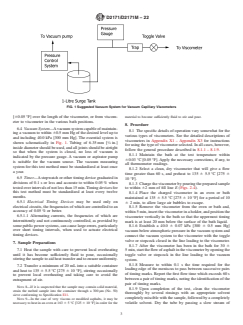
FIG. 1 Suggested Vacuum System for Vacuum Capillary Viscometers
material to become sufficiently fluid to stir and pour.
[60.05 °F] over the length of the viscometer, or from viscom-
eter to viscometer in the various bath positions.
8. Procedure
6.4 VacuumSystem—Avacuumsystemcapableofmaintain-
8.1 The specific details of operation vary somewhat for the
ing a vacuum to within 60.5 mm Hg of the desired level up to
various types of viscometers. See the detailed descriptions of
and including 40.0 kPa [300 mm Hg]. The essential system is
viscometers in Appendix X1 – Appendix X3 for instructions
shown schematically in Fig. 1. Tubing of 6.35 mm [ ⁄4 in.]
for using the type of viscometer selected. In all cases, however,
inside diameter should be used, and all joints should be airtight
follow the general procedure described in 8.1.1 – 8.1.9.
so that when the system is closed, no loss of vacuum is
8.1.1 Maintain the bath at the test temperature within
indicated by the pressure gauge. A vacuum or aspirator pump
60.03 °C [0.05 °F].Apply the necessary corrections, if any, to
is suitable for the vacuum source. The vacuum measuring
all thermometer readings.
system for this test method must be standardized at least once
8.1.2 Select a clean, dry viscometer that will give a flow
a year.
time greater than 60 s, and preheat to 135 6 5.5 °C [275 6
6.5 Timer—Astopwatch or other timing device graduated in
10 °F].
divisions of 0.1 s or less and accurate to within 0.05 % when
8.1.3 Chargetheviscometerbypouringthepreparedsample
testedoverintervalsofnotlessthan15min.Timingdevicesfor
to within 62 mm of fill line E (Figs. 2-4).
this test method must be standardized at least every twelve
8.1.4 Place the charged viscometer in an oven or bath
months.
maintained at 135 6 5.5 °C [275 6 10 °F] for a period of 10
6.5.1 Electrical Timing Devices may be used only on
6 2 min, to allow large air bubbles to escape.
electrical circuits, the frequencies of which are controlled to an
8.1.5 Remove the viscometer from the oven or bath and,
accuracy of 0.05 % or better.
within 5 min, insert the viscometer in a holder, and position the
6.5.1.1 Alternating currents, the frequencies of which are
viscometer vertically in the bath so that the uppermost timing
intermittently and not continuously controlled, as provided by
mark is at least 20 mm below the surface of the bath liquid.
some public power systems, can cause large errors, particularly
8.1.6 Establish a 40.0 6 0.07 kPa [300 6 0.5 mm Hg]
over short timing intervals, when used to actuate electrical
vacuum below atmospheric pressure in the vacuum system and
timing devices.
connect the vacuum system to the viscometer with the toggle
valve or stopcock closed in the line leading to the viscometer.
7. Sample Preparations
8.1.7 After the viscometer has been in the bath for 30 6
7.1 Heat the sample with care to prevent local overheating
5 min,starttheflowofasphaltintheviscometerbyopeningthe
until it has become sufficiently fluid to pour, occasionally
toggle valve or stopcock in the line leading to the vacuum
stirringthesampletoaidheattransferandtoensureuniformity.
system.
8.1.8 Measure to within 0.1 s the time required for the
7.2 Transfer a minimum of 20 mL into a suitable container
leading edge of the meniscus to pass between successive pairs
and heat to 135 6 5.5 °C [275 6 10 °F], stirring occasionally
of timing marks. Report the first flow time which exceeds 60 s
to prevent local overheating and taking care to avoid the
between a pair of timing marks, noting the identification of the
entrapment of air.
pair of timing marks.
NOTE 8—If it is suspected that the sample may contain solid material,
8.1.9 Upon completion of the test, clean the viscometer
strain the melted sample into the container through a 300 µm (No. 50)
thoroughly by several rinsings with an appropriate solvent
sieve conforming to Specification E11.
completelymisciblewiththesample,followedbyacompletely
NOTE 9—In the case of very viscous or modified asphalts, it may be
necessary to heat in an oven at 163 6 5 °C [325 6 10 °F] in order for the volatile solvent. Dry the tube by passing a slow stream of
D2171/D2171M − 22
All dimensions are in millimetres.
All dimensions are in millimetres.
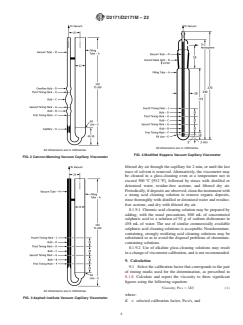
FIG. 4 Modified Koppers Vacuum Capillary Viscometer
FIG. 2 Cannon-Manning Vacuum Capillary Viscometer
filtered dry air through the capillary for 2 min, or until the last
trace of solvent is removed. Alternatively, the viscometer may
be cleaned in a glass-cleaning oven at a temperature not to
exceed 500 °C [932 °F], followed by rinses with distilled or
deionized water, residue-free acetone, and filtered dry air.
Periodically,ifdepositsareobserved,cleantheinstrumentwith
a strong acid cleaning solution to remove organic deposits,
rinse thoroughly with distilled or deionized water and residue-
free acetone, and dry with filtered dry air.
8.1.9.1 Chromic acid cleaning solution may be prepared by
adding, with the usual precautions, 800 mL of concentrated
sulphuric acid to a solution of 92 g of sodium dichromate in
458 mL of water. The use of similar commercially available
sulphuric acid cleaning solutions is acceptable. Nonchromium-
containing, strongly oxidizing acid cleaning solutions may be
substituted so as to avoid the disposal problems of chromium-
containing solutions.
8.1.9.2 Use of alkaline glass-cleaning solutions may result
inachangeofviscometercalibration,andisnotrecommended.
9. Calculation
9.1 Select the calibration factor that corresponds to the pair
of timing marks used for the determination, as prescribed in
8.1.8. Calculate and report the viscosity to three significant
figures using the following equation:
Viscosity, Pa·s 5 ~Kt! (1)
All dimensions are in millimetres.
where:
FIG. 3 Asphalt Institute Vacuum Capillary Viscometer
K = selected calibration factor, Pa·s/s, and
D2171/D2171M − 22
TABLE 1 Acceptability of Test Results for Vacuum Capillary
t = flow time, s.
Viscosity for Liquid Asphalts at 60 °C
NOTE 10—If the viscometer constant or calibration factor (K )is
cgs
Acceptable
known in cgs units (Poise/s), calculate the calibration factor (Ksi)inSI
Coefficient of
Range of Two
units (pascal·seconds/second) as follows:
Material and Type Index Variation
Results
A
(% of mean)
A
(% of mean)
Ksi 5 Pa·s/s 5 K /10or P/s /10 (2)
~ ! ~ !
cgs
Single-operator precision:
Unconditioned liquid asphalts at 60 °C 2.62 7.41
10. Report
[140 °F]
Rolling thin-film oven conditioned liquid 2.81 7.95
10.1 Always report the test temperature and vacuum with
asphalts at 60 °C [140 °F]
the viscosity test result.
Multilaboratory precision:
NOTE 11—For example, viscosity at 60 °C [140 °F] and 40.0 kPa
Unconditioned liquid asphalts at 60 °C 4.56 12.9
[300 mm Hg] vacuum, in Pa·s.
[140 °F]
Rolling thin-film oven conditioned liquid 7.27 20.6
11. Precision and Bias
asphalts at 60 °C [140 °F]
A
These numbers represent, respectively, the (1s%) an
...
This document is not an ASTM standard and is intended only to provide the user of an ASTM standard an indication of what changes have been made to the previous version. Because
it may not be technically possible to adequately depict all changes accurately, ASTM recommends that users consult prior editions as appropriate. In all cases only the current version
of the standard as published by ASTM is to be considered the official document.
Designation: D2171/D2171M − 18 D2171/D2171M − 22
Standard Test Method for
Viscosity of Asphalts by Vacuum Capillary Viscometer
This standard is issued under the fixed designation D2171/D2171M; the number immediately following the designation indicates the
year of original adoption or, in the case of revision, the year of last revision. A number in parentheses indicates the year of last
reapproval. A superscript epsilon (´) indicates an editorial change since the last revision or reapproval.
This standard has been approved for use by agencies of the U.S. Department of Defense.
This test method has been approved by the sponsoring committees and accepted by the cooperating societies in accordance with
established procedures.
1. Scope
1.1 This test method covers procedures for the determination of the apparent viscosity of asphalt binder by vacuum capillary
viscometers at 60 °C [140 °F]. It is applicable to materials having viscosities in the range from 0.0036 to over 20 000 Pa·s [0.036
to over 200 000 P].
NOTE 1—This test method is suitable for use at other temperatures, but the precision is based on determinations on asphalt binders at 60 °C [140 °F].
NOTE 2—Modified asphalt binders or asphalt binders that have been conditioned or recovered are typically non-Newtonian under the conditions of this
test. The apparent viscosity for non-Newtonian asphalt binders varies with shear rate. When the flow is non-Newtonian in a capillary tube, the shear rate
determined using this test method may be invalid. The presence of non-Newtonian behavior for the test conditions of this test can be verified by measuring
the viscosity with viscometers having different-sized capillary tubes or with different pressure heads. The defined precision limits in Section 11 may not
be applicable to non-Newtonian asphalt binders. Test Method D4957 may be a more applicable method for testing non-Newtonian asphalts.
1.2 The values stated in either SI units or inch-pound units are to be regarded separately as standard. The values stated in each
system may not be exact equivalents; therefore, each system shall be used independently of the other. Combining values from the
two systems may result in nonconformance with the standard.
1.3 Warning—Mercury has been designated by the United States Environmental Protection Agency (EPA) and many state
agencies as a hazardous material that can cause central nervous system, kidney, and liver damage. Mercury, or its vapor, may be
hazardous to health and corrosive to materials. Caution should be taken when handling mercury and mercury-containing products.
See the applicable product Material Safety Data Sheet (MSDS) or Safety Data Sheet (SDS) for details and the EPA’s
website—http://www.epa.gov/mercury/faq.htm—for additional information. Users should be aware that selling mercury, mercury-
containing products, or both, in your state may be prohibited by state law.
1.4 The text of this standard references notes and footnotes that provide explanatory material. These notes and footnotes
(excluding those in tables and figures) shall not be considered as requirements of the standard.
1.5 This standard does not purport to address all of the safety concerns, if any, associated with its use. It is the responsibility
of the user of this standard to establish appropriate safety, health, and environmental practices and determine the applicability of
regulatory limitations prior to use.
1.6 This international standard was developed in accordance with internationally recognized principles on standardization
established in the Decision on Principles for the Development of International Standards, Guides and Recommendations issued
by the World Trade Organization Technical Barriers to Trade (TBT) Committee.
This test method is under the jurisdiction of ASTM Committee D04 on Road and Paving Materials and is the direct responsibility of Subcommittee D04.44 on Rheological
Tests.
Current edition approved Dec. 15, 2018Nov. 1, 2022. Published December 2018November 2022. Originally approved in 1963. Last previous edition approved in 20102018
as D2171/D2171M – 10.D2171/D2171M – 18. DOI: 10.1520/D2171_D2171M-18.10.1520/D2171_D2171M-22.
Copyright © ASTM International, 100 Barr Harbor Drive, PO Box C700, West Conshohocken, PA 19428-2959. United States
D2171/D2171M − 22
2. Referenced Documents
2.1 ASTM Standards:
C670 Practice for Preparing Precision and Bias Statements for Test Methods for Construction Materials
D8 Terminology Relating to Materials for Roads and Pavements
D3666 Specification for Minimum Requirements for Agencies Testing and Inspecting Road and Paving Materials
D4957 Test Method for Apparent Viscosity of Asphalt Emulsion Residues and Non-Newtonian Asphalts by Vacuum Capillary
Viscometer
E1 Specification for ASTM Liquid-in-Glass Thermometers
E11 Specification for Woven Wire Test Sieve Cloth and Test Sieves
E77 Test Method for Inspection and Verification of Thermometers
E691 Practice for Conducting an Interlaboratory Study to Determine the Precision of a Test Method
E879 Specification for Thermistor Sensors for General Purpose and Laboratory Temperature Measurements
E1137/E1137M Specification for Industrial Platinum Resistance Thermometers
3. Terminology
3.1 Definitions of Terms Specific to This Standard:
3.1.1 Newtonian viscosity, n—the viscosity of a liquid that is shear-rate independent, in which the rate of shear is linearly
proportional to the shearing stress.
3.1.2 non-Newtonian viscosity, n—the viscosity of a liquid that is shear-rate dependent, in which the rate of shear is not linearly
proportional to the shearing stress.
3.1.3 viscosity (coeffıcient of), n—the ratio between the applied shear stress and rate of shear is called the coefficient of viscosity.
3.1.3.1 Discussion—
This coefficient is a measure of the resistance to flow of the liquid. It is commonly called the viscosity of the liquid. The cgs unit
2 2
of viscosity is 1 g/cm·s (1 dyne·s ⁄cm ) and is called a poise (P). The SI unit of viscosity is 1 Pa·s (1 N·s/m ) and is called a
Pascal-second. One Pa·s is equivalent to 10 P.
3.2 For definitions of other terms used in this standard, refer to Terminology D8.
4. Summary of Test Method
4.1 The time is measured for a fixed volume of the liquid to be drawn up through a capillary tube by means of vacuum, under
closely controlled conditions of vacuum and temperature. The viscosity in Pascal-seconds is calculated by multiplying the flow
time in seconds by the viscometer calibration factor.
5. Significance and Use
5.1 The viscosity at 60 °C [140 °F] characterizes flow behavior and may be used for specification requirements for cutback asphalt
and asphalt binders.
NOTE 3—The quality of the results produced by this standard are dependent on the competence of the personnel performing the procedure and the
capability, calibration, and maintenance of the equipment used. Agencies that meet the criteria of Specification D3666 are generally considered capable
of competent and objective testing, sampling, inspection, etc. Users of this standard are cautioned that compliance with Specification D3666 alone does
not completely ensure reliable results. Reliable results depend on many factors; following the suggestions of Specification D3666 or some similar
acceptable guideline provides a means of evaluating and controlling some of those factors.
6. Apparatus
6.1 Viscometers, capillary-type, made of borosilicate glass, annealed, suitable for this test are as follows:
6.1.1 Cannon-Manning Vacuum Viscometer (CMVV), as described in Appendix X1.
For referenced ASTM standards, visit the ASTM website, www.astm.org, or contact ASTM Customer Service at service@astm.org. For Annual Book of ASTM Standards
volume information, refer to the standard’s Document Summary page on the ASTM website.
D2171/D2171M − 22
6.1.2 Asphalt Institute Vacuum Viscometer (AIVV), as described in Appendix X2.
6.1.3 Modified Koppers Vacuum Viscometer (MKVV), as described in Appendix X3.
6.1.4 Calibrated viscometers are available from commercial suppliers. Details regarding calibration of viscometers are given in
Appendix X4.
NOTE 4—The viscosity measured in a CMVV may be from 1 to 5 % lower than either the AIVV or MKVV having the same viscosity range. This
difference, when encountered, may be the result of non-Newtonian flow.
6.2 Thermometers—A calibrated thermometer (see Table X5.1) with suitable range and estimated measurement uncertainty of
0.02 °C [0.04 °F] or less at 95 % confidence interval listed on the calibration certificate and is one of the following:
6.2.1 A liquid-in-glass thermometer that is calibrated annually. The calibration shall be verified at the ice point in accordance with
Appendix X5. ASTM Kinematic Viscosity Thermometers 47C and 47F conforming to Specification E1 are suitable for the most
commonly used temperature of 60 °C [140 °F].
NOTE 5—The specified thermometers in 6.2.1 are standardized as “total immersion” thermometers, which are designed to indicate temperatures correctly
when just that portion of the thermometer containing the liquid is exposed to the temperature being measured and the remainder of the stem and expansion
chamber at the top of the thermometer exposed to the room temperature. The practice of completely submerging the thermometer is not recommended.
When a “total immersion” thermometer is completely submerged, corrections for each individual thermometer based on calibration under conditions of
complete submergence must be determined and applied. If the thermometer is completely submerged in the bath during use, the pressure of the gas in
the expansion chamber will be higher or lower than during calibration, and may cause high or low readings on the thermometer.
6.2.2 A platinum resistance thermometer (PRT) with a sensor which conforms to the requirements of Specification E1137/
E1137M. The thermometer shall be calibrated annually as a single unit and have a three- or four-wire connection configuration.
The sensing element shall be immersed to the depth specified by the manufacturer adjacent to the capillary tube.
NOTE 6—A minimum of 50 mm (2 in.)[2 in.] of the thermometer sheath (wire-connecting side) shall not be subjected to the bath medium unless otherwise
specified by the manufacturer.
6.2.3 A thermistor thermometer with sensor, which conforms to the requirements of Specification E879, calibrated annually as a
single unit. The sensing element of the thermistor shall be completely immersed in the bath adjacent to the capillary tube.
NOTE 7—The use of the thermometric devices specified in 6.2.2 and 6.2.3 are understood to introduce bias in the precision in this method.
6.3 Bath—A bath suitable for immersion of the viscometer so that the liquid reservoir or the top of the capillary, whichever is
uppermost, is at least 20 mm below the upper surface of the bath liquid and with provisions for visibility of the viscometer and
the thermometer. Firm supports for the viscometer shall be provided. The efficiency of the stirring and the balance between heat
losses and heat input must be such that the temperature of the bath medium does not vary by more than 60.03 °C [60.05 °F] over
the length of the viscometer, or from viscometer to viscometer in the various bath positions.
6.4 Vacuum System—A vacuum system capable of maintaining a vacuum to within 60.5 mm Hg of the desired level up to and
including 40.0 kPa [300 mm Hg]. The essential system is shown schematically in Fig. 1. Tubing of 6.35-mm6.35 mm [ ⁄4-in.] in.]
inside diameter should be used, and all joints should be airtight so that when the system is closed, no loss of vacuum is indicated
by the pressure gauge. A vacuum or aspirator pump is suitable for the vacuum source. The vacuum measuring system for this test
method must be standardized at least once a year.
6.5 Timer—A stopwatch or other timing device graduated in divisions of 0.1 s or less and accurate to within 0.05 % when tested
over intervals of not less than 15 min. Timing devices for this test method must be standardized at least every twelve months.
6.5.1 Electrical Timing Devices may be used only on electrical circuits, the frequencies of which are controlled to an accuracy of
0.05 % or better.
Supporting data have been filed at ASTM International Headquarters and may be obtained by requesting Research Report RR:D04-1003. Contact ASTM Customer
Service at service@astm.org.
D2171/D2171M − 22
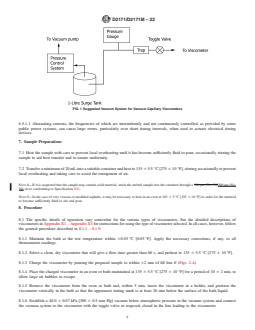
FIG. 1 Suggested Vacuum System for Vacuum Capillary Viscometers
6.5.1.1 Alternating currents, the frequencies of which are intermittently and not continuously controlled, as provided by some
public power systems, can cause large errors, particularly over short timing intervals, when used to actuate electrical timing
devices.
7. Sample Preparations
7.1 Heat the sample with care to prevent local overheating until it has become sufficiently fluid to pour, occasionally stirring the
sample to aid heat transfer and to ensure uniformity.
7.2 Transfer a minimum of 20 mL into a suitable container and heat to 135 6 5.5 °C [275 6 10 °F], stirring occasionally to prevent
local overheating and taking care to avoid the entrapment of air.
NOTE 8—If it is suspected that the sample may contain solid material, strain the melted sample into the container through a 300-μm [No. 50]300 μm (No.
50) sieve conforming to Specification E11.
NOTE 9—In the case of very viscous or modified asphalts, it may be necessary to heat in an oven at 163 6 5 °C [325 6 10 °F] in order for the material
to become sufficiently fluid to stir and pour.
8. Procedure
8.1 The specific details of operation vary somewhat for the various types of viscometers. See the detailed descriptions of
viscometers in Appendix X1 – Appendix X3 for instructions for using the type of viscometer selected. In all cases, however, follow
the general procedure described in 8.1.1 – 8.1.9.
8.1.1 Maintain the bath at the test temperature within 60.03 °C [0.05 °F]. Apply the necessary corrections, if any, to all
thermometer readings.
8.1.2 Select a clean, dry viscometer that will give a flow time greater than 60 s, and preheat to 135 6 5.5 °C [275 6 10 °F].
8.1.3 Charge the viscometer by pouring the prepared sample to within 62 mm of fill line E (Figs. 2-4).
8.1.4 Place the charged viscometer in an oven or bath maintained at 135 6 5.5 °C [275 6 10 °F] for a period of 10 6 2 min, to
allow large air bubbles to escape.
8.1.5 Remove the viscometer from the oven or bath and, within 5 min, insert the viscometer in a holder, and position the
viscometer vertically in the bath so that the uppermost timing mark is at least 20 mm below the surface of the bath liquid.
8.1.6 Establish a 40.0 6 0.07 kPa [300 6 0.5 mm Hg] vacuum below atmospheric pressure in the vacuum system and connect
the vacuum system to the viscometer with the toggle valve or stopcock closed in the line leading to the viscometer.
D2171/D2171M − 22
All dimensions are in millimetres.
FIG. 2 Cannon-Manning Vacuum Capillary Viscometer
All dimensions are in millimetres.
FIG. 3 Asphalt Institute Vacuum Capillary Viscometer
D2171/D2171M − 22
All dimensions are in millimetres.
FIG. 4 Modified Koppers Vacuum Capillary Viscometer
8.1.7 After the viscometer has been in the bath for 30 6 5 min, 5 min, start the flow of asphalt in the viscometer by opening the
toggle valve or stopcock in the line leading to the vacuum system.
8.1.8 Measure to within 0.1 s the time required for the leading edge of the meniscus to pass between successive pairs of timing
marks. Report the first flow time which exceeds 60 s between a pair of timing marks, noting the identification of the pair of timing
marks.
8.1.9 Upon completion of the test, clean the viscometer thoroughly by several rinsings with an appropriate solvent completely
miscible with the sample, followed by a completely volatile solvent. Dry the tube by passing a slow stream of filtered dry air
through the capillary for 2 min, or until the last trace of solvent is removed. Alternatively, the viscometer may be cleaned in a
glass-cleaning oven,oven at a temperature not to exceed 500 °C [932 °F], followed by rinses with distilled or deionized water,
residue-free acetone, and filtered dry air. Periodically, if deposits are observed, clean the instrument with a strong acid cleaning
solution to remove organic deposits, rinse thoroughly with distilled or deionized water and residue-free acetone, and dry with
filtered dry air.
8.1.9.1 Chromic acid cleaning solution may be prepared by adding, with the usual precautions, 800 mL of concentrated sulphuric
acid to a solution of 92 g of sodium dichromate in 458 mL of water. The use of similar commercially available sulphuric acid
cleaning solutions is acceptable. Nonchromium-containing, strongly oxidizing acid cleaning solutions may be substituted so as to
avoid the disposal problems of chromium-containing solutions.
8.1.9.2 Use of alkaline glass-cleaning solutions may result in a change of viscometer calibration, and is not recommended.
9. Calculation
9.1 Select the calibration factor that corresponds to the pair of timing marks used for the determination, as prescribed in 8.1.8.
Calculate and report the viscosity to three significant figures using the following equation:
Viscosity, Pa·s5 Kt (1)
~ !
D2171/D2171M − 22
TABLE 1 Acceptability of Test Results for Vacuum Capillary
Viscosity for Liquid Asphalts at 60 °C
Acceptable
Coefficient of
Range of Two
Material and Type Index Variation
Results
A
(% of mean)
A
(% of mean)
Single-operator precision:
Unconditioned liquid asphalts at 60 °C 2.62 7.41
[140 °F]
Rolling thin-film oven conditioned liquid 2.81 7.95
asphalts at 60 °C [140 °F]
Multilaboratory precision:
Unconditioned liquid asphalts at 60 °C 4.56 12.9
[140 °F]
Rolling thin-film oven conditioned liquid 7.27 20.6
asphalts at 60 °C [140 °F]
A
These numbers represent, respectively, the (1s%) and (d2s%) limits as de-
scribed in Practice C670.
where:
K = selected calibration factor, Pa·s/s, and
t = flow time, s.
where:
K = selected calibration factor, Pa·s/s, and
t = flow time, s.
NOTE 10—If the viscometer constant or calibration factor (K ) is known in cgs units (Poise/s)(Poise/s), calculate the calibration factor (Ksi) in SI units
cgs
(pascal·seconds/second) as follows:
Ksi 5 ~Pa·s/s!5 K /10 or ~P/s!/10 (2)
cgs
10. Report
10.1 Always report the test temperature and vacuum with the viscosity test result.
NOTE 11—For example, viscosity at 60 °C [140 °F] and 40.0 kPa [300 mm Hg] vacuum, in Pa·s.
11. Precision and Bias
11.1 The precision of this test method is based on an interlaboratory study of ASTM D2171/D2171M, Test Method for Viscosity
of Asphalts by Vacuum Capillary Viscometer, conducted in 2015 to 2019. One hundred twenty-four volunteer laboratories were
asked to test nine different materials. Every “test result” represents an individual determination, and al
...
Questions, Comments and Discussion
Ask us and Technical Secretary will try to provide an answer. You can facilitate discussion about the standard in here.
Loading comments...