

ASTM G65-16(2021)
(Test Method)Standard Test Method for Measuring Abrasion Using the Dry Sand/Rubber Wheel Apparatus
General Information
- Abstract
SIGNIFICANCE AND USE
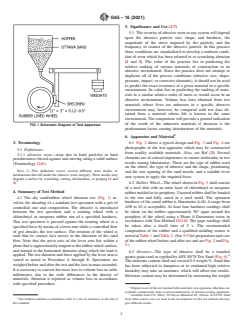
5.1 The severity of abrasive wear in any system will depend upon the abrasive particle size, shape, and hardness, the magnitude of the stress imposed by the particle, and the frequency of contact of the abrasive particle. In this practice these conditions are standardized to develop a uniform condition of wear which has been referred to as scratching abrasion (1 and 3). The value of the practice lies in predicting the relative ranking of various materials of construction in an abrasive environment. Since the practice does not attempt to duplicate all of the process conditions (abrasive size, shape, pressure, impact, or corrosive elements), it should not be used to predict the exact resistance of a given material in a specific environment. Its value lies in predicting the ranking of materials in a similar relative order of merit as would occur in an abrasive environment. Volume loss data obtained from test materials whose lives are unknown in a specific abrasive environment may, however, be compared with test data obtained from a material whose life is known in the same environment. The comparison will provide a general indication of the worth of the unknown materials if abrasion is the predominant factor causing deterioration of the materials.
SCOPE
1.1 This test method covers laboratory procedures for determining the resistance of metallic materials to scratching abrasion by means of the dry sand/rubber wheel test. It is the intent of this test method to produce data that will reproducibly rank materials in their resistance to scratching abrasion under a specified set of conditions.
1.2 Abrasion test results are reported as volume loss in cubic millimetres for the particular test procedure specified. Materials of higher abrasion resistance will have a lower volume loss.
Note 1: In order to attain uniformity among laboratories, it is the intent of this test method to require that volume loss due to abrasion be reported only in the metric system as cubic millimetres. 1 mm3 = 6.102 × 10⁻⁵ in.3.
1.3 This test method covers five recommended procedures which are appropriate for specific degrees of wear resistance or thicknesses of the test material.
1.3.1 Procedure A—This is a relatively severe test which will rank metallic materials on a wide volume loss scale from low to extreme abrasion resistance. It is particularly useful in ranking materials of medium to extreme abrasion resistance.
1.3.2 Procedure B—A short-term variation of Procedure A. It may be used for highly abrasive resistant materials but is particularly useful in the ranking of medium- and low-abrasive-resistant materials. Procedure B should be used when the volume–loss values developed by Procedure A exceeds 100 mm3.
1.3.3 Procedure C—A short-term variation of Procedure A for use on thin coatings.
1.3.4 Procedure D—This is a lighter load variation of Procedure A which is particularly useful in ranking materials of low-abrasion resistance. It is also used in ranking materials of a specific generic type or materials which would be very close in the volume loss rates as developed by Procedure A.
1.3.5 Procedure E—A short-term variation of Procedure B that is useful in the ranking of materials with medium- or low-abrasion resistance.
1.4 This standard does not purport to address all of the safety concerns, if any, associated with its use. It is the responsibility of the user of this standard to establish appropriate safety, health, and environmental practices and determine the applicability of regulatory limitations prior to use.
1.5 This international standard was developed in accordance with internationally recognized principles on standardization established in the Decision on Principles for the Development of International Standards, Guides and Recommendations issued by the World Trade Organization Technical Barriers to Trade (TBT) Committee.
- Status
- Published
- Publication Date
- 31-Oct-2021
- Technical Committee
- G02 - Wear and Erosion
- Drafting Committee
- G02.30 - Abrasive Wear
Overview
ASTM G65-16(2021) - Standard Test Method for Measuring Abrasion Using the Dry Sand/Rubber Wheel Apparatus is an internationally recognized laboratory method published by ASTM International. This standard provides procedures for evaluating the resistance of metallic materials to scratching abrasion using a dry sand/rubber wheel test. It is designed to deliver reproducible data that allows for the relative ranking of materials based on their abrasion resistance in controlled, standardized conditions.
This test method does not replicate all possible service conditions, but serves as a comparative tool to gauge the abrasive wear performance of different materials. Its main value lies in ranking materials in a similar order of merit as they would perform in an abrasive environment, especially where abrasion is the significant factor affecting material deterioration.
Key Topics
- Scratching Abrasion Measurement: The dry sand/rubber wheel test simulates uniform abrasive wear, allowing direct comparison of various materials' resistance to scratching abrasion.
- Volume Loss Reporting: Results are standardized and reported as volume loss in cubic millimeters, facilitating consistency across laboratories.
- Multiple Standard Procedures: Five procedures (A-E) address different material resistance ranges and thicknesses:
- Procedure A: Severe test for a broad ranking from low to extreme abrasion resistance.
- Procedure B: Short-term, for highly resistant to medium/low resistance materials.
- Procedure C: For thin coatings, short duration.
- Procedure D: Lighter load for low-abrasion resistance materials and closer comparisons.
- Procedure E: Short-term, suitable for medium- or low-resistance materials.
- Influence Factors: Abrasive particle size, shape, and hardness, applied stress, and frequency of contact all play roles in the test outcome.
- Test Apparatus: The apparatus consists of a rubber wheel, a controlled sand flow, a sample holder, and a revolution counter-all arranged to ensure consistent abrasion under specified conditions.
Applications
- Material Selection and Ranking: Widely used for selecting construction materials (metals, coatings, overlays) where abrasive wear is a concern, such as mining, earth-moving, agricultural, and process industries.
- Quality Control and R&D: Laboratories use ASTM G65 to verify incoming materials, compare new alloys, or develop abrasion-resistant coatings and treatments.
- Benchmarking and Specification: Data generated can serve as a benchmark for technical data sheets and ensure compliance with client or regulatory requirements.
- Comparative Analysis: Unknown materials’ results may be compared to those with established performance in similar abrasive environments, aiding in material approval and substitution decisions.
- Multilaboratory Coordination: Standardized procedures ensure data uniformity for interlaboratory comparisons and collaborative research efforts.
Related Standards
For comprehensive abrasion and wear testing, ASTM G65 references and complements other recognized standards:
- ASTM G105: Test Method for Conducting Wet Sand/Rubber Wheel Abrasion Tests
- ASTM D2000: Classification System for Rubber Products in Automotive Applications
- ASTM D2240: Test Method for Rubber Property-Durometer Hardness
- ASTM E11: Specification for Woven Wire Test Sieve Cloth and Test Sieves
- ASTM E122, E177, E691: Standards for statistical analysis and terminology related to testing accuracy and reproducibility
- ASTM G40: Terminology Relating to Wear and Erosion
Employing ASTM G65-16(2021) in your material evaluation processes ensures reliable abrasion testing, supports product development, and strengthens claims regarding material durability in abrasive environments while meeting globally recognized industry standards.
Relations
- Effective Date
- 01-Nov-2015
- Effective Date
- 01-May-2014
- Effective Date
- 01-Oct-2013
- Effective Date
- 01-Jun-2013
- Effective Date
- 01-May-2013
- Effective Date
- 01-May-2013
- Effective Date
- 01-May-2012
- Effective Date
- 01-Nov-2011
- Effective Date
- 01-Aug-2011
- Effective Date
- 01-Dec-2010
- Effective Date
- 01-Oct-2010
- Effective Date
- 01-Jul-2010
- Effective Date
- 01-Jan-2010
- Effective Date
- 15-Nov-2009
- Effective Date
- 01-Aug-2009
Get Certified
Connect with accredited certification bodies for this standard

BSMI (Bureau of Standards, Metrology and Inspection)
Taiwan's standards and inspection authority.
Sponsored listings
Frequently Asked Questions
ASTM G65-16(2021) is a standard published by ASTM International. Its full title is "Standard Test Method for Measuring Abrasion Using the Dry Sand/Rubber Wheel Apparatus". This standard covers: SIGNIFICANCE AND USE 5.1 The severity of abrasive wear in any system will depend upon the abrasive particle size, shape, and hardness, the magnitude of the stress imposed by the particle, and the frequency of contact of the abrasive particle. In this practice these conditions are standardized to develop a uniform condition of wear which has been referred to as scratching abrasion (1 and 3). The value of the practice lies in predicting the relative ranking of various materials of construction in an abrasive environment. Since the practice does not attempt to duplicate all of the process conditions (abrasive size, shape, pressure, impact, or corrosive elements), it should not be used to predict the exact resistance of a given material in a specific environment. Its value lies in predicting the ranking of materials in a similar relative order of merit as would occur in an abrasive environment. Volume loss data obtained from test materials whose lives are unknown in a specific abrasive environment may, however, be compared with test data obtained from a material whose life is known in the same environment. The comparison will provide a general indication of the worth of the unknown materials if abrasion is the predominant factor causing deterioration of the materials. SCOPE 1.1 This test method covers laboratory procedures for determining the resistance of metallic materials to scratching abrasion by means of the dry sand/rubber wheel test. It is the intent of this test method to produce data that will reproducibly rank materials in their resistance to scratching abrasion under a specified set of conditions. 1.2 Abrasion test results are reported as volume loss in cubic millimetres for the particular test procedure specified. Materials of higher abrasion resistance will have a lower volume loss. Note 1: In order to attain uniformity among laboratories, it is the intent of this test method to require that volume loss due to abrasion be reported only in the metric system as cubic millimetres. 1 mm3 = 6.102 × 10⁻⁵ in.3. 1.3 This test method covers five recommended procedures which are appropriate for specific degrees of wear resistance or thicknesses of the test material. 1.3.1 Procedure A—This is a relatively severe test which will rank metallic materials on a wide volume loss scale from low to extreme abrasion resistance. It is particularly useful in ranking materials of medium to extreme abrasion resistance. 1.3.2 Procedure B—A short-term variation of Procedure A. It may be used for highly abrasive resistant materials but is particularly useful in the ranking of medium- and low-abrasive-resistant materials. Procedure B should be used when the volume–loss values developed by Procedure A exceeds 100 mm3. 1.3.3 Procedure C—A short-term variation of Procedure A for use on thin coatings. 1.3.4 Procedure D—This is a lighter load variation of Procedure A which is particularly useful in ranking materials of low-abrasion resistance. It is also used in ranking materials of a specific generic type or materials which would be very close in the volume loss rates as developed by Procedure A. 1.3.5 Procedure E—A short-term variation of Procedure B that is useful in the ranking of materials with medium- or low-abrasion resistance. 1.4 This standard does not purport to address all of the safety concerns, if any, associated with its use. It is the responsibility of the user of this standard to establish appropriate safety, health, and environmental practices and determine the applicability of regulatory limitations prior to use. 1.5 This international standard was developed in accordance with internationally recognized principles on standardization established in the Decision on Principles for the Development of International Standards, Guides and Recommendations issued by the World Trade Organization Technical Barriers to Trade (TBT) Committee.
SIGNIFICANCE AND USE 5.1 The severity of abrasive wear in any system will depend upon the abrasive particle size, shape, and hardness, the magnitude of the stress imposed by the particle, and the frequency of contact of the abrasive particle. In this practice these conditions are standardized to develop a uniform condition of wear which has been referred to as scratching abrasion (1 and 3). The value of the practice lies in predicting the relative ranking of various materials of construction in an abrasive environment. Since the practice does not attempt to duplicate all of the process conditions (abrasive size, shape, pressure, impact, or corrosive elements), it should not be used to predict the exact resistance of a given material in a specific environment. Its value lies in predicting the ranking of materials in a similar relative order of merit as would occur in an abrasive environment. Volume loss data obtained from test materials whose lives are unknown in a specific abrasive environment may, however, be compared with test data obtained from a material whose life is known in the same environment. The comparison will provide a general indication of the worth of the unknown materials if abrasion is the predominant factor causing deterioration of the materials. SCOPE 1.1 This test method covers laboratory procedures for determining the resistance of metallic materials to scratching abrasion by means of the dry sand/rubber wheel test. It is the intent of this test method to produce data that will reproducibly rank materials in their resistance to scratching abrasion under a specified set of conditions. 1.2 Abrasion test results are reported as volume loss in cubic millimetres for the particular test procedure specified. Materials of higher abrasion resistance will have a lower volume loss. Note 1: In order to attain uniformity among laboratories, it is the intent of this test method to require that volume loss due to abrasion be reported only in the metric system as cubic millimetres. 1 mm3 = 6.102 × 10⁻⁵ in.3. 1.3 This test method covers five recommended procedures which are appropriate for specific degrees of wear resistance or thicknesses of the test material. 1.3.1 Procedure A—This is a relatively severe test which will rank metallic materials on a wide volume loss scale from low to extreme abrasion resistance. It is particularly useful in ranking materials of medium to extreme abrasion resistance. 1.3.2 Procedure B—A short-term variation of Procedure A. It may be used for highly abrasive resistant materials but is particularly useful in the ranking of medium- and low-abrasive-resistant materials. Procedure B should be used when the volume–loss values developed by Procedure A exceeds 100 mm3. 1.3.3 Procedure C—A short-term variation of Procedure A for use on thin coatings. 1.3.4 Procedure D—This is a lighter load variation of Procedure A which is particularly useful in ranking materials of low-abrasion resistance. It is also used in ranking materials of a specific generic type or materials which would be very close in the volume loss rates as developed by Procedure A. 1.3.5 Procedure E—A short-term variation of Procedure B that is useful in the ranking of materials with medium- or low-abrasion resistance. 1.4 This standard does not purport to address all of the safety concerns, if any, associated with its use. It is the responsibility of the user of this standard to establish appropriate safety, health, and environmental practices and determine the applicability of regulatory limitations prior to use. 1.5 This international standard was developed in accordance with internationally recognized principles on standardization established in the Decision on Principles for the Development of International Standards, Guides and Recommendations issued by the World Trade Organization Technical Barriers to Trade (TBT) Committee.
ASTM G65-16(2021) is classified under the following ICS (International Classification for Standards) categories: 17.040.20 - Properties of surfaces. The ICS classification helps identify the subject area and facilitates finding related standards.
ASTM G65-16(2021) has the following relationships with other standards: It is inter standard links to ASTM G40-15, ASTM E177-14, ASTM E11-13, ASTM G40-13, ASTM E177-13, ASTM E691-13, ASTM G40-12, ASTM E691-11, ASTM E122-09e1, ASTM G40-10b, ASTM E177-10, ASTM G40-10a, ASTM G40-10, ASTM G40-09, ASTM E122-09. Understanding these relationships helps ensure you are using the most current and applicable version of the standard.
ASTM G65-16(2021) is available in PDF format for immediate download after purchase. The document can be added to your cart and obtained through the secure checkout process. Digital delivery ensures instant access to the complete standard document.
Standards Content (Sample)
This international standard was developed in accordance with internationally recognized principles on standardization established in the Decision on Principles for the
Development of International Standards, Guides and Recommendations issued by the World Trade Organization Technical Barriers to Trade (TBT) Committee.
Designation: G65 − 16 (Reapproved 2021)
Standard Test Method for
Measuring Abrasion Using the Dry Sand/Rubber Wheel
Apparatus
ThisstandardisissuedunderthefixeddesignationG65;thenumberimmediatelyfollowingthedesignationindicatestheyearoforiginal
adoptionor,inthecaseofrevision,theyearoflastrevision.Anumberinparenthesesindicatestheyearoflastreapproval.Asuperscript
epsilon (´) indicates an editorial change since the last revision or reapproval.
1. Scope 1.3.5 Procedure E—A short-term variation of Procedure B
that is useful in the ranking of materials with medium- or
1.1 This test method covers laboratory procedures for de-
low-abrasion resistance.
termining the resistance of metallic materials to scratching
1.4 This standard does not purport to address all of the
abrasion by means of the dry sand/rubber wheel test. It is the
safety concerns, if any, associated with its use. It is the
intentofthistestmethodtoproducedatathatwillreproducibly
responsibility of the user of this standard to establish appro-
rank materials in their resistance to scratching abrasion under
priate safety, health, and environmental practices and deter-
a specified set of conditions.
mine the applicability of regulatory limitations prior to use.
1.2 Abrasion test results are reported as volume loss in
1.5 This international standard was developed in accor-
cubic millimetres for the particular test procedure specified.
dance with internationally recognized principles on standard-
Materials of higher abrasion resistance will have a lower
ization established in the Decision on Principles for the
volume loss.
Development of International Standards, Guides and Recom-
NOTE 1—In order to attain uniformity among laboratories, it is the
mendations issued by the World Trade Organization Technical
intent of this test method to require that volume loss due to abrasion be
Barriers to Trade (TBT) Committee.
reported only in the metric system as cubic millimetres.
3 −5 3
1mm =6.102×10 in. .
2. Referenced Documents
1.3 This test method covers five recommended procedures
2.1 ASTM Standards:
whichareappropriateforspecificdegreesofwearresistanceor
D2000Classification System for Rubber Products in Auto-
thicknesses of the test material.
motive Applications
1.3.1 Procedure A—This is a relatively severe test which
D2240TestMethodforRubberProperty—DurometerHard-
will rank metallic materials on a wide volume loss scale from
ness
low to extreme abrasion resistance. It is particularly useful in
E11Specification forWovenWireTest Sieve Cloth andTest
ranking materials of medium to extreme abrasion resistance.
Sieves
1.3.2 Procedure B—A short-term variation of Procedure A.
E122PracticeforCalculatingSampleSizetoEstimate,With
It may be used for highly abrasive resistant materials but is
Specified Precision, the Average for a Characteristic of a
particularly useful in the ranking of medium- and low-
Lot or Process
abrasive-resistant materials. Procedure B should be used when
E177Practice for Use of the Terms Precision and Bias in
thevolume–lossvaluesdevelopedbyProcedureAexceeds100
3 ASTM Test Methods
mm .
E691Practice for Conducting an Interlaboratory Study to
1.3.3 Procedure C—A short-term variation of Procedure A
Determine the Precision of a Test Method
for use on thin coatings.
G40Terminology Relating to Wear and Erosion
1.3.4 Procedure D—This is a lighter load variation of
G105Test Method for Conducting Wet Sand/Rubber Wheel
ProcedureAwhichisparticularlyusefulinrankingmaterialsof
Abrasion Tests
low-abrasion resistance. It is also used in ranking materials of
2.2 American Foundry Society Standard:
a specific generic type or materials which would be very close
in the volume loss rates as developed by Procedure A. AFS Foundry Sand Handbook,7th Edition
1 2
This test method is under the jurisdiction of ASTM Committee G02 on Wear For referenced ASTM standards, visit the ASTM website, www.astm.org, or
and Erosion and is the direct responsibility of Subcommittee G02.30 on Abrasive contact ASTM Customer Service at service@astm.org. For Annual Book of ASTM
Wear. Standards volume information, refer to the standard’s Document Summary page on
Current edition approved Nov. 1, 2021. Published December 2021. Originally the ASTM website.
ɛ1 3
approved in 1980. Last previous edition approved in 2016 as G65–16 . DOI: Available from American Foundry Society, 1695 North Penny Lane,
10.1520/G0065-16R21. Schaumburg, IL 60173, https://www.afsinc.org.
Copyright © ASTM International, 100 Barr Harbor Drive, PO Box C700, West Conshohocken, PA 19428-2959. United States
G65 − 16 (2021)
5. Significance and Use (1-7)
5.1 Theseverityofabrasivewearinanysystemwilldepend
upon the abrasive particle size, shape, and hardness, the
magnitude of the stress imposed by the particle, and the
frequency of contact of the abrasive particle. In this practice
these conditions are standardized to develop a uniform condi-
tion of wear which has been referred to as scratching abrasion
(1 and 3). The value of the practice lies in predicting the
relative ranking of various materials of construction in an
abrasive environment. Since the practice does not attempt to
duplicate all of the process conditions (abrasive size, shape,
pressure, impact, or corrosive elements), it should not be used
to predict the exact resistance of a given material in a specific
environment. Its value lies in predicting the ranking of mate-
rials in a similar relative order of merit as would occur in an
abrasive environment. Volume loss data obtained from test
materials whose lives are unknown in a specific abrasive
environment may, however, be compared with test data ob-
tained from a material whose life is known in the same
environment.Thecomparisonwillprovideageneralindication
of the worth of the unknown materials if abrasion is the
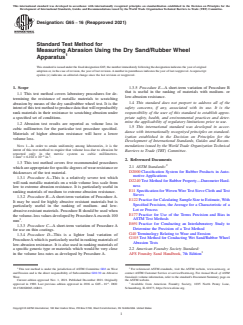
FIG. 1 Schematic Diagram of Test Apparatus
predominant factor causing deterioration of the materials.
6. Apparatus and Material
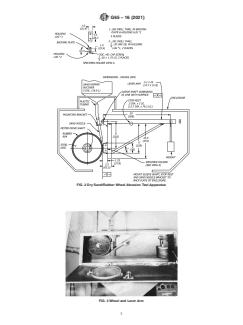
3. Terminology 6.1 Fig. 2 shows a typical design and Fig. 3 and Fig. 4 are
photographs of the test apparatus which may be constructed
3.1 Definitions:
from readily available materials. Also, see Ref (3). Several
3.1.1 abrasive wear—wear due to hard particles or hard
elements are of critical importance to ensure uniformity in test
protuberances forced against and moving along a solid surface
results among laboratories. These are the type of rubber used
(Terminology G40).
on the wheel, the type of abrasive and the shape, positioning
NOTE 2—This definition covers several different wear modes or
and the size opening of the sand nozzle, and a suitable lever
mechanisms that fall under the abrasive wear category.These modes may
arm system to apply the required force.
degrade a surface by scratching, cutting, deformation, or gouging (1 and
2).
6.2 Rubber Wheel—ThewheelshowninFig.5shallconsist
of a steel disk with an outer layer of chlorobutyl or neoprene
4. Summary of Test Method
rubbermoldedtoitsperiphery.Uncuredrubbershallbebonded
to the rim and fully cured in a steel mold. The optimum
4.1 The dry sand/rubber wheel abrasion test (Fig. 1) in-
hardness of the cured rubber is DurometerA-60.Arange from
volves the abrading of a standard test specimen with a grit of
A58 to 62 is acceptable. At least four hardness readings shall
controlled size and composition. The abrasive is introduced
be taken on the rubber approximately 90° apart around the
between the test specimen and a rotating wheel with a
periphery of the wheel using a Shore A Durometer tester in
chlorobutyl or neoprene rubber rim of a specified hardness.
accordance with Test Method D2240. The gage readings shall
This test specimen is pressed against the rotating wheel at a
be taken after a dwell time of 5 s. The recommended
specifiedforcebymeansofaleverarmwhileacontrolledflow
composition of the rubber and a qualified molding source is
of grit abrades the test surface. The rotation of the wheel is
noted in Table 1 and Table 2. (See 9.9 for preparation and care
such that its contact face moves in the direction of the sand
oftherubberwheelbeforeandafteruseandseeFig.2andFig.
flow. Note that the pivot axis of the lever arm lies within a
5.)
planethatisapproximatelytangenttotherubberwheelsurface,
and normal to the horizontal diameter along which the load is
6.3 Abrasive—The type of abrasive shall be a rounded
applied.Thetestdurationandforceappliedbytheleverarmis
quartzgrainsandastypifiedbyAFS50/70TestSand(Fig.6).
varied as noted in Procedure A through E. Specimens are
The moisture content shall not exceed 0.5 weight%. Sand that
weighedbeforeandafterthetestandthelossinmassrecorded.
has been subjected to dampness or to continued high relative
It is necessary to convert the mass loss to volume loss in cubic
humidity may take on moisture, which will affect test results.
millimetres, due to the wide differences in the density of
Moisture content may be determined by measuring the weight
materials. Abrasion is reported as volume loss in accordance
with specified procedure.
Original users of this test method fabricated their own apparatus. Machines are
available commercially from several manufacturers of abrasion testing equipment.
Available from U.S. Silica, 701 Boyce Memorial Dr., Ottawa, IL 61350. Sand
The boldface numbers n parentheses refer to a list of references at the end of from other sources was not used in the development of this test method and may
this standard. give different results.
G65 − 16 (2021)
FIG. 2 Dry Sand/Rubber Wheel Abrasion Test Apparatus
FIG. 3 Wheel and Lever Arm
G65 − 16 (2021)
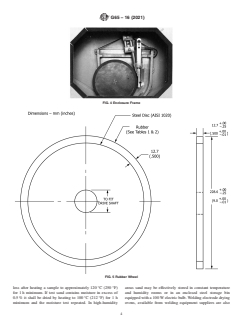
FIG. 4 Enclosure Frame
FIG. 5 Rubber Wheel
loss after heating a sample to approximately 120°C (250°F) areas sand may be effectively stored in constant temperature
for 1h minimum. If test sand contains moisture in excess of and humidity rooms or in an enclosed steel storage bin
0.5% it shall be dried by heating to 100°C (212°F) for 1 h equippedwitha100Welectricbulb.Weldingelectrodedrying
minimum and the moisture test repeated. In high-humidity ovens, available from welding equipment suppliers are also
G65 − 16 (2021)
A
TABLE 1 A Formula for Chlorobutyl Rubber
NOTE1—Specificgravityofmix:1.15.Pressurecure:20minat160°C
(320°F).
Proportions by
Materials
Weight
Chlorobutyl No. HT 10-66 (Enjay Chemical) 100
Agerite Staylite-S 1
HAF black 60
Circolight oil 5
Stearic acid 1
Zinc oxide 5
Ledate 2
A
The sole source of supply known to the committee at this time is Falex
Corporation, 1020 Airpark Dr., Sugar Grove, IL 60554. If you are aware of
alternative suppliers, please provide this information toASTM Headquarters. Your
comments will receive careful consideration at a meeting of the responsible
technical committee, which you may attend.
A
TABLE 2 Formula for Neoprene Rubber
NOTE 1—The rubber will conform to Classification D2000.
NOTE 2—The 60 Durometer wheel will be in accordance with
2BC615K11Z1Z2Z3Z4, where Z1–Elastomer–Neoprene GW, Z2–TypeA
Durometer hardness 60 ± 2, Z3–Not less than 50% rubber hydrocarbon
content, and Z4–Medium thermal black reinforcement.
NOTE 3—The wheels are molded under pressure. Cure times of 40min
to 60 min at 153°C (307°F) are used to minimize “heat-to-heat”
variations.
FIG. 6 25X Magnification AFS 50/70 Test Sand Ottawa Silica Co.
Materials Proportions by Weight
Neoprene GW 100
B
Magnesia 2
C
Zinc Oxide 10
6.4.1 Any convenient material of construction that is avail-
Octamine 2
Stearic Acid 0.5
able as welded or seamless pipe may be used for the construc-
D
SRF Carbon Black 37
tion of the fabricated nozzle. Stainless steel is preferred
ASTM #3 Oil 10
becauseofitscorrosionresistanceandeaseofwelding.Copper
A
The sole source of supply known to the committee at this time is Falex
and steel are also used successfully.
Corporation, 1020 Airpark Dr., Sugar Grove, IL 60554. If you are aware of
alternative suppliers, please provide this information toASTM Headquarters. Your
6.4.2 Formed Nozzle—Nozzles formed from tubing may be
comments will receive careful consideration at a meeting of the responsible
used only when they duplicate the size and shape (rectangular
technical committee, which you may attend.
B
orifice and taper), and the sand flow characteristics (flow rate
Maglite D (Merck)
C
Kadox 16 (Ner Jersey Zinc)
and streamlined flow) of the fabricated nozzle. (See Fig. 7 and
D
ASTM Grade N762
Fig. 9.)
6.4.3 Sand Flow—Thenozzlemustproduceasandflowrate
of 300g⁄min to 400 g/min (0.66lb⁄min to 0.88 lb/min).
6.4.4 Sand Curtain—Fig. 9 shows the proper stream-lined
flow and the narrow shape of the sand curtain as it exits from
suitable. Multiple use of the sand may affect test results and is
the sand nozzle. A turbulent sand flow as depicted in Fig. 10
not recommended. AFS 50/70 Test Sand is controlled to the
will tend to produce low and inconsistent test results. It is
following size range using U.S. sieves (Specification E11).
intended that the sand flows in a streamlined manner and
U.S. Sieve Size Sieve Opening % Retained on Sieve
passes between the specimen and rubber wheel.
40 425 µm (0.0165 in.) none
50 300 µm (0.0117 in.) 5 max
6.5 Motor Drive—The wheel is driven by a nominally
70 212 µm (0.0083 in.) 95 min
0.7kW (1hp) dc motor through a 10/1 gear box to ensure that
100 150 µm (0.0059 in.) none passing
full torque is delivered during the test. The rate of revolution
6.4 Sand Nozzle—Fig. 7 shows the fabricated nozzle design
(200rpm 6 10 rpm) must remain constant under load. Other
whichwasdevelopedtoproduceanaccuratesandflowrateand
drives producing 200 rpm under load are suitable.
proper shape of sand curtain for test procedures. The nozzle
maybeofanyconvenientlengththatwillallowforconnection 6.6 Wheel Revolution Counter—The machine shall be
tothesandhopperusingplastictubing.Innewnozzles,therate equipped with a revolution counter that will monitor the
of sand flow is adjusted by grinding the orifice of the nozzle to number of wheel revolutions as specified in the procedure
increase the width of the opening to develop a sand flow rate (Section 9). It is recommended that the incremental counter
of 300g⁄min to 400 g/min. During use, the nozzle opening have the ability to shut off the machine after a preselected
mustbepositionedasclosetothejunctionofthetestspecimen number of wheel revolutions or increments up to 12000
and the rubber wheel as the design will allow. (See Fig. 8.) revolutions is attained.
G65 − 16 (2021)
FIG. 7 Sand Nozzle
6.7 Specimen Holder and Lever Arm—The specimen holder 7. Specimen Preparation and Sampling
isattachedtotheleverarmtowhichweightsareadded,sothat
7.1 Materials—It is the intent of this test method to allow
a force is applied along the horizontal diametral line of the
for the abrasion testing of any material form, including
wheel.An appropriate number of weights must be available to
wrought metals, castings, forgings, gas or electric weld
applytheappropriateforce(Table3)betweenthetestspecimen
overlays, plasma spray deposits, powder metals, metallizing,
and the wheel. The actual weight required should not be
electroplates, cermets, ceramics and so forth. The type of
calculated, but rather should be determined by direct measure-
material will, to some extent, determine the overall size of the
ment by noting the load required to pull the specimen holder
test specimen.
away from the wheel. A convenient weight system is a can
7.2 Typical Specimen,arectangularshape25mmby76mm
filled with sand (see Fig. 2).
(1.0in. by 3.0 in.) and between 3.2mm and 12.7mm (0.12in.
6.8 Analytical Balance—The balance used to measure the
and 0.50 in.) thick. The size may be varied according to the
loss in mass of the test specimen shall have a sensitivity of
user’s need with the restriction that the length and width be
0.001 g. Procedure C requires a sensitivity of 0.0001 g.
sufficient to show the full length of the wear scar as developed
by the test. The test surface should be flat within 0.125 mm
6.9 Enclosure, Frame, and Abrasive Hopper—Fig. 3 and
(0.005 in.) maximum.
Fig. 4 are photographs of a typical test apparatus.The size and
shape of the support elements, enclosure, and hopper may be 7.3 Wrought, Cast, and Forged Metal—Specimens may be
varied according to the user’s needs. machined to size directly from the raw material.
G65 − 16 (2021)
Procedure E, and 30 s for Procedure C, depending upon the
actual wheel speed. In all cases the number of wheel revolu-
tions and not the time shall be the controlling parameter.
8.4 Lineal Abrasion—Table 3 shows the lineal distance of
scratching abrasion developed using a 228.6mm (9in.) diam-
eter wheel rotating for the specified number of revolutions.As
the rubber wheel reduces in diameter the number of wheel
revolutions shall be adjusted to equal the sliding distance of a
newwheel(Table3)orthereducedabrasionrateshallbetaken
into account by adjusting the volume loss produced by the
worn wheel to the normalized volume loss of a new wheel.
(See 10.2.)
9. Procedure
9.1 Cleaning—Immediately prior to weighing, clean the
specimen with a solvent or cleaner and dry. Take care to
remove all dirt or foreign matter or both from the specimen.
Dry materials with open grains (some powder metals or
ceramics) to remove all traces of the cleaning solvent, which
may have been entrapped in the material. Steel specimens
having residual magnetism should be demagnetized or not
used.
9.2 Weighthespecimentothenearest0.001g(0.0001gfor
Procedure C).
FIG. 8 Position of Sand Nozzle
9.3 Seat the specimen securely in the holder and add the
proper weights to the lever arm to develop the proper force
7.4 Electric or Gas Weld Deposits are applied to one flat pressing the specimen against the wheel. This may be mea-
surfaceofthetestpiece.Double-weldpassesarerecommended sured accurately by means of a spring scale which is hooked
topreventwelddilutionbythebasemetal.Theheatofwelding aroundthespecimenandpulledbacktoliftthespecimenaway
may distort the test specimen. When this occurs, the specimen from the wheel.Awedge should be placed under the lever arm
may be mechanically straightened or ground, or both. In order so that the specimen is held away from the wheel prior to start
to develop a suitable wear scar, the surface to be abraded must of test. (See Fig. 2.)
be ground flat to produce a smooth, level surface at least 63.4
9.4 Set the revolution counter to the prescribed number of
mm (2.50 in.) long and 19.1 mm (0.75 in.) for the test. (See
wheel revolutions.
7.5.) Note that the welder technique, heat input of welds, and
9.5 Sand Flow and Sand Curtain—The rate of sand flow
the flame adjustment of gas welds will have an effect on the
through the nozzles shall be between 300 g (0.66 lb)/min and
abrasion resistance of a weld deposit.
400 g (0.88 lb)/min. Do not start the wheel rotation until the
7.5 Finish—Test specimens should be smooth, flat, and free
properuniformcurtainofsandhasbeenestablished(seeFig.9
of scale. Surface defects such as porosity and roughness may
and Note 3).
bias the test results, and such specimens should be avoided
9.5.1 The dwell time between tests shall be the time
unless the surface itself is under investigation.Typical suitable
required for the temperature of the rubber wheel to return to
surfaces are mill-rolled surfaces such as are present on cold-
room temperature. For Procedure B the dwell time shall be at
rolled steel, electroplated and similar deposits, ground
least 30 min.
surfaces, and finely machined or milled surfaces. A ground
surface finish of app
...