

ASTM E2435-05(2020)
(Guide)Standard Guide for Application of Engineering Controls to Facilitate Use or Redevelopment of Chemical-Affected Properties
General Information
- Abstract
SIGNIFICANCE AND USE
4.1 Intended Application of Guide—This guide is intended for use at properties that are presently developed or proposed for development for residential, commercial, or industrial purposes but which contain chemical-affected soil, groundwater, air, or other environmental media, which may pose an unacceptable risk to human health. This guide can be used as a tool for planning and implementation of property reuse or redevelopment activities at former commercial/industrial facilities, “brownfield” properties, or properties containing naturally occurring, chemical-affected environmental media so as to effectively manage potential human exposures to COCs which might otherwise limit productive use of the property.
4.2 Situations Where This Guide May Be Applied—An engineering control may be needed as part of the development plan when: (1) COCs are present in soil, groundwater, or other environmental media at concentrations posing unacceptable risk(s) to human health per applicable regulatory criteria or a risk-based evaluation; (2) a potentially complete exposure pathway for COCs is likely to exist in the absence of an engineering control or other response measure, and (3) installation and maintenance of the engineering control is determined to be an applicable and cost-effective response action relative to other options. A property should not be excluded from development or redevelopment solely on the basis of chemical-affected media, in general, and chemical-affected groundwater, in particular. If no affected environmental media are identified as having COC concentrations in excess of applicable regulatory standards or risk-based criteria, then engineering controls or other response measures are not required.
4.3 Assumptions for Use of This Guide—For use of this guide, it is assumed that (1) an environmental site assessment has been completed to characterize chemical-affected environmental media, (2) exposures to COCs posing an unacceptable risk to the health of cur...
SCOPE
1.1 This guide presents general considerations for application of engineering controls to facilitate continued use or redevelopment of properties containing chemical-affected soil, groundwater, or other environmental media, due either to chemical releases or naturally-occurring conditions. This guide is not meant to be prescriptive but rather to present considerations for evaluating technologies capable of addressing potential human exposures associated with chemical-affected environmental media.
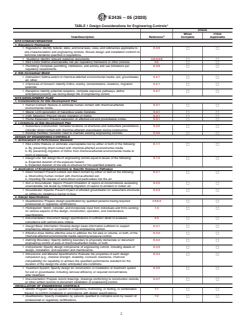
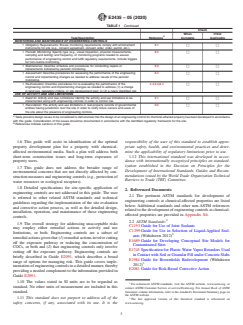
1.2 Table 1 lists the considerations that should be taken into account when developing an engineering control in accordance with this guide.
1.3 This guide is intended for use by real estate developers, civil/structural designers, environmental regulators, industrial parties, environmental consultants, and other persons concerned with residential, commercial, or industrial development of real properties where chemical-affected environmental media are present. The design process should involve the individuals and firms working on various aspects of the specifications for construction, operation, and maintenance. If the site is located on public property, then public participation should be considered during the design process.
1.4 This guide is directed toward properties where chemical-affected environmental media, associated with either human-influenced activities or naturally-occurring conditions, will remain in place and where active or passive engineering controls will be used to reduce or eliminate exposures that may otherwise pose an unacceptable risk to property users.
1.5 This guide identifies the exposure concerns associated with chemical-affected properties that may affect the property development plan, both in the construction phase and during the proposed use of the property; defines performance standards for control of applicable exposure pathways; and, for each exposure pathway, provides examples of eng...
- Status
- Published
- Publication Date
- 31-Oct-2020
- Technical Committee
- E50 - Environmental Assessment, Risk Management and Corrective Action
- Drafting Committee
- E50.04 - Corrective Action
Overview
ASTM E2435-05(2020) is a standard guide published by ASTM International, providing recommendations for the application of engineering controls to support the continued use or redevelopment of properties affected by chemicals. These properties, known as chemical-affected properties, may contain contaminants in soil, groundwater, air, or other environmental media that could pose unacceptable risks to human health if not properly managed. The guide is particularly relevant for sites such as former industrial facilities, brownfields, and locations with naturally occurring chemical hazards.
This standard is intended for use by real estate developers, environmental consultants, civil and structural engineers, regulators, and other stakeholders involved in residential, commercial, or industrial property development where chemical-affected environmental media are present. Its primary aim is to ensure that risks to human health are effectively managed, enabling safe, productive property reuse and redevelopment.
Key Topics
Intended Use
- Applicable to properties slated for residential, commercial, or industrial use where chemical-affected soil, groundwater, or air may be present.
- Provides a framework for evaluating and selecting engineering controls to reduce or eliminate human exposure to chemicals of concern (COCs).
Situations for Application
- Appropriate when:
- COCs are present at concentrations exceeding acceptable risk thresholds per regulatory standards or risk-based evaluations.
- There is the potential for complete human exposure pathways in the absence of controls.
- Engineering controls are identified as applicable and cost-effective compared to other response actions.
Concept of Engineering Controls
- Engineering controls are physical modifications (such as barriers or treatment systems) designed to block or reduce the possibility of human exposure to contaminants.
- Both active controls (require input of energy for operation) and passive controls (physical barriers or measures that function without ongoing energy input) are addressed.
- Use of engineering controls is complemented by activity and use limitations, legal or physical restrictions that further minimize exposure risks.
Core Design Considerations
- Site characterization: Understanding the extent and concentration of contamination.
- Risk assessment: Defining unacceptable risks and exposure pathways for the intended land use.
- Design, installation, and maintenance: Ensuring engineering controls are robust, effective, and maintained for the duration of the site’s use.
Applications
This ASTM standard is broadly applied in the development and redevelopment of properties impacted by chemical contaminants. Typical applications include:
- Brownfield redevelopment: Allows for the productive reuse of sites previously impacted by industrial or commercial activities by ensuring human health protection.
- Urban infill and revitalization projects: Enables safe construction on sites where soil or groundwater contamination might otherwise limit development.
- Industrial property management: Supports continued safe use of properties where legacy contamination is present.
- Residential development: Ensures that new housing construction considers and mitigates risks from naturally occurring or human-generated chemical hazards.
By following ASTM E2435, stakeholders can plan and implement response actions that facilitate property redevelopment while maintaining compliance with environmental regulations and protecting public health.
Related Standards
To support its guidance, ASTM E2435 references several related standards and best practices, including:
- ASTM E1689: Guide for Developing Conceptual Site Models for Contaminated Sites
- ASTM E1745: Specification for Plastic Water Vapor Retarders Used in Contact with Soil or Granular Fill under Concrete Slabs
- ASTM E2081: Guide for Risk-Based Corrective Action
- ASTM E2091: Guide for Use of Activity and Use Limitations, Including Institutional and Engineering Controls
- ASTM E2121: Practice for Installing Radon Mitigation Systems in Existing Low-Rise Residential Buildings
These related standards offer further detail on site assessment, risk evaluation, vapor barriers, and implementation of institutional and engineering controls, helping property stakeholders ensure comprehensive management of chemical-affected sites.
Keywords: ASTM E2435, engineering controls, chemical-affected property, site redevelopment, environmental standards, brownfield management, human health risk, exposure pathways, contaminated site regulation, property reuse.
Relations
- Effective Date
- 01-Nov-2017
- Effective Date
- 15-Jan-2013
- Effective Date
- 15-Nov-2012
- Effective Date
- 15-Apr-2012
- Effective Date
- 01-Nov-2011
- Effective Date
- 01-Oct-2011
- Effective Date
- 01-Oct-2011
- Effective Date
- 15-Jun-2011
- Effective Date
- 01-May-2011
- Effective Date
- 01-Sep-2010
- Effective Date
- 01-Nov-2009
- Effective Date
- 15-Feb-2009
- Effective Date
- 01-Jan-2009
- Effective Date
- 15-Jun-2008
- Refers
ASTM E1689-95(2008) - Standard Guide for Developing Conceptual Site Models for Contaminated Sites - Effective Date
- 01-Feb-2008
Get Certified
Connect with accredited certification bodies for this standard

BSI Group
BSI (British Standards Institution) is the business standards company that helps organizations make excellence a habit.

Bureau Veritas
Bureau Veritas is a world leader in laboratory testing, inspection and certification services.

DNV
DNV is an independent assurance and risk management provider.
Sponsored listings
Frequently Asked Questions
ASTM E2435-05(2020) is a guide published by ASTM International. Its full title is "Standard Guide for Application of Engineering Controls to Facilitate Use or Redevelopment of Chemical-Affected Properties". This standard covers: SIGNIFICANCE AND USE 4.1 Intended Application of Guide—This guide is intended for use at properties that are presently developed or proposed for development for residential, commercial, or industrial purposes but which contain chemical-affected soil, groundwater, air, or other environmental media, which may pose an unacceptable risk to human health. This guide can be used as a tool for planning and implementation of property reuse or redevelopment activities at former commercial/industrial facilities, “brownfield” properties, or properties containing naturally occurring, chemical-affected environmental media so as to effectively manage potential human exposures to COCs which might otherwise limit productive use of the property. 4.2 Situations Where This Guide May Be Applied—An engineering control may be needed as part of the development plan when: (1) COCs are present in soil, groundwater, or other environmental media at concentrations posing unacceptable risk(s) to human health per applicable regulatory criteria or a risk-based evaluation; (2) a potentially complete exposure pathway for COCs is likely to exist in the absence of an engineering control or other response measure, and (3) installation and maintenance of the engineering control is determined to be an applicable and cost-effective response action relative to other options. A property should not be excluded from development or redevelopment solely on the basis of chemical-affected media, in general, and chemical-affected groundwater, in particular. If no affected environmental media are identified as having COC concentrations in excess of applicable regulatory standards or risk-based criteria, then engineering controls or other response measures are not required. 4.3 Assumptions for Use of This Guide—For use of this guide, it is assumed that (1) an environmental site assessment has been completed to characterize chemical-affected environmental media, (2) exposures to COCs posing an unacceptable risk to the health of cur... SCOPE 1.1 This guide presents general considerations for application of engineering controls to facilitate continued use or redevelopment of properties containing chemical-affected soil, groundwater, or other environmental media, due either to chemical releases or naturally-occurring conditions. This guide is not meant to be prescriptive but rather to present considerations for evaluating technologies capable of addressing potential human exposures associated with chemical-affected environmental media. 1.2 Table 1 lists the considerations that should be taken into account when developing an engineering control in accordance with this guide. 1.3 This guide is intended for use by real estate developers, civil/structural designers, environmental regulators, industrial parties, environmental consultants, and other persons concerned with residential, commercial, or industrial development of real properties where chemical-affected environmental media are present. The design process should involve the individuals and firms working on various aspects of the specifications for construction, operation, and maintenance. If the site is located on public property, then public participation should be considered during the design process. 1.4 This guide is directed toward properties where chemical-affected environmental media, associated with either human-influenced activities or naturally-occurring conditions, will remain in place and where active or passive engineering controls will be used to reduce or eliminate exposures that may otherwise pose an unacceptable risk to property users. 1.5 This guide identifies the exposure concerns associated with chemical-affected properties that may affect the property development plan, both in the construction phase and during the proposed use of the property; defines performance standards for control of applicable exposure pathways; and, for each exposure pathway, provides examples of eng...
SIGNIFICANCE AND USE 4.1 Intended Application of Guide—This guide is intended for use at properties that are presently developed or proposed for development for residential, commercial, or industrial purposes but which contain chemical-affected soil, groundwater, air, or other environmental media, which may pose an unacceptable risk to human health. This guide can be used as a tool for planning and implementation of property reuse or redevelopment activities at former commercial/industrial facilities, “brownfield” properties, or properties containing naturally occurring, chemical-affected environmental media so as to effectively manage potential human exposures to COCs which might otherwise limit productive use of the property. 4.2 Situations Where This Guide May Be Applied—An engineering control may be needed as part of the development plan when: (1) COCs are present in soil, groundwater, or other environmental media at concentrations posing unacceptable risk(s) to human health per applicable regulatory criteria or a risk-based evaluation; (2) a potentially complete exposure pathway for COCs is likely to exist in the absence of an engineering control or other response measure, and (3) installation and maintenance of the engineering control is determined to be an applicable and cost-effective response action relative to other options. A property should not be excluded from development or redevelopment solely on the basis of chemical-affected media, in general, and chemical-affected groundwater, in particular. If no affected environmental media are identified as having COC concentrations in excess of applicable regulatory standards or risk-based criteria, then engineering controls or other response measures are not required. 4.3 Assumptions for Use of This Guide—For use of this guide, it is assumed that (1) an environmental site assessment has been completed to characterize chemical-affected environmental media, (2) exposures to COCs posing an unacceptable risk to the health of cur... SCOPE 1.1 This guide presents general considerations for application of engineering controls to facilitate continued use or redevelopment of properties containing chemical-affected soil, groundwater, or other environmental media, due either to chemical releases or naturally-occurring conditions. This guide is not meant to be prescriptive but rather to present considerations for evaluating technologies capable of addressing potential human exposures associated with chemical-affected environmental media. 1.2 Table 1 lists the considerations that should be taken into account when developing an engineering control in accordance with this guide. 1.3 This guide is intended for use by real estate developers, civil/structural designers, environmental regulators, industrial parties, environmental consultants, and other persons concerned with residential, commercial, or industrial development of real properties where chemical-affected environmental media are present. The design process should involve the individuals and firms working on various aspects of the specifications for construction, operation, and maintenance. If the site is located on public property, then public participation should be considered during the design process. 1.4 This guide is directed toward properties where chemical-affected environmental media, associated with either human-influenced activities or naturally-occurring conditions, will remain in place and where active or passive engineering controls will be used to reduce or eliminate exposures that may otherwise pose an unacceptable risk to property users. 1.5 This guide identifies the exposure concerns associated with chemical-affected properties that may affect the property development plan, both in the construction phase and during the proposed use of the property; defines performance standards for control of applicable exposure pathways; and, for each exposure pathway, provides examples of eng...
ASTM E2435-05(2020) is classified under the following ICS (International Classification for Standards) categories: 13.020.40 - Pollution, pollution control and conservation. The ICS classification helps identify the subject area and facilitates finding related standards.
ASTM E2435-05(2020) has the following relationships with other standards: It is inter standard links to ASTM E2091-17, ASTM C1193-13, ASTM C1193-12, ASTM E2121-12, ASTM E2121-11, ASTM E1745-11, ASTM C1193-11a, ASTM C1193-11, ASTM E2091-11, ASTM E2081-00(2010)e1, ASTM E2121-09, ASTM E1745-09, ASTM C1193-09, ASTM E2121-08, ASTM E1689-95(2008). Understanding these relationships helps ensure you are using the most current and applicable version of the standard.
ASTM E2435-05(2020) is available in PDF format for immediate download after purchase. The document can be added to your cart and obtained through the secure checkout process. Digital delivery ensures instant access to the complete standard document.
Standards Content (Sample)
This international standard was developed in accordance with internationally recognized principles on standardization established in the Decision on Principles for the
Development of International Standards, Guides and Recommendations issued by the World Trade Organization Technical Barriers to Trade (TBT) Committee.
Designation: E2435 − 05 (Reapproved 2020)
Standard Guide for
Application of Engineering Controls to Facilitate Use or
Redevelopment of Chemical-Affected Properties
This standard is issued under the fixed designation E2435; the number immediately following the designation indicates the year of
original adoption or, in the case of revision, the year of last revision. A number in parentheses indicates the year of last reapproval. A
superscript epsilon (´) indicates an editorial change since the last revision or reapproval.
INTRODUCTION
Environmental media, such as soil, groundwater, or air, are susceptible to impact by chemical
releases associated with past property-use activities; or they may be affected by naturally occurring
conditions. Previously developed properties may have been impacted by chemical releases associated
with historical operations, chemical spill incidents, waste management practices, or other related
sources of COCs. In some cases, such chemicals may remain in soil, groundwater, or other
environmental media; and, depending on their toxicity, concentration, location, and migration
potential in the environment, they can pose a potential health risk in the event of exposure of current
or future property users. Similarly, in the absence of a chemical release caused by human activity,
COCs that are naturally present in soils, groundwater, soil vapors, or other environmental media can
pose an unacceptable risk to human health, depending on the chemical toxicity and exposure (e.g.,
radon gas emanation into indoor air space of overlying buildings). Under certain conditions, in the
absence of exposure controls, human exposure to chemical-affected environmental media at
residential, commercial, or industrial properties could occur via various exposure pathways, including
but not limited to (1) surface soil direct contact, (2) ambient or indoor air vapor exposure, or (3)
affected groundwater impact on subsurface structures or utilities. Other pathways or exposure
mechanisms may exist, and if so, should be addressed in a similar manner to those addressed in the
guide.
1. Scope parties, environmental consultants, and other persons con-
cerned with residential, commercial, or industrial development
1.1 This guide presents general considerations for applica-
of real properties where chemical-affected environmental me-
tion of engineering controls to facilitate continued use or
dia are present. The design process should involve the indi-
redevelopment of properties containing chemical-affected soil,
viduals and firms working on various aspects of the specifica-
groundwater, or other environmental media, due either to
tionsforconstruction,operation,andmaintenance.Ifthesiteis
chemicalreleasesornaturally-occurringconditions.Thisguide
located on public property, then public participation should be
is not meant to be prescriptive but rather to present consider-
ations for evaluating technologies capable of addressing po- considered during the design process.
tential human exposures associated with chemical-affected
1.4 This guide is directed toward properties where
environmental media.
chemical-affected environmental media, associated with either
1.2 Table 1 lists the considerations that should be taken into
human-influenced activities or naturally-occurring conditions,
accountwhendevelopinganengineeringcontrolinaccordance
will remain in place and where active or passive engineering
with this guide.
controlswillbeusedtoreduceoreliminateexposuresthatmay
1.3 This guide is intended for use by real estate developers,
otherwise pose an unacceptable risk to property users.
civil/structural designers, environmental regulators, industrial
1.5 This guide identifies the exposure concerns associated
with chemical-affected properties that may affect the property
development plan, both in the construction phase and during
ThisguideisunderthejurisdictionofASTMCommitteeE50onEnvironmental
Assessment, Risk Management and CorrectiveAction and is the direct responsibil- the proposed use of the property; defines performance stan-
ity of Subcommittee E50.04 on Corrective Action.
dards for control of applicable exposure pathways; and, for
Current edition approved Nov. 1, 2020. Published November 2020. Originally
each exposure pathway, provides examples of engineering
approved in 2005. Last previous edition approved in 2015 as E2435 – 05(2015).
DOI: 10.1520/E2435-05R20. controls that may be applied for new or existing construction.
Copyright © ASTM International, 100 Barr Harbor Drive, PO Box C700, West Conshohocken, PA 19428-2959. United States
E2435 − 05 (2020)
A
TABLE 1 Design Considerations for Engineering Controls
Check
When If Not
B
Task/Description Reference Complete Applicable
SITE CHARACTERIZATION
1. Regulatory Framework
Regulations: Identify federal, state, and local laws, rules, and ordinances applicable to 6.3.9 hh
site characterization and engineering controls. Ensure design and installation conform to
technical standards specified in regulations.
Guidance: Identify relevant guidance documents. 4.6,6.3.9 hh
Risk Limits: Define unacceptable risk per regulatory framework or other process. 5.2 hh
Permitting: Complete permitting, notification, and activity and use limitations per 6.3.9 hh
regulatory requirements.
2. Site Conceptual Model
Delineation: Define extent of chemical-affected environmental media: soil, groundwater, 5.2.1 hh
air, other.
Chemicals of Concern: Identify COCs, toxicity, concentrations, locations, migration 5.2.1 hh
potential.
Receptors: Identify potential receptors, complete exposure pathways, define 5.2.1 hh
anticipated property use during design life of engineering control.
SITE DEVELOPMENT PLAN
1. Considerations for Site Development Plan
Human Contact: Reduce or eliminate human contact with chemical-affected 5.3.1 hh
environmental media.
Waste: Limit generation of hazardous waste materials. 5.3.1 hh
COC Migration: Prevent off-site migration of COCs. 5.3.1 hh
Plume Expansion: Prevent expansion of affected soil and groundwater zones. 5.3.1 hh
2. Limitations on Site Development Plan
Subsurface Construction: Consider locations of structures and subsurface penetrations, 5.3.2 hh
consider direct contact with chemical-affected groundwater during construction.
Existing Facilities: Consider need to maintain existing engineering controls. 5.3.2 hh
DESIGN OF ENGINEERING CONTROLS
1. Achievement of Performance Standard
Risk Limits: Reduce or eliminate unacceptable risk by either or both of the following: 6.1.1 hh
a. By preventing direct contact with chemical-affected environmental media.
b. By preventing migration of COCs from chemical-affected environmental media to
point of exposure.
Design Life: Set design life of engineering control equal to lesser of the following: 6.1.2 hh
a. Expected duration of the exposure hazard.
b. Expected duration of the site or structure for the specified property use.
2. Application of Engineering Controls to Specific Exposure Pathways
Direct Contact: Prevent surface soil direct contact by either or both of the following 6.2.1 hh
a. Obstructing human contact with chemical-affected soil.
b. Impeding the release of wind-driven soil particulates into the air.
Soil or Groundwater Vapors: Prevent inhalation of vapors at concentrations exceeding 6.2.2 hh
unacceptable risk levels by inhibiting migration of vapors to ambient or indoor air.
Groundwater Impacts: Prevent impact of affected groundwater on subsurface structures 6.2.3 hh
or utilities by installing a barrier to flow.
3. Design Specifications
Qualifications: Prepare design specification by qualified persons having required 4.5,6.3 hh
professional or regulatory certifications.
Participation: Solicit, consider, and incorporate input from individuals and firms working 1.3 hh
on various aspects of the design, construction, operation, and maintenance
specifications.
Documentation: Document design specifications in sufficient detail to evaluate 6.3 hh
compliance with performance criteria.
Design Basis Information: Develop design basis information sufficient to support 6.3.1 hh
engineering design of components of the engineering control.
Effective Area: Define effective area to address the full area or volume, or both, of the 6.3.2 hh
chemical-affected environmental media requiring exposure control.
Defining Boundary: Specify defining boundary to physically demarcate or document 6.3.2 hh
engineering control or area of chemical-affected media, or both.
Components: Specify design components of engineering control, including details of 6.3.3 hh
design, installation, and operation and maintenance.
Dimensions and Material Specifications: Evaluate the properties of each design 6.3.4 hh
component (e.g., material strength, durability, corrosion resistance, chemical
compatibility) for capability to achieve the specified performance standard for the
duration of the design life under anticipated site conditions.
Treatment System: Specify design for construction or installation of treatment system 6.3.5 hh
for soil or groundwater, including removal efficiency or required concentrations
after treatment.
Documentation: Prepare record drawings, drawings conforming to construction records, 6.3.7 hh
or other written records to document installation of engineering control.
INSTALLATION OF ENGINEERING CONTROLS
QA/QC Program: Set up system of inspections, monitoring, or testing, or combination 7.1 hh
thereof, to confirm installation in accordance with design specifications.
Qualifications: Specify installation by persons qualified to complete work by reason of 7.2 hh
professional or regulatory certifications.
E2435 − 05 (2020)
TABLE 1 Continued
Check
When If Not
B
Task/Description Reference Complete Applicable
MONITORING AND MAINTENANCE OF ENGINEERING CONTROLS
Obligatory Requirements: Ensure monitoring requirements comply with enforcement 8.1 hh
instruments for site (e.g., consent agreement, consent order, order, permit, etc.).
Periodic Monitoring: Specify type (e.g., visual inspection, physical measurements, 8.2 hh
sampling and testing) and frequency, of monitoring programs needed to assess
performance of engineering control and fulfill regulatory requirements. Include triggers
for non-routine monitoring.
Maintenance: Describe schedule and procedures for conducting repairs or 8.3 hh
replacements indicated by periodic monitoring.
Assessment: Describe procedures for assessing the performance of the engineering 8.4 hh
control and implementing changes as needed to address results of the periodic
monitoring.
Re-Evaluation: Describe procedures for re-evaluating the performance of the 4.4,5.4,8.4 hh
engineering control and implementing changes as needed to address (1) a change
in land use, regulatory criteria, or site development plan; or (2) a newly identified risk.
USE OF ACTIVITY AND USE LIMITATIONS
Need for Activity and Use Limitations: Identify the activity and use limitations to be 9.1 hh
implemented along with engineering controls in order to control risk.
Recordation: File activity and use limitations in real property records of governmental 9.2 hh
entities having jurisdiction over the site in order to notify future owners and users of
the site about the presence of engineering controls.
A
Table presents design issues to be considered to demonstrate that the design of an engineering control for chemical-affected property has been developed in accordance
with this guide. Consideration of the issues should be documented in accordance with the identified regulatory framework for the site.
B
References indicate sections of this guide.
1.6 This guide will assist in identification of the optimal responsibility of the user of this standard to establish appro-
property development plan for a property with chemical- priate safety, health, and environmental practices and deter-
affected environmental media. Such a plan will address both mine the applicability of regulatory limitations prior to use.
short-term construction issues and long-term exposures of 1.12 This international standard was developed in accor-
property users. dance with internationally recognized principles on standard-
ization established in the Decision on Principles for the
1.7 This guide does not address the broader range of
Development of International Standards, Guides and Recom-
environmental concerns that are not directly affected by con-
mendations issued by the World Trade Organization Technical
structionmeasuresandengineeringcontrols(e.g.,protectionof
Barriers to Trade (TBT) Committee.
water resources or ecological receptors).
1.8 Detailed specifications for site-specific application of
2. Referenced Documents
engineering controls are not addressed in this guide. The user
2.1 The pertinent ASTM standards for development of
is referred to other related ASTM standards and technical
engineering controls at chemical-affected properties are listed
guidelines regarding the implementation of the site evaluation
below. Additional standards and other non-ASTM references
and corrective action process, as well as the detailed design,
relatedtothedevelopmentofengineeringcontrolsatchemical-
installation, operation, and maintenance of these engineering
affected properties are provided in Appendix X6.
controls.
2.2 ASTM Standards:
1.9 The overall strategy for addressing unacceptable risks
C1193 Guide for Use of Joint Sealants
may employ either remedial actions or activity and use
C1299 Guide for Use in Selection of Liquid-Applied Seal-
limitations, or both. Engineering controls are a subset of
ants (Withdrawn 2012)
remedialactionsgiventhat(1)remedialactionsinvolvecutting
E1689 Guide for Developing Conceptual Site Models for
off the exposure pathway or reducing the concentration of
Contaminated Sites
COCs, or both and (2) that engineering controls only involve
E1745 Specification for Plastic Water Vapor Retarders Used
cutting off the exposure pathway. Engineering controls are
inContactwithSoilorGranularFillunderConcreteSlabs
briefly described in Guide E2091, which describes a broad
E1984 Guide for Brownfields Redevelopment (Withdrawn
range of options for managing risk. This guide covers imple-
2012)
mentationofengineeringcontrolsinadetailedmanner,thereby
E2081 Guide for Risk-Based Corrective Action
providing a needed complement to the information provided in
Guide E2091.
1.10 The values stated in SI units are to be regarded as
For referenced ASTM standards, visit the ASTM website, www.astm.org, or
standard. No other units of measurement are included in this
contact ASTM Customer Service at service@astm.org. For Annual Book of ASTM
Standards volume information, refer to the standard’s Document Summary page on
standard.
the ASTM website.
1.11 This standard does not purport to address all of the
The last approved version of this historical standard is referenced on
safety concerns, if any, associated with its use. It is the www.astm.org.
E2435 − 05 (2020)
E2091 Guide for Use of Activity and Use Limitations, variations) to remove or control, or both, chemical-affected
Including Institutional and Engineering Controls environmental media. Passive controls may include those
E2121 Practice for Installing Radon Mitigation Systems in involving only physical barriers or flow controls. Examples of
Existing Low-Rise Residential Buildings passive controls include, but are not limited to, groundwater
seepage barriers, surface soil covers, passive vapor controls,
3. Terminology surface covers, and polymeric membrane liners.
3.11 potentially complete exposure pathway—a situation
3.1 active engineering control—active engineering control
systems involve the input of energy (e.g., electrical, with a reasonably likely chance of occurrence in which a
human receptor may become directly or indirectly exposed to
mechanical, hydraulic, pneumatic, chemical, thermal, or other
energy source) to remove, treat, or control chemical-affected the COC(s).
environmental media. Examples of active engineering controls
3.12 property—real property, including land and associated
include, but are not limited to, groundwater pumping, vapor
improvements, as well as all environmental media contained
extraction, in-situ chemical or biological treatment, active
within the legal boundaries.The environmental media contain-
sub-slab ventilation systems.
ing COCs may extend over all or a portion of one or more
3.2 activity and use limitations—legal or physical restric- properties.
tions or limitations on the use of, or access to, a site or facility
3.13 property development—the human-influenced altera-
so as to eliminate or minimize potential exposures to COCs.
tion of a property, including but not limited to the construction
3.3 chemical(s) of concern (COCs)—the specific com- of improvements such as buildings, roadways, utilities, land-
pounds and their breakdown products that are identified for scaped areas, parking lots or structures, recreational areas, or
evaluation in the Risk-Based Corrective Action (RBCA) pro- other such features associated with residential, commercial, or
cess or redevelopment process, based upon their current or industrial land use.
historical use at the property; detected concentrations in
3.14 property development plan—the short-term and long-
environmental media; and mobility, toxicity, and persistence in
term strategies or schemes for implementing the human-
the environment. COCs may include, but are not limited to,
influenced alteration of a property.
methane, petroleum hydrocarbons, radon, organic chemicals,
3.15 risk—the potential for, or probability of, an adverse
inorganic chemicals, metals, etc.
effect, which may be expressed either quantitatively or quali-
3.4 chemical release—any spill or leak of COC(s) to an
tatively.
environmental medium.
3.16 surface soil—the soil zone that a human receptor could
3.5 chemical-affected environmental medium—
reasonablycomeintocontactwith,currentlyoratsometimein
environmental medium which has been physically or chemi-
the future. The surface soil zone extends from ground surface
cally altered or otherwise adversely impacted by one or more
to the shallower of the following: (1 ) the depth specified in
COCs in excess of background levels or other applicable
applicable law, rule, or ordinance, depending upon the planned
regulatory standard or beneficial use criterion.
land use; or (2) a depth extending no deeper than the top of the
3.6 engineering controls—physicalmodificationstoasiteor uppermost groundwater-bearing unit or bedrock.
facility installed to reduce or eliminate the potential for
3.17 unacceptable risk—a risk which exceeds regulatory,
exposure to COCs.
published, or other criteria based on site-specific consider-
3.7 environmental medium—naturally-occurring physical
ations and a human health-risk assessment.
material in the environment, including but not limited to
ambient or indoor air, air in soil pore spaces, soils,
4. Significance and Use
groundwater, or surface water.
4.1 Intended Application of Guide—This guide is intended
3.8 exposure pathway—the course that a COC takes from
for use at properties that are presently developed or proposed
thesourcearea(s)toareceptor.Anexposurepathwaydescribes
for development for residential, commercial, or industrial
the mechanism by which an individual or population is
purposes but which contain chemical-affected soil,
exposed to a COC originating from a site. Each exposure
groundwater, air, or other environmental media, which may
pathway includes a source from which a release of a COC
pose an unacceptable risk to human health. This guide can be
occurs, an exposure route, and a point of exposure where a
used as a tool for planning and implementation of property
human receptor may come in contact with the COC. If the
reuse or redevelopment activities at former commercial/
exposure point is not at the source, then a transport medium or
industrial facilities, “brownfield” properties, or properties con-
exposure medium, or both (for example, air or water), are also
taining naturally occurring, chemical-affected environmental
included in the exposure pathway.
media so as to effectively manage potential human exposures
to COCs which might otherwise limit productive use of the
3.9 exposure route—the manner in which a COC comes in
property.
contact with a receptor (for example, ingestion, inhalation,
dermal contact).
4.2 Situations Where This Guide May Be Applied—An
3.10 passive engineering controls—passive engineering engineering control may be needed as part of the development
control systems either require no energy or chemical input or plan when: (1) COCs are present in soil, groundwater, or other
take advantage of natural conditions (e.g., barometric pressure environmental media at concentrations posing unacceptable
E2435 − 05 (2020)
risk(s) to human health per applicable regulatory criteria or a ensuring that the application of the guide, as well as design,
risk-based evaluation; (2) a potentially complete exposure installation, and monitoring and maintenance of engineering
pathway for COCs is likely to exist in the absence of an controls identified for a site by the guide, are performed,
engineering control or other response measure, and (3) instal- reviewed, or certified, or combination thereof, by persons
lation and maintenance of the engineering control is deter- qualified to complete work of this nature by reason of
mined to be an applicable and cost-effective response action professional or regulatory certifications, or both.
relative to other options. A property should not be excluded
4.6 Intended Compatibility with Other ASTM Guides—This
from development or redevelopment solely on the basis of
guide is intended to be compatible with other ASTM guides
chemical-affected media, in general, and chemical-affected
related to the investigation and characterization of chemical-
groundwater, in particular. If no affected environmental media
affected property and the management of associated human
are identified as having COC concentrations in excess of
healthrisks.Thisguideisconsistentwiththepracticessetforth
applicable regulatory standards or risk-based criteria, then
intheseotherguidesbutprovidesamorefocusedevaluationon
engineering controls or other response measures are not
engineering controls as measures to manage risk specifically
required.
associated with property development activities.
4.3 Assumptions for Use of This Guide—For use of this
4.7 Limitations on Use of This Guide—This guide provides
guide, it is assumed that (1) an environmental site assessment
a general overview of the procedures for evaluation and
has been completed to characterize chemical-affected environ-
selection of engineering controls for use in property develop-
mental media, (2) exposures to COCs posing an unacceptable
ment or reuse, but does not address the detailed design,
risk to the health of current or future property users have been
installation, operation, or maintenance of these engineering
identified based upon a risk-based corrective action analysis or
controls. The user is referred to other, more detailed technical
other evaluation consistent with applicable regulatory
design guidelines for proper implementation of such controls
requirements, and (3) engineering controls are being consid-
on a site-specific basis.
ered as a potentially effective and acceptable measure to
4.8 Situations Not Addressed—This guide does not address
manage exposures to chemical-affected environmental media
other environmental issues or concerns that are not directly
remaining in place at the property. This guide assumes that the
related to property development or reuse but which may be
property is served by a public water supply or other water
required under applicable laws or regulations. Such uses may
source so that use of on-site groundwater or surface water
include groundwater protection, surface water protection, or
resources as a water supply is not necessary.
ecological concerns.
4.4 Presumptive Use of Engineering Controls—The design
4.9 Costs Associated with Engineering Controls—The costs
basis for any engineering controls installed depends on the risk
for engineering control systems will depend on numerous site
to be controlled, nevertheless, if no known risk has been
specific factors (e.g., area and volume of chemical-affected
identified, the guide may be implemented at the discretion of
environmental media, COCs, unacceptable risks to be reduced
the site developer. As a conservative measure to reduce or
or eliminated). An exhaustive comparison of costs associated
eliminate potential unidentified exposures (e.g., migration of
with various engineering control systems is beyond the scope
COCs from adjacent properties with known chemical-affected
of this guide; however, in order to illustrate the potential cost
environmental media), the site developer may choose to install
impact of site development using engineering controls, a case
engineering controls in the absence of a detailed site charac-
study example is presented in Appendix X4.
terization and associated risk-based corrective action analysis.
Regardless, the site must be sufficiently characterized as to the
5. General Considerations for Use or Redevelopment of
types and concentrations of the COCs present in order to
Chemical-Affected Property
design and install engineering controls that will effectively
mitigate the potentially complete exposure pathway(s) identi-
5.1 Overview—Continued use or redevelopment of property
fied for the site. Upon change in land use, the potential for
containing chemical-affected environmental media may entail
unacceptable risk should be evaluated and the engineering
consideration of potential human exposure concerns, both
control modified, if so indicated by the results of the evalua-
during the construction phase and during the subsequent use of
tion.
the property. To address these issues, the nature and extent of
4.5 Expected Qualifications for Persons Applying This chemical-affected environmental media should first be charac-
Guide—Persons applying this guide are expected to be suffi- terizedbasedonanenvironmentalsiteassessment.Basedupon
ciently knowledgeable in various disciplines, including but not this information, a risk-based corrective action analysis or
limited to environmental science, property development other relevant evaluation should then be conducted by a
requirements, or engineering applications, or combination competent individual to define potentially complete exposure
thereof.Suchknowledgeisrequiredinorderto(1)interpretthe pathways under the current or proposed land use. The site
results of environmental site assessments and risk-based cor- development plan should address design and construction
rective action analyses and (2) identify applicable construction constraints related to contact with or mobilization of chemical-
measures and engineering controls, as needed to reduce or affected environmental media, as well as waste production and
eliminate unacceptable human exposures to chemical-affected related costs. Consideration of the following environmental
environmental media while achieving property development factors in the planning process can facilitate safe and economi-
goals. Persons implementing this guide are responsible for cal use or redevelopment, or both, of the property.
E2435 − 05 (2020)
5.2 Conceptual Exposure Model—The conceptual exposure nating potential exposure to human receptors at the property
model is a representation of an environmental system which may be replaced if no longer effective, if no longer required, or
includes the biological, physical, and chemical processes that if an alternative engineering control is determined to be
determine the fate and transport of COCs through environmen- advantageous with respect to reducing or eliminating risk,
tal media to receptors within that system. The purpose of the operation and maintenance, cost effectiveness, or other consid-
conceptual exposure model is the characterization of exposure erations. For projects where the community is involved in the
pathways which includes (1) delineation of zones of chemical- property development, general guidelines for community out-
affected environmental media, (2) determination of fate and reach and input are described in Guide E1984.
transport mechanisms, and (3) identification of potential hu- 5.3.2 Limitations on Site Development Plan—The property
man receptors. Procedures for development of the conceptual development plan may entail limitations on structure locations
exposure model are provided in Guide E1689. or subsurface penetrations (e.g., slab-on-grade foundations
versus excavated basements, underground utilities, stormwater
5.2.1 Chemical-Affected Environmental Media—The nature
retention ponds); installation of engineering controls or main-
andextentofchemical-affectedenvironmentalmediashouldbe
tenance of existing engineering controls (e.g., surface covers,
characterized sufficiently to support development of the con-
vapor barriers, drainage controls); or other such measures
ceptualexposuremodelandtosupportevaluationofapplicable
which serve to achieve site development goals while reducing
engineering control measures. Characterization may include
or eliminating environmental concerns and associated costs.
delineation of chemical-affected environmental media; deter-
Such constraints, if any, are site-specific in nature and depend
mination of unsaturated or saturated soil properties (e.g., grain
in part upon the nature and extent of the chemical-affected
size, soil type), or determination of groundwater-bearing unit
environmental media, the presence and effectiveness of exist-
properties (e.g., hydraulic conductivity, thickness, porosity), or
ing engineering controls, the applicable regulatory
combination thereof. This evaluation must also consider natu-
requirements,andtherelativecostandfeasibilityofalternative
rally occurring conditions having the potential to cause unac-
site development measures.
ceptable risk to human health (e.g., radon, methane).
5.2.2 Potentially Complete Exposure Pathways and Correc-
5.4 Re-Evaluation of Engineering Control for Change in
tive Action Goals—Based upon the characterization of
Land Use—The effectiveness of each engineering control
chemical-affected environmental media, potentially complete
should be re-evaluated upon a change in land use, regulatory
pathways for human exposure should be defined on a site-
criteria, or site development plan. Based on a proposed change
specific basis. This information should then be used to estab-
in property use, the engineering control may require
lish corrective action goals as needed to reduce or eliminate
modification, and should be retooled or replaced in accordance
unacceptable risks associated with chemical-affected environ-
with approved alternative corrective action(s) intended to
mental media during and after property development activities.
continue to reduce or eliminate unacceptable risks of exposure
to future property users.
5.3 Short-Term Construction Issues and Property Develop-
ment Constraints—Use and development of chemical-affected
6. Design of Engineering Controls
property may entail design and construction considerations not
encountered at unaffected properties, including (1) exposure of
6.1 Performance Standards for Engineering Controls—
construction workers to chemical-affected environmental me-
Engineering controls serve to prevent unacceptable contact
dia;(2)mobilizationofchemical-affectedenvironmentalmedia with chemical-affected environmental media by human recep-
or COCs during or after site development activities (e.g., dust,
tors under the proposed property use. The conceptual design
excavation, leaching to groundwater); (3) generation of must therefore: (1) identify reasonable mechanisms whereby
chemical-affected environmental media classified as waste
such exposure could occur under the proposed property use,
material requiring special handling, treatment, or disposal
and(2)definecontrolsneededtoreduceoreliminateunaccept-
procedures; (4) preservation of engineering controls or activity
able risk of exposure to property users and facilitate the
and use limitations established in accordance with prior regu-
proposed property use, if technically and economically fea-
latory approval (e.g., soil leachate control systems or surface
sible.
covers to control migration of chemicals via soil leaching to
6.1.1 Exposure Prevention—Based on the Conceptual Ex-
groundwater); or (5) other regulatory restrictions related to
posure Model, the engineering control(s) should serve to
property use.
reduce or eliminate exposure to COCs at concentrations
5.3.1 Considerations for Site Development Plan—Design exceeding unacceptable risk levels (1) preventing direct con-
tact with the chemical-affected environmental media (e.g.,
and construction considerations may affect the site develop-
ment plan as needed to (1) reduce or eliminate human contact dermal contact with affected soils) and (2 ) preventing migra-
tion of COCs from the affected medium to a point of exposure
with chemical-affected environmental media, (2) manage the
generation, storage, and disposal of hazardous waste materials, at a different location or in a different medium, or both (e.g.,
soil-to-air volatilization of chemical vapors). Depending on
if required, (3) prevent off-site migration of COCs in environ-
mental media or the expansion of existing chemical-affected property conditions and the type of control selected, a single
engineeringcontrolmayservetoaddressoneormoreexposure
environmental media on the property, and (4) install new
engineering controls, preserve previously installed engineering pathways.
controls, or replace previously installed engineering controls. 6.1.2 Design Life—While accounting for operation and
Previouslyinstalledengineeringcontrolsforreducingorelimi- maintenance, the engineering control should be designed for a
E2435 − 05 (2020)
time period equal to the lesser of (1) the expected duration of human exposure could occur via inhalation of vapors released
the unacceptable risk or (2) the expected duration of the site or into the air as a result of volatilization of COCs from soils or
structure for the specified land use. For presumptive remedies groundwater.Aneffectiveengineeringcontrolwouldserveasa
as described in 4.4, the engineering control should be designed barrier to prevent COC concentrations exceeding unacceptable
foratimeperiodequaltothelesserof(1)theexpectedduration risk levels in ambient or indoor air. Such a barrier would
of the potential unacceptable risk or (2) the expected duration prevent (1) migration of vapors to ambient air from chemical-
of the use of the site or structure for the specified land use. affected soils or groundwater or (2) migration of vapors to
Other considerations for determining a design lifetime will indoor air through vapor entry routes such as basements,
depend on the specific engineering controls evaluated for the foundations, sumps, subsurface utility connections, or subsur-
site and may include regulatory requirements, properties of face utility corridors, or both. Example technologies for
materials of construction, cost-benefit analyses, and expected controlling exposure due to inhalation of ambient or indoor air
or reasonable design lifetimes of the engineering control as a vapors include, but are not limited to, the following or
system. combinations thereof:
Sealing soil gas entry routes,
6.2 Application of Engineering Controls to Specific Expo-
Passive vapor barriers,
sure Pathways—Performance criteria for control of selected
Building pressurization systems, and
exposure pathways and examples of applicable engineering
Active soil depressurization.
control techniques are listed below. In all cases, existing
Additional information regarding design, installation, and
engineering controls (e.g., pavement, soil cover) may be
maintenance of engineering controls for soil or groundwater
evaluated to assess effectiveness for exposure control and
vapors is provided in Appendix X2.
amended only as needed to achieve performance objectives.
6.2.4 Affected Groundwater Impact on Subsurface Struc-
Appendix X5 provides a summary of the applicability, design
tures or Utilities—In areas where chemical-affected groundwa-
considerations, and monitoring requirement for various engi-
ter is present, human exposure could occur via incidental
neering control technologies.
ingestion or direct contact if groundwater enters subsurface
6.2.1 Pathways Addressed—The intent of this guide is to
structures, stormwater retention ponds, or utilities through
address potential exposures likely to be associated with prop-
cracksorleaks.Insuchasituation,propertydamagecouldalso
erty development or redevelopment. This guide is not a
be sustained (e.g., fiber optic cable lines). An effective engi-
comprehensive manual for addressing every potential unac-
neering control would prevent entry of groundwater to subsur-
ceptable risk, whether on-site or off-site. This guide describes
face structures, stormwater retention ponds, or utilities. Ex-
engineering controls to address such potential unacceptable
ample technologies for controlling exposure due to impact of
risks for three principal exposure pathways: (1) surface soil
chemical-affected groundwater on subsurface structures or
direct contact, (2) ambient or indoor air vapor exposure, and
utilities include, but are not limited to, the following or
(3) affected groundwater impact on subsurface structures or
combinations thereof:
utilities. Other exposure mechanisms may exist, and if so,
Seepage barriers.
should be addressed in a similar manner as described.
Sealing utility lines, foundations, or utility joints,
6.2.2 Surface Soil Direct Contact—In areas where
Interceptor wells and trenches,
chemical-affected soils are present at or near the ground
Slurry walls, and
surface, human exposure could occur via incidental ingestion,
Permeable reactive barriers.
direct dermal contact, or inhalation of particulates. Chemical-
Additional information regarding design, installation, and
affected soil particulates could potentially be released into the
maintenance of engineering controls for chemical-affected
air as a result of erosion by the wind or as a result of shallow
groundwater is provided in Appendix X3.
excavation for landscaping, construction, or maintenance ac-
tivities.Aneffectiveengineeringcontrolwouldpreventsurface 6.3 Development of Design Specifications—Design specifi-
soil direct contact by inhibiting (1) human contact with the cations for the selected engineering controls should be docu-
chemical-affected soil and (2) the release of wind driven soil mented in sufficient detail to ensure that the implemented
particulates into the air. Example technologies for controlling
control achieves the applicable performance criteria. The
exposure due to surface soil direct contact include, but are not engineering control should be designed by persons qualified to
limited to, the following or combinations thereof:
complete work of this nature by reason of professional or
Asphalt pavement, regulatory certifications, or both. As applicable, design speci-
Concrete pavement,
fications may address general criteria for design, installation,
Flexible membrane liner (FML), and monitoring and maintenance, as summarized as follows.
Clean soil cover,
6.3.1 Design Basis Information—Sufficient information re-
Vegetative cover, and
garding current and future site conditions should be compiled
Stone blankets.
to support engineering design of all components of the pro-
Additional information regarding design, installation, and posed engineering control.
maintenance of engineering controls for chemical-affected
6.3.2 Effective Area and Defining Boundary—The engineer-
soils is provided in Appendix X1.
ingcontrolmustaddressthefullareaorvolume,orboth,ofthe
6.2.3 Ambient or Indoor Air Vapor Exposure—In areas chemical-affected environmental media requiring exposure
where chemical-affected soils or groundwater are present, control. As applicable, the engineering control should be
E2435 − 05 (2020)
equipped with a “defining boundary,” serving to physically receptor(morefrequentforimmediateimpact,lessfrequentfor
demarcate the engineering control or the area of chemical- a delayed impact). Design specifications may include (1)a
affected environmental media, or both. Examples of such monitoring frequency that varies over the operating period of
definingboundariestobeinstalledbelowgradeinclude,butare the engineering control or (2) a provision to evaluate and
not limited to, geofabric, horizontal plastic snow fencing, modify the monitoring frequency based on data or information
horizontal chain-link fencing, grids of warning tape, or other obtained during monitoring and maintenance. Non-routine
inert material. Signs may also be posted to delineate the inspections should be conducted to verify adequate and in-
defining boundary above grade. Record drawings or drawings tendedsystemperformanceaftercertaintriggeringevents(e.g.,
conforming to construction records depicting the location and floods, earthquakes). If applicable, the design specifications
construction details of the engineering controls may also serve should provide for alarm of any expected condition harmful to
as a record of the effective area. If prepared, drawings should potential receptors (e.g., percent lower explosive limit) as well
be available for reference, either at the site or at another as a response to the alarm.
location known and accessible to persons needing access to 6.3.9 Regulatory Considerations—Permitting, notification,
such information and activity and use limitations should be completed per
applicable regulatory requirements. The design should con-
6.3.3 Design Components—Each of the principal compo-
form to applicable technical standards specified by regulations.
nents of the engineering control should be defined, along with
specifications for the design, installation, and operation and
7. Installation of Engineering Controls
maintenance of each component included in the design.
7.1 QA/QC Program—A quality assurance/quality control
6.3.4 Dimensions and Material Specifications—The mate-
(QA/QC) program involving inspections, monitoring, and
rial strength, durability, corrosion resistance, and chemical
testing should be implemented to confirm that the engineering
compatibility of each design component should be sufficient to
achieve the specified performance standard for the design life control has been completed in accordance with the design
specifications.
of the control under the anticipated site conditions.
6.3.5 Treatment System—If an active engineering control
7.2 Qualifications—The engineering control should be in-
such as a soil vapor or groundwater treatment system is to be
stalled by persons qualified to complete work of this nature by
included in the property development plan, the design specifi-
reason of professional or regulatory certifications, or both.
cations should address the design and operation of the equip-
mentneededtotreattheextractedsoilvapororgroundwaterso 8. Monitoring and Maintenance of Engineering Controls
as to reduce concentrations of COCs to regulatory-mandated
8.1 Overview of Monitoring Requirements—Engineering
concentration levels prior to discharge. If a treatment system is
controls may require routine monitoring to demonstrate the
already in place prior to property development or
initial performance of the engineering control for the specified
redevelopment, then the system should continue operating as
design objective and ensure continued performance for the
needed for mitigation of chemical-affected environmental me-
duration of the property use activity. Note that monitoring
dia as per applicable regulatory requirements, unless an engi-
requirements may be binding if they are included in an
neering control proves to be more effective at preventing
enforcement instrument (e.g., consent agreement, consent
exposure to chemical-affected environmental media, subject to
order, order, permit, no-further-action letter).
applicable regulato
...