


ASTM E2020-22
(Guide)Standard Guide for Data and Information Options for Conducting an Ecological Risk Assessment at Contaminated Sites
Standard Guide for Data and Information Options for Conducting an Ecological Risk Assessment at Contaminated Sites
SIGNIFICANCE AND USE
5.1 This guide is significant in that it addresses the data and information options of each component of the ecological risk assessment process, for both a screening and complex ERA. It outlines the data and information options while recognizing that an ecological risk assessment may be focused to achieve a particular stated goal. This guide is not intended to represent the views of the U.S. Environmental Protection Agency (USEPA), or any other regulatory agency, on data collection for ecological risk assessment.
5.2 This guide is to be used by managers, scientists, and technical staff of contractors, industry, government agencies, and universities responsible for conducting ecological risk assessments at contaminated sites. It is to be used to guide data collection phases of the ecological risk assessment. It will assist in the development of the conceptual site model (see Guide E1689) and the identification of potential assessment and measurement endpoints (see Guide E1848 and US EPA’s Generic Ecological Assessment Endpoints, 2016 (5)). While it was written to assist in planning an ERA, the list also may be used in the review of a completed ERA.
SCOPE
1.1 An ecological-risk assessment (ERA) is a process for organizing and analyzing data, information, assumptions, and uncertainties to evaluate the likelihood that adverse ecological effects might occur or are occurring as a result of a stressor. This guide is intended to assist remedial project teams, specifically ecological risk assessors, in identifying data and information options that may be used to perform a screening or complex ecological risk assessment (ERA) at a contaminated site.
Note 1: While the intent of ERA is to evaluate risk (that is, the probability of adverse effects occurring in ecological receptors), there are no measures, statistics, or metrics that calculate or express risk explicitly. However, various metrics or indices, a common example being the hazard quotient, are used to inform risk assessments.
1.2 The identification of data and information options for human health risk assessment is outside the scope of this guide.
1.3 This guide is intended to provide a list for identifying data and information options and does not recommend a specific course of action for ERA activities.
1.4 This guide addresses data and information options for the ecological risk assessment, not verification or long-term monitoring studies.
1.5 This guide lists many of the common data and information options for ERA, but there may be others relevant for any particular site.
1.6 This guide considers one component of an ERA, that is, identification of data and information options. Other ASTM guides have been developed, for example, Guides E1689 and E1848, and are being developed to cover other components of the risk assessment process.
1.7 This guide does not provide information on how to perform any of the analytical procedures used to perform a risk assessment once data collection options are defined.
1.8 This international standard was developed in accordance with internationally recognized principles on standardization established in the Decision on Principles for the Development of International Standards, Guides and Recommendations issued by the World Trade Organization Technical Barriers to Trade (TBT) Committee.
General Information
- Status
- Published
- Publication Date
- 31-Dec-2021
- Technical Committee
- E50 - Environmental Assessment, Risk Management and Corrective Action
- Drafting Committee
- E50.04 - Corrective Action
Relations
- Effective Date
- 01-Dec-2023
- Effective Date
- 01-Apr-2020
- Effective Date
- 01-Jan-2020
- Refers
ASTM E3240-20 - Standard Guide for Risk-Based Corrective Action for Contaminated Sediment Sites - Effective Date
- 01-Jan-2020
- Effective Date
- 01-Sep-2018
- Effective Date
- 01-Feb-2008
- Effective Date
- 01-Feb-2008
- Refers
ASTM E1689-95(2008) - Standard Guide for Developing Conceptual Site Models for Contaminated Sites - Effective Date
- 01-Feb-2008
- Effective Date
- 01-Feb-2008
- Effective Date
- 01-Jan-2004
- Effective Date
- 10-Jul-2002
- Effective Date
- 10-Mar-1998
Overview
ASTM E2020-22: Standard Guide for Data and Information Options for Conducting an Ecological Risk Assessment at Contaminated Sites provides essential guidance for collecting and evaluating data during an ecological risk assessment (ERA) at contaminated sites. Developed by ASTM International Committee E50, this standard is aimed at managers, scientists, contractors, industry, government agencies, and academic professionals involved in environmental risk management. The guide outlines key data and information options relevant to both screening and complex ecological risk assessments, ensuring scientifically sound and cost-effective planning, implementation, and review.
Key Topics
- Ecological Risk Assessment Process: Organizing and analyzing data, information, assumptions, and uncertainties to assess the likelihood of adverse ecological impacts from various contaminants.
- Problem Formulation: Defining ERA goals, data quality objectives (DQOs), and identifying ecological receptors, assessment endpoints, stressors, and exposure pathways.
- Conceptual Site Models: Assisting in the development of models to visualize site contamination, exposure scenarios, and ecological receptors.
- Environmental Description: Documenting current and future land use, habitat mapping, and relevant environmental parameters.
- Constituent Identification: Determining relevant chemical and non-chemical stressors, supported by appropriate analyses of soil, water, sediment, air, and biota.
- Exposure and Effects Characterization: Outlining pathways, exposure routes, and identifying suitable benchmarks, toxicity data, and endpoints.
- Risk Characterization: Evaluating the sufficiency of data, calculating hazard quotients or indices, and conducting uncertainty or sensitivity analyses.
Applications
ASTM E2020-22 is widely applied in:
- Site Remediation Planning: Guiding the collection and evaluation of ecological data to identify risks and develop mitigation strategies for contaminated sites.
- Regulatory Compliance: Ensuring ERA processes meet federal, state, or international environmental requirements during site assessments or cleanups.
- Ecological Management: Supporting the identification of measurement and assessment endpoints relevant to local species, habitats, and ecosystem functions.
- Stakeholder Engagement: Facilitating clear communication of ecological risks to regulators, community members, and other stakeholders.
- Project Review and Quality Assurance: Assisting in reviewing completed ERAs to verify adequacy and identify any data gaps or needs for additional analyses.
- Academic Research and Training: Providing a comprehensive framework for environmental science curricula and professional development.
This guide emphasizes flexibility, recognizing that ERA data needs vary with site characteristics, future land uses, and risk management objectives. It encourages the prioritization of site-specific data but acknowledges the use of literature data for initial screening assessments.
Related Standards
Professionals undertaking ERAs should consult these additional, closely related standards:
- ASTM E1689: Guide for Developing Conceptual Site Models for Contaminated Sites
- ASTM E1848: Guide for Selecting and Using Ecological Endpoints for Contaminated Sites
- ASTM E1391: Guide for Collection, Storage, Characterization, and Manipulation of Sediments
- ASTM E1525: Guide for Designing Biological Tests with Sediments
- ISO 21365:2019: Soil quality-Conceptual site models for potentially contaminated sites
- USEPA ERA Guidelines: For regulatory frameworks and benchmark criteria
By offering a structured yet adaptable approach, ASTM E2020-22 supports comprehensive and defensible ecological risk assessments at contaminated sites, ensuring data quality, sound decision-making, and environmental protection.
Keywords: ecological risk assessment, contaminated sites, data options, environmental risk management, ASTM E2020-22, site remediation, assessment endpoints, conceptual site model, ecological data collection, risk characterization.
Buy Documents
ASTM E2020-22 - Standard Guide for Data and Information Options for Conducting an Ecological Risk Assessment at Contaminated Sites
REDLINE ASTM E2020-22 - Standard Guide for Data and Information Options for Conducting an Ecological Risk Assessment at Contaminated Sites
Get Certified
Connect with accredited certification bodies for this standard

BSI Group
BSI (British Standards Institution) is the business standards company that helps organizations make excellence a habit.

Bureau Veritas
Bureau Veritas is a world leader in laboratory testing, inspection and certification services.

DNV
DNV is an independent assurance and risk management provider.
Sponsored listings
Frequently Asked Questions
ASTM E2020-22 is a guide published by ASTM International. Its full title is "Standard Guide for Data and Information Options for Conducting an Ecological Risk Assessment at Contaminated Sites". This standard covers: SIGNIFICANCE AND USE 5.1 This guide is significant in that it addresses the data and information options of each component of the ecological risk assessment process, for both a screening and complex ERA. It outlines the data and information options while recognizing that an ecological risk assessment may be focused to achieve a particular stated goal. This guide is not intended to represent the views of the U.S. Environmental Protection Agency (USEPA), or any other regulatory agency, on data collection for ecological risk assessment. 5.2 This guide is to be used by managers, scientists, and technical staff of contractors, industry, government agencies, and universities responsible for conducting ecological risk assessments at contaminated sites. It is to be used to guide data collection phases of the ecological risk assessment. It will assist in the development of the conceptual site model (see Guide E1689) and the identification of potential assessment and measurement endpoints (see Guide E1848 and US EPA’s Generic Ecological Assessment Endpoints, 2016 (5)). While it was written to assist in planning an ERA, the list also may be used in the review of a completed ERA. SCOPE 1.1 An ecological-risk assessment (ERA) is a process for organizing and analyzing data, information, assumptions, and uncertainties to evaluate the likelihood that adverse ecological effects might occur or are occurring as a result of a stressor. This guide is intended to assist remedial project teams, specifically ecological risk assessors, in identifying data and information options that may be used to perform a screening or complex ecological risk assessment (ERA) at a contaminated site. Note 1: While the intent of ERA is to evaluate risk (that is, the probability of adverse effects occurring in ecological receptors), there are no measures, statistics, or metrics that calculate or express risk explicitly. However, various metrics or indices, a common example being the hazard quotient, are used to inform risk assessments. 1.2 The identification of data and information options for human health risk assessment is outside the scope of this guide. 1.3 This guide is intended to provide a list for identifying data and information options and does not recommend a specific course of action for ERA activities. 1.4 This guide addresses data and information options for the ecological risk assessment, not verification or long-term monitoring studies. 1.5 This guide lists many of the common data and information options for ERA, but there may be others relevant for any particular site. 1.6 This guide considers one component of an ERA, that is, identification of data and information options. Other ASTM guides have been developed, for example, Guides E1689 and E1848, and are being developed to cover other components of the risk assessment process. 1.7 This guide does not provide information on how to perform any of the analytical procedures used to perform a risk assessment once data collection options are defined. 1.8 This international standard was developed in accordance with internationally recognized principles on standardization established in the Decision on Principles for the Development of International Standards, Guides and Recommendations issued by the World Trade Organization Technical Barriers to Trade (TBT) Committee.
SIGNIFICANCE AND USE 5.1 This guide is significant in that it addresses the data and information options of each component of the ecological risk assessment process, for both a screening and complex ERA. It outlines the data and information options while recognizing that an ecological risk assessment may be focused to achieve a particular stated goal. This guide is not intended to represent the views of the U.S. Environmental Protection Agency (USEPA), or any other regulatory agency, on data collection for ecological risk assessment. 5.2 This guide is to be used by managers, scientists, and technical staff of contractors, industry, government agencies, and universities responsible for conducting ecological risk assessments at contaminated sites. It is to be used to guide data collection phases of the ecological risk assessment. It will assist in the development of the conceptual site model (see Guide E1689) and the identification of potential assessment and measurement endpoints (see Guide E1848 and US EPA’s Generic Ecological Assessment Endpoints, 2016 (5)). While it was written to assist in planning an ERA, the list also may be used in the review of a completed ERA. SCOPE 1.1 An ecological-risk assessment (ERA) is a process for organizing and analyzing data, information, assumptions, and uncertainties to evaluate the likelihood that adverse ecological effects might occur or are occurring as a result of a stressor. This guide is intended to assist remedial project teams, specifically ecological risk assessors, in identifying data and information options that may be used to perform a screening or complex ecological risk assessment (ERA) at a contaminated site. Note 1: While the intent of ERA is to evaluate risk (that is, the probability of adverse effects occurring in ecological receptors), there are no measures, statistics, or metrics that calculate or express risk explicitly. However, various metrics or indices, a common example being the hazard quotient, are used to inform risk assessments. 1.2 The identification of data and information options for human health risk assessment is outside the scope of this guide. 1.3 This guide is intended to provide a list for identifying data and information options and does not recommend a specific course of action for ERA activities. 1.4 This guide addresses data and information options for the ecological risk assessment, not verification or long-term monitoring studies. 1.5 This guide lists many of the common data and information options for ERA, but there may be others relevant for any particular site. 1.6 This guide considers one component of an ERA, that is, identification of data and information options. Other ASTM guides have been developed, for example, Guides E1689 and E1848, and are being developed to cover other components of the risk assessment process. 1.7 This guide does not provide information on how to perform any of the analytical procedures used to perform a risk assessment once data collection options are defined. 1.8 This international standard was developed in accordance with internationally recognized principles on standardization established in the Decision on Principles for the Development of International Standards, Guides and Recommendations issued by the World Trade Organization Technical Barriers to Trade (TBT) Committee.
ASTM E2020-22 is classified under the following ICS (International Classification for Standards) categories: 13.020.40 - Pollution, pollution control and conservation. The ICS classification helps identify the subject area and facilitates finding related standards.
ASTM E2020-22 has the following relationships with other standards: It is inter standard links to ASTM E3242-23, ASTM E3248-20, ASTM E3242-20, ASTM E3240-20, ASTM E3163-18, ASTM E1525-02(2008), ASTM E1848-96(2008), ASTM E1689-95(2008), ASTM E1391-03(2008), ASTM D5730-04, ASTM D5730-02, ASTM D5730-98. Understanding these relationships helps ensure you are using the most current and applicable version of the standard.
ASTM E2020-22 is available in PDF format for immediate download after purchase. The document can be added to your cart and obtained through the secure checkout process. Digital delivery ensures instant access to the complete standard document.
Standards Content (Sample)
This international standard was developed in accordance with internationally recognized principles on standardization established in the Decision on Principles for the
Development of International Standards, Guides and Recommendations issued by the World Trade Organization Technical Barriers to Trade (TBT) Committee.
Designation: E2020 − 22
Standard Guide for
Data and Information Options for Conducting an Ecological
Risk Assessment at Contaminated Sites
This standard is issued under the fixed designation E2020; the number immediately following the designation indicates the year of
original adoption or, in the case of revision, the year of last revision. A number in parentheses indicates the year of last reapproval. A
superscript epsilon (´) indicates an editorial change since the last revision or reapproval.
1. Scope 1.8 This international standard was developed in accor-
dance with internationally recognized principles on standard-
1.1 An ecological-risk assessment (ERA) is a process for
ization established in the Decision on Principles for the
organizing and analyzing data, information, assumptions, and
Development of International Standards, Guides and Recom-
uncertainties to evaluate the likelihood that adverse ecological
mendations issued by the World Trade Organization Technical
effects might occur or are occurring as a result of a stressor.
Barriers to Trade (TBT) Committee.
This guide is intended to assist remedial project teams,
specifically ecological risk assessors, in identifying data and
2. Referenced Documents
information options that may be used to perform a screening or
2.1 ASTM Standards:
complex ecological risk assessment (ERA) at a contaminated
D5730 Guide for Site Characterization for Environmental
site.
Purposes With Emphasis on Soil, Rock, the Vadose Zone
NOTE 1—While the intent of ERA is to evaluate risk (that is, the
and Groundwater (Withdrawn 2013)
probability of adverse effects occurring in ecological receptors), there are
E1391 Guide for Collection, Storage, Characterization, and
no measures, statistics, or metrics that calculate or express risk explicitly.
Manipulation of Sediments for Toxicological Testing and
However, various metrics or indices, a common example being the hazard
quotient, are used to inform risk assessments. for Selection of Samplers Used to Collect Benthic Inver-
tebrates
1.2 The identification of data and information options for
E1525 Guide for Designing BiologicalTests with Sediments
humanhealthriskassessmentisoutsidethescopeofthisguide.
E1689 Guide for Developing Conceptual Site Models for
1.3 This guide is intended to provide a list for identifying
Contaminated Sites
data and information options and does not recommend a
E1848 Guide for Selecting and Using Ecological Endpoints
specific course of action for ERA activities.
for Contaminated Sites
1.4 This guide addresses data and information options for
E3163 Guide for Selection and Application of Analytical
the ecological risk assessment, not verification or long-term
Methods and Procedures Used during Sediment Correc-
monitoring studies.
tive Action
E3164 Guide for Sediment Corrective Action – Monitoring
1.5 This guide lists many of the common data and informa-
E3240 GuideforRisk-BasedCorrectiveActionforContami-
tion options for ERA, but there may be others relevant for any
nated Sediment Sites
particular site.
E3242 Guide for Determination of Representative Sediment
1.6 This guide considers one component of an ERA, that is,
Background Concentrations
identification of data and information options. Other ASTM
E3248 Guide for NAPLMobility and Migration in Sediment
guides have been developed, for example, Guides E1689 and
– Conceptual Models for Emplacement and Advection
E1848, and are being developed to cover other components of
2.2 Other Documents:
the risk assessment process.
ISO 21365:2019 Soil quality -- Conceptual site models for
1.7 This guide does not provide information on how to potentially contaminated sites
perform any of the analytical procedures used to perform a risk
assessment once data collection options are defined.
For referenced ASTM standards, visit the ASTM website, www.astm.org, or
contact ASTM Customer Service at service@astm.org. For Annual Book of ASTM
Standards volume information, refer to the standard’s Document Summary page on
ThisguideisunderthejurisdictionofASTMCommitteeE50onEnvironmental the ASTM website.
Assessment, Risk Management and CorrectiveAction and is the direct responsibil- The last approved version of this historical standard is referenced on
ity of Subcommittee E50.04 on Corrective Action. www.astm.org.
Current edition approved Jan. 1, 2022. Published February 2022. Originally Available from International Organization for Standardization (ISO), ISO
approved in 1999. Last previous edition approved 2016 as E2020–16. DOI: Central Secretariat, Chemin de Blandonnet 8, CP 401, 1214 Vernier, Geneva,
10.1520/E2020-22. Switzerland, https://www.iso.org.
Copyright © ASTM International, 100 Barr Harbor Drive, PO Box C700, West Conshohocken, PA 19428-2959. United States
E2020 − 22
EPA/600/R-17/448F, 2018 USEPA. Procedures For Delin- 3.1.11 non-chemical stressor, n—a biological agent, physi-
eating And Characterizing Watersheds For Stream And cal disturbance, condition, or nonchemical characteristic of a
River Monitoring Programs (Final Report). U.S. EPA waste material, substrate, or source associated with a contami-
Office of Research and Development, Washington, DC. nated site and corrective actions that is known or suspected to
Government of Canada. Federal Contaminated Site Action interfere with the normal functioning of an ecological receptor.
Plan: Ecological Risk Assessment Guidance, March 2012
3.1.12 screening ecological risk assessment, n—an ecologi-
cal risk assessment completed using qualitative or simple
3. Terminology
quantitative methods, which relies on literature information
3.1 Definitions of Terms Specific to This Standard:
and is unlikely to include toxicity testing, field biological
3.1.1 assessment endpoint, n—an explicit expression of the
surveys, or probabilistic analysis.
environmental value to be protected.
3.1.13 site, n—the terms “site,” “on-site,” and “off-site,”
3.1.2 baseline condition, n—the initial physical, biological,
have not been defined in this guide. They will need to be
and environmental condition of the project area, prior to
defined on a case-by-case basis. They could be defined by
intervention or disruption.
regulatory needs, natural boundaries, or property boundaries.
3.1.2.1 Discussion—The baseline condition may include
3.2 Acronyms:
soil properties, the geological characteristics, the topography,
3.2.1 CEC—Cation Exchange Capacity
watershed properties, the initial level of environmental impair-
3.2.2 DOC—Dissolved Organic Carbon
ment of water, air, soil, sediment, the biodiversity of the area,
3.2.3 DQO—Data Quality Objective
types of flora and fauna, species richness, species distribution,
3.2.4 EPA / USEPA—United States Environmental Protec-
types of ecosystems, presence or absence of endangered
tion Agency
species and/or sensitive ecosystems etc.
3.2.5 ERA—Ecological Risk Assessment
3.1.3 baseline ecological risk assessment, n—an ecological
3.2.6 GIS—Geographic Information System
risk assessment completed using quantitative methods, which
3.2.7 PCB—Polychlorinated Biphenyls
relies on site-specific data and may include toxicity testing,
3.2.8 TDS—Total Dissolved Solids
field biological surveys, and probabilistic analysis.
3.2.9 TOC—Total Organic Carbon
3.1.4 bioaccumulation, n—the net increase of contaminant
3.2.10 TSS—Total Suspended Solids
concentrationsinorganismsfollowinguptakefromtheambient
environmental medium. 4. Summary of Guide
3.1.4.1 Discussion—Different sources of exposure contrib-
4.1 This guide provides a series of lists of data and
ute to contaminant bioaccumulation.
information options for conducting an ecological risk assess-
3.1.5 chemical stressor, n—achemical,chemicalmixture,or
ment at a contaminated site and is organized in accordance
radionuclide present in an environmental medium that is with the major components of the risk assessment process:
known or suspected to induce an adverse biological,
problem formulation, exposure characterization, effects
toxicological, or ecological response in an exposed ecological characterization, and risk characterization (1-4). Lists are
receptor.
provided for screening and complex ERAs.
3.1.6 complex ecological risk assessment, n—an ecological
5. Significance and Use
risk assessment completed using quantitative methods, which
5.1 This guide is significant in that it addresses the data and
relies on site-specific data and may include toxicity testing,
information options of each component of the ecological risk
field biological surveys, and probabilistic analysis.
assessment process, for both a screening and complex ERA. It
3.1.7 data quality objective, n—a specification of the
outlines the data and information options while recognizing
amountandqualityofdatarequiredtoadequatelycompletethe
that an ecological risk assessment may be focused to achieve a
risk assessment such that a risk management decision can be
particular stated goal. This guide is not intended to represent
made.
the views of the U.S. Environmental Protection Agency
3.1.8 ecological receptor, n—ecosystems, communities,
(USEPA), or any other regulatory agency, on data collection
populations, and individual organisms (except humans), that
for ecological risk assessment.
can be exposed directly or indirectly to site stressors.
5.2 This guide is to be used by managers, scientists, and
3.1.9 ecological-risk assessment (ERA)—a process for orga-
technical staff of contractors, industry, government agencies,
nizing and analyzing data, information, assumptions, and
and universities responsible for conducting ecological risk
uncertainties to evaluate the likelihood that adverse ecological
assessments at contaminated sites. It is to be used to guide data
effects might occur or are occurring as a result of a stressor.
collection phases of the ecological risk assessment. It will
3.1.10 measurement endpoint, n—a measurable response to
assist in the development of the conceptual site model (see
astressorthatisquantifiablyrelatedtothevaluedcharacteristic
Guide E1689) and the identification of potential assessment
chosen as the assessment endpoint.
and measurement endpoints (see Guide E1848 and US EPA’s
AvailablefromUnitedStatesEnvironmentalProtectionAgency(EPA),William
Jefferson Clinton Bldg., 1200 Pennsylvania Ave., NW, Washington, DC 20460, The boldface numbers in parentheses refer to the list of references at the end of
http://www.epa.gov. this standard.
E2020 − 22
Generic EcologicalAssessment Endpoints, 2016 (5)). While it 7.2 The options in the lists are not in any particular order.
was written to assist in planning an ERA, the list also may be Risk assessment often is an iterative process, and it may be
used in the review of a completed ERA. morescientificallysoundandcost-effectivetocompletecertain
options before others. The order for the completion of options
6. General Guidance on Determining Data Collection
will need to be determined on a case-by-case basis.
Options for Ecological Risk Assessment
8. Data Options for Problem Formulation
6.1 It is imperative that the goals of the ERAare outlined at
the beginning of the ERAprocess. Data collection efforts may
8.1 Most of the data and information options in problem
then be focused to ensure a sound scientific approach and
formulation are applicable to both screening and complex
cost-effective use of resources, for example, time and money.
ERAsandareoutlinedbelow;however,theinformationwillbe
more detailed in a complex ERA. Additional data and infor-
6.2 Thelistsarenotmeanttobeexhaustive.Neitherarethey
mation options typically found only in complex ERAs are
intended to be lists of data required for all ERAs. The amount
listed in Section 9.
and type of data required for a screening or complex ERAwill
depend upon the size and location of the site, the future
8.2 Clearly define the goals of the ERA (7).
intended use of the site, the baseline condition of the site, and
8.3 Define data quality objectives (DQOs) for the assess-
the outcome of the data quality objectives (DQO) process (6).
ment (6).
Atypical site may utilize only a small percentage of these data
8.3.1 State the problem that the risk assessment should
and information options. These lists are intended to serve as a
address.
general index to data collection efforts.
8.3.2 Identify the decision(s) that require new environmen-
6.2.1 Data Collection should include the type of habitat
tal data to address the contamination problem.
determination (critical, occupied, unoccupied) and the location
8.3.3 Identify the inputs (data or information) needed to
of the habitat to ensure proper data collection of ecological
support the decision.
indicators.
8.3.4 Define the scale (spatial and temporal) of the assess-
ment.
7. Lists
8.3.5 Develop a decision rule that defines choice among
7.1 Not all of the components within the following lists will
alternative solutions.
be relevant at every contaminated site. In addition, some
8.3.6 Specify acceptable limits on decision errors used to
information may be site-specific and other information may be
establish performance goals for limiting uncertainty.
obtained from the literature. Literature data are more prevalent
8.3.7 Optimize the design for obtaining data, by identifying
in screening ERAs and site-specific data are more prevalent in
the most resource-effective sampling and analysis plan.
complex ERAs. Whenever practicable, site-specific data are
8.3.8 Identification of indicator species for specific habitats.
preferred over literature data.
8.3.9 Identification of additional considerations for threat-
ened and endangered species.
8.4 Complete the conceptual site model (see Guide E1689
or ISO 21365:2019)
8.4.1 Identify the current and historical sources of potential
chemical stressors, such as the following:
8.4.1.1 Process areas;
8.4.1.2 Landfill;
8.4.1.3 Burial ground;
8.4.1.4 Underground or aboveground storage tanks, or both;
8.4.1.5 Lagoons;
8.4.1.6 Holding ponds;
8.4.1.7 Air stacks or other air emission sources;
8.4.1.8 Effluent pipes; or,
8.4.1.9 Historical spills or accidental releases.
8.4.2 Identify nonchemical, for example, physical and bio-
logical stressors, such as the following:
8.4.2.1 Nonnative or exotic species;
8.4.2.2 Pathogens;
8.4.2.3 Temperature;
8.4.2.4 Suspended solids;
8.4.2.5 Change in water levels;
8.4.2.6 Oxygen depletion;
8.4.2.7 pH;
8.4.2.8 Predators;
FIG. 1 Source EPA’s Guidelines for Ecological Risk Assessment,
April 1998. (EPA/630/R-95/002F) 8.4.2.9 Habitat alteration, degradation or destruction; or,
E2020 − 22
8.4.2.10 Non-site-related stressors, for example, local re- habitat that could be utilized by threatened and endangered
leases from municipal or industrial development. species. Consider using state or federal listings of threatened,
rare and endangered species, for example, Natural Heritage
8.4.3 Identify potential constituent migration pathways.
8.4.4 Identify geological features that control movement of Program. Consider local laws and regulations to identify any
protected species or species of local concern.
constituents and dictate exposure pathways. In particular, note
any features which would cause unpredictable movement of
8.4.10 Identify any commercially or recreationally impor-
constituents, for example, karst formations in limestone often tant species in the area of the site.
cause difficulties in tracing ground water movement.
8.4.11 Describe the food web. Identify multiple food
8.4.5 Identify all relevant constituent-bearing media, such
sources, where appropriate, in the foraging area of each
as the following: receptor species. Consider consulting with local naturalists, for
8.4.5.1 Soil;
example, Department of Natural Resources, Fish and Wildlife
8.4.5.2 Ground water; Service, Department of Environmental Protection, Natural
8.4.5.3 Surface water; Heritage Program, to obtain information on local species.
8.4.5.4 Sediment;
NOTE 2—Graphic representation of the food web is recommended.
8.4.5.5 Air; or,
8.4.12 Define measurement endpoints and include rationale
8.4.5.6 Biota.
for their selection. Also, describe relation between assessment
8.4.6 Identify direct and indirect complete exposure path-
endpoints and measurement endpoints.
ways. Ensure that exposure pathways are identified
8.4.13 Present both current and future exposure scenarios.
appropriately, for example, PCBs may not be detected in
Future exposures should be based on reasonably anticipated
surface water, but may be detected in fish tissues, and
future land use. Describe how future exposures may change, as
therefore, food web exposure pathways are appropriate to
a result of the following scenarios, for example:
consider. Exposure pathways may include the following:
8.4.13.1 Increased release from a ground water plume to a
8.4.6.1 Inhalation;
stream;
8.4.6.2 Ingestion;
8.4.13.2 Increased habitat from forest succession causes
8.4.6.3 Dermal uptake;
additional ecological receptor species to be in contact with
8.4.6.4 Root uptake; or,
constituents;
8.4.6.5 Food web.
8.4.13.3 Decreased exposure because of scouring of sedi-
8.4.7 Identify normal and atypical weather patterns for the
ments out of a stream, but increased exposure downstream
site location, such as the following:
where sediments settle;
8.4.7.1 Excessive dry periods with high winds may lead to
8.4.13.4 Weather-related seasonal or periodic changes; or,
increased levels of constituents in air from fugitive dusts, and
destruction of habitat; 8.4.13.5 Continued physical degradation or biodegradation
8.4.7.2 Storm events, for example, hurricanes, that may of constituents.
mobilize constituents, for example, suspension of sediments
8.5 Environmental Description of Site (9):
may increase the bioavailability of constituents;
8.5.1 Describeandmapcurrentandpotentialfuturelanduse
8.4.7.3 Periodic flooding may result in certain exposure
scenariosofthesiteandsurroundingarea,toensureassessment
pathways that may otherwise not exist, for example, contami-
endpoints and ecological receptor species are selected that are
nation of the floodplain community from a stream; or,
appropriate for current and future land uses. Land uses may
8.4.7.4 Fluctuations in salinity.
include the following:
8.4.8 Define the assessment endpoints and include rationale
8.5.1.1 Residential;
for their selection (see Guide E1848 and EPA Procedures For
8.5.1.2 Park land/recreational;
Delineating And Characterizing Watersheds For Stream And
8.5.1.3 Industrial;
River Monitoring Programs, 2018).
8.5.1.4 Commercial;
8.4.8.1 Ensure the assessment endpoints are relevant to
8.5.1.5 Agricultural;
decision-making. (8)
8.5.1.6 Forested;
8.4.8.2 Consider whether endpoints are ecologically rel-
8.5.1.7 Wetlands;
evant.
8.5.1.8 Wildlife preservation area; or,
8.4.8.3 Consider whether endpoints have societal impor-
tance. 8.5.1.9 Aquatic habitat.
8.4.8.4 Determine whether endpoint species are or could be 8.5.2 Describe and map the aquatic habitat.
at the site.
8.5.2.1 Describe and map features as follows:
8.4.8.5 Consider whether endpoint species are sensitive to
(a) Type and area of habitat;
site constituents.
(b) Function of habitat;
8.4.8.6 Consider whether endpoint species are likely to (c) Water and sediment quality parameters;
receive high exposures.
(d) Pattern of ground water and surface water flow;
8.4.9 Identify any threatened, or endangered species (plant (e) Ground water discharge and recharge points; or,
or animal), or both, known to inhabit, or that could potentially (f) Flora and fauna historically present, currently present,
inhabit, the vicinity of the site. Also, identify the presence of or expected to be present.
E2020 − 22
(g) Adjoining habitats for downstream or adjacent con- 8.6.2.2 TOC analyses;
taminant and species travel or migration that could be affected. 8.6.2.3 Cation exchange capacity (CEC) measurements;
8.5.2.2 Consider photographing relevant features. 8.6.2.4 Pore water analysis;
8.5.2.3 Consider utilizing geographic information systems 8.6.2.5 DOC analysis of pore water;
(GIS) or similar visualization tools. 8.6.2.6 Acid volatile sulfides (AVS) and simultaneously
8.5.3 Describe and map the terrestrial habitat. extracted metals (SEM);
8.5.3.1 Describe and map features as follows: 8.6.2.7 Particle/grain size; or,
(a) Type and area of habitat; 8.6.2.8 Background or reference site concentrations.
(b) Function of habitat;
8.6.3 Soil analyses required may include the following:
(c) Topography; 8.6.3.1 Soil type and classification;
...
This document is not an ASTM standard and is intended only to provide the user of an ASTM standard an indication of what changes have been made to the previous version. Because
it may not be technically possible to adequately depict all changes accurately, ASTM recommends that users consult prior editions as appropriate. In all cases only the current version
of the standard as published by ASTM is to be considered the official document.
Designation: E2020 − 16 E2020 − 22
Standard Guide for
Data and Information Options for Conducting an Ecological
Risk Assessment at Contaminated Sites
This standard is issued under the fixed designation E2020; the number immediately following the designation indicates the year of
original adoption or, in the case of revision, the year of last revision. A number in parentheses indicates the year of last reapproval. A
superscript epsilon (´) indicates an editorial change since the last revision or reapproval.
1. Scope
1.1 An ecological-risk assessment (ERA) is a process for organizing and analyzing data, information, assumptions, and
uncertainties to evaluate the likelihood that adverse ecological effects might occur or are occurring as a result of a stressor. This
guide is intended to assist remedial project teams, specifically ecological risk assessors, in identifying data and information options
that may be used to perform a screening or complex ecological risk assessment (ERA) at a contaminated site.
NOTE 1—While the intent of ERA is to evaluate risk (that is, the probability of adverse effects occurring in ecological receptors), there are no measures,
statistics, or metrics that calculate or express risk explicitly. However, various metrics or indices, a common example being the hazard quotient, are used
to inform risk assessments.
1.2 The identification of data and information options for human health risk assessment is outside the scope of this guide.
1.3 This guide is intended to provide a list for identifying data and information options and does not recommend a specific course
of action for ERA activities.
1.4 This guide addresses data and information options for the ecological risk assessment, not verification or long-term monitoring
studies.
1.5 This guide lists many of the common data and information options for ERA, but there may be others relevant for any particular
site.
1.6 This guide considers one component of an ERA, that is, identification of data and information options. Other ASTM guides
have been developed, for example, Guides E1689 and E1848, and are being developed to cover other components of the risk
assessment process.
1.7 This guide does not provide information on how to perform any of the analytical procedures used to perform a risk assessment
once data collection options are defined.
1.8 This international standard was developed in accordance with internationally recognized principles on standardization
established in the Decision on Principles for the Development of International Standards, Guides and Recommendations issued
by the World Trade Organization Technical Barriers to Trade (TBT) Committee.
This guide is under the jurisdiction of ASTM Committee E50 on Environmental Assessment, Risk Management and Corrective Action and is the direct responsibility
of Subcommittee E50.05 on Environmental Risk Management.
Current edition approved Oct. 1, 2016Jan. 1, 2022. Published December 2016February 2022. Originally approved in 1999. Last previous edition approved 20102016 as
E2020–99a (2010). –16. DOI: 10.1520/E2020-16.10.1520/E2020-22.
Copyright © ASTM International, 100 Barr Harbor Drive, PO Box C700, West Conshohocken, PA 19428-2959. United States
E2020 − 22
2. Referenced Documents
2.1 ASTM Standards:
D5730 Guide for Site Characterization for Environmental Purposes With Emphasis on Soil, Rock, the Vadose Zone and
Groundwater (Withdrawn 2013)
E1391 Guide for Collection, Storage, Characterization, and Manipulation of Sediments for Toxicological Testing and for
Selection of Samplers Used to Collect Benthic Invertebrates
E1525 Guide for Designing Biological Tests with Sediments
E1689 Guide for Developing Conceptual Site Models for Contaminated Sites
E1848 Guide for Selecting and Using Ecological Endpoints for Contaminated Sites
E3163 Guide for Selection and Application of Analytical Methods and Procedures Used during Sediment Corrective Action
E3164 Guide for Sediment Corrective Action – Monitoring
E3240 Guide for Risk-Based Corrective Action for Contaminated Sediment Sites
E3242 Guide for Determination of Representative Sediment Background Concentrations
E3248 Guide for NAPL Mobility and Migration in Sediment – Conceptual Models for Emplacement and Advection
2.2 Other Documents:
ISO 21365:2019 Soil quality -- Conceptual site models for potentially contaminated sites
EPA/600/R-17/448F, 2018 USEPA. Procedures For Delineating And Characterizing Watersheds For Stream And River
Monitoring Programs (Final Report). U.S. EPA Office of Research and Development, Washington, DC.
Government of Canada. Federal Contaminated Site Action Plan: Ecological Risk Assessment Guidance, March 2012
3. Terminology
3.1 Definitions of Terms Specific to This Standard:
3.1.1 assessment endpoint, n—an explicit expression of the environmental value to be protected.
3.1.2 baseline condition, n—the initial physical, biological, and environmental condition of the project area, prior to intervention
or disruption.
3.1.2.1 Discussion—
The baseline condition may include soil properties, the geological characteristics, the topography, watershed properties, the initial
level of environmental impairment of water, air, soil, sediment, the biodiversity of the area, types of flora and fauna, species
richness, species distribution, types of ecosystems, presence or absence of endangered species and/or sensitive ecosystems etc.
3.1.3 baseline ecological risk assessment, n—an ecological risk assessment completed using quantitative methods, which relies
on site-specific data and may include toxicity testing, field biological surveys, and probabilistic analysis.
3.1.4 bioaccumulation, n—the net increase of contaminant concentrations in organisms following uptake from the ambient
environmental medium.
3.1.4.1 Discussion—
Different sources of exposure contribute to contaminant bioaccumulation.
3.1.5 chemical stressor, n—a chemical, chemical mixture, or radionuclide present in an environmental medium that is known or
suspected to induce an adverse biological, toxicological, or ecological response in an exposed ecological receptor.
3.1.6 complex ecological risk assessment, n—an ecological risk assessment completed using quantitative methods, which relies
on site-specific data and may include toxicity testing, field biological surveys, and probabilistic analysis.
3.1.7 data quality objective, n—a specification of the amount and quality of data required to adequately complete the risk
assessment such that a risk management decision can be made.
For referenced ASTM standards, visit the ASTM website, www.astm.org, or contact ASTM Customer Service at service@astm.org. For Annual Book of ASTM Standards
volume information, refer to the standard’s Document Summary page on the ASTM website.
The last approved version of this historical standard is referenced on www.astm.org.
Available from International Organization for Standardization (ISO), ISO Central Secretariat, Chemin de Blandonnet 8, CP 401, 1214 Vernier, Geneva, Switzerland,
https://www.iso.org.
Available from United States Environmental Protection Agency (EPA), William Jefferson Clinton Bldg., 1200 Pennsylvania Ave., NW, Washington, DC 20460,
http://www.epa.gov.
E2020 − 22
3.1.8 ecological receptor, n—ecosystems, communities, populations, and individual organisms (except humans), that can be
exposed directly or indirectly to site stressors.
3.1.9 ecological-risk assessment (ERA)—a process for organizing and analyzing data, information, assumptions, and uncertainties
to evaluate the likelihood that adverse ecological effects might occur or are occurring as a result of a stressor.
3.1.10 measurement endpoint, n—a measurable response to a stressor that is quantifiably related to the valued characteristic chosen
as the assessment endpoint.
3.1.11 non-chemical stressor, n—a biological agent, physical disturbance, condition, or nonchemical characteristic of a waste
material, substrate, or source associated with a contaminated site and corrective actions that is known or suspected to interfere with
the normal functioning of an ecological receptor.
3.1.12 screening ecological risk assessment, n—an ecological risk assessment completed using qualitative or simple quantitative
methods, which relies on literature information and is unlikely to include toxicity testing, field biological surveys, or probabilistic
analysis.
3.1.13 site, n—the terms “site,” “on-site,” and “off-site,” have not been defined in this guide. They will need to be defined on a
case-by-case basis. They could be defined by regulatory needs, natural boundaries, or property boundaries.
3.2 Acronyms:
3.2.1 CEC—Cation Exchange Capacity
3.2.2 DOC—Dissolved Organic Carbon
3.2.3 DQO—Data Quality Objective
3.2.4 EPA / USEPA—United States Environmental Protection Agency
3.2.5 ERA—Ecological Risk Assessment
3.2.6 GIS—Geographic Information System
3.2.7 PCB—Polychlorinated Biphenyls
3.2.8 TDS—Total Dissolved Solids
3.2.9 TOC—Total Organic Carbon
3.2.10 TSS—Total Suspended Solids
4. Summary of Guide
4.1 This guide provides a series of lists of data and information options for conducting an ecological risk assessment at a
contaminated site and is organized in accordance with the major components of the risk assessment process: problem formulation,
exposure characterization, effects characterization, and risk characterization (1-4). Lists are provided for screening and complex
ERAs.
5. Significance and Use
5.1 This guide is significant in that it addresses the data and information options of each component of the ecological risk
assessment process, for both a screening and complex ERA. It outlines the data and information options while recognizing that
The boldface numbers in parentheses refer to the list of references at the end of this standard.
E2020 − 22
an ecological risk assessment may be focused to achieve a particular stated goal. This guide is not intended to represent the views
of the U.S. Environmental Protection Agency (USEPA), or any other regulatory agency, on data collection for ecological risk
assessment.
5.2 This guide is to be used by managers, scientists, and technical staff of contractors, industry, government agencies, and
universities responsible for conducting ecological risk assessments at contaminated sites. It is to be used to guide data collection
phases of the ecological risk assessment. It will assist in the development of the conceptual site model (see Guide E1689) and the
identification of potential assessment and measurement endpoints (see Guide E1848 and US EPA’s Generic Ecological Assessment
Endpoints, 2016 (5)). While it was written to assist in planning an ERA, the list also may be used in the review of a completed
ERA.
6. General Guidance on Determining Data Collection Options for Ecological Risk Assessment
6.1 It is imperative that the goals of the ERA are outlined at the beginning of the ERA process. Data collection efforts may then
be focused to ensure a sound scientific approach and cost-effective use of resources, for example, time and money.
6.2 The lists are not meant to be exhaustive. Neither are they intended to be lists of data required for all ERAs. The amount and
type of data required for a screening or complex ERA will depend upon the size and location of the site, the future intended use
of the site, the complexity baseline condition of the site, and the outcome of the data quality objectives (DQO) process (56). A
typical site may utilize only a small percentage of these data and information options. These lists are intended to serve as a general
index to data collection efforts.
6.2.1 Data Collection should include the type of habitat determination (critical, occupied, unoccupied) and the location of the
habitat to ensure proper data collection of ecological indicators.
7. Lists
7.1 Not all of the components within the following lists will be relevant at every contaminated site. In addition, some information
may be site-specific and other information may be obtained from the literature. Literature data are more prevalent in screening
ERAs and site-specific data are more prevalent in complex ERAs. Whenever practicable, site-specific data are preferred over
literature data.
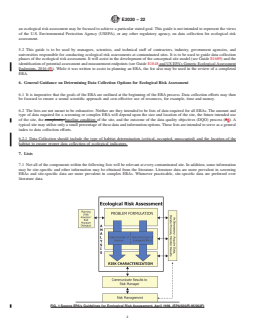
FIG. 1 Source EPA’s Guidelines for Ecological Risk Assessment, April 1998. (EPA/630/R-95/002F)
E2020 − 22
7.2 The options in the lists are not in any particular order. Risk assessment often is an iterative process, and it may be more
scientifically sound and cost-effective to complete certain options before others. The order for the completion of options will need
to be determined on a case-by-case basis.
8. Data Options for Problem Formulation
8.1 Most of the data and information options in problem formulation are applicable to both screening and complex ERAs and are
outlined below; however, the information will be more detailed in a complex ERA. Additional data and information options
typically found only in complex ERAs are listed in Section 9.
8.2 Clearly define the goals of the ERA (67).
8.3 Define data quality objectives (DQOs) for the assessment see Ref.(56).
8.3.1 State the problem that the risk assessment should address.
8.3.2 Identify the decision(s) that require new environmental data to address the contamination problem.
8.3.3 Identify the inputs (data or information) needed to support the decision.
8.3.4 Define the scale (spatial and temporal) of the assessment.
8.3.5 Develop a decision rule that defines choice among alternative solutions.
8.3.6 Specify acceptable limits on decision errors used to establish performance goals for limiting uncertainty.
8.3.7 Optimize the design for obtaining data, by identifying the most resource-effective sampling and analysis plan.
8.3.8 Identification of indicator species for specific habitats.
8.3.9 Identification of additional considerations for threatened and endangered species.
8.4 Complete the conceptual site model (see Guide E1689) or ISO 21365:2019)
8.4.1 Identify the current and historical sources of potential chemical stressors, such as the following:
8.4.1.1 Process areas;
8.4.1.2 Landfill;
8.4.1.3 Burial ground;
8.4.1.4 Underground or aboveground storage tanks, or both;
8.4.1.5 Lagoons;
8.4.1.6 Holding ponds;
8.4.1.7 Air stacks or other air emission sources;
8.4.1.8 Effluent pipes; or,
8.4.1.9 Historical spills or accidental releases.
8.4.2 Identify nonchemical, for example, physical and biological stressors, such as the following:
E2020 − 22
8.4.2.1 Nonnative or exotic species;
8.4.2.2 Pathogens;
8.4.2.3 Temperature;
8.4.2.4 Suspended solids;
8.4.2.5 Change in water levels;
8.4.2.6 Oxygen depletion;
8.4.2.7 pH;
8.4.2.8 Predators;
8.4.2.9 Habitat alteration, degradation or destruction; or,
8.4.2.10 Non-site-related stressors, for example, local releases from municipal or industrial development.
8.4.3 Identify potential constituent migration pathways.
8.4.4 Identify geological features that control movement of constituents and dictate exposure pathways. In particular, note any
features which would cause unpredictable movement of constituents, for example, karst formations in limestone often cause
difficulties in tracing ground water movement.
8.4.5 Identify all relevant constituent-bearing media, such as the following:
8.4.5.1 Soil;
8.4.5.2 Ground water;
8.4.5.3 Surface water;
8.4.5.4 Sediment;
8.4.5.5 Air; or,
8.4.5.6 Biota.
8.4.6 Identify direct and indirect complete exposure pathways. Ensure that exposure pathways are identified appropriately, for
example, PCBs may not be detected in surface water, but may be detected in fish tissues, and therefore, food web exposure
pathways are appropriate to consider. Exposure pathways may include the following:
8.4.6.1 Inhalation;
8.4.6.2 Ingestion;
8.4.6.3 Dermal uptake;
8.4.6.4 Root uptake; or,
8.4.6.5 Food web.
8.4.7 Identify normal and atypical weather patterns for the site location, such as the following:
E2020 − 22
8.4.7.1 Excessive dry periods with high winds may lead to increased levels of constituents in air from fugitive dusts, and
destruction of habitat;
8.4.7.2 Storm events, for example, hurricanes, that may mobilize constituents, for example, suspension of sediments may increase
the bioavailability of constituents;
8.4.7.3 Periodic flooding may result in certain exposure pathways that may otherwise not exist, for example, contamination of the
floodplain community from a stream; or,
8.4.7.4 Fluctuations in salinity.
8.4.8 Define the assessment endpoints and include rationale for their selection (see Guide E1848). and EPA Procedures For
Delineating And Characterizing Watersheds For Stream And River Monitoring Programs, 2018).
8.4.8.1 Ensure the assessment endpoints are relevant to decision-making. (78)
8.4.8.2 Consider whether endpoints are ecologically relevant.
8.4.8.3 Consider whether endpoints have societal importance.
8.4.8.4 Determine whether endpoint species are or could be at the site.
8.4.8.5 Consider whether endpoint species are sensitive to site constituents.
8.4.8.6 Consider whether endpoint species are likely to receive high exposures.
8.4.9 Identify any threatened, or endangered species (plant or animal), or both, known to inhabit, or that could potentially inhabit,
the vicinity of the site. Also, identify the presence of habitat that could be utilized by threatened and endangered species. Consider
using state or federal listings of threatened, rare and endangered species, for example, Natural Heritage Program. Consider local
laws and regulations to identify any protected species or species of local concern.
8.4.10 Identify any commercially or recreationally important species in the area of the site.
8.4.11 Describe the food web. Identify multiple food sources, where appropriate, in the foraging area of each receptor species.
Consider consulting with local naturalists, for example, Department of Natural Resources, Fish and Wildlife Service, Department
of Environmental Protection, Natural Heritage Program, to obtain information on local species.
NOTE 2—Graphic representation of the food web is recommended.
8.4.12 Define measurement endpoints and include rationale for their selection. Also, describe relation between assessment
endpoints and measurement endpoints.
8.4.13 Present both current and future exposure scenarios. Future exposures should be based on reasonably anticipated future land
use. Describe how future exposures may change, as a result of the following scenarios, for example:
8.4.13.1 Increased release from a ground water plume to a stream;
8.4.13.2 Increased habitat from forest succession causes additional ecological receptor species to be in contact with constituents;
8.4.13.3 Decreased exposure because of scouring of sediments out of a stream, but increased exposure downstream where
sediments settle;
8.4.13.4 Weather-related seasonal or periodic changes; or,
8.4.13.5 Continued physical degradation or biodegradation of constituents.
E2020 − 22
8.5 Environmental Description of Site (89):
8.5.1 Describe and map current and potential future land use scenarios of the site and surrounding area, to ensure assessment
endpoints and ecological receptor species are selected that are appropriate for current and future land uses. Land uses may include
the following:
8.5.1.1 Residential;
8.5.1.2 Park land/recreational;
8.5.1.3 Industrial;
8.5.1.4 Commercial;
8.5.1.5 Agricultural;
8.5.1.6 Forested;
8.5.1.7 Wetlands;
8.5.1.8 Wildlife preservation area; or,
8.5.1.9 Aquatic habitat.
8.5.2 Describe and map the aquatic habitat.
8.5.2.1 Describe and map features as follows:
(a) Type and area of habitat;
(b) Function of habitat;
(c) Water and sediment quality parameters;
(d) Pattern of ground water and surface water flow;
(e) Ground water discharge and recharge points; or,
(f) Flora and fauna historically present, currently present, or expected to be present.
(g) Adjoining habitats for downstream or adjacent contaminant and species travel or migration that could be affected.
8.5.2.2 Consider photographing relevant features.
8.5.2.3 Consider utilizing geographic information systems (GIS) or similar visualization tools.
8.5.3 Describe and map the terrestrial habitat.
8.5.3.1 Describe and map features as follows:
(a) Type and area of habitat;
(b) Function of habitat;
(c) Topography;
(d) Soil types;
(e) Flora and fauna (including avifauna) historically present, currently present, or expected to be present; or,
(f) Fragmentation of terrestrial habitat, for example, by roads.
8.5.3.2 Consider photographing relevant features.
8.5.3.3 Consider utilizing geographic information systems (GIS) or similar visualization tools.
8.5.4 Describe magnitude and extent of constituents in media, for example, area, depth, volume, using available preliminary data.
This information will be used to determine
...
Questions, Comments and Discussion
Ask us and Technical Secretary will try to provide an answer. You can facilitate discussion about the standard in here.
Loading comments...