

ASTM D1668/D1668M-97a(2021)
(Specification)Standard Specification for Glass Fabrics (Woven and Treated) for Roofing and Waterproofing
General Information
- Abstract
ABSTRACT
This specification covers finished and treated, woven glass fabrics coated with either asphalt, coal-tar pitch, or an organic resin compatible with the roofing, waterproofing, or other usage as specified by the purchaser. Asphalt treated Type I glass fabrics are suitable for use with all asphalts and asphalt based compounds. Coal tar pitch treated Type II glass fabrics, are suitable for use with all coal tar pitches and coal tar pitch based compounds. And finally, for organic resin treated Type III glass fabrics, the purchaser and supplier shall agree on an organic resin that is compatible with and/or suitable for the plying liquid plying materials either specified or to be used. This organic resin shall not be water soluble. Fabric specimens shall be appropriately sampled and tested, and consequently adhere to the following properties: thread count for both warp and filling threads; organic resin mass, width, length, area coverage, and mass; moisture present; and tensile strength.
SCOPE
1.1 This specification covers finished treated (coated) woven-glass fabrics coated with either asphalt, coal-tar pitch, or an organic resin compatible with the roofing, waterproofing, or other usage as specified by the purchaser.
1.2 The values stated in either SI units or inch-pound units are to be regarded separately as standard. The values stated in each system may not be exact equivalents; therefore, each system shall be used independently of the other. Combining values from the two systems may result in nonconformance with the standard.
1.3 This international standard was developed in accordance with internationally recognized principles on standardization established in the Decision on Principles for the Development of International Standards, Guides and Recommendations issued by the World Trade Organization Technical Barriers to Trade (TBT) Committee.
- Status
- Published
- Publication Date
- 30-Jun-2021
- Technical Committee
- D08 - Roofing and Waterproofing
- Drafting Committee
- D08.04 - Felts, Fabrics and Bituminous Sheet Materials


Overview
ASTM D1668/D1668M-97a(2021) is an international standard specification from ASTM International covering finished and treated woven glass fabrics for roofing and waterproofing applications. The standard defines requirements for glass fabrics coated with asphalt, coal-tar pitch, or a compatible organic resin, ensuring reliable performance in roofing, waterproofing, and related construction processes. This document helps manufacturers, specifiers, and contractors ensure material compatibility, structural integrity, and durability in building envelope systems.
Key Topics
Types of Coated Glass Fabrics:
- Type I: Asphalt-treated fabrics suited for use with all asphalts and asphalt-based compounds.
- Type II: Coal-tar pitch-treated fabrics compatible with coal-tar pitches and derivatives.
- Type III: Fabrics treated with purchaser-specified organic resin (non-water soluble), customized for liquid plying materials.
Physical and Performance Requirements:
- Specifications on thread count, mass, width, length, area coverage, and tensile strength.
- Control of moisture content to prevent issues such as foaming or blistering during application.
- Fabric structure, including scrim and leno weaves, ensuring the mesh is open for effective adhesion and flow-through of liquid materials.
Quality and Inspection:
- Uniformity in finish; no tears, cracks, folds, or ragged edges.
- Clear identification and marking of spliced rolls.
- Testing methods for properties such as tensile strength, thread count, and fabric mass per referenced ASTM test standards.
Packaging and Labeling:
- Standardized packaging, with clear labeling for supplier, product type, roll dimensions, treatment type, and ASTM designation.
- Requirements for roll construction, core dimensions, and splicing control.
Applications
Glass fabrics specified under ASTM D1668/D1668M are widely used in the construction and building materials industry. Typical applications include:
Roofing System Reinforcement:
Providing dimensional stability and strength in built-up roofing membranes and modified bitumen systems.Waterproofing Layers:
Enhancing the integrity of waterproofing assemblies for foundations, decks, and wall systems.Protection and Separation Membranes:
Used as protective or separating layers in multi-layer assemblies to improve performance and service life.Specialty Construction Uses:
Adapted for other compatible applications where thermally stable, high-strength woven fabrics are required.
These fabric materials contribute to enhanced weather resistance, longevity, and flexibility in modern construction.
Related Standards
For comprehensive material selection and application, refer to the following related ASTM standards:
- ASTM D123 - Terminology Relating to Textiles
- ASTM D146/D146M - Test Methods for Sampling and Testing Bitumen-Saturated Felts and Woven Fabrics for Roofing and Waterproofing
- ASTM D579/D579M - Specification for Greige Woven Glass Fabrics
- ASTM D1079 - Terminology Relating to Roofing and Waterproofing
- ASTM D3775 - Test Method for End (Warp) and Pick (Filling) Count of Woven Fabrics
- ASTM D3776/D3776M - Test Methods for Mass Per Unit Area (Weight) of Fabric
Practical Value
Adhering to ASTM D1668/D1668M-97a(2021) ensures:
- Consistent product quality for glass fabrics used in roofing and waterproofing projects.
- Improved durability and performance of installed systems through controlled material properties.
- Compatibility and safety across a range of liquid-applied bituminous and resin-based materials.
- Reliability and regulatory compliance for both US and international projects requiring standard-conforming construction materials.
This standard remains an essential reference for professionals involved in the specification, procurement, and installation of roofing and waterproofing systems using glass fabric reinforcements.
Relations
- Effective Date
- 01-Jan-2024
- Effective Date
- 01-May-2020
- Effective Date
- 15-Dec-2018
- Effective Date
- 15-Dec-2018
- Effective Date
- 15-Jul-2017
- Effective Date
- 01-Mar-2017
- Effective Date
- 01-Feb-2016
- Effective Date
- 15-Sep-2015
- Effective Date
- 01-Sep-2015
- Effective Date
- 01-Apr-2015
- Effective Date
- 01-Feb-2015
- Effective Date
- 01-Jul-2013
- Effective Date
- 15-Jun-2013
- Effective Date
- 15-Jun-2013
- Effective Date
- 15-May-2013
Get Certified
Connect with accredited certification bodies for this standard

Control Union Certifications
Global certification for agriculture and sustainability.

Hohenstein Institut
Textile testing and certification.

Bureau Veritas Bangladesh
Bureau Veritas certification services in Bangladesh.
Sponsored listings
Frequently Asked Questions
ASTM D1668/D1668M-97a(2021) is a technical specification published by ASTM International. Its full title is "Standard Specification for Glass Fabrics (Woven and Treated) for Roofing and Waterproofing". This standard covers: ABSTRACT This specification covers finished and treated, woven glass fabrics coated with either asphalt, coal-tar pitch, or an organic resin compatible with the roofing, waterproofing, or other usage as specified by the purchaser. Asphalt treated Type I glass fabrics are suitable for use with all asphalts and asphalt based compounds. Coal tar pitch treated Type II glass fabrics, are suitable for use with all coal tar pitches and coal tar pitch based compounds. And finally, for organic resin treated Type III glass fabrics, the purchaser and supplier shall agree on an organic resin that is compatible with and/or suitable for the plying liquid plying materials either specified or to be used. This organic resin shall not be water soluble. Fabric specimens shall be appropriately sampled and tested, and consequently adhere to the following properties: thread count for both warp and filling threads; organic resin mass, width, length, area coverage, and mass; moisture present; and tensile strength. SCOPE 1.1 This specification covers finished treated (coated) woven-glass fabrics coated with either asphalt, coal-tar pitch, or an organic resin compatible with the roofing, waterproofing, or other usage as specified by the purchaser. 1.2 The values stated in either SI units or inch-pound units are to be regarded separately as standard. The values stated in each system may not be exact equivalents; therefore, each system shall be used independently of the other. Combining values from the two systems may result in nonconformance with the standard. 1.3 This international standard was developed in accordance with internationally recognized principles on standardization established in the Decision on Principles for the Development of International Standards, Guides and Recommendations issued by the World Trade Organization Technical Barriers to Trade (TBT) Committee.
ABSTRACT This specification covers finished and treated, woven glass fabrics coated with either asphalt, coal-tar pitch, or an organic resin compatible with the roofing, waterproofing, or other usage as specified by the purchaser. Asphalt treated Type I glass fabrics are suitable for use with all asphalts and asphalt based compounds. Coal tar pitch treated Type II glass fabrics, are suitable for use with all coal tar pitches and coal tar pitch based compounds. And finally, for organic resin treated Type III glass fabrics, the purchaser and supplier shall agree on an organic resin that is compatible with and/or suitable for the plying liquid plying materials either specified or to be used. This organic resin shall not be water soluble. Fabric specimens shall be appropriately sampled and tested, and consequently adhere to the following properties: thread count for both warp and filling threads; organic resin mass, width, length, area coverage, and mass; moisture present; and tensile strength. SCOPE 1.1 This specification covers finished treated (coated) woven-glass fabrics coated with either asphalt, coal-tar pitch, or an organic resin compatible with the roofing, waterproofing, or other usage as specified by the purchaser. 1.2 The values stated in either SI units or inch-pound units are to be regarded separately as standard. The values stated in each system may not be exact equivalents; therefore, each system shall be used independently of the other. Combining values from the two systems may result in nonconformance with the standard. 1.3 This international standard was developed in accordance with internationally recognized principles on standardization established in the Decision on Principles for the Development of International Standards, Guides and Recommendations issued by the World Trade Organization Technical Barriers to Trade (TBT) Committee.
ASTM D1668/D1668M-97a(2021) is classified under the following ICS (International Classification for Standards) categories: 59.080.40 - Coated fabrics. The ICS classification helps identify the subject area and facilitates finding related standards.
ASTM D1668/D1668M-97a(2021) has the following relationships with other standards: It is inter standard links to ASTM D579/D579M-24, ASTM D1079-20, ASTM D1079-18, ASTM D1079-18e1, ASTM D3776/D3776M-09a(2017), ASTM D123-17, ASTM D1079-16, ASTM D123-15b, ASTM D123-15a, ASTM D123-15, ASTM D579/D579M-15, ASTM D3776/D3776M-09a(2013), ASTM D123-13ae1, ASTM D123-13a, ASTM D123-13. Understanding these relationships helps ensure you are using the most current and applicable version of the standard.
ASTM D1668/D1668M-97a(2021) is available in PDF format for immediate download after purchase. The document can be added to your cart and obtained through the secure checkout process. Digital delivery ensures instant access to the complete standard document.
Standards Content (Sample)
This international standard was developed in accordance with internationally recognized principles on standardization established in the Decision on Principles for the
Development of International Standards, Guides and Recommendations issued by the World Trade Organization Technical Barriers to Trade (TBT) Committee.
Designation:D1668/D1668M −97a (Reapproved 2021)
Standard Specification for
Glass Fabrics (Woven and Treated) for Roofing and
Waterproofing
This standard is issued under the fixed designation D1668/D1668M; the number immediately following the designation indicates the
year of original adoption or, in the case of revision, the year of last revision. A number in parentheses indicates the year of last
reapproval. A superscript epsilon (´) indicates an editorial change since the last revision or reapproval.
This standard has been approved for use by agencies of the U.S. Department of Defense.
This specification replaces Federal Specification HH-C-466.
1. Scope 3. Terminology
1.1 This specification covers finished treated (coated)
3.1 Definitions—For definitions of terms used in this
woven-glass fabrics coated with either asphalt, coal-tar pitch,
specification, refer to Terminology D123 or D1079.
or an organic resin compatible with the roofing, waterproofing,
or other usage as specified by the purchaser.
4. Classification of Fabric Treatments with Generally
Applicable Usage
1.2 The values stated in either SI units or inch-pound units
are to be regarded separately as standard. The values stated in
4.1 Type I, Asphalt Treated—Type I is suitable for use with
each system may not be exact equivalents; therefore, each
all asphalts and asphalt-based compounds.
system shall be used independently of the other. Combining
4.2 Type II, Coal-Tar Pitch Treated—Type II is suitable for
values from the two systems may result in nonconformance
use with all coal-tar pitches and coal-tar pitch-based com-
with the standard.
pounds (Note 1).
1.3 This international standard was developed in accor-
dance with internationally recognized principles on standard- 4.3 Type III, Organic Resin Treated—The purchaser and
ization established in the Decision on Principles for the
supplier shall agree on an organic resin that is compatible with
Development of International Standards, Guides and Recom- or is suitable for, or both, the plying liquid plying materials
mendations issued by the World Trade Organization Technical either specified or to be used. This organic resin shall not be
Barriers to Trade (TBT) Committee. water soluble.
NOTE 1—In some instances the purchaser may specify the use of Type
2. Referenced Documents
I or II for systems using other than coal-tar bitumens or asphalt.
2.1 ASTM Standards:
D123 Terminology Relating to Textiles
5. Materials and Manufacture
D146/D146M Test Methods for Sampling and Testing
5.1 The untreated (greige) scrim (open basket weave) or
Bitumen-Saturated Felts and Woven Fabrics for Roofing
leno (locked weave) fabrics shall conform to the requirements
and Waterproofing
as specified in Table 1.
D579/D579M Specification for Greige Woven Glass Fabrics
D1079 Terminology Relating to Roofing and Waterproofing
5.2 In the process of manufacture, the fibers of the untreated
D3775 Test Method for End (Warp) and Pick (Filling) Count
glass fabric shall be thoroughly and uniformly coated using
of Woven Fabrics
equipment which, in combination, handles the fabric and uses
D3776/D3776M Test Methods for Mass Per Unit Area
a machine speed in a total process that will not injure or distort
(Weight) of Fabric
the weave of the fabric.
5.3 Glass fabric is usually woven in nominal widths of 0.91,
This specification is under the jurisdiction of ASTM Committee D08 on
1.83, and 2.74 m [36, 72, and 108 in.] by the weaving mills.
Roofing and Waterproofing and is the direct responsibility of Subcommittee D08.04
Extra warp (the length of the fabric) threads are included in
on Felts, Fabrics and Bituminous Sheet Materials.
1.83 and 2.74-m [72 and 108-in.] wide fabrics to obtain
Current edition approved July 1, 2021. Published July 2021. Originally approved
ɛ1
incremental fabric roll widths of 0.91 m [36 in.]. These extra
in 1959. Last previous edition approved in 2014 as D1668/D1668M – 97a (2014) .
DOI: 10.1520/D1668_D1668M-97AR21.
warp threads with a slitting space between each set (a set of
For referenced ASTM standards, visit the ASTM website, www.astm.org, or
two) of bunched warp threads create a duplicate or “dupe”
contact ASTM Customer Service at service@astm.org. For Annual Book of ASTM
selvedge with a “brush” edge created by the cut fill threads
Standards volume information, refer to the standard’s Document Summary page on
the ASTM website. instead of the usually wrapped fill threads seen in a smooth
Copyright © ASTM International, 100 Barr Harbor Drive, PO Box C700, West Conshohocken, PA 19428-2959. United States
D1668/D1668M−97a (2021)
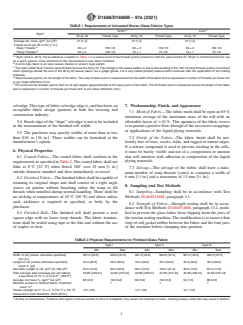
TABLE 1 Requirements of Untreated Woven Glass Fabrics Types
B C
Scrim Leno
A
Style
20 by 20 Thread Type 20 by 10 Thread Type 10 by 10 Thread Type
2 2
Average dry mass, g/m [oz ⁄yd ]: 47 [1.4] 47 [1.4] 47 [1.4]
Thread count per 25.4 mm [1 in.]:
D
Warp Threads: 20 ± 2 150 1/0 20 ± 2 150 1/0 20 ± 2 150 1/0
E
Filling Threads: 20 ± 2 150 1/0 10 ± 1 75 1/0 10 ± 1 75 1/0
A
“Style” (that is, 20 by 10) as stated as a caption in Table 1 is a weave count of the threads (yarns) present in both the warp and the fill. “Style” is mentioned here for use
as a quick, generic cross reference to the manufacturer’s own fabric numbers.
B
A scrim-type fabric is an open weave (basket or screen) type pattern.
C
The style called “leno” has the same thread count as the 20 by 10.The change in the weave pattern is due to the doubling of the 150 1/0 warp threads (yarns) to produce
mesh openings double the size of the 20 by 20 weave patern. As a greige goods, it is a very stable (locked) weave which continues after the application of the coating
materials.
D
Warp threads (yarns) run the length of the fabric. The warp thread count is measured across the width of the fabric and is expressed in number of threads per lineal inch
or per lineal millimetre (mm).
E
Fill (woof) are the threads (yarns) that run at right angles (perpendicular) to the warp yarns of the fabric. The fill thread count is measured across the length of the fabric
and is expressed in number of threads per lineal inch or per lineal millimetre (mm).
selvedge.This type of fabric selvedge edge is, and has been, an 7. Workmanship, Finish, and Appearance
acceptable fabric design (pattern) in both the weaving and
7.1 Mesh of Fabric—The fabric mesh shall be open an 85 %
construction industry.
minimum average of the maximum mass of the roll with an
5.4 Brush edge of the “dupe” selvedge is not to be included allowable factor of 610 %. This openness of the fabric weave
in the measurement of the finished roll width. is to permit a positive flow-through of the successive moppings
or applications of the liquid plying materials.
5.5 The purchaser may specify widths of more than or less
than 0.91 m [36 in.]. These widths can be furnished at the 7.2 Finish of the Fabric—The fabric finish shall be uni-
manufacturer’s option. formly free of t
...