

ASTM D3673-89(2016)
(Test Method)Standard Test Methods for Chemical Analysis of Alpha Olefin Sulfonates
General Information
- Abstract
SIGNIFICANCE AND USE
33.1 This method is suitable as a quality control test for the measurement of color in alpha olefin sulfonates.
SCOPE
1.1 These test methods cover the chemical analysis of alpha olefin sulfonates. The analytical procedures appear in the following order:
Sections
Moisture by the Distillation Method
4 – 8
Sodium Sulfate
9 – 14
Neutral Oil
15 – 19
Chlorides Calculated as Sodium Chloride (NaCl)
20 – 24
Alkalinity
25 – 29
pH
30 and 31
Determination of Color
32 – 37
Determination of Active Content by Methylene Blue Titration
38 – 47
1.2 The values stated in SI units are to be regarded as standard. No other units of measurement are included in this standard.
1.3 This standard does not purport to address all of the safety concerns, if any, associated with its use. It is the responsibility of the user of this standard to establish appropriate safety and health practices and determine the applicability of regulatory limitations prior to use. For specific precaution statement see 36.1. Material safety data sheets are available for reagents and materials. Review them for hazards prior to usage.
- Status
- Published
- Publication Date
- 30-Jun-2016
- Technical Committee
- D12 - Soaps and Other Detergents
Overview
ASTM D3673-89(2016) - Standard Test Methods for Chemical Analysis of Alpha Olefin Sulfonates specifies standardized procedures for determining the composition and quality of alpha olefin sulfonates (AOS) through chemical analysis. Developed by ASTM International and under the jurisdiction of Committee D12, this standard covers multiple test methods, including measurements of moisture, sodium sulfate, neutral oil, chlorides, alkalinity, pH, color, and active content using methylene blue titration. Its primary intent is to support quality control and specification compliance in the production and use of AOS, a vital class of surfactants used in many cleaning and detergent applications.
Key Topics
- Scope and Applicability
- Chemical analyses covered include moisture, sulfates, neutral oil, chlorides (as sodium chloride), alkalinity, pH, color, and active surfactant content.
- Measurements use SI units as standard.
- Quality Control
- Test methods are structured for routine quality control and ensuring batch-to-batch consistency of AOS products.
- Test Methods and Key Analyses
- Moisture by Distillation: Distillation-based measurement of water content.
- Sodium Sulfate: Quantitative analysis for sulfate content.
- Neutral Oil: Extraction and measurement of nonionic oil components.
- Chlorides as NaCl: Potentiometric determination of chloride ions, reported as sodium chloride.
- Alkalinity and pH: Acid-base titrations and pH measurements.
- Color Determination: Platinum-cobalt scale used with photoelectric colorimeters for color assessment.
- Active Content: Quantification via methylene blue titration, indicating effective surfactant concentration.
- Safety Guidance
- Proper handling of chemicals and adherence to safety practices is emphasized, with users advised to consult material safety data sheets for reagents.
Applications
- Manufacturing Quality Assurance
- Integral for chemical manufacturers producing alpha olefin sulfonates, ensuring each batch meets set specifications.
- Product Development and Research
- Enables formulation scientists to accurately adjust AOS levels and monitor impurities during new product development.
- Regulatory Compliance
- Supports documentation and verification required for regulatory review and market release of detergents and cleaning agents.
- End-Use Sectors
- Relevant for detergent, cleaning product, and personal care manufacturers who require consistent performance from surfactant components.
- Routine Laboratory Testing
- Essential for analytical laboratories that provide third-party verification of raw materials and finished products containing alpha olefin sulfonates.
Related Standards
- ASTM D1172 - Guide for pH of Aqueous Solutions of Soaps and Detergents
- ASTM D1193 - Specification for Reagent Water
- ASTM D1209 - Test Method for Color of Clear Liquids (Platinum-Cobalt Scale)
- ASTM D3049 - Test Method for Synthetic Anionic Ingredient by Cationic Titration
By following ASTM D3673-89(2016), organizations can ensure that alpha olefin sulfonate products are analyzed consistently, supporting quality, regulatory, and performance demands. Adhering to these methods enhances product integrity, safety, and customer confidence for all applications involving AOS-based ingredients.
Relations
- Replaces
ASTM D3673-89(2009) - Standard Test Methods for Chemical Analysis of Alpha Olefin Sulfonates - Effective Date
- 01-Jul-2016
- Effective Date
- 01-Jan-2024
- Refers
ASTM D3049-89(2016) - Standard Test Method for Synthetic Anionic Ingredient by Cationic Titration - Effective Date
- 01-Jul-2016
- Effective Date
- 01-May-2015
- Refers
ASTM D3049-89(2009) - Standard Test Method for Synthetic Anionic Ingredient by Cationic Titration - Effective Date
- 01-Oct-2009
- Effective Date
- 01-Oct-2007
- Effective Date
- 01-Mar-2006
- Effective Date
- 15-May-2005
- Effective Date
- 15-May-2005
- Effective Date
- 10-May-2000
- Effective Date
- 10-Feb-1999
- Effective Date
- 10-Feb-1999
- Refers
ASTM D3049-89(1996)e1 - Standard Test Method for Synthetic Anionic Ingredient by Cationic Titration - Effective Date
- 01-Jan-1996
- Effective Date
- 15-Apr-1995
- Effective Date
- 15-Apr-1995
Get Certified
Connect with accredited certification bodies for this standard

ECOCERT
Organic and sustainability certification.

Eurofins Food Testing Global
Global leader in food, environment, and pharmaceutical product testing.

Intertek Bangladesh
Intertek certification and testing services in Bangladesh.
Sponsored listings
Frequently Asked Questions
ASTM D3673-89(2016) is a standard published by ASTM International. Its full title is "Standard Test Methods for Chemical Analysis of Alpha Olefin Sulfonates". This standard covers: SIGNIFICANCE AND USE 33.1 This method is suitable as a quality control test for the measurement of color in alpha olefin sulfonates. SCOPE 1.1 These test methods cover the chemical analysis of alpha olefin sulfonates. The analytical procedures appear in the following order: Sections Moisture by the Distillation Method 4 – 8 Sodium Sulfate 9 – 14 Neutral Oil 15 – 19 Chlorides Calculated as Sodium Chloride (NaCl) 20 – 24 Alkalinity 25 – 29 pH 30 and 31 Determination of Color 32 – 37 Determination of Active Content by Methylene Blue Titration 38 – 47 1.2 The values stated in SI units are to be regarded as standard. No other units of measurement are included in this standard. 1.3 This standard does not purport to address all of the safety concerns, if any, associated with its use. It is the responsibility of the user of this standard to establish appropriate safety and health practices and determine the applicability of regulatory limitations prior to use. For specific precaution statement see 36.1. Material safety data sheets are available for reagents and materials. Review them for hazards prior to usage.
SIGNIFICANCE AND USE 33.1 This method is suitable as a quality control test for the measurement of color in alpha olefin sulfonates. SCOPE 1.1 These test methods cover the chemical analysis of alpha olefin sulfonates. The analytical procedures appear in the following order: Sections Moisture by the Distillation Method 4 – 8 Sodium Sulfate 9 – 14 Neutral Oil 15 – 19 Chlorides Calculated as Sodium Chloride (NaCl) 20 – 24 Alkalinity 25 – 29 pH 30 and 31 Determination of Color 32 – 37 Determination of Active Content by Methylene Blue Titration 38 – 47 1.2 The values stated in SI units are to be regarded as standard. No other units of measurement are included in this standard. 1.3 This standard does not purport to address all of the safety concerns, if any, associated with its use. It is the responsibility of the user of this standard to establish appropriate safety and health practices and determine the applicability of regulatory limitations prior to use. For specific precaution statement see 36.1. Material safety data sheets are available for reagents and materials. Review them for hazards prior to usage.
ASTM D3673-89(2016) is classified under the following ICS (International Classification for Standards) categories: 71.080.99 - Other organic chemicals. The ICS classification helps identify the subject area and facilitates finding related standards.
ASTM D3673-89(2016) has the following relationships with other standards: It is inter standard links to ASTM D3673-89(2009), ASTM D1172-15(2024), ASTM D3049-89(2016), ASTM D1172-15, ASTM D3049-89(2009), ASTM D1172-95(2007), ASTM D1193-06, ASTM D1209-05e1, ASTM D1209-05, ASTM D1209-00, ASTM D1193-99e1, ASTM D1193-99, ASTM D3049-89(1996)e1, ASTM D1172-95(2001), ASTM D1172-95. Understanding these relationships helps ensure you are using the most current and applicable version of the standard.
ASTM D3673-89(2016) is available in PDF format for immediate download after purchase. The document can be added to your cart and obtained through the secure checkout process. Digital delivery ensures instant access to the complete standard document.
Standards Content (Sample)
This international standard was developed in accordance with internationally recognized principles on standardization established in the Decision on Principles for the
Development of International Standards, Guides and Recommendations issued by the World Trade Organization Technical Barriers to Trade (TBT) Committee.
Designation: D3673 −89 (Reapproved 2016)
Standard Test Methods for
Chemical Analysis of Alpha Olefin Sulfonates
This standard is issued under the fixed designation D3673; the number immediately following the designation indicates the year of
original adoption or, in the case of revision, the year of last revision. A number in parentheses indicates the year of last reapproval. A
superscript epsilon (´) indicates an editorial change since the last revision or reapproval.
1. Scope 3. Purity of Reagents
1.1 These test methods cover the chemical analysis of alpha 3.1 Reagent-grade chemicals shall be used in all tests.
olefin sulfonates. The analytical procedures appear in the Unless otherwise indicated, it is intended that all reagents shall
following order: conform to the specifications of the Committee on Analytical
Reagents of the American Chemical Society, where such
Sections
Moisture by the Distillation Method 4–8
specifications are available. Other grades may be used, pro-
Sodium Sulfate 9–14
vided it is first ascertained that the reagent is of sufficiently
Neutral Oil 15–19
high purity to permit its use without lessening the accuracy of
Chlorides Calculated as Sodium Chloride (NaCl) 20–24
Alkalinity 25–29
the determination.
pH 30 and 31
3.2 Unless otherwise indicated, references to water shall be
Determination of Color 32–37
Determination of Active Content by Methylene Blue Titration 38–47
understood to mean Type III reagent water conforming to
1.2 The values stated in SI units are to be regarded as Specification D1193.
standard. No other units of measurement are included in this
MOISTURE BY THE DISTILLATION
standard.
METHOD
1.3 This standard does not purport to address all of the
safety concerns, if any, associated with its use. It is the
4. Apparatus
responsibility of the user of this standard to establish appro-
4.1 The apparatus required shall consist of a glass flask
priate safety and health practices and determine the applica-
heated by suitable means and provided with a reflux condenser
bility of regulatory limitations prior to use. For specific
discharging into a trap and connected to the flask. The
precaution statement see 36.1. Material safety data sheets are
connections between the trap and the condenser and flask shall
available for reagents and materials. Review them for hazards
beinterchangeablegroundjoints.Thetrapservestocollectand
prior to usage.
measure the condensed water and to return the solvent to the
flask.Asuitable assembly of the apparatus is illustrated in Fig.
2. Referenced Documents
1.
2.1 ASTM Standards:
4.1.1 Flask, 1-L capacity, either the short-neck, round-
D1172 Guide for pH of Aqueous Solutions of Soaps and
bottom type, or the Erlenmeyer type.
Detergents
4.1.2 Heat Source—Either an oil bath (for example, stearic
D1193 Specification for Reagent Water
acid or paraffin wax) or an electric heater provided with a
D1209 Test Method for Color of Clear Liquids (Platinum-
sliding rheostat or other means of heat control.
Cobalt Scale)
4.1.3 Condenser—A water-cooled glass reflux condenser
D3049 Test Method for Synthetic Anionic Ingredient by
(Fig. 1), having a jacket approximately 15 ⁄4 in. (400 mm) in
Cationic Titration
3 1
length, with an inner tube ⁄8 to ⁄2 in. (9.5 to 12.7 mm) in
outside diameter, and not less than ⁄4 in. (6.35 mm) in inside
diameter. The end of the condenser to be inserted in the trap
These test methods are under the jurisdiction of ASTM Committee D12 on
may be ground off at an angle of 30° from the vertical axis of
Soaps and Other Detergents and are the direct responsibility of Subcommittee
the condenser. When inserted into the trap, the tip of the
D12.12 on Analysis and Specifications of Soaps, Synthetics, Detergents and their
Components.
Current edition approved July 1, 2016. Published August 2016. Originally
approved in 1978. Last previous edition approved in 2009 as D3673 – 89(2009). Reagent Chemicals, American Chemical Society Specifications, American
DOI: 10.1520/D3673-89R16. Chemical Society, Washington, DC. For suggestions on the testing of reagents not
For referenced ASTM standards, visit the ASTM website, www.astm.org, or listed by the American Chemical Society, see Analar Standards for Laboratory
contact ASTM Customer Service at service@astm.org. For Annual Book of ASTM Chemicals, BDH Ltd., Poole, Dorset, U.K., and the United States Pharmacopeia
Standards volume information, refer to the standard’s Document Summary page on and National Formulary, U.S. Pharmacopeial Convention, Inc. (USPC), Rockville,
the ASTM website. MD.
Copyright © ASTM International, 100 Barr Harbor Drive, PO Box C700, West Conshohocken, PA 19428-2959. United States
D3673 − 89 (2016)
4.1.4.1 Trap, 5-mL capacity, subdivided into 0.1-mL divi-
sions with each 1-mL line numbered (5 mL at top). The error
in any indicated capacity may not be greater than 0.05 mL.
4.1.4.2 Trap, 10-mLcapacity, subdivided from 0 to 1 mLin
0.1-mL divisions and from 1 to 10 mL in 0.2-mL divisions.
4.1.4.3 Trap, 25-mLcapacity, subdivided from 0 to 1 mLin
0.1-mL divisions and from 1 to 25 mL in 0.2-mL divisions.
NOTE 1—The condenser and trap should be thoroughly cleaned before
use.
5. Solvent
5.1 Xylene—Saturate xylene with water by shaking with a
small quantity of water and distill. Use the distillate for the
determination.
6. Procedure
6.1 Transfer to the 1000-mLflask (equipped with the size of
the trap specified in 4.1.4) an amount of sample according to
the percentage of moisture expected, as follows:
Weight of Sample
A
Moisture Expected, % to Be Used, g
0to5,incl 50±5
Over 5 to 17, incl 50 ± 5
Over 17 to 30, incl 40 ± 4
Over 30 to 50, incl 30 ± 3
Over 50 to 70, incl 30 ± 3
Over 70 to 85, incl 25 ± 2
A
Weighed to the nearest 0.25 g.
Immediatelyaddabout250mLofxylene.Placeasmall,thin
sheet of long-fiber, chemical-resistant glass wool on the
surface of the xylene. The glass wool should be thoroughly
dried in the oven and held in the desiccator before use.
6.2 Connecttheflaskandreceivertothecondenserandpour
sufficient xylene down the condenser tube to cause a slight
overflowthroughthesidetube.Wraptheflaskandtubeleading
to the receiver with glass wool, so that refluxing will be under
better control.
6.3 Heat the oil bath with a gas burner or other source of
heat, or apply heat directly to the flask with an electric heater
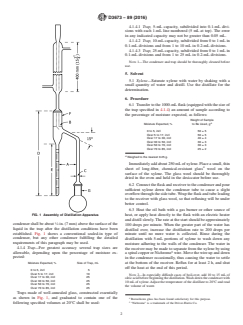
FIG. 1 Assembly of Distillation Apparatus
and distill slowly.The rate at the start should be approximately
condenser shall be about ⁄4 in. (7 mm) above the surface of the
100 drops per minute. When the greater part of the water has
liquid in the trap after the distillation conditions have been
distilled over, increase the distillation rate to 200 drops per
established. Fig. 1 shows a conventional sealed-in type of
minute until no more water is collected. Rinse during the
condenser, but any other condenser fulfilling the detailed
distillation with 5-mL portions of xylene to wash down any
requirements of this paragraph may be used.
moisture adhering to the walls of the condenser. The water in
4.1.4 Trap—For greatest accuracy several trap sizes are
the receiver may be made to separate from the xylene by using
allowable, depending upon the percentage of moisture ex-
aspiralcopperorNichrome wire.Movethewireupanddown
pected:
in the condenser occasionally, thus causing the water to settle
at the bottom of the receiver. Reflux for at least 2 h, and shut
Moisture Expected, % Size of Trap, mL
off the heat at the end of this period.
0to5,incl 5
Over 5 to 17, incl 10
NOTE 2—In especially difficult cases of boil-over, add 10 to 15 mL of
Over 17 to 30, incl 25
oleicacidbeforebeginningthedistillation.Washdownthecondenserwith
Over 30 to 50, incl 25
10 mLof xylene.Adjust the temperature of the distillate to 20°C and read
Over 50 to 70, incl 25
the volume of water.
Over 70 to 85, incl 25
Traps made of well-annealed glass, constructed essentially
as shown in Fig. 1, and graduated to contain one of the
Borosilicate glass has been found satisfactory for this purpose.
following specified volumes at 20°C shall be used: “Nichrome” is a trademark of the Driver-Harris Co.
D3673 − 89 (2016)
7. Calculation 10.7 Sodium Sulfate Solution (0.02 N)—Dry the anhydrous,
reagent-grade salt (Na SO)for4hat 105°C. Weigh about
2 4
7.1 Calculate the percentage of moisture as follows:
0.355 g of the dried salt into a 100-mL beaker. Record the
Moisture,% 5 @ V 30.998 /W# 3100 (1)
~ !
weight within 60.1 mg. Dissolve the salt water. Quantitatively
transfer the solution to a 250-mL volumetric flask and dilute it
where:
tovolumewithwater.Calculatethenormalityofthesolutionas
V = volume of water, mL at 20°C, and
follows:
W = weight of sample, g.
Normality, N 5 0.05632 3 W (2)
6 1
8. Precision and Bias
where W = grams of Na SO .
2 4
8.1 Repeatability (Single Analyst)—The standard deviation
10.8 Sulfonazo III Indicator Solution —Dissolve 0.1 g of
ofresults(eachtheaverageofduplicates)obtainedbythesame
Sulfonazo III in 100 mL of water. Pass the solution through a
analyst on different days, has been estimated to be 0.16 %
cation exchange column if it looks blue rather than lavender
absolute at 9 degrees of freedom.Two such averages should be
when edge-lighted by a tungsten lamp.
considered suspect (95 % confidence level) if they differ by
more than 0.5 % absolute.
10.9 Filter Paper, smooth, hardened, ashless.
8.2 Reproducibility (Multilaboratory)—The standard devia-
11. Standardization
tion of results (each the average of duplicates) obtained by
analysts in different laboratories, has been estimated to be
11.1 Pipet 5.0-mLaliquots of standard Na SO solution into
2 4
0.47 % absolute at 8 degrees of freedom. Two such averages
each of two 50-mL beakers. Place stirring bars in each beaker.
should be considered suspect (95 % confidence level) if they
Add 20 mL of acetone, 2 drops of 1 N HCl, and 4 to 5 drops
differ by more than 1.5 % absolute.
of Sulfonazo III indicator solution to each beaker.
8.3 Checking Limits for Duplicates—Report the moisture
11.2 Titrate each Na SO solution with Ba(ClO ) solution
2 4 4 2
contentofthesampletothenearest0.01 %.Duplicaterunsthat
using a 10-mL buret. Stir the solution magnetically. Illuminate
agree within 1.3 % are acceptable for averaging (95 % confi-
the solution horizontally with a small tungsten lamp at the side
dence level).
of the beaker. Titrate slowly to a color change from lavender-
pink to blue (about 0.3 mLof Ba(ClO ) solution is required to
4 2
SODIUM SULFATE
produce a good initial lavender color).
9. Apparatus
11.3 From each titration, calculate the normality of the
Ba(ClO ) solution as follows. Average the values obtained.
9.1 Beakers, 50 and 100-mL capacity. 4 2
5 3 N
9.2 Buret, 10-mL capacity, with 0.05-mL divisions.
Normality, N 5 (3)
V
9.3 Volumetric Flasks, 50, 250, and 1000-mL capacity.
where:
9.4 Magnetic Stirrer, with TFE-fluorocarbon-coated stirring
N = normality of the Na SO solution, and
1 2 4
bars.
V = millilitres of Ba(ClO ) solution required for 5-mL
4 2
9.5 Transfer Pipet, 5-mL capacity.
aliquot of Na SO solution.
2 4
9.6 Viewing Lamp—Small tungsten lamp or flashlight.
12. Procedure
10. Reagents and Materials
12.1 Weigh a 2-g sample into a 100-mL beaker or a 50-mL
10.1 Acetone.
flask. Record the weight to 61 mg.
10.2 Barium Perchlorate Solution (0.02N)—Dissolve 3.4 g
12.2 Place a stirring bar in the container. Add 25 mL of
of anhydrous Ba(ClO ) in water and dilute the solution to 1 L.
4 2 water and stir until the sample is dissolved.
10.3 2-Benzyl-2-thiopseudourea Hydrochloride Solution—
12.3 Add a few drops of phenolphthalein indicator solution.
(7 %) —Dissolve7gin100mLof water. Prepare the solution
Add 0.1 N HCl until the solution is just acid. Do not
fresh daily.
over-acidify.
10.4 Hydrochloric Acid (1 N)—Dilute 83 mL of hydrochlo-
12.4 Place the container in a cold-water bath (below 20°C)
ric acid (HCl, sp gr 1.19) to 1 L with water.
on the magnetic stirrer. Add 10 mL of 2-benzyl-2-
thiopseudourea hydrochloride at a fast drip through a buret
10.5 Hydrochloric Acid (0.1 N)—Dilute 8.3 mL of HCl (sp
with vigorous stirring. Do not whip the liquid into a foam.
gr 1.19) to 1 L with water.
12.5 Stir the solution for 15 min more in the cold bath.
10.6 Phenolphthalein Indicator Solution(10g/L)—Dissolve
Remove the solution from the bath and let it settle for a few
1 g of phenolphthalein in 100 mL of 95 % ethanol.
minutes at room temperature.
Supporting data are available from ASTM Headquarters, 100 Barr Harbor
Drive, West Conshohoken, PA 19428. Request RR:D12-1002 and RR:D12-1007.
7 8
Eastman Organic Chemical No. 2124 has been found satisfactory for this Sulfonazo III [3,6-bis-( o-sulfophenylazo)-4,5-dihydroxy-2,7-naphthalenedi-
purpose. sulfonic acid] is available from the Aldrich Chemical Co.
D3673 − 89 (2016)
12.6 Filter the solution through filter paper into a 50-mL 16. Reagents
volumetric flask. Wash the filter cake with water. Use the
16.1 Ethanol, freshly boiled, 95 % or higher and neutral to
washes to dilute the solution to volume.
phenolphthalein indicator, conforming to either Formula No.
12.7 Pipet a 5-mL aliquot into a 50-mL beaker. Add 20 mL 3A or No. 30 of the U.S. Bureau of Internal Revenue.
of acetone, 2 drops of 1 N HCl, and 4 to 5 drops of Sulfonazo
16.2 Petroleum Ether, with a distillation range between 30
III indicator solution.
and 60°C or n-pentane having a distillation range between
33°C and 41°C.
12.8 Titrate the solution slowly with 0.02 N Ba(ClO )
4 2
solution. Use magnetic stirring. Illuminate the solution hori-
16.3 Ethanol-Water (1 + 1)—Mix 1 volume of ethanol with
zontally with a small tungsten lamp at the side of the beaker.
1 volume of water.
Titratetoacolorchangefromlavender-pinktoabluecolorthat
16.4 Phenolphthalein Indicator Solution.
persists for 1 min.
16.5 Sodium Hydroxide Solution (0.1N)—Dissolve approxi-
NOTE 3—The titration should be between 1 and 5 mL. If the titration is
mately4gof sodium hydroxide (NaOH) in water and dilute to
greater than 5 mL, use a smaller aliquot of the sample and add water to
1L.
bring the aqueous volume to 5 mL total. If the titration is less than 1 mL,
pipet a 10-mL aliquot into a 100-mL beaker and add 40 mL of acetone, 4
16.6 Sodium Sulfate (Na SO ), anhydrous, crystalline.
2 4
drops of 1 N HCl, and 8 to 10 drops of Sulfonazo III indicator solution.
17. Procedure
13. Calculation
17.1 Introduce into a 250-mL Erlenmeyer flask sample
13.1 Calculate the concentration of Na SO as follows:
2 4
equivalent to 6 to8gof active matter, weighed to the nearest
355 N 3 V
0.01 g.Add an equivalent volume of 1 + 1 ethanol-water. If, on
Na SO,wt% 5 (4)
2 4
A 3 W
the addition of 2 drops of phenolphthalein indicator solution,
the sample solution remains colorless, neutralize the sample
where:
with 0.1 N NaOH solution to the appearance of the pink color.
N = normality of Ba(ClO ) solution,
2 4 2
17.2 Quantitatively transfer the neutralized solution to a
V = volume of Ba(ClO ) solution, mL,
4 2
250-mLseparatory funnel, rinsing the flask, first with 10 mLof
A = volume of aliquot, mL, and
W = weight of sample, g. water, followed by 10 mL of ethanol and then by 100 mL of
1 + 1 ethanol-water.Add each rinsing to the separatory funnel.
14. Precision and Bias Finally, rinse the flask with 30 mL of petroleum ether, using
this rinsing to extract the alcoholic solution in the separatory
14.1 Repeatability (Single Analyst)—The standard deviation
funnel.
ofresults(eachtheaverageofduplicates)obtainedbythesame
17.3 To achieve efficient extraction, shake the separatory
analyst on different days, has been estimated to be 0.01 %
funnel vigorously for 1 min, venting it as necessary.Allow the
absolute at 8 degrees of freedom.Two such averages should be
phases to separate and withdraw the alcoholic solution to a
considered suspect (95 % confidence level) if they differ by
second250-mLseparatoryfunnel.Usingthesecondandathird
more than 0.03 % absolute.
250-mL separatory funnel and transferring the alcoholic solu-
14.2 Reproducibility (Multilaboratory)—The standard de-
tion between them, extract it five more times with 30-mL
viation of results (each the average of duplicates) obtained by
portions of petroleum ether. Combine all petroleum ether
analysts in different laboratories, has been estimated to be
extracts in the first separatory funnel. Rinse the second and
0.06 % absolute at 7 degrees of freedom. Two such averages
third funnels with 10 mL each of petroleum ether and add this
should be considered suspect (95 % confidence level) if they
to the combined extracts.
differ by more than 0.2 % absolute.
17.4 Wash the combined petroleum ether extracts first with
14.3 Checking Limits for Duplicates—Report the sodium
50 mL of 1 + 1 ethanol-water and then with 50 mL of distilled
sulfate of the sample to the nearest 0.01 %. Duplicate runs that
water. Add a few grams of anhydrous Na SO to break any
2 4
agree within 0.1 % are acceptable for averaging (95 % confi-
emulsions that form. Drain and discard the aqueous alcoholic
dence level).
layers. Dry the petroleum ether by shaking it in the separatory
funnel with5gof anhydrous Na SO . Filter the dried layer
NEUTRAL OIL 2 4
through a rough, ashless medium-porosity filter (containing an
additional5gof anhydrous Na SO ) into a tared 250-mL
2 4
15. Apparatus
beaker.
15.1 Separatory Funnels, 250-mL capacity, with TFE-
17.5 Concentrate the petroleum ether extract to about 5 mL
fluorocarbon stopcocks.
by cautiously heating it on a steam bath under a slow stream of
15.2 Erlenmeyer Flasks, 250-mL capacity.
nitrogen. Remove the residual solvent first under a stream of
nitrogen without applying any heat, and finally in a vacuum
15.3 Beakers, 250-mL capacity.
desiccator at 50 mm Hg (6.7 kPa) and ambient temperature for
15.4 Steam Bath.
a 15-min period. Repeat the vacuum removal of solvent until
15.5 Vacuum Desiccator. successive weighings differ by no more than 2 mg.
D3673 − 89 (2016)
18. Calculation (NaCl) at 110°C to constant weight. Weigh about 2.00 g of the
dried NaCl to the nearest 0.001 g. Dissolve in a solvent
18.1 Calculate the percentage of neutral matter as follows:
consisting of 60 % water and 40 % alcohol. Transfer to a
100 3 A
100-mL volumetric flask and dilute to the mark with solvent.
Neutral matter, wt% 5 (5)
B
Pipet 10 mL of the NaCl solution to a beaker and titrate with
the AgNO solution as described in Section 22.
where: 3
21.6.1 Calculate the normality of the AgNO solution as
A = residue weight, g, and
follows:
B = sample weight, g.
N 5 ~A 3100!/~B 358.45! (6)
19. Precision and Bias
where:
19.1 Repeatability (Single Analyst)—The standard deviation
N = normality of the AgNO solution,
3 3
ofresults(eachtheaverageofduplicates)obtainedbythesame
A = grams of NaCl used, and
analyst on different days, has been estimated to be 0.01 %
B = millilitres of AgNO solution required for titration of
absolute at 11 degrees of freedom. Two such averages should
the NaCl.
be considered suspect (95 % confidence level) if they differ by
more than 0.03 % absolute. 22. Procedure
19.2 Reproducibility (Multilaboratory)—The standard de- 22.1 Chlorides may be determined on the original sample,
viation of results (each the average of duplicates) obtained by
the alcohol-insoluble portion, or on the alcohol-soluble matter,
analysts in different laboratories, has been estimated to be and should be reported on these bases, the total chlorides
0.04 % absolute at 10 degrees of freedom. Two such averages
calculated as NaCl being reported for the analysis of the
should be considered suspect (95 % confidence level) if they original sample.
differ by more than 0.1 % absolute.
22.2 Weigh to 60.001 g a portion of the sample approxi-
19.3 Checking Limits for Duplicates—Report the neutral oil mately equal to 30 g divided by the percentage of NaCl
of the sample to the nearest 0.01 %. Duplicate runs that agree
expected, but the sample should not exceed 10 g.
within 0.06 % are acceptable for averaging (95 % confidence
22.3 Dissolve the sample in 250 mL of hot water, add 2
level).
drops of methyl orange indicator solution, and acidify to the
acid color by adding HNO (1 + 4). Warm slightly and stir to
CHLORIDES CALCULATED AS SODIUM CHLORIDE
effect maximum solution. Add 50 mL of acetone.
(NaCl)
22.4 Clean the silver electrode in the HNO (1 + 1) con-
20. Apparatus
taining NaNO . Set up the titration cell with the silver
20.1 Stirrer Motor and Small Glass Rod Stirrer. electrode connected to the top terminal and the saturated
9 calomel cell connected to the bottom terminal. Set the pH
20.2 Potentiometer.
meter on + mV. Start the stirring and titrate the solution
20.3 Calomel Reference Electrode, saturated.
potentiometrically as follows:
22.4.1 Add0.5mLofAgNO solutionandmeasuretheemf.
20.4 Silver Wire Electrode, 1 mm in diameter by 120 mm in
If appreciable chloride is present, the emf should be in the
length.
range of 100 mV.
21. Reagents and Materials
22.4.2 Add AgNO solution slowly in 2 to 3-mL portions
until the emf reaches 200 mV. Stir well.
21.1 Acetone.
22.4.3 Add AgNO solution in 0.1-mL portions, allowing
21.2 Ethanol, freshly
...