

ASTM D4093-23
(Test Method)Standard Test Method for Photoelastic Measurements of Birefringence and Residual Strains in Transparent or Translucent Plastic Materials
General Information
- Abstract
SIGNIFICANCE AND USE
5.1 The observation and measurement of strains in transparent or translucent materials is extensively used in various modeling techniques of experimental stress analysis.
5.2 Internal strains induced in manufacturing processes such as casting, molding, welding, extrusion, and polymer stretching can be assessed and parts exhibiting excessive strains identified. Such measurements can lead to elimination of defective parts, process improvement, control of annealing operation, etc.
5.3 When testing for physical properties, polariscopic examination of specimens is required, to eliminate those specimens exhibiting abnormal internal strain level (or defects). For example: Test Methods D638 (Note 8) and D882 (Note 11) recommend a polariscopic examination.
5.4 The birefringence of oriented polymers can be related to orientation, shrinkage, etc. The measurements of birefringence aid in characterization of these polymers.
5.5 For many materials, there may be a specification that requires the use of this test method, but with some procedural modifications that take precedence when adhering to the specification. Therefore, it is advisable to refer to that material specification before using this test method. Table 1 of Classification System D4000 lists the ASTM materials standards that currently exist.
SCOPE
1.1 This quantitative test method covers measurements of direction of principal strains, ε1 and ε2, and the photoelastic retardation, δ, using a compensator, for the purpose of analyzing strains in transparent or translucent plastic materials. This test method can be used to measure birefringence and to determine the difference of principal strains or normal strains when the principal directions do not change substantially within the light path.
1.2 In addition to the method using a compensator described in this test method, other methods are in use, such as the goniometric method (using rotation of the analyzer) mostly applied for measuring small retardation, and expressing it as a fraction of a wavelength. Nonvisual methods employing spectrophotometric measurements and eliminating the human judgment factor are also possible.
1.3 Test data obtained by this test method is relevant and appropriate for use in engineering design.
1.4 The values stated in either SI units or inch-pound units are to be regarded as standard. The values stated in each system may not be exact equivalents; therefore, each system shall be used independently of the other. Combining values from the two systems may result in nonconformance with the standard.
1.5 This standard does not purport to address all of the safety concerns, if any, associated with its use. It is the responsibility of the user of this standard to establish appropriate safety, health, and environmental practices and determine the applicability of regulatory limitations prior to use.
Note 1: There is no known ISO equivalent to this test method.
1.6 This international standard was developed in accordance with internationally recognized principles on standardization established in the Decision on Principles for the Development of International Standards, Guides and Recommendations issued by the World Trade Organization Technical Barriers to Trade (TBT) Committee.
- Status
- Published
- Publication Date
- 31-Dec-2022
- Technical Committee
- D20 - Plastics
- Drafting Committee
- D20.10 - Mechanical Properties
Buy Documents
ASTM D4093-23 - Standard Test Method for Photoelastic Measurements of Birefringence and Residual Strains in Transparent or Translucent Plastic Materials
REDLINE ASTM D4093-23 - Standard Test Method for Photoelastic Measurements of Birefringence and Residual Strains in Transparent or Translucent Plastic Materials
Overview
ASTM D4093-23 is an international standard test method developed by ASTM International for conducting photoelastic measurements of birefringence and residual strains in transparent or translucent plastic materials. This method provides a quantitative approach to measuring the direction of principal strains and the photoelastic retardation using a compensator, primarily to analyze stresses and internal strains that arise during manufacturing processes such as casting, molding, welding, extrusion, and polymer stretching.
Photoelasticity is a powerful experimental stress analysis technique that utilizes optical methods to detect and quantify strain and birefringence. When subjected to stress or deformation, transparent plastics become optically anisotropic, leading to measurable changes in their refractive indices.
Key Topics
- Photoelastic Measurement Principles: Utilizes polarized light to observe and quantify internal strains and birefringence in plastic materials.
- Quantitative Strain Analysis: Measures the direction of principal strains and retardation (birefringence) using compensators and polarized light setups.
- Detection of Residual Strains: Identifies excessive internal strains induced during manufacturing, aiding in process control and quality assurance.
- Apparatus Requirements:
- Light sources (transmitted or reflected)
- Polarizers and quarter-wave plates
- Compensators (linear and uniform field types)
- Monochromatic filters for precision
- Procedural Variations: While the compensator method is the primary technique, goniometric and spectrophotometric (nonvisual) methods are permissible alternatives for specific applications.
- Data Relevance: Results are directly applicable to engineering design and product quality control.
- Units and Calibration: Measurements are reported in SI or inch-pound units; equipment calibration is required every six months to ensure test accuracy.
Applications
Quality Control in Manufacturing
- Identification of Defective Parts: Fast, non-destructive detection of internal strains allows for the removal of parts with excessive or abnormal strain before assembly or shipment.
- Process Optimization: Monitoring strain distribution helps improve manufacturing processes, especially in casting, molding, and extrusion, and facilitates the control of annealing operations.
Material Characterization
- Polymer Orientation and Shrinkage: Birefringence measurements provide valuable insights into the orientation, shrinkage, and crystallinity of polymers, essential for product development and research.
- Validation for Mechanical Testing: Before physical property testing (as in tensile tests per ASTM D638 and D882), polariscopic examination ensures specimens do not exhibit abnormal or undesirable internal strains, leading to more reliable test data.
Engineering Design
- Stress Analysis in Transparent Components: Structural and product design teams use photoelastic analysis results to predict and mitigate stress concentrations, contributing to improved safety and durability.
- Research and Development: Data from photoelastic measurements inform the development of new plastic grades and composite materials.
Related Standards
- ASTM D618: Practice for Conditioning Plastics for Testing
- ASTM D638: Test Method for Tensile Properties of Plastics
- ASTM D882: Test Method for Tensile Properties of Thin Plastic Sheeting
- ASTM D4000: Classification System for Specifying Plastic Materials
- ASTM D883: Terminology Relating to Plastics
- ASTM E456: Terminology Relating to Quality and Statistics
- ASTM E691: Practice for Conducting an Interlaboratory Study to Determine the Precision of a Test Method
- ASTM E2935: Practice for Evaluating Equivalence of Two Testing Processes
There is currently no ISO equivalent standard for this method.
Keywords: photoelastic measurements, birefringence, residual strain, transparent plastics, experimental stress analysis, polymer orientation, ASTM D4093, quality control, strain-optical constant, stress analysis, non-destructive testing.
Relations
- Effective Date
- 01-Feb-2024
- Effective Date
- 01-Nov-2023
- Effective Date
- 01-Apr-2022
- Effective Date
- 01-Jan-2020
- Effective Date
- 01-Aug-2019
- Effective Date
- 15-Apr-2019
- Effective Date
- 01-Feb-2019
- Effective Date
- 01-Dec-2018
- Effective Date
- 01-Nov-2018
- Effective Date
- 01-Oct-2017
- Refers
ASTM E2935-17 - Standard Practice for Conducting Equivalence Testing in Laboratory Applications - Effective Date
- 01-Oct-2017
- Effective Date
- 01-Oct-2017
- Effective Date
- 15-Aug-2017
- Refers
ASTM E2935-16 - Standard Practice for Conducting Equivalence Testing in Laboratory Applications - Effective Date
- 15-Nov-2016
- Refers
ASTM E2935-15 - Standard Practice for Conducting Equivalence Testing in Laboratory Applications - Effective Date
- 01-Oct-2015
Buy Documents
ASTM D4093-23 - Standard Test Method for Photoelastic Measurements of Birefringence and Residual Strains in Transparent or Translucent Plastic Materials
REDLINE ASTM D4093-23 - Standard Test Method for Photoelastic Measurements of Birefringence and Residual Strains in Transparent or Translucent Plastic Materials
Get Certified
Connect with accredited certification bodies for this standard

ECOCERT
Organic and sustainability certification.

Eurofins Food Testing Global
Global leader in food, environment, and pharmaceutical product testing.

Intertek Bangladesh
Intertek certification and testing services in Bangladesh.
Sponsored listings
Frequently Asked Questions
ASTM D4093-23 is a standard published by ASTM International. Its full title is "Standard Test Method for Photoelastic Measurements of Birefringence and Residual Strains in Transparent or Translucent Plastic Materials". This standard covers: SIGNIFICANCE AND USE 5.1 The observation and measurement of strains in transparent or translucent materials is extensively used in various modeling techniques of experimental stress analysis. 5.2 Internal strains induced in manufacturing processes such as casting, molding, welding, extrusion, and polymer stretching can be assessed and parts exhibiting excessive strains identified. Such measurements can lead to elimination of defective parts, process improvement, control of annealing operation, etc. 5.3 When testing for physical properties, polariscopic examination of specimens is required, to eliminate those specimens exhibiting abnormal internal strain level (or defects). For example: Test Methods D638 (Note 8) and D882 (Note 11) recommend a polariscopic examination. 5.4 The birefringence of oriented polymers can be related to orientation, shrinkage, etc. The measurements of birefringence aid in characterization of these polymers. 5.5 For many materials, there may be a specification that requires the use of this test method, but with some procedural modifications that take precedence when adhering to the specification. Therefore, it is advisable to refer to that material specification before using this test method. Table 1 of Classification System D4000 lists the ASTM materials standards that currently exist. SCOPE 1.1 This quantitative test method covers measurements of direction of principal strains, ε1 and ε2, and the photoelastic retardation, δ, using a compensator, for the purpose of analyzing strains in transparent or translucent plastic materials. This test method can be used to measure birefringence and to determine the difference of principal strains or normal strains when the principal directions do not change substantially within the light path. 1.2 In addition to the method using a compensator described in this test method, other methods are in use, such as the goniometric method (using rotation of the analyzer) mostly applied for measuring small retardation, and expressing it as a fraction of a wavelength. Nonvisual methods employing spectrophotometric measurements and eliminating the human judgment factor are also possible. 1.3 Test data obtained by this test method is relevant and appropriate for use in engineering design. 1.4 The values stated in either SI units or inch-pound units are to be regarded as standard. The values stated in each system may not be exact equivalents; therefore, each system shall be used independently of the other. Combining values from the two systems may result in nonconformance with the standard. 1.5 This standard does not purport to address all of the safety concerns, if any, associated with its use. It is the responsibility of the user of this standard to establish appropriate safety, health, and environmental practices and determine the applicability of regulatory limitations prior to use. Note 1: There is no known ISO equivalent to this test method. 1.6 This international standard was developed in accordance with internationally recognized principles on standardization established in the Decision on Principles for the Development of International Standards, Guides and Recommendations issued by the World Trade Organization Technical Barriers to Trade (TBT) Committee.
SIGNIFICANCE AND USE 5.1 The observation and measurement of strains in transparent or translucent materials is extensively used in various modeling techniques of experimental stress analysis. 5.2 Internal strains induced in manufacturing processes such as casting, molding, welding, extrusion, and polymer stretching can be assessed and parts exhibiting excessive strains identified. Such measurements can lead to elimination of defective parts, process improvement, control of annealing operation, etc. 5.3 When testing for physical properties, polariscopic examination of specimens is required, to eliminate those specimens exhibiting abnormal internal strain level (or defects). For example: Test Methods D638 (Note 8) and D882 (Note 11) recommend a polariscopic examination. 5.4 The birefringence of oriented polymers can be related to orientation, shrinkage, etc. The measurements of birefringence aid in characterization of these polymers. 5.5 For many materials, there may be a specification that requires the use of this test method, but with some procedural modifications that take precedence when adhering to the specification. Therefore, it is advisable to refer to that material specification before using this test method. Table 1 of Classification System D4000 lists the ASTM materials standards that currently exist. SCOPE 1.1 This quantitative test method covers measurements of direction of principal strains, ε1 and ε2, and the photoelastic retardation, δ, using a compensator, for the purpose of analyzing strains in transparent or translucent plastic materials. This test method can be used to measure birefringence and to determine the difference of principal strains or normal strains when the principal directions do not change substantially within the light path. 1.2 In addition to the method using a compensator described in this test method, other methods are in use, such as the goniometric method (using rotation of the analyzer) mostly applied for measuring small retardation, and expressing it as a fraction of a wavelength. Nonvisual methods employing spectrophotometric measurements and eliminating the human judgment factor are also possible. 1.3 Test data obtained by this test method is relevant and appropriate for use in engineering design. 1.4 The values stated in either SI units or inch-pound units are to be regarded as standard. The values stated in each system may not be exact equivalents; therefore, each system shall be used independently of the other. Combining values from the two systems may result in nonconformance with the standard. 1.5 This standard does not purport to address all of the safety concerns, if any, associated with its use. It is the responsibility of the user of this standard to establish appropriate safety, health, and environmental practices and determine the applicability of regulatory limitations prior to use. Note 1: There is no known ISO equivalent to this test method. 1.6 This international standard was developed in accordance with internationally recognized principles on standardization established in the Decision on Principles for the Development of International Standards, Guides and Recommendations issued by the World Trade Organization Technical Barriers to Trade (TBT) Committee.
ASTM D4093-23 is classified under the following ICS (International Classification for Standards) categories: 71.080.99 - Other organic chemicals. The ICS classification helps identify the subject area and facilitates finding related standards.
ASTM D4093-23 has the following relationships with other standards: It is inter standard links to ASTM D883-24, ASTM D883-23, ASTM E456-13a(2022)e1, ASTM D883-20, ASTM D883-19c, ASTM D883-19a, ASTM D883-19, ASTM D883-18a, ASTM D883-18, ASTM E456-13A(2017)e1, ASTM E2935-17, ASTM E456-13A(2017)e3, ASTM D883-17, ASTM E2935-16, ASTM E2935-15. Understanding these relationships helps ensure you are using the most current and applicable version of the standard.
ASTM D4093-23 is available in PDF format for immediate download after purchase. The document can be added to your cart and obtained through the secure checkout process. Digital delivery ensures instant access to the complete standard document.
Standards Content (Sample)
This international standard was developed in accordance with internationally recognized principles on standardization established in the Decision on Principles for the
Development of International Standards, Guides and Recommendations issued by the World Trade Organization Technical Barriers to Trade (TBT) Committee.
Designation: D4093 − 23
Standard Test Method for
Photoelastic Measurements of Birefringence and Residual
Strains in Transparent or Translucent Plastic Materials
This standard is issued under the fixed designation D4093; the number immediately following the designation indicates the year of
original adoption or, in the case of revision, the year of last revision.Anumber in parentheses indicates the year of last reapproval.A
superscript epsilon (´) indicates an editorial change since the last revision or reapproval.
INTRODUCTION
Light propagates in transparent materials at a speed, v,that is lower than its speed in vacuum, c.In
isotropic unstrained materials the index of refraction,n=c⁄v,is independent of the orientation of the
planeofvibrationoflight.Transparentmaterials,whenstrained,becomeopticallyanisotropicandthe
index of refraction becomes directional. The change in index of refraction is related to strains. If n
o
istherefractiveindexofunstrainedmaterial,thethreeprincipalindicesofrefraction,n,becomelinear
i
functions of strain:
n − n =^ A ε
i o ij j
Using photoelastic techniques (initially developed to measure stresses in transparent models) strains in plastics
can be assessed. In isotropic materials, two material constants, Aand B,are sufficient to describe their
optomechanical behavior:
A = A when i = j, and
ij
A = B when i fi j.
ij
Whenlightpropagatesthrougharegion(whereprincipalstrainsε andε arecontainedintheplaneperpendicular
1 2
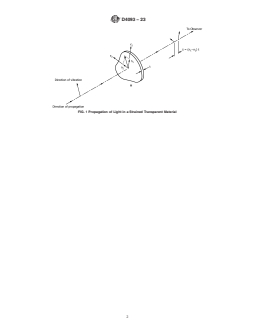
to the direction of light propagation (see Fig. 1), the incoming vibration splits into two waves vibrating in planes of
ε and ε . The difference between the indexes of refraction n =c⁄v and n =c⁄v (or birefringence) is:
1 2 1 1 2 2
n − n =(A − B)(ε − ε )= k(ε − ε )
1 2 1 2 1 2
where kis a material property called the strain-optical constant.As a result of their velocity difference, the waves
vibrating along the two principal planes will emerge out of phase, their relative distance, or retardation, δ, given by:
δ =(n − n )t = kt(ε − ε )
1 2 1 2
where tisthethicknessofmaterialcrossedbythelight.Asimilarequation,relatingδtothedifferenceofprincipal
stresses, σ and σ , can be written:
1 2
δ =(n − n )t = Ct(σ − σ )
1 2 1 2
The objective of photoelastic investigation is to measure: (a)the azimuth, or direction of principal strains, ε and
ε (or stresses σ and σ ), and (b)the retardation, δ, used to determine the magnitude of strains.Acomplete theory
2 1 2
of photoelastic effect can be found in the abundant literature on the subject (an extensive bibliography is provided
in Appendix X2).
1. Scope* test method can be used to measure birefringence and to
determine the difference of principal strains or normal strains
1.1 This quantitative test method covers measurements of
when the principal directions do not change substantially
direction of principal strains, ε and ε , and the photoelastic
1 2
within the light path.
retardation, δ, using a compensator, for the purpose of analyz-
ing strains in transparent or translucent plastic materials. This
1.2 Inadditiontothemethodusingacompensatordescribed
in this test method, other methods are in use, such as the
goniometric method (using rotation of the analyzer) mostly
ThistestmethodisunderthejurisdictionofASTMCommitteeD20onPlastics
applied for measuring small retardation, and expressing it as a
and is the direct responsibility of Subcommittee D20.10 on Mechanical Properties.
fraction of a wavelength. Nonvisual methods employing spec-
Current edition approved Jan. 1, 2023. Published January 2023. Originally
trophotometricmeasurementsandeliminatingthehumanjudg-
approved in 1982. Last previous edition approved in 2014 as D4093-95 (2014).
DOI: 10.1520/D4093-23. ment factor are also possible.
*A Summary of Changes section appears at the end of this standard
Copyright © ASTM International, 100 Barr Harbor Drive, PO Box C700, West Conshohocken, PA 19428-2959. United States
D4093 − 23
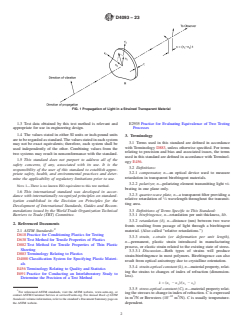
FIG. 1 Propagation of Light in a Strained Transparent Material
1.3 Test data obtained by this test method is relevant and E2935Practice for Evaluating Equivalence of Two Testing
appropriate for use in engineering design. Processes
1.4 The values stated in either SI units or inch-pound units
3. Terminology
aretoberegardedasstandard.Thevaluesstatedineachsystem
3.1 Terms used in this standard are defined in accordance
may not be exact equivalents; therefore, each system shall be
with Terminology D883, unless otherwise specified. For terms
used independently of the other. Combining values from the
relating to precision and bias and associated issues, the terms
two systems may result in nonconformance with the standard.
used in this standard are defined in accordance with Terminol-
1.5 This standard does not purport to address all of the
ogy E456.
safety concerns, if any, associated with its use. It is the
3.2 Definitions:
responsibility of the user of this standard to establish appro-
3.2.1 compensator, n—an optical device used to measure
priate safety, health, and environmental practices and deter-
retardation in transparent birefringent materials.
mine the applicability of regulatory limitations prior to use.
3.2.2 polarizer, n—polarizing element transmitting light vi-
NOTE 1—There is no known ISO equivalent to this test method.
brating in one plane only.
1.6 This international standard was developed in accor-
3.2.3 quarter-wave plate, n—a transparent filter providing a
dance with internationally recognized principles on standard-
relative retardation of ⁄4 wavelength throughout the transmit-
ization established in the Decision on Principles for the
ting area.
Development of International Standards, Guides and Recom-
3.3 Definitions of Terms Specific to This Standard:
mendations issued by the World Trade Organization Technical
Barriers to Trade (TBT) Committee. 3.3.1 birefringence, n—retardation per unit thickness, δ/t.
3.3.2 retardation (δ), n—distance (nm) between two wave
2. Referenced Documents
fronts resulting from passage of light through a birefringent
2.1 ASTM Standards:
material. (Also called “relative retardations.”)
D618Practice for Conditioning Plastics for Testing
3.3.3 strain, ε-strain (or deformation per unit length),
D638Test Method for Tensile Properties of Plastics
n—permanent, plastic strain introduced in manufacturing
D882Test Method for Tensile Properties of Thin Plastic
process, or elastic strain related to the existing state of stress.
Sheeting
3.3.3.1 Discussion—Both types of strains will produce
D883Terminology Relating to Plastics
strain-birefringence in most polymers. Birefringence can also
D4000Classification System for Specifying Plastic Materi-
result from optical anisotropy due to crystalline orientation.
als
3.3.4 strain-optical constant (k), n—materialproperty,relat-
E456Terminology Relating to Quality and Statistics
ing the strains to changes of index of refraction (dimension-
E691Practice for Conducting an Interlaboratory Study to
less).
Determine the Precision of a Test Method
k 5 ~n 2 n !/~ε 2 ε !
1 2 1 2
3.3.5 stress-optical constant (C), n—materialpropertyrelat-
For referenced ASTM standards, visit the ASTM website, www.astm.org, or
ingthestressestochangeinindexofrefraction. Cisexpressed
contact ASTM Customer Service at service@astm.org. For Annual Book of ASTM
2 −12 2
in m /N or Brewsters (10 m /N). C is usually temperature-
Standards volume information, refer to the standard’s Document Summary page on
the ASTM website. dependent.
D4093 − 23
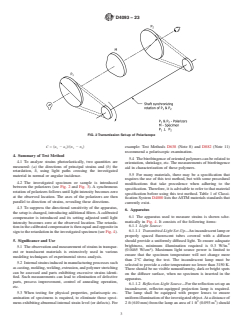
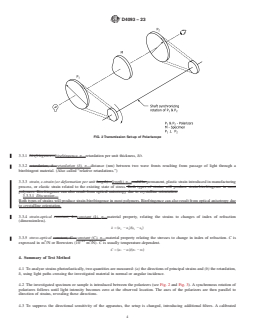
FIG. 2 Transmission Set-up of Polariscope
C 5 n 2 n / σ 2 σ example: Test Methods D638 (Note 8) and D882 (Note 11)
~ ! ~ !
1 2 1 2
recommend a polariscopic examination.
4. Summary of Test Method
5.4 Thebirefringenceoforientedpolymerscanberelatedto
4.1 To analyze strains photoelastically, two quantities are
orientation, shrinkage, etc.The measurements of birefringence
measured: (a) the directions of principal strains and (b) the
aid in characterization of these polymers.
retardation, δ, using light paths crossing the investigated
5.5 For many materials, there may be a specification that
material in normal or angular incidence.
requires the use of this test method, but with some procedural
4.2 The investigated specimen or sample is introduced
modifications that take precedence when adhering to the
between the polarizers (see Fig. 2 and Fig. 3). A synchronous
specification.Therefore, it is advisable to refer to that material
rotationofpolarizersfollowsuntillightintensitybecomeszero
specification before using this test method. Table 1 of Classi-
at the observed location. The axes of the polarizers are then
ficationSystemD4000liststheASTMmaterialsstandardsthat
parallel to direction of strains, revealing these directions.
currently exist.
4.3 To suppress the directional sensitivity of the apparatus,
6. Apparatus
thesetupischanged,introducingadditionalfilters.Acalibrated
6.1 The apparatus used to measure strains is shown sche-
compensator is introduced and its setting adjusted until light
matically in Fig. 4. It consists of the following items:
intensity becomes zero at the observed location. The retarda-
6.1.1 Light Source:
tioninthecalibratedcompensatoristhenequalandoppositein
6.1.1.1 Transmitted-LightSet-Up—Anincandescentlampor
signtotheretardationintheinvestigatedspecimen(seeFig.4).
properly spaced fluorescent tubes covered with a diffuser
5. Significance and Use
should provide a uniformly diffused light. To ensure adequate
brightness, minimum illumination required is 0.3 W/in.
5.1 Theobservationandmeasurementofstrainsintranspar-
(0.0465 W/cm ). Maximum light source power is limited to
ent or translucent materials is extensively used in various
ensure that the specimen temperature will not change more
modeling techniques of experimental stress analysis.
than 2°C during the test. The incandescent lamp must be
5.2 Internalstrainsinducedinmanufacturingprocessessuch
selected to provide a color temperature no lower than 3150 K.
ascasting,molding,welding,extrusion,andpolymerstretching
There should be no visible nonuniformity, dark or bright spots
can be assessed and parts exhibiting excessive strains identi-
on the diffuser surface, when no specimen is inserted in the
fied. Such measurements can lead to elimination of defective
apparatus.
parts, process improvement, control of annealing operation,
6.1.1.2 Reflection-Light Source—Forthereflectionset-upan
etc.
incandescent, reflector-equipped projection lamp is required.
5.3 When testing for physical properties, polariscopic ex- The lamp shall be equipped with proper lenses to ensure
amination of specimens is required, to eliminate those speci- uniformilluminationoftheinvestigatedobject.Atadistanceof
2 2
mensexhibitingabnormalinternalstrainlevel(ordefects).For 2ft(610mm)fromthelampanareaof1ft (0.093m )should
D4093 − 23
FIG. 3 Reflection Set-up of Polariscope
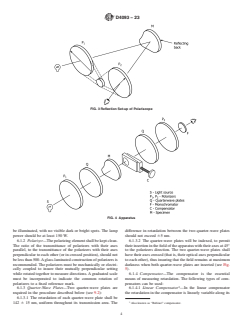
FIG. 4 Apparatus
be illuminated, with no visible dark or bright spots. The lamp difference in retardation between the two quarter-wave plates
power should be at least 150 W. should not exceed 65 nm.
6.1.2 Polarizer—Thepolarizingelementshallbekeptclean. 6.1.3.2 The quarter-wave plates will be indexed, to permit
The ratio of the transmittance of polarizers with their axes theirinsertioninthefieldoftheapparatuswiththeiraxesat45°
parallel, to the transmittance of the polarizers with their axes to the polarizers direction. The two quarter-wave plates shall
perpendiculartoeach other (or in crossed position),shouldnot havetheiraxescrossed(thatis,theiropticalaxesperpendicular
belessthan500.Aglass-laminatedconstructionofpolarizersis toeachother),thusinsuringthatthefieldremainsatmaximum
recommended.The polarizers must be mechanically or electri- darkness when both quarter-wave plates are inserted (see Fig.
cally coupled to insure their mutually perpendicular setting 5).
whilerotatedtogethertomeasuredirections.Agraduatedscale 6.1.4 Compensator—The compensator is the essential
must be incorporated to indicate the common rotation of means of measuring retardation. The following types of com-
polarizers to a fixed reference mark. pensators can be used:
6.1.3 Quarter-Wave Plates—Two quarter-wave plates are 6.1.4.1 Linear Compensator —In the linear compensator
required in the procedure described below (see 9.2): the retardation in the compensator is linearly variable along its
6.1.3.1 The retardation of each quarter-wave plate shall be
142 6 15 nm, uniform throughout its transmission area. The Also known as “Babinet” compensator.
D4093 − 23
FIG. 5 Direction Measuring Set-up
length.Agraduated scale shall be attached to the compensator accomplished by painting one side of the specimen with
body in such a manner that slippage cannot occur. The aluminum paint. Alternatively, it is possible to place the
calibration characteristic of the compensator shall include the examined sheet specimen against a clean metal surface (pref-
position along its length (as indicated by the scale) of the line erably aluminum) or an aluminum-painted surface.
where the retardation is zero and the number of divisions d per
7.2 Examination of complex surfaces or shapes sometimes
unit retardation (usually one wavelength). (The retardation per
requires the use of an immersion liquid. The examined item is
division is D= λ⁄d.) The scale density shall be sufficient to
placed inside a tank containing a liquid selected to exhibit
provideclearvisibilityforobserving1%oftheusefulrangeof
approximately the same index of refraction as the tested item.
the compensator.
This technique is commonly used to examine three-
6.1.4.2 Uniform Field Compensator —The uniform field
dimensional shapes.
compensator is usually constructed from two optical wedges
7.3 If conditioning is required, Procedure A of Practice
movedbymeansofaleadscrew,theamountofrelativemotion
D618 shall be used.
being linearly related to the total thickness and the retardation.
The lead screw motion shall be controlled by a dial drum or
8. Calibration and Standardization
counter. Calibration of this compensator shall include the
position, as indicated by the drum or counter, where the
8.1 A periodic verification (every 6 months) is required to
retardation is zero and the number of division of drum or
ensure that the apparatus is properly calibrated. The following
counter d per unit of retardation. (The retardation per division
points require verification:
isD= λ⁄d.)
8.1.1 Verification of Polariscope:
6.1.4.3 Compensators have a limited range of measured
8.1.1.1 Verify that the polarizers remain in “crossed” posi-
retardation. In case the retardation in the sample exceeds the
tion. A small deviation of one of the polarizers produces an
rangeofthecompensatorused,insertionofanoffsetretarderis
increase in the light intensity transmitted.
needed. The offset retarder must be calibrated and positioned
8.1.1.2 Verify that the quarter-wave plates are properly
along the axes of the compensator, between the analyzer and
crossed. A small deviation of one quarter-wave plate from its
the sample.
“indexed” position will produce an increase in the light
6.1.5 Filter—Monochromatic light is required to perform
intensity transmitted.
various operations in photoelasticity and some operations
8.1.2 Verification of the Compensator:
cannotbesuccessfullyaccomplishedusingwhitelight.Inthose
8.1.2.1 Examine the compensator in the polariscope and
instances a monochromatic light can be obtained introducing
verify that its δ=0 point coincides with the calibration
within the light path, a filter transmitting only light of the
reported.
desired wave length. To best correlate with observation in
8.1.2.2 Using monochromatic light (filter), verify that the
white light, a narrow band-pass filter with peak transmittance
spacing of interference fringes, D, coincides with the calibra-
at 570 6 6 nm and a maximum transmitted band-width (at
tionreport.Ifλisthewavelengthofmonochromaticlightused,
half-peak point) of 10 nm should be used.
it should be verified that d= λ⁄D.
7. Test Specimen
9. Procedure
7.1 Sheet,film,ormoregenerally,aconstant-thicknessitem
can be examined using a transmission set-up. For use in
9.1 Measuring Direction of Principal Strains:
reflection, a reflecting surface must be provided. This can be
4 5
Also known as “Babinet-Soleil” compensator. Krylon aluminum aerosol can spray paint was found satisfactory.
D4093 − 23
FIG. 6 Retardation Measuring Set-up
9.1.1 Insert the specimen between the polarizers and align a 9.2.1 After completing the set-up (a) or (b), observe and
characteristicreferencedirectionofthespecimen(forexample: identifythepointofmeasurement.Thecolorversusretardation
edge, axis of symmetry, base) with the reference of the table (Appendix X1) provides a simple means to select the
instrument.
pointofmeasurementproperly.Uniformcolorobservedovera
9.1.2 Set the polariscope in the direction measuring set-up. broad region indicates a uniform strain area. Closely spaced
Thequarter-waveplatesmustberemovedortheiraxesaligned
color bands (isochromatics) indicate that strain gradient are
with the polarizers (see Fig. 5). substantialandthepointsmustbeselectedcarefullytoprovide
9.1.3 Observe the light intensity at the point (s) (or the
meaningful data.
region) where measuring is to be performed. Rotate polarizers
9.2.2 Introduce the compensator in the field of view, with
(synchronize
...
This document is not an ASTM standard and is intended only to provide the user of an ASTM standard an indication of what changes have been made to the previous version. Because
it may not be technically possible to adequately depict all changes accurately, ASTM recommends that users consult prior editions as appropriate. In all cases only the current version
of the standard as published by ASTM is to be considered the official document.
Designation: D4093 − 95 (Reapproved 2014) D4093 − 23
Standard Test Method for
Photoelastic Measurements of Birefringence and Residual
Strains in Transparent or Translucent Plastic Materials
This standard is issued under the fixed designation D4093; the number immediately following the designation indicates the year of
original adoption or, in the case of revision, the year of last revision. A number in parentheses indicates the year of last reapproval. A
superscript epsilon (´) indicates an editorial change since the last revision or reapproval.
INTRODUCTION
Light propagates in transparent materials at a speed, v, that is lower than its speed in vacuum, c. In
isotropic unstrained materials the index of refraction, n = c ⁄v, is independent of the orientation of the
plane of vibration of light. Transparent materials, when strained, become optically anisotropic and the
index of refraction becomes directional. The change in index of refraction is related to strains. If n
o
is the refractive index of unstrained material, the three principal indices of refraction, n , become linear
i
functions of strain:
n − n = ^ A ε
i o ij j
Using photoelastic techniques (initially developed to measure stresses in transparent models) strains in plastics
can be assessed. In isotropic materials, two material constants, A and B, are sufficient to describe their
optomechanical behavior:
A = A when i = j, and
ij
A = B when i fi j.
ij
When light propagates through a region (where principal strains ε and ε are contained in the plane perpendicular
1 2
to the direction of light propagation (see Fig. 1), the incoming vibration splits into two waves vibrating in planes of
ε and ε . The difference between the indexes of refraction n = c ⁄v and n = c ⁄v (or birefringence) is:
1 2 1 1 2 2
n − n = (A − B)(ε − ε ) = k(ε − ε )
1 2 1 1 1 2
n − n = (A − B)(ε − ε ) = k(ε − ε )
1 2 1 2 1 2
where k is a material property called the strain-optical constant. As a result of their velocity difference, the waves
vibrating along the two principal planes will emerge out of phase, their relative distance, or retardation, δ, given by:
δ = (n − n )t = kt(ε − ε )
1 2 1 2
where t is the thickness of material crossed by the light. A similar equation, relating δ to the difference of principal
stresses, σ and σ , can be written:
1 2
δ = (n − n )t = Ct(σ − σ )
1 2 1 2
The objective of photoelastic investigation is to measure: (a) the azimuth, or direction of principal strains, ε and
ε (or stresses σ and σ ), and (b) the retardation, δ, used to determine the magnitude of strains. A complete theory
2 1 2
of photoelastic effect can be found in the abundant literature on the subject (an extensive bibliography is provided
in Appendix X2).
This test method is under the jurisdiction of ASTM Committee D20 on Plastics and is the direct responsibility of Subcommittee D20.10 on Mechanical Properties.
Current edition approved Dec. 1, 2014Jan. 1, 2023. Published December 2014January 2023. Originally approved in 1982. Last previous edition approved in 20102014
as D4093 - 95 (2010).(2014). DOI: 10.1520/D4093-95R14.10.1520/D4093-23.
Copyright © ASTM International, 100 Barr Harbor Drive, PO Box C700, West Conshohocken, PA 19428-2959. United States
D4093 − 23
FIG. 1 Propagation of Light in a Strained Transparent Material
D4093 − 23
1. Scope Scope*
1.1 This quantitative test method covers measurements of direction ofprincipal of principal strains, ε and ε , and the photoelastic
1 2
retardation, δ, using a compensator, for the purpose of analyzing strains in transparent or translucent plastic materials. This test
method can be used to measure birefringence and to determine the difference of principal strains or normal strains when the
principal directions do not change substantially within the light path.
1.2 In addition to the method using a compensator described in this test method, other methods are in use, such as the goniometric
method (using rotation of the analyzer) mostly applied for measuring small retardation, and expressing it as a fraction of a
wavelength. Nonvisual methods employing spectrophotometric measurements and eliminating the human judgment factor are also
possible.
1.3 Test data obtained by this test method is relevant and appropriate for use in engineering design.
1.4 The values stated in either SI units or inch-pound units are to be regarded as standard. The values stated in each system may
not be exact equivalents; therefore, each system shall be used independently of the other. Combining values from the two systems
may result in nonconformance with the standard.
1.5 This standard does not purport to address all of the safety concerns, if any, associated with its use. It is the responsibility
of the user of this standard to establish appropriate safety safety, health, and healthenvironmental practices and determine the
applicability of regulatory limitations prior to use.
NOTE 1—There is no known ISO equivalent to this test method.
1.6 This international standard was developed in accordance with internationally recognized principles on standardization
established in the Decision on Principles for the Development of International Standards, Guides and Recommendations issued
by the World Trade Organization Technical Barriers to Trade (TBT) Committee.
2. Referenced Documents
2.1 ASTM Standards:
D618 Practice for Conditioning Plastics for Testing
D638 Test Method for Tensile Properties of Plastics
D882 Test Method for Tensile Properties of Thin Plastic Sheeting
D883 Terminology Relating to Plastics
D4000 Classification System for Specifying Plastic Materials
E456 Terminology Relating to Quality and Statistics
E691 Practice for Conducting an Interlaboratory Study to Determine the Precision of a Test Method
E2935 Practice for Evaluating Equivalence of Two Testing Processes
3. Terminology
3.1 Terms used in this standard are defined in accordance with Terminology D883, unless otherwise specified. For terms relating
to precision and bias and associated issues, the terms used in this standard are defined in accordance with Terminology E456.
3.2 Definitions:
3.2.1 compensator—compensator, n—an optical device used to measure retardation in transparent birefringent materials.
3.2.2 polarizer—polarizer, n—polarizing element transmitting light vibrating in one plane only.
3.2.3 quarter-wave plate—plate, n—a transparent filter providing a relative retardation of ⁄4 wavelength throughout the
transmitting area.
3.3 Definitions of Terms Specific to This Standard:
For referenced ASTM standards, visit the ASTM website, www.astm.org, or contact ASTM Customer Service at service@astm.org. For Annual Book of ASTM Standards
volume information, refer to the standard’s Document Summary page on the ASTM website.
D4093 − 23
FIG. 2 Transmission Set-up of Polariscope
3.3.1 birefringence—birefringence, n—retardation per unit thickness, δ/t.
3.3.2 retardation, δ—retardation (δ), n—distance (nm) between two wave fronts resulting from passage of light through a
birefringent material. (Also called “relative retardations.”)
3.3.3 strain, ε-strain (or deformation per unit length)—length), n—could be permanent, plastic strain introduced in manufacturing
process, or elastic strain related to the existing state of stress. Both types of strains will produce strain-birefringence in most
polymers. Birefringence can also result from optical anisotropy due to crystalline orientation.
3.3.3.1 Discussion—
Both types of strains will produce strain-birefringence in most polymers. Birefringence can also result from optical anisotropy due
to crystalline orientation.
3.3.4 strain-optical constant, k—constant (k), n—material property, relating the strains to changes of index of refraction
(dimensionless).
k 5 ~n 2 n !/~ε 2 ε !
1 2 1 2
3.3.5 stress-optical constant, C—constant (C), n—material property relating the stresses to change in index of refraction. C is
2 −12 2
expressed in m /N or Brewsters (10 m /N). C is usually temperature-dependent.
C 5 ~n 2 n !/~σ 2 σ !
1 2 1 2
4. Summary of Test Method
4.1 To analyze strains photoelastically, two quantities are measured: (a) the directions of principal strains and (b) the retardation,
δ, using light paths crossing the investigated material in normal or angular incidence.
4.2 The investigated specimen or sample is introduced between the polarizers (see Fig. 2 and Fig. 3). A synchronous rotation of
polarizers follows until light intensity becomes zero at the observed location. The axes of the polarizers are then parallel to
direction of strains, revealing these directions.
4.3 To suppress the directional sensitivity of the apparatus, the setup is changed, introducing additional filters. A calibrated
D4093 − 23
FIG. 3 Reflection Set-up of Polariscope
compensator is introduced and its setting adjusted until light intensity becomes zero at the observed location. The retardation in
the calibrated compensator is then equal and opposite in sign to the retardation in the investigated specimen (see Fig. 4).
5. Significance and Use
5.1 The observation and measurement of strains in transparent or translucent materials is extensively used in various modeling
techniques of experimental stress analysis.
5.2 Internal strains induced in manufacturing processes such as casting, molding, welding, extrusion, and polymer stretching can
be assessed and partparts exhibiting excessive strains identified. Such measurements can lead to elimination of defective parts,
process improvement, control of annealing operation, etc.
5.3 When testing for physical properties, polariscopic examination of specimens is required, to eliminate those specimens
exhibiting abnormal internal strain level (or defects). For example: Test Methods D638 (Note 8) and D882 (Note 11) recommend
a polariscopic examination.
5.4 The birefringence of oriented polymers can be related to orientation, shrinkage, etc. The measurements of birefringence aid
in characterization of these polymers.
5.5 For many materials, there may be a specification that requires the use of this test method, but with some procedural
modifications that take precedence when adhering to the specification. Therefore, it is advisable to refer to that material
specification before using this test method. Table 1 of Classification System D4000 lists the ASTM materials standards that
currently exist.
6. Apparatus
6.1 The apparatus used to measure strains is shown schematically in Fig. 4. It consists of the following items:
6.1.1 Light Source:
6.1.1.1 Transmitted-Light Set-Up—An incandescent lamp or properly spaced fluorescent tubes covered with a diffuser should
2 2
provide a uniformly diffused light. To ensure adequate brightness, minimum illumination required is 0.3 W/in. (0.0465 W/cm ).
Maximum light source power is limited to ensure that the specimen temperature will not change more than 2°C during the test.
The incandescent lamp must be selected to provide a color temperature no lower than 3150 K. There should be no visible
nonuniformity, dark or bright spots on the diffuser surface, when no specimen is inserted in the apparatus.
6.1.1.2 Reflection-Light Source—For the reflection set-up an incandescent, reflector-equipped projection lamp is required. The
D4093 − 23
FIG. 4 Apparatus
lamp shall be equipped with proper lenses to ensure uniform illumination of the investigated object. At a distance of 2 ft (610 mm)
2 2
from the lamp an area of 1 ft (0.093 m ) should be illuminated, with no visible dark or bright spots. The lamp power should be
at least 150 W.
6.1.2 Polarizer—The polarizing element shall be kept clean. The ratio of the transmittance of polarizers with their axes parallel,
to the transmittance of the polarizers with their axes perpendicular to each other (or in crossed position), should not be less than
500. A glass-laminated construction of polarizers is recommended. The polarizers must be mechanically or electrically coupled to
insure their mutually perpendicular setting while rotated together to measure directions. A graduated scale must be incorporated
to indicate the common rotation of polarizers to a fixed reference mark.
6.1.3 Quarter-Wave Plates—Two quarter-wave plates are required in the procedure described below (see 9.2):
6.1.3.1 The retardation of each quarter-wave plate shall be 142 6 15 nm, uniform throughout its transmission area. The difference
in retardation between the two quarter-wave plates should not exceed 65 nm.
6.1.3.2 The quarter-wave plates will be indexed, to permit their insertion in the field of the apparatus with their axes at 45° to the
polarizers direction. The two quarter-wave plates shall have their axes crossed (that is, their optical axes perpendicular to each
other), thus insuring that the field remains at maximum darkness when both quarter-wave plates are inserted (see Fig. 5).
6.1.4 Compensator—The compensator is the essential means of measuring retardation. The following types of compensators can
be used:
6.1.4.1 Linear Compensator —In the linear compensator the retardation in the compensator is linearly variable along its length.
A graduated scale shall be attached to the compensator body in such a manner that slippage cannot occur. The calibration
characteristic of the compensator shall include the position along its length (as indicated by the scale) of the line where the
retardation is zero and the number of divisions d per unit retardation (usually one wavelength). (The retardation per division is
D = λ ⁄d.) The scale density shall be sufficient to provide clear visibility for observing 1 % of the useful range of the compensator.
6.1.4.2 Uniform Field Compensator —The uniform field compensator is usually constructed from two optical wedges moved by
means of a lead screw, the amount of relative motion being linearly related to the total thickness and the retardation. The lead screw
Also known as “Babinet” compensator.
Also known as “Babinet-Soleil” compensator.
D4093 − 23
FIG. 5 Direction Measuring Set-up
motion shall be controlled by a dial drum or counter. Calibration of this compensator shall include the position, as indicated by
the drum or counter, where the retardation is zero and the number of division of drum or counter d per unit of retardation. (The
retardation per division is D = λ ⁄d.)
6.1.4.3 Compensators have a limited range of measured retardation. In case the retardation in the sample exceeds the range of the
compensator used, insertion of an offset retarder is needed. The offset retarder must be calibrated and positioned along the axes
of the compensator, between the analyzer and the sample.
6.1.5 Filter—Monochromatic light is required to perform various operations in photoelasticity and some operations cannot be
successfully accomplished using white light. In those instances a monochromatic light can be obtained introducing within the light
path, a filter transmitting only light of the desired wave length. To best correlate with observation in white light, a narrow band-pass
filter with peak transmittance at 570 6 6 nm and a maximum transmitted band-width (at half-peak point) of 10 nm should be used.
7. Test Specimen
7.1 Sheet, film, or more generally, a constant-thickness item can be examined using a transmission set-up. For use in reflection,
a reflecting surface must be provided. This can be accomplished by painting one side of the specimen with aluminum paint.
Alternatively, it is possible to place the examined sheet specimen against a clean metal surface (preferably aluminum) or an
aluminum-painted surface.
7.2 Examination of complex surfaces or shapes sometimes requires the use of an immersion liquid. The examined item is placed
inside a tank containing a liquid selected to exhibit approximately the same index of refraction as the tested item. This technique
is commonly used to examine three-dimensional shapes.
7.3 If conditioning is required, Procedure A of Practice D618 shall be used.
8. Calibration and Standardization
8.1 A periodic verification (every 6 months) is required to ensure that the apparatus is properly calibrated. The following points
require verification:
8.1.1 Verification of Polariscope:
8.1.1.1 Verify that the polarizers remain in “crossed” position. A small deviation of one of the polarizers produces an increase in
the light intensity transmitted.
8.1.1.2 Verify that the quarter-wave plates are properly crossed. A small deviation of one quarter-wave plate from its “indexed”
position will produce an increase in the light intensity transmitted.
Krylon aluminum aerosol can spray paint was found satisfactory.
D4093 − 23
FIG. 6 Retardation Measuring Set-up
8.1.2 Verification of the Compensator:
8.1.2.1 Examine the compensator in the polariscope and verify that its δ = 0 point coincides with the calibration reported.
8.1.2.2 Using monochromatic light (filter), verify that the spacing of interference fringes, D, coincides with the calibration report.
If λ is the wavelength of monochromatic light used, it should be verified that d = λ ⁄D.
9. Procedure
9.1 Measuring Direction of Principal Strains:
9.1.1 Insert the specimen between the polarizers and align a characteristic reference direction of the specimen (for example: edge,
axis of symmetry, base) with the reference of the instrument.
9.1.2 Set the polariscope in the direction measuring set-up. The quarter-wave plates must be removed or their axes aligned with
the polarizers (see Fig. 5).
9.1.3 Observe the light intensity at the point (s) (or the region) where measuring is to be performed. Rotate polarizers
(synchronized together) until a minimum of light intensity emerges and the point (s) (or the region) appear dark or black.
9.1.4 Read on the dial the angle indicating the directions of the polarizer axes which are also the direction of principal strains at
the point with respect to the reference direction.
9.1.5 In polarizing microscopes and all other instruments containing fixed polarizer and analyzer, a rotating stage shall be provided
to support the sample and to measure the angle between the polarizer and sample reference direction. The polarizer in this setup
must be aligned with the reference of the stage scale. Rotate the stage until a minimum of light intensity is observed and the area
or point that is observed is dark or black. Read on stage scale the angle indicating the rotation of the stage to the reference, which
is also the direction angle of the strain to the same reference.
NOTE 2—If the field of view appears dark and remains dark as the polarizers are rotated, the specimen is strain-free. If continuous rotation cannot produce
total extinction (black), small changes of strain direction within the thickne
...