

ASTM A684/A684M-17
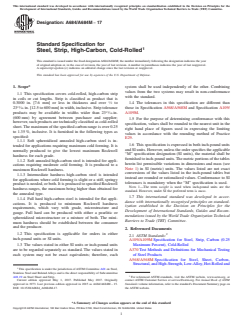
(Specification)Standard Specification for Steel, Strip, High-Carbon, Cold-Rolled
General Information
- Abstract
ABSTRACT
This specification covers cold-rolled, high-carbon strip. The strip shall be furnished cold rolled spheroidized annealed, soft annealed, intermediate hardness, or full hard, as specified. The heat or cast analysis shall conform to that specified requirement. Hardness test and bend test shall be made to conform to the requirements specified.
SCOPE
1.1 This specification covers cold-rolled, high-carbon strip in coils or cut lengths. Strip is classified as product that is 0.3000 in. [7.6 mm] or less in thickness and over 1/2 to 2315/16 in. [12.5 to 600 mm] in width, inclusive. Strip tolerance products may be available in widths wider than 2315/16 in. (600 mm) by agreement between purchaser and supplier; however, such products are technically classified as cold-rolled sheet. The maximum of the specified carbon range is over 0.25 to 1.35 %, inclusive. It is furnished in the following types as specified:
1.1.1 Soft spheroidized annealed high-carbon steel is intended for applications requiring maximum cold forming. It is normally produced to give the lowest maximum Rockwell hardness for each grade.
1.1.2 Soft annealed high-carbon steel is intended for applications requiring moderate cold forming. It is produced to a maximum Rockwell hardness.
1.1.3 Intermediate hardness high-carbon steel is intended for applications where cold forming is slight or a stiff, springy product is needed, or both. It is produced to specified Rockwell hardness ranges, the maximum being higher than obtained for the annealed type.
1.1.4 Full hard high-carbon steel is intended for flat applications. It is produced to minimum Rockwell hardness requirements, which vary with grade, microstructure and gauge. Full hard can be produced with either a pearlitic or spheroidized microstructure or a mixture of both. The minimum hardness should be established between the consumer and the producer.
1.2 This specification is applicable for orders in either inch-pound units or SI units.
1.3 The values stated in either SI units or inch-pound units are to be regarded separately as standard. The values stated in each system may not be exact equivalents; therefore, each system shall be used independently of the other. Combining values from the two systems may result in non-conformance with the standard.
1.4 The tolerances in this specification are different than those in Specification A568/A568M and Specification A109/A109M.
1.5 For the purpose of determining conformance with this specification, values shall be rounded to the nearest unit in the right hand place of figures used in expressing the limiting values in accordance with the rounding method of Practice E29.
1.6 This specification is expressed in both inch-pound units and SI units. However, unless the order specifies the applicable “M” specification designation (SI units), the material shall be furnished to inch-pound units. The metric portions of the tables herein list permissible variations in dimensions and mass (see Note 1) in SI (metric) units. The values listed are not exact conversions of the values listed in the inch-pound tables but instead are rounded or rationalized values. Conformance to SI tolerances is mandatory when the “M” specification is used.
Note 1: The term weight is used when inch-pound units are the standard. However, under SI the preferred term is mass.
1.7 This international standard was developed in accordance with internationally recognized principles on standardization established in the Decision on Principles for the Development of International Standards, Guides and Recommendations issued by the World Trade Organization Technical Barriers to Trade (TBT) Committee.
- Status
- Published
- Publication Date
- 30-Apr-2017
- Technical Committee
- A01 - Steel, Stainless Steel and Related Alloys
- Drafting Committee
- A01.19 - Steel Sheet and Strip
Buy Documents
ASTM A684/A684M-17 - Standard Specification for Steel, Strip, High-Carbon, Cold-Rolled
REDLINE ASTM A684/A684M-17 - Standard Specification for Steel, Strip, High-Carbon, Cold-Rolled
Overview
ASTM A684/A684M-17 is the international standard specification established by ASTM International for high-carbon, cold-rolled steel strip. This standard covers strip products supplied in coils or cut lengths, with a thickness of 0.3000 in. (7.6 mm) or less and widths over 1/2 in. to 23-15/16 in. (12.5 mm to 600 mm). These cold-rolled, high-carbon steel strips are available in various metallurgical conditions including soft spheroidized annealed, soft annealed, intermediate hardness, or full hard, allowing for adaptation to diverse forming and end-use requirements. The material can be supplied in both inch-pound and SI units for international compatibility.
ASTM A684/A684M-17 ensures uniform chemical composition, precise dimensional tolerances, and consistent mechanical and surface properties, making it a core reference in quality-driven steel strip procurement, fabrication, and end-product reliability.
Key Topics
Product Types and Conditions
- Soft spheroidized annealed: Designed for maximum cold formability with the lowest practical hardness.
- Soft annealed: For moderate cold forming with a specified maximum Rockwell hardness.
- Intermediate hardness: Suited for applications requiring minimal forming or increased springiness.
- Full hard: Minimum hardness specified, used in flat applications; microstructure may be pearlitic, spheroidized, or mixed.
Chemical Composition
- Controlled carbon content from over 0.25% to 1.35%.
- Alloying elements (e.g., manganese, silicon, phosphorus, sulfur) and additional element requirements as agreed upon.
- Strict adherence to declared heat analysis and product analysis tolerances.
Mechanical and Physical Properties
- Hardness and bendability requirements by condition and charge.
- Dimensional tolerances for thickness, width, camber, and length.
- Surface finish options (matte, bright, better bright, best bright) and edge conditions suited to application requirements.
Testing and Inspection
- Hardness and bend testing as specified to ensure conformance.
- Certification and reporting requirements for traceability.
- Marking and packaging requirements for shipping and identification in line with industrial and governmental standards.
Applications
ASTM A684/A684M-17 cold-rolled high-carbon steel strip is widely used in manufacturing where high strength, fatigue resistance, and precise dimensional control are critical. Typical applications include:
- Automotive Parts: Springs, clutch plates, and other high-wear components.
- Industrial Blades and Saws: Where high hardness and edge retention are essential.
- Measuring Tapes: Demanding consistent springiness and accurate dimensions.
- Tooling and Cutlery: Requiring durable, form-stable material.
- Electrical and Mechanical Springs: Where repeated flexing and high fatigue life are necessary.
The versatility in supplied hardness grades and finishes allows users to order material optimized for cold-forming, stamping, heat-treating, and final product durability.
Related Standards
For comprehensive material selection, quality assurance, and application alignment, the following associated ASTM standards are commonly referenced alongside or in combination with ASTM A684/A684M-17:
- ASTM A568/A568M - General requirements for steel sheet, carbon and high-strength, low alloy, hot-rolled and cold-rolled.
- ASTM A109/A109M - Specification for low-carbon, cold-rolled steel strip.
- ASTM A370 - Test methods and definitions for mechanical testing of steel products.
- ASTM A751 - Test methods and terminology for chemical analysis of steel products.
- ASTM A700 - Guide for packaging, marking, and loading methods for steel products for shipment.
- SAE J1086 - Recommended practice for numbering metals and alloys (UNS).
- ASTM E29 - Practice for using significant digits in test data to determine conformance with specifications.
Selecting ASTM A684/A684M-17-compliant steel strip gives manufacturers, engineers, and procurement professionals confidence in consistent product quality and international standards compliance for critical high-carbon steel strip applications.
Relations
- Effective Date
- 01-Mar-2024
- Effective Date
- 01-Mar-2024
- Effective Date
- 01-Mar-2024
- Effective Date
- 01-Nov-2019
- Effective Date
- 01-Nov-2019
- Effective Date
- 01-Jul-2019
- Effective Date
- 01-Nov-2018
- Refers
ASTM A370-17a - Standard Test Methods and Definitions for Mechanical Testing of Steel Products - Effective Date
- 15-Nov-2017
- Effective Date
- 01-Nov-2017
- Effective Date
- 01-Sep-2017
- Effective Date
- 01-Sep-2017
- Effective Date
- 01-Jan-2017
- Effective Date
- 01-Sep-2016
- Effective Date
- 01-Nov-2015
- Effective Date
- 01-Nov-2015
Buy Documents
ASTM A684/A684M-17 - Standard Specification for Steel, Strip, High-Carbon, Cold-Rolled
REDLINE ASTM A684/A684M-17 - Standard Specification for Steel, Strip, High-Carbon, Cold-Rolled
Get Certified
Connect with accredited certification bodies for this standard

Element Materials Technology
Materials testing and product certification.

Inštitut za kovinske materiale in tehnologije
Institute of Metals and Technology. Materials testing, metallurgical analysis, NDT.
Sponsored listings
Frequently Asked Questions
ASTM A684/A684M-17 is a technical specification published by ASTM International. Its full title is "Standard Specification for Steel, Strip, High-Carbon, Cold-Rolled". This standard covers: ABSTRACT This specification covers cold-rolled, high-carbon strip. The strip shall be furnished cold rolled spheroidized annealed, soft annealed, intermediate hardness, or full hard, as specified. The heat or cast analysis shall conform to that specified requirement. Hardness test and bend test shall be made to conform to the requirements specified. SCOPE 1.1 This specification covers cold-rolled, high-carbon strip in coils or cut lengths. Strip is classified as product that is 0.3000 in. [7.6 mm] or less in thickness and over 1/2 to 2315/16 in. [12.5 to 600 mm] in width, inclusive. Strip tolerance products may be available in widths wider than 2315/16 in. (600 mm) by agreement between purchaser and supplier; however, such products are technically classified as cold-rolled sheet. The maximum of the specified carbon range is over 0.25 to 1.35 %, inclusive. It is furnished in the following types as specified: 1.1.1 Soft spheroidized annealed high-carbon steel is intended for applications requiring maximum cold forming. It is normally produced to give the lowest maximum Rockwell hardness for each grade. 1.1.2 Soft annealed high-carbon steel is intended for applications requiring moderate cold forming. It is produced to a maximum Rockwell hardness. 1.1.3 Intermediate hardness high-carbon steel is intended for applications where cold forming is slight or a stiff, springy product is needed, or both. It is produced to specified Rockwell hardness ranges, the maximum being higher than obtained for the annealed type. 1.1.4 Full hard high-carbon steel is intended for flat applications. It is produced to minimum Rockwell hardness requirements, which vary with grade, microstructure and gauge. Full hard can be produced with either a pearlitic or spheroidized microstructure or a mixture of both. The minimum hardness should be established between the consumer and the producer. 1.2 This specification is applicable for orders in either inch-pound units or SI units. 1.3 The values stated in either SI units or inch-pound units are to be regarded separately as standard. The values stated in each system may not be exact equivalents; therefore, each system shall be used independently of the other. Combining values from the two systems may result in non-conformance with the standard. 1.4 The tolerances in this specification are different than those in Specification A568/A568M and Specification A109/A109M. 1.5 For the purpose of determining conformance with this specification, values shall be rounded to the nearest unit in the right hand place of figures used in expressing the limiting values in accordance with the rounding method of Practice E29. 1.6 This specification is expressed in both inch-pound units and SI units. However, unless the order specifies the applicable “M” specification designation (SI units), the material shall be furnished to inch-pound units. The metric portions of the tables herein list permissible variations in dimensions and mass (see Note 1) in SI (metric) units. The values listed are not exact conversions of the values listed in the inch-pound tables but instead are rounded or rationalized values. Conformance to SI tolerances is mandatory when the “M” specification is used. Note 1: The term weight is used when inch-pound units are the standard. However, under SI the preferred term is mass. 1.7 This international standard was developed in accordance with internationally recognized principles on standardization established in the Decision on Principles for the Development of International Standards, Guides and Recommendations issued by the World Trade Organization Technical Barriers to Trade (TBT) Committee.
ABSTRACT This specification covers cold-rolled, high-carbon strip. The strip shall be furnished cold rolled spheroidized annealed, soft annealed, intermediate hardness, or full hard, as specified. The heat or cast analysis shall conform to that specified requirement. Hardness test and bend test shall be made to conform to the requirements specified. SCOPE 1.1 This specification covers cold-rolled, high-carbon strip in coils or cut lengths. Strip is classified as product that is 0.3000 in. [7.6 mm] or less in thickness and over 1/2 to 2315/16 in. [12.5 to 600 mm] in width, inclusive. Strip tolerance products may be available in widths wider than 2315/16 in. (600 mm) by agreement between purchaser and supplier; however, such products are technically classified as cold-rolled sheet. The maximum of the specified carbon range is over 0.25 to 1.35 %, inclusive. It is furnished in the following types as specified: 1.1.1 Soft spheroidized annealed high-carbon steel is intended for applications requiring maximum cold forming. It is normally produced to give the lowest maximum Rockwell hardness for each grade. 1.1.2 Soft annealed high-carbon steel is intended for applications requiring moderate cold forming. It is produced to a maximum Rockwell hardness. 1.1.3 Intermediate hardness high-carbon steel is intended for applications where cold forming is slight or a stiff, springy product is needed, or both. It is produced to specified Rockwell hardness ranges, the maximum being higher than obtained for the annealed type. 1.1.4 Full hard high-carbon steel is intended for flat applications. It is produced to minimum Rockwell hardness requirements, which vary with grade, microstructure and gauge. Full hard can be produced with either a pearlitic or spheroidized microstructure or a mixture of both. The minimum hardness should be established between the consumer and the producer. 1.2 This specification is applicable for orders in either inch-pound units or SI units. 1.3 The values stated in either SI units or inch-pound units are to be regarded separately as standard. The values stated in each system may not be exact equivalents; therefore, each system shall be used independently of the other. Combining values from the two systems may result in non-conformance with the standard. 1.4 The tolerances in this specification are different than those in Specification A568/A568M and Specification A109/A109M. 1.5 For the purpose of determining conformance with this specification, values shall be rounded to the nearest unit in the right hand place of figures used in expressing the limiting values in accordance with the rounding method of Practice E29. 1.6 This specification is expressed in both inch-pound units and SI units. However, unless the order specifies the applicable “M” specification designation (SI units), the material shall be furnished to inch-pound units. The metric portions of the tables herein list permissible variations in dimensions and mass (see Note 1) in SI (metric) units. The values listed are not exact conversions of the values listed in the inch-pound tables but instead are rounded or rationalized values. Conformance to SI tolerances is mandatory when the “M” specification is used. Note 1: The term weight is used when inch-pound units are the standard. However, under SI the preferred term is mass. 1.7 This international standard was developed in accordance with internationally recognized principles on standardization established in the Decision on Principles for the Development of International Standards, Guides and Recommendations issued by the World Trade Organization Technical Barriers to Trade (TBT) Committee.
ASTM A684/A684M-17 is classified under the following ICS (International Classification for Standards) categories: 77.140.50 - Flat steel products and semi-products. The ICS classification helps identify the subject area and facilitates finding related standards.
ASTM A684/A684M-17 has the following relationships with other standards: It is inter standard links to ASTM A370-24, ASTM A109/A109M-24, ASTM A941-24, ASTM A568/A568M-19a, ASTM A700-14(2019), ASTM A370-19, ASTM A109/A109M-16(2018), ASTM A370-17a, ASTM A568/A568M-17a, ASTM A568/A568M-17, ASTM A941-17, ASTM A370-17, ASTM A109/A109M-16, ASTM A370-15, ASTM A941-15. Understanding these relationships helps ensure you are using the most current and applicable version of the standard.
ASTM A684/A684M-17 is available in PDF format for immediate download after purchase. The document can be added to your cart and obtained through the secure checkout process. Digital delivery ensures instant access to the complete standard document.
Standards Content (Sample)
This international standard was developed in accordance with internationally recognized principles on standardization established in the Decision on Principles for the
Development of International Standards, Guides and Recommendations issued by the World Trade Organization Technical Barriers to Trade (TBT) Committee.
Designation:A684/A684M −17
Standard Specification for
Steel, Strip, High-Carbon, Cold-Rolled
This standard is issued under the fixed designationA684/A684M; the number immediately following the designation indicates the year
of original adoption or, in the case of revision, the year of last revision.Anumber in parentheses indicates the year of last reapproval.
A superscript epsilon (´) indicates an editorial change since the last revision or reapproval.
This standard has been approved for use by agencies of the U.S. Department of Defense.
1. Scope* system shall be used independently of the other. Combining
values from the two systems may result in non-conformance
1.1 This specification covers cold-rolled, high-carbon strip
with the standard.
in coils or cut lengths. Strip is classified as product that is
0.3000 in. [7.6 mm] or less in thickness and over ⁄2 to 1.4 The tolerances in this specification are different than
23 ⁄16in. [12.5 to 600mm] in width, inclusive. Strip tolerance those in Specification A568/A568M and Specification A109/
products may be available in widths wider than 23 ⁄16in. A109M.
(600mm) by agreement between purchaser and supplier;
1.5 For the purpose of determining conformance with this
however,suchproductsaretechnicallyclassifiedascold-rolled
specification, values shall be rounded to the nearest unit in the
sheet.Themaximumofthespecifiedcarbonrangeisover0.25
right hand place of figures used in expressing the limiting
to 1.35%, inclusive. It is furnished in the following types as
values in accordance with the rounding method of Practice
specified:
E29.
1.1.1 Soft spheroidized annealed high-carbon steel is in-
1.6 This specification is expressed in both inch-pound units
tended for applications requiring maximum cold forming. It is
andSIunits.However,unlesstheorderspecifiestheapplicable
normally produced to give the lowest maximum Rockwell
“M” specification designation (SI units), the material shall be
hardness for each grade.
furnishedtoinch-poundunits.Themetricportionsofthetables
1.1.2 Soft annealed high-carbon steel is intended for appli-
herein list permissible variations in dimensions and mass (see
cations requiring moderate cold forming. It is produced to a
Note 1) in SI (metric) units. The values listed are not exact
maximum Rockwell hardness.
conversions of the values listed in the inch-pound tables but
1.1.3 Intermediate hardness high-carbon steel is intended
instead are rounded or rationalized values. Conformance to SI
for applications where cold forming is slight or a stiff, springy
tolerances is mandatory when the “M” specification is used.
productisneeded,orboth.ItisproducedtospecifiedRockwell
NOTE 1—The term weight is used when inch-pound units are the
hardness ranges, the maximum being higher than obtained for
standard. However, under SI the preferred term is mass.
the annealed type.
1.7 This international standard was developed in accor-
1.1.4 Full hard high-carbon steel is intended for flat appli-
dance with internationally recognized principles on standard-
cations. It is produced to minimum Rockwell hardness
ization established in the Decision on Principles for the
requirements, which vary with grade, microstructure and
Development of International Standards, Guides and Recom-
gauge. Full hard can be produced with either a pearlitic or
mendations issued by the World Trade Organization Technical
spheroidized microstructure or a mixture of both. The mini-
Barriers to Trade (TBT) Committee.
mum hardness should be established between the consumer
and the producer.
2. Referenced Documents
1.2 This specification is applicable for orders in either 2
2.1 ASTM Standards:
inch-pound units or SI units.
A109/A109MSpecification for Steel, Strip, Carbon (0.25
1.3 The values stated in either SI units or inch-pound units
Maximum Percent), Cold-Rolled
are to be regarded separately as standard. The values stated in A370Test Methods and Definitions for Mechanical Testing
each system may not be exact equivalents; therefore, each
of Steel Products
A568/A568M Specification for Steel, Sheet, Carbon,
Structural,andHigh-Strength,Low-Alloy,Hot-Rolledand
This specification is under the jurisdiction ofASTM Committee A01 on Steel,
Stainless Steel and RelatedAlloys and is the direct responsibility of Subcommittee
A01.19 on Steel Sheet and Strip. For referenced ASTM standards, visit the ASTM website, www.astm.org, or
Current edition approved May 1, 2017. Published May 2017. Originally contact ASTM Customer Service at service@astm.org. For Annual Book of ASTM
approved in 1973. Last previous edition approved in 2015 as A684/A684M–15. Standards volume information, refer to the standard’s Document Summary page on
DOI: 10.1520/A0684_A0684M-17. the ASTM website.
*A Summary of Changes section appears at the end of this standard
Copyright © ASTM International, 100 Barr Harbor Drive, PO Box C700, West Conshohocken, PA 19428-2959. United States
A684/A684M−17
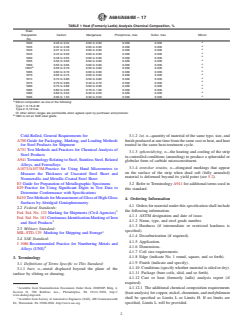
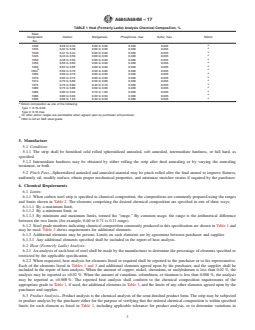
TABLE 1 Heat (Formerly Ladle) Analysis Chemical Composition, %
Steel
Designation Carbon Manganese Phosphorus, max Sulfur, max Silicon
No.
A
1030 0.28 to 0.34 0.60 to 0.90 0.030 0.035
A
1035 0.32 to 0.38 0.60 to 0.90 0.030 0.035
A
1040 0.37 to 0.44 0.60 to 0.90 0.030 0.035
A
1045 0.43 to 0.50 0.60 to 0.90 0.030 0.035
A
1050 0.48 to 0.55 0.60 to 0.90 0.030 0.035
A
1055 0.50 to 0.60 0.60 to 0.90 0.030 0.035
A
1060 0.55 to 0.65 0.60 to 0.90 0.030 0.035
B A
1064 0.59 to 0.70 0.50 to 0.80 0.030 0.035
A
1065 0.60 to 0.70 0.60 to 0.90 0.030 0.035
A
1070 0.65 to 0.75 0.60 to 0.90 0.030 0.035
A
1074 0.70 to 0.80 0.50 to 0.80 0.030 0.035
A
1075 0.70 to 0.80 0.40 to 0.70 0.030 0.035
A
1080 0.75 to 0.88 0.60 to 0.90 0.030 0.035
A
1085 0.80 to 0.93 0.70 to 1.00 0.030 0.035
A
1086 0.80 to 0.93 0.30 to 0.50 0.030 0.035
A
1095 0.90 to 1.03 0.30 to 0.50 0.030 0.035
A
Silicon composition as one of the following:
Type 1: 0.15–0.30
Type 2: 0.10 max
Or other silicon ranges are permissible when agreed upon by purchaser and producer.
B
1064 is not an SAE steel grade.
Cold-Rolled, General Requirements for 3.1.2 lot, n—quantity of material of the same type, size, and
A700Guide for Packaging, Marking, and Loading Methods finishproducedatonetimefromthesamecastorheat,andheat
for Steel Products for Shipment treated in the same heat-treatment cycle.
A751Test Methods and Practices for Chemical Analysis of
3.1.3 spheroidizing, n—the heating and cooling of the strip
Steel Products
in controlled conditions (annealing) to produce a spheroidal or
A941TerminologyRelatingtoSteel,StainlessSteel,Related
globular form of carbide microconstituent.
Alloys, and Ferroalloys
3.1.4 stretcher strains, n—elongated markings that appear
A1073/A1073MPractice for Using Hand Micrometers to
on the surface of the strip when dead soft (fully annealed)
Measure the Thickness of Uncoated Steel Sheet and
material is deformed beyond its yield point (see 5.2).
Nonmetallic and Metallic-Coated Steel Sheet
E3Guide for Preparation of Metallographic Specimens
3.2 Refer toTerminology A941 for additional terms used in
E29Practice for Using Significant Digits in Test Data to
this standard.
Determine Conformance with Specifications
E430TestMethodsforMeasurementofGlossofHigh-Gloss
4. Ordering Information
Surfaces by Abridged Goniophotometry
4.1 Ordersformaterialunderthisspecificationshallinclude
2.2 Federal Standards:
the following information:
Fed. Std. No. 123Marking for Shipments (CivilAgencies)
4.1.1 ASTM designation and date of issue.
Fed. Std. No. 183Continuous Identification Marking of Iron
3 4.1.2 Name, type, and steel grade number.
and Steel Products
4.1.3 Hardness (if intermediate or restricted hardness is
2.3 Military Standard:
specified).
MIL-STD-129 Marking for Shipping and Storage
4.1.4 Decarburization (if required).
2.4 SAE Standard:
4.1.5 Application.
J 1086Recommended Practice for Numbering Metals and
4.1.6 Dimensions.
Alloys (UNS)
4.1.7 Coil size requirements.
4.1.8 Edge (indicate No. 1 round, square, and so forth).
3. Terminology
4.1.9 Finish (indicate and specify).
3.1 Definitions of Terms Specific to This Standard:
4.1.10 Conditions(specifywhethermaterialisoiledordry).
3.1.1 burr, n—metal displaced beyond the plane of the
4.1.11 Package (bare coils, skid, and so forth).
surface by slitting or shearing.
4.1.12 Cast or heat (formerly ladle) analysis report (if
required).
Available from Standardization Documents Order Desk, DODSSP, Bldg. 4,
4.1.12.1 The additional chemical composition requirements
Section D, 700 Robbins Ave., Philadelphia, PA 19111-5098, http://
(heatanalysis)forcopper,nickel,chromium,andmolybdenum
www.dodssp.daps.mil.
shall be specified as Limits L or Limits H. If no limits are
Available from Society of Automotive Engineers (SAE), 400 Commonwealth
Dr., Warrendale, PA 15096-0001, http://www.sae.org. specified, Limits L will be provided.
A684/A684M−17
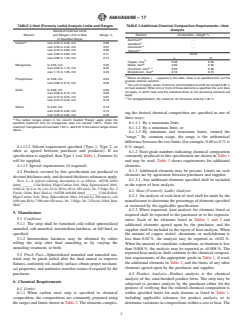
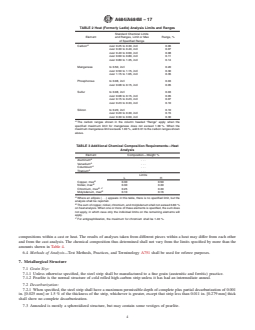
TABLE 2 Heat (Formerly Ladle) Analysis Limits and Ranges TABLE 3 Additional Chemical Composition Requirements—Heat
Analysis
Standard Chemical Limits
Element and Ranges, Limit or Max Range, %
Element Composition—Weight %
of Specified Range
A
Aluminum .
A
A
Carbon over 0.25 to 0.30, incl 0.06
Vanadium .
A
over 0.30 to 0.40, incl 0.07
Columbium .
A
over 0.40 to 0.60, incl 0.08
Titanium .
over 0.60 to 0.80, incl 0.11
Limits
over 0.80 to 1.35, incl 0.14
LH
B
Copper, max 0.30 0.50
B
Manganese to 0.50, incl 0.20
Nickel, max 0.30 0.30
B, C
over 0.50 to 1.15, incl 0.30
Chromium, max 0.25 0.30
B
over 1.15 to 1.65, incl 0.35
Molybdenum, max 0.10 0.16
A
Where an ellipsis (. . .) appears in this table, there is no specified limit, but the
Phosphorous to 0.08, incl 0.03
analysis shall be reported.
over 0.08 to 0.15, incl 0.05
B
The sum of copper, nickel, chromium, and molybdenum shall not exceed 0.80 %
on heat analysis. When one or more of these elements is specified, the sum does
Sulfur to 0.08, incl 0.03
not apply, in which case only the individual limits on the remaining elements will
over 0.08 to 0.15, incl 0.05
apply.
over 0.15 to 0.23, incl 0.07
C
For antigraphitization, the maximum for chromium shall be 1.40 %.
over 0.23 to 0.33, incl 0.10
Silicon to 0.20, incl 0.10
over 0.20 to 0.30, incl 0.15
ing the desired chemical composition are specified in one of
over 0.30 to 0.60, incl 0.30
three ways:
A
The carbon ranges shown in the column headed “Range” apply when the
6.1.1.1 By a maximum limit,
specified maximum limit for manganese does not exceed 1.00 %. When the
maximum manganese limit exceeds 1.00 %, add 0.01 to the carbon ranges shown
6.1.1.2 By a minimum limit, or
above.
6.1.1.3 By minimum and maximum limits, termed the
“range.” By common usage, the range is the arithmetical
difference between the two limits (for example, 0.60 to 0.71 is
4.1.12.2 Silicon requirement specified (Type 1, Type 2, or 0.11 range).
other as agreed between purchaser and producer). If no 6.1.2 Steel grade numbers indicating chemical composition
specificationissupplied,thenType1(seeTable1,FootnoteA) commonly produced to this specification are shown in Table 1
will be supplied. and may be used. Table 3 shows requirements for additional
4.1.13 Special requirements (if required). elements.
6.1.3 Additional elements may be present. Limits on such
4.2 Products covered by this specification are produced to
elements are by agreement between purchaser and supplier.
decimalthicknessonly,anddecimalthicknesstolerancesapply.
6.1.3.1 Any additional elements specified shall be included
NOTE 2—A typical ordering description is as follows: ASTM A684
dated ______ Cold Rolled, High-Carbon Soft, Strip, Spheroidized 1064, in the report of heat analysis.
0.042 in. by 6 in. by coil (16 in. ID by 40 in. OD max), No. 5 Edge, No.2
6.2 Heat (Formerly Ladle) Analysis:
Finish, Oiled, Bare Skid or “ASTMA684M dated _______ Cold Rolled,
6.2.1 An analysis of each heat of steel shall be made by the
High-Carbon, Soft, Strip, Spheroidized 1064, 0.6 mm by 200 mm by coil
(400mmIDby7500mmODmax),No.3Edge,No.2Finish,Oiled,Bare manufacturertodeterminethepercentageofelementsspecified
Skid.”
or restricted by the applicable specification.
6.2.2 When requested, heat analysis for elements listed or
5. Manufacture
required shall be reported to the purchaser or to his represen-
5.1 Condition:
tative. Each of the elements listed in Tables 1 and 3 and
5.1.1 The strip shall be furnished cold rolled spheroidized
additional elements agreed upon by the purchaser, and the
annealed, soft annealed, intermediate hardness, or full hard, as
supplier shall be included in the report of heat analysis. When
specified.
the amount of copper, nickel, chromium, or molybdenum is
5.1.2 Intermediate hardness may be obtained by either
less than 0.02%, the analysis may be reported as <0.02%.
rolling the strip after final annealing or by varying the
When the amount of vanadium, columbium, or titanium is less
annealing treatment, or both.
than 0.008%, the analysis may be reported as <0.008%. The
reported heat analysis shall conform to the chemical composi-
5.2 Pinch Pass—Spheroidized annealed and annealed ma-
tion requirements of the appropriate grade in Table 1, if used,
terial may be pinch rolled after the final anneal to improve
the additional elements in Table 3, and the limits of any other
flatness,uniformlyoil,modifysurface,obtainpropermechani-
elements agreed upon by the purchaser and supplier.
cal properties, and minimize stretcher strains if required by the
purchaser.
6.3 Product Analysis—Product analysis is the chemical
analysis of the semi-finished product form. The strip may be
6. Chemical Requirements
subjected to product analysis by the purchaser either for the
6.1 Limits: purpose of verifying that the ordered chemical composition is
6.1.1 When carbon steel strip is specified to chemical within specified limits for each element as listed in Table 1,
composition, the compositions are commonly prepared using including applicable tolerance for product analysis, or to
the ranges and limits shown in Table 2.The elements compris- determinevariationsincompositionswithinacastorheat.The
A684/A684M−17
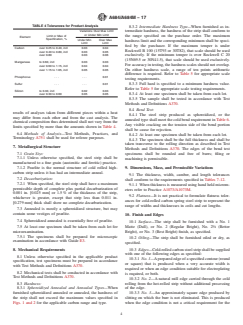
TABLE 4 Tolerances for Product Analysis
8.3.2 Intermediate Hardness Type—When furnished as in-
Variations Over Max Limit termediate hardness, the hardness of the strip shall conform to
or Under Min Limit
Limit or Max of
the range specified on the purchase order. The maximum
Element
Specification, %
Under Min Over Max
hardness limit and the corresponding minimum shall be speci-
Limit Limit
fied by the purchaser. If the maximum temper is under
Carbon over 0.25 to 0.40, incl 0.03 0.04
Rockwell B 100 (15T93 or 30T82), that scale should be used
over 0.40 to 0.80, incl 0.03 0.05
over 0.80 0.03 0.06 exclusively. If the minimum temper is over Rockwell C 20
(15N69.5 or 30N41.5), that scale should be used exclusively.
Manganese to 0.60, incl 0.03 0.03
Foraccuracyintesting,thehardnessscalesshouldnotoverlap.
over 0.60 to 1.15, incl 0.04 0.04
over 1.15 to 1.65, incl 0.05 0.05
On either hardness scale, a range of ten points arithmetic
difference is required. Refer to Table 5 for appropriate scale
Phosphorus . . . . . . 0.01
testing requirements.
Sulfur . . 0.01
8.3.3 Full hard is specified to a minimum hardness value.
Refer to Table 5 for appropriate scale testing requirements.
Silicon to 0.30, incl 0.02 0.03
8.3.4 At least one specimen shall be taken from each lot.
over 0.30 to 0.60 0.05 0.05
8.3.5 The sample shall be tested in accordance with Test
Methods and Definitions A370.
8.4 Bend Test:
results of analyses taken from different pieces within a heat
8.4.1 The steel strip produced as spheroidized, or the
may differ from each other and from the cast analysis. The
annealed type shall meet the cold bend requirement in Table 6.
chemical composition thus determined shall not vary from the
Any visible cracking on the tension side of the bend portion
limits specified by more than the amounts shown in Table 4.
shall be cause for rejection.
6.4 Methods of Analysis—Test Methods, Practices, and
8.4.2 At least one specimen shall be taken from each lot.
Terminology A751 shall be used for referee purposes.
8.4.3 The specimen shall be the full thickness and shall be
taken transverse to the rolling direction as described in Test
7. Metallurgical Structure
Methods and Definitions A370. The edges of the bend test
7.1 Grain Size:
specimens shall be rounded and free of burrs; filing or
7.1.1 Unless otherwise specified, the steel strip shall be machining is permissible.
manufactured to a fine grain (austenitic and ferritic) practice.
7.1.2 Pearlite is the normal structure of cold rolled high-
9. Dimensions, Mass, and Permissible Variations
carbon strip unless it has had an intermediate anneal.
9.1 The thickness, width, camber, and length tolerances
7.2 Decarburization:
shall conform to the requirements specified in Tables 7-12.
7.2.1 When specified, the steel strip shall have a maximum
9.1.1 When thickness is measured using hand held microm-
permissible depth of complete plus partial decarburization of
eters refer to Practice A1073/A1073M.
0.001 in. [0.025 mm] or 1.5% of the thickness of the strip,
9.2 Flatness—It is not practical to formulate flatness toler-
whichever is greater, except that strip less than 0.011 in.
ances for cold-rolled carbon spring steel strip to represent the
[0.279mm] thick shall show no complete decarburization.
range of widths and thicknesses in coils and cut lengths.
7.3 Annealed is mostly a spheroidized structure, but may
contain some vestiges of pearlite.
10. Finish and Edges
7.4 Spheroidized annealed is essentially free of pearlite.
10.1 Surface—The strip shall be furnished with a No. 1
7.5 At least one specimen shall be taken from each lot for Matte (Dull), or No. 2 (Regular Bright), No. 2½ (Better
microexamination. Bright), or No. 3 (Best Bright) finish, as specified.
7.5.1 The specimens shall be prepared for microscopic
10.2 Oiling—The strip shall be furnished oiled or dry, as
examination in accordance with Guide E3.
specified.
10.3 Edges—Cold-rolledcarbonsteelstripshallbesupplied
8. Mechanical Requirements
with one of the following edges as specified:
8.1 Unless otherwise specified in the applicable product
10.3.1 No.1—Apreparededgeofaspecifiedcontour(round
specification, test specimens must be prepared in accordan
...
This document is not an ASTM standard and is intended only to provide the user of an ASTM standard an indication of what changes have been made to the previous version. Because
it may not be technically possible to adequately depict all changes accurately, ASTM recommends that users consult prior editions as appropriate. In all cases only the current version
of the standard as published by ASTM is to be considered the official document.
Designation: A684/A684M − 15 A684/A684M − 17
Standard Specification for
Steel, Strip, High-Carbon, Cold-Rolled
This standard is issued under the fixed designation A684/A684M; the number immediately following the designation indicates the year
of original adoption or, in the case of revision, the year of last revision. A number in parentheses indicates the year of last reapproval.
A superscript epsilon (´) indicates an editorial change since the last revision or reapproval.
This standard has been approved for use by agencies of the U.S. Department of Defense.
1. Scope*
1.1 This specification covers cold-rolled, high-carbon strip in coils or cut lengths. Strip is classified as product that is 0.3000
1 15
in. [7.6 mm] or less in thickness and over ⁄2 to 23 ⁄16 in. [12.5 to 600 mm] in width, inclusive. Strip tolerance products may be
available in widths wider than 23 ⁄16 in. (600 mm) by agreement between purchaser and supplier; however, such products are
technically classified as cold-rolled sheet. The maximum of the specified carbon range is over 0.25 to 1.35 %, inclusive. It is
furnished in the following types as specified:
1.1.1 Soft spheroidized annealed high-carbon steel is intended for applications requiring maximum cold forming. It is normally
produced to give the lowest maximum Rockwell hardness for each grade.
1.1.2 Soft annealed high-carbon steel is intended for applications requiring moderate cold forming. It is produced to a maximum
Rockwell hardness.
1.1.3 Intermediate hardness high-carbon steel is intended for applications where cold forming is slight or a stiff, springy product
is needed, or both. It is produced to specified Rockwell hardness ranges, the maximum being higher than obtained for the annealed
type.
1.1.4 Full hard high-carbon steel is intended for flat applications. It is produced to minimum Rockwell hardness requirements,
which vary with grade, microstructure and gauge. Full hard can be produced with either a pearlitic or spheroidized microstructure
or a mixture of both. The minimum hardness should be established between the consumer and the producer.
1.2 This specification is applicable for orders in either inch-pound units or SI units.
1.3 The values stated in either SI units or inch-pound units are to be regarded separately as standard. The values stated in each
system may not be exact equivalents; therefore, each system shall be used independently of the other. Combining values from the
two systems may result in non-conformance with the standard.
1.4 The tolerances in this specification are different than those in Specification A568/A568M and Specification A109/A109M.
1.5 For the purpose of determining conformance with this specification, values shall be rounded to the nearest unit in the right
hand place of figures used in expressing the limiting values in accordance with the rounding method of Practice E29.
1.6 This specification is expressed in both inch-pound units and SI units. However, unless the order specifies the applicable “M”
specification designation (SI units), the material shall be furnished to inch-pound units. The metric portions of the tables herein
list permissible variations in dimensions and mass (see Note 1) in SI (metric) units. The values listed are not exact conversions
of the values listed in the inch-pound tables but instead are rounded or rationalized values. Conformance to SI tolerances is
mandatory when the “M” specification is used.
NOTE 1—The term weight is used when inch-pound units are the standard. However, under SI the preferred term is mass.
1.7 This international standard was developed in accordance with internationally recognized principles on standardization
established in the Decision on Principles for the Development of International Standards, Guides and Recommendations issued
by the World Trade Organization Technical Barriers to Trade (TBT) Committee.
2. Referenced Documents
2.1 ASTM Standards:
A109/A109M Specification for Steel, Strip, Carbon (0.25 Maximum Percent), Cold-Rolled
This specification is under the jurisdiction of ASTM Committee A01 on Steel, Stainless Steel and Related Alloys and is the direct responsibility of Subcommittee A01.19
on Steel Sheet and Strip.
Current edition approved Nov. 1, 2015May 1, 2017. Published November 2015May 2017. Originally approved in 1973. Last previous edition approved in 20142015 as
A684/A684M – 14.A684/A684M – 15. DOI: 10.1520/A0684_A0684M-15. 10.1520/A0684_A0684M-17.
For referenced ASTM standards, visit the ASTM website, www.astm.org, or contact ASTM Customer Service at service@astm.org. For Annual Book of ASTM Standards
volume information, refer to the standard’s Document Summary page on the ASTM website.
*A Summary of Changes section appears at the end of this standard
Copyright © ASTM International, 100 Barr Harbor Drive, PO Box C700, West Conshohocken, PA 19428-2959. United States
A684/A684M − 17
A370 Test Methods and Definitions for Mechanical Testing of Steel Products
A568/A568M Specification for Steel, Sheet, Carbon, Structural, and High-Strength, Low-Alloy, Hot-Rolled and Cold-Rolled,
General Requirements for
A700 Guide for Packaging, Marking, and Loading Methods for Steel Products for Shipment
A751 Test Methods, Practices, and Terminology for Chemical Analysis of Steel Products
A941 Terminology Relating to Steel, Stainless Steel, Related Alloys, and Ferroalloys
A1073/A1073M Practice for Using Hand Micrometers to Measure the Thickness of Uncoated Steel Sheet and Nonmetallic and
Metallic-Coated Steel Sheet
E3 Guide for Preparation of Metallographic Specimens
E29 Practice for Using Significant Digits in Test Data to Determine Conformance with Specifications
E430 Test Methods for Measurement of Gloss of High-Gloss Surfaces by Abridged Goniophotometry
2.2 Federal Standards:
Fed. Std. No. 123 Marking for Shipments (Civil Agencies)
Fed. Std. No. 183 Continuous Identification Marking of Iron and Steel Products
2.3 Military Standard:
MIL-STD-129 Marking for Shipping and Storage
2.4 SAE Standard:
J 1086 Recommended Practice for Numbering Metals and Alloys (UNS)
3. Terminology
3.1 Definitions of Terms Specific to This Standard:
3.1.1 burr—burr, n—metal displaced beyond the plane of the surface by slitting or shearing.
3.1.2 lot—lot, n—quantity of material of the same type, size, and finish produced at one time from the same cast or heat, and
heat treated in the same heat-treatment cycle.
3.1.3 spheroidizing—spheroidizing, n—the heating and cooling of the strip in controlled conditions (annealing) to produce a
spheroidal or globular form of carbide microconstituent.
3.1.4 stretcher strains—strains, n—elongated markings that appear on the surface of the strip when dead soft (fully annealed)
material is deformed beyond its yield point (see 5.2).
3.2 Refer to Terminology A941 for additional terms used in this standard.
4. Ordering Information
4.1 Orders for material under this specification shall include the following information:
4.1.1 ASTM designation and date of issue.
4.1.2 Name, type, and steel grade number.
4.1.3 Hardness (if intermediate or restricted hardness is specified).
4.1.4 Decarburization (if required).
4.1.5 Application.
4.1.6 Dimensions.
4.1.7 Coil size requirements.
4.1.8 Edge (indicate No. 1 round, square, and so forth).
4.1.9 Finish (indicate and specify).
4.1.10 Conditions (specify whether material is oiled or dry).
4.1.11 Package (bare coils, skid, and so forth).
4.1.12 Cast or heat (formerly ladle) analysis report (if required).
4.1.12.1 The additional chemical composition requirements (heat analysis) for copper, nickel, chromium, and molybdenum shall
be specified as Limits L or Limits H. If no limits are specified, Limits L will be provided.
4.1.12.2 Silicon requirement specified (Type 1, Type 2, or other as agreed between purchaser and producer). If no specification
is supplied, then Type 1 (see Table 1, Footnote A) will be supplied.
4.1.13 Special requirements (if required).
4.2 Products covered by this specification are produced to decimal thickness only, and decimal thickness tolerances apply.
NOTE 2—A typical ordering description is as follows: ASTM A684 dated ______ Cold Rolled, High-Carbon Soft, Strip, Spheroidized 1064, 0.042 in.
by 6 in. by coil (16 in. ID by 40 in. OD max), No. 5 Edge, No. 2 Finish, Oiled, Bare Skid or “ASTM A684 dated _______ Cold Rolled, High-Carbon,
Soft, Strip, Spheroidized 1064, 0.6 mm by 200 mm by coil (400 mm ID by 7500 mm OD max), No. 3 Edge, No. 2 Finish, Oiled, Bare Skid.”
Available from Standardization Documents Order Desk, DODSSP, Bldg. 4, Section D, 700 Robbins Ave., Philadelphia, PA 19111-5098, http://www.dodssp.daps.mil.
Available from Society of Automotive Engineers (SAE), 400 Commonwealth Dr., Warrendale, PA 15096-0001, http://www.sae.org.
A684/A684M − 17
TABLE 1 Heat (Formerly Ladle) Analysis Chemical Composition, %
Steel
Designation Carbon Manganese Phosphorus, max Sulfur, max Silicon
No.
A
1030 0.28 to 0.34 0.60 to 0.90 0.030 0.035
A
1035 0.32 to 0.38 0.60 to 0.90 0.030 0.035
A
1040 0.37 to 0.44 0.60 to 0.90 0.030 0.035
A
1045 0.43 to 0.50 0.60 to 0.90 0.030 0.035
A
1050 0.48 to 0.55 0.60 to 0.90 0.030 0.035
A
1055 0.50 to 0.60 0.60 to 0.90 0.030 0.035
A
1060 0.55 to 0.65 0.60 to 0.90 0.030 0.035
B A
1064 0.59 to 0.70 0.50 to 0.80 0.030 0.035
A
1065 0.60 to 0.70 0.60 to 0.90 0.030 0.035
A
1070 0.65 to 0.75 0.60 to 0.90 0.030 0.035
A
1074 0.70 to 0.80 0.50 to 0.80 0.030 0.035
A
1075 0.70 to 0.80 0.40 to 0.70 0.030 0.035
A
1080 0.75 to 0.88 0.60 to 0.90 0.030 0.035
A
1085 0.80 to 0.93 0.70 to 1.00 0.030 0.035
A
1086 0.80 to 0.93 0.30 to 0.50 0.030 0.035
A
1095 0.90 to 1.03 0.30 to 0.50 0.030 0.035
A
Silicon composition as one of the following:
Type 1: 0.15–0.30
Type 2: 0.10 max
Or other silicon ranges are permissible when agreed upon by purchaser and producer.
B
1064 is not an SAE steel grade.
5. Manufacture
5.1 Condition:
5.1.1 The strip shall be furnished cold rolled spheroidized annealed, soft annealed, intermediate hardness, or full hard, as
specified.
5.1.2 Intermediate hardness may be obtained by either rolling the strip after final annealing or by varying the annealing
treatment, or both.
5.2 Pinch Pass—Spheroidized annealed and annealed material may be pinch rolled after the final anneal to improve flatness,
uniformly oil, modify surface, obtain proper mechanical properties, and minimize stretcher strains if required by the purchaser.
6. Chemical Requirements
6.1 Limits:
6.1.1 When carbon steel strip is specified to chemical composition, the compositions are commonly prepared using the ranges
and limits shown in Table 2. The elements comprising the desired chemical composition are specified in one of three ways:
6.1.1.1 By a maximum limit,
6.1.1.2 By a minimum limit, or
6.1.1.3 By minimum and maximum limits, termed the “range.” By common usage, the range is the arithmetical difference
between the two limits (for example, 0.60 to 0.71 is 0.11 range).
6.1.2 Steel grade numbers indicating chemical composition commonly produced to this specification are shown in Table 1 and
may be used. Table 3 shows requirements for additional elements.
6.1.3 Additional elements may be present. Limits on such elements are by agreement between purchaser and supplier.
6.1.3.1 Any additional elements specified shall be included in the report of heat analysis.
6.2 Heat (Formerly Ladle) Analysis:
6.2.1 An analysis of each heat of steel shall be made by the manufacturer to determine the percentage of elements specified or
restricted by the applicable specification.
6.2.2 When requested, heat analysis for elements listed or required shall be reported to the purchaser or to his representative.
Each of the elements listed in Tables 1 and 3 and additional elements agreed upon by the purchaser, and the supplier shall be
included in the report of heat analysis. When the amount of copper, nickel, chromium, or molybdenum is less than 0.02 %, the
analysis may be reported as <0.02 %. When the amount of vanadium, columbium, or titanium is less than 0.008 %, the analysis
may be reported as <0.008 %. The reported heat analysis shall conform to the chemical composition requirements of the
appropriate grade in Table 1, if used, the additional elements in Table 3, and the limits of any other elements agreed upon by the
purchaser and supplier.
6.3 Product Analysis—Product analysis is the chemical analysis of the semi-finished product form. The strip may be subjected
to product analysis by the purchaser either for the purpose of verifying that the ordered chemical composition is within specified
limits for each element as listed in Table 1, including applicable tolerance for product analysis, or to determine variations in
A684/A684M − 17
TABLE 2 Heat (Formerly Ladle) Analysis Limits and Ranges
Standard Chemical Limits
Element and Ranges, Limit or Max Range, %
of Specified Range
A
Carbon over 0.25 to 0.30, incl 0.06
over 0.30 to 0.40, incl 0.07
over 0.40 to 0.60, incl 0.08
over 0.60 to 0.80, incl 0.11
over 0.80 to 1.35, incl 0.14
Manganese to 0.50, incl 0.20
over 0.50 to 1.15, incl 0.30
over 1.15 to 1.65, incl 0.35
Phosphorous to 0.08, incl 0.03
over 0.08 to 0.15, incl 0.05
Sulfur to 0.08, incl 0.03
over 0.08 to 0.15, incl 0.05
over 0.15 to 0.23, incl 0.07
over 0.23 to 0.33, incl 0.10
Silicon to 0.20, incl 0.10
over 0.20 to 0.30, incl 0.15
over 0.30 to 0.60, incl 0.30
A
The carbon ranges shown in the column headed “Range” apply when the
specified maximum limit for manganese does not exceed 1.00 %. When the
maximum manganese limit exceeds 1.00 %, add 0.01 to the carbon ranges shown
above.
TABLE 3 Additional Chemical Composition Requirements—Heat
Analysis
Element Composition—Weight %
A
Aluminum . . .
A
Vanadium . . .
A
Columbium . . .
A
Titanium . . .
Limits
L H
B
Copper, max 0.30 0.50
B
Nickel, max 0.30 0.30
B, C
Chromium, max 0.25 0.30
B
Molybdenum, max 0.10 0.16
A
Where an ellipsis (. . .) appears in this table, there is no specified limit, but the
analysis shall be reported.
B
The sum of copper, nickel, chromium, and molybdenum shall not exceed 0.80 %
on heat analysis. When one or more of these elements is specified, the sum does
not apply, in which case only the individual limits on the remaining elements will
apply.
C
For antigraphitization, the maximum for chromium shall be 1.40 %.
compositions within a cast or heat. The results of analyses taken from different pieces within a heat may differ from each other
and from the cast analysis. The chemical composition thus determined shall not vary from the limits specified by more than the
amounts shown in Table 4.
6.4 Methods of Analysis—Test Methods, Practices, and Terminology A751 shall be used for referee purposes.
7. Metallurgical Structure
7.1 Grain Size:
7.1.1 Unless otherwise specified, the steel strip shall be manufactured to a fine grain (austenitic and ferritic) practice.
7.1.2 Pearlite is the normal structure of cold rolled high-carbon strip unless it has had an intermediate anneal.
7.2 Decarburization:
7.2.1 When specified, the steel strip shall have a maximum permissible depth of complete plus partial decarburization of 0.001
in. [0.025 mm] or 1.5 % of the thickness of the strip, whichever is greater, except that strip less than 0.011 in. [0.279 mm] thick
shall show no complete decarburization.
7.3 Annealed is mostly a spheroidized structure, but may contain some vestiges of pearlite.
A684/A684M − 17
TABLE 4 Tolerances for Product Analysis
Variations Over Max Limit
or Under Min Limit
Limit or Max of
Element
Specification, %
Under Min Over Max
Limit Limit
Carbon over 0.25 to 0.40, incl 0.03 0.04
over 0.40 to 0.80, incl 0.03 0.05
over 0.80 0.03 0.06
Manganese to 0.60, incl 0.03 0.03
over 0.60 to 1.15, incl 0.04 0.04
over 1.15 to 1.65, incl 0.05 0.05
Phosphorus . . . . . . 0.01
Sulfur . . . . . . 0.01
Silicon to 0.30, incl 0.02 0.03
over 0.30 to 0.60 0.05 0.05
7.4 Spheroidized annealed is essentially free of pearlite.
7.5 At least one specimen shall be taken from each lot for microexamination.
7.5.1 The specimens shall be prepared for microscopic examination in accordance with Guide E3.
8. Mechanical Requirements
8.1 Unless otherwise specified in the applicable product specification, test specimens must be prepared in accordance with Test
Methods and Definitions A370.
8.2 Mechanical tests shall be conducted in accordance with Test Methods and Definitions A370.
8.3 Hardness:
8.3.1 Spheroidized Annealed and Annealed Types—When furnished spheroidized annealed or annealed, the hardness of the strip
shall not exceed the maximum values specified in Figs. 1 and 2 for the applicable carbon range and type.
8.3.2 Intermediate Hardness Type—When furnished as intermediate hardness, the hardness of the strip shall conform to the
range specified on the purchase order. The maximum hardness limit and the corresponding minimum shall be specified by the
purchaser. If the maximum temper is under Rockwell B 100 (15T93 or 30T82), that scale should be used exclusively. If the
minimum temper is over Rockwell C 20 (15N69.5 or 30N41.5), that scale should be used exclusively. For accuracy in testing, the
hardness scales should not overlap. On either hardness scale, a range of ten points arithmetic difference is required. Refer to Table
5 for appropriate scale testing requirements.
8.3.3 Full hard is specified to a minimum hardness value. Refer to Table 5 for appropriate scale testing requirements.
8.3.4 At least one specimen shall be taken from each lot.
8.3.5 The sample shall be tested in accordance with Test Methods and Definitions A370.
8.4 Bend Test:
8.4.1 The steel strip produced as spheroidized, or the annealed type shall meet the cold bend requirement in Table 6. Any visible
cracking on the tension side of the bend portion shall be cause for rejection.
8.4.2 At least one specimen shall be taken from each lot.
8.4.3 The specimen shall be the full thickness and shall be taken transverse to the rolling direction as described in Test Methods
and Definitions A370. The edges of the bend test specimens shall be rounded and free of burrs; filing or machining is permissible.
9. Dimensions, Mass, and Permissible Variations
9.1 The thickness, width, camber, and length tolerances shall conform to the requirements specified in Tables 7-12.
9.1.1 When thickness is measured using hand held micrometers refer to Practice A1073/A1073M.
9.2 Flatness—It is not practical to formulate flatness tolerances for cold-rolled carbon spring steel strip to represent the range
of widths and thicknesses in coils and cut lengths.
10. Finish and Edges
10.1 Surface—The strip shall be furnished with a No. 2 Regular Bright or No. 1 Matte (Dull)1 Matte (
...