

ASTM D4787-13(2018)
(Practice)Standard Practice for Continuity Verification of Liquid or Sheet Linings Applied to Concrete Substrates
General Information
- Abstract
SIGNIFICANCE AND USE
5.1 The electrical conductivity of concrete is primarily influenced by the presence of moisture. Other factors, which affect the electrical continuity of concrete structures, include the following:
5.1.1 Presence of metal rebars,
5.1.2 Cement content and type,
5.1.3 Aggregate types,
5.1.4 Admixtures,
5.1.5 Porosity within the concrete,
5.1.6 Above or below grade elevation,
5.1.7 Indoor or outdoor location,
5.1.8 Temperature and humidity, and
5.1.9 Age of concrete.
5.2 The electrical conductivity of concrete itself may be successfully used for high-voltage continuity testing of linings applied directly with no specific conductive underlayment installed. However, the voltage required to find a discontinuity may vary greatly from point to point on the structure. This variance may reduce the test reliability.
5.3 Although the most common conductive underlayments are liquid primers applied by trowel, roller, or spray, and which contain carbon or graphite fillers, others may take the form of the following:
5.3.1 Sheet-applied graphite veils,
5.3.2 Conductive polymers,
5.3.3 Conductive graphite fibers,
5.3.4 Conductive metallic fibers, and
5.3.5 Conductive metallic screening.
5.4 Liquid-applied conductive underlayments may be desirable as they can serve to address imperfections in the concrete surface and provide a better base for which to apply the lining.
5.5 This practice is intended for use only with new linings applied to concrete substrates. Inspecting a lining previously exposed to an immersion condition could result in damaging the lining or produce an erroneous detection of discontinuities due to permeation or moisture absorption of the lining. Deposits may also be present on the surface causing telegraphing. The use of a high voltage tester on a previously exposed lining is not recommended because of possible spark through which will damage an otherwise sound lining. A low voltage tester can be used but could ...
SCOPE
1.1 This practice covers procedures that may be used to allow the detection of discontinuities in nonconductive linings or other non-conductive coatings applied to concrete substrates.
1.2 Discontinuities may include pinholes, internal voids, holidays, cracks, and conductive inclusions.
1.3 This practice describes detection of discontinuities utilizing a high voltage spark tester using either pulsed or continuous dc voltage.
Note 1: For further information on discontinuity testing refer to NACE Standard SP0188-2006 or Practice D5162.
1.4 This practice describes procedures both with and without the use of a conductive underlayment.
1.5 The values stated in SI units are to be regarded as standard. The values given in parentheses are for information only.
1.6 This standard does not purport to address all of the safety concerns, if any, associated with its use. It is the responsibility of the user of this standard to establish appropriate safety, health, and environmental practices and determine the applicability of regulatory limitations prior to use. For a specific hazard statement, see Section 7.
1.7 This international standard was developed in accordance with internationally recognized principles on standardization established in the Decision on Principles for the Development of International Standards, Guides and Recommendations issued by the World Trade Organization Technical Barriers to Trade (TBT) Committee.
- Status
- Published
- Publication Date
- 31-Aug-2018
- Technical Committee
- D01 - Paint and Related Coatings, Materials, and Applications
- Drafting Committee
- D01.46 - Industrial Protective Coatings
Overview
ASTM D4787-13(2018) - Standard Practice for Continuity Verification of Liquid or Sheet Linings Applied to Concrete Substrates provides procedures for detecting discontinuities such as pinholes, voids, cracks, and holidays in nonconductive linings or coatings on concrete substrates. Using high voltage spark testing, this standard ensures the integrity and performance of protective linings critical to the durability of concrete structures in industrial and commercial environments. By adopting this standard, users can systematically verify that new linings applied to concrete are free of gaps or defects that could compromise performance, especially in demanding chemical or moisture-exposed conditions.
Key Topics
- Electrical Conductivity of Concrete: The ability to conduct electricity depends heavily on factors such as moisture content, metal rebar presence, type and amount of cement, aggregate type, admixtures, porosity, environmental conditions (temperature, humidity), location, and the age of the concrete.
- Discontinuity Detection: The standard covers identification of pinholes, cracks, holidays (localized defects), and conductive inclusions in nonconductive linings via high voltage DC spark testers.
- Testing Methods:
- Procedures are described for both with and without a conductive underlayment.
- Emphasis on using proper high voltage spark testers capable of both pulsed and continuous DC output.
- Conductive Underlayments:
- Options include liquid primers containing carbon or graphite, sheet-applied graphite veils, conductive polymers, graphite or metallic fibers, and metallic screening.
- Conductive underlayments facilitate reliable testing, especially where concrete alone does not provide adequate electrical grounding.
- Safety Precautions: Proper safety, health, and environmental measures must be followed, as outlined in the standard.
Applications
ASTM D4787-13(2018) is particularly valuable for:
- Quality Assurance in Construction and Industrial Coatings: Ensuring new liquid or sheet-applied linings on concrete substrates are free of gaps that can lead to corrosion, leakage, or coating breakdown.
- Infrastructure Protection: Used in the lining of tanks, secondary containment, and chemical processing areas where protective coatings are critical for safety and compliance.
- Maintenance Protocols: Part of standard commissioning for newly constructed concrete facilities or those undergoing major upgrades.
- Verification by Inspectors and Contractors: Standardizes the process for third-party inspectors and contractors to validate compliance with specification requirements.
Note: This procedure is intended only for newly applied linings. Testing previously exposed linings may cause damage or false readings due to absorbed moisture or surface contamination.
Related Standards
For broader context or alternative substrate testing, consider:
- ASTM D5162: Discontinuity (Holiday) Testing of Nonconductive Protective Coating on Metallic Substrates
- ASTM G62: Test Methods for Holiday Detection in Pipeline Coatings
- NACE SP0188: Discontinuity (Holiday) Testing of Protective Coatings
These related standards complement ASTM D4787 by providing additional guidance on discontinuity detection in different substrate environments.
Practical Value
Adhering to ASTM D4787-13(2018) promotes long-term performance of protective linings, reduces maintenance costs, and safeguards against premature failure due to undetected pinholes or cracks. This standard is an essential tool for quality control in construction, ensuring every protective lining job meets industry best practices for continuity verification.
Keywords: continuity verification, high voltage spark tester, liquid linings, sheet linings, concrete substrate, holiday testing, conductive underlayment, protective coatings, ASTM D4787, quality assurance.
Relations
- Effective Date
- 01-Sep-2018
- Refers
ASTM G62-23 - Standard Test Methods for Holiday Detection of Coatings used to Protect Pipelines - Effective Date
- 01-Oct-2023
- Effective Date
- 01-Jun-2013
- Effective Date
- 01-Jun-2008
- Effective Date
- 01-Jul-2007
- Effective Date
- 10-Jun-2001
- Effective Date
- 10-Jun-2001
- Effective Date
- 25-Sep-1987
- Effective Date
- 01-Sep-2018
- Effective Date
- 01-Sep-2018
- Effective Date
- 01-Sep-2018
- Effective Date
- 01-Sep-2018
Get Certified
Connect with accredited certification bodies for this standard

DIBt (Deutsches Institut für Bautechnik)
German Institute for Building Technology.
DIN CERTCO
DIN Group product certification.

Aboma Certification B.V.
Specialized in construction, metal, and transport sectors.
Sponsored listings
Frequently Asked Questions
ASTM D4787-13(2018) is a standard published by ASTM International. Its full title is "Standard Practice for Continuity Verification of Liquid or Sheet Linings Applied to Concrete Substrates". This standard covers: SIGNIFICANCE AND USE 5.1 The electrical conductivity of concrete is primarily influenced by the presence of moisture. Other factors, which affect the electrical continuity of concrete structures, include the following: 5.1.1 Presence of metal rebars, 5.1.2 Cement content and type, 5.1.3 Aggregate types, 5.1.4 Admixtures, 5.1.5 Porosity within the concrete, 5.1.6 Above or below grade elevation, 5.1.7 Indoor or outdoor location, 5.1.8 Temperature and humidity, and 5.1.9 Age of concrete. 5.2 The electrical conductivity of concrete itself may be successfully used for high-voltage continuity testing of linings applied directly with no specific conductive underlayment installed. However, the voltage required to find a discontinuity may vary greatly from point to point on the structure. This variance may reduce the test reliability. 5.3 Although the most common conductive underlayments are liquid primers applied by trowel, roller, or spray, and which contain carbon or graphite fillers, others may take the form of the following: 5.3.1 Sheet-applied graphite veils, 5.3.2 Conductive polymers, 5.3.3 Conductive graphite fibers, 5.3.4 Conductive metallic fibers, and 5.3.5 Conductive metallic screening. 5.4 Liquid-applied conductive underlayments may be desirable as they can serve to address imperfections in the concrete surface and provide a better base for which to apply the lining. 5.5 This practice is intended for use only with new linings applied to concrete substrates. Inspecting a lining previously exposed to an immersion condition could result in damaging the lining or produce an erroneous detection of discontinuities due to permeation or moisture absorption of the lining. Deposits may also be present on the surface causing telegraphing. The use of a high voltage tester on a previously exposed lining is not recommended because of possible spark through which will damage an otherwise sound lining. A low voltage tester can be used but could ... SCOPE 1.1 This practice covers procedures that may be used to allow the detection of discontinuities in nonconductive linings or other non-conductive coatings applied to concrete substrates. 1.2 Discontinuities may include pinholes, internal voids, holidays, cracks, and conductive inclusions. 1.3 This practice describes detection of discontinuities utilizing a high voltage spark tester using either pulsed or continuous dc voltage. Note 1: For further information on discontinuity testing refer to NACE Standard SP0188-2006 or Practice D5162. 1.4 This practice describes procedures both with and without the use of a conductive underlayment. 1.5 The values stated in SI units are to be regarded as standard. The values given in parentheses are for information only. 1.6 This standard does not purport to address all of the safety concerns, if any, associated with its use. It is the responsibility of the user of this standard to establish appropriate safety, health, and environmental practices and determine the applicability of regulatory limitations prior to use. For a specific hazard statement, see Section 7. 1.7 This international standard was developed in accordance with internationally recognized principles on standardization established in the Decision on Principles for the Development of International Standards, Guides and Recommendations issued by the World Trade Organization Technical Barriers to Trade (TBT) Committee.
SIGNIFICANCE AND USE 5.1 The electrical conductivity of concrete is primarily influenced by the presence of moisture. Other factors, which affect the electrical continuity of concrete structures, include the following: 5.1.1 Presence of metal rebars, 5.1.2 Cement content and type, 5.1.3 Aggregate types, 5.1.4 Admixtures, 5.1.5 Porosity within the concrete, 5.1.6 Above or below grade elevation, 5.1.7 Indoor or outdoor location, 5.1.8 Temperature and humidity, and 5.1.9 Age of concrete. 5.2 The electrical conductivity of concrete itself may be successfully used for high-voltage continuity testing of linings applied directly with no specific conductive underlayment installed. However, the voltage required to find a discontinuity may vary greatly from point to point on the structure. This variance may reduce the test reliability. 5.3 Although the most common conductive underlayments are liquid primers applied by trowel, roller, or spray, and which contain carbon or graphite fillers, others may take the form of the following: 5.3.1 Sheet-applied graphite veils, 5.3.2 Conductive polymers, 5.3.3 Conductive graphite fibers, 5.3.4 Conductive metallic fibers, and 5.3.5 Conductive metallic screening. 5.4 Liquid-applied conductive underlayments may be desirable as they can serve to address imperfections in the concrete surface and provide a better base for which to apply the lining. 5.5 This practice is intended for use only with new linings applied to concrete substrates. Inspecting a lining previously exposed to an immersion condition could result in damaging the lining or produce an erroneous detection of discontinuities due to permeation or moisture absorption of the lining. Deposits may also be present on the surface causing telegraphing. The use of a high voltage tester on a previously exposed lining is not recommended because of possible spark through which will damage an otherwise sound lining. A low voltage tester can be used but could ... SCOPE 1.1 This practice covers procedures that may be used to allow the detection of discontinuities in nonconductive linings or other non-conductive coatings applied to concrete substrates. 1.2 Discontinuities may include pinholes, internal voids, holidays, cracks, and conductive inclusions. 1.3 This practice describes detection of discontinuities utilizing a high voltage spark tester using either pulsed or continuous dc voltage. Note 1: For further information on discontinuity testing refer to NACE Standard SP0188-2006 or Practice D5162. 1.4 This practice describes procedures both with and without the use of a conductive underlayment. 1.5 The values stated in SI units are to be regarded as standard. The values given in parentheses are for information only. 1.6 This standard does not purport to address all of the safety concerns, if any, associated with its use. It is the responsibility of the user of this standard to establish appropriate safety, health, and environmental practices and determine the applicability of regulatory limitations prior to use. For a specific hazard statement, see Section 7. 1.7 This international standard was developed in accordance with internationally recognized principles on standardization established in the Decision on Principles for the Development of International Standards, Guides and Recommendations issued by the World Trade Organization Technical Barriers to Trade (TBT) Committee.
ASTM D4787-13(2018) is classified under the following ICS (International Classification for Standards) categories: 91.100.30 - Concrete and concrete products. The ICS classification helps identify the subject area and facilitates finding related standards.
ASTM D4787-13(2018) has the following relationships with other standards: It is inter standard links to ASTM D4787-13, ASTM G62-23, ASTM G62-07(2013), ASTM D5162-08, ASTM G62-07, ASTM D5162-00, ASTM D5162-01, ASTM G62-87(1998)e1, ASTM D5162-21, ASTM D6237-19, ASTM D4538-21, ASTM D5498-12a(2018). Understanding these relationships helps ensure you are using the most current and applicable version of the standard.
ASTM D4787-13(2018) is available in PDF format for immediate download after purchase. The document can be added to your cart and obtained through the secure checkout process. Digital delivery ensures instant access to the complete standard document.
Standards Content (Sample)
This international standard was developed in accordance with internationally recognized principles on standardization established in the Decision on Principles for the
Development of International Standards, Guides and Recommendations issued by the World Trade Organization Technical Barriers to Trade (TBT) Committee.
Designation:D4787 −13 (Reapproved 2018)
Standard Practice for
Continuity Verification of Liquid or Sheet Linings Applied to
Concrete Substrates
This standard is issued under the fixed designation D4787; the number immediately following the designation indicates the year of
original adoption or, in the case of revision, the year of last revision. A number in parentheses indicates the year of last reapproval. A
superscript epsilon (´) indicates an editorial change since the last revision or reapproval.
1. Scope 2. Referenced Documents
2.1 ASTM Standards:
1.1 This practice covers procedures that may be used to
allow the detection of discontinuities in nonconductive linings D5162 Practice for Discontinuity (Holiday) Testing of Non-
conductive Protective Coating on Metallic Substrates
or other non-conductive coatings applied to concrete sub-
strates. G62 Test Methods for Holiday Detection in Pipeline Coat-
ings
1.2 Discontinuities may include pinholes, internal voids,
2.2 NACE Standards:
holidays, cracks, and conductive inclusions.
SP0188-2006 Discontinuity (Holiday) Testing of Protective
1.3 This practice describes detection of discontinuities uti-
Coatings
lizing a high voltage spark tester using either pulsed or
continuous dc voltage.
3. Terminology
NOTE 1—For further information on discontinuity testing refer to
3.1 Definitions of Terms Specific to This Standard:
NACE Standard SP0188-2006 or Practice D5162.
3.1.1 conductive underlayment, n—a continuous layer ap-
1.4 This practice describes procedures both with and with- pliedtothepreparedconcretesurfacepriortotheapplicationof
out the use of a conductive underlayment. a nonconductive lining layer(s) that will allow high voltage
spark testing for discontinuities in the lining, as it will conduct
1.5 The values stated in SI units are to be regarded as
the current present when the spark is generated.
standard. The values given in parentheses are for information
3.1.2 current sensitivity, n—some high voltage testers have
only.
adjustable current sensitivity that can be used to prevent low
1.6 This standard does not purport to address all of the
levels of current flow activating the audible alarm. The alarm
safety concerns, if any, associated with its use. It is the
sensitivity control sets the threshold current at which the
responsibility of the user of this standard to establish appro-
audible alarm sounds. If the high voltage can charge the lining,
priate safety, health, and environmental practices and deter-
a small amount of current will flow while this charge is
mine the applicability of regulatory limitations prior to use.
established. If the lining contains a pigment that allows a
For a specific hazard statement, see Section 7.
low-level leakage current to flow from the probe while testing
1.7 This international standard was developed in accor-
the threshold current can be set so that the alarm does not
dance with internationally recognized principles on standard-
sound until this current is exceeded, that is, when a holiday or
ization established in the Decision on Principles for the
flaw is detected. Increasing the current threshold setting makes
Development of International Standards, Guides and Recom-
the instrument less sensitive to this low level current flow,
mendations issued by the World Trade Organization Technical
decreasing the current threshold setting makes the instrument
Barriers to Trade (TBT) Committee.
more sensitive to current flow.
1 2
This practice is under the jurisdiction of ASTM Committee D01 on Paint and For referenced ASTM standards, visit the ASTM website, www.astm.org, or
Related Coatings, Materials, and Applications and is the direct responsibility of contact ASTM Customer Service at service@astm.org. For Annual Book of ASTM
Subcommittee D01.46 on Industrial Protective Coatings. Standards volume information, refer to the standard’s Document Summary page on
Current edition approved Sept. 1, 2018. Published September 2018. Originally the ASTM website.
approved in 1988. Last previous edition approved in 2013 as D4787 – 08 (2013). Available from NACE International (NACE), 1440 South Creek Dr., Houston,
DOI: 10.1520/D4787-13R18. TX 77084-4906, http://www.nace.org.
Copyright © ASTM International, 100 Barr Harbor Drive, PO Box C700, West Conshohocken, PA 19428-2959. United States
D4787−13 (2018)
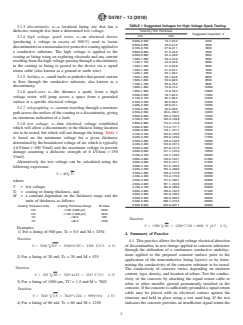
TABLE 1 Suggested Voltages for High Voltage Spark Testing
3.1.3 discontinuity, n—a localized lining site that has a
dielectric strength less than a determined test voltage. Total Dry Film Thickness
Suggested Inspection, V
mm mils
3.1.4 high voltage spark tester, n—an electrical device
0.500–0.590 19.7–23.2 2700
(producing a voltage in excess of 500 V) used to locate
0.600–0.690 23.6–27.2 3300
discontinuitiesinanonconductiveprotectivecoatingappliedto
0.700–0.790 27.6–31.1 3900
a conductive substrate. The high voltage is applied to the 0.800–0.890 31.5–35.0 4500
0.900–0.990 35.4–39.0 5000
coating or lining using an exploring electrode and any current
1.000–1.090 39.4–42.9 5500
resulting from the high voltage passing through a discontinuity
1.100–1.190 43.3–46.9 6000
in the coating or lining is passed to the device via a signal 1.200–1.290 47.2–50.8 6500
1.300–1.390 51.2–54.7 7000
return cable (also known as a ground or earth wire).
1.400–1.490 55.1–58.7 7500
3.1.5 holiday, n—smallfaultsorpinholesthatpermitcurrent 1.500–1.590 59.1–62.6 8000
1.600–1.690 63.0–66.5 8500
to flow through the conductive substrate, also known as a
1.700–1.790 66.9–70.5 9000
discontinuity.
1.800–1.890 70.9–74.4 10000
1.900–1.990 74.8–78.3 10800
3.1.6 spark-over, n—the distance a spark, from a high
2.000–2.090 78.7–82.3 11500
voltage tester, will jump across a space from a grounded
2.100–2.190 82.7–86.2 12000
2.200–2.290 86.6–90.2 12500
surface at a specific electrical voltage.
2.300–2.390 90.6–94.1 13000
3.1.7 telegraphing, n—current traveling through a moisture
2.400–2.490 94.5–98.0 13500
2.500–2.590 98.4–102.0 14000
path across the surface of the coating to a discontinuity, giving
2.600–2.690 102.4–105.9 14500
an erroneous indication of a fault.
2.700–2.790 106.3–109.8 15000
2.800–2.890 110.2–113.8 15500
3.1.8 test voltage, n—that electrical voltage established
2.900–2.990 114.2–117.7 16000
which will allow a discontinuity at the thickest lining location
3.000–3.090 118.1–121.7 16500
site to be tested, but which will not damage the lining. Table 1
3.100–3.190 122.0–125.6 17000
3.200–3.290 126.0–129.5 17500
is based on the minimum voltage for a given thickness
3.300–3.390 129.9–133.5 18000
determined by the breakdown voltage of air, which is typically
3.400–3.490 133.9–137.4 18500
4 kV/mm (~100 V/mil) and the maximum voltage to prevent
3.500–3.590 137.8–141.3 19000
3.600–3.690 141.7–145.3 19500
damage assuming a dielectric strength of 6 kV/mm (~150
3.700–3.790 145.7–149.2 20000
V/mil).
3.800–3.890 149.6–153.1 21000
Alternatively the test voltage can be calculated using the
3.900–3.990 153.5–157.1 21800
4.000–4.190 157.5–165.0 22500
following expression:
4.200–4.290 165.4–168.9 23000
4.300–4.390 169.3–172.8 24000
V 5 M=Tc
4.400–4.490 173.2–176.8 25000
4.500–4.590 177.2–180.7 25800
where:
4.600–4.690 181.1–184.6 26400
V = test voltage, 4.700–4.790 185.0–188.6 26800
4.800–4.890 189.0–192.5 27400
Tc = coating or lining thickness, and
4.900–4.990 192.9–196.5 28000
M = a constant dependant on the thickness range and the
5.000–5.290 196.9–208.3 28500
units of thickness as follows:
5.300–5.500 208.7–216.5 29000
5.600–8.000 220.5–307.1 30000
Coating Thickness Units Coating Thickness Range M Value
mm <1.00 (1000 µm) 3294
mm >1.00 (1.000 µm) 7843
mil <40.0 525
Therefore
mil >40.0 1250
V 5 1250 =60 5 1250*7.745 5 9681 V 9.7 kV
~ !
Examples:
1) For a lining of 500 µm, Tc = 0.5 and M = 3294
4. Summary of Practice
Therefore
4.1 This practice allows for high voltage electrical detection
of discontinuities in new linings applied to concrete substrates
V 5 3294 =0.5 5 3294*0.707 5 2329 V 3.3 kV
~ !
through the utilization of a continuous conductive underlay-
ment applied to the prepared concrete surface prior to the
2) For a lining of 20 mil, Tc = 20 andM=525
application of the nonconductive lining layer(s) or by deter-
mining the conductivity of the concrete substrate to be tested.
Therefore
The conductivity of concrete varies, depending on moisture
content, type, density, and location of rebars. Test the conduc-
V 5 525 =20 5 525*4.472 5 2347 V ~3.3 kV!
tivity of the concrete by attaching the signal return cable to
3) For a lining of 1500 µm, TC = 1.5 and M = 7843
rebar or other metallic ground permanently installed in the
Therefore concrete. If the concrete is sufficiently grounded a signal return
cable may be placed with its electrical contact against the
V 5 7843 =1.5 5 7843*1.224 5 9599 9.6 kV
~ !
structure and held in place using a wet sand bag. If the test
4) For a lining of 60 mil, Tc = 60 and M = 1250 indicates the concrete provides an insufficient signal return the
D4787−13 (2018)
test cannot be conducted. A conductive underlayment will be 5.8 A pulsed dc high voltage may cause a lining to break-
required if a continuity test is to be conducted and it is not down at a lower voltage than would be the case for a
practicaltoaddthisconductivelayerforthepurposeofthetest. continuous dc voltage.
6. Apparatus
5. Significance and Use
6.1 High Voltage Spark Tester—An electrical detector with
5.1 The electrical conductivity of concrete is primarily
a voltage rating in excess of 500 V. The detector is to consist
influenced by the presence of moisture. Other factors, which
of an electrical energy source, an exploring electrode, a signal
affect the electrical continuity of concrete structures, include
return cable connection, and wire. The detector shall be
the following:
equipped with a visual or audible indicator, or both.
5.1.1 Presence of metal rebars,
6.1.1 Electrical Energy Source—Either d-c or pulsating d-c
5.1.2 Cement content and type,
type with the appropriate test voltage.
5.1.3 Aggregate types,
6.1.2 Exploring Electrode—A metal brush or conductive
5.1.4 Admixtures,
rubber strip, the full length of which shall be capable of
5.1.5 Porosity within the concrete,
maintaining continuous contact with the surface being in-
5.1.6 Above or below grade elevation,
spected.
5.1.7 Indoor or outdoor location,
6.1.3 Signal Return Cable, Wire, typically stranded 14 to 16
5.1.8 Tem
...