

ASTM C1087-23
(Test Method)Standard Test Method for Determining Compatibility of Liquid-Applied Sealants with Accessories Used in Structural Glazing Systems
General Information
- Abstract
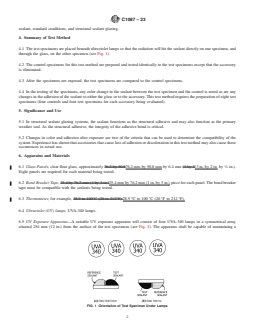
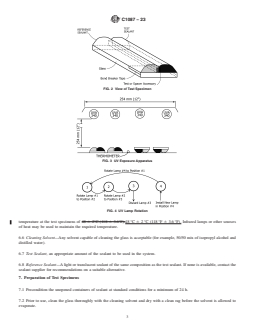
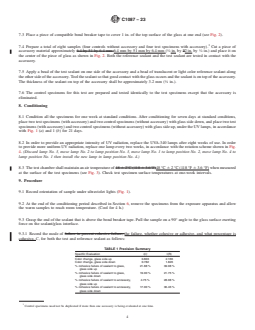
SIGNIFICANCE AND USE
5.1 In structural sealant glazing systems, the sealant functions as the structural adhesive and may also function as the primary weather seal. As the structural adhesive, the integrity of the adhesive bond is critical.
5.2 Changes in color and adhesion after exposure are two of the criteria that can be used to determine the compatibility of the system. Experience has shown that accessories that cause loss of adhesion or discoloration in this test method may also cause these occurrences in actual use.
SCOPE
1.1 This test method covers a laboratory screening procedure for determining the compatibility of liquid-applied structural sealant glazing sealants when in contact with accessories such as dry glazing gaskets, spacers, shims, and setting blocks after exposure to heat and ultraviolet light.
1.2 This test method includes the observation of three parameters as follows:
1.2.1 Changes in the color of the sealant,
1.2.2 Changes in the adhesion of the sealant to glass, and
1.2.3 Changes in the adhesion of the sealant to the accessory being tested.
1.3 The values stated in SI units are to be regarded as the standard. The values given in parentheses are for information only.
1.4 This standard does not purport to address all of the safety concerns, if any, associated with its use. It is the responsibility of the user of this standard to establish appropriate safety, health, and environmental practices and determine the applicability of regulatory limitations prior to use.
Note 1: At this time, no comparable ISO standard exists.
1.5 This international standard was developed in accordance with internationally recognized principles on standardization established in the Decision on Principles for the Development of International Standards, Guides and Recommendations issued by the World Trade Organization Technical Barriers to Trade (TBT) Committee.
- Status
- Published
- Publication Date
- 30-Apr-2023
- Technical Committee
- C24 - Building Seals and Sealants
- Drafting Committee
- C24.20 - General Test Methods
Buy Documents

ASTM C1087-23 - Standard Test Method for Determining Compatibility of Liquid-Applied Sealants with Accessories Used in Structural Glazing Systems
REDLINE ASTM C1087-23 - Standard Test Method for Determining Compatibility of Liquid-Applied Sealants with Accessories Used in Structural Glazing Systems
Overview
ASTM C1087-23: Standard Test Method for Determining Compatibility of Liquid-Applied Sealants with Accessories Used in Structural Glazing Systems establishes a laboratory screening procedure to assess the compatibility of liquid-applied structural glazing sealants in contact with system accessories. Key accessories evaluated include dry glazing gaskets, spacers, shims, and setting blocks. The method exposes specimens to heat and ultraviolet light, simulating real-world conditions, and observes color and adhesion changes in the sealant. Compatibility is critical, as the sealant not only acts as the structural adhesive but may also serve as the primary weather seal in structural glazing systems.
This test method plays an essential role in maintaining the integrity of structural sealant glazing systems and preventing premature failures due to accessory-induced degradation.
Key Topics
- Sealant Compatibility Testing: Comprehensive assessment of the interactions between liquid-applied sealants and glazing accessories.
- Laboratory Screening Procedure: Standardized method for exposing specimens to UV light and heat to replicate actual service conditions.
- Evaluation Parameters:
- Change in sealant color
- Change in adhesion to glass
- Change in adhesion to the specific accessory
- Assessment of Accessory Materials: Involves commonly used materials such as gaskets, spacers, shims, and setting blocks.
- Result Interpretation: Comparison between test and control specimens to identify discoloration, adhesion loss, or other changes.
- Significance for Structural Glazing: Identifies potential issues before materials are deployed in the field, reducing risk of failure.
Applications
ASTM C1087-23 is widely used within the construction, architectural, and building materials sectors, specifically for:
- Quality Assurance: Provides manufacturers, fabricators, and specifiers with a reliable method to verify the compatibility of chosen sealants and glazing accessories prior to installation.
- Product Development: Supports the R&D process for new sealant formulations and accessory materials by providing a standardized evaluation method.
- Risk Mitigation: Helps avoid real-world failures such as loss of adhesion or aesthetic issues (e.g., staining, discoloration) in structural glazing applications.
- Specification Compliance: Assists project stakeholders in meeting industry best practices and regulatory requirements for structural glazing systems’ performance and longevity.
- Laboratory Validation: Laboratories use this method to validate sealant and accessory performance under controlled, repeatable conditions.
Related Standards
- ASTM C717: Terminology of Building Seals and Sealants - Provides definitions of key terms used in ASTM C1087-23.
- Structural Glazing Standards: While there is currently no directly comparable ISO standard for this test, ASTM C1087-23 serves as the primary international reference for structural sealant-accessory compatibility.
- Building Sealant Standards: For related testing of sealant properties and system durability.
By following ASTM C1087-23, professionals in the glazing and construction industries can ensure their structural glazing systems are robust, durable, and resistant to common failures caused by incompatible materials. The test method enables reliable evaluation of sealant-accessory interactions and supports the long-term performance and safety of buildings utilizing structural glazing technology. For more technical information or to purchase the official standard, visit the ASTM International website.
Relations
- Effective Date
- 01-Mar-2019
- Effective Date
- 01-Mar-2018
- Effective Date
- 01-Nov-2017
- Effective Date
- 01-Jan-2017
- Effective Date
- 15-Nov-2016
- Effective Date
- 01-Sep-2016
- Effective Date
- 01-May-2014
- Effective Date
- 01-Feb-2014
- Effective Date
- 01-Nov-2013
- Effective Date
- 01-Dec-2012
- Effective Date
- 01-May-2012
- Effective Date
- 15-Jan-2012
- Effective Date
- 01-Mar-2011
- Effective Date
- 15-Jan-2011
- Effective Date
- 15-Jun-2010
Buy Documents
ASTM C1087-23 - Standard Test Method for Determining Compatibility of Liquid-Applied Sealants with Accessories Used in Structural Glazing Systems
REDLINE ASTM C1087-23 - Standard Test Method for Determining Compatibility of Liquid-Applied Sealants with Accessories Used in Structural Glazing Systems
Get Certified
Connect with accredited certification bodies for this standard

DIBt (Deutsches Institut für Bautechnik)
German Institute for Building Technology.
DIN CERTCO
DIN Group product certification.

Aboma Certification B.V.
Specialized in construction, metal, and transport sectors.
Sponsored listings
Frequently Asked Questions
ASTM C1087-23 is a standard published by ASTM International. Its full title is "Standard Test Method for Determining Compatibility of Liquid-Applied Sealants with Accessories Used in Structural Glazing Systems". This standard covers: SIGNIFICANCE AND USE 5.1 In structural sealant glazing systems, the sealant functions as the structural adhesive and may also function as the primary weather seal. As the structural adhesive, the integrity of the adhesive bond is critical. 5.2 Changes in color and adhesion after exposure are two of the criteria that can be used to determine the compatibility of the system. Experience has shown that accessories that cause loss of adhesion or discoloration in this test method may also cause these occurrences in actual use. SCOPE 1.1 This test method covers a laboratory screening procedure for determining the compatibility of liquid-applied structural sealant glazing sealants when in contact with accessories such as dry glazing gaskets, spacers, shims, and setting blocks after exposure to heat and ultraviolet light. 1.2 This test method includes the observation of three parameters as follows: 1.2.1 Changes in the color of the sealant, 1.2.2 Changes in the adhesion of the sealant to glass, and 1.2.3 Changes in the adhesion of the sealant to the accessory being tested. 1.3 The values stated in SI units are to be regarded as the standard. The values given in parentheses are for information only. 1.4 This standard does not purport to address all of the safety concerns, if any, associated with its use. It is the responsibility of the user of this standard to establish appropriate safety, health, and environmental practices and determine the applicability of regulatory limitations prior to use. Note 1: At this time, no comparable ISO standard exists. 1.5 This international standard was developed in accordance with internationally recognized principles on standardization established in the Decision on Principles for the Development of International Standards, Guides and Recommendations issued by the World Trade Organization Technical Barriers to Trade (TBT) Committee.
SIGNIFICANCE AND USE 5.1 In structural sealant glazing systems, the sealant functions as the structural adhesive and may also function as the primary weather seal. As the structural adhesive, the integrity of the adhesive bond is critical. 5.2 Changes in color and adhesion after exposure are two of the criteria that can be used to determine the compatibility of the system. Experience has shown that accessories that cause loss of adhesion or discoloration in this test method may also cause these occurrences in actual use. SCOPE 1.1 This test method covers a laboratory screening procedure for determining the compatibility of liquid-applied structural sealant glazing sealants when in contact with accessories such as dry glazing gaskets, spacers, shims, and setting blocks after exposure to heat and ultraviolet light. 1.2 This test method includes the observation of three parameters as follows: 1.2.1 Changes in the color of the sealant, 1.2.2 Changes in the adhesion of the sealant to glass, and 1.2.3 Changes in the adhesion of the sealant to the accessory being tested. 1.3 The values stated in SI units are to be regarded as the standard. The values given in parentheses are for information only. 1.4 This standard does not purport to address all of the safety concerns, if any, associated with its use. It is the responsibility of the user of this standard to establish appropriate safety, health, and environmental practices and determine the applicability of regulatory limitations prior to use. Note 1: At this time, no comparable ISO standard exists. 1.5 This international standard was developed in accordance with internationally recognized principles on standardization established in the Decision on Principles for the Development of International Standards, Guides and Recommendations issued by the World Trade Organization Technical Barriers to Trade (TBT) Committee.
ASTM C1087-23 is classified under the following ICS (International Classification for Standards) categories: 91.100.50 - Binders. Sealing materials. The ICS classification helps identify the subject area and facilitates finding related standards.
ASTM C1087-23 has the following relationships with other standards: It is inter standard links to ASTM C717-19, ASTM C717-18, ASTM C717-17a, ASTM C717-17, ASTM C717-16a, ASTM C717-16, ASTM C717-14a, ASTM C717-14, ASTM C717-13, ASTM C717-12b, ASTM C717-12a, ASTM C717-12, ASTM C717-11a, ASTM C717-11, ASTM C717-10. Understanding these relationships helps ensure you are using the most current and applicable version of the standard.
ASTM C1087-23 is available in PDF format for immediate download after purchase. The document can be added to your cart and obtained through the secure checkout process. Digital delivery ensures instant access to the complete standard document.
Standards Content (Sample)
This international standard was developed in accordance with internationally recognized principles on standardization established in the Decision on Principles for the
Development of International Standards, Guides and Recommendations issued by the World Trade Organization Technical Barriers to Trade (TBT) Committee.
Designation: C1087 − 23
Standard Test Method for
Determining Compatibility of Liquid-Applied Sealants with
Accessories Used in Structural Glazing Systems
This standard is issued under the fixed designation C1087; the number immediately following the designation indicates the year of
original adoption or, in the case of revision, the year of last revision. A number in parentheses indicates the year of last reapproval. A
superscript epsilon (´) indicates an editorial change since the last revision or reapproval.
1. Scope 3. Terminology
1.1 This test method covers a laboratory screening proce- 3.1 Definitions—Definitions of the following terms used in
dure for determining the compatibility of liquid-applied struc- this test method are listed in Terminology C717: adhesive
tural sealant glazing sealants when in contact with accessories failure (adhesion loss), bead, bond breaker, cohesive failure,
such as dry glazing gaskets, spacers, shims, and setting blocks compatibility, gasket, glazing, sealant, setting blocks, shim,
after exposure to heat and ultraviolet light. spacer, structural sealant, standard conditions, and structural
sealant glazing.
1.2 This test method includes the observation of three
parameters as follows:
4. Summary of Test Method
1.2.1 Changes in the color of the sealant,
1.2.2 Changes in the adhesion of the sealant to glass, and
4.1 The test specimens are placed beneath ultraviolet lamps
1.2.3 Changes in the adhesion of the sealant to the accessory so that the radiation will hit the sealant directly on one
being tested.
specimen, and through the glass, on the other specimen (see
Fig. 1).
1.3 The values stated in SI units are to be regarded as the
standard. The values given in parentheses are for information
4.2 The control specimens for this test method are prepared
only. and tested identically to the test specimens except that the
accessory is eliminated.
1.4 This standard does not purport to address all of the
safety concerns, if any, associated with its use. It is the
4.3 After the specimens are exposed, the test specimens are
responsibility of the user of this standard to establish appro-
compared to the control specimens.
priate safety, health, and environmental practices and deter-
4.4 In the testing of the specimens, any color change in the
mine the applicability of regulatory limitations prior to use.
sealant between the test specimen and the control is noted as
NOTE 1—At this time, no comparable ISO standard exists.
are any changes in the adhesion of the sealant to either the glass
or to the accessory. This test method requires the preparation of
1.5 This international standard was developed in accor-
eight test specimens (four controls and four test specimens for
dance with internationally recognized principles on standard-
each accessory being evaluated).
ization established in the Decision on Principles for the
Development of International Standards, Guides and Recom-
5. Significance and Use
mendations issued by the World Trade Organization Technical
Barriers to Trade (TBT) Committee.
5.1 In structural sealant glazing systems, the sealant func-
tions as the structural adhesive and may also function as the
2. Referenced Documents
primary weather seal. As the structural adhesive, the integrity
2.1 ASTM Standards:
of the adhesive bond is critical.
C717 Terminology of Building Seals and Sealants
5.2 Changes in color and adhesion after exposure are two of
the criteria that can be used to determine the compatibility of
the system. Experience has shown that accessories that cause
This test method is under the jurisdiction of ASTM Committee C24 on Building
loss of adhesion or discoloration in this test method may also
Seals and Sealants and is the direct responsibility of Subcommittee C24.20 on
General Test Methods.
cause these occurrences in actual use.
Current edition approved May 1, 2023. Published May 2023. Originally
approved in 1987. Last previous edition approved in 2016 as C1087 – 16. DOI:
6. Apparatus and Materials
10.1520/C1087-23.
For referenced ASTM standards, visit the ASTM website, www.astm.org, or
6.1 Glass Panels, clear float glass, approximately 76.2 mm
contact ASTM Customer Service at service@astm.org. For Annual Book of ASTM
by 50.8 mm by 6.4 mm (3 in. by 2 in. by ⁄4 in.). Eight panels
Standards volume information, refer to the standard’s Document Summary page on
the ASTM website. are required for each material being tested.
Copyright © ASTM International, 100 Barr Harbor Drive, PO Box C700, West Conshohocken, PA 19428-2959. United States
C1087 − 23
FIG. 4 UV Lamp Rotation
2 °C (118 °F 6 3.6 °F). Infrared lamps or other sources of heat
may be used to maintain the required temperature.
6.6 Cleaning Solvent—Any solvent capable of cleaning the
FIG. 1 Orientation of Test Specimen Under Lamps
glass is acceptable (for example, 50/50 mix of isopropyl
alcohol and distilled water).
6.7 Test Sealant, an appropriate amount of the sealant to be
used in the system.
6.8 Reference Sealant—A light or translucent sealant of the
same composition as the test sealant. If none is available,
contact the sealant supplier for recommendations on a suitable
alternative.
7. Preparation of Test Specimens
7.1 Precondition the unopened containers of sealant at
standard conditions for a minimum of 24 h.
7.2 Prior to use, clean the glass thoroughly with the cleaning
solvent and dry with a clean rag before the solvent is allowed
FIG. 2 View of Test Specimen
to evaporate.
7.3 Place a piece of compatible bond breaker tape to cover
1 in. of the top surface of the glass at one end (see Fig. 2).
7.4 Prepare a total of eight samples (four controls without
accessory and four test specimens with accessory). Cut a piece
of accessory material approximately 6.4 mm by 51 mm by
1 1
6.4 mm ( ⁄4 in. by 2 in. by ⁄4 in.) and place it on the center of
the piece of glass as shown in Fig. 2. Both the reference sealant
and the test sealant are tested in contact with the accessory.
7.5 Apply a bead of the test sealant on one side of the
accessory and a bead of translucent or light color reference
sealant along the other side of the accessory. Tool the sealant so
that good contact with the glass occurs and the sealant is on top
FIG. 3 UV Exposure Apparatus of the accessory. The thickness of the sealant on top of the
accessory shall be approximately 3.2 mm ( ⁄8 in.).
7.6 The control specimens for this test are prepared and
tested identically to the test specimens except that the acces-
6.2 Bond Breaker Tape, 25.4 mm by 76.2 mm (1 in. by
sory is eliminated.
3 in.) piece for each panel. The bo
...
This document is not an ASTM standard and is intended only to provide the user of an ASTM standard an indication of what changes have been made to the previous version. Because
it may not be technically possible to adequately depict all changes accurately, ASTM recommends that users consult prior editions as appropriate. In all cases only the current version
of the standard as published by ASTM is to be considered the official document.
Designation: C1087 − 16 C1087 − 23
Standard Test Method for
Determining Compatibility of Liquid-Applied Sealants with
Accessories Used in Structural Glazing Systems
This standard is issued under the fixed designation C1087; the number immediately following the designation indicates the year of
original adoption or, in the case of revision, the year of last revision. A number in parentheses indicates the year of last reapproval. A
superscript epsilon (´) indicates an editorial change since the last revision or reapproval.
1. Scope
1.1 This test method covers a laboratory screening procedure for determining the compatibility of liquid-applied structural sealant
glazing sealants when in contact with accessories such as dry glazing gaskets, spacers, shims, and setting blocks after exposure
to heat and ultraviolet light.
1.2 This test method includes the observation of three parameters as follows:
1.2.1 Changes in the color of the sealant,
1.2.2 Changes in the adhesion of the sealant to glass, and
1.2.3 Changes in the adhesion of the sealant to the accessory being tested.
1.3 The values stated in SI units are to be regarded as the standard. The values given in parentheses are for information only.
1.4 This standard does not purport to address all of the safety concerns, if any, associated with its use. It is the responsibility
of the user of this standard to establish appropriate safety and healthsafety, health, and environmental practices and determine
the applicability of regulatory limitations prior to use.
NOTE 1—At this time, no comparable ISO standard exists.
1.5 This international standard was developed in accordance with internationally recognized principles on standardization
established in the Decision on Principles for the Development of International Standards, Guides and Recommendations issued
by the World Trade Organization Technical Barriers to Trade (TBT) Committee.
2. Referenced Documents
2.1 ASTM Standards:
C717 Terminology of Building Seals and Sealants
3. Terminology
3.1 Definitions—Definitions of the following terms used in this test method are listed in Terminology C717: adhesive failure
(adhesion loss), bead, bond breaker, cohesive failure, compatibility, gasket, glazing, sealant, setting blocks, shim, spacer, structural
This test method is under the jurisdiction of ASTM Committee C24 on Building Seals and Sealants and is the direct responsibility of Subcommittee C24.20 on General
Test Methods.
Current edition approved June 1, 2016May 1, 2023. Published July 2016May 2023. Originally approved in 1987. Last previous edition approved in 20112016 as
C1087 – 00 (2011).C1087 – 16. DOI: 10.1520/C1087-16.10.1520/C1087-23.
For referenced ASTM standards, visit the ASTM website, www.astm.org, or contact ASTM Customer Service at service@astm.org. For Annual Book of ASTM Standards
volume information, refer to the standard’s Document Summary page on the ASTM website.
Copyright © ASTM International, 100 Barr Harbor Drive, PO Box C700, West Conshohocken, PA 19428-2959. United States
C1087 − 23
sealant, standard conditions, and structural sealant glazing.
4. Summary of Test Method
4.1 The test specimens are placed beneath ultraviolet lamps so that the radiation will hit the sealant directly on one specimen, and
through the glass, on the other specimen (see Fig. 1).
4.2 The control specimens for this test method are prepared and tested identically to the test specimens except that the accessory
is eliminated.
4.3 After the specimens are exposed, the test specimens are compared to the control specimens.
4.4 In the testing of the specimens, any color change in the sealant between the test specimen and the control is noted as are any
changes in the adhesion of the sealant to either the glass or to the accessory. This test method requires the preparation of eight test
specimens (four controls and four test specimens for each accessory being evaluated).
5. Significance and Use
5.1 In structural sealant glazing systems, the sealant functions as the structural adhesive and may also function as the primary
weather seal. As the structural adhesive, the integrity of the adhesive bond is critical.
5.2 Changes in color and adhesion after exposure are two of the criteria that can be used to determine the compatibility of the
system. Experience has shown that accessories that cause loss of adhesion or discoloration in this test method may also cause these
occurrences in actual use.
6. Apparatus and Materials
6.1 Glass Panels, clear float glass, approximately 76.2 by 50.876.2 mm by 50.8 mm by 6.4 mm (3 by 2(3 in. by 2 in. by ⁄4 in.).
Eight panels are required for each material being tested.
6.2 Bond Breaker Tape, 25.4 by 76.2-mm (1 by 3-in.)25.4 mm by 76.2 mm (1 in. by 3 in.) piece for each panel. The bond breaker
tape must be compatible with the sealants being tested.
6.3 Thermometer, for example, 28.9 to 100°C (20 to 212°F).28.9 °C to 100 °C (20 °F to 212 °F).
6.4 Ultraviolet (UV) lamps, UVA-340 lamps.
6.5 UV Exposure Apparatus—A suitable UV exposure apparatus will consist of four UVA-340 lamps in a symmetrical array
situated 254 mm (12 in.) from the surface of the test specimens (see Fig. 3). The apparatus shall be capable of maintaining a
FIG. 1 Orientation of Test Specimen Under Lamps
C1087 − 23
FIG. 2 View of Test Specimen
FIG. 3 UV Exposure Apparatus
FIG. 4 UV Lamp Rotation
temperature at the test specimens of 48 6 2°C (118 6 3.6°F).48 °C 6 2 °C (118 °F 6 3.6 °F). Infrared lamps or other sources
of heat may be used to maintain the required temperature.
6.6 Cleaning Solvent—Any solvent capable of cleaning the glass is acceptable (for example, 50/50 mix of isopropyl alcohol and
distilled water).
6.7 Test Sealant, an appropriate amount of the sealant to be used in the system.
6.8 Reference Sealant—A light or translucent sealant of the same composition as the test sealant. If none is available, contact the
sealant supplier for recommendations on a suitable alternative.
7. Preparation of Test Specimens
7.1 Precondition the unopened containers of sealant at standard conditions for a minimum of 24 h.
7.2 Prior to use, clean the glass thoroughly with the cleaning solvent and dry with a clean rag before the solvent is allowed to
evaporate.
C1087 − 23
7.3 Place a piece of compatible bond breaker tape to cover 1 in. of the top surface of the glass at one end (see Fig. 2).
7.4 Prepare a total of eight samples (four controls without accessory and four test specimens with accessory). Cut a piece of
1 1
accessory material approximately 6.4 by 51 by 6.4 mm 6.4 mm by 51 mm by 6.4 mm ( ⁄4 in. by 22 in. by ⁄4 in.) and place it o
...