

ASTM C1257-15(2023)
(Test Method)Standard Test Method for Accelerated Weathering of Solvent-Release-Type Sealants
General Information
- Abstract
SIGNIFICANCE AND USE
5.1 It is difficult to establish a precise correlation between laboratory accelerated and natural weathering because of (1) geographical climatic variations, local weather variation from normal, and local pollutants and (2) the fact that the acceleration factor is material dependent, varying with the type of material as well as its formulation. This test method is used to determine the resistance of a sealant to laboratory accelerated weathering and, if a control material with known outdoor weathering performance is used, the relative weathering performance of the sealant against that of the control material.
5.2 This test method is conducted using aluminum channels. Other substrate materials may show different results.
SCOPE
1.1 This test method includes two laboratory accelerated exposure procedures for predicting the effects of ultraviolet or ultraviolet/visible radiation, heat, and moisture on color, chalking, cracking, and adhesion of solvent-release sealants.
1.2 The values stated in SI units are to be regarded as the standard. The values given in parentheses are for information only.
1.3 The committee with jurisdiction over this standard is not aware of any comparable standards published by other organizations.
1.4 This standard does not purport to address all of the safety concerns, if any, associated with its use. It is the responsibility of the user of this standard to establish appropriate safety, health, and environmental practices and determine the applicability of regulatory limitations prior to use.
1.5 This international standard was developed in accordance with internationally recognized principles on standardization established in the Decision on Principles for the Development of International Standards, Guides and Recommendations issued by the World Trade Organization Technical Barriers to Trade (TBT) Committee.
- Status
- Published
- Publication Date
- 31-May-2023
- Technical Committee
- C24 - Building Seals and Sealants
- Drafting Committee
- C24.40 - Weathering

Overview
ASTM C1257-15(2023), titled Standard Test Method for Accelerated Weathering of Solvent-Release-Type Sealants, is an internationally recognized standard developed by ASTM International. This document establishes two laboratory accelerated exposure procedures to help evaluate the effects of UV (ultraviolet) or UV/visible radiation, heat, and moisture on solvent-release sealants. These procedures enable manufacturers, researchers, and quality assurance professionals to assess the resistance of sealants to accelerated weathering, covering critical performance indicators such as color change, chalking, cracking, and adhesion loss.
Accelerated weathering testing is a key tool for understanding the comparative durability of building sealants used in external environments. ASTM C1257 is essential for organizations aiming to predict long-term performance and improve the reliability and longevity of construction sealants.
Key Topics
- Accelerated Weathering Techniques: The standard describes two laboratory methods for exposing solvent-release sealants to concentrated environmental stressors using UV/visible light, controlled heat, and moisture.
- Performance Indicators: Visual and quantitative assessments include evaluating:
- Chalking
- Color change
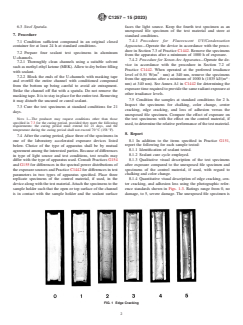
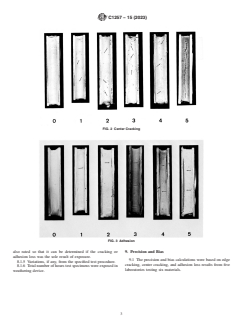
- Center cracking
- Edge cracking
- Loss of adhesion
- Use of Aluminum Channels: The standard specifies the use of U-shaped aluminum channels as the substrate for test specimens, while noting that other materials may produce different results.
- Control Materials: When a control with known outdoor weathering performance is included, the relative weathering performance of test specimens can be referenced and compared.
- Reporting and Repeatability: The standard provides clear guidelines for documenting exposure conditions, cure cycles, and rating damage, with established repeatability and reproducibility benchmarks for key metrics.
Applications
Accelerated weathering testing per ASTM C1257 is widely applicable in the construction and building products industries, supporting:
- Product Development: Manufacturers utilize these tests to screen new sealant formulations for enhanced durability under simulated environmental conditions.
- Quality Assurance: Testing according to ASTM C1257 ensures that sealants meet specific requirements for outdoor performance, reducing liability and product failure in the field.
- Comparative Evaluation: The method enables direct comparison between new products and reference materials with documented in-service performance, aiding selection for both commercial and residential projects.
- Regulatory and Compliance Needs: Adherence to standardized accelerated weathering tests can support compliance with building codes, industry specifications, and green building initiatives.
- Reliability Assessments: Architects, specifiers, and contractors rely on data generated from ASTM C1257 to select sealants that are most likely to withstand variable outdoor conditions, such as UV exposure, rain, and temperature fluctuations.
Related Standards
ASTM C1257 references and aligns with several other key ASTM standards to ensure robust and comprehensive testing procedures, including:
- ASTM C717: Terminology of Building Seals and Sealants
- ASTM C1442: Practice for Conducting Tests on Sealants Using Artificial Weathering Apparatus
- ASTM G113: Terminology Relating to Natural and Artificial Weathering Tests of Nonmetallic Materials
- ASTM G151: Practice for Exposing Nonmetallic Materials in Accelerated Test Devices that Use Laboratory Light Sources
- ASTM G154: Practice for Operating Fluorescent Ultraviolet (UV) Lamp Apparatus for Exposure of Materials
- ASTM G155: Practice for Operating Xenon Arc Lamp Apparatus for Exposure of Materials
By adhering to ASTM C1257-15(2023), professionals ensure consistent, reliable, and internationally recognized evaluation of solvent-release-type sealants, optimizing building envelope durability and long-term performance. For more information and access to the full standard, visit ASTM International.
Relations
- Effective Date
- 01-Mar-2019
- Effective Date
- 01-Mar-2018
- Effective Date
- 01-Nov-2017
- Effective Date
- 01-Jan-2017
- Effective Date
- 15-Nov-2016
- Effective Date
- 01-Sep-2016
- Effective Date
- 01-May-2014
- Effective Date
- 01-Mar-2014
- Effective Date
- 01-Feb-2014
- Effective Date
- 01-Nov-2013
- Effective Date
- 01-Dec-2012
- Effective Date
- 01-Dec-2012
- Effective Date
- 01-May-2012
- Effective Date
- 15-Jan-2012
- Effective Date
- 01-Apr-2011
Get Certified
Connect with accredited certification bodies for this standard

DIBt (Deutsches Institut für Bautechnik)
German Institute for Building Technology.
DIN CERTCO
DIN Group product certification.

Aboma Certification B.V.
Specialized in construction, metal, and transport sectors.
Sponsored listings
Frequently Asked Questions
ASTM C1257-15(2023) is a standard published by ASTM International. Its full title is "Standard Test Method for Accelerated Weathering of Solvent-Release-Type Sealants". This standard covers: SIGNIFICANCE AND USE 5.1 It is difficult to establish a precise correlation between laboratory accelerated and natural weathering because of (1) geographical climatic variations, local weather variation from normal, and local pollutants and (2) the fact that the acceleration factor is material dependent, varying with the type of material as well as its formulation. This test method is used to determine the resistance of a sealant to laboratory accelerated weathering and, if a control material with known outdoor weathering performance is used, the relative weathering performance of the sealant against that of the control material. 5.2 This test method is conducted using aluminum channels. Other substrate materials may show different results. SCOPE 1.1 This test method includes two laboratory accelerated exposure procedures for predicting the effects of ultraviolet or ultraviolet/visible radiation, heat, and moisture on color, chalking, cracking, and adhesion of solvent-release sealants. 1.2 The values stated in SI units are to be regarded as the standard. The values given in parentheses are for information only. 1.3 The committee with jurisdiction over this standard is not aware of any comparable standards published by other organizations. 1.4 This standard does not purport to address all of the safety concerns, if any, associated with its use. It is the responsibility of the user of this standard to establish appropriate safety, health, and environmental practices and determine the applicability of regulatory limitations prior to use. 1.5 This international standard was developed in accordance with internationally recognized principles on standardization established in the Decision on Principles for the Development of International Standards, Guides and Recommendations issued by the World Trade Organization Technical Barriers to Trade (TBT) Committee.
SIGNIFICANCE AND USE 5.1 It is difficult to establish a precise correlation between laboratory accelerated and natural weathering because of (1) geographical climatic variations, local weather variation from normal, and local pollutants and (2) the fact that the acceleration factor is material dependent, varying with the type of material as well as its formulation. This test method is used to determine the resistance of a sealant to laboratory accelerated weathering and, if a control material with known outdoor weathering performance is used, the relative weathering performance of the sealant against that of the control material. 5.2 This test method is conducted using aluminum channels. Other substrate materials may show different results. SCOPE 1.1 This test method includes two laboratory accelerated exposure procedures for predicting the effects of ultraviolet or ultraviolet/visible radiation, heat, and moisture on color, chalking, cracking, and adhesion of solvent-release sealants. 1.2 The values stated in SI units are to be regarded as the standard. The values given in parentheses are for information only. 1.3 The committee with jurisdiction over this standard is not aware of any comparable standards published by other organizations. 1.4 This standard does not purport to address all of the safety concerns, if any, associated with its use. It is the responsibility of the user of this standard to establish appropriate safety, health, and environmental practices and determine the applicability of regulatory limitations prior to use. 1.5 This international standard was developed in accordance with internationally recognized principles on standardization established in the Decision on Principles for the Development of International Standards, Guides and Recommendations issued by the World Trade Organization Technical Barriers to Trade (TBT) Committee.
ASTM C1257-15(2023) is classified under the following ICS (International Classification for Standards) categories: 91.100.50 - Binders. Sealing materials. The ICS classification helps identify the subject area and facilitates finding related standards.
ASTM C1257-15(2023) has the following relationships with other standards: It is inter standard links to ASTM C717-19, ASTM C717-18, ASTM C717-17a, ASTM C717-17, ASTM C717-16a, ASTM C717-16, ASTM C717-14a, ASTM G113-14, ASTM C717-14, ASTM C717-13, ASTM G154-12, ASTM C717-12b, ASTM C717-12a, ASTM C717-12, ASTM C1442-11. Understanding these relationships helps ensure you are using the most current and applicable version of the standard.
ASTM C1257-15(2023) is available in PDF format for immediate download after purchase. The document can be added to your cart and obtained through the secure checkout process. Digital delivery ensures instant access to the complete standard document.
Standards Content (Sample)
This international standard was developed in accordance with internationally recognized principles on standardization established in the Decision on Principles for the
Development of International Standards, Guides and Recommendations issued by the World Trade Organization Technical Barriers to Trade (TBT) Committee.
Designation: C1257 − 15 (Reapproved 2023)
Standard Test Method for
Accelerated Weathering of Solvent-Release-Type Sealants
This standard is issued under the fixed designation C1257; the number immediately following the designation indicates the year of
original adoption or, in the case of revision, the year of last revision. A number in parentheses indicates the year of last reapproval. A
superscript epsilon (´) indicates an editorial change since the last revision or reapproval.
1. Scope Lamp Apparatus for Exposure of Materials
G155 Practice for Operating Xenon Arc Lamp Apparatus for
1.1 This test method includes two laboratory accelerated
Exposure of Materials
exposure procedures for predicting the effects of ultraviolet or
ultraviolet/visible radiation, heat, and moisture on color,
3. Terminology
chalking, cracking, and adhesion of solvent-release sealants.
3.1 Definitions:
1.2 The values stated in SI units are to be regarded as the
3.1.1 Refer to Terminology C717 and G113 for definitions
standard. The values given in parentheses are for information
of terms used in this test method: standard conditions.
only.
4. Summary of Test Method
1.3 The committee with jurisdiction over this standard is not
aware of any comparable standards published by other orga-
4.1 Four test specimens are prepared in U-shaped aluminum
nizations.
channels. After curing, three of the specimens are exposed in
1.4 This standard does not purport to address all of the the laboratory accelerated weathering device and the fourth
safety concerns, if any, associated with its use. It is the specimen is stored under standard conditions as an unexposed
responsibility of the user of this standard to establish appro- file specimen. At the end of the exposure period, the specimens
priate safety, health, and environmental practices and deter- are examined for chalking, color change, center cracking, edge
mine the applicability of regulatory limitations prior to use. cracking, and loss of adhesion versus the unexposed file
1.5 This international standard was developed in accor- specimen.
dance with internationally recognized principles on standard-
5. Significance and Use
ization established in the Decision on Principles for the
Development of International Standards, Guides and Recom-
5.1 It is difficult to establish a precise correlation between
mendations issued by the World Trade Organization Technical
laboratory accelerated and natural weathering because of (1)
Barriers to Trade (TBT) Committee.
geographical climatic variations, local weather variation from
normal, and local pollutants and (2) the fact that the accelera-
2. Referenced Documents
tion factor is material dependent, varying with the type of
2.1 ASTM Standards: material as well as its formulation. This test method is used to
C717 Terminology of Building Seals and Sealants determine the resistance of a sealant to laboratory accelerated
C1442 Practice for Conducting Tests on Sealants Using weathering and, if a control material with known outdoor
Artificial Weathering Apparatus weathering performance is used, the relative weathering per-
G113 Terminology Relating to Natural and Artificial Weath- formance of the sealant against that of the control material.
ering Tests of Nonmetallic Materials
5.2 This test method is conducted using aluminum channels.
G151 Practice for Exposing Nonmetallic Materials in Accel-
Other substrate materials may show different results.
erated Test Devices that Use Laboratory Light Sources
G154 Practice for Operating Fluorescent Ultraviolet (UV)
6. Apparatus
6.1 Exposure Apparatus:
6.1.1 Fluorescent UV/Condensation Apparatus, that con-
This test method is under the jurisdiction of ASTM Committee C24 on Building
forms to the requirements in Practices G151 and G154 with
Seals and Sealants and is the direct responsibility of Subcommittee C24.40 on
Weathering.
UVA-340 type lamps.
Current edition approved June 1, 2023. Published July 2023. Originally approved
6.1.2 Xenon-Arc Apparatus, that conforms to the require-
in 1994. Last previous edition approved in 2015 as C1257 – 15. DOI: 10.1520/
ments in Practices G151 and G155 with daylight type filters.
C1257-23.
For referenced ASTM standards, visit the ASTM website, www.astm.org, or
6.2 Four-Mill Finish Aluminum U-Channels, 76 mm long
contact ASTM Customer Service at service@astm.org. For Annual Book of ASTM
3 3
by 19 mm wide by 9.5 mm deep (3 by ⁄4 by ⁄8 in.) inside
Standards volume information, refer to the standard’s Document Summary page on
the ASTM website. dimensions. Additional substrate materials may be specified.
Copyright © ASTM International, 100 Barr Harbor Drive, PO Box C700, West Conshohocken, PA 19428-2959. United States
C1257 − 15 (2023)
6.3 Steel Spatula. faces the light source. Keep the fourth test specimen as an
unexposed file specimen of the test material and store at
7. Procedure
standard conditions.
7.4.1 Procedure for Fluorescent UV/Condensation
7.1 Condition sufficient compound in an original closed
Apparatus—Operate the device in accordance with the proce-
container for at least 24 h at standard conditions.
dure in Section 7.3 of Practice C1442. Remove the specimens
7.2 Prepare four sealant test specimens in aluminum
from the apparatus after a minimum of 1000 h of exposure.
U-channels.
7.4.2 Procedure for Xenon-Arc Apparatus—Operate the de-
7.2.1 Thoroughly clean channels using a suitable solvent
vice in accordance with the procedure in Section 7.2 of
such as methyl ethyl ketone (MEK). Allow to dry before filling
Practice C1442. When operated at the preferred irradiance
with sealant.
level of 0.51 W(m · nm) at 340 nm, remove the specimens
7.2.2 Block the ends of the U-channels with masking tape
from the apparatus after a minimum of 1000 h (1835 kJ/(m ·
and overfill the entire channel with conditioned compound
nm) at 340 nm). See Annex A1 in C1442 for determining the
from the bottom up being careful to avoid air entrapment.
...