

ASTM E3120-19
(Specification)Standard Specification for Evaluating Accelerated Aging Performance of Environmentally Controlled Dynamic Glazings
General Information
- Abstract
ABSTRACT
This specification provides a basis for evaluating the accelerated aging performance of environmentally controlled dynamic glazings (ECDG) in monolithic glass, monolithic laminated glass, or pre-assembled, permanently sealed insulating glass units that are constructed with glass and fabricated for vision glass areas for use in buildings, such as sliding doors, windows, skylights, and exterior wall systems. ECDG is the glazing material installed in a prepared opening of a building whose visible light transmittance or near infrared light transmittance properties, or both, can be changed reversibly by exposure to changing environmental conditions such as temperature and sunlight intensity. This specification also covers ECDG devices in pre-assembled insulating glass units with capillary tubes intentionally left open, but does not apply to other types of dynamic glazing which require an electrical stimulus to change light transmittance, such as electrochromic glazings.
This specification prescribes the performance requirements and test methods for ECDG, as well as specimen preparation, qualification, and reporting requirements.
SCOPE
1.1 This specification is applicable to environmentally controlled dynamic glazings (ECDG) whose visible light transmittance or near infrared light transmittance properties, or both, can be changed reversibly by exposure to changing environmental conditions such as temperature and sunlight intensity. This includes thermochromic and thermotropic glazing, but currently excludes photochromic glazings as neither Test Method E3119 nor this specification provide a procedure to access multiple states of photochromic glazing specimens.
1.2 This specification does not apply to other types of dynamic glazing which require an electrical stimulus to change light transmittance, such as electrochromic glazings.
1.3 This specification covers environmentally controlled dynamic glazing (ECDG) in monolithic glass, monolithic laminated glass, or pre-assembled, permanently sealed insulating glass units with one or more cavities in which at least one lite is an ECDG (which may be in the form of a laminated lite or a single pane with coatings or film applied). This specification is also applicable to ECDG devices in pre-assembled insulating glass units with capillary tubes intentionally left open. As applicable, this specification also requires conformance to Specification E2190.
1.4 This specification is applicable only to monolithic glass, monolithic laminated glass, and sealed insulating glass units that are constructed with glass and fabricated for vision glass areas for use in buildings, such as sliding doors, windows, skylights, and exterior wall systems.
1.5 Qualification under this specification is intended to provide a basis for evaluating the aging performance of environmentally controlled dynamic glazing in monolithic glass, monolithic laminated glass, and sealed insulating glass units.
1.6 The values stated in SI units are to be regarded as standard. No other units of measurement are included in this standard.
1.7 This standard does not purport to address all of the safety concerns, if any, associated with its use. It is the responsibility of the user of this standard to establish appropriate safety, health, and environmental practices and determine the applicability of regulatory limitations prior to use.
1.8 This international standard was developed in accordance with internationally recognized principles on standardization established in the Decision on Principles for the Development of International Standards, Guides and Recommendations issued by the World Trade Organization Technical Barriers to Trade (TBT) Committee.
- Status
- Published
- Publication Date
- 30-Jun-2019
- Technical Committee
- E06 - Performance of Buildings
- Drafting Committee
- E06.22 - Durability Performance of Building Constructions
Buy Documents

ASTM E3120-19 - Standard Specification for Evaluating Accelerated Aging Performance of Environmentally Controlled Dynamic Glazings
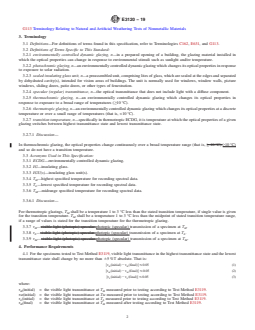
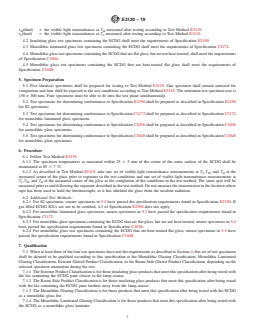
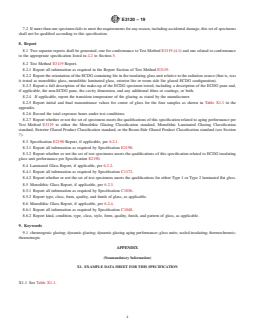
REDLINE ASTM E3120-19 - Standard Specification for Evaluating Accelerated Aging Performance of Environmentally Controlled Dynamic Glazings
Overview
ASTM E3120-19: Standard Specification for Evaluating Accelerated Aging Performance of Environmentally Controlled Dynamic Glazings (ECDG) provides industry guidelines for assessing the durability and long-term performance of dynamic glazing systems used in building applications. This specification focuses on environmentally controlled dynamic glazings in forms such as monolithic glass, laminated glass, and pre-assembled, sealed insulating glass units. ECDGs are designed to allow reversible changes in visible or near-infrared light transmittance, triggered by environmental factors like sunlight and temperature, offering enhanced daylight control and energy efficiency for windows, doors, skylights, and wall systems.
Key Topics
- Definition of ECDG: Glazings that modify their light transmission properties in response to environmental stimuli such as temperature and sunlight intensity, including thermochromic and thermotropic types, but excluding photochromic and electrochromic glazings.
- Scope of Application: Applicable to vision glass areas in buildings, such as sliding doors, windows, skylights, and exterior wall systems.
- Performance Requirements: Specifies limits on changes in optical transmittance after accelerated aging, conducted according to ASTM E3119 test method.
- Test Methods: Outlines detailed specimen preparation and qualification processes, including the need for conformity with other relevant ASTM standards (E2190, C1172, C1036, C1048) for specific glass types.
- Reporting: Defines the reporting structure for durability testing, requiring documentation of test results, specimen configurations, and compliance with related specifications.
Applications
ASTM E3120-19 is crucial for:
- Manufacturers of Smart Glazing Products: Ensures that environmentally controlled dynamic glazing products-such as thermochromic or thermotropic windows-meet industry-accepted criteria for durability and performance in harsh environments.
- Building Designers and Architects: Provides a framework for specifying glazing materials that can contribute to dynamic daylighting, solar heat gain control, and occupant comfort in commercial and residential projects.
- Quality Assurance and Certification: Offers standardized aging performance benchmarks for quality control during production and for third-party certification of dynamic glazing units.
- Sustainable Building Projects: Supports compliance with green building certifications by validating long-term performance and reliability of advanced glazing systems designed for energy efficiency.
Related Standards
Several ASTM standards are referenced within ASTM E3120-19 to support comprehensive evaluation:
- ASTM E3119: Test Method for Accelerated Aging of Environmentally Controlled Dynamic Glazing
- ASTM E2190: Performance and Evaluation of Insulating Glass Units
- ASTM C1036: Specification for Flat Glass
- ASTM C1048: Specification for Heat-Strengthened and Fully Tempered Flat Glass
- ASTM C1172: Specification for Laminated Architectural Flat Glass
- ASTM C162, E631, G113: Terminology and weathering test guidelines relevant to glass products and building constructions
Practical Value
This specification adds significant value by:
- Enabling Product Comparison: Establishes a consistent, replicable basis to compare aging performance among dynamic glazing products.
- Boosting Consumer Confidence: Verifies that ECDG units are robust and reliable for long-term use in building environments.
- Facilitating Regulatory Compliance: Aligns with international principles for standardization, supporting acceptance in global markets.
- Supporting Innovation: Encourages the development and adoption of new, environmentally responsive glazing technologies in the built environment.
Keywords: ASTM E3120, accelerated aging, environmentally controlled dynamic glazing, ECDG, thermochromic glazing, thermotropic glazing, building glazing performance, insulating glass units, smart windows, daylight control, energy efficiency, glazing durability standards.
Relations
- Effective Date
- 01-Jul-2019
- Effective Date
- 01-Oct-2023
- Effective Date
- 01-Aug-2019
- Effective Date
- 01-Apr-2019
- Effective Date
- 01-Oct-2018
- Effective Date
- 01-Nov-2017
- Effective Date
- 01-Nov-2017
- Effective Date
- 01-Nov-2015
- Effective Date
- 01-Mar-2015
- Effective Date
- 01-Nov-2014
- Effective Date
- 15-Sep-2014
- Effective Date
- 01-Mar-2014
- Effective Date
- 15-Mar-2012
- Effective Date
- 15-Mar-2012
- Effective Date
- 01-Oct-2011
Buy Documents
ASTM E3120-19 - Standard Specification for Evaluating Accelerated Aging Performance of Environmentally Controlled Dynamic Glazings
REDLINE ASTM E3120-19 - Standard Specification for Evaluating Accelerated Aging Performance of Environmentally Controlled Dynamic Glazings
Frequently Asked Questions
ASTM E3120-19 is a technical specification published by ASTM International. Its full title is "Standard Specification for Evaluating Accelerated Aging Performance of Environmentally Controlled Dynamic Glazings". This standard covers: ABSTRACT This specification provides a basis for evaluating the accelerated aging performance of environmentally controlled dynamic glazings (ECDG) in monolithic glass, monolithic laminated glass, or pre-assembled, permanently sealed insulating glass units that are constructed with glass and fabricated for vision glass areas for use in buildings, such as sliding doors, windows, skylights, and exterior wall systems. ECDG is the glazing material installed in a prepared opening of a building whose visible light transmittance or near infrared light transmittance properties, or both, can be changed reversibly by exposure to changing environmental conditions such as temperature and sunlight intensity. This specification also covers ECDG devices in pre-assembled insulating glass units with capillary tubes intentionally left open, but does not apply to other types of dynamic glazing which require an electrical stimulus to change light transmittance, such as electrochromic glazings. This specification prescribes the performance requirements and test methods for ECDG, as well as specimen preparation, qualification, and reporting requirements. SCOPE 1.1 This specification is applicable to environmentally controlled dynamic glazings (ECDG) whose visible light transmittance or near infrared light transmittance properties, or both, can be changed reversibly by exposure to changing environmental conditions such as temperature and sunlight intensity. This includes thermochromic and thermotropic glazing, but currently excludes photochromic glazings as neither Test Method E3119 nor this specification provide a procedure to access multiple states of photochromic glazing specimens. 1.2 This specification does not apply to other types of dynamic glazing which require an electrical stimulus to change light transmittance, such as electrochromic glazings. 1.3 This specification covers environmentally controlled dynamic glazing (ECDG) in monolithic glass, monolithic laminated glass, or pre-assembled, permanently sealed insulating glass units with one or more cavities in which at least one lite is an ECDG (which may be in the form of a laminated lite or a single pane with coatings or film applied). This specification is also applicable to ECDG devices in pre-assembled insulating glass units with capillary tubes intentionally left open. As applicable, this specification also requires conformance to Specification E2190. 1.4 This specification is applicable only to monolithic glass, monolithic laminated glass, and sealed insulating glass units that are constructed with glass and fabricated for vision glass areas for use in buildings, such as sliding doors, windows, skylights, and exterior wall systems. 1.5 Qualification under this specification is intended to provide a basis for evaluating the aging performance of environmentally controlled dynamic glazing in monolithic glass, monolithic laminated glass, and sealed insulating glass units. 1.6 The values stated in SI units are to be regarded as standard. No other units of measurement are included in this standard. 1.7 This standard does not purport to address all of the safety concerns, if any, associated with its use. It is the responsibility of the user of this standard to establish appropriate safety, health, and environmental practices and determine the applicability of regulatory limitations prior to use. 1.8 This international standard was developed in accordance with internationally recognized principles on standardization established in the Decision on Principles for the Development of International Standards, Guides and Recommendations issued by the World Trade Organization Technical Barriers to Trade (TBT) Committee.
ABSTRACT This specification provides a basis for evaluating the accelerated aging performance of environmentally controlled dynamic glazings (ECDG) in monolithic glass, monolithic laminated glass, or pre-assembled, permanently sealed insulating glass units that are constructed with glass and fabricated for vision glass areas for use in buildings, such as sliding doors, windows, skylights, and exterior wall systems. ECDG is the glazing material installed in a prepared opening of a building whose visible light transmittance or near infrared light transmittance properties, or both, can be changed reversibly by exposure to changing environmental conditions such as temperature and sunlight intensity. This specification also covers ECDG devices in pre-assembled insulating glass units with capillary tubes intentionally left open, but does not apply to other types of dynamic glazing which require an electrical stimulus to change light transmittance, such as electrochromic glazings. This specification prescribes the performance requirements and test methods for ECDG, as well as specimen preparation, qualification, and reporting requirements. SCOPE 1.1 This specification is applicable to environmentally controlled dynamic glazings (ECDG) whose visible light transmittance or near infrared light transmittance properties, or both, can be changed reversibly by exposure to changing environmental conditions such as temperature and sunlight intensity. This includes thermochromic and thermotropic glazing, but currently excludes photochromic glazings as neither Test Method E3119 nor this specification provide a procedure to access multiple states of photochromic glazing specimens. 1.2 This specification does not apply to other types of dynamic glazing which require an electrical stimulus to change light transmittance, such as electrochromic glazings. 1.3 This specification covers environmentally controlled dynamic glazing (ECDG) in monolithic glass, monolithic laminated glass, or pre-assembled, permanently sealed insulating glass units with one or more cavities in which at least one lite is an ECDG (which may be in the form of a laminated lite or a single pane with coatings or film applied). This specification is also applicable to ECDG devices in pre-assembled insulating glass units with capillary tubes intentionally left open. As applicable, this specification also requires conformance to Specification E2190. 1.4 This specification is applicable only to monolithic glass, monolithic laminated glass, and sealed insulating glass units that are constructed with glass and fabricated for vision glass areas for use in buildings, such as sliding doors, windows, skylights, and exterior wall systems. 1.5 Qualification under this specification is intended to provide a basis for evaluating the aging performance of environmentally controlled dynamic glazing in monolithic glass, monolithic laminated glass, and sealed insulating glass units. 1.6 The values stated in SI units are to be regarded as standard. No other units of measurement are included in this standard. 1.7 This standard does not purport to address all of the safety concerns, if any, associated with its use. It is the responsibility of the user of this standard to establish appropriate safety, health, and environmental practices and determine the applicability of regulatory limitations prior to use. 1.8 This international standard was developed in accordance with internationally recognized principles on standardization established in the Decision on Principles for the Development of International Standards, Guides and Recommendations issued by the World Trade Organization Technical Barriers to Trade (TBT) Committee.
ASTM E3120-19 is classified under the following ICS (International Classification for Standards) categories: 81.040.20 - Glass in building. The ICS classification helps identify the subject area and facilitates finding related standards.
ASTM E3120-19 has the following relationships with other standards: It is inter standard links to ASTM E3120-17, ASTM C162-23, ASTM E3119-19, ASTM E2190-19, ASTM C1048-18, ASTM E3119-17e1, ASTM E3119-17, ASTM C162-05(2015), ASTM E631-15, ASTM E631-14, ASTM C1172-14, ASTM G113-14, ASTM C1048-12, ASTM C1048-12e1, ASTM C1036-11e1. Understanding these relationships helps ensure you are using the most current and applicable version of the standard.
ASTM E3120-19 is available in PDF format for immediate download after purchase. The document can be added to your cart and obtained through the secure checkout process. Digital delivery ensures instant access to the complete standard document.
Standards Content (Sample)
This international standard was developed in accordance with internationally recognized principles on standardization established in the Decision on Principles for the
Development of International Standards, Guides and Recommendations issued by the World Trade Organization Technical Barriers to Trade (TBT) Committee.
Designation:E3120 −19
Standard Specification for
Evaluating Accelerated Aging Performance of
Environmentally Controlled Dynamic Glazings
This standard is issued under the fixed designation E3120; the number immediately following the designation indicates the year of
original adoption or, in the case of revision, the year of last revision.Anumber in parentheses indicates the year of last reapproval.A
superscript epsilon (´) indicates an editorial change since the last revision or reapproval.
1. Scope 1.6 The values stated in SI units are to be regarded as
standard. No other units of measurement are included in this
1.1 This specification is applicable to environmentally con-
standard.
trolleddynamicglazings(ECDG)whosevisiblelighttransmit-
1.7 This standard does not purport to address all of the
tance or near infrared light transmittance properties, or both,
safety concerns, if any, associated with its use. It is the
can be changed reversibly by exposure to changing environ-
responsibility of the user of this standard to establish appro-
mental conditions such as temperature and sunlight intensity.
priate safety, health, and environmental practices and deter-
This includes thermochromic and thermotropic glazing, but
mine the applicability of regulatory limitations prior to use.
currently excludes photochromic glazings as neither Test
1.8 This international standard was developed in accor-
Method E3119 nor this specification provide a procedure to
dance with internationally recognized principles on standard-
access multiple states of photochromic glazing specimens.
ization established in the Decision on Principles for the
1.2 This specification does not apply to other types of
Development of International Standards, Guides and Recom-
dynamicglazingwhichrequireanelectricalstimulustochange
mendations issued by the World Trade Organization Technical
light transmittance, such as electrochromic glazings.
Barriers to Trade (TBT) Committee.
1.3 This specification covers environmentally controlled
2. Referenced Documents
dynamic glazing (ECDG) in monolithic glass, monolithic
laminated glass, or pre-assembled, permanently sealed insulat-
2.1 ASTM Standards:
ing glass units with one or more cavities in which at least one C162Terminology of Glass and Glass Products
lite is an ECDG (which may be in the form of a laminated lite
C1036Specification for Flat Glass
or a single pane with coatings or film applied). This specifica- C1048Specification for Heat-Strengthened and Fully Tem-
tion is also applicable to ECDG devices in pre-assembled pered Flat Glass
insulating glass units with capillary tubes intentionally left C1172Specification for Laminated Architectural Flat Glass
open. As applicable, this specification also requires confor- E631Terminology of Building Constructions
mance to Specification E2190. E2190Specification for Insulating Glass Unit Performance
and Evaluation
1.4 Thisspecificationisapplicableonlytomonolithicglass,
E3119Test Method for Accelerated Aging of Environmen-
monolithic laminated glass, and sealed insulating glass units
tally Controlled Dynamic Glazing
that are constructed with glass and fabricated for vision glass
G113Terminology Relating to Natural andArtificialWeath-
areas for use in buildings, such as sliding doors, windows,
ering Tests of Nonmetallic Materials
skylights, and exterior wall systems.
1.5 Qualification under this specification is intended to 3. Terminology
provide a basis for evaluating the aging performance of
3.1 Definitions—For definitions of terms found in this
environmentally controlled dynamic glazing in monolithic
specification, refer to Terminologies C162, E631, and G113.
glass, monolithic laminated glass, and sealed insulating glass
3.2 Definitions of Terms Specific to This Standard:
units.
3.2.1 environmentally controlled dynamic glazing, n—in a
preparedopeningofabuilding,theglazingmaterialinstalledin
This specification is under the jurisdiction of ASTM Committee E06 on
Performance of Buildings and is the direct responsibility of Subcommittee E06.22
on Durability Performance of Building Constructions. For referenced ASTM standards, visit the ASTM website, www.astm.org, or
Current edition approved July 1, 2019. Published September 2019. Originally contact ASTM Customer Service at service@astm.org. For Annual Book of ASTM
approved in 2017. Last previous edition approved in 2017 as E3120–17. DOI: Standards volume information, refer to the standard’s Document Summary page on
10.1520/E3120–19. the ASTM website.
Copyright © ASTM International, 100 Barr Harbor Drive, PO Box C700, West Conshohocken, PA 19428-2959. United States
E3120−19
which the optical properties can change in response to envi- lowest transmittance state shall change by no more than
ronmental stimuli such as sunlight and/or temperature. 65%Τ absolute. That is:
3.2.2 photochromic glazing, n—an environmentally con-
τ ~initial!2τ ~final! # 0.05 (1)
? H H ?
trolled dynamic glazing which changes its optical properties in
τ ~initial!2τ ~final! # 0.05 (2)
? M M ?
response to exposure to solar radiation.
τ ~initial!2τ ~final! # 0.05 (3)
? L L ?
3.2.3 sealed insulating glass unit, n—a preassembled unit,
where:
comprising lites of glass, which are sealed at the edges and
separated by dehydrated cavity(s), intended for vision areas of τ (initial) = the visible light transmittance at Τ measured
H H
buildings. The unit is normally used for windows, window
prior to testing according to Test Method
walls, picture windows, sliding doors, patio doors, or other E3119.
types of fenestration. τ (initial) = the visible light transmittance at Τ measured
M M
prior to testing according to Test Method
3.2.4 specular (regular) transmittance, n—the optical trans-
E3119.
mittance that does not include light with a diffuse component.
τ (initial) = the visible light transmittance at Τ measured
L L
3.2.5 thermochromic glazing, n—an environmentally con-
prior to testing according to Test Method
trolled dynamic glazing which changes its optical properties in
E3119.
response to exposure to a broad range of temperatures
τ (final) = the visible light transmittance at Τ measured
H H
(≥10°C).
after testing according to Test Method E3119.
3.2.6 thermotropic glazing, n—an environmentally con- τ (final) = the visible light transmittance at Τ measured
M M
trolled dynamic glazing which changes its optical properties at after testing according to Test Method E3119.
τ (final) = the visible light transmittance at Τ measured
a discrete temperature or over a small range of temperatures
L L
after testing according to Test Method E3119.
(that is, <10°C).
3.2.7 transition temperature, n—specifically in thermo-
4.2 Insulating glass test specimens containing the ECDG
tropic ECDG, it is temperature at which the optical properties shall meet the requirements of Specification E2190.
ofagivenglazingswitchesbetweenhighesttransmittancestate
4.3 Monolithic laminated glass test specimens containing
and lowest transmittance state.
theECDGshallmeettherequirementsofSpecificationC1172.
3.2.7.1 Discussion—In thermochromic glazing, the optical
4.4 Monolithic glass test specimens containing the ECDG
propertieschangecontinuouslyoverabroadtemperaturerange
that are flat glass, but are not heat-treated, shall meet the
(that is, ≥10°C) and so do not have a transition temperature.
requirements of Specification C1036.
3.3 Acronyms Used in This Specification:
4.5 Monolithic glass test specimens containing the ECDG
3.3.1 ECDG—environmentally controlled dynamic glazing.
that are heat-treated flat glass shall meet the requirements of
3.3.2 IG—insulating glass.
Specification C1048.
3.3.3 IGU(s)—insulating glass unit(s).
3.3.4 Τ —highest specified temperature for recording spec- 5. Specimen Preparation
H
tral data.
5.1 Five identical specimens shall be prepared for testing to
3.3.5 Τ —lowest specified temperature for recording spec-
Test Method E3119. One specimen shall remain untested for
L
tral data.
comparison and four shall be exposed to the test conditions
according to Test Method E3119. The minimum test specimen
3.3.6 Τ —midrange specified temperature for recording
M
size is 150 × 300 mm. Four specimens must be able to fit onto
spectral data.
the test plane simultaneously.
3.3.6.1 Discussion—For thermotropic glazings, T shall be
M
a temperature 1 to 3 °C less than the stated transition
5.2 Test specimens for determining conformance to Speci-
temperature, if single value is given for the transition tempera-
fi
...
This document is not an ASTM standard and is intended only to provide the user of an ASTM standard an indication of what changes have been made to the previous version. Because
it may not be technically possible to adequately depict all changes accurately, ASTM recommends that users consult prior editions as appropriate. In all cases only the current version
of the standard as published by ASTM is to be considered the official document.
Designation: E3120 − 17 E3120 − 19
Standard Specification for
Evaluating Accelerated Aging Performance of
Environmentally Controlled Dynamic Glazings
This standard is issued under the fixed designation E3120; the number immediately following the designation indicates the year of
original adoption or, in the case of revision, the year of last revision. A number in parentheses indicates the year of last reapproval. A
superscript epsilon (´) indicates an editorial change since the last revision or reapproval.
1. Scope
1.1 This specification is applicable to environmentally controlled dynamic glazings (ECDG) whose visible light transmittance
or near infrared light transmittance properties, or both, can be changed reversibly by exposure to changing environmental
conditions such as temperature and sunlight intensity. This includes thermochromic and thermotropic glazing, but currently
excludes photochromic glazings as neither Test Method E3119 nor this specification provide a procedure to access multiple states
of photochromic glazing specimens.
1.2 This specification does not apply to other types of dynamic glazing which require an electrical stimulus to change light
transmittance, such as electrochromic glazings.
1.3 This specification covers environmentally controlled dynamic glazing (ECDG) in monolithic glass, monolithic laminated
glass, or pre-assembled, permanently sealed insulating glass units with one or more cavities in which at least one lite is an ECDG
(which may be in the form of a laminated lite or a single pane with coatings or film applied). This specification is also applicable
to ECDG devices in pre-assembled insulating glass units with capillary tubes intentionally left open. As applicable, this
specification also requires conformance to Specification E2190.
1.4 This specification is applicable only to monolithic glass, monolithic laminated glass, and sealed insulating glass units that
are constructed with glass and fabricated for vision glass areas for use in buildings, such as sliding doors, windows, skylights, and
exterior wall systems.
1.5 Qualification under this specification is intended to provide a basis for evaluating the aging performance of environmentally
controlled dynamic glazing in monolithic glass, monolithic laminated glass, and sealed insulating glass units.
1.6 The values stated in SI units are to be regarded as standard. No other units of measurement are included in this standard.
1.7 This standard does not purport to address all of the safety concerns, if any, associated with its use. It is the responsibility
of the user of this standard to establish appropriate safety, health, and environmental practices and determine the applicability of
regulatory limitations prior to use.
1.8 This international standard was developed in accordance with internationally recognized principles on standardization
established in the Decision on Principles for the Development of International Standards, Guides and Recommendations issued
by the World Trade Organization Technical Barriers to Trade (TBT) Committee.
2. Referenced Documents
2.1 ASTM Standards:
C162 Terminology of Glass and Glass Products
C1036 Specification for Flat Glass
C1048 Specification for Heat-Strengthened and Fully Tempered Flat Glass
C1172 Specification for Laminated Architectural Flat Glass
E631 Terminology of Building Constructions
E2190 Specification for Insulating Glass Unit Performance and Evaluation
E3119 Test Method for Accelerated Aging of Environmentally Controlled Dynamic Glazing
This specification is under the jurisdiction of ASTM Committee E06 on Performance of Buildings and is the direct responsibility of Subcommittee E06.22 on Durability
Performance of Building Constructions.
Current edition approved Sept. 1, 2017July 1, 2019. Published December 2017September 2019. Originally approved in 2017. Last previous edition approved in 2017 as
E3120–17. DOI: 10.1520/E3120-17.10.1520/E3120–19.
For referenced ASTM standards, visit the ASTM website, www.astm.org, or contact ASTM Customer Service at service@astm.org. For Annual Book of ASTM Standards
volume information, refer to the standard’s Document Summary page on the ASTM website.
Copyright © ASTM International, 100 Barr Harbor Drive, PO Box C700, West Conshohocken, PA 19428-2959. United States
E3120 − 19
G113 Terminology Relating to Natural and Artificial Weathering Tests of Nonmetallic Materials
3. Terminology
3.1 Definitions—For definitions of terms found in this specification, refer to Terminologies C162, E631, and G113.
3.2 Definitions of Terms Specific to This Standard:
3.2.1 environmentally controlled dynamic glazing, n—in a prepared opening of a building, the glazing material installed in
which the optical properties can change in response to environmental stimuli such as sunlight and/or temperature.
3.2.2 photochromic glazing, n—an environmentally controlled dynamic glazing which changes its optical properties in response
to exposure to solar radiation.
3.2.3 sealed insulating glass unit, n—a preassembled unit, comprising lites of glass, which are sealed at the edges and separated
by dehydrated cavity(s), intended for vision areas of buildings. The unit is normally used for windows, window walls, picture
windows, sliding doors, patio doors, or other types of fenestration.
3.2.4 specular (regular) transmittance, n—the optical transmittance that does not include light with a diffuse component.
3.2.5 thermochromic glazing, n—an environmentally controlled dynamic glazing which changes its optical properties in
response to exposure to a broad range of temperatures (≥10 °C).
3.2.6 thermotropic glazing, n—an environmentally controlled dynamic glazing which changes its optical properties at a discrete
temperature or over a small range of temperatures (that is, <10 °C).
3.2.7 transition temperature, n—specifically in thermotropic ECDG, it is temperature at which the optical properties of a given
glazing switches between highest transmittance state and lowest transmittance state.
3.2.7.1 Discussion—
In thermochromic glazing, the optical properties change continuously over a broad temperature range (that is, ≥ 10 °C) ≥10 °C)
and so do not have a transition temperature.
3.3 Acronyms Used in This Specification:
3.3.1 ECDG—environmentally controlled dynamic glazing.
3.3.2 IG—insulating glass.
3.3.3 IGU(s)—insulating glass unit(s).
3.3.4 Τ —highest specified temperature for recording spectral data.
H
3.3.5 Τ —lowest specified temperature for recording spectral data.
L
3.3.6 Τ —midrange specified temperature for recording spectral data.
M
3.3.6.1 Discussion—
For thermotropic glazings, T shall be a temperature 1 to 3 °C less than the stated transition temperature, if single value is given
M
for the transition temperature. T shall be a temperature 1 to 3 °C less than the midpoint of stated transition temperature range,
M
if a range of values is stated for the transition temperature for the thermotropic glazing.
3.3.7 τ —visible light (photopic) specular photopic (specular) transmission of a specimen at Τ .
H H
3.3.8 τ —visible light (photopic) specular photopic (specular) transmission of a specimen at Τ .
L L
3.3.9 τ —visible light (photopic) specular photopic (specular) transmission of a specimen at Τ .
M M
4. Performance Requirements
4.1 For the specimens tested to Test Method E3119, visible light transmittance in the highest transmittance state and the lowest
transmittance state shall change by no more than 65 %Τ absolute. That is:
τ ~initial! 2 τ ~final! # 0.05 (1)
? H H ?
τ ~initial! 2 τ ~final! # 0.05 (2)
? M M ?
τ ~initial! 2 τ ~final! # 0.05 (3)
? L L ?
where:
τ (initial) = the visible light transmittance at Τ measured prior to testing according to Test Method E3119.
H H
τ (initial) = the visible light transmittance at Τ measured prior to testing according to Test Method E3119.
M M
τ (initial) = the visible light transmittance at Τ measured prior to testing according to Test Method E3119.
L L
τ (final) = the visible light transmittance at Τ measured after testing according to Test Method E3119.
H H
E3120 − 19
τ (final) = the visible light transmittance at Τ measured after testing according to Test Method E3119.
M M
τ (final) = the visible light transmittance at Τ measured after testing according to Test Method E3119.
L L
4.2 Insulating glass test specimens containing the ECDG shall meet the requirements of Specification E2190.
4.3 Monolithic laminated glass test specimens containing the ECDG shall meet the requirements of Specification
...