

ASTM B797-20
(Test Method)Standard Test Method for Surface Finger-Oxide Penetration Depth and Presence of Interparticle Oxide Networks in Powder Forged (PF) Steel Parts
General Information
- Abstract
SIGNIFICANCE AND USE
5.1 The presence of surface finger-oxide penetration and interparticle oxide networks are two of the properties used to evaluate powder forged steel parts for proper processing. Maximum acceptable depths of penetration of surface finger-oxide penetration and acceptable concentrations of subsurface interparticle oxide networks depend on the component and its service environment.
5.2 Results of tests may be used to qualify parts for shipment.
SCOPE
1.1 This test method covers a metallographic method for determining the maximum depth of surface finger-oxide penetration and the concentration of subsurface interparticle oxide networks in critical areas of powder forged steel parts.
1.2 Units—The values stated in SI units are to be regarded as standard. No other units of measurement are included in this standard.
1.3 This standard does not purport to address all of the safety concerns, if any, associated with its use. It is the responsibility of the user of this standard to establish appropriate safety, health, and environmental practices and determine the applicability of regulatory limitations prior to use.
1.4 This international standard was developed in accordance with internationally recognized principles on standardization established in the Decision on Principles for the Development of International Standards, Guides and Recommendations issued by the World Trade Organization Technical Barriers to Trade (TBT) Committee.
- Status
- Published
- Publication Date
- 30-Sep-2020
- Technical Committee
- B09 - Metal Powders and Metal Powder Products
- Drafting Committee
- B09.11 - Near Full Density Powder Metallurgy Materials
Buy Documents
ASTM B797-20 - Standard Test Method for Surface Finger-Oxide Penetration Depth and Presence of Interparticle Oxide Networks in Powder Forged (PF) Steel Parts
REDLINE ASTM B797-20 - Standard Test Method for Surface Finger-Oxide Penetration Depth and Presence of Interparticle Oxide Networks in Powder Forged (PF) Steel Parts
Overview
ASTM B797-20: Standard Test Method for Surface Finger-Oxide Penetration Depth and Presence of Interparticle Oxide Networks in Powder Forged (PF) Steel Parts provides a metallographic method for assessing two critical properties-surface finger-oxide penetration depth and the presence of interparticle oxide networks-within powder forged steel components. These properties are significant for evaluating the quality and proper processing of PF steel parts used in a variety of demanding engineering applications.
Accurate measurement of surface oxides and interparticle oxide distributions is fundamental for qualifying parts for shipment and ensuring reliability, especially in safety-critical environments. This standard, issued by ASTM International, is widely recognized and developed according to international standardization principles.
Key Topics
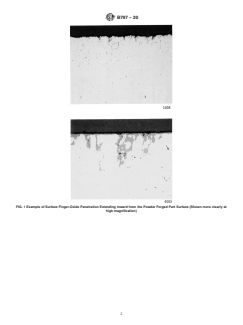
- Surface Finger-Oxides: These are oxide traces that follow particle boundaries from the surface into the interior of a part and are not removed by physical finishing methods. Their depth is a key indicator of the manufacturing process quality.
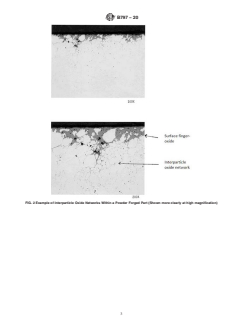
- Interparticle Oxide Networks: Networks of oxides present along prior particle boundaries under the surface, which can be continuous or discontinuous. Their concentration provides insight into material integrity.
- Metallographic Method: The standard describes procedures for specimen preparation, grinding, and polishing, followed by microscopic examination at specified magnifications for accurate measurement and qualitative assessment.
- Measurement Criteria:
- Maximum depth of surface finger-oxide penetration is recorded in micrometres.
- The presence and extent of interparticle oxide networks are noted in critical areas as identified by design specifications.
- Reporting and Precision: Results must include identification of test areas, measured oxide penetration, network observations, and if available, photomicrographs. Precision considerations emphasize repeatability and detail current limits due to the nature of the test.
Applications
- Powder Forged (PF) Steel Parts Quality Control: Regular use of this standard ensures that both surface and subsurface oxide characteristics are within acceptable limits, directly supporting product reliability and safety.
- Supplier Validation: Results are crucial for qualifying parts before shipment and may be required for contract compliance between suppliers and buyers in sectors such as automotive and heavy machinery.
- Process Optimization: Metallurgists and process engineers rely on this method for feedback to adjust powder forging processes, aiming to reduce oxide contamination and improve mechanical performance.
- Regulatory and Certification Environments: This standard supports compliance with customer and industry specifications, contributing to traceability and audit readiness.
Related Standards
- ASTM E3 – Guide for Preparation of Metallographic Specimens: Offers foundational practices for specimen prep, applicable to the procedures in ASTM B797-20.
- ASTM E177 – Practice for Use of the Terms Precision and Bias in ASTM Test Methods: Provides terminology and practices referenced for describing precision in test results.
- ASTM E691 – Practice for Conducting an Interlaboratory Study to Determine the Precision of a Test Method: Supplies guidance for conducting and analyzing precision studies, relevant for developing repeatability and reproducibility data.
Practical Value
Adhering to ASTM B797-20 enhances quality assurance for powder forged steel, mitigates risk of failure due to oxide defects, and helps manufacturers meet strict customer and regulatory demands. Using internationally recognized test methods, companies can document material integrity, support process improvements, and demonstrate commitment to reliable and consistent production standards. This standard is essential for any operation focused on powder metallurgy, facilitating both internal process control and external compliance.
Relations
- Effective Date
- 01-May-2014
- Effective Date
- 01-May-2013
- Effective Date
- 01-May-2013
- Effective Date
- 01-Nov-2011
- Effective Date
- 01-Oct-2010
- Effective Date
- 01-Oct-2008
- Effective Date
- 01-Oct-2008
- Effective Date
- 01-Jul-2007
- Effective Date
- 01-Jul-2007
- Refers
ASTM E177-06b - Standard Practice for Use of the Terms Precision and Bias in ASTM Test Methods - Effective Date
- 15-Nov-2006
- Refers
ASTM E177-06a - Standard Practice for Use of the Terms Precision and Bias in ASTM Test Methods - Effective Date
- 01-Nov-2006
- Effective Date
- 01-Nov-2005
- Effective Date
- 01-Nov-2004
- Effective Date
- 01-Nov-2004
- Refers
ASTM E177-04e1 - Standard Practice for Use of the Terms Precision and Bias in ASTM Test Methods - Effective Date
- 01-Nov-2004
Buy Documents
ASTM B797-20 - Standard Test Method for Surface Finger-Oxide Penetration Depth and Presence of Interparticle Oxide Networks in Powder Forged (PF) Steel Parts
REDLINE ASTM B797-20 - Standard Test Method for Surface Finger-Oxide Penetration Depth and Presence of Interparticle Oxide Networks in Powder Forged (PF) Steel Parts
Get Certified
Connect with accredited certification bodies for this standard

Element Materials Technology
Materials testing and product certification.

Inštitut za kovinske materiale in tehnologije
Institute of Metals and Technology. Materials testing, metallurgical analysis, NDT.
Sponsored listings
Frequently Asked Questions
ASTM B797-20 is a standard published by ASTM International. Its full title is "Standard Test Method for Surface Finger-Oxide Penetration Depth and Presence of Interparticle Oxide Networks in Powder Forged (PF) Steel Parts". This standard covers: SIGNIFICANCE AND USE 5.1 The presence of surface finger-oxide penetration and interparticle oxide networks are two of the properties used to evaluate powder forged steel parts for proper processing. Maximum acceptable depths of penetration of surface finger-oxide penetration and acceptable concentrations of subsurface interparticle oxide networks depend on the component and its service environment. 5.2 Results of tests may be used to qualify parts for shipment. SCOPE 1.1 This test method covers a metallographic method for determining the maximum depth of surface finger-oxide penetration and the concentration of subsurface interparticle oxide networks in critical areas of powder forged steel parts. 1.2 Units—The values stated in SI units are to be regarded as standard. No other units of measurement are included in this standard. 1.3 This standard does not purport to address all of the safety concerns, if any, associated with its use. It is the responsibility of the user of this standard to establish appropriate safety, health, and environmental practices and determine the applicability of regulatory limitations prior to use. 1.4 This international standard was developed in accordance with internationally recognized principles on standardization established in the Decision on Principles for the Development of International Standards, Guides and Recommendations issued by the World Trade Organization Technical Barriers to Trade (TBT) Committee.
SIGNIFICANCE AND USE 5.1 The presence of surface finger-oxide penetration and interparticle oxide networks are two of the properties used to evaluate powder forged steel parts for proper processing. Maximum acceptable depths of penetration of surface finger-oxide penetration and acceptable concentrations of subsurface interparticle oxide networks depend on the component and its service environment. 5.2 Results of tests may be used to qualify parts for shipment. SCOPE 1.1 This test method covers a metallographic method for determining the maximum depth of surface finger-oxide penetration and the concentration of subsurface interparticle oxide networks in critical areas of powder forged steel parts. 1.2 Units—The values stated in SI units are to be regarded as standard. No other units of measurement are included in this standard. 1.3 This standard does not purport to address all of the safety concerns, if any, associated with its use. It is the responsibility of the user of this standard to establish appropriate safety, health, and environmental practices and determine the applicability of regulatory limitations prior to use. 1.4 This international standard was developed in accordance with internationally recognized principles on standardization established in the Decision on Principles for the Development of International Standards, Guides and Recommendations issued by the World Trade Organization Technical Barriers to Trade (TBT) Committee.
ASTM B797-20 is classified under the following ICS (International Classification for Standards) categories: 77.040.99 - Other methods of testing of metals. The ICS classification helps identify the subject area and facilitates finding related standards.
ASTM B797-20 has the following relationships with other standards: It is inter standard links to ASTM E177-14, ASTM E177-13, ASTM E691-13, ASTM E691-11, ASTM E177-10, ASTM E691-08, ASTM E177-08, ASTM E3-01(2007)e1, ASTM E3-01(2007), ASTM E177-06b, ASTM E177-06a, ASTM E691-05, ASTM E177-04, ASTM E177-06, ASTM E177-04e1. Understanding these relationships helps ensure you are using the most current and applicable version of the standard.
ASTM B797-20 is available in PDF format for immediate download after purchase. The document can be added to your cart and obtained through the secure checkout process. Digital delivery ensures instant access to the complete standard document.
Standards Content (Sample)
This international standard was developed in accordance with internationally recognized principles on standardization established in the Decision on Principles for the
Development of International Standards, Guides and Recommendations issued by the World Trade Organization Technical Barriers to Trade (TBT) Committee.
Designation:B797 −20
Standard Test Method for
Surface Finger-Oxide Penetration Depth and Presence of
Interparticle Oxide Networks in Powder Forged (PF) Steel
Parts
This standard is issued under the fixed designation B797; the number immediately following the designation indicates the year of
original adoption or, in the case of revision, the year of last revision.Anumber in parentheses indicates the year of last reapproval.A
superscript epsilon (´) indicates an editorial change since the last revision or reapproval.
1. Scope* 3.1.1 surface finger-oxides, n—surface finger-oxides are
surface oxides that follow prior particle boundaries into a
1.1 This test method covers a metallographic method for
powderforgedpartfromthesurfaceandcannotberemovedby
determining the maximum depth of surface finger-oxide pen-
physical means such as rotary tumbling; examples of surface
etration and the concentration of subsurface interparticle oxide
finger-oxides are shown in Fig. 1.
networks in critical areas of powder forged steel parts.
3.1.2 interparticle oxide networks, n—interparticle oxide
1.2 Units—The values stated in SI units are to be regarded
networks are continuous or discontinuous oxides that follow
asstandard.Nootherunitsofmeasurementareincludedinthis
prior particle boundaries in powder forged parts; examples of
standard.
interparticle oxide networks are shown in Fig. 2.
1.3 This standard does not purport to address all of the
safety concerns, if any, associated with its use. It is the
4. Summary of Test Method
responsibility of the user of this standard to establish appro-
4.1 A section representing both surface and subsurface
priate safety, health, and environmental practices and deter-
regionsofacriticalareaiscutfromthepowderforgedpartand
mine the applicability of regulatory limitations prior to use.
mounted for metallographic grinding and polishing.
1.4 This international standard was developed in accor-
4.2 For surface finger-oxide penetration, the polished and
dance with internationally recognized principles on standard-
unetched sample is examined microscopically at a magnifica-
ization established in the Decision on Principles for the
tion of 400 to 500×. The maximum depth of penetration of
Development of International Standards, Guides and Recom-
surface finger-oxides is measured.
mendations issued by the World Trade Organization Technical
Barriers to Trade (TBT) Committee.
4.3 For interparticle oxide network concentration, the pol-
ished and unetched sample is examined microscopically at a
2. Referenced Documents
magnification of 200 to 500× to determine the presence of
2.1 ASTM Standards: interparticle oxide networks.
E3Guide for Preparation of Metallographic Specimens
E177Practice for Use of the Terms Precision and Bias in 5. Significance and Use
ASTM Test Methods
5.1 The presence of surface finger-oxide penetration and
E691Practice for Conducting an Interlaboratory Study to
interparticle oxide networks are two of the properties used to
Determine the Precision of a Test Method
evaluate powder forged steel parts for proper processing.
Maximum acceptable depths of penetration of surface finger-
3. Terminology
oxide penetration and acceptable concentrations of subsurface
3.1 Definitions of Terms Specific to This Standard: interparticle oxide networks depend on the component and its
service environment.
5.2 Results of tests may be used to qualify parts for
This test method is under the jurisdiction of ASTM Committee B09 on Metal
shipment.
Powders and Metal Powder Products and is the direct responsibility of Subcom-
mittee B09.11 on Near Full Density Powder Metallurgy Materials.
Current edition approved Oct. 1, 2020. Published October 2020. Originally 6. Apparatus
approved in 1988. Last previous edition approved in 2015 as B797–15. DOI:
6.1 Equipment for the metallographic preparation of test
10.1520/B0797-20.
For referenced ASTM standards, visit the ASTM website, www.astm.org, or specimens.
contact ASTM Customer Service at service@astm.org. For Annual Book of ASTM
6.2 A metallographic microscope permitting observation
Standards volume information, refer to the standard’s Document Summary page on
the ASTM website. and measurement up to a magnification of 500×.
*A Summary of Changes section appears at the end of this standard
Copyright © ASTM International, 100 Barr Harbor Drive, PO Box C700, West Conshohocken, PA 19428-2959. United States
B797−20
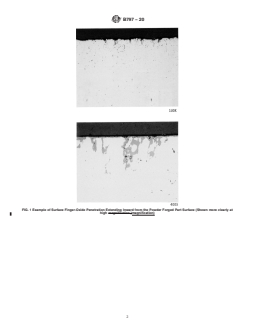
FIG. 1Example of Surface Finger-Oxide Penetration Extending Inward from the Powder Forged Part Surface (Shown more clearly at
highmagnification)
B797−20
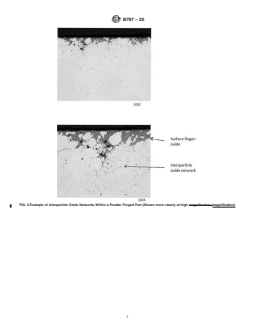
FIG. 2Example of Interparticle Oxide Networks Within a Powder Forged Part (Shown more clearly at high magnification)
B797−20
TABLE 1 Finger-Oxide Penetration Depth (µm)
7. Sampling
Repeatability
Average Repeatability Limit
7.1 A metallographic specimen shall be removed from the
Standard Deviation
x¯ S r
powder forged part to cover each designated critical area. r
PF Connecting Rod 53.3 0.98 2.7
Criticalareasshallbedefinedbytheapplicablepartdrawingor
the purchase order. Specimens shall be taken from the powder
forged part in the condition in which it is to be supplied. The
polished surface of the specimens shall be parallel to the
E691 was followed for the design and analysis of the data; the
forging direction, that is, parallel to the direction of travel of
details are given in ASTM Research Report RR:B09-1023.
the forging punch.
10.1.1 Repeatability Limit (r)—The difference between re-
petitive results obtained by the same operator in a given
8. Procedure
laboratory applying the same test method with the same
apparatus under constant operating conditions on identical test
8.1 Preparation of Specimens—In mounting the specimen
material within short intervals of time would, in the long run,
for grinding and polishing, protection from rounding the edge
in the normal and correct operation of the test method, exceed
of the part is essential. In polishing the specimen, it is
the following values only in 1 case in 20.
importantthatacleanpolishbeobtainedandthatedgedetailof
10.1.1.1 Repeatability can be interpreted as maximum dif-
the part not be destroyed. Specimens shall be examined in the
ference between two results, obtained under repeatability
as-polishedcondition,freeoftheef
...
This document is not an ASTM standard and is intended only to provide the user of an ASTM standard an indication of what changes have been made to the previous version. Because
it may not be technically possible to adequately depict all changes accurately, ASTM recommends that users consult prior editions as appropriate. In all cases only the current version
of the standard as published by ASTM is to be considered the official document.
Designation: B797 − 15 B797 − 20
Standard Test Method for
Surface Finger-Oxide Penetration Depth and Presence of
Interparticle Oxide Networks in Powder Forged (PF) Steel
Parts
This standard is issued under the fixed designation B797; the number immediately following the designation indicates the year of
original adoption or, in the case of revision, the year of last revision. A number in parentheses indicates the year of last reapproval. A
superscript epsilon (´) indicates an editorial change since the last revision or reapproval.
1. Scope*
1.1 This test method covers a metallographic method for determining the maximum depth of surface finger-oxide penetration and
the concentration of subsurface interparticle oxide networks in critical areas of powder forged steel parts.
1.2 Units—The values stated in SI units are to be regarded as standard. No other units of measurement are included in this
standard.
1.3 This standard does not purport to address all of the safety concerns, if any, associated with its use. It is the responsibility
of the user of this standard to establish appropriate safety safety, health, and healthenvironmental practices and determine the
applicability of regulatory limitations prior to use.
1.4 This international standard was developed in accordance with internationally recognized principles on standardization
established in the Decision on Principles for the Development of International Standards, Guides and Recommendations issued
by the World Trade Organization Technical Barriers to Trade (TBT) Committee.
2. Referenced DocumentDocuments
2.1 ASTM Standards:
E3 Guide for Preparation of Metallographic Specimens
E177 Practice for Use of the Terms Precision and Bias in ASTM Test Methods
E691 Practice for Conducting an Interlaboratory Study to Determine the Precision of a Test Method
3. Terminology
3.1 Definitions of Terms Specific to This Standard:
3.1.1 surface finger-oxides—finger-oxides, n—surface finger-oxides are surface oxides that follow prior particle boundaries into
a powder forged part from the surface and cannot be removed by physical means such as rotary tumbling. Examplestumbling;
examples of surface finger-oxides are shown in Fig. 1.
3.1.2 interparticle oxide networks—networks, n—interparticle oxide networks are continuous or discontinuous oxides that follow
prior particle boundaries in powder forged parts. Examplesparts; examples of interparticle oxide networks are shown in Fig. 2.
This test method is under the jurisdiction of ASTM Committee B09 on Metal Powders and Metal Powder Products and is the direct responsibility of Subcommittee B09.11
on Near Full Density Powder Metallurgy Materials.
Current edition approved Oct. 1, 2015Oct. 1, 2020. Published November 2015October 2020. Originally approved in 1988. Last previous edition approved in 20072015
as B797 – 93B797 – 15.(2007). DOI: 10.1520/B0797-15.10.1520/B0797-20.
For referenced ASTM standards, visit the ASTM website, www.astm.org, or contact ASTM Customer Service at service@astm.org. For Annual Book of ASTM Standards
volume information, refer to the standard’s Document Summary page on the ASTM website.
*A Summary of Changes section appears at the end of this standard
Copyright © ASTM International, 100 Barr Harbor Drive, PO Box C700, West Conshohocken, PA 19428-2959. United States
B797 − 20
FIG. 1 Example of Surface Finger-Oxide Penetration Extending Inward from the Powder Forged Part Surface (Shown more clearly at
high magnification.)magnification)
B797 − 20
FIG. 2 Example of Interparticle Oxide Networks Within a Powder Forged Part (Shown more clearly at high magnification.)magnification)
B797 − 20
4. Summary of Test Method
4.1 A section representing both surface and subsurface regions of a critical area is cut from the powder forged part and mounted
for metallographic grinding and polishing.
4.2 For surface finger-oxide penetration, the polished and unetched sample is examined microscopically at a magnification of 400
to 500×. The maximum depth of penetration of surface finger-oxides is measured.
4.3 For interparticle oxide network concentration, the polished and unetched sample is examined microscopically at a
magnification of 200 to 500× to determine the presence of interparticle oxide networks.
5. Significance and Use
5.1 The presence of surface finger-oxide penetration and interparticle oxide networks are two of the properties used to evaluate
powder forged steel parts for proper processing. Maximum acceptable depths of penetration of surface finger-oxide penetration and
acceptable concentrations of subsurface interparticle oxide networks depend on the component and its service environment.
5.2 Results of tests may be used to qualify parts for shipment.
6. Apparatus
6.1 Equipment for the metallographic preparation of test specimens.
6.2 A metallographic microscope permitting observation and measurement up to a magnification of 500×.
7. Sampling
7.1 A metallographic specimen shall be removed from the powder forged part to cover each designated critical area. Critical areas
shall be defined by the applicable part drawing or the purchaserpurchase order. Specimens shall be taken from the powder forged
part in the condition in which it is to be supplied. The polished surface of the specimens shall be parallel to the forging direction,
that is, parallel to the direction of travel of the forging punch.
8. Procedure
8.1 Preparation of Specimens—In mounting the specimen for grinding and polishing, protection from rounding the edge of the
part is essential. In polishing the specimen, it is important that a clean polish be obtained and that edge detail of the part not be
destroyed. Specimens shall be examined in the as-polished condition, free of the effects of any prior etching (if used). It is
recommended that the procedures described in MethodsGuide E3 be followed. Automated grinding and polishing procedures are
recommended.
8.2 Measurement of Surface Finger-Oxide Penetration Depth—Scan the perimeter of the metallographic specimen, initially at a
magnification of 100×, and carefully examine each designated critical area at a higher magnification, for example, 400 to 500×.
Measure the maximum depth of penetration of surface finger-oxides from the finished part surface in micrometres for each
designated critical area.
8.3 Measurement of Interparticle Oxide Network Concentration—Scan the perimeter of the metallographic specimen at a
magnification of 100×. Carefully examine each designated critical area at a higher magnification, for example, 200 to 500×. Record
the presence of any interparticle oxide networks in the designated critical areas.
9. Report
9.1 The test report shall include the following information:
9.1.1 Identification of the part and location of the test speci
...