

ASTM A131/A131M-19
(Specification)Standard Specification for Structural Steel for Ships
General Information
- Abstract
ABSTRACT
This specification covers structural steel plates, shapes, bars, and rivets for use in ship construction. Materials under this specification can be categorized as ordinary strength and higher strength. Plates in all thicknesses shall be normalized or thermo-mechanical control processed while shapes and bars in all thicknesses shall be heat treated and rolled. Heat analysis of ordinary strength structural steel shall be used to determine the required chemical composition for carbon, manganese, phosphorus, sulfur, nickel, chromium, molybdenum, silicon, and copper. Same analysis shall be used to higher strength structural steel to determine the required chemical composition for carbon, manganese, phosphorus, sulfur, silicon, vanadium, aluminum, titanium, nickel, chromium, molybdenum, silicon, copper, nickel, and niobium. Materials shall conform to the required metallurgical structure which shall be evaluated by determining the average grain size. Mechanical properties such as elongation and toughness shall be evaluated using tension test and Charpy V-notch impact test.
SCOPE
1.1 This specification covers structural steel plates, shapes, and bars intended primarily for use in ship construction.
1.2 Material under this specification is available in the following categories:
1.2.1 Ordinary Strength—Grades A, B, D, and E with a specified minimum yield point of 34 ksi [235 MPa], and
1.2.2 Higher Strength—Grades AH, DH, EH, and FH with a specified minimum yield point of 46 ksi [315 MPa], 51 ksi [350 MPa], or 57 ksi [390 MPa].
1.3 Shapes and bars are normally available as Grades A, B, AH32, and AH36. Other grades may be furnished by agreement between the purchaser and the manufacturer.
1.4 The maximum thickness of products furnished under this specification is 4 in. [100 mm] for plates and 2 in. [50 mm] for shapes and bars.
1.5 When the steel is to be welded, it is presupposed that a welding procedure suitable for the grade of steel and intended use or service will be utilized. See Appendix X3 of Specification A6/A6M for information on weldability.
1.6 Units—This specification is expressed in both inch-pound units and in SI units; however, unless the purchase order or contract specifies the applicable M specification designation (SI units), the inch-pound units shall apply. The values stated in either inch-pound units or SI units are to be regarded separately as standard. Within the text, the SI units are shown in brackets. The values stated in each system may not be exact equivalents; therefore, each system shall be used independently of the other. Combining values from the two systems may result in nonconformance with the standard.
1.7 This international standard was developed in accordance with internationally recognized principles on standardization established in the Decision on Principles for the Development of International Standards, Guides and Recommendations issued by the World Trade Organization Technical Barriers to Trade (TBT) Committee.
- Status
- Published
- Publication Date
- 30-Apr-2019
- Technical Committee
- A01 - Steel, Stainless Steel and Related Alloys
Overview
ASTM A131/A131M-19 is the standard specification developed by ASTM International for structural steel intended primarily for use in ship construction. This specification details requirements for steel plates, shapes, bars, and rivets used in shipbuilding. Materials covered under ASTM A131/A131M-19 are classified as ordinary strength or higher strength steel, ensuring their mechanical properties meet the demands of marine environments.
This standard addresses key considerations such as chemical composition, metallurgical structure, and mechanical properties of shipbuilding steel. It supports safe and reliable manufacturing, fabrication, and performance of ships by specifying stringent requirements for strength, toughness, and weldability.
Key Topics
- Scope of Products: Includes structural steel plates up to 4 in. [100 mm] thick, shapes and bars up to 2 in. [50 mm] thick, and rivets, all for use in ship structures.
- Grades and Strength Levels:
- Ordinary strength: Grades A, B, D, and E (minimum yield point of 34 ksi [235 MPa])
- Higher strength: Grades AH, DH, EH, FH in various strength levels (minimum yield point of 46, 51, or 57 ksi [315, 350, or 390 MPa])
- Heat Treatment and Processing:
- Plates: Normalized or thermo-mechanical controlled processing (TMCP) required in all thicknesses.
- Shapes and Bars: Must be adequately heat treated and rolled.
- Chemical Composition: Comprehensive tables specify maximum allowable amounts of carbon, manganese, phosphorus, sulfur, silicon, and trace elements, supporting fine grain practices for enhanced strength and ductility.
- Mechanical Properties Testing:
- Tensile Strength and Elongation: Tension tests required across all product types to validate specified ranges.
- Charpy V-Notch Impact Test: Specimens tested for toughness under specific conditions as outlined for each grade.
- Weldability: The standard presumes an appropriate welding procedure is used based on the steel grade and final ship application.
- Marking and Traceability: Plates are marked according to heat treatment conditions (e.g., N for normalized, TM for thermo-mechanical controlled, CR for control rolled, QT for quenched and tempered).
Applications
ASTM A131/A131M-19 provides essential guidance for:
- Ship Construction: Ensures structural integrity for hulls, decks, bulkheads, and other critical elements.
- Marine Structures: Used in offshore platforms, barges, and port infrastructure where marine corrosion and mechanical loadings are key concerns.
- Repair and Maintenance: Supports consistent quality in steel supply for ship repair, conversion, or life-extension projects.
- Global Trade Compliance: As an internationally recognized standard, it facilitates the import, export, and sourcing of structural steel products for marine applications.
Related Standards
- ASTM A6/A6M: General requirements for rolled structural steel bars, plates, shapes, and sheet piling.
- ASTM A370: Test methods and definitions for mechanical testing of steel products, ensuring standardized assessment of tensile, bend, and impact properties.
- ASTM E112: Test methods for determining average grain size in steels, supporting metallurgical quality required for ship steels.
- ISO 630: International standards for structural steels, providing a basis for harmonization with ASTM A131/A131M-19.
ASTM A131/A131M-19 is a critical foundation for safety, quality, and durability in modern shipbuilding and marine engineering, supporting both manufacturers and maritime operators with clearly defined requirements for structural steel. By enforcing uniform standards for mechanical properties and chemical composition, it ensures steel structures can withstand harsh marine conditions, heavy loading, and demanding operational environments.
Relations
- Effective Date
- 01-Mar-2024
- Effective Date
- 01-Mar-2024
- Effective Date
- 01-Nov-2023
- Effective Date
- 01-Jul-2019
- Refers
ASTM A370-17a - Standard Test Methods and Definitions for Mechanical Testing of Steel Products - Effective Date
- 15-Nov-2017
- Effective Date
- 01-Nov-2017
- Effective Date
- 01-Jan-2017
- Effective Date
- 15-Nov-2016
- Effective Date
- 01-May-2016
- Effective Date
- 01-Nov-2015
- Effective Date
- 15-May-2014
- Effective Date
- 01-May-2014
- Effective Date
- 15-Nov-2013
- Effective Date
- 01-Oct-2013
- Effective Date
- 01-May-2013
Get Certified
Connect with accredited certification bodies for this standard

DNV
DNV is an independent assurance and risk management provider.

Lloyd's Register
Lloyd's Register is a global professional services organisation specialising in engineering and technology.

FSC International
Forest Stewardship Council certification.
Sponsored listings
Frequently Asked Questions
ASTM A131/A131M-19 is a technical specification published by ASTM International. Its full title is "Standard Specification for Structural Steel for Ships". This standard covers: ABSTRACT This specification covers structural steel plates, shapes, bars, and rivets for use in ship construction. Materials under this specification can be categorized as ordinary strength and higher strength. Plates in all thicknesses shall be normalized or thermo-mechanical control processed while shapes and bars in all thicknesses shall be heat treated and rolled. Heat analysis of ordinary strength structural steel shall be used to determine the required chemical composition for carbon, manganese, phosphorus, sulfur, nickel, chromium, molybdenum, silicon, and copper. Same analysis shall be used to higher strength structural steel to determine the required chemical composition for carbon, manganese, phosphorus, sulfur, silicon, vanadium, aluminum, titanium, nickel, chromium, molybdenum, silicon, copper, nickel, and niobium. Materials shall conform to the required metallurgical structure which shall be evaluated by determining the average grain size. Mechanical properties such as elongation and toughness shall be evaluated using tension test and Charpy V-notch impact test. SCOPE 1.1 This specification covers structural steel plates, shapes, and bars intended primarily for use in ship construction. 1.2 Material under this specification is available in the following categories: 1.2.1 Ordinary Strength—Grades A, B, D, and E with a specified minimum yield point of 34 ksi [235 MPa], and 1.2.2 Higher Strength—Grades AH, DH, EH, and FH with a specified minimum yield point of 46 ksi [315 MPa], 51 ksi [350 MPa], or 57 ksi [390 MPa]. 1.3 Shapes and bars are normally available as Grades A, B, AH32, and AH36. Other grades may be furnished by agreement between the purchaser and the manufacturer. 1.4 The maximum thickness of products furnished under this specification is 4 in. [100 mm] for plates and 2 in. [50 mm] for shapes and bars. 1.5 When the steel is to be welded, it is presupposed that a welding procedure suitable for the grade of steel and intended use or service will be utilized. See Appendix X3 of Specification A6/A6M for information on weldability. 1.6 Units—This specification is expressed in both inch-pound units and in SI units; however, unless the purchase order or contract specifies the applicable M specification designation (SI units), the inch-pound units shall apply. The values stated in either inch-pound units or SI units are to be regarded separately as standard. Within the text, the SI units are shown in brackets. The values stated in each system may not be exact equivalents; therefore, each system shall be used independently of the other. Combining values from the two systems may result in nonconformance with the standard. 1.7 This international standard was developed in accordance with internationally recognized principles on standardization established in the Decision on Principles for the Development of International Standards, Guides and Recommendations issued by the World Trade Organization Technical Barriers to Trade (TBT) Committee.
ABSTRACT This specification covers structural steel plates, shapes, bars, and rivets for use in ship construction. Materials under this specification can be categorized as ordinary strength and higher strength. Plates in all thicknesses shall be normalized or thermo-mechanical control processed while shapes and bars in all thicknesses shall be heat treated and rolled. Heat analysis of ordinary strength structural steel shall be used to determine the required chemical composition for carbon, manganese, phosphorus, sulfur, nickel, chromium, molybdenum, silicon, and copper. Same analysis shall be used to higher strength structural steel to determine the required chemical composition for carbon, manganese, phosphorus, sulfur, silicon, vanadium, aluminum, titanium, nickel, chromium, molybdenum, silicon, copper, nickel, and niobium. Materials shall conform to the required metallurgical structure which shall be evaluated by determining the average grain size. Mechanical properties such as elongation and toughness shall be evaluated using tension test and Charpy V-notch impact test. SCOPE 1.1 This specification covers structural steel plates, shapes, and bars intended primarily for use in ship construction. 1.2 Material under this specification is available in the following categories: 1.2.1 Ordinary Strength—Grades A, B, D, and E with a specified minimum yield point of 34 ksi [235 MPa], and 1.2.2 Higher Strength—Grades AH, DH, EH, and FH with a specified minimum yield point of 46 ksi [315 MPa], 51 ksi [350 MPa], or 57 ksi [390 MPa]. 1.3 Shapes and bars are normally available as Grades A, B, AH32, and AH36. Other grades may be furnished by agreement between the purchaser and the manufacturer. 1.4 The maximum thickness of products furnished under this specification is 4 in. [100 mm] for plates and 2 in. [50 mm] for shapes and bars. 1.5 When the steel is to be welded, it is presupposed that a welding procedure suitable for the grade of steel and intended use or service will be utilized. See Appendix X3 of Specification A6/A6M for information on weldability. 1.6 Units—This specification is expressed in both inch-pound units and in SI units; however, unless the purchase order or contract specifies the applicable M specification designation (SI units), the inch-pound units shall apply. The values stated in either inch-pound units or SI units are to be regarded separately as standard. Within the text, the SI units are shown in brackets. The values stated in each system may not be exact equivalents; therefore, each system shall be used independently of the other. Combining values from the two systems may result in nonconformance with the standard. 1.7 This international standard was developed in accordance with internationally recognized principles on standardization established in the Decision on Principles for the Development of International Standards, Guides and Recommendations issued by the World Trade Organization Technical Barriers to Trade (TBT) Committee.
ASTM A131/A131M-19 is classified under the following ICS (International Classification for Standards) categories: 47.020.05 - Materials and components for shipbuilding. The ICS classification helps identify the subject area and facilitates finding related standards.
ASTM A131/A131M-19 has the following relationships with other standards: It is inter standard links to ASTM A6/A6M-24, ASTM A370-24, ASTM A6/A6M-23, ASTM A370-19, ASTM A370-17a, ASTM A6/A6M-17a, ASTM A370-17, ASTM A6/A6M-16a, ASTM A6/A6M-16, ASTM A370-15, ASTM A370-14, ASTM A6/A6M-14, ASTM A370-13, ASTM A6/A6M-13a, ASTM A6/A6M-13. Understanding these relationships helps ensure you are using the most current and applicable version of the standard.
ASTM A131/A131M-19 is available in PDF format for immediate download after purchase. The document can be added to your cart and obtained through the secure checkout process. Digital delivery ensures instant access to the complete standard document.
Standards Content (Sample)
This international standard was developed in accordance with internationally recognized principles on standardization established in the Decision on Principles for the
Development of International Standards, Guides and Recommendations issued by the World Trade Organization Technical Barriers to Trade (TBT) Committee.
Designation:A131/A131M −19
Standard Specification for
Structural Steel for Ships
This standard is issued under the fixed designationA131/A131M; the number immediately following the designation indicates the year
of original adoption or, in the case of revision, the year of last revision. A number in parentheses indicates the year of last reapproval.
A superscript epsilon (´) indicates an editorial change since the last revision or reapproval.
This standard has been approved for use by agencies of the U.S. Department of Defense.
1. Scope* mendations issued by the World Trade Organization Technical
Barriers to Trade (TBT) Committee.
1.1 This specification covers structural steel plates, shapes,
and bars intended primarily for use in ship construction.
2. Referenced Documents
1.2 Material under this specification is available in the 2
2.1 ASTM Standards:
following categories:
A6/A6M Specification for General Requirements for Rolled
1.2.1 Ordinary Strength—Grades A, B, D, and E with a
Structural Steel Bars, Plates, Shapes, and Sheet Piling
specified minimum yield point of 34 ksi [235 MPa], and
A370 Test Methods and Definitions for Mechanical Testing
1.2.2 Higher Strength—GradesAH, DH, EH, and FH with a
of Steel Products
specified minimum yield point of 46 ksi [315 MPa], 51 ksi
E112 Test Methods for Determining Average Grain Size
[350 MPa], or 57 ksi [390 MPa].
3. Terminology
1.3 Shapes and bars are normally available as GradesA, B,
AH32, and AH36. Other grades may be furnished by agree-
3.1 Definitions of Terms Specific to This Standard:
ment between the purchaser and the manufacturer. 3.1.1 control rolling (controlled rolling), n—a hot deforma-
tion process intended to provide austenite (and hence ferrite)
1.4 The maximum thickness of products furnished under
grain refinement by careful control of the pass-by-pass
this specification is 4 in. [100 mm] for plates and 2 in. [50 mm]
temperature/reduction schedule at high temperature regime
for shapes and bars.
whereausteniterecrystallizesaftereachrollingpassoratlower
1.5 When the steel is to be welded, it is presupposed that a
temperatures where the deformed austenite does not recrystal-
welding procedure suitable for the grade of steel and intended
lize between rolling passes, or both. In some cases, rolling may
use or service will be utilized. See Appendix X3 of Specifica-
extend below the temperature (Ar ) at which the transforma-
tion A6/A6M for information on weldability.
tion from austenite to ferrite begins, so the final rolling passes
1.6 Units—This specification is expressed in both inch- may involve deformation in the two-phase (austenite + ferrite)
pound units and in SI units; however, unless the purchase order region.
or contract specifies the applicable M specification designation
3.1.2 thermo-mechanical controlled processing, n—a steel
(SIunits),theinch-poundunitsshallapply.Thevaluesstatedin
treatment that consists of strict control of the steel temperature
eitherinch-poundunitsorSIunitsaretoberegardedseparately
and the rolling reduction. A high proportion of the rolling
as standard.Within the text, the SI units are shown in brackets.
reduction is to be carried out close to or below the Ar
The values stated in each system may not be exact equivalents;
transformation temperature and may involve rolling towards
therefore,eachsystemshallbeusedindependentlyoftheother.
the lower end of the temperature range of the intercritical
Combining values from the two systems may result in noncon-
dual-phase region, thus permitting little if any recrystallization
formance with the standard.
of the austenite. The process may involve accelerated cooling
1.7 This international standard was developed in accor- on completion of rolling.
dance with internationally recognized principles on standard-
4. Ordering Information
ization established in the Decision on Principles for the
Development of International Standards, Guides and Recom- 4.1 Specification A6/A6M establishes the rules for the
ordering information that should be complied with when
purchasing material to this specification.
This specification is under the jurisdiction ofASTM Committee A01 on Steel,
Stainless Steel and Related Alloys and is the direct responsibility of Subcommittee
A01.02 on Structural Steel for Bridges, Buildings, Rolling Stock and Ships. For referenced ASTM standards, visit the ASTM website, www.astm.org, or
Current edition approved May 1, 2019. Published May 2019. Originally contact ASTM Customer Service at service@astm.org. For Annual Book of ASTM
approved in 1931. Last previous edition approved in 2014 as A131/A131M – 14. Standards volume information, refer to the standard’s Document Summary page on
DOI: 10.1520/A0131_A0131M-19. the ASTM website.
*A Summary of Changes section appears at the end of this standard
Copyright © ASTM International, 100 Barr Harbor Drive, PO Box C700, West Conshohocken, PA 19428-2959. United States
A131/A131M−19
4.2 Additionalorderingconsiderationsspecifictothisspeci- 6.2 For thermo-mechanical control process steel, the carbon
fication are: equivalent shall be determined from the heat analysis and shall
4.2.1 Condition (control rolled or thermo-mechanical con- conform to the requirements given in Table 5.
trol processed, if applicable).
7. Metallurgical Requirements
5. Materials and Manufacture
7.1 The steel grades indicated in 5.2 shall be made to fine
5.1 The steel shall be killed. grain practice, and the requirements for fine austenitic grain
size in Specification A6/A6M shall be met.
5.2 GradesD,E,AH32,AH36,AH40,DH32,DH36,DH40,
EH32, EH36, EH40, FH32, FH36, and FH40 shall be made 7.2 Where the use of fine grain practice using columbium
using a fine grain practice. For ordinary-strength grades, (niobium), vanadium, or combinations is permitted in 5.2, one
aluminum shall be used to obtain grain refinement. For or more of the following shall be met:
higher-strength grades, aluminum, vanadium, or columbium 7.2.1 Minimum columbium (niobium) content of 0.020 %
(niobium) may be used for grain refinement. or minimum vanadium content of 0.050 % for each heat, or
7.2.2 When vanadium and aluminum are used in
5.3 Plates in all thicknesses ordered to Grade E shall be
combination, minimum vanadium content of 0.030 % and
normalized, or thermo-mechanical control processed. Plates
minimum acid-soluble aluminum content of 0.010 %, or mini-
over 1 ⁄8 in. [35 mm] in thickness ordered to Grade D shall be
mum total aluminum content of 0.015 %.
normalized, control rolled, or thermo-mechanical control pro-
7.2.3 When columbium (niobium) and aluminum are used
cessed. See Table 1.
in combination, minimum columbium (niobium) content of
5.4 Plates in all thicknesses ordered to Grades EH32 and
0.010 % and minimum acid-soluble aluminum content of
EH36 shall be normalized, or thermo-mechanical control
0.010 %, or minimum total aluminum content of 0.015 %.
processed. Plates in all thicknesses ordered to Grade EH40,
7.2.4 A McQuaid-Ehn austenitic grain size of 5 or finer in
FH32, FH36, and FH40 shall be normalized, thermo-
accordance with Test Methods E112 for each ladle of each
mechanical control processed, or quenched and tempered.
heat.
Plates ordered to Grades AH32, AH36, AH40, DH32, DH36,
and DH40 shall be normalized, control rolled, thermo-
8. Mechanical Properties
mechanicalcontrolprocessed,orquenchedandtemperedwhen
8.1 Tension Test:
so specified. See Table 2.
8.1.1 Except as specified in the following paragraphs, the
5.5 In the case of shapes, the thicknesses referred to are
material as represented by the test specimens shall conform to
those of the flange. Heat treatment and rolling requirements for
the tensile requirements prescribed in Table 6.
2 2
shapes and bars are given in Table 1 and Table 2.
8.1.1.1 Shapes less than 1 in. [645 mm ] in cross section,
and bars, other than flats, less than ⁄2 in. [12.5 mm] in
6. Chemical Composition
thickness or diameter need not be subjected to tension tests by
6.1 The heat analysis shall conform to the requirements for the manufacturer, but chemistry consistent with the required
chemical composition given in Table 3 and Table 4. tensile properties must be applied.
6.1.1 When specified, the steel shall conform on product 8.1.1.2 The elongation requirement of Table 6 does not
analysis to the requirements given in Table 3 and Table 4, apply to floor plates with a raised pattern. However, for floor
subject to the product analysis tolerances in Specification plates over ⁄2 in. [12.5 mm] in thickness, test specimens shall
A6/A6M. be bent cold with the raised pattern on the inside of the
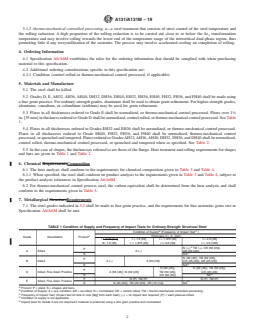
TABLE 1 Condition of Supply and Frequency of Impact Tests for Ordinary-Strength Structural Steel
B C
Condition of Supply (Frequency of Impact Test )
Thickness (t ), in. [mm]
A
Grade Deoxidation Product
t > 1.0 [25] t > 1.375 [35] t > 2.0 [50]
t # 1.0 [25]
t # 1.375 [35] t # 2.0 [50] t # 4.0 [100]
E
N(–), TM (–), CR (50 [45]),
P
AR (50 [45])
A Killed A(–)
D
S NA
N (50 [45]), TM (50 [45]),
P
B Killed A (–) A (50 [45]) CR (25 [23]), AR (25 [23])
D
S NA
N (50 [45]), N (50 [45]), TM (50 [45]),
P
D Killed, Fine Grain Practice A (50 [45]), N (50 [45]) TM (50 [45]), CR (25 [23])
D
S CR (50 [45]) NA
P N (P), TM (P) N (P), TM (P)
E Killed, Fine Grain Practice
D
S N (25 [23]), TM (25 [23]), CR (15 [14]) NA
A
Product: P = plate; S = shapes and bars.
B
Condition of Supply: A = any condition; AR = as-rolled; N = normalized; CR = control rolled; TM = thermo-mechanical controlled processing.
C
Frequency of Impact Test: (impact test lot size in tons [Mg] from each heat); (–) = no impact test required; (P) = each plate-as-rolled.
D
Condition of supply is not applicable.
E
Impact tests for Grade A are not required if material is produced using a fine grain practice and normalized.
A131/A131M−19
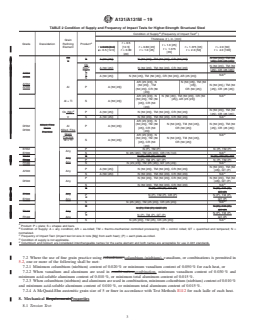
TABLE 2 Condition of Supply and Frequency of Impact Tests for Higher-Strength Structural Steel
B C
Condition of Supply (Frequency of Impact Test )
Thickness (t ), in. [mm]
Grain
A
t >0.5
Grade Deoxidation Refining Product
t > 1.0 [25]
[12.5] t >0.80[20] t > 1.375 [35] t > 2.0 [50]
Element
t # 0.5 [12.5] t # 1.375
t # 0.80 t # 1.0 [25] t # 2.0 [50] t # 4.0 [100]
[35]
[20]
N (50 [45]), TM (50
E
Cb (Nb) P A (50 [45]) N (50 [45]), TM (50 [45]), CR (50 [45])
[45]), CR (25 [23])
D
V S A (50 [45]) N (50 [45]), TM (50 [45]), CR (50 [45]), AR (25 [23]) NA
AR (25 [23]), N N (50 [45]), TM (50
(50 [45]) , TM [45]), N (50 [45],) TM (50
AH32 Al P A (50 [45])
(50 [45]), CR (50 CR (50 [45]) [45]), CR (25 [23])
AH36
[45])
D
AR (25 [23]), N N (50 [45]), TM (50 [45]), CR (50 NA
(50 [45]), TM (50 [45]), AR (25 [23])
Al + Ti S A (50 [45])
[45]), CR (50
[45])
N (50 [45]), TM (50
E
Cb (Nb) P A (50 [45]) N (50 [45]), TM (50 [45]), CR (50 [45])
[45]), CR (25 [23])
D
V S A (50 [45]) N (50 [45]), TM (50 [45]), CR (50 [45]) NA
AR (25 [23]), N
(50 [45]), TM (50 N (50 [45]), TM (50 [45]), N (50 [45]), TM (50
DH32 Al P A (50 [45])
[45]), CR (50 CR (50 [45]) [45]), CR (25 [23])
DH36
[45])
Killed, Fine
D
AR (25 [23]), N NA
Grain
(50 [45]), TM (50 N (50 [45]), TM (50 [45]),
Practice Al + Ti S A (50 [45])
[45]), CR (50 CR (50 [45])
[45])
EH32 P N (P), TM (P) N (P), TM (P)
Any
D
EH36 S N (25 [23]), TM (25 [23]), CR (15 [14]) NA
FH32 P N (P), TM (P), QT (P) N (P), TM (P)
Any
D
FH36 S N (25 [23]), TM (25 [23]), QT (25 [23]) NA
N (50 [45]), TM (50
P A (50 [45]) N (50 [45]), TM (50 [45]), CR (50 [45])
AH40 Any [45]), QT (P)
D
S A (50 [45]) N (50 [45]), TM (50 [45]), CR (50 [45]) NA
P N (50 [45]), TM (50 [45]), CR (50 [45]) N (50 [45]), TM (50
[45]), QT (P)
DH40 Any
D
S N (50 [45]), TM (50 [45]), CR (50 [45]) NA
P N (P), TM (P), CR (P) N (P), TM (P),
EH40 Any QT (P)
D
S N (25 [23]), TM (25 [23]), CR (25 [23]) NA
P N(P), TM(P),
N (P), TM (P), QT (P)
FH40 Any QT (P)
D
S N (25 [23]), TM (25), CR (25 [23]) NA
A
Product: P = plate; S = shapes and bars.
B
Condition of Supply: A = any condition; AR = as-rolled; TM = thermo-mechanical controlled processing; CR = control rolled; QT = quenched and tempered; N=
normalized.
C
Frequency of Impact Test: (impact test lot size in tons [Mg] from each heat); (P) = each plate-as-rolled.
D
Condition of supply is not applicable.
E
Columbium and niobium are considered interchangeable names for the same element and both names are acceptable for use in A01 standards.
specimen through an angle of 180° without cracking when 8.2 Toughness Tests:
subjected to a bend test in which the inside diameter is three
8.2.1 Charpy V-notch tests shall be made on Grade A
times plate thickness. Sampling for bend testing shall be as
material over 2 in. [50 mm] in thickness, on Grade B material
specified for the tension tests in 8.1.2. 1
over 1 in. [25 mm] in thickness and on material over ⁄4 in. [6.4
8.1.2 One tension test shall be made from each of two
mm] in thickness of Grades D, E,AH32,AH36,AH40, DH32,
different plates, shapes, or bars from each heat of structural
DH36, DH40, EH32, EH36, EH40, FH32, FH36, and FH40, as
steelunlessthefinishedproductfromaheatislessthan50tons
required by Table 1 and Table 2. The frequency of Charpy
[45 Mg], in which case one tension test is sufficient. If,
V-notch impact tests shall be as given in Table 1 and Table 2.
however, product from one heat differs ⁄8 in. [10 mm] or more
The test results shall conform to the requirements given in
in thickness or diameter, one tension test shall be made from
Table 7.
both the thickest and the thinnest structural product rolled,
8.2.2 For Grades EH32, EH36, EH40, FH32, FH36, and
regardless of the weight [mass] represented.
FH40platematerial,onesetofthreeimpactspecimensshallbe
8.1.3 For quenched and tempered steel, including Grades
made from each plate-as-rolled.
EH40, FH32, FH36, and FH40, one tension test shall be made
8.2.3 For Grade A, B, D, AH32, AH36, AH40, DH32,
on each plate as quenched and tempered.
DH36,andDH40platematerial,andforallshapematerial,and
all bar material, one set of three impact specimens shall be
made from the thickest material in each test lot size of each
A131/A131M−19
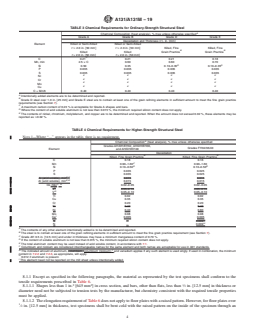
TABLE 3 Chemical Requirements for Ordinary-Strength Structural Steel
A
Chemical Composition (heat analysis), % max unless otherwise specified
Grade A Grade B Grade D Grade E
Deoxidation and Thickness (t ), in. [mm]
Element Killed or Semi-Killed Killed or Semi-Killed
t # 2.0 in. [50 mm] t # 2.0 in. [50 mm] Killed, Fine Killed, Fine
B B
Killed Killed Grain Practice Grain Practice
t > 2.0 in. [50 mm] t > 2.0 in. [50 mm]
C
C 0.21 0.21 0.21 0.18
Mn, min 2.5 × C 0.60 0.60 0.70
D D
Si 0.50 0.35 0.10–0.35 0.10–0.35
P 0.035 0.035 0.035 0.035
S 0.035 0.035 0.035 0.035
E EEE
Ni
E EEE
Cr
E EEE
Mo
E EEE
Cu
C + Mn/6 0.40 0.40 0.40 0.40
A
Intentionally added elements are to be determined and reported.
B
Grade D steel over 1.0 in. [25 mm] and Grade E steel are to contain at least one of the grain refining elements in sufficient amount to meet the fine grain practice
requirements (see Section 7).
C
A maximum carbon content of 0.23 % is acceptable for Grade A shapes and bars.
D
Where the content of acid soluble aluminum is not less than 0.015 %, the minimum required silicon content does not apply.
E
The contents of nickel, chromium, molybdenum, and copper are to be determined and reported. When the amount does not exceed 0.02 %, these elements may be
reported as #0.02 %.
TABLE 4 Chemical Requirements for Higher-Strength
...
This document is not an ASTM standard and is intended only to provide the user of an ASTM standard an indication of what changes have been made to the previous version. Because
it may not be technically possible to adequately depict all changes accurately, ASTM recommends that users consult prior editions as appropriate. In all cases only the current version
of the standard as published by ASTM is to be considered the official document.
Designation: A131/A131M − 14 A131/A131M − 19
Standard Specification for
Structural Steel for Ships
This standard is issued under the fixed designation A131/A131M; the number immediately following the designation indicates the year
of original adoption or, in the case of revision, the year of last revision. A number in parentheses indicates the year of last reapproval.
A superscript epsilon (´) indicates an editorial change since the last revision or reapproval.
This standard has been approved for use by agencies of the U.S. Department of Defense.
1. Scope*
1.1 This specification covers structural steel plates, shapes, bars, and rivetsbars intended primarily for use in ship construction.
1.2 Material under this specification is available in the following categories:
1.2.1 Ordinary Strength—Grades A, B, D, and E with a specified minimum yield point of 34 ksi [235 MPa], and
1.2.2 Higher Strength—Grades AH, DH, EH, and FH with a specified minimum yield point of 46 ksi [315 MPa], 51 ksi [350
MPa], or 57 ksi [390 MPa].
1.3 Shapes and bars are normally available as Grades A, B, AH32, and AH36. Other grades may be furnished by agreement
between the purchaser and the manufacturer.
1.4 The maximum thickness of products furnished under this specification is 4 in. [100 mm] for plates and 2 in. [50 mm] for
shapes and bars.
1.5 When the steel is to be welded, it is presupposed that a welding procedure suitable for the grade of steel and intended use
or service will be utilized. See Appendix X3 of Specification A6/A6M for information on weldability.
1.6 Units—This specification is expressed in both inch-pound units and in SI units; however, unless the purchase order or
contract specifies the applicable M specification designation (SI units), the inch-pound units shall apply. The values stated in either
inch-pound units or SI units are to be regarded separately as the standard. Within the text, the SI units are shown in brackets. The
values stated in each system aremay not be exact equivalents; therefore, each system mustshall be used independently of the other.
Combining values from the two systems may result in nonconformance with this specification.the standard.
1.7 This international standard was developed in accordance with internationally recognized principles on standardization
established in the Decision on Principles for the Development of International Standards, Guides and Recommendations issued
by the World Trade Organization Technical Barriers to Trade (TBT) Committee.
2. Referenced Documents
2.1 ASTM Standards:
A6/A6M Specification for General Requirements for Rolled Structural Steel Bars, Plates, Shapes, and Sheet Piling
A370 Test Methods and Definitions for Mechanical Testing of Steel Products
E112 Test Methods for Determining Average Grain Size
3. Terminology
3.1 Definitions of Terms Specific to This Standard:
3.1.1 control rolling (controlled rolling), n—a hot deformation process intended to provide austenite (and hence ferrite) grain
refinement by careful control of the pass-by-pass temperature/reduction schedule at high temperature regime where austenite
recrystallizes after each rolling pass or at lower temperatures where the deformed austenite does not recrystallize between rolling
passes, or both. In some cases, rolling may extend below the temperature (Ar ) at which the transformation from austenite to ferrite
begins, so the final rolling passes may involve deformation in the two-phase (austenite + ferrite) region.
This specification is under the jurisdiction of ASTM Committee A01 on Steel, Stainless Steel and Related Alloys and is the direct responsibility of Subcommittee A01.02
on Structural Steel for Bridges, Buildings, Rolling Stock and Ships.
Current edition approved Oct. 1, 2014May 1, 2019. Published October 2014May 2019. Originally approved in 1931. Last previous edition approved in 20132014 as
A131/A131M – 13.A131/A131M – 14. DOI: 10.1520/A0131_A0131M-14.10.1520/A0131_A0131M-19.
For referenced ASTM standards, visit the ASTM website, www.astm.org, or contact ASTM Customer Service at service@astm.org. For Annual Book of ASTM Standards
volume information, refer to the standard’s Document Summary page on the ASTM website.
*A Summary of Changes section appears at the end of this standard
Copyright © ASTM International, 100 Barr Harbor Drive, PO Box C700, West Conshohocken, PA 19428-2959. United States
A131/A131M − 19
3.1.2 thermo-mechanical controlled processing, n—a steel treatment that consists of strict control of the steel temperature and
the rolling reduction. A high proportion of the rolling reduction is to be carried out close to or below the Ar transformation
temperature and may involve rolling towards the lower end of the temperature range of the intercritical dual-phase region, thus
permitting little if any recrystallization of the austenite. The process may involve accelerated cooling on completion of rolling.
4. Ordering Information
4.1 Specification A6/A6M establishes the rules for the ordering information that should be complied with when purchasing
material to this specification.
4.2 Additional ordering considerations specific to this specification are:
4.2.1 Condition (control rolled or thermo-mechanical control processed, if applicable).
5. Materials and Manufacture
5.1 The steel shall be killed.
5.2 Grades D, E, AH32, AH36, AH40, DH32, DH36, DH40, EH32, EH36, EH40, FH32, FH36, and FH40 shall be made using
a fine grain practice. For ordinary-strength grades, aluminum shall be used to obtain grain refinement. For higher-strength grades,
aluminum, vanadium, or columbium (niobium) may be used for grain refinement.
5.3 Plates in all thicknesses ordered to Grade E shall be normalized, or thermo-mechanical control processed. Plates over 1 ⁄8
in. [35 mm] in thickness ordered to Grade D shall be normalized, control rolled, or thermo-mechanical control processed. See Table
1.
5.4 Plates in all thicknesses ordered to Grades EH32 and EH36 shall be normalized, or thermo-mechanical control processed.
Plates in all thicknesses ordered to Grade EH40, FH32, FH36, and FH40 shall be normalized, thermo-mechanical control
processed, or quenched and tempered. Plates ordered to Grades AH32, AH36, AH40, DH32, DH36, and DH40 shall be normalized,
control rolled, thermo-mechanical control processed, or quenched and tempered when so specified. See Table 2.
5.5 In the case of shapes, the thicknesses referred to are those of the flange. Heat treatment and rolling requirements for shapes
and bars are given in Table 1 and Table 2.
6. Chemical RequirementsComposition
6.1 The heat analysis shall conform to the requirements for chemical composition given in Table 3 and Table 4.
6.1.1 When specified, the steel shall conform on product analysis to the requirements given in Table 3 and Table 4, subject to
the product analysis tolerances in Specification A6/A6M.
6.2 For thermo-mechanical control process steel, the carbon equivalent shall be determined from the heat analysis and shall
conform to the requirements given in Table 5.
7. Metallurgical StructureRequirements
7.1 The steel grades indicated in 5.2 shall be made to fine grain practice, and the requirements for fine austenitic grain size in
Specification A6/A6M shall be met.
TABLE 1 Condition of Supply and Frequency of Impact Tests for Ordinary-Strength Structural Steel
B C
Condition of Supply (Frequency of Impact Test )
Thickness (t ), in. [mm]
A
Grade Deoxidation Product
t > 0.25 [6.4] t > 1.0 [25] t > 1.375 [35] t > 2.0 [50]
t# 1.0 [25] t # 1.375 [35] t # 2.0 [50] t # 4.0 [100]
E
N (–), TM (–), CR (50 [45]),
P
AR (50 [45])
A Killed A (–)
D
S NA
N (50 [45]), TM (50 [45]),
P
B Killed A (–) A (50 [45]) CR (25 [23]), AR (25 [23])
D
S NA
N (50 [45]), N (50 [45]), TM (50 [45]),
P
D Killed, Fine Grain Practice A (50 [45]), N (50 [45]) TM (50 [45]), CR (25 [23])
D
S CR (50 [45]) NA
P N (P), TM (P) N (P), TM (P)
E Killed, Fine Grain Practice
D
S N (25 [23]), TM (25 [23]), CR (15 [14]) NA
A
Product: P = plate; S = shapes and bars.
B
Condition of Supply: A = any condition; AR = as-rolled; N = normalized; CR = control rolled; TM = thermo-mechanical controlled processing.
C
Frequency of Impact Test: (impact test lot size in tons [Mg] from each heat); (–) = no impact test required; (P) = each plate-as-rolled.
D
Condition of supply is not applicable.
E
Impact tests for Grade A are not required if material is produced using a fine grain practice and normalized.
A131/A131M − 19
TABLE 2 Condition of Supply and Frequency of Impact Tests for Higher-Strength Structural Steel
B C
Condition of Supply (Frequency of Impact Test )
Thickness (t ), in. [mm]
Grain
A
t > 0.5
Grade Deoxidation Refining Product
t > 1.0 [25]
t > 0.25 [6.4] [12.5] t > 0.80 [20] t > 1.375 [35] t > 2.0 [50]
Element
t # 1.375
t# 0.5 [12.5] t # 0.80 t # 1.0 [25] t # 2.0 [50] t # 4.0 [100]
[35]
[20]
Cb N (50 [45]), TM (50
P A (50 [45]) N (50 [45]), TM (50 [45]), CR (50 [45])
V [45]), CR (25 [23])
Cb
N (50 [45]), TM (50
E
A (50 [45]) N (50 [45]), TM (50 [45]), CR (50 [45])
(Nb)
[45]), CR (25 [23])
P
AH32 D
V NA
A (50 [45]) N (50 [45]), TM (50 [45]), CR (50 [45]), AR (25 [23])
AH36
S
AR (25 [23]), N N (50 [45]), TM (50
AH32
(50 [45]) , TM [45]), N (50 [45],) TM (50
Al P A (50 [45])
AH36
(50 [45]), CR (50 CR (50 [45]) [45]), CR (25 [23])
[45])
D
AR (25 [23]), N N (50 [45]), TM (50 [45]), CR (50 NA
(50 [45]), TM (50 [45]), AR (25 [23])
Al + Ti S A (50 [45])
[45]), CR (50
[45])
N (50 [45]), TM (50
E
Cb (Nb) P A (50 [45]) N (50 [45]), TM (50 [45]), CR (50 [45])
[45]), CR (25 [23])
D
V S A (50 [45]) N (50 [45]), TM (50 [45]), CR (50 [45]) NA
AR (25 [23]), N
(50 [45]), TM (50 N (50 [45]), TM (50 [45]), N (50 [45]), TM (50
Killed, Fine
DH32 Al P A (50 [45])
[45]), CR (50 CR (50 [45]) [45]), CR (25 [23])
Grain
DH36
Killed, Fine
[45])
Practice
Grain
D
AR (25 [23]), N NA
Practice
(50 [45]), TM (50 N (50 [45]), TM (50 [45]),
Al + Ti S A (50 [45])
[45]), CR (50 CR (50 [45])
[45])
EH32 P N (P), TM (P) N (P), TM (P)
Any
D
EH36 S N (25 [23]), TM (25 [23]), CR (15 [14]) NA
FH32 P N (P), TM (P), QT (P) N (P), TM (P), QT
Any
FH36 P N (P), TM (P), QT (P) N (P), TM (P)
FH32
Any
D
FH36 S N (25 [23]), TM (25 [23]), QT (25 [23]) NA
N (50 [45]), TM (50
P A (50 [45]) N (50 [45]), TM (50 [45]), CR (50 [45])
AH40 Any [45]), QT (P)
D
S A (50 [45]) N (50 [45]), TM (50 [45]), CR (50 [45]) NA
P N (50 [45]), TM (50 [45]), CR (50 [45]) N (50 [45]), TM (50
DH40 Any [45]), QT (P)
D
S N (50 [45]), TM (50 [45]), CR (50 [45]) NA
P N (P), TM (P), QT (P) N (P), TM (P),
QT (P)
EH40 Any
P N (P), TM (P), CR (P) N (P), TM (P),
EH40 Any QT (P)
D
S N (25 [23]), TM (25 [23]), CR (25 [23]) NA
P N (P), TM (P),
N (P), TM (P), QQT (P)
QT (P)
FH40 Any
P N (P), TM (P),
N (P), TM (P), QT (P)
FH40 Any QT (P)
D
S N (25 [23]), TM (25), CR (25 [23]) NA
A
Product: P = plate; S = shapes and bars.
B
Condition of Supply: A = any condition; AR = as-rolled; TM = thermo-mechanical controlled processing; CR = control rolled; QT = quenched and tempered; N =
normalized.
C
Frequency of Impact Test: (impact test lot size in tons [Mg] from each heat); (P) = each plate-as-rolled.
D
Condition of supply is not applicable.
E
Columbium and niobium are considered interchangeable names for the same element and both names are acceptable for use in A01 standards.
7.2 Where the use of fine grain practice using columbium, columbium (niobium), vanadium, or combinations is permitted in
5.2, one or more of the following shall be met:
7.2.1 Minimum columbium (niobium) content of 0.020 % or minimum vanadium content of 0.050 % for each heat, or
7.2.2 When vanadium and aluminum are used in combi-nation,combination, minimum vanadium content of 0.030 % and
minimum acid-soluble aluminum content of 0.010 %, or minimum total aluminum content of 0.015 %.
7.2.3 When columbium (niobium) and aluminum are used in combination, minimum columbium (niobium) content of 0.010 %
and minimum acid-soluble aluminum content of 0.010 %, or minimum total aluminum content of 0.015 %.
7.2.4 A McQuaid-Ehn austenitic grain size of 5 or finer in accordance with Test Methods E112 for each ladle of each heat.
8. Mechanical RequirementsProperties
8.1 Tension Test:
A131/A131M − 19
TABLE 3 Chemical Requirements for Ordinary-Strength Structural Steel
A
Chemical Composition (heat analysis), % max unless otherwise specified
Grade A Grade B Grade D Grade E
Deoxidation and Thickness (t ), in. [mm]
Element Killed or Semi-Killed Killed or Semi-Killed
t # 2.0 in. [50 mm] t # 2.0 in. [50 mm] Killed, Fine Killed, Fine
B B
Killed Killed Grain Practice Grain Practice
t > 2.0 in. [50 mm] t > 2.0 in. [50 mm]
C
C 0.21 0.21 0.21 0.18
Mn, min 2.5 × C 0.60 0.60 0.70
D D
Si 0.50 0.35 0.10–0.35 0.10–0.35
P 0.035 0.035 0.035 0.035
S 0.035 0.035 0.035 0.035
E E E E
Ni
E E E E
Cr
E E E E
Mo
E E E E
Cu
C + Mn/6 0.40 0.40 0.40 0.40
A
Intentionally added elements are to be determined and reported.
B
Grade D steel over 1.0 in. [25 mm] and Grade E steel are to contain at least one of the grain refining elements in sufficient amount to meet the fine grain practice
requirements (see Section 7).
C
A maximum carbon content of 0.23 % is acceptable for Grade A shapes and bars.
D
Where the content of acid soluble aluminum is not less than 0.015 %, the minimum required silicon content does not apply.
E
The contents of nickel, chromium, molybdenum, and copper are to be determined and reported. When the amount does not exceed 0.02 %, these elements may be
reported as #0.02 %.
TABLE 4 Chemical Requirements for Higher-Strength Structural Steel
NOTE 1—Where “…” appears in the table, there is no requirement.
A
Chemical Composition (heat analysis), % max unless otherwise specified
Grades AH/DH/EH32, AH/DH/EH36,
Grades FH32/36/40
Element and AH/DH/EH40
Deoxidation
B B
Killed, Fine Grain Practice Killed, Fine Grain Practice
C 0.18 0.16
C
Mn 0.90–1.60 0.90–1.60
D D
Si 0.10–0.50 0.10–0.50
P 0.035 0.025
S 0.035 0.025
E,F
Al (acid soluble), min 0.015 0.015
E,G
Al (acid soluble), min 0.015 0.015
F, G
Cb (Nb) 0.02–0.05 0.02–0.05
F
V 0.05–0.10 0.05–0.10
G
V 0.05–0.10 0.05–0.10
Ti 0.02 0.02
Cu 0.35 0.35
Cr 0.20 0.20
Ni 0.40 0.40
Ni 0.40 0.80
Mo 0.08 0.08
I
Ca 0.005 0.005
G
N . 0.009
H
N . 0.009
A
The contents of any other element intentionally added is to be determined and reported.
B
The steel is to contain at least one of the grain refining elements in sufficient amount to meet the fine grain practice requirement (see Section 7).
C
Grade AH 0.5 in. [12.5 mm] and under in thickness may have a minimum manganese content of 0.70 %.
D
If the content of soluble aluminum is not less than 0.015 %, the minimum required silicon content does not apply.
E
The total aluminum content may be used instead of acid soluble content, in accordance with 7.1.
F
Columbium and niobium are considered interchangeable names for the same element and both names are acceptable for use in A01 standards.
G F
The indicated amount of aluminum, columbium, columbium (niobium), and vanadium applies if any such element is used singly. If used in combination, the minimum
content in 7.2.2 and 7.2.3, as appropriate, will apply.
H
0.012 if aluminum is present.
I
This element need not be reported on the mill sheet unless intentionally added.
8.1.1 Except as specified in the following paragraphs, the material as represented by the test specimens shall conform to the
tensile requirements prescribed in Table 6.
2 2
8.1.1.1 Shapes less than 1 in. [645 mm ] in cross section, and bars, other than flats, less than ⁄2 in. [12.5 mm] in thickness or
diameter need not be subjected to tension tests by the manufacturer, but chemistry consistent with the required tensile properties
must be applied.
8.1.1.2 The elongation requirement of Table 6 does not apply to floor plates with a raised pattern. However, for floor plates over
⁄2 in. [12.5 mm] in thickness, test specimens shall be bent cold with the raised pattern on the inside of the specimen through an
A131/A131M − 19
TABLE 5 Carbon Equivalent for Higher-Strength Structural Steel
Produced by TMCP
A
Carbon Equivalent, max, %
Thickness (t ), in. [mm]
Grade
t > 2.0 in. [50 mm]
t # 2.0 in. [50 mm]
t # 4.0 in. [100 mm]
AH32, DH32, EH32, FH32 0.36 0.38
AH36, DH36, EH36, FH36 0.38 0.40
AH40, DH40, EH40, FH40 0.40 0.42
A
The following carbon equivalent formula shall be used to calcula
...