

ASTM E222-23
(Test Method)Standard Test Methods for Hydroxyl Groups Using Acetic Anhydride Acetylation
General Information
- Abstract
SIGNIFICANCE AND USE
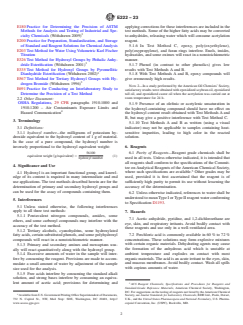
4.1 Hydroxyl is an important functional group, and knowledge of its content is required in many intermediate and end use applications. The test methods described herein are for the determination of primary and secondary hydroxyl groups and can be used for the assay of compounds containing them.
SCOPE
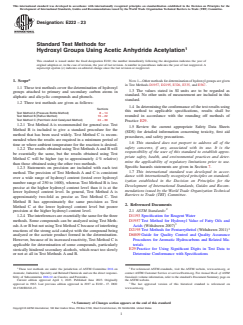
1.1 These test methods cover the determination of hydroxyl groups attached to primary and secondary carbon atoms in aliphatic and alicyclic compounds and phenols.
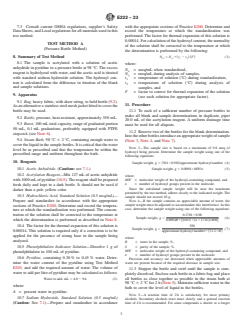
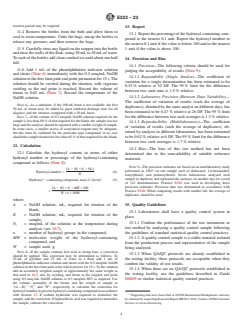
1.2 Three test methods are given as follows:
Sections
Test Method A (Pressure Bottle Method)
8 – 14
Test Method B (Reflux Method)
16 – 22
Test Method C (Perchloric Acid Catalyzed Method)
24 – 30
1.2.1 Test Method A is recommended for general use. Test Method B is included to give a standard procedure for the method that has been used widely. Test Method C is recommended when the results are required in a minimum period of time or where ambient temperature for the reaction is desired.
1.2.2 The results obtained using Test Methods A and B will be essentially the same, but the results obtained using Test Method C will be higher (up to approximately 4 % relative) than those obtained using the other two methods.
1.2.3 Statements on precision are included with each test method. The precision of Test Methods A and C is consistent over a wide range of hydroxyl content (tested over hydroxyl number range of 250 to 1600), whereas Test Method B is less precise at the higher hydroxyl content level than it is at the lower hydroxyl content level. In general, Test Method A is approximately two-fold as precise as Test Method C. Test Method B has approximately the same precision as Test Method C at the lower hydroxyl content level but poorer precision at the higher hydroxyl content level.
1.2.4 The interferences are essentially the same for the three methods. Some compounds can be analyzed using Test Methods A or B but not using Test Method C because of interfering reactions of the strong acid catalyst with the compound being analyzed or the acetate product formed in the determination. However, because of its increased reactivity, Test Method C is applicable for determination of some compounds, particularly sterically hindered secondary alcohols, which react too slowly or not at all in Test Methods A and B.
Note 1: Other methods for determination of hydroxyl groups are given in Test Methods D1957, D2195, E326, E335, and E567.
1.3 The values stated in SI units are to be regarded as standard. No other units of measurement are included in this standard.
1.4 In determining the conformance of the test results using this method to applicable specifications, results shall be rounded in accordance with the rounding off methods of Practice E29.
1.5 Review the current appropriate Safety Data Sheets (SDS) for detailed information concerning toxicity, first aid procedures, and safety precautions.
1.6 This standard does not purport to address all of the safety concerns, if any, associated with its use. It is the responsibility of the user of this standard to establish appropriate safety, health, and environmental practices and determine the applicability of regulatory limitations prior to use. Specific hazards statements are given in Section 7.
1.7 This international standard was developed in accordance with internationally recognized principles on standardization established in the Decision on Principles for the Development of International Standards, Guides and Recommendations issued by the World Trade Organization Technical Barriers to Trade (TBT) Committee.
- Status
- Published
- Publication Date
- 31-Mar-2023
- Technical Committee
- D16 - Aromatic, Industrial, Specialty and Related Chemicals
- Drafting Committee
- D16.12 - Caustics and Peroxides
Overview
ASTM E222-23: Standard Test Methods for Hydroxyl Groups Using Acetic Anhydride Acetylation establishes uniform procedures for determining the content of primary and secondary hydroxyl groups in aliphatic and alicyclic compounds and phenols. This standard, developed by ASTM International, specifies three validated test methods-Pressure Bottle, Reflux, and Perchloric Acid Catalyzed methods-enabling laboratories and industry professionals to assess hydroxyl group concentrations with accuracy and repeatability. The analytical results ensure product quality, regulatory compliance, and suitability for further chemical processing or end-use applications.
Key Topics
- Hydroxyl Group Determination: The standard focuses on precise quantification of hydroxyl groups attached to primary and secondary carbon atoms, critical for understanding material functionality.
- Three Test Methods:
- Test Method A (Pressure Bottle Method): Recommended for general use due to its high precision and reliability over a wide hydroxyl content range.
- Test Method B (Reflux Method): A widely adopted method, providing standard procedures, with similar accuracy to Method A at lower hydroxyl content.
- Test Method C (Perchloric Acid Catalyzed Method): Designed for rapid results at ambient temperature and is particularly useful for sterically hindered secondary alcohols but may show higher values and differs slightly in interference profiles.
- Interferences: Each method outlines specific chemical interferences (e.g., amides, amines, excess water, strong acids and bases) that may affect results and how to accommodate or compensate for them.
- Reporting and Quality Assurance: Emphasizes statistical quality control, precision, and consistent reporting in SI units, aligned with international best practices.
- Safety and Environmental Practice: Highlights the need for careful handling of hazardous reagents (such as acetic anhydride and perchloric acid) and mandates review of current Safety Data Sheets (SDS).
Applications
ASTM E222-23 finds broad application in chemical, pharmaceutical, polymer, and specialty materials industries. Key use cases include:
- Quality Control: Analytical labs and manufacturers use these test methods to verify hydroxyl content in raw materials and finished products, ensuring chemical integrity and performance.
- Product Development: Chemists rely on these assays to characterize intermediates in synthesizing resins, polyols, surfactants, and phenolic compounds, facilitating efficient material selection and process optimization.
- Regulatory Compliance: The standardized methods help organizations demonstrate adherence to product specifications and international regulations regarding chemical composition and labeling.
- Research: Academic and industrial researchers utilize the test methods for precise quantification of hydroxyl groups, supporting studies in organic synthesis, materials science, and environmental chemistry.
- Cross-Laboratory Consistency: The standard supports interlaboratory testing and data comparison-critical for supply chain confidence and industry benchmarking.
Related Standards
To ensure comprehensive analysis, ASTM E222-23 references and complements several other ASTM and regulatory standards:
- ASTM D1957: Test Method for Hydroxyl Value of Fatty Oils and Acids (Withdrawn)
- ASTM D2195: Test Methods for Pentaerythritol (Withdrawn)
- ASTM E29: Practice for Significant Digits in Test Data (rounding methods)
- ASTM E326, E335, E567: Other withdrawn hydroxyl determination methods
- ASTM D1193: Specification for Reagent Water
- ASTM D6809: Guide for Quality Control and Quality Assurance Procedures
- OSHA Regulations (29 CFR 1910.1000 and 1910.1200): For workplace safety regarding chemical exposure
Employing ASTM E222-23, alongside these related standards, ensures reliable hydroxyl group quantification and supports the highest levels of process and product quality.
Keywords: ASTM E222, hydroxyl group determination, acetic anhydride acetylation, test methods, primary alcohol, secondary alcohol, phenols, quality control, chemical analysis, laboratory standards, hydroxyl number, chemical safety.
Relations
- Effective Date
- 01-Jan-2024
- Effective Date
- 01-Nov-2016
- Effective Date
- 01-May-2013
- Effective Date
- 01-Nov-2011
- Effective Date
- 01-Oct-2008
- Effective Date
- 01-Oct-2008
- Effective Date
- 01-Jun-2007
- Effective Date
- 15-Nov-2006
- Effective Date
- 15-Sep-2006
- Effective Date
- 01-May-2006
- Effective Date
- 01-Mar-2006
- Effective Date
- 01-Nov-2005
- Effective Date
- 15-May-2005
- Effective Date
- 01-Dec-2004
- Effective Date
- 10-Jun-2002
Get Certified
Connect with accredited certification bodies for this standard

ECOCERT
Organic and sustainability certification.

Eurofins Food Testing Global
Global leader in food, environment, and pharmaceutical product testing.

Intertek Bangladesh
Intertek certification and testing services in Bangladesh.
Sponsored listings
Frequently Asked Questions
ASTM E222-23 is a standard published by ASTM International. Its full title is "Standard Test Methods for Hydroxyl Groups Using Acetic Anhydride Acetylation". This standard covers: SIGNIFICANCE AND USE 4.1 Hydroxyl is an important functional group, and knowledge of its content is required in many intermediate and end use applications. The test methods described herein are for the determination of primary and secondary hydroxyl groups and can be used for the assay of compounds containing them. SCOPE 1.1 These test methods cover the determination of hydroxyl groups attached to primary and secondary carbon atoms in aliphatic and alicyclic compounds and phenols. 1.2 Three test methods are given as follows: Sections Test Method A (Pressure Bottle Method) 8 – 14 Test Method B (Reflux Method) 16 – 22 Test Method C (Perchloric Acid Catalyzed Method) 24 – 30 1.2.1 Test Method A is recommended for general use. Test Method B is included to give a standard procedure for the method that has been used widely. Test Method C is recommended when the results are required in a minimum period of time or where ambient temperature for the reaction is desired. 1.2.2 The results obtained using Test Methods A and B will be essentially the same, but the results obtained using Test Method C will be higher (up to approximately 4 % relative) than those obtained using the other two methods. 1.2.3 Statements on precision are included with each test method. The precision of Test Methods A and C is consistent over a wide range of hydroxyl content (tested over hydroxyl number range of 250 to 1600), whereas Test Method B is less precise at the higher hydroxyl content level than it is at the lower hydroxyl content level. In general, Test Method A is approximately two-fold as precise as Test Method C. Test Method B has approximately the same precision as Test Method C at the lower hydroxyl content level but poorer precision at the higher hydroxyl content level. 1.2.4 The interferences are essentially the same for the three methods. Some compounds can be analyzed using Test Methods A or B but not using Test Method C because of interfering reactions of the strong acid catalyst with the compound being analyzed or the acetate product formed in the determination. However, because of its increased reactivity, Test Method C is applicable for determination of some compounds, particularly sterically hindered secondary alcohols, which react too slowly or not at all in Test Methods A and B. Note 1: Other methods for determination of hydroxyl groups are given in Test Methods D1957, D2195, E326, E335, and E567. 1.3 The values stated in SI units are to be regarded as standard. No other units of measurement are included in this standard. 1.4 In determining the conformance of the test results using this method to applicable specifications, results shall be rounded in accordance with the rounding off methods of Practice E29. 1.5 Review the current appropriate Safety Data Sheets (SDS) for detailed information concerning toxicity, first aid procedures, and safety precautions. 1.6 This standard does not purport to address all of the safety concerns, if any, associated with its use. It is the responsibility of the user of this standard to establish appropriate safety, health, and environmental practices and determine the applicability of regulatory limitations prior to use. Specific hazards statements are given in Section 7. 1.7 This international standard was developed in accordance with internationally recognized principles on standardization established in the Decision on Principles for the Development of International Standards, Guides and Recommendations issued by the World Trade Organization Technical Barriers to Trade (TBT) Committee.
SIGNIFICANCE AND USE 4.1 Hydroxyl is an important functional group, and knowledge of its content is required in many intermediate and end use applications. The test methods described herein are for the determination of primary and secondary hydroxyl groups and can be used for the assay of compounds containing them. SCOPE 1.1 These test methods cover the determination of hydroxyl groups attached to primary and secondary carbon atoms in aliphatic and alicyclic compounds and phenols. 1.2 Three test methods are given as follows: Sections Test Method A (Pressure Bottle Method) 8 – 14 Test Method B (Reflux Method) 16 – 22 Test Method C (Perchloric Acid Catalyzed Method) 24 – 30 1.2.1 Test Method A is recommended for general use. Test Method B is included to give a standard procedure for the method that has been used widely. Test Method C is recommended when the results are required in a minimum period of time or where ambient temperature for the reaction is desired. 1.2.2 The results obtained using Test Methods A and B will be essentially the same, but the results obtained using Test Method C will be higher (up to approximately 4 % relative) than those obtained using the other two methods. 1.2.3 Statements on precision are included with each test method. The precision of Test Methods A and C is consistent over a wide range of hydroxyl content (tested over hydroxyl number range of 250 to 1600), whereas Test Method B is less precise at the higher hydroxyl content level than it is at the lower hydroxyl content level. In general, Test Method A is approximately two-fold as precise as Test Method C. Test Method B has approximately the same precision as Test Method C at the lower hydroxyl content level but poorer precision at the higher hydroxyl content level. 1.2.4 The interferences are essentially the same for the three methods. Some compounds can be analyzed using Test Methods A or B but not using Test Method C because of interfering reactions of the strong acid catalyst with the compound being analyzed or the acetate product formed in the determination. However, because of its increased reactivity, Test Method C is applicable for determination of some compounds, particularly sterically hindered secondary alcohols, which react too slowly or not at all in Test Methods A and B. Note 1: Other methods for determination of hydroxyl groups are given in Test Methods D1957, D2195, E326, E335, and E567. 1.3 The values stated in SI units are to be regarded as standard. No other units of measurement are included in this standard. 1.4 In determining the conformance of the test results using this method to applicable specifications, results shall be rounded in accordance with the rounding off methods of Practice E29. 1.5 Review the current appropriate Safety Data Sheets (SDS) for detailed information concerning toxicity, first aid procedures, and safety precautions. 1.6 This standard does not purport to address all of the safety concerns, if any, associated with its use. It is the responsibility of the user of this standard to establish appropriate safety, health, and environmental practices and determine the applicability of regulatory limitations prior to use. Specific hazards statements are given in Section 7. 1.7 This international standard was developed in accordance with internationally recognized principles on standardization established in the Decision on Principles for the Development of International Standards, Guides and Recommendations issued by the World Trade Organization Technical Barriers to Trade (TBT) Committee.
ASTM E222-23 is classified under the following ICS (International Classification for Standards) categories: 71.040.40 - Chemical analysis. The ICS classification helps identify the subject area and facilitates finding related standards.
ASTM E222-23 has the following relationships with other standards: It is inter standard links to ASTM E203-24, ASTM D6809-02(2016), ASTM E691-13, ASTM E691-11, ASTM E691-08, ASTM E29-08, ASTM D6809-02(2007), ASTM E29-06b, ASTM E29-06a, ASTM E29-06, ASTM D1193-06, ASTM E691-05, ASTM D2195-05, ASTM E29-04, ASTM D6809-02. Understanding these relationships helps ensure you are using the most current and applicable version of the standard.
ASTM E222-23 is available in PDF format for immediate download after purchase. The document can be added to your cart and obtained through the secure checkout process. Digital delivery ensures instant access to the complete standard document.
Standards Content (Sample)
This international standard was developed in accordance with internationally recognized principles on standardization established in the Decision on Principles for the
Development of International Standards, Guides and Recommendations issued by the World Trade Organization Technical Barriers to Trade (TBT) Committee.
Designation: E222 − 23
Standard Test Methods for
Hydroxyl Groups Using Acetic Anhydride Acetylation
This standard is issued under the fixed designation E222; the number immediately following the designation indicates the year of
original adoption or, in the case of revision, the year of last revision. A number in parentheses indicates the year of last reapproval. A
superscript epsilon (´) indicates an editorial change since the last revision or reapproval.
NOTE 1—Other methods for determination of hydroxyl groups are given
1. Scope*
in Test Methods D1957, D2195, E326, E335, and E567.
1.1 These test methods cover the determination of hydroxyl
1.3 The values stated in SI units are to be regarded as
groups attached to primary and secondary carbon atoms in
standard. No other units of measurement are included in this
aliphatic and alicyclic compounds and phenols.
standard.
1.2 Three test methods are given as follows:
1.4 In determining the conformance of the test results using
Sections
this method to applicable specifications, results shall be
Test Method A (Pressure Bottle Method) 8 – 14
rounded in accordance with the rounding off methods of
Test Method B (Reflux Method) 16 – 22
Test Method C (Perchloric Acid Catalyzed Method) 24 – 30
Practice E29.
1.2.1 Test Method A is recommended for general use. Test
1.5 Review the current appropriate Safety Data Sheets
Method B is included to give a standard procedure for the
(SDS) for detailed information concerning toxicity, first aid
method that has been used widely. Test Method C is recom-
procedures, and safety precautions.
mended when the results are required in a minimum period of
1.6 This standard does not purport to address all of the
time or where ambient temperature for the reaction is desired.
safety concerns, if any, associated with its use. It is the
1.2.2 The results obtained using Test Methods A and B will
responsibility of the user of this standard to establish appro-
be essentially the same, but the results obtained using Test
priate safety, health, and environmental practices and deter-
Method C will be higher (up to approximately 4 % relative)
mine the applicability of regulatory limitations prior to use.
than those obtained using the other two methods.
Specific hazards statements are given in Section 7.
1.2.3 Statements on precision are included with each test
1.7 This international standard was developed in accor-
method. The precision of Test Methods A and C is consistent
dance with internationally recognized principles on standard-
over a wide range of hydroxyl content (tested over hydroxyl
ization established in the Decision on Principles for the
number range of 250 to 1600), whereas Test Method B is less
Development of International Standards, Guides and Recom-
precise at the higher hydroxyl content level than it is at the
mendations issued by the World Trade Organization Technical
lower hydroxyl content level. In general, Test Method A is
Barriers to Trade (TBT) Committee.
approximately two-fold as precise as Test Method C. Test
Method B has approximately the same precision as Test
2. Referenced Documents
Method C at the lower hydroxyl content level but poorer
precision at the higher hydroxyl content level. 2.1 ASTM Standards:
D1193 Specification for Reagent Water
1.2.4 The interferences are essentially the same for the three
methods. Some compounds can be analyzed using Test Meth- D1957 Test Method for Hydroxyl Value of Fatty Oils and
Acids (Withdrawn 2007)
ods A or B but not using Test Method C because of interfering
reactions of the strong acid catalyst with the compound being D2195 Test Methods for Pentaerythritol (Withdrawn 2011)
D6809 Guide for Quality Control and Quality Assurance
analyzed or the acetate product formed in the determination.
However, because of its increased reactivity, Test Method C is Procedures for Aromatic Hydrocarbons and Related Ma-
terials
applicable for determination of some compounds, particularly
sterically hindered secondary alcohols, which react too slowly E29 Practice for Using Significant Digits in Test Data to
Determine Conformance with Specifications
or not at all in Test Methods A and B.
1 2
These test methods are under the jurisdiction of ASTM Committee D16 on For referenced ASTM standards, visit the ASTM website, www.astm.org, or
Aromatic, Industrial, Specialty and Related Chemicals and are the direct responsi- contact ASTM Customer Service at service@astm.org. For Annual Book of ASTM
bility of Subcommittee D16.12 on Caustics and Peroxides. Standards volume information, refer to the standard’s Document Summary page on
Current edition approved April 1, 2023. Published June 2023. Originally the ASTM website.
approved in 1963. Last previous edition approved in 2017 as E222 – 17. DOI: The last approved version of this historical standard is referenced on
10.1520/E0222-23. www.astm.org.
*A Summary of Changes section appears at the end of this standard
Copyright © ASTM International, 100 Barr Harbor Drive, PO Box C700, West Conshohocken, PA 19428-2959. United States
E222 − 23
E180 Practice for Determining the Precision of ASTM applying corrections for these interferences are included in the
Methods for Analysis and Testing of Industrial and Spe- test methods. Some of the higher fatty acids may be converted
cialty Chemicals (Withdrawn 2009) to anhydrides, releasing water which will consume acetylation
E200 Practice for Preparation, Standardization, and Storage reagent.
of Standard and Reagent Solutions for Chemical Analysis 5.1.6 In Test Method C, epoxy, poly(oxyethylene),
E203 Test Method for Water Using Volumetric Karl Fischer poly(oxypropylene), and furan rings interfere. Enols, imides,
Titration hydrazides, and some oximes will react in a nonstoichiometric
E326 Test Method for Hydroxyl Groups by Phthalic Anhy- manner.
dride Esterification (Withdrawn 2001) 5.1.7 Phenol (in contrast to other phenolics) gives low
E335 Test Method for Hydroxyl Groups by Pyromellitic results with Test Methods A and B.
Dianhydride Esterification (Withdrawn 2002) 5.1.8 With Test Methods A and B, epoxy compounds will
E567 Test Method for Tertiary Hydroxyl Groups with Hy- give erroneously high results.
drogen Bromide (Withdrawn 1996)
NOTE 2—In a study performed by the American Oil Chemists’ Society,
E691 Practice for Conducting an Interlaboratory Study to
satisfactory results were obtained with epoxidized soybean oil, epoxidized
Determine the Precision of a Test Method
tall oil, and epoxidized castor oil when the acetylation was carried out at
room temperature for 24 h.
2.2 Other Document:
OSHA Regulations, 29 CFR paragraphs 1910.1000 and
5.1.9 Presence of an olefinic or acetylenic unsaturation in
1910.1200 – Air Contaminants Exposure Limits and
the hydroxyl-containing compound should have no effect on
Hazard Communication
the hydroxyl content result obtained with Test Methods A and
B, but may give a positive interference with Test Method C.
3. Terminology
5.1.10 Test Methods A and B as written (using a visual
3.1 Definitions: indicator) may not be applicable to samples containing heat-
3.1.1 hydroxyl number—the milligrams of potassium hy- sensitive impurities, leading to high color in the reacted
droxide equivalent to the hydroxyl content of 1 g of material. solution.
In the case of a pure compound, the hydroxyl number is
inversely proportional to the hydroxyl equivalent weight: 6. Reagents
6.1 Purity of Reagents—Reagent grade chemicals shall be
equivalent weight g/equivalent 5 (1)
~ !
hydroxyl number used in all tests. Unless otherwise indicated, it is intended that
all reagents shall conform to the specifications of the Commit-
4. Significance and Use
tee on Analytical Reagents of the American Chemical Society,
4.1 Hydroxyl is an important functional group, and knowl- where such specifications are available. Other grades may be
used, provided it is first ascertained that the reagent is of
edge of its content is required in many intermediate and end
use applications. The test methods described herein are for the sufficiently high purity to permit its use without lessening the
accuracy of the determination.
determination of primary and secondary hydroxyl groups and
can be used for the assay of compounds containing them.
6.2 Unless otherwise indicated, references to water shall be
understood to mean Type I or Type II reagent water conforming
5. Interferences
to Specification D1193.
5.1 Unless stated otherwise, the following interferences
apply to all three test methods:
7. Hazards
5.1.1 Pentavalent nitrogen compounds, amides, some
7.1 Acetic anhydride, pyridine, and 1,2-dichloroethane are
ethers, and some carbonyl compounds may interfere with the
eye, skin, and respiratory irritants. Avoid bodily contact with
accuracy of the test method.
these reagents and use only in a well-ventilated area.
5.1.2 Tertiary alcohols, cyanohydrins, some hydroxylated
7.2 Perchloric acid is commonly available in 60 % to 72 %
fatty acids, certain substituted phenols, and some polyhydroxyl
concentrations. These solutions may form explosive mixtures
compounds will react in a nonstoichiometric manner.
with certain organic materials. Dehydrating agents may cause
5.1.3 Primary and secondary amines and mercaptans usu-
the formation of the anhydrous acid which is unstable at
ally will react quantitatively along with the hydroxyl group.
ambient temperature and explodes on contact with most
5.1.4 Excessive amounts of water in the sample will inter-
organic materials. The acid is an acute irritant to the eyes, skin,
fere by consuming the reagent. Provisions are made to accom-
and mucous membranes. Avoid bodily contact. Wash all spills
modate a small amount of water by adjustment of the sample
with copious amounts of water.
size used for the analysis.
5.1.5 Free acids interfere by consuming the standard alkali
solution, and strong bases interfere by consuming an equiva-
lent amount of acetic acid; provisions for determining and
ACS Reagent Chemicals, Specifications and Procedures for Reagents and
Standard-Grade Reference Materials, American Chemical Society, Washington,
DC. For suggestions on the testing of reagents not listed by the American Chemical
Available from U.S. Government Printing Office Superintendent of Documents, Society, see Analar Standards for Laboratory Chemicals, BDH Ltd., Poole, Dorset,
732 N. Capitol St., NW, Mail Stop: SDE, Washington, DC 20401, http:// U.K., and the United States Pharmacopeia and National Formulary, U.S. Pharma-
www.access.gpo.gov. copeial Convention, Inc. (USPC), Rockville, MD.
E222 − 23
7.3 Consult current OSHA regulations, supplier’s Safety with the appropriate sections of Practice E200. Determine and
Data Sheets, and Local regulations for all materials used in this record the temperature at which the standardization was
test method. performed. The factor for thermal expansion of this solution is
0.00014. For calculation of the hydroxyl content, the normality
TEST METHOD A
of the solution shall be corrected to the temperature at which
(Pressure Bottle Method)
the determination is performed by the following:
8. Summary of Test Method N 5 N 1~t 2 t ! ~F! (3)
t2 t1 1 2
8.1 The sample is acetylated with a solution of acetic
where:
anhydride in pyridine in a pressure bottle at 98 °C. The excess
N = meq/mL when standardized,
t
reagent is hydrolyzed with water, and the acetic acid is titrated
N = meq/mL during analysis of samples,
t
with standard sodium hydroxide solution. The hydroxyl con-
t = temperature of solution (°C) during standardization,
tent is calculated from the difference in titration of the blank
t = temperature of solution (°C) during analysis of
and sample solutions.
samples, and
F = factor to correct for thermal expansion of the solution
9. Apparatus
(see each solution for appropriate factor).
9.1 Bag, heavy fabric, with draw string, to hold bottle (9.2).
11. Procedure
As an alternative a stainless steel mesh jacket fitted to cover the
11.1 To each of a sufficient number of pressure bottles to
bottle may be used.
make all blank and sample determinations in duplicate, pipet
9.2 Bottle, pressure, heat-resistant, approximately 350 mL.
20.0 mL of the acetylation reagent. A uniform drainage time
9.3 Buret, 100 mL total capacity, range of graduated portion
must be used for all aliquots.
50 mL, 0.1 mL graduations, preferably equipped with PTFE
11.2 Reserve two of the bottles for the blank determination.
stopcock (see Note 6).
Into the other bottles introduce an appropriate weight of sample
9.4 Steam Bath, 98 °C 6 2 °C, containing enough water to
(Note 3, Note 4, and Note 7).
cover the liquid in the sample bottles. It is critical that the water
NOTE 3—The sample size is based on a maximum of 9.8 meq of
level be as prescribed and that the temperature be within the
hydroxyl being present. Determine the sample weight using one of the
prescribed range and uniform throughout the bath.
following equations:
10. Reagents
Sample weight, g 5 561 × 0.98 /approximate hydroxyl number (4)
~ !
10.1 Acetic Anhydride. (Caution: see 7.1.) Sample weight, g 5 0.0098 × MW/n (5)
10.2 Acetylation Reagent—Mix 127 mL of acetic anhydride
where:
with 1000 mL of pyridine (10.5). The reagent shall be prepared
MW = molecular weight of the hydroxyl-containing compound, and
n = number of hydroxyl groups present in the molecule.
fresh daily and kept in a dark bottle. It should not be used if
Since the calculated sample weight will be near the maximum
darker than a pale yellow color.
permitted by the test method, adhere closely to the indicated weight. The
10.3 Hydrochloric Acid, Standard Solution (0.5 meq/mL)—
sample should not exceed 10 g.
NOTE 4—If the sample contains an appreciable amount of water, the
Prepare and standardize in accordance with the appropriate
sample weight must be adjusted to accommodate this interference. In this
sections of Practice E200. Determine and record the tempera-
case, determine the sample weight using one of the following equations:
ture at which the standardization was performed. The concen-
tration of the solution shall be corrected to the temperature at
0.1701 × 0.98
Sample weight, g 5 (6)
which the determination is performed as described in Note 8. 0.0094R1 0.01S × n × 17.01 /MW
@ ~ ! #
10.4 The factor for the thermal expansion of this solution is 550
Sample weight, g 5 (7)
0.00014. This solution is required only if a correction is to be approximate hydroxyl number1~31.2 × R!
applied for the presence of strong base in the sample being
where:
analyzed.
R = water in the sample, %,
S = purity of the sample, %,
10.5 Phenolphthalein Indicator Solution—Dissolve 1 g of
MW = molecular weight of the hydroxyl-containing compound, and
phenolphthalein in 100 mL of pyridine.
n = number of hydroxyl groups present in the molecule.
10.6 Pyridine, containing 0.30 % to 0.45 % water. Deter-
Precision and accuracy are decreased when appreciable amounts of
mine the water content of the pyridine using Test Method water are present because of the required decrease in sample size.
E203, and add the required amount of water. The volume of
11.3 Stopper the bottle and swirl until the sample is com-
water to add per litre of pyridine may be calculated as follows:
pletely dissolved. Enclose each bottle in a fabric bag and place
all bottles as close together as possible in the steam bath at
Water to add, mL 5 4.0 2 9A (2)
98 °C 6 2 °C for 2 h (Note 5). Maintain sufficient water in the
where:
bath to cover the level of liquid in the bottles.
A = percent water in pyridine.
NOTE 5—A reaction time of 2 h is satisfactory for most primary
10.7 Sodium Hydroxide, Standard Solution (0.5 meq/mL)
alcohols. Secondary alcohols react more slowly, and a general reaction
(Caution: See 7.1)—Prepare and standardize in accordance time of 4 h is recommended. For some compounds a shorter or a longer
E222 − 23
reaction period may be required.
13. Report
11.4 Remove the bottles from the bath and allow them to
13.1 Report the percentage of the hydroxyl-containing com-
cool to room temperature. Untie the bags, uncap the bottles to
pound to the nearest 0.1 unit. Report the hydroxyl number to
release any pressure, and then remove the bags.
the nearest 0.1 unit if the value is below 100 and to the nearest
11.5 Carefully rinse any liquid on the stopper into the bottle 1 unit if the value is above 100.
and rinse the walls of the flask, using 20 mL to 30 mL of water.
To each of the bottles add clean crushed ice until about one half
14. Precision and Bias
full.
14.1 Precision—The following criteria should be used for
11.6 Add 1 mL of the phenolphthalein indicator solution
judging the acceptability of results (Note 9):
and titrate (Note 6) immediately with the 0.5 meq/mL NaOH
14.1.1 Repeatability (Single Analyst)—The coefficient of
solution to the first faint pink end point permanent for 15 s. The
variation for a single determination has been estimated to be
solution should be swirled during the titration, with vigorous
0.53 % relative at 52 DF. The 95 % limit for the difference
swirling as the end point is reached. Record the volume of
between two such runs is 1.5 % relative.
titrant to 0.02 mL (Note 7). Record the temperature of the
14.1.2 Laboratory Precision (Between Days Variability)—
NaOH solution.
The coefficient of variation of results (each the average of
NOTE 6—As a substitute, if the 100 mL buret is not available, the first
duplicates), obtained by the same analyst on different days, has
50 mL of titrant may be added by pipet (uniform drainage time for all
been estimated to be 0.47 % relative at 26 DF. The 95 % limit
aliquots) and the titration completed with a 50 mL buret.
for the difference between two such averages is 1.3 % relative.
NOTE 7—If the volume of 0.5 meq/mL NaOH solution required for the
sample is less than 80 % of that required for the blank, the sample was too
14.1.3 Reproducibility (Multilaboratory)—The coefficient
large and the analysis should be repeated with a smaller weight of sample.
of variation of results (each the average of duplicates), ob-
In some cases, a smaller excess of acetylation reagent may be adequate,
tained by analysts in different laboratories, has been estimated
but this must be validated for the particular type compound; in no case
should the sample titration be less than 65 % of that required for the blank.
to be 0.62 % relative at 6 DF. The 95 % limit for the difference
between two such averages is 1.7 % relative.
12. Calculation
14.2 Bias—The bias of this test method has not been
12.1 Calculate the hydroxyl content in terms of either
determined due to the unavailability of suitable reference
hydroxyl number or percentage of the hydroxyl-containing
materials.
compound as follows (Note 8):
NOTE 9—The precision estimates are based on an interlaboratory study
A 2 B × N × 56.1
~ !
t 6
performed in 1963 on one sample each of dodecanol, 1,6-hexanediol,
Hydroxyl number 5 (8)
W
nonylphenol, and pentaerythritol. Seven laboratories analyzed each
sample in duplicate and replicated the analyses on another day for a total
Hydroxyl 2 containing compound, mass % m/m (9)
~ !
of 112 determinations. Practice E180 was used in developing these
precision estimates. Precision data was determined in accordance with
A 2 B × N × MW × 100
~ !
t
Practice E180. When comparing results with another lab, the average of
W × n × 1000
duplicates should be used.
where:
15. Quality Guidelines
A = NaOH solution, mL, required for titration of the
blank,
15.1 Laboratories shall have a quality control system in
B = NaOH solution, mL, required for titration of the
place.
sample,
15.1.1 Confirm the performance of the test instrument or
N = meq/mL of the solution at the temperature during
t
test method by analyzing a quality control sample following
analysis (see 10.7),
the guidelines of standard statistical quality control practices.
n = number of hydroxyl groups in the compound,
MW = molecular weight of the hydroxyl-containing
15.1.2 A quality control sample is a stable material isolated
compound, and
from the production process and representative of the sample
W = sample used, g.
being analyzed.
NOTE 8—If the sample contains free acid or strong base, a correction
15.1.3 When QA/QC protocols are already established in
should be applied. This
...
This document is not an ASTM standard and is intended only to provide the user of an ASTM standard an indication of what changes have been made to the previous version. Because
it may not be technically possible to adequately depict all changes accurately, ASTM recommends that users consult prior editions as appropriate. In all cases only the current version
of the standard as published by ASTM is to be considered the official document.
Designation: E222 − 17 E222 − 23
Standard Test Methods for
Hydroxyl Groups Using Acetic Anhydride Acetylation
This standard is issued under the fixed designation E222; the number immediately following the designation indicates the year of
original adoption or, in the case of revision, the year of last revision. A number in parentheses indicates the year of last reapproval. A
superscript epsilon (´) indicates an editorial change since the last revision or reapproval.
1. Scope*
1.1 These test methods cover the determination of hydroxyl groups attached to primary and secondary carbon atoms in aliphatic
and alicyclic compounds and phenols.
1.2 Three test methods are given as follows:
Sections
Test Method A (Pressure Bottle Method) 8 – 14
Test Method B (Reflux Method) 16 – 22
Test Method C (Perchloric Acid Catalyzed Method) 24 – 30
1.2.1 Test Method A is recommended for general use. Test Method B is included to give a standard procedure for the method that
has been used widely. Test Method C is recommended when the results are required in a minimum period of time or where ambient
temperature for the reaction is desired.
1.2.2 The results obtained using Test Methods A and B will be essentially the same, but the results obtained using Test Method
C will be higher (up to approximately 4 % relative) than those obtained using the other two methods.
1.2.3 Statements on precision are included with each test method. The precision of Test Methods A and C is consistent over a wide
range of hydroxyl content (tested over hydroxyl number range of 250 to 1600), whereas Test Method B is less precise at the higher
hydroxyl content level than it is at the lower hydroxyl content level. In general, Test Method A is approximately two-fold as precise
as Test Method C. Test Method B has approximately the same precision as Test Method C at the lower hydroxyl content level but
poorer precision at the higher hydroxyl content level.
1.2.4 The interferences are essentially the same for the three methods. Some compounds can be analyzed using Test Methods A
or B but not using Test Method C because of interfering reactions of the strong acid catalyst with the compound being analyzed
or the acetate product formed in the determination. However, because of its increased reactivity, Test Method C is applicable for
determination of some compounds, particularly sterically hindered secondary alcohols, which react too slowly or not at all in Test
Methods A and B.
NOTE 1—Other methods for determination of hydroxyl groups are given in Test Methods D1957, D2195, E326, E335, and E567.
1.3 The values stated in SI units are to be regarded as standard. No other units of measurement are included in this standard.
These test methods are under the jurisdiction of ASTM Committee D16 on Aromatic, Industrial, Specialty and Related Chemicals and are the direct responsibility of
Subcommittee D16.12 on Caustics and Peroxides.
Current edition approved June 1, 2017April 1, 2023. Published July 2017June 2023. Originally approved in 1963. Last previous edition approved in 20102017 as
E222 – 10.E222 – 17. DOI: 10.1520/E0222-17.10.1520/E0222-23.
*A Summary of Changes section appears at the end of this standard
Copyright © ASTM International, 100 Barr Harbor Drive, PO Box C700, West Conshohocken, PA 19428-2959. United States
E222 − 23
1.4 In determining the conformance of the test results using this method to applicable specifications, results shall be rounded in
accordance with the rounding off methods of Practice E29.
1.5 Review the current appropriate Safety Data Sheets (SDS) for detailed information concerning toxicity, first aid procedures, and
safety precautions.
1.6 This standard does not purport to address all of the safety concerns, if any, associated with its use. It is the responsibility
of the user of this standard to establish appropriate safety, health, and environmental practices and determine the applicability of
regulatory limitations prior to use. Specific hazards statements are given in Section 7.
1.7 This international standard was developed in accordance with internationally recognized principles on standardization
established in the Decision on Principles for the Development of International Standards, Guides and Recommendations issued
by the World Trade Organization Technical Barriers to Trade (TBT) Committee.
2. Referenced Documents
2.1 ASTM Standards:
D1193 Specification for Reagent Water
D1957 Test Method for Hydroxyl Value of Fatty Oils and Acids (Withdrawn 2007)
D2195 Test Methods for Pentaerythritol (Withdrawn 2011)
D6809 Guide for Quality Control and Quality Assurance Procedures for Aromatic Hydrocarbons and Related Materials
E29 Practice for Using Significant Digits in Test Data to Determine Conformance with Specifications
E180 Practice for Determining the Precision of ASTM Methods for Analysis and Testing of Industrial and Specialty Chemicals
(Withdrawn 2009)
E200 Practice for Preparation, Standardization, and Storage of Standard and Reagent Solutions for Chemical Analysis
E203 Test Method for Water Using Volumetric Karl Fischer Titration
E326 Test Method for Hydroxyl Groups by Phthalic Anhydride Esterification (Withdrawn 2001)
E335 Test Method for Hydroxyl Groups by Pyromellitic Dianhydride Esterification (Withdrawn 2002)
E567 Test Method for Tertiary Hydroxyl Groups with Hydrogen Bromide (Withdrawn 1996)
E691 Practice for Conducting an Interlaboratory Study to Determine the Precision of a Test Method
2.2 Other Document:
OSHA Regulations, 29 CFR paragraphs 1910.1000 and 1910.1200 – Air Contaminants Exposure Limits and Hazard
Communication
3. Terminology
3.1 Definitions:
3.1.1 hydroxyl number—the milligrams of potassium hydroxide equivalent to the hydroxyl content of 1 g of material. In the case
of a pure compound, the hydroxyl number is inversely proportional to the hydroxyl equivalent weight:
equivalent weight g/equivalent 5 (1)
~ !
hydroxyl number
4. Significance and Use
4.1 Hydroxyl is an important functional group, and knowledge of its content is required in many intermediate and end use
applications. The test methods described herein are for the determination of primary and secondary hydroxyl groups and can be
used for the assay of compounds containing them.
5. Interferences
5.1 Unless stated otherwise, the following interferences apply to all three test methods:
For referenced ASTM standards, visit the ASTM website, www.astm.org, or contact ASTM Customer Service at service@astm.org. For Annual Book of ASTM Standards
volume information, refer to the standard’s Document Summary page on the ASTM website.
The last approved version of this historical standard is referenced on www.astm.org.
Available from U.S. Government Printing Office Superintendent of Documents, 732 N. Capitol St., NW, Mail Stop: SDE, Washington, DC 20401, http://
www.access.gpo.gov.
E222 − 23
5.1.1 Pentavalent nitrogen compounds, amides, some ethers, and some carbonyl compounds may interfere with the accuracy of
the test method.
5.1.2 Tertiary alcohols, cyanohydrins, some hydroxylated fatty acids, certain substituted phenols, and some polyhydroxyl
compounds will react in a nonstoichiometric manner.
5.1.3 Primary and secondary amines and mercaptans usually will react quantitatively along with the hydroxyl group.
5.1.4 Excessive amounts of water in the sample will interfere by consuming the reagent. Provisions are made to accommodate a
small amount of water by adjustment of the sample size used for the analysis.
5.1.5 Free acids interfere by consuming the standard alkali solution, and strong bases interfere by consuming an equivalent amount
of acetic acid; provisions for determining and applying corrections for these interferences are included in the test methods. Some
of the higher fatty acids may be converted to anhydrides, releasing water which will consume acetylation reagent.
5.1.6 In Test Method C, epoxy, poly(oxyethylene), poly(oxypropylene), and furan rings interfere. Enols, imides, hydrazides, and
some oximes will react in a nonstoichiometric manner.
5.1.7 Phenol (in contrast to other phenolics) gives low results with Test Methods A and B.
5.1.8 With Test Methods A and B, epoxy compounds will give erroneously high results.
NOTE 2—In a study performed by the American Oil Chemists’ Society, satisfactory results were obtained with epoxidized soybean oil, epoxidized tall oil,
and epoxidized castor oil when the acetylation was carried out at room temperature for 24 h.
5.1.9 Presence of an olefinic or acetylenic unsaturation in the hydroxyl-containing compound should have no effect on the
hydroxyl content result obtained with Test Methods A and B, but may give a positive interference with Test Method C.
5.1.10 Test Methods A and B as written (using a visual indicator) may not be applicable to samples containing heat-sensitive
impurities, leading to high color in the reacted solution.
6. Reagents
6.1 Purity of Reagents—Reagent grade chemicals shall be used in all tests. Unless otherwise indicated, it is intended that all
reagents shall conform to the specifications of the Committee on Analytical Reagents of the American Chemical Society, where
such specifications are available. Other grades may be used, provided it is first ascertained that the reagent is of sufficiently high
purity to permit its use without lessening the accuracy of the determination.
6.2 Unless otherwise indicated, references to water shall be understood to mean Type III or Type IIIII reagent water conforming
to Specification D1193.
7. Hazards
7.1 Acetic anhydride, pyridine, and 1,2-dichloroethane are eye, skin, and respiratory irritants. Avoid bodily contact with these
reagents and use only in a well-ventilated area.
7.2 Perchloric acid is commonly available in 6060 % to 72 % concentrations. These solutions may form explosive mixtures with
certain organic materials. Dehydrating agents may cause the formation of the anhydrous acid which is unstable at ambient
temperature and explodes on contact with most organic materials. The acid is an acute irritant to the eyes, skin, and mucous
membranes. Avoid bodily contact. Wash all spills with copious amounts of water.
Reagent Chemicals, American Chemical Society Specifications,ACS Reagent Chemicals, Specifications and Procedures for Reagents and Standard-Grade Reference
Materials, American Chemical Society, Washington, DC. For suggestions on the testing of reagents not listed by the American Chemical Society, see Analar Standards for
Laboratory Chemicals, BDH Ltd., Poole, Dorset, U.K., and the United States Pharmacopeia and National Formulary, U.S. Pharmacopeial Convention, Inc. (USPC),
Rockville, MD.
E222 − 23
7.3 Consult current OSHA regulations, supplier’s Safety Data Sheets, and Local regulations for all materials used in this test
method.
TEST METHOD A
(Pressure Bottle Method)
8. Summary of Test Method
8.1 The sample is acetylated with a solution of acetic anhydride in pyridine in a pressure bottle at 98°C.98 °C. The excess reagent
is hydrolyzed with water, and the acetic acid is titrated with standard sodium hydroxide solution. The hydroxyl content is calculated
from the difference in titration of the blank and sample solutions.
9. Apparatus
9.1 Bag, heavy fabric, with draw string, to hold bottle (9.2).(9.2). As an alternative a stainless steel mesh jacket fitted to cover the
bottle may be used.
9.2 Bottle, pressure, heat-resistant, approximately 350 mL.
9.3 Buret, 100-mL100 mL total capacity, range of graduated portion 50 mL, 0.1-mL0.1 mL graduations, preferably equipped with
PTFE stopcock (see Note 6).
9.4 Steam Bath, 98 6 2°C,98 °C 6 2 °C, containing enough water to cover the liquid in the sample bottles. It is critical that the
water level be as prescribed and that the temperature be within the prescribed range and uniform throughout the bath.
10. Reagents
10.1 Acetic Anhydride. (Caution: see 7.1.)
10.2 Acetylation Reagent—Mix 127 mL of acetic anhydride with 1000 mL of pyridine (10.5).(10.5). The reagent shall be prepared
fresh daily and kept in a dark bottle. It should not be used if darker than a pale yellow color.
10.3 Hydrochloric Acid, Standard Solution (0.5 meq/mL)—Prepare and standardize in accordance with the appropriate sections of
Practice E200. Determine and record the temperature at which the standardization was performed. The concentration of the
solution shall be corrected to the temperature at which the determination is performed as described in Note 8.
10.4 The factor for the thermal expansion of this solution is 0.00014. This solution is required only if a correction is to be applied
for the presence of strong base in the sample being analyzed.
10.5 Phenolphthalein Indicator Solution—Dissolve 1 g of phenolphthalein in 100 mL of pyridine.
10.6 Pyridine, containing 0.300.30 % to 0.45 % water. Determine the water content of the pyridine using Test Method E203, and
add the required amount of water. The volume of water to add per litre of pyridine may be calculated as follows:
Water to add, mL 5 4.0 2 9A (2)
where:
A = percent water in pyridine.
10.7 Sodium Hydroxide, Standard Solution (0.5 meq/mL) (Caution: See 7.1)—Prepare and standardize in accordance with the
appropriate sections of Practice E200. Determine and record the temperature at which the standardization was performed. The
factor for thermal expansion of this solution is 0.00014. For calculation of the hydroxyl content, the normality of the solution shall
be corrected to the temperature at which the determination is performed by the following:
E222 − 23
N 5 N 1 t 2 t F (3)
~ ! ~ !
t2 t1 1 2
where:
N = meq/mL when standardized,
t
N = meq/mL during analysis of samples,
t
t = temperature of solution (°C) during standardization,
t = temperature of solution (°C) during analysis of samples, and
F = factor to correct for thermal expansion of the solution (see each solution for appropriate factor).
11. Procedure
11.1 To each of a sufficient number of pressure bottles to make all blank and sample determinations in duplicate, pipet 20.0 mL
of the acetylation reagent. A uniform drainage time must be used for all aliquots.
11.2 Reserve two of the bottles for the blank determination. Into the other bottles introduce an appropriate weight of sample (Note
3, Note 4, and Note 7).
NOTE 3—The sample size is based on a maximum of 9.8 meq of hydroxyl being present. Determine the sample weight using one of the following
equations:
Sample weight, g5 561 ×0.98 /approximate hydroxyl number (4)
~ !
Sample weight, g5 0.0098 ×MW/n (5)
where:
MW = molecular weight of the hydroxyl-containing compound, and
n = number of hydroxyl groups present in the molecule.
Since the calculated sample weight will be near the maximum permitted by the test method, adhere closely to the indicated weight. The sample should
not exceed 10 g.
NOTE 4—If the sample contains an appreciable amount of water, the sample weight must be adjusted to accommodate this interference. In this case,
determine the sample weight using one of the following equations:
0.1701 ×0.98
Sample weight, g5 (6)
0.0094R1 0.01S × n ×17.01 /MW
@ ~ ! #
Sample weight, g5 (7)
approximate hydroxyl number1~31.2 ×R!
where:
R = water in the sample, %,
S = purity of the sample, %,
MW = molecular weight of the hydroxyl-containing compound, and
n = number of hydroxyl groups present in the molecule.
Precision and accuracy are decreased when appreciable amounts of water are present because of the required decrease in sample size.
11.3 Stopper the bottle and swirl until the sample is completely dissolved. Enclose each bottle in a fabric bag and place all bottles
as close together as possible in the steam bath at 98 6 2°C98 °C 6 2 °C for 2 h (Note 5). Maintain sufficient water in the bath
to cover the level of liquid in the bottles.
NOTE 5—A reaction time of 2 h 2 h is satisfactory for most primary alcohols. Secondary alcohols react more slowly, and a general reaction time of 4 h
4 h is recommended. For some compounds a shorter or a longer reaction period may be required.
11.4 Remove the bottles from the bath and allow them to cool to room temperature. Untie the bags, uncap the bottles to release
any pressure, and then remove the bags.
11.5 Carefully rinse any liquid on the stopper into the bottle and rinse the walls of the flask, using 2020 mL to 30 mL of water.
To each of the bottles add clean crushed ice until about one half full.
11.6 Add 1 mL of the phenolphthalein indicator solution and titrate (Note 6) immediately with the 0.5 meq/mL NaOH solution
E222 − 23
to the first faint pink end point permanent for 15 s. The solution should be swirled during the titration, with vigorous swirling as
the end point is reached. Record the volume of titrant to 0.02 mL (Note 7). Record the temperature of the NaOH solution.
NOTE 6—As a substitute, if the 100-mL100 mL buret is not available, the first 50 mL of titrant may be added by pipet (uniform drainage time for all
aliquots) and the titration completed with a 50-mL50 mL buret.
NOTE 7—If the volume of 0.5 meq/mL NaOH solution required for the sample is less than 80 % of that required for the blank, the sample was too large
and the analysis should be repeated with a smaller weight of sample. In some cases, a smaller excess of acetylation reagent may be adequate, but this
must be validated for the particular type compound; in no case should the sample titration be less than 65 % of that required for the blank.
12. Calculation
12.1 Calculate the hydroxyl content in terms of either hydroxyl number or percentage of the hydroxyl-containing compound as
follows (Note 8):
~A 2 B! ×N ×56.1
t
Hydroxyl number 5 (8)
W
Hydroxyl 2 containing compound, mass % m/m (9)
~ !
A 2 B ×N ×MW ×100
~ !
t
W ×n ×1000
where:
A = NaOH solution, mL, required for titration of the blank,
B = NaOH solution, mL, required for titration of the sample,
N = meq/mL of the solution at the temperature during analysis (see 10.7),
t
n = number of hydroxyl groups in the compound,
MW = molecular weight of the hydroxyl-containing compound, and,
MW = molecular weight of the hydroxyl-containing compound, and
W = sample used, g.
NOTE 8—If the sample contains free acid or strong base, a correction should be applied. This correction may be determined as follows: To 25 mL 25 mL
of pyridine and 25 mL of water in a flask add 1 mL of phenolphthalein indicator solution and titrate with the 0.5 meq/mL NaOH solution to the first faint
pink color which persists for 15 s. 15 s. To the solution add an accurately weighed sample of approximately the same weight as that used in 10.2, mix
by swirling, and titrate to the original end point using 0.50.5 meq meq/mL ⁄mL NaOH solution or 0.5 meq/mL HCl as required. Use the volume, normality
of the titrant, and the weight of sample as “(A − B),” “N ” and “W”, respectively, to calculate the correction for hydroxyl number or percent
t
hydroxyl-containing compound in accordance with Section 12. If sodium hydroxide was required to neutralize the sample, add the correction. If
hydrochloric acid was required to neutralize the sample, subtract the correction.
13. Report
13.1 Report the percentage of the hydroxyl-containing compound to the nearest 0.1 unit. Report the hydroxyl number to the
nearest 0.1 unit if the value is below 100 and to the nearest 1 unit if the value is above 100.
14. Precision and Bias
14.1 Precision—The following criteria should be used for judging the acceptability of results (Note 9):
14.1.1 Repeatability (Single Analyst)—The coefficient of variation for a single determination has been estimated to be 0.53 %
relative at 52 DF. The 95 % limit for the difference between two such runs is 1.5 % relative.
14.1.2 Laboratory Precision (Between Days Variability)—The coefficient of variation of results (each the average of duplicates),
obtained by the same analyst on different days, has been estimated to be 0.47 % relative at 26 DF. The 95 % limit for the difference
between two such averages is 1.3 %1.3 % relative.
14.1.3 Reproducibility (Multilaboratory)—The coefficient of variation of results (each the average of duplicates), obtained by
analysts in different laboratories, has been estimated to be 0.62 % relative at 6 DF. The 95 % limit for the difference between two
such averages is 1.7 % relative.
14.2 Bias—The bias of this test method has not been determined due to the unavailability of suitable reference materials.
E222
...