


ASTM E2719-09
(Guide)Standard Guide for Fluorescence-Instrument Calibration and Qualification
Standard Guide for Fluorescence<span class='unicode'>-</span>Instrument Calibration and Qualification
SIGNIFICANCE AND USE
By following the general guidelines (Section 5) and instrument calibration methods (Sections 6-16) in this guide, users should be able to more easily conform to good laboratory and manufacturing practices (GXP) and comply with regulatory and QA/QC requirements, related to fluorescence measurements.
Each instrument parameter needing calibration (for example, wavelength, spectral responsivity) is treated in a separate section. A list of different calibration methods is given for each instrument parameter with a brief usage procedure. Precautions, achievable precision and accuracy, and other useful information are also given for each method to allow users to make a more informed decision as to which method is the best choice for their calibration needs. Additional details for each method can be found in the references given.
SCOPE
1.1 This guide (1) lists the available materials and methods for each type of calibration or correction for fluorescence instruments (spectral emission correction, wavelength accuracy, and so forth) with a general description, the level of quality, precision and accuracy attainable, limitations, and useful references given for each entry.
1.2 The listed materials and methods are intended for the qualification of fluorometers as part of complying with regulatory and other quality assurance/quality control (QA/QC) requirements.
1.3 Precision and accuracy or uncertainty are given at a 1 σ confidence level and are approximated in cases where these values have not been well established.
1.4 The values stated in SI units are to be regarded as standard. No other units of measurement are included in this standard.
1.5 This standard does not purport to address all of the safety concerns, if any, associated with its use. It is the responsibility of the user of this standard to establish appropriate safety and health practices and determine the applicability of regulatory limitations prior to use.
General Information
Relations
Frequently Asked Questions
ASTM E2719-09 is a guide published by ASTM International. Its full title is "Standard Guide for Fluorescence<span class='unicode'>-</span>Instrument Calibration and Qualification". This standard covers: SIGNIFICANCE AND USE By following the general guidelines (Section 5) and instrument calibration methods (Sections 6-16) in this guide, users should be able to more easily conform to good laboratory and manufacturing practices (GXP) and comply with regulatory and QA/QC requirements, related to fluorescence measurements. Each instrument parameter needing calibration (for example, wavelength, spectral responsivity) is treated in a separate section. A list of different calibration methods is given for each instrument parameter with a brief usage procedure. Precautions, achievable precision and accuracy, and other useful information are also given for each method to allow users to make a more informed decision as to which method is the best choice for their calibration needs. Additional details for each method can be found in the references given. SCOPE 1.1 This guide (1) lists the available materials and methods for each type of calibration or correction for fluorescence instruments (spectral emission correction, wavelength accuracy, and so forth) with a general description, the level of quality, precision and accuracy attainable, limitations, and useful references given for each entry. 1.2 The listed materials and methods are intended for the qualification of fluorometers as part of complying with regulatory and other quality assurance/quality control (QA/QC) requirements. 1.3 Precision and accuracy or uncertainty are given at a 1 σ confidence level and are approximated in cases where these values have not been well established. 1.4 The values stated in SI units are to be regarded as standard. No other units of measurement are included in this standard. 1.5 This standard does not purport to address all of the safety concerns, if any, associated with its use. It is the responsibility of the user of this standard to establish appropriate safety and health practices and determine the applicability of regulatory limitations prior to use.
SIGNIFICANCE AND USE By following the general guidelines (Section 5) and instrument calibration methods (Sections 6-16) in this guide, users should be able to more easily conform to good laboratory and manufacturing practices (GXP) and comply with regulatory and QA/QC requirements, related to fluorescence measurements. Each instrument parameter needing calibration (for example, wavelength, spectral responsivity) is treated in a separate section. A list of different calibration methods is given for each instrument parameter with a brief usage procedure. Precautions, achievable precision and accuracy, and other useful information are also given for each method to allow users to make a more informed decision as to which method is the best choice for their calibration needs. Additional details for each method can be found in the references given. SCOPE 1.1 This guide (1) lists the available materials and methods for each type of calibration or correction for fluorescence instruments (spectral emission correction, wavelength accuracy, and so forth) with a general description, the level of quality, precision and accuracy attainable, limitations, and useful references given for each entry. 1.2 The listed materials and methods are intended for the qualification of fluorometers as part of complying with regulatory and other quality assurance/quality control (QA/QC) requirements. 1.3 Precision and accuracy or uncertainty are given at a 1 σ confidence level and are approximated in cases where these values have not been well established. 1.4 The values stated in SI units are to be regarded as standard. No other units of measurement are included in this standard. 1.5 This standard does not purport to address all of the safety concerns, if any, associated with its use. It is the responsibility of the user of this standard to establish appropriate safety and health practices and determine the applicability of regulatory limitations prior to use.
ASTM E2719-09 is classified under the following ICS (International Classification for Standards) categories: 71.040.50 - Physicochemical methods of analysis. The ICS classification helps identify the subject area and facilitates finding related standards.
ASTM E2719-09 has the following relationships with other standards: It is inter standard links to ASTM E3029-15(2023), ASTM D8431-22, ASTM F3294-18. Understanding these relationships helps ensure you are using the most current and applicable version of the standard.
You can purchase ASTM E2719-09 directly from iTeh Standards. The document is available in PDF format and is delivered instantly after payment. Add the standard to your cart and complete the secure checkout process. iTeh Standards is an authorized distributor of ASTM standards.
Standards Content (Sample)
NOTICE: This standard has either been superseded and replaced by a new version or withdrawn.
Contact ASTM International (www.astm.org) for the latest information
Designation: E2719 − 09
StandardGuide for
Fluorescence—Instrument Calibration and Qualification
This standard is issued under the fixed designation E2719; the number immediately following the designation indicates the year of
original adoption or, in the case of revision, the year of last revision.Anumber in parentheses indicates the year of last reapproval.A
superscript epsilon (´) indicates an editorial change since the last revision or reapproval.
1. Scope E578Test Method for Linearity of Fluorescence Measuring
Systems
1.1 Thisguide (1) liststheavailablematerialsandmethods
E579TestMethodforLimitofDetectionofFluorescenceof
for each type of calibration or correction for fluorescence
Quinine Sulfate in Solution
instruments (spectral emission correction, wavelength
accuracy, and so forth) with a general description, the level of
3. Terminology
quality, precision and accuracy attainable, limitations, and
3.1 Definitions(2):
useful references given for each entry.
3.1.1 absorption coeffıcient (α), n—a measure of absorption
1.2 The listed materials and methods are intended for the
of radiant energy from an incident beam as it traverses an
qualification of fluorometers as part of complying with regu-
-αb
absorbing medium according to Bouguer’s law, I/I = e ,
o
latory and other quality assurance/quality control (QA/QC)
where I and I are the transmitted and incident intensities,
o
requirements.
respectively, and b is the path length of the beam through the
1.3 Precision and accuracy or uncertainty are given at a 1 σ
sample. E131
confidence level and are approximated in cases where these
3.1.1.1 Discussion—Note that transmittance T = I/I and
o
values have not been well established.
absorbance A = –log T.
1.4 The values stated in SI units are to be regarded as
3.1.2 absorptivity (a), n—the absorbance divided by the
standard. No other units of measurement are included in this
product of the concentration of the substance and the sample
standard.
pathlength, a = A/bc. E131
1.5 This standard does not purport to address all of the
3.1.3 Beer-Lambert law, n—relates the dependence of the
safety concerns, if any, associated with its use. It is the
absorbance (A) of a sample on its path length (see absorption
responsibility of the user of this standard to establish appro-
coeffıcient, α) and concentration (c), such that A =abc.
priate safety and health practices and determine the applica-
3.1.3.1 Discussion—Also called Beer’s law or Beer-
bility of regulatory limitations prior to use.
Lambert-Bouquer law. E131
3.1.4 calibrated detector (CD), n—opticalradiationdetector
2. Referenced Documents
whose responsivity as a function of wavelength has been
2.1 ASTM Standards: determined along with corresponding uncertainties (3).
E131Terminology Relating to Molecular Spectroscopy
3.1.5 calibrated diffuse reflector (CR), n—Lambertian re-
E388Test Method for Wavelength Accuracy and Spectral
flector whose reflectance as a function of wavelength has been
Bandwidth of Fluorescence Spectrometers
determined along with corresponding uncertainties (4).
3.1.6 calibrated optical radiation source (CS), n—optical
radiation source whose radiance as a function of wavelength
This guide is under the jurisdiction of ASTM Committee E13 on Molecular
hasbeendeterminedalongwithcorrespondinguncertainties (5,
Spectroscopy and Separation Science and is the direct responsibility of Subcom-
6).
mittee E13.01 on Ultra-Violet, Visible, and Luminescence Spectroscopy.
Current edition approved Oct. 1, 2009. Published November 2009. DOI:
3.1.7 calibration, n—set of procedures that establishes the
10.1520/E2719-09.
relationshipbetweenquantitiesmeasuredonaninstrumentand
Theboldfacenumbersinparenthesesrefertothelistofreferencesattheendof
the corresponding values realized by standards.
this standard.
Certain commercial equipment, instruments, or materials are identified in this
3.1.8 certified reference material (CRM), n—material with
guide to foster understanding. Such identification does not imply recommendation
properties of interest whose values and corresponding uncer-
or endorsement by ASTM International nor does it imply that the materials or
tainties have been certified by a standardizing group or
equipment identified are necessarily the best available for the purpose.
For referenced ASTM standards, visit the ASTM website, www.astm.org, or
organization. E131
contact ASTM Customer Service at service@astm.org. For Annual Book of ASTM
3.1.9 certified value, n—valueforwhichthecertifyingbody
Standards volume information, refer to the standard’s Document Summary page on
the ASTM website. has the highest confidence in its accuracy in that all known or
Copyright © ASTM International, 100 Barr Harbor Drive, PO Box C700, West Conshohocken, PA 19428-2959. United States
E2719 − 09
suspected sources of bias have been investigated or accounted 3.1.22 photobleaching, n—loss of emission or absorption
for by the certifying body (7). intensity by a sample as a result of exposure to optical
radiation.
3.1.10 diffuse scatterer, n—material that scatters optical
3.1.22.1 Discussion—Thislosscanbereversibleorirrevers-
radiationinmultipledirections;thisincludesdiffusereflectors,
ible with the latter typically referred to as photodegradation or
whichareoftenLambertian,andscatteringsolutions,whichare
photodecomposition.
not Lambertian.
3.1.23 qualification, n—process producing evidence that an
3.1.11 fluorescenceanisotropy(r),n—measureofthedegree
instrument consistently yields measurements meeting required
of polarization of fluorescence, defined as r=(I – I )/(I +
ll ' ll
specifications and quality characteristics.
2I ), where I and I are the observed fluorescence intensities
' ll '
3.1.24 quantum counter, n—photoluminescent emitter with
when the fluorometer’s emission polarizer is oriented parallel
a quantum efficiency that is independent of excitation wave-
and perpendicular, respectively, to the direction of the polar-
length over a defined spectral range.
ized excitation.
3.1.24.1 Discussion—Whenaquantumcounteriscombined
3.1.12 fluorescence band, n—region of a fluorescence spec-
with a detector to give a response proportional to the number
truminwhichtheintensitypassesthroughamaximum,usually
of incident photons, the pair is called a quantum counter
corresponding to a discrete electronic transition.
detector.
3.1.13 fluorescence lifetime, n—parameter describing the
3.1.25 quasi-absolute fluorescence intensity scale,
time decay of the fluorescence intensity of a sample compo-
n—fluorescence intensity scale that has been normalized to the
nent; if a sample decays by first-order kinetics, this is the time
intensity of a fluorescent reference sample or artifact under a
required for its fluorescence intensity and corresponding ex-
fixed set of instrumental and experimental conditions.
cited state population to decrease to 1/e of its initial value.
3.1.25.1 Discussion—Thisartifactshouldbeknowntoyield
3.1.14 fluorescence quantum effıciency, n—ratioofthenum-
a fluorescence intensity that is reproducible with time and
beroffluorescencephotonsleavinganemittertothenumberof
between instruments under the fixed set of conditions.
photons absorbed.
3.1.26 Raman scattering, n—inelasticscatteringofradiation
3.1.15 fluorescence quantum yield (Φ), n—probabilitythata (thewavelengthsofthescatteredandincidentradiationarenot
molecule or species will fluoresce once it has absorbed a equal) by a sample that occurs because of changes in the
photon. polarizability of the relevant bonds of a sample during a
molecular vibration. (See Terminology E131, Raman spec-
3.1.15.1 Discussion—This quantity is an innate property of
trum.)
the species and is typically calculated for a sample as the ratio
3.1.26.1 Discussion—Theradiationbeingscattereddoesnot
of the number of molecules that fluoresce to the number of
molecules that absorbed. have to be in resonance with electronic transitions in the
sample, unlike fluorescence (11).
3.1.16 flux (or radiant flux or radiant power), n—rate of
3.1.27 Rayleigh scattering, n—elasticscatteringofradiation
propagation of radiant energy typically expressed in Watts.
byasample,thatis,thescatteredradiationhasthesameenergy
3.1.17 grating equation, n—relationship between the angle
(same wavelength) as the incident radiation.
ofdiffractionandwavelengthofradiationincidentonagrating,
3.1.28 responsivity, n—ratio of the photocurrent output and
that is, mλ = d(sinα + sinβ), where d is the groove spacing on
the radiant power collected by an optical radiation detection
thegrating; αand βaretheanglesoftheincidentanddiffracted
system.
wavefronts, respectively, relative to the grating normal; and m
is the diffraction order, which is an integer (8).
3.1.29 sensitivity, n—measure of an instrument’s ability to
detect an analyte under a particular set of conditions.
3.1.18 inner filter effects, n—decrease in the measured
3.1.30 spectral bandwidth (or spectral bandpass or resolu-
quantum efficiency of a sample as a result of significant
absorptionoftheexcitationbeam,reabsorptionoftheemission tion) , n—measure of the capability of a spectrometer to
separate radiation or resolve spectral peaks of similar wave-
of the sample by itself, or both, and this causes the measured
quantum efficiency to be dependent on the absorbance, lengths. (See Terminology E131, resolution.)
concentration, and excitation and emission path lengths of the
3.1.31 spectral flux (or spectral radiant flux or spectral
sample (9, 10).
radiant power), n—flux per unit spectral bandwidth typically
expressed in W/nm.
3.1.19 Lambertian reflector, n—surface that reflects optical
radiation according to Lambert’s law, that is, the optical
3.1.32 spectral responsivity, n—responsivity per unit spec-
radiation is unpolarized and has a radiance that is isotropic or
tral bandwidth.
independent of viewing angle.
3.1.33 spectral slit width, n—mechanical width of the exit
3.1.20 limit of detection, n—estimate of the lowest concen-
slitofaspectrometerdividedbythelineardispersionintheexit
tration of an analyte that can be measured with a given
slit plane. E131
technique, often taken to be the analyte concentration with a
3.1.34 traceability, n—linking of the value and uncertainty
measured signal-to-noise ratio of three.
of a measurement to the highest reference standard or value
3.1.21 noise level, n—peak-to-peak noise of a blank. through an unbroken chain of comparisons, where highest
E2719 − 09
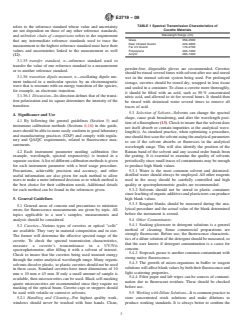
TABLE 1 Spectral Transmission Characteristics of
refers to the reference standard whose value and uncertainty
Cuvette Materials
are not dependent on those of any other reference standards,
Wavelength Range (nm)
and unbroken chain of comparisons refers to the requirement
Glass 350–2500
that any intermediate reference standards used to trace the
Near Infrared Quartz 220–3800
measurement to the highest reference standard must have their
Far UV Quartz 170–2700
values and uncertainties linked to the measurement as well
Polystyrene 400–1000
Acrylic 280–1000
(12).
3.1.35 transfer standard, n—reference standard used to
transfer the value of one reference standard to a measurement
powder-free, disposable gloves are recommended. Cuvettes
or to another reference standard.
shouldberinsedseveraltimeswithsolventafteruseandstored
3.1.36 transition dipole moment, n—oscillating dipole mo-
wet in the normal solvent system being used. For prolonged
ment induced in a molecular species by an electromagnetic
storage, cuvettes should be stored dry, wrapped in lens tissue
wave that is resonant with an energy transition of the species,
and sealed in a container. To clean a cuvette more thoroughly,
for example, an electronic transition.
it should be filled with an acid, such as 50% concentrated
3.1.36.1 Discussion—Its direction defines that of the transi-
nitric acid, and allowed to sit for several hours. It should then
tion polarization and its square determines the intensity of the
be rinsed with deionized water several times to remove all
transition.
traces of acid.
5.3 Selection of Solvent—Solvents can change the spectral
4. Significance and Use
shape, cause peak broadening, and alter the wavelength posi-
4.1 By following the general guidelines (Section 5) and
tionofafluorophore (13).Checktoinsurethatthesolventdoes
instrument calibration methods (Sections 6-16) in this guide,
not itself absorb or contain impurities at the analytical wave-
usersshouldbeabletomoreeasilyconformtogoodlaboratory
length(s). As standard practice, when optimizing a procedure,
and manufacturing practices (GXP) and comply with regula-
oneshouldfirstscanthesolventusingtheanalyticalparameters
tory and QA/QC requirements, related to fluorescence mea-
to see if the solvent absorbs or fluoresces in the analytical
surements.
wavelength range. This will also identify the position of the
Raman band of the solvent and any second order bands from
4.2 Each instrument parameter needing calibration (for
example, wavelength, spectral responsivity) is treated in a the grating. It is essential to examine the quality of solvents
periodicallysincesmalltracesofcontaminantsmaybeenough
separatesection.Alistofdifferentcalibrationmethodsisgiven
for each instrument parameter with a brief usage procedure. to produce high blank values.
5.3.1 Water is the most common solvent and deionized-
Precautions, achievable precision and accuracy, and other
useful information are also given for each method to allow distilled water should always be employed.All other reagents
used in the assay should be carefully controlled and high
users to make a more informed decision as to which method is
the best choice for their calibration needs. Additional details quality or spectrophotometric grades are recommended.
5.3.2 Solvents should not be stored in plastic containers
for each method can be found in the references given.
sinceleachingoforganicadditivesandplasticizerscanproduce
5. General Guidelines high blank values.
5.3.3 Reagent blanks should be measured during the ana-
5.1 General areas of concern and precautions to minimize
lytical procedure and the actual value of the blank determined
errors for fluorescence measurements are given by topic. All
before the instrument is zeroed.
topics applicable to a user’s samples, measurements and
analysis should be considered. 5.4 Other Contaminants:
5.4.1 Soaking glassware in detergent solutions is a general
5.2 Cuvettes—Various types of cuvettes or optical “cells”
method of cleaning. Some commercial preparations are
are available. They vary in material composition and in size.
strongly fluorescent. Before use, the fluorescence characteris-
The former will determine the effective spectral range of the
ticsofadilutesolutionofthedetergentshouldbemeasured,so
cuvette. To check the spectral transmission characteristics,
that the user knows if detergent contamination is a cause for
measure a cuvette’s transmittance in a UV/Vis
concern.
spectrophotometer, after filling it with a solvent of interest.
5.4.2 Stopcockgreaseisanothercommoncontaminantwith
Check to insure that the cuvettes being used transmit energy
strong native fluorescence.
through the entire analytical wavelength range. Many organic
5.4.3 The growth of micro-organisms in buffer or reagent
solventsdissolveplastic,soplasticcuvettesshouldnotbeused
solutionswillaffectblankvaluesbyboththeirfluorescenceand
in these cases. Standard cuvettes have inner dimensions of 10
light scattering properties.
mm × 10 mm × 45 mm. If only a small amount of sample is
5.4.4 Filter paper and lab wipes can be sources of contami-
available, then microcuvettes can be used. Black self-masking
nation due to fluorescent residues. These should be checked
quartz microcuvettes are recommended since they require no
before use.
masking of the optical beam. Cuvette caps or stoppers should
be used with volatile or corrosive solvents. 5.5 WorkingwithDiluteSolutions—Itiscommonpracticeto
5.2.1 Handling and Cleaning—For highest quality work, store concentrated stock solutions and make dilutions to
windows should never be touched with bare hands. Clean, produce working standards. It is always better to confirm the
E2719 − 09
TABLE 2 Summary of Methods for Determining Wavelength Accuracy
Precision, Established
Sample λ Region Drop-In Off-Shelf Limitations Refs.
Accuracy Values
Pen Lamp UV-NIR (EM) Maybe Y ± 0.1 nm alignment Y Test Method
or better E388
Dy-YAG crystal 470nm-760nm (EM) Y Y ± 0.1 nm Y 14
255nm-480nm (EX)
Eu glass 570nm-700nm (EM) Y Y ± 0.2 nm N 15
360nm-540nm (EX)
Anthracene in PMMA 380nm-450nm (EM) Y Y ± 0.2 nm limited range N
310nm-380nm (EX)
Ho O + DR 330nm-800nm (EM or EX) Maybe Y ± 0.4 nm need blank Y 16-18
2 3
Xe Source 400nm-500nm (EX) Y Y ± 0.2 nm limited range, calibration N 19
Xe Source + DR UV-NIR Maybe Y ± 0.2 nm one mono Y 19
must be calibrated
Water Raman UV-blue Y Y ± 0.2 nm one mono N 20
must be calibrated
concentration of the stock solution spectrophotometrically selector (λ -selector) is then scanned over the wavelength
EM
before the calibration curve is prepared. Final solutions are range of interest (see Fig. 1). High accuracy is only achieved
alwaysverydiluteandshouldneverbestoredforlongperiods. when the light from the lamp is aligned properly into the
Standards should be measured in duplicate or triplicate to wavelengthselector,forexample,theopticalradiationmustfill
insure accuracy. the entrance slit of the monochromator. Atomic lines that are
5.5.1 Adsorption—Loss of fluorophore by adsorption onto tooclosetoeachothertoberesolvedbytheinstrumentshould
thewallsofthecontainercanoccuratlowconcentrationlevels. not be used. Although these lamps can be placed at the EX
Glasssurfacesshouldbethoroughlycleanedinacidbeforeuse. source position for EX wavelength accuracy determination,
5.5.2 Photo-Decomposition and Oxidation—Since fluores- weaker signals are typically observed, for example, by a
cence intensity is directly proportional to the intensity of reference detector, and alignment is more difficult than for the
incident light, fluorescence instruments employ intense light EM wavelength accuracy determination.
sources to produce high sensitivity. In some cases the level of
6.3 Dysprosium-Yttrium Aluminum Garnet (Dy-YAG) Crys-
incidentlightmaybesufficienttodecomposethesampleunder
tal (14)—This sample is available in standard cuvette format,
investigation. This should be checked and samples should be
soitcansimplybeinsertedintoacuvetteholder,referredtoas
measured as quickly as possible.The presence of trace oxidiz-
“drop in” in the tables. An EX or EM spectrum is then
ing agents, for example, dissolved oxygen or traces of
collectedforanEXorEMwavelengthaccuracydetermination,
peroxides, can reduce fluorescence intensity.
respectively (see Fig. 2). Peaks that are too close to each other
5.6 Selection of Optimal Wavelength—To choose an appro- to be resolved by the instrument should not be used.
priate analyte excitation band, scan the analyte with a UV/Vis 5
6.4 Europium (Eu)-Doped Glass (15) or Polymethylmeth-
spectrophotometertodeterminetheabsorbancemaximaandto
acrylate (PMMA)—This sample is available in standard cu-
see if there is any interfering compound or scattering at the
vette format, so it can simply be inserted into a cuvette holder.
analytical wavelength. The optimal wavelength is usually that
An EX or EM spectrum is then collected for an EX or EM
which shows the strongest absorbance and is free from
wavelength accuracy determination, respectively (see Fig. 3).
interference by other components including solvent. In some
Accurate peak positions for this glass have not been well
cases, a lesser absorbing wavelength is selected to eliminate
established, and the positions of peaks can change somewhat
interferences from other compounds that absorb at the same
depending on the particular glass matrix used and sample
wavelength or to avoid photobleaching.
temperature. For these reasons, a one time per sample deter-
5.7 Selection of Spectral Bandwidth—Ideally, one would mination of these peak positions using another wavelength
like to select the widest slit possible to give the greatest signal calibration method is recommended.
to noise ratio while maintaining spectral selectivity. 6
6.5 Anthracene-Doped PMMA —This sample is available
in standard cuvette format, so it can simply be inserted into a
6. Wavelength Accuracy
cuvette holder.An EX or EM spectrum is then collected for an
6.1 Methods for determining the accuracy of the emission
EX or EM wavelength accuracy determination, respectively
(EM) or excitation (EX) wavelength for a fluorescence instru-
(see Fig. 4).
ment are given here and summarized in Table 2 with an
6.6 Holmium Oxide (Ho O ) Solution or Doped Glass with
2 3
emphasis on monochromator (mono) based wavelength selec-
Diffuse Reflector, Scatterer, or Fluorescent Dye (16-18)—This
tion.
6.2 Low-Pressure Atomic Lamps (see Test Method E388)—
Other rare earth doped glasses have narrow EX and EM transitions, but
These low-pressure atomic lamps, often referred to as pen
Eu-doped glass is the only one listed because it is one of the most commonly used
lamps because of their size and shape, should be placed at the
and most readily available.
sample position and pointed toward the detection system for
Other polyaromatic hydrocarbon-doped PMMAs have narrow EX and EM
EM wavelength accuracy determination. The EM wavelength transitions, including those with ovalene, p-terphenyl, and naphthalene.
E2719 − 09
FIG. 1 Hg Pen Lamp Spectrum
FIG. 2 EM Spectrum of a Dy-YAG Crystal Excited at 352.7 nm
sampleisavailableinstandardcuvetteformat,soitcansimply then collected for an EX or EM wavelength accuracy
be inserted into a cuvette holder. An EX or EM spectrum is determination, respectively.The wavelength selector not being
E2719 − 09
FIG. 3 EM Spectrum of a Eu-Ion-Doped Glass Excited at 392 nm
FIG. 4 EM Spectrum of Anthracene-Doped PMMA Excited at 360 nm
scanned shall be removed or set to zero order, that is, in this scanned with and without the Ho O sample in place, and the
2 3
position a grating behaves like a mirror reflecting all wave-
ratio of the two intensities is calculated to obtain an effective
lengths. The diffuse reflector, scatterer, or fluorescent dye is
E2719 − 09
transmittance spectrum with dips in the intensity ratio corre- EX wavelength (21). The Raman scattering intensity is pro-
-4
sponding to absorption peaks of the sample (see Fig. 5). portional to λ , so the Raman intensity quickly becomes too
weak to use this method when going into the visible region.
6.7 Xenon (Xe) Source Lamp (19)—This method is for
Either the EX beam or the EM wavelength selector shall have
fluorometers that use a high-pressure Xe arc lamp as an EX
a known accuracy at the desired wavelengths to use this
source.Afew peaks between 400 and 500 nm can be used, but
method to calibrate the unknown side.
most of these are a result of multiple lines, so their positions
are not well established (see Fig. 6). For this reason, a
7. Spectral Slit Width Accuracy
determination of these peak positions (one time per lamp)
7.1 Spectral slit width accuracy of the EM or EX wave-
usinganotherwavelengthcalibrationmethodisrecommended.
length selector can be determined by measuring the spectral
For EX wavelength calibration, the EX wavelength selector
bandwidth,takentobethefullwidthathalfthepeakmaximum
(λ -selector) is scanned while collecting the reference detec-
EX
(FWHM), of a single line of a pen lamp, using the same setup
tor signal. If this is used for EM wavelength calibration, a
and with the same precautions described in 6.2 (see Test
diffuse reflector or scatterer shall be placed at the sample
Method E388). For fluorescence spectrometers with both EX
position and the λ -selector shall be removed or set to zero
EX
and EM monochromators, an alternative method may be used
order.
in which one monochromator is scanned over the position of
6.8 Instrument Source with Diffuse Reflector or Scatterer
the other using the setup described in 6.8 (19). The uncertain-
(19)—A dilute scattering solution in a standard cuvette or a
ties involved in either method have not been well established,
soliddiffusereflectorsetat45°relativetotheEXbeamcanbe
but a 60.5 nm uncertainty or better is estimated here based on
used to scatter the EX beam into the detection system. One
what has been reported.
wavelengthselectorisfixedatawavelengthofinterestandthe
other scans over the fixed wavelength (see Fig. 7). The 8. Linearity of the Detection System
differencebetweenthefixedwavelengthandtheobservedpeak
8.1 Several methods can be used to determine the linear
position is the wavelength bias between the two wavelength
intensity range of the detection system. They can be separated
selectors at that wavelength. Either the EX or the EM wave-
into three types based on the tools used to vary the intensity of
length selector shall have a known accuracy at the desired
optical radiation reaching the detector: (1) double aperture, (2)
wavelengths to use this method to calibrate the unknown side.
optical filters, polarizers or both, and (3) fluorophore concen-
6.9 Water Raman (20)—Deionized water is used. One trations. The double-aperture method is the most well estab-
wavelengthselectorisfixedatawavelengthofinterestandthe lishedandprobablythemostaccuratewhendonecorrectly,but
otherisscanned(seeFig.8).ThewaterRamanpeakappearsat it is also the most difficult to perform (22, 23). A variety of
-1
a wavelength that is about 3400 cm lower in energy than the methods using optical filters, polarizers, or a combination of
FIG. 5 Effective Transmittance Spectrum of a Ho O -Doped Glass with Diffuse Reflector
2 3
E2719 − 09
FIG. 6 Xe Source Lamp (High-Pressure, 450-W) Spectrum in a Spectral Region Containing Peak Structure
FIG. 7 EX Source Profile with EX Wavelength Fixed at 404.3 nm (EX Bandwidth of 1.0 nm) and EM Monochromator Scanned
(EM Bandwidth of 0.1 nm)
the two have been reported (19, 24). These methods require implement.Itusesasetofsolutionsobtainedbyserialdilution
high-quality, often costly, components, and some user exper- of a fluorescent stock solution, similar to that used for
tise. The third method is the most popular and easiest to obtaining calibration curves for analyte concentration, as
E2719 − 09
FIG. 8 Water Raman Spectrum with EX Wavelength Set at 350 nm and EX and EM Bandwidths at 5 nm
described in 11.3. In this case, solutions with a low concentra- system be determined (see Section 8) before spectral calibra-
tion (A < 0.05 at 1-cm path length) should be used and tionisperformedandappropriatestepsaretaken(forexample,
fluorophore adsorption to cuvette walls may affect measure- the use of attenuators) to insure that all measured intensities
ments at very low concentrations (see Test Method E578). In during this calibration are within the linear range. Also note
addition, fluorophores are needed that are not prone to reab- that when using an EM polarizer, the spectral correction for
sorption effects and that do reveal concentration-independent emission is dependent on the polarizer setting.
emissionspectra.Usersshallinsurethatthefluorescencesignal 7
9.2 Calibrated Optical Radiation Source (CS)–Tungsten
intensities of samples are reproducible and do not decrease
Lamp (19, 24-27)—TheopticalradiationfromaCSisdirected
over the time period they are being excited and measured
into the EM detection system by placing the CS at the sample
because the organic dyes typically used can be prone to
position. If the CS is too large to be placed at the sample
photobleaching and other degradation over time.
position, a calibrated diffuse reflector (CR) may be placed at
the sample position to reflect the optical radiation from the CS
9. Spectral Correction of Detection System Responsivity
into the EM detection system. The λ -selector is scanned
EM
9.1 Calibration of the relative responsivity of the EM
over the EM region of interest, using the same instrument
detection system with EM wavelength, also referred to as
settings as that used with the sample, and the signal channel
spectral correction of emission, is necessary for successful
output(S")iscollected.TheknownradianceoftheCSincident
quantification when intensity ratios at different EM wave-
onthedetectionsystem(L)canbeusedtocalculatetherelative
lengths are being compared or when the true shape or peak
correctionfactor(C ),suchthatC =L/S".ThecorrectedEM
CS CS
maximum position of an EM spectrum needs to be known.
intensity is equal to the product of the signal output of the
Such calibration methods are given here and summarized in
sample (S) and C .
CS
Table 3. This type of calibration is necessary because the
relative spectral responsivity of a detection system can change
significantly over its useful wavelength range (see Fig. 9). It is 7
Other types of calibrated lamps can be used, but tungsten is ideal in the visible
highly recommended that the linear range of the detection range due to its broad, featureless spectral profile and high intensity.
TABLE 3 Summary of Methods for Determining Spectral Correction of Detection System Responsivity
Precision, Certified
Sample λ Region Drop-In Off-Shelf Limitations Refs.
Accuracy Values
CS UV-NIR N Y <± 5 % difficult setup Y 19, 24-27
CD + CR UV-NIR N Maybe ± 10 % difficult setup Y 19, 25, 26, 28
CRMs UV-NIR Y Y ± 5 % Y 29-31
E2719 − 09
FIG. 9 Example of the Relative Spectral Responsivity of an EM Detection System (Grating Monochromator-PMT Based) (19) for Which a
Correction Needs to be Applied to a Measured EM Spectrum to Obtain Its True Spectral Shape (Relative Intensities)
9.3 Calibrated Detector (CD) with CR (19, 25, 26, 28)— 9.4 Certified Reference Materials (CRMs) (29-31)—The
This is a two-step method.The first step uses a CD to measure CRMs presently available are either organic dye solutions or
the flux of the EX beam as a function of EX wavelength, as
solid, inorganic glasses released by national metrology insti-
described in 10.2. Alternatively, a quantum counter solution
tutes(NMIs)withcertifiedrelativefluorescencespectra,thatis,
can be used instead of a CD, as described in 10.3. The second
relativeintensityanduncertaintyvaluesaregivenasafunction
stepusesaCRwithreflectance R toreflectaknownfraction
CR of EM wavelength at a fixed EX wavelength. They have been
of the flux of the EX beam into the detection system. This is
designedtoresemblecloselytypicalsamples.ACRMisplaced
done by placing the CD at the sample position at a 45° angle
at the sample position and its spectrum is collected and
relative to the excitation beam, assuming a right-angle detec-
compared to the certified spectrum according to the instruc-
tion geometry relative to the excitation beam, and synchro-
tions given on the accompanying certificate, yielding spectral
nously scanning both the λ - and λ -selectors over the EM
EX EM
correctionfactorsfortheinstrument.ThecorrectedEMspectra
region of interest while collecting both the signal output (S’)
ofsomecommonlyuseddyeshavealsobeenreportedrecently
andthereferenceoutput(Rf’).Thismethodenablestherelative
in the literature (32, 33).
correction factor (C ) to be calculated using the equation
CD
C =(C R Rf’)/S’. See Section 3 for definitions of terms.
CD R CR
10. Spectral Correction of Excitation Beam Intensity
10.1 Calibration of the EX intensity with EX wavelength is
necessary for successful quantification when intensity ratios at
It is assumed in what follows that a calibrated detector is either a photodiode
differentEXwavelengthsarebeingcomparedorthetrueshape
mounted inside an integrating sphere or a photodiode alone, whose spectral
responsivityisknown.Theformeristypicallythemoreaccurateofthetwo,because or peak maximum position of an EX spectrum needs to be
the integrating sphere insures spatially uniform illumination of the photodiode.
TABLE 4 Summary of Methods for Determining Spectral Correction of EX Beam Intensity
Precision, Certified
Sample λ Region Drop-In Off-Shelf Limitations Refs.
Accuracy Values
CD - Si UV-NIR N Y ± 2 % difficult setup Y 19, 24
Quantum Counter UV-NIR Y Y ± 5 % limited range N 27, 35
Photodiode - Si UV-NIR N Y #±50% N 19
E2719 − 09
known. Such calibration methods are given here and summa- (φ ), such that φ = S /R . The instrument’s reference
x x CD CD
rized in Table 4. This type of calibration is necessary because detector can also be used to measure the intensity of the EX
the relative spectral flux of an EX beam at the sample can beam by measuring its output (Rf ) simultaneously with S .
CD CD
change significantly over its wavelength range (see Fig. 10). Then,thecorrectionfactorfortheresponsivityofthereference
The neglect of EX intensity correction factors can often cause detector C = φ /Rf .
R x CD
greater errors than that of EM correction factors (19, 34).
10.3 Quantum Counters (27, 35, 36)—A quantum counter
Fortunately, many fluorescence instruments have a built-in
solution is a concentrated dye solution that absorbs all of the
reference detection system to monitor the intensity of the EX
photons incident on it and has an EM spectrum whose shape
beam. This is commonly done using a photodiode or a
andintensitydonotchangewithEXwavelength.Thequantum
photomultiplier tube (PMT) or a quantum counter detector to
counter solution is placed at the sample position in a quartz
measureafractionoftheEXbeamthatissplitofffromtherest
cuvette. If front face detection is possible, then a standard
of the beam. The collected reference signal can be used to
cuvette can be used with the EX beam at normal incidence. If
correct the fluorescence signal for fluctuations caused by
90° detection only is possible, then a right-triangular cuvette
changes in the EX beam intensity. Reference detectors are
can be used with the excitation beam at 45° incidence to the
often not calibrated with EX wavelength, introducing errors,
hypotenuse side and one of the other sides facing the detector.
which can be particularly large over longer EX wavelength
Scan the EX wavelength over the region of interest with the
ranges (for example, greater than 50 nm) or in a wavelength
EM wavelength fixed at a position corresponding to the
region in which the EX intensity changes rapidly with EX
long-wavelength tail of the EM band and collect the signal
wavelength, such as the ultraviolet (UV).Also note that, when
intensity(S ).Theinstrument’sreferencedetectorcanalsobe
QC
using an EX polarizer, the spectral correction for EX intensity
usedtomeasuretheintensityoftheEXbeambymeasuringits
is dependent on the polarizer setting.
output (Rf ) simultaneously with S . Then, the correction
QC QC
10.2 Calibrated Detector-Si Photodiode (CD-Si) (19, factor for the responsivity of the reference detector C = S
R QC
24)—A CD is put at the sample position with the excitation /Rf is calculated. Note that each quantum counter has a
CD
beamincidentonit.TheoutputoftheCD(S )ismeasuredas limited range. For instance, Rhodamine B can achieve the
CD
a function of EM wavelength by scanning the λ -selector specified uncertainty from 250 to 600 nm. Beyond this range,
EX
over the EX region of interest using the same instrument the intensity falls off and uncertainties increase.Also note that
settings as that used with the sample. The known responsivity S willbeproportionaltothequantumfluxatthesample,not
QC
of the CD (R ) is used to calculate the flux of the EX beam thefluxinpowerunits.Inaddition,aquantumcounterisprone
CD
FIG. 10 Example of the Relative Flux of an EX Beam (Xe Lamp-Grating Monochromator Based) (19) for Which a Correction Needs to be
Applied to a Measured EX Spectrum to Obtain Its True Spectral Shape (Relative Intensities)
E2719 − 09
to polarization and geometry effects that are concentration 11.2 Fluorophores with Specified Purity and Uncertainty
dependent. The spectral range and corresponding uncertainty (37)—Ifthepurityofafluorophore(forexample,ahigh-purity,
of a quantum counter should be known and not assumed. organic dye powder) is known, then it can be put in the same
microenvironment (for example, solvent) as an unknown
10.4 Si Photodiode (Uncalibrated) (19)—Thisisusedinthe
sampletoproduceastandardsample.Severalstandardsamples
same way as a calibrated Si photodiode (see 9.2), except its
should be produced to cover the concentration range of
spectral responsivity is not known. A Si photodiode is some-
interest. These standard samples are measured under the same
times erroneously assumed to have a responsivity that is
conditions as that of any unknowns and the fluorescence
qualitatively flat over its effective range. In fact, using its
intensitiesarerecorded.Fluorescenceintensityversusstandard
output to correct an EX spectrum can lead to quantitatively
sample concentration is plotted and the points are fitted to a
significanterrors,particularlyoveralargeEXrangeandinthe
polynomial, typically a straight line. The concentration of an
UV region. That said, using an uncalibrated Si photodiode for
unknown is determined by using the fitted polynomial along
correction will in most cases yield a more accurate spectrum
with the measured intensity of the unknown to find the
than using no correction.
corresponding concentration.
11. Calibration Curves for Concentration
11.3 Fluorophore Solutions with Specified Concentration
and Uncertainty (38) (see Test Method 578)—Standard solu-
11.1 Guidelines—Calibration curves of fluorescence
tions with known concentrations can be used in the same way
intensity, that is, instrument responsivity, as a function of
as a standard fluorophore (see 10.2). In this case, the fluoro-
fluorophore concentration can be determined for a particular
phores are in solution, so they are ready to use or they can be
instrument and fluorophore. Reference materials composed of
dilutedtoproducestandardsolutionsoflowerconcentration.In
the fluorophore of interest shall be used. The highest accuracy
both cases, the solvent used in the standard and unknown
is obtained when the fluorophore in both the standard and the
solutions should be the same.
sample experience the same microenvironment. For example,
they are dissolved in the same solvent or attached to the same
11.4 Molecules of Equivalent Soluble Fluorophore (MESF)
biomolecules. This type of calibration enables concentrations
(39-42)—Thematchingofmicroenvironmentsbetweensample
and amounts of fluorophores to be compared over time and
andstandardsolutions,asemphasizedin10.2and10.3,cannot
between instruments without determining the absolute respon-
always be achieved. This is of particular concern when the
sivity of the instrument (see Section 9).
sample contains immobilized fluorophores, for example, those
11.1.1 Concentration Range of the Standards—Theconcen-
attached to a cell. In many such cases, it is very difficult or
tration of the highest and lowest standards should bracket the
impossible to determine the concentration of fluorophores in a
concentrations of the unknowns that are being measured. For
candidate standard solution. MESF units are used, particularly
best precision and accuracy, the concentrations of the analyte
in flow cytometry, to quantify such complex systems. These
should be low enough that the absorbance at the excitation
unitsexpressthefluorescenceintensityofafluorescentanalyte,
wavelength is less than 0.05 to prevent inner filter effects. A
for example several immobilized fluorophores bound to a
test for concentration quenching is to dilute the sample in half.
microbead or cell, as the corresponding number of free
If the resultant signal is not half the previous value, then
fluorophores of the same type in a standard solution with the
concentrationquenchingisoccurringandoneneedstoworkat
same intensity. The MESF scale for a particular fluorophore is
a lower initial sample concentration.
determined using the same procedure as that given in 10.3.
11.1.2 Measurements:
This scale is transferred from a conventional fluorometer to a
11.1.2.1 Make up a stock standard solution. Verify the
flow cytometer using fluorophore-labeled microbead suspen-
concentration of the solution, if possible, using a UV/Vis
sions with predetermined MESF values.
spectrophotometer.
11.5 Errors—A number of sources of error can be intro-
11.1.2.2 Use concentrations covering the range of interest
duced into the system from sample preparation, instrumental
for the unknown samples and which produce acceptable
limitationsandchemicalinterferences,causingdeviationsfrom
fluorescence values. When making standards, individual ali-
the Beer-Lambert law. An awareness of these potential prob-
quots can be used to make the standards, instead of a serial
lems is important.
dilution, as a check of accuracy.
11.5.1 Weighing Error—Gravimetric and volumetric errors
11.1.2.3 A calibration curve using at least three standards,
associated with weighing and diluting of the sample.
that is, three data points, should be used.
11.5.2 Non-Linearity—The proportional relationship be-
11.1.2.4 Thehighestandloweststandardshouldbracketthe
tween light absorption and fluorescence emission is only valid
concentration level of the analytical assay.
forcaseswheretheabsorptionissmall.Astheconcentrationof
11.1.2.5 Measure the fluorescence of standard at the ana-
fluorophore increases, deviations occur and the plot of emis-
lytical wavelength.
sion versus concentration becomes non-linear. This is due to
11.1.2.6 Make a plot of the fluorescence signal as the
inner filter effects. In cases where it is necessary to work at
ordinate and the concentration as the abscissa.
high concentrations, it is possible to increase the linear
11.1.2.7 Handling of Standards—Always insure that the
concentration range by the use of microcuvettes.
samples are handled in the same way as the standards,
particularly for extraction procedures and filtration because of 11.5.3 Temperature Effects—Increases in temperature affect
errors due to partition coefficients. theviscosityofthemediumandhencethenumberofcollisions
E2719 − 09
of the molecules of the fluorophore with solvent molecules. necessary for these standards to reproduce the exact spectrum
This increases the probability of a return to the ground state ofanalytesamples,buttheyshouldbemeasurablewithroutine
without the emission of fluorescence. In such cases, the use of instrument settings, for example, typical EX intensity,
thermostatted or thermoelectric sample holders is recom- bandwidths, and EM wavelengths.
mended. Sufficient time for the solution to reach equilibrium
12.2 Cuvette Format (15, 29-31)—This is the most com-
before measurement is important.
monly used format in conventional, benchtop fluorometers as
11.5.4 pH Effects—Relatively small changes in pH can
well as in many portable instruments. Both solid and liquid
sometimes affect the intensity and spectral characteristics of
standards are available for this format and most can be used in
fluorophores. Accurate pH control is essential particularly
both 0/90° and front-face geometries. Standards of this type
when buffer solutions are recommended in an assay.
have been released by NMIs and industry, but the most
11.5.5 Inner-Filter Effects—Fluorescence intensity can be
well-known of these is high-purity water in which its Raman
reduced by the presence of any compound which is capable of
line is used as a pseudo-fluorescence signal (24, 43, 44).
absorbingaportionofeithertheexcitationoremissionenergy.
Unfortunately, the “water Raman” method is effectively lim-
High concentrations of the fluorophore can cause non-uniform
itedtotheUV-to-violetregionofthespectrum.Inorganicsolid
absorption of the excitation energy. If the excitation or emis-
standards are the most robust, most photostable, longest
sionlightisabsorbedbyanothercompoundinthesolutionthen
lasting, and easiest to use of fluorescent samples available in a
the linearity will be affected.
cuvette format, although organic dyes may more closely
11.5.6 Overlapping Bands—Problems can occur if fluoresc-
resemble the behavior of fluorescent probes.
ingcompoundshaveoverlappingexcitationoremissionbands.
12.3 Microwell Plate Format (45, 46)—Some solid
Incomplete spectral resolution of overlapping components can
materials, similar to those used to make some of the cuvette
add error due to the interfering compound. Nar
...
Questions, Comments and Discussion
Ask us and Technical Secretary will try to provide an answer. You can facilitate discussion about the standard in here.
Loading comments...