

ASTM E3210-20
(Practice)Standard Practice for Infrastructure Management
General Information
- Abstract
SIGNIFICANCE AND USE
4.1 Purpose—This practice provides a framework for an authority to assess, plan, and execute: (1) the construction of new systems of tangible and intangible infrastructure; and (2) operate, maintain, monitor, and repair existing systems of infrastructure assets so as to maximize their use value by providing desired services for the benefit of infrastructure asset service recipients of the authority’s unit of government or private sector organization.
4.2 How to Use Information—The information generated by this practice is used to assess the quality and frequency of delivered infrastructure asset services, which then provides the basis for changing the amounts or proportions of funding for one, many, or all types of infrastructure assets in the subsequent cycle of assessment, planning, and execution. The user shall identify an acceptable score for each infrastructure asset system being assessed with the practice (using resources listed in Table 4) and is encouraged to set targets for higher scores for each subsequent cycle of assessment (so that continuous improvement may be achieved) that shall not exceed four years.
4.3 Who Should Use Information—The authority should use the generated information from the use of this practice to: (1) life safety-prioritize capital expenditures (extraordinary outlays) and spending on operations, maintenance, monitoring, and repair (ordinary outlays) of each infrastructure asset system that is assessed; (2) ensure costs are based on a life cycle basis, and, (3) triage those expenditures when insufficient funds limit the number of prioritized infrastructure asset services that can be improved or upgraded. The infrastructure asset service recipient should use generated information from the use of this practice to: (1) advocate for improved services; (2) coordinate communication among other infrastructure asset service recipients to voice concerns about service quality, frequency, and equity; and (3) identify new sources of revenu...
SCOPE
1.1 This asset management practice establishes requirements of transparency and accountability for an assemblage of tangible and intangible infrastructure asset systems for a public or private organization.
1.2 This practice promotes the life safety-prioritized and cost efficacious delivery of 15 types of infrastructure assets to infrastructure asset service recipients. These services include direct uses (for example, water supply or police protection) and indirect uses (for example, preventing adverse impacts on the environment while minimizing nature’s adverse impacts on infrastructure assets).
1.3 This practice may be used as the basis for training guides for infrastructure asset system employees and operators.
1.4 This practice provides an acceptability framework for 15 systems of infrastructure assets, including (1) potable water supply, (2) food systems, (3) sewage and storm water systems, (4) buildings, (5) healthcare, (6) security, (7) power, (8) communication, (9) transit and travel, (10) waste disposal, (11) education, (12) cultural heritage, (13) recreation and entertainment, (14) nature, and (15) financial systems.
1.5 This practice is composed of the following sections: referenced documents; terminology; significance and use; planning and scoping; integrated infrastructure system management process; and infrastructure system reporting and documentation.
1.6 The values stated in inch-pound units are to be regarded as standard. No other units of measurement are included in this standard.
1.7 This standard does not purport to address all of the safety concerns, if any, associated with its use. It is the responsibility of the user of this standard to establish appropriate safety, health, and environmental practices and determine the applicability of regulatory limitations prior to use.
1.8 This international standard was developed in accordance with internationally recognized principles on s...
- Status
- Published
- Publication Date
- 30-Jun-2020
- Technical Committee
- E53 - Asset Management
- Drafting Committee
- E53.07 - Sustainable Asset Management

Overview
ASTM E3210-20: Standard Practice for Infrastructure Management provides a robust framework for public and private sector organizations to effectively assess, plan, execute, operate, and maintain both new and existing infrastructure systems. Covering 15 core infrastructure asset types, this standard emphasizes transparency, accountability, life safety-prioritized decision-making, and cost efficacy in the delivery of asset-based services.
By setting clear guidelines for evaluation and improvement cycles, ASTM E3210-20 supports authorities in delivering reliable, high-quality infrastructure services, ensuring optimal use and longevity of infrastructure assets. The standard integrates principles of asset management, sustainability, and continuous improvement, maximizing value for both organizations and the communities they serve.
Key Topics
- Framework for Assessment and Planning: Establishes a process for quantitative assessment, planning, and execution of infrastructure projects.
- Service Quality and Benchmarks: Recommends the use of metrics and benchmarks, including periodic scoring, to assess and enhance infrastructure service delivery.
- Continuous Improvement Cycle: Encourages regular review and raising of service delivery targets, typically within a four-year cycle.
- Transparent Reporting: Mandates open reporting on infrastructure asset performance, funding allocation, and lifecycle costs to ensure accountability.
- Life Cycle Cost Analysis: Stresses planning and budgeting based on the total expected costs from acquisition to disposal of infrastructure assets.
- Cost Efficacy and Prioritization: Provides methods for authorities to prioritize expenditures and triage projects based on available resources and risk to human safety.
- Community Engagement: Fosters mechanisms for engaging asset service recipients, enabling informed advocacy and feedback.
- Integrated Management of Tangible and Intangible Assets: Addresses both physical infrastructure (e.g., water supply, power, transit) and intangible systems (e.g., healthcare, financial systems).
- Adaptability and Training: Serves as a basis for developing infrastructure management training and ongoing staff education.
Applications
ASTM E3210-20 applies to a wide range of practical infrastructure management scenarios:
- Government Infrastructure Planning: Assists municipalities, agencies, and authorities in prioritizing, funding, and reporting on infrastructure projects and services.
- Private Sector Asset Management: Guides private organizations managing campuses, utilities, or service-oriented infrastructure portfolios.
- Lifecycle Budgeting: Supports asset owners in performing accurate life-cycle cost analyses for sustainable resource allocation.
- Risk Management: Aids in the identification and prioritization of projects to mitigate risks and protect public safety.
- Performance Improvement Programs: Enables organizations to benchmark asset performance and drive continuous service enhancement.
- Community Engagement and Communication: Encourages transparent sharing of infrastructure reports and performance data with service recipients and stakeholders.
- Staff Training: Forms a basis for developing comprehensive infrastructure management training guides for new and existing employees.
Infrastructure asset types covered by this standard include but are not limited to: potable water supply, food systems, sewage and stormwater, buildings, healthcare, security, power, communication, transit and travel, waste disposal, education, cultural heritage, recreation and entertainment, nature, and financial systems.
Related Standards
ASTM E3210-20 is designed for compatibility with several key standards and guides in the field of asset management and sustainability:
- ASTM E2453: Practice for Estimating the Life-Cycle Cost of Ownership of Property Assets
- ASTM E2876: Guide for Integrating Sustainable Objectives into Cleanup
- ASTM E3033: Guide for Beneficial Use of Landfills and Chemically Impacted Sites
- ASTM E3123: Guide for Recognition and Derecognition of Environmental Liabilities
- ASTM E3136: Guide for Climate Resiliency in Water Resources
- ISO 55000: Asset Management - Overview, Principles, and Terminology
- ISO 37120: Sustainable Cities and Communities - Indicators for City Services and Quality of Life
- 10 CFR 436 Subpart A: Methodology and Procedures for Life Cycle Cost Analyses (U.S. CFR)
- ANCR Benchmarks: Alliance for National & Community Resilience
For comprehensive, integrated infrastructure management, referencing ASTM E3210-20 alongside these related standards and best practices ensures a transparent, accountable, and sustainable approach to infrastructure asset stewardship.
Relations
- Effective Date
- 01-Mar-2024
- Refers
ASTM E2453-19 - Standard Practice for Estimating the Life-Cycle Cost of Ownership of Property Assets - Effective Date
- 01-May-2019
- Effective Date
- 01-Feb-2018
- Effective Date
- 15-Oct-2017
- Effective Date
- 15-Feb-2016
- Effective Date
- 15-Jul-2013
- Effective Date
- 01-Jul-2005
Get Certified
Connect with accredited certification bodies for this standard

BSI Group
BSI (British Standards Institution) is the business standards company that helps organizations make excellence a habit.

Bureau Veritas
Bureau Veritas is a world leader in laboratory testing, inspection and certification services.

DNV
DNV is an independent assurance and risk management provider.
Sponsored listings
Frequently Asked Questions
ASTM E3210-20 is a standard published by ASTM International. Its full title is "Standard Practice for Infrastructure Management". This standard covers: SIGNIFICANCE AND USE 4.1 Purpose—This practice provides a framework for an authority to assess, plan, and execute: (1) the construction of new systems of tangible and intangible infrastructure; and (2) operate, maintain, monitor, and repair existing systems of infrastructure assets so as to maximize their use value by providing desired services for the benefit of infrastructure asset service recipients of the authority’s unit of government or private sector organization. 4.2 How to Use Information—The information generated by this practice is used to assess the quality and frequency of delivered infrastructure asset services, which then provides the basis for changing the amounts or proportions of funding for one, many, or all types of infrastructure assets in the subsequent cycle of assessment, planning, and execution. The user shall identify an acceptable score for each infrastructure asset system being assessed with the practice (using resources listed in Table 4) and is encouraged to set targets for higher scores for each subsequent cycle of assessment (so that continuous improvement may be achieved) that shall not exceed four years. 4.3 Who Should Use Information—The authority should use the generated information from the use of this practice to: (1) life safety-prioritize capital expenditures (extraordinary outlays) and spending on operations, maintenance, monitoring, and repair (ordinary outlays) of each infrastructure asset system that is assessed; (2) ensure costs are based on a life cycle basis, and, (3) triage those expenditures when insufficient funds limit the number of prioritized infrastructure asset services that can be improved or upgraded. The infrastructure asset service recipient should use generated information from the use of this practice to: (1) advocate for improved services; (2) coordinate communication among other infrastructure asset service recipients to voice concerns about service quality, frequency, and equity; and (3) identify new sources of revenu... SCOPE 1.1 This asset management practice establishes requirements of transparency and accountability for an assemblage of tangible and intangible infrastructure asset systems for a public or private organization. 1.2 This practice promotes the life safety-prioritized and cost efficacious delivery of 15 types of infrastructure assets to infrastructure asset service recipients. These services include direct uses (for example, water supply or police protection) and indirect uses (for example, preventing adverse impacts on the environment while minimizing nature’s adverse impacts on infrastructure assets). 1.3 This practice may be used as the basis for training guides for infrastructure asset system employees and operators. 1.4 This practice provides an acceptability framework for 15 systems of infrastructure assets, including (1) potable water supply, (2) food systems, (3) sewage and storm water systems, (4) buildings, (5) healthcare, (6) security, (7) power, (8) communication, (9) transit and travel, (10) waste disposal, (11) education, (12) cultural heritage, (13) recreation and entertainment, (14) nature, and (15) financial systems. 1.5 This practice is composed of the following sections: referenced documents; terminology; significance and use; planning and scoping; integrated infrastructure system management process; and infrastructure system reporting and documentation. 1.6 The values stated in inch-pound units are to be regarded as standard. No other units of measurement are included in this standard. 1.7 This standard does not purport to address all of the safety concerns, if any, associated with its use. It is the responsibility of the user of this standard to establish appropriate safety, health, and environmental practices and determine the applicability of regulatory limitations prior to use. 1.8 This international standard was developed in accordance with internationally recognized principles on s...
SIGNIFICANCE AND USE 4.1 Purpose—This practice provides a framework for an authority to assess, plan, and execute: (1) the construction of new systems of tangible and intangible infrastructure; and (2) operate, maintain, monitor, and repair existing systems of infrastructure assets so as to maximize their use value by providing desired services for the benefit of infrastructure asset service recipients of the authority’s unit of government or private sector organization. 4.2 How to Use Information—The information generated by this practice is used to assess the quality and frequency of delivered infrastructure asset services, which then provides the basis for changing the amounts or proportions of funding for one, many, or all types of infrastructure assets in the subsequent cycle of assessment, planning, and execution. The user shall identify an acceptable score for each infrastructure asset system being assessed with the practice (using resources listed in Table 4) and is encouraged to set targets for higher scores for each subsequent cycle of assessment (so that continuous improvement may be achieved) that shall not exceed four years. 4.3 Who Should Use Information—The authority should use the generated information from the use of this practice to: (1) life safety-prioritize capital expenditures (extraordinary outlays) and spending on operations, maintenance, monitoring, and repair (ordinary outlays) of each infrastructure asset system that is assessed; (2) ensure costs are based on a life cycle basis, and, (3) triage those expenditures when insufficient funds limit the number of prioritized infrastructure asset services that can be improved or upgraded. The infrastructure asset service recipient should use generated information from the use of this practice to: (1) advocate for improved services; (2) coordinate communication among other infrastructure asset service recipients to voice concerns about service quality, frequency, and equity; and (3) identify new sources of revenu... SCOPE 1.1 This asset management practice establishes requirements of transparency and accountability for an assemblage of tangible and intangible infrastructure asset systems for a public or private organization. 1.2 This practice promotes the life safety-prioritized and cost efficacious delivery of 15 types of infrastructure assets to infrastructure asset service recipients. These services include direct uses (for example, water supply or police protection) and indirect uses (for example, preventing adverse impacts on the environment while minimizing nature’s adverse impacts on infrastructure assets). 1.3 This practice may be used as the basis for training guides for infrastructure asset system employees and operators. 1.4 This practice provides an acceptability framework for 15 systems of infrastructure assets, including (1) potable water supply, (2) food systems, (3) sewage and storm water systems, (4) buildings, (5) healthcare, (6) security, (7) power, (8) communication, (9) transit and travel, (10) waste disposal, (11) education, (12) cultural heritage, (13) recreation and entertainment, (14) nature, and (15) financial systems. 1.5 This practice is composed of the following sections: referenced documents; terminology; significance and use; planning and scoping; integrated infrastructure system management process; and infrastructure system reporting and documentation. 1.6 The values stated in inch-pound units are to be regarded as standard. No other units of measurement are included in this standard. 1.7 This standard does not purport to address all of the safety concerns, if any, associated with its use. It is the responsibility of the user of this standard to establish appropriate safety, health, and environmental practices and determine the applicability of regulatory limitations prior to use. 1.8 This international standard was developed in accordance with internationally recognized principles on s...
ASTM E3210-20 is classified under the following ICS (International Classification for Standards) categories: 03.100.01 - Company organization and management in general. The ICS classification helps identify the subject area and facilitates finding related standards.
ASTM E3210-20 has the following relationships with other standards: It is inter standard links to ASTM E3123-24, ASTM E2453-19, ASTM E3123-18, ASTM E3123-17, ASTM E3033-16, ASTM E2453-13, ASTM E2453-05. Understanding these relationships helps ensure you are using the most current and applicable version of the standard.
ASTM E3210-20 is available in PDF format for immediate download after purchase. The document can be added to your cart and obtained through the secure checkout process. Digital delivery ensures instant access to the complete standard document.
Standards Content (Sample)
This international standard was developed in accordance with internationally recognized principles on standardization established in the Decision on Principles for the
Development of International Standards, Guides and Recommendations issued by the World Trade Organization Technical Barriers to Trade (TBT) Committee.
Designation: E3210 − 20
Standard Practice for
Infrastructure Management
This standard is issued under the fixed designation E3210; the number immediately following the designation indicates the year of
original adoption or, in the case of revision, the year of last revision. A number in parentheses indicates the year of last reapproval. A
superscript epsilon (´) indicates an editorial change since the last revision or reapproval.
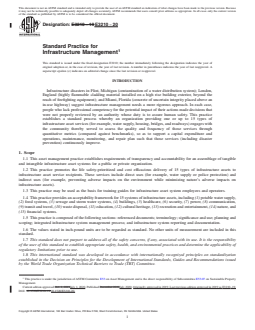
INTRODUCTION
Infrastructure disasters in Flint, Michigan (contamination of a water distribution system); London,
England (highly flammable cladding material installed on a high rise building exterior, beyond the
reach of firefighting equipment); and Miami, Florida (concrete of uncertain integrity placed above an
in-use highway) suggest infrastructure management needs a more rigorous approach. In each case,
people who lack professional competency for the potential impact of their actions made decisions that
were not properly reviewed by an authority whose duty is to assure human safety. This practice
establishes a standard process whereby an organization providing one or up to 15 types of
infrastructureassetservices(forexample,watersupply,housing,bridges,androadways)engageswith
the community thereby served to assess the quality and frequency of those services through
quantitative metrics (compared against benchmarks), so as to support a capital expenditure and
operations, maintenance, monitoring, and repair plan such that those services (including disaster
prevention) continuously improve.
1. Scope 1.5 This practice is composed of the following sections:
referenceddocuments;terminology;significanceanduse;plan-
1.1 This asset management practice establishes require-
ningandscoping;integratedinfrastructuresystemmanagement
ments of transparency and accountability for an assemblage of
process; and infrastructure system reporting and documenta-
tangible and intangible infrastructure asset systems for a public
tion.
or private organization.
1.6 The values stated in inch-pound units are to be regarded
1.2 This practice promotes the life safety-prioritized and
as standard. No other units of measurement are included in this
cost efficacious delivery of 15 types of infrastructure assets to
standard.
infrastructure asset service recipients. These services include
1.7 This standard does not purport to address all of the
directuses(forexample,watersupplyorpoliceprotection)and
safety concerns, if any, associated with its use. It is the
indirect uses (for example, preventing adverse impacts on the
responsibility of the user of this standard to establish appro-
environment while minimizing nature’s adverse impacts on
priate safety, health, and environmental practices and deter-
infrastructure assets).
mine the applicability of regulatory limitations prior to use.
1.3 This practice may be used as the basis for training
1.8 This international standard was developed in accor-
guidesforinfrastructureassetsystememployeesandoperators.
dance with internationally recognized principles on standard-
1.4 This practice provides an acceptability framework for
ization established in the Decision on Principles for the
15 systems of infrastructure assets, including (1) potable water
Development of International Standards, Guides and Recom-
supply, (2) food systems, (3) sewage and storm water systems,
mendations issued by the World Trade Organization Technical
(4) buildings, (5) healthcare, (6) security, (7) power, (8)
Barriers to Trade (TBT) Committee.
communication, (9) transit and travel, (10) waste disposal, (11)
education, (12) cultural heritage, (13) recreation and 2. Referenced Documents
entertainment, (14) nature, and (15) financial systems.
2.1 ASTM Standards:
E2453 Practice for Estimating the Life-Cycle Cost of Own-
ership of Property Assets
This practice is under the jurisdiction of ASTM Committee E53 on Asset
ManagementandisthedirectresponsibilityofSubcommitteeE53.07onSustainable
Property Management. For referenced ASTM standards, visit the ASTM website, www.astm.org, or
Current edition approved July 1, 2020. Published July 2020. Originally approved contact ASTM Customer Service at service@astm.org. For Annual Book of ASTM
in 2019. Last previous edition approved in 2019 as E3210–19. DOI: 10.1520/ Standards volume information, refer to the standard’s Document Summary page on
E3210-20. the ASTM website.
Copyright © ASTM International, 100 Barr Harbor Drive, PO Box C700, West Conshohocken, PA 19428-2959. United States
E3210 − 20
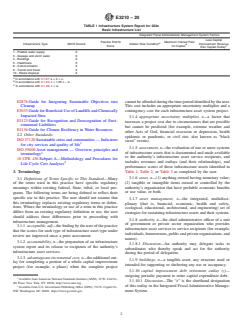
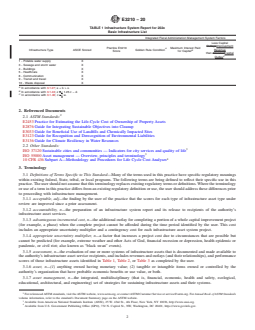
TABLE 1 Infrastructure System Report for 202x
Basic Infrastructure List
Integrated Fiscal Administration Management System Factors
Less Capital
Practice E3210 Maximum Interest Paid
A
Infrastructure Type ASCE Scored Golden Rule Condition Improvement Revenue
B
Score for Capital
C
than Capital Outlay
1 - Potable water supply X
3 - Sewage and storm water X
4 - Buildings X
5 - Healthcare X
8 - Communication X
9 - Transit and travel X
10 - Waste disposal X
A
In accordance with 3.1.27;e+b>x.
B
In accordance with 3.1.43;z<1.25c–d.
C
In accordance with 3.1.40;c
E2876 Guide for Integrating Sustainable Objectives into cannotbeaffordedduringthetimeperiodidentifiedbytheuser.
Cleanup This cost includes an appropriate uncertainty multiplier and a
E3033 Guide for Beneficial Use of Landfills and Chemically contingency cost for each infrastructure asset system project.
Impacted Sites
3.1.4 appropriate uncertainty multiplier, n—a factor that
E3123 Guide for Recognition and Derecognition of Envi-
increases a project cost due to circumstances that are possible
ronmental Liabilities
but cannot be predicted (for example, extreme weather and
E3136 Guide for Climate Resiliency in Water Resources
other Acts of God, financial recession or depression, health
2.2 Other Standards:
epidemic or pandemic, or civil riot; also known as “black
ISO 37120 Sustainable cities and communities — Indicators
swan” events).
for city services and quality of life
3.1.5 assessment, n—the evaluation of one or more systems
ISO 55000 Asset management — Overview, principles and
3 of infrastructure assets that is documented and made available
terminology
to the authority’s infrastructure asset service recipients, and
10 CFR 436 Subpart A—Methodology and Procedures for
4 includes revenues and outlays (and their relationships), and
Life Cycle Cost Analyses
performance scores of those infrastructure assets identified in
Table 1, Table 2,or Table 3 as completed by the user.
3. Terminology
3.1.6 asset, n—(1) anything owned having monetary value;
3.1 Definitions of Terms Specific to This Standard—Many
(2) tangible or intangible items owned or controlled by the
of the terms used in this practice have specific regulatory
authority’s organization that have probable economic benefits
meanings within existing federal, State, tribal, or local pro-
or use value, or both.
grams. The following terms are being defined to reflect their
specific use in this practice. The user should not assume that
3.1.7 asset management, n—the integrated, multidisci-
this terminology replaces existing regulatory terms or defini-
plinary (that is, financial, economic, health and safety,
tions. Where the terminology or use of a term in this practice
ecological, educational, architectural, and engineering) set of
differs from an existing regulatory definition or use, the user
strategies for sustaining infrastructure assets and their systems.
should address these differences prior to proceeding with
3.1.8 authority, n—the chief administrative officer of a unit
infrastructure management.
of government or private sector organization who provides
3.1.1 acceptable, adj—thefindingbytheuserofthepractice
infrastructure asset services to service recipients (for example,
that the scores for each type of infrastructure asset type under
individuals,homeowners,publicandprivateorganizations,and
review are improved since a prior assessment.
nature).
3.1.2 accountability, n—the preparation of an infrastructure
3.1.8.1 Discussion—An authority may delegate tasks to
system report and its release to recipients of the authority’s
subordinates who thereby speak and act for the authority
infrastructure asset services.
during the period of delegation.
3.1.3 advantageous incremental cost, n—the additional out-
3.1.9 buildings, n—a tangible asset, any structure used or
lay for completing a portion of a whole capital improvement
intended for supporting or sheltering any use or occupancy.
project (for example, a phase) when the complete project
3.1.10 capital improvement debt retirement outlay (z)—
outgoing periodic payment to retire capital expenditure debt.
Available from American National Standards Institute (ANSI), 25 W. 43rd St.,
3.1.10.1 Discussion—The “z” is the shorthand designation
4th Floor, New York, NY 10036, http://www.ansi.org.
4 of this outlay in the Integrated Fiscal Administrative Manage-
Available from U.S. Government Publishing Office (GPO), 732 N. Capitol St.,
ment System.
NW, Washington, DC 20401, https://www.govinfo.gov.
E3210 − 20
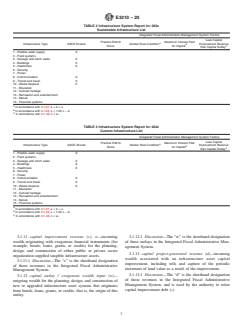
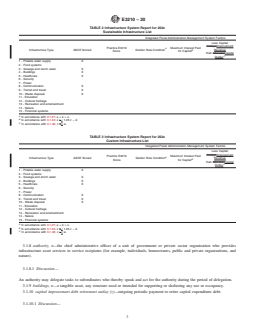
TABLE 2 Infrastructure System Report for 202x
Sustainable Infrastructure List
Integrated Fiscal Administration Management System Factors
Less Capital
Practice E3210 Maximum Interest Paid
A
Infrastructure Type ASCE Scored Golden Rule Condition Improvement Revenue
B
Score for Capital
C
than Capital Outlay
1 - Potable water supply X
2 - Food systems
3 - Sewage and storm water X
4 - Buildings X
5 - Healthcare X
6 - Security
7 - Power
8 - Communication X
9 - Transit and travel X
10 - Waste disposal X
11 - Education
12 - Cultural heritage
13 - Recreation and entertainment
14 - Nature
15 - Financial systems
A
In accordance with 3.1.27;e+b>x.
B
In accordance with 3.1.43;z<1.25c–d.
C
In accordance with 3.1.40;c
TABLE 3 Infrastructure System Report for 202x
Custom Infrastructure List
Integrated Fiscal Administration Management System Factors
Less Capital
Practice E3210 Maximum Interest Paid
A
Infrastructure Type ASCE Scored Golden Rule Condition Improvement Revenue
B
Score for Capital
C
than Capital Outlay
1 - Potable water supply X
2 - Food systems
3 - Sewage and storm water X
4 - Buildings X
5 - Healthcare X
6 - Security
7 - Power
8 - Communication X
9 - Transit and travel X
10 - Waste disposal X
11 - Education
12 - Cultural heritage
13 - Recreation and entertainment
14 - Nature
15 - Financial systems
A
In accordance with 3.1.27;e+b>x.
B
In accordance with 3.1.43;z<1.25c–d.
C
In accordance with 3.1.40;c
3.1.11 capital improvement revenue (c), n—incoming 3.1.12.1 Discussion—The “w” is the shorthand designation
wealth originating with exogenous financial instruments (for
of these outlays in the Integrated Fiscal Administrative Man-
example, bonds, loans, grants, or credits) for the planning,
agement System.
design, and construction of either public or private sector
3.1.13 capital project-generated revenue (d)—incoming
organization-supplied tangible infrastructure assets.
wealth associated with an infrastructure asset capital
3.1.11.1 Discussion—The “c” is the shorthand designation
improvement, including tolls and capture of the periodic
of these revenues in the Integrated Fiscal Administrative
increment of land value as a result of the improvement.
Management System.
3.1.13.1 Discussion—The “d” is the shorthand designation
3.1.12 capital outlay / exogenous wealth input (w)—
of these revenues in the Integrated Fiscal Administrative
outgoing wealth for the planning, design, and construction of
Management System, and is used by the authority to retire
new or upgraded infrastructure asset systems that originates
capital improvement debt (z).
from bonds, loans, grants, or credits, that is, the origin of this
outlay.
E3210 − 20
3.1.14 communication, n—tangible assets including 3.1.23 education, n—intangibleinfrastructureassettypethat
telephone, cable TV, internet, and other wireless systems for includes: (1) all levels of primary, secondary, trade, graduate,
transmitting voice, video, and other electronic data and in- and post-graduate training and experience opportunity publicly
stalled along public easements and rights of way, using the provided; or (2) a private sector organization’s complement (or
electromagnetic spectrum commons. substitution) of that publicly-provided training and experience
opportunity, each provided by its respective authority.
3.1.15 community engagement, n—the proactive reaching
3.1.24 extraordinary outlays (y), n—outgoing wealth ex-
out to infrastructure asset service recipients of the authority so
pended for the periodic replacement and upkeep of capital
thatshe/hecanbetransparentandaccountableaboutinfrastruc-
infrastructure assets; the complement of ordinary expenses
ture asset service anticipations and experiences, and the cost
efficacy of that provision. (current services outlays (x)).
3.1.24.1 Discussion—These outlays comprise the capital
3.1.16 contingency cost, n—an amount added to an estimate
budget that includes the (w) capital outlay and the (z) capital
to allow for items, conditions, or events for which the state,
improvement debt retirement outlay.
occurrence, or effect is uncertain and that experience shows
3.1.25 financial systems, n—intangible infrastructure asset
will likely result, in aggregate, in additional costs.
type that includes mediate (e) and immediate (b) revenues for
3.1.16.1 Discussion—There is always uncertainty (that is,
current (ordinary) services outlays (x); and mediate (c) and
risk) as to the precise content of all items in a cost estimate (for
mediate (d) revenues for capital improvement (extraordinary)
example, how work will be performed, and what work condi-
outlays (y).
tions will be like when the project is executed). Cost contin-
gencyisidentifiedwhenanestimatorisawareoftheriskorcan 3.1.26 food systems, n—intangible infrastructure asset sys-
estimate probable costs, or both. The term does not include tem type that concerns (for example) the issuing of permits for
examples of ignorance, poor engineering, or poor philosophy, grocery stores, public kitchens, green markets, food handling
or combinations thereof. The contingency allowance covers operations, and restaurant and food cart businesses; all factors
items of cost which are not known exactly at the time of the associated with bringing food to market (that is, crop
estimate but which will occur on a statistical basis. Contin- production, transport, preservation, and storage); and food
gency cost excludes: (1) major scope changes such as changes
safety inspectors, operation of laboratories for purity
in end product specification, capacities, building sizes, and assurance, and professional certifications concerning the nutri-
locationoftheassetorproject; (2)extraordinaryeventssuchas
ent and non-nutrient chemical content of food items and urban
major strikes and natural disasters; (3) management reserves; garden soil.
and (4) escalation and currency effects.
3.1.27 golden rule of government finance (a relationship)—
keeping capital budget outlays ((w) and (z)) separate from
3.1.17 continuous improvement, n—the recurring process of
enhancing the quality or frequency, or both, of infrastructure current asset service outlays (x) in an operating budget.
3.1.27.1 Discussion—Involves the matching of current rev-
asset services by periodic assessment, scoring, and system
change for each infrastructure asset type as described in this enue ((e) and (b)) to spending on current services (x), but
borrowing only to support capital spending ((w) and (z)) and
practice.
thereby maintaining the net worth of infrastructure asset
3.1.18 cost avoiding, v—taking measures to lower the cost
systems. This is the condition when (e) + (b) > (x). Although
of infrastructure asset services and avoid a waste of wealth,
the phrase was coined to apply to public infrastructure asset
including: scheduling activities to optimize labor workflow;
management, the principle also applies to private infrastructure
just-in-time delivery of materials to avoid double handling and
asset management.
the need to stockpile soil or other materials; rest, sanitation,
3.1.28 governance system, n—the methodology used by an
and food facilities for labor to minimize their need to leave a
authority to assure the establishment and maintenance of
jobsite; and soil reuse to avoid disposal.
transparent and accountable practices such that effective and
3.1.19 cost effıcacy, n—the measure of the cost of achieving
equitable systems of infrastructure assets are provided to
a non-standard result that an authority and her/his infrastruc-
her/his service recipients (individuals, homeowners, or public
ture asset service recipients desire (and agree was achieved) in
and private organizations, or combinations thereof); the use of
contrast to the cost of pursuing a standard result.
this practice is an example of a governance system.
3.1.20 cultural heritage, n—tangible assets including
3.1.29 government, n—a social, economic, military, or
objects, locations, and natural geographic or geologic features
political, or combinations thereof, unit of management over a
associated with the history, politics, or sociology, or combina-
specified geographic space, that is obligated to engage with
tions thereof, of people, whether indigenous or colonial, or of
infrastructure asset service recipients (individuals,
dominant or non-dominant groupings.
homeowners, or public and private organizations, or combina-
3.1.21 document, n—information and its supporting media.
tions thereof).
3.1.22 document, v—to gather, organize, craft (that is, pres- 3.1.30 healthcare, n—intangible infrastructure assets asso-
ent in a clear, comprehensive, and factual manner), and publish ciated with (but not necessarily limited to) hospitals, medical
information for infrastructure asset service recipient (for doctors, physicians, mental health service providers (especially
example, individuals, homeowners, and public and private for homeless persons and at-risk youth), counselors, health
organizations) review. agencies, disease and poison control, ambulance services, and
E3210 − 20
911 operators that are publicly or privately provided, or relationships are demonstrated acceptable, failed, or uncertain:
franchised by local, State, or federal governments. (1) golden rule condition; (2) maximum interest paid for
capital; and (3) less capital improvement revenue than capital
3.1.31 immediate revenue (b), n—incoming wealth that
outlay.
originates from individuals rather than a public or a private
3.1.38.1 Discussion—The user has achieved accountability
infrastructure asset services provider; the complement of
and transparency upon documenting these relationships in the
mediate revenue (a).
Infrastructure System Report and making the document avail-
3.1.31.1 Discussion—The “b” is the shorthand designation
able to infrastructure asset service recipients (that is,
of these funds in the Integrated FiscalAdministrative Manage-
individuals, homeowners, or public and private organizations,
ment System. This revenue includes tax payments (of various
or combinations thereof).
kinds) by individuals (primarily used for current services
outlays) but does not include individual user fees, tolls, or
3.1.39 land value capture, v—recouping invested wealth in
penalties.This revenue (that may include tax increment financ-
infrastructure asset provision following an actual increase in
ing revenue) may also be used by the authority for retirement
land value due to the investment.
of capital improvement debt (z).
3.1.40 less capital improvement revenue than capital outlay
3.1.32 infrastructure, n—a tangible or intangible asset that
(a relationship)—the condition when capital improvement
comprises the means and methods of a public or private sector
revenue (c) is less than capital outlay (w).
organization in the provision of services that infrastructure
3.1.40.1 Discussion—(w) is simultaneously capital outlay
asset service recipients (individuals, homeowners, or public
and exogenous wealth input.
and private organizations, or combinations thereof) desire.
3.1.41 life cycle cost, n—the sum of all known or expected
3.1.32.1 Discussion—Infrastructure assets may belong to a
government, even though a private entity operates and main- material and non-material costs associated with an asset or
group of assets; these costs include not only the acquisition
tains tangible assets and systems for that government. Such
value, but also activities related to an asset from acquisition
asset systems may be privately supplied through a public
through utilization and disposition.
franchise and delivered through public easements or rights of
way, or both. In the latter case, the authority would be the head
3.1.41.1 Discussion—Life cycle cost assumes that an infra-
of a private sector organization.
structure asset has a known or predicted useful life. The user
should be aware that some tangible infrastructure assets
3.1.33 infrastructure asset management, n—intentional ac-
continue to operate and meet performance standards long after
tions planned, sequenced, and executed to continuously im-
the originally planned or anticipated useful life (for example,
prove use values of tangible and intangible assets with a
interstate highway system, bridges, waste water treatment
minimum adverse impact on the environment while minimiz-
plants) and that other infrastructure assets have finite life spans
ing nature’s adverse impact on those assets in collaboration
due to permitting or capacity limits. The user may use several
with those who receive and benefit from asset services (that is,
publicly-available tools to calculate life cycle costs.
individuals, homeowners, or public and private organizations,
or combinations thereof).
3.1.42 life safety-priority, n—a project selection criterion
that advances projects with reductions in risks to human health
3.1.34 infrastructure asset service, n—the existence or use
and safety over other projects that reduce those risks to a lesser
value of a tangible or intangible asset, or both.
extent, subject to professional judgment.
3.1.35 infrastructure system report, n—the final product of
the authority following completion of an evaluation cycle of 3.1.43 maximum interest paid for capital (a relationship)—
this practice, that is certified by a professional engineer (PE) the condition when capital improvement retirement debt (z)
who is licensed in the geographic location of the infrastructure outlays are less than 1.25 times capital improvement revenues
asset systems being evaluated, using professional judgment. (c), minus capital project-generated revenues (d).
3.1.36 intangible asset, n—a component of an infrastructure 3.1.44 mediate revenue (a), n—incoming wealth that origi-
asset service that requires trust between the provider and
nates from the activities of government or private sector
recipient; includes the services of food systems, healthcare, organization in the performance of the infrastructure asset
security, education, and financial systems.
provisiondutiesoftheauthority;thecomplementofimmediate
(b) revenue.
3.1.37 intangible infrastructure, n—delivered services (that
3.1.44.1 Discussion—These revenues are the capital budget
is, of food systems, healthcare, security, education, and finan-
that includes the (c) capital improvement funds, the (d) capital
cial systems) that require trust between provider and recipient
project-generated revenue, and the (e) non-private source of
that is always associated with one or more tangible infrastruc-
revenue.
ture assets (that is, potable water, sewerage, buildings, power,
communication, transit and travel, or waste disposal, or com-
3.1.45 nature, n—tangibleassetsthatconcernnaturaloppor-
binations thereof).
tunities (that is, Earth, vegetation, life forms, air, wind,
3.1.38 integrated fiscal administrative management system, sunlight, water, precipitation, and the electromagnetic spec-
n—programs and procedures for an authority designed to trum commons) that are managed (or not managed, as in
assure the cost efficacious management of her/his public or passively stepping back) in terms of not only the ecological
private sector organization such that the following three services they provide to humans, but also in terms of the
E3210 − 20
ecological functions they provide for their continued existence the fields of architecture, construction cost estimating,
and ability to sustainably provide infrastructure asset services microbiology, medicine, disease prevention and treatment,
in the future. crime prevention, public safety, school administration,
3.1.45.1 Discussion—Note that beneficial use of wastes pedagogy, anthropology, landscape architecture, the arts,
ecology, ecological technology and administration, economics,
(composting), recycling, control of farm chemical runoff, and
materials substitution is part of nature infrastructure assets, public administration, accounting, and ethics). The authority
also uses professional judgment when making decisions about
because loss of nature is reduced in those ways.
which projects to triage when revenue is insufficient to do all
3.1.46 non-private source of revenue (e), n—incoming
that is planned.
wealth to an authority generated by activities associated with
3.1.54 public, adj—that which is owned, operated,
infrastructure asset services provision, primarily for current
maintained, or repaired by a public (non-private) entity.
services outlays.
3.1.46.1 Discussion—The “e” is the shorthand designation
3.1.55 recreation and entertainment, n—tangible assets
of these revenues in the Integrated Fiscal Administrative
used by people in sports play; art appreciation; enjoyment of a
Management System; includes user fees (for example, pay- natural area experience or music, singing, or other types of
mentsfordeliveryofpotablewater,naturalgas,andelectricity)
performance; and, the projection of recorded programming on
and tolls, penalties, or captured locational land values, or a large screen for enjoyment by multiple people at a specific
combinations thereof. This revenue may also be used by the
time.
authority for retirement of capital improvement debt (z).
3.1.56 revenue, n—incoming non-private and private wealth
3.1.47 ordinary outlays (x), n—outgoing wealth expended to an authority for use in the provision of infrastructure asset
for ongoing, current services such as waste collection, sewage services; includes mediate (a) revenue and immediate (b)
treatment, street cleaning, emergency and non-emergency po- revenue.
lice patrols, and subway operations and maintenance; the
3.1.57 score, n—an attribute describing the current state of
complement of extraordinary (y) outlays.
an infrastructure asset system type (or the average of two or
3.1.47.1 Discussion—The “x” is the shorthand designation
more types) regarding the quality or frequency, or both, of
of these funds in the Integrated FiscalAdministrative Manage-
infrastructure asset services delivered by the authority.
ment System. These are also referred to as outlays for
3.1.57.1 Discussion—Table 4 identifies eleven sources of
operations, maintenance, monitoring, and repair.
information from which a score can be derived for each type of
infrastructure asset. Note that ASCE uses the word “grade”
3.1.48 outlays, n—outgoing wealth from a unit of govern-
with an
...
This document is not an ASTM standard and is intended only to provide the user of an ASTM standard an indication of what changes have been made to the previous version. Because
it may not be technically possible to adequately depict all changes accurately, ASTM recommends that users consult prior editions as appropriate. In all cases only the current version
of the standard as published by ASTM is to be considered the official document.
Designation: E3210 − 19 E3210 − 20
Standard Practice for
Infrastructure Management
This standard is issued under the fixed designation E3210; the number immediately following the designation indicates the year of
original adoption or, in the case of revision, the year of last revision. A number in parentheses indicates the year of last reapproval. A
superscript epsilon (´) indicates an editorial change since the last revision or reapproval.
INTRODUCTION
Infrastructure disasters in Flint, Michigan (contamination of a water distribution system); London,
England (highly flammable cladding material installed on a high rise building exterior, beyond the
reach of firefighting equipment); and Miami, Florida (concrete of uncertain integrity placed above an
in-use highway) suggest infrastructure management needs a more rigorous approach. In each case,
people who lack professional competency for the potential impact of their actions made decisions that
were not properly reviewed by an authority whose duty is to assure human safety. This practice
establishes a standard process whereby an organization providing one or up to 15 types of
infrastructure asset services (for example, water supply, housing, bridges, and roadways) engages with
the community thereby served to assess the quality and frequency of those services through
quantitative metrics (compared against benchmarks), so as to support a capital expenditure and
operations, maintenance, monitoring, and repair plan such that those services (including disaster
prevention) continuously improve.
1. Scope
1.1 This asset management practice establishes requirements of transparency and accountability for an assemblage of tangible
and intangible infrastructure asset systems for a public or private organization.
1.2 This practice promotes the life safety-prioritized and cost efficacious delivery of 15 types of infrastructure assets to
infrastructure asset service recipients. These services include direct uses (for example, water supply or police protection) and
indirect uses (for example, preventing adverse impacts on the environment while minimizing nature’s adverse impacts on
infrastructure assets).
1.3 This practice may be used as the basis for training guides for infrastructure asset system employees and operators.
1.4 This practice provides an acceptability framework for 15 systems of infrastructure assets, including (1) potable water supply,
(2) food systems, (3) sewage and storm water systems, (4) buildings, (5) healthcare, (6) security, (7) power, (8) communication,
(9) transit and travel, (10) waste disposal, (11) education, (12) cultural heritage, (13) recreation and entertainment, (14) nature, and
(15) financial systems.
1.5 This practice is composed of the following sections: referenced documents; terminology; significance and use; planning and
scoping; integrated infrastructure system management process; and infrastructure system reporting and documentation.
1.6 The values stated in inch-pound units are to be regarded as standard. No other units of measurement are included in this
standard.
1.7 This standard does not purport to address all of the safety concerns, if any, associated with its use. It is the responsibility
of the user of this standard to establish appropriate safety, health, and environmental practices and determine the applicability of
regulatory limitations prior to use.
1.8 This international standard was developed in accordance with internationally recognized principles on standardization
established in the Decision on Principles for the Development of International Standards, Guides and Recommendations issued
by the World Trade Organization Technical Barriers to Trade (TBT) Committee.
This practice is under the jurisdiction of ASTM Committee E53 on Asset Management and is the direct responsibility of Subcommittee E53.07 on Sustainable Property
Management.
Current edition approved Oct. 1, 2019July 1, 2020. Published December 2019July 2020. Originally approved in 2019. Last previous edition approved in 2019 as E3210–19.
DOI: 10.1520/E3210–19.10.1520/E3210-20.
Copyright © ASTM International, 100 Barr Harbor Drive, PO Box C700, West Conshohocken, PA 19428-2959. United States
E3210 − 20
TABLE 1 Infrastructure System Report for 202x
Basic Infrastructure List
Integrated Fiscal Administration Management System Factors
Less Capital
OutlaysImprovement
Practice E3210 Maximum Interest Paid
A
Infrastructure Type ASCE Scored Golden Rule Condition Revenue
B
Score for Capital
than AllocatedCapital
C
Outlay
1 - Potable water supply X
3 - Sewage and storm water X
4 - Buildings X
5 - Healthcare X
8 - Communication X
9 - Transit and travel X
10 - Waste disposal X
A
In accordance with 3.1.27; e + b > x.
B
In accordance with 3.1.43; z >< 1.25 c – d.
C
In accordance with 3.1.40; c >< w.
2. Referenced Documents
2.1 ASTM Standards:
E2453 Practice for Estimating the Life-Cycle Cost of Ownership of Property Assets
E2876 Guide for Integrating Sustainable Objectives into Cleanup
E3033 Guide for Beneficial Use of Landfills and Chemically Impacted Sites
E3123 Guide for Recognition and Derecognition of Environmental Liabilities
E3136 Guide for Climate Resiliency in Water Resources
2.2 Other Standards:
ISO 37120 Sustainable cities and communities — Indicators for city services and quality of life
ISO 55000 Asset management — Overview, principles and terminology
10 CFR 436 Subpart A—Methodology and Procedures for Life Cycle Cost Analyses
3. Terminology
3.1 Definitions of Terms Specific to This Standard—Many of the terms used in this practice have specific regulatory meanings
within existing federal, State, tribal, or local programs. The following terms are being defined to reflect their specific use in this
practice. The user should not assume that this terminology replaces existing regulatory terms or definitions. Where the terminology
or use of a term in this practice differs from an existing regulatory definition or use, the user should address these differences prior
to proceeding with infrastructure management.
3.1.1 acceptable, adj—the finding by the user of the practice that the scores for each type of infrastructure asset type under
review are improved since a prior assessment.
3.1.2 accountability, n—the preparation of an infrastructure system report and its release to recipients of the authority’s
infrastructure asset services.
3.1.3 advantageous incremental cost, n—the additional outlay for completing a portion of a whole capital improvement project
(for example, a phase) when the complete project cannot be afforded during the time period identified by the user. This cost
includes an appropriate uncertainty multiplier and a contingency cost for each infrastructure asset system project.
3.1.4 appropriate uncertainty multiplier, n—a factor that increases a project cost due to circumstances that are possible but
cannot be predicted (for example, extreme weather and other Acts of God, financial recession or depression, health epidemic or
pandemic, or civil riot; also known as “black swan” events).
3.1.5 assessment, n—the evaluation of one or more systems of infrastructure assets that is documented and made available to
the authority’s infrastructure asset service recipients, and includes revenues and outlays (and their relationships), and performance
scores of those infrastructure assets identified in Table 1, Table 2, or Table 3 as completed by the user.
3.1.6 asset, n—(1) anything owned having monetary value; (2) tangible or intangible items owned or controlled by the
authority’s organization that have probable economic benefits or use value, or both.
3.1.7 asset management, n—the integrated, multidisciplinary (that is, financial, economic, health and safety, ecological,
educational, architectural, and engineering) set of strategies for sustaining infrastructure assets and their systems.
For referenced ASTM standards, visit the ASTM website, www.astm.org, or contact ASTM Customer Service at service@astm.org. For Annual Book of ASTM Standards
volume information, refer to the standard’s Document Summary page on the ASTM website.
Available from American National Standards Institute (ANSI), 25 W. 43rd St., 4th Floor, New York, NY 10036, http://www.ansi.org.
Available from U.S. Government Publishing Office (GPO), 732 N. Capitol St., NW, Washington, DC 20401, https://www.govinfo.gov.
E3210 − 20
TABLE 2 Infrastructure System Report for 202x
Sustainable Infrastructure List
Integrated Fiscal Administration Management System Factors
Less Capital
OutlaysImprovement
Practice E3210 Maximum Interest Paid
A
Infrastructure Type ASCE Scored Golden Rule Condition Revenue
B
Score for Capital
than AllocatedCapital
C
Outlay
1 - Potable water supply X
2 - Food systems
3 - Sewage and storm water X
4 - Buildings X
5 - Healthcare X
6 - Security
7 - Power
8 - Communication X
9 - Transit and travel X
10 - Waste disposal X
11 - Education
12 - Cultural heritage
13 - Recreation and entertainment
14 - Nature
15 - Financial systems
A
In accordance with 3.1.27; e + b > x.
B
In accordance with 3.1.43; z >< 1.25 c – d.
C
In accordance with 3.1.40; c >< w.
TABLE 3 Infrastructure System Report for 202x
Custom Infrastructure List
Integrated Fiscal Administration Management System Factors
Less Capital
OutlaysImprovement
Practice E3210 Maximum Interest Paid
A
Infrastructure Type ASCE Scored Golden Rule Condition Revenue
B
Score for Capital
than AllocatedCapital
C
Outlay
1 - Potable water supply X
2 - Food systems
3 - Sewage and storm water X
4 - Buildings X
5 - Healthcare X
6 - Security
7 - Power
8 - Communication X
9 - Transit and travel X
10 - Waste disposal X
11 - Education
12 - Cultural heritage
13 - Recreation and entertainment
14 - Nature
15 - Financial systems
A
In accordance with 3.1.27; e + b > x.
B
In accordance with 3.1.43; z >< 1.25 c – d.
C
In accordance with 3.1.40; c >< w.
3.1.8 authority, n—the chief administrative officer of a unit of government or private sector organization who provides
infrastructure asset services to service recipients (for example, individuals, homeowners, public and private organizations, and
nature).
3.1.8.1 Discussion—
An authority may delegate tasks to subordinates who thereby speak and act for the authority during the period of delegation.
3.1.9 buildings, n—a tangible asset, any structure used or intended for supporting or sheltering any use or occupancy.
3.1.10 capital improvement debt retirement outlay (z)—outgoing periodic payment to retire capital expenditure debt.
3.1.10.1 Discussion—
E3210 − 20
The “z” is the shorthand designation of this outlay in the Integrated Fiscal Administrative Management System.
E3210 − 20
3.1.11 capital improvement fundsrevenue (c), n—incoming wealth originating with exogenous financial instruments (for
example, bonds, loans, grants, or credits) for the planning, design, and construction of either public or private sector
organization-supplied tangible infrastructure assets.
3.1.11.1 Discussion—
The “c” is the shorthand designation of these revenues in the Integrated Fiscal Administrative Management System.
3.1.12 capital improvement project-related outlay outlay / exogenous wealth input (w)—outgoing wealth for the planning,
design, and construction of new or upgraded infrastructure asset systems.systems that originates from bonds, loans, grants, or
credits, that is, the origin of this outlay.
3.1.12.1 Discussion—
The “w” is the shorthand designation of these outlays in the Integrated Fiscal Administrative Management System.
3.1.13 capital project-generated revenue (d)—incoming wealth associated with an infrastructure asset capital improvement,
including tolls and capture of the periodic increment of land value as a result of the improvement.
3.1.13.1 Discussion—
The “d” is the shorthand designation of these revenues in the Integrated Fiscal Administrative Management System, and is used
by the authority to retire capital improvement debt (z).
3.1.14 communication, n—tangible assets including telephone, cable TV, internet, and other wireless systems for transmitting
voice, video, and other electronic data and installed along public easements and rights of way, using the electromagnetic spectrum
commons.
3.1.15 community engagement, n—the proactive reaching out to infrastructure asset service recipients of the authority so that
she/he can be transparent and accountable about infrastructure asset service anticipations and experiences, and the cost efficacy of
that provision.
3.1.16 contingency cost, n—an amount added to an estimate to allow for items, conditions, or events for which the state,
occurrence, or effect is uncertain and that experience shows will likely result, in aggregate, in additional costs.
3.1.16.1 Discussion—
There is always uncertainty (that is, risk) as to the precise content of all items in a cost estimate (for example, how work will be
performed, and what work conditions will be like when the project is executed). Cost contingency is identified when an estimator
is aware of the risk or can estimate probable costs, or both. The term does not include examples of ignorance, poor engineering,
or poor philosophy, or combinations thereof. The contingency allowance covers items of cost which are not known exactly at the
time of the estimate but which will occur on a statistical basis. Contingency cost excludes: (1) major scope changes such as changes
in end product specification, capacities, building sizes, and location of the asset or project; (2) extraordinary events such as major
strikes and natural disasters; (3) management reserves; and (4) escalation and currency effects.
3.1.17 continuous improvement, n—the recurring process of enhancing the quality or frequency, or both, of infrastructure asset
services by periodic assessment, scoring, and system change for each infrastructure asset type as described in this practice.
3.1.18 cost avoiding, v—taking measures to lower the cost of infrastructure asset services and avoid a waste of wealth,
including: scheduling activities to optimize labor workflow; just-in-time delivery of materials to avoid double handling and the
need to stockpile soil or other materials; rest, sanitation, and food facilities for labor to minimize their need to leave a jobsite; and
soil reuse to avoid disposal.
3.1.19 cost effıcacy, n—the measure of the cost of achieving a non-standard result that an authority and her/his infrastructure
asset service recipients desire (and agree was achieved) in contrast to the cost of pursuing a standard result.
3.1.20 cultural heritage, n—tangible assets including objects, locations, and natural geographic or geologic features associated
with the history, politics, or sociology, or combinations thereof, of people, whether indigenous or colonial, or of dominant or
non-dominant groupings.
3.1.21 document, n—information and its supporting media.
3.1.22 document, v—to gather, organize, craft (that is, present in a clear, comprehensive, and factual manner), and publish
information for infrastructure asset service recipient (for example, individuals, homeowners, and public and private organizations)
review.
E3210 − 20
3.1.23 education, n—intangible infrastructure asset type that includes: (1) all levels of primary, secondary, trade, graduate, and
post-graduate training and experience opportunity publicly provided; or (2) a private sector organization’s complement (or
substitution) of that publicly-provided training and experience opportunity, each provided by its respective authority.
3.1.24 extraordinary outlays (y), n—outgoing wealth expended for the periodic replacement and upkeep of capital infrastructure
assets; the complement of ordinary expenses (current services outlays (x)).
3.1.24.1 Discussion—
These outlays comprise the capital budget that includes the (w) capital improvement project-related outlays outlay and the (z)
capital improvement debt retirement outlays.outlay.
3.1.25 financial systems, n—intangible infrastructure asset type that includes mediate (e) and immediate (b) revenues for current
(ordinary) services outlays (x); and mediate (c) and mediate (d) revenues for capital improvement (extraordinary) outlays (y).
3.1.26 food systems, n—intangible infrastructure asset system type that concerns (for example) the issuing of permits for grocery
stores, public kitchens, green markets, food handling operations, and restaurant and food cart businesses; all factors associated with
bringing food to market (that is, crop production, transport, preservation, and storage); and food safety inspectors, operation of
laboratories for purity assurance, and professional certifications concerning the nutrient and non-nutrient chemical content of food
items and urban garden soil.
3.1.27 golden rule of government finance (a relationship)—keeping capital budget outlays ((w) and (z)) separate from current
asset service outlays (x) in an operating budget.
3.1.27.1 Discussion—
Involves the matching of current revenue ((e) and (b)) to spending on current services (x), but borrowing only to support capital
spending ((w) and (z)) and thereby maintaining the net worth of infrastructure asset systems. This is the condition when (e) + (b)
> (x). Although the phrase was coined to apply to public infrastructure asset management, the principle also applies to private
infrastructure asset management.
3.1.28 governance system, n—the methodology used by an authority to assure the establishment and maintenance of transparent
and accountable practices such that effective and equitable systems of infrastructure assets are provided to her/his service recipients
(individuals, homeowners, or public and private organizations, or combinations thereof); the use of this practice is an example of
a governance system.
3.1.29 government, n—a social, economic, military, or political, or combinations thereof, unit of management over a specified
geographic space, that is obligated to engage with infrastructure asset service recipients (individuals, homeowners, or public and
private organizations, or combinations thereof).
3.1.30 healthcare, n—intangible infrastructure assets associated with (but not necessarily limited to) hospitals, medical doctors,
physicians, mental health service providers (especially for homeless persons and at-risk youth), counselors, health agencies,
disease and poison control, ambulance services, and 911 operators that are publicly or privately provided, or franchised by local,
State, or federal governments.
3.1.31 immediate revenue (b), n—incoming wealth that originates from individuals rather than a public or a private
infrastructure asset services provider; the complement of mediate revenue (a).
3.1.31.1 Discussion—
The “b” is the shorthand designation of these funds in the Integrated Fiscal Administrative Management System. This revenue
includes tax payments (of various kinds) by individuals (primarily used for current services outlays) but does not include individual
user fees, tolls, or penalties. This revenue (that may include tax increment financing revenue) may also be used by the authority
for retirement of capital improvement debt (z).
3.1.32 infrastructure, n—a tangible or intangible asset that comprises the means and methods of a public or private sector
organization in the provision of services that infrastructure asset service recipients (individuals, homeowners, or public and private
organizations, or combinations thereof) desire.
3.1.32.1 Discussion—
Infrastructure assets may belong to a government, even though a private entity operates and maintains tangible assets and systems
for that government. Such asset systems may be privately supplied through a public franchise and delivered through public
easements or rights of way, or both. In the latter case, the authority would be the head of a private sector organization.
E3210 − 20
3.1.33 infrastructure asset management, n—intentional actions planned, sequenced, and executed to continuously improve use
values of tangible and intangible assets with a minimum adverse impact on the environment while minimizing nature’s adverse
impact on those assets in collaboration with those who receive and benefit from asset services (that is, individuals, homeowners,
or public and private organizations, or combinations thereof).
3.1.34 infrastructure asset service, n—the existence or use value of a tangible or intangible asset, or both.
3.1.35 infrastructure system report, n—the final product of the authority following completion of an evaluation cycle of this
practice, that is certified by a professional engineer (PE) who is licensed in the geographic location of the infrastructure asset
systems being evaluated, using professional judgment.
3.1.36 intangible asset, n—a component of an infrastructure asset service that requires trust between the provider and recipient;
includes the services of food systems, healthcare, security, education, and financial systems.
3.1.37 intangible infrastructure, n—delivered services (that is, of food systems, healthcare, security, education, and financial
systems) that require trust between provider and recipient that is always associated with one or more tangible infrastructure assets
(that is, potable water, sewerage, buildings, power, communication, transit and travel, or waste disposal, or combinations thereof).
3.1.38 integrated fiscal administrative management system, n—programs and procedures offor an authority designed to assure
the cost efficacious management of her/his public or private sector organization such that the following three relationships are
demonstrated acceptable, failed, or uncertain: (1) golden rule condition; (2) maximum interest paid for capital; and (3) less capital
outlays than allocated.improvement revenue than capital outlay.
3.1.38.1 Discussion—
The user has achieved accountability and transparency upon documenting these relationships in the Infrastructure System Report
and making the document available to infrastructure asset service recipients (that is, individuals, homeowners, or public and private
organizations, or combinations thereof).
3.1.39 land value capture, v—recouping invested wealth in infrastructure asset provision following an actual increase in land
value due to the investment.
3.1.40 less capital outlays than allocated improvement revenue than capital outlay (a relationship)—the condition when capital
improvement revenue (c) revenue is greaterless than capital improvement project-related outlay (w)(w). outlay.
3.1.40.1 Discussion—
(w) is simultaneously capital outlay and exogenous wealth input.
3.1.41 life cycle cost, n—the sum of all known or expected material and non-material costs associated with an asset or group
of assets; these costs include not only the acquisition value, but also activities related to an asset from acquisition through
utilization and disposition.
3.1.41.1 Discussion—
Life cycle cost assumes that an infrastructure asset has a known or predicted useful life. The user should be aware that some
tangible infrastructure assets continue to operate and meet performance standards long after the originally planned or anticipated
useful life (for example, interstate highway system, bridges, waste water treatment plants) and that other infrastructure assets have
finite life spans due to permitting or capacity limits. The user may use several publicly-available tools to calculate life cycle costs.
3.1.42 life safety-priority, n—a project selection criterion that advances projects with reductions in risks to human health and
safety over other projects that reduce those risks to a lesser extent, subject to professional judgment.
3.1.43 maximum interest paid for capital (a relationship)—the condition when capital improvement retirement debt (z) outlays
are moreless than 1.25 times capital improvement revenues (c)(c), funds, minus capital project-generated revenues (d)(d).
revenues.
3.1.44 mediate revenue (a), n—incoming wealth that originates from the activities of government or private sector organization
in the performance of the infrastructure asset provision duties of the authority; the complement of immediate (b) revenue.
3.1.44.1 Discussion—
These revenues are the capital budget that includes the (c) capital improvement funds, the (d) capital project-generated revenue,
and the (e) non-private source of revenue.
E3210 − 20
3.1.45 nature, n—tangible assets that concern natural opportunities (that is, Earth, vegetation, life forms, air, wind, sunlight,
water, precipitation, and the electromagnetic spectrum commons) that are managed (or not managed, as in passively stepping back)
in terms of not only the ecological services they provide to humans, but also in terms of the ecological functions they provide for
their continued existence and ability to sustainably provide infrastructure asset services in the future.
3.1.45.1 Discussion—
Note that beneficial use of wastes (composting), recycling, control of farm chemical runoff, and materials substitution is part of
nature infrastructure assets, because loss of nature is reduced in those ways.
3.1.46 non-private source of revenue (e), n—incoming wealth to an authority generated by activities associated with
infrastructure asset services provision, primarily for current services outlays.
3.1.46.1 Discussion—
The “e” is the shorthand designation of these revenues in the Integrated Fiscal Administrative Management System; includes user
fees (for example, payments for delivery of potable water, natural gas, and electricity) and tolls, penalties, or captured locational
land values, or combinations thereof. This revenue may also be used by the authority for retirement of capital improvement debt
(z).
3.1.47 ordinary outlays (x), n—outgoing wealth expended for ongoing, current services such as waste collection, sewage
treatment, street cleaning, emergency and non-emergency police patrols, and subway operations and maintenance; the complement
of extraordinary (y) outlays.
3.1.47.1 Discussion—
The “x” is the shorthand designation of these funds in the Integrated Fiscal Administrative Management System. These are also
referred to as outlays for operations, maintenance, monitoring, and repair.
3.1.48 outlays, n—outgoing wealth from a unit of government or private sector organization for the provision of infrastructure
services; includes ordinary outlays (for current services (x)) and extraordinary outlays (for capital improvements (y)).
3.1.49 potable water systems, n—tangible assets including surface or ground water supply, or both, that meets public health
standards.
3.1.50 power, n—tangible assets including electricity, natural gas, or other energized systems.
3.1.51 private sector organization, n—a non-public entity led by an authority who provides infrastructure asset services to
infrastructure asset service recipients. Such an organization includes private colleges/universities and other non-public
organizations that supply infrastructure asset services to employees or other service recipients.
3.1.52 procedure, n—specified way to carry out an activity or a process.
3.1.53 professional judgment, n—the active involvement of the authority or PE, licensed in the geographic location of the
infrastructure asset system being evaluated, who is knowledgeable of the subject matter (for which the Infrastructure System
Report documents) and how unacceptable infrastructure asset system conditions are identified.
3.1.53.1 Discussion—
The PE shall be current in her/his knowledge of the construction and operation, maintenance, monitoring, and repair of
infrastructure assets, and when expertise is lacking, consults with o
...