

ASTM E1438-11(2019)
(Guide)Standard Guide for Measuring Widths of Interfaces in Sputter Depth Profiling Using SIMS
General Information
- Abstract
SIGNIFICANCE AND USE
5.1 Although it would be desirable to measure the extent of profile distortion in any unknown sample by using a standard sample and this guide, measurements of interface width (profile distortion) can be unique to every sample composition (1, 2).4 This guide, describes a method that determines the unique width of a particular interface for the chosen set of operating conditions. It is intended to provide a method for checking on proper or consistent, or both, instrument performance. Periodic analysis of the same sample followed by a measurement of the interface width, in accordance with this guide, will provide these checks.
5.2 The procedure described in this guide is adaptable to any layered sample with an interface between layers in which a nominated element is present in one layer and absent from the other. It has been shown that for SIMS in particular (3, 4) and for surface analysis in general (5, 6), only rigorous calibration methods can determine accurate interface widths. Such procedures are prohibitively time-consuming. Therefore the interface width measurement obtained using the procedure described in this guide may contain significant systematic error (7). Therefore, this measure of interface width may have no relation to similar measures made with other methods. However, this does not diminish its use as a check on proper or consistent instrument performance, or both.
5.3 This guide can be used for both elemental and molecular depth profiles, provided that the materials have constant sputter rates throughout the depth of the overlayer, and minimal interlayer mixing is occurring. For more detailed information regarding measurements of interface widths during organic depth profiling, please see Mahoney (8).
SCOPE
1.1 This guide provides the SIMS analyst with a method for determining the width of interfaces from SIMS sputtering data obtained from analyses of layered specimens (both organic and inorganic). This guide does not apply to data obtained from analyses of specimens with thin markers or specimens without interfaces such as ion-implanted specimens.
1.2 This guide does not describe methods for the optimization of interface width or the optimization of depth resolution.
1.3 This standard does not purport to address all of the safety concerns, if any, associated with its use. It is the responsibility of the user of this standard to establish appropriate safety, health, and environmental practices and determine the applicability of regulatory limitations prior to use.
1.4 This international standard was developed in accordance with internationally recognized principles on standardization established in the Decision on Principles for the Development of International Standards, Guides and Recommendations issued by the World Trade Organization Technical Barriers to Trade (TBT) Committee.
- Status
- Published
- Publication Date
- 31-Oct-2019
- Technical Committee
- E42 - Surface Analysis
- Drafting Committee
- E42.06 - SIMS


Overview
ASTM E1438-11(2019), titled Standard Guide for Measuring Widths of Interfaces in Sputter Depth Profiling Using SIMS, is an internationally recognized standard developed by ASTM. This guide provides a practical method for determining the width of interfaces between layered materials using sputter depth profiling data obtained from Secondary Ion Mass Spectrometry (SIMS). The standard is designed primarily as a tool for checking and maintaining proper or consistent instrument performance in SIMS analyses of layered specimens-covering both organic and inorganic materials.
Key Topics
- Interface Width Measurement: The standard details how to measure the width of interfaces (interface width or profile distortion) in layered samples. Users analyze secondary ion intensity as a function of sputtering time to determine interface characteristics.
- Instrument Performance Verification: The guide is intended not for absolute quantification, but as a reliable method for verifying instrument stability and consistency over time by periodic re-analysis of the same sample.
- Applicability: Suitable for any layered sample with a clear boundary distinguished by the presence or absence of a specific element; effective for both elemental and molecular depth profiles, assuming consistent sputter conditions and minimal interlayer mixing.
- Systematic Error Consideration: Measurements may contain systematic errors and results may not be comparable with those from alternative techniques. However, they serve as a practical means for relative assessment and trend monitoring within a single instrument or laboratory.
- Limitations: The guide does not cover methods for optimization of interface width or depth resolution, nor does it address thin marker specimens or analysis of samples without true interfaces (e.g., ion-implanted materials).
- Safety and Compliance: Users are responsible for considering safety, health, and environmental precautions, as the standard does not address these concerns directly.
Applications
ASTM E1438-11(2019) is widely applicable in materials science, surface engineering, semiconductors, thin films, polymer research, and other fields where precise depth profiling is essential. Practical applications include:
- Quality Control: Regular interface width measurements can indicate instrument stability, detecting potential performance drift or inconsistencies in SIMS instrumentation.
- Instrument Calibration Checks: By providing a repeatable method for interface evaluation, the standard assists labs in maintaining calibration without the demanding requirements of full quantitative analysis.
- Comparative Studies: In multi-site or longitudinal studies, this guide enables relative assessment of interface characteristics within consistent instrument settings.
- Depth Profiling in Research: Researchers analyzing complex layered materials-such as multi-layer thin films, semiconductor structures, or coated polymers-can employ this method to characterize interface quality and reproducibility.
Related Standards
- ASTM E673: Terminology Relating to Surface Analysis (withdrawn in 2012), previously provided key definitions used in SIMS analysis.
- Other Surface Analysis Methods: The standard references complementary analytical techniques-such as Rutherford Backscattering Spectrometry (RBS), X-ray Fluorescence (XRF), and Angle-Resolved X-ray Photoelectron Spectroscopy (ARXPS)-for layer thickness measurements.
- Surface and Interface Profiling Standards: Users may also consult related ASTM and ISO standards focusing on surface analysis, depth profiling, and instrument performance validation.
Practical Value
Adopting ASTM E1438-11(2019) ensures laboratories benefit from a standardized, consistent approach to monitoring SIMS instrument performance in measuring interface widths. While not suited for establishing absolute depth resolution, this guide supports effective quality control, comparative analysis, and the maintenance of robust SIMS analytical procedures, contributing to advancements in thin film characterization, nanotechnology, and material interface sciences.
For more information or to purchase the standard, visit the ASTM International website.
Relations
- Effective Date
- 01-Nov-2019
- Effective Date
- 01-Dec-2003
- Effective Date
- 10-Dec-2002
- Effective Date
- 10-Nov-2001
- Effective Date
- 10-Nov-2001
Get Certified
Connect with accredited certification bodies for this standard

IMQ S.p.A. (Certification)
Italian electrical product certification.

SLG Prüf- und Zertifizierungs GmbH
German testing and certification body.

UL Solutions
Global safety science company with testing, inspection and certification.
Sponsored listings
Frequently Asked Questions
ASTM E1438-11(2019) is a guide published by ASTM International. Its full title is "Standard Guide for Measuring Widths of Interfaces in Sputter Depth Profiling Using SIMS". This standard covers: SIGNIFICANCE AND USE 5.1 Although it would be desirable to measure the extent of profile distortion in any unknown sample by using a standard sample and this guide, measurements of interface width (profile distortion) can be unique to every sample composition (1, 2).4 This guide, describes a method that determines the unique width of a particular interface for the chosen set of operating conditions. It is intended to provide a method for checking on proper or consistent, or both, instrument performance. Periodic analysis of the same sample followed by a measurement of the interface width, in accordance with this guide, will provide these checks. 5.2 The procedure described in this guide is adaptable to any layered sample with an interface between layers in which a nominated element is present in one layer and absent from the other. It has been shown that for SIMS in particular (3, 4) and for surface analysis in general (5, 6), only rigorous calibration methods can determine accurate interface widths. Such procedures are prohibitively time-consuming. Therefore the interface width measurement obtained using the procedure described in this guide may contain significant systematic error (7). Therefore, this measure of interface width may have no relation to similar measures made with other methods. However, this does not diminish its use as a check on proper or consistent instrument performance, or both. 5.3 This guide can be used for both elemental and molecular depth profiles, provided that the materials have constant sputter rates throughout the depth of the overlayer, and minimal interlayer mixing is occurring. For more detailed information regarding measurements of interface widths during organic depth profiling, please see Mahoney (8). SCOPE 1.1 This guide provides the SIMS analyst with a method for determining the width of interfaces from SIMS sputtering data obtained from analyses of layered specimens (both organic and inorganic). This guide does not apply to data obtained from analyses of specimens with thin markers or specimens without interfaces such as ion-implanted specimens. 1.2 This guide does not describe methods for the optimization of interface width or the optimization of depth resolution. 1.3 This standard does not purport to address all of the safety concerns, if any, associated with its use. It is the responsibility of the user of this standard to establish appropriate safety, health, and environmental practices and determine the applicability of regulatory limitations prior to use. 1.4 This international standard was developed in accordance with internationally recognized principles on standardization established in the Decision on Principles for the Development of International Standards, Guides and Recommendations issued by the World Trade Organization Technical Barriers to Trade (TBT) Committee.
SIGNIFICANCE AND USE 5.1 Although it would be desirable to measure the extent of profile distortion in any unknown sample by using a standard sample and this guide, measurements of interface width (profile distortion) can be unique to every sample composition (1, 2).4 This guide, describes a method that determines the unique width of a particular interface for the chosen set of operating conditions. It is intended to provide a method for checking on proper or consistent, or both, instrument performance. Periodic analysis of the same sample followed by a measurement of the interface width, in accordance with this guide, will provide these checks. 5.2 The procedure described in this guide is adaptable to any layered sample with an interface between layers in which a nominated element is present in one layer and absent from the other. It has been shown that for SIMS in particular (3, 4) and for surface analysis in general (5, 6), only rigorous calibration methods can determine accurate interface widths. Such procedures are prohibitively time-consuming. Therefore the interface width measurement obtained using the procedure described in this guide may contain significant systematic error (7). Therefore, this measure of interface width may have no relation to similar measures made with other methods. However, this does not diminish its use as a check on proper or consistent instrument performance, or both. 5.3 This guide can be used for both elemental and molecular depth profiles, provided that the materials have constant sputter rates throughout the depth of the overlayer, and minimal interlayer mixing is occurring. For more detailed information regarding measurements of interface widths during organic depth profiling, please see Mahoney (8). SCOPE 1.1 This guide provides the SIMS analyst with a method for determining the width of interfaces from SIMS sputtering data obtained from analyses of layered specimens (both organic and inorganic). This guide does not apply to data obtained from analyses of specimens with thin markers or specimens without interfaces such as ion-implanted specimens. 1.2 This guide does not describe methods for the optimization of interface width or the optimization of depth resolution. 1.3 This standard does not purport to address all of the safety concerns, if any, associated with its use. It is the responsibility of the user of this standard to establish appropriate safety, health, and environmental practices and determine the applicability of regulatory limitations prior to use. 1.4 This international standard was developed in accordance with internationally recognized principles on standardization established in the Decision on Principles for the Development of International Standards, Guides and Recommendations issued by the World Trade Organization Technical Barriers to Trade (TBT) Committee.
ASTM E1438-11(2019) is classified under the following ICS (International Classification for Standards) categories: 29.045 - Semiconducting materials. The ICS classification helps identify the subject area and facilitates finding related standards.
ASTM E1438-11(2019) has the following relationships with other standards: It is inter standard links to ASTM E1438-11, ASTM E673-03, ASTM E673-02a, ASTM E673-01, ASTM E673-98E1. Understanding these relationships helps ensure you are using the most current and applicable version of the standard.
ASTM E1438-11(2019) is available in PDF format for immediate download after purchase. The document can be added to your cart and obtained through the secure checkout process. Digital delivery ensures instant access to the complete standard document.
Standards Content (Sample)
This international standard was developed in accordance with internationally recognized principles on standardization established in the Decision on Principles for the
Development of International Standards, Guides and Recommendations issued by the World Trade Organization Technical Barriers to Trade (TBT) Committee.
Designation:E1438 −11 (Reapproved 2019)
Standard Guide for
Measuring Widths of Interfaces in Sputter Depth Profiling
Using SIMS
This standard is issued under the fixed designation E1438; the number immediately following the designation indicates the year of
original adoption or, in the case of revision, the year of last revision. A number in parentheses indicates the year of last reapproval. A
superscript epsilon (´) indicates an editorial change since the last revision or reapproval.
1. Scope 4. Summary of Guide
1.1 This guide provides the SIMS analyst with a method for
4.1 This guide will allow interface widths to be calculated
determining the width of interfaces from SIMS sputtering data
fromplotsofSIMSsecondaryionintensityversustimethatare
obtained from analyses of layered specimens (both organic and
acquired during sputtering of layered specimens. It assumes
inorganic). This guide does not apply to data obtained from
that a primary ion beam with a stable current density is being
analyses of specimens with thin markers or specimens without
used. Briefly, these plots are obtained in the following fashion:
interfaces such as ion-implanted specimens.
an ion beam of a particular ion species, ion energy, and angle
of incidence is used to bombard a sample.The beam is rastered
1.2 This guide does not describe methods for the optimiza-
or defocused so as to attempt to produce uniform current
tion of interface width or the optimization of depth resolution.
density in the analyzed area, that is defined by means of
1.3 This standard does not purport to address all of the
mechanical or electronic gating. The intensity of one or more
safety concerns, if any, associated with its use. It is the
secondary ions is monitored with respect to time as sputtering
responsibility of the user of this standard to establish appro-
continues.
priate safety, health, and environmental practices and deter-
4.2 The interface width is then determined from the second-
mine the applicability of regulatory limitations prior to use.
ary ion intensity versus time data according to an arithmetic
1.4 This international standard was developed in accor-
model described in the Procedure section. A measurement of
dance with internationally recognized principles on standard-
the thickness of the layer overlying the interface is required.
ization established in the Decision on Principles for the
This measurement may be performed by another analytical
Development of International Standards, Guides and Recom-
technique.
mendations issued by the World Trade Organization Technical
Barriers to Trade (TBT) Committee.
5. Significance and Use
2. Referenced Documents
5.1 Although it would be desirable to measure the extent of
2.1 ASTM Standards: profile distortion in any unknown sample by using a standard
E673 Terminology Relating to SurfaceAnalysis (Withdrawn sample and this guide, measurements of interface width (pro-
2012) file distortion) can be unique to every sample composition (1,
2). This guide, describes a method that determines the unique
3. Terminology width of a particular interface for the chosen set of operating
conditions. It is intended to provide a method for checking on
3.1 Definitions:
proper or consistent, or both, instrument performance. Periodic
3.1.1 SeeTerminology E673 for definitions of terms used in
analysis of the same sample followed by a measurement of the
SIMS.
interface width, in accordance with this guide, will provide
these checks.
5.2 The procedure described in this guide is adaptable to
This guide is under the jurisdiction of ASTM Committee E42 on Surface
any layered sample with an interface between layers in which
Analysis and is the direct responsibility of Subcommittee E42.06 on SIMS.
Current edition approved Nov. 1, 2019. Published November 2019. Originally
anominatedelementispresentinonelayerandabsentfromthe
approved in 1991. Last previous edition approved in 2011 as E1438 – 11. DOI:
other. It has been shown that for SIMS in particular (3, 4) and
10.1520/E1438-11R19.
for surface analysis in general (5, 6), only rigorous calibration
For referenced ASTM standards, visit the ASTM website, www.astm.org, or
contact ASTM Customer Service at service@astm.org. For Annual Book of ASTM
Standards volume information, refer to the standard’s Document Summary page on
the ASTM website.
3 4
The last approved version of this historical standard is referenced on The boldface numbers given in parentheses refer to a list of references at the
www.astm.org. end of this guide.
Copyright © ASTM International, 100 Barr Harbor Drive, PO Box C700, West Conshohocken, PA 19428-2959. United States
E1438−11 (2019)
methods can determine accurate interface widths. Such proce-
dures are prohibitively time-consuming. Therefore the inter-
face width measurement obtained using the procedure de-
scribed in this guide may contain significant systematic error
(7). Therefore, this measure of interface width may have no
relation to similar measures made with other methods.
However, this does not diminish its use as a check on proper or
consistent instrument performance, or both.
5.3 Thisguidecanbeusedforbothelementalandmolecular
depthprofiles,providedthatthematerialshaveconstantsputter
rates throughout the depth of the overlayer, and minimal
interlayer mixing is occurring. For more detailed information
regarding measurements of interface widths during organic
depth profiling, please see Mahoney (8).
6. Apparatus
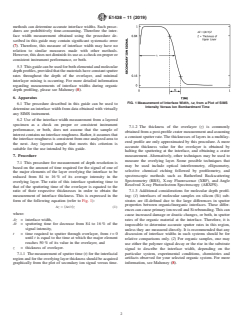
FIG. 1 Measurement of Interface Width, ∆z, from a Plot of SIMS
6.1 The procedure described in this guide can be used to
Intensity Versus Ion Bombardment Time
determine an interface width from data obtained with virtually
any SIMS instrument.
6.2 Use of the interface width measurement from a layered
specimen as a check on proper or consistent instrument
7.1.2 The th
...