

ASTM A220/A220M-99(2022)e1
(Specification)Standard Specification for Pearlitic Malleable Iron
General Information
- Abstract
ABSTRACT
This specification covers pearlitic malleable iron castings for general. The chemical composition of the iron shall be such as to produce the mechanical properties required by this specification. Hardness test and tensile test shall be made to conform to the requirements specified. The microstructure of the pearlitic malleable iron shall consist of temper carbon nodules uniformly distributed in a matrix of ferrite, pearlite, and tempered transformation products of austenite. All castings on visual examination, shall be sound and free from obvious shrinkage and porosity.
SCOPE
1.1 This specification covers pearlitic malleable iron castings for general engineering usage at temperatures from normal ambient to approximately 750 °F [400 °C].
1.1.1 For continuous service at temperatures up to 1200 °F [650 °C], design factors should be incorporated to compensate for possible property changes, as demonstrated by Marshall and Sommer2 and by Pearson.3
1.2 Without knowledge of casting geometry and process details, no quantitative relationship can be stated between the properties of the iron in the various locations of a casting and those of a test bar cast from the same iron.
1.3 The values stated in either SI units or inch-pound units are to be regarded separately as standard. The values stated in each system may not be exact equivalents; therefore, each system shall be used independently of the other. Combining values from the two systems may result in nonconformance with the standard.
1.4 This international standard was developed in accordance with internationally recognized principles on standardization established in the Decision on Principles for the Development of International Standards, Guides and Recommendations issued by the World Trade Organization Technical Barriers to Trade (TBT) Committee.
- Status
- Published
- Publication Date
- 30-Sep-2022
- Technical Committee
- A04 - Iron Castings
- Drafting Committee
- A04.02 - Malleable and Ductile Iron Castings
Overview
ASTM A220/A220M-99(2022)e1 - Standard Specification for Pearlitic Malleable Iron defines the requirements for pearlitic malleable iron castings used in general engineering applications. Developed by ASTM International, this standard covers mechanical properties, chemical composition, testing methods, and visual requirements to ensure consistency and performance in cast iron products.
This specification is recognized internationally and applies to castings intended for use at ambient temperatures up to approximately 750°F (400°C). It offers guidance for continuous service up to 1200°F (650°C) with necessary design considerations for property changes at elevated temperatures. Both SI and inch-pound units are supported, but values should not be intermixed.
Key Topics
Scope and Purpose
- Governs pearlitic malleable iron castings for general engineering use.
- Applies to a wide temperature range, with recommendations for higher temperature service.
Mechanical Properties
- Castings are classified into grades based on tensile strength, yield strength, and elongation.
- Mechanical properties validated by standardized tensile and hardness tests.
Chemical Composition and Microstructure
- Composition must achieve required mechanical properties.
- Microstructure consists of temper carbon nodules in a matrix of ferrite, pearlite, and tempered transformation products of austenite.
Testing and Inspection
- Tensile and hardness testing required on specimens representing each production batch.
- Visual examination ensures castings are sound, and free from shrinkage and porosity.
- Test bar results provide a practical estimation of mechanical performance.
Dimensional and Marking Requirements
- Dimensions must align with purchaser drawings or supplied patterns.
- Each casting should be clearly marked with manufacturer identification, pattern number, and grade where possible.
Quality Assurance
- Manufacturers are responsible for conducting and recording all required tests and inspections.
- Purchasers may inspect records and perform verification inspections as needed.
Packaging and Shipping
- Shipment markings and packaging should prevent damage and misidentification.
- Special requirements apply for government contracts.
Applications
ASTM A220/A220M is widely used in industries requiring reliable and durable iron castings, such as:
- Automotive: Components like gears, brackets, and housings that demand high mechanical strength and stability.
- Machinery: General-purpose equipment parts, levers, and fittings requiring wear resistance and consistent performance.
- Construction: Iron components in building frameworks, supports, and connectors.
- Power Generation: Engine and turbine parts exposed to moderate thermal stresses.
Its defined structure and property requirements ensure that pearlitic malleable iron castings meet the demanding conditions of diverse engineering applications, supporting both safety and long service life.
Related Standards
For comprehensive implementation and integration, consider these related ASTM standards:
- ASTM A247: Test Method for Evaluating the Microstructure of Graphite in Iron Castings
- ASTM A644: Terminology Relating to Iron Castings
- ASTM E8/E8M: Test Methods for Tension Testing of Metallic Materials
- ASTM E10: Test Method for Brinell Hardness of Metallic Materials
- ASTM E18: Test Methods for Rockwell Hardness of Metallic Materials
- ASTM E140: Hardness Conversion Tables for Metals
Additional marking and packaging standards referenced:
- MIL-STD-129: Marking for Shipment and Storage (Military)
- Fed. Std. No. 123: Marking for Shipment (Civil Agencies)
Keywords: pearlitic malleable iron, ASTM A220, cast iron standards, mechanical properties, tensile strength, hardness testing, industrial castings, engineering iron castings, quality assurance, microstructure
Relations
- Effective Date
- 01-Apr-2024
- Effective Date
- 01-Jan-2024
- Refers
ASTM A247-19 - Standard Test Method for Evaluating the Microstructure of Graphite in Iron Castings - Effective Date
- 01-Mar-2019
- Effective Date
- 01-Jul-2018
- Effective Date
- 01-Nov-2017
- Effective Date
- 01-Jul-2017
- Refers
ASTM A247-17 - Standard Test Method for Evaluating the Microstructure of Graphite in Iron Castings - Effective Date
- 01-Jul-2017
- Effective Date
- 15-Jul-2016
- Refers
ASTM A247-16a - Standard Test Method for Evaluating the Microstructure of Graphite in Iron Castings - Effective Date
- 01-Apr-2016
- Refers
ASTM A247-16 - Standard Test Method for Evaluating the Microstructure of Graphite in Iron Castings - Effective Date
- 15-Mar-2016
- Effective Date
- 01-Feb-2015
- Effective Date
- 01-Oct-2014
- Effective Date
- 01-May-2014
- Effective Date
- 01-Jun-2013
- Effective Date
- 01-May-2013
Get Certified
Connect with accredited certification bodies for this standard

Element Materials Technology
Materials testing and product certification.

Inštitut za kovinske materiale in tehnologije
Institute of Metals and Technology. Materials testing, metallurgical analysis, NDT.
Sponsored listings
Frequently Asked Questions
ASTM A220/A220M-99(2022)e1 is a technical specification published by ASTM International. Its full title is "Standard Specification for Pearlitic Malleable Iron". This standard covers: ABSTRACT This specification covers pearlitic malleable iron castings for general. The chemical composition of the iron shall be such as to produce the mechanical properties required by this specification. Hardness test and tensile test shall be made to conform to the requirements specified. The microstructure of the pearlitic malleable iron shall consist of temper carbon nodules uniformly distributed in a matrix of ferrite, pearlite, and tempered transformation products of austenite. All castings on visual examination, shall be sound and free from obvious shrinkage and porosity. SCOPE 1.1 This specification covers pearlitic malleable iron castings for general engineering usage at temperatures from normal ambient to approximately 750 °F [400 °C]. 1.1.1 For continuous service at temperatures up to 1200 °F [650 °C], design factors should be incorporated to compensate for possible property changes, as demonstrated by Marshall and Sommer2 and by Pearson.3 1.2 Without knowledge of casting geometry and process details, no quantitative relationship can be stated between the properties of the iron in the various locations of a casting and those of a test bar cast from the same iron. 1.3 The values stated in either SI units or inch-pound units are to be regarded separately as standard. The values stated in each system may not be exact equivalents; therefore, each system shall be used independently of the other. Combining values from the two systems may result in nonconformance with the standard. 1.4 This international standard was developed in accordance with internationally recognized principles on standardization established in the Decision on Principles for the Development of International Standards, Guides and Recommendations issued by the World Trade Organization Technical Barriers to Trade (TBT) Committee.
ABSTRACT This specification covers pearlitic malleable iron castings for general. The chemical composition of the iron shall be such as to produce the mechanical properties required by this specification. Hardness test and tensile test shall be made to conform to the requirements specified. The microstructure of the pearlitic malleable iron shall consist of temper carbon nodules uniformly distributed in a matrix of ferrite, pearlite, and tempered transformation products of austenite. All castings on visual examination, shall be sound and free from obvious shrinkage and porosity. SCOPE 1.1 This specification covers pearlitic malleable iron castings for general engineering usage at temperatures from normal ambient to approximately 750 °F [400 °C]. 1.1.1 For continuous service at temperatures up to 1200 °F [650 °C], design factors should be incorporated to compensate for possible property changes, as demonstrated by Marshall and Sommer2 and by Pearson.3 1.2 Without knowledge of casting geometry and process details, no quantitative relationship can be stated between the properties of the iron in the various locations of a casting and those of a test bar cast from the same iron. 1.3 The values stated in either SI units or inch-pound units are to be regarded separately as standard. The values stated in each system may not be exact equivalents; therefore, each system shall be used independently of the other. Combining values from the two systems may result in nonconformance with the standard. 1.4 This international standard was developed in accordance with internationally recognized principles on standardization established in the Decision on Principles for the Development of International Standards, Guides and Recommendations issued by the World Trade Organization Technical Barriers to Trade (TBT) Committee.
ASTM A220/A220M-99(2022)e1 is classified under the following ICS (International Classification for Standards) categories: 77.140.80 - Iron and steel castings. The ICS classification helps identify the subject area and facilitates finding related standards.
ASTM A220/A220M-99(2022)e1 has the following relationships with other standards: It is inter standard links to ASTM A247-24, ASTM E8/E8M-24, ASTM A247-19, ASTM E18-18, ASTM A644-17, ASTM E18-17, ASTM A247-17, ASTM E8/E8M-16, ASTM A247-16a, ASTM A247-16, ASTM E8/E8M-15, ASTM A644-14, ASTM E10-14, ASTM E8/E8M-13, ASTM A644-13. Understanding these relationships helps ensure you are using the most current and applicable version of the standard.
ASTM A220/A220M-99(2022)e1 is available in PDF format for immediate download after purchase. The document can be added to your cart and obtained through the secure checkout process. Digital delivery ensures instant access to the complete standard document.
Standards Content (Sample)
This international standard was developed in accordance with internationally recognized principles on standardization established in the Decision on Principles for the
Development of International Standards, Guides and Recommendations issued by the World Trade Organization Technical Barriers to Trade (TBT) Committee.
´1
Designation:A220/A220M −99 (Reapproved 2022)
Standard Specification for
Pearlitic Malleable Iron
This standard is issued under the fixed designationA220/A220M; the number immediately following the designation indicates the year
of original adoption or, in the case of revision, the year of last revision.Anumber in parentheses indicates the year of last reapproval.
A superscript epsilon (´) indicates an editorial change since the last revision or reapproval.
This standard has been approved for use by agencies of the U.S. Department of Defense.
ε NOTE—Footnote 5 was updated editorially in October 2022.
1. Scope 2. Referenced Documents
2.1 ASTM Standards:
1.1 This specification covers pearlitic malleable iron cast-
A247Test Method for Evaluating the Microstructure of
ingsforgeneralengineeringusageattemperaturesfromnormal
Graphite in Iron Castings
ambient to approximately 750°F [400°C].
A644Terminology Relating to Iron Castings
1.1.1 For continuous service at temperatures up to 1200°F
E8/E8MTest Methods for Tension Testing of Metallic Ma-
[650°C], design factors should be incorporated to compensate
terials
for possible property changes, as demonstrated by Marshall
2 3
E10Test Method for Brinell Hardness of Metallic Materials
and Sommer and by Pearson.
E18Test Methods for Rockwell Hardness of Metallic Ma-
1.2 Without knowledge of casting geometry and process
terials
details, no quantitative relationship can be stated between the
E140Hardness Conversion Tables for Metals Relationship
properties of the iron in the various locations of a casting and
Among Brinell Hardness, Vickers Hardness, Rockwell
those of a test bar cast from the same iron.
Hardness, Superficial Hardness, Knoop Hardness, Sclero-
1.3 The values stated in either SI units or inch-pound units scope Hardness, and Leeb Hardness
are to be regarded separately as standard. The values stated in 2.2 Military Standard:
each system may not be exact equivalents; therefore, each MIL-STD-129Marking for Shipment and Storage
system shall be used independently of the other. Combining 2.3 Federal Standard:
values from the two systems may result in nonconformance Fed. Std. No. 123Marking for Shipment (Civil Agencies)
with the standard.
3. Terminology
1.4 This international standard was developed in accor-
3.1 Definitions:
dance with internationally recognized principles on standard-
3.1.1 Definitions for many terms common to iron castings
ization established in the Decision on Principles for the
are found in Terminology A644.
Development of International Standards, Guides and Recom-
mendations issued by the World Trade Organization Technical
4. Classification
Barriers to Trade (TBT) Committee.
4.1 Iron produced for castings ordered under this specifica-
tionisclassifiedinanumberofgradesasshowninTable1and
isqualifiedbytestsonseparatelycasttestbars.Separatelycast
This specification is under the jurisdiction of ASTM Committee A04 on Iron
test bars shall be poured from the same lot of iron as the
Castings and is the direct responsibility of Subcommittee A04.02 on Malleable and
castings they represent and shall be heat treated with those
Ductile Iron Castings.
Current edition approved Oct. 1, 2022. Published October 2022. Originally castings.
approved in 1968. Last previous edition approved in 2018 as A220/A220M–99
ɛ1
(2018) . DOI: 10.1520/A0220_A0220M-99R22E01.
2 4
Marshall, L. C., and Sommer, G. F., “Stress-Rupture Properties of Malleable For referenced ASTM standards, visit the ASTM website, www.astm.org, or
Iron at Elevated Temperatures,” Proceedings, ASTM International, Vol 58, pp. contact ASTM Customer Service at service@astm.org. For Annual Book of ASTM
752–773. Standards volume information, refer to the standard’s Document Summary page on
Pearson, D.A., “Stress-Rupture and Elongation Properties of Malleable Iron at the ASTM website.
ElevatedTemperatures,”Transactions,70thCastingsCongressandExposition,May Available from General Services Administration – Vendor Support Center,
9, 1966. https://vsc.gsa.gov/.
Copyright © ASTM International, 100 Barr Harbor Drive, PO Box C700, West Conshohocken, PA 19428-2959. United States
´1
A220/A220M−99 (2022)
TABLE 1 Tensile Test Requirements
Inch-Pound Grades
Tensile Strength, Yield Strength, Elongation,
English
min min min
Grade
psi psi 2 in., %
40010 60 000 40 000 10
45008 65 000 45 000 8
45006 65 000 45 000 6
50005 70 000 50 000 5
60004 80 000 60 000 4
70003 85 000 70 000 3
80002 95 000 80 000 2
90001 105 000 90 000 1
Metric Grades
NOTE 1—Modification may be made in the dimensions indicated above
Tensile Strength, Yield Strength, Elongation,
Metric for those details of the specimen outside of the gauge length as required
min min min
Grade by testing procedure and equipment.
MPa MPa 50 mm, %
280M10 400 280 10
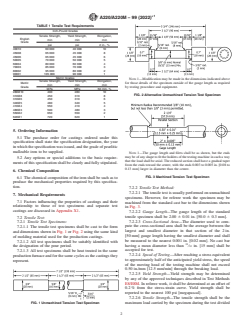
FIG. 2Alternative Unmachined Tension Test Specimen
310M8 450 310 8
310M6 450 310 6
340M5 480 340 5
410M4 550 410 4
480M3 590 480 3
550M2 650 550 2
620M1 720 620 1
5. Ordering Information
5.1 The purchase order for castings ordered under this
specification shall state the specification designation, the year
inwhichthespecificationwasissued,andthegradeofpearlitic
malleable iron to be supplied.
NOTE 1—The gauge length and filets shall be as shown, but the ends
maybeofanyshapetofittheholdersofthetestingmachineinsuchaway
5.2 Any options or special additions to the basic require-
that the load shall be axial.The reduced section shall have a gradual taper
ments of this specification shall be clearly and fully stipulated.
from the ends toward the center, with the ends 0.003 to 0.005 in. [0.08 to
0.13 mm] larger in diameter than the center.
6. Chemical Composition
FIG. 3Machined Tension Test Specimen
6.1 Thechemicalcompositionoftheironshallbesuchasto
produce the mechanical properties required by this specifica-
tion.
7.2.2 Tensile Test Method:
7.2.2.1 The tensile test is usually performed on unmachined
7. Mechanical Requirements
specimens. However, for referee work the specimen may be
7.1 Factors influencing the properties of castings and their
machined from the standard cast bar to the dimensions shown
relationship to those of test specimens and separate test
in Fig. 3.
castings are discussed in Appendix X1.
7.2.2.2 Gauge Length—The gauge length of the standard
tensile specimen shall be 2.00 6 0.01 in. [50.0 6 0.3 mm].
7.2 Tensile Test:
7.2.2.3 Cross-Sectional Area—The diameter used to com-
7.2.1 Tensile Test Specimens:
pute the cross-sectional area shall be the average between the
7.2.1.1 The tensile test specimens shall be cast to the form
largest and smallest diameter in that section of the 2in.
and dimensions shown in Fig. 1 or Fig. 2 using the same kind
[50mm] gauge length having the smallest diameter and shall
of molding material used for the production castings.
be measured to the nearest 0.001 in. [0.02 mm]. No cast bar
7.2.1.2 All test specimens shall be suitably identified with
having a mean diameter less than ⁄32 in. [15 mm] shall be
the designation of the pour period.
accepted for test.
7.2.1.3 All test specimens shall be heat treated in the same
7.2.2.4 Speed of Testing—After reaching a stress equivalent
productionfurnaceandforthesamecyclesasthecastingsthey
to approximately half of the anticipated yield stress, the speed
represent.
of the moving head of the testing machine shall not exceed
0.50 in./mm [12.5 mm/min] through the breaking load.
7.2.2.5 Yield Strength—Yield strength may be determined
by any of the approved techniques described in Test Methods
E8/E8M. In referee work, it shall be determined at an offset of
0.2% from the stress-strain curve. Yield strength shall be
reported to the nearest 100 psi [megapascal].
7.2.2.6 Tensile Strength—The tensile strength shall be the
FIG. 1Unmachined Tension Test Specimen maximum load carried by the specimen during the test divided
´1
A220/A220M−99 (2022)
by the original cross-sectional area of the gauge length, as according to Tables E140, that does not specifically cover cast
found in accordance with 7.2.2.3. It shall be reported to the irons, are approximate only and are generally inadvisable.
nearest 100 psi [megapascal]. 7.3.2.3 Sufficient material shall be removed from the cast
surface to ensure that the measured hardness is representative.
7.2.2.7 Elongation—Theincreaseingaugelengthafterfrac-
7.3.3 Sampling procedures and the frequency of hardness
ture of a tensile specimen, measured to the nearest 0.01 in.
testing shall be fully detailed on the purchase agreement.
[0.25 mm], expressed as a percentage of the original gauge
Otherwise, hardness tests shall be performed at the discretion
length. It shall be reported to the nearest 0.5%.
of the producer.
7.2.3 Number of Tests and Retests:
7.3.4 Castings failing to conform to the required hardness
7.2.3.1 At least three tensile test specimens shall be cast
rangemaybereheattreatedandretested.Ifafterreheattreating
from a representative ladle of iron from each 4h pour period
they still fail the hardness requirements, they shall be rejected.
during which the purchaser’s castings were poured.
7.3.5 Typical hardness ranges for the various grades of
7.2.3.2 Only one test specimen need be tested to qualify
pearlitic malleable iron are listed in Table 2.
each pour period and heat treatment batch, provided the
requirementsofthisspecificationaremetbythattestspecimen.
8. Microstructure Requirements
7.2.3.3 If after testing, a specimen shows evidence of a
8.1 The microstructure of the pearlitic malleable iron shall
defect, another tensile test may be made on a companion
consist of temper carbon nodules uniformly distributed in a
specimen. Also, a retest shall be permitted whenever fracture
matrix of ferrite, pearlite, and tempered transformation prod-
occurs outside the central 50% of the gauge length.
ucts of austenite.
7.2.3.4 If the result of a valid test fails to conform to the
8.2 When agreed upon between the purchaser and the
requirements of this specification, two retests shall be made. If
producer, the maximum decarburization at any as-cast surface
either of the retests fails to meet specification, the castings
after heat treatment may be stipulated in writing as measured
represented by these test specimens shall be rejected. A valid
byvisualdepletionofcombinedcarbonafterpolishing,etching
test is one wherein the test specimen has been properly
in nital, and viewing at 100×.
prepared and appears to be sound and on which the approved
test procedure has been followed.
8.3 If the castings are to be subsequently hardened, the
7.2.3.5 Ifthefirsttestresultsindicatethatareheattreatment selected grade designation should be preceded by the letter L.
is needed to meet the test requirements, the entire lot of
Such castings shall contain sufficient combined carbon in the
castings and the representative test specimens shall be reheat matrix to respond satisfactorily to any of the common harden-
treated together. Testing shall then be repeated in accordance
ing processes properly applied. A minimum hardness of 197
with 7.2.3.1 – 7.2.3.4. HB is recommended. Free ferrite shall be as low as is
7.2.4 The results of all tests, including retests, shall be consistent with other properties.
posted in permanent records, that shall state any abnormalities
8.4 In referee work, the metallographic practice recom-
observedduringthetestandinthefr
...