

ASTM D1070-03(2017)
(Test Method)Standard Test Methods for Relative Density of Gaseous Fuels
General Information
- Abstract
SIGNIFICANCE AND USE
5.1 These test methods provide accurate and reliable methods to measure the relative density of gaseous fuels on an intermittent or continuous basis. These measurements are frequently used for regulatory or contract compliance custody transfer and process control.
SCOPE
1.1 These test methods cover the determination of relative density of gaseous fuels, including liquefied petroleum gases, in the gaseous state at normal temperatures and pressures. The test methods specified are sufficiently varied in nature so that one or more may be used for laboratory, control, reference, gas measurement, or in fact, for any purpose in which it is desired to know the relative density of gas or gases as compared to the density of dry air at the same temperature and pressure.
1.2 The procedures appear in the following sections:
Section
Method A, Ac-Me Gravity Balance
7 – 9
Method B, Ranarex Recording and Indicating Gravitometer
10-11
Method C, UGC Gravitometer
12 – 14
Note 1: The test methods and apparatus described herein are representative of methods and apparatus used broadly in industry. Manufacturer's instructions for specific models should be consulted for further details and as supplements to the information presented here. In addition to instrumentation described below additional equally accurate and satisfactory instruments may be available.
1.3 The values stated in inch-pound units are to be regarded as standard. The values given in parentheses are mathematical conversions to SI units that are provided for information only and are not considered standard.
1.4 This standard does not purport to address all of the safety concerns, if any, associated with its use. It is the responsibility of the user of this standard to establish appropriate safety and health practices and determine the applicability of regulatory limitations prior to use.
1.5 This international standard was developed in accordance with internationally recognized principles on standardization established in the Decision on Principles for the Development of International Standards, Guides and Recommendations issued by the World Trade Organization Technical Barriers to Trade (TBT) Committee.
- Status
- Published
- Publication Date
- 31-Mar-2017
- Technical Committee
- D03 - Gaseous Fuels
Overview
ASTM D1070-03(2017), published by ASTM International, sets forth standard test methods for determining the relative density of gaseous fuels, such as natural gas and liquefied petroleum gases (LPG), in their gaseous state at normal temperatures and pressures. Relative density, also referred to as specific gravity in older terminology, is the ratio of the density of a fuel gas to that of dry air, both at the same temperature and pressure. Accurate and reliable relative density measurements are crucial for a variety of industry applications, including custody transfer, regulatory compliance, and process control in energy sectors.
Key Topics
Significance of Relative Density:
Relative density directly impacts the calculation of energy content, flow measurement, and billing for natural gas and other gaseous fuels. Consistent methods ensure fair commercial and regulatory transactions.Test Methods Overview:
The standard provides three main methods for measuring relative density:- Method A (Ac-Me Gravity Balance): Uses a balance beam to compare the masses of a fixed gas volume and dry air.
- Method B (Ranarex Gravitometer): Operates on the kinetic energy principle to compare the effect of gas and air on rotating impulse wheels.
- Method C (UGC Gravitometer): Employs a beam balance with twin float chambers to continuously compare a test gas sample with a reference of known composition.
Precision and Calibration:
The methods outlined are broadly used across the gas industry, and accuracy is maintained with proper calibration against standard reference gases and adherence to manufacturer instructions.Units of Measurement:
The standard primarily uses inch-pound units. SI units are provided for informational purposes but are not considered standard.
Applications
Custody Transfer:
Accurate relative density measurement is essential for fair commercial exchanges of gaseous fuels, ensuring each party gets compensated appropriately based on the fuel’s characteristics.Regulatory Compliance:
Many jurisdictions and contracts require periodic verification of fuel composition and density to comply with safety and environmental regulations.Gas Processing and Control:
Knowing the precise relative density allows energy producers and distributors to optimize combustion, mixing, and distribution processes.Laboratory and Field Testing:
The procedures support both lab-based reference measurements and on-site field analysis, offering flexibility for various operational needs.
Related Standards
- ASTM D5503 - Practice for Natural Gas Sample-Handling and Conditioning Systems for Pipeline Instrumentation.
- General Gas Measurement Standards - Various ASTM and ISO standards relevant to energy content determination and gas quality.
- World Trade Organization (WTO) Standardization Principles - ASTM D1070 aligns with international guidelines for the development of standards, ensuring global applicability.
Keywords: relative density of gaseous fuels, specific gravity of natural gas, liquefied petroleum gas testing, custody transfer, regulatory gas measurement, ASTM gaseous fuel standards, Ranarex gravitometer, Ac-Me gravity balance, UGC gravitometer.
By following ASTM D1070-03(2017), stakeholders in the gaseous fuel industry ensure accurate, reliable, and internationally recognized measurements of relative density, facilitating transparent trade, regulatory compliance, and operational efficiency.
Relations
- Effective Date
- 01-Dec-2008
- Effective Date
- 10-May-2003
- Effective Date
- 10-May-1999
Get Certified
Connect with accredited certification bodies for this standard

Element Materials Technology
Materials testing and product certification.

ABS Group Brazil
ABS Group certification services in Brazil.

ABS Quality Evaluations Inc.
American Bureau of Shipping quality certification.
Sponsored listings
Frequently Asked Questions
ASTM D1070-03(2017) is a standard published by ASTM International. Its full title is "Standard Test Methods for Relative Density of Gaseous Fuels". This standard covers: SIGNIFICANCE AND USE 5.1 These test methods provide accurate and reliable methods to measure the relative density of gaseous fuels on an intermittent or continuous basis. These measurements are frequently used for regulatory or contract compliance custody transfer and process control. SCOPE 1.1 These test methods cover the determination of relative density of gaseous fuels, including liquefied petroleum gases, in the gaseous state at normal temperatures and pressures. The test methods specified are sufficiently varied in nature so that one or more may be used for laboratory, control, reference, gas measurement, or in fact, for any purpose in which it is desired to know the relative density of gas or gases as compared to the density of dry air at the same temperature and pressure. 1.2 The procedures appear in the following sections: Section Method A, Ac-Me Gravity Balance 7 – 9 Method B, Ranarex Recording and Indicating Gravitometer 10-11 Method C, UGC Gravitometer 12 – 14 Note 1: The test methods and apparatus described herein are representative of methods and apparatus used broadly in industry. Manufacturer's instructions for specific models should be consulted for further details and as supplements to the information presented here. In addition to instrumentation described below additional equally accurate and satisfactory instruments may be available. 1.3 The values stated in inch-pound units are to be regarded as standard. The values given in parentheses are mathematical conversions to SI units that are provided for information only and are not considered standard. 1.4 This standard does not purport to address all of the safety concerns, if any, associated with its use. It is the responsibility of the user of this standard to establish appropriate safety and health practices and determine the applicability of regulatory limitations prior to use. 1.5 This international standard was developed in accordance with internationally recognized principles on standardization established in the Decision on Principles for the Development of International Standards, Guides and Recommendations issued by the World Trade Organization Technical Barriers to Trade (TBT) Committee.
SIGNIFICANCE AND USE 5.1 These test methods provide accurate and reliable methods to measure the relative density of gaseous fuels on an intermittent or continuous basis. These measurements are frequently used for regulatory or contract compliance custody transfer and process control. SCOPE 1.1 These test methods cover the determination of relative density of gaseous fuels, including liquefied petroleum gases, in the gaseous state at normal temperatures and pressures. The test methods specified are sufficiently varied in nature so that one or more may be used for laboratory, control, reference, gas measurement, or in fact, for any purpose in which it is desired to know the relative density of gas or gases as compared to the density of dry air at the same temperature and pressure. 1.2 The procedures appear in the following sections: Section Method A, Ac-Me Gravity Balance 7 – 9 Method B, Ranarex Recording and Indicating Gravitometer 10-11 Method C, UGC Gravitometer 12 – 14 Note 1: The test methods and apparatus described herein are representative of methods and apparatus used broadly in industry. Manufacturer's instructions for specific models should be consulted for further details and as supplements to the information presented here. In addition to instrumentation described below additional equally accurate and satisfactory instruments may be available. 1.3 The values stated in inch-pound units are to be regarded as standard. The values given in parentheses are mathematical conversions to SI units that are provided for information only and are not considered standard. 1.4 This standard does not purport to address all of the safety concerns, if any, associated with its use. It is the responsibility of the user of this standard to establish appropriate safety and health practices and determine the applicability of regulatory limitations prior to use. 1.5 This international standard was developed in accordance with internationally recognized principles on standardization established in the Decision on Principles for the Development of International Standards, Guides and Recommendations issued by the World Trade Organization Technical Barriers to Trade (TBT) Committee.
ASTM D1070-03(2017) is classified under the following ICS (International Classification for Standards) categories: 75.160.30 - Gaseous fuels. The ICS classification helps identify the subject area and facilitates finding related standards.
ASTM D1070-03(2017) has the following relationships with other standards: It is inter standard links to ASTM D5503-94(2008), ASTM D5503-94(2003), ASTM D5503-94(1999). Understanding these relationships helps ensure you are using the most current and applicable version of the standard.
ASTM D1070-03(2017) is available in PDF format for immediate download after purchase. The document can be added to your cart and obtained through the secure checkout process. Digital delivery ensures instant access to the complete standard document.
Standards Content (Sample)
This international standard was developed in accordance with internationally recognized principles on standardization established in the Decision on Principles for the
Development of International Standards, Guides and Recommendations issued by the World Trade Organization Technical Barriers to Trade (TBT) Committee.
Designation: D1070 − 03 (Reapproved 2017)
Standard Test Methods for
Relative Density of Gaseous Fuels
This standard is issued under the fixed designation D1070; the number immediately following the designation indicates the year of
original adoption or, in the case of revision, the year of last revision. A number in parentheses indicates the year of last reapproval. A
superscript epsilon (´) indicates an editorial change since the last revision or reapproval.
1. Scope 2. Referenced Documents
2.1 ASTM Standards:
1.1 These test methods cover the determination of relative
D5503 Practice for Natural Gas Sample-Handling and Con-
density of gaseous fuels, including liquefied petroleum gases,
ditioning Systems for Pipeline Instrumentation (With-
in the gaseous state at normal temperatures and pressures. The
drawn 2017)
test methods specified are sufficiently varied in nature so that
one or more may be used for laboratory, control, reference, gas
3. Terminology
measurement, or in fact, for any purpose in which it is desired
3.1 Definitions:
to know the relative density of gas or gases as compared to the
3.1.1 density—mass per unit of volume of the fuel gas or air
density of dry air at the same temperature and pressure.
being considered.
1.2 The procedures appear in the following sections:
3.1.2 gaseous fuel—material to be tested, as sampled, with-
Section
out change of composition by drying or otherwise.
Method A, Ac-Me Gravity Balance 7–9
Method B, Ranarex Recording and Indicating Gravitometer 10-11 3.1.3 relative density—ratio of the density of the gaseous
Method C, UGC Gravitometer 12–14
fuel, under the observed conditions of temperature and
pressure, to the density of dried air, of normal carbon dioxide
NOTE 1—The test methods and apparatus described herein are repre-
content, at the same temperature and pressure.
sentative of methods and apparatus used broadly in industry. Manufactur-
er’s instructions for specific models should be consulted for further details 3.1.3.1 Discussion—In these test methods the term “relative
and as supplements to the information presented here. In addition to
density” has replaced the term “specific gravity.” The term,
instrumentation described below additional equally accurate and satisfac-
specific gravity, as used in a previous edition of these test
tory instruments may be available.
methods, was used incorrectly.
1.3 The values stated in inch-pound units are to be regarded
3.1.4 relative humidity—ratio of actual pressure of existing
as standard. The values given in parentheses are mathematical
water vapor to maximum possible pressure of water vapor in
conversions to SI units that are provided for information only
the atmosphere at the same temperature, expressed as a
and are not considered standard.
percentage.
1.4 This standard does not purport to address all of the
4. Summary of Test Methods
safety concerns, if any, associated with its use. It is the
4.1 Displacement Balances—This test method is based on
responsibility of the user of this standard to establish appro-
the balancing of the weight of a fixed volume of gas at
priate safety and health practices and determine the applica-
atmospheric pressure against the weight of dry air across the
bility of regulatory limitations prior to use.
center of gravity of a balance beam. The amount of this
1.5 This international standard was developed in accor-
“deflection,” subject to correction, for humidity, high CO
dance with internationally recognized principles on standard-
content or other factor measures the relative density. Instru-
ization established in the Decision on Principles for the
ments of this class may be either visual or chart recording.
Development of International Standards, Guides and Recom-
4.2 Kinetic Energy—This test method measures the ratio of
mendations issued by the World Trade Organization Technical
the change in kinetic energy between an impeller and an
Barriers to Trade (TBT) Committee.
impulse wheel operating in gas and a second impeller and
1 2
These test methods are under the jurisdiction of ASTM Committee D03 on For referenced ASTM standards, visit the ASTM website, www.astm.org, or
Gaseous Fuels and is the direct responsibility of Subcommittee D03.03 on contact ASTM Customer Service at service@astm.org. For Annual Book of ASTM
Determination of Heating Value and Relative Density of Gaseous Fuels. Standards volume information, refer to the standard’s Document Summary page on
Current edition approved April 1, 2017. Published April 2017. Originally the ASTM website.
approved in 1952. Last previous edition approved in 2010 as D1070 – 03(2010) . The last approved version of this historical standard is referenced on
DOI: 10.1520/D1070-03R17. www.astm.org.
Copyright © ASTM International, 100 Barr Harbor Drive, PO Box C700, West Conshohocken, PA 19428-2959. United States
D1070 − 03 (2017)
impulse wheel operating in a reference gas (generally air). The 8.1.1 Average Barometric Reading—Read the aneroid ba-
relative torque of the impulse wheels is measured and provides rometer at the beginning and end of each test, and record the
a value for relative density since the relative torque is propor- average of these two readings.
tional to the gas and air densities. 8.1.2 Air Reading:
8.1.2.1 Admit air through first valve and air dryer until
5. Significance and Use
atmospheric pressure is reached. Record temperature in the
balance. Close first valve.
5.1 These test methods provide accurate and reliable meth-
8.1.2.2 Open second valve and pull a vacuum of about 650
ods to measure the relative density of gaseous fuels on an
mm, then close second valve. Unlock the balance beam by
intermittent or continuous basis. These measurements are
turning locking level counterclockwise. The beam will then be
frequently used for regulatory or contract compliance custody
in an unbalanced position with the zero above the hairline
transfer and process control.
indicator.
8.1.2.3 Observe the scale from such a position that the
6. Sampling
reflection of your eye in the look glass is centered on the
6.1 The sample shall be representative of the gas to be
hairline. Admit air through first valve and air dryer until the
measured and shall be taken from its source without change in
beam begins to fall. Then pinch down the flow of air through
form or composition. Sampling of natural gases should be in
first valve so that the air can be cut off at exactly the right
accordance with Practice D5503.
instant to keep the beam in the balanced position. Observe the
scale noting how far the zero swings above and below the
METHOD A—Ac–Me GRAVITY BALANCE
hairline. The beam is balanced when the zero of the scale is
(Four-Spring Type)
swinging an equal amount above and below the hairline.
8.1.2.4 When balance is obtained, lock instrument and read
7. Apparatus
and record the air vacuum shown on the manometer. Record
7.1 Ac–Me Gravity Balance (Four-Spring Type), pressure-
the temperature within the balance.
tight cylindrical container mounted on a base board. Inside the
8.1.3 Gas Reading:
container is a balance beam with a sealed float at the back and
8.1.3.1 Close the valve on the air dryer and close Valve 1.
graduated scale at the front. The beam is suspended at the
Then open Valve 2 and pull a vacuum of about 650 mm on the
center by thin flat springs. A window for viewing the scale is
balance.
provided at the front of the container. The balance beam may
8.1.3.2 Open gas supply valve and admit gas to the balance
be locked by a cam mechanism when the instrument is not in
until the pressure reads about 650 mm. (Do not exceed
use. Valves for introducing gas and air samples are provided.
manometer maximum reading or the balance may be dam-
7.2 Carrying Case, for transportation or storage.
aged.)
8.1.3.3 Repeat 8.1.3.1 and 8.1.3.2 three times. The third
7.3 Air Dryer, to dehydrate air samples (silica gel).
time will leave only about 0.05 % air in the balance. If the
7.4 Tripod, to support the balance firmly.
balance is purged by flowing gas through it, the purging should
be continued until two successive readings (8.1.3.4) check.
7.5 Pressure-Vacuum Pump, to transfer samples and adjust
pressure in the balance. 8.1.3.4 Unlock the instrument and release gas pressure
through Valve 2 until balanced position of beam is reached.
7.6 Mercury Manometer, 760 mm, to measure pressure in
Follow the same method as described for the air reading in
the balance.
8.1.2.4. When balance is obtained, lock the instrument and
7.7 Aneroid Barometer,temperaturecompensatedtoconvert
record the gas pressure shown on the manometer. Record the
balance pressure readings to absolute pressures. (Absolute
temperature in the balance.
pressure not corrected to sea level.)
NOTE 2—When the gas supply is under a vacuum or has a high content
7.8 Rubber Hose, 6.35-mm ( ⁄4-in.) inside diameter, four
of hydrocarbons heavier than ethane, keep the gas pressure within the
lengths with brass swivel connections to join the balance to its balance below that in the source line or container to avoid condensation in
the balance. If necessary, readjust instrument to balance on gas at a
operating accessories.
vacuum about 20 mm higher than that in the sampling source.
7.9 Sampling Hose, 6.35 mm ( ⁄4 in.) with swivel connec-
8.1.4 Air Check Reading:
tions and two male 6.35-mm ( ⁄4-in.) pipe adapters.
8.1.4.1 Closegassupplyvalves.Opensecondvalveandpull
7.10 Additional Apparatus—Refer to the manufacturer’s
a vacuum of about 650 mm.
literature for further information on sizes, assembly, and other
8.1.4.2 Admit air through the air dryer to the balance until
details applicable to specific models.
atmospheric pressure is reached. Close first valve.
8.1.4.3 Repeat 8.1.4.1 and 8.1.4.2 at least three times or
8. Procedure
until two successive readings (8.1.4.4) will check.
8.1 Assemble and set up the balance in accordance with the 8.1.4.4 Open second valve and pull a vacuum of about 650
manufacturer’s instructions, making certain that it is firmly nm, then close second valve. Unlock instrument; admit air
supported, level, and is not disturbed during the entire test. through first valve to bring the beam to the balanced position
Take and record the following four readings: as when taking the first air reading.
D1070 − 03 (2017)
8.1.4.5 When balance is obtained, lock instrument; read and
record the air vacuum shown on the manometer. Record the
temperature in the balance. This reading must check with the
first air reading if the two temperatures in the balance are the
same. When test is complete close all valves on the balance.
Close the cock on the air dryer to prevent moistening of silica
gel.
9. Calculation
9.1 Whenananeroidbarometerisusedinthefield,itshould
be checked periodically with a mercury barometer.The barom-
eter should be handled very carefully and be well packed for
transportation. If barometer reading is in inches and fractions,
multiply reading by 25.4 to convert to millimetres. To convert
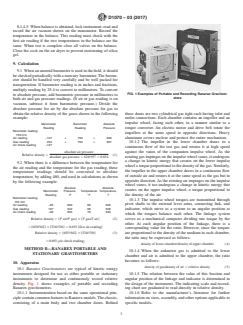
FIG. 1 Examples of Portable and Recording Ranarex Gravitom-
to absolute pressure, add barometric pressure in millimetres to
eters
both air and gas pressure readings. (If air or gas reading is on
vacuum, subtract it from barometric pressure.) Divide the
absolute pressure for air by the absolute pressure for gas to
obtain the relative density of the gases shown in the following these doors are two cylindrical gas tight each having inlet and
example: outlet connections. Each chamber contains an impeller and an
impulse wheel, facing each other, in a manner similar to a
Manometer Barometer Absolute
Reading Reading Pressure
torque converter. An electric motor and drive belt rotate the
Barometer reading:
impellers at the same speed in opposite directions. Heavy
753 mm
aluminum covers enclose and protect the entire mechanism.
Air reading −127 + 753 = 626
Gas reading 204 + 753 = 957
10.1.2 The impeller in the lower chamber draws in a
Air check reading −127
continuous flow of the test gas and rotates it at high speed
absolute air pressure against the vanes of the companion impulse wheel. As the
Relative density 5 (1)
absolute gas pressure 5 626/957 5 0.654
rotating gas impinges on the impulse wheel vanes, it undergoes
a change in kinetic energy that creates on the lower impulse
9.2 When there is a difference between the temperature for
wheel a torque proportional to the density of the gas. Similarly,
the air reading and the temperature for the gas reading, these
the impeller in the upper chamber draws in a continuous flow
temperature readings should be converted to absolute
of outside air and rotates it at the same speed as the gas but in
temperature, by adding 460, and used in calculations as shown
opposite direction.As the rotating air impinges on the impulse
by the following example:
wheel vanes, it too undergoes a change in kinetic energy that
Absolute Absolute
creates on the upper impulse wheel, a torque proportional to
Manometer Pressure, Temperature Temperature,
Reading P °F T
the density of the air.
Barometer reading:
10.1.3 The impulse wheel torques are transmitted through
745 mm
pivot shafts to the external lever arms, connecting link, and
Air reading −95 650 66 526
Gas reading 197 942 68 528
indicator, which move as a system to an angular position at
Air check reading −90 655 70 530
which the torques balance each other. The linkage system
Relative density 5 P air/P gas 3 T gas/T air (2) serves as a mechanical computer dividing one torque by the
~ ! ~ !
other. At each angular position of the linkage, there is a
5~650/942! 3 ~528/526! 5 0.693 ~first air reading!
corresponding value for the ratio. However, since the torques
Relative density 5 655/942 3 528/530 (3) are proportional to the density of the medium in each chamber,
~ ! ~ !
the ratio may be expressed as follows:
50.693 air check reading
~ !
density of lower chamber/density of upper chamber (4)
METHOD B—RANAREX PORTABLE AND
10.1.4 When the unknown gas is admitted to the lower
STATIONARY GRAVITOMETERS
chamber and air is admitted to the upper chamber, the ratio
becomes as follows:
10. Apparatus
density of gas/density of air 5 relative density (5)
10.1 Ranarex Gravitometers are typical of kinetic energy
instruments designed for use as either portable or stationary 10.1.5 The relation between the value of this fraction and
instruments to determine and continuously record relative angular position of the linkage and indicator is determined in
density. Fig. 1 shows examples of portable and recording the design of the instrument. The indicating scale and record-
Ranarex gravitometers. ing chart are graduated to read directly in relative density.
10.1.1 Instrumentation based on the same operational prin- 10.1.6 Refer to the manufacturer’s literature for further
ciplecontaincommonfeaturestoRanarexmodels.Thechassis, information on sizes, assembly, and other options applicable to
consisting of a main body and two chamber doors. Behind specific models.
D1070 − 03 (2017)
ormethane(CH4,0.554).Turnongasvalve,allowtopurgefor1or2min,
then record the measurement.
METHOD C—UGC GRAVITOMETER
12. Apparatus
12.1 The UGC gravitometer operates on the principles of
equal and opposite force. On the ends of a mechanical beam
balance, and at equal distance from the pivot point, are two
identical floats. One float is specific and contains a gas sample
with a known relative density. The other float is the sample
float through which is passed a sample of the gas that is being
measured. The pressure in the two floats is kept equal by a
pressure loaded regulator. This equalization of pressure pre-
vents error as a result of environmental conditions such as
atmospheric pressure variations.Avariation in the mass of the
gas passing through the sample float in relation to the known
sample in the balanced float will cause the beam balance to be
displaced. A change in the position of the beam balance is
transcribed onto a recording chart and translated to relative
density.
12.2 Because of the volumes of the floats and the necessary
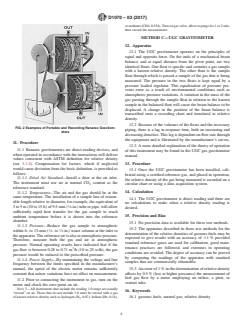
FIG. 2 Examples of Portable and Recording Ranarex Gravitom-
pi
...