

ASTM D3461-18
(Test Method)Standard Test Method for Softening Point of Asphalt and Pitch (Mettler Cup-and-Ball Method)
General Information
- Abstract
SIGNIFICANCE AND USE
4.1 Asphalt and pitch do not go through a solid-liquid phase change when heated, and therefore do not have true melting points. As the temperature is raised, they gradually soften or become less viscous. For this reason, the determination of the softening point must be made by an arbitrary, but closely defined, method if the test values are to be reproducible.
4.2 This test method is useful in determining the consistency as one element in establishing the uniformity of shipments or sources of supply.
SCOPE
1.1 This test method covers the determination of the softening point of asphalt and pitch in the range from 50 °C to 180 °C by the cup-and-ball apparatus, and gives results comparable to those obtained by Test Method D36.
Note 1: If the softening point of asphalt by this Mettler cup-and-ball method fails to meet specified requirements, tests may be rerun using the Test Method D36 (ring-and-ball) softening point apparatus as a referee method.
1.2 This standard does not purport to address all of the safety concerns, if any, associated with its use. It is the responsibility of the user of this standard to establish appropriate safety, health, and environmental practices and determine the applicability of regulatory limitations prior to use.
1.3 This international standard was developed in accordance with internationally recognized principles on standardization established in the Decision on Principles for the Development of International Standards, Guides and Recommendations issued by the World Trade Organization Technical Barriers to Trade (TBT) Committee.
- Status
- Published
- Publication Date
- 30-Nov-2018
- Technical Committee
- D02 - Petroleum Products, Liquid Fuels, and Lubricants
- Drafting Committee
- D02.05 - Properties of Fuels, Petroleum Coke and Carbon Material
Buy Documents
ASTM D3461-18 - Standard Test Method for Softening Point of Asphalt and Pitch (Mettler Cup-and-Ball Method)
REDLINE ASTM D3461-18 - Standard Test Method for Softening Point of Asphalt and Pitch (Mettler Cup-and-Ball Method)
Overview
ASTM D3461-18 is a standard test method established by ASTM International for determining the softening point of asphalt and pitch using the Mettler cup-and-ball method. Since asphalt and pitch do not have a true melting point, this method measures the temperature at which these materials soften under defined conditions. The test method is recognized for providing consistent and reproducible results within a temperature range of 50°C to 180°C, making it essential for assessing the consistency and quality of materials used in road construction, roofing, and industrial applications.
Key Topics
- Determination of Softening Point: The method specifies the use of a cup-and-ball apparatus to identify the temperature at which asphalt or pitch softens and flows a set distance, interrupting a light beam.
- Reproducibility: The test method is closely defined to ensure results are consistent and comparable to those from the ASTM D36 ring-and-ball method.
- Significance for Material Quality: Measuring the softening point helps evaluate the uniformity and consistency of asphalt and pitch, supporting quality assurance for shipments and sources of supply.
- Equipment: The method references Mettler Toledo dropping point instruments, integrating temperature control, digital readout, and precision detection capabilities.
- Safety and Compliance: Users are advised to follow relevant safety, health, and environmental practices, and ensure regulatory compliance when applying this method.
Applications
The ASTM D3461-18 standard test method delivers significant practical value, particularly in these areas:
- Quality Control: Used by producers, suppliers, and purchasers to confirm that asphalt and pitch batches meet specified softening point requirements, supporting shipment uniformity and source reliability.
- Specification Compliance: The test helps manufacturers demonstrate compliance with industry standards and regulatory specifications for asphalt used in paving, roofing, and industrial applications.
- Process Optimization: By providing a reproducible method, the test assists in monitoring manufacturing processes, enabling adjustments to maintain material properties within desired specifications.
- Research and Development: Laboratories apply this method to characterize the softening behavior of new asphalt and pitch formulations, supporting product development and innovation.
Related Standards
ASTM D3461-18 references several related test methods and practices, creating a comprehensive framework for material testing:
- ASTM D36: Test Method for Softening Point of Bitumen (Ring-and-Ball Apparatus) - often used as a referee method if Mettler cup-and-ball results are inconclusive.
- ASTM D140: Practice for Sampling Asphalt Materials - provides guidelines for obtaining representative samples.
- ASTM D4296: Practice for Sampling Pitch - outlines procedures for collecting pitch samples.
- ASTM A314: Specification for Stainless Steel Billets and Bars for Forging - specifies material requirements for apparatus components.
Conclusion
The ASTM D3461-18 standard is fundamental in the petroleum and construction industries for measuring the softening point of asphalt and pitch using the Mettler cup-and-ball method. Its adoption ensures product consistency, regulatory compliance, and high standards of quality control in materials critical to infrastructure and industrial applications. Proper implementation of this ASTM test method enables accurate assessment and comparability of material properties, supporting robust supply chains and end-use performance.
Keywords: ASTM D3461, softening point, asphalt, pitch, Mettler cup-and-ball, material testing, quality control, ASTM standards, construction materials, reproducibility
Relations
- Effective Date
- 01-Mar-2024
- Effective Date
- 01-Nov-2023
- Effective Date
- 01-Feb-2019
- Effective Date
- 01-Dec-2018
- Effective Date
- 15-Jul-2015
- Effective Date
- 01-Apr-2015
- Effective Date
- 01-Oct-2013
- Effective Date
- 01-May-2013
- Effective Date
- 01-Oct-2009
- Effective Date
- 01-Oct-2008
- Effective Date
- 01-Feb-2007
- Effective Date
- 01-Dec-2006
- Effective Date
- 01-Nov-2004
- Effective Date
- 10-Jun-2001
- Effective Date
- 10-Jun-2001
Buy Documents
ASTM D3461-18 - Standard Test Method for Softening Point of Asphalt and Pitch (Mettler Cup-and-Ball Method)
REDLINE ASTM D3461-18 - Standard Test Method for Softening Point of Asphalt and Pitch (Mettler Cup-and-Ball Method)
Get Certified
Connect with accredited certification bodies for this standard

DIBt (Deutsches Institut für Bautechnik)
German Institute for Building Technology.
DIN CERTCO
DIN Group product certification.
Zavod za gradbeništvo Slovenije (ZAG) - Inšpekcija
ZAG inspection body for construction products, structures, and materials.
Sponsored listings
Frequently Asked Questions
ASTM D3461-18 is a standard published by ASTM International. Its full title is "Standard Test Method for Softening Point of Asphalt and Pitch (Mettler Cup-and-Ball Method)". This standard covers: SIGNIFICANCE AND USE 4.1 Asphalt and pitch do not go through a solid-liquid phase change when heated, and therefore do not have true melting points. As the temperature is raised, they gradually soften or become less viscous. For this reason, the determination of the softening point must be made by an arbitrary, but closely defined, method if the test values are to be reproducible. 4.2 This test method is useful in determining the consistency as one element in establishing the uniformity of shipments or sources of supply. SCOPE 1.1 This test method covers the determination of the softening point of asphalt and pitch in the range from 50 °C to 180 °C by the cup-and-ball apparatus, and gives results comparable to those obtained by Test Method D36. Note 1: If the softening point of asphalt by this Mettler cup-and-ball method fails to meet specified requirements, tests may be rerun using the Test Method D36 (ring-and-ball) softening point apparatus as a referee method. 1.2 This standard does not purport to address all of the safety concerns, if any, associated with its use. It is the responsibility of the user of this standard to establish appropriate safety, health, and environmental practices and determine the applicability of regulatory limitations prior to use. 1.3 This international standard was developed in accordance with internationally recognized principles on standardization established in the Decision on Principles for the Development of International Standards, Guides and Recommendations issued by the World Trade Organization Technical Barriers to Trade (TBT) Committee.
SIGNIFICANCE AND USE 4.1 Asphalt and pitch do not go through a solid-liquid phase change when heated, and therefore do not have true melting points. As the temperature is raised, they gradually soften or become less viscous. For this reason, the determination of the softening point must be made by an arbitrary, but closely defined, method if the test values are to be reproducible. 4.2 This test method is useful in determining the consistency as one element in establishing the uniformity of shipments or sources of supply. SCOPE 1.1 This test method covers the determination of the softening point of asphalt and pitch in the range from 50 °C to 180 °C by the cup-and-ball apparatus, and gives results comparable to those obtained by Test Method D36. Note 1: If the softening point of asphalt by this Mettler cup-and-ball method fails to meet specified requirements, tests may be rerun using the Test Method D36 (ring-and-ball) softening point apparatus as a referee method. 1.2 This standard does not purport to address all of the safety concerns, if any, associated with its use. It is the responsibility of the user of this standard to establish appropriate safety, health, and environmental practices and determine the applicability of regulatory limitations prior to use. 1.3 This international standard was developed in accordance with internationally recognized principles on standardization established in the Decision on Principles for the Development of International Standards, Guides and Recommendations issued by the World Trade Organization Technical Barriers to Trade (TBT) Committee.
ASTM D3461-18 is classified under the following ICS (International Classification for Standards) categories: 91.100.50 - Binders. Sealing materials; 93.080.20 - Road construction materials. The ICS classification helps identify the subject area and facilitates finding related standards.
ASTM D3461-18 has the following relationships with other standards: It is inter standard links to ASTM D4296-24, ASTM A314-23, ASTM A314-19, ASTM D4296-18, ASTM A314-15, ASTM D4296-83(2015)e1, ASTM A314-13a, ASTM A314-13, ASTM D4296-83(2009), ASTM A314-08, ASTM D140-01(2007), ASTM D36-06, ASTM D4296-83(2004), ASTM D140-00, ASTM D140-01. Understanding these relationships helps ensure you are using the most current and applicable version of the standard.
ASTM D3461-18 is available in PDF format for immediate download after purchase. The document can be added to your cart and obtained through the secure checkout process. Digital delivery ensures instant access to the complete standard document.
Standards Content (Sample)
This international standard was developed in accordance with internationally recognized principles on standardization established in the Decision on Principles for the
Development of International Standards, Guides and Recommendations issued by the World Trade Organization Technical Barriers to Trade (TBT) Committee.
Designation: D3461 − 18
Standard Test Method for
Softening Point of Asphalt and Pitch (Mettler Cup-and-Ball
Method)
This standard is issued under the fixed designation D3461; the number immediately following the designation indicates the year of
original adoption or, in the case of revision, the year of last revision. A number in parentheses indicates the year of last reapproval. A
superscript epsilon (´) indicates an editorial change since the last revision or reapproval.
1. Scope* cup with a 6.5 mm hole in the bottom and with a lead ball,
8 mm in diameter, centered on top of the sample in the cup,
1.1 This test method covers the determination of the soft-
flows downward a distance of 19 mm to interrupt a light beam,
ening point of asphalt and pitch in the range from 50 °C to
as the sample is heated at a linear rate in air.
180 °C by the cup-and-ball apparatus, and gives results com-
parable to those obtained by Test Method D36.
4. Significance and Use
NOTE 1—If the softening point of asphalt by this Mettler cup-and-ball
method fails to meet specified requirements, tests may be rerun using the
4.1 Asphalt and pitch do not go through a solid-liquid phase
Test Method D36 (ring-and-ball) softening point apparatus as a referee
change when heated, and therefore do not have true melting
method.
points. As the temperature is raised, they gradually soften or
1.2 This standard does not purport to address all of the
become less viscous. For this reason, the determination of the
safety concerns, if any, associated with its use. It is the
softening point must be made by an arbitrary, but closely
responsibility of the user of this standard to establish appro-
defined, method if the test values are to be reproducible.
priate safety, health, and environmental practices and deter-
4.2 This test method is useful in determining the consis-
mine the applicability of regulatory limitations prior to use.
tency as one element in establishing the uniformity of ship-
1.3 This international standard was developed in accor-
ments or sources of supply.
dance with internationally recognized principles on standard-
ization established in the Decision on Principles for the
5. Apparatus
Development of International Standards, Guides and Recom-
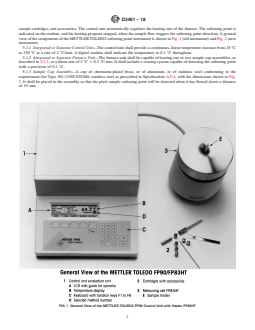
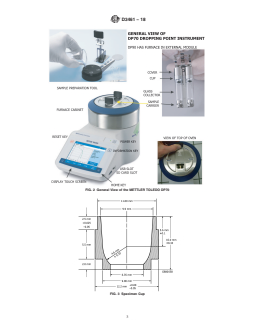
mendations issued by the World Trade Organization Technical 5.1 A METTLER TOLEDO dropping point cell can be
Barriers to Trade (TBT) Committee. used to determine softening points by this test method. These
commercially available instruments consist of a control unit
2. Referenced Documents
with a digital temperature indicator with furnace built in or
attached, sample cartridges, and accessories. The control unit
2.1 ASTM Standards:
automatically regulates the heating rate of the furnace. The
A314 Specification for Stainless Steel Billets and Bars for
softening point is indicated on the readout, and the heating
Forging
program stopped, when the sample flow triggers the softening
D36 Test Method for Softening Point of Bitumen (Ring-and-
point detection. A general view of the components of the
Ball Apparatus)
METTLER TOLEDO softening point instrument is shown in
D140 Practice for Sampling Asphalt Materials
Fig. 1 (old instrument) and Fig. 2 (new instrument).
D4296 Practice for Sampling Pitch
5.1.1 IntegratedorSeparateControlUnit—The control unit
3. Summary of Test Method shall provide a continuous, linear temperature increase from
25 °C to 250 °C at a rate of 2 °C/min. A digital readout shall
3.1 In this test method the softening point is defined as the
indicate the temperature to 0.1 °C throughout.
temperature at which the specimen, suspended in a cylindrical
5.1.2 Integrated or Separate Furnace Unit—The furnace
unit shall be capable of heating one or two sample cup
This test method is under the jurisdiction of ASTM Committee D02 on
assemblies, as described in 5.1.3, at a linear rate of 2 °C 6
Petroleum Products, Liquid Fuels, and Lubricants and is the direct responsibility of
SubcommitteeD02.05onPropertiesofFuels,PetroleumCokeandCarbonMaterial.
Current edition approved Dec. 1, 2018. Published January 2019. Originally
approved in 1976. Last previous edition approved in 2014 as D3461 – 14. DOI: The sole source of supply of the apparatus known to the committee at this time
10.1520/D3461-18. is available from Mettler-Toledo, LLC., 1900 Polaris Pkwy, Columbus, OH 43240,
For referenced ASTM standards, visit the ASTM website, www.astm.org, or www.mt.com. If you are aware of alternative suppliers, please provide this
contact ASTM Customer Service at service@astm.org. For Annual Book of ASTM information to ASTM International Headquarters. Your comments will receive
Standards volume information, refer to the standard’s Document Summary page on careful consideration at a meeting of the responsible technical committee, which
the ASTM website. you may attend.
*A Summary of Changes section appears at the end of this standard
Copyright © ASTM International, 100 Barr Harbor Drive, PO Box C700, West Conshohocken, PA 19428-2959. United States
D3461 − 18
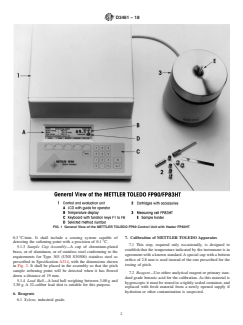
FIG. 1 General View of the METTLER TOLEDO FP90 Control Unit with Heater FP83HT
0.3 °C⁄min. It shall include a sensing system capable of 7. Calibration of METTLER TOLEDO Apparatus
detecting the softening point with a precision of 0.1 °C.
7.1 This step, required only occasionally, is designed to
5.1.3 Sample Cup Assembly—A cup of chromium-plated
establish that the temperature indicated by the instrument is in
brass, or of aluminum, or of stainless steel conforming to the
agreement with a known standard.Aspecial cup with a bottom
requirements for Type 303 (UNS S30300) stainless steel as
orifice of 2.8 mm is used instead of the one prescribed for the
prescribed in Specification A314, with the dimensions shown
testing of pitch.
in Fig. 3. It shall be placed in the assembly so that the pitch
sample softening point will be detected when it has flowed
7.2 Reagent—Use either analytical reagent or primary stan-
down a distance of 19 mm.
dard grade benzoic acid for the calibration. As this material is
5.1.4 Lead Ball—A lead ball weighing between 3.00 g and
hygroscopic it must be stored in a tightly sealed container, and
3.30 g. A 32-caliber lead shot is suitable for this purpose.
replaced with fresh material from a newly opened supply if
hydration or other contamination is suspected.
6. Reagents
6.1 Xylene, industrial grade.
D3461 − 18
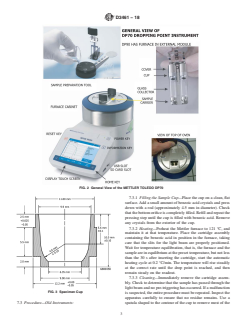
FIG. 2 General View of the METTLER TOLEDO DP70
7.3.1 Filling the Sample Cup—Place the cup on a clean, flat
surface.Add a small amount of benzoic acid crystals and press
down with a rod (approximately 4.5 mm in diameter). Check
thatthebottomorificeiscompletelyfilled.Refillandrepeatthe
pressing step until the cup is filled with benzoic acid. Remove
any crystals from the exterior of the cup.
7.3.2 Heating—Preheat the Mettler furnace to 121 °C, and
maintain it at that temperature. Place the cartridge assembly
containing the benzoic acid in position in the furnace, taking
care that the slits for the light beam are properly positioned.
Wait for temperature equilibration, that is, the furnace and the
sampleareinequilibriumatthepresettemperature,butnotless
than the 30 s after inserting the cartridge, start the automatic
heating cycle at 0.2 °C/min. The temperature will rise steadily
at the correct rate until the drop point is reached, and then
remain steady on the readout.
7.3.3 Cleaning—Immediately remove the cartridge assem-
bly. Check to determine that the sample has passed through the
light beam and no pre-triggering has occurred. If a malfunction
FIG. 3 Specimen Cup
is suspected, the entire procedure must be repeated. Inspect the
apparatus carefully to ensure that no residue remains. Use a
7.3 Procedure—Old Instruments: spatula shaped to the contour of the cup to remove most of the
D3461 − 18
remaining acid from the cup and from the bottom of the to overheat. Remove from the heat source as soon as the foam
cartridge. Wash the cup and cartridge in xylene, or other has subsided. Proceed as directed in 9.1.
suitable solvent, to remove the last traces of the residue. 8.2.3 Crush air-dry lumps of pitch to a size of 6 mm to
12 mm. Add the material to a container, having a height equal
7.4 Interpretation—See 7.6.
to or exceeding its width, and having a volume of not less than
7.5 Procedure—New Instruments:
50 mL, until it is about half full. Place the container on a hot
7.5.1 Filling the Sample Cup—Place the cup on a clean, flat
plate, or in an oven or a bath. Do not use an open flame for
surface. Optionally, the sample preparation tool may be used.
melting pitch. After melting is complete, stir gently but
See Fig. 2. Add a small amount of benzoic acid crystals and
thoroughly, avoiding incorporation of air bubbles. The maxi-
press down with a rod (approximately 4.5 mm in diameter).
mum temperature of the molten pitch should not exceed the
Check that the bottom orifice is completely filled. Refill and
expected softening point by more than 50 °C. Any foam that
repeatthepressingstepuntilthecupisfilledwithbenzoicacid.
forms must be skimmed off.
Remove any crystals from the exterior of the cup. Place a glass
8.3 Asphalt Sample Preparation:
collector below the cup and a cup cap on top, and place in the
8.3.1 Heat the sample, with care to prevent local
sample carrier. Two cup assemblies may be placed in the
overheating, constantly stirring until it has become sufficiently
sample carrier.
fluid to pour. In no case, however, shall the temperature be
7.5.2 Heating—Preheat the furnace to 121 °C and maintain
raised more than 110 °C (200 °F) above the expected softening
it at that temperature. Place the sample carrier containing the
point for asphalt. Avoid incorporating air bubbles in the
benzoic acid in position in the furnace. Wait for temperature
sample.
equilibration, that is, the furnace and the sample are in
8.3.2 Bring the asphalt sample to the pouring temperature in
equilibrium at the preset temperature, but not less than 30 s
not more than 2 h.
after inserting the cartridge, start the automatic heating cycle at
0.2 °C/min. The temperature will rise steadily at the correct
9. Test Specimen
rate until the drop point is reached, and then remain steady on
9.1 Prepare the test specimen by slightly overfilling the
the readout. If there are two samples, heating will continue
specimen cup, which rests on a brass plate. Optionally, the
until both have dropped.
...
This document is not an ASTM standard and is intended only to provide the user of an ASTM standard an indication of what changes have been made to the previous version. Because
it may not be technically possible to adequately depict all changes accurately, ASTM recommends that users consult prior editions as appropriate. In all cases only the current version
of the standard as published by ASTM is to be considered the official document.
Designation: D3461 − 14 D3461 − 18
Standard Test Method for
Softening Point of Asphalt and Pitch (Mettler Cup-and-Ball
Method)
This standard is issued under the fixed designation D3461; the number immediately following the designation indicates the year of
original adoption or, in the case of revision, the year of last revision. A number in parentheses indicates the year of last reapproval. A
superscript epsilon (´) indicates an editorial change since the last revision or reapproval.
1. Scope*
1.1 This test method covers the determination of the softening point of asphalt and pitch in the range from 50 °C to 180 °C by
the cup-and-ball apparatus, and gives results comparable to those obtained by Test Method D36.
NOTE 1—If the softening point of asphalt by this Mettler cup-and-ball method fails to meet specified requirements, tests may be rerun using the Test
Method D36 (ring-and-ball) softening point apparatus as a referee method.
1.2 This standard does not purport to address all of the safety concerns, if any, associated with its use. It is the responsibility
of the user of this standard to establish appropriate safety safety, health, and healthenvironmental practices and determine the
applicability of regulatory limitations prior to use.
1.3 This international standard was developed in accordance with internationally recognized principles on standardization
established in the Decision on Principles for the Development of International Standards, Guides and Recommendations issued
by the World Trade Organization Technical Barriers to Trade (TBT) Committee.
2. Referenced Documents
2.1 ASTM Standards:
A314 Specification for Stainless Steel Billets and Bars for Forging
D36 Test Method for Softening Point of Bitumen (Ring-and-Ball Apparatus)
D140 Practice for Sampling Asphalt Materials
D4296 Practice for Sampling Pitch
3. Summary of Test Method
3.1 In this test method the softening point is defined as the temperature at which the specimen, suspended in a cylindrical cup
with a 6.5 mm hole in the bottom and with a lead ball, 8 mm in diameter, centered on top of the sample in the cup, flows downward
a distance of 19 mm to interrupt a light beam, as the sample is heated at a linear rate in air.
4. Significance and Use
4.1 Asphalt and pitch do not go through a solid-liquid phase change when heated, and therefore do not have true melting points.
As the temperature is raised, they gradually soften or become less viscous. For this reason, the determination of the softening point
must be made by an arbitrary, but closely defined, method if the test values are to be reproducible.
4.2 This test method is useful in determining the consistency as one element in establishing the uniformity of shipments or
sources of supply.
5. Apparatus
5.1 A METTLER TOLEDO dropping point cell can be used to determine softening points by this test method. These
commercially available instruments consist of a control unit with a digital temperature indicator with furnace built in or attached,
This test method is under the jurisdiction of ASTM Committee D02 on Petroleum Products, Liquid Fuels, and Lubricants and is the direct responsibility of Subcommittee
D02.05 on Properties of Fuels, Petroleum Coke and Carbon Material.
Current edition approved Oct. 1, 2014Dec. 1, 2018. Published November 2014January 2019. Originally approved in 1976. Last previous edition approved in 20122014
as D3461 – 97D3461 – 14. (2012). DOI: 10.1520/D3461-14.10.1520/D3461-18.
For referenced ASTM standards, visit the ASTM website, www.astm.org, or contact ASTM Customer Service at service@astm.org. For Annual Book of ASTM Standards
volume information, refer to the standard’s Document Summary page on the ASTM website.
The sole source of supply of the apparatus known to the committee at this time is available from Mettler-Toledo, LLC., 1900 Polaris Pkwy, Columbus, OH 43240,
www.mt.com. If you are aware of alternative suppliers, please provide this information to ASTM International Headquarters. Your comments will receive careful consideration
at a meeting of the responsible technical committee, which you may attend.
*A Summary of Changes section appears at the end of this standard
Copyright © ASTM International, 100 Barr Harbor Drive, PO Box C700, West Conshohocken, PA 19428-2959. United States
D3461 − 18
sample cartridges, and accessories. The control unit automatically regulates the heating rate of the furnace. The softening point is
indicated on the readout, and the heating program stopped, when the sample flow triggers the softening point detection. A general
view of the components of the METTLER TOLEDO softening point instrument is shown in Fig. 1 (old instrument) and Fig. 2 (new
instrument).
5.1.1 Integrated or Separate Control Unit—The control unit shall provide a continuous, linear temperature increase from 25 °C
to 250 °C at a rate of 2 °C/min. A digital readout shall indicate the temperature to 0.1 °C throughout.
5.1.2 Integrated or Separate Furnace Unit—The furnace unit shall be capable of heating one or two sample cup assemblies, as
described in 5.1.3, at a linear rate of 2 °C 6 0.3 °C ⁄min. It shall include a sensing system capable of detecting the softening point
with a precision of 0.1 °C.
5.1.3 Sample Cup Assembly—A cup of chromium-plated brass, or of aluminum, or of stainless steel conforming to the
requirements for Type 303 (UNS S30300) stainless steel as prescribed in Specification A314, with the dimensions shown in Fig.
3. It shall be placed in the assembly so that the pitch sample softening point will be detected when it has flowed down a distance
of 19 mm.
FIG. 1 General View of the METTLER TOLEDO FP90 Control Unit with Heater FP83HT
D3461 − 18
FIG. 2 General View of the METTLER TOLEDO DP70
FIG. 3 Specimen Cup
D3461 − 18
5.1.4 Lead Ball—A lead ball weighing 3.20 g 6 0.10 g. between 3.00 g and 3.30 g. A 32-caliber lead shot is suitable for this
purpose.
6. Reagents
6.1 Xylene, industrial grade.
7. Calibration of METTLER TOLEDO Apparatus
7.1 This step, required only occasionally, is designed to establish that the temperature indicated by the instrument is in
agreement with a known standard. A special cup with a bottom orifice of 2.8 mm is used instead of the one prescribed for the testing
of pitch.
7.2 Reagent—Use either analytical reagent or primary standard grade benzoic acid for the calibration. As this material is
hygroscopic it must be stored in a tightly sealed container, and replaced with fresh material from a newly opened supply if
hydration or other contamination is suspected.
D3461 − 18
7.3 Procedure—Old Instruments:
7.3.1 Filling the Sample Cup—Place the cup on a clean, flat surface. Add a small amount of benzoic acid crystals and press
down with a rod (approximately 4.5 mm in diameter). Check that the bottom orifice is completely filled. Refill and repeat the
pressing step until the cup is filled with benzoic acid. Remove any crystals from the exterior of the cup.
7.3.2 Heating—Preheat the Mettler furnace to 121 °C, and maintain it at that temperature. Place the cartridge assembly
containing the benzoic acid in position in the furnace, taking care that the slits for the light beam are properly positioned. Wait
for temperature equilibration, that is, the furnace and the sample are in equilibrium at the preset temperature, but not less than the
30 s after inserting the cartridge, start the automatic heating cycle at 0.2 °C/min. The temperature will rise steadily at the correct
rate until the drop point is reached, and then remain steady on the readout.
7.3.3 Cleaning—Immediately remove the cartridge assembly. Check to determine that the sample has passed through the light
beam and no pre-triggering has occurred. If a malfunction is suspected, the entire procedure must be repeated. Inspect the apparatus
carefully to ensure that no residue remains. Use a spatula shaped to the contour of the cup to remove most of the remaining acid
from the cup and from the bottom of the cartridge. Wash the cup and cartridge in xylene, or other suitable solvent, to remove the
last traces of the residue.
7.4 Interpretation—See 7.6.
7.5 Procedure—New Instruments:
7.5.1 Filling the Sample Cup—Place the cup on a clean, flat surface. Optionally, the sample preparation tool may be used. See
Fig. 2. Add a small amount of benzoic acid crystals and press down with a rod (approximately 4.5 mm in diameter). Check that
the bottom orifice is completely filled. Refill and repeat the pressing step until the cup is filled with benzoic acid. Remove any
crystals from the exterior of the cup. Place a glass collector below the cup and a cup cap on top, and place in the sample carrier.
Two cup assemblies may be placed in the sample carrier.
7.5.2 Heating—Preheat the furnace to 121 °C and maintain it at that temperature. Place the sample carrier containing the
benzoic acid in position in the furnace. Wait for temperature equilibration, that is, the furnace and the sample are in equilibrium
at the preset temperature, but not less than 30 s after inserting the cartridge, start the automatic heating cycle at 0.2 °C/min. The
temperature will rise steadily at the correct rate until the drop point is reached, and then remain steady on the readout. If there are
two samples, heating will continue until both have dropped.
7.5.3 Cleaning—Immediately remove the cartridge assembly. Check to determine that the sample has dropped and no
pre-triggering has occurred. The video may be viewed to make sure the drop was detected correctly. If a malfunction is suspected,
the entire procedure must be repeated. Inspect the apparatus carefully to ensure that no residue remains. Use a spatula shaped to
the contour of the cup to remove most of the remaining acid from the cup. Wash the cup and glass collector in xylene, or other
suitable solvent, to remove the last traces of the residue. Glass collectors may be treated as disposable items. Aluminum cups may
be used which may also be considered to be disposable.
7.6 Interpretation—If the result is not 123.5 °C 6 0.5 °C, repeat the test. If the second value is 0.6 °C above or below 123.5
°C, measure the dropping point of a fresh sample of benzoic acid. If the deviation exceeds 0.6 °C, the instrument requires
recalibration or repair. Consult the manufacturer’s instruction manual.
8. Sampling
8.1 Samples from shipments shall be taken in accordance with Practice D140 for asphalt and Practice D4296 for pitch and sha
...