

ASTM C1642-20
(Practice)Standard Practice for Determining Air Leakage Rates of Aerosol Foam Sealants and Other Construction Joint Fill and Insulation Materials
General Information
- Abstract
SIGNIFICANCE AND USE
5.1 This practice is intended to measure air flow through materials used to fill joints found in building construction.
5.2 This practice does not purport to establish all required criteria for the selection of an air barrier assembly. Therefore, the results should be used only for comparison purposes and should not be seen as the equivalent to field installed building systems.
SCOPE
1.1 This practice is intended to determine the air leakage rate of aerosol foam sealants as measured in a standardized jig. This practice provides a procedure for preparing the test apparatus and further describes the application of aerosol foam sealant and other joint fillers to the apparatus prior to conducting Test Method E283.
1.2 This practice allows testing laboratories to quantify the air leakage rate of aerosol foam sealants or joint filling products using Test Method E283 and reporting the data in L/(s · m2) according to Practice E29.
1.3 This practice is used in conjunction with Test Method E283. Although Test Method E283 is a laboratory test method used with fenestration products, individuals interested in performing field air leakage tests on installed units should reference Test Method E783 and AAMA 502.
1.4 Aerosol foam sealants are used for a variety of end use applications generally intended to reduce air leakage in the building envelope.
1.5 Insulating type materials also will be found suitable for evaluation with this practice.
1.6 There are no other known practices or test methods that specify the preparation of the assemblies used to determine the air leakage rate of gap filling sealants, dry preformed foams or insulations.
1.7 The values stated in SI units are to be regarded as standard. The values given in parentheses after SI units are provided for information only and are not considered standard.
1.8 This standard does not purport to address all of the safety concerns, if any, associated with its use. It is the responsibility of the user of this standard to establish appropriate safety, health, and environmental practices and determine the applicability of regulatory limitations prior to use.
1.9 This international standard was developed in accordance with internationally recognized principles on standardization established in the Decision on Principles for the Development of International Standards, Guides and Recommendations issued by the World Trade Organization Technical Barriers to Trade (TBT) Committee.
- Status
- Published
- Publication Date
- 31-Jul-2020
- Technical Committee
- C24 - Building Seals and Sealants
- Drafting Committee
- C24.61 - Aerosol Foam Sealants
Buy Documents
ASTM C1642-20 - Standard Practice for Determining Air Leakage Rates of Aerosol Foam Sealants and Other Construction Joint Fill and Insulation Materials
REDLINE ASTM C1642-20 - Standard Practice for Determining Air Leakage Rates of Aerosol Foam Sealants and Other Construction Joint Fill and Insulation Materials
Overview
ASTM C1642-20: Standard Practice for Determining Air Leakage Rates of Aerosol Foam Sealants and Other Construction Joint Fill and Insulation Materials establishes a standardized practice for measuring the air leakage rates of materials used to fill joints in building construction. The primary focus is on aerosol foam sealants, other joint fillers, and various insulation materials that help improve the airtightness of the building envelope. This practice outlines the preparation of the test assembly, application of filling materials, and measurement of air leakage using ASTM Test Method E283.
This standard is widely used in the construction and building materials industry to compare the air leakage performance of different joint sealants and fillers, providing vital information for product evaluation and selection.
Key Topics
- Air leakage testing: Describes a controlled laboratory method for quantifying the air flow through construction joint fill products, especially aerosol foam sealants.
- Specimen preparation: Provides detailed guidance on preparing test assemblies (jigs), including application methods for foam sealants, preformed foam, and batt insulation materials.
- Measurement procedure: Outlines the use of Test Method E283 to determine air leakage rates, ensuring standardized and repeatable results.
- Reporting requirements: Specifies essential data to include in test reports-such as product details, test configurations, pressure levels, and leakage results in standardized units (L/s·m² or L/s·m).
- Material types covered:
- Type I: Aerosol foam sealants (polyurethane, latex)
- Type II: Preformed dry foams (closed cell, bi-cellular)
- Type III: Batt insulation (faced, unfaced)
- Purpose and limitations: Results are intended for material comparison only, not for certifying installed air barrier assemblies.
Applications
ASTM C1642-20 is crucial for professionals involved in the selection and quality control of construction sealants, joint fillers, and insulation products. Typical stakeholders include:
- Testing laboratories: Use the standard to measure and compare air leakage rates of different joint fill materials under controlled conditions, supporting manufacturers and specifiers.
- Manufacturers: Demonstrate product performance for air infiltration and exfiltration reduction, aiding in marketing and product development efforts.
- Building designers and specifiers: Rely on air leakage data when selecting materials for energy-efficient and airtight building envelopes, windows, doors, and fenestration assemblies.
- Regulatory bodies and certification organizations: Reference this practice when evaluating compliance with air barrier and energy performance requirements.
It is important to note that this standard is not a substitute for field-installed system testing. Field evaluation of installed assemblies should reference ASTM E783 and AAMA 502.
Related Standards
For comprehensive air leakage assessment and related applications, the following standards are closely associated with ASTM C1642-20:
- ASTM E283 - Test Method for Determining Rate of Air Leakage Through Exterior Windows, Skylights, Curtain Walls, and Doors Under Specified Pressure Differences Across the Specimen.
- ASTM E783 - Test Method for Field Measurement of Air Leakage Through Installed Exterior Windows and Doors.
- AAMA 502 - Voluntary Specification for Field Testing of Newly Installed Fenestration Products.
- ASTM C1536 - Test Method for Measuring the Yield for Aerosol Foam Sealants.
- ASTM C1620 - Specification for Aerosol Polyurethane and Aerosol Latex Foam Sealants.
- ISO/IEC 17025 - General requirements for the competence of testing and calibration laboratories.
By providing a uniform basis for comparing air barrier and insulation materials, ASTM C1642-20 supports the advancement of high-performance building envelopes and helps drive improvements in energy efficiency, occupant comfort, and indoor air quality.
Relations
- Effective Date
- 01-Aug-2020
- Effective Date
- 01-Mar-2019
- Effective Date
- 01-Oct-2018
- Effective Date
- 01-Mar-2018
- Effective Date
- 01-Nov-2017
- Effective Date
- 01-Jan-2017
- Effective Date
- 15-Nov-2016
- Effective Date
- 01-Sep-2016
- Refers
ASTM C1620-16 - Standard Specification for Aerosol Polyurethane and Aerosol Latex Foam Sealants - Effective Date
- 01-Jan-2016
- Effective Date
- 01-Mar-2015
- Effective Date
- 01-Nov-2014
- Effective Date
- 01-May-2014
- Effective Date
- 01-Feb-2014
- Effective Date
- 01-Nov-2013
- Effective Date
- 01-May-2013
Buy Documents
ASTM C1642-20 - Standard Practice for Determining Air Leakage Rates of Aerosol Foam Sealants and Other Construction Joint Fill and Insulation Materials
REDLINE ASTM C1642-20 - Standard Practice for Determining Air Leakage Rates of Aerosol Foam Sealants and Other Construction Joint Fill and Insulation Materials
Get Certified
Connect with accredited certification bodies for this standard

DIBt (Deutsches Institut für Bautechnik)
German Institute for Building Technology.
DIN CERTCO
DIN Group product certification.

Aboma Certification B.V.
Specialized in construction, metal, and transport sectors.
Sponsored listings
Frequently Asked Questions
ASTM C1642-20 is a standard published by ASTM International. Its full title is "Standard Practice for Determining Air Leakage Rates of Aerosol Foam Sealants and Other Construction Joint Fill and Insulation Materials". This standard covers: SIGNIFICANCE AND USE 5.1 This practice is intended to measure air flow through materials used to fill joints found in building construction. 5.2 This practice does not purport to establish all required criteria for the selection of an air barrier assembly. Therefore, the results should be used only for comparison purposes and should not be seen as the equivalent to field installed building systems. SCOPE 1.1 This practice is intended to determine the air leakage rate of aerosol foam sealants as measured in a standardized jig. This practice provides a procedure for preparing the test apparatus and further describes the application of aerosol foam sealant and other joint fillers to the apparatus prior to conducting Test Method E283. 1.2 This practice allows testing laboratories to quantify the air leakage rate of aerosol foam sealants or joint filling products using Test Method E283 and reporting the data in L/(s · m2) according to Practice E29. 1.3 This practice is used in conjunction with Test Method E283. Although Test Method E283 is a laboratory test method used with fenestration products, individuals interested in performing field air leakage tests on installed units should reference Test Method E783 and AAMA 502. 1.4 Aerosol foam sealants are used for a variety of end use applications generally intended to reduce air leakage in the building envelope. 1.5 Insulating type materials also will be found suitable for evaluation with this practice. 1.6 There are no other known practices or test methods that specify the preparation of the assemblies used to determine the air leakage rate of gap filling sealants, dry preformed foams or insulations. 1.7 The values stated in SI units are to be regarded as standard. The values given in parentheses after SI units are provided for information only and are not considered standard. 1.8 This standard does not purport to address all of the safety concerns, if any, associated with its use. It is the responsibility of the user of this standard to establish appropriate safety, health, and environmental practices and determine the applicability of regulatory limitations prior to use. 1.9 This international standard was developed in accordance with internationally recognized principles on standardization established in the Decision on Principles for the Development of International Standards, Guides and Recommendations issued by the World Trade Organization Technical Barriers to Trade (TBT) Committee.
SIGNIFICANCE AND USE 5.1 This practice is intended to measure air flow through materials used to fill joints found in building construction. 5.2 This practice does not purport to establish all required criteria for the selection of an air barrier assembly. Therefore, the results should be used only for comparison purposes and should not be seen as the equivalent to field installed building systems. SCOPE 1.1 This practice is intended to determine the air leakage rate of aerosol foam sealants as measured in a standardized jig. This practice provides a procedure for preparing the test apparatus and further describes the application of aerosol foam sealant and other joint fillers to the apparatus prior to conducting Test Method E283. 1.2 This practice allows testing laboratories to quantify the air leakage rate of aerosol foam sealants or joint filling products using Test Method E283 and reporting the data in L/(s · m2) according to Practice E29. 1.3 This practice is used in conjunction with Test Method E283. Although Test Method E283 is a laboratory test method used with fenestration products, individuals interested in performing field air leakage tests on installed units should reference Test Method E783 and AAMA 502. 1.4 Aerosol foam sealants are used for a variety of end use applications generally intended to reduce air leakage in the building envelope. 1.5 Insulating type materials also will be found suitable for evaluation with this practice. 1.6 There are no other known practices or test methods that specify the preparation of the assemblies used to determine the air leakage rate of gap filling sealants, dry preformed foams or insulations. 1.7 The values stated in SI units are to be regarded as standard. The values given in parentheses after SI units are provided for information only and are not considered standard. 1.8 This standard does not purport to address all of the safety concerns, if any, associated with its use. It is the responsibility of the user of this standard to establish appropriate safety, health, and environmental practices and determine the applicability of regulatory limitations prior to use. 1.9 This international standard was developed in accordance with internationally recognized principles on standardization established in the Decision on Principles for the Development of International Standards, Guides and Recommendations issued by the World Trade Organization Technical Barriers to Trade (TBT) Committee.
ASTM C1642-20 is classified under the following ICS (International Classification for Standards) categories: 91.100.50 - Binders. Sealing materials. The ICS classification helps identify the subject area and facilitates finding related standards.
ASTM C1642-20 has the following relationships with other standards: It is inter standard links to ASTM C1642-14, ASTM C717-19, ASTM E783-02(2018), ASTM C717-18, ASTM C717-17a, ASTM C717-17, ASTM C717-16a, ASTM C717-16, ASTM C1620-16, ASTM E631-15, ASTM E631-14, ASTM C717-14a, ASTM C717-14, ASTM C717-13, ASTM C1330-02(2013). Understanding these relationships helps ensure you are using the most current and applicable version of the standard.
ASTM C1642-20 is available in PDF format for immediate download after purchase. The document can be added to your cart and obtained through the secure checkout process. Digital delivery ensures instant access to the complete standard document.
Standards Content (Sample)
This international standard was developed in accordance with internationally recognized principles on standardization established in the Decision on Principles for the
Development of International Standards, Guides and Recommendations issued by the World Trade Organization Technical Barriers to Trade (TBT) Committee.
Designation: C1642 − 20
Standard Practice for
Determining Air Leakage Rates of Aerosol Foam Sealants
and Other Construction Joint Fill and Insulation Materials
This standard is issued under the fixed designation C1642; the number immediately following the designation indicates the year of
original adoption or, in the case of revision, the year of last revision. A number in parentheses indicates the year of last reapproval. A
superscript epsilon (´) indicates an editorial change since the last revision or reapproval.
1. Scope* 1.9 This international standard was developed in accor-
dance with internationally recognized principles on standard-
1.1 This practice is intended to determine the air leakage
ization established in the Decision on Principles for the
rate of aerosol foam sealants as measured in a standardized jig.
Development of International Standards, Guides and Recom-
This practice provides a procedure for preparing the test
mendations issued by the World Trade Organization Technical
apparatus and further describes the application of aerosol foam
Barriers to Trade (TBT) Committee.
sealant and other joint fillers to the apparatus prior to conduct-
ing Test Method E283.
2. Referenced Documents
1.2 This practice allows testing laboratories to quantify the 2
2.1 ASTM Standards:
air leakage rate of aerosol foam sealants or joint filling
C717 Terminology of Building Seals and Sealants
products using Test Method E283 and reporting the data in
C1330 Specification for Cylindrical Sealant Backing for Use
L/(s · m ) according to Practice E29.
with Cold Liquid-Applied Sealants
1.3 This practice is used in conjunction with Test Method
C1620 Specification for Aerosol Polyurethane and Aerosol
E283. Although Test Method E283 is a laboratory test method Latex Foam Sealants
used with fenestration products, individuals interested in per-
E29 Practice for Using Significant Digits in Test Data to
forming field air leakage tests on installed units should Determine Conformance with Specifications
reference Test Method E783 and AAMA 502.
E283 Test Method for Determining Rate of Air Leakage
Through Exterior Windows, Skylights, Curtain Walls, and
1.4 Aerosol foam sealants are used for a variety of end use
Doors Under Specified Pressure Differences Across the
applications generally intended to reduce air leakage in the
Specimen
building envelope.
E631 Terminology of Building Constructions
1.5 Insulating type materials also will be found suitable for
E783 Test Method for Field Measurement of Air Leakage
evaluation with this practice.
Through Installed Exterior Windows and Doors
1.6 There are no other known practices or test methods that 2.2 Other Standards:
specify the preparation of the assemblies used to determine the
AAMA 502 Voluntary Specification for Field Testing of
air leakage rate of gap filling sealants, dry preformed foams or Newly Installed Fenestration Products
insulations.
ISO/IEC 17025 General requirements for the competence of
testing and calibration laboratories
1.7 The values stated in SI units are to be regarded as
standard. The values given in parentheses after SI units are
3. Terminology
provided for information only and are not considered standard.
3.1 Definitions: See also Terminology E631.
1.8 This standard does not purport to address all of the
3.1.1 air barrier—the assembly of material(s) used in build-
safety concerns, if any, associated with its use. It is the
ing construction to reduce or retard the uncontrolled passage of
responsibility of the user of this standard to establish appro-
air into and out of the building.
priate safety, health, and environmental practices and deter-
mine the applicability of regulatory limitations prior to use.
For referenced ASTM standards, visit the ASTM website, www.astm.org, or
contact ASTM Customer Service at service@astm.org. For Anual Book of ASTM
Standards volume information, refer to the standard’s Document Summary page on
This practice is under the jurisdiction of ASTM Committee C24 on Building the ASTM website.
Seals and Sealants and is the direct responsibility of Subcommittee C24.61 on Available from American Architectural Manufacturers Association (AAMA),
Aerosol Foam Sealants. 1827 Walden Office Square, Suite 550, Schaumburg, IL 60173-4268, http://
Current edition approved Aug. 1, 2020. Published September 2020. Originally www.aamanet.org.
approved in 2007. Last previous edition approved in 2014 as C1642-14. DOI: Available from American National Standards Institute (ANSI), 25 W. 43rd St.,
10.1520/C1642-20. 4th Floor, New York, NY 10036, http://www.ansi.org.
*A Summary of Changes section appears at the end of this standard
Copyright © ASTM International, 100 Barr Harbor Drive, PO Box C700, West Conshohocken, PA 19428-2959. United States
C1642 − 20
3.1.2 exfiltration—air flow direction from building interior 7. Test Apparatus
toward exterior.
7.1 The jig required for testing is shown in Fig. 1 and Fig.
2.
3.1.3 infiltration—air flow direction from building exterior
toward interior.
NOTE 2—See Annex A1 for the detailed construction and assembly
details of the test apparatus.
3.1.4 preformed dry foam material—any cellular product
designed for filling construction joints to resist air leakage.
8. Sample Preparation
3.1.5 preformed pre-compressed tapes—any cellular tape
8.1 General Description—The test sample is a jig contain-
supplied compressed from its fully expanded shape and de-
ing five air permeability test areas that consist of joint gaps
signed for filling construction joints to resist air leakage.
between aluminum rectangular tubing sections with each
3.1.6 rough opening gap—the open space between the having the following dimensions: 9.525-mm (0.375-in.) wide
building frame and the fenestration product. by 863.6-mm (34-in.) long by 101.6-mm (4-in.) deep.
NOTE 3—Cavity length is the distance between the 0.375-in. thick
3.1.7 test effective area—islocatedatandcomprisedofgaps
spacer at each end. The extrusions are enclosed by a wooden buck frame
between aluminum rectangular tubing with each gap having
comprised of 50.8 by 152.4-mm (2 by 6-in.) dimension lumber (See
Annex A1 drawings).
dimensions of 9.5-mm (0.375-in.) wide by 864-mm (34-in.)
2 2
long. A single gap area is 0.008 m (12.75 in. ). The total
8.2 The buck shall be sealed at all extraneous points with
2 2
effective area of all five gaps is 0.041 m (63.8 in. ).
siliconesealantandbutyltape.Thissealshallextendacrossthe
termination joint between aluminum tube and the wood buck
4. Summary of Practice
surround. During assembly of the test specimen, silicone
sealant should be applied to both planar faces of the 50.8 by
4.1 Thispracticeestablishesspecimenpreparationandatest
101.6-mm (2 by 4-in.) aluminum spacers between aluminum
protocol for determining the air leakage rates of aerosol foam
rectangular tubing. This will prevent air leakage at spacer
sealants per Test Method E283. Calibration of the air leakage
locations. The areas within the wood buck that include the
test equipment shall be performed by ISO 17025 calibration
aluminum spacers are blocked during testing.This can be done
provider than can validate the flow meter accuracy of 61%of
by filling the gap between aluminum rectangular tubing with
reading in the range of 0.05 to 0.02 cfm. Application of foam
sealant shall be in accordance with all manufacturer’s recom-
mendationsandinamannerreflectinginuseconditionssuchas
the depth and width of the joint or gap. In the event that the
manufacturer’sinstructionsarenotavailable,thispracticeshall
be the default application method for the test material (joint
width and depth).
NOTE 1—Apply according to manufacturer’s recommendations which
may include a water spray to surfaces or other special surface preparation.
4.2 This practice references the following material types:
4.2.1 Type I Material (Aerosol Foam Sealants)
A) Polyurethane
B) Latex
4.2.2 Type II Material (Preformed dry material)
A) Closed cell foam
B) Bi-cellular foam
4.2.3 Type III Material (Batt-Insulation)
A) Faced
B) Un-Faced
5. Significance and Use
5.1 This practice is intended to measure air flow through
materials used to fill joints found in building construction.
5.2 This practice does not purport to establish all required
criteria for the selection of an air barrier assembly. Therefore,
the results should be used only for comparison purposes and
should not be seen as the equivalent to field installed building
systems.
6. Sampling
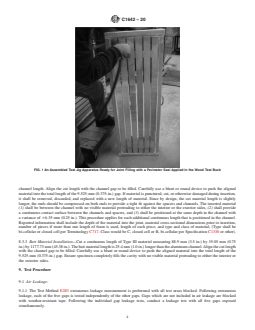
FIG. 1 An Assembled Test Jig Apparatus Ready for Joint Filling
6.1 One test jig shall be required for each material type. with a Perimeter Seal Applied in the Wood Test Buck
C1642 − 20
NOTE 1—All five (5) test area gaps are shown and filled with test sample foam sealant. Blocked areas are not included for air leakage test.
FIG. 2 Specimen Mounted into Wood Surround (test buck) – View from Interior Side.
sealant and covering with impermeable material such as and channels. The inserted material (1) shall be between the
weather resistant tape. See drawings. channel with no visible material protruding to either the
interior or the exterior sides, (2) shall provide a continuous
8.3 Applying the Test Material in the Jig:
contact surface between the channels and spacers, and (3) shall
8.3.1 Foam Sealant Applicaion—The foam may be applied
be positioned at the same depth in the channel with a variance
inmultipassesasdesired.Approximatelyonehalfofthecavity
of 66.35 mm (0.25 in.). This procedure applies for each
depth should be filled on the first pass and allowed to cure until
additional continuous length that is positioned in the channel.
thesurfaceistackfree(seeSpecificationC1620fordefinition).
Reported information shall include the depth of the material
Asharp knife should be used to trim the foam. Do not attempt
into the joint, material cross-sectional dimensions prior
...
This document is not an ASTM standard and is intended only to provide the user of an ASTM standard an indication of what changes have been made to the previous version. Because
it may not be technically possible to adequately depict all changes accurately, ASTM recommends that users consult prior editions as appropriate. In all cases only the current version
of the standard as published by ASTM is to be considered the official document.
Designation: C1642 − 14 C1642 − 20
Standard Practice for
Determining Air Leakage Rates of Aerosol Foam Sealants
and Other Construction Joint Fill and Insulation Materials
This standard is issued under the fixed designation C1642; the number immediately following the designation indicates the year of
original adoption or, in the case of revision, the year of last revision. A number in parentheses indicates the year of last reapproval. A
superscript epsilon (´) indicates an editorial change since the last revision or reapproval.
1. Scope*
1.1 This practice is intended to determine the air leakage rate of aerosol foam sealants as measured in a standardized jig. This
practice provides a procedure for preparing the test apparatus and further describes the application of aerosol foam sealant and
other joint fillers to the apparatus prior to conducting Test Method E283.
1.2 This practice allows testing laboratories to quantify the air leakage rate of aerosol foam sealants or joint filling products using
Test Method E283 and reporting the data in L/(s · m ) according to Practice E29.
1.3 This practice is used in conjunction with Test Method E283. Although Test Method E283 is a laboratory test method used with
fenestration products, individuals interested in performing field air leakage tests on installed units should reference Test Method
E783 and AAMA 502.
1.4 Aerosol foam sealants are used for a variety of end use applications generally intended to reduce air leakage in the building
envelope.
1.5 Insulating type materials also will be found suitable for evaluation with this practice.
1.6 There are no other known practices or test methods that specify the preparation of the assemblies used to determine the air
leakage rate of gap filling sealants, dry preformed foams or insulations.
1.7 The values givenstated in SI units are the to be regarded as standard. The inch-pound unitsvalues given in parentheses are for
information only.after SI units are provided for information only and are not considered standard.
1.8 This standard does not purport to address all of the safety concerns, if any, associated with its use. It is the responsibility
of the user of this standard to establish appropriate safety safety, health, and healthenvironmental practices and determine the
applicability of regulatory limitations prior to use.
1.9 This international standard was developed in accordance with internationally recognized principles on standardization
established in the Decision on Principles for the Development of International Standards, Guides and Recommendations issued
by the World Trade Organization Technical Barriers to Trade (TBT) Committee.
This practice is under the jurisdiction of ASTM Committee C24 on Building Seals and Sealants and is the direct responsibility of Subcommittee C24.61 on Aerosol Foam
Sealants.
Current edition approved Sept. 15, 2014Aug. 1, 2020. Published November 2014September 2020. Originally approved in 2007. Last previous edition approved in
20072014 as C1642-07.-14. DOI: 10.1520/C1642-14.10.1520/C1642-20.
*A Summary of Changes section appears at the end of this standard
Copyright © ASTM International, 100 Barr Harbor Drive, PO Box C700, West Conshohocken, PA 19428-2959. United States
C1642 − 20
2. Referenced Documents
2.1 ASTM Standards:
C717 Terminology of Building Seals and Sealants
C1330 Specification for Cylindrical Sealant Backing for Use with Cold Liquid-Applied Sealants
C1536 Test Method for Measuring the Yield for Aerosol Foam Sealants
C1620 Specification for Aerosol Polyurethane and Aerosol Latex Foam Sealants
E29 Practice for Using Significant Digits in Test Data to Determine Conformance with Specifications
E283 Test Method for Determining Rate of Air Leakage Through Exterior Windows, Skylights, Curtain Walls, and Doors Under
Specified Pressure Differences Across the Specimen
E631 Terminology of Building Constructions
E783 Test Method for Field Measurement of Air Leakage Through Installed Exterior Windows and Doors
2.2 Other Standards:
AAMA 502 Voluntary Specification for Field Testing of Newly Installed Fenestration Products
ISO/IEC 17025 General requirements for the competence of testing and calibration laboratories
3. Terminology
3.1 Definitions: See also Terminology E631.
3.1.1 air barrier—the assembly of material(s) used in building construction to reduce or retard the uncontrolled passage of air into
and out of the building.
3.1.2 exfiltration—air flow direction from building interior toward exterior.
3.1.3 infiltration—air flow direction from building exterior toward interior.
3.1.4 preformed dry foam material—any cellular product designed for filling construction joints to resist air leakage.
3.1.5 preformed pre-compressed tapes—any cellular tape supplied compressed from its fully expanded shape and designed for
filling construction joints to resist air leakage.
3.1.6 rough opening gap—the open space between the building frame and the fenestration product.
3.1.7 test effective area—is located at and comprised of gaps between aluminum rectangular tubing with each gap having
2 2
dimensions of 9.5-mm (0.375-in.) wide by 864-mm (34-in.) long. A single gap area is 0.008 m (12.75 in. ). The total effective
2 2
area of all five gaps is 0.041 m (63.8 in. ).
4. Summary of Practice
4.1 This practice establishes specimen preparation and a test protocol for determining the air leakage rates of aerosol foam sealants
per Test Method E283. Calibration of the air leakage test equipment shall be performed by ISO 17025 calibration provider than
can validate the flow meter accuracy of 61 % of reading in the range of 0.05 to 0.02 cfm. Application of foam sealant shall be
in accordance with all manufacturer’s recommendations and in a manner reflecting in use conditions such as the depth and width
of the joint or gap. In the event that the manufacturer’s instructions are not available, this practice shall be the default application
method for the test material (joint width and depth). The depth and density (use Test Method C1536 for aerosol foam sealant) of
the applied material shall be reported in all cases.
NOTE 1—Apply according to manufacturer’s recommendations which may include a water spray to surfaces or other special surface preparation.
4.2 This practice references the following material types:
For referenced ASTM standards, visit the ASTM website, www.astm.org, or contact ASTM Customer Service at service@astm.org. For Annual Anual Book of ASTM
Standards volume information, refer to the standard’s Document Summary page on the ASTM website.
Available from American Architectural Manufacturers Association (AAMA), 1827 Walden Office Square, Suite 550, Schaumburg, IL 60173-4268, http://
www.aamanet.org.
Available from American National Standards Institute (ANSI), 25 W. 43rd St., 4th Floor, New York, NY 10036, http://www.ansi.org.
C1642 − 20
4.2.1 Type I Material (Aerosol Foam Sealants)
A) Polyurethane
B) Latex
4.2.2 Type II Material (Preformed dry material)
A) Closed cell foam
B) Bi-cellular foam
4.2.3 Type III Material (Batt-Insulation)
A) Faced
B) Un-Faced
5. Significance and Use
5.1 This practice is intended to measure air flow through materials used to fill joints found in building construction.
5.2 This practice does not purport to establish all required criteria for the selection of an air barrier assembly. Therefore, the results
should be used only for comparison purposes and should not be seen as the equivalent to field installed building systems.
6. Sampling
6.1 One test jig shall be required for each material type.
7. Test Apparatus
7.1 The jig required for testing is shown in Fig. 1 and Fig. 2.
NOTE 2—See Annex A1 for the detailed construction and assembly details of the test apparatus.
8. Sample Preparation
8.1 General Description—The test sample is a jig containing five air permeability test areas that consist of joint gaps between
aluminum rectangular tubing sections with each having the following dimensions: 9.525-mm (0.375-in.) wide by 863.6-mm
(34-in.) long by 101.6-mm (4-in.) deep.
NOTE 3—Cavity length is the distance between the 0.375-in. thick spacer at each end. The extrusions are enclosed by a wooden buck frame comprised
of 50.8 by 152.4-mm (2 by 6-in.) dimension lumber (See Annex A1 drawings).
8.2 The buck shall be sealed at all extraneous points with silicon silicone sealant and butyl tape or other appropriate material. tape.
This seal shall extend across the termination joint between aluminum tube and the wood buck surround. During assembly of the
test specimen, siliconsilicone sealant should be applied to both planar faces of the 50.8 by 101.6-mm (2 by 4-in.) aluminum spacers
between aluminum rectangular tubing. This will prevent air leakage at spacer locations. The areas within the wood buck that
include the aluminum spacers are blocked during testing. This can be done by filling the gap between aluminum rectangular tubing
with sealant and covering with impermeable material such as weather resistant tape. See drawings.
8.3 Applying the Test Material in the Jig:
8.3.1 Foam Sealant Applicaion—The foam may be applied in multi passes as desired. Approximately one half of the cavity depth
should be filled on the first pass and allowed to cure until the surface is tack free (see Specification C1620 for definition). A sharp
knife should be used to trim the foam. Do not attempt to trim the foam until it has cured for 24 h. It is not necessary to trim the
cured foam on the exterior side of the joint, however the inside face should be trimmed flush with the aluminum if the foam
expands beyond the surface.
NOTE 4—Only one pass or more than two passes is required to fully fill the cavities. Enter this information as a note in the test report. Use Standard
Laboratory Conditions for sample preparation and cure of the foam sealant.
8.3.2 Pre-formed Foam Application—Cut a continuous length of Type II material measuring 12.7 mm ( ⁄2 in.) longer than the
C1642 − 20
FIG. 1 An Assembled Test Jig Apparatus Ready for Joint Filling with a Perimeter Seal Applied in the Wood Test Buck
channel length. Align the cut length with the channel gap to be filled. Carefully use a blunt or round device to push the aligned
material into the total length of the 9.525-mm (0.375-in.) gap. If material is punctured, cut, o
...