

ASTM B424-22
(Specification)Standard Specification for Nickel-Iron-Chromium-Molybdenum-Copper Alloys Plate, Sheet, and Strip
General Information
- Abstract
ABSTRACT
This specification covers rolled nickel-iron-chromium-molybdenum-copper alloy (UNS N08825 and UNS N08221) plate, sheet, and strip. The material shall conform to the chemical composition requirements specified by the reference material. The material shall conform to the mechanical properties specified by the reference material.
SCOPE
1.1 This specification2 covers rolled nickel-iron-chromium-molybdenum-copper alloys (UNS N08642, UNS N06845, UNS N08221, UNS N08825, and UNS N08827) plate, sheet, and strip.
1.2 The values stated in inch-pound units are to be regarded as standard. The values given in parentheses are mathematical conversions to SI units that are provided for information only and are not considered standard.
1.3 This standard does not purport to address all of the safety concerns, if any, associated with its use. It is the responsibility of the user of this standard to become familiar with all hazards including those identified in the appropriate Safety Data Sheet (SDS) for this product/material as provided by the manufacturer, to establish appropriate safety, health, and environmental practices, and determine the applicability of regulatory limitations prior to use.
1.4 This international standard was developed in accordance with internationally recognized principles on standardization established in the Decision on Principles for the Development of International Standards, Guides and Recommendations issued by the World Trade Organization Technical Barriers to Trade (TBT) Committee.
- Status
- Published
- Publication Date
- 30-Sep-2022
- Technical Committee
- B02 - Nonferrous Metals and Alloys
- Drafting Committee
- B02.07 - Refined Nickel and Cobalt and Their Alloys
Buy Documents
ASTM B424-22 - Standard Specification for Nickel-Iron-Chromium-Molybdenum-Copper Alloys Plate, Sheet, and Strip
REDLINE ASTM B424-22 - Standard Specification for Nickel-Iron-Chromium-Molybdenum-Copper Alloys Plate, Sheet, and Strip
Overview
ASTM B424-22 is the standard specification developed by ASTM International for rolled nickel-iron-chromium-molybdenum-copper alloys plate, sheet, and strip. This standard covers products manufactured from specific alloy grades such as UNS N08642, UNS N06845, UNS N08221, UNS N08825, and UNS N08827. These alloys are known for their excellent resistance to corrosion and high-temperature performance, making them well-suited to demanding industrial applications.
The specification details requirements for chemical composition, mechanical properties, and dimensional tolerances. It is widely referenced for the procurement, fabrication, and certification of nickel alloy materials, ensuring consistency, quality, and reliability in supply chains worldwide.
Key Topics
Chemical Composition
- Product must comply with element ranges for nickel, iron, chromium, molybdenum, copper, and other specified alloying elements.
- Each alloy designation (UNS number) has clearly determined limits for all relevant constituents.
Mechanical Properties
- Minimum mechanical properties such as tensile strength, yield strength, and elongation are specified for each alloy and product form (hot-rolled plate, cold-rolled strip, etc.).
- Mechanical property requirements help ensure material suitability for pressure vessels and other safety-critical applications.
Dimensions and Tolerances
- Prescribed thickness, width, length, squareness, flatness, and edge finish tolerances.
- Products are available as plate, sheet, and strip with defined dimensional ranges.
- Flatness and squareness tolerances help facilitate fabrication, welding, and assembly.
Marking and Documentation
- Every bundle or shipping container is to be marked with the alloy designation, UNS number, specification number, size, and other key contract details.
- Certification requirements and inspection options are clearly outlined to support traceability and quality assurance.
Applications
ASTM B424-22 alloys are utilized across a range of industries where superior corrosion resistance and strength are imperative. Key applications include:
- Chemical Processing
Components exposed to acids, chlorides, and other aggressive chemicals, such as heat exchangers, reactor vessels, and piping, rely on high-performance alloy plates and sheets. - Oil and Gas
Suitable for platforms, piping, and downhole equipment experiencing sour gas, seawater environments, or aggressive chemicals. - Power Generation
Applied in flue gas desulfurization, heat exchangers, and boilers, where alloys must withstand high temperatures, pressures, and corrosive environments. - Pollution Control and Marine Engineering
Used in dampers, scrubbers, seawater desalination equipment, and marine structural components demanding both strength and corrosion resistance.
The plate, sheet, and strip materials specified in ASTM B424-22 are crucial for manufacturing fabricated parts subject to harsh operational conditions, supporting process reliability and safety.
Related Standards
When implementing ASTM B424-22, it is important to consider associated and referenced standards for guidance and compliance, including:
- ASTM B906
General requirements for flat-rolled nickel and nickel alloys plate, sheet, and strip. - ASME SB-424
The ASME Boiler and Pressure Vessel Code equivalent for these alloys, widely required for pressure-containing applications. - UNS Alloy System (ASTM E527, SAE J1086)
Unified Numbering System guidelines for metal and alloy nomenclature.
Related standards help ensure harmonization with industry expectations for quality, performance, and regulatory conformity in nickel-iron-chromium-molybdenum-copper alloy products.
Keywords: ASTM B424, nickel alloy plate specification, UNS N08825, corrosion resistant alloys, nickel-iron-chromium-molybdenum-copper, plate, sheet, strip, mechanical properties, chemical composition, industrial alloys.
Relations
- Effective Date
- 01-Nov-2017
- Effective Date
- 01-May-2012
- Effective Date
- 01-Dec-2006
- Effective Date
- 10-Oct-2002
- Effective Date
- 10-Jun-2000
Buy Documents
ASTM B424-22 - Standard Specification for Nickel-Iron-Chromium-Molybdenum-Copper Alloys Plate, Sheet, and Strip
REDLINE ASTM B424-22 - Standard Specification for Nickel-Iron-Chromium-Molybdenum-Copper Alloys Plate, Sheet, and Strip
Get Certified
Connect with accredited certification bodies for this standard

Element Materials Technology
Materials testing and product certification.

Inštitut za kovinske materiale in tehnologije
Institute of Metals and Technology. Materials testing, metallurgical analysis, NDT.
Sponsored listings
Frequently Asked Questions
ASTM B424-22 is a technical specification published by ASTM International. Its full title is "Standard Specification for Nickel-Iron-Chromium-Molybdenum-Copper Alloys Plate, Sheet, and Strip". This standard covers: ABSTRACT This specification covers rolled nickel-iron-chromium-molybdenum-copper alloy (UNS N08825 and UNS N08221) plate, sheet, and strip. The material shall conform to the chemical composition requirements specified by the reference material. The material shall conform to the mechanical properties specified by the reference material. SCOPE 1.1 This specification2 covers rolled nickel-iron-chromium-molybdenum-copper alloys (UNS N08642, UNS N06845, UNS N08221, UNS N08825, and UNS N08827) plate, sheet, and strip. 1.2 The values stated in inch-pound units are to be regarded as standard. The values given in parentheses are mathematical conversions to SI units that are provided for information only and are not considered standard. 1.3 This standard does not purport to address all of the safety concerns, if any, associated with its use. It is the responsibility of the user of this standard to become familiar with all hazards including those identified in the appropriate Safety Data Sheet (SDS) for this product/material as provided by the manufacturer, to establish appropriate safety, health, and environmental practices, and determine the applicability of regulatory limitations prior to use. 1.4 This international standard was developed in accordance with internationally recognized principles on standardization established in the Decision on Principles for the Development of International Standards, Guides and Recommendations issued by the World Trade Organization Technical Barriers to Trade (TBT) Committee.
ABSTRACT This specification covers rolled nickel-iron-chromium-molybdenum-copper alloy (UNS N08825 and UNS N08221) plate, sheet, and strip. The material shall conform to the chemical composition requirements specified by the reference material. The material shall conform to the mechanical properties specified by the reference material. SCOPE 1.1 This specification2 covers rolled nickel-iron-chromium-molybdenum-copper alloys (UNS N08642, UNS N06845, UNS N08221, UNS N08825, and UNS N08827) plate, sheet, and strip. 1.2 The values stated in inch-pound units are to be regarded as standard. The values given in parentheses are mathematical conversions to SI units that are provided for information only and are not considered standard. 1.3 This standard does not purport to address all of the safety concerns, if any, associated with its use. It is the responsibility of the user of this standard to become familiar with all hazards including those identified in the appropriate Safety Data Sheet (SDS) for this product/material as provided by the manufacturer, to establish appropriate safety, health, and environmental practices, and determine the applicability of regulatory limitations prior to use. 1.4 This international standard was developed in accordance with internationally recognized principles on standardization established in the Decision on Principles for the Development of International Standards, Guides and Recommendations issued by the World Trade Organization Technical Barriers to Trade (TBT) Committee.
ASTM B424-22 is classified under the following ICS (International Classification for Standards) categories: 77.150.40 - Nickel and chromium products. The ICS classification helps identify the subject area and facilitates finding related standards.
ASTM B424-22 has the following relationships with other standards: It is inter standard links to ASTM B906-02(2017), ASTM B906-02(2012), ASTM B906-02(2006), ASTM B906-02, ASTM B906-00. Understanding these relationships helps ensure you are using the most current and applicable version of the standard.
ASTM B424-22 is available in PDF format for immediate download after purchase. The document can be added to your cart and obtained through the secure checkout process. Digital delivery ensures instant access to the complete standard document.
Standards Content (Sample)
This international standard was developed in accordance with internationally recognized principles on standardization established in the Decision on Principles for the
Development of International Standards, Guides and Recommendations issued by the World Trade Organization Technical Barriers to Trade (TBT) Committee.
Designation:B424 −22
Standard Specification for
Nickel-Iron-Chromium-Molybdenum-Copper Alloys Plate,
Sheet, and Strip
This standard is issued under the fixed designation B424; the number immediately following the designation indicates the year of
original adoption or, in the case of revision, the year of last revision. A number in parentheses indicates the year of last reapproval. A
superscript epsilon (´) indicates an editorial change since the last revision or reapproval.
This standard has been approved for use by agencies of the U.S. Department of Defense.
1. Scope* 3. Terminology
1.1 This specification covers rolled nickel-iron-chromium-
3.1 Descriptions of Terms Specific to This Standard—The
molybdenum-copper alloys (UNS N08642, UNS N06845,
terms given in Table 1 shall apply.
UNS N08221, UNS N08825, and UNS N08827) plate, sheet,
and strip.
4. General Requirements
1.2 The values stated in inch-pound units are to be regarded
4.1 Material furnished under this specification shall con-
as standard. The values given in parentheses are mathematical
form to the applicable requirements of Specification B906.
conversions to SI units that are provided for information only
and are not considered standard.
5. Ordering Information
1.3 This standard does not purport to address all of the
5.1 It is the responsibility of the purchaser to specify all
safety concerns, if any, associated with its use. It is the
requirements that are necessary for the safe and satisfactory
responsibility of the user of this standard to become familiar
performance of material ordered under this specification.
with all hazards including those identified in the appropriate
Examples of such requirements include, but are not limited to,
Safety Data Sheet (SDS) for this product/material as provided
the following:
by the manufacturer, to establish appropriate safety, health,
5.1.1 ASTM designation and year of issue.
and environmental practices, and determine the applicability
5.1.2 Alloy name or UNS number.
of regulatory limitations prior to use.
5.1.3 Condition—Table 2 and Appendix X1.
1.4 This international standard was developed in accor-
dance with internationally recognized principles on standard- 5.1.4 Finish—Appendix X1.
ization established in the Decision on Principles for the
5.1.5 Dimensions—Thickness, width, and length.
Development of International Standards, Guides and Recom-
5.1.6 Quantity.
mendations issued by the World Trade Organization Technical
5.1.7 Optional Requirements:
Barriers to Trade (TBT) Committee.
5.1.7.1 Sheet and Strip—Whether to be furnished in coil, in
cut straight lengths, or in random straight lengths.
2. Referenced Documents
5.1.7.2 Strip—Whether to be furnished with commercial slit
2.1 ASTM Standards:
edge, square edge, or round edge.
B906 Specification for General Requirements for Flat-
5.1.7.3 Plate—Whether to be furnished specially flattened
Rolled Nickel and Nickel Alloys Plate, Sheet, and Strip
(see 8.7); also how plate is to be cut (Table 3).
5.1.8 Certification—State if certification is required (Speci-
fication B906, section on Material Test Report and Certifica-
This specification is under the jurisdiction of ASTM Committee B02 on
tion).
Nonferrous Metals and Alloys and is the direct responsibility of Subcommittee
5.1.9 Samples for Product (Check) Analysis—Whether
B02.07 on Refined Nickel and Cobalt and Their Alloys.
Current edition approved Oct. 1, 2022. Published October 2022. Originally
samples for product (check) analysis should be furnished (see
ε1
approved in 1964. Last previous edition approved in 2019 as B424 – 19 . DOI:
Specification B906, section on Sampling).
10.1520/B0424-22.
5.1.10 Purchaser Inspection—If the purchaser wishes to
For ASME Boiler and Pressure Vessel Code applications, see related Specifi-
cation SB-424 in Section II of that Code.
witness tests or inspection of material at the place of
For referenced ASTM standards, visit the ASTM website, www.astm.org, or
manufacture, the purchase order must so state, indicating
contact ASTM Customer Service at service@astm.org. For Annual Book of ASTM
which tests or inspections are to be witnessed (Specification
Standards volume information, refer to the standard’s Document Summary page on
the ASTM website. B906, section on Inspection).
*A Summary of Changes section appears at the end of this standard
Copyright © ASTM International, 100 Barr Harbor Drive, PO Box C700, West Conshohocken, PA 19428-2959. United States
B424−22
TABLE 1 Product Description
8.2.2 Sheet and Strip—The permissible variations in width
Product Thickness, in. (mm) for sheet and strip shall be as prescribed in Specification B906,
A
Hot-rolled plate ⁄16 (4.76) and over Permissible Variations in Width of Sheet and Strip Table.
A
3 3
Cold-rolled plate ⁄16 to ⁄8 (4.8 to 9.5), incl
A
Hot-rolled sheet 0.018 to 0.250 (0.46 to 6.4), 8.3 Length:
incl
8.3.1 Sheet and strip of all sizes may be ordered to cut
B
Cold-rolled sheet 0.018 to 0.250 (0.46 to 6.4),
lengths, in which case a variation of ⁄8 in. (3.2 mm) over the
incl
B
Cold-rolled strip 0.005 to 0.250 (0.13 to 6.4), specified length shall be permitted.
incl
8.3.2 Permissible variations in length of rectangular plate
A
3 1
Material ⁄16 to ⁄4in.(4.8to6.4mm),incl,inthicknessmaybefurnishedassheet
shall be as prescribed in Specification B906, Permissible
or plate provided the material meets the specification requirements for the
Variations in Length of Sheared, Plasma, Torch-Cut, and
condition ordered.
B
Material under 48 in. (1219 mm) in width may be furnished as sheet or strip
Abrasive-Cut Rectangular Plate Table.
provided the material meets the specification requirements for the condition
ordered.
8.4 Straightness:
8.4.1 The edgewise curvature (depth of chord) of flat sheet,
strip, and plate shall not exceed 0.05 in. (1.27 mm) multiplied
6. Chemical Composition
by the length in feet (0.04 mm multiplied by the length in
centimetres).
6.1 The material shall conform to the composition limits
specified in Table 4. 8.4.2 Straightness for coiled material is subject to agree-
ment between the manufacturer and the purchaser.
6.2 If a product (check) analysis is performed by the
purchaser, the material shall conform to the product (check)
8.5 Edges:
analysis per Specification B906.
8.5.1 When finished edges of strip are specified in the
contract or order, the following descriptions shall apply:
7. Mechanical Properties
8.5.1.1 Square-edge strip shall be supplied with finished
7.1 Mechanical Properties—The material shall conform to
edges, with sharp, square corners, without bevel or rounding.
the mechanical properties specified in Table 2.
8.5.1.2 Round-edge strip shall be supplied with finished
edges, semicircular in form, the diameter of the circle forming
8. Dimensions and Permissible Variations
the edge being equal to the strip thickness.
8.1 Thickness and Weight:
8.5.1.3 When no description of any required form of strip
8.1.1 Plate—For plate up to 2 in. (50.8 mm), inclusive, in
edge is given, it shall be understood that edges such as those
thickness, the permissible variation under the specified thick-
resulting from slitting or shearing will be acceptable.
ness and permissible excess in overweight shall not exceed the
8.5.1.4 Sheet shall have sheared or slit edges.
amounts prescribed in Specification B906, Permissible Varia-
8.5.1.5 Plate shall have sheared or cut (machined, abrasive
tionsinThicknessandOverweightofRectangularPlatesTable.
cut, powder cut, or inert arc cut) edges, as specified.
8.1.1.1 For use with Specification B906, Permissible Varia-
tionsinThicknessandOverweightofRectangularPlatesTable, 8.6 Squareness (Sheet)—For sheets of all thicknesses, the
3 3
plate shall be assumed to weigh 0.294 lb/in. (8.138 g⁄cm ). angle between adjacent sides shall be 90 6 0.15° ( ⁄16 in. in
8.1.2 Plate—For plate over 2 in. (50.8 mm) in thickness, the 24 in.) (1.6 mm in 610 mm).
permissible variations over the specified thickness shall not
8.7 Flatness—Standard flatness tolerances for plate shall
exceed the amounts prescribed in Specification B906, Permis-
conform to the requirements of Table 3. “Specifically-
sible Variations in Thickness for Rectangular Plates Over 2 in.
flattened” plate, when so specified, shall have permissible
(51 mm) in Thickness Table.
variati
...
This document is not an ASTM standard and is intended only to provide the user of an ASTM standard an indication of what changes have been made to the previous version. Because
it may not be technically possible to adequately depict all changes accurately, ASTM recommends that users consult prior editions as appropriate. In all cases only the current version
of the standard as published by ASTM is to be considered the official document.
´1
Designation: B424 − 19 B424 − 22
Standard Specification for
Nickel-Iron-Chromium-Molybdenum-Copper Alloys Plate,
Sheet, and Strip
This standard is issued under the fixed designation B424; the number immediately following the designation indicates the year of
original adoption or, in the case of revision, the year of last revision. A number in parentheses indicates the year of last reapproval. A
superscript epsilon (´) indicates an editorial change since the last revision or reapproval.
This standard has been approved for use by agencies of the U.S. Department of Defense.
ε NOTE—An editorial correction was made to Table 2 in February 2020.
1. Scope*
1.1 This specification covers rolled nickel-iron-chromium-molybdenum-copper alloys (UNS N08642, UNS N06845, UNS
N08221, UNS N08825, and UNS N08827) plate, sheet, and strip.
1.2 The values stated in inch-pound units are to be regarded as standard. The values given in parentheses are mathematical
conversions to SI units that are provided for information only and are not considered standard.
1.3 This standard does not purport to address all of the safety concerns, if any, associated with its use. It is the responsibility
of the user of this standard to become familiar with all hazards including those identified in the appropriate Safety Data Sheet
(SDS) for this product/material as provided by the manufacturer, to establish appropriate safety, health, and environmental
practices, and determine the applicability of regulatory limitations prior to use.
1.4 This international standard was developed in accordance with internationally recognized principles on standardization
established in the Decision on Principles for the Development of International Standards, Guides and Recommendations issued
by the World Trade Organization Technical Barriers to Trade (TBT) Committee.
2. Referenced Documents
2.1 ASTM Standards:
B906 Specification for General Requirements for Flat-Rolled Nickel and Nickel Alloys Plate, Sheet, and Strip
3. Terminology
3.1 Descriptions of Terms Specific to This Standard—The terms given in Table 1 shall apply.
4. General Requirements
4.1 Material furnished under this specification shall conform to the applicable requirements of Specification B906.
This specification is under the jurisdiction of ASTM Committee B02 on Nonferrous Metals and Alloys and is the direct responsibility of Subcommittee B02.07 on Refined
Nickel and Cobalt and Their Alloys.
Current edition approved Nov. 1, 2019Oct. 1, 2022. Published November 2019October 2022. Originally approved in 1964. Last previous edition approved in 20162019
ε1
as B424 – 11 (2016).B424 – 19 . DOI: 10.1520/B0424-19E01.10.1520/B0424-22.
For ASME Boiler and Pressure Vessel Code applications, see related Specification SB-424 in Section II of that Code.
For referenced ASTM standards, visit the ASTM website, www.astm.org, or contact ASTM Customer Service at service@astm.org. For Annual Book of ASTM Standards
volume information, refer to the standard’s Document Summary page on the ASTM website.
*A Summary of Changes section appears at the end of this standard
Copyright © ASTM International, 100 Barr Harbor Drive, PO Box C700, West Conshohocken, PA 19428-2959. United States
B424 − 22
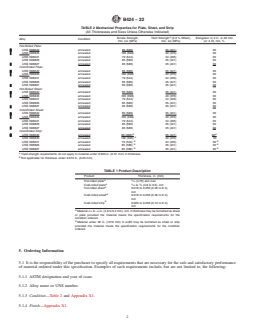
TABLE 2 Mechanical Properties for Plate, Sheet, and Strip
(All Thicknesses and Sizes Unless Otherwise Indicated)
A
Tensile Strength, Yield Strength (0.2 % Offset), Elongation in 2 in. or 50 mm
Alloy Condition
min, ksi (MPa)
min, ksi (MPa) (or 4 D), min, %
Hot-Rolled Plate:
UNS N08642 annealed 85 (586) 35 (241) 30
UNS N06845 annealed 100 (690) 40 (276) 30
UNS N08221 annealed 79 (544) 34 (235) 30
UNS N08825 annealed 85 (586) 35 (241) 30
UNS N08827 annealed 85 (586) 35 (241) 30
Cold-Rolled Plate:
UNS N08642 annealed 85 (586) 35 (241) 30
UNS N06845 annealed 100 (690) 40 (276) 30
UNS N08221 annealed 79 (544) 34 (235) 30
UNS N08825 annealed 85 (586) 35 (241) 30
UNS N08827 annealed 85 (586) 35 (241) 30
Hot-Rolled Sheet:
UNS N08642 annealed 85 (586) 35 (241) 30
UNS N06845 annealed 100 (690) 40 (276) 30
UNS N08221 annealed 79 (544) 34 (235) 30
UNS N08825 annealed 85 (586) 35 (241) 30
UNS N08827 annealed 85 (586) 35 (241) 30
Cold-Rolled Sheet:
UNS N08642 annealed 85 (586) 35 (241) 30
UNS N06845 annealed 100 (690) 40 (276) 30
UNS N08221 annealed 79 (544) 34 (235) 30
UNS N08825 annealed 85 (586) 35 (241) 30
UNS N08827 annealed 85 (586) 35 (241) 30
Cold-Rolled Strip:
B B
UNS N08642 annealed 85 (586) 35 (241) 30
B
UNS N06845 annealed 100 (690) 40 (276) 30
B B
UNS N08221 annealed 79 (544) 34 (235) 30
B B
UNS N08825 annealed 85 (586) 35 (241) 30
B B
UNS N08827 annealed 85 (586) 35 (241) 30
A
Yield strength requirements do not apply to material under 0.020 in. (0.51 mm) in thickness.
B
Not applicable for thickness under 0.010 in. (0.25 mm).
TABLE 1 Product Description
Product Thickness, in. (mm)
A
Hot-rolled plate ⁄16 (4.76) and over
A
3 3
Cold-rolled plate ⁄16 to ⁄8 (4.8 to 9.5), incl
A
Hot-rolled sheet 0.018 to 0.250 (0.46 to 6.4),
incl
B
Cold-rolled sheet 0.018 to 0.250 (0.46 to 6.4),
incl
B
Cold-rolled strip 0.005 to 0.250 (0.13 to 6.4),
incl
A 3 1
Material ⁄16 to ⁄4 in. (4.8 to 6.4 mm), incl, in thickness may be furnished as sheet
or plate provided the material meets the specification requirements for the
condition ordered.
B
Material under 48 in. (1219 mm) in width may be furnished as sheet or strip
provided the material meets the specification requirements for the condition
ordered.
5. Ordering Information
5.1 It is the responsibility of the purchaser to specify all requirements that are necessary for the safe and satisfactory performance
of material ordered under this specification. Examples of such requirements include, but are not limited to, the following:
5.1.1 ASTM designation and year of issue.
5.1.2 Alloy name or UNS number.
5.1.3 Condition—Table 2 and Appendix X1.
5.1.4 Finish—Appendix X1.
B424 − 22
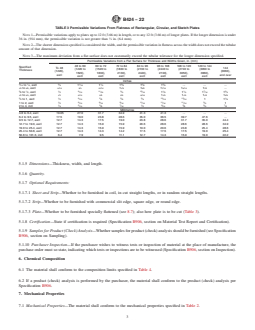
TABLE 3 Permissible Variations From Flatness of Rectangular, Circular, and Sketch Plates
NOTE 1—Permissible variations apply to plates up to 12 ft (3.66 m) in length, or to any 12 ft (3.66 m) of longer plates. If the longer dimension is under
36 in. (914 mm), the permissible variation is not greater than ⁄4 in. (6.4 mm).
NOTE 2—The shorter dimension specified is considered the width, and the permissible variation in flatness across the width does not exceed the tabular
amount of that dimension.
NOTE 3—The maximum deviation from a flat surface does not customarily exceed the tabular tolerance for the longer dimension specified.
Permissible Variations from a Flat Surface for Thickness and Widths Given, in. (mm)
48 to 60 60 to 72 72 to 84 84 to 96 96 to 108 108 to 120 120 to 144
Specified
To 48 144
(1220 to (1520 to (1830 to (2130 to (2440 to (2740 to (3050 to
Thickness
(1220), (3660),
1520), 1830), 2130), 2440), 2740), 3050), 3660),
excl and over
excl excl excl excl excl excl excl
Inches
3 1 3 1 1 3 5 5
⁄16 to ⁄4, excl ⁄4 1 ⁄16 1 ⁄4 1 ⁄8 1 ⁄8 1 ⁄8 . . .
1 3 11 3 15 1 3 7 9 7
⁄4 to ⁄8, excl ⁄16 ⁄4 ⁄16 1 ⁄8 1 ⁄8 1 ⁄16 1 ⁄16 1 ⁄8 .
3 1 1 9 11 3 15 1 1 7 3
⁄8 to ⁄2, excl ⁄2 ⁄16 ⁄16 ⁄4 ⁄16 1 ⁄8 1 ⁄4 1 ⁄16 1 ⁄4
1 3 1 9 5 5 13 1 1 1 3
⁄2 to ⁄4, excl ⁄2 ⁄16 ⁄8 ⁄8 ⁄16 1 ⁄8 1 ⁄8 1 ⁄8 1 ⁄8
3 1 9 5 5 3 13 15 1
⁄4 to 1, excl ⁄2 ⁄16 ⁄8 ⁄8 ⁄4 ⁄16 ⁄16 1 1 ⁄8
1 9 9 9 11 11 11 3
1 to 2, excl ⁄2 ⁄16 ⁄16 ⁄16 ⁄16 ⁄16 ⁄16 ⁄4 1
1 5 3 7 1 9 5 3 7
2 to 4, incl ⁄4 ⁄16 ⁄8 ⁄16 ⁄2 ⁄16 ⁄8 ⁄4 ⁄8
Millimetres
4.8 to 6.4, excl 19.05 27.0 31.7 34.9 41.3 41.3 . . .
6.4 to 9.5, excl 17.5 19.0 23.8 28.6 35.0 36.5 39.7 47.6 .
9.5 to 12.7, excl 12.7 14.3 17.5 19.0 23.8 28.6 31.7 35.0 44.4
12.7 to 19.0, excl 12.7 14.3 15.9 15.9 20.6 28.6 28.6 28.6 34.9
19.0 to 25.4, excl 12.7 14.3 15.9 15.9 19.0 20.6 23.8 25.4 28.6
25.4 to 50.8, excl 12.7 14.3 14.3 14.2 17.5 17.5 17.5 19.0 25.4
50.8 to 101.6, incl 6.4 7.9 9.5 11.1 12.7 14.3 15.9 19.0 22.2
5.1.5 Dimensions—Thickness, width, and length.
5.1.6 Quantity.
5.1.7 Optional Requirements:
5.1.7.1 Sheet and Strip—Whether to be furnished in coil, in cut straight lengths, or in random straight lengths.
5.1.7.2 Strip—Whether to be furnished with commercial slit edge, square edge, or round edge.
5.1.7.3 Plate—Whether to be furnished specially flattened (see 8.7); also how plate is to be cut (Table 3).
5.1.8 Certification—State if certification is required (Specification B906, section on Material Test Report and Certification).
5.1.9 Samples for Product (Check) Analysis—Whether samples for product (check) analysis should be furnished (see Specification
B906, section on Sampling).
5.1.10 Purchaser Inspection—If the purchaser wishes to witness tests or inspection of material at the place of manufacture, the
purchase order must so state, indicating which tests or inspections are to be witnessed (Specification B906, section on Inspection).
6. Chemical Composition
6.1 The material shall conform to the c
...