

ASTM F1417-11A(2019)e1
(Practice)Standard Practice for Installation Acceptance of Plastic Non-pressure Sewer Lines Using Low-Pressure Air
General Information
- Abstract
SIGNIFICANCE AND USE
4.1 This low-pressure air testing practice detects damaged piping or improper jointing by measuring the rate at which air under pressure escapes from an isolated section of sewer.
4.2 The rate of air loss indicates the presence or absence of damaged piping or leaking joints. This practice is not intended to show total system water leakage limits and shall not be used as a quantitative measure of leakage under service conditions for infiltration or exfiltration.
Note 1: A finding of acceptable air loss specified in this practice can be interpreted as an installation acceptance test in lieu of infiltration or exfiltration testing.
4.3 This practice provides assurance of initial condition and quality of workmanship of properly-installed sewer pipe.
SCOPE
1.1 This practice provides procedures for testing non-pressure plastic pipe sewer lines, using low-pressure air to prove the integrity of the installed material and the construction procedures. Two procedures are included to find the rate of air leakage—the constant-pressure method and the time-pressure drop method.
1.2 This practice is performed on lines after all connections and service laterals have been plugged and braced adequately to withstand the test pressure. The time between completion of the backfill operation and low-pressure air testing may be specified by the approving authority.
1.3 This practice is used as a preliminary test, which enables the installer to show the condition of a buried line prior to final backfill, paving, and other construction activities.
1.4 This practice is applicable to all non-pressure sewer lines made of thermoplastic pipe, reinforced thermosetting resin (RTRP) pipe, and reinforced plastic mortar (RPM) pipe, defined in Terminology D883, D1600, and F412.
1.5 The values stated in inch-pound units are to be regarded as standard. The values given in parentheses are mathematical conversions to SI units that are provided for information only and are not considered standard.
1.6 This standard does not purport to address all of the safety concerns, if any, associated with its use. It is the responsibility of the user of this standard to establish appropriate safety, health, and environmental practices and determine the applicability of regulatory limitations prior to use. For specific precautionary statements, see Section 5.
1.7 This international standard was developed in accordance with internationally recognized principles on standardization established in the Decision on Principles for the Development of International Standards, Guides and Recommendations issued by the World Trade Organization Technical Barriers to Trade (TBT) Committee.
- Status
- Published
- Publication Date
- 31-Jul-2019
- Technical Committee
- F17 - Plastic Piping Systems
- Drafting Committee
- F17.62 - Sewer
Overview
ASTM F1417-11A(2019)e1 - Standard Practice for Installation Acceptance of Plastic Non-pressure Sewer Lines Using Low-Pressure Air - is a widely recognized international standard developed by ASTM International. This standard outlines best practices and procedures for verifying the integrity of newly installed, non-pressure plastic sewer pipes using low-pressure air testing. The purpose of the testing is to detect damaged piping and improper joints by measuring air leakage, ensuring the quality and suitability of the installed sewer lines prior to final backfill and additional construction activities.
Adhering to ASTM F1417 enhances quality assurance, supports regulatory compliance, and provides confidence in the initial workmanship of buried plastic sewer infrastructure.
Key Topics
- Scope and Applicability: Applies to all buried, non-pressure plastic sewer lines made from thermoplastic pipe, reinforced thermosetting resin pipe (RTRP), and reinforced plastic mortar (RPM) pipe.
- Testing Objectives: Utilizes low-pressure air as a medium to detect potential leaks caused by poor jointing or physical pipe damage.
- Testing Methods: Describes two primary techniques:
- Constant-Pressure Method: Air is introduced to achieve and stabilize a fixed internal pressure, then the leakage rate is measured.
- Time-Pressure Drop Method: Air is added until a specified pressure is reached; the time for a defined drop in pressure is measured and compared to standard criteria.
- Procedures and Equipment: Guidance is provided for cleaning, preparation, isolation, and pressurization of sewer lines. Detailed requirements for plugs, air sources, gauges, and time measurement are specified.
- Safety: Emphasis on safe pressurization, bracing plugs, and avoidance of over-pressurization to protect personnel and property.
- Acceptance Criteria: Clearly defines compliant leakage rates and minimum permissible test times for various pipe diameters and lengths.
- Limitations: The standard is qualitative, serving as a preliminary integrity test, and does not establish total water leakage or infiltration/exfiltration under service conditions.
Applications
ASTM F1417 is essential for contractors, engineers, and inspectors involved in the construction and installation of underground plastic sewer systems. Typical applications include:
- New Installations: Confirms acceptability of installed pipe segments before final backfill, paving, or placement of permanent surface materials.
- Quality Assurance: Offers objective documentation that installed plastic sewer pipelines meet industry standards for joint integrity and material soundness.
- Regulatory Compliance: Facilitates acceptance by municipalities or approving authorities, often in lieu of water-based infiltration or exfiltration testing.
- Repair Verification: After repairs on a failed section, this practice provides an effective retest method to ensure successful remediation.
This standard is commonly used in residential, commercial, and municipal sewer system projects, serving as a critical step in final acceptance and sign-off by construction stakeholders.
Related Standards
- ASTM D883 – Terminology Relating to Plastics
- ASTM D1600 – Terminology for Abbreviated Terms Relating to Plastics
- ASTM D2122 – Test Method for Determining Dimensions of Thermoplastic Pipe and Fittings
- ASTM D3567 – Practice for Determining Dimensions of Fiberglass Pipe and Fittings
- ASTM F412 – Terminology Relating to Plastic Piping Systems
- UNI-B-6 – Recommended Practice for Low-Pressure Air Testing of Installed Sewer Pipe
ASTM F1417 contributes to consistent, reliable installation practices and is part of a suite of standards for plastic pipe and sewer system performance. Proper implementation promotes durable, leak-resistant sewage infrastructure, helping achieve project success and stewardship of public resources.
Relations
- Effective Date
- 01-Aug-2019
- Effective Date
- 01-Feb-2024
- Effective Date
- 01-Nov-2023
- Effective Date
- 01-Apr-2020
- Effective Date
- 01-Jan-2020
- Effective Date
- 01-Aug-2019
- Effective Date
- 15-Apr-2019
- Effective Date
- 01-Feb-2019
- Effective Date
- 01-Jan-2019
- Effective Date
- 01-Dec-2018
- Effective Date
- 01-Nov-2018
- Refers
ASTM D1600-18 - Standard Terminology for Abbreviated Terms Relating to Plastics (Withdrawn 2024) - Effective Date
- 01-Jan-2018
- Effective Date
- 15-Aug-2017
- Effective Date
- 01-Aug-2017
- Effective Date
- 01-Feb-2017
Get Certified
Connect with accredited certification bodies for this standard

DIBt (Deutsches Institut für Bautechnik)
German Institute for Building Technology.
DIN CERTCO
DIN Group product certification.

Aboma Certification B.V.
Specialized in construction, metal, and transport sectors.
Sponsored listings
Frequently Asked Questions
ASTM F1417-11A(2019)e1 is a standard published by ASTM International. Its full title is "Standard Practice for Installation Acceptance of Plastic Non-pressure Sewer Lines Using Low-Pressure Air". This standard covers: SIGNIFICANCE AND USE 4.1 This low-pressure air testing practice detects damaged piping or improper jointing by measuring the rate at which air under pressure escapes from an isolated section of sewer. 4.2 The rate of air loss indicates the presence or absence of damaged piping or leaking joints. This practice is not intended to show total system water leakage limits and shall not be used as a quantitative measure of leakage under service conditions for infiltration or exfiltration. Note 1: A finding of acceptable air loss specified in this practice can be interpreted as an installation acceptance test in lieu of infiltration or exfiltration testing. 4.3 This practice provides assurance of initial condition and quality of workmanship of properly-installed sewer pipe. SCOPE 1.1 This practice provides procedures for testing non-pressure plastic pipe sewer lines, using low-pressure air to prove the integrity of the installed material and the construction procedures. Two procedures are included to find the rate of air leakage—the constant-pressure method and the time-pressure drop method. 1.2 This practice is performed on lines after all connections and service laterals have been plugged and braced adequately to withstand the test pressure. The time between completion of the backfill operation and low-pressure air testing may be specified by the approving authority. 1.3 This practice is used as a preliminary test, which enables the installer to show the condition of a buried line prior to final backfill, paving, and other construction activities. 1.4 This practice is applicable to all non-pressure sewer lines made of thermoplastic pipe, reinforced thermosetting resin (RTRP) pipe, and reinforced plastic mortar (RPM) pipe, defined in Terminology D883, D1600, and F412. 1.5 The values stated in inch-pound units are to be regarded as standard. The values given in parentheses are mathematical conversions to SI units that are provided for information only and are not considered standard. 1.6 This standard does not purport to address all of the safety concerns, if any, associated with its use. It is the responsibility of the user of this standard to establish appropriate safety, health, and environmental practices and determine the applicability of regulatory limitations prior to use. For specific precautionary statements, see Section 5. 1.7 This international standard was developed in accordance with internationally recognized principles on standardization established in the Decision on Principles for the Development of International Standards, Guides and Recommendations issued by the World Trade Organization Technical Barriers to Trade (TBT) Committee.
SIGNIFICANCE AND USE 4.1 This low-pressure air testing practice detects damaged piping or improper jointing by measuring the rate at which air under pressure escapes from an isolated section of sewer. 4.2 The rate of air loss indicates the presence or absence of damaged piping or leaking joints. This practice is not intended to show total system water leakage limits and shall not be used as a quantitative measure of leakage under service conditions for infiltration or exfiltration. Note 1: A finding of acceptable air loss specified in this practice can be interpreted as an installation acceptance test in lieu of infiltration or exfiltration testing. 4.3 This practice provides assurance of initial condition and quality of workmanship of properly-installed sewer pipe. SCOPE 1.1 This practice provides procedures for testing non-pressure plastic pipe sewer lines, using low-pressure air to prove the integrity of the installed material and the construction procedures. Two procedures are included to find the rate of air leakage—the constant-pressure method and the time-pressure drop method. 1.2 This practice is performed on lines after all connections and service laterals have been plugged and braced adequately to withstand the test pressure. The time between completion of the backfill operation and low-pressure air testing may be specified by the approving authority. 1.3 This practice is used as a preliminary test, which enables the installer to show the condition of a buried line prior to final backfill, paving, and other construction activities. 1.4 This practice is applicable to all non-pressure sewer lines made of thermoplastic pipe, reinforced thermosetting resin (RTRP) pipe, and reinforced plastic mortar (RPM) pipe, defined in Terminology D883, D1600, and F412. 1.5 The values stated in inch-pound units are to be regarded as standard. The values given in parentheses are mathematical conversions to SI units that are provided for information only and are not considered standard. 1.6 This standard does not purport to address all of the safety concerns, if any, associated with its use. It is the responsibility of the user of this standard to establish appropriate safety, health, and environmental practices and determine the applicability of regulatory limitations prior to use. For specific precautionary statements, see Section 5. 1.7 This international standard was developed in accordance with internationally recognized principles on standardization established in the Decision on Principles for the Development of International Standards, Guides and Recommendations issued by the World Trade Organization Technical Barriers to Trade (TBT) Committee.
ASTM F1417-11A(2019)e1 is classified under the following ICS (International Classification for Standards) categories: 91.140.80 - Drainage systems. The ICS classification helps identify the subject area and facilitates finding related standards.
ASTM F1417-11A(2019)e1 has the following relationships with other standards: It is inter standard links to ASTM F1417-11a(2019), ASTM D883-24, ASTM D883-23, ASTM F412-20, ASTM D883-20, ASTM D883-19c, ASTM D883-19a, ASTM D883-19, ASTM F412-19, ASTM D883-18a, ASTM D883-18, ASTM D1600-18, ASTM D883-17, ASTM F412-17a, ASTM F412-17. Understanding these relationships helps ensure you are using the most current and applicable version of the standard.
ASTM F1417-11A(2019)e1 is available in PDF format for immediate download after purchase. The document can be added to your cart and obtained through the secure checkout process. Digital delivery ensures instant access to the complete standard document.
Standards Content (Sample)
This international standard was developed in accordance with internationally recognized principles on standardization established in the Decision on Principles for the
Development of International Standards, Guides and Recommendations issued by the World Trade Organization Technical Barriers to Trade (TBT) Committee.
´1
Designation: F1417 − 11a (Reapproved 2019)
Standard Practice for
Installation Acceptance of Plastic Non-pressure Sewer Lines
Using Low-Pressure Air
This standard is issued under the fixed designation F1417; the number immediately following the designation indicates the year of
original adoption or, in the case of revision, the year of last revision. A number in parentheses indicates the year of last reapproval. A
superscript epsilon (´) indicates an editorial change since the last revision or reapproval.
ε NOTE—Sections 3.1 and 8.2.2 were editorially corrected in May 2020.
1. Scope* mendations issued by the World Trade Organization Technical
Barriers to Trade (TBT) Committee.
1.1 This practice provides procedures for testing non-
pressure plastic pipe sewer lines, using low-pressure air to
2. Referenced Documents
provetheintegrityoftheinstalledmaterialandtheconstruction
2.1 ASTM Standards:
procedures. Two procedures are included to find the rate of air
C828 Test Method for Low-Pressure Air Test of Vitrified
leakage—the constant-pressure method and the time-pressure
Clay Pipe Lines
drop method.
C924 Practice for Testing Concrete Pipe Sewer Lines by
1.2 This practice is performed on lines after all connections
Low-Pressure Air Test Method (Withdrawn 2013)
and service laterals have been plugged and braced adequately
D883 Terminology Relating to Plastics
to withstand the test pressure. The time between completion of
D1600 Terminology forAbbreviatedTerms Relating to Plas-
the backfill operation and low-pressure air testing may be
tics
specified by the approving authority.
D2122 Test Method for Determining Dimensions of Ther-
moplastic Pipe and Fittings
1.3 Thispracticeisusedasapreliminarytest,whichenables
D3567 Practice for Determining Dimensions of “Fiberglass”
the installer to show the condition of a buried line prior to final
(Glass-Fiber-Reinforced Thermosetting Resin) Pipe and
backfill, paving, and other construction activities.
Fittings
1.4 This practice is applicable to all non-pressure sewer
F412 Terminology Relating to Plastic Piping Systems
lines made of thermoplastic pipe, reinforced thermosetting
2.2 Uni-Bell PVC Pipe Association Standard:
resin (RTRP) pipe, and reinforced plastic mortar (RPM) pipe,
UNI-B-6 Recommended Practice for Low-PressureAirTest-
defined in Terminology D883, D1600, and F412.
ing of Installed Sewer Pipe
1.5 The values stated in inch-pound units are to be regarded
3. Summary of Practice
as standard. The values given in parentheses are mathematical
conversions to SI units that are provided for information only
3.1 Thesectionofthelinetobetestedisplugged.Air,atlow
and are not considered standard.
pressure, is introduced into the plugged line. The line passes
the test if the rate of air leakage, as measured by a constant-
1.6 This standard does not purport to address all of the
pressure method or a time-pressure drop method, is achieved.
safety concerns, if any, associated with its use. It is the
The rate of air leakage may be determined by using Table 1 or
responsibility of the user of this standard to establish appro-
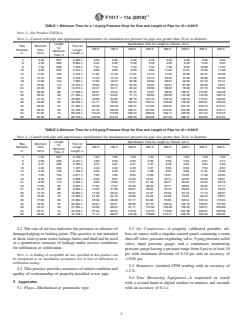
Table 2, or calculated by use of the equations in Section 9.
priate safety, health, and environmental practices and deter-
mine the applicability of regulatory limitations prior to use.
4. Significance and Use
For specific precautionary statements, see Section 5.
4.1 This low-pressure air testing practice detects damaged
1.7 This international standard was developed in accor-
piping or improper jointing by measuring the rate at which air
dance with internationally recognized principles on standard-
under pressure escapes from an isolated section of sewer.
ization established in the Decision on Principles for the
Development of International Standards, Guides and Recom-
For referenced ASTM standards, visit the ASTM website, www.astm.org, or
contact ASTM Customer Service at service@astm.org. For Annual Book of ASTM
Standards volume information, refer to the standard’s Document Summary page on
This practice is under the jurisdiction of ASTM Committee F17 on Plastic the ASTM website.
Piping Systems and is the direct responsibility of Subcommittee F17.62 on Sewer. The last approved version of this historical standard is referenced on
Current edition approved Aug. 1, 2019. Published September 2019. Originally www.astm.org.
approved in 1992. Last previous edition approved in 2015 as F1417–11a(2015). Available from Uni-Bell PVC Pipe Association, 2711 Lyndon B. Johnson
DOI: 10.1520/F1417-11AR19E01. Freeway, Suite 1000, Dallas, TX 75234, http://www.uni-bell.org.
*A Summary of Changes section appears at the end of this standard
Copyright © ASTM International, 100 Barr Harbor Drive, PO Box C700, West Conshohocken, PA 19428-2959. United States
´1
F1417 − 11a (2019)
TABLE 1 Minimum Time for a 1.0-psig Pressure Drop for Size and Length of Pipe forQ = 0.0015
NOTE 1—See Practice UNI-B-6.
NOTE 2—Consult with pipe and appurtenance manufacturer for maximum test pressure for pipe size greater than 30 in. in diameter.
Length Specification Time for Length (L) Shown, min:s
Pipe Minimum Time for
for
100 ft 150 ft 200 ft 250 ft 300 ft 350 ft 400 ft 450 ft
Diameter, Time, Longer
Minimum
in. min:s Length, s
Time, ft
4 3:46 597 0.380 L 3:46 3:46 3:46 3:46 3:46 3:46 3:46 3:46
6 5:40 398 0.854 L 5:40 5:40 5:40 5:40 5:40 5:40 5:42 6:24
8 7:34 298 1.520 L 7:34 7:34 7:34 7:34 7:36 8:52 10:08 11:24
10 9:26 239 2.374 L 9:26 9:26 9:26 9:53 11:52 13:51 15:49 17:48
12 11:20 199 3.418 L 11:20 11:20 11:24 14:15 17:05 19:56 22:47 25:38
15 14:10 159 5.342 L 14:10 14:10 17:48 22:15 26:42 31:09 35:36 40:04
18 17:00 133 7.692 L 17:00 19:13 25:38 32:03 38:27 44:52 51:16 57:41
21 19:50 114 10.470 L 19:50 26:10 34:54 43:37 52:21 61:00 69:48 78:31
24 22:40 99 13.674 L 22:47 34:11 45:34 56:58 68:22 79:46 91:10 102:33
27 25:30 88 17.306 L 28:51 43:16 57:41 72:07 86:32 100:57 115:22 129:48
30 28:20 80 21.366 L 35:37 53:25 71:13 89:02 106:50 124:38 142:26 160:15
33 31:10 72 25.852 L 43:05 64:38 86:10 107:43 129:16 150:43 172:21 193:53
36 34:00 66 30.768 L 51:17 76:55 102:34 128:12 153:50 179:29 205:07 230:46
42 39:48 57 41.883 L 69:48 104:42 139:37 174:30 209:24 244:19 279:13 314:07
48 45:34 50 54.705 L 91:10 136:45 182:21 227:55 273:31 319:06 364:42 410:17
54 51:02 44 69.236 L 115:24 173:05 230:47 288:29 346:11 403:53 461:34 519:16
60 56:40 40 85.476 L 142:28 213:41 284:55 356:09 427:23 498:37 569:50 641:04
TABLE 2 Minimum Time for a 0.5-psig Pressure Drop for Size and Length of Pipe forQ = 0.0015
NOTE 1—Consult with pipe and appurtenance manufacturer for maximum test pressure for pipe size greater than 30 in. in diameter.
Length Specification Time for Length (L) Shown, min:s
Pipe Minimum Time for
for
100 ft 150 ft 200 ft 250 ft 300 ft 350 ft 400 ft 450 ft
Diameter, Time, Longer
Minimum
in. min:s Length, s
Time, ft
4 1:53 597 0.190 L 1:53 1:53 1:53 1:53 1:53 1:53 1:53 1:53
6 2:50 398 0.427 L 2:50 2:50 2:50 2:50 2:50 2:50 2:51 3:12
8 3:47 298 0.760 L 3:47 3:47 3:47 3:47 3:48 4:26 5:04 5:42
10 4:43 239 1.187 L 4:43 4:43 4:43 4:57 5:56 6:55 7:54 8:54
12 5:40 199 1.709 L 5:40 5:40 5:42 7:08 8:33 9:58 11:24 12:50
15 7:05 159 2.671 L 7:05 7:05 8:54 11:08 13:21 15:35 17:48 20:02
18 8:30 133 3.846 L 8:30 9:37 12:49 16:01 19:14 22:26 25:38 28:51
21 9:55 114 5.235 L 9:55 13:05 17:27 21:49 26:11 30:32 34:54 39:16
24 11:20 99 6.837 L 11:24 17:57 22:48 28:30 34:11 39:53 45:35 51:17
27 12:45 88 8.653 L 14:25 21:38 28:51 36:04 43:16 50:30 57:42 64:54
30 14:10 80 10.683 L 17:48 26:43 35:37 44:31 53:25 62:19 71:13 80:07
33 15:35 72 12.926 L 21:33 32:19 43:56 53:52 64:38 75:24 86:10 96:57
36 17:00 66 15.384 L 25:39 38:28 51:17 64:06 76:55 89:44 102:34 115:23
42 19:54 57 20.942 L 34:54 52:21 69:49 87:15 104:42 122:10 139:37 157:04
48 22:47 50 27.352 L 45:35 68:23 91:11 113:58 136:46 159:33 182:21 205:09
54 25:31 44 34.618 L 57:42 86:33 115:24 144:15 173:05 201:56 230:47 259:38
60 28:20 40 42.738 L 71:14 106:51 142:28 178:05 213:41 249:18 284:55 320:32
4.2 The rate of air loss indicates the presence or absence of 5.2 Air Compressor—A properly calibrated portable, oil-
damaged piping or leaking joints. This practice is not intended
free air source with a singular control panel containing a main
to show total system water leakage limits and shall not be used shut-off valve, pressure-regulating valve, 9-psig pressure-relief
as a quantitative measure of leakage under service conditions
valve, input pressure gauge, and a continuous monitoring
for infiltration or exfiltration.
pressuregaugehavingapressurerangefrom0psitoatleast10
psi with minimum divisions of 0.10 psi and an accuracy of
NOTE 1—A finding of acceptable air loss specified in this practice can
be interpreted as an installation acceptance test in lieu of infiltration or 60.04 psi.
exfiltration testing.
5.3 Rotameter, standard CFM reading with an accuracy of
4.3 This practice provides assurance of initial condition and
62%.
quality of workmanship of properly-installed sewer pipe.
5.4 Time Measuring Equipment—A stopwatch or watch
5. Apparatus
with a second hand or digital readout in minutes and seconds
5.1 Plugs—Mechanical or pneumatic type. with an accuracy of 0.1.s.
´1
F1417 − 11a (2019)
any pressure greater than atmospheric pressure. Since water produces a
6. Safety Precautions
pressure of 0.43 psi for every foot of depth, air test pressures must be
6.1 This low-pressure air testing practice may be dangerous
increased to offset the depth of ground water over the sewer line. If the
to personnel if, through lack of understanding or carelessness,
groundwaterlevelis2ftormoreabovethetopofthepipeattheupstream
end, or if the air pressure required for the test is greater than 9-psi gauge,
a line is over-pressurized or plugs/caps are installed or re-
this air testing practice should not be used. Before this air testing practice
strained improperly. It is extremely important that the various
is used, the ground water level should be lowered by pumping or
plugsbeproperlyinstalled,restrainedandbracedtopreventthe
dewatering.
suddenexpulsionofapoorlyinstalledorpartiallyinflatedplug.
8.2.1 Constant Pressure Method—Add air until the internal
Observe the following minimum safety precautions:
air pressure of the test section is raised to 4.0 psig and the test
6.1.1 Duringtesting,nooneshallbeallowedinmanholesor
section is stabilized as in 8.1. Reduce pressure to 3.5 psig to
in the possible path of a suddenly expelled cap or plug.
run the constant pressure test. The air-flow rate in standard
6.1.2 Install and restrain all caps and plugs securely.
cubic feet per minute is read directly by a rotameter. Convert
6.1.3 When lines are tested, it is mandatory that all the caps
this air-flow rate to actual cubic feet per minute of air leaking
and plugs shall be braced as an added safety factor.
from the test section by using the absolute pressure and
6.1.4 Do not over-pressurize the lines. Do not exceed 9.0
temperature in the test section. The requirements for air loss
psig.
under the constant pressure method shall be considered satis-
NOTE 2—The axial force on a plug at 9 psig internal pressure isF=P
fied if the air loss does not exceed the specified leakage rate in
π D /4 lb, where D is the inside diameter in inches. For example, the axial
cubic feet per minute per square foot of internal pipe surface
force on an 30-in. plug at 9.0 psig maximum allowable pressure is over
area.
6 300 lb. Restraint systems must be designed to handle these forces with
adequate safety factors. Every effort should be made to maintain backfill
8.2.2 Time-Pressure Drop Method—Air is slowly intro-
over the pipe during air testing.
duced into the test section, until the air pressure is raised to
6.1.5 Aregulatororreliefvalvesetnohigherthan9psishall approximately4.0psiandthetestsectionisstabilizedasin8.1.
Disconnect the air supply and decrease the pressure to 3.5 psi
be included on all pressurizing equipment.
before starting the test. Determine pressure drop time per
7. Preparation of the Line
8.2.2.1 and 8.2.2.2.
7.1 Clean the section of sewer line to be tested by flushing 8.2.2.1 1.0 psig pressure drop—Determinethetimerequired
or other means prior to conducting the low-pressure air test.
for the pressure to drop from 3.5 psi to 2.5 psi, and compare
This cleaning serves to eliminate debris and produce consistent this interval to the minimum time for the pipe diameter and the
results.
length per Table 1. If the rate of air loss is greater than or equal
totheminimumtimeforthepipediameterandlengthperTable
8. Procedures
1, the installation is acceptable.
8.1 Isolatethesectionofsewerlinetobetestedbyinflatable
8.2.2.2 0.5 psig pressure drop—Determinethetimerequired
stoppers or other suitable test plugs or caps.
for the pressure to drop from 3.5 psi to 3.0 psi, and compare
8.1.1 Theendsof
...