

ISO 10303-507:2001
(Main)Industrial automation systems and integration — Product data representation and exchange — Part 507: Application interpreted construct: Geometrically bounded surface
General Information
- Abstract
This part of ISO 10303 specifies the interpretation of the integrated resources in order to satisfy requirements for the representation of geometric shapes by means of geometrically bounded surface models. The following are within the scope of this part of ISO 10303: — 3D points; — points defined in the parameter space of curves or surfaces; — 3D curves; — curves defined in the parameter space of surfaces; NOTE - Such curves are also known as pcurves or cons, which are acronyms for parametrised curve and curve on surface. — the elementary curves line, circle, ellipse, parabola, and hyperbola; — intersection curves; — polylines that consist of at least three points; — surfaces; — the elementary surfaces plane, cylinder, cone, torus, and sphere; — swept surfaces created by rotation or linear extrusion of a curve; — sculptured curves and surfaces; — trimming of curves and surfaces; — composition of curves and surfaces; — replication of curves, surfaces, and surface models; — 3D offsets of curves and surfaces. The following are outside the scope of this part of ISO 10303: — unbounded geometry; — self-intersecting geometry; — geometry in a 2D cartesian coordinate space; — replication of points; — topological entities.
- Status
- Published
- Publication Date
- 24-Jan-2001
- Technical Committee
- ISO/TC 184/SC 4 - Industrial data
- Drafting Committee
- ISO/TC 184/SC 4/WG 12 - STEP product modelling and resources
- Current Stage
- 9093 - International Standard confirmed
- Start Date
- 28-Jun-2024
- Completion Date
- 29-Aug-2026

Overview
ISO 10303-507:2001 - part of the STEP family (ISO 10303) - defines an Application Interpreted Construct (AIC) for representing and exchanging geometrically bounded surface models. It provides a neutral, computer-interpretable way to describe surface geometry (points, curves, surfaces) without topology, enabling consistent CAD data exchange, product data representation, and long‑term archiving of surface-only models.
Key topics and technical scope
This AIC focuses on geometric primitives and operations used to form bounded surface models:
- Points and parameter-space points (pcurves) - 3D cartesian points and points defined in curve/surface parameter spaces.
- Curves - 3D curves and curves on surfaces (pcurves/cons); elementary curves: line, circle, ellipse, parabola, hyperbola; intersection curves; polylines (≥3 points); composite and sculptured curves.
- Surfaces - elementary surfaces: plane, cylinder, cone, torus, sphere; swept surfaces (rotation, linear extrusion); sculptured surfaces; B‑spline and Bezier varieties via referenced integrated resources.
- Trimming and composition - trimming of curves and surfaces, composition and replication of curves/surfaces/surface models, and 3D offsets.
- Data model - EXPRESS schema (aic_geometrically_bounded_surface) using integrated resources from ISO 10303-41/42/43; key entity: geometrically_bounded_surface_shape_representation.
- Constraints and exclusions - all geometry is bounded and primarily 3D (pcurves allowed in 2D parameter space); unbounded or self‑intersecting geometry, 2D Cartesian geometry, replication of points, and topological entities are excluded.
Technical requirements (high level)
- Geometry must be defined using coordinate and parameter-space values - no topology is used for bounding.
- All unbounded curves and surfaces must be explicitly trimmed; boundaries are defined by points/parameter values or by curves on surfaces.
- Geometric sets must be dimensionally compatible (typically 3D).
- EXPRESS definitions and validation functions in the standard guide implementation and interchange correctness.
Practical applications
- Neutral CAD data exchange and interoperability between CAD/CAM/CAE systems.
- Product Lifecycle Management (PLM) and archival of surface models.
- Implementing STEP-based import/export, translators, or internal data stores for surface modeling.
- Use in downstream CAM toolpaths or inspection where accurate surface geometry (without topology) is required.
Who uses this standard
- CAD/CAM/CAE software developers and integrators
- PLM architects and data exchange specialists
- Standards engineers and implementers of STEP/AP schemas
- Manufacturers, tooling, and inspection teams relying on neutral surface model exchange
Related standards
- ISO 10303-1, -11, -41, -42, -43 (referenced integrated resources and EXPRESS language) - relevant for full STEP implementation and context.
Keywords: ISO 10303-507, geometrically bounded surface, STEP, product data representation, surface modeling, pcurve, trimmed surface, CAD data exchange, AIC.
Get Certified
Connect with accredited certification bodies for this standard

DVS-ZERT GmbH
German welding certification society.
CARES (UK Certification Authority for Reinforcing Steels)
UK certification for reinforcing steels and construction.
EWF/IIW (European/International Welding Federation)
International welding personnel certification.
Sponsored listings
Frequently Asked Questions
ISO 10303-507:2001 is a standard published by the International Organization for Standardization (ISO). Its full title is "Industrial automation systems and integration — Product data representation and exchange — Part 507: Application interpreted construct: Geometrically bounded surface". This standard covers: This part of ISO 10303 specifies the interpretation of the integrated resources in order to satisfy requirements for the representation of geometric shapes by means of geometrically bounded surface models. The following are within the scope of this part of ISO 10303: — 3D points; — points defined in the parameter space of curves or surfaces; — 3D curves; — curves defined in the parameter space of surfaces; NOTE - Such curves are also known as pcurves or cons, which are acronyms for parametrised curve and curve on surface. — the elementary curves line, circle, ellipse, parabola, and hyperbola; — intersection curves; — polylines that consist of at least three points; — surfaces; — the elementary surfaces plane, cylinder, cone, torus, and sphere; — swept surfaces created by rotation or linear extrusion of a curve; — sculptured curves and surfaces; — trimming of curves and surfaces; — composition of curves and surfaces; — replication of curves, surfaces, and surface models; — 3D offsets of curves and surfaces. The following are outside the scope of this part of ISO 10303: — unbounded geometry; — self-intersecting geometry; — geometry in a 2D cartesian coordinate space; — replication of points; — topological entities.
This part of ISO 10303 specifies the interpretation of the integrated resources in order to satisfy requirements for the representation of geometric shapes by means of geometrically bounded surface models. The following are within the scope of this part of ISO 10303: — 3D points; — points defined in the parameter space of curves or surfaces; — 3D curves; — curves defined in the parameter space of surfaces; NOTE - Such curves are also known as pcurves or cons, which are acronyms for parametrised curve and curve on surface. — the elementary curves line, circle, ellipse, parabola, and hyperbola; — intersection curves; — polylines that consist of at least three points; — surfaces; — the elementary surfaces plane, cylinder, cone, torus, and sphere; — swept surfaces created by rotation or linear extrusion of a curve; — sculptured curves and surfaces; — trimming of curves and surfaces; — composition of curves and surfaces; — replication of curves, surfaces, and surface models; — 3D offsets of curves and surfaces. The following are outside the scope of this part of ISO 10303: — unbounded geometry; — self-intersecting geometry; — geometry in a 2D cartesian coordinate space; — replication of points; — topological entities.
ISO 10303-507:2001 is classified under the following ICS (International Classification for Standards) categories: 25.040.40 - Industrial process measurement and control. The ICS classification helps identify the subject area and facilitates finding related standards.
ISO 10303-507:2001 is available in PDF format for immediate download after purchase. The document can be added to your cart and obtained through the secure checkout process. Digital delivery ensures instant access to the complete standard document.
Standards Content (Sample)
INTERNATIONAL ISO
STANDARD 10303-507
First edition
2001-02-01
Industrial automation systems and
integration — Product data representation
and exchange —
Part 507:
Application interpreted construct:
Geometrically bounded surface
Systèmes d'automation industrielle et intégration — Représentation
et échange de données de produits —
Partie 507: Établissement interprété d'application: Surface limitée
géométriquement
Reference number
©
ISO 2001
PDF disclaimer
This PDF file may contain embedded typefaces. In accordance with Adobe's licensing policy, this file may be printed or viewed but shall not
be edited unless the typefaces which are embedded are licensed to and installed on the computer performing the editing. In downloading this
file, parties accept therein the responsibility of not infringing Adobe's licensing policy. The ISO Central Secretariat accepts no liability in this
area.
Adobe is a trademark of Adobe Systems Incorporated.
Details of the software products used to create this PDF file can be found in the General Info relative to the file; the PDF-creation parameters
were optimized for printing. Every care has been taken to ensure that the file is suitable for use by ISO member bodies. In the unlikely event
that a problem relating to it is found, please inform the Central Secretariat at the address given below.
All rights reserved. Unless otherwise specified, no part of this publication may be reproduced or utilized in any form or by any means, electronic
or mechanical, including photocopying and microfilm, without permission in writing from either ISO at the address below or ISO's member body
in the country of the requester.
ISO copyright office
Case postale 56 � CH-1211 Geneva 20
Tel. + 41 22 749 01 11
Fax + 41 22 749 09 47
E-mail copyright@iso.ch
Web www.iso.ch
Printed in Switzerland
ii © ISO 2001 – All rights reserved
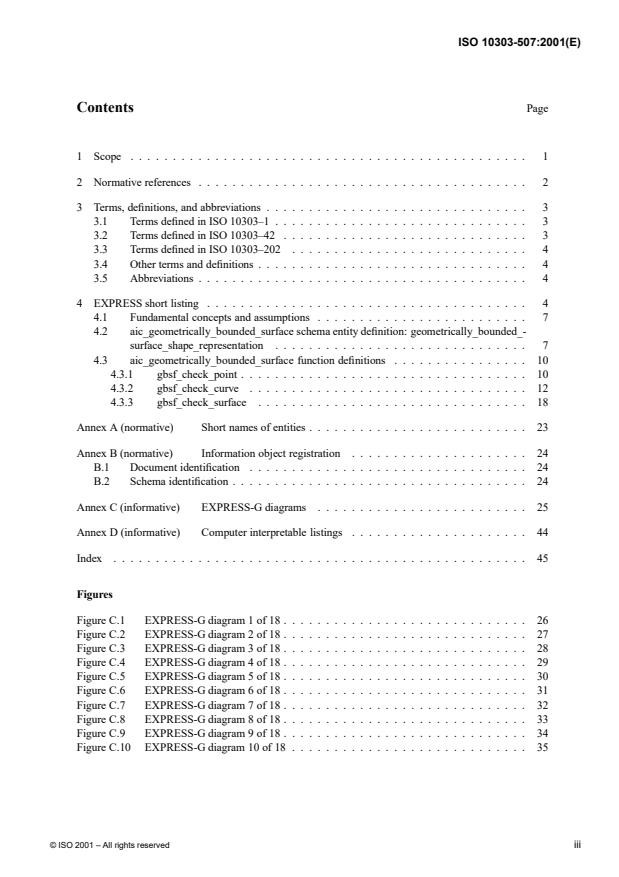
Contents Page
1 Scope . . . . . . . . . 1
2 Normativereferences . . . . . . . . 2
3 Terms,definitions,andabbreviations . . . . . . 3
3.1 Terms defined in ISO 10303–1 . . . . . . 3
3.2 Terms defined in ISO 10303–42 . . . . . . . . 3
3.3 Terms defined in ISO 10303–202 . . . . . . . 4
3.4 Othertermsanddefinitions . . . . . . 4
3.5 Abbreviations . . . . . . . . 4
4 EXPRESSshortlisting . . . . . . . . 4
4.1 Fundamental concepts and assumptions . . . . . 7
4.2 aic_geometrically_bounded_surface schema entity definition: geometrically_bounded_-
surface_shape_representation . . . . . . 7
4.3 aic_geometrically_bounded_surfacefunctiondefinitions . . . . 10
4.3.1 gbsf_check_point . . . . . . . . 10
4.3.2 gbsf_check_curve . . . . . . . 12
4.3.3 gbsf_check_surface . . . . . . 18
Annex A (normative) Short names of entities. . . . . 23
AnnexB(normative) Informationobjectregistration . . . . 24
B.1 Documentidentification . . . . . . . 24
B.2 Schemaidentification . . . . . . . 24
Annex C (informative) EXPRESS-G diagrams . . . . . 25
AnnexD(informative) Computerinterpretablelistings . . . . 44
Index . . . . . . . . . . 45
Figures
Figure C.1 EXPRESS-G diagram 1 of 18 . . . . . . . . 26
Figure C.2 EXPRESS-G diagram 2 of 18 . . . . . . . . 27
Figure C.3 EXPRESS-G diagram 3 of 18 . . . . . . . . 28
Figure C.4 EXPRESS-G diagram 4 of 18 . . . . . . . . 29
Figure C.5 EXPRESS-G diagram 5 of 18 . . . . . . . . 30
Figure C.6 EXPRESS-G diagram 6 of 18 . . . . . . . . 31
Figure C.7 EXPRESS-G diagram 7 of 18 . . . . . . . . 32
Figure C.8 EXPRESS-G diagram 8 of 18 . . . . . . . . 33
Figure C.9 EXPRESS-G diagram 9 of 18 . . . . . . . . 34
Figure C.10 EXPRESS-G diagram 10 of 18 . . . . . . . 35
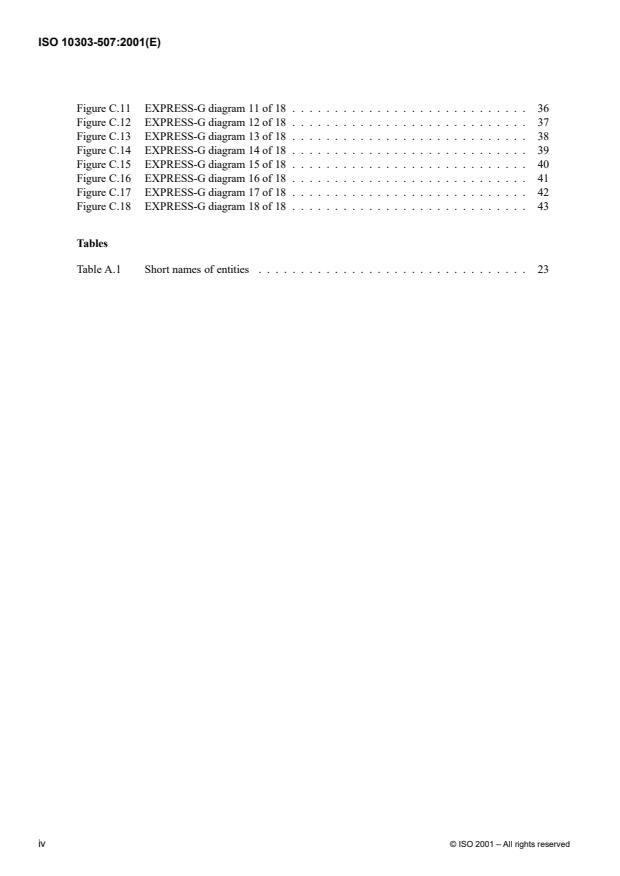
Figure C.11 EXPRESS-G diagram 11 of 18 . . . . . . . 36
Figure C.12 EXPRESS-G diagram 12 of 18 . . . . . . . 37
Figure C.13 EXPRESS-G diagram 13 of 18 . . . . . . . 38
Figure C.14 EXPRESS-G diagram 14 of 18 . . . . . . . 39
Figure C.15 EXPRESS-G diagram 15 of 18 . . . . . . . 40
Figure C.16 EXPRESS-G diagram 16 of 18 . . . . . . . 41
Figure C.17 EXPRESS-G diagram 17 of 18 . . . . . . . 42
Figure C.18 EXPRESS-G diagram 18 of 18 . . . . . . . 43
Tables
Table A.1 Short names of entities . . . . . . 23
iv © ISO 2001 – All rights reserved
Foreword
ISO (the International Organization for Standardization) is a worldwide federation of national standards bodies (ISO
member bodies). The work of preparing International Standards is normally carried out through ISO technical
committees. Each member body interested in a subject for which a technical committee has been established has
the right to be represented on that committee. International organizations, governmental and non-governmental, in
liaison with ISO, also take part in the work. ISO collaborates closely with the International Electrotechnical
Commission (IEC) on all matters of electrotechnical standardization.
International Standards are drafted in accordance with the rules given in the ISO/IEC Directives, Part 3.
Draft International Standards adopted by the technical committees are circulated to the member bodies for voting.
Publication as an International Standard requires approval by at least 75 % of the member bodies casting a vote.
Attention is drawn to the possibility that some of the elements of this International Standard may be the subject of
patent rights. ISO shall not be held responsible for identifying any or all such patent rights.
International Standard ISO 10303-507 was prepared by Technical Committee ISO/TC 184 Industrial automation
systems and integration, Subcommittee SC 4, Industrial data.
This International Standard is organized as a series of parts, each published separately. The structure of this
International Standard is described in ISO 10303-1.
Each part of this International Standard is a member of one of the following series: description methods,
implementation methods, conformance testing methodology and framework, integrated generic resources,
integrated application resources, application protocols, abstract test suites, application interpreted constructs, and
application modules. This part is a member of the application interpreted construct series.
A complete list of parts of ISO 10303 is available from the Internet:
Annexes A and B form a normative part of this part of ISO 10303. Annexes C and D are for information only.
Introduction
ISO 10303 is an International Standard for the computer-interpretable representation and exchange of
product data. The objective is to provide a neutral mechanism capable of describing product data
throughout the life cycle of a product independent from any particular system. The nature of this de-
scription makes it suitable not only for neutral file exchange, but also as a basis for implementing and
sharing product databases and archiving.
This International Standard is organized as a series of parts, each published separately. The parts of
ISO 10303 fall into one of the following series: description methods, integrated resources, application
interpreted constructs, application protocols, abstract test suites, implementation methods, and confor-
mance testing. The series are described in ISO 10303–1. This part of ISO 10303 is a member of the
application interpreted constructs series.
An application interpreted construct (AIC) provides a logical grouping of interpreted constructs that
supports a specific functionality for the usage of product data across multiple application contexts. An
interpreted construct is a common interpretation of the integrated resources that supports shared infor-
mation requirements among application protocols.
This document specifies the application interpreted construct for the description of geometric shapes by
means of geometrically bounded surface models. It includes the geometric resources to define purely
geometrically bounded models that consist of elementary and sculptured curves and surfaces.
vi © ISO 2001 – All rights reserved
INTERNATIONAL STANDARD ISO 10303-507:2001(E)
Industrial automation systems and integration —
Product data representation and exchange —
Part 507:
Application interpreted construct:
Geometrically bounded surface
1Scope
This part of ISO 10303 specifies the interpretation of the integrated resources in order to satisfy require-
ments for the representation of geometric shapes by means of geometrically bounded surface models.
The following are within the scope of this part of ISO 10303:
— 3D points;
— points defined in the parameter space of curves or surfaces;
— 3D curves;
— curves defined in the parameter space of surfaces;
NOTE - Such curves are also known as pcurves or cons, which are acronyms for parametrised curve
and curve on surface.
— the elementary curves line, circle, ellipse, parabola, and hyperbola;
— intersection curves;
— polylines that consist of at least three points;
— surfaces;
— the elementary surfaces plane, cylinder, cone, torus, and sphere;
— swept surfaces created by rotation or linear extrusion of a curve;
— sculptured curves and surfaces;
— trimming of curves and surfaces;
— composition of curves and surfaces;
— replication of curves, surfaces, and surface models;
c ISO 2001 – All rights reserved 1
— 3D offsets of curves and surfaces.
The following are outside the scope of this part of ISO 10303:
— unbounded geometry;
— self-intersecting geometry;
— geometry in a 2D cartesian coordinate space;
— replication of points;
— topological entities.
2 Normative references
The following normative documents contain provisions which, through reference in this text, constitute
provisions of this part of ISO 10303. For dated references, subsequent amendments to, or revisions of,
any of these publications do not apply. However, parties to agreements based on this part of ISO 10303
are encouraged to investigate the possibility of applying the most recent editions of the normative docu-
ments indicated below. For undated references, the latest edition of the normative document referred to
applies. Members of ISO and IEC maintain registers of currently valid International Standards.
ISO/IEC 8824–1:1998, Information technology– Abstract Syntax Notation One (ASN.1): Specification
of basic notation.
ISO 10303–1:1994, Industrial automation systems and integration – Product data representation and
exchange – Part 1 : Overview and fundamental principles.
ISO 10303–11:1994, Industrial automation systems and integration – Product data representation and
exchange – Part 11 : Description methods: The EXPRESS language reference manual.
ISO 10303–41:1994, Industrial automation systems and integration – Product data representation and
exchange – Part 41 : Integrated generic resources: Fundamentals of product description and support.
ISO 10303–42:1994, Industrial automation systems and integration – Product data representation and
exchange – Part 42 : Integrated generic resources: Geometric and topological representation.
ISO 10303–43:1994, Industrial automation systems and integration – Product data representation and
exchange – Part 43 : Integrated generic resources: Representation structures.
ISO 10303–202:1996, Industrial automation systems and integration – Product data representation and
exchange: – Part 202: Application protocol: Associative draughting.
NOTE - ISO 10303-202 is referenced normatively solely for the definition of the term AIC.
2c ISO 2001 – All rights reserved
3 Terms, definitions, and abbreviations
3.1 Terms defined in ISO 10303–1
For the purposes of this part of ISO 10303, the following terms defined in ISO 10303-1 apply:
— abstract test suite (ATS);
— application;
— application context;
— application protocol (AP);
— data;
— data exchange;
— generic resource;
— implementation method;
— information;
— integrated resource;
— interpretation;
— model;
— product;
— product data;
— structure.
3.2 Terms defined in ISO 10303–42
For the purposes of this part of ISO 10303, the following terms defined in ISO 10303-42 apply:
— boundary;
— coordinate space;
— curve;
c ISO 2001 – All rights reserved 3
— dimensionality;
— domain;
— parameter space;
— self-intersect;
— surface.
3.3 Terms defined in ISO 10303–202
For the purposes of this part of ISO 10303, the following terms defined in ISO 10303-202 apply:
3.3.1
application interpreted construct (AIC)
a logical grouping of interpreted constructs that supports a specific function for the usage of product data
across multiple application contexts.
3.4 Other terms and definitions
For the purposes of this part of ISO 10303, the following terms and definitions apply:
3.4.1
geometrically bounded
a description for a geometric shape that uses only values in coordinate space to define its boundaries and
connectivity, and no topological constructs.
3.5 Abbreviations
For the purposes of this part of ISO 10303, the following abbreviations apply:
AIC application interpreted construct
AP application protocol
ATS abstract test suite
4 EXPRESS short listing
This clause specifies the EXPRESS schema that uses elements from the integrated resources and con-
tains the types, entity specializations, and functions that are specific to this part of ISO 10303.
NOTE 1 - There may be subtypes and items of select lists that appear in the integrated resources that are
not imported into the AIC. Constructs are eliminated from the subtype tree or select list through the use of
4c ISO 2001 – All rights reserved
the implicit interface rules of ISO 10303-11. References to eliminated constructs are outside the scope of the
AIC. In some cases, all items of the select list are eliminated. Because AICs are intended to be implemented
in the context of an application protocol, the items of the select list will be defined by the scope of the
application protocol.
This application interpreted construct provides a consistent set of geometric entities for the definition
of surface models that consist of points, elementary or sculptured curves, and elementary or sculptured
surfaces. Geometry shall be bounded; no topological entities are used for bounding.
EXPRESS specification:
*)
SCHEMA aic_geometrically_bounded_surface;
REFERENCE FROM support_resource_schema ( -- ISO 10303-41
bag_to_set);
USE FROM geometric_model_schema ( -- ISO 10303-42
geometric_set);
USE FROM geometry_schema ( -- ISO 10303-42
axis1_placement,
axis2_placement_2d,
axis2_placement_3d,
b_spline_curve,
b_spline_curve_with_knots,
b_spline_surface,
b_spline_surface_with_knots,
bezier_curve,
bezier_surface,
boundary_curve,
bounded_pcurve,
bounded_surface_curve,
cartesian_point,
cartesian_transformation_operator_3d,
circle,
composite_curve,
composite_curve_on_surface,
composite_curve_segment,
conical_surface,
curve,
curve_bounded_surface,
curve_replica,
cylindrical_surface,
degenerate_pcurve,
degenerate_toroidal_surface,
direction,
ellipse,
evaluated_degenerate_pcurve,
c ISO 2001 – All rights reserved 5
geometric_representation_context,
hyperbola,
intersection_curve,
line,
offset_curve_3d,
offset_surface,
outer_boundary_curve,
parabola,
pcurve,
plane,
point,
point_on_curve,
point_on_surface,
polyline,
quasi_uniform_curve,
quasi_uniform_surface,
rational_b_spline_curve,
rational_b_spline_surface,
rectangular_composite_surface,
rectangular_trimmed_surface,
reparametrised_composite_curve_segment,
seam_curve,
spherical_surface,
surface,
surface_curve,
surface_of_linear_extrusion,
surface_of_revolution,
surface_patch,
surface_replica,
swept_surface,
toroidal_surface,
trimmed_curve,
uniform_curve,
uniform_surface,
vector);
USE FROM product_property_representation_schema (
shape_representation); -- ISO 10303-41
USE FROM representation_schema ( -- ISO 10303-43
definitional_representation,
mapped_item,
parametric_representation_context,
representation,
representation_item,
representation_map);
(*
6c ISO 2001 – All rights reserved
NOTE 2 - The schemas referenced above can be found in the following parts of ISO 10303:
geometric_model_schema ISO 10303-42
geometry_schema ISO 10303-42
product_property_representation_schema ISO 10303-41
representation_schema ISO 10303-43
support_resource_schema ISO 10303-41
4.1 Fundamental concepts and assumptions
The following entities are intended to be independently instantiated in the application protocol schemas
that use this AIC:
– geometrically_bounded_surface_shape_representation.
4.2 aic_geometrically_bounded_surface schema entity definition:
geometrically_bounded_surface_shape_representation
A geometrically_bounded_surface_shape_representation describes the shape or portions of the shape
of a product using a surface model without topology.
NOTE 1 - Entity product is not included in this part of ISO 10303.
The highest level entity of this part of ISO 10303 is geometrically_bounded_surface_shape_represen-
tation.Itisa shape_representation as defined in ISO 10303-41 consisting of geometric_sets. Points,
curves, and surfaces may be contained in a geometric_set provided they are of the same dimensionality
as defined in ISO 10303-42, rule compatible_dimension.A geometrically_bounded_surface_shape_-
representation shall include at least one surface. The geometric entities that are exclusively used to
support the definition of other geometric entities shall not themselves exist in the sets of elements of
a geometric_set. All geometric entities shall be of dimensionality three except for two-dimensional
geometry that is used for the purpose of defining pcurves. The use of one-dimensional cartesian_points
is excluded.
All unbounded curves and surfaces shall be explicitly trimmed. The boundaries of curves shall be defined
either by points on curves and explicit associations between these points and curves, or by parameter
values. The boundaries of surfaces shall be defined either by curves on surfaces and explicit associations
between these curves and surfaces, or by parameter values.
The items of a geometrically_bounded_surface_shape_representation may also be of type mapped_-
item, which is defined in ISO 10303-43, or axis2_placement_3d. These are used to assemble one or sev-
eral geometrically_bounded_surface_shape_representations into one other geometrically_-
bounded_surface_shape_representation.
The WHERE-rules of this entity restrict the use of the entity data types that are imported from ISO 10303-
42 and ISO 10303-43 according to the statements above. Most of these validations of entity type and
constraints are specified in the following three functions:
c ISO 2001 – All rights reserved 7
– gbsf_check_point;
– gbsf_check_curve;
– gbsf_check_surface.
The three functions shall be applied to all elements of all geometric_setsin a
geometrically_bounded_surface_shape_representation. The functions automatically assess all points,
curves, and surfaces that are referenced by these elements. For this the functions are called recursively.
EXAMPLE A pcurve references both a curve and a surface. Function gbsf_check_curve validates
not only the pcurve, but also its underlying geometry. It will, therefore, not only call itself, but also
gbsf_check_surface.
NOTE 2 - An application protocol that uses this part of ISO 10303 should explicitly permit that the shape_-
representation entity may be instantiated as a geometrically_bounded_surface_shape_representation.
EXPRESS specification:
*)
ENTITY geometrically_bounded_surface_shape_representation
SUBTYPE OF (shape_representation);
WHERE
WR1 : SIZEOF (QUERY (it <* SELF.items |
NOT (SIZEOF ([’AIC_GEOMETRICALLY_BOUNDED_SURFACE.GEOMETRIC_SET’,
’AIC_GEOMETRICALLY_BOUNDED_SURFACE.MAPPED_ITEM’,
’AIC_GEOMETRICALLY_BOUNDED_SURFACE.AXIS2_PLACEMENT_3D’] * TYPEOF
(it)) = 1))) = 0;
WR2 : SIZEOF (QUERY (it <* SELF.items |
SIZEOF ([’AIC_GEOMETRICALLY_BOUNDED_SURFACE.GEOMETRIC_SET’,
’AIC_GEOMETRICALLY_BOUNDED_SURFACE.MAPPED_ITEM’] * TYPEOF
(it)) = 1)) > 0;
WR3 : SIZEOF (QUERY (mi <* QUERY (it <* SELF.items |
’AIC_GEOMETRICALLY_BOUNDED_SURFACE.MAPPED_ITEM’ IN TYPEOF (it)) |
NOT ((’AIC_GEOMETRICALLY_BOUNDED_SURFACE.’ +
’GEOMETRICALLY_BOUNDED_SURFACE_SHAPE_REPRESENTATION’
IN TYPEOF (mi\mapped_item.mapping_source.mapped_representation))
AND
(SIZEOF(QUERY (mr_it <*
mi\mapped_item.mapping_source.mapped_representation.items |
(’AIC_GEOMETRICALLY_BOUNDED_SURFACE.GEOMETRIC_SET’
IN TYPEOF (mr_it)))) > 0 )))) = 0;
WR4 : SIZEOF (QUERY (gs <* QUERY (it <* SELF.items |
’AIC_GEOMETRICALLY_BOUNDED_SURFACE.GEOMETRIC_SET’ IN TYPEOF (it)) |
NOT (SIZEOF (QUERY (pnt <* QUERY (gsel <*
gs\geometric_set.elements |
’AIC_GEOMETRICALLY_BOUNDED_SURFACE.POINT’ IN TYPEOF (gsel)) |
NOT (gbsf_check_point(pnt)))) = 0))) = 0;
8c ISO 2001 – All rights reserved
WR5 : SIZEOF (QUERY (gs <* QUERY (it <* SELF.items |
’AIC_GEOMETRICALLY_BOUNDED_SURFACE.GEOMETRIC_SET’ IN TYPEOF (it)) |
NOT (SIZEOF (QUERY (cv <* QUERY (gsel <*
gs\geometric_set.elements |
’AIC_GEOMETRICALLY_BOUNDED_SURFACE.CURVE’ IN TYPEOF (gsel)) |
NOT (gbsf_check_curve(cv)))) = 0))) = 0;
WR6 : SIZEOF (QUERY (gs <* QUERY (it <* SELF.items |
’AIC_GEOMETRICALLY_BOUNDED_SURFACE.GEOMETRIC_SET’ IN TYPEOF (it)) |
NOT (SIZEOF (QUERY (sf <* QUERY (gsel <*
gs\geometric_set.elements |
’AIC_GEOMETRICALLY_BOUNDED_SURFACE.SURFACE’ IN TYPEOF (gsel)) |
NOT (gbsf_check_surface(sf)))) = 0))) = 0;
WR7 : SIZEOF (QUERY (gs <* QUERY (it <* SELF.items |
’AIC_GEOMETRICALLY_BOUNDED_SURFACE.GEOMETRIC_SET’ IN TYPEOF (it)) |
SIZEOF (QUERY (gsel <* gs\geometric_set.elements |
’AIC_GEOMETRICALLY_BOUNDED_SURFACE.SURFACE’
IN TYPEOF (gsel))) > 0)) > 0;
END_ENTITY;
(*
Formal propositions:
WR1: The items in a geometrically_bounded_surface_shape_representation shall be geometric_-
sets, mapped_items, or axis2_placement_3ds.
NOTE 3 - Axis2_placement_3d is a valid mapped_item.mapping_target. To include another represen-
tation into the list of items of a geometrically_bounded_surface_shape_representation (see WR3 for
valid mapped_items), the mapped_item.mapping_source.mapping_origin may be any entity that is geo-
metrically founded in the geometric_representation_context of the mapped_representation. If this entity
is an axis2_placement_3d, the operator that maps the mapped_representation into the geometrically_-
bounded_surface_shape_representation corresponds to a transformation matrix with only translation and
rotation enabled. If a cartesian_transformation_operator_3d is used as mapping_origin, scaling and mir-
roring are possible.
WR2: At least one of the items in a geometrically_bounded_surface_shape_representation shall be
either a geometric_set or a mapped_item.
WR3: If there is a mapped_item in a geometrically_bounded_surface_shape_representation,the
mapped_representation of its mapping_source shall be a geometrically_bounded_surface_shape_-
representation.This shape_representation shall include at least one geometric_set.
WR4: Each point that is among the elements of a geometric_set that is one of the items of a geome-
trically_bounded_surface_shape_representation shall be a valid point.
WR5: Each curve that is among the elements of a geometric_set that is one of the items of a geome-
trically_bounded_surface_shape_representation shall be a valid curve.
WR6: Each surface that is among the elements of a geometric_set that is one of the items of a geome-
trically_bounded_surface_shape_representation shall be a valid surface.
c ISO 2001 – All rights reserved 9
WR7: At least one of the elements of at least one geometric_set that is among the items of a geome-
trically_bounded_surface_shape_representation shall be a surface.
Informal propositions:
IP1: A b_spline_curve shall not self-intersect.
IP2: A composite_curve shall not self-intersect.
IP3: An offset_curve_3d shall not self-intersect.
IP4: A b_spline_surface shall not self-intersect.
IP5: An offset_surface shall not self-intersect.
IP6: The geometric entities that are exclusively used to support the definition of other geometric entities
shall not themselves exist in the sets of elements of a geometric_set.
4.3 aic_geometrically_bounded_surface function definitions
This section describes functions required to formulate constraints for the aic_geometrically_bounded_-
surface schema. These functions are used in the specification of the entity geometrically_bounded_-
surface_shape_representation.
4.3.1 gbsf_check_point
The gbsf_check_point function checks a point instance for validity in the context of a geometrically_-
bounded_surface_shape_representation. All geometry that is referenced by this point instance, such
as curvesand surfaces, are also validated. When curvesor surfaces are referenced, the functions gbsf_-
check_curve respectively gbsf_check_surface are called. The recursive process within these functions
terminates at entity types that do not reference any points, curves, or surfaces.
The following point types and their subtypes are within the scope of the geometrically_bounded_-
surface_shape_representation and are valid input to this function:
– cartesian_point;
– degenerate_pcurve;
– point_on_curve;
– point_on_surface.
The three latter ones in the list reference either curvesor surfaces or both.
10c ISO 2001 – All rights reserved
The basis_surface of a degenerate_pcurve may be any of the valid surfacesina geometrically_-
bounded_surface_shape_representation.The reference_to_curve of a degenerate_pcurve shall be
of one of the following types:
– b_spline_curve;
– composite_curve (recursive);
– conic;
– curve_replica (recursive);
– line;
– polyline;
– trimmed_curve (recursive).
NOTE 1 - This function applies to those entity types that are marked in the list above a recursive process
to check their entity references for valid instantiations.
The basis_curve of a point_on_curve may be any of the valid curvesina geometrically_bounded_-
surface_shape_representation.
The basis_surface of a point_on_surface may be any of the valid surfacesin a geometrically_-
bounded_surface_shape_representation.
This function returns TRUE, if the types of all referenced geometries are within the scope of the geome-
trically_bounded_surface_shape_representation, otherwise the function returns FALSE.
NOTE 2 - This function does not check the correctness of references with respect to ISO 10303-42. Only
additional requirements due to the scope of the geometrically_bounded_surface_shape_-
representation are checked.
EXPRESS specification:
*)
FUNCTION gbsf_check_point (pnt : point) : BOOLEAN;
(* This function varifies the validity of a point in the context of a
geometrically bounded surface model.
*)
(* a cartesian_point is valid
*)
IF ’AIC_GEOMETRICALLY_BOUNDED_SURFACE.CARTESIAN_POINT’
IN TYPEOF (pnt) THEN RETURN(TRUE);
ELSE
c ISO 2001 – All rights reserved 11
(* a point_on_curve shall reference a valid curve
*)
IF ’AIC_GEOMETRICALLY_BOUNDED_SURFACE.POINT_ON_CURVE’
IN TYPEOF (pnt) THEN RETURN
(gbsf_check_curve(pnt\point_on_curve.basis_curve));
ELSE
(* a point_on_surface shall reference a valid surface
*)
IF ’AIC_GEOMETRICALLY_BOUNDED_SURFACE.POINT_ON_SURFACE’
IN TYPEOF (pnt) THEN RETURN (gbsf_check_surface
(pnt\point_on_surface.basis_surface));
ELSE
(* a degenerate_pcurve shall reference a valid curve and
a valid surface
*)
IF ’AIC_GEOMETRICALLY_BOUNDED_SURFACE.DEGENERATE_PCURVE’
IN TYPEOF (pnt) THEN RETURN
((gbsf_check_curve
(pnt\degenerate_pcurve.reference_to_curve\
representation.items[1]))
AND (gbsf_check_surface (pnt\degenerate_pcurve.basis_surface)));
END_IF;
END_IF;
END_IF;
END_IF;
RETURN(FALSE);
END_FUNCTION;
(*
Argument definitions:
pnt: (input) the point that is being checked for being a valid point in a geometrically_bounded_-
surface_shape_representation.
BOOLEAN: (return) is TRUE if the point is a valid point; else FALSE.
4.3.2 gbsf_check_curve
The gbsf_check_curve function checks a curve instance for validity in the context of a geometrically_-
bounded_surface_shape_representation. One of the requirements for validity is that the resulting ge-
ometry of the curve instance is bounded. The fulfillment of this requirement is checked by this function
by validating all geometry that is referenced by this curve instance, such as other curvesand surfaces.
Where appropriate an instance is investigated recursively. This means if a curve references another
curve as a basis curve or parent curve, the gbsf_check_curve function is called again. If a surface is
referenced, the gbsf_check_surface function is called. The recursive process terminates at entity types
that do not reference any curvesor surfaces.
12c ISO 2001 – All rights reserved
Besides the requirement for bounding other criteria for validity apply; a curve shall not be defined to be
self-intersecting.
EXAMPLE One of the constraints that is validated by this function is whether the self-intersection flag of a
b_spline_curve instance is set to TRUE, FALSE, or UNKNOWN; only FALSE and UNKNOWN are valid.
The following curve types and their subtypes are within the scope of the geometrically_bounded_-
surface_shape_representation and are valid input to this function:
– b_spline_curve;
– composite_curve;
– conic;
– curve_replica;
– line;
– offset_curve_3d;
– pcurve;
– polyline;
– surface_curve;
– trimmed_curve.
NOTE 1 - This function applies to those entity types that are marked in the lists below a recursive process
to check their entity references for valid instantiations.
The parent_curve of a curve_replica shall both be of one of the following types:
– b_spline_curve;
– composite_curve (recursive);
– conic;
– curve_replica (recursive);
– line;
– offset_curve_3d (recursive);
– pcurve (recursive);
c ISO 2001 – All rights reserved 13
– polyline;
– surface_curve (recursive);
– trimmed_curve (recursive).
The basis_curve of an offset_curve_3d shall be of one of the following types:
– b_spline_curve;
– composite_curve (recursive);
– conic;
– curve_replica (recursive);
– line;
– offset_curve_3d (recursive);
– pcurve (recursive);
– surface_curve (recursive);
– trimmed_curve (recursive).
The one instance in the set of items of a definitional_representation that is referenced as reference_-
to_curve by a pcurve shall be of one of the following types:
– b_spline_curve;
– composite_curve (recursive);
– conic;
– curve_replica (recursive);
– line;
– polyline;
– trimmed_curve (recursive).
14c ISO 2001 – All rights reserved
The curve_3d of a surface_curve shall be of one of the following types:
– b_spline_curve;
– composite_curve (recursive);
– conic;
– curve_replica (recursive);
– line;
– offset_curve_3d (recursive);
– polyline;
– surface_curve (recursive);
– trimmed_curve (recursive).
Pcurve and surface_curve reference surfaces. Function gbsf_check_surface is called for validation
of these surfaces. The geometrically_bounded_surface_shape_representation requires the same con-
straints on valid surface references for pcurvesand surface_curves as specified in ISO 10303-42.
A valid polyline shall consist of at least three cartesian_points.
The attribute self_intersect shall for B-spline and offset geometry be set to FALSE or UNKNOWN.
This function returns TRUE, if the types of all referenced geometries are within the scope of the geo-
metrically_bounded_surface_shape_representation and if all constraints are satisfied, otherwise the
function returns FALSE.
NOTE 2 - This function does not check the correctness of references with respect to ISO 10303-42. ISO
10303-42 requires, for example, that the segments of a composite_curve shall be of type
composite_curve_segment and that the parent_curve of a composite_curve_segment shall be a bounded_-
curve. This constraint is not verified by this function. Only additional requirements due to the scope of the
geometrically_bounded_surface_shape_representation are checked.
c ISO 2001 – All rights reserved 15
EXPRESS specification:
*)
FUNCTION gbsf_check_curve (cv : representation_item) : BOOLEAN;
(* This function varifies the validity of a curve in the context of a
geometrically bounded surface model. Representation_items are
valid input, however, they are supposed to be curves; otherwise
this function will return false.
*)
(* complex subtypes of curve that are both bounded_curve and oneof
conic, curve_replica, line, or offset_curve_3d are not valid
*)
IF SIZEOF ([’AIC_GEOMETRICALLY_BOUNDED_SURFACE.BOUNDED_CURVE’,
’AIC_GEOMETRICALLY_BOUNDED_SURFACE.CONIC’,
’AIC_GEOMETRICALLY_BOUNDED_SURFACE.CURVE_REPLICA’,
’AIC_GEOMETRICALLY_BOUNDED_SURFACE.LINE’,
’AIC_GEOMETRICALLY_BOUNDED_SURFACE.OFFSET_CURVE_3D’]
* TYPEOF(cv)) > 1 THEN RETURN(FALSE);
END_IF;
(* circle, ellipse, and trimmed_curve are valid curves; they
are bounded per definition
*)
IF SIZEOF ([’AIC_GEOMETRICALLY_BOUNDED_SURFACE.CIRCLE’,
’AIC_GEOMETRICALLY_BOUNDED_SURFACE.ELLIPSE’,
’AIC_GEOMETRICALLY_BOUNDED_SURFACE.TRIMMED_CURVE’]
* TYPEOF(cv)) = 1
THEN RETURN(TRUE);
ELSE
(* b_spline_curves shall not self-intersect
*)
IF ((’AIC_GEOMETRICALLY_BOUNDED_SURFACE.B_SPLINE_CURVE’
IN TYPEOF(cv)) AND
(cv\b_spline_curve.self_intersect = FALSE) OR
(cv\b_spline_curve.self_intersect = UNKNOWN))
THEN RETURN(TRUE);
ELSE
(* a composite_curve shall not self-intersect and all of
its segments shall reference valid curves
*)
IF ((’AIC_GEOMETRICALLY_BOUNDED_SURFACE.COMPOSITE_CURVE’
IN TYPEOF(cv)) AND
(cv\composite_curve.self_intersect = FALSE) OR
(cv\composite_curve.self_intersect = UNKNOWN))
THEN
RETURN (SIZEOF (QUERY (seg <* cv\composite_curve.segments |
16c ISO 2001 – All rights reserved
NOT (gbsf_check_curve(seg.parent_curve)))) = 0);
ELSE
(* a curve_replica shall reference a valid curve
*)
IF ’AIC_GEOMETRICALLY_BOUNDED_SURFACE.CURVE_REPLICA’
IN TYPEOF(cv) THEN
RETURN (gbsf_check_curve (cv\curve_replica.parent_curve));
ELSE
(* an offset_curve_3d shall not self-intersect and shall
reference a valid curve; a polyline is not a valid
basis_curve
*)
IF ((’AIC_GEOMETRICALLY_BOUNDED_SURFACE.OFFSET_CURVE_3D’
IN TYPEOF(cv))
AND
((cv\offset_curve_3d.self_intersect = FALSE) OR
(cv\offset_curve_3d.self_intersect = UNKNOWN))
AND
(NOT (’AIC_GEOMETRICALLY_BOUNDED_SURFACE.POLYLINE’
IN TYPEOF(cv\offset_curve_3d.basis_curve)))) THEN RETURN
(gbsf_check_curve (cv\offset_curve_3d.basis_curve));
ELSE
(* a pcurve shall reference a valid curve and a valid
basis_surface
*)
IF ’AIC_GEOMETRICALLY_BOUNDED_SURFACE.PCURVE’
IN TYPEOF(cv) THEN RETURN ((gbsf_check_curve
(cv\pcurve.reference_to_curve\representation.items[1]))
AND
(gbsf_check_surface (cv\pcurve.basis_surface)));
ELSE
(* a polyline shall have at least 3 points
*)
IF ’AIC_GEOMETRICALLY_BOUNDED_SURFACE.POLYLINE’
IN TYPEOF(cv) THEN
IF (SIZEOF (cv\polyline.points) >= 3)
THEN RETURN (TRUE);
END_IF;
ELSE
(* a surface_curve references a curve_3d and one or two
pcurves or one or two surfaces or one of each;
all of these references shall be valid
*)
IF ’AIC_GEOMETRICALLY_BOUNDED_SURFACE.SURFACE_CURVE’
IN TYPEOF(cv) THEN
(* if the curve reference is correct, check also the rest
c ISO 2001 – All rights reserved 17
*)
IF gbsf_check_curve (cv\surface_curve.curve_3d) THEN
REPEAT i := 1 TO SIZEOF
(cv\surface_curve.associated_geometry);
(* do for one or two associated_geometrys:
*)
IF ’AIC_GEOMETRICALLY_BOUNDED_SURFACE.SURFACE’ IN TYPEOF
(cv\surface_curve.associated_geometry[i]) THEN
IF NOT gbsf_check_surface
(cv\surface_curve.associated_geometry[i]) THEN
RETURN(FALSE);
END_IF;
ELSE
IF ’AIC_GEOMETRICALLY_BOUNDED_SURFACE.PCURVE’ IN TYPEOF
(cv\surface_curve.associated_geometry[i]) THEN
IF NOT gbsf_check_curve
(cv\surface_curve.associated_geometry[i]) THEN
RETURN(FALSE);
END_IF;
END_IF;
END_IF;
END_REPEAT;
RETURN(TRUE);
END_IF;
END_IF;
END_IF;
END_IF;
END_IF;
END_IF;
END_IF;
END_IF;
END_IF;
(* FALSE is returned if the input parameter cv is not a valid curve.
*)
RETURN(FALSE);
END_FUNCTION;
(*
Argument definitions:
cv: (input) a representation_item that is supposed to be a curve that is checked for being valid in the
context of a geometrically_bounded_surface_shape_representation.
BOOLEAN: (output) is TRUE if the representation_item is a valid curve; else FALSE.
4.3.3 gbsf_check_surface
The gbsf_check_surface function checks a surface instance for validity in the context of a geome-
trically_bounded_surface_shape_representation. One of the requirements for validity is that the re-
18c ISO 2001 – All rights reserved
sulting geometry of the surface instance is bounded. The fulfillment of this requirement is checked
by this function by validating all geometry that is referenced by this surface instance, such as other
curvesand surfaces. Where appropriate an instance is investigated recursively. This means if a sur-
face references another surface as a basis surface or parent surface, the gbsf_check_surface function is
called again. If a curve is referenced, the gbsf_check_curve function is called. The recursive process
terminates at entity types that do not reference any curvesor surfaces.
Besides the requirement for bounding other criteria for validity apply; a surface shall not be defined to
be self-intersecting.
EXAMPLE An example of a constraint that is validated by this function is whether the attribute for self-
intersection of an instance of type b_spline_surface, is set to TRUE, FALSE, or UNKNOWN; only FALSE
and UNKNOWN are valid.
The following surface types and their subtypes are within the scope of the geometrically_bounded_-
surface_shape_representation and are valid input to this function:
– b_spline_surface;
– curve_bounded_surface;
– elementary_surface;
– offset_surface;
– rectangular_composite_surface;
– rectangular_trimmed_surface;
– surface_replica;
– surface_of_revolution.
Both the basis_surface of an offset_-surface and the parent_surface of a surface_replica shall all be
one of the surface types listed above.
A surface_of_revolution references a curve. Function gbsf_check_curve is called for validation of the
curve.The geometrically_bounded_surface_shape_representation requires the same constraints on
valid sweeping curves as specified in ISO 10303-42. All curves that are in the scope of a geometrically_-
bounded_surface_shape_representation are valid swept_curves.
The attribute self_intersect shall for B-spline and offset geometry be set to FALSE or UNKNOWN.
This function returns TRUE, if the types of all referenced geometries are within the scope of the geo-
metrically_bounded_surface_shape_representation and if all constraints are satisfied, otherwise the
function returns FALSE.
c ISO 2001 – All rights reserved 19
NOTE 1 - This function does not check the correctness of references with respect to ISO 10303-42. ISO
10303-42 requires, for example, that the segments of a rectangular_composite_surface shall be surface_-
patches and that these shall have bounded_surfaces as their parent surfaces. This constraint is not verified
by this function. Only additional requirements due to the scope of the geometrically_bounded_surface_-
shape_representation are checked.
NOTE 2 - This function applies a recursive process to check the entity references of an input surface for
valid instantiations.
EXPRESS specification:
*)
FUNCTION gbsf_check_surface (sf : surface) : BOOLEAN;
(* This function verifies the validity ofa surface in the context of a
geometrically bounded surface model.
*)
(* a b_spline_surface shall not self-intersect
*)
IF ((’AIC_GEOMETRICALLY_BOUNDED_SURFACE.B_SPLINE_SURFACE’
IN TYPEOF(sf)) AND
(sf\b_spline_surface.self_intersect = FALSE) OR
(sf\b_spline_surface.self_intersect = UNKNOWN))
THEN
RETURN(TRUE);
ELSE
(* spherical_surface and toroidal_surface are valid;
also curve_bounded_surface and rectangular_trimmed_surface
are per definition bounded and, thus, valid
*)
IF SIZEOF ([’AIC_GEOMETRICALLY_BOUNDED_SURFACE.SPHERICAL_SURFACE’,
’AIC_GEOMETRICALLY_BOUNDED_SURFACE.TOROIDAL_SURFACE’,
’AIC_GEOMETRICALLY_BOUNDED_SURFACE.CURVE_BOUNDED_SURFACE’,
’AIC_GEOMETRICALLY_BOUNDED_SURFACE.RECTANGULAR_TRIMMED_SURFACE’]
* TYPEOF(sf)) = 1 THEN RETURN(TRUE);
ELSE
(* an offset_surface shall not self-intersect and shall
reference a valid surface
*)
IF ((’AIC_GEOMETRICALLY_BOUNDED_SURFACE.OFFSET_SURFACE’
IN TYPEOF(sf)) AND
(sf\offset_surface.self_intersect = FALSE) OR
(sf\offset_surface.self_intersect = UNKNOWN))
THEN
RETURN (gbsf_check_surface (sf\offset_surface.basis_surface));
ELSE
20c ISO 2001 – All rights reserved
(* a rectangular_composite_surface shall reference a matrix of
valid surfaces
*)
IF ’AIC_GEOMETRICALLY_BOUNDED_SURFACE.RECTANGULAR_COMPOSITE_SURFACE’
IN TYPEOF(sf)
THEN
REPEAT i := 1 TO SIZEOF
(sf\rectangular_composite_surface.segments);
REPEAT j := 1 TO SIZEOF
(sf\rectangular_composite_surface.segments[i]);
IF NOT (gbsf_check_surface
(sf\rectangular_composite_surface.segments[i][j].
parent_surface))
THEN RETURN (FALSE);
END_IF;
END_REPEAT;
END_REPEAT;
RETURN(TRUE);
ELSE
(* a surface_replica shall have a valid parent surface
*)
IF ’AIC_GEOMETRICALLY_BOUNDED_SURFACE.SURFACE_REPLICA’
IN TYPEOF (sf) THEN RETURN (gbsf_check_surface
(sf\surface_replica.parent_surface));
ELSE
(* a surface_of_revolution shall have a valid sweeping
curve; surface_of_linear_extrusion is not valid, as
it is unbounded in the direction of the extrusion;
it may, however, be valid if trimmed
*)
IF ’AIC_GEOMETRICALLY_BOUNDED_SURFACE.SURFACE_OF_REVOLUTION’
IN TYPEOF(sf) THEN RETURN
(gbsf_check_curve (sf\swept_surface.swept_curve));
END_IF;
END_IF;
END_IF;
END_IF;
END_IF;
END_IF;
RETURN(FALSE);
END_FUNCTION;
(*
Argument definitions:
sf: (input) the surface that is being checked for a valid surface in a geometrically_bounded_surface_-
shape_representation.
BOOLEAN: (return) is TRUE if the surface is a valid surface; else FALSE.
c ISO 2001 – All rights reserved 21
*)
END_SCHEMA; -- aic_geometrically_bounded_surface
(*
22c ISO 2001 – All rights reserved
Annex A
(normative)
Short names of entities
Table A.1 provides the short names of entities specified in this part of ISO 10303. Requirements on the
use of the short names are found in the implementation methods included in ISO 10303.
Table A.1 – Short names of entities
Entity name Short name
GEOMETRICALLY_BOUNDED_SURFACE_SHAPE_REPRESENTATION GBSSR
c ISO 2001 – All rights reserved 23
ISO 10303-50
...