


EN 143001:1991
(Main)Blank Detail Specification: Directly heated negative temperature coefficient thermistors (Beads in solid glass or vitreous enamel)
General Information
- Abstract
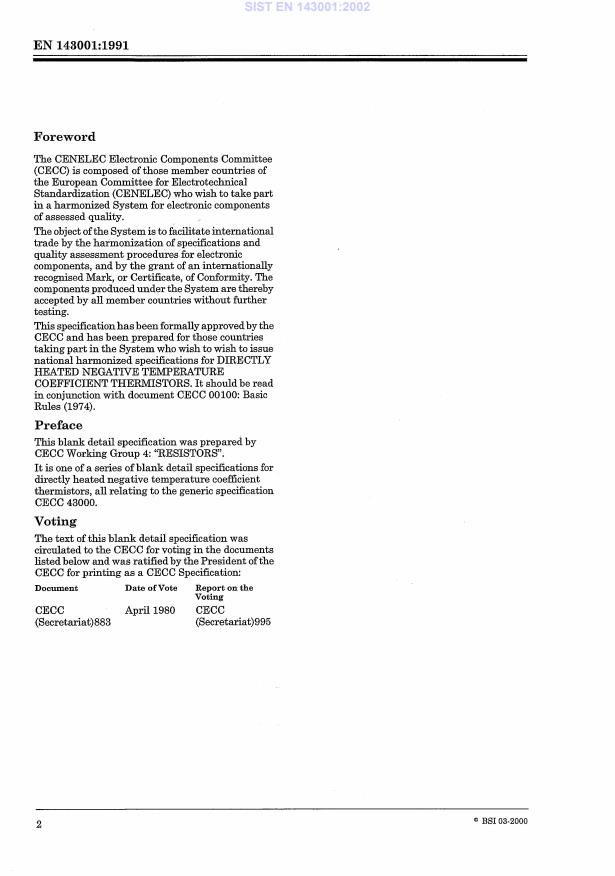
This blank detail specification is one of a series for directly heated negative temperature coefficient thermistors, all relating to the generic specification CECC 43 000.
- Status
- Withdrawn
- Publication Date
- 14-Oct-1991
- Technical Committee
- CLC/SR 40 - Capacitors and resistors for electronic equipment
- Drafting Committee
- IEC/TC 40 - IEC_TC_40
- Parallel Committee
- IEC/TC 40 - IEC_TC_40
- Current Stage
- 9960 - Withdrawal effective - Withdrawal
- Start Date
- 14-Sep-2022
- Completion Date
- 25-Aug-2026



Frequently Asked Questions
EN 143001:1991 is a standard published by CLC. Its full title is "Blank Detail Specification: Directly heated negative temperature coefficient thermistors (Beads in solid glass or vitreous enamel)". This standard covers: This blank detail specification is one of a series for directly heated negative temperature coefficient thermistors, all relating to the generic specification CECC 43 000.
This blank detail specification is one of a series for directly heated negative temperature coefficient thermistors, all relating to the generic specification CECC 43 000.
EN 143001:1991 is available in PDF format for immediate download after purchase. The document can be added to your cart and obtained through the secure checkout process. Digital delivery ensures instant access to the complete standard document.
Standards Content (Sample)
2003-01.Slovenski inštitut za standardizacijo. Razmnoževanje celote ali delov tega standarda ni dovoljeno.Blank detail specification: Directly heated negative temperature coefficient thermistors (Beads in solid glass or vitreous enamel)Blank Detail Specification: Directly heated negative temperature coefficient thermistors (Beads in solid glass or vitreous enamel)31.040.30TermistorjiThermistorsICS:Ta slovensk
...