


EN ISO 664:1995
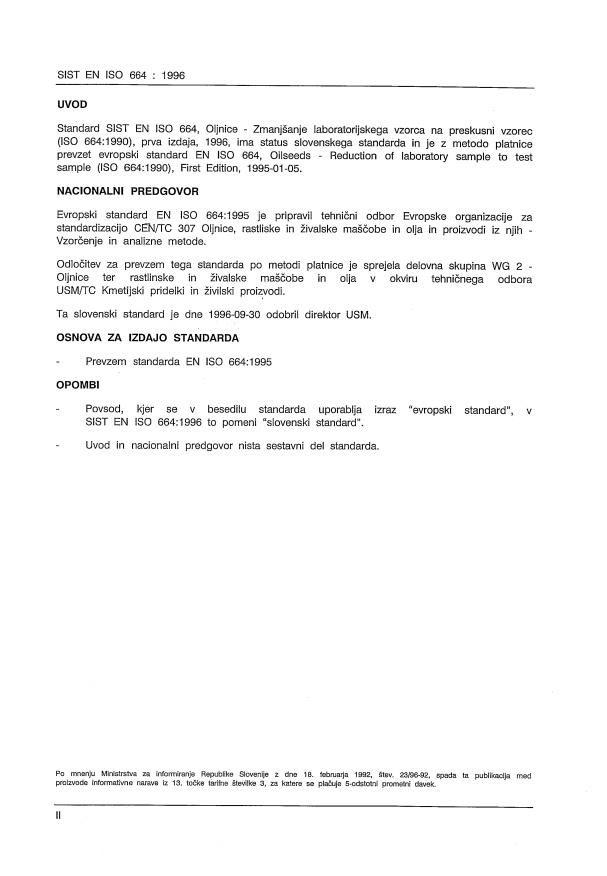
(Main)Oilseeds - Reduction of laboratory sample to test sample (ISO 664:1990)
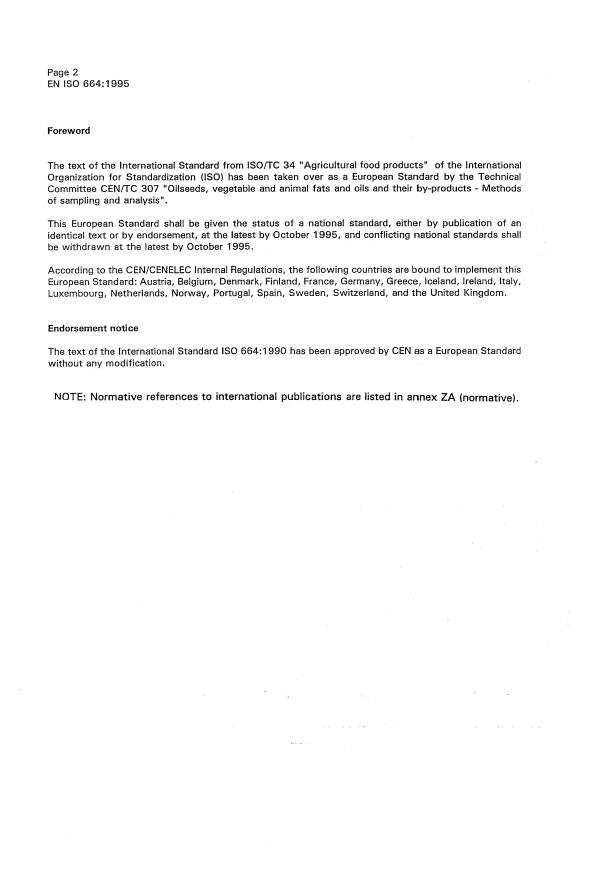
Oilseeds - Reduction of laboratory sample to test sample (ISO 664:1990)
Gives the requirements for four types of heat-shrinkable, flame- retarded, limited-fire-hazard sleeving with a thermal endurance rating of 105 °C as shown below:
Class A: thin wall, shrink ratio 2:1, internal diameter up to 102,0 mm
Class B: medium wall, shrink ratio 2:1, internal diameter up to 60,0 mm
Class C: thick wall, shrink ratio 2:1, internal diameter up to 51,0 mm
Class D: medium wall, shrink ratio 3:1, internal diameter up to 40,0 mm
Materials which conform to this specification meet established levels of performance. However, the selection of a material by a user for a specific application should be based on the actual requirements necessary for adequate performance in that application and not based on this specification alone.
Ölsamen - Verringerung der Laboratoriumsprobe auf die Untersuchungsprobe (ISO 664:1990)
Diese Internationale Norm legt das Verfahren fest, nach dem aus einer Laboratoriumsprobe von Ölsamen eine Untersuchungsprobe hergestellt wird. Anmerkung: Es gibt Handelsverträge für Ölsamen, die verlangen, daß die Probe so analysiert wird, wie sie entnommen wurde, d.h. einschließlich des möglicherweise vorhandenen Besatzes. Andere Verträge fordern dagegen eine vorherige quantitative Abtrennung des Besatzes und eine Analyse der gereinigten Samen. Außerdem kann eine Analyse des Besatzes gefordert werden.
Graines oléagineuses - Réduction de l'échantillon pour laboratoire en échantillon pour essai (ISO 664:1990)
Donne les prescriptions relatives à quatre types de gaines thermorétractables, retardées à la flamme, au risque de feu limité, ayant un indice de température de 105 °C, comme cela est indiqué ci-dessous.
Classe A: paroi mince, rapport de rétreint 2:1, diamètre intérieur allant jusqu'à 102,0 mm
Classe B: paroi moyenne, rapport de rétreint 2:1, diamètre intérieur allant jusqu'à 60,0 mm
Classe C paroi épaisse, rapport de rétreint 2:1, diamètre intérieur allant jusqu'à 51,0 mm
Classe D: paroi moyenne, rapport de rétreint 3:1, diamètre intérieur allant jusqu'à 40,0 mm
Les matériaux qui sont conformes à cette spécification satisfont à des niveaux de performances établis. Cependant, il convient que le choix d'un matériau par un utilisateur et pour une application particulière soit fondé sur les prescriptions réelles nécessaires pour obtenir les performances satisfaisantes pour cette application, et non sur cette seule spécification.
Oljnice - Zmanjšanje laboratorijskega vzorca na preskusni vzorec (ISO 664:1990)
General Information
- Status
- Withdrawn
- Publication Date
- 27-Apr-1995
- Withdrawal Date
- 31-May-2008
- Current Stage
- 9960 - Withdrawal effective - Withdrawal
- Start Date
- 01-Jun-2008
- Completion Date
- 01-Jun-2008
Relations
- Replaced By
EN ISO 664:2008 - Oilseeds - Reduction of laboratory sample to test sample (ISO 664:2008) - Effective Date
- 22-Dec-2008
- Effective Date
- 09-Feb-2026
- Effective Date
- 09-Feb-2026
- Effective Date
- 09-Feb-2026
- Effective Date
- 09-Feb-2026


EN ISO 664:1996
Get Certified
Connect with accredited certification bodies for this standard

BSI Group
BSI (British Standards Institution) is the business standards company that helps organizations make excellence a habit.

Bureau Veritas
Bureau Veritas is a world leader in laboratory testing, inspection and certification services.

DNV
DNV is an independent assurance and risk management provider.
Sponsored listings
Frequently Asked Questions
EN ISO 664:1995 is a standard + national annex and/or foreword published by the European Committee for Standardization (CEN). Its full title is "Oilseeds - Reduction of laboratory sample to test sample (ISO 664:1990)". This standard covers: Gives the requirements for four types of heat-shrinkable, flame- retarded, limited-fire-hazard sleeving with a thermal endurance rating of 105 °C as shown below: Class A: thin wall, shrink ratio 2:1, internal diameter up to 102,0 mm Class B: medium wall, shrink ratio 2:1, internal diameter up to 60,0 mm Class C: thick wall, shrink ratio 2:1, internal diameter up to 51,0 mm Class D: medium wall, shrink ratio 3:1, internal diameter up to 40,0 mm Materials which conform to this specification meet established levels of performance. However, the selection of a material by a user for a specific application should be based on the actual requirements necessary for adequate performance in that application and not based on this specification alone.
Gives the requirements for four types of heat-shrinkable, flame- retarded, limited-fire-hazard sleeving with a thermal endurance rating of 105 °C as shown below: Class A: thin wall, shrink ratio 2:1, internal diameter up to 102,0 mm Class B: medium wall, shrink ratio 2:1, internal diameter up to 60,0 mm Class C: thick wall, shrink ratio 2:1, internal diameter up to 51,0 mm Class D: medium wall, shrink ratio 3:1, internal diameter up to 40,0 mm Materials which conform to this specification meet established levels of performance. However, the selection of a material by a user for a specific application should be based on the actual requirements necessary for adequate performance in that application and not based on this specification alone.
EN ISO 664:1995 is classified under the following ICS (International Classification for Standards) categories: 67.200.20 - Oilseeds. The ICS classification helps identify the subject area and facilitates finding related standards.
EN ISO 664:1995 has the following relationships with other standards: It is inter standard links to EN ISO 664:2008, EN 62920:2017, EN IEC 61400-21-2:2023, EN IEC 61400-21-1:2019, EN 60519-1:2015. Understanding these relationships helps ensure you are using the most current and applicable version of the standard.
EN ISO 664:1995 is available in PDF format for immediate download after purchase. The document can be added to your cart and obtained through the secure checkout process. Digital delivery ensures instant access to the complete standard document.
Questions, Comments and Discussion
Ask us and Technical Secretary will try to provide an answer. You can facilitate discussion about the standard in here.
Loading comments...