

EN 2122:1996
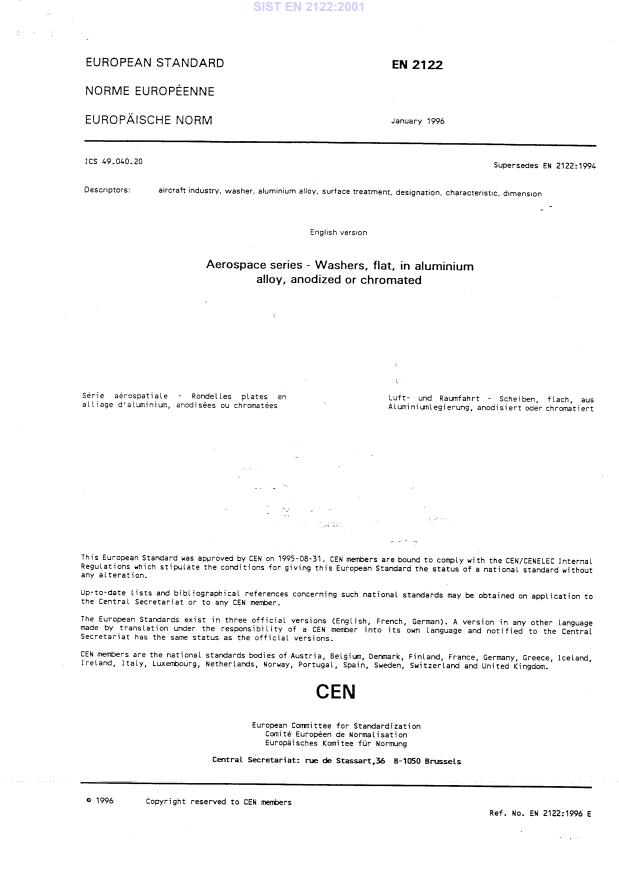
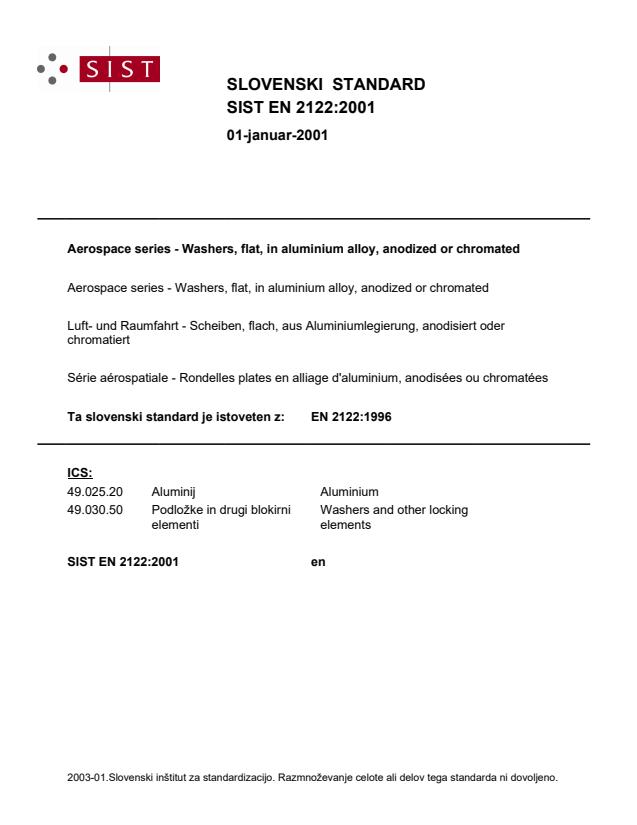
(Main)Aerospace series - Washers, flat, in aluminium alloy, anodized or chromated
- Abstract
This standard specifies the characteristics of flat washers, in aluminium alloy, anodized or chromated, for maximum operating temperature 120 °C. They are intended for use primarily underneath nuts, for use underneath bolt heads t the compatibility shall be checked.
- Status
- Published
- Publication Date
- 23-Jan-1996
- Withdrawal Date
- 30-Jul-1996
- Technical Committee
- ASD-STAN - Aerospace
- Drafting Committee
- ASD-STAN/D 3 - Mechanical
- Current Stage
- 9093 - Decision to confirm - Review Enquiry
- Start Date
- 31-May-2017
- Completion Date
- 30-Sep-2026

Overview
EN 2122:1996 (CEN) is an aerospace-series standard that defines the characteristics of flat washers in aluminium alloy with anodized or chromated surface treatment. The standard covers washers intended primarily for use underneath nuts, with a specified maximum operating temperature of 120 °C. Use under bolt heads is permitted only after a compatibility check. This standard is relevant for manufacturers, designers and procurement of aerospace washers, aluminium alloy washers, and associated fastener systems.
Key topics and requirements
- Scope and purpose
- Specification of characteristics for flat aluminium-alloy washers used in aerospace applications.
- Limit on maximum operating temperature: 120 °C.
- Material and surface treatment
- Washers are made from aluminium alloy and must be anodized or chromated to provide corrosion protection and surface finish consistent with aerospace use.
- Intended use
- Primarily intended to be placed underneath nuts; special consideration required when used beneath bolt heads (compatibility must be verified).
- Performance considerations
- Surface treatment and aluminium alloy selection are chosen to balance corrosion resistance, weight savings, and electrical/thermal performance typical for aerospace components.
- Quality and conformity
- Conformance to the standard is required for aerospace applications where EN 2122:1996 is mandated by specification or procurement documents.
Applications
- Aerospace industry fastenings where lightweight, corrosion-protected washers are required.
- Assemblies where washers are fitted under nuts in aircraft structures, avionics housings, interior fixtures, and secondary structures.
- Procurement and manufacturing of anodized aluminium washers for use in environments up to 120 °C.
- Use by design engineers, procurement teams, quality inspectors, maintenance engineers, and fastener suppliers specifying or verifying compliant components.
Who should use this standard
- Aircraft design and structural engineers specifying fasteners and washers.
- Fastener manufacturers and suppliers producing aluminium alloy washers with anodized or chromated finishes.
- Procurement and quality assurance teams ensuring material conformity in aerospace supply chains.
- Maintenance and repair organizations validating replacement parts against standard requirements.
Related standards (consult as applicable)
- Other CEN/ISO standards for fasteners, washer dimensions, and aerospace material specifications.
- Standards addressing aluminium alloy grades, anodizing processes, chromate conversion coatings, and temperature-classified components.
Keywords: EN 2122:1996, aerospace washers, flat washers, aluminium alloy washers, anodized washers, chromated washers, maximum operating temperature 120 °C, CEN standard, fasteners.
Get Certified
Connect with accredited certification bodies for this standard

BUREAU VERITAS Certification Germany
Bureau Veritas certification in Germany.

Element Materials Technology
Materials testing and product certification.

AQMS Ltd.
AQMS provides ISO certification to SMEs across the UK.
Sponsored listings
Frequently Asked Questions
EN 2122:1996 is a standard published by the European Committee for Standardization (CEN). Its full title is "Aerospace series - Washers, flat, in aluminium alloy, anodized or chromated". This standard covers: This standard specifies the characteristics of flat washers, in aluminium alloy, anodized or chromated, for maximum operating temperature 120 °C. They are intended for use primarily underneath nuts, for use underneath bolt heads t the compatibility shall be checked.
This standard specifies the characteristics of flat washers, in aluminium alloy, anodized or chromated, for maximum operating temperature 120 °C. They are intended for use primarily underneath nuts, for use underneath bolt heads t the compatibility shall be checked.
EN 2122:1996 is classified under the following ICS (International Classification for Standards) categories: 49.030.99 - Other fasteners. The ICS classification helps identify the subject area and facilitates finding related standards.
EN 2122:1996 is available in PDF format for immediate download after purchase. The document can be added to your cart and obtained through the secure checkout process. Digital delivery ensures instant access to the complete standard document.
Standards Content (Sample)
2003-01.Slovenski inštitut za standardizacijo. Razmnoževanje celote ali delov tega standarda ni dovoljeno.Aerospace series - Washers, flat, in aluminium alloy, anodized or chromatedLuft- und Raumfahrt - Scheiben, flach, aus Aluminiumlegierung, anodisiert oder chromatiertSérie aérospatiale - Rondelles plates en alliage d'aluminium, anodisées ou chromatéesAerospace series - Washers, flat, in aluminium alloy, a
...