

ASTM F3597-23
(Specification)Standard Specification for MRS-Rated Metric- and Inch-sized Crosslinked Polyethylene (PEX) Pressure Pipe for Oil and Gas Producing Applications
General Information
- Abstract
SCOPE
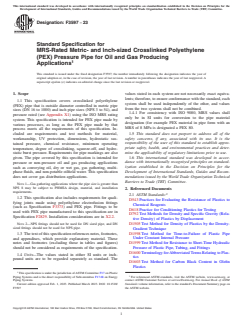
1.1 This specification covers crosslinked polyethylene (PEX) pipe that is outside diameter controlled in metric pipe sizes (DN 16 to 1000) and inch pipe sizes (NPS 3 to 54), and pressure rated (see Appendix X1) using the ISO MRS rating system. This specification is intended for PEX pipe made by various processes, as long as the PEX pipe made by that process meets all the requirements of this specification. Included are requirements and test methods for material, workmanship, UV protection, dimensions, hydrostatic sustained pressure, chemical resistance, minimum operating temperature, degree of crosslinking, squeeze-off, and hydrostatic burst pressure. Requirements for pipe markings are also given. The pipe covered by this specification is intended for pressure or non-pressure oil and gas producing applications such as conveying oil, dry or wet gas, gas gathering, multiphase fluids, and non-potable oilfield water. This specification does not cover gas distribution applications.
Note 1: Gas gathering applications where the pipe size is greater than NPS 8 may be subject to PHMSA design, material, and installation requirements.
1.2 This specification also includes requirements for qualifying joints made using polyethylene electrofusion fittings (such as Specification F3373) and PEX pipe. Fittings to be used with PEX pipe manufactured to this specification are in Specification F2829. Installation considerations are in X2.2.
Note 2: NPS fittings should not be used for DN sized pipe, and DN sized fittings should not be used for NPS pipe.
1.3 The text of this specification references notes, footnotes, and appendixes, which provide explanatory material. These notes and footnotes (excluding those in tables and figures) should not be considered as requirements of the specification.
1.4 Units—The values stated in either SI units or inch-pound units are to be regarded separately as standard. The values stated in each system are not necessarily exact equivalents; therefore, to ensure conformance with the standard, each system shall be used independently of the other, and values from the two systems shall not be combined.
1.4.1 For consistency with ISO 9080, MRS values shall only be in SI units for conversion to the pipe material designation (for example PEX material in pipe form with an MRS of 8 MPa is designated a PEX 80.
1.5 This standard does not purport to address all of the safety concerns, if any, associated with its use. It is the responsibility of the user of this standard to establish appropriate safety, health, and environmental practices and determine the applicability of regulatory limitations prior to use.
1.6 This international standard was developed in accordance with internationally recognized principles on standardization established in the Decision on Principles for the Development of International Standards, Guides and Recommendations issued by the World Trade Organization Technical Barriers to Trade (TBT) Committee.
- Status
- Published
- Publication Date
- 31-Jan-2023
- Technical Committee
- F17 - Plastic Piping Systems
- Drafting Committee
- F17.68 - Energy Piping Systems
Overview
ASTM F3597-23, titled Standard Specification for MRS-Rated Metric- and Inch-sized Crosslinked Polyethylene (PEX) Pressure Pipe for Oil and Gas Producing Applications, establishes the requirements for crosslinked polyethylene (PEX) pipes used in oil and gas production. Developed by ASTM International, this standard covers both metric pipe sizes (DN 16 to DN 1000) and inch pipe sizes (NPS 3 to NPS 54). It ensures that PEX pipes conform to rigorous material, performance, and safety criteria when used in a variety of pressure and non-pressure environments associated with oil and gas production.
Key Topics
- Material Requirements: Specifies Minimum Required Strength (MRS), Categorized Required Strength (CRS), density, and UV protection, with clear differentiation for black versus colored PEX.
- Dimensional Standards: Details outside diameters, tolerances, wall thicknesses, and out-of-roundness for both metric (DN) and inch (NPS) pipes.
- Pressure Ratings: Applies the ISO MRS rating system for pressure assessment, providing equations to determine maximum operating pressure (MOP).
- Performance Testing: Outlines methods for testing hydrostatic sustained pressure, hydrostatic burst, chemical resistance, degree of crosslinking, and resistance to slow crack growth.
- Joint Qualification: Defines requirements for qualifying joints with polyethylene electrofusion fittings, referencing ASTM F3373 and F2829.
- Pipe Markings: Prescribes marking for traceability, including manufacturing details, pipe size, material designation, pressure ratings, UV exposure limits, and installation indicators.
- Compliance and Certification: Establishes procedures for manufacturer’s quality assurance, documentation, and certification to assure compliance with the standard.
Applications
Crosslinked polyethylene (PEX) pipes manufactured in accordance with ASTM F3597-23 are intended for use in a wide range of oil and gas producing applications, such as:
- Conveying Oil and Gas: Appropriate for transporting crude oil, processed oil, dry gas, and wet gas in various phases of extraction and processing.
- Gas Gathering Systems: Utilized for collecting gas from multiple wells or fields, subject to further regulatory controls for large diameters.
- Multiphase Fluid Transport: Suitable for pipelines carrying a combination of oil, gas, and water.
- Oilfield Water Handling: Applicable for non-potable oilfield water, including produced, injection, and waste water within field operations.
- Pressure and Non-pressure Systems: Designed to withstand both pressurized and gravity-flow configurations commonly found in oilfield infrastructure.
Note: This standard does not cover distribution-grade gas piping for end-user delivery networks.
Related Standards
- ISO 9080: Long-term hydrostatic strength testing, integral to MRS and CRS classification.
- ASTM F3373: Specifies requirements for polyethylene electrofusion fittings compatible with PEX pipes.
- ASTM F2829: Covers metric and inch-sized fittings for PEX pipes.
- ASTM D1598 & D1599: Test methods for hydrostatic pressure and burst strength in plastic pipes.
- ISO 12162: Classification and designation for thermoplastics materials in pressure applications.
- PPI TR-4: Listing of hydrostatic design basis and strength ratings for thermoplastic piping materials.
Practical Value
Adopting ASTM F3597-23 ensures a high level of safety, performance, and longevity for PEX piping systems in demanding oil and gas production environments. The standard:
- Facilitates compliance with international pipeline safety regulations.
- Promotes consistent material quality and predictable product performance.
- Supports efficient engineering design with standardized pressure and dimensional data.
- Enables traceable, quality-assured project acceptance and regulatory approval.
By following this specification, oil and gas operators, engineers, and contractors can confidently select PEX pipes engineered for robust performance and regulatory compliance in critical field applications.
Keywords: ASTM F3597-23, crosslinked polyethylene, PEX pipe, oil and gas, MRS rating, pressure pipe, CRS, hydrostatic testing, ISO 9080, electrofusion fittings, oilfield water, gas gathering.
Relations
- Effective Date
- 01-Feb-2024
- Effective Date
- 01-Oct-2023
- Effective Date
- 01-Apr-2020
- Effective Date
- 01-Feb-2020
- Effective Date
- 01-Feb-2020
- Effective Date
- 01-Aug-2019
- Effective Date
- 01-Jan-2019
- Effective Date
- 01-Jan-2019
- Effective Date
- 01-Sep-2018
- Effective Date
- 01-Aug-2018
- Refers
ASTM D1600-18 - Standard Terminology for Abbreviated Terms Relating to Plastics (Withdrawn 2024) - Effective Date
- 01-Jan-2018
- Effective Date
- 01-Aug-2017
- Effective Date
- 01-Feb-2017
- Effective Date
- 15-Nov-2016
- Effective Date
- 01-Sep-2016
Get Certified
Connect with accredited certification bodies for this standard

Institut za varilstvo d.o.o. (Welding Institute)
Slovenia's leading welding institute since 1952. ISO 3834, EN 1090, pressure equipment certification, NDT personnel, welder qualification. Only IIW Au
Sponsored listings
Frequently Asked Questions
ASTM F3597-23 is a technical specification published by ASTM International. Its full title is "Standard Specification for MRS-Rated Metric- and Inch-sized Crosslinked Polyethylene (PEX) Pressure Pipe for Oil and Gas Producing Applications". This standard covers: SCOPE 1.1 This specification covers crosslinked polyethylene (PEX) pipe that is outside diameter controlled in metric pipe sizes (DN 16 to 1000) and inch pipe sizes (NPS 3 to 54), and pressure rated (see Appendix X1) using the ISO MRS rating system. This specification is intended for PEX pipe made by various processes, as long as the PEX pipe made by that process meets all the requirements of this specification. Included are requirements and test methods for material, workmanship, UV protection, dimensions, hydrostatic sustained pressure, chemical resistance, minimum operating temperature, degree of crosslinking, squeeze-off, and hydrostatic burst pressure. Requirements for pipe markings are also given. The pipe covered by this specification is intended for pressure or non-pressure oil and gas producing applications such as conveying oil, dry or wet gas, gas gathering, multiphase fluids, and non-potable oilfield water. This specification does not cover gas distribution applications. Note 1: Gas gathering applications where the pipe size is greater than NPS 8 may be subject to PHMSA design, material, and installation requirements. 1.2 This specification also includes requirements for qualifying joints made using polyethylene electrofusion fittings (such as Specification F3373) and PEX pipe. Fittings to be used with PEX pipe manufactured to this specification are in Specification F2829. Installation considerations are in X2.2. Note 2: NPS fittings should not be used for DN sized pipe, and DN sized fittings should not be used for NPS pipe. 1.3 The text of this specification references notes, footnotes, and appendixes, which provide explanatory material. These notes and footnotes (excluding those in tables and figures) should not be considered as requirements of the specification. 1.4 Units—The values stated in either SI units or inch-pound units are to be regarded separately as standard. The values stated in each system are not necessarily exact equivalents; therefore, to ensure conformance with the standard, each system shall be used independently of the other, and values from the two systems shall not be combined. 1.4.1 For consistency with ISO 9080, MRS values shall only be in SI units for conversion to the pipe material designation (for example PEX material in pipe form with an MRS of 8 MPa is designated a PEX 80. 1.5 This standard does not purport to address all of the safety concerns, if any, associated with its use. It is the responsibility of the user of this standard to establish appropriate safety, health, and environmental practices and determine the applicability of regulatory limitations prior to use. 1.6 This international standard was developed in accordance with internationally recognized principles on standardization established in the Decision on Principles for the Development of International Standards, Guides and Recommendations issued by the World Trade Organization Technical Barriers to Trade (TBT) Committee.
SCOPE 1.1 This specification covers crosslinked polyethylene (PEX) pipe that is outside diameter controlled in metric pipe sizes (DN 16 to 1000) and inch pipe sizes (NPS 3 to 54), and pressure rated (see Appendix X1) using the ISO MRS rating system. This specification is intended for PEX pipe made by various processes, as long as the PEX pipe made by that process meets all the requirements of this specification. Included are requirements and test methods for material, workmanship, UV protection, dimensions, hydrostatic sustained pressure, chemical resistance, minimum operating temperature, degree of crosslinking, squeeze-off, and hydrostatic burst pressure. Requirements for pipe markings are also given. The pipe covered by this specification is intended for pressure or non-pressure oil and gas producing applications such as conveying oil, dry or wet gas, gas gathering, multiphase fluids, and non-potable oilfield water. This specification does not cover gas distribution applications. Note 1: Gas gathering applications where the pipe size is greater than NPS 8 may be subject to PHMSA design, material, and installation requirements. 1.2 This specification also includes requirements for qualifying joints made using polyethylene electrofusion fittings (such as Specification F3373) and PEX pipe. Fittings to be used with PEX pipe manufactured to this specification are in Specification F2829. Installation considerations are in X2.2. Note 2: NPS fittings should not be used for DN sized pipe, and DN sized fittings should not be used for NPS pipe. 1.3 The text of this specification references notes, footnotes, and appendixes, which provide explanatory material. These notes and footnotes (excluding those in tables and figures) should not be considered as requirements of the specification. 1.4 Units—The values stated in either SI units or inch-pound units are to be regarded separately as standard. The values stated in each system are not necessarily exact equivalents; therefore, to ensure conformance with the standard, each system shall be used independently of the other, and values from the two systems shall not be combined. 1.4.1 For consistency with ISO 9080, MRS values shall only be in SI units for conversion to the pipe material designation (for example PEX material in pipe form with an MRS of 8 MPa is designated a PEX 80. 1.5 This standard does not purport to address all of the safety concerns, if any, associated with its use. It is the responsibility of the user of this standard to establish appropriate safety, health, and environmental practices and determine the applicability of regulatory limitations prior to use. 1.6 This international standard was developed in accordance with internationally recognized principles on standardization established in the Decision on Principles for the Development of International Standards, Guides and Recommendations issued by the World Trade Organization Technical Barriers to Trade (TBT) Committee.
ASTM F3597-23 is classified under the following ICS (International Classification for Standards) categories: 23.040.20 - Plastics pipes. The ICS classification helps identify the subject area and facilitates finding related standards.
ASTM F3597-23 has the following relationships with other standards: It is inter standard links to ASTM D2765-16(2024), ASTM D2565-23, ASTM F412-20, ASTM D1603-20, ASTM D4218-20, ASTM D2290-19a, ASTM D2290-19, ASTM F412-19, ASTM D1599-18, ASTM F3203-18, ASTM D1600-18, ASTM F412-17a, ASTM F412-17, ASTM F412-16a, ASTM D2765-16. Understanding these relationships helps ensure you are using the most current and applicable version of the standard.
ASTM F3597-23 is available in PDF format for immediate download after purchase. The document can be added to your cart and obtained through the secure checkout process. Digital delivery ensures instant access to the complete standard document.
Standards Content (Sample)
This international standard was developed in accordance with internationally recognized principles on standardization established in the Decision on Principles for the
Development of International Standards, Guides and Recommendations issued by the World Trade Organization Technical Barriers to Trade (TBT) Committee.
Designation: F3597 − 23
Standard Specification for
MRS-Rated Metric- and Inch-sized Crosslinked Polyethylene
(PEX) Pressure Pipe for Oil and Gas Producing
Applications
This standard is issued under the fixed designation F3597; the number immediately following the designation indicates the year of
original adoption or, in the case of revision, the year of last revision. A number in parentheses indicates the year of last reapproval. A
superscript epsilon (´) indicates an editorial change since the last revision or reapproval.
1. Scope values stated in each system are not necessarily exact equiva-
lents; therefore, to ensure conformance with the standard, each
1.1 This specification covers crosslinked polyethylene
system shall be used independently of the other, and values
(PEX) pipe that is outside diameter controlled in metric pipe
from the two systems shall not be combined.
sizes (DN 16 to 1000) and inch pipe sizes (NPS 3 to 54), and
1.4.1 For consistency with ISO 9080, MRS values shall
pressure rated (see Appendix X1) using the ISO MRS rating
only be in SI units for conversion to the pipe material
system. This specification is intended for PEX pipe made by
designation (for example PEX material in pipe form with an
various processes, as long as the PEX pipe made by that
MRS of 8 MPa is designated a PEX 80.
process meets all the requirements of this specification. In-
1.5 This standard does not purport to address all of the
cluded are requirements and test methods for material,
safety concerns, if any, associated with its use. It is the
workmanship, UV protection, dimensions, hydrostatic sus-
responsibility of the user of this standard to establish appro-
tained pressure, chemical resistance, minimum operating
priate safety, health, and environmental practices and deter-
temperature, degree of crosslinking, squeeze-off, and hydro-
mine the applicability of regulatory limitations prior to use.
static burst pressure. Requirements for pipe markings are also
1.6 This international standard was developed in accor-
given. The pipe covered by this specification is intended for
dance with internationally recognized principles on standard-
pressure or non-pressure oil and gas producing applications
ization established in the Decision on Principles for the
such as conveying oil, dry or wet gas, gas gathering, multi-
Development of International Standards, Guides and Recom-
phase fluids, and non-potable oilfield water. This specification
mendations issued by the World Trade Organization Technical
does not cover gas distribution applications.
Barriers to Trade (TBT) Committee.
NOTE 1—Gas gathering applications where the pipe size is greater than
NPS 8 may be subject to PHMSA design, material, and installation
2. Referenced Documents
requirements.
2.1 ASTM Standards:
1.2 This specification also includes requirements for quali-
D543 Practices for Evaluating the Resistance of Plastics to
fying joints made using polyethylene electrofusion fittings
Chemical Reagents
(such as Specification F3373) and PEX pipe. Fittings to be
D618 Practice for Conditioning Plastics for Testing
used with PEX pipe manufactured to this specification are in
D792 Test Methods for Density and Specific Gravity (Rela-
Specification F2829. Installation considerations are in X2.2.
tive Density) of Plastics by Displacement
NOTE 2—NPS fittings should not be used for DN sized pipe, and DN
D1505 Test Method for Density of Plastics by the Density-
sized fittings should not be used for NPS pipe.
Gradient Technique
1.3 The text of this specification references notes, footnotes, D1598 Test Method for Time-to-Failure of Plastic Pipe
Under Constant Internal Pressure
and appendixes, which provide explanatory material. These
D1599 Test Method for Resistance to Short-Time Hydraulic
notes and footnotes (excluding those in tables and figures)
Pressure of Plastic Pipe, Tubing, and Fittings
should not be considered as requirements of the specification.
D1600 Terminology for Abbreviated Terms Relating to Plas-
1.4 Units—The values stated in either SI units or inch-
tics
pound units are to be regarded separately as standard. The
D1603 Test Method for Carbon Black Content in Olefin
Plastics
This specification is under the jurisdiction of ASTM Committee F17 on Plastic
Piping Systems and is the direct responsibility of Subcommittee F17.68 on Energy For referenced ASTM standards, visit the ASTM website, www.astm.org, or
Piping Systems. contact ASTM Customer Service at service@astm.org. For Annual Book of ASTM
Current edition approved Feb. 1, 2023. Published March 2023. DOI: 10.1520/ Standards volume information, refer to the standard’s Document Summary page on
F3597 the ASTM website.
Copyright © ASTM International, 100 Barr Harbor Drive, PO Box C700, West Conshohocken, PA 19428-2959. United States
F3597 − 23
D2122 Test Method for Determining Dimensions of Ther- 2.5 PPI Publications:
moplastic Pipe and Fittings PPI TR-3 HDB/HDS/PDB/SDB/MRS/CRS Policies - Poli-
D2290 Test Method for Apparent Hoop Tensile Strength of cies and Procedures for Developing Hydrostatic Design
Plastic or Reinforced Plastic Pipe Basis (HDB), Hydrostatic Design Stresses (HDS), Pres-
D2565 Practice for Xenon-Arc Exposure of Plastics In- sure Design Basis (PDB), Strength Design Basis (SDB),
tended for Outdoor Applications Minimum Required Strength (MRS), and Categorized
D2765 Test Methods for Determination of Gel Content and Required Strength (CRS) Ratings for Thermoplastic Pip-
Swell Ratio of Crosslinked Ethylene Plastics ing Materials or Pipe
D4218 Test Method for Determination of Carbon Black PPI TR-4 HDB/HDS/SDB/PDB/MRS/CRS Listed
Content in Polyethylene Compounds by the Muffle- Materials, PPI Listing of Hydrostatic Design Basis
Furnace Technique (HDB), Hydrostatic Design Stress (HDS), Strength De-
D5596 Test Method for Microscopic Evaluation of the sign Basis (SDB), Pressure Design Basis (PDB), Mini-
Dispersion of Carbon Black in Polyolefin Geosynthetics mum Required Strength (MRS), Categorized Required
F412 Terminology Relating to Plastic Piping Systems Strength (CRS) Ratings for Thermoplastic Piping Materi-
F2657 Test Method for Outdoor Weathering Exposure of als or Pipe
Crosslinked Polyethylene (PEX) Tubing
3. Terminology
F2829 Specification for Metric- and Inch-Sized Fittings for
Crosslinked Polyethylene (PEX) Pipe
3.1 Definitions—Unless otherwise specified, definitions, ab-
F3203 Test Method for Determination of Gel Content of
breviations and initials are in accordance with Terminology
Crosslinked Polyethylene (PEX) Pipes and Tubing
F412 and Terminology D1600.
F3373 Specification for Polyethylene (PE) Electrofusion
3.2 Definitions of Terms Specific to This Standard:
Fittings for Outside Diameter Controlled Crosslinked
3.2.1 minimum required strength (MRS), n—the categorized
Polyethylene (PEX) Pipe
lower prediction limit (LPL) of the long-term hydrostatic
2.2 Federal Standard:
strength in the circumferential, or hoop direction as established
FED-STD-123 Marking for Shipment (Civil Agencies)
by ISO 9080 and ISO 12162.
2.3 Military Standard:
3.2.1.1 Discussion—MRS is determined only at 20 °C and
MIL-STD-129 Marking for Shipment and Storage
50 years. For a design temperature other than 20 °C or a design
2.4 ISO Standards:
time other than 50 years, CRS is used in place of MRS, as
ISO 1167 Thermoplastics pipes, fittings and assemblies for
discussed in 3.2.2.
the conveyance of fluids — Determination of the resis-
3.2.2 categorized required strength (CRS) or CRS( ),
θ,t
tance to internal pressure — Part 1: General method
n—the categorized lower prediction limit (LPL) of the long-
ISO 3126 Plastics piping systems – Plastics components –
term hydrostatic strength at a specified temperature and time as
Determination of dimensions
determined in accordance with ISO 9080 and ISO 12162.
ISO 9080 Plastics piping and ducting systems—
Determination of the long-term hydrostatic strength of
3.2.2.1 Discussion—CRS is used for a design time other
thermoplastics materials in pipe form by extrapolation
than 50 years or a design temperature other than 20 °C. An
ISO 12162 Thermoplastics materials for pipes and fittings
example of the use of CRS is provided in Appendix X2. The
for pressure applications— Classification and
CRS for PEX pipe is only determined after the MRS is
designation—Overall service (design) coefficient
established. CRS times range from 5 years to 100 years, and
ISO 13477 Thermoplastics pipes for the conveyance of
CRS temperatures range from 0 °C to 93 °C.
fluids — Determination of resistance to rapid crack
3.2.3 nominal diameter, DN, adj—a designation for SI unit
propagation (RCP) — Small-scale steady-state test (S4
outside diameter controlled pipe sizes.
test)
3.2.4 nominal pipe size, NPS, adj—a designation for inch-
ISO 13760 Plastics pipes for the conveyance of fluids under
pound unit outside diameter controlled pipe sizes.
pressure — Miner’s rule ~ Calculation method for cumu-
3.2.5 overall design coeffıcient (C), n—a factor with a value
lative damage
of at least 1.25, which takes into consideration material
ISO 14531-1 Plastics pipes and fittings — Crosslinked
properties (C ) and application service conditions (C ), as well
polyethylene (PEX) pipe systems for the conveyance of M A
as properties of the components of a piping system other than
gaseous fuels — Metric series — Specifications — Part 1:
Pipes
ISO 18553 Method for the assessment of the degree of
Available from Plastics Pipe Institute (PPI), 105 Decker Court, Suite 825,
pigment or carbon black dispersion in polyolefin pipes,
Irving, TX 75062, http://www.plasticpipe.org.
fittings and compounds.
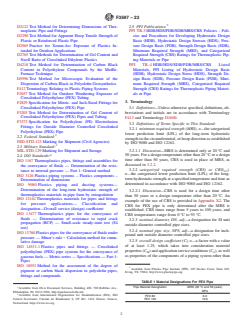
TABLE 1 Material Designations For PEX Pipe
Pipe Material Designation MRS (20 °C and 50 years)
Available from DLA Document Services, Building 4/D, 700 Robbins Ave.,
MPa
Philadelphia, PA 19111-5094, http://quicksearch.dla.mil.
Available from International Organization for Standardization (ISO), ISO
PEX 80 8.0
Central Secretariat, Chemin de Blandonnet 8, CP 401, 1214 Vernier, Geneva, PEX 100 10.0
Switzerland, https://www.iso.org.
F3597 − 23
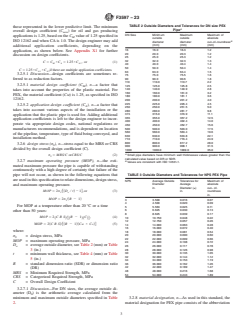
TABLE 2 Outside Diameters and Tolerances for DN size PEX
those represented in the lower predictive limit. The minimum
A
Pipe
overall design coefficient (C ) for oil and gas producing
min
DN Size Minimum Maximum Maximum of
applications is 1.25, based on the C value of 1.25 specified in
M
outside outside absolute
B
ISO 12162 and when CA is 1.0. The design engineer may add
diameter diameter out–of–roundness
(mm)
(mm) (mm)
additional application coefficients, depending on the
16 16.0 16.3 1.2
application, as shown below. See Appendix X1 for further
20 20.0 20.3 1.2
discussion on design coefficients.
25 25.0 25.3 1.2
32 32.0 32.3 1.3
C 5 C × C 5 1.25 × C , or (1)
M A A1
40 40.0 40.4 1.4
50 50.0 50.4 1.4
C 5 1.25 × C × C if there are multiple application coefficients
A1 A2
63 63.0 63.4 1.5
3.2.5.1 Discussion—design coefficients are sometimes re-
75 75.0 75.5 1.6
90 90.0 90.6 1.8
ferred to as reduction factors.
110 110.0 110.7 2.2
3.2.5.1 material design coeffıcient (C ), n—a factor that
125 125.0 125.8 2.5
M
140 140.0 140.9 2.8
takes into account the properties of the plastic material. For
160 160.0 161.0 3.2
PEX, the material coefficient (C ) is 1.25, as specified in ISO
M
180 180.0 181.1 3.6
12162.
200 200.0 201.2 4.0
225 225.0 226.4 4.5
3.2.5.2 application design coeffıcient (C ), n—a factor that
A
250 250.0 251.5 5.0
takes into account various aspects of the installation or the
280 280.0 281.7 9.8
315 315.0 316.9 11.1
application that the plastic pipe is used for. Adding additional
355 355.0 357.2 12.5
application coefficients is left to the design engineer to incor-
400 400.0 402.4 14.0
porate via appropriate design codes, national regulations or
450 450.0 452.7 15.6
500 500.0 503.0 17.5
manufacturers recommendations, and is dependent on location
560 560.0 563.4 19.6
of the pipeline, temperature, type of fluid being conveyed, and
630 630.0 633.8 22.1
installation method.
710 710.0 716.4 24.9
800 800.0 817.2 28.0
3.2.6 design stress (σ ), n—stress equal to the MRS or CRS
S
900 900.0 908.1 31.5
divided by the overall design coefficient (C).
1000 1000.0 1009.0 35.0
A
σ 5 MRS⁄C orCRS⁄C (2) Small pipe diameters have minimum wall thicknesses values greater than the
S
calculated value based on DR or SDR.
3.2.7 maximum operating pressure (MOP), n—the esti- B
Values are consistent with ISO 14531-1.
mated maximum pressure the pipe is capable of withstanding
continuously with a high degree of certainty that failure of the
pipe will not occur, as shown in the following equations that
TABLE 3 Outside Diameters and Tolerances for NPS PEX Pipe
are used in this specification to relate dimensions, design stress,
NPS Average Outside Tolerances for Maximum of
Diameter Average absolute
and maximum operating pressure.
in. Diameter (±) out– of-
MOP 5 2σ ⁄ D ⁄ t 2 1 ,or (3)
@~ ! # in. roundness
s o
in.
MOP 5 2σ ⁄ R 2 1
~ ! 3 3.500 0.016 0.07
s
4 4.500 0.020 0.09
For MOP at a temperature other than 20 °C or a time
5 5.563 0.025 0.11
6 6.625 0.030 0.13
other than 50 years:
8 8.625 0.039 0.17
MOP 5 2~C R S!⁄@~R 2 1!~C!#, (4) 10 10.750 0.048 0.22
12 12.750 0.057 0.26
MOP 5 2 C R S ⁄ R 2 1 C × C (5)
~ ! @~ !~ !#
M A 14 14.000 0.063 0.28
16 16.000 0.072 0.40
where:
18 18.000 0.081 0.54
20 20.000 0.090 0.60
σ = design stress, MPa
S
22 22.000 0.099 0.66
MOP = maximum operating pressure, MPa
24 24.000 0.108 0.72
D = average outside diameter, see Table 2 (mm) or Table
o 26 26.000 0.117 0.78
28 28.000 0.126 0.98
3 (in.)
30 30.000 0.135 1.05
t = minimum wall thickness, see Table 4 (mm) or Table
32 32.000 0.144 1.12
5 (in.)
34 34.000 0.153 1.19
R = standard dimension ratio (SDR) or dimension ratio 36 36.000 0.162 1.26
42 42.000 0.189 1.47
(DR)
48 48.000 0.216 1.68
MRS = Minimum Required Strength, MPa
54 54.000 0.243 1.89
CRS = Categorized Required Strength, MPa
C = Overall Design Coefficient
3.2.7.1 Discussion—For DN sizes, the average outside di-
ameter (D ) is the arithmetic average calculated from the
minimum and maximum outside diameters specified in Table 3.2.8 material designation, n—As used in this standard, the
2. material designation for PEX pipe consists of the abbreviation
F3597 − 23
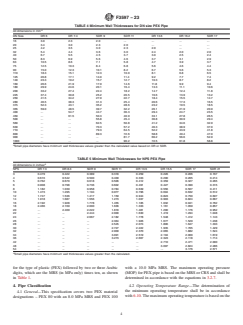
TABLE 4 Minimum Wall Thicknesses for DN size PEX Pipe
A
All dimensions in mm
DN Size DR 6 DR 7.4 SDR 9 SDR 11 DR 13.6 DR 16.2 SDR 17
16 3.0 2.3 2.0 . . . .
20 3.4 3.0 2.3 2.0 . . .
25 4.2 3.5 3.0 2.3 2.0 . .
32 5.4 4.4 3.6 3.0 2.4 2.0 2.0
40 6.7 5.5 4.5 3.7 3.0 2.5 2.4
50 8.3 6.9 5.6 4.6 3.7 3.1 2.9
63 10.5 8.6 7.1 5.8 4.7 3.9 3.7
75 12.5 10.3 8.4 6.8 5.6 4.6 4.4
90 15.0 12.3 10.1 8.2 6.7 5.6 5.3
110 18.3 15.1 12.3 10.0 8.1 6.8 6.5
125 20.8 17.1 14.0 11.4 9.2 7.7 7.4
140 23.3 19.2 15.7 12.7 10.3 8.7 8.2
160 26.6 21.9 17.9 14.6 11.8 9.9 9.4
180 29.9 24.6 20.1 16.4 13.3 11.1 10.6
200 33.2 27.4 22.4 18.2 14.7 12.4 11.8
225 37.4 30.8 25.2 20.5 16.6 13.9 13.2
250 41.5 34.2 27.9 22.7 18.4 15.5 14.7
280 46.5 38.3 31.3 25.4 20.6 17.3 16.5
315 52.3 43.1 35.2 28.6 23.2 19.5 18.5
355 59.0 48.5 39.7 32.2 26.1 21.9 20.9
400 . 54.7 44.7 36.3 29.4 24.7 23.5
450 . 61.5 50.3 40.9 33.1 27.8 26.5
500 . . 55.8 45.4 36.8 30.9 29.4
560 . . 62.5 50.8 41.2 34.6 32.9
630 . . 70.3 57.2 46.3 38.9 37.0
710 . . 79.3 64.5 52.2 43.9 41.8
800 . . 89.3 72.6 58.8 49.4 47.0
900 . . . 81.7 66.2 56.6 52.9
1000 . . . 90.2 72.5 61.8 58.8
A
Small pipe diameters have minimum wall thicknesses values greater than the calculated value based on DR or SDR.
TABLE 5 Minimum Wall Thicknesses for NPS PEX Pipe
A
All dimensions in inches
NPS DR 7.3 DR 8.3 SDR 9 SDR 11 DR 13.5 DR 15.5 SDR 17 SDR 21
3 0.479 0.422 0.389 0.318 0.259 0.226 0.206 0.167
4 0.616 0.542 0.500 0.409 0.333 0.290 0.265 0.214
5 0.762 0.670 0.618 0.506 0.412 0.359 0.327 0.265
6 0.908 0.798 0.736 0.602 0.491 0.427 0.390 0.315
8 1.182 1.039 0.958 0.784 0.639 0.556 0.507 0.411
10 1.473 1.295 1.194 0.977 0.796 0.694 0.632 0.512
12 1.747 1.536 1.417 1.159 0.944 0.823 0.750 0.607
14 1.918 1.687 1.556 1.273 1.037 0.903 0.824 0.667
16 2.192 1.928 1.778 1.455 1.185 1.032 0.941 0.762
18 2.466 2.169 2.000 1.636 1.333 1.161 1.059 0.857
20 . 2.409 2.222 1.818 1.481 1.290 1.176 0.952
22 . . 2.444 2.000 1.630 1.419 1.294 1.048
24 . . 2.667 2.182 1.778 1.548 1.412 1.143
26 . . . 2.364 1.926 1.677 1.529 1.238
28 . . . 2.545 2.074 1.806 1.647 1.333
30 . . . 2.727 2.222 1.935 1.765 1.429
32 . . . 2.909 2.370 2.065 1.882 1.524
34 . . . 3.091 2.519 2.194 2.000 1.619
36 . . . 3.273 2.667 2.323 2.118 1.714
42 . . . . . 2.710 2.471 2.000
48 . . . . . 3.097 2.824 2.286
54 . . . . . . 3.176 2.571
A
Small pipe diameters have minimum wall thicknesses values greater than the calculated.
for the type of plastic (PEX) followed by two or three Arabic with a 10.0 MPa MRS. The maximum operating pressure
digits, which are the MRS (in MPa only) times ten, as shown
(MOP) for PEX pipe is based on the MRS or CRS and shall be
in Table 1.
determined in accordance with the equations in 3.2.7.
4. Pipe Classification 4.2 Operating Temperature Range—The determination of
the minimum operating temperature shall be in accordance
4.1 General—This specification covers two PEX material
with 6.10. The maximum operating temperature is based on the
designations – PEX 80 with an 8.0 MPa MRS and PEX 100
F3597 − 23
maximum temperature at which a CRS is determined by the Test Method D5596. Black material with 2.0 % to 3.0 %
pipe manufacturer or is listed in PPI TR-4, but not greater than carbon black shall be considered stabilized and protected
93 °C, as stated in 5.2. Operating temperatures higher than against deterioration from unprotected UV exposure for at least
93 °C require special design considerations – consult with the 10 years.
manufacturer.
5.5 Density—When determined in accordance with 7.4, the
material prior to crosslinking shall have a minimum density of
5. Material Requirements
0.926 g/cc.
5.1 General:
5.6 Rework Material—PEX rework shall not be used as a
5.1.1 All test specimens shall be conditioned and sampled in
material in the manufacture of PEX pipe made in accordance to
accordance with 7.1, 7.2, and 7.3.
this specification.
5.1.2 Materials used to make PEX pipe shall meet all the
requirements specified in Section 5. Materials for PEX pipe are
6. Pipe Requirements
primarily defined by means of MRS and CRS, color, UV
6.1 Conditioning—All test specimens shall be conditioned
protection, and density.
and sampled in accordance with 7.1, 7.2, and 7.3.
5.2 Material MRS/CRS Requirements:
6.2 Dimensions and Tolerances:
5.2.1 The material, including and colorants or UV stabilizer,
used to make PEX pipe shall meet the PEX 80 or PEX 100 6.2.1 Outside Diameters—The outside diameters and toler-
ances shall be as shown in Table 2 for DN sizes or Table 3 for
material designation determined in accordance with ISO 9080
and ISO 12162 when tested in the form of pipe, as shown in NPS, when measured in accordance with 7.5.1.
6.2.2 Out-of Roundness—The out-of-roundness of pipe
Table 1, when conditioned in accordance with 7.1.
5.2.2 To establish the maximum operating temperature of made in accordance with this specification shall be less than or
the material, the manufacturer shall determine the CRS at that equal to the values specified in Table 2 or Table 3 when
temperature, as discussed in Appendix X2. The material used measured in accordance with 7.5.2 or Test Method D2122 or
to make PEX pipe shall have a 60 °C CRS at 50 years of at ISO 3126.
least 5.0 MPa. 6.2.3 Wall Thickness and Tolerances—The wall thickness
for pipe made in accordance with this specification shall be as
5.3 Color:
shown in Table 4 for DN sizes and in Table 5 for NPS, when
5.3.1 Materials using carbon black as both a colorant and
measured in accordance with 7.5.3. The tolerance for all wall
UV stabilizer to make black PEX pipe shall contain 2.0 % to
thicknesses is plus 12 %.
3.0% well dispersed carbon black (such as N110 or N550) as
a colorant/stabilizer. 6.3 Workmanship—The pipe shall be homogeneous
5.3.2 Materials using carbon black as only a colorant (less throughout and free of visible cracks, holes, foreign inclusions,
than 1.5% carbon black) shall meet the UV requirements of or other defects. The pipe shall be as uniform as commercially
practicable in color, opacity, density, and other physical prop-
5.4.
5.3.3 Materials using color pigments as a colorant shall erties.
meet the UV requirements of 5.4.
6.4 Degree of Crosslinking:
5.3.4 Materials used in PEX colored stripes shall be the
6.4.1 When tested in accordance with 7.6.1, the degree of
same type material as specified in 5.2 for the PEX pipe.
crosslinking for PEX pipe shall meet the following specified
requirements. The minimum percentage crosslinking value
NOTE 3—Choice of color for stripes or pipe is subject to agreement
between manufacturer and purchaser. shall be 65 % for PEX compounds crosslinked using silanes or
radiation, or 70 % for PEX compounds crosslinked using
5.4 UV Protection:
peroxides. The maximum degree of crosslinking shall be 89 %
5.4.1 If the material uses a colored pigment or if the carbon
for all PEX types.
black content in the material is less than 1.5 %, PEX pipe shall
6.4.2 In addition, for pipe with a wall thickness greater than
be weathered in accordance with one of these test methods:
0.5 in. or 12.7 mm, the degree of crosslinking shall be
Test Method F2657, Practice D2565, or ISO 14531-1 Annex C.
measured in accordance with 7.6.2. The degree of crosslinking
After PEX pipe has been weathered, it shall meet the thermal
at each of the tested points of all thick-wall pipe tested in
stability, 95 °C hydrostatic strength, and elongation at break
accordance with 7.6.2 shall meet the requirements specified in
requirements of ISO 14531-1, Table 8.
6.4.1.
NOTE 4—Generally, the acceleration factor for accelerated weathering
6.5 Minimum Hydrostatic Burst Pressure (Quick Burst)—
is between 3.75 to 4.4 times the number of test hours.
The pipe shall fail in a ductile manner when tested in
5.4.2 The UV requirement of 5.4.1 is not applicable if the
accordance with 7.7. The time of testing of each specimen shall
content of well-dispersed carbon black is 2.0 % to 3.0% as
be between 60 s and 70 s. For pipe sizes above 4 in. [110 mm]
measured by Test Method D1603 or Test Method D4218 (see
nominal diameter, the testing lab shall be allowed to replace the
ISO 14531-1 Table 8). To demonstrate good carbon black
quick burst test by the apparent ring tensile strength test in 6.6.
dispersion the PEX pipe shall meet the ISO 14531-1 dispersion
requirement of less than or equal to grade 3 when measured in 6.6 Apparent Ring Tensile Strength—- For pipe sizes of DN
accordance with ISO 18553, or in accordance with an equiva- 110 and larger or NPS 4 and larger testing in accordance with
lent ASTM test method for carbon black dispersion, such as 7.8 is permitted to replace testing in accordance with 7.7. The
F3597 − 23
minimum apparent tensile strength at yield when determined in and conditions deemed suitable for squeeze-off in service by
accordance with 7.8 shall be 17.4 MPa for PEX pipe with an the pipe manufacturer. The PEX pipe shall be conditioned to
MRS of 8 MPa or 20.0 MPa for PEX pipe with an MRS of 10 assure it is at the minimum operating temperature, then
MPa. squeezed-off at this temperature in accordance with
...