

ASTM D7852-23
(Practice)Standard Practice for Use of an Electrically Conductive Geotextile for Leak Location Surveys
General Information
- Abstract
SIGNIFICANCE AND USE
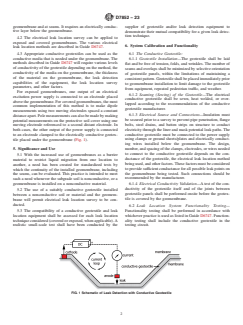
5.1 With the increased use of geomembranes as a barrier material to restrict liquid migration from one location to another, a need has been created for standardized tests by which the continuity of the installed geomembrane, including the seams, can be evaluated. This practice is intended to meet such a need whenever the subgrade soil is nonconductive, or a geomembrane is installed on a nonconductive material.
5.2 The use of a suitably conductive geotextile installed between a nonconductive soil or material and the geomembrane will permit electrical leak location survey to be conducted.
5.3 The compatibility of a conductive geotextile and leak location equipment shall be assessed for each leak location technique considered (covered or exposed, when applicable). A realistic small-scale test shall have been conducted by the supplier of geotextile and/or leak detection equipment to demonstrate their mutual compatibility for a given leak detection technique.
SCOPE
1.1 This standard practice describes standard procedures for using a conductive geotextile with electrical methods to locate leaks in exposed geomembranes and geomembranes covered with water or earth materials containing moisture.
1.2 This standard practice provides guidance for the use of appropriate conductive geotextile used in leak location surveys on geomembranes. This guide includes all types of conductive geotextiles with sufficient conductivity for the particular electrical leak location method. A conductive geotextile is applicable to all types of geoelectric surveys when there is otherwise not a conductive layer under the geomembrane.
1.3 This standard practice is intended to ensure that leak location surveys can always be performed with a reasonable level of certainty. This standard practice provides guidance for the use of appropriate conductive geotextiles used in leak location surveys on geomembranes.
1.4 Leak location surveys can be used on nonconductive geomembranes installed in basins, ponds, tanks, ore and waste pads, landfill cells, landfill caps, other containment facilities, and building applications such as in parking garages, decks, and green roofs. The procedures are applicable for geomembranes made of nonconductive materials such as polyethylene, polypropylene, polyvinyl chloride, chlorosulfonated polyethylene, bituminous material, and other electrically insulating materials. Leak location surveys involving conductive or partially conductive geomembranes are not within the scope of this document.
1.5 Warning—The electrical methods used for geomembrane leak location could use high voltages, resulting in the potential for electrical shock or electrocution. This hazard might be increased because operations might be conducted in or near water. In particular, a high voltage could exist between the water or earth material and earth ground, or any grounded conductor. These procedures are potentially VERY DANGEROUS, and can result in personal injury or death. Because of the high voltage that could be involved, and the shock or electrocution hazard, do not come in electrical contact with any leak unless the excitation power supply is turned off. The electrical methods used for geomembrane leak location should be attempted only by qualified and experienced personnel. Appropriate safety measures must be taken to protect the leak location operators as well as other people at the site.
1.6 This standard does not purport to address all of the safety concerns, if any, associated with its use. It is the responsibility of the user of this standard to establish appropriate safety, health, and environmental practices and determine the applicability of regulatory limitations prior to use.
1.7 This international standard was developed in accordance with internationally recognized principles on standardization established in the Decision on Principles for the Development of International Standards, Guides and...
- Status
- Published
- Publication Date
- 14-Jun-2023
- Technical Committee
- D35 - Geosynthetics
- Drafting Committee
- D35.10 - Geomembranes
Buy Documents


ASTM D7852-23 - Standard Practice for Use of an Electrically Conductive Geotextile for Leak Location Surveys

REDLINE ASTM D7852-23 - Standard Practice for Use of an Electrically Conductive Geotextile for Leak Location Surveys
Overview
ASTM D7852-23: Standard Practice for Use of an Electrically Conductive Geotextile for Leak Location Surveys provides essential guidance for the use of electrically conductive geotextiles in conjunction with electrical methods to locate leaks in geomembranes. With the growing application of geomembranes as barrier materials in environmental containment, infrastructure, and civil engineering projects, ensuring their integrity is critical. This standard is established under ASTM Committee D35 on Geosynthetics and addresses best practices for leak detection when nonconductive soils or materials are present beneath the geomembrane.
Key Topics
Purpose and Scope
- Describes procedures for using conductive geotextiles with electrical leak location methods for both exposed geomembranes and those covered with water or moist earth.
- Emphasizes that these procedures are intended for nonconductive geomembranes installed over nonconductive base materials.
- Outlines safety precautions due to the use of high voltages in electrical methods.
Conductive Geotextile Selection and Installation
- Details criteria for selecting geotextiles with sufficient electrical conductivity.
- Specifies installation requirements to ensure direct and seamless contact with the subgrade, minimizing wrinkles, folds, and excessive overlaps.
System Calibration and Functionality Testing
- Requires onsite confirmation of geotextile conductivity and joint performance before geomembrane installation.
- Mandates simulation of leaks to verify system sensitivity and compatibility between geotextile and leak detection equipment.
- References standard leak simulation procedures in related ASTM standards.
Reporting and Documentation
- Highlights the need for comprehensive records on the type and installation of the conductive geotextile and the electrical leak location method used.
Applications
ASTM D7852-23 is applicable to a wide range of containment facilities and construction projects where geomembranes play a critical role in managing liquid migration. Key application areas include:
Environmental Protection and Landfills
- Leak location surveys for geomembranes used in landfill cells, landfill caps, and waste containment pads.
Water Management Structures
- Basins, ponds, tanks, and similar water containment systems where prevention of seepage is paramount.
Mining and Industrial Operations
- Ore and waste pads requiring strict control of leachate and process fluids.
Building and Civil Infrastructure
- Installation in parking garages, decks, green roofs, and other waterproofing applications.
Material Types
- Suitable for nonconductive geomembranes such as polyethylene, polypropylene, polyvinyl chloride (PVC), chlorosulfonated polyethylene, and bituminous materials.
- Not applicable to conductive or semi-conductive geomembranes.
Related Standards
ASTM D7852-23 works in conjunction with several other ASTM standards integral to leak detection and geosynthetics:
- ASTM D4439 - Terminology for Geosynthetics
- ASTM D6747 - Guide for Selection of Techniques for Electrical Leak Location of Leaks in Geomembranes
- ASTM D7002 - Practice for Electrical Leak Location on Exposed Geomembranes Using the Water Puddle Method
- ASTM D7007 - Practices for Electrical Methods for Locating Leaks in Geomembranes Covered with Water or Earthen Materials
Practical Value
Implementing ASTM D7852-23 ensures reliable leak detection in geomembrane-lined systems by:
- Enabling consistent electrical survey methods regardless of the underlying subgrade's conductivity.
- Minimizing environmental risks by quickly identifying and addressing leaks.
- Supporting regulatory compliance and reducing costly remedial work.
- Enhancing quality assurance for geomembrane installation in a diversity of engineering projects.
For any project relying on nonconductive geomembrane barriers, the use of electrically conductive geotextiles as prescribed in ASTM D7852-23 is a proven best practice for leak detection and overall system integrity.
Relations
- Effective Date
- 01-Feb-2024
- Effective Date
- 15-Apr-2018
- Effective Date
- 01-Aug-2017
- Effective Date
- 01-Sep-2015
- Effective Date
- 01-Jul-2015
- Effective Date
- 01-Mar-2014
- Effective Date
- 15-Feb-2012
- Effective Date
- 01-Oct-2011
- Effective Date
- 01-Nov-2004
- Effective Date
- 01-Jun-2004
- Effective Date
- 10-Aug-2002
- Effective Date
- 10-Jan-2002
- Effective Date
- 10-Sep-2001
- Effective Date
- 10-Sep-2001
Buy Documents
ASTM D7852-23 - Standard Practice for Use of an Electrically Conductive Geotextile for Leak Location Surveys
REDLINE ASTM D7852-23 - Standard Practice for Use of an Electrically Conductive Geotextile for Leak Location Surveys
Get Certified
Connect with accredited certification bodies for this standard

Control Union Certifications
Global certification for agriculture and sustainability.

Hohenstein Institut
Textile testing and certification.

Bureau Veritas Bangladesh
Bureau Veritas certification services in Bangladesh.
Sponsored listings
Frequently Asked Questions
ASTM D7852-23 is a standard published by ASTM International. Its full title is "Standard Practice for Use of an Electrically Conductive Geotextile for Leak Location Surveys". This standard covers: SIGNIFICANCE AND USE 5.1 With the increased use of geomembranes as a barrier material to restrict liquid migration from one location to another, a need has been created for standardized tests by which the continuity of the installed geomembrane, including the seams, can be evaluated. This practice is intended to meet such a need whenever the subgrade soil is nonconductive, or a geomembrane is installed on a nonconductive material. 5.2 The use of a suitably conductive geotextile installed between a nonconductive soil or material and the geomembrane will permit electrical leak location survey to be conducted. 5.3 The compatibility of a conductive geotextile and leak location equipment shall be assessed for each leak location technique considered (covered or exposed, when applicable). A realistic small-scale test shall have been conducted by the supplier of geotextile and/or leak detection equipment to demonstrate their mutual compatibility for a given leak detection technique. SCOPE 1.1 This standard practice describes standard procedures for using a conductive geotextile with electrical methods to locate leaks in exposed geomembranes and geomembranes covered with water or earth materials containing moisture. 1.2 This standard practice provides guidance for the use of appropriate conductive geotextile used in leak location surveys on geomembranes. This guide includes all types of conductive geotextiles with sufficient conductivity for the particular electrical leak location method. A conductive geotextile is applicable to all types of geoelectric surveys when there is otherwise not a conductive layer under the geomembrane. 1.3 This standard practice is intended to ensure that leak location surveys can always be performed with a reasonable level of certainty. This standard practice provides guidance for the use of appropriate conductive geotextiles used in leak location surveys on geomembranes. 1.4 Leak location surveys can be used on nonconductive geomembranes installed in basins, ponds, tanks, ore and waste pads, landfill cells, landfill caps, other containment facilities, and building applications such as in parking garages, decks, and green roofs. The procedures are applicable for geomembranes made of nonconductive materials such as polyethylene, polypropylene, polyvinyl chloride, chlorosulfonated polyethylene, bituminous material, and other electrically insulating materials. Leak location surveys involving conductive or partially conductive geomembranes are not within the scope of this document. 1.5 Warning—The electrical methods used for geomembrane leak location could use high voltages, resulting in the potential for electrical shock or electrocution. This hazard might be increased because operations might be conducted in or near water. In particular, a high voltage could exist between the water or earth material and earth ground, or any grounded conductor. These procedures are potentially VERY DANGEROUS, and can result in personal injury or death. Because of the high voltage that could be involved, and the shock or electrocution hazard, do not come in electrical contact with any leak unless the excitation power supply is turned off. The electrical methods used for geomembrane leak location should be attempted only by qualified and experienced personnel. Appropriate safety measures must be taken to protect the leak location operators as well as other people at the site. 1.6 This standard does not purport to address all of the safety concerns, if any, associated with its use. It is the responsibility of the user of this standard to establish appropriate safety, health, and environmental practices and determine the applicability of regulatory limitations prior to use. 1.7 This international standard was developed in accordance with internationally recognized principles on standardization established in the Decision on Principles for the Development of International Standards, Guides and...
SIGNIFICANCE AND USE 5.1 With the increased use of geomembranes as a barrier material to restrict liquid migration from one location to another, a need has been created for standardized tests by which the continuity of the installed geomembrane, including the seams, can be evaluated. This practice is intended to meet such a need whenever the subgrade soil is nonconductive, or a geomembrane is installed on a nonconductive material. 5.2 The use of a suitably conductive geotextile installed between a nonconductive soil or material and the geomembrane will permit electrical leak location survey to be conducted. 5.3 The compatibility of a conductive geotextile and leak location equipment shall be assessed for each leak location technique considered (covered or exposed, when applicable). A realistic small-scale test shall have been conducted by the supplier of geotextile and/or leak detection equipment to demonstrate their mutual compatibility for a given leak detection technique. SCOPE 1.1 This standard practice describes standard procedures for using a conductive geotextile with electrical methods to locate leaks in exposed geomembranes and geomembranes covered with water or earth materials containing moisture. 1.2 This standard practice provides guidance for the use of appropriate conductive geotextile used in leak location surveys on geomembranes. This guide includes all types of conductive geotextiles with sufficient conductivity for the particular electrical leak location method. A conductive geotextile is applicable to all types of geoelectric surveys when there is otherwise not a conductive layer under the geomembrane. 1.3 This standard practice is intended to ensure that leak location surveys can always be performed with a reasonable level of certainty. This standard practice provides guidance for the use of appropriate conductive geotextiles used in leak location surveys on geomembranes. 1.4 Leak location surveys can be used on nonconductive geomembranes installed in basins, ponds, tanks, ore and waste pads, landfill cells, landfill caps, other containment facilities, and building applications such as in parking garages, decks, and green roofs. The procedures are applicable for geomembranes made of nonconductive materials such as polyethylene, polypropylene, polyvinyl chloride, chlorosulfonated polyethylene, bituminous material, and other electrically insulating materials. Leak location surveys involving conductive or partially conductive geomembranes are not within the scope of this document. 1.5 Warning—The electrical methods used for geomembrane leak location could use high voltages, resulting in the potential for electrical shock or electrocution. This hazard might be increased because operations might be conducted in or near water. In particular, a high voltage could exist between the water or earth material and earth ground, or any grounded conductor. These procedures are potentially VERY DANGEROUS, and can result in personal injury or death. Because of the high voltage that could be involved, and the shock or electrocution hazard, do not come in electrical contact with any leak unless the excitation power supply is turned off. The electrical methods used for geomembrane leak location should be attempted only by qualified and experienced personnel. Appropriate safety measures must be taken to protect the leak location operators as well as other people at the site. 1.6 This standard does not purport to address all of the safety concerns, if any, associated with its use. It is the responsibility of the user of this standard to establish appropriate safety, health, and environmental practices and determine the applicability of regulatory limitations prior to use. 1.7 This international standard was developed in accordance with internationally recognized principles on standardization established in the Decision on Principles for the Development of International Standards, Guides and...
ASTM D7852-23 is classified under the following ICS (International Classification for Standards) categories: 59.080.70 - Geotextiles. The ICS classification helps identify the subject area and facilitates finding related standards.
ASTM D7852-23 has the following relationships with other standards: It is inter standard links to ASTM D4439-24, ASTM D4439-18, ASTM D4439-17, ASTM D4439-15a, ASTM D4439-15, ASTM D4439-14, ASTM D6747-12, ASTM D4439-11, ASTM D6747-04, ASTM D4439-04, ASTM D4439-02, ASTM D6747-02e1, ASTM D4439-00, ASTM D4439-01. Understanding these relationships helps ensure you are using the most current and applicable version of the standard.
ASTM D7852-23 is available in PDF format for immediate download after purchase. The document can be added to your cart and obtained through the secure checkout process. Digital delivery ensures instant access to the complete standard document.
Standards Content (Sample)
This international standard was developed in accordance with internationally recognized principles on standardization established in the Decision on Principles for the
Development of International Standards, Guides and Recommendations issued by the World Trade Organization Technical Barriers to Trade (TBT) Committee.
Designation: D7852 − 23
Standard Practice for
Use of an Electrically Conductive Geotextile for Leak
Location Surveys
This standard is issued under the fixed designation D7852; the number immediately following the designation indicates the year of
original adoption or, in the case of revision, the year of last revision. A number in parentheses indicates the year of last reapproval. A
superscript epsilon (´) indicates an editorial change since the last revision or reapproval.
1. Scope DANGEROUS, and can result in personal injury or death.
Because of the high voltage that could be involved, and the
1.1 This standard practice describes standard procedures for
shock or electrocution hazard, do not come in electrical contact
using a conductive geotextile with electrical methods to locate
with any leak unless the excitation power supply is turned off.
leaks in exposed geomembranes and geomembranes covered
The electrical methods used for geomembrane leak location
with water or earth materials containing moisture.
should be attempted only by qualified and experienced person-
1.2 This standard practice provides guidance for the use of
nel. Appropriate safety measures must be taken to protect the
appropriate conductive geotextile used in leak location surveys
leak location operators as well as other people at the site.
on geomembranes. This guide includes all types of conductive
1.6 This standard does not purport to address all of the
geotextiles with sufficient conductivity for the particular elec-
safety concerns, if any, associated with its use. It is the
trical leak location method. A conductive geotextile is appli-
responsibility of the user of this standard to establish appro-
cable to all types of geoelectric surveys when there is otherwise
priate safety, health, and environmental practices and deter-
not a conductive layer under the geomembrane.
mine the applicability of regulatory limitations prior to use.
1.3 This standard practice is intended to ensure that leak
1.7 This international standard was developed in accor-
location surveys can always be performed with a reasonable
dance with internationally recognized principles on standard-
level of certainty. This standard practice provides guidance for
ization established in the Decision on Principles for the
the use of appropriate conductive geotextiles used in leak
Development of International Standards, Guides and Recom-
location surveys on geomembranes.
mendations issued by the World Trade Organization Technical
Barriers to Trade (TBT) Committee.
1.4 Leak location surveys can be used on nonconductive
geomembranes installed in basins, ponds, tanks, ore and waste
2. Referenced Documents
pads, landfill cells, landfill caps, other containment facilities,
and building applications such as in parking garages, decks, 2.1 ASTM Standards:
and green roofs. The procedures are applicable for geomem- D4439 Terminology for Geosynthetics
branes made of nonconductive materials such as polyethylene, D6747 Guide for Selection of Techniques for Electrical Leak
polypropylene, polyvinyl chloride, chlorosulfonated Location of Leaks in Geomembranes
polyethylene, bituminous material, and other electrically insu-
3. Terminology
lating materials. Leak location surveys involving conductive or
partially conductive geomembranes are not within the scope of
3.1 For general definitions related to geosynthetics, see
this document.
Terminology D4439.
1.5 Warning—The electrical methods used for geomem-
3.2 For definitions of conductive geotextile, electrical leak
brane leak location could use high voltages, resulting in the
location, and leak, see the Terminology section of Guide
potential for electrical shock or electrocution. This hazard
D6747.
might be increased because operations might be conducted in
4. Summary of Practice
or near water. In particular, a high voltage could exist between
the water or earth material and earth ground, or any grounded
4.1 The principle of the electrical leak location method is to
conductor. These procedures are potentially VERY
place a voltage across a geomembrane and then locate areas
where electrical current flows through discontinuities in the
This practice is under the jurisdiction of ASTM Committee D35 on Geosyn-
thetics and is the direct responsibility of Subcommittee D35.10 on Geomembranes. For referenced ASTM standards, visit the ASTM website, www.astm.org, or
Current edition approved June 15, 2023. Published July 2023. Originally contact ASTM Customer Service at service@astm.org. For Annual Book of ASTM
approved in 2013. Last previous edition approved in 2022 as D7852 – 13 (2022). Standards volume information, refer to the standard’s Document Summary page on
DOI: 10.1520/D7852-23. the ASTM website.
Copyright © ASTM International, 100 Barr Harbor Drive, PO Box C700, West Conshohocken, PA 19428-2959. United States
D7852 − 23
geomembrane and at seams. It requires an electrically conduc- supplier of geotextile and/or leak detection equipment to
tive layer below the geomembrane. demonstrate their mutual compatibility for a given leak detec-
tion technique.
4.2 The electrical leak location survey can be applied to
exposed and covered geomembranes. The various electrical
6. System Calibration and Functionality
leak location methods are described in Guide D6747.
6.1 The Conductive Geotextile:
4.3 Appropriate conductive geotextiles can be used as the
conductive media that is needed under the geomembrane. The
6.1.1 Geotextile Installation—The geotextile shall be laid
...
This document is not an ASTM standard and is intended only to provide the user of an ASTM standard an indication of what changes have been made to the previous version. Because
it may not be technically possible to adequately depict all changes accurately, ASTM recommends that users consult prior editions as appropriate. In all cases only the current version
of the standard as published by ASTM is to be considered the official document.
Designation: D7852 − 13 (Reapproved 2022) D7852 − 23
Standard Practice for
Use of an Electrically Conductive Geotextile for Leak
Location Surveys
This standard is issued under the fixed designation D7852; the number immediately following the designation indicates the year of
original adoption or, in the case of revision, the year of last revision. A number in parentheses indicates the year of last reapproval. A
superscript epsilon (´) indicates an editorial change since the last revision or reapproval.
1. Scope
1.1 This standard practice describes standard procedures for using a conductive geotextile with electrical methods to locate leaks
in exposed geomembranes and geomembranes covered with water or earth materials containing moisture.
1.2 This standard practice provides guidance for the use of appropriate conductive geotextile used in leak location survey on
geomembrane.surveys on geomembranes. This guide includes all types of conductive geotextilegeotextiles with sufficient
conductivity for the particular electrical leak location method. A conductive geotextile is applicable to all types of geoelectric
surveys when there is otherwise not a conductive layer under the geomembrane.
1.3 The leak stream itself being adequately conductive. A conductive geotextile is applicable to all types of geoelectric surveys
when there is otherwise not a conductive layer under the geomembrane.
1.3 This standard practice is intended to ensure that leak location surveys can always be performed with a reasonable level of
certainty. This standard practice provides guidance for the use of appropriate conductive geotextilegeotextiles used in leak location
surveysurveys on geomembranes.
1.4 Leak location surveys can be used on nonconductive geomembranes installed in basins, ponds, tanks, ore and waste pads,
landfill cells, landfill caps, other containment facilities, and building applications such as in parking garages, decks, and green
roofs. The procedures are applicable for geomembranes made of nonconductive materials such as polyethylene, polypropylene,
polyvinyl chloride, chlorosulfonated polyethylene, bituminous material, and other electrically insulating materials. Leak location
surveysurveys involving conductive or partially conductive geomembranes are not within the scope of this document.
1.5 Warning—The electrical methods used for geomembrane leak location could use high voltages, resulting in the potential for
electrical shock or electrocution. This hazard might be increased because operations might be conducted in or near water. In
particular, a high voltage could exist between the water or earth material and earth ground, or any grounded conductor. These
procedures are potentially VERY DANGEROUS, and can result in personal injury or death. Because of the high voltage that could
be involved, and the shock or electrocution hazard, do not come in electrical contact with any leak unless the excitation power
supply is turned off. The electrical methods used for geomembrane leak location should be attempted only by qualified and
experienced personnel. Appropriate safety measures must be taken to protect the leak location operators as well as other people
at the site.
This practice is under the jurisdiction of ASTM Committee D35 on Geosynthetics and is the direct responsibility of Subcommittee D35.10 on Geomembranes.
Current edition approved Jan. 15, 2022June 15, 2023. Published January 2022July 2023. Originally approved in 2013. Last previous edition approved in 20132022 as
D7852 – 13.D7852 – 13 (2022). DOI: 10.1520/D7852-13R22.10.1520/D7852-23.
Copyright © ASTM International, 100 Barr Harbor Drive, PO Box C700, West Conshohocken, PA 19428-2959. United States
D7852 − 23
1.6 This standard does not purport to address all of the safety concerns, if any, associated with its use. It is the responsibility
of the user of this standard to establish appropriate safety, health, and environmental practices and determine the applicability of
regulatory limitations prior to use.
1.7 This international standard was developed in accordance with internationally recognized principles on standardization
established in the Decision on Principles for the Development of International Standards, Guides and Recommendations issued
by the World Trade Organization Technical Barriers to Trade (TBT) Committee.
2. Referenced Documents
2.1 ASTM Standards:
D4439 Terminology for Geosynthetics
D6747 Guide for Selection of Techniques for Electrical Leak Location of Leaks in Geomembranes
D7002 Practice for Electrical Leak Location on Exposed Geomembranes Using the Water Puddle Method
D7007 Practices for Electrical Methods for Locating Leaks in Geomembranes Covered with Water or Earthen Materials
3. Terminology
3.1 For general definitions related to geosynthetics, see Terminology D4439.
3.2 Definitions:
3.2.1 conductive geotextile, n—a geotextile fabricated in a plant using conductive materials, in part or in whole, and providing a
sufficient electrical conductivity to perform electrical leak location. D7002
3.2.2 electrical leak location, n—any method which uses electrical current or electrical potential to locate leaks. D7002
3.2.3 leak, n—for the purposes of this document, a leak is any unintended opening, perforation, breach, slit, tear, puncture, crack,
or seam breach through which liquid can flow. Scratches, gouges, dents, or other aberrations that do not completely penetrate the
geomembrane are not considered to be leaks. Leaks detected during surveys have been grouped into five categories: (1)
Holes—round shaped voids which may or may not have downward or upward protruding rims, (2) Tears—linear or areal voids
with irregular edge borders, (3) Linear cuts—linear voids with neat close edges, (4) Seam defects—area of separation between
sheets, and (5) Burned through zones—areas where the polymer has been melted during the welding process. D7002
3.2.4 water, n—for the purposes of this document, water includes electrolytes and electrically conductive solutions such as
wastewater, brine, leachate, or any other conductive liquid. D7002
3.2 For definitions of conductive geotextile, electrical leak location, and leak, see the Terminology section of Guide D6747.
4. Summary of Practice
4.1 The principle of the electrical leak location method is to place a voltage across a geomembrane and then locate areas where
electrical current flows through discontinuities in the geomembrane and at seams. It requires an electrically conductive layer below
the geomembrane.
4.2 The electrical leak location survey can be applied to exposed and covered geomembranes. The various electrical leak location
methods are described in Guide D6747. Standard procedures for the relevant leak location methods are described in Practices
D7002 and D7007.
4.3 Appropriate conductive geotextiles can be used as the conductive media that is needed under the geomembrane. The methods
described in Guide D6747 will require various levels of conductivity of the geotextile depending on the method, the conductivity
of the media on the geomembrane, the thickness of the material on the geomembrane, the leak detection capabilities of the
equipment, the leak location survey parameters, and other factors.
For exposed geomembranes, one output of an electrical excita
...