

ASTM E776-23
(Test Method)Standard Test Method for Determination of Forms of Chlorine in Refuse-Derived Fuel
General Information
- Abstract
SIGNIFICANCE AND USE
5.1 The standard is available to producers and users of RDF for determining the content and forms of chlorine present in refuse-derived fuel.
SCOPE
1.1 This test method covers the determination of the forms of chlorine in refuse-derived fuel-three (RDF): total chlorine, water-soluble chloride, and water-insoluble chlorine.
1.2 This test method may be applicable to any waste material from which a laboratory analysis sample can be prepared.
1.3 The values stated in SI units are to be regarded as standard. No other units of measurement are included in this standard.
1.4 This standard does not purport to address all of the safety concerns, if any, associated with its use. It is the responsibility of the user of this standard to establish appropriate safety, health, and environmental practices and determine the applicability of regulatory limitations prior to use. For specific precaution statements, see Section 6 and 11.2.1.
1.5 This international standard was developed in accordance with internationally recognized principles on standardization established in the Decision on Principles for the Development of International Standards, Guides and Recommendations issued by the World Trade Organization Technical Barriers to Trade (TBT) Committee.
- Status
- Published
- Publication Date
- 31-Mar-2023
- Technical Committee
- D34 - Waste Management
- Drafting Committee
- D34.03 - Treatment, Recovery and Reuse
Buy Documents
ASTM E776-23 - Standard Test Method for Determination of Forms of Chlorine in Refuse-Derived Fuel
REDLINE ASTM E776-23 - Standard Test Method for Determination of Forms of Chlorine in Refuse-Derived Fuel
Overview
ASTM E776-23 is the standard test method for the determination of forms of chlorine in refuse-derived fuel (RDF). Developed by ASTM International, this standard is crucial for both producers and users of RDF, providing methods to quantify total chlorine, water-soluble chloride, and water-insoluble chlorine present in waste-derived fuels. The determination of chlorine forms is essential, as chlorine content impacts the combustion characteristics of RDF and influences environmental compliance regarding emissions and ash handling.
Key Topics
- Scope of Analysis: ASTM E776-23 applies to RDF samples and any waste material capable of being prepared for laboratory analysis. The test is standardized for results in SI units.
- Types of Chlorine Determined:
- Total Chlorine: All chlorine present in the RDF sample.
- Water-Soluble Chloride: Chloride extracted by water, representing the readily available portion.
- Water-Insoluble Chlorine: The fraction remaining after water extraction, calculated by subtracting water-soluble chloride from total chlorine.
- Analytical Methods:
- Oxygen Bomb Combustion: Used for total chlorine determination, where the RDF sample is combusted and chlorine converted to chloride for subsequent analysis.
- Potentiometric and Modified Volhard Titration: Techniques to quantify chloride in the acid-soluble fraction.
- Sample Preparation: Emphasizes thorough mixing, air-drying, and particle size reduction for representative analysis.
- Safety and Environmental Considerations: The standard underscores appropriate laboratory practices, including the use of protective gear, sample handling safeguards, and waste management protocols.
Applications
- Refuse-Derived Fuel (RDF) Producers and Users: Determining chlorine content in RDF aids in optimizing fuel quality, complying with regulatory requirements, and controlling emissions during combustion.
- Waste Management Facilities: The method supports the classification and suitability assessment of waste streams intended for energy recovery.
- Environmental Monitoring: Chlorine measurements enable environmental professionals to evaluate pollution potential, prevent corrosion in combustion equipment, and ensure end-products meet regulatory standards.
- Laboratory Analysis: Enables consistent and repeatable chlorine measurements in solid waste materials, supporting quality assurance and process control across industries utilizing or processing RDF.
Related Standards
ASTM E776-23 references and aligns with several related ASTM standards for comprehensive waste analysis, including:
- ASTM D1193: Specification for Reagent Water
- ASTM E144: Practice for Safe Use of Oxygen Combustion Vessels
- ASTM E287: Specification for Laboratory Glass Graduated Burets
- ASTM E711: Test Method for Gross Calorific Value of Refuse-Derived Fuel by the Bomb Calorimeter
- ASTM E829: Practice for Preparing Refuse-Derived Fuel Laboratory Samples for Analysis
Practical Value
Implementing ASTM E776-23 ensures reliable, precise, and consistent determination of chlorine forms in RDF. The results help optimize fuel processing, minimize operational disruptions, and address regulatory compliance concerning emissions and ash residue. The standard provides a foundation for actionable decision-making in RDF production, waste-to-energy projects, and environmental monitoring, directly supporting the transition to sustainable waste management practices.
Keywords: ASTM E776-23, forms of chlorine, refuse-derived fuel, RDF, chlorine determination, total chlorine, water-soluble chloride, oxygen bomb combustion, waste analysis, environmental compliance, RDF quality, laboratory test method.
Relations
- Effective Date
- 01-Feb-2020
- Effective Date
- 01-Jul-2019
- Effective Date
- 01-Dec-2014
- Effective Date
- 01-Dec-2014
- Effective Date
- 01-Nov-2012
- Effective Date
- 01-Dec-2011
- Effective Date
- 01-Nov-2007
- Effective Date
- 01-Nov-2006
- Effective Date
- 01-Mar-2006
- Effective Date
- 10-Oct-2002
- Effective Date
- 10-Feb-1999
- Effective Date
- 10-Feb-1999
- Effective Date
- 10-Oct-1998
- Effective Date
- 01-Jan-1996
- Effective Date
- 15-Aug-1994
Buy Documents
ASTM E776-23 - Standard Test Method for Determination of Forms of Chlorine in Refuse-Derived Fuel
REDLINE ASTM E776-23 - Standard Test Method for Determination of Forms of Chlorine in Refuse-Derived Fuel
Get Certified
Connect with accredited certification bodies for this standard

Element Materials Technology
Materials testing and product certification.

ABS Group Brazil
ABS Group certification services in Brazil.

ABS Quality Evaluations Inc.
American Bureau of Shipping quality certification.
Sponsored listings
Frequently Asked Questions
ASTM E776-23 is a standard published by ASTM International. Its full title is "Standard Test Method for Determination of Forms of Chlorine in Refuse-Derived Fuel". This standard covers: SIGNIFICANCE AND USE 5.1 The standard is available to producers and users of RDF for determining the content and forms of chlorine present in refuse-derived fuel. SCOPE 1.1 This test method covers the determination of the forms of chlorine in refuse-derived fuel-three (RDF): total chlorine, water-soluble chloride, and water-insoluble chlorine. 1.2 This test method may be applicable to any waste material from which a laboratory analysis sample can be prepared. 1.3 The values stated in SI units are to be regarded as standard. No other units of measurement are included in this standard. 1.4 This standard does not purport to address all of the safety concerns, if any, associated with its use. It is the responsibility of the user of this standard to establish appropriate safety, health, and environmental practices and determine the applicability of regulatory limitations prior to use. For specific precaution statements, see Section 6 and 11.2.1. 1.5 This international standard was developed in accordance with internationally recognized principles on standardization established in the Decision on Principles for the Development of International Standards, Guides and Recommendations issued by the World Trade Organization Technical Barriers to Trade (TBT) Committee.
SIGNIFICANCE AND USE 5.1 The standard is available to producers and users of RDF for determining the content and forms of chlorine present in refuse-derived fuel. SCOPE 1.1 This test method covers the determination of the forms of chlorine in refuse-derived fuel-three (RDF): total chlorine, water-soluble chloride, and water-insoluble chlorine. 1.2 This test method may be applicable to any waste material from which a laboratory analysis sample can be prepared. 1.3 The values stated in SI units are to be regarded as standard. No other units of measurement are included in this standard. 1.4 This standard does not purport to address all of the safety concerns, if any, associated with its use. It is the responsibility of the user of this standard to establish appropriate safety, health, and environmental practices and determine the applicability of regulatory limitations prior to use. For specific precaution statements, see Section 6 and 11.2.1. 1.5 This international standard was developed in accordance with internationally recognized principles on standardization established in the Decision on Principles for the Development of International Standards, Guides and Recommendations issued by the World Trade Organization Technical Barriers to Trade (TBT) Committee.
ASTM E776-23 is classified under the following ICS (International Classification for Standards) categories: 75.160.10 - Solid fuels. The ICS classification helps identify the subject area and facilitates finding related standards.
ASTM E776-23 has the following relationships with other standards: It is inter standard links to ASTM E144-14(2020), ASTM E287-02(2019), ASTM E144-14, ASTM E144-14e1, ASTM E287-02(2012), ASTM E144-94(2011), ASTM E287-02(2007), ASTM E144-94(2006)e1, ASTM D1193-06, ASTM E287-02, ASTM D1193-99e1, ASTM D1193-99, ASTM E287-94(1998), ASTM E711-87(1996), ASTM E144-94(2001). Understanding these relationships helps ensure you are using the most current and applicable version of the standard.
ASTM E776-23 is available in PDF format for immediate download after purchase. The document can be added to your cart and obtained through the secure checkout process. Digital delivery ensures instant access to the complete standard document.
Standards Content (Sample)
This international standard was developed in accordance with internationally recognized principles on standardization established in the Decision on Principles for the
Development of International Standards, Guides and Recommendations issued by the World Trade Organization Technical Barriers to Trade (TBT) Committee.
Designation: E776 − 23
Standard Test Method for
Determination of Forms of Chlorine in Refuse-Derived Fuel
This standard is issued under the fixed designation E776; the number immediately following the designation indicates the year of
original adoption or, in the case of revision, the year of last revision. A number in parentheses indicates the year of last reapproval. A
superscript epsilon (´) indicates an editorial change since the last revision or reapproval.
1. Scope E711 Test Method for Gross Calorific Value of Refuse-
Derived Fuel by the Bomb Calorimeter
1.1 This test method covers the determination of the forms
E829 Practice for Preparing Refuse-Derived Fuel (RDF)
of chlorine in refuse-derived fuel-three (RDF): total chlorine,
Laboratory Samples for Analysis
water-soluble chloride, and water-insoluble chlorine.
3. Terminology
1.2 This test method may be applicable to any waste
material from which a laboratory analysis sample can be
3.1 Definitions of Terms Specific to This Standard:
prepared.
3.1.1 refuse-derived fuels—solid forms of refuse-derived
fuels from which appropriate analytical samples may be
1.3 The values stated in SI units are to be regarded as
prepared are defined as follows in ASTM STP 832:
standard. No other units of measurement are included in this
RDF-1—Wastes used as a fuel in as-discarded form with
standard.
only bulky wastes removed.
1.4 This standard does not purport to address all of the
RDF-2—Wastes processed to coarse particle size with or
safety concerns, if any, associated with its use. It is the
without ferrous metal separation.
responsibility of the user of this standard to establish appro-
RDF-3—Combustible waste fraction processed to particle
priate safety, health, and environmental practices and deter-
sizes, 95 % passing 2 in. square screening.
mine the applicability of regulatory limitations prior to use.
RDF-4—Combustible waste fraction processed into powder
For specific precaution statements, see Section 6 and 11.2.1.
form, 95 % passing 10-mesh screening.
1.5 This international standard was developed in accor-
RDF-5—Combustible waste fraction densified (compressed)
dance with internationally recognized principles on standard-
into the form of pellets, slugs, cubettes, or briquettes.
ization established in the Decision on Principles for the
3.1.2 total chlorine—all chlorine as determined in the
Development of International Standards, Guides and Recom-
refuse-derived fuel.
mendations issued by the World Trade Organization Technical
Barriers to Trade (TBT) Committee.
3.1.3 water-insoluble chlorine—water-insoluble chlorides
and chlorine in the refuse-derived fuel.
2. Referenced Documents
3.1.4 water-soluble chloride—those chlorides which are
2.1 ASTM Standards:
water-solubilized by water extraction as determined in the
D1193 Specification for Reagent Water
refuse-derived fuel.
E144 Practice for Safe Use of Oxygen Combustion Vessels
4. Summary of Test Method
E180 Practice for Determining the Precision of ASTM
4.1 The forms of chloride and chlorine are determined. The
Methods for Analysis and Testing of Industrial and Spe-
various procedures in the method convert the forms of chlorine
cialty Chemicals (Withdrawn 2009)
into a water-soluble chloride form that can be quantitated by
E287 Specification for Laboratory Glass Graduated Burets
titration.
4.1.1 Total Chlorine—The sample is combusted in an oxy-
1 gen atmosphere. The chlorine is converted to chloride and
This test method is under the jurisdiction of ASTM Committee D34 on Waste
Management and is the direct responsibility of Subcommittee D34.03 on Treatment,
absorbed in an alkaline solution.
Recovery and Reuse.
4.1.2 Water-Soluble Chlorides—A portion of the analysis
Current edition approved April 1, 2023. Published April 2023. Originally
sample is successively extracted with hot chloride-free water.
approved in 1981. Last previous edition approved in 2016 as E776 – 16. DOI:
4.1.3 Water-Insoluble Chlorine—Water-insoluble chlorine
10.1520/E0776-23.
For referenced ASTM standards, visit the ASTM website, www.astm.org, or
is calculated from the results of the total chlorine and the
contact ASTM Customer Service at service@astm.org. For Annual Book of ASTM
water-soluble chloride determination where:
Standards volume information, refer to the standard’s Document Summary page on
the ASTM website.
The last approved version of this historical standard is referenced on Thesaurus on Resource Recovery Terminology, ASTM STP 832, ASTM
www.astm.org. International, 1983, p. 72.
Copyright © ASTM International, 100 Barr Harbor Drive, PO Box C700, West Conshohocken, PA 19428-2959. United States
E776 − 23
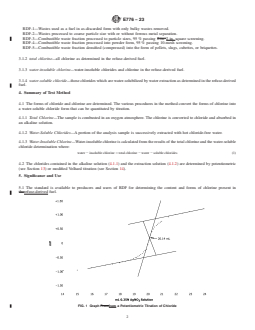
FIG. 1 Graph from a Potentiometric Titration of Chloride
water 2 insoluble chlorine 5 total chlorine 2 water 2 soluble chlorides 7.2 Volhard Titration Method B:
7.2.1 Compounds that have a strong oxidizing action inter-
(1)
fere by reacting with thiocyanate. These compounds should be
4.2 The chlorides contained in the alkaline solution (4.1.1)
reduced beforehand by treatment with ferrous sulfate or a
and the extraction solution (4.1.2) are determined by potentio-
similar reducing agent.
metric (see Section 13) or modified Volhard titration (see
7.2.2 Salts of mercury and palladium interfere by reacting
Section 14).
with thiocyanate. They may be removed by precipitation with
hydrogen sulfide before the addition of silver nitrate. The
5. Significance and Use
excess of sulfide is easily removed by gently boiling the acid
5.1 The standard is available to producers and users of RDF
solution for a few minutes. Sulfite can be eliminated in the
for determining the content and forms of chlorine present in
same way.
refuse-derived fuel.
7.2.3 Cyanide is also precipitated by silver nitrate. It is
usually determined separately by the Liebig-Deniges method
6. Precautions
and a correction is applied to the results of the Volhard
6.1 Due to the origins of RDF as waste, precautions should
titration.
be employed when conducting tests on samples. Safety prac-
7.2.4 The Volhard method, as with the potentiometric
tices include use of gloves when handling RDF; wearing dust
method, directly applied to a mixture of halides can determine
masks (NIOSH-approved type), especially while milling RDF
only total halide content excluding fluoride. Preliminary treat-
samples; conducting tests under a negative pressure hood when
ment is necessary for the determination of chloride alone in a
possible; and washing hands upon completion of activity and
mixture.
before eating or smoking.
8. Apparatus
7. Interferences
8.1 Balance, balance capable of weighing with an accuracy
7.1 Potentiometric Titration Method A:
of 0.1 mg.
7.1.1 Iodide and bromide are interferences that will titrate as
8.2 Apparatus for Bomb Combustion of the Sample.
chloride. Ferricyanide causes high biased results and must be
8.2.1 Oxygen Bomb, similar to that used in the determina-
removed. Chromate and dichromate interfere and should be
tion of the calorific value of refuse-derived fuels as described
reduced to the chromic state or be removed. Ferric iron
in Test Method E711.
interferes if present in an amount substantially higher than the
amount of chloride. Chromic ions, ferrous ions, and phosphates
do not interfere.
Scott’s Standard Method of Chemical Analysis, edited by M. H. Furman, D.
7.1.2 Grossly contaminated sample solutions usually re-
Van Nostrand Co., Inc., New York, NY.
quire pretreatment. Where contamination is minor, some con-
Koltoff, I. M., and Stenger, V. A., Volumetric Analysis II, Interscience
taminants can be destroyed by the addition of nitric acid. Publishers, Inc., New York, NY.
E776 − 23
8.2.2 Capsule, for holding the sample, approximately 9.8 Nitric Acid (1 + 1)—Mix equal volumes of concentrated
25 mm in diameter at the top, approximately 12 mm deep, and nitric acid (HNO , sp gr 1.42) and water.
conforming to Test Method E711.
9.9 Silver Nitrate, Standard Solution (0.025 N)—Dissolve
8.2.3 Firing Wire, as specified in Test Method E711.
4.247 g of silver nitrate (AgNO ) in water and dilute to 1 L.
8.2.4 Firing Circuit, as specified in Test Method E711.
Store in an amber glass bottle. Standardize against 0.025 N
8.2.5 Metal Vessel, cylindrical, such that the bomb will be
sodium chloride solution as directed in 13.1 and 14.1.1.
fully immersed when approximately 2 L of water are added.
9.10 Potassium Chromate – Potassium Dichromate
8.3 Magnetic Stirrer and Stirring Bars.
Indicator—(K CrO – K Cr O )—Dissolve 4.2 g of K CrO
2 4 2 2 7 2 4
8.4 Apparatus for Potentiometric Titration:
and 0.7 g of K Cr O in 100 mL of water.
2 2 7
8.4.1 Potentiometric Titration Assembly, using a silver indi-
9.11 Nitrobenzene.
cator electrode and a calomel reference electrode containing a
9.12 Ferric Ammonium Sulfate Indicator Solution—Add
saturated sodium nitrate solution as a bridge.
sufficient concentrated HNO (sp gr 1.42) to a cold saturated
8.5 Centrifuge, capable of centrifuging 100 mL centrifuge
solution of ferric ammonium sulfate [FeNH (SO ) ·12H O] to
4 4 2 2
tubes at approximately 1200 rpm.
remove the brown color.
8.6 Centrifuge Tubes, for chloride solution preparation (al-
9.13 Potassium Thiocyanate, Standard Solution (0.025
ternative method).
N)—Dissolve 3 g of potassium thiocyanate (KCNS) in freshly
8.7 Filter Paper, used to filter chloride solution.
distilled or boiled water, dilute to 1 L, and standardize against
NOTE 1—All glassware and graduated apparatus should be Class A or
0.025 N AgNO solution as directed in 14.1.2.
equivalent as described in Specification E287.
10. Sampling
9. Reagents
10.1 RDF products are frequently inhomogeneous. For this
9.1 Purity of Reagents—Reagent grade chemicals shall be
reason, significant care is needed to obtain a representative
used in all tests. Unless otherwise indicated, it is intended that
laboratory sample from the RDF lot to be characterized.
all reagents shall conform to the specifications of the Commit-
tee on Analytical Reagents of the American Chemical Society
10.2 The sampling method for this procedure should be
where such specifications are available. Other grades may be
based on agreement between the involved parties.
used, provided it is first ascertained that the reagent is of
10.3 The laboratory sample must be air-dried and the
sufficiently high purity to permit its use without lessening the
particle size reduced to pass through a 0.5 mm screen as
accuracy of the determination.
described in Practice E829. This procedure must be performed
9.2 Purity of Water—Unless otherwise indicated, reference
carefully to preserve the sample’s representativeness beyond
to water shall be understood to mean at least Type III reagent
just particle size while preparing the sample to be analyzed in
water conforming to Specification D1193.
accordance with these procedures.
9.3 Potassium Hydroxide Solution (0.2 N)—Dissolve 13.2 g
PREPARATION OF CHLORINE SOLUTIONS FOR
of potassium hydroxide (KOH) in water and dilute to 1 L with
ANALYSIS
water.
9.4 Oxygen—The oxygen used for combustion shall be free
11. Total Chlorine (Oxygen Bomb Method)
of combustible matter. Oxygen manufactured from liquid air,
11.1 Preparation of Sample and Bomb (see Note 3):
guaranteed to be greater than 99.5 % pure, will meet this
11.1.1 Sample Weight—Weigh to the nearest 0.1 mg about
requirement.
1 g of thoroughly mixed air-dried RDF sample into a bomb
9.5 Sodium Chloride (NaCl)—Primary standard quality (pu-
capsule. A pellet may be made from the air-dried RDF sample,
rity of 100 6 0.02 %).
accurately weighed, and placed into the bomb capsule. Place
9.6 Sodium Chloride, Primary Standard Solution
the capsule containing the sample into the capsule holder.
(0.025 N)—Crush 10 to 20 g of primary standard sodium
NOTE 2—There is a tendency for chlorine to adhere to the bomb walls,
chloride (NaCl) to 100-mesh fineness and dry in a glass
especially if the bomb is pitted or has been used previously to determine
container at 120 °C for 2 h. Stopper and keep desiccated.
high levels of chlorine. Unless the bomb is thoroughly cleaned before use,
Dissolve 5.844 g 6 0.1 mg of dried primary standard NaCl in the blanks may have high background chlorine values.
water and dilute to 1 L. Dilute 25.00 mL of this solution to
11.1.2 Firing Wire—Connect a length of firing wire to the
100.0 mL.
ignition terminals in such a manner that the loop of firing wire
is in contact with the sample.
9.7 Methanol.
11.1.3 Bomb Preparation—Add 20 to 25 mL of 0.02 N
potassium hydroxide solution to the bomb and wet the entire
Reagent Chemicals, American Chemical Society Specifications, American
internal surface of the bomb with this solution (see Note 3).
Chemical Society, Washington, DC. For Suggestions on the testing of reagents not
listed by the American Chemical Society, see Analar Standards for Laboratory
Assemble the bomb.
Chemicals, BDH Ltd., Poole, Dorset, U.K., and the United States Pharmacopeia
and National Formulary, U.S. Pharmacopeial Convention, Inc. (USPC), Rockville, NOTE 3—Sodium hydroxide solution at appropriate concentration may
MD. be used.
E776 − 23
11.2 Addition of Oxygen—Admit oxygen to the bomb beaker and add 100 mL of hot water. Heat to near boiling for
slowly to avoid blowing the sample from the capsule until a ⁄2 h with occasional stirring to ensure thorough wetting of the
pressure of 25 atm is reached. sample. Remove the beaker from the
...
This document is not an ASTM standard and is intended only to provide the user of an ASTM standard an indication of what changes have been made to the previous version. Because
it may not be technically possible to adequately depict all changes accurately, ASTM recommends that users consult prior editions as appropriate. In all cases only the current version
of the standard as published by ASTM is to be considered the official document.
Designation: E776 − 16 E776 − 23
Standard Test Method for
Determination of Forms of Chlorine in Refuse-Derived Fuel
This standard is issued under the fixed designation E776; the number immediately following the designation indicates the year of
original adoption or, in the case of revision, the year of last revision. A number in parentheses indicates the year of last reapproval. A
superscript epsilon (´) indicates an editorial change since the last revision or reapproval.
1. Scope
1.1 This test method covers the determination of the forms of chlorine in refuse-derived fuel-three (RDF): total chlorine,
water-soluble chloride, and water-insoluble chlorine.
1.2 This test method may be applicable to any waste material from which a laboratory analysis sample can be prepared.
1.3 The values stated in SI units are to be regarded as standard. No other units of measurement are included in this standard.
1.4 This standard does not purport to address all of the safety concerns, if any, associated with its use. It is the responsibility
of the user of this standard to establish appropriate safety and healthsafety, health, and environmental practices and determine
the applicability of regulatory limitations prior to use. For specific precaution statements, see Section 6 and 11.2.1.
1.5 This international standard was developed in accordance with internationally recognized principles on standardization
established in the Decision on Principles for the Development of International Standards, Guides and Recommendations issued
by the World Trade Organization Technical Barriers to Trade (TBT) Committee.
2. Referenced Documents
2.1 ASTM Standards:
D1193 Specification for Reagent Water
E144 Practice for Safe Use of Oxygen Combustion Vessels
E180 Practice for Determining the Precision of ASTM Methods for Analysis and Testing of Industrial and Specialty Chemicals
(Withdrawn 2009)
E287 Specification for Laboratory Glass Graduated Burets
E711 Test Method for Gross Calorific Value of Refuse-Derived Fuel by the Bomb Calorimeter
E829 Practice for Preparing Refuse-Derived Fuel (RDF) Laboratory Samples for Analysis
3. Terminology
3.1 Definitions of Terms Specific to This Standard:
3.1.1 refuse-derived fuels—solid forms of refuse-derived fuels from which appropriate analytical samples may be prepared are
defined as follows in ASTM STP 832:
This test method is under the jurisdiction of ASTM Committee D34 on Waste Management and is the direct responsibility of Subcommittee D34.03 on Treatment,
Recovery and Reuse.
Current edition approved Feb. 1, 2016April 1, 2023. Published February 2016April 2023. Originally approved in 1981. Last previous edition approved in 20092016 as
E776 – 87E776 – 16. (2009). DOI: 10.1520/E0776-16.10.1520/E0776-23.
For referenced ASTM standards, visit the ASTM website, www.astm.org, or contact ASTM Customer Service at service@astm.org. For Annual Book of ASTM Standards
volume information, refer to the standard’s Document Summary page on the ASTM website.
The last approved version of this historical standard is referenced on www.astm.org.
Thesaurus on Resource Recovery Terminology, ASTM STP 832, ASTM, ASTM International, 1983, p. 72.
Copyright © ASTM International, 100 Barr Harbor Drive, PO Box C700, West Conshohocken, PA 19428-2959. United States
E776 − 23
RDF-1—Wastes used as a fuel in as-discarded form with only bulky wastes removed.
RDF-2—Wastes processed to coarse particle size with or without ferrous metal separation.
RDF-3—Combustible waste fraction processed to particle sizes, 95 % passing 2-in. 2 in. square screening.
RDF-4—Combustible waste fraction processed into powder form, 95 % passing 10-mesh screening.
RDF-5—Combustible waste fraction densified (compressed) into the form of pellets, slugs, cubettes, or briquettes.
3.1.2 total chlorine—all chlorine as determined in the refuse-derived fuel.
3.1.3 water-insoluble chlorine—water-insoluble chlorides and chlorine in the refuse-derived fuel.
3.1.4 water-soluble chloride—those chlorides which are water-solubilized by water extraction as determined in the refuse-derived
fuel.
4. Summary of Test Method
4.1 The forms of chloride and chlorine are determined. The various procedures in the method convert the forms of chlorine into
a water-soluble chloride form that can be quantitated by titration.
4.1.1 Total Chlorine—The sample is combusted in an oxygen atmosphere. The chlorine is converted to chloride and absorbed in
an alkaline solution.
4.1.2 Water-Soluble Chlorides—A portion of the analysis sample is successively extracted with hot chloride-free water.
4.1.3 Water-Insoluble Chlorine—Water-insoluble chlorine is calculated from the results of the total chlorine and the water-soluble
chloride determination where:
water 2 insoluble chlorine 5 total chlorine 2 water 2 soluble chlorides (1)
4.2 The chlorides contained in the alkaline solution (4.1.1) and the extraction solution (4.1.2) are determined by potentiometric
(see Section 13) or modified Volhard titration (see Section 14).
5. Significance and Use
5.1 The standard is available to producers and users of RDF for determining the content and forms of chlorine present in
therefuse-derived fuel.
FIG. 1 Graph Fromfrom a Potentiometric Titration of Chloride
E776 − 23
6. Precautions
6.1 Due to the origins of RDF in municipal as waste, precautions should be observedemployed when conducting tests on samples.
Recommended safety Safety practices include use of gloves when handling RDF; wearing dust masks (NIOSH-approved type),
especially while milling RDF samples; conducting tests under a negative pressure hood when possible; and washing hands upon
completion of activity and before eating or smoking.
7. Interferences
7.1 Potentiometric Titration Method A:
7.1.1 Iodide and bromide are interferences that will titrate as chloride. Ferricyanide causes high biased results and must be
removed. Chromate and dichromate interfere and should be reduced to the chromic state or be removed. Ferric iron interferes if
present in an amount substantially higher than the amount of chloride. Chromic ions, ferrous ions, and phosphates do not interfere.
7.1.2 Grossly contaminated sample solutions usually require pretreatment. Where contamination is minor, some contaminants can
be destroyed simply by the addition of nitric acid.
7.2 Volhard Titration Method B:
7.2.1 Compounds that have a strong oxidizing action interfere by reacting with thiocyanate. These compounds should be reduced
beforehand by treatment with ferrous sulfate or a similar reducing agent.
7.2.2 Salts of mercury and palladium interfere by reacting with thiocyanate. They may be removed by precipitation with hydrogen
sulfide before the addition of silver nitrate. The excess of sulfide is easily removed by gently boiling the acid solution for a few
minutes. Sulfite can be eliminated in the same way.
7.2.3 Cyanide is also precipitated by silver nitrate. It is usually determined separately by the Liebig-Deniges method and a
correction is applied to the results of the Volhard titration.
7.2.4 The Volhard method, as with the potentiometric method, directly applied to a mixture of halides can determine only total
halide content excluding fluoride. Preliminary treatment is necessary for the determination of chloride alone in a mixture.
8. Apparatus
8.1 Balance, balance capable of weighing with an accuracy of 0.1 mg.
8.2 Apparatus for Bomb Combustion of the Sample.
8.2.1 Oxygen Bomb, similar to that used in the determination of the calorific value of refuse-derived fuels as described in Test
Method E711.
8.2.2 Capsule, for holding the sample, approximately 25 mm in diameter at the top, approximately 12 mm deep, and conforming
to Test Method E711.
8.2.3 Firing Wire, as specified in Test Method E711.
8.2.4 Firing Circuit, as specified in Test Method E711.
8.2.5 Metal Vessel, cylindrical, such that the bomb will be fully immersed when approximately 2 L of water are added.
8.3 Magnetic Stirrer and Stirring Bars.
8.4 Apparatus for Potentiometric Titration:
Scott’s Standard Method of Chemical Analysis, edited by M. H. Furman, D. Van Nostrand Co., Inc., New York, NY.
Koltoff, I. M., and Stenger, V. A., Volumetric Analysis II, Interscience Publishers, Inc., New York, NY.
E776 − 23
8.4.1 Potentiometric Titration Assembly, using a silver indicator electrode and a calomel reference electrode containing a saturated
sodium nitrate solution as a bridge.
8.5 Centrifuge, capable of centrifuging 100-mL 100 mL centrifuge tubes at approximately 1200 rpm.
8.6 Centrifuge Tubes, for chloride solution preparation (alternative method).
8.7 Filter Paper, used to filter chloride solution.
NOTE 1—All glassware and graduated apparatus should be Class A or equivalent as described in Specification E287.
9. Reagents
9.1 Purity of Reagents—Reagent grade chemicals shall be used in all tests. Unless otherwise indicated, it is intended that all
reagents shall conform to the specifications of the Committee on Analytical Reagents of the American Chemical Society where
such specifications are available. Other grades may be used, provided it is first ascertained that the reagent is of sufficiently high
purity to permit its use without lessening the accuracy of the determination.
9.2 Purity of Water—Unless otherwise indicated, reference to water shall be understood to mean at least Type III reagent water
conforming to Specification D1193.
9.3 Potassium Hydroxide Solution (0.2 N)—Dissolve 13.2 g of potassium hydroxide (KOH) in water and dilute to 1 L with water.
9.4 Oxygen—The oxygen used for combustion shall be free of combustible matter. Oxygen manufactured from liquid air,
guaranteed to be greater than 99.5 % pure, will meet this requirement.
9.5 Sodium Chloride (NaCl)—Primary standard quality (purity of 100 6 0.02 %).
9.6 Sodium Chloride, Primary Standard Solution (0.025 N)—Crush 10 to 20 g of primary standard sodium chloride (NaCl) to
100-mesh fineness and dry in a glass container at 120°C120 °C for 2 h. Stopper and keep desiccated. Dissolve 5.844 g 6 0.1 mg
of dried primary standard NaCl in water and dilute to 1 L. Dilute 25.00 mL of this solution to 100.0 mL.
9.7 Methanol.
9.8 Nitric Acid (1 + 1)—Mix equal volumes of concentrated nitric acid (HNO , sp, gr,sp gr 1.42) and water.
9.9 Silver Nitrate, Standard Solution (0.025 N)—Dissolve 4.247 g of silver nitrate (AgNO ) in water and dilute to 1 L. Store in
an amber glass bottle. Standardize against 0.025 N sodium chloride solution as directed in 13.1 and 14.1.1.
9.10 Potassium Chromate – Potassium Dichromate Indicator—(K CrO – K Cr O )—Dissolve 4.2 g of K CrO and 0.7 g of
2 4 2 2 7 2 4
K Cr O in 100 mL of water.
2 2 7
9.11 Nitrobenzene.
9.12 Ferric Ammonium Sulfate Indicator Solution—Add sufficient concentrated HNO (sp gr 1.42) to a cold saturated solution of
ferric ammonium sulfate [FeNH (SO ) ·12H O] to remove the brown color.
4 4 2 2
9.13 Potassium Thiocyanate, Standard Solution (0.025 N)—Dissolve 3 g of potassium thiocyanate (KCNS) in freshly distilled or
boiled water, dilute to 1 L, and standardize against 0.025 N AgNO solution as directed in 14.1.2.
Reagent Chemicals, American Chemical Society Specifications, American Chemical Society, Washington, DC. For Suggestions on the testing of reagents not listed by
the American Chemical Society, see AnnualAnalar Standards for Laboratory Chemicals, BDH Ltd., Poole, Dorset, U.K., and the United States Pharmacopeia and National
Formulary, U.S. Pharmacopeial Convention, Inc. (USPC), Rockville, MD.
E776 − 23
10. Sampling
10.1 RDF products are frequently inhomogeneous. For this reason, significant care should be exercised is needed to obtain a
representative laboratory sample from the RDF lot to be characterized.
10.2 The sampling method for this procedure should be based on agreement between the involved parties.
10.3 The laboratory sample must be air-dried and the particle size reduced to pass through a 0.5-mm 0.5 mm screen as described
in Practice E829. This procedure must be performed carefully to preserve the sample’s representativeness beyond just particle size
while preparing the sample to be analyzed in accordance with these procedures.
PREPARATION OF CHLORINE SOLUTIONS FOR ANALYSIS
11. Total Chlorine (Oxygen Bomb Method)
11.1 Preparation of Sample and Bomb (see Note 3):
11.1.1 Sample Weight—Weigh to the nearest 0.1 mg about 1 g 1 g of thoroughly mixed air-dried RDF sample into a bomb capsule.
A pellet may be made from the air-dried RDF sample, accurately weighed, and placed into the bomb capsule. Place the capsule
containing the sample into the capsule holder.
NOTE 2—There is a tendency for chlorine to adhere to the bomb walls, especially if the bomb is pitted or has been used previously to determine high
levels of chlorine. Unless the bomb is thoroughly cleaned before use, the blanks may have high background chlorine values.
11.1.2 Firing Wire—Connect a length of firing wire to the ignition terminals in such a manner that the loop of firing wire is in
contact with the sample.
11.1.3 Bomb Preparation—Add 20 to 25 mL of 0.02 N potassium hydroxide solution to the bomb and wet the entire internal
surface of the bomb with this solution (see Note 3). Assemble the bomb.
NOTE 3—Sodium hydroxide solution at appropriate concentration may be used.
11.2 Addition of Oxygen—Admit oxygen to the bomb slowly to avoid blowing the sample from the capsule until a pressure of 25
atm is reached.
11.2.1 Warning—The following precautions are needed for safe calorimeter operation. Additional precautions are given in
Practice E144.Warning—The following precautions are recommended for safe calorimeter operation. Additional precautions are
given in Practice E144.
11.2.1.1 The weight of RDF sample and the pressure of the oxygen admitted to the bomb must not exceed the bomb
manufacturer’s recommendations.
11.2.1.2 Bomb parts should be inspected carefully after each use. Threads on the ma
...