

ASTM D2513-20
(Specification)Standard Specification for Polyethylene (PE) Gas Pressure Pipe, Tubing, and Fittings
General Information
- Abstract
ABSTRACT
This specification covers the requirements and test methods for material, dimensions, hydrostatic burst strength, tensile strength, chemical resistance, sustained pressure, heat fusion, and impact resistance of plastic pipes, tubing, and fittings used for direct burial and reliner applications in fuel gas mains and services for the distribution of natural gas. This specification does not cover threaded pipe. The plastic used to make the pipes and fittings shall be virgin plastic or reworked plastic having Plastics Pipe Institute (PPI) long-term hydrostatic design stress and hydrostatic design basis rating.
SCOPE
1.1 This specification covers requirements and test methods for material dimensions and tolerances, hydrostatic burst strength, chemical resistance, and rapid crack resistance of polyethylene pipe, tubing, and fittings for use in fuel gas pipelines for direct burial and reliner applications. The pipe and fittings covered by this specification are intended for use in the transmission and distribution of natural gas. Requirements for the qualifying of polyethylene systems for use with liquefied petroleum gas are also covered.
1.1.1 This specification does not cover threaded pipe. Design considerations are discussed in Appendix X1. In-plant quality control programs are specified in Annex A1 and Annex A2.
1.1.2 See Specification F2619/F2619M for polyethylene piping for pressure or non-pressure oil and gas producing applications to convey fluids such as oil, dry or wet gas, multiphase fluids, and non-potable oilfield water.
1.2 The text of this specification references notes, footnotes, and appendixes which provide explanatory material. These notes and footnotes (excluding those in tables and figures) shall not be considered as requirements of the specification.
1.3 The values stated in inch-pound units are to be regarded as standard. The values given in parentheses are mathematical conversions to SI units that are provided for information only and are not considered standard.
1.4 The following is an index of the annexes and appendix in this specification:
Annex
Subject
Annex A1
In-Plant Quality Control for all materials up to 12 in.
Annex A2
In-Plant Quality Control for PE materials 14 in. and larger.
Appendixes
Subject
Appendix X1
Design Consideration
1.5 The following precautionary caveat pertains only to the test method portion, Section 6, of this specification. This standard does not purport to address all of the safety concerns, if any, associated with its use. It is the responsibility of the user of this standard to establish appropriate safety, health, and environmental practices and determine the applicability of regulatory limitations prior to use.
1.6 This international standard was developed in accordance with internationally recognized principles on standardization established in the Decision on Principles for the Development of International Standards, Guides and Recommendations issued by the World Trade Organization Technical Barriers to Trade (TBT) Committee.
- Status
- Published
- Publication Date
- 30-Nov-2020
- Technical Committee
- F17 - Plastic Piping Systems
- Drafting Committee
- F17.60 - Gas
Buy Documents
ASTM D2513-20 - Standard Specification for Polyethylene (PE) Gas Pressure Pipe, Tubing, and Fittings
REDLINE ASTM D2513-20 - Standard Specification for Polyethylene (PE) Gas Pressure Pipe, Tubing, and Fittings
Overview
ASTM D2513-20 is a widely recognized standard specification that defines the requirements for polyethylene (PE) gas pressure pipe, tubing, and fittings. Developed by ASTM International, this standard is essential for manufacturers, utilities, and contractors involved in the transmission and distribution of natural gas and liquefied petroleum gas (LPG) through plastic piping systems. The specification details material qualifications, dimensional tolerances, performance criteria, and applicable test methods to ensure safety and reliability in buried pipeline and reliner applications. Threaded pipes are not covered by this standard.
Key Topics
- Material Requirements: Specifies the use of virgin or qualified reworked PE materials with proven long-term hydrostatic design stress and basis rating as recognized by the Plastics Pipe Institute (PPI).
- Physical Properties: Includes criteria for
- Hydrostatic burst strength
- Tensile strength
- Chemical resistance
- Impact resistance
- Rapid crack resistance
- Sustained pressure performance
- Dimensional Control: Sets strict guidelines for pipe and tubing diameter, wall thickness, ovality, and toe-in to ensure dimensional consistency and reliable fit-up during installation.
- Joining Methods: Addresses heat fusion, electrofusion, and mechanical joining of PE pipes and fittings, referencing best practices to ensure safe and effective system assembly.
- Quality Control: Requires in-plant quality control measures detailed in annexes for pipes up to 12 inches and for 14 inches and larger.
- Service Qualification: Addresses additional qualification for use with LPG and provides references for alternative applications such as oilfield fluids.
- UV and Weathering Stability: PE compounds must provide specified resistance to ultraviolet (UV) degradation, ensuring long-term durability even for above-ground storage or short-term exposure.
Applications
ASTM D2513-20 is integral in the following areas:
- Natural Gas Distribution: Ensures that PE pipe and fittings used in direct burial and reliner work for gas mains and service lines meet essential safety and performance standards.
- LPG Pipeline Systems: Provides qualification criteria for polyethylene systems intended for LPG transport, addressing unique requirements for this fuel type.
- Infrastructure Upgrades: Supports reliner applications, allowing for rehabilitation of existing pipelines with modern PE solutions.
- Utility Compliance: Assists natural gas and utility companies in meeting regulatory requirements and reducing risks associated with underground piping installations.
- Construction Projects: Used by contractors and engineers to source compliant PE pipe, tubing, and fittings for residential, commercial, and municipal fuel gas applications.
Related Standards
Several standards are referenced within or commonly applied alongside ASTM D2513-20, enhancing material selection, system design, and installation:
- ASTM D1600, F412: Terminology standards for plastics and piping systems
- ASTM D1238, D1598, D1599: Test methods for melt flow, hydrostatic strength, and hydraulic pressure
- ASTM D3350: Specification for polyethylene plastics pipe and fittings materials
- ASTM F2619: Specification for high-density PE line pipe for oil and gas
- ASTM F2620: Practice for heat fusion joining of PE pipes and fittings
- ANSI B31.8: Gas transmission and distribution piping systems
- OPS 49 CFR Part 192: Federal regulations for gas pipeline safety
- ISO 4437, ISO 13477, ISO 13478: International standards for buried PE pipes and rapid crack propagation testing
Practical Value
Adhering to ASTM D2513-20 ensures the integrity and safety of PE gas piping systems from manufacturing through long-term service. The standard supports compliance with U.S. federal and international regulations, reduces liability, and offers assurance of consistent product performance. Its detailed requirements for materials, dimensions, performance, and quality management make it a cornerstone for reliability in the natural gas industry.
Keywords: ASTM D2513, polyethylene gas pipe, PE gas pressure pipe, PE tubing, PE fittings, natural gas pipeline standards, plastic pipe specification, pipe quality control, hydrostatic strength, gas distribution piping, LPG piping standards.
Relations
- Effective Date
- 01-Apr-2024
- Effective Date
- 01-Feb-2024
- Refers
ASTM D1238-23a - Standard Test Method for Melt Flow Rates of Thermoplastics by Extrusion Plastometer - Effective Date
- 15-Nov-2023
- Refers
ASTM F1563-23 - Standard Specification for Tools to Squeeze-off Polyethylene (PE) Gas Pipe or Tubing - Effective Date
- 01-Nov-2023
- Effective Date
- 01-Nov-2023
- Effective Date
- 01-Oct-2023
- Effective Date
- 29-Sep-2023
- Effective Date
- 01-Apr-2020
- Effective Date
- 01-Apr-2020
- Effective Date
- 01-Sep-2019
- Effective Date
- 01-Aug-2019
- Effective Date
- 01-Aug-2019
- Effective Date
- 01-Jan-2019
- Effective Date
- 01-Jan-2019
- Effective Date
- 01-Sep-2018
Buy Documents
ASTM D2513-20 - Standard Specification for Polyethylene (PE) Gas Pressure Pipe, Tubing, and Fittings
REDLINE ASTM D2513-20 - Standard Specification for Polyethylene (PE) Gas Pressure Pipe, Tubing, and Fittings
Get Certified
Connect with accredited certification bodies for this standard

Institut za varilstvo d.o.o. (Welding Institute)
Slovenia's leading welding institute since 1952. ISO 3834, EN 1090, pressure equipment certification, NDT personnel, welder qualification. Only IIW Au
Sponsored listings
Frequently Asked Questions
ASTM D2513-20 is a technical specification published by ASTM International. Its full title is "Standard Specification for Polyethylene (PE) Gas Pressure Pipe, Tubing, and Fittings". This standard covers: ABSTRACT This specification covers the requirements and test methods for material, dimensions, hydrostatic burst strength, tensile strength, chemical resistance, sustained pressure, heat fusion, and impact resistance of plastic pipes, tubing, and fittings used for direct burial and reliner applications in fuel gas mains and services for the distribution of natural gas. This specification does not cover threaded pipe. The plastic used to make the pipes and fittings shall be virgin plastic or reworked plastic having Plastics Pipe Institute (PPI) long-term hydrostatic design stress and hydrostatic design basis rating. SCOPE 1.1 This specification covers requirements and test methods for material dimensions and tolerances, hydrostatic burst strength, chemical resistance, and rapid crack resistance of polyethylene pipe, tubing, and fittings for use in fuel gas pipelines for direct burial and reliner applications. The pipe and fittings covered by this specification are intended for use in the transmission and distribution of natural gas. Requirements for the qualifying of polyethylene systems for use with liquefied petroleum gas are also covered. 1.1.1 This specification does not cover threaded pipe. Design considerations are discussed in Appendix X1. In-plant quality control programs are specified in Annex A1 and Annex A2. 1.1.2 See Specification F2619/F2619M for polyethylene piping for pressure or non-pressure oil and gas producing applications to convey fluids such as oil, dry or wet gas, multiphase fluids, and non-potable oilfield water. 1.2 The text of this specification references notes, footnotes, and appendixes which provide explanatory material. These notes and footnotes (excluding those in tables and figures) shall not be considered as requirements of the specification. 1.3 The values stated in inch-pound units are to be regarded as standard. The values given in parentheses are mathematical conversions to SI units that are provided for information only and are not considered standard. 1.4 The following is an index of the annexes and appendix in this specification: Annex Subject Annex A1 In-Plant Quality Control for all materials up to 12 in. Annex A2 In-Plant Quality Control for PE materials 14 in. and larger. Appendixes Subject Appendix X1 Design Consideration 1.5 The following precautionary caveat pertains only to the test method portion, Section 6, of this specification. This standard does not purport to address all of the safety concerns, if any, associated with its use. It is the responsibility of the user of this standard to establish appropriate safety, health, and environmental practices and determine the applicability of regulatory limitations prior to use. 1.6 This international standard was developed in accordance with internationally recognized principles on standardization established in the Decision on Principles for the Development of International Standards, Guides and Recommendations issued by the World Trade Organization Technical Barriers to Trade (TBT) Committee.
ABSTRACT This specification covers the requirements and test methods for material, dimensions, hydrostatic burst strength, tensile strength, chemical resistance, sustained pressure, heat fusion, and impact resistance of plastic pipes, tubing, and fittings used for direct burial and reliner applications in fuel gas mains and services for the distribution of natural gas. This specification does not cover threaded pipe. The plastic used to make the pipes and fittings shall be virgin plastic or reworked plastic having Plastics Pipe Institute (PPI) long-term hydrostatic design stress and hydrostatic design basis rating. SCOPE 1.1 This specification covers requirements and test methods for material dimensions and tolerances, hydrostatic burst strength, chemical resistance, and rapid crack resistance of polyethylene pipe, tubing, and fittings for use in fuel gas pipelines for direct burial and reliner applications. The pipe and fittings covered by this specification are intended for use in the transmission and distribution of natural gas. Requirements for the qualifying of polyethylene systems for use with liquefied petroleum gas are also covered. 1.1.1 This specification does not cover threaded pipe. Design considerations are discussed in Appendix X1. In-plant quality control programs are specified in Annex A1 and Annex A2. 1.1.2 See Specification F2619/F2619M for polyethylene piping for pressure or non-pressure oil and gas producing applications to convey fluids such as oil, dry or wet gas, multiphase fluids, and non-potable oilfield water. 1.2 The text of this specification references notes, footnotes, and appendixes which provide explanatory material. These notes and footnotes (excluding those in tables and figures) shall not be considered as requirements of the specification. 1.3 The values stated in inch-pound units are to be regarded as standard. The values given in parentheses are mathematical conversions to SI units that are provided for information only and are not considered standard. 1.4 The following is an index of the annexes and appendix in this specification: Annex Subject Annex A1 In-Plant Quality Control for all materials up to 12 in. Annex A2 In-Plant Quality Control for PE materials 14 in. and larger. Appendixes Subject Appendix X1 Design Consideration 1.5 The following precautionary caveat pertains only to the test method portion, Section 6, of this specification. This standard does not purport to address all of the safety concerns, if any, associated with its use. It is the responsibility of the user of this standard to establish appropriate safety, health, and environmental practices and determine the applicability of regulatory limitations prior to use. 1.6 This international standard was developed in accordance with internationally recognized principles on standardization established in the Decision on Principles for the Development of International Standards, Guides and Recommendations issued by the World Trade Organization Technical Barriers to Trade (TBT) Committee.
ASTM D2513-20 is classified under the following ICS (International Classification for Standards) categories: 23.040.20 - Plastics pipes; 23.040.45 - Plastics fittings. The ICS classification helps identify the subject area and facilitates finding related standards.
ASTM D2513-20 has the following relationships with other standards: It is inter standard links to ASTM F1473-24, ASTM D3261-24, ASTM D1238-23a, ASTM F1563-23, ASTM F2897-23a, ASTM D2565-23, ASTM D1898-68(1989), ASTM F2619/F2619M-20, ASTM F412-20, ASTM F2619/F2619M-19, ASTM D2290-19a, ASTM F1563-01(2019), ASTM F412-19, ASTM D2290-19, ASTM D1599-18. Understanding these relationships helps ensure you are using the most current and applicable version of the standard.
ASTM D2513-20 is available in PDF format for immediate download after purchase. The document can be added to your cart and obtained through the secure checkout process. Digital delivery ensures instant access to the complete standard document.
Standards Content (Sample)
This international standard was developed in accordance with internationally recognized principles on standardization established in the Decision on Principles for the
Development of International Standards, Guides and Recommendations issued by the World Trade Organization Technical Barriers to Trade (TBT) Committee.
Designation:D2513 −20 An American National Standard
Standard Specification for
Polyethylene (PE) Gas Pressure Pipe, Tubing, and Fittings
This standard is issued under the fixed designation D2513; the number immediately following the designation indicates the year of
original adoption or, in the case of revision, the year of last revision.Anumber in parentheses indicates the year of last reapproval.A
superscript epsilon (´) indicates an editorial change since the last revision or reapproval.
1. Scope* if any, associated with its use. It is the responsibility of the user
of this standard to establish appropriate safety, health, and
1.1 This specification covers requirements and test methods
environmental practices and determine the applicability of
for material dimensions and tolerances, hydrostatic burst
regulatory limitations prior to use.
strength, chemical resistance, and rapid crack resistance of
1.6 This international standard was developed in accor-
polyethylene pipe, tubing, and fittings for use in fuel gas
dance with internationally recognized principles on standard-
pipelines for direct burial and reliner applications. The pipe
ization established in the Decision on Principles for the
andfittingscoveredbythisspecificationareintendedforusein
Development of International Standards, Guides and Recom-
the transmission and distribution of natural gas. Requirements
mendations issued by the World Trade Organization Technical
for the qualifying of polyethylene systems for use with
Barriers to Trade (TBT) Committee.
liquefied petroleum gas are also covered.
1.1.1 This specification does not cover threaded pipe. De-
2. Referenced Documents
sign considerations are discussed in Appendix X1. In-plant
2.1 ASTM Standards:
qualitycontrolprogramsarespecifiedinAnnexA1andAnnex
2.1.1 Terminology:
A2.
D1600TerminologyforAbbreviatedTermsRelatingtoPlas-
1.1.2 See Specification F2619/F2619M for polyethylene
tics
piping for pressure or non-pressure oil and gas producing
F412Terminology Relating to Plastic Piping Systems
applications to convey fluids such as oil, dry or wet gas,
2.1.2 Test Methods for:
multiphase fluids, and non-potable oilfield water.
D638Test Method for Tensile Properties of Plastics
1.2 Thetextofthisspecificationreferencesnotes,footnotes,
D1238Test Method for Melt Flow Rates of Thermoplastics
and appendixes which provide explanatory material. These
by Extrusion Plastometer
notesandfootnotes(excludingthoseintablesandfigures)shall
D1598Test Method for Time-to-Failure of Plastic Pipe
not be considered as requirements of the specification.
Under Constant Internal Pressure
1.3 Thevaluesstatedininch-poundunitsaretoberegarded
D1599Test Method for Resistance to Short-Time Hydraulic
as standard. The values given in parentheses are mathematical
Pressure of Plastic Pipe, Tubing, and Fittings
conversions to SI units that are provided for information only
D2122Test Method for Determining Dimensions of Ther-
and are not considered standard.
moplastic Pipe and Fittings
D2290Test Method for Apparent Hoop Tensile Strength of
1.4 The following is an index of the annexes and appendix
Plastic or Reinforced Plastic Pipe
in this specification:
D2837Test Method for Obtaining Hydrostatic Design Basis
Annex Subject
forThermoplasticPipeMaterialsorPressureDesignBasis
Annex A1 In-Plant Quality Control for all materials up to 12 in.
Annex A2 In-Plant Quality Control for PE materials 14 in. and larger.
for Thermoplastic Pipe Products
F1473Test Method for Notch Tensile Test to Measure the
Appendixes Subject
Resistance to Slow Crack Growth of Polyethylene Pipes
Appendix Design Consideration
X1
and Resins
1.5 The following precautionary caveat pertains only to the
2.1.3 Practices for:
test method portion, Section 6, of this specification. This
D543Practices for Evaluating the Resistance of Plastics to
standard does not purport to address all of the safety concerns,
Chemical Reagents
D618Practice for Conditioning Plastics for Testing
This specification is under the jurisdiction ofASTM Committee F17 on Plastic
Piping Systems and is the direct responsibility of Subcommittee F17.60 on Gas. For referenced ASTM standards, visit the ASTM website, www.astm.org, or
Current edition approved Dec. 1, 2020. Published December 2020. Originally contact ASTM Customer Service at service@astm.org. For Annual Book of ASTM
approved in 1966. Last previous edition approved in 2019 as D2513–19. DOI: Standards volume information, refer to the standard’s Document Summary page on
10.1520/D2513-20. the ASTM website.
*A Summary of Changes section appears at the end of this standard
Copyright © ASTM International, 100 Barr Harbor Drive, PO Box C700, West Conshohocken, PA 19428-2959. United States
D2513−20
D1435Practice for Outdoor Weathering of Plastics Rupture Data to Determine Long-Term Hydrostatic
D1898Practice for Sampling of Plastics (Withdrawn 1998) Strength of Thermoplastic Pipe Materials
D2774PracticeforUndergroundInstallationofThermoplas- ISO 12162Thermoplastic Materials for Pipes and Fittings
tic Pressure Piping for Pressure Applications—Classification and
D2565Practice for Xenon-Arc Exposure of Plastics In- Designation—Overall Service (Design) Coefficient
tended for Outdoor Applications ISO 13477Thermoplastics pipes for the conveyance of
F2620PracticeforHeatFusionJoiningofPolyethylenePipe fluids – Determination of resistance to rapid crack propa-
and Fittings gation (RCP) – Small scale steady-state test (S4 test)
G155Practice for Operating XenonArc LightApparatus for ISO 13478Thermoplastics pipe for the conveyance of fluids
Exposure of Non-Metallic Materials – Determination of resistance to rapid crack propagation
2.1.4 Specification for: (RCP) – Full-scale test (FST)
D2683Specification for Socket-Type Polyethylene Fittings
2.6 Plastic Pipe Institute
for Outside Diameter-Controlled Polyethylene Pipe and
PPI TR-3HDB/HDS /PDB/ SDB/MRS Policies
Tubing
PPI TR-4HDB/HDS/SDB/PDB/MRS Listed Materials
D3261SpecificationforButtHeatFusionPolyethylene(PE)
PPI TR-33Generic Butt Fusion Joining for Polyethylene
Plastic Fittings for Polyethylene (PE) Plastic Pipe and
Gas Pipe
Tubing
PPI TR-41Generic Saddle Fusion Joining Procedure for
D3350Specification for Polyethylene Plastics Pipe and Fit-
Polyethylene Gas Piping
tings Materials
PPI TN-30/2006Requirements for the Use of Rework Ma-
F1055Specification for Electrofusion Type Polyethylene
terials in Polyethylene Gas Pipe
Fittings for Outside Diameter Controlled Polyethylene
PPITR-9 Recommended Design Factors and Design Coef-
and Crosslinked Polyethylene (PEX) Pipe and Tubing
ficients for Thermoplastic Pressure pipe
F1563Specification for Tools to Squeeze-off Polyethylene
2.7 Other Documents:
(PE) Gas Pipe or Tubing
National Fire Protection Association: NFPA 58Storage and
F2138Specification for Excess FlowValves for Natural Gas
Handling Liquefied Petroleum Gases
Service
F2619/F2619MSpecificationforHigh-DensityPolyethylene 3. Terminology
(PE) Line Pipe
3.1 Definitions—Definitions are in accordance with Termi-
F2897Specification for Tracking and Traceability Encoding
nology F412, and abbreviations are in accordance with Termi-
System of Natural Gas Distribution Components (Pipe,
nology D1600, unless otherwise specified.
Tubing, Fittings, Valves, and Appurtenances)
3.2 The gas industry terminology used in this specification
2.2 ANSI Standards:
is in accordance with ANSIB31.8 or OPS 49 CFR Part 192,
B16.40 Manually Operated Thermoplastic Gas Shutoffs
unless otherwise indicated.
and Valves in Gas Distribution Systems
3.3 Theterm pipeusedhereinreferstobothpipeandtubing
B 31.8Gas Transmission and Distribution Piping Systems
unless specifically stated otherwise.
2.3 Federal Specifications:
3.4 re-rounding equipment—equipment used to reform the
Fed. Std. No. 123Marking for Shipment (Civil Agencies)
pipe and permanently reduce ovality to 5% or less.
OPS 49 CFR Part 192Title 49, Code of Federal Regula-
tions
3.5 rounding equipment—equipment, devices, clamps, and
so forth, used to temporarily hold the pipe round while
2.4 Military Standards:
out-of-roundness measurements are made, or a joining proce-
MIL-STD-129 Marking for Shipment and Storage
dure (heat fusion, electrofusion, or mechanical) is performed.
MIL-STD-1235(ORD) Single- and Multi-Level Continuous
Sampling Procedures and Tables for Inspection by Attri-
3.6 pipe material designated code—the pipe material des-
butes
ignation code shall consist of the abbreviation for the type of
2.5 ISO Standards :
plastic (PE) followed by Arabic numerals which describe the
ISO 4437 Buried polyethylene (PE) pipes for the supply of
short term properties in accordance with applicable Specifica-
gaseous fuels-Metric series-Specifications
tion D3350, the hydrostatic design stress for water at 73.4°F
ISO 9080 Thermoplastics Pipes for the Transport of
(23°C) in units of 100 psi with any decimal figures dropped.
Fluids—Methods of Extrapolation of Hydrostatic Stress
Wherethehydrostaticdesignstresscodecontainslessthantwo
figures, a zero is used before the number. Thus, a complete
material designation code shall consist of PE and four figures
The last approved version of this historical standard is referenced on
for PE materials. For example, PE2708 is a grade PE27
www.astm.org.
polyethylene with an 800psi design stress for water at 73.4°F
Available fromAmerican National Standards Institute (ANSI), 25 W. 43rd St.,
4th Floor, New York, NY 10036, http://www.ansi.org.
Available from DLA Document Services, Building 4/D, 700 Robbins Ave.,
Philadelphia, PA 19111-5094, http://quicksearch.dla.mil. Available from Plastics Pipe Institute (PPI), 105 Decker Court, Suite 825,
Available from International Organization for Standardization (ISO), 1, ch. de Irving, TX 75062, http://www.plasticpipe.org.
la Voie-Creuse, Case postale 56, CH-1211, Geneva 20, Switzerland, http:// Available from National Fire Protection Association (NFPA), 1 Batterymarch
www.iso.ch. Park, Quincy, MA 02169-7471, http://www.nfpa.org.
D2513−20
(23°C).The hydrostatic design stresses for gas are not used in 4.4 Classification—Polyethylene materials suitable for use
this designation code. in the manufacture of pipe and fittings under this specification
shall meet Table 1 requirements for the applicable pipe
3.7 dimension ratio (DR)—theratioofpipediametertowall
material designation code.
thickness. It is calculated by dividing the specified outside
diameterofthepipe,ininches(mm),bytheminimumspecified
NOTE 3—References and material descriptions for PE 2306, PE 2406,
wall thickness, in inches (mm). The standard dimension ratio PE 2606, PE 3306, PE 3406, PE 3408, PE 3608, PE 3710, and PE 4608
have been removed from D2513. Elimination of these materials does not
(SDR) is a common numbering system which is derived from
affect the pipelines that are in service. They can still be used for gas
the ANSI preferred number series R10.
transmissionordistribution.Themainreasonforremovingthesematerials
3.8 toe-in—a small reduction of the outside diameter at the from this standard is to reflect the current state of the art in PE piping
specified for applications within the scope of this specification.
cut end of a length of thermoplastic pipe.
4.5 Resistance to Slow Crack Growth (SCG)—Use Test
4. Materials
Method F1473 on compression molded plaques at a stress of
2.4MPabasedontheunnotchedareaandatesttemperatureof
4.1 General—ThePEusedtomakepipeandfittingsshallbe
80°C. Notch depth shall be in accordance with Table1 in Test
PE or reworked PE (see 4.2 and 4.4) and shall have a Plastics
Method F1473. Materials shall meet the Slow Crack Growth
Pipe Institute (PPI) long-term hydrostatic design stress and
Resistance requirements in Table 1.
hydrostatic design basis rating.
4.2 Rework Material—Clean rework material of the same 4.6 Additive Classes—Polyethylene material compounds
commercial designation, generated from the manufacturer’s shall meet Specification D3350 code C or E. Code C material
own pipe and fitting production shall not be used unless the compounds shall have 2 to 3 percent carbon black. Code E
pipe and fitting produced meet all the requirements of this material compounds shall be yellow with UV stabilizer.
specification. The use of these rework materials shall be
4.7 Thermal Stability—The PE material shall contain suffi-
governed by the requirements of 4.3 and PPI TN-30/2006. In
cient antioxidant so that the minimum induction temperature
pipe, rework materials shall be limited to a maximum of 30%
shall be 428°F (220°C) when tested in accordance with
by weight.
Specification D3350.The sample shall be representative of the
NOTE 1—The requirements for rework materials herein are intended to cross section of the pipe or fittings.
incorporateprudentspecificationstoensurethatthepotentialforcontami-
4.8 Hydrostatic Design Basis (HDB) Substantiation —The
nationingaspipingproducts,thatmeetthisspecification,isreducedtothe
extent possible. It is imperative to emphasize that rework materials have HDBforPEmaterialsat73°F(23°C)shallbesubstantiatedto
not been identified as the cause of any field failures.The requirements for
be linear to 50 years as per Test Method D2837, Section 5.7.
rework materials were developed by the consensus of interested parties
including product manufacturers, gas utility companies, and regulatory
NOTE 4—The long-term hydrostatic strength at 50 years in accordance
agencies. with Test Method D2837 is not to be used for any pressure rating
NOTE 2—Regulatory requirements may prohibit the use of rework
calculations. The MAOP is still calculated using the HDB obtained from
materials. When regulatory requirements prohibit the use of rework, Test Method D2837 long-term hydrostatic strength at 100 000 h. PE
rework material cannot be used in the production of PE pipe intended for
compounds with a thermoplastic pipe material designation code of PE
use in natural gas distribution and transmission systems. 2708 and PE 4710 as well as those compounds denoted in PPI TR-4 with
anasterisk(*)meetthesubstantiationrequirementofTestMethodD2837.
4.3 Documentation—A documentation system to allow for
traceability of raw materials including percentage and material 4.9 Resistance to Rapid Crack Propagation (RCP) for
classification(ordesignation,ifapplicable)ofreworkmaterials Material—ThePEmaterialclassification(formulation)usedin
used in the manufacture of the pipe product meeting the the manufacture of pipe and fittings under this specification
requirementsofthisspecificationshallexistandbesuppliedto shall be tested for resistance to failure by RCP in accordance
the purchaser, if requested. with the procedures set forth in ISO 13477 (S4 Test) or ISO
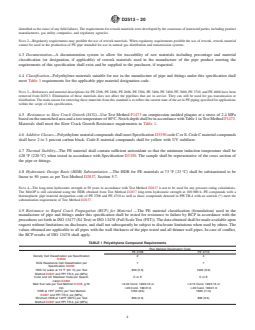
TABLE 1 Polyethylene Compound Requirements
Pipe Material Designation Code
PE 2708 PE 4710
Density Cell Classification per Specification 24
D3350
SCG Resistance Cell Classification per 77
Specification D3350
HDS for water at 73 °F (23 °C) per Test 800 (5.5) 1000 (6.9)
Method D2837 and PPI TR-3, psi (MPa)
Color and UV Stabilizer Code per Speciif- CorE CorE
cation D3350
Melt flow rate per Test Method D1238, g/10 #0.40 Cond. 190/2.16 or #0.15 Cond. 190/2.16 or
min #20 Cond. 190/21.6 #20 Cond. 190/21.6
HDB at 73ºF (23ºC) per Test Method 1250 (8.6) 1600 (11.0)
D2837 and PPI TR-3, psi (MPa)
Minimum HDB at 140ºF (60ºC) per Test 800 (5.5) 800 (5.5)
Method D2837 and PPI TR-3, psi (MPa)
D2513−20
measuringtheductilitypropertiesofthepipematerialexposedtoartificial
13478(FullScaleTest(FST)).Thedataobtainedshallbemade
weathering. These requirements and test methods are based on expected
available upon request without limitations on disclosure, and
UV exposure levels in North America. Alternate requirements and
shallnotsubsequentlybesubjecttodisclosurelimitationswhen
alternatedeterminationmethodsmaybeappropriateinotherregionsofthe
used by others. The values obtained are applicable to all pipes
world. As an example ISO 4437 standard requires a minimum resistance
with the wall thickness of the pipe tested and all thinner wall
to an accumulation of 3.6GJ for non-black polyethylene materials.
pipes. In case of conflict, the RCP results of ISO 13478 shall
4.11 Qualification for LPG Service—Materials that qualify
apply.
for natural gas service and that carry a recommended HDB for
140°F in accordance with 5.6, also qualify for LPG service
NOTE 5—While S4 or FST testing of any combination of outside
diameterandSDRispermittedinfulfillmentoftherequirementfortesting without the need for further testing.
PE material resistance to RCP, S4 testing of SDR 9 or SDR 11 PE pipe
NOTE10—ThetermsLPGandLPGgasaresynonymousandonlyapply
specimens is currently the most common industry practice.
to a particular kind of fuel gas. For compositions and properties of LPG
NOTE 6—Caution should be exercised in applying the RCP test results
gases see NFPA 58, Appendix B.
obtainedononeSDRorDRofpipeacrossaseriesofpipeSDR’sorDR’s
produced from the same PE material classification (formulation). Indus-
trial research to clarify the relationships between FST and S4 testing is
5. Requirements
ongoing at this time, particularly as it relates to the applicability of RCP
5.1 General—Pipe shall be supplied in either coils or
testresultsobtainedononeSDRorDRofpipetootherSDR’sorDR’sof
straightlengths.Anypipesuppliedincoilsmustmeetthesame
pipe produced from the same PE material classification (formulation).
Consult the resin manufacturer regarding the applicability of RCP test
requirements before and after coiling.
results across diameters or SDR’s, or both. Additional information
5.2 Workmanship—The pipe and fittings shall be homoge-
regarding the use of RCP data is presented in ISO 4437.
neous throughout and free of visible cracks, holes, foreign
4.10 UV Resistance—PE materials shall be Code C or E as
inclusion, blisters, and dents, or other injurious defects. The
defined in Specification D3350. Code C material shall contain
pipe and fittings shall be as uniform as commercially practi-
2 to 3 percent well dispersed carbon black, and due to the
cable in color, opacity, density, and other physical properties.
absorptive properties of the carbon black, is considered to be
5.3 Pipe and Tubing Dimensions and Tolerances:
stabilized against deterioration from unprotected exposure to
5.3.1 Dimension—The dimensions shall be specified by
UV for not less than 10 years. Code E material shall be
stabilized and protected against deterioration from unprotected wall thickness and outside diameter.
5.3.1.1 Diameters—The outside diameter shall meet the
UV exposure for not less than 3 years.
requirements given in Table 2 or Table 3 when measured in
4.10.1 PE compounds designated as Code C containing 2 to
accordance with 6.5.
3% carbon black shall be considered stabilized against dete-
5.3.1.2 Toe-In—Whenmeasuredinaccordancewith6.5.1.1,
rioration for not less than 10 years without the need for
additional testing. Black PE pipe coextruded with yellow theoutsidediameteratthecutendofthepipeshallnotbemore
than 1.5% smaller than the undistorted outside diameter.
stripe(s) shall be considered stabilized against deterioration
from unprotected exposure to UV for not less than 10 years. Measurementoftheundistortedoutsidediametershallbemade
no closer than 1.5 pipe diameters or 11.8 in. (300 mm),
NOTE 7—Consult with pipe manufacturer on UV Resistance of black
whichever distance is less, from the cut end of the pipe.
pipes with yellow stripe(s) for conformance to the performance require-
Undistorted outside diameter shall meet the requirements of
ments of code “C” material.
Table 2 or Table 3.
4.10.2 PE compounds designated as Code E shall be con-
5.3.1.3 Wall Thickness—The wall thickness shall be as
sidered stabilized against deterioration from unprotected expo-
specified in Table 3 or Table 4 when measured in accordance
sure to UV for not less than 3 years when meeting the
with 6.5.1.2. The minimum wall thickness at any point of
followingcriteriafollowingexposuretoactualoutdoor(natural
measurementshallbenotlessthantheminimumwallthickness
sunlight) weathering for up to 3 years in accordance with
specified in Table 3 or Table 4.
Practice D1435 or accelerated weathering in accordance with
5.3.1.4 Wall Thickness Eccentricity Range—The wall thick-
PracticeD2565andPracticeG155fortheequivalentofatleast
ness eccentricity range shall be within 12% when measured in
3 years natural sunlight: (a) all tensile bar specimens tested in
accordance with 6.5.1.3.
accordancewithTestMethodD638shallhaveanelongationat
5.3.1.5 Ovality—The ovality (cross section) of 3 in. IPS
break value greater than 400% indicating the equivalency of
(88.9 mm) and smaller pipe shall not exceed 5% when
the PE material before and after UV exposure against the
measured in accordance with 6.5.3. Measurements of coiled
elongation at break requirement in Specification D3350; and
pipe shall be made on a sample cut from the coil, and in case
(b) all tensile bar specimens tested in accordance with Test
of disagreement, conditioned per 6.3.
Method D638 shall retain a minimum of 50% of their original
elongation at break values. Test data shall be made available
NOTE 11—Other factors, that is, installation compaction, static soil
loading, and dynamic vehicular loads may increase the ovality; therefore,
from the manufacturer upon request.
5%waschosenasthelimitfortheamountcontributedbymanufacturing,
NOTE8—StudieshaveshownHDPEexposedtoXenonArcviaPractice packing, in-plant storage, and shipping. For further information, see (1) .
G155-ACycle 1 give approximately 4.4 times the acceleration to outdoor
Florida exposure.Therefore approximately 2000 hours XenonArc testing
would equal about 1-year outdoor exposure in Florida or 2-years in
southern Canada.
The boldface numbers in parentheses refer to a list of references at the end of
NOTE 9—The determination for UV resistance is often based on this standard.
D2513−20
TABLE 2 Outside Diameters and Tolerances for Plastic Pipe, in. (mm)
Nominal Maximum Out-of-Roundness
Pipe Outside Diameter Tolerance
SDR 17
Size
SDR 32.5 SDR 26 SDR 21 SDR 13.5
SDR 11
⁄2 0.840 (21.3) ±0.004 (±0.102) . . 0.03(0.762) 0.016(0.406)
⁄4 1.050 (26.7) ±0.004 (±0.102) . . 0.03(0.762) 0.02(0.508)
1 1.315 (33.4) ±0.005 (±0.127) . . 0.03(0.762) 0.02(0.508)
1 ⁄4 1.660 (42.1) ±0.005 (±0.127) . . 0.03(0.762) 0.024(0.61)
1 ⁄2 1.900 (48.3) ±0.006 (±0.152) . . 0.06(1.524) 0.024(0.61)
2 2.375 (60.3) ±0.006 (±0.152) . . 0.06(1.524) 0.024(0.61)
2 ⁄2 2.875 (73.0) ±0.007 (±0.179) . . 0.06(1.524) 0.03(0.762)
3 3.500 (88.9) ±0.008 (±0.203) . . 0.06(1.524) 0.03(0.762)
3 ⁄2 4.000 (101.6) ±0.008 (±0.203) . . 0.1(2.5) 0.03(0.762)
4 4.500 (114.3) ±0.009 (±0.229) . . 0.1(2.5) 0.03(0.762)
5 5.563 (141.3) ±0.010 (±0.254) . . 0.1(2.5) 0.06(1.524)
6 6.625 (168.3) ±0.011 (±0.279) 0.12(3) 0.11(2.74) 0.1(2.5) 0.07(1.778)
8 8.625 (219.1) ±0.013 (±0.330) 0.24(6.1) 0.16(4.06) 0.12(3) 0.08(2.04)
10 10.750 (273.0) ±0.015 (±0.381) 0.24(6.1) 0.2(5.08) 0.14(3.58) 0.1(2.5)
12 12.750 (323.8) ±0.017 (±0.432) 0.28(7.12) 0.2(5.08) 0.14(3.58) 0.1(2.5)
14 14.000 (355.6) ±0.063 (±1.60) 0.308(7.82) 0.224(5.68) 0.154(3.91) 0.112(2.84)
16 16.000 (406.4) ±0.072 (±1.83) 0.352(8.94) 0.256(6.50) 0.176(4.47) 0.128(3.25)
18 18.000 (457.2) ±0.081 (±2.06) 0.396(10.05) 0.288(7.31) 0.198(5.02) 0.144(3.65)
20 20.000 (508.0) ±0.090 (±2.29) 0.44(11.1) 0.32(8.12) 0.22(5.58) 0.16(4.06)
22 22.000 (558.8) ±0.099 (±2.51) 0.484(12.29) 0.352(8.94) 0.242(6.14) 0.176(4.47)
24 24.000 (609.6) ±0.108 (±2.74) 0.528(13.41) 0.384(9.75) 0.264(6.70) 0.192(4.87)
TABLE 3 PE Tubing-Diameters, Wall Thicknesses, and
5.4 Minimum Hydrostatic Burst Pressure/Apparent Tensile
Tolerances, in. (mm)
Strength (Quick Burst)—The pipe or system shall fail in a
Nominal Minimum Wall
ductile manner when tested in accordance with Test Method
Outside
Tubing Tolerance Wall Thickness
Diameter
D1599.Forpipesizesabove4-in.nominaldiameter,thetesting
Size (CTS) Thickness Tolerance
1 lab shall be allowed to replace the quick burst test (Test
⁄4 0.375 (9.52) ±0.004 (±0.10) 0.062 (1.58) +0.006 (+0.15)
⁄8 0.500 (12.7) ±0.004 (±0.10) 0.062 (1.58) +0.006 (+0.15) Method D1599) by the apparent ring tensile strength test (Test
⁄2 0.625 (15.9) ±0.004 (±0.10) 0.062 (1.58) +0.006 (+0.15)
Method D2290). The minimum apparent tensile strength at
⁄2 0.625 (15.9) ±0.004 (±0.10) 0.090 (2.27) +0.009 (+0.23)
yieldwhendeterminedinaccordancewith6.8shallbe2520psi
⁄2 0.625 (15.9) ±0.004 (±0.10) 0.104 (2.64) +0.010 (+0.25)
⁄4 0.875 (22.2) ±0.004 (±0.10) 0.062 (1.58) +0.006 (+0.15)
(17.4 MPa) for PE 2708 pipe or 2900 psi (20.0 MPa) for PE
⁄4 0.875 (22.2) ±0.004 (±0.10) 0.077 (1.95) +0.008 (+0.20)
4710 pipe.
⁄4 0.875 (22.2) ±0.004 (±0.10) 0.090 (2.27) +0.009 (+0.23)
1 1.125 (28.6) ±0.005 (±0.13) 0.062 (1.58) +0.007 (+0.18)
NOTE 13—The requirements in 5.3.1.1 and 5.3.1.3 are for laboratory
1 1.125 (28.6) ±0.005 (±0.13) 0.090 (2.27) +0.011 (+0.28)
proof testing only and should not be interpreted as applicable to on-site
1 1.125 (28.6) ±0.005 (±0.13) 0.099 (2.51) +0.012 (+0.31)
1 1.125 (28.6) ±0.005 (±0.13) 0.101 (2.56) +0.012 (+0.31)
testing for acceptance of installed systems larger than 12 in. See
1 1.125 (28.6) ±0.005 (±0.13) 0.121 (3.07) +0.015 (+0.38)
appropriate installation standards or manufacturer’s recommendations for
1 ⁄4 1.375 (34.9) ±0.005 (±0.13) 0.062 (1.58) +0.007 (+0.18)
field test procedures.
1 ⁄4 1.375 (34.9) ±0.005 (±0.13) 0.090 (2.27) +0.011 (+0.28)
1 ⁄4 1.375 (34.9) ±0.005 (±0.13) 0.121 (3.07) +0.015 (+0.38)
5.5 Chemical Resistance—The pipe and fittings shall not
1 ⁄4 1.875 (47.6) ±0.006 (±0.15) 0.062 (1.58) +0.007 (+0.18)
increase in weight more than 0.5% (1.0% for toluene in
methanol).Where the test specimen is a pipe ring, the material
shall not change more than 612% in apparent tensile yield
(1)Before or during installation, coiled pipe larger than 3
strengthwhenmeasuredinaccordancewith6.9.Wherethetest
in. IPS (88.9 mm) shall be processed by the installer through
specimen is a plaque, the material shall not change more than
re-rounding equipment that corrects ovality to 5% or less.
612% in tensile strength at yield when measured in accor-
NOTE12—Ovalityisapackagingconditionthatoccurswhenroundable
dance with Test Method D638.
pipe is wound into a coil—the pipe flattens out as it is coiled. Ovality is
correctedwhenjoiningequipmentisappliedtoroundablepipe,orbyfield
NOTE 14—This pipe test is only an indication of what will happen as a
processing roundable pipe through re-rounding and straightening equip-
result of short term exposure to these chemicals. For longterm results,
ment during installation.
additional testing is required.
5.3.1.6 Length—The pipe shall be supplied in straight
5.6 Melt Index—Melt index is the flow rate of PE material
lengths or coils as agreed upon between the manufacturer and
when measured in accordance with Test Method D1238,
the purchaser. The length shall not be less than the minimum
condition 190/2.16 (formerly Condition E). Materials that
length agreed upon when corrected to 73°F (23°C).
recordzeroflowundercondition190/2.16shallbemeasuredin
5.3.1.7 When sizes other than those listed in Table 2, Table
3 or Table 4 are used, tolerances shall be: for outside diameter, accordance with condition 190/21.6 (formerly condition F).
The melt index of pipe/fitting shall meet the designated
use same tolerance of next smaller size; for wall thickness, use
same tolerance percentage as shown in the tables. category in Table 5. The sample shall be representative of the
D2513−20
A,B
TABLE 4 Wall Thicknesses and Tolerances for Plastic Pipe, in (mm)
Nominal Pipe Size
C
DR Minimum Tolerance
(IPS)
D
⁄2 0.062 (1.58) +0.007 (+0.178)
11.0 0.076 (1.93) +0.009 (+0.229)
9.33 0.090 (2.29) +0.011 (+0.279)
D
⁄4 0.090 (2.29) +0.011 (+0.279)
11.0 0.095 (2.41) +0.011 (+0.279)
Sch 40 0.113 (2.87) +0.014 (+0.356)
D
1 0.090 (2.29) +0.011 (+0.279)
13.5 0.097 (2.46) +0.012 (+0.305)
11.0 0.120 (3.05) +0.014 (+0.356)
9.9 0.133 (3.38) +0.016 (+0.406)
9.33 0.140 (3.56) +0.017 (+0.432)
D
1 ⁄4 0.090 (2.29) +0.011 (+0.279)
17.0 0.098 (2.49) +0.012 (+0.305)
13.5 0.123 (3.12) +0.015 (+0.381)
Sch 40 0.140 (3.56) +0.017 (+0.432)
11.0 0.151 (3.84) +0.018 (+0.457)
10.0 0.166 (4.22) +0.020 (+0.508)
9.33 0.178 (4.52) +0.021 (+0.533)
6.0 0.277 (7.04) +0.033 (+0.838)
D
1 ⁄2 0.090 (2.29) +0.011 (+0.279)
17 0.112 (2.85) +0.013 (+0.330)
13.5 0.141 (3.58) +0.017 (+0.432)
Sch 40 0.145 (3.68) +0.017 (+0.432)
11 0.173 (4.39) +0.021 (+0.533)
2 21 0.113 (2.87) +0.014 (+0.356)
17 0.140 (3.56) +0.017 (+0.432)
Sch 40 0.154 (3.91) +0.018 (+0.457)
13.5 0.176 (4.47) +0.021 (+0.533)
11 0.216 (5.49) +0.026 (+0.660)
9.33 0.255 (6.48) +0.031 (+0.787)
2 ⁄2 21 0.137 (3.48) +0.016 (+0.406)
17 0.169 (4.29) +0.020 (+0.508)
13.5 0.213 (5.41) +0.026 (+0.660)
11 0.261 (6.63) +0.031 (+0.787)
3 21 0.167 (4.24) +0.020 (+0.508)
17 0.206 (5.23) +0.025 (+0.635)
Sch 40 0.216 (5.49) +0.026 (+0.660)
13.5 0.259 (6.58) +0.031 (+0.787)
11.5 0.304 (7.72) +0.036 (+0.914)
11 0.318 (8.08) +0.038 (+0.965)
9.33 0.375 (9.53) +0.045 (+1.143)
3 ⁄2 21 0.190 (4.83) +0.023 (+0.584)
17 0.236 (5.99) +0.028 (+0.711)
13.5 0.296 (7.52) +0.036 (+0.914)
11 0.363 (9.22) +0.044 (+1.118)
4 21 0.214 (5.44) +0.026 (+0.660)
19 0.237 (6.02) +0.028 (+0.711)
17 0.265 (6.73) +0.032 (+0.813)
13.5 0.333 (8.46) +0.040 (+1.016)
11.5 0.391 (9.93) +0.047 (+1.194)
11.0 0.409 (10.39) +0.049 (+1.246)
9.33 0.482 (12.24) +0.058 (+1.473)
5 21.6 0.258 (6.55) +0.031 (+0.787)
21 0.265 (6.73) +0.032 (+0.813)
17 0.327 (8.31) +0.039 (+0.991)
13.5 0.412 (10.46) +0.050 (+1.270)
11 0.506 (12.85) +0.061 (+1.549)
6 32.5 0.204 (5.18) +0.024 (+0.610)
26 0.255 (6.48) +0.031 (+0.787)
23.7 0.280 (7.11) +0.034 (+0.864)
21 0.315 (8.00) +0.038 (+0.965)
17 0.390 (9.91) +0.047 (+1.194)
13.5 0.491 (12.47) +0.059 (+1.499)
D2513−20
TABLE4 Continued
Nominal Pipe Size
C
DR Minimum Tolerance
(IPS)
11.5 0.576 (14.63) +0.069 (+1.753)
11.0 0.602 (15.29) +0.072 (+1.829)
8 32.5 0.265 (6.73) +0.032 (+0.813)
26 0.332 (8.43) +0.040 (+1.016)
21 0.411 (10.44) +0.049 (+1.245)
17 0.507 (12.90) +0.061 (+1.549)
13.5 0.639 (16.23) +0.077 (+1.956)
11.5 0.750 (19.05) +0.090 (+2.286)
11 0.784 (19.91) +0.094 (+2.388)
10 32.5 0.331 (8.41) +0.040 (+1.016)
26 0.413 (10.49) +0.050 (+1.270)
21 0.512 (13.00) +0.061 (+1.549)
17 0.632 (16.05) +0.076 (+1.930)
13.5 0.796 (20.22) +0.096 (+2.438)
11.5 0.935 (23.75) +0.112 (+2.845)
11 0.977 (24.82) +0.117 (+2.972)
12 32.5 0.392 (9.96) +0.047 (+1.194)
26 0.490 (12.45) +0.059 (+1.499)
21 0.607 (15.42) +0.073 (+1.854)
17 0.750 (19.05) +0.090 (+2.286)
13.5 0.944 (23.98) +0.113 (+2.870)
11.5 1.109 (28.17) +0.133 (+3.378)
11 1.159 (29.44) +0.139 (+3.531)
14 32.5 0.431 (10.942) +0.052 (+1.313)
26 0.538 (13.677) +0.065 (+1.641)
21 0.667 (16.933) +0.080 (+2.032)
17 0.824 (20.918) +0.099 (+2.510)
13.5 1.037 (26.341) +0.124 (+3.161)
11.5 1.217 (30.922) +0.146 (+3.711)
11 1.273 (32.327) +0.153 (+3.879)
16 32.5 0.492 (12.505) +0.059 (+1.501)
26 0.615 (15.631) +0.074 (+1.876)
21 0.762 (19.352) +0.091 (+2.322)
17 0.941 (23.906) +0.113 (+2.869)
13.5 1.185 (30.104) +0.142 (+3.612)
11.5 1.391 (35.339) +0.167 (+4.241)
11 1.455 (36.945) +0.175 (+4.433)
18 32.5 0.554 (14.068) +0.066 (+1.688)
26 0.692 (17.585) +0.083 (+2.110)
21 0.857 (21.771) +0.103 (+2.613)
17 1.059 (26.894) +0.127 (+3.227)
13.5 1.333 (33.867) +0.160 (+4.064)
11.5 1.565 (39.757) +0.188 (+4.771)
11 1.636 (41.564) +0.196 (+4.988)
20 32.5 0.615 (15.631) +0.074 (+1.876)
26 0.769 (19.538) +0.092 (+2.345)
21 0.952 (24.190) +0.114 (+2.903)
17 1.176 (29.882) +0.141 (+3.586)
13.5 1.481 (37.630) +0.178 (+4.516)
11.5 1.739 (44.174) +0.209 (+5.301)
11 1.818 (46.182) +0.218 (+5.542)
22 32.5 0.677 (17.194) +0.081 (+2.063)
26 0.846 (21.492) +0.102 (+2.579)
21 1.048 (26.610) +0.126 (+3.193)
17 1.294 (32.871) +0.155 (+3.944)
13.5 1.630 (41.393) +0.196 (+4.967)
11.5 1.913 (48.591) +0.230 (+5.831)
11 2.000 (50.800) +0.240 (+6.096)
24 32.5 0.738 (18.757) +0.089 (+2.251)
26 0.923 (23.446) +0.111 (+2.814)
21 1.143 (29.029) +0.137 (+3.483)
D2513−20
TABLE4 Continued
Nominal Pipe Size
C
DR Minimum Tolerance
(IPS)
17 1.412 (35.859) +0.169 (+4.303)
13.5 1.778 (45.156) +0.213 (+5.419)
11.5 2.087 (53.009) +0.250 (+6.361)
11 2.182 (55.418) +0.262 (+6.650)
A
The sizes listed in Table 4 are those commercially available sizes used by the gas industry.
B
The minimum is the lowest wall thickness of the pipe at any cross section. The maximum permitted wall thickness, at any cross section, is the minimum wall thickness
plus the stated tolerance. All tolerances are on the plus side of the minimum requirement.
C
The DR shown are designations commonly accepted by the gas industry and do not calculate exactly.
D
These wall thicknesses are minimum and are not a function of the dimension ratios.
TABLE 5 Pipe Category
Category
Property Test Method
AB C D E F G H
Temperature, . . . 100 (38) 120 (49) 140 (60) 160 (71) 180 (82) 200 (93) . . . .
°F (°C)
Hydrostatic D2837 400 (2.8) 500 (3.4) 630 (4.3) 800 (5.5) 1000 (6.9) 1250 (8.6) 1600 (11.0) 2000 (13.8)
Design
Basis, psi
(MPa)
A BC
Melt Index D1238 >0.5 0.2–0.5 0.01–0.3 <0.01 . . .
Examples: CDB - At 140ºF (60ºC) the HDB is 800 psi (5.5 MPa). The approximate melt index range is 0.2 to 0.5 g/10 min for this PE pipe.
A
DF - At 160ºF (71ºC) the HDB is 1250 psi (8.6 MPa) .
A
The Melt Index information in this table is intended to provide guidance relating to heat fusion joining of PE materials, not for classification of materials. This property
is not applicable to non-PE materials or to mechanical fittings. See 7.5.
B
Typically melt flow measured under condition 190/21.6 is less than 4.01 g/10 min.
C
WhenaPEpipeorfittingismarkedper7.2or7.5withtheletter“E,”itaffirmsthatthemanufacturerhasverifiedtheapplicabilityofgenericfusionjoiningwiththeirproducts
in accordance with PPI TR-33 and PPI TR-41 by joining to itself and to other “E” materials and testing the joints in accordance with applicable regulations. However,
qualification of joining procedures by operators in accordance with applicable regulations may still be required. Information about manufacturers who have verified PPI
TR-33 and PPI TR-41 generic fusion joining with their products is found in PPI TR-33 and PPI TR-41. Consult PPI and the manufacturer for additional information.
cross section of the pipe or fitting and diced to an appropriate when the wall thickness of the pipe being produced in
size by a method not producing heat. accordance with this standard exceeds that of the pipe used to
establish the resistance to RCP for the PE compound. In these
5.7 Sustained Pressure 73 °F (23 °C)—Fittingsshallnotfail
circumstances, additional testing for resistance to failure by
in less than 1000 h when tested in accordance with Test
RCPin accordance with the procedures set forth in ISO 13477
MethodD1598.ForPE2708materials,thestressshallbe1320
(S4 Test) or ISO 13478 (Full Scale Test (FST)) shall be
psi, for PE 4710 materials, the stress shall be 1600 psi.
conducted. In cases of conflict, the RCP results of ISO 13478
5.8 Elevated Temperature Service—piping materials in-
shall apply. The data obtained shall be made available upon
tendedforuseattemperaturesabove100°F(38°C)shallhave
request without limitations on disclosure, and shall not subse-
the PPI hydrostatic design basis (HDB) determined at the
quently be subject to disclosure limitations when used by
specific temperature in accordance with Test Method D2837.
others.
The 100 000-h intercept (long-term strength) shall be catego-
NOTE17—TherequirementsandtestingforresistancetoRCPspecified
rized in accordance with Table 5 and be listed as the “hydro-
in this specification do not provide information for all possible conditions
static design basis of XXX psi at XXX °F (°C) for (compound
of use. The user should consult with the manufacturer and other
name).”
appropriate sources such as resin suppliers, research, academia, etc., to
determine that the RCP resistance provided by the pipe producer is
NOTE15—Manydesignfactorsforelevatedtemperatureservicecannot
sufficient for the intended use.
be covered in this specification. Users should consult applicable codes for
limitations on pertinent maximum temperatures. 5.11 Inside Surface Ductility for Pipe—The inside surface
NOTE 16—In the absence of an HDB established at the specified
of pipe shall be ductile as shown by testing in accordance with
temperature,theHDBofahighertemperaturemaybeusedindetermining
5.11.1, 5.11.2, and 5.11.3. Before testing, specimens shall be
a design pressure rating at the specified temperature by arithmetic
conditioned in accordance with Practice D618 for 40 h at 73.4
interpolation.
6 3.6°F (23 6 2°C) and 50% relative humidity.
5.9 HDB Validation for PE Pipe—The 73°F (23°C) Hy-
NOTE18—IDductilitytestingmayalsobeconductedforqualitycontrol
drostatic Design Basis (HDB) of PE pipe shall be validated by
purposes, however, there is no known data that identifies one test as
thepipeproducerusingthePEvalidationprocedureasoutlined
inferior, equal, or superior to the others, therefore, results from one test
inTestMethodD2837.ForMDPEmaterials,theHDBof1250
should not be evaluated against the results from either of the other two
psi shall be validated; for HDPE materials, the HDB of 1600
tests.
psi shall be validated.
5.11.1 Bend-back Test Method:
5.10 Resistance to Rapid Crack Propagation (RCP) for 5.11.1.1 From the pipe, squarely cut a ring of pipe with a
Pipe—Additional testing for resistance to RCP is required minimumwidthof1 ⁄4(32mm).Theentirewallthicknessmay
D2513−20
be tested, or material may be removed from the OD surface of 5.13 Joints:
the pipe, while maintaining an undisturbed ID surface, to 5.13.1 Heat Fusion:
produce a ring with ⁄8-in. (9.5-mm) wall thickness. 5.13.1.1 Heatfusionjointsofthermoplasticpipeandfittings
shallbemadeinaccordancewithPracticeF2620andtheuser’s
NOTE 19—The ring may be tested in its entirety, or may be cut into
written procedure.
representative sectors to produce bend-back test specimens.
5.13.1.2 PE butt fusion joining shall be between compo-
5.11.1.2 In a well-lit area at 73.4 6 3.6°F (23 6 2°C)
nents (pipes, fittings, or valves) having the same SDR or DR.
perform the following procedure within 5 min: (a) Bend the
Butt fusion between unlike SDR or DR components shall be
specimen inside-out (reverse-bend so that the pipe ID surface
allowed only if it has been demonstrated that long term
is on the outside surface of the bent specimen). (b) Using an
performance is not adversely affected. The minimum require-
apparatus such as a vise or other suitable bending equipment,
ment to demonstrate long term performance shall be the
close the legs of the specimen together. When the specimen
validation procedure for PE in Test Method D2837. The
legs are closed together, the top of the bend-back specimen
Hydrostatic Design Basis (HDB) of the PE material shall be
shall protrude 1 to 1 ⁄4 in. (25 to 32 mm) or two wall
validated using specimens containing butt fusion joints result-
thicknesses, whichever is greater, above the point of closure
ing from different SDRs or DRs. Pipe/pipe joints of the given
(jaws). (c) With the unaided (naked) eye, visually examine the
PE material that pass shall validate pipe/pipe, pipe/fitting, or
protruding reverse-bent pipe ID surface for signs of brittle
fitting/fitting joints of the same SDR ratio for that PE material.
cracking or crazing.
5.13.2 Mechanical—Mechanicalfittingsshallbeinstalledin
5.11.1.3 Any indication of brittle cracking or crazing indi-
accordance with the user’s written procedures and the fitting
cates failure.
manufacturer’s installation instructions. The joint shall be
5.11.2 Elongation-at-Break Test Method :
tested in accordance with the specific design category as
5.11.2.1 Five Test Method D638 Type IV specimens cut in
outlined in 6.10.
thelongitudinaldirectionfromlocationsequallyspacedaround
5.13.3 Electrofusion—Electrofusion joints shall be made in
thecircumferenceofthepipeshallbetestedinaccordancewith
accordance to user’s written procedures and the fitting manu-
Test Method D638 at a cross-head separation speed of 2 in.
facturer’s installation instructions.
(50.8 mm) min, and at 73.4 6 3.6°F (23 6 2°C). If the
5.14 Fittings:
specimenthicknessmustbereducedbymachining,thepipeID
5.14.1 Socket-type fusion fittings shall meet the require-
surface shall be left unaltered.
ments of Specification D2683.
NOTE 20—If the specimen thickness is reduced, the machined side of 5.14.2 Butt-type fusion fittings shall meet the requirements
the specimen must be smooth and the thickness of the specimen in the
of Specification D3261.
gage length must be uniform. Surface cuts or scratches and nonuniform
5.14.3 Electrofusion fittings should meet the requirements
thicknessinthespecimengagelengthcandetrimentallyaffecttestresults.
of Specification F1055.
5.11.2.2 The percent elongation at break for each test
5.15 PE Valves—All PE gas valves shall meet the require-
specimen shall exceed 400%.
ments of ANSI Standard B16.40.
5.11.3 Thermal Stability Test Method—Specimens of the
5.16 Excess Flow Valves—Allexcessflowvalvesshallmeet
pipe inside wall surface not more than 0.005 in. (0.13 mm)
the requirements of Specification F2138.
thick shall demonstrate a minimum induction temperature of
428°F (220°C) when tested in accordance with the Test
6. Test Methods
Method for Thermal Stability in Specification D3350.
6.1 General—The test methods in this specification cover
5.12 Squeeze-Off—Thisrequirementislimitedtopipesizes,
plastic pipe and fittings to be used for gas transmission and
wall thicknesses, squeeze procedures, and conditions deemed
distribution. Test methods that are applicable from other
suitable for squeeze-off in service by the pipe manufacturer.
specifications will be referenced in the paragraph pertaining to
There shall be no leakage or visual evidence of splitting,
that particular test.
cracking, breaking or reduction in 1000-h sustained pressure
6.2 Sampling—Takearepresentativesampleofthepipeand
category when pipe is tested as follows:
fittings sufficient to determine conformance with this specifi-
5.12.1 Prepare six randomly selected pipe specimens in
cation.About40ft(12m)ofpipeisrequiredtoperformallthe
accordance with Test Method D1598 except they shall be
tests prescribed. The number of fittings required varies, de-
unfilled.
pendinguponthesizeandtypeoffitting.Asamplingplanshall
5.12.2 The squeeze-off shall be effected at the mid-point of
be agreed upon by the purchaser and the manufacturer (see
the test specimen, 90° to the point of the measured minimum
Practice D1898).
wall thickness. Close the squeeze bars to the gap stop in
6.2.1 Pipe Test Specimens—Not less than 50% of the test
Specification F1563 and hold in constraint for 4 h. Remove
specimens required for any pressure test shall have at least a
squeeze bars and reround pipe by closing squeeze bars at a
partofthemarkingintheircentralsections.Thecentralsection
point 90° from the squeeze area.
is that portion of pipe which is at least one pipe diameter away
5.12.3 Immediately upon removal of the squeeze-off tool,
from an end closure.
fillthespecimenswithambienttemperaturewater,thatis,67 6
10°F (19.4 6 5.6°C), condition, and test in accordance with 6.3 Conditioning—For those tests where conditioning is
6.6. requiredorunlessotherwisespecified,conditionthespecimens
D2513−20
priortotestingforaminimumof1hinwateror4hinairat73.4 and the applicable fiber stress, whichever is greater. The test
6 3.6°F (23 6 2°C). fiber stress shall be 90% of the hydrostatic design basis
(HDB).
6.4 Test Conditions—Conduct the test in the standard labo-
ratory atmosphere of 73.4 6 3.6°F (23 6 2°C) and 50 65%
NOTE22—Air,methane,ornitrogenmaybesubstitutedforwaterasthe
test medium.
relative humidity, unless otherwise specified.
6.6.2 Maintainthespecimensatthepressuresrequired,held
6.5 Dimensions and Tolerances:
to 610 psi (0.07 MPa), for a period of 1000 h at the test
6.5.1 Pipe—Any length of pipe is used to determine the
temperature 63.6°F (62°C) as specified in 6.6.1.
dimensions. Coiled pipe shall be measured in the natural
6.6.3 Failure of two of the six specimens tested shall
springback condition, unless specified otherwise.
constitutefailureinthetes
...
This document is not an ASTM standard and is intended only to provide the user of an ASTM standard an indication of what changes have been made to the previous version. Because
it may not be technically possible to adequately depict all changes accurately, ASTM recommends that users consult prior editions as appropriate. In all cases only the current version
of the standard as published by ASTM is to be considered the official document.
Designation: D2513 − 19 D2513 − 20 An American National Standard
Standard Specification for
Polyethylene (PE) Gas Pressure Pipe, Tubing, and Fittings
This standard is issued under the fixed designation D2513; the number immediately following the designation indicates the year of
original adoption or, in the case of revision, the year of last revision. A number in parentheses indicates the year of last reapproval. A
superscript epsilon (´) indicates an editorial change since the last revision or reapproval.
1. Scope*
1.1 This specification covers requirements and test methods for material dimensions and tolerances, hydrostatic burst strength,
chemical resistance, and rapid crack resistance of polyethylene pipe, tubing, and fittings for use in fuel gas pipelines for direct
burial and reliner applications. The pipe and fittings covered by this specification are intended for use in the transmission and
distribution of natural gas. Requirements for the qualifying of polyethylene systems for use with liquefied petroleum gas are also
covered.
1.1.1 This specification does not cover threaded pipe. Design considerations are discussed in Appendix X1. In-plant quality
control programs are specified in Annex A1 and Annex A2.
1.1.2 See Specification F2619/F2619M for polyethylene piping for pressure or non-pressure oil and gas producing applications
to convey fluids such as oil, dry or wet gas, multiphase fluids, and non-potable oilfield water.
1.2 The text of this specification references notes, footnotes, and appendixes which provide explanatory material. These notes and
footnotes (excluding those in tables and figures) shall not be considered as requirements of the specification.
1.3 The values stated in inch-pound units are to be regarded as standard. The values given in parentheses are mathematical
conversions to SI units that are provided for information only and are not considered standard.
1.4 The following is an index of the annexes and appendix in this specification:
Annex Subject
Annex A1 In-Plant Quality Control for all materials up to 12 in.
Annex A2 In-Plant Quality Control for PE materials 14 in. and larger.
Appendixes Subject
Appendix Design Consideration
X1
1.5 The following precautionary caveat pertains only to the test method portion, Section 6, of this specification. This standard
does not purport to address all of the safety concerns, if any, associated with its use. It is the responsibility of the user of this
standard to establish appropriate safety, health, and environmental practices and determine the applicability of regulatory
limitations prior to use.
1.6 This international standard was developed in accordance with internationally recognized principles on standardization
established in the Decision on Principles for the Development of International Standards, Guides and Recommendations issued
by the World Trade Organization Technical Barriers to Trade (TBT) Committee.
This specification is under the jurisdiction of ASTM Committee F17 on Plastic Piping Systems and is the direct responsibility of Subcommittee F17.60 on Gas.
Current edition approved Aug. 1, 2019Dec. 1, 2020. Published August 2019December 2020. Originally approved in 1966. Last previous edition approved in 20182019
as D2513 – 18a.D2513 – 19. DOI: 10.1520/D2513-19.10.1520/D2513-20.
*A Summary of Changes section appears at the end of this standard
Copyright © ASTM International, 100 Barr Harbor Drive, PO Box C700, West Conshohocken, PA 19428-2959. United States
D2513 − 20
2. Referenced Documents
2.1 ASTM Standards:
2.1.1 Terminology:
D1600 Terminology for Abbreviated Terms Relating to Plastics
F412 Terminology Relating to Plastic Piping Systems
2.1.2 Test Methods for:
D638 Test Method for Tensile Properties of Plastics
D1238 Test Method for Melt Flow Rates of Thermoplastics by Extrusion Plastometer
D1598 Test Method for Time-to-Failure of Plastic Pipe Under Constant Internal Pressure
D1599 Test Method for Resistance to Short-Time Hydraulic Pressure of Plastic Pipe, Tubing, and Fittings
D2122 Test Method for Determining Dimensions of Thermoplastic Pipe and Fittings
D2290 Test Method for Apparent Hoop Tensile Strength of Plastic or Reinforced Plastic Pipe
D2837 Test Method for Obtaining Hydrostatic Design Basis for Thermoplastic Pipe Materials or Pressure Design Basis for
Thermoplastic Pipe Products
F1473 Test Method for Notch Tensile Test to Measure the Resistance to Slow Crack Growth of Polyethylene Pipes and Resins
2.1.3 Practices for:
D543 Practices for Evaluating the Resistance of Plastics to Chemical Reagents
D618 Practice for Conditioning Plastics for Testing
D1435 Practice for Outdoor Weathering of Plastics
D1898 Practice for Sampling of Plastics (Withdrawn 1998)
D2774 Practice for Underground Installation of Thermoplastic Pressure Piping
D2565 Practice for Xenon-Arc Exposure of Plastics Intended for Outdoor Applications
F2620 Practice for Heat Fusion Joining of Polyethylene Pipe and Fittings
G155 Practice for Operating Xenon Arc Light Apparatus for Exposure of Non-Metallic Materials
2.1.4 Specification for:
D2683 Specification for Socket-Type Polyethylene Fittings for Outside Diameter-Controlled Polyethylene Pipe and Tubing
D3261 Specification for Butt Heat Fusion Polyethylene (PE) Plastic Fittings for Polyethylene (PE) Plastic Pipe and Tubing
D3350 Specification for Polyethylene Plastics Pipe and Fittings Materials
F1055 Specification for Electrofusion Type Polyethylene Fittings for Outside Diameter Controlled Polyethylene and Crosslinked
Polyethylene (PEX) Pipe and Tubing
F1563 Specification for Tools to Squeeze-off Polyethylene (PE) Gas Pipe or Tubing
F2138 Specification for Excess Flow Valves for Natural Gas Service
F2619/F2619M Specification for High-Density Polyethylene (PE) Line Pipe
F2897 Specification for Tracking and Traceability Encoding System of Natural Gas Distribution Components (Pipe, Tubing,
Fittings, Valves, and Appurtenances)
2.2 ANSI Standards:
B 16.40 Manually Operated Thermoplastic Gas Shutoffs and Valves in Gas Distribution Systems
B 31.8 Gas Transmission and Distribution Piping Systems
2.3 Federal Specifications:
Fed. Std. No. 123 Marking for Shipment (Civil Agencies)
OPS 49 CFR Part 192 Title 49, Code of Federal Regulations
2.4 Military Standards:
MIL-STD-129 Marking for Shipment and Storage
MIL-STD-1235 (ORD) Single- and Multi-Level Continuous Sampling Procedures and Tables for Inspection by Attributes
2.5 ISO Standards :
ISO 4437 Buried polyethylene (PE) pipes for the supply of gaseous fuels-Metric series-Specifications
ISO 9080 Thermoplastics Pipes for the Transport of Fluids—Methods of Extrapolation of Hydrostatic Stress Rupture Data to
Determine Long-Term Hydrostatic Strength of Thermoplastic Pipe Materials
ISO 12162 Thermoplastic Materials for Pipes and Fittings for Pressure Applications—Classification and Designation—Overall
Service (Design) Coefficient
For referenced ASTM standards, visit the ASTM website, www.astm.org, or contact ASTM Customer Service at service@astm.org. For Annual Book of ASTM Standards
volume information, refer to the standard’s Document Summary page on the ASTM website.
The last approved version of this historical standard is referenced on www.astm.org.
Available from American National Standards Institute (ANSI), 25 W. 43rd St., 4th Floor, New York, NY 10036, http://www.ansi.org.
Available from DLA Document Services, Building 4/D, 700 Robbins Ave., Philadelphia, PA 19111-5094, http://quicksearch.dla.mil.
Available from International Organization for Standardization (ISO), 1, ch. de la Voie-Creuse, Case postale 56, CH-1211, Geneva 20, Switzerland, http://www.iso.ch.
D2513 − 20
ISO 13477 Thermoplastics pipes for the conveyance of fluids – Determination of resistance to rapid crack propagation (RCP)
– Small scale steady-state test (S4 test)
ISO 13478 Thermoplastics pipe for the conveyance of fluids – Determination of resistance to rapid crack propagation (RCP) –
Full-scale test (FST)
2.6 Plastic Pipe Institute
PPI TR-3 HDB/HDS /PDB/ SDB/MRS Policies
PPI TR-4 HDB/HDS/SDB/PDB/MRS Listed Materials
PPI TR-33 Generic Butt Fusion Joining for Polyethylene Gas Pipe
PPI TR-41 Generic Saddle Fusion Joining Procedure for Polyethylene Gas Piping
PPI TN-30/2006 Requirements for the Use of Rework Materials in Polyethylene Gas Pipe
PPI TR-9 Recommended Design Factors and Design Coefficients for Thermoplastic Pressure pipe
2.7 Other Documents:
National Fire Protection Association: NFPA 58 Storage and Handling Liquefied Petroleum Gases
3. Terminology
3.1 Definitions—Definitions are in accordance with Terminology F412, and abbreviations are in accordance with Terminology
D1600, unless otherwise specified.
3.2 The gas industry terminology used in this specification is in accordance with ANSI B31.8 or OPS 49 CFR Part 192, unless
otherwise indicated.
3.3 The term pipe used herein refers to both pipe and tubing unless specifically stated otherwise.
3.4 re-rounding equipment—equipment used to reform the pipe and permanently reduce ovality to 5 % or less.
3.5 rounding equipment—equipment, devices, clamps, and so forth, used to temporarily hold the pipe round while out-of-
roundness measurements are made, or a joining procedure (heat fusion, electrofusion, or mechanical) is performed.
3.6 pipe material designated code—the pipe material designation code shall consist of the abbreviation for the type of plastic (PE)
followed by Arabic numerals which describe the short term properties in accordance with applicable Specification D3350, the
hydrostatic design stress for water at 73.4 °F (23 °C) in units of 100 psi with any decimal figures dropped. Where the hydrostatic
design stress code contains less than two figures, a zero is used before the number. Thus, a complete material designation code
shall consist of PE and four figures for PE materials. For example, PE2708 is a grade PE27 polyethylene with an 800psi design
stress for water at 73.4 °F (23 °C). The hydrostatic design stresses for gas are not used in this designation code.
3.7 dimension ratio (DR)—the ratio of pipe diameter to wall thickness. It is calculated by dividing the specified outside diameter
of the pipe, in inches (mm), by the minimum specified wall thickness, in inches (mm). The standard dimension ratio (SDR) is a
common numbering system which is derived from the ANSI preferred number series R 10.
3.8 toe-in—a small reduction of the outside diameter at the cut end of a length of thermoplastic pipe.
4. Materials
4.1 General—The PE used to make pipe and fittings shall be PE or reworked PE (see 4.2 and 4.4) and shall have a Plastics Pipe
Institute (PPI) long-term hydrostatic design stress and hydrostatic design basis rating.
4.2 Rework Material—Clean rework material of the same commercial designation, generated from the manufacturer’s own pipe
and fitting production shall not be used unless the pipe and fitting produced meet all the requirements of this specification. The
use of these rework materials shall be governed by the requirements of 4.3 and PPI TN-30/2006. In pipe, rework materials shall
be limited to a maximum of 30 % by weight.
NOTE 1—The requirements for rework materials herein are intended to incorporate prudent specifications to ensure that the potential for contamination
in gas piping products, that meet this specification, is reduced to the extent possible. It is imperative to emphasize that rework materials have not been
Available from Plastics Pipe Institute (PPI), 105 Decker Court, Suite 825, Irving, TX 75062, http://www.plasticpipe.org.
Available from National Fire Protection Association (NFPA), 1 Batterymarch Park, Quincy, MA 02169-7471, http://www.nfpa.org.
D2513 − 20
identified as the cause of any field failures. The requirements for rework materials were developed by the consensus of interested parties including product
manufacturers, gas utility companies, and regulatory agencies.
NOTE 2—Regulatory requirements may prohibit the use of rework materials. When regulatory requirements prohibit the use of rework, rework material
cannot be used in the production of PE pipe intended for use in natural gas distribution and transmission systems.
4.3 Documentation—A documentation system to allow for traceability of raw materials including percentage and material
classification (or designation, if applicable) of rework materials used in the manufacture of the pipe product meeting the
requirements of this specification shall exist and be supplied to the purchaser, if requested.
4.4 Classification—Polyethylene materials suitable for use in the manufacture of pipe and fittings under this specification shall
meet Table 1 requirements for the applicable pipe material designation code.
NOTE 3—References and material descriptions for PE 2306, PE 2406, PE 2606, PE 3306, PE 3406, PE 3408, PE 3608, PE 3710, and PE 4608 have been
removed from D2513. Elimination of these materials does not affect the pipelines that are in service. They can still be used for gas transmission or
distribution. The main reason for removing these materials from this standard is to reflect the current state of the art in PE piping specified for applications
within the scope of this specification.
4.5 Resistance to Slow Crack Growth (SCG)—Use Test Method F1473 on compression molded plaques at a stress of 2.4 MPa
based on the unnotched area and a test temperature of 80°C. Notch depth shall be in accordance with Table 1 in Test Method F1473.
Materials shall meet the Slow Crack Growth Resistance requirements in Table 1.
4.6 Additive Classes—Polyethylene material compounds shall meet Specification D3350 code C or E. Code C material compounds
shall have 2 to 3 percent carbon black. Code E material compounds shall be yellow with UV stabilizer.
4.7 Thermal Stability—The PE material shall contain sufficient antioxidant so that the minimum induction temperature shall be
428 °F (220 °C) when tested in accordance with Specification D3350. The sample shall be representative of the cross section of
the pipe or fittings.
4.8 Hydrostatic Design Basis (HDB) Substantiation —The HDB for PE materials at 73 °F (23 °C) shall be substantiated to be
linear to 50 years as per Test Method D2837, Section 5.7.
NOTE 4—The long-term hydrostatic strength at 50 years in accordance with Test Method D2837 is not to be used for any pressure rating calculations.
The MAOP is still calculated using the HDB obtained from Test Method D2837 long-term hydrostatic strength at 100 000 h. PE compounds with a
thermoplastic pipe material designation code of PE 2708 and PE 4710 as well as those compounds denoted in PPI TR-4 with an asterisk (*) meet the
substantiation requirement of Test Method D2837.
4.9 Resistance to Rapid Crack Propagation (RCP) for Material —The PE material classification (formulation) used in the
manufacture of pipe and fittings under this specification shall be tested for resistance to failure by RCP in accordance with the
procedures set forth in ISO 13477 (S4 Test) or ISO 13478 (Full Scale Test (FST)). The data obtained shall be made available upon
request without limitations on disclosure, and shall not subsequently be subject to disclosure limitations when used by others. The
values obtained are applicable to all pipes with the wall thickness of the pipe tested and all thinner wall pipes. In case of conflict,
the RCP results of ISO 13478 shall apply.
TABLE 1 Polyethylene Compound Requirements
Pipe Material Designation Code
PE 2708 PE 4710
Density Cell Classification per Specification 2 4
D3350
SCG Resistance Cell Classification per 7 7
Specification D3350
HDS for water at 73 °F (23 °C) per Test 800 (5.5) 1000 (6.9)
Method D2837 and PPI TR-3, psi (MPa)
Color and UV Stabilizer Code per Speciif- C or E C or E
cation D3350
Melt flow rate per Test Method D1238, g/10 #0.40 Cond. 190/2.16 or #0.15 Cond. 190/2.16 or
min #20 Cond. 190/21.6 #20 Cond. 190/21.6
HDB at 73ºF (23ºC) per Test Method 1250 (8.6) 1600 (11.0)
D2837 and PPI TR-3, psi (MPa)
Minimum HDB at 140ºF (60ºC) per Test 800 (5.5) 800 (5.5)
Method D2837 and PPI TR-3, psi (MPa)
D2513 − 20
NOTE 5—While S4 or FST testing of any combination of outside diameter and SDR is permitted in fulfillment of the requirement for testing PE material
resistance to RCP, S4 testing of SDR 9 or SDR 11 PE pipe specimens is currently the most common industry practice.
NOTE 6—Caution should be exercised in applying the RCP test results obtained on one SDR or DR of pipe across a series of pipe SDR’s or DR’s produced
from the same PE material classification (formulation). Industrial research to clarify the relationships between FST and S4 testing is ongoing at this time,
particularly as it relates to the applicability of RCP test results obtained on one SDR or DR of pipe to other SDR’s or DR’s of pipe produced from the
same PE material classification (formulation). Consult the resin manufacturer regarding the applicability of RCP test results across diameters or SDR’s,
or both. Additional information regarding the use of RCP data is presented in ISO 4437.
4.10 UV Resistance—PE materials shall be Code C or E as defined in Specification D3350. Code C material shall contain 2 to 3
percent well dispersed carbon black, and due to the absorptive properties of the carbon black, is considered to be stabilized against
deterioration from unprotected exposure to UV for not less than 10 years. Code E material shall be stabilized and protected against
deterioration from unprotected UV exposure for not less than 3 years.
4.10.1 PE compounds designated as Code C containing 2 to 3% carbon black shall be considered stabilized against deterioration
for not less than 10 years without the need for additional testing. Black PE pipe coextruded with yellow stripe(s) shall be
considered stabilized against deterioration from unprotected exposure to UV for not less than 10 years.
NOTE 7—Consult with pipe manufacturer on UV Resistance of black pipes with yellow stripe(s) for conformance to the performance requirements of code
“C” material.
4.10.2 PE compounds designated as Code E shall be considered stabilized against deterioration from unprotected exposure to UV
for not less than 3 years when meeting the following criteria following exposure to actual outdoor (natural sunlight) weathering
for up to 3 years in accordance with Practice D1435 or accelerated weathering in accordance with Practice D2565 and Practice
G155 for the equivalent of at least 3 years natural sunlight: (a) all tensile bar specimens tested in accordance with Test Method
D638 shall have an elongation at break value greater than 400% indicating the equivalency of the PE material before and after UV
exposure against the elongation at break requirement in Specification D3350; and (b) all tensile bar specimens tested in accordance
with Test Method D638 shall retain a minimum of 50% of their original elongation at break values. Test data shall be made
available from the manufacturer upon request.
NOTE 8—Studies have shown HDPE exposed to Xenon Arc via Practice G155-A Cycle 1 give approximately 4.4 times the acceleration to outdoor Florida
exposure. Therefore approximately 2000 hours Xenon Arc testing would equal about 1-year outdoor exposure in Florida or 2-years in southern Canada.
NOTE 9—The determination for UV resistance is often based on measuring the ductility properties of the pipe material exposed to artificial weathering.
These requirements and test methods are based on expected UV exposure levels in North America. Alternate requirements and alternate determination
methods may be appropriate in other regions of the world. As an example ISO 4437 standard requires a minimum resistance to an accumulation of 3.6GJ
for non-black polyethylene materials.
4.11 Qualification for LPG Service—Materials that qualify for natural gas service and that carry a recommended HDB for 140 °F
in accordance with 5.6, also qualify for LPG service without the need for further testing.
NOTE 10—The terms LPG and LPG gas are synonymous and only apply to a particular kind of fuel gas. For compositions and properties of LPG gases
see NFPA 58, Appendix B.
5. Requirements
5.1 General—Pipe shall be supplied in either coils or straight lengths. Any pipe supplied in coils must meet the same requirements
before and after coiling.
5.2 Workmanship—The pipe and fittings shall be homogeneous throughout and free of visible cracks, holes, foreign inclusion,
blisters, and dents, or other injurious defects. The pipe and fittings shall be as uniform as commercially practicable in color, opacity,
density, and other physical properties.
5.3 Pipe and Tubing Dimensions and Tolerances:
5.3.1 Dimension—The dimensions shall be specified by wall thickness and outside diameter.
D2513 − 20
5.3.1.1 Diameters—The outside diameter shall meet the requirements given in Table 2 or Table 3 when measured in accordance
with 6.5.
5.3.1.2 Toe-In—When measured in accordance with 6.5.1.1, the outside diameter at the cut end of the pipe shall not be more than
1.5 % smaller than the undistorted outside diameter. Measurement of the undistorted outside diameter shall be made no closer than
1.5 pipe diameters or 11.8 in. (300 mm), whichever distance is less, from the cut end of the pipe. Undistorted outside diameter
shall meet the requirements of Table 2 or Table 3.
5.3.1.3 Wall Thickness—The wall thickness shall be as specified in Table 3 or Table 4 when measured in accordance with 6.5.1.2.
The minimum wall thickness at any point of measurement shall be not less than the minimum wall thickness specified in Table
3 or Table 4.
5.3.1.4 Wall Thickness Eccentricity Range—The wall thickness eccentricity range shall be within 12 % when measured in
accordance with 6.5.1.3.
5.3.1.5 Ovality—The ovality (cross section) of 3 in. IPS (88.9 mm) and smaller pipe shall not exceed 5 % when measured in
accordance with 6.5.3. Measurements of coiled pipe shall be made on a sample cut from the coil, and in case of disagreement,
conditioned per 6.3.
NOTE 11—Other factors, that is, installation compaction, static soil loading, and dynamic vehicular loads may increase the ovality; therefore, 5 % was
chosen as the limit for the amount contributed by manufacturing, packing, in-plant storage, and shipping. For further information, see (1) .
(1) Before or during installation, coiled pipe larger than 3 in. IPS (88.9 mm) shall be processed by the installer through
re-rounding equipment that corrects ovality to 5 % or less.
NOTE 12—Ovality is a packaging condition that occurs when roundable pipe is wound into a coil—the pipe flattens out as it is coiled. Ovality is corrected
when joining equipment is applied to roundable pipe, or by field processing roundable pipe through re-rounding and straightening equipment during
installation.
5.3.1.6 Length—The pipe shall be supplied in straight lengths or coils as agreed upon between the manufacturer and the purchaser.
The length shall not be less than the minimum length agreed upon when corrected to 73 °F (23 °C).
TABLE 2 Outside Diameters and Tolerances for Plastic Pipe, in. (mm)
Nominal Maximum Out-of-Roundness
Pipe Outside Diameter Tolerance
SDR 17
Size
SDR 32.5 SDR 26 SDR 21 SDR 13.5
SDR 11
⁄2 0.840 (21.3) ±0.004 (±0.102) . . 0.03(0.762) 0.016(0.406)
⁄4 1.050 (26.7) ±0.004 (±0.102) . . 0.03(0.762) 0.02(0.508)
1 1.315 (33.4) ±0.005 (±0.127) . . 0.03(0.762) 0.02(0.508)
1 ⁄4 1.660 (42.1) ±0.005 (±0.127) . . 0.03(0.762) 0.024(0.61)
1 ⁄2 1.900 (48.3) ±0.006 (±0.152) . . 0.06(1.524) 0.024(0.61)
2 2.375 (60.3) ±0.006 (±0.152) . . 0.06(1.524) 0.024(0.61)
2 ⁄2 2.875 (73.0) ±0.007 (±0.179) . . 0.06(1.524) 0.03(0.762)
3 3.500 (88.9) ±0.008 (±0.203) . . 0.06(1.524) 0.03(0.762)
3 ⁄2 4.000 (101.6) ±0.008 (±0.203) . . 0.1(2.5) 0.03(0.762)
4 4.500 (114.3) ±0.009 (±0.229) . . 0.1(2.5) 0.03(0.762)
5 5.563 (141.3) ±0.010 (±0.254) . . 0.1(2.5) 0.06(1.524)
6 6.625 (168.3) ±0.011 (±0.279) 0.12(3) 0.11(2.74) 0.1(2.5) 0.07(1.778)
8 8.625 (219.1) ±0.013 (±0.330) 0.24(6.1) 0.16(4.06) 0.12(3) 0.08(2.04)
10 10.750 (273.0) ±0.015 (±0.381) 0.24(6.1) 0.2(5.08) 0.14(3.58) 0.1(2.5)
12 12.750 (323.8) ±0.017 (±0.432) 0.28(7.12) 0.2(5.08) 0.14(3.58) 0.1(2.5)
14 14.000 (355.6) ±0.063 (±1.60) 0.308(7.82) 0.224(5.68) 0.154(3.91) 0.112(2.84)
16 16.000 (406.4) ±0.072 (±1.83) 0.352(8.94) 0.256(6.50) 0.176(4.47) 0.128(3.25)
18 18.000 (457.2) ±0.081 (±2.06) 0.396(10.05) 0.288(7.31) 0.198(5.02) 0.144(3.65)
20 20.000 (508.0) ±0.090 (±2.29) 0.44(11.1) 0.32(8.12) 0.22(5.58) 0.16(4.06)
22 22.000 (558.8) ±0.099 (±2.51) 0.484(12.29) 0.352(8.94) 0.242(6.14) 0.176(4.47)
24 24.000 (609.6) ±0.108 (±2.74) 0.528(13.41) 0.384(9.75) 0.264(6.70) 0.192(4.87)
The boldface numbers in parentheses refer to a list of references at the end of this standard.
D2513 − 20
TABLE 3 PE Tubing-Diameters, Wall Thicknesses, and
Tolerances, in. (mm)
Nominal Minimum Wall
Outside
Tubing Tolerance Wall Thickness
Diameter
Size (CTS) Thickness Tolerance
⁄4 0.375 (9.52) ±0.004 (±0.10) 0.062 (1.58) +0.006 (+0.15)
⁄8 0.500 (12.7) ±0.004 (±0.10) 0.062 (1.58) +0.006 (+0.15)
⁄2 0.625 (15.9) ±0.004 (±0.10) 0.062 (1.58) +0.006 (+0.15)
⁄2 0.625 (15.9) ±0.004 (±0.10) 0.090 (2.27) +0.009 (+0.23)
⁄2 0.625 (15.9) ±0.004 (±0.10) 0.104 (2.64) +0.010 (+0.25)
⁄4 0.875 (22.2) ±0.004 (±0.10) 0.062 (1.58) +0.006 (+0.15)
⁄4 0.875 (22.2) ±0.004 (±0.10) 0.077 (1.95) +0.008 (+0.20)
⁄4 0.875 (22.2) ±0.004 (±0.10) 0.090 (2.27) +0.009 (+0.23)
1 1.125 (28.6) ±0.005 (±0.13) 0.062 (1.58) +0.007 (+0.18)
1 1.125 (28.6) ±0.005 (±0.13) 0.090 (2.27) +0.011 (+0.28)
1 1.125 (28.6) ±0.005 (±0.13) 0.099 (2.51) +0.012 (+0.31)
1 1.125 (28.6) ±0.005 (±0.13) 0.101 (2.56) +0.012 (+0.31)
1 1.125 (28.6) ±0.005 (±0.13) 0.121 (3.07) +0.015 (+0.38)
1 ⁄4 1.375 (34.9) ±0.005 (±0.13) 0.062 (1.58) +0.007 (+0.18)
1 ⁄4 1.375 (34.9) ±0.005 (±0.13) 0.090 (2.27) +0.011 (+0.28)
1 ⁄4 1.375 (34.9) ±0.005 (±0.13) 0.121 (3.07) +0.015 (+0.38)
1 ⁄4 1.875 (47.6) ±0.006 (±0.15) 0.062 (1.58) +0.007 (+0.18)
5.3.1.7 When sizes other than those listed in Table 2, Table 3 or Table 4 are used, tolerances shall be: for outside diameter, use
same tolerance of next smaller size; for wall thickness, use same tolerance percentage as shown in the tables.
5.4 Minimum Hydrostatic Burst Pressure/Apparent Tensile Strength (Quick Burst)—The pipe or system shall fail in a ductile
manner when tested in accordance with Test Method D1599. For pipe sizes above 4-in. nominal diameter, the testing lab shall be
allowed to replace the quick burst test (Test Method D1599) by the apparent ring tensile strength test (Test Method D2290). The
minimum apparent tensile strength at yield when determined in accordance with 6.8 shall be 2520 psi (17.4 MPa) for PE 2708 pipe
or 2900 psi (20.0 MPa) for PE 4710 pipe.
NOTE 13—The requirements in 5.3.1.1 and 5.3.1.3 are for laboratory proof testing only and should not be interpreted as applicable to on-site testing for
acceptance of installed systems larger than 12 in. See appropriate installation standards or manufacturer’s recommendations for field test procedures.
5.5 Chemical Resistance—The pipe and fittings shall not increase in weight more than 0.5 % (1.0 % for toluene in methanol).
Where the test specimen is a pipe ring, the material shall not change more than 612 % in apparent tensile yield strength when
measured in accordance with 6.9. Where the test specimen is a plaque, the material shall not change more than 612 % in tensile
strength at yield when measured in accordance with Test Method D638.
NOTE 14—This pipe test is only an indication of what will happen as a result of short term exposure to these chemicals. For longterm results, additional
testing is required.
5.6 Melt Index—Melt index is the flow rate of PE material when measured in accordance with Test Method D1238, condition
190/2.16 (formerly Condition E). Materials that record zero flow under condition 190/2.16 shall be measured in accordance with
condition 190/21.6 (formerly condition F). The melt index of pipe/fitting shall meet the designated category in Table 5. The sample
shall be representative of the cross section of the pipe or fitting and diced to an appropriate size by a method not producing heat.
5.7 Sustained Pressure 73 °F (23 °C)—Fittings shall not fail in less than 1000 h when tested in accordance with Test Method
D1598. For PE 2708 materials, the stress shall be 1320 psi, for PE 4710 materials, the stress shall be 1600 psi.
5.8 Elevated Temperature Service—piping materials intended for use at temperatures above 100 °F (38 °C) shall have the PPI
hydrostatic design basis (HDB) determined at the specific temperature in accordance with Test Method D2837. The 100 000-h
intercept (long-term strength) shall be categorized in accordance with Table 5 and be listed as the “hydrostatic design basis of XXX
psi at XXX °F (°C) for (compound name).”
NOTE 15—Many design factors for elevated temperature service cannot be covered in this specification. Users should consult applicable codes for
limitations on pertinent maximum temperatures.
NOTE 16—In the absence of an HDB established at the specified temperature, the HDB of a higher temperature may be used in determining a design
D2513 − 20
A,B
TABLE 4 Wall Thicknesses and Tolerances for Plastic Pipe, in (mm)
Nominal Pipe Size
C
DR Minimum Tolerance
(IPS)
D
⁄2 0.062 (1.58) +0.007 (+0.178)
11.0 0.076 (1.93) +0.009 (+0.229)
9.33 0.090 (2.29) +0.011 (+0.279)
D
⁄4 0.090 (2.29) +0.011 (+0.279)
11.0 0.095 (2.41) +0.011 (+0.279)
Sch 40 0.113 (2.87) +0.014 (+0.356)
D
1 0.090 (2.29) +0.011 (+0.279)
13.5 0.097 (2.46) +0.012 (+0.305)
11.0 0.120 (3.05) +0.014 (+0.356)
9.9 0.133 (3.38) +0.016 (+0.406)
9.33 0.140 (3.56) +0.017 (+0.432)
D
1 ⁄4 0.090 (2.29) +0.011 (+0.279)
17.0 0.098 (2.49) +0.012 (+0.305)
13.5 0.123 (3.12) +0.015 (+0.381)
Sch 40 0.140 (3.56) +0.017 (+0.432)
11.0 0.151 (3.84) +0.018 (+0.457)
10.0 0.166 (4.22) +0.020 (+0.508)
9.33 0.178 (4.52) +0.021 (+0.533)
6.0 0.277 (7.04) +0.033 (+0.838)
D
1 ⁄2 0.090 (2.29) +0.011 (+0.279)
17 0.112 (2.85) +0.013 (+0.330)
13.5 0.141 (3.58) +0.017 (+0.432)
Sch 40 0.145 (3.68) +0.017 (+0.432)
11 0.173 (4.39) +0.021 (+0.533)
2 21 0.113 (2.87) +0.014 (+0.356)
17 0.140 (3.56) +0.017 (+0.432)
Sch 40 0.154 (3.91) +0.018 (+0.457)
13.5 0.176 (4.47) +0.021 (+0.533)
11 0.216 (5.49) +0.026 (+0.660)
9.33 0.255 (6.48) +0.031 (+0.787)
2 ⁄2 21 0.137 (3.48) +0.016 (+0.406)
17 0.169 (4.29) +0.020 (+0.508)
13.5 0.213 (5.41) +0.026 (+0.660)
11 0.261 (6.63) +0.031 (+0.787)
3 21 0.167 (4.24) +0.020 (+0.508)
17 0.206 (5.23) +0.025 (+0.635)
Sch 40 0.216 (5.49) +0.026 (+0.660)
13.5 0.259 (6.58) +0.031 (+0.787)
11.5 0.304 (7.72) +0.036 (+0.914)
11 0.318 (8.08) +0.038 (+0.965)
9.33 0.375 (9.53) +0.045 (+1.143)
3 ⁄2 21 0.190 (4.83) +0.023 (+0.584)
17 0.236 (5.99) +0.028 (+0.711)
13.5 0.296 (7.52) +0.036 (+0.914)
11 0.363 (9.22) +0.044 (+1.118)
4 21 0.214 (5.44) +0.026 (+0.660)
19 0.237 (6.02) +0.028 (+0.711)
17 0.265 (6.73) +0.032 (+0.813)
13.5 0.333 (8.46) +0.040 (+1.016)
11.5 0.391 (9.93) +0.047 (+1.194)
11.0 0.409 (10.39) +0.049 (+1.246)
9.33 0.482 (12.24) +0.058 (+1.473)
5 21.6 0.258 (6.55) +0.031 (+0.787)
21 0.265 (6.73) +0.032 (+0.813)
17 0.327 (8.31) +0.039 (+0.991)
13.5 0.412 (10.46) +0.050 (+1.270)
11 0.506 (12.85) +0.061 (+1.549)
6 32.5 0.204 (5.18) +0.024 (+0.610)
26 0.255 (6.48) +0.031 (+0.787)
23.7 0.280 (7.11) +0.034 (+0.864)
21 0.315 (8.00) +0.038 (+0.965)
17 0.390 (9.91) +0.047 (+1.194)
13.5 0.491 (12.47) +0.059 (+1.499)
D2513 − 20
TABLE 4 Continued
Nominal Pipe Size
C
DR Minimum Tolerance
(IPS)
11.5 0.576 (14.63) +0.069 (+1.753)
11.0 0.602 (15.29) +0.072 (+1.829)
8 32.5 0.265 (6.73) +0.032 (+0.813)
26 0.332 (8.43) +0.040 (+1.016)
21 0.411 (10.44) +0.049 (+1.245)
17 0.507 (12.90) +0.061 (+1.549)
13.5 0.639 (16.23) +0.077 (+1.956)
11.5 0.750 (19.05) +0.090 (+2.286)
11 0.784 (19.91) +0.094 (+2.388)
10 32.5 0.331 (8.41) +0.040 (+1.016)
26 0.413 (10.49) +0.050 (+1.270)
21 0.512 (13.00) +0.061 (+1.549)
17 0.632 (16.05) +0.076 (+1.930)
13.5 0.796 (20.22) +0.096 (+2.438)
11.5 0.935 (23.75) +0.112 (+2.845)
11 0.977 (24.82) +0.117 (+2.972)
12 32.5 0.392 (9.96) +0.047 (+1.194)
26 0.490 (12.45) +0.059 (+1.499)
21 0.607 (15.42) +0.073 (+1.854)
17 0.750 (19.05) +0.090 (+2.286)
13.5 0.944 (23.98) +0.113 (+2.870)
11.5 1.109 (28.17) +0.133 (+3.378)
11 1.159 (29.44) +0.139 (+3.531)
14 32.5 0.431 (10.942) +0.052 (+1.313)
26 0.538 (13.677) +0.065 (+1.641)
21 0.667 (16.933) +0.080 (+2.032)
17 0.824 (20.918) +0.099 (+2.510)
13.5 1.037 (26.341) +0.124 (+3.161)
11.5 1.217 (30.922) +0.146 (+3.711)
11 1.273 (32.327) +0.153 (+3.879)
16 32.5 0.492 (12.505) +0.059 (+1.501)
26 0.615 (15.631) +0.074 (+1.876)
21 0.762 (19.352) +0.091 (+2.322)
17 0.941 (23.906) +0.113 (+2.869)
13.5 1.185 (30.104) +0.142 (+3.612)
11.5 1.391 (35.339) +0.167 (+4.241)
11 1.455 (36.945) +0.175 (+4.433)
18 32.5 0.554 (14.068) +0.066 (+1.688)
26 0.692 (17.585) +0.083 (+2.110)
21 0.857 (21.771) +0.103 (+2.613)
17 1.059 (26.894) +0.127 (+3.227)
13.5 1.333 (33.867) +0.160 (+4.064)
11.5 1.565 (39.757) +0.188 (+4.771)
11 1.636 (41.564) +0.196 (+4.988)
20 32.5 0.615 (15.631) +0.074 (+1.876)
26 0.769 (19.538) +0.092 (+2.345)
21 0.952 (24.190) +0.114 (+2.903)
17 1.176 (29.882) +0.141 (+3.586)
13.5 1.481 (37.630) +0.178 (+4.516)
11.5 1.739 (44.174) +0.209 (+5.301)
11 1.818 (46.182) +0.218 (+5.542)
22 32.5 0.677 (17.194) +0.081 (+2.063)
26 0.846 (21.492) +0.102 (+2.579)
21 1.048 (26.610) +0.126 (+3.193)
17 1.294 (32.871) +0.155 (+3.944)
13.5 1.630 (41.393) +0.196 (+4.967)
11.5 1.913 (48.591) +0.230 (+5.831)
11 2.000 (50.800) +0.240 (+6.096)
24 32.5 0.738 (18.757) +0.089 (+2.251)
26 0.923 (23.446) +0.111 (+2.814)
21 1.143 (29.029) +0.137 (+3.483)
D2513 − 20
TABLE 4 Continued
Nominal Pipe Size
C
DR Minimum Tolerance
(IPS)
17 1.412 (35.859) +0.169 (+4.303)
13.5 1.778 (45.156) +0.213 (+5.419)
11.5 2.087 (53.009) +0.250 (+6.361)
11 2.182 (55.418) +0.262 (+6.650)
A
The sizes listed in Table 4 are those commercially available sizes used by the gas industry.
B
The minimum is the lowest wall thickness of the pipe at any cross section. The maximum permitted wall thickness, at any cross section, is the minimum wall thickness
plus the stated tolerance. All tolerances are on the plus side of the minimum requirement.
C
The DR shown are designations commonly accepted by the gas industry and do not calculate exactly.
D
These wall thicknesses are minimum and are not a function of the dimension ratios.
TABLE 5 Pipe Category
Category
Property Test Method
A B C D E F G H
Temperature, . . . 100 (38) 120 (49) 140 (60) 160 (71) 180 (82) 200 (93) . . . .
°F (°C)
Hydrostatic D2837 400 (2.8) 500 (3.4) 630 (4.3) 800 (5.5) 1000 (6.9) 1250 (8.6) 1600 (11.0) 2000 (13.8)
Design
Basis, psi
(MPa)
A B C
Melt Index D1238 >0.5 0.2–0.5 0.01–0.3 <0.01 . . . . . . .
Examples: CDB - At 140ºF (60ºC) the HDB is 800 psi (5.5 MPa). The approximate melt index range is 0.2 to 0.5 g/10 min for this PE pipe.
A
DF - At 160ºF (71ºC) the HDB is 1250 psi (8.6 MPa) .
A
The Melt Index information in this table is intended to provide guidance relating to heat fusion joining of PE materials, not for classification of materials. This property
is not applicable to non-PE materials or to mechanical fittings. See 7.5.
B
Typically melt flow measured under condition 190/21.6 is less than 4.01 g/10 min.
C
When a PE pipe or fitting is marked per 7.2 or 7.5 with the letter “E,” it affirms that the manufacturer has verified the applicability of generic fusion joining with their products
in accordance with PPI TR-33 and PPI TR-41 by joining to itself and to other “E” materials and testing the joints in accordance with applicable regulations. However,
qualification of joining procedures by operators in accordance with applicable regulations may still be required. Information about manufacturers who have verified PPI
TR-33 and PPI TR-41 generic fusion joining with their products is found in PPI TR-33 and PPI TR-41. Consult PPI and the manufacturer for additional information.
pressure rating at the specified temperature by arithmetic interpolation.
5.9 HDB Validation for PE Pipe—The 73 °F (23 °C) Hydrostatic Design Basis (HDB) of PE pipe shall be validated by the pipe
producer using the PE validation procedure as outlined in Test Method D2837. For MDPE materials, the HDB of 1250 psi shall
be validated; for HDPE materials, the HDB of 1600 psi shall be validated.
5.10 Resistance to Rapid Crack Propagation (RCP) for Pipe—Additional testing for resistance to RCP is required when the wall
thickness of the pipe being produced in accordance with this standard exceeds that of the pipe used to establish the resistance to
RCP for the PE compound. In these circumstances, additional testing for resistance to failure by RCP in accordance with the
procedures set forth in ISO 13477 (S4 Test) or ISO 13478 (Full Scale Test (FST)) shall be conducted. In cases of conflict, the RCP
results of ISO 13478 shall apply. The data obtained shall be made available upon request without limitations on disclosure, and
shall not subsequently be subject to disclosure limitations when used by others.
NOTE 17—The requirements and testing for resistance to RCP specified in this specification do not provide information for all possible conditions of use.
The user should consult with the manufacturer and other appropriate sources such as resin suppliers, research, academia, etc., to determine that the RCP
resistance provided by the pipe producer is sufficient for the intended use.
5.11 Inside Surface Ductility for Pipe—The inside surface of pipe shall be ductile as shown by testing in accordance with 5.11.1,
5.11.2, and 5.11.3. Before testing, specimens shall be conditioned in accordance with Practice D618 for 40 h at 73.4 6 3.6 °F (23
6 2 °C) and 50 % relative humidity.
NOTE 18—ID ductility testing may also be conducted for quality control purposes, however, there is no known data that identifies one test as inferior,
equal, or superior to the others, therefore, results from one test should not be evaluated against the results from either of the other two tests.
5.11.1 Bend-back Test Method:
D2513 − 20
5.11.1.1 From the pipe, squarely cut a ring of pipe with a minimum width of 1 ⁄4 (32 mm). The entire wall thickness may be tested,
or material may be removed from the OD surface of the pipe, while maintaining an undisturbed ID surface, to produce a ring with
⁄8-in. (9.5-mm) wall thickness.
NOTE 19—The ring may be tested in its entirety, or may be cut into representative sectors to produce bend-back test specimens.
5.11.1.2 In a well-lit area at 73.4 6 3.6 °F (23 6 2 °C) perform the following procedure within 5 min: (a) Bend the specimen
inside-out (reverse-bend so that the pipe ID surface is on the outside surface of the bent specimen). (b) Using an apparatus such
as a vise or other suitable bending equipment, close the legs of the specimen together. When the specimen legs are closed together,
the top of the bend-back specimen shall protrude 1 to 1 ⁄4 in. (25 to 32 mm) or two wall thicknesses, whichever is greater, above
the point of closure (jaws). (c) With the unaided (naked) eye, visually examine the protruding reverse-bent pipe ID surface for signs
of brittle cracking or crazing.
5.11.1.3 Any indication of brittle cracking or crazing indicates failure.
5.11.2 Elongation-at-Break Test Method :
5.11.2.1 Five Test Method D638 Type IV specimens cut in the longitudinal direction from locations equally spaced around the
circumference of the pipe shall be tested in accordance with Test Method D638 at a cross-head separation speed of 2 in. (50.8 mm)
min, and at 73.4 6 3.6 °F (23 6 2 °C). If the specimen thickness must be reduced by machining, the pipe ID surface shall be left
unaltered.
NOTE 20—If the specimen thickness is reduced, the machined side of the specimen must be smooth and the thickness of the specimen in the gage length
must be uniform. Surface cuts or scratches and nonuniform thickness in the specimen gage length can detrimentally affect test results.
5.11.2.2 The percent elongation at break for each test specimen shall exceed 400 %.
5.11.3 Thermal Stability Test Method—Specimens of the pipe inside wall surface not more than 0.005 in. (0.13 mm) thick shall
demonstrate a minimum induction temperature of 428 °F (220 °C) when tested in accordance with the Test Method for Thermal
Stability in Specification D3350.
5.12 Squeeze-Off—This requirement is limited to pipe sizes, wall thicknesses, squeeze procedures, and conditions deemed suitable
for squeeze-off in service by the pipe manufacturer. There shall be no leakage or visual evidence of splitting, cracking, breaking
or reduction in 1000-h sustained pressure category when pipe is tested as follows:
5.12.1 Prepare six randomly selected pipe specimens in accordance with Test Method D1598 except they shall be unfilled.
5.12.2 The squeeze-off shall be effected at the mid-point of the test specimen, 90° to the point of the measured minimum wall
thickness. Close the squeeze bars to the gap stop in Specification F1563 and hold in constraint for 4 h. Remove squeeze bars and
reround pipe by closing squeeze bars at a point 90° from the squeeze area.
5.12.3 Immediately upon removal of the squeeze-off tool, fill the specimens with ambient temperature water, that is, 67 6 10 °F
(19.4 6 5.6 °C), condition, and test in accordance with 6.6.
5.13 Joints:
5.13.1 Heat Fusion:
5.13.1.1 Heat fusion joints of thermoplastic pipe and fittings shall be made in accordance with Practice F2620 and the user’s
written procedure.
5.13.1.2 PE butt fusion joining shall be between components (pipes, fittings, or valves) having the same SDR or DR. Butt fusion
between unlike SDR or DR components shall be allowed only if it has been demonstrated that long term performance is not
adversely affected. The minimum requirement to demonstrate long term performance shall be the validation procedure for PE in
Test Method D2837. The Hydrostatic Design Basis (HDB) of the PE material shall be validated using specimens containing butt
D2513 − 20
fusion joints resulting from different SDRs or DRs. Pipe/pipe joints of the given PE material that pass shall validate pipe/pipe,
pipe/fitting, or fitting/fitting joints of the same SDR ratio for that PE material.
5.13.2 Mechanical—Mechanical fittings shall be installed in accordance with the user’s written procedures and the fitting
manufacturer’s installation instructions. The joint shall be tested in accordance with the specific design category as outlined in 6.10.
5.13.3 Electrofusion—Electrofusion joints shall be made in accordance to user’s written procedures and the fitting manufacturer’s
installation instructions.
5.14 Fittings:
5.14.1 Socket-type fusion fittings shall meet the requirements of Specification D2683.
5.14.2 Butt-type fusion fittings shall meet the requirements of Specification D3261.
5.14.3 Electrofusion fittings should meet the requirements of Specification F1055.
5.15 PE Valves—All PE gas valves shall meet the requirements of ANSI Standard B 16.40.
5.16 Excess Flow Valves—All excess flow valves shall meet the requirements of Specification F2138.
6. Test Methods
6.1 General—The test methods in this specification cover plastic pipe and fittings to be used for gas transmission and distribution.
Test methods that are applicable from other specifications will be referenced in the paragraph pertaining to that particular test.
6.2 Sampling—Take a representative sample of the pipe and fittings sufficient to determine conformance with this specification.
About 40 ft (12 m) of pipe is required to perform all the tests prescribed. The number of fittings required varies, depending upon
the size and type of fitting. A sampling plan shall be agreed upon by the purchaser and the manufacturer (see Practice D1898).
6.2.1 Pipe Test Specimens—Not less than 50 % of the test specimens required for any pressure test shall have at least a part of
the marking in their central sections. The central sec
...