

ASTM D7539-10(2020)
(Practice)Standard Practice for Using a Test Chamber for Humidity Conditioning of Test Panels of Pavement Marking Paints
General Information
- Abstract
SIGNIFICANCE AND USE
5.1 The drying rate of organic coatings varies with changes in temperature, air flow, and relative humidity. In particular, the drying rate of waterborne paints depends on the evaporation of water and thus is much more dependent on relative humidity than are solvent based paints or paints that are 100 % solids. Measurement of the rate of drying of waterborne paints under ambient conditions in laboratories cannot be adequately replicated without some control of the drying conditions. A test chamber will be described that provides a means of controlling relative humidity above ambient humidity and minimizing the effects of air flow variability at ambient room temperatures. If desired, the test chamber without water in it and with vents wide open can be placed in a temperature and humidity controlled room to test dry speed at various temperatures as well as humidity while using the chamber to minimize the effect of air flow.
5.2 This practice is particularly useful for testing the drying rate of waterborne pavement marking (traffic) paints where fast dry at elevated ambient humidity is an important feature. For waterborne traffic paints, the test chamber can be used to evaluate dry to no-pick-up (Test Method D711) and water wash-off resistance (Practices D7377 and D7538) at elevated ambient humidity.
SCOPE
1.1 Specification D3924 defines a standard environment of 23 ± 2°C and 50 ± 5 % relative humidity and free from drafts for normal conditioning and testing of paint, varnish, lacquer, and related materials. This practice describes a test chamber that allows for control of relative humidity above the ambient relative humidity and minimization of air flow for conditioning of test panels at elevated relative humidity and room temperatures.
1.2 The values stated in inch-pound units are to be regarded as standard. The values given in parentheses are mathematical conversions to SI units that are provided for information only and are not considered standard.
1.3 This standard does not purport to address all of the safety concerns, if any, associated with its use. It is the responsibility of the user of this standard to establish appropriate safety, health, and environmental practices and determine the applicability of regulatory limitations prior to use.
1.4 This international standard was developed in accordance with internationally recognized principles on standardization established in the Decision on Principles for the Development of International Standards, Guides and Recommendations issued by the World Trade Organization Technical Barriers to Trade (TBT) Committee.
- Status
- Published
- Publication Date
- 31-May-2020
- Technical Committee
- D01 - Paint and Related Coatings, Materials, and Applications
- Drafting Committee
- D01.44 - Traffic Coatings
Overview
ASTM D7539-10(2020): Standard Practice for Using a Test Chamber for Humidity Conditioning of Test Panels of Pavement Marking Paints provides a systematic method for regulating humidity conditions during the evaluation of pavement marking paints. Developed by ASTM International, this standard defines requirements for a test chamber that controls relative humidity and minimizes air flow variability around painted test panels. This ensures that laboratories can simulate elevated humidity conditions, which are critical when assessing the drying and performance characteristics of waterborne pavement marking paints.
Controlling humidity and temperature allows for more consistent, repeatable, and meaningful tests, addressing the significant influence of environmental variables on paint drying rates, especially for water-based coatings.
Key Topics
- Humidity Conditioning: The practice specifies the use of a test chamber to control and maintain relative humidity above ambient levels at room temperature. This minimizes the effects of fluctuating air flow and ensures more uniform conditions for testing.
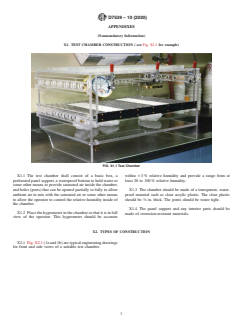
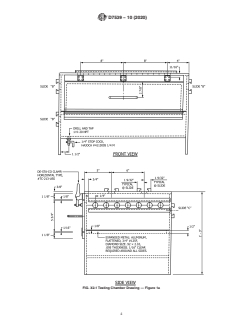
- Test Chamber Design: The standard describes essential chamber features, such as transparent construction, a perforated test panel support, and adjustable ports for mixing ambient and humidified air. The chamber should include a hygrometer and thermometer for monitoring internal conditions.
- Paint Drying Rate Sensitivity: Attention is given to waterborne traffic paints, which are particularly sensitive to relative humidity during drying, unlike solvent-based or 100% solids paints.
- Test Methods Integration: The standard supports standardized assessment of drying rate (e.g., dry to no-pick-up), and resistance to water wash-off, using referenced ASTM test methods.
- Reproducibility: By minimizing air flow and maintaining precise humidity control, test results become more reproducible across different laboratories and test environments.
Applications
ASTM D7539-10(2020) is especially valuable in the following contexts:
- Quality Control of Pavement Marking Paints: Manufacturers and laboratories utilize the prescribed humidity conditioning chamber to evaluate drying times and water resistance performance of traffic paints under elevated humidity, which is important for paints expected to dry quickly after application in challenging weather conditions.
- Comparative Testing: The standard enables fair comparative testing of various paint formulations by ensuring environmental consistency, supporting product development and benchmarking efforts.
- Compliance and Specification Verification: Agencies and specifiers can reference this standard to ensure that paints meet performance requirements under controlled humidity conditions, especially for waterborne formulations mandated in environmentally sensitive projects.
- Research and Development: Formulators and material scientists use this practice to investigate the impact of humidity on new or modified pavement marking paint compositions.
Related Standards
ASTM D7539-10(2020) references several related standards to provide a comprehensive testing framework:
- ASTM D711: Test Method for No-Pick-Up Time of Traffic Paint – evaluates the time required for a painted surface to resist transfer.
- ASTM D3924: Specification for Standard Environment for Conditioning and Testing Paint, Varnish, Lacquer, and Related Materials – establishes the baseline laboratory environment.
- ASTM D7377: Practice for Evaluating the Water Wash-Off Resistance of Traffic Paints using a Water Faucet.
- ASTM D7538: Practice for Evaluating the Water Wash-Off Resistance of Traffic Paints Using an Atomizing Spray Device.
- TT-P-1952E: Federal Specification for Paint, Traffic and Airfield Marking, Waterborne.
By following ASTM D7539-10(2020), users can ensure rigorous and consistent evaluation of pavement marking paints, especially waterborne types, under controlled humidity conditions, supporting improved product reliability and compliance with industry standards.
Relations
- Effective Date
- 01-Jun-2020
- Effective Date
- 01-Dec-2023
- Effective Date
- 01-Dec-2023
- Effective Date
- 01-Sep-2018
- Effective Date
- 01-Sep-2018
- Effective Date
- 01-Apr-2016
- Effective Date
- 01-Jun-2015
- Effective Date
- 01-Nov-2013
- Effective Date
- 01-Nov-2013
- Effective Date
- 01-Jun-2011
- Effective Date
- 01-Dec-2010
- Effective Date
- 01-Aug-2009
- Effective Date
- 01-Jun-2009
- Effective Date
- 01-Jun-2009
- Refers
ASTM D7377-08 - Standard Practice for Evaluating the Water Wash-Off Resistance of Traffic Paints - Effective Date
- 01-Feb-2008
Get Certified
Connect with accredited certification bodies for this standard

Zavod za gradbeništvo Slovenije (ZAG) - Inšpekcija
ZAG inspection body for construction products, structures, and materials.
Sponsored listings
Frequently Asked Questions
ASTM D7539-10(2020) is a standard published by ASTM International. Its full title is "Standard Practice for Using a Test Chamber for Humidity Conditioning of Test Panels of Pavement Marking Paints". This standard covers: SIGNIFICANCE AND USE 5.1 The drying rate of organic coatings varies with changes in temperature, air flow, and relative humidity. In particular, the drying rate of waterborne paints depends on the evaporation of water and thus is much more dependent on relative humidity than are solvent based paints or paints that are 100 % solids. Measurement of the rate of drying of waterborne paints under ambient conditions in laboratories cannot be adequately replicated without some control of the drying conditions. A test chamber will be described that provides a means of controlling relative humidity above ambient humidity and minimizing the effects of air flow variability at ambient room temperatures. If desired, the test chamber without water in it and with vents wide open can be placed in a temperature and humidity controlled room to test dry speed at various temperatures as well as humidity while using the chamber to minimize the effect of air flow. 5.2 This practice is particularly useful for testing the drying rate of waterborne pavement marking (traffic) paints where fast dry at elevated ambient humidity is an important feature. For waterborne traffic paints, the test chamber can be used to evaluate dry to no-pick-up (Test Method D711) and water wash-off resistance (Practices D7377 and D7538) at elevated ambient humidity. SCOPE 1.1 Specification D3924 defines a standard environment of 23 ± 2°C and 50 ± 5 % relative humidity and free from drafts for normal conditioning and testing of paint, varnish, lacquer, and related materials. This practice describes a test chamber that allows for control of relative humidity above the ambient relative humidity and minimization of air flow for conditioning of test panels at elevated relative humidity and room temperatures. 1.2 The values stated in inch-pound units are to be regarded as standard. The values given in parentheses are mathematical conversions to SI units that are provided for information only and are not considered standard. 1.3 This standard does not purport to address all of the safety concerns, if any, associated with its use. It is the responsibility of the user of this standard to establish appropriate safety, health, and environmental practices and determine the applicability of regulatory limitations prior to use. 1.4 This international standard was developed in accordance with internationally recognized principles on standardization established in the Decision on Principles for the Development of International Standards, Guides and Recommendations issued by the World Trade Organization Technical Barriers to Trade (TBT) Committee.
SIGNIFICANCE AND USE 5.1 The drying rate of organic coatings varies with changes in temperature, air flow, and relative humidity. In particular, the drying rate of waterborne paints depends on the evaporation of water and thus is much more dependent on relative humidity than are solvent based paints or paints that are 100 % solids. Measurement of the rate of drying of waterborne paints under ambient conditions in laboratories cannot be adequately replicated without some control of the drying conditions. A test chamber will be described that provides a means of controlling relative humidity above ambient humidity and minimizing the effects of air flow variability at ambient room temperatures. If desired, the test chamber without water in it and with vents wide open can be placed in a temperature and humidity controlled room to test dry speed at various temperatures as well as humidity while using the chamber to minimize the effect of air flow. 5.2 This practice is particularly useful for testing the drying rate of waterborne pavement marking (traffic) paints where fast dry at elevated ambient humidity is an important feature. For waterborne traffic paints, the test chamber can be used to evaluate dry to no-pick-up (Test Method D711) and water wash-off resistance (Practices D7377 and D7538) at elevated ambient humidity. SCOPE 1.1 Specification D3924 defines a standard environment of 23 ± 2°C and 50 ± 5 % relative humidity and free from drafts for normal conditioning and testing of paint, varnish, lacquer, and related materials. This practice describes a test chamber that allows for control of relative humidity above the ambient relative humidity and minimization of air flow for conditioning of test panels at elevated relative humidity and room temperatures. 1.2 The values stated in inch-pound units are to be regarded as standard. The values given in parentheses are mathematical conversions to SI units that are provided for information only and are not considered standard. 1.3 This standard does not purport to address all of the safety concerns, if any, associated with its use. It is the responsibility of the user of this standard to establish appropriate safety, health, and environmental practices and determine the applicability of regulatory limitations prior to use. 1.4 This international standard was developed in accordance with internationally recognized principles on standardization established in the Decision on Principles for the Development of International Standards, Guides and Recommendations issued by the World Trade Organization Technical Barriers to Trade (TBT) Committee.
ASTM D7539-10(2020) is classified under the following ICS (International Classification for Standards) categories: 87.040 - Paints and varnishes; 93.080.30 - Road equipment and installations. The ICS classification helps identify the subject area and facilitates finding related standards.
ASTM D7539-10(2020) has the following relationships with other standards: It is inter standard links to ASTM D7539-10(2015), ASTM D7377-09(2023), ASTM D7538-09(2023), ASTM D7377-09(2018), ASTM D7538-09(2018), ASTM D3924-16, ASTM D711-10(2015), ASTM D7538-09(2013), ASTM D7377-09(2013), ASTM D3924-80(2011), ASTM D711-10, ASTM D1640-03(2009), ASTM D7538-09, ASTM D7377-09, ASTM D7377-08. Understanding these relationships helps ensure you are using the most current and applicable version of the standard.
ASTM D7539-10(2020) is available in PDF format for immediate download after purchase. The document can be added to your cart and obtained through the secure checkout process. Digital delivery ensures instant access to the complete standard document.
Standards Content (Sample)
This international standard was developed in accordance with internationally recognized principles on standardization established in the Decision on Principles for the
Development of International Standards, Guides and Recommendations issued by the World Trade Organization Technical Barriers to Trade (TBT) Committee.
Designation: D7539 − 10 (Reapproved 2020)
Standard Practice for
Using a Test Chamber for Humidity Conditioning of Test
Panels of Pavement Marking Paints
This standard is issued under the fixed designation D7539; the number immediately following the designation indicates the year of
original adoption or, in the case of revision, the year of last revision. A number in parentheses indicates the year of last reapproval. A
superscript epsilon (´) indicates an editorial change since the last revision or reapproval.
1. Scope D7377 Practice for Evaluating the Water Wash-Off Resis-
tance of Traffic Paints using a Water Faucet
1.1 Specification D3924 defines a standard environment of
D7538 Practice for Evaluating the Water Wash-Off Resis-
23 6 2°C and 50 6 5 % relative humidity and free from drafts
tance of Traffic Paints Using an Atomizing Spray Device
for normal conditioning and testing of paint, varnish, lacquer,
2.2 Other Standard:
and related materials. This practice describes a test chamber
TT-P-1952E Federal Specification for Paint, Traffic and
that allows for control of relative humidity above the ambient
Airfield Marking, Waterborne (10 July 2007)
relative humidity and minimization of air flow for conditioning
of test panels at elevated relative humidity and room tempera-
3. Terminology
tures.
3.1 Definitions:
1.2 The values stated in inch-pound units are to be regarded
3.1.1 test chamber, n—a cabinet or box, preferably made of
as standard. The values given in parentheses are mathematical
transparent, waterproof material, such as clear acrylic plastic,
conversions to SI units that are provided for information only
with panel supports and holes (ports) that can be partially to
and are not considered standard.
fully opened to mix outside ambient air with humidified air in
1.3 This standard does not purport to address all of the
the chamber or some other means to provide humidified air
safety concerns, if any, associated with its use. It is the
with minimal air flow.
responsibility of the user of this standard to establish appro-
3.1.1.1 Discussion—Also commonly referred to as a humid-
priate safety, health, and environmental practices and deter-
ity box or humidity chamber, as in Federal Specification
mine the applicability of regulatory limitations prior to use.
TT-P-1952E.
1.4 This international standard was developed in accor-
3.1.2 waterborne pavement marking (traffıc) paint, n—an
dance with internationally recognized principles on standard-
aqueous paint used for marking pavements.
ization established in the Decision on Principles for the
Development of International Standards, Guides and Recom-
4. Summary of Practice
mendations issued by the World Trade Organization Technical
4.1 Atest chamber is described that allows for the control of
Barriers to Trade (TBT) Committee.
relative humidity above ambient relative humidity and the
2. Referenced Documents
minimization of air flow variability at ambient room tempera-
tures.
2.1 ASTM Standards:
D711 Test Method for No-Pick-Up Time of Traffic Paint
5. Significance and Use
D1640 Test Methods for Drying, Curing, or Film Formation
5.1 The drying rate of organic coatings varies with changes
of Organic Coatings
intemperature,airflow,andrelativehumidity.Inparticular,the
D3924 Specification for Standard Environment for Condi-
drying rate of waterborne paints depends on the evaporation of
tioning and Testing Paint, Varnish, Lacquer, and Related
water and thus is much more dependent on relative humidity
Materials
than are solvent based paints or paints that are 100 % solids.
Measurement of the rate of drying of waterborne paints under
This practice is under the jurisdiction of ASTM Committee D01 on Paint and
Related Coatings, Materials, and Applications and is the direct responsibility of
ambient conditions in laboratories cannot be adequately repli-
Subcommittee D01.44 on Traffic Coatings.
cated without some control of the drying conditions. A test
CurrenteditionapprovedJune1,2020.PublishedJuly2020.Originallyapproved
chamber will be described that provides a means of controlling
in 2010. Last previous edition approved in 2015 as D7539 – 10 (2015). DOI:
10.1520/D7539-10R20.
For referenced ASTM standards, visit the ASTM website, www.astm.org, or
contact ASTM Customer Service at service@astm.org. For Annual Book of ASTM Available from General Services Administration, Federal Supply Service,
Standards volume information, refer to the standard‘s Document Summary page on Specification Section, Suite 8100, 470 L’Enfant Plaza, SW, Washington DC 20407,
the ASTM website. http://www.gsa.gov.
Copyright © ASTM International, 100 Barr Harbor Drive, PO Box C700, West Conshohocken, PA 19428-2959. United States
D7539 − 10 (2020)
relative humidity above ambient humidity and minimizing the 8.1.3 Establish the desired relative humidity by opening and
effects of air flow variability at ambient room temperatures. If closing the ports on the sides of the chamber, preferably so that
desired, the test chamber without water in it and with vents the size of the port openings are about the same on both sides
wide open can be placed in a temperature and humidity of the chamber to equalize the air circulation in the chamber.
controlled room to test dry speed at various temperatures as Therelativehumidityinthetestchamberwillstabilizeoncethe
well as humidity while using the chamber to minimize the port openings are established. Occasional slight adjustments in
effect of air flow. the side port openings may be required if the ambient humidity
in the room changes significantly during testing.
5.2 This practice is particularly useful for testing the drying
8.1.4 Target test relative humidity must be above the ambi-
rate of waterborne pavement marking (traffic) paints where fast
ent humidity in the room. It is best to use the chamber in a
dry at elevated ambient humidity is an important feature. For
conditioned room at a controlled temperature (23 6 2°C) and
waterborne traffic paints, the test chamber can be used to
humidity (50 6 5 % relative humidity) as described in Speci-
evaluate dry to no-pick-up (Test Method D711) and water
fication D3924.
wash-off resistance (Practices D7377 and D7538) at elevated
ambient humidity.
8.2 Cali
...