

ASTM D711-23
(Test Method)Standard Test Method for No-Pick-Up Time of Pavement Markings
General Information
- Abstract
SIGNIFICANCE AND USE
3.1 This test method serves as a laboratory control test. Types of pavement markings that can be tested with this method are waterborne traffic paint, solvent borne traffic paint, and some two component 100 % solids liquid pavement markings, such as epoxy and modified epoxy pavement markings. If wet film thickness, temperature, and humidity are controlled within the tolerances specified herein, this method can be useful for relative testing of pavement markings and potentially for qualification of pavement markings for field application in approved specifications. For improved repeatability and meaningful comparison of pavement markings samples being tested, consistent air flow over the pavement marking films during testing is important. The buyer and seller should agree upon the air flow conditions, whether it be static or carefully regulated air flow (see 4.6.1 and 4.6.2). Because of the many variables operative in the field application of pavement markings (for example, wet film thickness, air temperature, humidity, wind speed, pavement type (asphalt or concrete), film profile over pavement, pavement temperature, pavement porosity, pavement moisture content, and the presence or absence of direct sunlight during striping), a direct correlation between the results of this test and field applications is difficult to obtain. However, relative field performance can be predicted using this method if the testing protocol is adhered to. For testing of two component 100 % solids liquid pavement markings an application of drop on retroreflective optics are typically applied at a specified rate to the markings prior to testing. For these types of pavement markings the regulation of air flow is not necessary due to the drying mechanics of the product.
SCOPE
1.1 This test method covers a laboratory procedure for determining the no-pick-up time of pavement markings. The method uses a wheel consisting of a metal cylinder with rubber O-rings. The wheel is rolled down a ramp over a freshly applied pavement marking film repeatedly until there is no transfer of the marking material to the rubber rings. The elapsed time from pavement marking film application to point of no marking material transfer is the no-pick-up time. Key variables to be controlled during testing are wet film thickness, temperature, humidity, air flow, and use of retroreflective optics. This standard provides three options for the testing of the no-pick-up time for pavement markings. The first option, Method A, specifies controls for temperature, humidity, and air flow during testing; a second option, Method B, specifies controls for temperature and humidity during testing, and a third option, Method C, provides guidance for performing this with a drop on application of retroreflective optics such as glass beads, Waterborne and Solvent Borne pavement markings are typically tested using Procedure A or Procedure B, without the application of drop on retroreflective optics. Pavement markings that are two component 100 % solids are typically tested using Method C.
1.2 The values stated in SI units are to be regarded as the standard. The values given in parentheses are for information only.
1.3 This standard does not purport to address all of the safety concerns, if any, associated with its use. It is the responsibility of the user of this standard to establish appropriate safety, health, and environmental practices and determine the applicability of regulatory limitations prior to use.
1.4 This international standard was developed in accordance with internationally recognized principles on standardization established in the Decision on Principles for the Development of International Standards, Guides and Recommendations issued by the World Trade Organization Technical Barriers to Trade (TBT) Committee.
- Status
- Published
- Publication Date
- 31-May-2023
- Technical Committee
- D01 - Paint and Related Coatings, Materials, and Applications
- Drafting Committee
- D01.44 - Traffic Coatings
Overview
ASTM D711-23: Standard Test Method for No-Pick-Up Time of Pavement Markings is a critical laboratory test established by ASTM International. This standard provides a procedure for measuring the "no-pick-up time" of various pavement marking materials, including waterborne traffic paint, solvent-borne traffic paint, and certain two-component 100% solids pavement markings like epoxies. The "no-pick-up time" refers to the interval after application during which the marking can be traversed by traffic or test apparatus without material transfer or damage, ensuring optimal performance and safety.
By closely controlling variables such as wet film thickness, ambient temperature, humidity, air flow, and in some cases, the application of retroreflective optics, ASTM D711-23 enables reliable comparison and qualification of pavement marking materials for field use. Laboratory repeatability is emphasized for procurement, quality control, and research contexts.
Key Topics
Controlled Testing Environment
The method standardizes laboratory testing by specifying procedures to control:- Wet film thickness
- Temperature
- Humidity
- Air flow (regulated or static)
- Retroreflective optics (as required for certain marking types)
Material Applicability
ASTM D711-23 can be applied to a wide range of pavement markings, including:- Waterborne paints
- Solvent-borne paints
- Two-component 100% solids materials such as epoxy and modified epoxy
Testing Methods
The standard describes three testing variations:- Method A: Controlled air flow for waterborne and solvent-borne paints
- Method B: Static air flow for waterborne and solvent-borne paints
- Method C: Beaded static air flow method, primarily for two-component 100% solids materials with retroreflective optics
Quality and Consistency
Repeatability and accuracy are achieved through consistent sample preparation, precise measurement of film thickness, and mutual agreement on testing conditions between manufacturers and purchasers.
Applications
Product Qualification and Specification
Manufacturers and buyers can use ASTM D711-23 to assess and qualify pavement marking materials for contract compliance, ensuring that only materials meeting specific drying performance criteria are used in public and private roadway projects.Quality Control in Manufacturing
Routine laboratory testing of production batches ensures consistency in drying time, minimizing the risk of track marking or delayed traffic opening.Research and Development
The standard supports comparative studies of new formulations and the refinement of existing traffic paint technologies, contributing to improvements in durability and safety.Procurement and Compliance
Public agencies and private contractors use ASTM D711-23 results during procurement to verify that products align with specification requirements and to support transparent, data-driven sourcing decisions.
Related Standards
For comprehensive quality assurance and robust testing of pavement markings, reference the following ASTM standards:
- ASTM D823: Practices for Producing Films of Uniform Thickness of Paint, Coatings and Related Products on Test Panels
- ASTM D1212: Test Methods for Measurement of Wet Film Thickness of Organic Coatings
- ASTM D1414: Test Methods for Rubber O-Rings
- ASTM D2000: Classification System for Rubber Products in Automotive Applications
- ASTM D4414: Practice for Measurement of Wet Film Thickness by Notch Gages
- ASTM D5741: Practice for Characterizing Surface Wind Using a Wind Vane and Rotating Anemometer
- ASTM D8367: Practice for Making a Laboratory Pavement Marking Sample Using a Pavement Marking and Drop-on Particles
Practical Value
Using ASTM D711-23 enhances the reliability of pavement marking applications by ensuring materials dry quickly and are ready for traffic within predictable timeframes. It promotes public safety, reduces maintenance costs, and aids in the development of higher-performance road marking products. Adhering to this test method facilitates more efficient project planning, better roadway visibility, and improved long-term durability of pavement markings.
Relations
- Effective Date
- 01-Sep-2023
- Effective Date
- 01-Jun-2020
- Effective Date
- 01-Jun-2020
- Effective Date
- 01-Dec-2017
- Effective Date
- 15-Mar-2017
- Effective Date
- 01-Jul-2013
- Effective Date
- 01-Jul-2013
- Effective Date
- 01-Nov-2012
- Effective Date
- 01-Oct-2011
- Effective Date
- 01-Oct-2007
- Effective Date
- 01-Jun-2007
- Effective Date
- 01-Jun-2007
- Effective Date
- 01-Jun-2007
- Effective Date
- 01-Jun-2007
- Effective Date
- 01-Jan-2001
Get Certified
Connect with accredited certification bodies for this standard

Zavod za gradbeništvo Slovenije (ZAG) - Inšpekcija
ZAG inspection body for construction products, structures, and materials.
Sponsored listings
Frequently Asked Questions
ASTM D711-23 is a standard published by ASTM International. Its full title is "Standard Test Method for No-Pick-Up Time of Pavement Markings". This standard covers: SIGNIFICANCE AND USE 3.1 This test method serves as a laboratory control test. Types of pavement markings that can be tested with this method are waterborne traffic paint, solvent borne traffic paint, and some two component 100 % solids liquid pavement markings, such as epoxy and modified epoxy pavement markings. If wet film thickness, temperature, and humidity are controlled within the tolerances specified herein, this method can be useful for relative testing of pavement markings and potentially for qualification of pavement markings for field application in approved specifications. For improved repeatability and meaningful comparison of pavement markings samples being tested, consistent air flow over the pavement marking films during testing is important. The buyer and seller should agree upon the air flow conditions, whether it be static or carefully regulated air flow (see 4.6.1 and 4.6.2). Because of the many variables operative in the field application of pavement markings (for example, wet film thickness, air temperature, humidity, wind speed, pavement type (asphalt or concrete), film profile over pavement, pavement temperature, pavement porosity, pavement moisture content, and the presence or absence of direct sunlight during striping), a direct correlation between the results of this test and field applications is difficult to obtain. However, relative field performance can be predicted using this method if the testing protocol is adhered to. For testing of two component 100 % solids liquid pavement markings an application of drop on retroreflective optics are typically applied at a specified rate to the markings prior to testing. For these types of pavement markings the regulation of air flow is not necessary due to the drying mechanics of the product. SCOPE 1.1 This test method covers a laboratory procedure for determining the no-pick-up time of pavement markings. The method uses a wheel consisting of a metal cylinder with rubber O-rings. The wheel is rolled down a ramp over a freshly applied pavement marking film repeatedly until there is no transfer of the marking material to the rubber rings. The elapsed time from pavement marking film application to point of no marking material transfer is the no-pick-up time. Key variables to be controlled during testing are wet film thickness, temperature, humidity, air flow, and use of retroreflective optics. This standard provides three options for the testing of the no-pick-up time for pavement markings. The first option, Method A, specifies controls for temperature, humidity, and air flow during testing; a second option, Method B, specifies controls for temperature and humidity during testing, and a third option, Method C, provides guidance for performing this with a drop on application of retroreflective optics such as glass beads, Waterborne and Solvent Borne pavement markings are typically tested using Procedure A or Procedure B, without the application of drop on retroreflective optics. Pavement markings that are two component 100 % solids are typically tested using Method C. 1.2 The values stated in SI units are to be regarded as the standard. The values given in parentheses are for information only. 1.3 This standard does not purport to address all of the safety concerns, if any, associated with its use. It is the responsibility of the user of this standard to establish appropriate safety, health, and environmental practices and determine the applicability of regulatory limitations prior to use. 1.4 This international standard was developed in accordance with internationally recognized principles on standardization established in the Decision on Principles for the Development of International Standards, Guides and Recommendations issued by the World Trade Organization Technical Barriers to Trade (TBT) Committee.
SIGNIFICANCE AND USE 3.1 This test method serves as a laboratory control test. Types of pavement markings that can be tested with this method are waterborne traffic paint, solvent borne traffic paint, and some two component 100 % solids liquid pavement markings, such as epoxy and modified epoxy pavement markings. If wet film thickness, temperature, and humidity are controlled within the tolerances specified herein, this method can be useful for relative testing of pavement markings and potentially for qualification of pavement markings for field application in approved specifications. For improved repeatability and meaningful comparison of pavement markings samples being tested, consistent air flow over the pavement marking films during testing is important. The buyer and seller should agree upon the air flow conditions, whether it be static or carefully regulated air flow (see 4.6.1 and 4.6.2). Because of the many variables operative in the field application of pavement markings (for example, wet film thickness, air temperature, humidity, wind speed, pavement type (asphalt or concrete), film profile over pavement, pavement temperature, pavement porosity, pavement moisture content, and the presence or absence of direct sunlight during striping), a direct correlation between the results of this test and field applications is difficult to obtain. However, relative field performance can be predicted using this method if the testing protocol is adhered to. For testing of two component 100 % solids liquid pavement markings an application of drop on retroreflective optics are typically applied at a specified rate to the markings prior to testing. For these types of pavement markings the regulation of air flow is not necessary due to the drying mechanics of the product. SCOPE 1.1 This test method covers a laboratory procedure for determining the no-pick-up time of pavement markings. The method uses a wheel consisting of a metal cylinder with rubber O-rings. The wheel is rolled down a ramp over a freshly applied pavement marking film repeatedly until there is no transfer of the marking material to the rubber rings. The elapsed time from pavement marking film application to point of no marking material transfer is the no-pick-up time. Key variables to be controlled during testing are wet film thickness, temperature, humidity, air flow, and use of retroreflective optics. This standard provides three options for the testing of the no-pick-up time for pavement markings. The first option, Method A, specifies controls for temperature, humidity, and air flow during testing; a second option, Method B, specifies controls for temperature and humidity during testing, and a third option, Method C, provides guidance for performing this with a drop on application of retroreflective optics such as glass beads, Waterborne and Solvent Borne pavement markings are typically tested using Procedure A or Procedure B, without the application of drop on retroreflective optics. Pavement markings that are two component 100 % solids are typically tested using Method C. 1.2 The values stated in SI units are to be regarded as the standard. The values given in parentheses are for information only. 1.3 This standard does not purport to address all of the safety concerns, if any, associated with its use. It is the responsibility of the user of this standard to establish appropriate safety, health, and environmental practices and determine the applicability of regulatory limitations prior to use. 1.4 This international standard was developed in accordance with internationally recognized principles on standardization established in the Decision on Principles for the Development of International Standards, Guides and Recommendations issued by the World Trade Organization Technical Barriers to Trade (TBT) Committee.
ASTM D711-23 is classified under the following ICS (International Classification for Standards) categories: 87.040 - Paints and varnishes; 93.080.30 - Road equipment and installations. The ICS classification helps identify the subject area and facilitates finding related standards.
ASTM D711-23 has the following relationships with other standards: It is inter standard links to ASTM D5741-96(2023), ASTM D4414-95(2020), ASTM D1212-91(2020), ASTM D823-17, ASTM D5741-96(2017), ASTM D4414-95(2013), ASTM D1212-91(2013), ASTM D823-95(2012), ASTM D5741-96(2011), ASTM D5741-96(2007)e1, ASTM D823-95(2007), ASTM D1212-91(2007)e1, ASTM D1212-91(2007), ASTM D4414-95(2007), ASTM D823-95. Understanding these relationships helps ensure you are using the most current and applicable version of the standard.
ASTM D711-23 is available in PDF format for immediate download after purchase. The document can be added to your cart and obtained through the secure checkout process. Digital delivery ensures instant access to the complete standard document.
Standards Content (Sample)
This international standard was developed in accordance with internationally recognized principles on standardization established in the Decision on Principles for the
Development of International Standards, Guides and Recommendations issued by the World Trade Organization Technical Barriers to Trade (TBT) Committee.
Designation: D711 − 23
Standard Test Method for
No-Pick-Up Time of Pavement Markings
This standard is issued under the fixed designation D711; the number immediately following the designation indicates the year of
original adoption or, in the case of revision, the year of last revision. A number in parentheses indicates the year of last reapproval. A
superscript epsilon (´) indicates an editorial change since the last revision or reapproval.
This standard has been approved for use by agencies of the U.S. Department of Defense.
1. Scope mendations issued by the World Trade Organization Technical
Barriers to Trade (TBT) Committee.
1.1 This test method covers a laboratory procedure for
determining the no-pick-up time of pavement markings. The
2. Referenced Documents
method uses a wheel consisting of a metal cylinder with rubber
2.1 ASTM Standards:
O-rings. The wheel is rolled down a ramp over a freshly
D823 Practices for Producing Films of Uniform Thickness
applied pavement marking film repeatedly until there is no
of Paint, Coatings and Related Products on Test Panels
transfer of the marking material to the rubber rings. The
D1212 Test Methods for Measurement of Wet Film Thick-
elapsed time from pavement marking film application to point
ness of Organic Coatings
of no marking material transfer is the no-pick-up time. Key
D1414 Test Methods for Rubber O-Rings
variables to be controlled during testing are wet film thickness,
D2000 Classification System for Rubber Products in Auto-
temperature, humidity, air flow, and use of retroreflective
motive Applications
optics. This standard provides three options for the testing of
D4414 Practice for Measurement of Wet Film Thickness by
the no-pick-up time for pavement markings. The first option,
Notch Gages
Method A, specifies controls for temperature, humidity, and air
D5741 Practice for Characterizing Surface Wind Using a
flow during testing; a second option, Method B, specifies
Wind Vane and Rotating Anemometer
controls for temperature and humidity during testing, and a
D8367 Practice for Making a Laboratory Pavement Marking
third option, Method C, provides guidance for performing this
Sample Using a Pavement Marking and Drop-on Particles
with a drop on application of retroreflective optics such as glass
beads, Waterborne and Solvent Borne pavement markings are
3. Significance and Use
typically tested using Procedure A or Procedure B, without the
3.1 This test method serves as a laboratory control test.
application of drop on retroreflective optics. Pavement mark-
Types of pavement markings that can be tested with this
ings that are two component 100 % solids are typically tested
method are waterborne traffic paint, solvent borne traffic paint,
using Method C.
and some two component 100 % solids liquid pavement
1.2 The values stated in SI units are to be regarded as the
markings, such as epoxy and modified epoxy pavement mark-
standard. The values given in parentheses are for information
ings. If wet film thickness, temperature, and humidity are
only.
controlled within the tolerances specified herein, this method
1.3 This standard does not purport to address all of the
can be useful for relative testing of pavement markings and
safety concerns, if any, associated with its use. It is the
potentially for qualification of pavement markings for field
responsibility of the user of this standard to establish appro-
application in approved specifications. For improved repeat-
priate safety, health, and environmental practices and deter-
ability and meaningful comparison of pavement markings
mine the applicability of regulatory limitations prior to use.
samples being tested, consistent air flow over the pavement
1.4 This international standard was developed in accor-
marking films during testing is important. The buyer and seller
dance with internationally recognized principles on standard-
should agree upon the air flow conditions, whether it be static
ization established in the Decision on Principles for the
or carefully regulated air flow (see 4.6.1 and 4.6.2). Because of
Development of International Standards, Guides and Recom-
the many variables operative in the field application of pave-
ment markings (for example, wet film thickness, air
temperature, humidity, wind speed, pavement type (asphalt or
This test method is under the jurisdiction of ASTM Committee D01 on Paint
and Related Coatings, Materials, and Applications and is the direct responsibility of
Subcommittee D01.44 on Traffic Coatings. For referenced ASTM standards, visit the ASTM website, www.astm.org, or
Current edition approved June 1, 2023. Published July 2023. Originally approved contact ASTM Customer Service at service@astm.org. For Annual Book of ASTM
in 1943. Last previous edition approved in 2020 as D711 – 20. DOI: 10.1520/ Standards volume information, refer to the standard’s Document Summary page on
D0711-23. the ASTM website.
Copyright © ASTM International, 100 Barr Harbor Drive, PO Box C700, West Conshohocken, PA 19428-2959. United States
D711 − 23
concrete), film profile over pavement, pavement temperature, cylinder of the shape and dimensions as indicated, fitted with
pavement porosity, pavement moisture content, and the pres- two replaceable O-rings and a ramp of shape and dimensions as
ence or absence of direct sunlight during striping), a direct
shown.
correlation between the results of this test and field applications
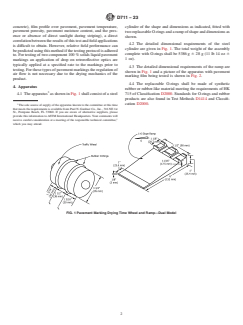
4.2 The detailed dimensional requirements of the steel
is difficult to obtain. However, relative field performance can
cylinder are given in Fig. 1. The total weight of the assembly
be predicted using this method if the testing protocol is adhered
complete with O-rings shall be 5386 g 6 28 g (11 lb 14 oz 6
to. For testing of two component 100 % solids liquid pavement
1 oz).
markings an application of drop on retroreflective optics are
typically applied at a specified rate to the markings prior to
4.3 The detailed dimensional requirements of the ramp are
testing. For these types of pavement markings the regulation of
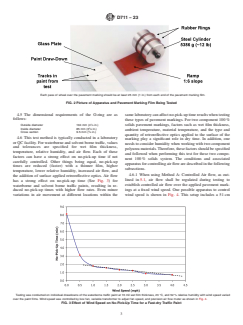
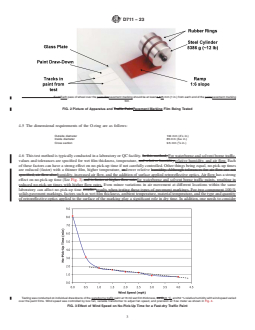
shown in Fig. 1 and a picture of the apparatus with pavement
air flow is not necessary due to the drying mechanics of the
marking film being tested is shown in Fig. 2.
product.
4.4 The replaceable O-rings shall be made of synthetic
4. Apparatus
rubber or rubber-like material meeting the requirements of HK
4.1 The apparatus as shown in Fig. 1 shall consist of a steel
715 of Classification D2000. Standards for O-rings and rubber
products are also found in Test Methods D1414 and Classifi-
3 cation D2000.
The sole source of supply of the apparatus known to the committee at this time
that meets the requirements is available from Paul N. Gardner Co., Inc., 316 NE 1st
St., Pompano Beach, FL 33060. If you are aware of alternative suppliers, please
provide this information to ASTM International Headquarters. Your comments will
receive careful consideration at a meeting of the responsible technical committee,
which you may attend.
FIG. 1 Pavement Marking Drying Time Wheel and Ramp—Dual Model
D711 − 23
Each pass of wheel over the pavement marking should be at least 25 mm (1 in.) from each end of the pavement marking film.
FIG. 2 Picture of Apparatus and Pavement Marking Film Being Tested
4.5 The dimensional requirements of the O-ring are as same laboratory can affect no-pick-up time results when testing
follows:
these types of pavement markings. For two component 100 %
solids pavement markings, factors such as wet film thickness,
Outside diameter 104 mm (4 ⁄8 in.)
Inside diameter 85 mm (3 ⁄8 in.)
ambient temperature, material temperature, and the type and
Cross section 9.5 mm ( ⁄8 in.)
quantity of retroreflective optics applied to the surface of the
4.6 This test method is typically conducted in a laboratory
marking play a significant role in dry time. In addition, one
or QC facility. For waterborne and solvent borne traffic, values
needs to consider humidity when working with two component
and tolerances are specified for wet film thickness,
polyurea materials. Therefore, these factors should be specified
temperature, relative humidity, and air flow. Each of these
and followed when performing this test for these two compo-
factors can have a strong effect on no-pick-up time if not
nent 100 % solids system. The conditions and associated
carefully controlled. Other things being equal, no-pick-up
apparatus for controlling air flow are described in the following
times are reduced (faster) with a thinner film, higher
subsections.
temperature, lower relative humidity, increased air flow, and
4.6.1 When using Method A: Controlled Air flow, as out-
the addition of surface applied retroreflective optics. Air flow
lined in 5.1, air flow shall be regulated during testing to
has a strong effect on no-pick-up time (See Fig. 3) for
establish controlled air flow over the applied pavement mark-
waterborne and solvent borne traffic paints, resulting in re-
ings at a fixed wind speed. One possible apparatus to control
duced no-pick-up times with higher flow rates. Even minor
variations in air movement at different locations within the wind speed is shown in Fig. 4. This setup includes a 51 cm
Testing was conducted on individual drawdowns of the waterborne traffic paint at 16 mil wet film thickness, 23 °C, and 52 % relative humidity with wind speed varied
over the paint films. Wind speed was controlled by box fan, variable transformer to adjust fan speed, and precision air flow meter as shown in Fig. 4.
FIG. 3 Effect of Wind Speed on No-Pick-Up Time for a Fast-dry Traffic Paint
D711 − 23
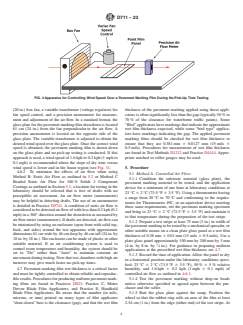
FIG. 4 Apparatus for Controlling Wind Speed Over a Pavement Marking Film During No-Pick-Up Time Testing
(20 in.) box fan, a variable transformer (voltage regulator) for thickness of the pavement marking applied using those appli-
fan speed control, and a precision anemometer for measure- cators is often significantly less than the gap (typically 50 % to
ment and adjustment of the air flow. In a standard format, the 70 % of the clearance for waterborne traffic paints). Some
glass plate for the pavement marking film drawdown is located “Bird” applicators have markings that indicate the approximate
61 cm (24 in.) from the fan perpendicular to the air flow. A wet film thickness expected, while some “bird type” applica-
precision anemometer is located on the opposite side of the tors have markings indicating the gap. The applied pavement
glass plate. The variable transformer is adjusted to obtain the marking films should be checked for wet film thickness to
desired wind speed over the glass plate. Once the correct wind ensure that they are 0.381 mm 6 0.0127 mm (15 mils 6
speed is obtained, the pavement marking film is drawn down 0.5 mils). Procedures for measurement of wet film thickness
on the glass plate and no-pick-up testing is conducted. If this are found in Test Methods D1212 and Practice D4414. Appro-
approach is used, a wind speed of 1.6 kph to 0.2 kph (1 mph to priate notched or roller gauges may be used.
0.1 mph) is recommended where the slope of dry time versus
wind speed is lower and in the linear region (see Fig. 3). 5. Procedure
4.6.2 To minimize the effects of air flow when using
5.1 Method A: Controlled Air Flow:
Method B: Static Air Flow as outlined in 5.2 or Method C
5.1.1 Condition the substrate material (glass plate), the
Beaded Static Air Flow for 100 % Solids 2 Component
pavement marking material to be tested, and the application
Coatings as outlined in Section 5.3, a location for testing in the
device for a minimum of one hour at laboratory conditions at
laboratory should be selected that is free of drafts with no
23 °C 6 2 °C (73.5 °F 6 3.5 °F). Using a thermometer having
perceptible air movement. An air flow meter (anemometer)
a range from 20 °C to 70 °C and conforming to the require-
may be helpful in detecting drafts. The use of an anemometer
ments for Thermometer 49C, or an equivalent device meeting
is detailed in Practice D5741. A condition of static air flow is
these same requirements, stir the pavement marking specimen
considered to be detected air flow of with less than 0.2 kph (0.1
and bring to 23 °C 6 2 °C (73.5 °F 6 3.5 °F) and maintain it
mph) in a 360° direction around the drawdown as measured by
to that temperature during the preparation of the test stripe.
air flow meter (anemometer). If drafts are detected, air flow can
5.1.2 Prepare a test stripe at least 75 mm (3 in.) in width of
be minimized by using an enclosure (open front with solid top,
the pavement marking to be tested by a mechanical spreader, or
back, and sides) around the test apparatus with approximate
other suitable means on a clean plate glass panel at a wet film
dimensions 61 cm wide by 46 cm deep by 46 cm tall (24 in. by
thickness of 0.38 mm 6 0.01 mm (15 mils 6 0.5 mils). Use a
18 in. by 18 in.). The enclosure can be made of plastic or other
plate glass panel approximately 100 mm by 200 mm by 3 mm
suitable material. If an air conditioning system is used to
(4 in. by 8 in. by ⁄8 in.). For guidance in preparing uniform
control room temperature and humidity, the system should be
applications at the prescribed wet film thickness see 4.7.
set to “On” rather than “Auto” to maintain constant air
5.1.3 Record the time of application. Allow the panel to dry
movement during testing. Note that test chambers with high air
in a horizontal position under the laboratory conditions speci-
turnover may give much faster no-pick-up times.
fied: 23 °C 6 2 °C (73.5 °F 6 3.5 °F), 50 % 6 5 % relative
4.7 Pavement marking film wet thickness is a critical factor humidity, and 1.6 kph 6 0.2 kph (1 mph 6 0.1 mph) of
and must be tightly controlled to obtain reliable and reproduc- controlled air flow as outlined in 4.6.1.
ible results. Procedures for producing uniform pavement mark- 5.1.4 Test the pavement marking without drop-on beads
ing films are found in Practices D823: Practice C, Motor unless otherwise specified or agreed upon between the pur-
Driven Blade Film Applicators, and Practice E, Handheld chaser and the seller.
Blade Film Applicators. Be aware that the number (in mils, 5.1.5 Butt the glass plate against the ramp. Position the
microns, or mm) printed on many types of film applicator wheel so that the rubber ring rolls an area of the film at least
“draw-down” bars is the clearance (gap), and that the wet film 2.54 cm (1 in.) from the edge (either end) of the test stripe. At
D711 − 23
regular time intervals remove the wheel from its rest, hold 5.2.5 Butt the glass plate against the ramp. Position the
outside and against the rest as a starting point, then release the wheel so that the rubber ring rolls an area of the film at least
weighted wheel to roll down the inclined ramp and over the 2.54 cm (1 in.) from the edge (either end) of the test stripe. At
paint film with each roll of the wheel over a new wheel path. regular time intervals remove the wheel from its rest, hold
outside and against the rest as a starting point, then release the
Clean the wheel after each pass over the film. This can be done
with a clean rag. At the end of the test the wheel can be cleaned weighted wheel to roll down the inclined ramp and over the
pavement marking film with each roll of the wheel over a new
with a rag saturated with acetone. It is best to set aside the
wheel after washing until all the solvent has evaporated before wheel path. Clean the wheel after each pass over the film. This
can be done with a clean rag. At the end of the test the wheel
using in subsequent testing.
can be cleaned with a rag saturated with acetone. It is best to
5.1.6 Note the end point for no-pick-up time when no
set aside the wheel after washing until all the solvent has
pavement marking material adheres to the rubber rings of the
evaporated before using in subsequent testing.
test wheel when it is rolled over the pavement marking film. A
5.2.6 Note the end point for no-pick-up time when no
shadow stain, usually consisting of dry, translucent pigment
pavement marking material adheres to the rubber rings of the
transfer is not considered to be pavement marking material
test wheel when it is rolled over the pavement marking film. A
transfer and therefore not considered to be a failure. As the end
shadow stain, usually consisting of dry, translucent pigment
point is approached, roll the weighted wheel over the pavement
transfer is not considered to be pavement marking material
marking film every 30 s.
transfer and therefore not considered to be a failure. As the end
5.1.7 Even when all four factors of wet film thickness,
point is approached, roll the weighted wheel over the pavement
temperature, humidity, and air flow are controlled, their addi-
marking film every 30 s.
tive effect within the specified tolerances can still result in
5.2.7 Even when all four factors of wet film thickness,
some no-pick-up time variability. A recommended approach
temperature, humidity, and air flow are controlled, their addi-
for resolving this issue is to establish a control pavement
tive effect within the specified tolerances can still result in
marking that is tested either just before or just after each new
some no-pick-up time variability. A recommended approach
pavement marking being tested. The control pavement marking
for resolving this issue is to establish a control pavement
should be mutually agreed upon by buyer and seller and used
marking that is tested either just before or just after each new
for all testing conducted over a specified period of time, for
pavement marking being tested. The control pavement marking
example, six months. Besides the absolute no-pick-up time
should be mutually agreed upon by buyer and seller and used
values reported for the pavement marking and control pave-
for all testing conducted over a specified period of time, for
ment marking, results for each new pavement marking can be
example, six months. Besides the absolute no-pick-up time
expressed as a “% of control” as is done in some other coatings
values reported for the test pavement marking and control
test procedures. A % of control higher than 100 % would be a
pavement marking, results for each new pavement marking can
longer no-pick-up time while less than 100 % would be a
be expressed as a “% of control” as is done in some other
shorter no-pick-up time.
coatings test procedures. A % of control higher than 100 %
5.2 Method B: Static Air Flow:
would be a longer no-pickup time while less than 100 % would
be a shorter no-pick-up time.
5.2.1 Condition the substrate material, the pavement mark-
ing material to be tested, and the application device for a
5.3 Method C: Beaded Static Air Flow for 100 % Solids 2
minimum of one hour at laboratory condit
...
This document is not an ASTM standard and is intended only to provide the user of an ASTM standard an indication of what changes have been made to the previous version. Because
it may not be technically possible to adequately depict all changes accurately, ASTM recommends that users consult prior editions as appropriate. In all cases only the current version
of the standard as published by ASTM is to be considered the official document.
Designation: D711 − 20 D711 − 23
Standard Test Method for
No-Pick-Up Time of Traffic PaintPavement Markings
This standard is issued under the fixed designation D711; the number immediately following the designation indicates the year of
original adoption or, in the case of revision, the year of last revision. A number in parentheses indicates the year of last reapproval. A
superscript epsilon (´) indicates an editorial change since the last revision or reapproval.
This standard has been approved for use by agencies of the U.S. Department of Defense.
1. Scope
1.1 This test method covers a laboratory procedure for determining the no-pick-up time of a traffic paint. pavement markings. The
method uses a wheel consisting of a metal cylinder with rubber O-rings. The wheel is rolled down a ramp over a freshly applied
traffic paintpavement marking film repeatedly until there is no transfer of paint the marking material to the rubber rings. The
elapsed time from paint pavement marking film application to point of no paint marking material transfer is the no-pick-up time.
Key variables to be controlled during testing are wet film thickness, temperature, humidity, and air flow.air flow, and use of
retroreflective optics. This standard provides three options for the testing of the no-pick-up time for pavement markings. The first
option, Method A, specifies controls for temperature, humidity, and air flow during testing; a second option, Method B, specifies
controls for temperature and humidity during testing, and a third option, Method C, provides guidance for performing this with
a drop on application of retroreflective optics such as glass beads, Waterborne and Solvent Borne pavement markings are typically
tested using Procedure A or Procedure B, without the application of drop on retroreflective optics. Pavement markings that are two
component 100 % solids are typically tested using Method C.
1.2 The values stated in SI units are to be regarded as the standard. The values given in parentheses are for information only.
1.3 This standard does not purport to address all of the safety concerns, if any, associated with its use. It is the responsibility
of the user of this standard to establish appropriate safety, health, and environmental practices and determine the applicability of
regulatory limitations prior to use.
1.4 This international standard was developed in accordance with internationally recognized principles on standardization
established in the Decision on Principles for the Development of International Standards, Guides and Recommendations issued
by the World Trade Organization Technical Barriers to Trade (TBT) Committee.
2. Referenced Documents
2.1 ASTM Standards:
D823 Practices for Producing Films of Uniform Thickness of Paint, Coatings and Related Products on Test Panels
D1212 Test Methods for Measurement of Wet Film Thickness of Organic Coatings
D1414 Test Methods for Rubber O-Rings
D2000 Classification System for Rubber Products in Automotive Applications
D4414 Practice for Measurement of Wet Film Thickness by Notch Gages
D5741 Practice for Characterizing Surface Wind Using a Wind Vane and Rotating Anemometer
D8367 Practice for Making a Laboratory Pavement Marking Sample Using a Pavement Marking and Drop-on Particles
This test method is under the jurisdiction of ASTM Committee D01 on Paint and Related Coatings, Materials, and Applications and is the direct responsibility of
Subcommittee D01.44 on Traffic Coatings.
Current edition approved June 1, 2020June 1, 2023. Published July 2020July 2023. Originally approved in 1943. Last previous edition approved in 20152020 as D711 –
10 (2015). DOI: 10.1520/D0711-20.20. DOI: 10.1520/D0711-23.
For referenced ASTM standards, visit the ASTM website, www.astm.org, or contact ASTM Customer Service at service@astm.org. For Annual Book of ASTM Standards
volume information, refer to the standard’s Document Summary page on the ASTM website.
Copyright © ASTM International, 100 Barr Harbor Drive, PO Box C700, West Conshohocken, PA 19428-2959. United States
D711 − 23
3. Significance and Use
3.1 This test method serves as a laboratory control test. Types of traffic paintspavement markings that can be tested with this
method are waterborne, solventborne, and some waterborne traffic paint, solvent borne traffic paint, and some two component
100 % solids liquid traffic paints. pavement markings, such as epoxy and modified epoxy pavement markings. If wet film thickness,
temperature, and humidity are controlled within the tolerances specified herein, this method can be useful for relative testing of
traffic paintspavement markings and potentially for qualification of traffic paintspavement markings for field application in
approved specifications. For improved repeatability and meaningful comparison of paint pavement markings samples being tested,
consistent air flow over the paint pavement marking films during testing is important. Although a no-air-flow (static) test
environment is standard, the The buyer and seller should agree upon the air flow conditions, whether it be static or carefully
regulated air flow (see 4.6.14.6.1 and 4.6.2 and 4.6.2). Because of the many variables operative in the field application of traffic
paintpavement markings (for example, wet film thickness, air temperature, humidity, wind speed, pavement type (asphalt or
concrete), film profile over pavement, pavement temperature, pavement porosity, pavement moisture content, and the presence or
absence of direct sunlight during striping), a direct correlation between the results of this test and field applications is difficult to
obtain. However, relative field performance can be predicted using this method if the testing protocol is adhered to. For testing of
two component 100 % solids liquid pavement markings an application of drop on retroreflective optics are typically applied at a
specified rate to the markings prior to testing. For these types of pavement markings the regulation of air flow is not necessary due
to the drying mechanics of the product.
4. Apparatus
4.1 The apparatus as shown in Fig. 1 shall consist of a steel cylinder of the shape and dimensions as indicated, fitted with two
replaceable O-rings and a ramp of shape and dimensions as shown.
4.2 The detailed dimensional requirements of the steel cylinder are given in Fig. 1. The total weight of the assembly complete with
O-rings shall be 53865386 g 6 28 g (11 lb 14 oz 6 1 oz).
4.3 The detailed dimensional requirements of the ramp are shown in Fig. 1 and a picture of the apparatus with paint pavement
marking film being tested is shown in Fig. 2.
4.4 The replaceable O-rings shall be made of synthetic rubber or rubber-like material meeting the requirements of HK 715 of
Classification D2000. Standards for O-rings and rubber products are also found in Test Methods D1414 and Classification D2000.
FIG. 1 Traffic PaintPavement Marking Drying Time Wheel and Ramp—Dual Model
The sole source of supply of the apparatus known to the committee at this time that meets the requirements is available from Paul N. Gardner Co., Inc., 316 NE 1st St.,
Pompano Beach, FL 33060. If you are aware of alternative suppliers, please provide this information to ASTM International Headquarters. Your comments will receive careful
consideration at a meeting of the responsible technical committee, which you may attend.
D711 − 23
EachEach pass of wheel over the paint filmpavement marking should be at least 2.525 mm (1 in.) from each end of the paint pavement marking
film.
FIG. 2 Picture of Apparatus and Traffic PaintPavement Marking Film Being Tested
4.5 The dimensional requirements of the O-ring are as follows:
Outside diameter 104 mm (4 ⁄8 in.)
Inside diameter 85 mm (3 ⁄8 in.)
Cross section 9.5 mm ( ⁄8 in.)
4.6 This test method is typically conducted in a laboratory or QC facility. In this method, For waterborne and solvent borne traffic,
values and tolerances are specified for wet film thickness, temperature, and relative humidity.relative humidity, and air flow. Each
of these factors can have a strong effect on no-pick-up time if not carefully controlled. Other things being equal, no-pick-up times
are reduced (faster) with a thinner film, higher temperature, or lower relative humidity. Although tolerances for air flow are not
specified, air flow also humidity, increased air flow, and the addition of surface applied retroreflective optics. Air flow has a strong
effect on no-pick-up time (See Fig. 3) and is faster at higher flow rate.for waterborne and solvent borne traffic paints, resulting in
reduced no-pick-up times with higher flow rates. Even minor variations in air movement at different locations within the same
laboratory can affect no-pick-up time results. results when testing these types of pavement markings. For two component 100 %
solids pavement markings, factors such as wet film thickness, ambient temperature, material temperature, and the type and quantity
of retroreflective optics applied to the surface of the marking play a significant role in dry time. In addition, one needs to consider
Testing was conducted on individual drawdowns of the waterborne traffic paint at 16 mil wet film thickness, 23°C,23 °C, and 52 % relative humidity with wind speed varied
over the paint films. Wind speed was controlled by box fan, variable transformer to adjust fan speed, and precision air flow meter as shown in Fig. 4.
FIG. 3 Effect of Wind Speed on No-Pick-Up Time for a Fast-dry Traffic Paint
D711 − 23
humidity when working with two component polyurea materials. Therefore, these factors should be specified and followed when
performing this test for these two component 100 % solids system. The conditions and associated apparatus for controlling air flow
are described in the following subsections.
4.6.1 When using Method A: Controlled Air flow, as outlined in 5.1, air flow shall be regulated during testing to establish
controlled air flow over the applied pavement markings at a fixed wind speed. One possible apparatus to control wind speed is
shown in Fig. 4. This setup includes a 51 cm (20 in.) box fan, a variable transformer (voltage regulator) for fan speed control, and
a precision anemometer for measurement and adjustment of the air flow. In a standard format, the glass plate for the pavement
marking film drawdown is located 61 cm (24 in.) from the fan perpendicular to the air flow. A precision anemometer is located
on the opposite side of the glass plate. The variable transformer is adjusted to obtain the desired wind speed over the glass plate.
Once the correct wind speed is obtained, the pavement marking film is drawn down on the glass plate and no-pick-up testing is
conducted. If this approach is used, a wind speed of 1.6 kph to 0.2 kph (1 mph to 0.1 mph) is recommended where the slope of
dry time versus wind speed is lower and in the linear region (see Fig. 3).
4.6.2 To minimize the effects of air flow, flow when using Method B: Static Air Flow as outlined in 5.2 or Method C Beaded Static
Air Flow for 100 % Solids 2 Component Coatings as outlined in Section 5.3, a location for testing in the laboratory should be
selected that is free of drafts with no perceptible air movement. An air flow meter (anemometer) may be helpful in detecting drafts.
The use of an anemometer is detailed in Practice D5741. A condition of static air flow is considered to be detected air flow of with
less than 0.2 kph (0.1 mph) in a 360° direction around the drawdown as measured by air flow meter (anemometer). If drafts are
detected, air flow can be minimized by using an enclosure (open front with solid top, back, and sides) around the test apparatus
with approximate dimensions 61 cm wide by 46 cm deep by 46 cm tall (24 by 18(24 in. by 18 in. by 18 in.). The enclosure can
be made of plastic or other suitable material. If an air conditioning system is used to control room temperature and humidity, the
system should be set to “On” rather than “Auto” to maintain constant air movement during testing. Note that test chambers with
high air turnover may give much faster no-pick-up times.
4.6.2 Upon mutual agreement by purchaser and seller, another option for regulating air flow during testing is to establish
controlled air flow over the applied paint film at some fixed wind speed. One possible apparatus to control wind speed is shown
in Fig. 4. This setup includes a 51 cm (20 in.) box fan, a variable transformer (voltage regulator) for fan speed control, and a
precision anemometer for measurement and adjustment of the air flow. In a standard format, the glass plate for paint film drawdown
is located 61 cm (24 in.) from the fan perpendicular to the air flow. A precision anemometer is located on the opposite side of the
glass plate. The variable transformer is adjusted to obtain the desired wind speed over the glass plate. Once the correct wind speed
is obtained, the paint film is drawn down on the glass plate and no-pick-up testing is conducted. If this approach is used, a wind
speed of 3.2 to 4.8 kph (2 to 3 mph) is recommended where the slope of dry time versus wind speed is lower and in the linear
region (see Fig. 3). For most consistent results, the air flow should be controlled to within 60.16 kph (60.1 mph).
4.7 Pavement marking film wet thickness is a critical factor and must be tightly controlled to obtain reliable and reproducible
results. Procedures for producing uniform pavement marking films are found in Practices D823: Practice C, Motor Driven Blade
Film Applicators, and Practice E, Handheld Blade Film Applicators. Be aware that the number (in mils, microns, or mm) printed
on many types of film applicator “draw-down” bars is the clearance (gap), and that the wet film thickness of the pavement marking
applied using those applicators is often significantly less than the gap (typically 50 % to 70 % of the clearance for waterborne traffic
paints). Some “Bird” applicators have markings that indicate the approximate wet film thickness expected, while some “bird type”
FIG. 4 Apparatus for Controlling Wind Speed Over a Traffic PaintPavement Marking Film During No-Pick-Up Time Testing
D711 − 23
applicators have markings indicating the gap. The applied pavement marking films should be checked for wet film thickness to
ensure that they are 0.381 mm 6 0.0127 mm (15 mils 6 0.5 mils). Procedures for measurement of wet film thickness are found
in Test Methods D1212 and Practice D4414. Appropriate notched or roller gauges may be used.
5. Procedure
5.1 Prepare a test stripe at least 75 mm (3 in.) in width of the paint to be tested by a mechanical spreader, or other suitable means
on a clean plate glass panel at a wet film thickness of 0.38 6 0.01 mm (15 6 0.5 mils). Use a plate glass panel approximately
100 by 200 by 3 mm (4 by 8 by ⁄8 in.). Procedures for producing uniform paint films are found in Practices D823: Practice C,
Motor Driven Blade Film Applicators, and Practice E, Hand Held Blade Film Applicators. Be aware that the number (in mils,
microns, or mm) printed on many types of film applicator “draw-down” bars is the clearance (gap), and that the thickness of the
paint applied using those applicators is often significantly less than the gap (typically 50 to 70 % of the clearance for waterborne
traffic paints). Some “Bird” applicators have markings that indicate the approximate wet film thickness expected, while some “bird
type” applicators have markings indicating the gap. The applied paint films should be checked for wet film thickness to ensure that
they are within 0.381 6 0.0127 mm (15 6 0.5 mils). Procedures for measurement of wet film thickness are found in Test Methods
D1212 and Practice D4414. Appropriate notched or roller gauges may be used.Method A: Controlled Air Flow:
5.1.1 Condition the substrate material (glass plate), the pavement marking material to be tested, and the application device for a
minimum of one hour at laboratory conditions at 23 °C 6 2 °C (73.5 °F 6 3.5 °F). Using a thermometer having a range from 20 °C
to 70 °C and conforming to the requirements for Thermometer 49C, or an equivalent device meeting these same requirements, stir
the pavement marking specimen and bring to 23 °C 6 2 °C (73.5 °F 6 3.5 °F) and maintain it to that temperature during the
preparation of the test stripe.
5.1.2 Prepare a test stripe at least 75 mm (3 in.) in width of the pavement marking to be tested by a mechanical spreader, or other
suitable means on a clean plate glass panel at a wet film thickness of 0.38 mm 6 0.01 mm (15 mils 6 0.5 mils). Use a plate glass
panel approximately 100 mm by 200 mm by 3 mm (4 in. by 8 in. by ⁄8 in.). For guidance in preparing uniform applications at the
prescribed wet film thickness see 4.7.
5.1.3 Record the time of application. Allow the panel to dry in a horizontal position under the laboratory conditions specified: 23
6 2°C (73.5 6 3.5°F) and 50 23 °C 6 2 °C (73.5 °F 6 3.5 °F), 50 % 6 5 % relative humidity.humidity, and 1.6 kph 6 0.2 kph
(1 mph 6 0.1 mph) of controlled air flow as outlined in 4.6.1.
5.1.4 Test the paints pavement marking without drop-on beads unless otherwise specified or agreed upon between the purchaser
and the seller.
5.1.5 Butt the glass plate against the ramp. Position the wheel so that the rubber ring rolls an area of the film at least 2.54 cm (1
in.) from the edge (either end) of the test stripe. At regular time intervals remove the wheel from its rest, hold outside and against
the rest as a starting point, then release the weighted wheel to roll down the inclined ramp and over the paint film with each roll
of the wheel over a new wheel path. Clean the wheel after each pass over the film. This can be done with a clean rag. At the end
of the test the wheel can be cleaned with a rag saturated with acetone. It is best to set aside the wheel after washing until all the
solvent has evaporated before using in subsequent testing.
5.1.6 Note the end point for no-pick-up time when no pavement marking material adheres to the rubber rings of the test wheel
when it is rolled over the pavement marking film. A shadow stain, usually consisting of dry, translucent pigment transfer is not
considered to be pavement marking material transfer and therefore not considered to be a failure. As the end point is approached,
roll the weighted wheel over the pavement marking film every 30 s.
5.1.7 Even when all four factors of wet film thickness, temperature, humidity, and air flow are controlled, their additive effect
within the specified tolerances can still result in some no-pick-up time variability. A recommended approach for resolving this issue
is to establish a control pavement marking that is tested either just before or just after each new pavement marking being tested.
The control pavement marking should be mutually agreed upon by buyer and seller and used for all testing conducted over a
specified period of time, for example, six months. Besides the absolute no-pick-up time values reported for the pavement marking
and control pavement marking, results for each new pavement marking can be expressed as a “% of control” as is done in some
other coatings test procedures. A % of control higher than 100 % would be a longer no-pick-up time while less than 100 % would
be a shorter no-pick-up time.
5.2 Butt the glass plate against the ramp. Position the wheel so that the rubber ring rolls an area of the film at least 2.54 cm (1
in.) from the edge (either end) of the test stripe. At regular time intervals remove the wheel from its rest, hold outside and against
D711 − 23
the rest as a starting point, then release the weighted wheel to roll down the inclined ramp and over the paint film with each roll
of the wheel over a new wheel path. Clean the wheel after each pass over the film. This can be done with a rag saturated with
acetone. It is best to set aside the wheel after washing until all the solvent has evaporated.Method B: Static Air Flow:
5.2.1 Condition the substrate material, the pavement marking material to be tested, and the application device for a minimum of
one hour at laboratory conditions at 23 °C 6 2 °C (73.5 °F 6 3.5 °F). Using a thermometer having a range from 20 °C to 70 °C
and conforming to the requirements for Thermometer 49C, or an equivalent device meeting these same requirements, stir the
pavement marking specimen and bring to 23 °C 6 2 °C (73.5 °F 6 3.5 °F) and maintain it to that temperature during the
preparation of the test stripe.
5.2.2 Prepare a test stripe at least 75 mm (3 in.) in width of the pavement marking to be tested by a mechanical spreader, or other
suitable means on a clean plate glass panel at a wet film thickness of 0.38 mm 6 0.01 mm (15 mils 6 0.5 mils). Use a plate glass
panel approximately 100 mm by 200 mm by 3 mm (4 in. by 8 in. by ⁄8 in.). For guidance in preparing uniform applications at the
prescribed wet film thickness see 4.7.
5.2.3 Record the time of application. Allow the panel to dry in a horizontal position under the laboratory conditions specified:
23 °C 6 2 °C (73.5 °F
...