

ASTM D7521-22
(Test Method)Standard Test Method for Determination of Asbestos in Soil
General Information
- Abstract
SIGNIFICANCE AND USE
5.1 This analysis method is used for the testing of soil samples for asbestos. The emphasis is on detection and analysis of sieved particles for asbestos in the soil. Debris identifiable as bulk building material that is readily separable from the soil is to be analyzed and reported separately.
5.2 The coarse fraction of the sample (>2 mm to
5.3 This test method does not describe procedures or techniques required to evaluate the safety or habitability of buildings or outdoor areas potentially contaminated with asbestos-containing materials or compliance with federal, state, or local regulations or statutes. It is the investigator's responsibility to make these determinations.
5.4 Whereas this test method produces results that may be used for evaluation of sites contaminated by construction, mine, and manufacturing wastes; deposits of natural occurrences of asbestos; and other sources of interest to the investigator, the application of the results to such evaluations and the conclusions drawn there from, including any assessment of risk or liability, is beyond the scope of this test method and is the responsibility of the investigator.
SCOPE
1.1 This test method covers a procedure to: (1) identify asbestos in soil, (2) provide an estimate of the concentration of asbestos in the sampled soil (dried), and (3) optionally to provide a concentration of asbestos reported as the number of asbestos structures per gram of sample.
1.2 In this test method, results are produced that may be used for evaluation of sites contaminated by construction, mine and manufacturing wastes, deposits of natural occurrences of asbestos (NOA), and other sources of interest to the investigator.
1.3 This test method describes the gravimetric, sieve, and other laboratory procedures for preparing the soil for analysis as well as the identification and quantification of any asbestos detected. Pieces of collected soil and material embedded therein that pass through a 19-mm sieve will become part of the sample that is analyzed and for which results are reported.
1.3.1 Asbestos is identified and quantified by polarized light microscopy (PLM) techniques including analysis of morphology and optical properties. Optional transmission electron microscopy (TEM) identification and quantification of asbestos is based on morphology, selected area electron diffraction (SAED), and energy dispersive X-ray analysis (EDXA). Some information about fiber size may also be determined. The PLM and TEM methods use different definitions and size criteria for fibers and structures. Separate data sets may be produced.
1.4 This test method has an analytical sensitivity of 0.25 % by weight with optional procedures to allow for an analytical sensitivity of 0.1 % by weight.
1.5 This test method does not purport to address sampling strategies or variables associated with soil environments. Such considerations are the responsibility of the investigator collecting and submitting the sample. Appendix X2 covering elements of soil sampling and good field practices is attached.
1.6 Units—The values stated in SI units are to be regarded as the standard. Other units may be cited in the method for informational purposes only.
1.7 Hazards—Asbestos fibers are acknowledged carcinogens. Breathing asbestos fibers can result in disease of the lungs including asbestosis, lung cancer, and mesothelioma. Precautions should be taken to avoid creating and breathing airborne asbestos particles when sampling and analyzing materials suspected of containing asbestos.
1.8 This standard does not purport to address all of the safety concerns, if any, associated with its use. It is the responsibility of the user of this standard to establish appropriate safety, health, and environmental practices and determine the applicability of regulatory limitations prior to use.
1.9 This international standard was developed in accordance with internationally ...
- Status
- Published
- Publication Date
- 31-May-2022
- Technical Committee
- D22 - Air Quality
Overview
ASTM D7521-22, Standard Test Method for Determination of Asbestos in Soil, is a leading international standard developed by ASTM International. This standard outlines laboratory procedures for detecting and quantifying asbestos minerals in soil samples. It is primarily used in environmental assessments, site remediation, waste management, and regulatory compliance where asbestos contamination is a concern.
By detailing gravimetric, sieve, and microscopic techniques, ASTM D7521-22 provides a consistent approach for laboratories and environmental professionals to identify and estimate the concentration of asbestos in dried soil, including optional reporting as the number of asbestos structures per gram using advanced analytical methods.
Key Topics
Scope of Analysis
- Identification of asbestos minerals in soil.
- Estimation of asbestos concentration in processed soil samples.
- Optional reporting of number of asbestos structures per gram.
Testing Methods
- Sample drying and sieving into coarse, medium, and fine fractions.
- Use of polarized light microscopy (PLM) for asbestos identification and quantification.
- Optional transmission electron microscopy (TEM), including techniques like selected area electron diffraction (SAED) and energy dispersive X-ray analysis (EDXA), for greater sensitivity and quantification.
Analytical Sensitivity
- Standard method achieves sensitivity down to 0.25% asbestos by weight, with optional procedures reaching 0.1%.
Reporting Requirements
- Building material debris separated from soil is analyzed and reported individually.
- Results from different particle size fractions are recorded.
- Regulatory or health risk determinations are outside the method’s scope.
Health and Safety
- Asbestos fibers are recognized carcinogens, so sample collection and analysis require strict safety measures to prevent airborne exposure.
Applications
ASTM D7521-22 is widely applicable in both public and private sectors for:
Environmental Site Assessments
- Evaluating soils contaminated by construction, mining, or manufacturing activity for asbestos fibers or structures.
- Investigating sites with natural occurrences of asbestos (NOA).
Remediation Projects
- Supporting clean-up plans by providing robust, documented asbestos detection and quantification.
Waste Management
- Identifying asbestos-containing materials in soil at landfills, demolition sites, or during site redevelopment.
Regulatory Compliance
- Supporting environmental compliance with local, state, or federal asbestos regulations by providing validated, standardized laboratory data.
Risk Evaluation
- While the standard itself does not address risk assessment, results produced are crucial inputs for environmental risk evaluations performed by qualified professionals.
Related Standards
Laboratories and professionals using ASTM D7521-22 may also reference:
Other ASTM Standards
- ASTM C136: Sieve Analysis of Fine and Coarse Aggregates
- ASTM D1193: Specification for Reagent Water
- ASTM D6281: Test Method for Airborne Asbestos Concentration by TEM
- ASTM D7712: Terminology for Sampling and Analysis of Asbestos
- ASTM E11: Specification for Woven Wire Test Sieve Cloth and Test Sieves
EPA & International Standards
- EPA 600/R-93/116: Determination of Asbestos in Bulk Building Materials
- ISO 10312:2019: Determination of Asbestos Fibers by Direct Transfer TEM
- ISO 17025: General requirements for testing and calibration laboratories
Practical Value
With increasing emphasis on environmental responsibility and public health, ASTM D7521-22 delivers a trusted, technically robust foundation for asbestos soil analysis. It empowers environmental testing laboratories, regulatory agencies, consultants, and site managers to accurately determine asbestos presence and concentrations, enabling:
- Informed decisions about site safety and remediation needs
- Cost-effective planning for soil management and disposal
- Comprehensive documentation for environmental due diligence
Keywords: ASTM D7521-22, asbestos in soil, asbestos testing, environmental site assessment, PLM, TEM, laboratory procedures, asbestos concentration, soil contamination, asbestos safety.
Relations
- Effective Date
- 01-Jan-2019
- Effective Date
- 15-Apr-2018
- Effective Date
- 01-May-2014
- Effective Date
- 01-Oct-2013
- Effective Date
- 01-May-2013
- Effective Date
- 01-May-2013
- Effective Date
- 01-Nov-2011
- Effective Date
- 01-Sep-2011
- Effective Date
- 01-Sep-2011
- Effective Date
- 01-Oct-2010
- Effective Date
- 01-Oct-2010
- Effective Date
- 01-Dec-2009
- Effective Date
- 01-May-2009
- Effective Date
- 01-Oct-2008
- Effective Date
- 01-Oct-2008
Get Certified
Connect with accredited certification bodies for this standard

CIS Institut d.o.o.
Personal Protective Equipment (PPE) certification body. Notified Body NB-2890 for EU Regulation 2016/425 PPE.

Kiwa BDA Testing
Building and construction product certification.
Kmetijski inštitut Slovenije
Agricultural Institute of Slovenia. Soil testing, plant health, agricultural product analysis.
Sponsored listings
Frequently Asked Questions
ASTM D7521-22 is a standard published by ASTM International. Its full title is "Standard Test Method for Determination of Asbestos in Soil". This standard covers: SIGNIFICANCE AND USE 5.1 This analysis method is used for the testing of soil samples for asbestos. The emphasis is on detection and analysis of sieved particles for asbestos in the soil. Debris identifiable as bulk building material that is readily separable from the soil is to be analyzed and reported separately. 5.2 The coarse fraction of the sample (>2 mm to 5.3 This test method does not describe procedures or techniques required to evaluate the safety or habitability of buildings or outdoor areas potentially contaminated with asbestos-containing materials or compliance with federal, state, or local regulations or statutes. It is the investigator's responsibility to make these determinations. 5.4 Whereas this test method produces results that may be used for evaluation of sites contaminated by construction, mine, and manufacturing wastes; deposits of natural occurrences of asbestos; and other sources of interest to the investigator, the application of the results to such evaluations and the conclusions drawn there from, including any assessment of risk or liability, is beyond the scope of this test method and is the responsibility of the investigator. SCOPE 1.1 This test method covers a procedure to: (1) identify asbestos in soil, (2) provide an estimate of the concentration of asbestos in the sampled soil (dried), and (3) optionally to provide a concentration of asbestos reported as the number of asbestos structures per gram of sample. 1.2 In this test method, results are produced that may be used for evaluation of sites contaminated by construction, mine and manufacturing wastes, deposits of natural occurrences of asbestos (NOA), and other sources of interest to the investigator. 1.3 This test method describes the gravimetric, sieve, and other laboratory procedures for preparing the soil for analysis as well as the identification and quantification of any asbestos detected. Pieces of collected soil and material embedded therein that pass through a 19-mm sieve will become part of the sample that is analyzed and for which results are reported. 1.3.1 Asbestos is identified and quantified by polarized light microscopy (PLM) techniques including analysis of morphology and optical properties. Optional transmission electron microscopy (TEM) identification and quantification of asbestos is based on morphology, selected area electron diffraction (SAED), and energy dispersive X-ray analysis (EDXA). Some information about fiber size may also be determined. The PLM and TEM methods use different definitions and size criteria for fibers and structures. Separate data sets may be produced. 1.4 This test method has an analytical sensitivity of 0.25 % by weight with optional procedures to allow for an analytical sensitivity of 0.1 % by weight. 1.5 This test method does not purport to address sampling strategies or variables associated with soil environments. Such considerations are the responsibility of the investigator collecting and submitting the sample. Appendix X2 covering elements of soil sampling and good field practices is attached. 1.6 Units—The values stated in SI units are to be regarded as the standard. Other units may be cited in the method for informational purposes only. 1.7 Hazards—Asbestos fibers are acknowledged carcinogens. Breathing asbestos fibers can result in disease of the lungs including asbestosis, lung cancer, and mesothelioma. Precautions should be taken to avoid creating and breathing airborne asbestos particles when sampling and analyzing materials suspected of containing asbestos. 1.8 This standard does not purport to address all of the safety concerns, if any, associated with its use. It is the responsibility of the user of this standard to establish appropriate safety, health, and environmental practices and determine the applicability of regulatory limitations prior to use. 1.9 This international standard was developed in accordance with internationally ...
SIGNIFICANCE AND USE 5.1 This analysis method is used for the testing of soil samples for asbestos. The emphasis is on detection and analysis of sieved particles for asbestos in the soil. Debris identifiable as bulk building material that is readily separable from the soil is to be analyzed and reported separately. 5.2 The coarse fraction of the sample (>2 mm to 5.3 This test method does not describe procedures or techniques required to evaluate the safety or habitability of buildings or outdoor areas potentially contaminated with asbestos-containing materials or compliance with federal, state, or local regulations or statutes. It is the investigator's responsibility to make these determinations. 5.4 Whereas this test method produces results that may be used for evaluation of sites contaminated by construction, mine, and manufacturing wastes; deposits of natural occurrences of asbestos; and other sources of interest to the investigator, the application of the results to such evaluations and the conclusions drawn there from, including any assessment of risk or liability, is beyond the scope of this test method and is the responsibility of the investigator. SCOPE 1.1 This test method covers a procedure to: (1) identify asbestos in soil, (2) provide an estimate of the concentration of asbestos in the sampled soil (dried), and (3) optionally to provide a concentration of asbestos reported as the number of asbestos structures per gram of sample. 1.2 In this test method, results are produced that may be used for evaluation of sites contaminated by construction, mine and manufacturing wastes, deposits of natural occurrences of asbestos (NOA), and other sources of interest to the investigator. 1.3 This test method describes the gravimetric, sieve, and other laboratory procedures for preparing the soil for analysis as well as the identification and quantification of any asbestos detected. Pieces of collected soil and material embedded therein that pass through a 19-mm sieve will become part of the sample that is analyzed and for which results are reported. 1.3.1 Asbestos is identified and quantified by polarized light microscopy (PLM) techniques including analysis of morphology and optical properties. Optional transmission electron microscopy (TEM) identification and quantification of asbestos is based on morphology, selected area electron diffraction (SAED), and energy dispersive X-ray analysis (EDXA). Some information about fiber size may also be determined. The PLM and TEM methods use different definitions and size criteria for fibers and structures. Separate data sets may be produced. 1.4 This test method has an analytical sensitivity of 0.25 % by weight with optional procedures to allow for an analytical sensitivity of 0.1 % by weight. 1.5 This test method does not purport to address sampling strategies or variables associated with soil environments. Such considerations are the responsibility of the investigator collecting and submitting the sample. Appendix X2 covering elements of soil sampling and good field practices is attached. 1.6 Units—The values stated in SI units are to be regarded as the standard. Other units may be cited in the method for informational purposes only. 1.7 Hazards—Asbestos fibers are acknowledged carcinogens. Breathing asbestos fibers can result in disease of the lungs including asbestosis, lung cancer, and mesothelioma. Precautions should be taken to avoid creating and breathing airborne asbestos particles when sampling and analyzing materials suspected of containing asbestos. 1.8 This standard does not purport to address all of the safety concerns, if any, associated with its use. It is the responsibility of the user of this standard to establish appropriate safety, health, and environmental practices and determine the applicability of regulatory limitations prior to use. 1.9 This international standard was developed in accordance with internationally ...
ASTM D7521-22 is classified under the following ICS (International Classification for Standards) categories: 13.080.05 - Examination of soils in general. The ICS classification helps identify the subject area and facilitates finding related standards.
ASTM D7521-22 has the following relationships with other standards: It is inter standard links to ASTM D6620-19, ASTM D7712-18, ASTM E177-14, ASTM E11-13, ASTM E177-13, ASTM E691-13, ASTM E691-11, ASTM D7712-11, ASTM D7712-11e1, ASTM D6620-06(2010), ASTM E177-10, ASTM D6281-09, ASTM E11-09e1, ASTM E177-08, ASTM E691-08. Understanding these relationships helps ensure you are using the most current and applicable version of the standard.
ASTM D7521-22 is available in PDF format for immediate download after purchase. The document can be added to your cart and obtained through the secure checkout process. Digital delivery ensures instant access to the complete standard document.
Standards Content (Sample)
This international standard was developed in accordance with internationally recognized principles on standardization established in the Decision on Principles for the
Development of International Standards, Guides and Recommendations issued by the World Trade Organization Technical Barriers to Trade (TBT) Committee.
Designation: D7521 − 22
Standard Test Method for
Determination of Asbestos in Soil
This standard is issued under the fixed designation D7521; the number immediately following the designation indicates the year of
original adoption or, in the case of revision, the year of last revision.Anumber in parentheses indicates the year of last reapproval.A
superscript epsilon (´) indicates an editorial change since the last revision or reapproval.
1. Scope 1.6 Units—The values stated in SI units are to be regarded
as the standard. Other units may be cited in the method for
1.1 This test method covers a procedure to: (1) identify
informational purposes only.
asbestosinsoil,(2)provideanestimateoftheconcentrationof
1.7 Hazards—Asbestos fibers are acknowledged carcino-
asbestos in the sampled soil (dried), and (3) optionally to
gens. Breathing asbestos fibers can result in disease of the
provide a concentration of asbestos reported as the number of
lungs including asbestosis, lung cancer, and mesothelioma.
asbestos structures per gram of sample.
Precautions should be taken to avoid creating and breathing
1.2 In this test method, results are produced that may be
airborne asbestos particles when sampling and analyzing
usedforevaluationofsitescontaminatedbyconstruction,mine
materials suspected of containing asbestos.
and manufacturing wastes, deposits of natural occurrences of
1.8 This standard does not purport to address all of the
asbestos (NOA), and other sources of interest to the investiga-
safety concerns, if any, associated with its use. It is the
tor.
responsibility of the user of this standard to establish appro-
1.3 This test method describes the gravimetric, sieve, and priate safety, health, and environmental practices and deter-
mine the applicability of regulatory limitations prior to use.
other laboratory procedures for preparing the soil for analysis
as well as the identification and quantification of any asbestos 1.9 This international standard was developed in accor-
dance with internationally recognized principles on standard-
detected. Pieces of collected soil and material embedded
ization established in the Decision on Principles for the
thereinthatpassthrougha19-mmsievewillbecomepartofthe
Development of International Standards, Guides and Recom-
sample that is analyzed and for which results are reported.
mendations issued by the World Trade Organization Technical
1.3.1 Asbestosisidentifiedandquantifiedbypolarizedlight
Barriers to Trade (TBT) Committee.
microscopy (PLM) techniques including analysis of morphol-
ogy and optical properties. Optional transmission electron
2. Referenced Documents
microscopy(TEM)identificationandquantificationofasbestos
is based on morphology, selected area electron diffraction 2.1 ASTM Standards:
C136Test Method for Sieve Analysis of Fine and Coarse
(SAED), and energy dispersive X-ray analysis (EDXA). Some
informationaboutfibersizemayalsobedetermined.ThePLM Aggregates
D1193Specification for Reagent Water
andTEMmethodsuse different definitions and size criteriafor
fibers and structures. Separate data sets may be produced. D3670Guide for Determination of Precision and Bias of
Methods of Committee D22
1.4 This test method has an analytical sensitivity of 0.25 %
D6281Test Method forAirborneAsbestos Concentration in
by weight with optional procedures to allow for an analytical
Ambient and Indoor Atmospheres as Determined by
sensitivity of 0.1 % by weight.
TransmissionElectronMicroscopyDirectTransfer(TEM)
D6620Practice for Asbestos Detection Limit Based on
1.5 This test method does not purport to address sampling
Counts
strategies or variables associated with soil environments. Such
D7712Terminology for Sampling andAnalysis ofAsbestos
considerationsaretheresponsibilityoftheinvestigatorcollect-
E11Specification forWovenWireTest Sieve Cloth andTest
ing and submitting the sample. Appendix X2 covering ele-
Sieves
ments of soil sampling and good field practices is attached.
E177Practice for Use of the Terms Precision and Bias in
ASTM Test Methods
This test method is under the jurisdiction of ASTM Committee D22 on Air
Quality and is the direct responsibility of Subcommittee D22.07 on Sampling,
Analysis, Management of Asbestos, and Other Microscopic Particles. For referenced ASTM standards, visit the ASTM website, www.astm.org, or
CurrenteditionapprovedJune1,2022.PublishedJuly2022.Originallyapproved contact ASTM Customer Service at service@astm.org. For Annual Book of ASTM
in 2013. Last previous edition approved in 2016 as D7521 – 16. DOI: 10.1520/ Standards volume information, refer to the standard’s Document Summary page on
D7521-22. the ASTM website.
Copyright © ASTM International, 100 Barr Harbor Drive, PO Box C700, West Conshohocken, PA 19428-2959. United States
D7521 − 22
E691Practice for Conducting an Interlaboratory Study to 3.1.4 bundle, n—structure composed of two or more fibers
Determine the Precision of a Test Method in a parallel arrangement with the fibers closer than one fiber
diameter to each other.
2.2 EPA Standards:
EPA 600/R-93/116Method for the Determination of Asbes-
3.1.5 cluster, n—structure with fibers in a random arrange-
tos in Bulk Building Materials
ment such that all fibers are intermixed and no single fiber is
2.3 ISO Standards:
isolated from the group; groupings of fibers shall have more
ISO 10312:2019Ambient Air -Determination of Asbestos
than two points touching.
Fibers–DirectTransferTransmissionElectronMicroscopy
3.1.6 fiber (transmission electron microscopy, TEM),
Method (2nd Ed. 2019-10)
n—structure having a minimum length of 0.5 um, an aspect
ISO 17025General requirements for the competence of
ratio of 5:1 or greater, and substantially parallel sides.
testing and calibration laboratories
3.1.7 fibril, n—single fiber that cannot be separated into
ISO 22262-1:2012Bulk materials—Part 1: Sampling and
smaller components without losing its fibrous properties or
qualitative determination of asbestos in commercial bulk
appearance.
materials
3.1.8 fibrous (polarized light microscopy, PLM), adj—
3. Terminology
mineral composed of parallel, radiating, or interlaced aggre-
gates of fibers from which the fibers may or may not be
3.1 Definitions:
separable, that is, the crystalline aggregate may be referred to
3.1.1 asbestiform, n—type of fibrous habit in which the
asfibrousevenifitisnotcomposedofseparablefibersbuthas
fibers are separable into thinner fibers and ultimately into
that distinct appearance.
fibrils.
3.1.8.1 Discussion—The term fibrous is used in a general
3.1.1.1 Discussion—This habit accounts for greater flexibil-
mineralogical way to describe aggregates of grains that crys-
ity and higher tensile strength than other habits of the same
tallize in a needle-like habit and appear to be composed of
mineral. For more information on asbestiform mineralogy, see
5 6 fibers.Thetermfibroushasamuchmoregeneralmeaningthan
Steel and Wylie and Zussman.
asbestos.While it is correct that all asbestos minerals can have
3.1.2 asbestos, n—a collective term that describes a group
a fibrous habit, not all minerals having fibrous habits are
of naturally occurring, inorganic, highly-fibrous, silicate min-
asbestos.
erals that are easily separated into long, thin, flexible, strong
3.1.9 free fibers, n—during sample collection, these are
fibers when crushed or processed.
fibers that are not associated with discrete pieces of building
3.1.2.1 Discussion—Included in the definition are the as-
material or debris in the soil.
bestiform varieties of serpentine (chrysotile); riebeckite (cro-
3.1.9.1 Discussion—Freefibersmayormaynotbevisibleto
cidolite); grunerite (grunerite asbestos [Amosite]); anthophyl-
the unaided eye. Their source (for example, weathered
lite(anthophylliteasbestos);tremolite(tremoliteasbestos);and
asbestos-cement products) may or may not be present in the
actinolite (actinolite asbestos).The amphibole mineral compo-
soil in an amount sufficient to collect a bulk sample, if at all.
sitions are defined according to the nomenclature of the
3.1.10 matrix, n—structure in which one or more fibers, or
International Mineralogical Association.
fiber bundles that are touching, are attached to or partially
3.1.2.2 Discussion—The mineral fibers described in this
concealedbyasingleparticleorconnectedgroupofnonfibrous
definition are listed below. This method is also applicable to
particles.
other mineral fibers of interest not listed in Table 1.
3.1.10.1 Discussion—The exposed fiber shall meet the fiber
3.1.3 aspect ratio, n—ratioofthelengthofafibrousparticle
definition (see fiber (TEM)).
to its average width.
3.1.11 point count, n—quantitative regimen with definitions
that can be found under EPA 600 R-93/116. A technique used
Available from United States Environmental Protection Agency (EPA), Ariel to determine the relative projected areas occupied by separate
Rios Bldg., 1200 Pennsylvania Ave., NW, Washington, DC 20004, http://
componentsinamicroscopeslidepreparationofasample.For
www.epa.gov.
asbestos analysis, this technique is used to determine the
Available fromAmerican National Standards Institute (ANSI), 25 W. 43rd St.,
relative concentrations of asbestos minerals to non-asbestos
4th Floor, New York, NY 10036, http://www.ansi.org.
Steel, E., and A. Wylie, “Mineralogical Characteristics of Asbestos,” in
sample components.
Geology of Asbestos Deposits, P. H. Riordon, Ed., SME-AIME, 1981, pp. 93–101.
3.1.12 soil, n—for this test method, soil is considered
Zussman, J., “The Mineralogy ofAsbestos,” in Asbestos: Properties, Applica-
tions and Hazards, John Wiley and Sons, 1979, pp. 45–67. material of variable particle size and composition generally
less than 19 mm in size.
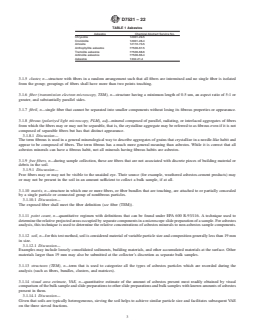
TABLE 1 Asbestos 3.1.12.1 Discussion—Examples may include loosely con-
solidatedsediments,buildingmaterials,andotheraccumulated
Asbestos Chemical Abstract Service No.
Chrysotile 12001-29-5
materialsatthesurface.Othermaterialslargerthan19mmmay
Crocidolite 12001-28-4
also be submitted at the collector’s discretion as separate bulk
Amosite 12172-73-5
samples.
Anthophyllite asbestos 77536-67-5
Tremolite asbestos 77536-68-6
3.1.13 structures (TEM), n—term that is used to categorize
Actinolite asbestos 77536-66-4
allthetypesofasbestosparticleswhicharerecordedduringthe
Asbestos 1332-21-4
analysis (such as fibers, bundles, clusters, and matrices).
D7521 − 22
3.1.14 visual area estimate, VAE, n—quantitative estimate 3.2.8.1 Discussion—PCM-equivalent structures do not nec-
of the amount of asbestos present most readily obtained by essarily contain fibers or bundles longer than 5 µm or PCM-
visual comparison of the bulk sample and slide preparations to equivalent fibers.
otherslidepreparationsandbulksampleswithknownamounts 3.2.8.2 Discussion—Record the dimensions of the structure
of asbestos present in them. such that the obscured portions of components are taken to be
3.1.14.1 Discussion—Given that soils are typically equivalent to the unobscured portions. For example, the length
of a fiber intersecting a grid bar is taken to be twice the
heterogeneous,sievingthesoilhelpstoachievesimilarparticle
size and facilitates subsequent VAE on the three sieved unobscured length. Structures intersecting either of the other
two sides shall not be included in the count.
fractions.
3.2 Descriptions for TEM Analysis Using Test Method
4. Summary of Test Method
D6281:
4.1 The sample is dried and sieved with sieves arranged
3.2.1 asbestos fiber or bundle longer than 5 µm, n—any
fromtoptobottom:19mm,2mm,106µm,andcollectionpan.
asbestos fiber or any width, bundle, or such fibers that has a
The sieve fractions are designated coarse fraction (<19mm to
length exceeding 5 µm.
>2 mm), medium fraction (<2 mm to >106 µm), and fine
3.2.2 asbestos structure larger than 5 µm, n—any fiber,
fraction(<106µm).Weightsforeachfractionaremeasuredand
bundle, cluster, or matrix for which the largest dimension
recorded. During analysis, the >19-mm fraction may be ana-
exceeds 5 µm; does not necessarily contain asbestos fibers or
lyzed using stereomicroscopy and polarized light microscopy
bundles longer than 5 µm.
(PLM) and reported separately but are not considered part of
this method. The results are not included in the final result of
3.2.3 compact matrix (Type C), n—structure consisting of a
the other three sieves fractions. Any building material debris
particle or linked group of particles in which fibers or bundles
collected from the field along with the soil sample may also be
can be seen either within the structure or projecting from it,
analyzedandreportedseparately.Thecoarse,medium,andfine
such that the dimensions of individual fibers and bundles
fractionsareallanalyzedbystereomicroscopyandPLMvisual
cannot be unambiguously determined.
area estimation (VAE). Initial results for the PLM analyses are
3.2.4 disperse matrix (Type D), n—structure consisting of a
expressed in calibrated visual area estimated percent and
particle or linked group of particles with overlapping or
results for the fine fraction using point count values if below
attached fibers or bundles in which at least one of the
detection limit (see also 11.4.2-11.4.4). In addition, if PLM
individual fibers or bundles can be separately identified and its
results indicate none detected, then the fine fraction of the
dimensions measured.
sample may be analyzed for asbestos using transmission
3.2.4.1 Discussion—In practice, matrices can occur in
electron microscopy (TEM) drop mount as outlined in 11.6.1.
which the characteristics of both types of matrix occur in the
If the TEM drop mount is negative or a quantitative result is
same structure. When this occurs, the structure should be
desired, then it is recommended that the sample be gravimetri-
assigned as a disperse matrix, and then a logical procedure
cally reduced and visually estimated by TEM to derive a
should be followed by recording structure components accord-
quantitative result expressed as an estimated weight percent.
ing to the counting criteria.
4.2 Optional TEM Analysis by Test Method D6281—
3.2.5 fibers that extend outside the field of view, n—during
Additional analysis of the fine fraction may be performed to
scanningofagridopening,countfibersthatextendoutsidethe
provide size data and concentration of asbestos reported as the
field of view systematically so as to avoid double counting.
number of asbestos structures per gram of sample.
3.2.5.1 Discussion—In general, a rule should be established
4.3 The nominal quantity of soil sieved and analyzed is a
so that fibers extending outside the field of view in only two
3 3
250-cm sample.Alargeramount(nomorethan500cm )may
quadrants are counted. Measure the length of each of these
be required for different types of soil or other reasons deter-
fibers by moving the specimen to locate the other end of the
mined by the laboratory and investigator. Any amount greater
fiber and then return to the original field of view before
than 500 cm will be discarded. The remainder of the sieved
continuing to scan the specimen. Fibers without terminations
samplesmaybereservedforrepeatadditionaltestingorquality
within the field of view shall not be counted.
assurance testing. The laboratory shall assume that the inves-
3.2.6 other-structure-counting criteria, n—Test Method
tigator has ensured that the entire sample submitted is suffi-
D6281 structure-counting criteria may be used for TEM and
ciently homogeneous for his purposes.
PCM equivalent analysis of structures in the fine fraction.
5. Significance and Use
3.2.7 phase contrast microscope (PCM) equivalent fiber,
n—any particle with parallel or stepped sides with an aspect
5.1 This analysis method is used for the testing of soil
ratio of 3:1 or greater, longer than 5 µm that has a diameter samples for asbestos. The emphasis is on detection and
between0.2µmand3.0µm(accordingtoTestMethodD6281).
analysis of sieved particles for asbestos in the soil. Debris
3.2.7.1 Discussion—For chrysotile, PCM-equivalent fibers identifiable as bulk building material that is readily separable
will always be bundles. from the soil is to be analyzed and reported separately.
3.2.8 PCM-equivalent structure, n—any fiber, bundle, 5.2 The coarse fraction of the sample (>2mm to <19 mm)
cluster, or matrix with an aspect ratio of 3:1 or greater, longer may contain large pieces of asbestos-containing material that
than 5 µm, that has a diameter between 0.2µm and 3.0 µm. may release fibers and break down during the sieving process
D7521 − 22
into smaller pieces that pass through the 2-mm sieve into the mm), No. 140 (106 µm), and collection pan (with drain outlet
medium fraction. If this alteration of the original sample is not when using the wet sieve procedure).
desired by the investigator, these pieces should be removed
7.4 Mechanical Sieve Shaker—Amechanicalsievingdevice
from the sample before sieving and returned to the coarse
capable of creating motion of the sieves to cause the particles
fraction before analysis.
to bounce, tumble, or otherwise turn so as to present different
5.3 This test method does not describe procedures or tech-
orientations to the sieving surface. More information on
niques required to evaluate the safety or habitability of
sieving can be found in Test Method C136.
buildings or outdoor areas potentially contaminated with
7.5 Laboratory Oven or Equivalent—An oven of appropri-
asbestos-containingmaterialsorcompliancewithfederal,state,
ate size capable of maintaining a uniform temperature of
or local regulations or statutes. It is the investigator’s respon-
110 °C 6 5°C.
sibility to make these determinations.
7.6 TEM, 80- to 120-kV, capable of performing electron
5.4 Whereas this test method produces results that may be
diffraction, with a fluorescent screen inscribed with calibrated
used for evaluation of sites contaminated by construction,
gradations, is required. The TEM shall be equipped with an
mine, and manufacturing wastes; deposits of natural occur-
energy dispersive X-ray spectrometer (EDXA), and it shall
rences of asbestos; and other sources of interest to the
have a scanning transmission electron microscopy (STEM)
investigator, the application of the results to such evaluations
attachment or be capable of producing a spot size of less than
and the conclusions drawn there from, including any assess-
250 nm in diameter in crossover.
mentofriskorliability,isbeyondthescopeofthistestmethod
and is the responsibility of the investigator. 7.7 EDXA—The EDXA system (detector and multichannel
analyzer), under routine analysis conditions, meets the follow-
6. Interferences
ingspecifications:<175eVorbetterresolutionatMnKαpeak,
proven detection of Na peak in standard crocidolite or
6.1 The following minerals have properties (that is, chemi-
equivalent,capableofobtainingstatisticallysignificantMgand
cal or crystalline structure) that are very similar to asbestos
Si peaks from a single fibril of chrysotile, and consistent
mineralsandmayinterferewiththeanalysisbycausingafalse
relative sensitivity factors over large areas of the specimen
positive to be recorded during the test. Therefore, literature
grid.
references for these materials shall be maintained in the
laboratory for comparison to asbestos minerals so that they are
7.8 High-Vacuum Carbon Evaporator, with rotating stage.
not misidentified as asbestos minerals. If this test method is
7.9 Exhaust or Fume Hood, capable of 25-linear m/min
used for the determination of the presence of other fibrous
(80-fpm) flow rate.
minerals, the following interferences may not apply:
6.1.1 Antigorite, picrolite;
7.10 Stereo Microscope, approximately 10× to 45×, with
6.1.2 Palygorskite (attapulgite); light source.
6.1.3 Halloysite;
7.11 Side-Arm Filter Flask, 1000 mL.
6.1.4 Pyroxenes;
7.12 Cabinet-Type Desiccator, or low-temperature drying
6.1.5 Sepiolite;
oven.
6.1.6 Vermiculite scrolls;
6.1.7 Fibrous talc;
7.13 Scintillation Tube, or equivalent.
6.1.8 Hornblende and other amphiboles;
7.14 Vacuum Pump, which can maintain a pressure of 92
6.1.9 Other clays such as chlorite associated with talc
kPa.
deposits;
6.1.10 Scrolled minerals (lizardite); and
7.15 PLM, binocular or monocular with crosshair reticule
6.1.11 Non-asbestiform analogues of those listed in the first
(orfunctionalequivalent);low(≥5×and≤15×),medium(>15×
Discussion of 3.1.2.
and <40×), and high (≥40×) objectives; light source; 360°
rotatable stage; substage condenser with iris diaphragm,
7. Apparatus
polarizer, and analyzer that can be placed at 90° to each other;
accessory slot at 45° to polarizers for wave plates and
7.1 In this section, equipment used for preparation and
analysisofthesamplesinthelaboratoryisdescribed.Materials compensators; wave retardation plate (~550-nm retardation);
dispersion-staining objective complete with accessories (op-
and equipment used for sample collection are described in
11.2. tional); and test slide (or a standard such as NIST SRM
1867/anthophyllite) for aligning the crosshairs with the privi-
7.2 Analytical Balance—Balances or scales used in testing
leged directions of the polarizer and analyzer.
medium and coarse aggregate shall have readability and
accuracy to two decimal places (0.01 g). For the fine fraction, 7.16 Ultrasonic Bath, tabletop model (100 W).
an analytical balance with sensitivity to four decimal places
7.17 Plastic Sample Containers, with wide-mouth screw
(0.0001 g) shall be used.
cap (500 mL) or equivalent sealable container.
7.3 Sieves—The sieve meshes and standard sieve frames
7.18 Waterproof Markers.
shallconformtotherequirementsofSpecificationE11(7.6-or
20-cm diameter); ASTM type; ⁄4 in. (ISO 19 mm), No. 10 (2 7.19 Forceps (Tweezers).
D7521 − 22
7.20 Carbon-Coated Finder Grids (Filter Substrate), 200 9. Sampling
mesh.
9.1 Sample collection is the responsibility of the field
7.21 Graduated Pipets (1-mL, 5-mL, or 10-mL Sizes), glass
investigator. For a discussion of sample collection, see non-
or plastic.
mandatory Appendix X2.
7.22 Filter Funnel Assemblies, either glass or disposable
10. Calibration
plastic and using either a 25-mm or 47-mm diameter filter.
7.23 Mixed Cellulose Ester (MCE) Membrane Filters, 10.1 Perform calibrations of the instrumentation on a regu-
lar basis and retain these records in the laboratory in accor-
25-mm or 47-mm diameter, 0.22-µm and 5-µm pore size.
dance with the laboratory’s quality assurance program.
7.24 Polycarbonate (PC) Filters, 25-mm or 47-mm
diameter, 0.2-µm pore size. 10.2 Record calibrations in a log book or laboratory infor-
mation management system (LIMS) along with dates of
7.25 Storage Containers, for the 25-mm or 47-mm filters
calibration and the attached backup documentation.
(for archiving).
10.3 PLM Calibration:
7.26 Glass Slides, approximately 76mm by 25 mm in size.
10.3.1 The laboratory shall ensure that each microscope is
7.27 Scalpel Blades, No. 10 or equivalent.
in proper working condition. The optical system, including
7.28 Cover Slips, 18mm by 18 mm.
objectives, condensers, polarizers, and so forth, shall not be
7.29 Nonasbestos Mineral, references as outlined in 6.1. damaged or modified in any way that would affect microscope
resolution or depolarize the light (that is, the lens is relatively
7.30 Asbestos Standards, National Institute of Standards
freeofscratches,nicks,corrosion,signsofimpact,andsoforth
and Technology (NIST) traceable as outlined in 3.1.2 if
and there is no stop in the back focal plane other than for
available or documented reference materials.
dispersion-staining objectives).
7.31 Petri Dishes, large glass, approximately 90 mm in
10.3.2 The laboratory shall have written procedures for
diameter.
aligning the PLM daily (or before use) in such a way that:
7.32 Jaffe Washer, stainless steel or aluminum mesh screen,
10.3.2.1 The privileged directions of the substage polarizer
30 to 40 mesh, approximately 75mm by 50 mm.
and the analyzer shall be oriented at 90° to one another. The
orientationsoftheprivilegeddirectionofthepolarizersshallbe
7.33 Carbon Rods, for evaporation of carbon film onto
known. The accessory slot shall be at 45° to these privileged
samples.
directions;
7.34 Lens Tissue.
10.3.2.2 The ocular crosshairs coincide with the privileged
7.35 Ashless Filter Paper Filters, 90-mm diameter.
directions of the polarizer and the analyzer and this condition
shall be verified with a test slide (or similar standard);
7.36 Wash Bottles, plastic (100 mL suggested).
10.3.2.3 The objectives or stage or both shall be centered to
7.37 Reagent Alcohol, high-performance liquid chromatog-
prevent grains from leaving the fields of view during stage
raphy (HPLC) grade (Fisher A995 or equivalent).
rotation;
7.38 Diffraction Grating Replica, 2160 lines/mm.
10.3.2.4 The substage condenser, which is visualized
7.39 Disposable Aluminum Pans.
through the image of the field diaphragm, shall be centered on
the optic axis; and
8. Reagents and Materials
10.3.2.5 An alignment check before use shall be performed
8.1 Purity of Reagents—Reagent-grade chemicals shall be
and recorded.
used in all tests. Unless otherwise indicated, it is intended that
10.3.3 The laboratory shall have calibrated refractive index
all reagents conform to the specifications of the Committee on
solids, or a refractometer (or access to one), for calibrating
Analytical Reagents of theAmerican Chemical Society where
refractive index liquids.
such specifications are available. Other grades may be used,
10.3.4 The laboratory shall have written procedures for
provided it is first ascertained that the reagent is of sufficiently
calibrating refractive index (RI) liquids, including the lot
high purity to permit its use without lessening the accuracy of
number for each of the measured oils, to determine whether
the determination.
their actual or calibrated RI value at 589 nm and 25°C, are
8.2 Purity of Water—Unless otherwise indicated, references within 60.004 of their nominal values. The procedures shall
include:
to water shall be understood to mean reagent water as defined
by Type II of Specification D1193.
10.3.4.1 If the calibrated RI value at 589 nm and 25°C
deviates more than 60.004 from the nominal value, the liquid
shall not be used.
ACS Reagent Chemicals, Specifications and Procedures for Reagents and
10.3.4.2 The temperature at the workstation at the time of
Standard-Grade Reference Materials, American Chemical Society, Washington,
calibration shall be recorded and, if not 25°C, used to perform
DC. For suggestions on the testing of reagents not listed by theAmerican Chemical
Society, see Analar Standards for Laboratory Chemicals, BDH Ltd., Poole, Dorset,
temperature correction of the calibrated RI value.
U.K., and the United States Pharmacopeia and National Formulary, U.S. Pharma-
copeial Convention, Inc. (USPC), Rockville, MD. 10.4 TEM Calibrations:
D7521 − 22
10.4.1 Check the alignment and the systems operation. the procedure outlined in 10.4.4 on a single chrysotile fiber
Refer to the TEM manufacturer’s operational manual for with width less than 1 µm.
detailed instructions.
10.6 Grid Opening Measurements—TEM grids shall have a
10.4.2 Calibrate the camera length of the TEM in electron
knowngridopeningarea.DeterminethisareaforalotofTEM
diffraction (ED) operating mode before ED patterns of un-
grids as follows:
known samples are observed.
10.6.1 Measure at least 20 grid openings in each of 20
10.4.3 Perform magnification calibration at the fluorescent
random (200-mesh) copper grids for a total of 400 grid
screen.Thiscalibrationshallbeperformedatthemagnification
openings for every 1000 grids used by placing the 20 grids on
used for structure counting. Calibration is performed with a
aglassslideandexaminingthemundertheopticalmicroscope.
grating replica (for example, one containing 2160 lines/mm).
Use a calibrated graticule to measure the average length and
10.4.3.1 Define a field of view on the fluorescent screen.
width of the 20 openings from each of the individual grids.
The field of view shall be measurable or previously inscribed
From the accumulated data, calculate the average grid opening
with a scale or concentric circles (all scales should be metric).
area of the 400 openings.
10.4.3.2 Frequencyofcalibrationwilldependontheservice
10.6.2 Grid area measurements can also be made at the
history of the particular microscope. TEM at a calibrated screen magnification. Typically, measure
one grid opening for each grid examined. Measure grid
10.4.3.3 Check the calibration after any maintenance of the
microscopethatinvolvesadjustmentofthepowersupplytothe openings in both the x and y directions and calculate the area.
10.6.3 Pre-calibratedTEM grids are also acceptable for this
lens or the high-voltage system or the mechanical disassembly
of the electron optical column apart from filament exchange. test method.
10.4.3.4 The analyst shall ensure that the grating replica is
11. Procedure
placed at the same distance from the objective lens as the
specimen. 11.1 Sample Preparation—Dry Sieving (for Wet Sieving,
see Appendix X1).
10.4.3.5 For instruments that incorporate a eucentric tilting
11.1.1 Any building materials collected at the site are
specimen stage, all specimens and the grating replica shall be
analyzed separately by stereomicroscopy and PLM and re-
placed at the eucentric position.
ported separately. Each soil sample or representative sub-
10.4.4 The smallest spot size of the TEM shall be checked.
sample thereof will be dried at the laboratory within 48 h of
10.4.4.1 At the crossover point, measure the spot size at a
receipt (recommend prompt shipment after collection to mini-
screen magnification of 15 000× to 20 000×.
mize microbial growth) in an oven at 110°C 6 5°C until the
10.4.4.2 The measured spot size shall be less than or equal
weight is stable. Record the change in weight. Ensure that
to 250 nm.
sample loss before and after sieving meets requirements set
10.5 EDXA Calibration:
forth in Test Method C136 by weighing before and after
10.5.1 The resolution and calibration of the EDXAshall be
sieving. Change in weight should be recorded for moisture
verified.
content.
10.5.2 Collect a standard EDXACu peak andAl peak from
11.1.2 For samples with organic or soluble materials, gra-
a Cu grid with evaporated aluminum or equivalent.
vimetric reduction of the sample may be performed before
10.5.3 Compare the X-ray energy versus channel number sieving using EPA 600/R-93/116.
for the Cu peak and theAl peak. Be certain that readings are
11.2 Under a hood (high-efficiency particulate air [HEPA]
within 610 eV.
filtered if required), nest the sieves in order of decreasing size
10.5.4 Select a single fiber of crocidolite with a width less
ofopeningfromtoptobottomonthesieveshakerwiththe19-
than 1 µm (NIST 1866 or equivalent) and collect an EDXA
mmsieveontop,2-mmsieve(coarse),the106-µmsieveinthe
spectrum from it.
middle (medium), and the collection pan on the bottom (fine)
10.5.5 The elemental analysis of the crocidolite shall meet
asshowninFig.1.Thedriedsampleispouredintothe19-mm
the following condition in which the Na peak is considered
sieve and misted lightly with isopropyl alcohol to neutralize
statistically significant and not a fluctuation in the background
static charges and minimize liberation of particles when the
ifthenumberofnetcounts, N ,exceedstwiceofthestandard
sieve is activated. Proper precautions should be used when
net
deviation of net counts, , which equals to the square root of
net startingthesieveshakerwhenisopropylalcoholisused.Useof
(two times the average background counts, N , plus the
a fume hood with a HEPA filter is the responsibility of the
B
average net counts, N ):
net laboratory.ASTMInternationaldoesnotspecifylocalenviron-
mental policy.
N $2σ (1)
net net
11.2.1 Secure the sieve shaker top on the sieve as shown in
where:
Fig.1.Alidisplacedonthe19-mm(top)sievebeforesieving.
11.2.2 Turn on the sieve shaker for 5 min or until the
=
σ 5 2N 1N (2)
net B net
fractionsarereasonablyseparated.Whenfinished,waitatleast
10.5.6 Collect a standard EDXA of chrysotile asbestos
5 min before dismantling the sieves to allow particles to settle
(NIST SRM 1866 or equivalent).
in each sieve.
10.5.7 The elemental analysis of chrysotile shall determine 11.2.3 Carefully separate each sieve to minimize distur-
that the Si and Mg peaks are statistically significant similar to bance of particles. Determine the weight for each of the three
...
This document is not an ASTM standard and is intended only to provide the user of an ASTM standard an indication of what changes have been made to the previous version. Because
it may not be technically possible to adequately depict all changes accurately, ASTM recommends that users consult prior editions as appropriate. In all cases only the current version
of the standard as published by ASTM is to be considered the official document.
Designation: D7521 − 16 D7521 − 22
Standard Test Method for
Determination of Asbestos in Soil
This standard is issued under the fixed designation D7521; the number immediately following the designation indicates the year of
original adoption or, in the case of revision, the year of last revision. A number in parentheses indicates the year of last reapproval. A
superscript epsilon (´) indicates an editorial change since the last revision or reapproval.
1. Scope
1.1 This test method covers a procedure to: (1) identify asbestos in soil, (2) provide an estimate of the concentration of asbestos
in the sampled soil (dried), and (3) optionally to provide a concentration of asbestos reported as the number of asbestos structures
per gram of sample.
1.2 In this test method, results are produced that may be used for evaluation of sites contaminated by construction, mine and
manufacturing wastes, deposits of natural occurrences of asbestos (NOA), and other sources of interest to the investigator.
1.3 This test method describes the gravimetric, sieve, and other laboratory procedures for preparing the soil for analysis as well
as the identification and quantification of any asbestos detected. Pieces of collected soil and material embedded therein that pass
through a 19-mm sieve will become part of the sample that is analyzed and for which results are reported.
1.3.1 Asbestos is identified and quantified by polarized light microscopy (PLM) techniques including analysis of morphology and
optical properties. Optional transmission electron microscopy (TEM) identification and quantification of asbestos is based on
morphology, selected area electron diffraction (SAED), and energy dispersive X-ray analysis (EDXA). Some information about
fiber size may also be determined. The PLM and TEM methods use different definitions and size criteria for fibers and structures.
Separate data sets may be produced.
1.4 This test method has an analytical sensitivity of 0.25 % by weight with optional procedures to allow for an analytical
sensitivity of 0.1 % by weight.
1.5 This test method does not purport to address sampling strategies or variables associated with soil environments. Such
considerations are the responsibility of the investigator collecting and submitting the sample. Appendix X2 covering elements of
soil sampling and good field practices is attached.
1.6 Units—The values stated in SI units are to be regarded as the standard. Other units may be cited in the method for
informational purposes only.
1.7 Hazards—Asbestos fibers are acknowledged carcinogens. Breathing asbestos fibers can result in disease of the lungs including
asbestosis, lung cancer, and mesothelioma. Precautions should be taken to avoid creating and breathing airborne asbestos particles
when sampling and analyzing materials suspected of containing asbestos.
This test method is under the jurisdiction of ASTM Committee D22 on Air Quality and is the direct responsibility of Subcommittee D22.07 on Sampling and Analysis
of AsbestosSampling, Analysis, Management of Asbestos, and Other Microscopic Particles.
Current edition approved May 1, 2016June 1, 2022. Published May 2016July 2022. Originally approved in 2013. Last previous edition approved in 20132016 as D7521
– 13.16. DOI: 10.1520/D7521-16.10.1520/D7521-22.
Copyright © ASTM International, 100 Barr Harbor Drive, PO Box C700, West Conshohocken, PA 19428-2959. United States
D7521 − 22
1.8 This standard does not purport to address all of the safety concerns, if any, associated with its use. It is the responsibility
of the user of this standard to establish appropriate safety safety, health, and healthenvironmental practices and determine the
applicability of regulatory limitations prior to use.
1.9 This international standard was developed in accordance with internationally recognized principles on standardization
established in the Decision on Principles for the Development of International Standards, Guides and Recommendations issued
by the World Trade Organization Technical Barriers to Trade (TBT) Committee.
2. Referenced Documents
2.1 ASTM Standards:
C136 Test Method for Sieve Analysis of Fine and Coarse Aggregates
D1193 Specification for Reagent Water
D3670 Guide for Determination of Precision and Bias of Methods of Committee D22
D6281 Test Method for Airborne Asbestos Concentration in Ambient and Indoor Atmospheres as Determined by Transmission
Electron Microscopy Direct Transfer (TEM)
D6620 Practice for Asbestos Detection Limit Based on Counts
D7712 Terminology for Sampling and Analysis of Asbestos
E11 Specification for Woven Wire Test Sieve Cloth and Test Sieves
E177 Practice for Use of the Terms Precision and Bias in ASTM Test Methods
E691 Practice for Conducting an Interlaboratory Study to Determine the Precision of a Test Method
2.2 EPA Standards:
EPA 600/R-93/116 Method for the Determination of Asbestos in Bulk Building Materials
2.3 ISO Standards:
ISO 10312:199510312:2019 Ambient Air -Determination of Asbestos Fibers–Direct Transfer Transmission Electron Microscopy
Method (1st(2nd Ed. 1995-05-01)2019-10)
ISO 17025 General requirements for the competence of testing and calibration laboratories
ISO/DIS 22262-1ISO 22262-1:2012 Bulk materials—Part 1: Sampling and qualitative determination of asbestos in commercial
bulk materials
3. Terminology
3.1 Definitions:
3.1.1 asbestiform, n—type of fibrous habit in which the fibers are separable into thinner fibers and ultimately into fibrils.
3.1.1.1 Discussion—
This habit accounts for greater flexibility and higher tensile strength than other habits of the same mineral. For more information
5 6
on asbestiform mineralogy, see Steel and Wylie and Zussman.
3.1.2 asbestos, n—a collective term that describes a group of naturally occurring, inorganic, highly-fibrous, silicate minerals that
are easily separated into long, thin, flexible, strong fibers when crushed or processed.
3.1.2.1 Discussion—
Included in the definition are the asbestiform varieties of serpentine (chrysotile); riebeckite (crocidolite); grunerite (grunerite
asbestos [Amosite]); anthophyllite (anthophyllite asbestos); tremolite (tremolite asbestos); and actinolite (actinolite asbestos). The
amphibole mineral compositions are defined according to the nomenclature of the International Mineralogical Association.
3.1.2.2 Discussion—
The mineral fibers described in this definition are listed below. This method is also applicable to other mineral fibers of interest
not listed in Table 1.
3.1.3 aspect ratio, n—ratio of the length of a fibrous particle to its average width.
3.1.4 bundle, n—structure composed of two or more fibers in a parallel arrangement with the fibers closer than one fiber diameter
to each other.
For referenced ASTM standards, visit the ASTM website, www.astm.org, or contact ASTM Customer Service at service@astm.org. For Annual Book of ASTM Standards
volume information, refer to the standard’s Document Summary page on the ASTM website.
Available from United States Environmental Protection Agency (EPA), Ariel Rios Bldg., 1200 Pennsylvania Ave., NW, Washington, DC 20004, http://www.epa.gov.
Available from American National Standards Institute (ANSI), 25 W. 43rd St., 4th Floor, New York, NY 10036, http://www.ansi.org.
Steel, E., and A. Wylie, “Mineralogical Characteristics of Asbestos,” in Geology of Asbestos Deposits, P. H. Riordon, Ed., SME-AIME, 1981, pp. 93–101.
Zussman, J., “The Mineralogy of Asbestos,” in Asbestos: Properties, Applications and Hazards, John Wiley and Sons, 1979, pp. 45–67.
D7521 − 22
TABLE 1 Asbestos
Asbestos Chemical Abstract Service No.
Chrysotile 12001-29-5
Crocidolite 12001-28-4
Amosite 12172-73-5
Anthophyllite asbestos 77536-67-5
Tremolite asbestos 77536-68-6
Actinolite asbestos 77536-66-4
Asbestos 1332-21-4
3.1.5 cluster, n—structure with fibers in a random arrangement such that all fibers are intermixed and no single fiber is isolated
from the group; groupings of fibers shall have more than two points touching.
3.1.6 fiber (transmission electron microscopy, TEM), n—structure having a minimum length of 0.5 um, an aspect ratio of 5:1 or
greater, and substantially parallel sides.
3.1.7 fibril, n—single fiber that cannot be separated into smaller components without losing its fibrous properties or appearance.
3.1.8 fibrous (polarized light microscopy, PLM), adj—mineral composed of parallel, radiating, or interlaced aggregates of fibers
from which the fibers may or may not be separable, that is, the crystalline aggregate may be referred to as fibrous even if it is not
composed of separable fibers but has that distinct appearance.
3.1.8.1 Discussion—
The term fibrous is used in a general mineralogical way to describe aggregates of grains that crystallize in a needle-like habit and
appear to be composed of fibers. The term fibrous has a much more general meaning than asbestos. While it is correct that all
asbestos minerals can have a fibrous habit, not all minerals having fibrous habits are asbestos.
3.1.9 free fibers, n—during sample collection, these are fibers that are not associated with discrete pieces of building material or
debris in the soil.
3.1.9.1 Discussion—
Free fibers may or may not be visible to the unaided eye. Their source (for example, weathered asbestos-cement products) may
or may not be present in the soil in an amount sufficient to collect a bulk sample, if at all.
3.1.10 matrix, n—structure in which one or more fibers, or fiber bundles that are touching, are attached to or partially concealed
by a single particle or connected group of nonfibrous particles.
3.1.10.1 Discussion—
The exposed fiber shall meet the fiber definition (see fiber (TEM)).
3.1.11 point count, n—quantitative regimen with definitions that can be found under EPA 600 R-93/116. A technique used to
determine the relative projected areas occupied by separate components in a microscope slide preparation of a sample. For asbestos
analysis, this technique is used to determine the relative concentrations of asbestos minerals to non-asbestos sample components.
3.1.12 soil, n—for this test method, soil is considered material of variable particle size and composition generally less than 19 mm
in size.
3.1.12.1 Discussion—
Examples may include loosely consolidated sediments, building materials, and other accumulated materials at the surface. Other
materials larger than 19 mm may also be submitted at the collector’s discretion as separate bulk samples.
3.1.13 structures (TEM), n—term that is used to categorize all the types of asbestos particles which are recorded during the
analysis (such as fibers, bundles, clusters, and matrices).
3.1.14 visual area estimate, VAE, n—quantitative estimate of the amount of asbestos present most readily obtained by visual
comparison of the bulk sample and slide preparations to other slide preparations and bulk samples with known amounts of asbestos
present in them.
3.1.14.1 Discussion—
Given that soils are typically heterogeneous, sieving the soil helps to achieve similar particle size and facilitates subsequent VAE
on the three sieved fractions.
D7521 − 22
3.2 Descriptions for TEM Analysis Using Test Method D6281:
3.2.1 asbestos fiber or bundle longer than 5 μm, n—any asbestos fiber or any width, bundle, or such fibers that has a length
exceeding 5 μm.
3.2.2 asbestos structure larger than 5 μm, n—any fiber, bundle, cluster, or matrix for which the largest dimension exceeds 5 μm;
does not necessarily contain asbestos fibers or bundles longer than 5 μm.
3.2.3 compact matrix (Type C), n—structure consisting of a particle or linked group of particles in which fibers or bundles can be
seen either within the structure or projecting from it, such that the dimensions of individual fibers and bundles cannot be
unambiguously determined.
3.2.4 disperse matrix (Type D), n—structure consisting of a particle or linked group of particles with overlapping or attached fibers
or bundles in which at least one of the individual fibers or bundles can be separately identified and its dimensions measured.
3.2.4.1 Discussion—
In practice, matrices can occur in which the characteristics of both types of matrix occur in the same structure. When this occurs,
the structure should be assigned as a disperse matrix, and then a logical procedure should be followed by recording structure
components according to the counting criteria.
3.2.5 fibers that extend outside the field of view, n—during scanning of a grid opening, count fibers that extend outside the field
of view systematically so as to avoid double counting.
3.2.5.1 Discussion—
In general, a rule should be established so that fibers extending outside the field of view in only two quadrants are counted. Measure
the length of each of these fibers by moving the specimen to locate the other end of the fiber and then return to the original field
of view before continuing to scan the specimen. Fibers without terminations within the field of view shall not be counted.
3.2.6 other-structure-counting criteria, n—Test Method D6281 structure-counting criteria may be used for TEM and PCM
equivalent analysis of structures in the fine fraction.
3.2.7 phase contrast microscope (PCM) equivalent fiber, n—any particle with parallel or stepped sides with an aspect ratio of 3:1
or greater, longer than 5 μm that has a diameter between 0.20.2 μm and 3.0 μm (according to Test Method D6281).
3.2.7.1 Discussion—
For chrysotile, PCM-equivalent fibers will always be bundles.
3.2.8 PCM-equivalent structure, n—any fiber, bundle, cluster, or matrix with an aspect ratio of 3:1 or greater, longer than 5 μm,
that has a diameter between 0.20.2 μm and 3.0 μm.
3.2.8.1 Discussion—
PCM-equivalent structures do not necessarily contain fibers or bundles longer than 5 μm or PCM-equivalent fibers.
3.2.8.2 Discussion—
Record the dimensions of the structure such that the obscured portions of components are taken to be equivalent to the unobscured
portions. For example, the length of a fiber intersecting a grid bar is taken to be twice the unobscured length. Structures intersecting
either of the other two sides shall not be included in the count.
4. Summary of Test Method
4.1 The sample is dried and sieved with sieves arranged from top to bottom: 19 mm, 2 mm, 106 μm, and collection pan. The sieve
fractions are designated coarse fraction (<19(<19 mm to >2 mm), medium fraction (<2 mm to >106 μm), and fine fraction (<106
μm). Weights for each fraction are measured and recorded. During analysis, the >19-mm fraction may be analyzed using
stereomicroscopy and polarized light microscopy (PLM) and reported separately but are not considered part of this method. The
results are not included in the final result of the other three sieves fractions. Any building material debris collected from the field
along with the soil sample may also be analyzed and reported separately. The coarse, medium, and fine fractions are all analyzed
by stereomicroscopy and PLM visual area estimation (VAE). Initial results for the PLM analyses are expressed in calibrated visual
area estimated percent and results for the fine fraction using point count values if below detection limit (see also 11.4.2-11.4.4).
In addition, if PLM results indicate none detected, then the fine fraction of the sample may be analyzed for asbestos using
transmission electron microscopy (TEM) drop mount as outlined in 11.6.1. If the TEM drop mount is negative or a quantitative
result is desired, then it is recommended that the sample be gravimetrically reduced and visually estimated by TEM to derive a
quantitative result expressed as an estimated weight percent.
D7521 − 22
4.2 Optional TEM Analysis by Test Method D6281—Additional analysis of the fine fraction may be performed to provide size data
and concentration of asbestos reported as the number of asbestos structures per gram of sample.
3 3
4.3 The nominal quantity of soil sieved and analyzed is a 250-cm sample. A larger amount (no more than 500 cm ) may be
required for different types of soil or other reasons determined by the laboratory and investigator. Any amount greater than 500
cm will be discarded. The remainder of the sieved samples may be reserved for repeat additional testing or quality assurance
testing. The laboratory shall assume that the investigator has ensured that the entire sample submitted is sufficiently homogeneous
for his purposes.
5. Significance and Use
5.1 This analysis method is used for the testing of soil samples for asbestos. The emphasis is on detection and analysis of sieved
particles for asbestos in the soil. Debris identifiable as bulk building material that is readily separable from the soil is to be analyzed
and reported separately.
5.2 The coarse fraction of the sample (>2(>2 mm to <19 mm) may contain large pieces of asbestos-containing material that may
release fibers and break down during the sieving process into smaller pieces that pass through the 2-mm sieve into the medium
fraction. If this alteration of the original sample is not desired by the investigator, these pieces should be removed from the sample
before sieving and returned to the coarse fraction before analysis.
5.3 This test method does not describe procedures or techniques required to evaluate the safety or habitability of buildings or
outdoor areas potentially contaminated with asbestos-containing materials or compliance with federal, state, or local regulations
or statutes. It is the investigator’s responsibility to make these determinations.
5.4 Whereas this test method produces results that may be used for evaluation of sites contaminated by construction, mine, and
manufacturing wastes; deposits of natural occurrences of asbestos; and other sources of interest to the investigator, the application
of the results to such evaluations and the conclusions drawn there from, including any assessment of risk or liability, is beyond
the scope of this test method and is the responsibility of the investigator.
6. Interferences
6.1 The following minerals have properties (that is, chemical or crystalline structure) that are very similar to asbestos minerals and
may interfere with the analysis by causing a false positive to be recorded during the test. Therefore, literature references for these
materials shall be maintained in the laboratory for comparison to asbestos minerals so that they are not misidentified as asbestos
minerals. If this test method is used for the determination of the presence of nonregulatedother fibrous minerals, the following
interferences may not apply:
6.1.1 Antigorite, picrolite;
6.1.2 Palygorskite (attapulgite);
6.1.3 Halloysite;
6.1.4 Pyroxenes;
6.1.5 Sepiolite;
6.1.6 Vermiculite scrolls;
6.1.7 Fibrous talc;
6.1.8 Hornblende and other amphiboles;
6.1.9 Other clays such as chlorite associated with talc deposits;
6.1.10 Scrolled minerals (lizardite); and
D7521 − 22
6.1.11 Non-asbestiform analogues of those listed in the first Discussion of 3.1.2.
7. Apparatus
7.1 In this section, equipment used for preparation and analysis of the samples in the laboratory is described. Materials and
equipment used for sample collection are described in 11.2.
7.2 Analytical Balance—Balances or scales used in testing medium and coarse aggregate shall have readability and accuracy to
two decimal places (0.01 g). For the fine fraction, an analytical balance with sensitivity to four decimal places (0.0001 g) shall be
used.
7.3 Sieves—The sieve meshes and standard sieve frames shall conform to the requirements of Specification E11 (7.6- or
20–cm20-cm diameter); ASTM type; ⁄4 in. (ISO 19 mm), No. 10 (2 mm), No. 140 (106 μm), and collection pan (with drain outlet
when using the wet sieve procedure).
7.4 Mechanical Sieve Shaker—A mechanical sieving device capable of creating motion of the sieves to cause the particles to
bounce, tumble, or otherwise turn so as to present different orientations to the sieving surface. More information on sieving can
be found in Test Method C136.
7.5 Laboratory Oven or Equivalent—An oven of appropriate size capable of maintaining a uniform temperature of 110110 °C 6
5°C.5 °C.
7.6 TEM, 80- to 120-kV, capable of performing electron diffraction, with a fluorescent screen inscribed with calibrated gradations,
is required. The TEM shall be equipped with an energy dispersive X-ray spectrometer (EDXA), and it shall have a scanning
transmission electron microscopy (STEM) attachment or be capable of producing a spot size of less than 250 nm in diameter in
crossover.
7.7 EDXA—The EDXA system (detector and multichannel analyzer), under routine analysis conditions, meets the following
specifications: <175 eV or better resolution at Mn Kα peak, proven detection of Na peak in standard crocidolite or equivalent,
capable of obtaining statistically significant Mg and Si peaks from a single fibril of chrysotile, and consistent relative sensitivity
factors over large areas of the specimen grid.
7.8 High-Vacuum Carbon Evaporator, with rotating stage.
7.9 Exhaust or Fume Hood, capable of 25-linear m/min (80-fpm) flow rate.
7.10 Stereo Microscope, approximately 1010× to 45×, with light source.
7.11 Side-Arm Filter Flask, 1000 mL.
7.12 Cabinet-Type Desiccator, or low-temperature drying oven.
7.13 Scintillation Tube, or equivalent.
7.14 Vacuum Pump, which can maintain a pressure of 92 kPa.
7.15 PLM, binocular or monocular with crosshair reticule (or functional equivalent); low (≥5(≥5× and ≤15×), medium (>15(>15×
and <40×), and high (≥40×) objectives; light source; 360° rotatable stage; substage condenser with iris diaphragm, polarizer, and
analyzer that can be placed at 90° to each other; accessory slot at 45° to polarizers for wave plates and compensators; wave
retardation plate (~550-nm retardation); dispersion-staining objective complete with accessories (optional); and test slide (or a
standard such as NIST SRM 1867/anthophyllite) for aligning the crosshairs with the privileged directions of the polarizer and
analyzer.
D7521 − 22
7.16 Ultrasonic Bath, tabletop model (100 W).
7.17 Plastic Sample Containers, with wide-mouth screw cap (500 mL) or equivalent sealable container.
7.18 Waterproof Markers.
7.19 Forceps (Tweezers).
7.20 Carbon-Coated Finder Grids (Filter Substrate), 200 mesh.
7.21 Graduated Pipets (1-, 5-,(1-mL, 5-mL, or 10-mL Sizes), glass or plastic.
7.22 Filter Funnel Assemblies, either glass or disposable plastic and using either a 25-25-mm or 47- mm 47-mm diameter filter.
7.23 Mixed Cellulose Ester (MCE) Membrane Filters, 25-25-mm or 47-mm diameter, 0.22-0.22-μm and 5- μm 5-μm pore size.
7.24 Polycarbonate (PC) Filters, 25-25-mm or 47-mm diameter, 0.2-μm pore size.
7.25 Storage Containers, for the 25-25-mm or 47-mm filters (for archiving).
7.26 Glass Slides, approximately 7676 mm by 25 mm in size.
7.27 Scalpel Blades, No. 10 or equivalent.
7.28 Cover Slips, 1818 mm by 18 mm.
7.29 Nonasbestos Mineral, references as outlined in 6.1.
7.30 Asbestos Standards, National Institute of Standards and Technology (NIST) traceable as outlined in 3.1.2 if available or
documented reference materials.
7.31 Petri Dishes, large glass, approximately 90 mm in diameter.
7.32 Jaffe Washer, stainless steel or aluminum mesh screen, 30 to 40 mesh, approximately 7575 mm by 50 mm.
7.33 Carbon Rods, for evaporation of carbon film onto samples.
7.34 Lens Tissue.
7.35 Ashless Filter Paper Filters, 90-mm diameter.
7.36 Wash Bottles, plastic (100 mL suggested).
7.37 Reagent Alcohol, high-performance liquid chromatography (HPLC) grade (Fisher A995 or equivalent).
7.38 Diffraction Grating Replica, 2160 lines/mm.
7.39 Disposable Aluminum Pans.
D7521 − 22
8. Reagents and Materials
8.1 Purity of Reagents—Reagent-grade chemicals shall be used in all tests. Unless otherwise indicated, it is intended that all
reagents conform to the specifications of the Committee on Analytical Reagents of the American Chemical Society where such
specifications are available. Other grades may be used, provided it is first ascertained that the reagent is of sufficiently high purity
to permit its use without lessening the accuracy of the determination.
8.2 Purity of Water—Unless otherwise indicated, references to water shall be understood to mean reagent water as defined by Type
II of Specification D1193.
9. Sampling
9.1 Sample collection is the responsibility of the field investigator. For a discussion of sample collection, see nonmandatory
Appendix X2.
10. Calibration
10.1 Perform calibrations of the instrumentation on a regular basis and retain these records in the laboratory in accordance with
the laboratory’s quality assurance program.
10.2 Record calibrations in a log book or laboratory information management system (LIMS) along with dates of calibration and
the attached backup documentation.
10.3 PLM Calibration:
10.3.1 The laboratory shall ensure that each microscope is in proper working condition. The optical system, including objectives,
condensers, polarizers, and so forth, shall not be damaged or modified in any way that would affect microscope resolution or
depolarize the light (that is, the lens is relatively free of scratches, nicks, corrosion, signs of impact, and so forth and there is no
stop in the back focal plane other than for dispersion-staining objectives).
10.3.2 The laboratory shall have written procedures for aligning the PLM daily (or before use) in such a way that:
10.3.2.1 The privileged directions of the substage polarizer and the analyzer shall be oriented at 90° to one another. The
orientations of the privileged direction of the polarizers shall be known. The accessory slot shall be at 45° to these privileged
directions;
10.3.2.2 The ocular crosshairs coincide with the privileged directions of the polarizer and the analyzer and this condition shall be
verified with a test slide (or similar standard);
10.3.2.3 The objectives or stage or both shall be centered to prevent grains from leaving the fields of view during stage rotation;
10.3.2.4 The substage condenser, which is visualized through the image of the field diaphragm, shall be centered on the optic axis;
and
10.3.2.5 An alignment check before use shall be performed and recorded.
10.3.3 The laboratory shall have calibrated refractive index solids, or a refractometer (or access to one), for calibrating refractive
index liquids.
10.3.4 The laboratory shall have written procedures for calibrating refractive index (RI) liquids, including the lot number for each
of the measured oils, to determine whether their actual or calibrated RI value at 589 nm and 25°C,25 °C, are within 60.004 of
their nominal values. The procedures shall include:
ACS Reagent Chemicals, Specifications and Procedures for Reagents and Standard-Grade Reference Materials, American Chemical Society, Washington, DC. For
suggestions on the testing of reagents not listed by the American Chemical Society, see Analar Standards for Laboratory Chemicals, BDH Ltd., Poole, Dorset, U.K., and
the United States Pharmacopeia and National Formulary, U.S. Pharmacopeial Convention, Inc. (USPC), Rockville, MD.
D7521 − 22
10.3.4.1 If the calibrated RI value at 589 nm and 25°C25 °C deviates more than 60.004 from the nominal value, the liquid shall
not be used.
10.3.4.2 The temperature at the workstation at the time of calibration shall be recorded and, if not 25°C, used to perform
temperature correction of the calibrated RI value.
10.4 TEM Calibrations:
10.4.1 Check the alignment and the systems operation. Refer to the TEM manufacturer’s operational manual for detailed
instructions.
10.4.2 Calibrate the camera length of the TEM in electron diffraction (ED) operating mode before ED patterns of unknown
samples are observed.
10.4.3 Perform magnification calibration at the fluorescent screen. This calibration shall be performed at the magnification used
for structure counting. Calibration is performed with a grating replica (for example, one containing 2160 lines/mm).
10.4.3.1 Define a field of view on the fluorescent screen. The field of view shall be measurable or previously inscribed with a scale
or concentric circles (all scales should be metric).
10.4.3.2 Frequency of calibration will depend on the service history of the particular microscope.
10.4.3.3 Check the calibration after any maintenance of the microscope that involves adjustment of the power supply to the lens
or the high-voltage system or the mechanical disassembly of the electron optical column apart from filament exchange.
10.4.3.4 The analyst shall ensure that the grating replica is placed at the same distance from the objective lens as the specimen.
10.4.3.5 For instruments that incorporate a eucentric tilting specimen stage, all specimens and the grating replica shall be placed
at the eucentric position.
10.4.4 The smallest spot size of the TEM shall be checked.
10.4.4.1 At the crossover point, measure the spot size at a screen magnification of 15 000000× to 20 000×.
10.4.4.2 The measured spot size shall be less than or equal to 250 nm.
10.5 EDXA Calibration:
10.5.1 The resolution and calibration of the EDXA shall be verified.
10.5.2 Collect a standard EDXA Cu peak and Al peak from a Cu grid with evaporated aluminum or equivalent.
10.5.3 Compare the X-ray energy versus channel number for the Cu peak and theAl peak. Be certain that readings are within 610
eV.
10.5.4 Select a single fiber of crocidolite with a width less than 1 μm (NIST 1866 or equivalent) and collect an EDXA spectrum
from it.
10.5.5 The elemental analysis of the crocidolite shall meet the following condition in which the Na peak is considered statistically
significant and not a fluctuation in the background if the number of net counts, N , exceeds twice of the standard deviation of
net
net counts, , which equals to the square root of (two times the average background counts, N , plus the average net counts, N ):
net B net
N $ 2σ (1)
net net
where:
σ 5=2N 1N (2)
net B net
D7521 − 22
10.5.6 Collect a standard EDXA of chrysotile asbestos (NIST SRM 1866 or equivalent).
10.5.7 The elemental analysis of chrysotile shall determine that the Si and Mg peaks are statistically significant similar to the
procedure outlined in 10.4.4 on a single chrysotile fiber with width less than 1 μm.
10.6 Grid Opening Measurements—TEM grids shall have a known grid opening area. Determine this area for a lot of TEM grids
as follows:
10.6.1 Measure at least 20 grid openings in each of 20 random (200-mesh) copper grids for a total of 400 grid openings for every
1000 grids used by placing the 20 grids on a glass slide and examining them under the optical microscope. Use a calibrated
graticule to measure the average length and width of the 20 openings from each of the individual grids. From the accumulated data,
calculate the average grid opening area of the 400 openings.
10.6.2 Grid area measurements can also be made at the TEM at a calibrated screen magnification. Typically, measure one grid
opening for each grid examined. Measure grid openings in both the x and y directions and calculate the area.
10.6.3 Pre-calibrated TEM grids are also acceptable for this test method.
11. Procedure
11.1 Sample Preparation—Dry Sieving (for Wet Sieving, see Appendix X1).
11.1.1 Any building materials collected at the site are analyzed separately by stereomicroscopy and PLM and reported separately.
Each soil sample or representative subsample thereof will be dried at the laboratory within 48 h of receipt (recommend prompt
shipment after collection to minimize microbial growth) in an oven at 110110 °C 6 5°C5 °C until the weight is stable. Record the
change in weight. Ensure that sample loss before and after sieving meets requirements set forth in Test Method C136 by weighing
before and after sieving. Change in weight should be recorded for moisture content.
11.1.2 For samples with organic or soluble materials, gravimetric reduction of the sample may be performed before sieving using
EPA 600/R-93/116.
11.2 Under a hood (high-efficiency particulate air [HEPA] filtered if required), nest the sieves in order of decreasing size of
opening from top to bottom on the sieve shaker with the 19- mm sieve on top, 2-mm sieve (coarse), the 106-μm sieve in the middle
(medium), and the collection pan on the bottom (fine) as shown in Fig. 1. The dried sample is poured into the 19-mm sieve and
FIG. 1 Configuration of 20-cm Diameter Sieves on the Sieve Shaker
D7521 − 22
misted lightly with isopropyl alcohol to neutralize static charges and minimize liberation of particles when the sieve is activated.
Proper precautions should be used when starting the sieve shaker when isopropyl alcohol is used. Use of a fume hood with a HEPA
filter is the responsibility of the laboratory. ASTM International does not specify local environmental policy.
11.2.1 Secure the sieve shaker top on the sieve as shown in Fig. 1. A lid is placed on the 19-mm (top) sieve before sieving.
11.2.2 Turn on the sieve shaker for 5 min or until the fractions are reasonably separated. When finished, wait at least 5 min before
dismantling the sieves to allow particles to settle in each sieve.
11.2.3 Carefully separate each sieve to minimize disturbance of particles. Determine the weight for each of the three remaining
sieve fractions. Each fraction may be placed in a tared sealable container.
11.2.4 Between each sample, clean sieves thoroughly by brushing in hot soapy water, rinsing thoroughly, sonicating in a
submerged bath for 10 min, and following up with a final rinse and drying. Inspect screen cloths after cleaning for damage.
11.3 Blanks—Blanks should be added before each sample sieved to check for contamination. Blank material can consist of
asbestos-free materials such as Ottawa sand or known asbestos-free soil.
11.4 The coarse (>2-mm), medium (<2-mm and >106-μm), and fine (<106-μm) fractions are analyzed by stereomicroscopy and
PLM using calibrated visual area estimation and identification consistent with EPA 600/R-93/116.
11.4.1 >19-mm Fraction—The >19-mm fraction is not considered soil and may be analyzed separately by stereomicroscopy and
PLM; the results are not combined or reported with the other three fractions and can be reported separately outside of this method.
11.4.2 Coarse Fraction (ISO 2 mm)—Observation by stereomicroscopy and PLM is used to confirm asbestos and quantify based
on calibrated visual area estimation. If fibers are observed in matrices or as isolated material, they are teased or extracted and
confirmed by PLM. If a single asbestos structure is observed, a value of 0.25 % is used for nominal sensitivity.
11.4.3 Medium Fraction (ISO 106 μm)—Observation by stereomicroscopy and PLM is used to confirm asbestos and quantify
based on calibrated visual area estimation. If fibers are observed in matrices or as isolated material, they are teased or extracted
and confirmed by PLM. If a single asbestos structure is observed, a value of 0.25 % is used for nominal sensitivity.
11.4.4 Fine Fraction (ISO 106 μm)—Observation by stereomicroscopy, PLM, is used to confirm if asbestos is present. If fibers
are observed in matrices or as isolated material, they are teased or extracted and confirmed by PLM. Recommended additional
analysis by TEM is detailed in 11.6.1. If agglomerations of fibrous-containing material are observed by stereomicroscopy, PLM
is used to estimate the relative percentage by calibrated visual area estimation or point counting or both.
11.4.5 Any building materials collected at the site are analyzed separately by stereomicroscopy and PLM and reported separately.
11.5 Point Count—If asbestos is detected at <1 % in the fine fraction, then perform a point count by preparing eight separate slide
mounts and examine at 100× following EPA 600/R-93/116 until 400 points are counted. Additional points may be counted to lower
the analytical sensitivity.
11.6 Optional TEM Analysis of Fine Fraction (Recommended if PLM Results Negative):
11.6.1 TEM Drop Mount Screening:
11.6.1.1 In a scintillation vial or equivalent, approximately 2020 mg to 100 mg of the material is suspended in 22 mL to 5 mL of
ethanol or other alcohol. The suspension is ultrasonicated for 3 min. Shake the suspension and immediately extract a 3-μL aliquot
and drop mount it onto a carboncoated grid and allow to dry. Repeat the process for a second aliquot and deposit onto another grid
(3-mm diameter, 200 mesh). The drop should remain intact and not leave the grid surface while drying.
11.6.1.2 The sample grid is examined using TEM. At least five openings over two grids are examined on the grid at high
magnification (15 000–20 000× to 20 000×). Identify asbestos structures and type using morphology, SAED, and EDXA.
11.6.2 TEM Gravimetric Reduction and Filter Preparation (Recommended for Quantitative Analysis; Required if Drop Mount
Negative):
D7521 − 22
11.6.2.1 Approximately 100100 mg to 250 mg of the material from the fine fraction is weighed and gravimetrically reduced as
follows:
(1) Place the sample into a tared crucible or vial and record weight. Place an aluminum lid on the vial containing the sample
and place it in a muffle furnace with the temperature held accurately at 480480 °C 6 5°C.5 °C. Leave in the furnace for at least
11 h to 12 h or until the weight stabilizes. Remove the vial from the furnace and allow to cool to room temperature. Remove the
vial lid and weigh the vial and residual ash. Since some components of the residual ash may be hygroscopic, this weighing shall
be done before the ash absorbs moisture from the air (within 33 min to 5 min after cooling unless the sample is placed in a
desiccator).
(2) Set up a 25-25-mm or 47-mm filtration assembly using a vacuum flask and water aspirator. Weigh and install the MCE
0.22-μm-size filter or 0.4 polycarbonate filter on top of the 5-μm backing filter. Add approximately 0.5 mL of ultra-pure water to
the crucible with the ashed residue and grind the material to disperse it.
(3) Slowly add approximately 2 mL of concentrated hydrochloric acid. Calcite and dolomite will dissolve with the evolution
of CO . After 15 min, dilute the suspension with more ultra-pure water and pour into a filtration apparatus with the 0.22-μm-size
filter or 0.4 polycarbonate filter. During filtration, estimate the particle loading of approximately 20 % on the filter using a
stereomicroscope at 1010× to 100×.
(4) Dry filters and prepare for TEM examination using a direct method consistent with Test Method D6281.
(5) Analysis follows Test Method D6281 and, in general, choose the prepared filter that contains 55 % to 25 % particle loading
when examined by TEM at 1000×. Continue the count until completion of the grid opening on which 100 fibers and bundles have
been recorded or sufficient area of the specimen has been examined to achieve the desired analytical sensitivity.
(6) If negative, then ten grid openings are examined at 20 000×. Record the structures that contain asbestos fibers meeting 5:1
length/width aspect ratio greater than 0.5 μm in length. Structures are identified using morphology, SAED, and EDXA.
12. Sample Storage
12.1 Sample retention is determined by the laboratory and client.
13. Calculations
13.1 PLM Analysis:
13.1.1 Total calculated asbestos content of the soil [the coarse (>2-mm), medium (<2-mm and >106-μm), and fine (<106-μm)
fractions] in the soil sample using PLM analysis is determined using:
Total Asbestos ~%!5 (3)
@% PLM PC * W #1@% PLM * W #1@% PLM * W #
F F M M C C
W 1W 1W
F M C
where:
% = Percentage of asbestos in the fine fraction determined by PLM point count;
F
% = Percentage of asbestos in the medium fraction determined by PLM VAE;
M
% = Percentage of asbestos in the coarse fraction determined by stereomicroscope and PLM, VAE;
C
W = Weight of fine fraction of sample;
F
W = Weight of medium fraction of sample; and
M
W = Weight of coarse fraction of sample.
C
13.1.1.1 Analysis of the >19-mm Fraction—The >19-mm fraction is reported separately and not combined with the other three
fractions.
13.1.1.2 Building Debris—Building debris is reported separately and not combined with the other analyses.
13.1.2 TEM Analysis:
13.1.2.1 TEM Results of Optional Drop Mount—The drop mount results are expressed as nondetected or detected with asbestos
type(s) identified. If asbestos is observed, the gravimetric reduction and TEM analysis by visual estimation shall be performed.
13.1.2.2 TEM Results of the Fine Fraction where asbestos structures are counted—The sensitivity of the analysis for this portion
of the test method may be calculated using the following formula. The minimum area analyzed should be no less than 0.2 mm .
D7521 − 22
EFA SV 1 Str
Sensitivity 5 3 3 5 str/μg (4)
Area Analyzed FV SS
where:
EFA = effective filter area in square millimetres,
G.O. = grid openings,
AA (area analyzed) = number of G.O. × grid opening area in square millimetres,
SV (suspension volume) = original suspended volume of material in millilitres,
FV (filtered volume) = aliquot filtered in millilitres, and
SS (subsample) = will be quantitatively weighed from a fraction of the sieved fines. This result will be recorded in
micrograms.
13.1.2.3 For purposes of demonstration/discussion:
(1) Grid opening size = 0.0104 mm . (Note that this may vary depending on the grids used).
(2) Grid openings counted = 20. (Note that this may change to achieve the 0.2-mm sensitivity level required by the analysis).
(3) Effective filter area (EFA) of 47-mm filter = 1320 mm . (Note that this may vary depending on the funnel system used).
(4) Fibers counted = 2 (chrysotile).
· A subsample will be quantitatively weighed from a fraction of the sieved fines. This result will be recorded in micrograms.
For example, 248 mg = 248 000 μg of fine fraction.
· This 248 000-μg amount is suspended in 100 mL of deionized water and subsequent aliquots (for example, 10 mL) are filtered.
For the sake of this example, assume that two fibers were counted during TEM examination.
· Resulting equation to get structures/μg (str/μg):
1320 mm 100 mL 1 Str
Sensitivity 5 3 3 5 0.2538 str/μg (5)
20 G.O. 3 0.0104 mm 10 mL 248 000 μg
~ !
· Structures ⁄μg = 2 fibers × 0.2538 = 0.5076 structures/μg.
13.1.2.4 TEM Results of the Fine Fraction in which Asbestos is Visually Estimated—The minimum area analyzed should be no
less than 0.2 mm . Results can be expressed as a weight percent in which the visual estimate of asbestos on the TEM is multiplied
by the remaining weight percent of the sample prepared.
14. Report
14.1 PLM Reporting—Report the following information for each soil sample analyzed:
14.1.1 Concentration of asbestos in each sieved fraction and total sample asbestos concentration determined by PLM in percent
(%);
14.1.2 Analytical sensitivity of each sieved fraction in weight % in which analytical sensitivity is determined by multiplying the
weight of fine fraction by the single-fiber PLM detection limit of 0.25 %.
14.1.3 Type(s) of asbestos present.
14.2 TEM Drop Mount Reporting—Report the drop mount sample analysis as non-detected or detected for asbestos. If detected,
report the sample type(s) present. Other fibrous material may be reported if relevant.
14.3 TEM Filter Analysis Reporting—Report the following information for each soil sample analyzed:
14.3.1 Number of asbestos structures counted and length and width of each structure (if counted),
14.3.2 Effective filtration area,
14.3.3 Size of the TEM grid openings,
14.3.4 Number of grid openings examined,
14.3.5 Weight of subsample used for TEM (micrograms),
D7521 − 22
14.3.6 Magnification(s) used for TEM analysis,
14.3.7 Amount of original suspension (millilitres) and amount filtered/analyzed (millilitres),
14.3.8 Type(s) of asbestos present,
14.3.9 Total structures per microgram of sample,
14.3.10 Dry or wet sieving for preparation of samples will be noted on the report, and
14.3.11 Notation on final report will express the percent loss of the total sample from sieving.
NOTE 1—Reporting of the >
...