

ASTM E1421-99(2021)
(Practice)Standard Practice for Describing and Measuring Performance of Fourier Transform Mid-Infrared (FT-MIR) Spectrometers: Level Zero and Level One Tests
General Information
- Abstract
SIGNIFICANCE AND USE
4.1 This practice permits an analyst to compare the general performance of an instrument on any given day with the prior performance of an instrument. This practice is not necessarily meant for comparison of different instruments with each other even if the instruments are of the same type and model. This practice is not meant for comparison of the performance of one instrument operated under differing conditions.
SCOPE
1.1 This practice describes two levels of tests to measure the performance of laboratory Fourier transform mid-infrared (FT-MIR) spectrometers equipped with a standard sample holder used for transmission measurements.
1.2 This practice is not directly applicable to Fourier transform infrared (FT-IR) spectrometers equipped with various specialized sampling accessories such as flow cells or reflectance optics, nor to Fourier transform near-infrared (FT-NIR) spectrometers, nor to FT-IR spectrometers run in step scan mode.
1.2.1 If the specialized sampling accessory can be removed and replaced with a standard transmission sample holder, then this practice can be used. However, the user should recognize that the performance measured may not reflect that which is achieved when the specialized accessory is in use.
1.2.2 If the specialized sampling accessory cannot be removed, then it may be possible to employ a modified version of this practice to measure spectrometer performance. The user is referred to Guide E1866 for a discussion of how these tests may be modified.
1.2.3 Spectrometer performance tests for FT-NIR spectrometers are described in Practice E1944.
1.2.4 Performance tests for dispersive MIR instruments are described in Practice E932.
1.2.5 For FT-IR spectrometers run in a step scan mode, variations on this practice and information provided by the instrument vendor should be used.
1.3 The values stated in SI units are to be regarded as standard. No other units of measurement are included in this standard.
1.3.1 Exception—Informational inch-pound units are provided in 5.4.
1.4 This standard does not purport to address all of the safety concerns, if any, associated with its use. It is the responsibility of the user of this standard to establish appropriate safety, health, and environmental practices and determine the applicability of regulatory limitations prior to use.
1.5 This international standard was developed in accordance with internationally recognized principles on standardization established in the Decision on Principles for the Development of International Standards, Guides and Recommendations issued by the World Trade Organization Technical Barriers to Trade (TBT) Committee.
- Status
- Published
- Publication Date
- 31-Aug-2021
- Technical Committee
- E13 - Molecular Spectroscopy and Separation Science
- Drafting Committee
- E13.03 - Infrared and Near Infrared Spectroscopy
Overview
ASTM E1421-99(2021) provides a standardized practice for describing and measuring the performance of Fourier Transform Mid-Infrared (FT-MIR) spectrometers through Level Zero and Level One tests. Published by ASTM International, this standard serves laboratories and analysts working with FT-MIR spectrometers used for transmission measurements. Its primary goal is to enable consistent, reproducible checks of an FT-MIR instrument’s performance over time. The standard is not intended for comparing different instruments or assessing performance under varying operating conditions.
Key Topics
Performance Testing Levels:
- Level Zero Tests are quick, routine checks designed for easy, visual detection of significant instrument changes and to track function over time.
- Level One Tests are more comprehensive, generating quantitative data for diagnosing instrument performance and problems.
Scope and Limitations:
- The practice is specifically applicable to FT-MIR spectrometers with standard sample holders for transmission measurements.
- Not directly applicable to Fourier Transform Infrared (FT-IR) spectrometers using specialized sampling accessories unless these accessories can be replaced with a standard transmission holder.
- Not suitable for FT-NIR spectrometers, dispersive MIR instruments, or step scan mode FT-IR without modifications.
Test Procedures:
- Use of a certified matte-finish polystyrene film (SRM 1921 from NIST) for test spectra.
- Routine and diagnostic tests include energy spectrum comparison, 100% line noise assessment, and polystyrene subtraction checks.
- Emphasis on using consistent samples, operating conditions, and documenting all parameters for each run.
Data Interpretation:
- Tests enable detection of issues such as optical misalignment, component degradation, and environmental instability.
- Comparison is always made to previous results on the same instrument under the same conditions.
Safety and Compliance:
- Users must follow appropriate safety, health, and environmental practices consistent with local regulations.
Applications
Implementing ASTM E1421-99(2021) in laboratory environments ensures:
Instrument Validation:
- Routine checks improve reliability, reproducibility, and consistency of analysis using FT-MIR spectrometry.
Troubleshooting and Maintenance:
- Early identification of instrument performance degradation or component failure, minimizing downtime.
- Provides a structured approach for maintenance scheduling by monitoring performance trends.
Quality Assurance:
- Supports laboratory accreditation and compliance programs by documenting instrument performance over time.
- Complements good laboratory practices (GLP) and metrological traceability requirements in spectroscopy labs.
Related Standards
For specialized requirements or other types of spectrometers, consult these related ASTM standards:
- ASTM E932 - Practice for Describing and Measuring Performance of Dispersive Infrared Spectrometers.
- ASTM E1866 - Guide for Establishing Spectrophotometer Performance Tests and guidance on modifying performance tests for non-standard accessories.
- ASTM E1944 - Practice for Describing and Measuring Performance of Laboratory Fourier Transform Near-Infrared (FT-NIR) Spectrometers: Level Zero and Level One Tests.
- ASTM E131 - Terminology Relating to Molecular Spectroscopy for definitions and nomenclature.
These documents provide complementary methods and guidance for a variety of spectroscopic instruments and testing conditions.
Keywords:
FT-MIR spectrometer performance, FT-MIR level zero test, FT-MIR level one test, laboratory infrared spectroscopy, ASTM E1421, spectrometer validation, polystyrene reference film, infrared instrument maintenance, quality assurance, molecular spectroscopy standards.
Relations
- Effective Date
- 01-Mar-2010
- Effective Date
- 01-Dec-2007
- Effective Date
- 01-Dec-2007
- Effective Date
- 01-Dec-2007
- Effective Date
- 01-Sep-2005
- Effective Date
- 10-Sep-2002
- Effective Date
- 10-Sep-2000
- Effective Date
- 10-Mar-1998
- Effective Date
- 10-Mar-1997
- Effective Date
- 10-Mar-1997
- Effective Date
- 25-Aug-1989
- Effective Date
- 25-Aug-1989
Get Certified
Connect with accredited certification bodies for this standard

BSMI (Bureau of Standards, Metrology and Inspection)
Taiwan's standards and inspection authority.
Sponsored listings
Frequently Asked Questions
ASTM E1421-99(2021) is a standard published by ASTM International. Its full title is "Standard Practice for Describing and Measuring Performance of Fourier Transform Mid-Infrared (FT-MIR) Spectrometers: Level Zero and Level One Tests". This standard covers: SIGNIFICANCE AND USE 4.1 This practice permits an analyst to compare the general performance of an instrument on any given day with the prior performance of an instrument. This practice is not necessarily meant for comparison of different instruments with each other even if the instruments are of the same type and model. This practice is not meant for comparison of the performance of one instrument operated under differing conditions. SCOPE 1.1 This practice describes two levels of tests to measure the performance of laboratory Fourier transform mid-infrared (FT-MIR) spectrometers equipped with a standard sample holder used for transmission measurements. 1.2 This practice is not directly applicable to Fourier transform infrared (FT-IR) spectrometers equipped with various specialized sampling accessories such as flow cells or reflectance optics, nor to Fourier transform near-infrared (FT-NIR) spectrometers, nor to FT-IR spectrometers run in step scan mode. 1.2.1 If the specialized sampling accessory can be removed and replaced with a standard transmission sample holder, then this practice can be used. However, the user should recognize that the performance measured may not reflect that which is achieved when the specialized accessory is in use. 1.2.2 If the specialized sampling accessory cannot be removed, then it may be possible to employ a modified version of this practice to measure spectrometer performance. The user is referred to Guide E1866 for a discussion of how these tests may be modified. 1.2.3 Spectrometer performance tests for FT-NIR spectrometers are described in Practice E1944. 1.2.4 Performance tests for dispersive MIR instruments are described in Practice E932. 1.2.5 For FT-IR spectrometers run in a step scan mode, variations on this practice and information provided by the instrument vendor should be used. 1.3 The values stated in SI units are to be regarded as standard. No other units of measurement are included in this standard. 1.3.1 Exception—Informational inch-pound units are provided in 5.4. 1.4 This standard does not purport to address all of the safety concerns, if any, associated with its use. It is the responsibility of the user of this standard to establish appropriate safety, health, and environmental practices and determine the applicability of regulatory limitations prior to use. 1.5 This international standard was developed in accordance with internationally recognized principles on standardization established in the Decision on Principles for the Development of International Standards, Guides and Recommendations issued by the World Trade Organization Technical Barriers to Trade (TBT) Committee.
SIGNIFICANCE AND USE 4.1 This practice permits an analyst to compare the general performance of an instrument on any given day with the prior performance of an instrument. This practice is not necessarily meant for comparison of different instruments with each other even if the instruments are of the same type and model. This practice is not meant for comparison of the performance of one instrument operated under differing conditions. SCOPE 1.1 This practice describes two levels of tests to measure the performance of laboratory Fourier transform mid-infrared (FT-MIR) spectrometers equipped with a standard sample holder used for transmission measurements. 1.2 This practice is not directly applicable to Fourier transform infrared (FT-IR) spectrometers equipped with various specialized sampling accessories such as flow cells or reflectance optics, nor to Fourier transform near-infrared (FT-NIR) spectrometers, nor to FT-IR spectrometers run in step scan mode. 1.2.1 If the specialized sampling accessory can be removed and replaced with a standard transmission sample holder, then this practice can be used. However, the user should recognize that the performance measured may not reflect that which is achieved when the specialized accessory is in use. 1.2.2 If the specialized sampling accessory cannot be removed, then it may be possible to employ a modified version of this practice to measure spectrometer performance. The user is referred to Guide E1866 for a discussion of how these tests may be modified. 1.2.3 Spectrometer performance tests for FT-NIR spectrometers are described in Practice E1944. 1.2.4 Performance tests for dispersive MIR instruments are described in Practice E932. 1.2.5 For FT-IR spectrometers run in a step scan mode, variations on this practice and information provided by the instrument vendor should be used. 1.3 The values stated in SI units are to be regarded as standard. No other units of measurement are included in this standard. 1.3.1 Exception—Informational inch-pound units are provided in 5.4. 1.4 This standard does not purport to address all of the safety concerns, if any, associated with its use. It is the responsibility of the user of this standard to establish appropriate safety, health, and environmental practices and determine the applicability of regulatory limitations prior to use. 1.5 This international standard was developed in accordance with internationally recognized principles on standardization established in the Decision on Principles for the Development of International Standards, Guides and Recommendations issued by the World Trade Organization Technical Barriers to Trade (TBT) Committee.
ASTM E1421-99(2021) is classified under the following ICS (International Classification for Standards) categories: 17.180.30 - Optical measuring instruments. The ICS classification helps identify the subject area and facilitates finding related standards.
ASTM E1421-99(2021) has the following relationships with other standards: It is inter standard links to ASTM E131-10, ASTM E1866-97(2007), ASTM E1944-98(2007), ASTM E932-89(2007), ASTM E131-05, ASTM E131-02, ASTM E131-00a, ASTM E1944-98(2002), ASTM E1866-97, ASTM E1866-97(2002), ASTM E932-89(1997), ASTM E932-89(2002). Understanding these relationships helps ensure you are using the most current and applicable version of the standard.
ASTM E1421-99(2021) is available in PDF format for immediate download after purchase. The document can be added to your cart and obtained through the secure checkout process. Digital delivery ensures instant access to the complete standard document.
Standards Content (Sample)
This international standard was developed in accordance with internationally recognized principles on standardization established in the Decision on Principles for the
Development of International Standards, Guides and Recommendations issued by the World Trade Organization Technical Barriers to Trade (TBT) Committee.
Designation: E1421 − 99 (Reapproved 2021)
Standard Practice for
Describing and Measuring Performance of Fourier
Transform Mid-Infrared (FT-MIR) Spectrometers: Level Zero
and Level One Tests
This standard is issued under the fixed designation E1421; the number immediately following the designation indicates the year of
original adoption or, in the case of revision, the year of last revision.Anumber in parentheses indicates the year of last reapproval.A
superscript epsilon (´) indicates an editorial change since the last revision or reapproval.
1. Scope 1.4 This standard does not purport to address all of the
safety concerns, if any, associated with its use. It is the
1.1 Thispracticedescribestwolevelsofteststomeasurethe
responsibility of the user of this standard to establish appro-
performance of laboratory Fourier transform mid-infrared
priate safety, health, and environmental practices and deter-
(FT-MIR) spectrometers equipped with a standard sample
mine the applicability of regulatory limitations prior to use.
holder used for transmission measurements.
1.5 This international standard was developed in accor-
1.2 This practice is not directly applicable to Fourier trans-
dance with internationally recognized principles on standard-
form infrared (FT-IR) spectrometers equipped with various
ization established in the Decision on Principles for the
specialized sampling accessories such as flow cells or reflec-
Development of International Standards, Guides and Recom-
tance optics, nor to Fourier transform near-infrared (FT-NIR)
mendations issued by the World Trade Organization Technical
spectrometers, nor to FT-IR spectrometers run in step scan
Barriers to Trade (TBT) Committee.
mode.
1.2.1 If the specialized sampling accessory can be removed
2. Referenced Documents
and replaced with a standard transmission sample holder, then
2.1 ASTM Standards:
this practice can be used. However, the user should recognize
E131Terminology Relating to Molecular Spectroscopy
that the performance measured may not reflect that which is
E932PracticeforDescribingandMeasuringPerformanceof
achieved when the specialized accessory is in use.
Dispersive Infrared Spectrometers
1.2.2 If the specialized sampling accessory cannot be
E1866Guide for Establishing Spectrophotometer Perfor-
removed,thenitmaybepossibletoemployamodifiedversion
mance Tests
ofthispracticetomeasurespectrometerperformance.Theuser
E1944Practice for Describing and Measuring Performance
is referred to Guide E1866 for a discussion of how these tests
of Laboratory Fourier Transform Near-Infrared (FT-NIR)
may be modified.
Spectrometers: Level Zero and Level One Tests
1.2.3 SpectrometerperformancetestsforFT-NIRspectrom-
eters are described in Practice E1944.
3. Terminology
1.2.4 Performance tests for dispersive MIR instruments are
described in Practice E932. 3.1 Definitions—For definitions of terms used in this
practice, refer to Terminology E131. All identifications of
1.2.5 For FT-IR spectrometers run in a step scan mode,
variations on this practice and information provided by the spectral regions and absorption band positions are given in
−1
wavenumbers (cm ), and spectral energy, transmittance, and
instrument vendor should be used.
absorbancearesignifiedinequationsbytheletters E, T,and A,
1.3 The values stated in SI units are to be regarded as
respectively. The ratio of two transmittance or absorbance
standard. No other units of measurement are included in this
values, and the ratio of energy levels at two different wave-
standard.
numbers are signified by the letter R. A subscripted number
1.3.1 Exception—Informational inch-pound units are pro-
signifies a spectral position in wavenumbers (for example,
vided in 5.4.
−1
A , the absorbance at 3082 cm ).
This practice is under the jurisdiction ofASTM Committee E13 on Molecular
Spectroscopy and Separation Science and is the direct responsibility of Subcom-
mittee E13.03 on Infrared and Near Infrared Spectroscopy. For referenced ASTM standards, visit the ASTM website, www.astm.org, or
Current edition approved Sept. 1, 2021. Published September 2021. Originally contact ASTM Customer Service at service@astm.org. For Annual Book of ASTM
ɛ1
approved in 1991. Last previous edition approved in 2015 as E1421–99(2015) . Standards volume information, refer to the standard’s Document Summary page on
DOI: 10.1520/E1421-99R21. the ASTM website.
Copyright © ASTM International, 100 Barr Harbor Drive, PO Box C700, West Conshohocken, PA 19428-2959. United States
E1421 − 99 (2021)
3.1.1 level one (1) test, n—a simple series of measurements affects apparent transmittance. Changes to the optical path
designed to provide quantitative data on various aspects of including the introduction of samples can alter the acceptance
instrument performance and information on which to base the angle.
diagnosis of problems. 5.3.4 Heating of the sample by the beam or by the higher
temperatures which exist inside most spectrometers changes
3.1.2 level zero (0) test, n—a routine check of instrument
absorbances somewhat, and even changes band ratios and
performance, that can be done in a few minutes, designed to
locations slightly. Allow the sample to come to thermal
visually detect significant changes in instrument performance
equilibrium before measurement.
and provide a database to determine instrument function over
time. 5.4 The recommended sample of matte-finish polystyrene
usedforthesetestsisapproximately38µm(1.5mil)thickfilm
mounted on a card. The sample is mounted in a 2.5cm (1in.)
4. Significance and Use
circularaperturecenteredwithinthe5cm(2.5in.)widthofthe
4.1 This practice permits an analyst to compare the general
card,andcentered3.8cm(1.5in.)fromthebottomofthecard.
performance of an instrument on any given day with the prior
The card should be approximately 0.25cm (0.1in.) thick and
performance of an instrument. This practice is not necessarily
individually and unambiguously identified.Apolystyrene film
meant for comparison of different instruments with each other
meeting these requirements is available from the National
even if the instruments are of the same type and model. This
Institute of Standards and Technology (NIST) as SRM 1921.
practiceisnotmeantforcomparisonoftheperformanceofone
NOTE 2—Very small beam diameters can defeat the interference fringe
instrument operated under differing conditions.
suppression provided by the matte finish on the sample.
5. Test Conditions
6. Level Zero Tests
5.1 Operating Conditions—A record should be kept to
6.1 Nature of Tests—Routine checks of instrument
document the operating conditions selected so that they can be
performance, these tests can be performed in a few minutes.
duplicated. In obtaining spectrophotometric data, the analyst
Theyaredesignedtouncovermalfunctionsorotherchangesin
must select proper instrumental operating conditions such as
instrument operation but not to specifically diagnose or quan-
warm-uptime,purgerate,andbeamsplitteralignmentinorder
titatively assess any malfunction. It is recommended that the
to realize satisfactory instrument performance. Operating con-
levelzerotestsbeconductedatthehighest(smallestnumerical
ditions for individual instruments are best obtained from the
value) resolution at which the instrument is typically used in
manufacturer’sliteraturebecauseofvariationswithinstrument
normal operation.Anominal measurement time of 30 s should
design. It should be noted that many FT-IR instruments are
be used. The exact measurement time, along with the date,
designed to work best when left on or in the standby mode.
time, sample identification, number of scans, exact data col-
Also note that spectrometers are to be tested only within their
lection and computation parameters, and operator’s name,
respective wavenumber ranges.
should always be recorded.
NOTE 1—This practice is designed to be used in situations where the
6.2 Philosphy—The philosophy of the tests is to use previ-
detector is not saturated. In some instruments, with some combinations of
ously stored test results as bases for comparison and the visual
optics and detectors, the detector electronics are saturated with an empty
display screen or plotter to overlay the current test results with
beam. These instruments are designed to have the infrared beam attenu-
the known, good results. If the old and new results agree, they
ated in the spectrometer or sample compartment to eliminate detector
saturation. Consult your instrument manual or discuss appropriate attenu- are simply reported as no change. Level zero consists of three
ation techniques with the instrument vendor.
tests. The tests are run under the same conditions that are
normally used to run a sample (that is, purge time, warm-up
5.2 The environment in which a spectrometer is operated
time, detector, etc.).
can affects its performance. Spectrometers should only be
operated in environments consistent with manufacturer’s rec-
6.3 Variations in Operating Procedure for Different
ommendations.Changesintheinstrumentenvironmentinclud-
Instruments—MostoftheexistingFT-IRinstrumentsshouldbe
ing variations in temperature, vibration or sound levels, elec-
able to use the tests in this practice without modification.
trical power or magnetic fields should be recorded.
However, a few instruments may not be able to perform the
tests exactly as they are written. In these cases, it should be
5.3 Instrumental characteristics can influence these mea-
possible to obtain the same final data using a slightly different
surements in several ways.
procedure.GuideE1866andtheFT-IRmanufacturershouldbe
5.3.1 Vignetting of the beam reduces the transmittance
consulted for appropriate alternative procedures.
value measured in nonabsorbing regions, and on most instru-
ments can change the apparent wavenumber scale by a small 6.4 Sample—The recommended sample is described in 5.3.
−1
amount, usually less than 0.1 cm . Make sure that the film It is a matte-finish polystyrene film (approximately 38µm
holder does not vignet the beam. thick, in a 2.5cm aperture). The same sample should be used
for all comparisons (note serial number).
5.3.2 Focus changes can also change transmittance values,
so the sample should be positioned in approximately the same
location in the sample compartment each time.
SRM 1921 is available from the Standard Reference Materials Program,
5.3.3 The angle of acceptance (established by the f number)
NationalInstituteofStandardsandTechnology(NIST),100BureauDr.,Stop1070,
of the optics between the sample and detector significantly Gaithersburg, MD 20899-1070, http://www.nist.gov.
E1421 − 99 (2021)
6.5 Reference Spectra—Two spectra acquired and stored interferogramforSpectrum1wassaved,itmaybedisplayedor
following the last major instrument maintenance are used as plotted and the center burst height recorded and compared to
references. Major maintenance could include changes in the allowable range for the instrument. Use caution in inter-
source, laser, detector, or optical alignment. These spectra will preting this because minor changes in interferogram height
be identified as Reference 1 and Reference 2. only affect performance at high wavenumbers, and do not
6.5.1 Reference Spectrum 1 is a single-beam energy spec- necessarily affect photometric performance.
trum of an empty beam. (In this and all later usage, empty
NOTE 5—If the centerburst height exceeds the dynamic range of the
beam means that nothing is in the sample path except air or
analog-to-digital converter, the energy profile is distorted and significant
the purge gas normally present within the spectrometer sample
nonphysicalenergywillbeobserved.Ifthecenterburstissmallrelativeto
compartment). If possible, the interferogram corresponding to the dynamic range, then the signal-to-noise of the measurement may be
less than optimal.
Reference Spectrum 1 should also be saved.
6.5.2 Reference Spectrum 2 is a transmittance spectrum of
7.1.1 Reportage—Report by (1) making an overlay plot of
the polystyrene sample. Optionally, an absorbance spectrum
Spectrum 1 and Reference 1, (2) plotting the transmittance
may also be stored.
spectrum of Spectrum 1 ratioed against Reference 1 over the
range of 95% to 105% T, and by reporting the following
NOTE 3—If the instrument software will not allow for subtraction of
transmittance spectra, Reference Spectrum 2 should be saved as an energy ratios:
absorbance spectrum.
R 5 E /E (1)
4000/2000 4000 2000
6.6 Reproducibility of Procedures—Care should be taken
R 5 E /E
that each of the spectral measurements is made in a consistent
2000/1000 2000 1000
and reproducible manner, including sample orientation (al-
If possible, from Spectrum 1, report the ratio between the
though different spectral measurements do not necessarily use
apparent energy in the wavenumber region below the instru-
the identical procedure). In particular, for those instruments
ment cutoff and the energy in the maximum-energy region of
having more than one sample beam or path in the main sample
the spectrum, for example:
compartment,allofthetestspectraalwaysshouldbemeasured
R 5 E /E (2)
nonphysical 150 max
using the same path. It may be desirable to repeat the tests on
each path.
Reportthedateandtimeofbothspectraused,andtheactual
6.7 Measurements—Acquire and store three test spectra. numbers of scans and measurement times.
The test spectra will be identified hereafter as Spectrum 1,
7.1.2 Interpretation—An overall drop in the energy level in
Spectrum 2, and Spectrum 3.
which the largest percentage of change occurs at higher
6.7.1 Spectrum 1—Acquire and store a single-beam energy
wavenumbersusuallyindicatesinterferometermisalignmentor
spectrum of any empty beam. When possible, the interfero-
a reduction in source temperature.An example of the affect of
gram of Spectrum 1 should also be stored. If Spectrum 1 is
misalignment is shown in Fig. 1.
stored only as an interferogram, it must be transformed before
7.1.2.1 Iftheinstrumenthasbeenexposedtohighhumidity,
use in the ensuing tests.
this drop in energy level may reflect beamsplitter or window
6.7.2 Spectrum 2—Acquire and store an empty-beam spec-
fogging.
trum taken immediately after Spectrum 1. This spectrum
7.1.2.2 An overall drop in the energy level without wave-
should be stored as a transmittance spectrum ratioed against
number dependence suggests beam obstruction or misalign-
Spectrum 1.
ment of noninterferometer optical components.
6.7.3 Spectrum 3—Acquire and store a spectrum of the
7.1.2.3 The appearance of bands or other features indicates
polystyrene sample reasonably soon after Spectrum 2. This
purge gas contributions, beam obstruction by a partially
spectrum should be stored as a transmittance spectrum calcu-
transmitting object, oil, or smoke deposition on mirrors or
lated using either Spectrum 1 or Spectrum 2 as a background.
windows, or a forgotten sample in the beam.
Optionally, Spectrum 3 may also be stored as an absorbance
7.1.2.4 With cooled detectors, the appearance of a band
spectrum.To reproducibly insert the sample, the serial number
−1
around 3440 cm indicates ice deposition on the detector
(or other identifying information) should be right side up
surface.
facing the instrument detector.
7.1.2.5 Non-zero energy levels below the detector cut-off
NOTE 4—If the instrument software will not allow for subtraction of
(more than 0.2% of the maximum energy level in the single
transmittance spectra, Spectrum 2 should be saved as an absorbance
beam spectrum) indicate system nonlinearities or detector
spectrum.
saturation. Examples of systems with minimal and high levels
of nonphysical energy are shown in Fig. 2.
7. Level Zero Test Procedures
7.1.2.6 On many instruments anomalous increases in the
7.1 Energy Spectrum Test—Overlay Spectrum 1 and Refer-
actual measurement time for a set number of scans indicate
ence 1. Note any change in energy level across the spectrum.
instrumentproblems(mis-triggering,whitelightmisalignment,
Ratio Spectrum 1 to Reference Spectrum 1 to produce a
excessive purge rate, or interferometer drive problems).
transmittance spectrum, and look for significant changes from
100%, especially at high wavenumber. Video display resolu- 7.2 One Hundred Percent Line Test—Using transmittance
tionmaylimittheaccuracytowhichthistestcanbeinterpreted Spectrum2,notethenoiselevelandanyvariationsfrom100%
if the comparison is made on-screen. In addition, if the transmittance across the spectrum.
E1421 − 99 (2021)
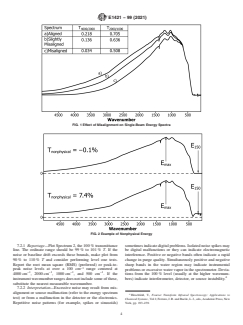
FIG. 1 Effect of Misalignment on Single-Beam Energy Spectra
FIG. 2 Example of Nonphysical Energy
7.2.1 Reportage—Plot Spectrum 2, the 100% transmittance sometimesindicatedigitalproblems.Isolatednoisespikesmay
line. The ordinate range should be 99% to 101% T.Ifthe be digital malfunctions or they can indicate electromagnetic
noise or baseline drift exceeds these bounds, make plot from
interference. Positive or negative bands often indicate a rapid
90% to 110% T and consider performing level one tests. change in purge quality. Simultaneously positive and negative
Report the root mean square (RMS) (preferred) or peak-to-
sharp bands in the water region may indicate instrumental
−1
peak noise levels at over a 100 cm range centered at problems or excessive water vapor in the spectrometer. Devia-
−1 −1 −1 −1
4000cm , 2000cm , 1000cm , and 500 cm .Ifthe
tions from the 100% level (usually at the higher wavenum-
instrumentwavenumberrangesdoesnotincludesomeofthese, bers) indicate interferometer, detector, or source instability.
substitute the nearest measurable wavenumber.
7.2.2 Interpretation—Excessive noise may result from mis-
alignment or source malfunction (refer to the energy spectrum
Hirschfeld, T., Fourier Transform Infrared Spectroscopy: Applications to
test) or from a malfunction in the detector or the electronics.
Chemical Systems,Vol2,Ferraro,J.R.andBacile,L.J.,eds.,AcademicPress,New
Repetitive noise patterns (for example, spikes or sinusoids) York, pp. 193–239.
E1421 − 99 (2021)
7.3 Polystyrene Subtraction Test—Overlay Spectrum 3 and point in the same direction. All band features pointing in the
Reference 2 and note any differences. If the instrument same direction indicate a change in purge level. A similar
software will permit, subtract the stored polystyrene transmit- interpretation can be obtained from artifacts in carbon dioxide
−1
tance spectrum (Reference Spectrum 2) from this new poly- absorption regions (doublet near 2360 cm and sharp spike
−1
styrene transmittance spectrum (Spectrum 3). Optionally, or if near 667 cm ).
the instrument software does not permit the subtraction of
7.3.2.5 Instrumental problems may include JacQuinot
transmission spectra, subtract the stored polystyrene absor-
vignetting, source optics or laser misalignment, or interferom-
bance spectrum (Reference Spectrum 2) from the new poly-
eter scan problems. In the subtraction spectrum, first-
styrene absorbance spectrum (Spectrum 3). Note any changes.
derivative-like bandshapes that correspond to absorption band
Subtracting transmittance spectra from each other is not
positions indicate these instrumental problems. Artifacts ap-
appropriate for most chemical applications, but here it is
pearing only at the positions of the strongest (completely
relevant to the instrument’s performance, and avoids possible
absorbing) bands may indicate phasing or other problems
overrange problems associated with zero or negative transmit-
associated with detector non-linearity. Artifacts at both me-
tances.
dium and strong band positions indicate analog electronic,
7.3.1 Reportage—Overlay the polystyrene spectra. Plot the
ADC, or computer problems, or sampling jitter (Zachor-
subtractionresultoverarangeof−1%to+1% Tifsubtraction
Aaronsen distortion).
was performed on transmittance spectra or over a range of
NOTE 6—Some polystyrene films may gradually oxidize over time,
−0.01to0.01 Aifthesubtractionwasperformedonabsorbance
−1
producing a broad hydroxyl absorption between 3600cm and 3200
spectra. −1 −1
cm , a carbonyl absorption at 1720 cm and C-O absorptions in the
−1 −1
7.3.2 Interpretation:
rangeof1050cm to1000cm asshowninFig.6.Suchchangesarean
indication of degradation of the film and do not reflect on instrument
7.3.2.1 Subtraction of transmittance spectra is preferred for
performance. If these absorptions exceed 0.01 absorbance, it is recom-
this test since the strongly absorbing (>1 A) peaks are more
mended that the film be replaced.
likely to cancel as shown in Fig. 3.
7.3.2.2 If the subtraction is done using absorbance spectra, 7.4 Polystyrene Peak, Resolution and Photometry Tests—
bands with absorbances greater than 1 will typically not The interpretation of the difference spectrum generated in 7.3
completely cancel as shown in Fig. 4. can, in some cases, be somewhat subjective. For some
7.3.2.3 If subtractions are conducted on transmittance applications, it is preferable to have numeric indications of
spectra, variations in the spectral baseline m
...