

ASTM E2895-19
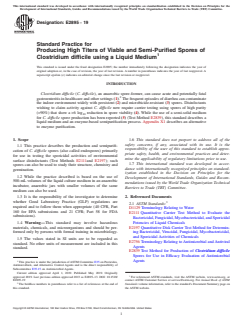
(Practice)Standard Practice for Producing High Titers of Viable and Semi-Purified Spores of Clostridium difficile using a Liquid Medium
General Information
- Abstract
SIGNIFICANCE AND USE
5.1 The quantity and quality of the spores produced by this practice may be used to assess environmental surface disinfectants for sporicidal activity (4). The method is applicable to standard as well as clinically isolated toxigenic and non-toxigenic strains of C. difficile.
SCOPE
1.1 This practice describes the production and semipurification of C. difficile spores (also called endospores) primarily for use in testing the sporicidal activities of environmental surface disinfectants (Test Methods E2111and E2197); such spores can also be used to study their structure, chemistry and germination.
1.2 While the practice described is based on the use of 500-mL volumes of the liquid culture medium in an anaerobic incubator, anaerobic jars with smaller volumes of the same medium can also be used.
1.3 It is the responsibility of the investigator to determine whether Good Laboratory Practice (GLP) regulations are required and to follow them when appropriate (40 CFR, Part 160 for EPA submissions and 21 CFR; Part 58 for FDA submissions).
1.4 Warning—This standard may involve hazardous materials, chemicals, and microorganisms and should be performed only by persons with formal training in microbiology.
1.5 The values stated in SI units are to be regarded as standard. No other units of measurement are included in this standard.
1.6 This standard does not purport to address all of the safety concerns, if any, associated with its use. It is the responsibility of the user of this standard to establish appropriate safety, health, and environmental practices and determine the applicability of regulatory limitations prior to use.
1.7 This international standard was developed in accordance with internationally recognized principles on standardization established in the Decision on Principles for the Development of International Standards, Guides and Recommendations issued by the World Trade Organization Technical Barriers to Trade (TBT) Committee.
- Status
- Published
- Publication Date
- 31-Mar-2019
- Technical Committee
- E35 - Pesticides, Antimicrobials, and Alternative Control Agents
- Drafting Committee
- E35.15 - Antimicrobial Agents
Buy Documents
ASTM E2895-19 - Standard Practice for Producing High Titers of Viable and Semi-Purified Spores of Clostridium difficile using a Liquid Medium
REDLINE ASTM E2895-19 - Standard Practice for Producing High Titers of Viable and Semi-Purified Spores of Clostridium difficile using a Liquid Medium
Overview
ASTM E2895-19: Standard Practice for Producing High Titers of Viable and Semi-Purified Spores of Clostridium difficile using a Liquid Medium is an internationally recognized procedure for generating and semi-purifying Clostridium difficile (C. difficile) spores. Developed by ASTM International, this standard is crucial for laboratories producing high-quality spores for the assessment of environmental surface disinfectants and further scientific research. The practice outlines methods to yield viable, semi-purified spores, ensuring both quality and quantity, in compliance with regulatory and safety requirements.
Key Topics
Production of C. difficile Spores: The practice details a reproducible technique for cultivating and obtaining high titers of viable C. difficile spores using a liquid medium under anaerobic conditions.
Semi-Purification Process: Enzyme-based purification is used to achieve over 90% spore purity. An alternative sucrose density gradient method is also described for spore purification.
Strain Applicability: Suitable for both standard laboratory and clinically isolated, toxigenic and non-toxigenic C. difficile strains.
Quality Control: The standard specifies quality assurance steps to test for aerobic contamination, ensuring spore preparations are pure and suitable for disinfectant efficacy testing.
Safety and Compliance: Emphasizes the requirement for appropriate safety, health, and environmental protocols, and highlights the need to follow Good Laboratory Practice (GLP) regulations where relevant.
Standardized Measurements: Mandates the use of SI units, supporting consistent results for comparison between laboratories.
Applications
ASTM E2895-19 is essential for several practical applications in the fields of microbiology, disinfection, and infection control:
Disinfectant Efficacy Testing: The primary application is the production of viable, high-purity C. difficile spores required for regulatory and research testing of environmental surface disinfectants claiming sporicidal activity. This aligns with the requirements of the U.S. Environmental Protection Agency (EPA) for such products.
Microbiological Research: Semi-purified C. difficile spores are used to study spore structure, chemistry, and the mechanisms of germination and resistance.
Healthcare and Infection Control: Laboratories supporting hospital infection control programs can utilize this standard to evaluate routine and novel disinfectants against hardy C. difficile spores, which are a leading cause of healthcare-associated infections.
Method Standardization: Ensures harmonized procedures across laboratories worldwide, promoting repeatability and reproducibility in the production of C. difficile spores for scientific and regulatory purposes.
Related Standards
For comprehensive disinfectant efficacy evaluation and related microbiological practices, consider the following ASTM and regulatory standards:
- ASTM E2111 - Quantitative Carrier Test Method for evaluating bactericidal, fungicidal, mycobactericidal, and sporicidal properties of liquid chemicals.
- ASTM E2197 - Quantitative Disk Carrier Test Method for determining bactericidal, virucidal, fungicidal, and sporicidal activities.
- ASTM E2839 - Production of C. difficile Spores for Use in Efficacy Evaluation of Antimicrobial Agents (alternative semi-solid medium approach).
- ASTM D1129 - Terminology relating to water.
- ASTM E2756 - Terminology relating to antimicrobial and antiviral agents.
- 21 CFR Part 58 - Good Laboratory Practice for Nonclinical Laboratory Studies (FDA).
- 40 CFR Part 160 - Good Laboratory Practice Standards (EPA).
By adopting ASTM E2895-19, laboratories and stakeholders ensure reliability, safety, and international acceptance in the critical production of C. difficile spores, supporting the advancement of effective antimicrobials and infection prevention strategies.
Relations
- Effective Date
- 01-Apr-2019
- Effective Date
- 01-May-2020
- Effective Date
- 01-Nov-2019
- Effective Date
- 15-Sep-2018
- Effective Date
- 01-Apr-2018
- Effective Date
- 01-Dec-2017
- Effective Date
- 01-Dec-2017
- Effective Date
- 15-May-2012
- Effective Date
- 01-Aug-2011
- Effective Date
- 01-Jan-2011
- Effective Date
- 01-May-2010
- Effective Date
- 01-Mar-2010
- Effective Date
- 01-Sep-2006
- Effective Date
- 01-Sep-2006
- Effective Date
- 15-Feb-2006
Buy Documents
ASTM E2895-19 - Standard Practice for Producing High Titers of Viable and Semi-Purified Spores of Clostridium difficile using a Liquid Medium
REDLINE ASTM E2895-19 - Standard Practice for Producing High Titers of Viable and Semi-Purified Spores of Clostridium difficile using a Liquid Medium
Frequently Asked Questions
ASTM E2895-19 is a standard published by ASTM International. Its full title is "Standard Practice for Producing High Titers of Viable and Semi-Purified Spores of Clostridium difficile using a Liquid Medium". This standard covers: SIGNIFICANCE AND USE 5.1 The quantity and quality of the spores produced by this practice may be used to assess environmental surface disinfectants for sporicidal activity (4). The method is applicable to standard as well as clinically isolated toxigenic and non-toxigenic strains of C. difficile. SCOPE 1.1 This practice describes the production and semipurification of C. difficile spores (also called endospores) primarily for use in testing the sporicidal activities of environmental surface disinfectants (Test Methods E2111and E2197); such spores can also be used to study their structure, chemistry and germination. 1.2 While the practice described is based on the use of 500-mL volumes of the liquid culture medium in an anaerobic incubator, anaerobic jars with smaller volumes of the same medium can also be used. 1.3 It is the responsibility of the investigator to determine whether Good Laboratory Practice (GLP) regulations are required and to follow them when appropriate (40 CFR, Part 160 for EPA submissions and 21 CFR; Part 58 for FDA submissions). 1.4 Warning—This standard may involve hazardous materials, chemicals, and microorganisms and should be performed only by persons with formal training in microbiology. 1.5 The values stated in SI units are to be regarded as standard. No other units of measurement are included in this standard. 1.6 This standard does not purport to address all of the safety concerns, if any, associated with its use. It is the responsibility of the user of this standard to establish appropriate safety, health, and environmental practices and determine the applicability of regulatory limitations prior to use. 1.7 This international standard was developed in accordance with internationally recognized principles on standardization established in the Decision on Principles for the Development of International Standards, Guides and Recommendations issued by the World Trade Organization Technical Barriers to Trade (TBT) Committee.
SIGNIFICANCE AND USE 5.1 The quantity and quality of the spores produced by this practice may be used to assess environmental surface disinfectants for sporicidal activity (4). The method is applicable to standard as well as clinically isolated toxigenic and non-toxigenic strains of C. difficile. SCOPE 1.1 This practice describes the production and semipurification of C. difficile spores (also called endospores) primarily for use in testing the sporicidal activities of environmental surface disinfectants (Test Methods E2111and E2197); such spores can also be used to study their structure, chemistry and germination. 1.2 While the practice described is based on the use of 500-mL volumes of the liquid culture medium in an anaerobic incubator, anaerobic jars with smaller volumes of the same medium can also be used. 1.3 It is the responsibility of the investigator to determine whether Good Laboratory Practice (GLP) regulations are required and to follow them when appropriate (40 CFR, Part 160 for EPA submissions and 21 CFR; Part 58 for FDA submissions). 1.4 Warning—This standard may involve hazardous materials, chemicals, and microorganisms and should be performed only by persons with formal training in microbiology. 1.5 The values stated in SI units are to be regarded as standard. No other units of measurement are included in this standard. 1.6 This standard does not purport to address all of the safety concerns, if any, associated with its use. It is the responsibility of the user of this standard to establish appropriate safety, health, and environmental practices and determine the applicability of regulatory limitations prior to use. 1.7 This international standard was developed in accordance with internationally recognized principles on standardization established in the Decision on Principles for the Development of International Standards, Guides and Recommendations issued by the World Trade Organization Technical Barriers to Trade (TBT) Committee.
ASTM E2895-19 is classified under the following ICS (International Classification for Standards) categories: 07.100.99 - Other standards related to microbiology. The ICS classification helps identify the subject area and facilitates finding related standards.
ASTM E2895-19 has the following relationships with other standards: It is inter standard links to ASTM E2895-13, ASTM D1129-13(2020)e2, ASTM E2756-19, ASTM E2111-12(2018), ASTM E2756-18, ASTM E2197-17, ASTM E2197-17e1, ASTM E2111-12, ASTM E2839-11, ASTM E2197-11, ASTM E2756-10, ASTM D1129-10, ASTM D1129-06ae1, ASTM D1129-06a, ASTM D1129-06. Understanding these relationships helps ensure you are using the most current and applicable version of the standard.
ASTM E2895-19 is available in PDF format for immediate download after purchase. The document can be added to your cart and obtained through the secure checkout process. Digital delivery ensures instant access to the complete standard document.
Standards Content (Sample)
This international standard was developed in accordance with internationally recognized principles on standardization established in the Decision on Principles for the
Development of International Standards, Guides and Recommendations issued by the World Trade Organization Technical Barriers to Trade (TBT) Committee.
Designation:E2895 −19
Standard Practice for
Producing High Titers of Viable and Semi-Purified Spores of
Clostridium difficile using a Liquid Medium
This standard is issued under the fixed designation E2895; the number immediately following the designation indicates the year of
original adoption or, in the case of revision, the year of last revision.Anumber in parentheses indicates the year of last reapproval.A
superscript epsilon (´) indicates an editorial change since the last revision or reapproval.
INTRODUCTION
Clostridium diffıcile (C. diffıcile), an anaerobic spore-former, can cause acute and potentially fatal
gastroenteritisinhealthcareandothersettings (1). Thefrequentepisodesofdiarrheacancontaminate
the indoor environment widely with persistent (2) and microbicide-resistant (3) spores. Disinfectants
wishing to claim activity against C. diffıcile now require carrier testing using spores of high purity
(>90%) that show a >6 log reduction in spore viability (4). While the use of a semi-solid medium
for C. diffıcile spore production has been reported (5) (Test Method E2839), this standard describes a
liquid medium and an enzyme-based semipurification process. Appendix X1 describes an alternative
to enzyme purification.
1. Scope 1.6 This standard does not purport to address all of the
safety concerns, if any, associated with its use. It is the
1.1 This practice describes the production and semipurifi-
responsibility of the user of this standard to establish appro-
cation of C. diffıcile spores (also called endospores) primarily
priate safety, health, and environmental practices and deter-
for use in testing the sporicidal activities of environmental
mine the applicability of regulatory limitations prior to use.
surface disinfectants (Test Methods E2111and E2197); such
1.7 This international standard was developed in accor-
spores can also be used to study their structure, chemistry and
dance with internationally recognized principles on standard-
germination.
ization established in the Decision on Principles for the
1.2 While the practice described is based on the use of
Development of International Standards, Guides and Recom-
500-mLvolumes of the liquid culture medium in an anaerobic
mendations issued by the World Trade Organization Technical
incubator, anaerobic jars with smaller volumes of the same
Barriers to Trade (TBT) Committee.
medium can also be used.
2. Referenced Documents
1.3 It is the responsibility of the investigator to determine
whether Good Laboratory Practice (GLP) regulations are
2.1 ASTM Standards:
required and to follow them when appropriate (40 CFR, Part
D1129Terminology Relating to Water
160 for EPA submissions and 21 CFR; Part 58 for FDA
E2111Quantitative Carrier Test Method to Evaluate the
submissions).
Bactericidal,Fungicidal,Mycobactericidal,andSporicidal
1.4 Warning—This standard may involve hazardous Potencies of Liquid Chemicals
E2197Quantitative Disk Carrier Test Method for Determin-
materials, chemicals, and microorganisms and should be per-
formed only by persons with formal training in microbiology. ing Bactericidal, Virucidal, Fungicidal, Mycobactericidal,
and Sporicidal Activities of Chemicals
1.5 The values stated in SI units are to be regarded as
E2756Terminology Relating toAntimicrobial andAntiviral
standard. No other units of measurement are included in this
Agents
standard.
E2839Test Method for Production of Clostridium difficile
Spores for Use in Efficacy Evaluation of Antimicrobial
1 Agents
This practice is under the jurisdiction ofASTM Committee E35 on Pesticides,
Antimicrobials, and Alternative Control Agents and is the direct responsibility of
Subcommittee E35.15 on Antimicrobial Agents.
Current edition approved April 1, 2019. Published May 2019. Originally
approved 2019. Last previous edition approved 2013 as E2895–13. DOI: 10.1520/ For referenced ASTM standards, visit the ASTM website, www.astm.org, or
E2895-19 contact ASTM Customer Service at service@astm.org. For Annual Book of ASTM
The boldface numbers in parentheses refer to a list of references at the end of Standards volume information, refer to the standard’s Document Summary page on
this standard. the ASTM website.
Copyright © ASTM International, 100 Barr Harbor Drive, PO Box C700, West Conshohocken, PA 19428-2959. United States
E2895−19
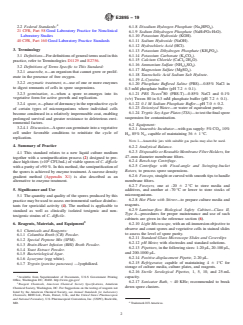
2.2 Federal Standards: 6.1.8 Disodium Hydrogen Phosphate (Na HPO ).
2 4
21 CFR, Part 58Good Laboratory Practice for Nonclinical 6.1.9 Sodium Dihydrogen Phosphate (NaH PO ·H O).
2 4 2
Laboratory Studies 6.1.10 Potassium Hydroxide (KOH).
40 CFR, Part 160Good Laboratory Practice Standards 6.1.11 Sodium Hydroxide (NaOH).
6.1.12 Hydrochloric Acid (HCl).
3. Terminology
6.1.13 Potassium Dihydrogen Phosphate (KH PO ).
2 4
6.1.14 Potassium Carbonate (K CO ).
3.1 Definitions—Fordefinitionsofgeneraltermsusedinthis
2 3
6.1.15 Calcium Chloride (CaCl ·2H O).
practice, refer to Terminologies D1129 and E2756.
2 2
6.1.16 Ammonium Sulfate (NH ) SO ).
4 2 4
3.2 Definitions of Terms Specific to This Standard:
6.1.17 Magnesium Sulfate (MgSO ).
3.2.1 anaerobe, n—an organism that cannot grow or prolif-
6.1.18 Taurocholic Acid Sodium Salt Hydrate.
erate in the presence of free oxygen.
6.1.19 L-Cysteine.
3.2.2 enzymatic treatment, n—use of one or more enzymes
6.1.20 Phosphate Buffered Saline (PBS)—0.85% NaCl in
to digest remnants of cells in spore suspensions.
0.3 mM phosphate buffer (pH 7.2 6 0.1).
3.2.3 germination, n—when a spore re-emerges into its
6.1.21 PBS Tween 80 (PBS-T)—0.85% NaCl and 0.1%
vegetative form for active growth and replication.
(v/v) Tween 80 in 0.3 mM phosphate buffer (pH 7.2 6 0.1).
6.1.22 0.1 M Sodium Phosphate Buffer—pH 7.0 6 0.2.
3.2.4 spore, n—phaseofdormancyinthereproductivecycle
6.1.23 Deionized Water—or water of equivalent purity.
of certain types of microorganisms where individual cells
6.1.24 Tryptic SoyAgar Plates (TSA)—totestthefinalspore
become condensed in a relatively impermeable coat, enabling
suspension for contamination.
prolonged survival and greater resistance to deleterious envi-
ronmental factors.
6.2 Equipment:
3.2.4.1 Discussion—Asporecangerminateintoavegetative
6.2.1 Anaerobic Incubator—withgassupply:5%CO ,10%
cell under favorable conditions to reinitiate the cycle of
H , 85% N , capable of maintaining 36 6 1°C.
2 2
replication.
NOTE 1—Anaerobic jars with suitable gas packs may also be used.
4. Summary of Practice
6.2.2 Analytical Balance.
6.2.3 Disposable or Reusable Membrane Filter Holders,for
4.1 This standard relates to a new liquid culture medium
47–mm diameter membrane filters.
together with a semipurification process (2) designed to pro-
6.2.4 Bench-top Centrifuge.
duce high titers (>10 CFU/mL) of viable spores of C. diffıcile
6.2.5 Centrifuge with Fixed-angle and Swinging-bucket
with a purity of >90%. In this method, the semipurification of
Rotors, to process spore suspensions.
the spores is achieved by enzyme treatment.Asucrose density
6.2.6 Forceps, straight or curved with smooth tips to handle
gradient method (Appendix X1) is also described as an
membrane filters.
alternative to enzyme treatment.
6.2.7 Freezers, one at -20 6 2°C to store media and
5. Significance and Use
additives, and another at -70°C or lower to store stocks of
microorganisms.
5.1 The quantity and quality of the spores produced by this
6.2.8 Hot Plate with Stirrer—to prepare culture media and
practice may be used to assess environmental surface disinfec-
reagents.
tants for sporicidal activity (4). The method is applicable to
6.2.9 Laminar-flow Biological Safety Cabinet—Class II,
standard as well as clinically isolated toxigenic and non-
Type A—procedures for proper maintenance and use of such
toxigenic strains of C. diffıcile.
cabinets are given in the reference section (6).
6. Reagents, Materials, and Equipment 6.2.10 Light Microscope,withanoil-immersionobjectiveto
observe and count spores and vegetative cells in stained slides
6.1 Chemicals and Reagents:
to assess the level of spore purity.
6.1.1 Columbia Broth (CB) Powder.
6.2.11 Standard Glass Microscope Slides and Coverslips
6.1.2 Special Peptone Mix (SPM).
6.2.12 pH Meter, with electrodes and standard solutions.
6.1.3 Brain-Heart Infusion (BHI) Broth Powder.
6.2.13 Pipettors,inthefollowingsizes:1-20µL,20-100µL,
6.1.4 Yeast Extract Powder.
and 200-1000 µL.
6.1.5 Bacteriological Agar.
6.2.14 Positive-displacement Pipette, 2-20 µL.
6.1.6 Lysozyme (egg white).
6.2.15 Refrigerator, capable of maintaining 4 6 1°C for
6.1.7 Trypsin (porcine pancreas) —lyophilized.
storage of culture media, culture plates, and reagents.
6.2.16 Sterile Serological Pipettes, 1, 5, 10, and 25-mL
Available from Superintendent of Documents, U.S.S Government Printing
capacity.
Office, Washington DC, 20402. http://www.gpo.gov/
6.2.17 Sonicator Bath, ~ 40 KHz; recommended to break
Reagent Chemicals, American Chemical Society Specifications, American
down spore clusters.
Chemical Society, Washington, DC. For Suggestions on the testing of reagents not
listed by the American Chemical Society, see Annual Standards for Laboratory
Chemicals, BDH Ltd., Poole, Dorset, U.K., and the United States Pharmacopeia
and National Formulary, U.S. Pharmacopeial Convention, Inc. (USPC), Rockville,
MD. Trademark ICI Americas.
E2895−19
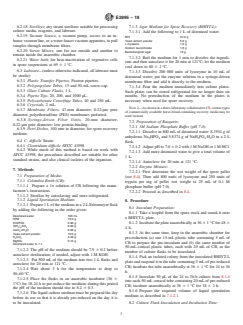
6.2.18 Sterilizer, any steam sterilizer suitable for processing 7.1.3 Agar Medium for Spore Recovery (BHIYT-L):
culture media, reagents, and labware.
7.1.3.1 Add the following to 1 L of deionized water:
6.2.19 Vacuum Source, a vacuum pump, access to an in-
BHI 37.0 g
housevacuumline,orawaterfaucetvacuumapparatus,topull Yeast extract powder 5.0 g
L-Cysteine 1.0 g
samples through membrane filters.
Sodium taurocholate 1.0 g
6.2.20 Vortex Mixers, one for use outside and another to
Bacteriological agar 15 g
remain inside the anaerobic chamber.
7.1.3.2 Boil the medium for 1 min to dissolve the ingredi-
6.2.21 Water bath, for heat-inactivation of vegetative cells
ents and then autoclave it for 20 min at 121ºC; let the medium
in spore suspensions at 69 6 1°C.
cool down to 60 6 2°C.
6.3 Labware—(unless otherwise indicated, all labware must
7.1.3.3 Dissolve 200 000 units of lysozyme in 10 mL of
be sterile):
deionized water; put the enzyme solution in a syringe-driven
6.3.1 Plastic Transfer Pipettes, Pasteur pipettes.
membrane filter and add it directly to the medium.
6.3.2 Polypropylene Tubes, 15 and 50-mL screw-cap.
7.1.3.4 Pour the medium immediately into culture plates.
6.3.3 Glass Culture Flasks,1L.
Such plates can be stored refrigerated for no longer than six
6.3.4 Pipette Tips, 20, 200, and 1000 µL.
months. No prereduction of the medium in the plates is
6.3.5 Polycarbonate Centrifuge Tubes, 40 and 250 mL.
necessary when used for spore recovery.
6.3.6 Cryovials, 2 mL.
NOTE2—Asshowninathree-laboratorycollaborative (7),certaintypes
6.3.7 Membrane Filters, 47-mm diameter; 0.22-µm pore
of commercially available horse-blood containing recovery media may be
diameter, polyethersulfone (PES) membranes preferred.
used instead.
6.3.8 Syringe-driven Filter Units, 20-mm diameter;
7.2 Preparation of Reagents:
0.22-µm pore diameter; low protein-binding.
7.2.1 1M Sodium Phosphate Buffer (pH 7.0):
6.3.9 Petri Dishes, 100 mm in diameter, for spore recovery
7.2.1.1 Dissolve in 800 mLof deionized water: 8.1934 g of
medium.
anhydrous Na HPO and 5.8374 g of NaH PO ·HOina2-L
2 4 2 4 2
6.4 C. diffıcile Strain:
flask.
6.4.1 Clostridium diffıcile ATCC 43598.
7.2.1.2 AdjustpHto7.0 60.2with1MNaOHor1MHCl.
6.4.2 While much of this method is based on work with
7.2.1.3 Add more deionized water to give a total volume of
ATCC 43598, the procedures described are suitable for other
1L.
standard strains, and also clinical isolates of the organism.
7.2.1.4 Autoclave for 20 min at 121°C.
7.2.2 Enzyme Mixture:
7. Methods
7.2.2.1 First determine the wet weight of the spore pellet
7.1 Preparation of Media:
(see 8.4). Then add 800 units of lysozyme and 250 units of
7.1.1 Columbia Broth (CB):
trypsin per mg of pellet wet weight to 25 mL of 0.1 M
7.1.1.1 Prepare a 1× solution of CB following the manu-
phosphate buffer (pH 7.0).
facturer’s instructions.
7.2.2.2 Proceed as described in 8.4.
7.1.1.2 Sterilize by autoclaving and store refrigerated.
7.1.2 Liquid Sporulation Medium:
8. Procedure
7.1.2.1 Prepare1Lofthemediumina2-LErlenmeyerflask
8.1 Inoculum Preparation:
by adding the following in the order given:
8.1.1 Take a loopful from the spore stock and streak it onto
Deionized water 700 mL
a BHIYT-L plate.
SPM 10.0 g
KH2PO4 2.60 g 8.1.2 Incubatetheplateanaerobicallyat36 61°Cfor48 6
(NH ) SO 0.60 g
4 2 4
4h.
CaCl ·2HO0.08g
2 2
8.1.3 At the same time, keep in the anaerobic chamber for
Yeast extract powder 10.0 g
K CO 3.48 g
2 3 pre-reduction (a) one 15-mL plastic tube containing 5 mL of
MgSO 0.12 g
CB to prepare the pre-inoculum and (b) the same number of
Deionized water to 1 L
50-mL conical plastic
...
This document is not an ASTM standard and is intended only to provide the user of an ASTM standard an indication of what changes have been made to the previous version. Because
it may not be technically possible to adequately depict all changes accurately, ASTM recommends that users consult prior editions as appropriate. In all cases only the current version
of the standard as published by ASTM is to be considered the official document.
Designation: E2895 − 13 E2895 − 19
Standard Test Method Practice for
Producing High Titers of Viable and Semi-Purified Spores of
Clostridium difficile using a Liquid Medium
This standard is issued under the fixed designation E2895; the number immediately following the designation indicates the year of
original adoption or, in the case of revision, the year of last revision. A number in parentheses indicates the year of last reapproval. A
superscript epsilon (´) indicates an editorial change since the last revision or reapproval.
INTRODUCTION
Clostridium diffıcile (C. diffıcile), an anaerobic spore-former, can cause acute and potentially fatal
gastroenteritis in healthcare and other settings (1). The frequent episodes of diarrhea can contaminate
the indoor environment widely with persistent (2) and microbicide-resistant (3) spores. Disinfectants
wishing to claim activity against C. diffıcile now require carrier testing using spores of high purity
(>90%) that show a >6 log reduction in spore viability (4). While the use of a semi-solid medium
for C. diffıcile spore production has been reported (5) (Test Method E2839), this standard describes a
liquid medium and an enzyme-based semipurification process for the purpose. process. Appendix X1
describes an alternative to enzyme purification.
1. Scope
1.1 This test method describes the production and semipurification of C. diffıcile spores (also called endospores) primarily for
use in testing the sporicidal activities of environmental surface disinfectants (Test Methods E2111and E2197); such spores can also
be used to study their structure, chemistry and germination.
1.2 While the test method described is based on the use of 500-mL volumes of the liquid culture medium in an anaerobic
incubator, anaerobic jars with smaller volumes of the same medium can also be used.
1.3 It is the responsibility of the investigator to determine whether Good Laboratory Practice (GLP) regulations are required and
to follow them when appropriate (40 CFR, Part 160 for EPA submissions and 21 CFR; Part 58 for FDA submissions).
1.4 Warning—This standard may involve hazardous materials, chemicals, and microorganisms and should be performed only
by persons with formal training in microbiology.
1.5 The values stated in SI units are to be regarded as standard. No other units of measurement are included in this standard.
1.6 This standard does not purport to address all of the safety concerns, if any, associated with its use. It is the responsibility
of the user of this standard to establish appropriate safety and health practices and determine the applicability of regulatory
limitations prior to use.
2. Referenced Documents
2.1 ASTM Standards:
D1129 Terminology Relating to Water
E2111 Quantitative Carrier Test Method to Evaluate the Bactericidal, Fungicidal, Mycobactericidal, and Sporicidal Potencies of
Liquid Chemicals
E2197 Quantitative Disk Carrier Test Method for Determining Bactericidal, Virucidal, Fungicidal, Mycobactericidal, and
Sporicidal Activities of Chemicals
E2756 Terminology Relating to Antimicrobial and Antiviral Agents
This test method practice is under the jurisdiction of ASTM Committee E35 on Pesticides, Antimicrobials, and Alternative Control Agents and is the direct responsibility
of Subcommittee E35.15 on Antimicrobial Agents.
Current edition approved Oct. 1, 2013April 1, 2019. Published December 2013May 2019. Originally approved 2019. Last previous edition approved 2013 as E2895–13.
DOI: 10.1520/E2895-1310.1520/E2895-19
The boldface numbers in parentheses refer to a list of references at the end of this standard.
For referenced ASTM standards, visit the ASTM website, www.astm.org, or contact ASTM Customer Service at service@astm.org. For Annual Book of ASTM Standards
volume information, refer to the standard’s Document Summary page on the ASTM website.
Copyright © ASTM International, 100 Barr Harbor Drive, PO Box C700, West Conshohocken, PA 19428-2959. United States
E2895 − 19
E2839 Test Method for Production of Clostridium difficile Spores for Use in Efficacy Evaluation of Antimicrobial Agents
2.2 Federal Standards:
21 CFR, Part 58 Good Laboratory Practice for Nonclinical Laboratory Studies
40 CFR, Part 160 Good Laboratory Practice Standards
3. Terminology
3.1 Definitions—For definitions of general terms used in this test method, refer to Terminologies D1129 and E2756.
3.2 Definitions of Terms Specific to This Standard:
3.2.1 anaerobe, n—an organism that cannot grow or proliferate in the presence of free oxygen.
3.2.2 enzymatic treatment, n—use of one or more enzymes to digest remnants of cells in spore suspensions.
3.2.3 germination, n—when a spore re-emerges into its vegetative form for active growth and replication.
3.2.4 spore, n—phase of dormancy in the reproductive cycle of certain types of microorganisms where individual cells become
condensed in a relatively impermeable coat, enabling prolonged survival and greater resistance to deleterious environmental
factors.
3.2.4.1 Discussion—
A spore can germinate into a vegetative cell under favorable conditions to reinitiate the cycle of replication.
4. Summary of Test Method
4.1 This standard relates to a new liquid culture medium together with a semipurification process (2) designed to produce high
titers (>10 CFU/mL) of viable spores of C. diffıcile with a purity of >90%. In this method, the semipurification of the spores is
achieved by enzyme treatment. A surcose density gradient method (Appendix X1) is also described as an alternative to enzyme
treatment.
5. Significance and Use
5.1 The quantity and quality of the spores produced by this method meet the current requirements of the U.S. Environmental
Protection Agency (EPA) to assess environmental surface disinfectants for label claims of sporicidal activity (4). The method is
applicable to standard as well as clinically isolated toxigenic and non-toxigenic strains of C. diffıcile.
6. Reagents, Materials, and Equipment
6.1 Chemicals and Reagents:
6.1.1 Columbia Broth (CB) Powder.
6.1.2 Special Peptone Mix (SPM).
6.1.3 Brain-Heart Infusion (BHI) Broth Powder.
6.1.4 Yeast Extract Powder.
6.1.5 Bacteriological Agar.
6.1.6 Lysozyme (egg white).
6.1.7 Trypsin (porcine pancreas) —lyophilized.
6.1.8 Disodium Hydrogen Phosphate (Na HPO ).
2 4
6.1.9 Sodium Dihydrogen Phosphate (NaH PO ·H O).
2 4 2
6.1.10 Potassium Hydroxide (KOH).
6.1.11 Sodium Hydroxide (NaOH).
6.1.12 Hydrochloric Acid (HCl).
6.1.13 Potassium Dihydrogen Phosphate (KH PO ).
2 4
6.1.14 Potassium Carbonate (K CO ).
2 3
6.1.15 Calcium Chloride (CaCl ·2H O).
2 2
6.1.16 Ammonium Sulfate (NH ) SO ).
4 2 4
6.1.17 Magnesium Sulfate (MgSO ).
6.1.18 Taurocholic Acid Sodium Salt Hydrate.
6.1.19 L-Cysteine.
6.1.20 Phosphate Buffered Saline (PBS)—0.85% NaCl in 0.3 mM phosphate buffer (pH 7.2 6 0.1).
Available from Superintendent of Documents, U.S.S Government Printing Office, Washington DC, 20402. http://www.gpo.gov/
Reagent Chemicals, American Chemical Society Specifications, American Chemical Society, Washington, DC. For Suggestions on the testing of reagents not listed by
the American Chemical Society, see Annual Standards for Laboratory Chemicals, BDH Ltd., Poole, Dorset, U.K., and the United States Pharmacopeia and National
Formulary, U.S. Pharmacopeial Convention, Inc. (USPC), Rockville, MD.
E2895 − 19
6.1.21 PBS Tween 80 (PBS-T)—0.85% NaCl and 0.1% (v/v) Tween 80 in 0.3 mM phosphate buffer (pH 7.2 6 0.1).
6.1.22 0.1 M Sodium Phosphate Buffer—pH 7.0 6 0.2.
6.1.23 Deionized Water—or water of equivalent purity.
6.1.24 Tryptic Soy Agar Plates (TSA)—to test the final spore suspension for contamination.
6.2 Equipment:
6.2.1 Anaerobic Incubator—with gas supply: 5% CO , 10% H , 85% N , capable of maintaining 36 6 1ºC.
2 2 2
NOTE 1—Anaerobic jars with suitable gas packs may also be used.
6.2.2 Analytical Balance.
6.2.3 Disposable or Reusable Membrane Filter Holders, for 47–mm diameter membrane filters.
6.2.4 Bench-top Centrifuge.
6.2.5 Centrifuge with Fixed-angle and Swinging-bucket Rotors, to process spore suspensions.
6.2.6 Forceps, straight or curved with smooth tips to handle membrane filters.
6.2.7 Freezers, one at -20 6 2°C to store media and additives, and another at -70°C or lower to store stocks of microorganisms.
6.2.8 Hot Plate with Stirrer—to prepare culture media and reagents.
6.2.9 Laminar-flow Biological Safety Cabinet—Class II, Type A—procedures for proper maintenance and use of such cabinets
are given in the reference section (6).
6.2.10 Light Microscope, with an oil-immersion objective to observe and count spores and vegetative cells in stained slides to
assess the level of spore purity.
6.2.11 Standard Glass Microscope Slides and Coverslips
6.2.12 pH Meter, with electrodes and standard solutions.
6.2.13 Pipettors, in the following sizes: 1-20 μL, 20-100 μL, and 200-1000 μL.
6.2.14 Positive-displacement Pipette, 2-20 μL.
6.2.15 Refrigerator, capable of maintaining 4 6 1°C for storage of culture media, culture plates, and reagents.
6.2.16 Sterile Serological Pipettes, 1, 5, 10, and 25-mL capacity.
6.2.17 Sonicator Bath, ~ 40 KHz; recommended to break down spore clusters.
6.2.18 Sterilizer, any steam sterilizer suitable for processing culture media, reagents, and labware.
6.2.19 Vacuum Source, a vacuum pump, access to an in-house vacuum line, or a water faucet vacuum apparatus, to pull samples
through membrane filters.
6.2.20 Vortex Mixers, one for use outside and another to remain inside the anaerobic chamber.
6.2.21 Waterbath, for heat-inactivation of vegetative cells in spore suspensions at 69 6 1°C.
6.3 Labware—(unless otherwise indicated, all labware must be sterile):
6.3.1 Plastic Transfer Pipettes, Pasteur pipettes.
6.3.2 Polypropylene Tubes, 15 and 50-mL screw-cap.
6.3.3 Glass Culture Flasks, 1 L.
6.3.4 Pipette Tips, 20, 200, and 1000 μL.
6.3.5 Polycarbonate Centrifuge Tubes, 40 and 250 mL.
6.3.6 Cryovials, 2 mL.
6.3.7 Membrane Filters, 47-mm diameter; 0.22-μm pore diameter.
6.3.8 Syringe-driven Filter Units, 20-mm diameter; 0.22-μm pore diameter; low protein-binding.
6.3.9 Petri Dishes, 100 mm in diameter, for spore recovery medium.
6.4 C. diffıcile Strain:
6.4.1 While much of this method is based on work with ATCC 43598, the procedures described are suitable for other standard
strains, and also clinical isolates of the organism.
7. Methods
7.1 Preparation of Media:
7.1.1 Columbia Broth (CB):
7.1.1.1 Prepare a 1× solution of CB following the manufacturer’s instructions.
7.1.1.2 Sterilize by autoclaving and store refrigerated.
7.1.2 Liquid Sporulation Medium:
7.1.2.1 Prepare 1 L of the medium in a 2-L Erlenmeyer flask by adding the following in the order given:
Trademark ICI Americas.
E2895 − 19
Deionized water 700 mL
SPM 10.0 g
KH2PO4 2.60 g
(NH ) SO 0.60 g
4 2 4
CaCl ·2H O 0.08 g
2 2
Yeast extract powder 10.0 g
K CO 3.48 g
2 3
MgSO 0.12 g
Deionized water to 1 L
7.1.2.2 The pH of the medium should be 7.9 6 0.2 before autoclave sterilization; if needed, adjust with 1 M KOH.
7.1.2.3 Put 500 mL of the medium into two 1-L flasks and autoclave for 20 min at 121ºC.
7.1.2.4 Wait about 3 h for the temperature to drop to 50–60ºC.
7.1.2.5 Place the flasks in an anaerobic incubator (36 6 1°C) for 18-24 h to prereduce the medium; during this period the pH
of the medium should rise to 8.2 6 0.3.
7.1.2.6 The liquid culture medium must be prepared the day before its use so that it is already prereduced on the day it is to
be inoculated.
7.1.3 Agar Medium for Spore Recovery (BHIYT-L):
7.1.3.1 Add the following to 1 L of deionized water:
BHI 37.0 g
Yeast extract powder 5.0 g
L-Cysteine 1.0 g
Sodium taurocholate 1.0 g
Bacteriological agar 15 g
7.1.3.2 Boil the medium for 1 min to dissolve the ingredients and then autoclave it for 20 min at 121ºC; let the medium cool
down to 60 6 2°C.
7.1.3.3 Dissolve 200 000 units of lysozyme in 10 mL of deionized water; put the enzyme solution in a syringe-driven membrane
filter and add it directly to the medium.
7.1.3.4 Pour the medium immediately into culture plates. Such plates can be stored refrigerated for no longer than six months.
No prereduction of the medium in the plates is necessary when used for spore recovery.
NOTE 2—As shown in a three-laboratory collaborative (7), certain types of commercially available horse-blood containing recovery media may be used
instead.
7.2 Preparation of Reagents:
7.2.1 1M Sodium Phosphate Buffer (pH 7.0):
7.2.1.1 Dissolve in 800 mL of deionized water: 8.1934 g of anhydrous Na HPO and 5.8374 g of NaH PO ·H O in a 2-L flask.
2 4 2 4 2
7.2.1.2 Adjust pH to 7.0 6 0.2 with 1 M NaOH or 1 M HCl.
7.2.1.3 Add more deionized water to give a total volume of 1 L.
7.2.1.4 Autoclave for 20 min at 121°C.
7.2.2 Enzyme Mixture:
7.2.2.1 First determine the wet weight of the spore pellet (see 8.4). Then add 800 units of lysozyme and 250 units of trypsin
per mg of pellet wet weight to 25 mL of 0.1 M phosphate buffer (pH 7.0).
7.2.2.2 Proceed as described in 8.4.
8. Procedure
8.1 Inoculum Preparation:
8.1.1 Take a loopful from the spore stock and streak it onto a BHIYT-L plate.
8.1.2 Incubate the plate anaerobically at 36 6 1°C for 48 6 4 h.
8.1.3 At the same time, keep in the anaerobic chamber for pre-reduction (a) one 15-mL plastic tube containing 5 mL of CB to
prepare the pre-inoculum and (b) the same number of 50-mL conical plastic tubes, each with 20 mL of CB, as the number of culture
flasks to be inoculated.
8.1.4 Pick an isolated colony from the inoculated BHIYT-L plate and suspend it in the tube containing 5 mL of prereduced CB;
incubate the tube anaerobically at 36 6 1°C for 24 to 36 h.
8.1.5 Inoculate 50 μL of the 24 to 36-h culture from 8.1.3 into each 50-mL conical tube containing 20 mL of prereduced CB;
incubate anaerobically at 36 6 1°C for 18 6 2 h.
8.1.6 Prepare the required volume of liquid sporulation medium as described in 7.1.2.1.
8.2 Culture Flask Inoculation and Incubation Time:
8.2.1 Inside the anaerobic chamber, pour the entire inoculum from a 20-mL tube into a 500-mL culture flask with the liquid
sporulation medium.
8.2.2 Incubate the flask(s) anaerobically in a stationary state for 5 days at 36 6 1ºC.
8.3 Harvesting:
E2895 − 19
8.3.1 Divide the sporulated culture from each flask equally into two 250-mL centrifuge tubes and centrifuge the suspensions at
4 000xg for 10 min.
8.3.2 Discard the supernatant as biohazardous waste.
8.3.3 Resuspend the sediment from each 250-mL tube into 50 mL of deionized water and pool the resuspended material into
one 250-mL centrifuge tube. Adjust the volume to 250 mL with deionized water and centrifuge for 10 min at 4000xg. Wash the
pellet by centrifugation two more times with 250 mL of deionized water in each wash.
8.3.4 After the final wash, resuspend the pellet in 15 mL of PBS-T and transfer the suspension into a preweighed 40-mL
centrifuge tube. Rinse the original centrifuge tube once with 10 mL PBS-T and add the wash to the spore suspension to make the
final volume 35 mL.
8.3.5 Centrifuge the suspension at 4 000xg for 10 min, and wash the pellet twice with 35 mL of PBS-T. Discard all supernatants
as biohazardous waste.
8.3.6 Weigh the tube with the pellet and refrigerate (4 6 1°C), for no longer than 48 h, until the next step.
8.3.7 Use the wet weight of the pellet to determine the quantities of the enzymes needed in the solution for semipurification of
the spore suspension.
8.4 Semipurification of the Spore Suspension by Enzyme Treatment:
8.4.1 Resuspend the pellet (1-700 mg of wet weight) in 10 mL of 0.1 M sodium phosphate buffer (pH 7.0 6 0.2); if the wet
weight of the pellet is higher than 700 mg, divide the suspension equally into two separate tubes and adjust the volume in each
to 10 mL; mix well by vortexing.
8.4.2 Add 25 mL of a freshly prepared mixture of the enzymes as described above in 7.2.2, and mix gently, but do not vortex.
8.4.3 Sonicate the suspension at ~40 KHz in an ultrasonic waterbath for 5 min and then incubate it at 45 6 1ºC for 6 h; repeating
the sonication step after 2 6 0.2 h, 4 6 0.2 h and 6 6 0.2 h of incubation to break up the clumps, and then store the suspension
refrigerated overnight.
8.4.4 Centrifuge the suspension at 4000xg for 10 min, and wash the pellet three times with 10 mL of PBS-T in each wash.
8.4.5 Resuspend the pellet in 30 mL of PBS-T and heat it for 10 min in a waterbath at 69 6 1ºC. Insert a thermometer in an
identical tube with the same volume of water to determine when the temperature has reached the desired level and start counting
the heating time at that point.
8.4.6 Immediately at the end of the heating time, submerge the tube in ice for 5 min.
8.4.7 Centrifuge the suspension at 4000xg for 10 min, resuspend the pellet in 2 mL PBS-T for each 500 mL culture volume used.
Such spore suspensions can be stored refrigerated (4 6 1ºC) and used over a period of no longer than six months.
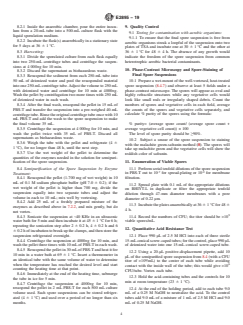
9. Quality Control
9.1 Testing for contamination with aerobic organisms:
9.1.1 To ensure that the final spore suspension is free from aerobic organisms streak a loopful of the suspension onto two plates
of TSA and incubate one at 30 6 1°C and the other at 36 6 1°C for 48 6 4 h. The absence of any growth would indicate the
freedom of the spore suspension from common heterotrophic aerobic bacterial contaminants.
10. Phase-Contrast Microscopy and Spore-Staining of Final Spore Suspensions
10.1 Prepare a wet-mount of the well-vortexed, heat-treated spore suspension (8.4.7) and observe at least 5 fields under a
phase-contrast microscope. The spores will appear as oval and highly refractile structures while any vegetative cells would look
like small rods or irregularly shaped debris. Count the numbers of spores and vegetative cells in each field, average the counts of
the spores and vegetative cells separately, and calculate % purity of the spores using the formula:
% purity= (average spore count/ (average spore count + average vegetative cell count)) × 100
The level of spore purity should be ≥90%.
10.2 Subject a smear of the spore suspension to staining with the malachite green-safranin method (8). The spores will take
up malachite green and the vegetative cells will show the reddish color of safranin.
11. Enumeration of Viable Spores
-7 -9
11.1 Perform serial tenfold dilutions of the spore suspension in PBS-T out to 10 for spread-plating or 10 for membrane
filtration.
11.2 Spread plate with 0.1 mL of the appropriate dilutions on BHIYT-L in duplicate or filter the appropriate tenfold dilution
through 47-mm diameter membranes with a pore diameter of 0.22 μm.
11.3 Incubate the plates anaerobically at 36 6 1°C for 48 6 4 h.
11.4 Record the numbers of CFU; the titer should be >10 viable spores/mL.
12. Quantitative Acid Resistance Test
12.1 Place 990 μL of 2.5 M HCl into each of three sterile 15-mL conical screw-caped tubes; for the control, place 990 μL of
deionized water into one 15-mL conical screw-caped tube.
E2895 − 19
12.2 Using a 20-μL positive-displacement pipette, add 10 μL of the semipurified spore suspension from 8.4 (with a CFU titer
8 6
of >10 /mL) to the center of each tube while avoiding contact with the inside wall of the tube; this would give >10 CFU/tube.
Vortex each tube.
12.3 Hold the acid-containing tubes and the controls for 10 min at room temperature (23 6 1°C).
12.4 At the end of the holding period, add to each tube 9.0 mL of a 0.25 M NaOH to neutralize the acid. To the control tubes
add 9.0 mL of a mixture of 1 mL of 2.5 M HCl and 9.0 mL of 0.25 M NaOH.
-6 -3 -6
12.5 Dilute each spore suspension tenfold out to 10 in PBS and membrane filter only the last three dilutions (10 to 10 ). Plate
each filter separately on a plastic Petri dish containing BHIYT-L.
NOTE 3—Other means of titration, such as spread-plating, may also be used.
12.6 Invert plates and incubate for 48 6 4 h at 36 6 1°C under anaerobic conditions.
12.7 The spores are considered acid-resistant if the loss in their viability is <2 log as compared with the controls (9).
13. Precision and Bias
13.1 In a seven-laboratory collaborative (10) the average repeatability (within lab) and reproducibility (among labs) values of
log densities of high-titered suspensions of viable semi-purified spores produced using the liquid medium determined.
13.2 The repeatability and reproducibility standard deviations were found to be 0.2 and 0.33, respectively.
14. Keywords
14.1 Anaerobic spore-former; Clostridium diffıcile; enzymatic purification; liquid medium for spore production; sporicidal
activity
APPENDIX
(Nonmandatory Information)
X1. SEMIPURIFICATION OF THE SPORE SUSPENSION BY SUCROSE DENSITY GRADIENT (ALTERNATIVE METHOD)
X1.1 Instead of the enzymatic treatment method, the spores can be semi-purified using sucrose density gradient as described here.
X1.1.1 Make a 50% (w/v) solution of sucrose in water and sterilize by membrane (0.22-μm pore diameter) filtration or
autoclaving.
X1.1.2 Pipette 5 mL of the sucrose solution in each of two 15-mL plastic conical tubes.
X1.1.3 Layer 1 mL of the spore suspension to be purified (up to 0.2 g of washed spores in 1 mL) on top of the sucrose solution
in each tube.
X1.1.4 Centrifuge tubes at 3500×g for 10 min using a swinging-bucket rotor.
NOTE X1.1—Use of a swinging-bucket rotor is mandatory for this step.
X1.1.5 After centrifugation, remove (by vacuum aspiration) and discard the top layers without disturbing the bottom pellet.
X1.1.6 Collect the spores in the bottom pellet.
X1.1.7 Resuspend the pellet in 1 mL of PBS-T and transfer it to a 2-mL sterile cryovial or siliconized microcentrifuge tube.
X1.1.8 Centrifuge tube at 10 000×g for 3 min.
X1.1.9 Discard the supernatant and resuspend the pellet with 1-1.5 mL cold (2-5°C) PBS-T. Mix by vortexing to disaggregate
the pellet. Repeat the washing step two more times.
E2895 − 19
X1.1.10 Discard the supernatant and resuspend the pellet in 0.5 mL of sterile PBS-T per tube. Mix by vortexing to disaggregate
the pellet. This is the final working suspension (semi-purified). Such spore suspensions can be stored refrigerated (4 6 1ºC) for
no longer than six months.
REFERENCES
(1) Freeman, J., Bauer, M.P., Baines, S.D., Corver, J., Fawley, W.N., Goorhuis, B., Kuijper, E.J., and Wilcox, M.H. “The Changing Epidemiology of
Clostridium difficile Infections,” Clinical Microbiology Reviews, Vol 23, No. 3, July 2010, pp. 529-549.
(2) Perez, J., Springthorpe, V.S., and Sattar, S.A., “Clospore: A Liquid Medium for Producing High Titers of Semi-purified Spores of Clostridium
difficile,” Journal of AOAC International, Vol 94, No. 2, March- April 2011, pp. 618-626.
(3) Perez, J., Springthorpe, V.S., and Sattar, S.A., “Activity of Selected Oxidizing Microbicides against the Spores of Clostridium difficile: Relevance
to Infection Control,” American Journal of Infection Control, Vol 33, No. 6, August 2005, pp. 320-325
(4) Guidance for the Efficacy Evaluation of Products with Sporicidal Claims against Clostridium difficile,” U.S. Environmental Protection Agency,
Online, Available: http://www.epa.gov/oppad001/cdifguidance. html, 8 May 2012
(5) Hasan, J.A., Japal, K.M., Christensen, E.R., and Samalot-Freire, L.C., “In vitro Production of Clostridium difficile Spores for Use in the Efficacy
Evaluation of Disinfectants: A Precollaborative Investigation,” Journal of AOAC International, Vol 94, No. 1, January-February 2011, pp. 259-272
(6) Centers for Disease Control and Prevention, and National Institutes of Health, Biosafety in Microbiological and Biomedical Laboratories, 5th ed.,
U.S. Department of Health and Human Services, Washington, DC, December 2009.
(7) Hasan, J., Noble-Wang, J., Rottjakob, D., Christensen, E., Shams, A, and Steinagel, S. Evaluation of five recovery media for enumeration of
Clostridium diffıcile (ATCC 43598) spores: a pre-collaborative study. Poster #2419 presented at the 112th Ann. Gen. Meeting of the Am. Soc.
Microbiol., San Francisco, CA, held in June 2012.
(8) http://www.microbelibrary.org/component/resource/laboratory-test/3112-spore-stain-protocol; accessed on Sept. 17, 2011.
(9) “Sporicidal Activity of Disinfectants,” Method 966.04, Chapter 6, Offıcial Methods of Analysis, 21st edition, AOAC International, Gaithersburg, MD,
2006.
(10) A Seven-Lab Collaboration to Compare High-Titered Suspensions of Clostridium diffıcile (ATCC 43598) Spores Produced in a Semi-solid and a
Liquid Medium. Hasan, J., Noble-Wang, J., Rottjakob, D., Sattar, S., Sehulster, L., Japal, K., Perez, J., Shams, A., and Toll, P. Poster#1023 presented
at the 112th Ann. Gen. Meeting of the Am. Soc. Microbiol., San Francisco, CA, held in June 2012.
ASTM International takes no position respecting the validity of any patent rights asserted in connection with any item mentioned
in this standard. Us
...