

ASTM D6710-21
(Guide)Standard Guide for Evaluation of Hydrocarbon-Based Quench Oil
General Information
- Abstract
SIGNIFICANCE AND USE
4.1 The significance and use of each test method will depend on the system in use and the purpose of the test method listed under Section 6. Use the most recent editions of the test methods.
SCOPE
1.1 This guide covers information without specific limits, for selecting standard test methods for testing hydrocarbon-based quench oils for quality and aging.
1.2 The values stated in SI units are to be regarded as standard.
1.2.1 Exception—The units given in parentheses are for information only.
1.3 This standard does not purport to address all of the safety concerns, if any, associated with its use. It is the responsibility of the user of this standard to establish appropriate safety, health, and environmental practices and determine the applicability of regulatory limitations prior to use.
1.4 This international standard was developed in accordance with internationally recognized principles on standardization established in the Decision on Principles for the Development of International Standards, Guides and Recommendations issued by the World Trade Organization Technical Barriers to Trade (TBT) Committee.
- Status
- Published
- Publication Date
- 30-Nov-2021
- Technical Committee
- D02 - Petroleum Products, Liquid Fuels, and Lubricants
- Drafting Committee
- D02.L0.06 - Non-Lubricating Process Fluids
Overview
ASTM D6710-21 is the Standard Guide for Evaluation of Hydrocarbon-Based Quench Oil, developed by ASTM International. This guide provides comprehensive information for selecting standard test methods to assess the quality and aging of hydrocarbon-based quench oils. These oils are widely used in the heat-treating industry for controlled cooling or "quenching" of steel and other metals to achieve specific microstructures and mechanical properties.
ASTM D6710-21 outlines a framework for evaluating both new and used quench oils. It focuses on understanding the changes in physical and chemical properties caused by heat treatment, oil oxidation, contamination, and operational practices. The standard emphasizes the use of up-to-date ASTM and ISO test methods for consistent and reliable results.
Key Topics
- Test Method Selection: Guidance for choosing appropriate ASTM and ISO test methods to evaluate various properties of quench oils, including viscosity, density, flash point, acid number, water content, carbon residue, precipitation number, and ash content.
- Sampling Procedures: Recommendations for collecting representative oil samples from quench and storage tanks to ensure uniformity and accuracy in testing.
- Aging and Degradation: Discussion on how quench oils degrade over time due to thermal and oxidative processes, leading to changes in viscosity, acid number, sludge formation, and potential fire hazards.
- Contamination Management: Identification and control of contaminants such as water, particulates, metal scale, and ash, which can affect quenching performance and operational safety.
- Performance Evaluation: Use of cooling curve analysis to determine cooling characteristics, directly related to the hardness and microstructure obtained during metal heat treatment.
- Safety and Environmental Considerations: User responsibility for establishing safety, health, and environmental practices when handling and testing quench oils.
Applications
ASTM D6710-21 is widely used in the following sectors:
- Heat Treatment Facilities: To monitor and maintain the performance of quench oils in industrial heat-treating processes, ensuring desired metallurgical properties and minimizing defects such as cracking and distortion.
- Oil Manufacturers and Suppliers: As a quality assurance tool to test and certify the properties and stability of formulated quenching oils against industry standards.
- Metallurgical Laboratories: For routine analysis and troubleshooting of quench oil aging, contamination, and performance to support process optimization and predictive maintenance.
- Quality Assurance: To compare different quench oils, assess compatibility, and verify suitability for specific heat-treating tasks by referencing standardized test results.
- Regulatory Compliance: Supports adherence to international trade and environmental regulations through the application of harmonized, globally accepted test methodologies.
Related Standards
ASTM D6710-21 references several key standards instrumental in quench oil evaluation:
- ASTM D445 / D7042: Kinematic and dynamic viscosity measurement of liquids.
- ASTM D92: Flash and fire points determination.
- ASTM D664 / D974: Acid and base number titration.
- ASTM D95 / D6304: Water content measurement through distillation or Karl Fischer titration.
- ASTM D189 / D524 / D4530: Carbon residue determination for assessing sludge potential.
- ASTM D91: Precipitation number for sludge quantification.
- ASTM D482: Ash content analysis.
- ASTM D1298 / D4052: Density measurements.
- ASTM D6200: Cooling curve analysis.
- ISO 9950: Cooling characteristics testing using nickel-alloy probe.
By following ASTM D6710-21, organizations can ensure the effective and safe use of hydrocarbon-based quench oils, maintain process consistency, reduce operational risks, and extend the service life of their fluids and equipment. This guide is essential for maintaining high standards in metallurgical quality and equipment safety in heat treatment applications.
Relations
- Effective Date
- 01-Apr-2024
- Refers
ASTM D4175-23a - Standard Terminology Relating to Petroleum Products, Liquid Fuels, and Lubricants - Effective Date
- 15-Dec-2023
- Effective Date
- 01-Nov-2023
- Effective Date
- 01-Oct-2023
- Refers
ASTM D4175-23e1 - Standard Terminology Relating to Petroleum Products, Liquid Fuels, and Lubricants - Effective Date
- 01-Jul-2023
- Effective Date
- 01-Jul-2017
- Effective Date
- 01-May-2017
- Effective Date
- 15-Dec-2016
- Effective Date
- 01-Dec-2014
- Effective Date
- 01-Jul-2014
- Effective Date
- 01-Jul-2014
- Effective Date
- 01-May-2014
- Effective Date
- 01-Dec-2012
- Effective Date
- 01-Nov-2012
- Effective Date
- 01-Nov-2012
Get Certified
Connect with accredited certification bodies for this standard

IMQ S.p.A. (Certification)
Italian electrical product certification.

SLG Prüf- und Zertifizierungs GmbH
German testing and certification body.

UL Solutions
Global safety science company with testing, inspection and certification.
Sponsored listings
Frequently Asked Questions
ASTM D6710-21 is a guide published by ASTM International. Its full title is "Standard Guide for Evaluation of Hydrocarbon-Based Quench Oil". This standard covers: SIGNIFICANCE AND USE 4.1 The significance and use of each test method will depend on the system in use and the purpose of the test method listed under Section 6. Use the most recent editions of the test methods. SCOPE 1.1 This guide covers information without specific limits, for selecting standard test methods for testing hydrocarbon-based quench oils for quality and aging. 1.2 The values stated in SI units are to be regarded as standard. 1.2.1 Exception—The units given in parentheses are for information only. 1.3 This standard does not purport to address all of the safety concerns, if any, associated with its use. It is the responsibility of the user of this standard to establish appropriate safety, health, and environmental practices and determine the applicability of regulatory limitations prior to use. 1.4 This international standard was developed in accordance with internationally recognized principles on standardization established in the Decision on Principles for the Development of International Standards, Guides and Recommendations issued by the World Trade Organization Technical Barriers to Trade (TBT) Committee.
SIGNIFICANCE AND USE 4.1 The significance and use of each test method will depend on the system in use and the purpose of the test method listed under Section 6. Use the most recent editions of the test methods. SCOPE 1.1 This guide covers information without specific limits, for selecting standard test methods for testing hydrocarbon-based quench oils for quality and aging. 1.2 The values stated in SI units are to be regarded as standard. 1.2.1 Exception—The units given in parentheses are for information only. 1.3 This standard does not purport to address all of the safety concerns, if any, associated with its use. It is the responsibility of the user of this standard to establish appropriate safety, health, and environmental practices and determine the applicability of regulatory limitations prior to use. 1.4 This international standard was developed in accordance with internationally recognized principles on standardization established in the Decision on Principles for the Development of International Standards, Guides and Recommendations issued by the World Trade Organization Technical Barriers to Trade (TBT) Committee.
ASTM D6710-21 is classified under the following ICS (International Classification for Standards) categories: 29.040.10 - Insulating oils. The ICS classification helps identify the subject area and facilitates finding related standards.
ASTM D6710-21 has the following relationships with other standards: It is inter standard links to ASTM D445-24, ASTM D4175-23a, ASTM D445-23, ASTM D95-23, ASTM D4175-23e1, ASTM D91-02(2017), ASTM D664-11a(2017), ASTM D445-16, ASTM D974-14e1, ASTM D445-14, ASTM D445-14e1, ASTM D7042-14, ASTM D482-12, ASTM D91-02(2012), ASTM D94-07(2012). Understanding these relationships helps ensure you are using the most current and applicable version of the standard.
ASTM D6710-21 is available in PDF format for immediate download after purchase. The document can be added to your cart and obtained through the secure checkout process. Digital delivery ensures instant access to the complete standard document.
Standards Content (Sample)
This international standard was developed in accordance with internationally recognized principles on standardization established in the Decision on Principles for the
Development of International Standards, Guides and Recommendations issued by the World Trade Organization Technical Barriers to Trade (TBT) Committee.
Designation: D6710 − 21
Standard Guide for
Evaluation of Hydrocarbon-Based Quench Oil
This standard is issued under the fixed designation D6710; the number immediately following the designation indicates the year of
original adoption or, in the case of revision, the year of last revision.Anumber in parentheses indicates the year of last reapproval.A
superscript epsilon (´) indicates an editorial change since the last revision or reapproval.
1. Scope* D189Test Method for Conradson Carbon Residue of Petro-
leum Products
1.1 This guide covers information without specific limits,
D445Test Method for Kinematic Viscosity of Transparent
for selecting standard test methods for testing hydrocarbon-
andOpaqueLiquids(andCalculationofDynamicViscos-
based quench oils for quality and aging.
ity)
1.2 The values stated in SI units are to be regarded as
D482Test Method for Ash from Petroleum Products
standard.
D524Test Method for Ramsbottom Carbon Residue of
1.2.1 Exception—The units given in parentheses are for
Petroleum Products
information only.
D664Test Method for Acid Number of Petroleum Products
1.3 This standard does not purport to address all of the by Potentiometric Titration
safety concerns, if any, associated with its use. It is the
D974Test Method for Acid and Base Number by Color-
responsibility of the user of this standard to establish appro- Indicator Titration
priate safety, health, and environmental practices and deter-
D1298Test Method for Density, Relative Density, or API
mine the applicability of regulatory limitations prior to use. Gravity of Crude Petroleum and Liquid Petroleum Prod-
1.4 This international standard was developed in accor-
ucts by Hydrometer Method
dance with internationally recognized principles on standard- D4052Test Method for Density, Relative Density, and API
ization established in the Decision on Principles for the
Gravity of Liquids by Digital Density Meter
Development of International Standards, Guides and Recom- D4175Terminology Relating to Petroleum Products, Liquid
mendations issued by the World Trade Organization Technical
Fuels, and Lubricants
Barriers to Trade (TBT) Committee. D4530Test Method for Determination of Carbon Residue
(Micro Method)
2. Referenced Documents
D6200Test Method for Determination of Cooling Charac-
teristics of Quench Oils by Cooling Curve Analysis
2.1 ASTM Standards:
D6304Test Method for Determination of Water in Petro-
D91Test Method for Precipitation Number of Lubricating
leum Products, Lubricating Oils, and Additives by Cou-
Oils
lometric Karl Fischer Titration
D92Test Method for Flash and Fire Points by Cleveland
D7042Test Method for Dynamic Viscosity and Density of
Open Cup Tester
Liquids by Stabinger Viscometer (and the Calculation of
D94Test Methods for Saponification Number of Petroleum
Kinematic Viscosity)
Products
2.2 ISO Standards:
D95Test Method for Water in Petroleum Products and
ISO 9950Industrial Quenching Oils—Determination of
Bituminous Materials by Distillation
Cooling Characteristics—Nickel-Alloy Probe Test
Method, 1995-95-01
This guide is under the jurisdiction of ASTM Committee D02 on Petroleum
3. Terminology
Products, Liquid Fuels, and Lubricants and is the direct responsibility of Subcom-
mittee D02.L0.06 on Non-Lubricating Process Fluids.
3.1 Definitions of Terms Specific to This Standard:
Current edition approved Dec. 1, 2021. Published January 2022. Originally
3.1.1 For definitions of terms used in this guide, refer to
approved in 2001. Last previous edition approved in 2017 as D6710–17. DOI:
10.1520/D6710-21. Terminology D4175.
For referenced ASTM standards, visit the ASTM website, www.astm.org, or
contact ASTM Customer Service at service@astm.org. For Annual Book of ASTM
Standards volume information, refer to the standard’s Document Summary page on Available fromAmerican National Standards Institute (ANSI), 25 W. 43rd St.,
the ASTM website. 4th Floor, New York, NY 10036, http://www.ansi.org.
*A Summary of Changes section appears at the end of this standard
Copyright © ASTM International, 100 Barr Harbor Drive, PO Box C700, West Conshohocken, PA 19428-2959. United States
D6710 − 21
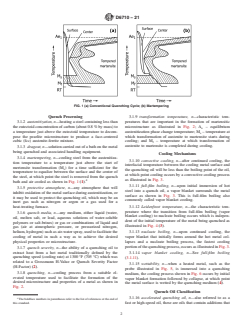
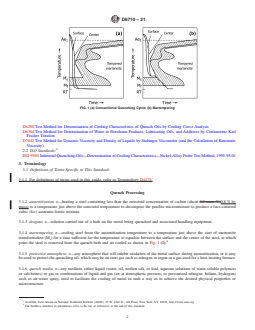
FIG. 1 (a) Conventional Quenching Cycle; (b) Martempering
Quench Processing 3.1.9 transformation temperature, n—characteristic tem-
3.1.2 austenitization, n—heatingasteelcontaininglessthan peratures that are important in the formation of martensitic
theeutectoidconcentrationofcarbon(about0.8%bymass)to microstructure as illustrated in Fig. 2;A – equilibrium
e
a temperature just above the eutectoid temperature to decom- austenitization phase change temperature; M – temperature at
s
pose the pearlite microstructure to produce a face-centered which transformation of austenite to martensite starts during
cubic (fcc) austenite-ferrite mixture. cooling; and M – temperature at which transformation of
f
austenite to martensite is completed during cooling.
3.1.3 dragout, n—solutioncarriedoutofabathonthemetal
being quenched and associated handling equipment.
Cooling Mechanisms
3.1.4 martempering, n—cooling steel from the austenitiza-
3.1.10 convective cooling, n—after continued cooling, the
tion temperature to a temperature just above the start of
interfacial temperature between the cooling metal surface and
mertensite transformation (M ) for a time sufficient for the
s
the quenching oil will be less than the boiling point of the oil,
temperature to equalize between the surface and the center of
at which point cooling occurs by a convective cooling process
the steel, at which point the steel is removed from the quench
as illustrated in Fig. 3.
bath and air cooled as shown in Fig. 1 (1).
3.1.11 full-film boiling, n—upon initial immersion of hot
3.1.5 protective atmosphere, n—any atmosphere that will
steel into a quench oil, a vapor blanket surrounds the metal
inhibit oxidation of the metal surface during austenitization, or
surface as shown in Fig. 3. This is full-film boiling also
it may be used to protect the quenching oil, which may be an
commonly called vapor blanket cooling.
inert gas such as nitrogen or argon or a gas used for a
3.1.12 Leidenfrost temperature, n—the characteristic tem-
heat-treating furnace.
perature where the transition from full-film boiling (vapor
3.1.6 quench media, n—any medium, either liquid (water,
blanket cooling) to nucleate boiling occurs which is indepen-
oil, molten salt, or lead, aqueous solutions of water-soluble
dent of the initial temperature of the metal being quenched as
polymers or salt-brines) or gas or combinations of liquid and
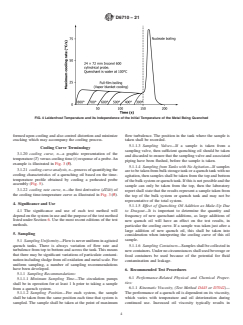
illustrated in Fig. 4 (3).
gas (air at atmospheric pressure, or pressurized nitrogen,
helium,hydrogen)suchasair-waterspray,usedtofacilitatethe
3.1.13 nucleate boiling, n—upon continued cooling, the
cooling of metal in such a way as to achieve the desired vapor blanket that initially forms around the hot metal col-
physical properties or microstructure.
lapses and a nucleate boiling process, the fastest cooling
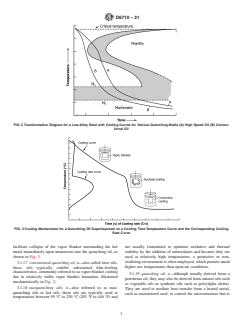
portionofthequenchingprocess,occursasillustratedinFig.3.
3.1.7 quench severity, n—the ability of a quenching oil to
extract heat from a hot metal traditionally defined by the
3.1.14 vapor blanket cooling, n—See full-film boiling
quenching speed (cooling rate) at 1300°F (705°C) which was
(3.1.11).
related to a Grossmann H-Value or Quench Severity Factor
3.1.15 wettability, n—when a heated metal, such as the
(H-Factor) (2).
probe illustrated in Fig. 5, is immersed into a quenching
3.1.8 quenching, n—cooling process from a suitable el-
medium, the cooling process shown in Fig. 6 occurs by initial
evated temperature used to facilitate the formation of the
vapor blanket formation followed by collapse, at which point
desired microstructure and properties of a metal as shown in
the metal surface is wetted by the quenching medium (4).
Fig. 2.
Quench Oil Classification
3.1.16 accelerated quenching oil, n—also referred to as a
Theboldfacenumbersinparenthesesrefertothelistofreferencesattheendof
this standard. fast or high-speed oil, these are oils that contain additions that
D6710 − 21
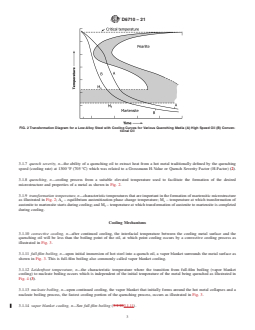
FIG. 2 Transformation Diagram for a Low-Alloy Steel with Cooling Curves for Various Quenching Media (A) High Speed Oil (B) Conven-
tional Oil
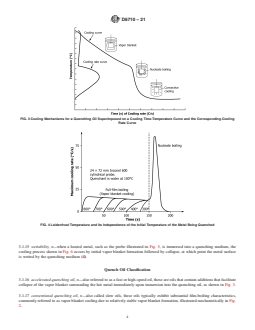
FIG. 3 Cooling Mechanisms for a Quenching Oil Superimposed on a Cooling Time-Temperature Curve and the Corresponding Cooling
Rate Curve
facilitate collapse of the vapor blanket surrounding the hot are usually formulated to optimize oxidative and thermal
metal immediately upon immersion into the quenching oil, as stability by the addition of antioxidants and because they are
shown in Fig. 3.
used at relatively high temperatures, a protective or non-
oxidizingenvironmentisoftenemployed,whichpermitsmuch
3.1.17 conventional quenching oil, n—also called slow oils,
higher use temperatures than open-air conditions.
these oils typically exhibit substantial film-boiling
characteristics, commonly referred to as vapor blanket cooling
3.1.19 quenching oil, n—although usually derived from a
due to relatively stable vapor blanket formation, illustrated
petroleum oil, they may also be derived from natural oils such
mechanistically in Fig. 2.
as vegetable oils or synthetic oils such as poly(alpha olefin).
3.1.18 marquenching oils, n—also referred to as mar-
They are used to mediate heat transfer from a heated metal,
quenching oils or hot oils, these oils are typically used at
such as austenitized steel, to control the microstructure that is
temperatures between 95°C to 230°C (203°F to 446°F) and
D6710 − 21
FIG. 4 Leidenfrost Temperature and its Independence of the Initial Temperature of the Metal Being Quenched
formed upon cooling and also control distortion and minimize flow turbulence. The position in the tank where the sample is
cracking which may accompany the cooling process.
taken shall be recorded.
5.1.1.3 Sampling Valves—If a sample is taken from a
Cooling Curve Terminology
sampling valve, then sufficient quenching oil should be taken
3.1.20 cooling curve, n—a graphic representation of the
and discarded to ensure that the sampling valve and associated
temperature(T)versuscoolingtime(t)responseofaprobe.An
piping have been flushed, before the sample is taken.
example is illustrated in Fig. 3 (5).
5.1.1.4 Sampling from Tanks with No Agitation—If samples
3.1.21 cooling curve analysis, n—processofquantifyingthe
aretobetakenfrombulkstoragetankoraquenchtankwithno
cooling characteristics of a quenching oil based on the time-
agitation, then samples shall be taken from the top and bottom
temperature profile obtained by cooling a preheated probe
ofthebulksystemorquenchtank.Ifthisisnotpossibleandthe
assembly (Fig. 5).
sample can only be taken from the top, then the laboratory
3.1.22 cooling rate curve, n—the first derivative (dT/dt)of
report shall state that the results represent a sample taken from
the cooling time-temperature curve as illustrated in Fig. 3 (5).
the top of the bulk system or quench tank and may not be
representative of the total system.
4. Significance and Use
5.1.1.5 Effect of Quenching Oil Addition as Make-Up Due
4.1 The significance and use of each test method will
to Dragout—It is important to determine the quantity and
dependonthesysteminuseandthepurposeofthetestmethod
frequency of new quenchant additions, as large additions of
listed under Section 6. Use the most recent editions of the test
new quench oil will have an effect on the test results, in
methods.
particular the cooling curve. If a sample was taken just after a
large addition of new quench oil, this shall be taken into
5. Sampling
consideration when interpreting the cooling curve of this oil
sample.
5.1 Sampling Uniformity—Flowisneveruniforminagitated
quench tanks. There is always variation of flow rate and
5.1.1.6 Sampling Containers—Samplesshallbecollectedin
turbulence from top to bottom and across the tank.This means
newcontainers.Undernocircumstancesshallusedbeverageor
that there may be significant variations of particulate contami-
food containers be used because of the potential for fluid
nationincludingsludgefromoiloxidationandmetalscale.For
contamination and leakage.
uniform sampling, a number of sampling recommendations
have been developed.
6. Recommended Test Procedures
5.1.1 Sampling Recommendations:
6.1 Performance-Related Physical and Chemical Proper-
5.1.1.1 Minimum Sampling Time—The circulation pumps
ties:
shall be in operation for at least 1 h prior to taking a sample
6.1.1 Kinematic Viscosity, (Test Method D445 or D7042)—
from a quench system.
5.1.1.2 Sampling Position—For each system, the sample The performance of a quench oil is dependent on its viscosity,
which varies with temperature and oil deterioration during
shall be taken from the same position each time that system is
sampled. The sample shall be taken at the point of maximum continued use. Increased oil viscosity typically results in
D6710 − 21
NOTE 1—Measurements are nominal. (From Test Method D6200.)
FIG. 5 Probe Details and Probe Assembly
decreased heat transfer rates (6). Oil viscosity varies with be critically important from the dual standpoint of quench
temperature which affects heat transfer rates throughout the severity and flow velocity.
process. 6.1.1.2 Typically kinematic viscosity determination by Test
6.1.1.1 The flow velocity of a quench oil depends on both Method D445 or D7042 is used. Viscosity measurements are
viscosityandtemperature.Somequenchoilsareusedathigher madeat40°C(104°F)forconventionaloracceleratedoilsand
temperatures, such as martempering oils, also known as also at 100°C (212°F) for martempering oils.
hot-oils.Although the viscosity of a martempering oil may not 6.1.2 Flash Point and Fire Point (Test Method D92)—Use
fluctuate substantially at elevated temperatures, the oil may of a quench oil in an open system with no protective atmo-
become almost solid upon cooling. Thus, the viscosity- sphere shall be at least 60°C to 65°C lower than its actual
temperature relationship (viscosity index) of a quench oil may open cup flash point to minimize the potential for fire. General
D6710 − 21
FIG. 6 Actual Cooling Process and Movement of the Wetting Front on a Metal Surface During a Quenching Process
guidelines have been developed for use temperatures of a increase the quench rate by increasing the wettability of the
quench oil relative to its flash point.
quench oil on the metal surface (7).
6.2.1.1 Oxidation of the oil may be monitored by tracking
NOTE 1—There are various manufacturer-dependent guidelines for
relating the suitability for use of a used quenching oil with respect to its changesintheacidnumber.Becausethefreshoilmaybeeither
flash point and they shall be followed. In the absence of such guidelines,
alkaline or acidic, depending on the additives present, the
it is recommended that the use temperature of a quenching oil in an open
absolute value of the acid number itself is not indicative of
system with no protective atmosphere shall be more than 60°C to 65°C
quality. However, changes in the acid number from the initial
(140°Fto149°F)belowitsactualopen-cupflashpoint.Inclosedsystems
condition may be used to indicate the degree of oxidation.
where a protective atmosphere is used, the use temperature of the used
quenchingoilshallbeatleast35°C(95°F)lowerthanitsactualopen-cup
Increasingacidnumbersgenerallyindicateincreasingamounts
flash point.
ofaforementionedby-products.Theacidnumberisdetermined
6.1.3 Density (Test Methods D1298 and D4052)—The den-
bytitratingtheacidityofasampleofknownsizewithaknown
sity of materials of similar volatility is dependent on the amountofstandardbase(TestMethodsD664orD974.Thetest
chemical composition, and in the case of quenching oils, the
is performed by dissolving the oil in a mixture of toluene and
type of basestock used in formulation. The oxidative stability
isopropanol), to which has been added a small amount of
of quenching oils is also dependent on similar chemical
water, then titrating it with a standard solution of potassium
composition trends, and thus density (or relative density) is an
hydr
...
This document is not an ASTM standard and is intended only to provide the user of an ASTM standard an indication of what changes have been made to the previous version. Because
it may not be technically possible to adequately depict all changes accurately, ASTM recommends that users consult prior editions as appropriate. In all cases only the current version
of the standard as published by ASTM is to be considered the official document.
Designation: D6710 − 17 D6710 − 21
Standard Guide for
Evaluation of Hydrocarbon-Based Quench Oil
This standard is issued under the fixed designation D6710; the number immediately following the designation indicates the year of
original adoption or, in the case of revision, the year of last revision. A number in parentheses indicates the year of last reapproval. A
superscript epsilon (´) indicates an editorial change since the last revision or reapproval.
1. Scope*
1.1 This guide covers information without specific limits, for selecting standard test methods for testing hydrocarbon-based
quench oils for quality and aging.
1.2 The values stated in SI units are to be regarded as standard.
1.2.1 Exception—The units given in parentheses are for information only.
1.3 This standard does not purport to address all of the safety concerns, if any, associated with its use. It is the responsibility
of the user of this standard to establish appropriate safety, health, and environmental practices and determine the applicability of
regulatory limitations prior to use.
1.4 This international standard was developed in accordance with internationally recognized principles on standardization
established in the Decision on Principles for the Development of International Standards, Guides and Recommendations issued
by the World Trade Organization Technical Barriers to Trade (TBT) Committee.
2. Referenced Documents
2.1 ASTM Standards:
D91 Test Method for Precipitation Number of Lubricating Oils
D92 Test Method for Flash and Fire Points by Cleveland Open Cup Tester
D94 Test Methods for Saponification Number of Petroleum Products
D95 Test Method for Water in Petroleum Products and Bituminous Materials by Distillation
D189 Test Method for Conradson Carbon Residue of Petroleum Products
D445 Test Method for Kinematic Viscosity of Transparent and Opaque Liquids (and Calculation of Dynamic Viscosity)
D482 Test Method for Ash from Petroleum Products
D524 Test Method for Ramsbottom Carbon Residue of Petroleum Products
D664 Test Method for Acid Number of Petroleum Products by Potentiometric Titration
D974 Test Method for Acid and Base Number by Color-Indicator Titration
D1298 Test Method for Density, Relative Density, or API Gravity of Crude Petroleum and Liquid Petroleum Products by
Hydrometer Method
D4052 Test Method for Density, Relative Density, and API Gravity of Liquids by Digital Density Meter
D4175 Terminology Relating to Petroleum Products, Liquid Fuels, and Lubricants
D4530 Test Method for Determination of Carbon Residue (Micro Method)
This guide is under the jurisdiction of ASTM Committee D02 on Petroleum Products, Liquid Fuels, and Lubricants and is the direct responsibility of Subcommittee
D02.L0.06 on Non-Lubricating Process Fluids.
Current edition approved Aug. 1, 2017Dec. 1, 2021. Published August 2017January 2022. Originally approved in 2001. Last previous edition approved in 20122017 as
D6710 – 02 (2012).D6710 – 17. DOI: 10.1520/D6710-17.10.1520/D6710-21.
For referenced ASTM standards, visit the ASTM website, www.astm.org, or contact ASTM Customer Service at service@astm.org. For Annual Book of ASTM Standards
volume information, refer to the standard’s Document Summary page on the ASTM website.
*A Summary of Changes section appears at the end of this standard
Copyright © ASTM International, 100 Barr Harbor Drive, PO Box C700, West Conshohocken, PA 19428-2959. United States
D6710 − 21
FIG. 1 (a) Conventional Quenching Cycle; (b) Martempering
D6200 Test Method for Determination of Cooling Characteristics of Quench Oils by Cooling Curve Analysis
D6304 Test Method for Determination of Water in Petroleum Products, Lubricating Oils, and Additives by Coulometric Karl
Fischer Titration
D7042 Test Method for Dynamic Viscosity and Density of Liquids by Stabinger Viscometer (and the Calculation of Kinematic
Viscosity)
2.2 ISO Standards:
ISO 9950 Industrial Quenching Oils—Determination of Cooling Characteristics—Nickel-Alloy Probe Test Method, 1995-95-01
3. Terminology
3.1 Definitions of Terms Specific to This Standard:
3.1.1 For definitions of terms used in this guide, refer to Terminology D4175.
Quench Processing
3.1.2 austenitization, n—heating a steel containing less than the eutectoid concentration of carbon (about 0.8 mass %)0.8 % by
mass) to a temperature just above the eutectoid temperature to decompose the pearlite microstructure to produce a face-centered
cubic (fcc) austenite-ferrite mixture.
3.1.3 dragout, n—solution carried out of a bath on the metal being quenched and associated handling equipment.
3.1.4 martempering, n—cooling steel from the austenitization temperature to a temperature just above the start of mertensite
transformation (M ) for a time sufficient for the temperature to equalize between the surface and the center of the steel, at which
s
point the steel is removed from the quench bath and air cooled as shown in Fig. 1 (1).
3.1.5 protective atmosphere, n—any atmosphere that will inhibit oxidation of the metal surface during austenitization, or it may
be used to protect the quenching oil, which may be an inert gas such as nitrogen or argon or a gas used for a heat-treating furnace.
3.1.6 quench media, n—any medium, either liquid (water, oil, molten salt, or lead, aqueous solutions of water-soluble polymers
or salt-brines) or gas or combinations of liquid and gas (air at atmospheric pressure, or pressurized nitrogen, helium, hydrogen)
such as air-water spray, used to facilitate the cooling of metal in such a way as to achieve the desired physical properties or
microstructure.
Available from American National Standards Institute (ANSI), 25 W. 43rd St., 4th Floor, New York, NY 10036, http://www.ansi.org.
The boldface numbers in parentheses refer to the list of references at the end of this standard.
D6710 − 21
FIG. 2 Transformation Diagram for a Low-Alloy Steel with Cooling Curves for Various Quenching Media (A) High Speed Oil (B) Conven-
tional Oil
3.1.7 quench severity, n—the ability of a quenching oil to extract heat from a hot metal traditionally defined by the quenching
speed (cooling rate) at 1300 °F (705 °C) which was related to a Grossmann H-Value or Quench Severity Factor (H-Factor) (2).
3.1.8 quenching, n—cooling process from a suitable elevated temperature used to facilitate the formation of the desired
microstructure and properties of a metal as shown in Fig. 2.
3.1.9 transformation temperature, n—characteristic temperatures that are important in the formation of martensitic microstructure
as illustrated in Fig. 2; A – equilibrium austenitization phase change temperature; M – temperature at which transformation of
e s
austenite to martensite starts during cooling; and M – temperature at which transformation of austenite to martensite is completed
f
during cooling.
Cooling Mechanisms
3.1.10 convective cooling, n—after continued cooling, the interfacial temperature between the cooling metal surface and the
quenching oil will be less than the boiling point of the oil, at which point cooling occurs by a convective cooling process as
illustrated in Fig. 3.
3.1.11 full-film boiling, n—upon initial immersion of hot steel into a quench oil, a vapor blanket surrounds the metal surface as
shown in Fig. 3. This is full-film boiling also commonly called vapor blanket cooling.
3.1.12 Leidenfrost temperature, n—the characteristic temperature where the transition from full-film boiling (vapor blanket
cooling) to nucleate boiling occurs which is independent of the initial temperature of the metal being quenched as illustrated in
Fig. 4 (3).
3.1.13 nucleate boiling, n—upon continued cooling, the vapor blanket that initially forms around the hot metal collapses and a
nucleate boiling process, the fastest cooling portion of the quenching process, occurs as illustrated in Fig. 3.
3.1.14 vapor blanket cooling, n—See full-film boiling (3.1.103.1.11).
D6710 − 21
FIG. 3 Cooling Mechanisms for a Quenching Oil Superimposed on a Cooling Time-Temperature Curve and the Corresponding Cooling
Rate Curve
FIG. 4 Leidenfrost Temperature and its Independence of the Initial Temperature of the Metal Being Quenched
3.1.15 wettability, n—when a heated metal, such as the probe illustrated in Fig. 5, is immersed into a quenching medium, the
cooling process shown in Fig. 6 occurs by initial vapor blanket formation followed by collapse, at which point the metal surface
is wetted by the quenching medium (4).
Quench Oil Classification
3.1.16 accelerated quenching oil, n—also referred to as a fast or high-speed oil, these are oils that contain additions that facilitate
collapse of the vapor blanket surrounding the hot metal immediately upon immersion into the quenching oil, as shown in Fig. 3.
3.1.17 conventional quenching oil, n—also called slow oils, these oils typically exhibit substantial film-boiling characteristics,
commonly referred to as vapor blanket cooling due to relatively stable vapor blanket formation, illustrated mechanistically in Fig.
2.
D6710 − 21
NOTE 1—Measurements are nominal. (From Test Method D6200.)
FIG. 5 Probe Details and Probe Assembly
3.1.18 marquenching oils, n—also referred to as marquenching oils or hot oils, these oils are typically used at temperatures
between 95 °C to 230 °C (203 °F to 446 °F) and are usually formulated to optimize oxidative and thermal stability by the addition
of antioxidants and because they are used at relatively high temperatures, a protective or non-oxidizing environment is often
employed, which permits much higher use temperatures than open-air conditions.
3.1.19 quenching oil, n—although usually derived from a petroleum oil, they may also be derived from natural oils such as
vegetable oils or synthetic oils such as poly(alpha olefin). They are used to mediate heat transfer from a heated metal, such as
austenitized steel, to control the microstructure that is formed upon cooling and also control distortion and minimize cracking
which may accompany the cooling process.
D6710 − 21
FIG. 6 Actual Cooling Process and Movement of the Wetting Front on a Metal Surface During a Quenching Process
Cooling Curve Terminology
3.1.20 cooling curve, n—a graphic representation of the temperature (T) versus cooling time (t) response of a probe. An example
is illustrated in Fig. 3 (5).
3.1.21 cooling curve analysis, n—process of quantifying the cooling characteristics of a quenching oil based on the
time-temperature profile obtained by cooling a preheated probe assembly (Fig. 5).
3.1.22 cooling rate curve, n—the first derivative (dT/dt) of the cooling time-temperature curve as illustrated in Fig. 3 (5).
4. Significance and Use
4.1 The significance and use of each test method will depend on the system in use and the purpose of the test method listed under
Section 6. Use the most recent editions of the test methods.
5. Sampling
5.1 Sampling Uniformity—Flow is never uniform in agitated quench tanks. There is always variation of flow rate and turbulence
from top to bottom and across the tank. This means that there may be significant variations of particulate contamination including
sludge from oil oxidation and metal scale. For uniform sampling, a number of sampling recommendations have been developed.
5.1.1 Sampling Recommendations:
5.1.1.1 Minimum Sampling Time—The circulation pumps shall be in operation for at least 1 h prior to taking a sample from a
quench system.
5.1.1.2 Sampling Position—For each system, the sample shall be taken from the same position each time that system is sampled.
The sample shall be taken at the point of maximum flow turbulence. The position in the tank where the sample is taken shall be
recorded.
5.1.1.3 Sampling Valves—If a sample is taken from a sampling valve, then sufficient quenching oil should be taken and discarded
to ensure that the sampling valve and associated piping have been flushed, before the sample is taken.
5.1.1.4 Sampling from Tanks with No Agitation—If samples are to be taken from bulk storage tank or a quench tank with no
agitation, then samples shall be taken from the top and bottom of the bulk system or quench tank. If this is not possible and the
sample can only be taken from the top, then the laboratory report shall state that the results represent a sample taken from the top
of the bulk system or quench tank and may not be representative of the total system.
D6710 − 21
5.1.1.5 Effect of Quenching Oil Addition as Make-Up Due to Dragout—It is important to determine the quantity and frequency
of new quenchant additions, as large additions of new quench oil will have an effect on the test results, in particular the cooling
curve. If a sample was taken just after a large addition of new quench oil, this shall be taken into consideration when interpreting
the cooling curve of this oil sample.
5.1.1.6 Sampling Containers—Samples shall be collected in new containers. Under no circumstances shall used beverage or food
containers be used because of the potential for fluid contamination and leakage.
6. Recommended Test Procedures
6.1 Performance-Related Physical and Chemical Properties:
6.1.1 Kinematic Viscosity, (Test Method D445 or D7042)—The performance of a quench oil is dependent on its viscosity, which
varies with temperature and oil deterioration during continued use. Increased oil viscosity typically results in decreased heat
transfer rates (6). Oil viscosity varies with temperature which affects heat transfer rates throughout the process.
6.1.1.1 The flow velocity of a quench oil depends on both viscosity and temperature. Some quench oils are used at higher
temperatures, such as martempering oils, also known as hot-oils. Although the viscosity of a martempering oil may not fluctuate
substantially at elevated temperatures, the oil may become almost solid upon cooling. Thus, the viscosity-temperature relationship
(viscosity index) of a quench oil may be critically important from the dual standpoint of quench severity and flow velocity.
6.1.1.2 Typically kinematic viscosity determination by Test Method D445 or D7042 is used. Viscosity measurements are made at
40 °C (104 °F) for conventional or accelerated oils and also at 100 °C (212 °F) for martempering oils.
6.1.2 Flash Point and Fire Point (Test Method D92)—Use of a quench oil in an open system with no protective atmosphere shall
be at least 60 °C to 65 °C lower than its actual open cup flash point to minimize the potential for fire. General guidelines have been
developed for use temperatures of a quench oil relative to its flash point.
NOTE 1—There are various manufacturer-dependent guidelines for relating the suitability for use of a used quenching oil with respect to its flash point
and they shall be followed. In the absence of such guidelines, it is recommended that the use temperature of a quenching oil in an open system with no
protective atmosphere shall be more than 60 °C to 65 °C (140 °F to 149 °F) below its actual open-cup flash point. In closed systems where a protective
atmosphere is used, the use temperature of the used quenching oil shall be at least 35 °C (95 °F) lower than its actual open-cup flash point.
6.1.3 Density (Test Methods D1298 and D4052)—The density of materials of similar volatility is dependent on the chemical
composition, and in the case of quenching oils, the type of basestock used in formulation. The oxidative stability of quenching oils
is also dependent on similar chemical composition trends, and thus density (or relative density) is an indirect indicator of oxidative
stability. Density (or relative density) is measured at, or converted to, a standard reference temperature, normally either 15 °C or
60/60 °F, and these should be quoted alongside the result.
6.1.3.1 Test Method D1298 uses a hydrometer plus thermometer for measurement while Test Method D4052 uses a digital density
meter based on an oscillating U-tube.
NOTE 2—Density or relative density are of limited value in the assessment of quality of a quenching oil.
6.2 Aged Fluid Properties—In addition to significant changes in fluid viscosity, oil degradation by thermal and oxidative processes
may result in the formation of undesirable levels of volatile by-products, sludge formation, metal-staining products and
particulates, all of which may result in loss of control of the quenching process.
6.2.1 Acid Number (Test M
...