

ASTM D36/D36M-14(2020)
(Test Method)Standard Test Method for Softening Point of Bitumen (Ring-and-Ball Apparatus)
General Information
- Abstract
SIGNIFICANCE AND USE
4.1 Bitumens are viscoelastic materials without sharply defined melting points; they gradually become softer and less viscous as the temperature rises. For this reason, softening points must be determined by an arbitrary and closely defined method if results are to be reproducible.
4.2 The softening point is useful in the classification of bitumens, as one element in establishing the uniformity of shipments or sources of supply, and is indicative of the tendency of the material to flow at elevated temperatures encountered in service.
SCOPE
1.1 This test method covers the determination of the softening point of bitumen in the range from 30 to 157 °C [86 to 315 °F] using the ring-and-ball apparatus immersed in distilled water [30 to 80 °C] or USP glycerin (above 80 to 157 °C).
1.2 The values stated in either SI units or inch-pound units are to be regarded separately as standard. The values stated in each system may not be exact equivalents; therefore, each system shall be used independently of the other. Combining values from the two systems may result in nonconformance with the standard.
1.3 This standard does not purport to address all of the safety concerns, if any, associated with its use. It is the responsibility of the user of this standard to establish appropriate safety, health, and environmental practices and determine the applicability of regulatory limitations prior to use.
1.4 This international standard was developed in accordance with internationally recognized principles on standardization established in the Decision on Principles for the Development of International Standards, Guides and Recommendations issued by the World Trade Organization Technical Barriers to Trade (TBT) Committee.
- Status
- Published
- Publication Date
- 30-Apr-2020
- Technical Committee
- D08 - Roofing and Waterproofing
Overview
ASTM D36/D36M-14(2020): Standard Test Method for Softening Point of Bitumen (Ring-and-Ball Apparatus) provides a widely recognized procedure for determining the softening point of bituminous materials. Bitumen, being a viscoelastic material, does not have a sharply defined melting point. Its softening point is an important parameter to assess its temperature-dependent properties, such as flow and deformation under heat.
This standard specifies an arbitrary and carefully controlled procedure for reproducible results, employing the ring-and-ball apparatus with either distilled water or USP glycerin as the immersion liquid. The test is applicable to softening points ranging from 30°C to 157°C (86°F to 315°F) and is essential for classifying bitumens, ensuring shipment consistency, and predicting performance in real-world thermal conditions.
Key Topics
- Purpose of the Test: Establishes the softening point as a critical property for classifying and comparing bitumen batches and sources.
- Test Range and Apparatus: The method applies for softening points from 30°C to 157°C, using a standardized ring-and-ball setup immersed in temperature-controlled baths.
- Significance: The softening point is indicative of the flow characteristics of bitumen at elevated temperatures, relevant to service conditions such as paving or roofing.
- Procedural Guidance: Emphasizes separate use of SI or inch-pound units to maintain standard conformity and reproducibility.
- Safety Considerations: Highlights the responsibility of users to address health, safety, and environmental practices, particularly regarding equipment and hazardous materials (e.g., mercury in thermometers or the flashpoint of glycerin).
Applications
- Quality Control: Manufacturers and suppliers use this test method to ensure bitumen product uniformity across different batches and sources.
- Pavement Engineering: Road construction projects rely on softening point measurements to select bitumens suitable for local climate and traffic loads, minimizing rutting or bleeding in hot weather.
- Roofing and Waterproofing: The roofing industry applies softening point data to choose bitumens that will maintain integrity and performance during high-temperature exposures.
- Specification Compliance: Regulatory bodies and procurement agencies reference ASTM D36/D36M to verify compliance with contractual or technical requirements in infrastructure works.
- Research and Development: Laboratories use this method for the development and comparison of new bitumen formulations or additives, assessing changes in thermal behavior.
Related Standards
- ASTM D92: Test Method for Flash and Fire Points by Cleveland Open Cup Tester - relevant for determining the thermal safety limit of bituminous materials.
- ASTM D140/D140M: Practice for Sampling Asphalt Materials - outlines procedures for obtaining representative bitumen samples to ensure valid test results.
- ASTM D3461: Test Method for Softening Point of Asphalt and Pitch (Mettler Cup-and-Ball Method) - an alternative procedure for softening point determination.
- ASTM E1: Specification for ASTM Liquid-in-Glass Thermometers - details the requirements for thermometers used in precise temperature measurement.
- ASTM E177/E691: Guidance on using precision and bias terms and conducting interlaboratory studies, which underpin the reproducibility and repeatability data in ASTM D36/D36M.
Practical Value
ASTM D36/D36M-14(2020) is an essential standard for anyone working with bituminous materials in construction, transportation, and manufacturing sectors. Its use guarantees that softening point values are reliable and comparable across organizations and geographies, facilitating quality control and regulatory compliance. Proper implementation of this test method helps ensure the selection of materials with appropriate flow characteristics for their intended service conditions, reducing the risk of premature pavement or roof failure and optimizing material performance throughout the product lifecycle.
Keywords: ASTM D36, softening point, bitumen, ring-and-ball apparatus, asphalt, roofing, paving, quality control, temperature susceptibility, reproducibility, bituminous materials.
Relations
- Effective Date
- 01-May-2020
- Effective Date
- 01-Feb-2024
- Effective Date
- 01-Jan-2024
- Effective Date
- 01-Dec-2023
- Effective Date
- 01-Jun-2016
- Effective Date
- 01-Jun-2015
- Effective Date
- 01-Jun-2014
- Effective Date
- 01-May-2014
- Effective Date
- 01-Jul-2013
- Effective Date
- 01-May-2013
- Effective Date
- 01-May-2013
- Effective Date
- 01-May-2013
- Effective Date
- 01-Nov-2012
- Effective Date
- 01-Nov-2012
- Effective Date
- 01-Nov-2011
Get Certified
Connect with accredited certification bodies for this standard

DIBt (Deutsches Institut für Bautechnik)
German Institute for Building Technology.
DIN CERTCO
DIN Group product certification.

Aboma Certification B.V.
Specialized in construction, metal, and transport sectors.
Sponsored listings
Frequently Asked Questions
ASTM D36/D36M-14(2020) is a standard published by ASTM International. Its full title is "Standard Test Method for Softening Point of Bitumen (Ring-and-Ball Apparatus)". This standard covers: SIGNIFICANCE AND USE 4.1 Bitumens are viscoelastic materials without sharply defined melting points; they gradually become softer and less viscous as the temperature rises. For this reason, softening points must be determined by an arbitrary and closely defined method if results are to be reproducible. 4.2 The softening point is useful in the classification of bitumens, as one element in establishing the uniformity of shipments or sources of supply, and is indicative of the tendency of the material to flow at elevated temperatures encountered in service. SCOPE 1.1 This test method covers the determination of the softening point of bitumen in the range from 30 to 157 °C [86 to 315 °F] using the ring-and-ball apparatus immersed in distilled water [30 to 80 °C] or USP glycerin (above 80 to 157 °C). 1.2 The values stated in either SI units or inch-pound units are to be regarded separately as standard. The values stated in each system may not be exact equivalents; therefore, each system shall be used independently of the other. Combining values from the two systems may result in nonconformance with the standard. 1.3 This standard does not purport to address all of the safety concerns, if any, associated with its use. It is the responsibility of the user of this standard to establish appropriate safety, health, and environmental practices and determine the applicability of regulatory limitations prior to use. 1.4 This international standard was developed in accordance with internationally recognized principles on standardization established in the Decision on Principles for the Development of International Standards, Guides and Recommendations issued by the World Trade Organization Technical Barriers to Trade (TBT) Committee.
SIGNIFICANCE AND USE 4.1 Bitumens are viscoelastic materials without sharply defined melting points; they gradually become softer and less viscous as the temperature rises. For this reason, softening points must be determined by an arbitrary and closely defined method if results are to be reproducible. 4.2 The softening point is useful in the classification of bitumens, as one element in establishing the uniformity of shipments or sources of supply, and is indicative of the tendency of the material to flow at elevated temperatures encountered in service. SCOPE 1.1 This test method covers the determination of the softening point of bitumen in the range from 30 to 157 °C [86 to 315 °F] using the ring-and-ball apparatus immersed in distilled water [30 to 80 °C] or USP glycerin (above 80 to 157 °C). 1.2 The values stated in either SI units or inch-pound units are to be regarded separately as standard. The values stated in each system may not be exact equivalents; therefore, each system shall be used independently of the other. Combining values from the two systems may result in nonconformance with the standard. 1.3 This standard does not purport to address all of the safety concerns, if any, associated with its use. It is the responsibility of the user of this standard to establish appropriate safety, health, and environmental practices and determine the applicability of regulatory limitations prior to use. 1.4 This international standard was developed in accordance with internationally recognized principles on standardization established in the Decision on Principles for the Development of International Standards, Guides and Recommendations issued by the World Trade Organization Technical Barriers to Trade (TBT) Committee.
ASTM D36/D36M-14(2020) is classified under the following ICS (International Classification for Standards) categories: 91.100.50 - Binders. Sealing materials. The ICS classification helps identify the subject area and facilitates finding related standards.
ASTM D36/D36M-14(2020) has the following relationships with other standards: It is inter standard links to ASTM D36/D36M-14e1, ASTM C670-24a, ASTM C670-24, ASTM D140/D140M-16(2023), ASTM D140/D140M-16, ASTM D140/D140M-15, ASTM D140/D140M-14, ASTM E177-14, ASTM C670-13, ASTM E1-13, ASTM E177-13, ASTM E691-13, ASTM D92-12a, ASTM D3461-97(2012), ASTM E691-11. Understanding these relationships helps ensure you are using the most current and applicable version of the standard.
ASTM D36/D36M-14(2020) is available in PDF format for immediate download after purchase. The document can be added to your cart and obtained through the secure checkout process. Digital delivery ensures instant access to the complete standard document.
Standards Content (Sample)
This international standard was developed in accordance with internationally recognized principles on standardization established in the Decision on Principles for the
Development of International Standards, Guides and Recommendations issued by the World Trade Organization Technical Barriers to Trade (TBT) Committee.
Designation: D36/D36M − 14 (Reapproved 2020)
Standard Test Method for
Softening Point of Bitumen (Ring-and-Ball Apparatus)
This standard is issued under the fixed designation D36/D36M; the number immediately following the designation indicates the year
of original adoption or, in the case of revision, the year of last revision. A number in parentheses indicates the year of last reapproval.
A superscript epsilon (´) indicates an editorial change since the last revision or reapproval.
1. Scope E177 Practice for Use of the Terms Precision and Bias in
ASTM Test Methods
1.1 This test method covers the determination of the soft-
E691 Practice for Conducting an Interlaboratory Study to
ening point of bitumen in the range from 30 to 157 °C [86 to
Determine the Precision of a Test Method
315 °F] using the ring-and-ball apparatus immersed in distilled
water [30 to 80 °C] or USP glycerin (above 80 to 157 °C).
3. Summary of Test Method
1.2 The values stated in either SI units or inch-pound units
3.1 Two horizontal disks of bitumen, cast in shouldered
are to be regarded separately as standard. The values stated in
brass rings, are heated at a controlled rate in a liquid bath while
each system may not be exact equivalents; therefore, each
each supports a steel ball.The softening point is reported as the
system shall be used independently of the other. Combining
mean of the temperatures at which the two disks soften enough
values from the two systems may result in nonconformance
to allow each ball, enveloped in bitumen, to fall a distance of
with the standard.
25 mm [1.0 in.].
1.3 This standard does not purport to address all of the
4. Significance and Use
safety concerns, if any, associated with its use. It is the
responsibility of the user of this standard to establish appro-
4.1 Bitumens are viscoelastic materials without sharply
priate safety, health, and environmental practices and deter-
defined melting points; they gradually become softer and less
mine the applicability of regulatory limitations prior to use.
viscous as the temperature rises. For this reason, softening
1.4 This international standard was developed in accor-
points must be determined by an arbitrary and closely defined
dance with internationally recognized principles on standard-
method if results are to be reproducible.
ization established in the Decision on Principles for the
4.2 The softening point is useful in the classification of
Development of International Standards, Guides and Recom-
bitumens, as one element in establishing the uniformity of
mendations issued by the World Trade Organization Technical
shipments or sources of supply, and is indicative of the
Barriers to Trade (TBT) Committee.
tendency of the material to flow at elevated temperatures
encountered in service.
2. Referenced Documents
2.1 ASTM Standards:
5. Apparatus
C670 Practice for Preparing Precision and Bias Statements
5.1 Rings—Two square-shouldered brass rings conforming
for Test Methods for Construction Materials
to the dimensions shown in Fig. 1(a).
D92 Test Method for Flash and Fire Points by Cleveland
5.2 Pouring Plate—A flat, smooth, brass plate approxi-
Open Cup Tester
mately 50 by 75 mm [2 by 3 in.].
D140/D140M Practice for Sampling Asphalt Materials
D3461 Test Method for Softening Point ofAsphalt and Pitch
5.3 Balls—Two steel balls, 9.5 mm [ ⁄8 in.] in diameter, each
(Mettler Cup-and-Ball Method)
having a mass of 3.50 6 0.05 g.
E1 Specification for ASTM Liquid-in-Glass Thermometers
5.4 Ball-Centering Guides—Two brass guides for centering
the steel balls, one for each ring, conforming to the general
This test method is under the jurisdiction ofASTM Committee D08 on Roofing shape and dimensions shown in Fig. 1(b).
and Waterproofing and is the direct responsibility of Subcommittee D08.03 on
5.5 Bath—A glass vessel, capable of being heated, not less
Surfacing and Bituminous Materials for Membrane Waterproofing and Built-up
Roofing. than 85 mm in inside diameter and not less than 120 mm in
Current edition approved May 1, 2020. Published May 2020. Originally
depth from the bottom of the flare.
approved in 1962. Last previous edition approved in 2014 as D36 – 14. DOI:
10.1520/D0036_D0036M-14R20.
NOTE 1—An 800-mL, low-form Griffin beaker of heat-resistant glass
For referenced ASTM standards, visit the ASTM website, www.astm.org, or
meets this requirement.
contact ASTM Customer Service at service@astm.org. For Annual Book of ASTM
5.6 Ring Holder and Assembly—A brass holder designed to
Standards volume information, refer to the standard’s Document Summary page on
the ASTM website. support the two rings in a horizontal position, conforming to
Copyright © ASTM International, 100 Barr Harbor Drive, PO Box C700, West Conshohocken, PA 19428-2959. United States
D36/D36M − 14 (2020)
NOTE 1—All dimensions are in millimetres (60.3 mm except where noted).
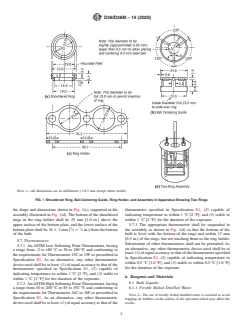
FIG. 1 Shouldered Ring, Ball-Centering Guide, Ring Holder, and Assembly of Apparatus Showing Two Rings
the shape and dimensions shown in Fig. 1(c), supported in the thermometer specified in Specification E1,(2) capable of
assembly illustrated in Fig. 1(d). The bottom of the shouldered indicating temperature to within 1 °C [2 °F], and (3) stable to
rings in the ring holder shall be 25 mm [1.0 in.] above the within 1 °C [2 °F] for the duration of the exposure.
upper surface of the bottom plate, and the lower surface of the 5.7.3 The appropriate thermometer shall be suspended in
5 1
bottom plate shall be 16 63mm[ ⁄8 6 ⁄8 in.] from the bottom the assembly as shown in Fig. 1(d) so that the bottom of the
of the bath. bulb is level with the bottom of the rings and within 13 mm
[0.5 in.] of the rings, but not touching them or the ring holder.
5.7 Thermometers:
Substitution of other thermometers shall not be permitted. As
5.7.1 AnASTM Low Softening Point Thermometer, having
an alternative, any other thermometric device used shall be at
a range from –2 to +80 °C or 30 to 180 °F, and conforming to
least: (1) of equal accuracy to that of the thermometer specified
the requirements for Thermometer 15C or 15F as prescribed in
in Specification E1,(2) capable of indicating temperature to
Specification E1. As an alternative, any other thermometric
within 0.5 °C [1.0 °F], and (3) stable to within 0.5 °C [1.0 °F]
device used shall be at least: (1) of equal accuracy to that of the
for the duration of the exposure.
thermometer specified in Specification E1,(2) capable of
indicating temperature to within 1 °C [2 °F], and (3) stable to
6. Reagents and Materials
within 1 °C [2 °F] for the duration of the exposure.
6.1 Bath Liquids:
5.7.2 AnASTM High Softening PointThermometer, having
6.1.1 Freshly Boiled Distilled Water.
a range from 30 to 200 °C or 85 to 392 °F, and conforming to
the requirements for Thermometer 16C or 16F as prescribed in
NOTE 2—The use of freshly boiled distilled water is essential to avoid
Specification E1. As an alternative, any other thermometric
trapping air bubbles on the surface of the specimen which may affect the
device used shall be at least: (1) of equal accuracy to that of the results.
D36/D36M − 14 (2020)
6.1.2 USP Glycerin. (Warning—Glycerin has a flash point cool the specimens for at least 30 min at an air temperature at
of 160 °C [320 °F] in accordance with Test Method D92.) least 10 °C [18 °F] below the expected softening point. From
the time the specimen disks are poured, no more than 240 min
6.2 Release Agents:
shall elapse before completion of the test.
6.2.1 To prevent adhesion of bitumen to the pouring plate
when casting disks, the surface of the brass pouring plate may 9.4 When the specimens have cooled, cut away the excess
be thinly coated just before use with silicone oil or grease, a bitumen cleanly with a slightly heated knife or spatula, so that
mixture of glycerin and dextrin, talc, or china clay. each disk is flush and level with the top of its ring.
(Warning—Isolate silicones from other bituminous testing
10. Procedure
equipment and samples to avoid contamination, and wear
10.1 Select one of the following bath liquids and thermom-
disposable rubber gloves whenever handling silicones or ap-
paratus coated with them. Silicone contamination can produce eters appropriate for the expected softening point:
10.1.1 Freshly boiled distilled water for softening points
erroneous results in other tests such as those for penetration
and flash point.) between 30 and 80 °C [86 and 176 °F]; use Thermometer 15C
or 15F. The starting bath temperature shall be 5 6 1 °C [41 6
7. Hazards
2 °F].
10.1.2 USP glycerin for softening points above 80 °C
7.1 Warning—Mercury has been designated by EPA and
[176 °F] and up to 157 °C [315 °F]; use Thermometer 16C or
many state agencies as a hazardous material that can cause
16F or the thermometric device. The starting bath temperature
central nervous system, kidney, and liver damage. Mercury, or
shall be no higher than 30 6 1 °C [86 6 2 °F].
its vapor, may be hazardous to health and corrosive to
10.1.3 For referee purposes, all softening points up to 80 °C
materials. Caution should be taken when handling mercury and
[176 °F] shall be determined in a water bath and all softening
mercury-containing products. See the applicable product Ma-
points above 80 °C [176 °F] shall be determined in a glycerin
terial Safety Data Sheet (MSDS) for details and EPA’s website,
bath or as agreed to by seller and buyer.
http://www.epa.gov/mercury/faq.htm, for additional informa-
tion. Users should be aware that selling mercury or mercury-
10.2 Assemble the apparatus in the laboratory hood with the
containingproducts,orboth,inyourstatemaybeprohibitedby
specimen rings, ball-centering guides, and thermometer in
state law.
position, and fill the bath so that the liquid depth will be 105 6
1 1
3mm[4 ⁄8 6 ⁄8 in.] with the apparatus in place. Using forceps,
8. Sampling
place the two steel balls in the bottom of the bath for at least
8.1 Samp
...