

ASTM C618-23e1
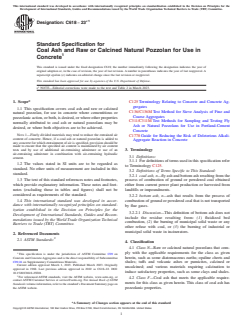
(Specification)Standard Specification for Coal Ash and Raw or Calcined Natural Pozzolan for Use in Concrete
General Information
- Abstract
ABSTRACT
This specification covers coal fly ash and raw or calcined natural pozzolan for use in concrete where cementitious or pozzolanic action, or both, is desired, or where other properties normally attributed to fly ash or pozzolans may be desired, or where both objectives are to be achieved. Fly ash and natural pozzolans shall conform to the prescribed chemical composition requirements and physical requirements. The materials shall be tested for fineness, strength activity index, water requirement, soundness, and autoclave expansion or contraction.
SCOPE
1.1 This specification covers coal ash and raw or calcined natural pozzolan, for use in concrete where cementitious or pozzolanic action, or both, is desired, or where other properties normally attributed to coal ash or natural pozzolans may be desired, or where both objectives are to be achieved.
Note 1: Finely divided materials may tend to reduce the entrained air content of concrete. Hence, if a coal ash or natural pozzolan is added to any concrete for which entrainment of air is specified, provision should be made to ensure that the specified air content is maintained by air content tests and by use of additional air-entraining admixture or use of an air-entraining admixture in combination with air-entraining hydraulic cement.
1.2 The values stated in SI units are to be regarded as standard. No other units of measurement are included in this standard.
1.3 The text of this standard references notes and footnotes, which provide explanatory information. These notes and footnotes (excluding those in tables and figures) shall not be considered as requirements of the standard.
1.4 This international standard was developed in accordance with internationally recognized principles on standardization established in the Decision on Principles for the Development of International Standards, Guides and Recommendations issued by the World Trade Organization Technical Barriers to Trade (TBT) Committee.
- Status
- Published
- Publication Date
- 28-Feb-2023
- Technical Committee
- C09 - Concrete and Concrete Aggregates
- Drafting Committee
- C09.24 - Supplementary Cementitious Materials
Overview
ASTM C618-23e1 is the internationally recognized standard specification for coal ash-including both fly ash and bottom ash-and raw or calcined natural pozzolans for use in concrete. Developed by ASTM International, this standard outlines the specific requirements for the chemical composition, physical properties, and uniformity that these supplementary cementitious materials must meet to be effectively and safely incorporated in concrete mixtures. By providing a comprehensive framework for quality assurance, ASTM C618-23e1 supports enhanced durability, sustainability, and performance in concrete construction.
Key Topics
- Material Types and Classes
- Class N: Raw or calcined natural pozzolans, such as diatomaceous earths, opaline cherts, and volcanic ashes.
- Class F: Coal ash with pozzolanic characteristics, commonly from burning anthracite or bituminous coal.
- Class C: Coal ash exhibiting both cementitious and pozzolanic properties, generally from lignite or subbituminous coal.
- Chemical Composition Requirements
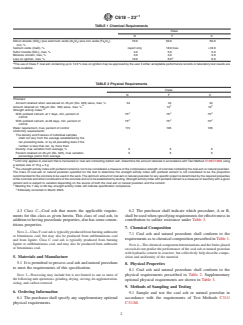
- Limits on constituents like silicon dioxide, calcium oxide, sulfur trioxide, and loss on ignition to ensure consistency and compatibility with cement.
- Physical Properties
- Criteria for fineness, strength activity index (at 7 and 28 days), water requirement, and uniformity.
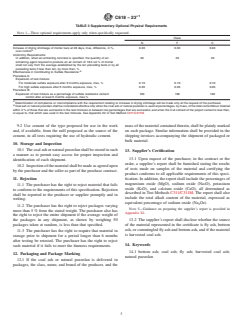
- Optional requirements for drying shrinkage and sulfate resistance can be specified for enhanced performance.
- Quality Control and Testing
- Sampling and test methods standardized by ASTM C311/C311M.
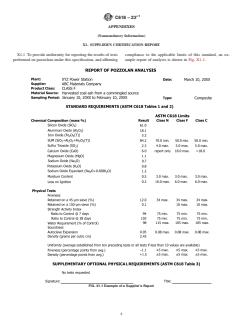
- Storage, packaging, inspection, and supplier certification to maintain traceability and compliance.
Applications
The ASTM C618-23e1 standard is widely used in various concrete construction sectors to specify, evaluate, and verify the suitability of coal ash and natural pozzolans in concrete production. Practical applications include:
- Structural Concrete: Enhances strength and longevity in buildings, bridges, dams, and infrastructure. Supplementary cementitious materials help improve durability and resist chemical attack.
- Sustainable Construction: Supports the use of recycled industrial by-products, reducing the carbon footprint of concrete production and promoting resource efficiency.
- Mitigation of Alkali-Silica Reaction (ASR): Properly specified coal ash and pozzolans can help prevent excessive expansion and cracking in concrete due to ASR, especially in projects using reactive aggregates.
- Sulfate Resistance: Supplementary requirements guide the selection of materials suitable for environments with moderate or high sulfate exposure, enhancing resistance to deterioration.
Related Standards
For comprehensive quality and project specifications, ASTM C618-23e1 is often referenced alongside other key concrete and pozzolan standards, including:
- ASTM C125 - Terminology Relating to Concrete and Concrete Aggregates
- ASTM C136/C136M - Test Method for Sieve Analysis of Fine and Coarse Aggregates
- ASTM C311/C311M - Test Methods for Sampling and Testing Fly Ash or Natural Pozzolans for Use in Portland-Cement Concrete
- ASTM C1778 - Guide for Reducing the Risk of Deleterious Alkali-Aggregate Reaction in Concrete
Practical Value
Implementing ASTM C618-23e1 in construction projects helps ensure the quality, performance, and durability of concrete by standardizing the use of coal ash and natural pozzolans. The specification’s rigorous requirements for composition and physical characteristics enable designers, contractors, and materials suppliers to reliably incorporate supplementary cementitious materials. This leads to concrete with improved workability, strength, resistance to chemical attack, and lower environmental impact, making ASTM C618-23e1 a critical document for the modern concrete industry.
Relations
- Effective Date
- 01-Jan-2024
- Effective Date
- 01-Dec-2023
- Effective Date
- 15-Dec-2019
- Effective Date
- 01-Dec-2019
- Effective Date
- 15-Jun-2019
- Effective Date
- 01-Jun-2019
- Effective Date
- 01-Jan-2019
- Effective Date
- 01-Oct-2018
- Effective Date
- 01-Jul-2018
- Effective Date
- 01-Jan-2018
- Effective Date
- 01-Aug-2017
- Effective Date
- 15-Dec-2016
- Effective Date
- 15-Dec-2016
- Effective Date
- 01-Jul-2016
- Effective Date
- 15-Dec-2015
Get Certified
Connect with accredited certification bodies for this standard

DIBt (Deutsches Institut für Bautechnik)
German Institute for Building Technology.
DIN CERTCO
DIN Group product certification.

Aboma Certification B.V.
Specialized in construction, metal, and transport sectors.
Sponsored listings
Frequently Asked Questions
ASTM C618-23e1 is a technical specification published by ASTM International. Its full title is "Standard Specification for Coal Ash and Raw or Calcined Natural Pozzolan for Use in Concrete". This standard covers: ABSTRACT This specification covers coal fly ash and raw or calcined natural pozzolan for use in concrete where cementitious or pozzolanic action, or both, is desired, or where other properties normally attributed to fly ash or pozzolans may be desired, or where both objectives are to be achieved. Fly ash and natural pozzolans shall conform to the prescribed chemical composition requirements and physical requirements. The materials shall be tested for fineness, strength activity index, water requirement, soundness, and autoclave expansion or contraction. SCOPE 1.1 This specification covers coal ash and raw or calcined natural pozzolan, for use in concrete where cementitious or pozzolanic action, or both, is desired, or where other properties normally attributed to coal ash or natural pozzolans may be desired, or where both objectives are to be achieved. Note 1: Finely divided materials may tend to reduce the entrained air content of concrete. Hence, if a coal ash or natural pozzolan is added to any concrete for which entrainment of air is specified, provision should be made to ensure that the specified air content is maintained by air content tests and by use of additional air-entraining admixture or use of an air-entraining admixture in combination with air-entraining hydraulic cement. 1.2 The values stated in SI units are to be regarded as standard. No other units of measurement are included in this standard. 1.3 The text of this standard references notes and footnotes, which provide explanatory information. These notes and footnotes (excluding those in tables and figures) shall not be considered as requirements of the standard. 1.4 This international standard was developed in accordance with internationally recognized principles on standardization established in the Decision on Principles for the Development of International Standards, Guides and Recommendations issued by the World Trade Organization Technical Barriers to Trade (TBT) Committee.
ABSTRACT This specification covers coal fly ash and raw or calcined natural pozzolan for use in concrete where cementitious or pozzolanic action, or both, is desired, or where other properties normally attributed to fly ash or pozzolans may be desired, or where both objectives are to be achieved. Fly ash and natural pozzolans shall conform to the prescribed chemical composition requirements and physical requirements. The materials shall be tested for fineness, strength activity index, water requirement, soundness, and autoclave expansion or contraction. SCOPE 1.1 This specification covers coal ash and raw or calcined natural pozzolan, for use in concrete where cementitious or pozzolanic action, or both, is desired, or where other properties normally attributed to coal ash or natural pozzolans may be desired, or where both objectives are to be achieved. Note 1: Finely divided materials may tend to reduce the entrained air content of concrete. Hence, if a coal ash or natural pozzolan is added to any concrete for which entrainment of air is specified, provision should be made to ensure that the specified air content is maintained by air content tests and by use of additional air-entraining admixture or use of an air-entraining admixture in combination with air-entraining hydraulic cement. 1.2 The values stated in SI units are to be regarded as standard. No other units of measurement are included in this standard. 1.3 The text of this standard references notes and footnotes, which provide explanatory information. These notes and footnotes (excluding those in tables and figures) shall not be considered as requirements of the standard. 1.4 This international standard was developed in accordance with internationally recognized principles on standardization established in the Decision on Principles for the Development of International Standards, Guides and Recommendations issued by the World Trade Organization Technical Barriers to Trade (TBT) Committee.
ASTM C618-23e1 is classified under the following ICS (International Classification for Standards) categories: 91.100.30 - Concrete and concrete products. The ICS classification helps identify the subject area and facilitates finding related standards.
ASTM C618-23e1 has the following relationships with other standards: It is inter standard links to ASTM C311/C311M-24, ASTM C1778-23, ASTM C125-19a, ASTM C1778-19b, ASTM C1778-19a, ASTM C1778-19, ASTM C125-19, ASTM C125-18b, ASTM C125-18a, ASTM C125-18, ASTM C311/C311M-17, ASTM C125-16, ASTM C311/C311M-16, ASTM C1778-16, ASTM C125-15b. Understanding these relationships helps ensure you are using the most current and applicable version of the standard.
ASTM C618-23e1 is available in PDF format for immediate download after purchase. The document can be added to your cart and obtained through the secure checkout process. Digital delivery ensures instant access to the complete standard document.
Standards Content (Sample)
This international standard was developed in accordance with internationally recognized principles on standardization established in the Decision on Principles for the
Development of International Standards, Guides and Recommendations issued by the World Trade Organization Technical Barriers to Trade (TBT) Committee.
´1
Designation: C618 − 23
Standard Specification for
Coal Ash and Raw or Calcined Natural Pozzolan for Use in
Concrete
This standard is issued under the fixed designation C618; the number immediately following the designation indicates the year of
original adoption or, in the case of revision, the year of last revision. A number in parentheses indicates the year of last reapproval. A
superscript epsilon (´) indicates an editorial change since the last revision or reapproval.
This standard has been approved for use by agencies of the U.S. Department of Defense.
ε NOTE—Editorial corrections were made to the text and Table 2 in March 2023.
1. Scope* C125 Terminology Relating to Concrete and Concrete Ag-
gregates
1.1 This specification covers coal ash and raw or calcined
C136/C136M Test Method for Sieve Analysis of Fine and
natural pozzolan, for use in concrete where cementitious or
Coarse Aggregates
pozzolanic action, or both, is desired, or where other properties
C311/C311M Test Methods for Sampling and Testing Fly
normally attributed to coal ash or natural pozzolans may be
Ash or Natural Pozzolans for Use in Portland-Cement
desired, or where both objectives are to be achieved.
Concrete
NOTE 1—Finely divided materials may tend to reduce the entrained air
C1778 Guide for Reducing the Risk of Deleterious Alkali-
content of concrete. Hence, if a coal ash or natural pozzolan is added to
Aggregate Reaction in Concrete
any concrete for which entrainment of air is specified, provision should be
made to ensure that the specified air content is maintained by air content
3. Terminology
tests and by use of additional air-entraining admixture or use of an
air-entraining admixture in combination with air-entraining hydraulic
3.1 Definitions:
cement.
3.1.1 For definitions of terms used in this specification refer
1.2 The values stated in SI units are to be regarded as
to Terminology C125.
standard. No other units of measurement are included in this
3.2 Definitions of Terms Specific to This Standard:
standard.
3.2.1 coal ash, n—fly ash and bottom ash resulting from the
1.3 The text of this standard references notes and footnotes, process of combustion of ground or powdered coal obtained
which provide explanatory information. These notes and foot- either from current power plant production or harvested from
notes (excluding those in tables and figures) shall not be
landfills or impoundments.
considered as requirements of the standard.
3.2.2 bottom ash, n—ash that results from the process of
1.4 This international standard was developed in accor-
combustion of ground or powdered coal that is not transported
dance with internationally recognized principles on standard- by flue gases.
ization established in the Decision on Principles for the
3.2.2.1 Discussion—This definition of bottom ash does not
Development of International Standards, Guides and Recom-
include the residue resulting from: (1) fluidized bed
mendations issued by the World Trade Organization Technical
combustion, (2) the burning of municipal solid waste or any
Barriers to Trade (TBT) Committee.
other refuse with coal, or (3) the burning of industrial or
municipal solid waste in incinerators.
2. Referenced Documents
2.1 ASTM Standards:
4. Classification
4.1 Class N—Raw or calcined natural pozzolans that com-
ply with the applicable requirements for the class as given
This specification is under the jurisdiction of ASTM Committee C09 on
herein, such as some diatomaceous earths; opaline cherts and
Concrete and Concrete Aggregates and is the direct responsibility of Subcommittee
C09.24 on Supplementary Cementitious Materials.
shales; tuffs and volcanic ashes or pumicites, calcined or
Current edition approved March 1, 2023. Published March 2023. Originally
uncalcined; and various materials requiring calcination to
approved in 1968. Last previous edition approved in 2022 as C618–22. DOI:
induce satisfactory properties, such as some clays and shales.
10.1520/C0618-23E01.
For referenced ASTM standards, visit the ASTM website, www.astm.org, or
4.2 Class F—Coal ash that meets the applicable require-
contact ASTM Customer Service at service@astm.org. For Annual Book of ASTM
ments for this class as given herein. This class of coal ash has
Standards volume information, refer to the standard’s Document Summary page on
the ASTM website. pozzolanic properties.
*A Summary of Changes section appears at the end of this standard
Copyright © ASTM International, 100 Barr Harbor Drive, PO Box C700, West Conshohocken, PA 19428-2959. United States
´1
C618 − 23
TABLE 1 Chemical Requirements
Class
N F C
Silicon dioxide (SiO ) plus aluminum oxide (Al O ) plus iron oxide (Fe O ), 70.0 50.0 50.0
2 2 3 2 3
min, %
Calcium oxide (CaO), % report only 18.0 max. >18.0
Sulfur trioxide (SO ), max, % 4.0 5.0 5.0
Moisture content, max, % 3.0 3.0 3.0
A
Loss on ignition, max, % 10.0 6.0 6.0
A
The use of Class F coal ash containing up to 12.0 % loss on ignition may be approved by the user if either acceptable performance records or laboratory test results are
made available.
TABLE 2 Physical Requirements
Class
N F C
Fineness:
Amount retained when wet-sieved on 45 μm (No. 325) sieve, max, % 34 34 34
A † †
Amount retained on 150-μm (No. 100) sieve, max, % 10 10
B
Strength activity index:
C C C
With portland cement, at 7 days, min, percent of 75 75 75
control
C C C
With portland cement, at 28 days, min, percent of 75 75 75
control
Water requirement, max, percent of control 115 105 105
Uniformity requirements:
The density and fineness of individual samples
shall not vary from the average established by the
ten preceding tests, or by all preceding tests if the
number is less than ten, by more than:
Density, max variation from average, % 5 5 5
Percent retained on 45-μm (No. 325), max variation, 5 5 5
percentage points from average
A
Limit only applies to coal ash that is harvested or coal ash containing bottom ash. Determine the amount retained in accordance with Test Method C136/C136M using
a sample size of 15 g ± 5 g
B
The strength activity index with portland cement is not to be considered a measure of the compressive strength of concrete containing the coal ash or natural pozzolan.
The mass of coal ash or natural pozzolan specified for the test to determine the strength activity index with portland cement is not considered to be the proportion
recommended for the concrete to be used in the work. The optimum amount of coal ash or natural pozzolan for any specific project is determined by the required properties
of the concrete and other constituents of the concrete and is to be established by testing. Strength activity index with portland cement is a measure of reactivity with a given
cement and is subject to variation depending on the source of both the coal ash or natural pozzolan and the cement.
C
Meeting the 7 day or 28 day strength activity index will indicate specification compliance.
†
Editorially corrected in March 2023.
4.3 Class C—Coal ash that meets the applicable require- 6.2 The purchaser shall indicate which procedure, A or B,
ments for this class as given herein. This class of coal ash, in shall be used when specifying requirements for effectiveness in
addition to having pozzolanic properties, also has some cemen- contribution to sulfate resistance under Table 3.
titious properties.
7. Chemical Composition
NOTE 2—Class F coal ash is typically produced from burning anthracite
7.1 Coal ash and natural pozzolans shall conform to the
or bituminous coal, but may also be produced from subbituminous coal
requirements as to chemical composition prescribed in Table 1.
and from lignite. Class C coal ash is typically produced from burning
lignite or subbituminous coal, and may also be produced from anthracite
NOTE 4—The chemical component determinations and the limits placed
or bituminous coal.
on each do not predict the performance of the coal ash or natural pozzolan
with hydraulic cement in concrete, but collectively help describe compo-
5. Materials and Manufacture
sition and uniformity of the material.
5.1 It is permitted to process coal ash and natural pozzolans
8. Physical Properties
to meet the requ
...