

ASTM G46-21
(Guide)Standard Guide for Examination and Evaluation of Pitting Corrosion
General Information
- Abstract
SIGNIFICANCE AND USE
4.1 It is important to be able to determine the extent of pitting, either in a service application in which it is necessary to predict the remaining life in a metal structure, or in laboratory test programs that are used to select the most pitting-resistant materials for service. The purpose of the study is crucial in determining the appropriate examination and evaluation steps.
4.2 Some typical purposes of laboratory tests include, but are not limited to, evaluating performance of alloys, determining whether an alloy is resistant to the environment, evaluating how environmental conditions including corrosion inhibitor affect or prevent pitting, and evaluating whether a lot of metal is sufficiently resistant for its use in a particular application or environment.
4.3 Some typical purposes of field studies include, but are not limited to, determining if pits are likely to grow and cause leak or release of process fluid, and assisting a determination of whether to replace or repair damage from pits (remaining life assessment).
SCOPE
1.1 This guide covers the selection of procedures that can be used in the examination and evaluation of pitted metals. These procedures include both nondestructive and destructive approaches.
1.2 The procedures covered in this guide include those that may be used in laboratory evaluations of corroded metal specimens and field examinations and inspections.
1.3 The values stated in SI units are to be regarded as standard. The values given in parentheses after SI units are provided for information only and are not considered standard.
1.3.1 Exception—In X1.2.1, mils per year (MPY) are regarded as standard for the target corrosion rate.
1.4 This standard does not purport to address all of the safety concerns, if any, associated with its use. It is the responsibility of the user of this standard to establish appropriate safety, health, and environmental practices and determine the applicability of regulatory limitations prior to use.
1.5 This international standard was developed in accordance with internationally recognized principles on standardization established in the Decision on Principles for the Development of International Standards, Guides and Recommendations issued by the World Trade Organization Technical Barriers to Trade (TBT) Committee.
- Status
- Published
- Publication Date
- 31-Jul-2021
- Technical Committee
- G01 - Corrosion of Metals
- Drafting Committee
- G01.05 - Laboratory Corrosion Tests
Overview
ASTM G46-21 is the standard guide developed by ASTM International for the examination and evaluation of pitting corrosion in metals. This guide provides a comprehensive framework for selecting both nondestructive and destructive procedures for identifying, examining, and assessing pitting corrosion, which is a critical localized form of corrosion that leads to small, deep cavities or "pits" on metal surfaces. The document is applicable to both laboratory testing environments and field inspections, supporting efforts to evaluate material suitability, predict the remaining life of structures, and inform maintenance or replacement decisions.
Understanding the extent and nature of pitting corrosion is crucial in industries where component integrity and safety are paramount, such as oil and gas, chemical processing, water treatment, transportation, and infrastructure.
Key Topics
Visual and Microscopic Examination: The guide outlines initial and post-cleaning visual inspection steps. Use of magnification (20x or higher) helps to document pit shape, size, and distribution, while photographic records can capture surface changes pre- and post-cleaning.
Cleaning Procedures: Specific recommendations are given for cleaning corroded metal samples to reveal pits without damaging the underlying metal, following standards such as ASTM G1.
Pit Characterization: Procedures for quantifying pit size, shape, aspect ratio, density, and distribution are detailed. The use of grids or digital analysis tools aids in counting and sizing pits over designated surface areas.
Metallographic Analysis: Destructive analysis involves cross-sectioning samples to reveal the true depth and profile of pits, often essential for accurate characterization.
Nondestructive Testing Methods:
- Radiography (X-ray)
- Electromagnetic techniques (eddy current, magnetic particle)
- Sonics and Ultrasonics (including acoustic emission)
- Penetrant Inspection (dye penetrant or fluorescent methods)
- 3D Surface Profilometry (laser scanning, white-light interferometry, digital 3D microscopy)
Extent and Measurement of Pitting: Methods include mass loss evaluation, direct pit depth measurement (via micrometers, microscopy, or digital 3D methods), and use of statistical approaches to extrapolate data.
Data Evaluation and Reporting: Standardized rating charts, automated profilometers, calculation of pitting factor, and the use of statistical methods (referencing ASTM G16) are described for comprehensive documentation and interpretation of results.
Applications
- Material Selection: Comparing the pitting resistance of different alloys or batches of metals for critical applications, maximizing service life and minimizing risk.
- Maintenance Planning: Assessing the severity and progression of pitting corrosion in operational equipment to inform repair or replacement schedules.
- Failure Analysis: Investigating incidents involving leakage, rupture, or mechanical degradation due to pitting.
- Quality Control: Verifying that metal products and components meet required corrosion resistance standards prior to deployment.
- Field Inspection: Evaluating in-service equipment, such as pipelines, storage tanks, and pressure vessels, where pitting may compromise containment and safety.
Related Standards
- ASTM G1: Practice for Preparing, Cleaning, and Evaluating Corrosion Test Specimens
- ASTM E3: Guide for Preparation of Metallographic Specimens
- ASTM G16: Guide for Applying Statistics to Analysis of Corrosion Data
- ASTM G61: Test Method for Conducting Cyclic Potentiodynamic Polarization Measurements for Localized Corrosion Susceptibility
- ASTM G193: Terminology and Acronyms Relating to Corrosion
- ISO 25178-604: Surface Texture - Nominal Characteristics of Non-Contact (Coherence Scanning Interferometry) Instruments
- NACE RP-01-73 / NACE SP0775: Procedures for corrosion product identification and corrosion coupon analysis
Practical Value
ASTM G46-21 enables accurate and consistent assessment of pitting corrosion, supports root cause analysis of corrosion failures, and helps organizations ensure compliance with industry best practices for corrosion management. By following its guideline, professionals can select the most effective pitting-resistant materials, develop inspection and maintenance programs, and improve safety and reliability in key infrastructure and industrial assets.
Keywords: ASTM G46-21, pitting corrosion, corrosion evaluation, nondestructive testing, metallography, material selection, field inspection, corrosion standards, pitting analysis.
Relations
- Effective Date
- 15-Feb-2019
- Effective Date
- 01-May-2018
- Effective Date
- 01-May-2014
- Effective Date
- 01-Dec-2013
- Effective Date
- 01-Dec-2011
- Effective Date
- 01-Feb-2010
- Effective Date
- 01-May-2009
- Effective Date
- 01-Jul-2007
- Effective Date
- 01-Jul-2007
- Effective Date
- 01-May-2004
- Refers
ASTM G1-03 - Standard Practice for Preparing, Cleaning, and Evaluating Corrosion Test Specimens - Effective Date
- 01-Oct-2003
- Effective Date
- 01-Oct-2003
- Effective Date
- 01-Oct-2003
- Effective Date
- 10-Apr-2001
- Effective Date
- 10-Apr-2001
Get Certified
Connect with accredited certification bodies for this standard

Element Materials Technology
Materials testing and product certification.

Inštitut za kovinske materiale in tehnologije
Institute of Metals and Technology. Materials testing, metallurgical analysis, NDT.
Sponsored listings
Frequently Asked Questions
ASTM G46-21 is a guide published by ASTM International. Its full title is "Standard Guide for Examination and Evaluation of Pitting Corrosion". This standard covers: SIGNIFICANCE AND USE 4.1 It is important to be able to determine the extent of pitting, either in a service application in which it is necessary to predict the remaining life in a metal structure, or in laboratory test programs that are used to select the most pitting-resistant materials for service. The purpose of the study is crucial in determining the appropriate examination and evaluation steps. 4.2 Some typical purposes of laboratory tests include, but are not limited to, evaluating performance of alloys, determining whether an alloy is resistant to the environment, evaluating how environmental conditions including corrosion inhibitor affect or prevent pitting, and evaluating whether a lot of metal is sufficiently resistant for its use in a particular application or environment. 4.3 Some typical purposes of field studies include, but are not limited to, determining if pits are likely to grow and cause leak or release of process fluid, and assisting a determination of whether to replace or repair damage from pits (remaining life assessment). SCOPE 1.1 This guide covers the selection of procedures that can be used in the examination and evaluation of pitted metals. These procedures include both nondestructive and destructive approaches. 1.2 The procedures covered in this guide include those that may be used in laboratory evaluations of corroded metal specimens and field examinations and inspections. 1.3 The values stated in SI units are to be regarded as standard. The values given in parentheses after SI units are provided for information only and are not considered standard. 1.3.1 Exception—In X1.2.1, mils per year (MPY) are regarded as standard for the target corrosion rate. 1.4 This standard does not purport to address all of the safety concerns, if any, associated with its use. It is the responsibility of the user of this standard to establish appropriate safety, health, and environmental practices and determine the applicability of regulatory limitations prior to use. 1.5 This international standard was developed in accordance with internationally recognized principles on standardization established in the Decision on Principles for the Development of International Standards, Guides and Recommendations issued by the World Trade Organization Technical Barriers to Trade (TBT) Committee.
SIGNIFICANCE AND USE 4.1 It is important to be able to determine the extent of pitting, either in a service application in which it is necessary to predict the remaining life in a metal structure, or in laboratory test programs that are used to select the most pitting-resistant materials for service. The purpose of the study is crucial in determining the appropriate examination and evaluation steps. 4.2 Some typical purposes of laboratory tests include, but are not limited to, evaluating performance of alloys, determining whether an alloy is resistant to the environment, evaluating how environmental conditions including corrosion inhibitor affect or prevent pitting, and evaluating whether a lot of metal is sufficiently resistant for its use in a particular application or environment. 4.3 Some typical purposes of field studies include, but are not limited to, determining if pits are likely to grow and cause leak or release of process fluid, and assisting a determination of whether to replace or repair damage from pits (remaining life assessment). SCOPE 1.1 This guide covers the selection of procedures that can be used in the examination and evaluation of pitted metals. These procedures include both nondestructive and destructive approaches. 1.2 The procedures covered in this guide include those that may be used in laboratory evaluations of corroded metal specimens and field examinations and inspections. 1.3 The values stated in SI units are to be regarded as standard. The values given in parentheses after SI units are provided for information only and are not considered standard. 1.3.1 Exception—In X1.2.1, mils per year (MPY) are regarded as standard for the target corrosion rate. 1.4 This standard does not purport to address all of the safety concerns, if any, associated with its use. It is the responsibility of the user of this standard to establish appropriate safety, health, and environmental practices and determine the applicability of regulatory limitations prior to use. 1.5 This international standard was developed in accordance with internationally recognized principles on standardization established in the Decision on Principles for the Development of International Standards, Guides and Recommendations issued by the World Trade Organization Technical Barriers to Trade (TBT) Committee.
ASTM G46-21 is classified under the following ICS (International Classification for Standards) categories: 77.060 - Corrosion of metals. The ICS classification helps identify the subject area and facilitates finding related standards.
ASTM G46-21 has the following relationships with other standards: It is inter standard links to ASTM G16-13(2019), ASTM G61-86(2018), ASTM G61-86(2014), ASTM G16-13, ASTM G1-03(2011), ASTM G16-95(2010), ASTM G61-86(2009), ASTM E3-01(2007), ASTM E3-01(2007)e1, ASTM G16-95(2004), ASTM G1-03, ASTM G61-86(2003)e1, ASTM G61-86(2003), ASTM E3-95, ASTM E3-01. Understanding these relationships helps ensure you are using the most current and applicable version of the standard.
ASTM G46-21 is available in PDF format for immediate download after purchase. The document can be added to your cart and obtained through the secure checkout process. Digital delivery ensures instant access to the complete standard document.
Standards Content (Sample)
This international standard was developed in accordance with internationally recognized principles on standardization established in the Decision on Principles for the
Development of International Standards, Guides and Recommendations issued by the World Trade Organization Technical Barriers to Trade (TBT) Committee.
Designation: G46 − 21
Standard Guide for
Examination and Evaluation of Pitting Corrosion
ThisstandardisissuedunderthefixeddesignationG46;thenumberimmediatelyfollowingthedesignationindicatestheyearoforiginal
adoptionor,inthecaseofrevision,theyearoflastrevision.Anumberinparenthesesindicatestheyearoflastreapproval.Asuperscript
epsilon (´) indicates an editorial change since the last revision or reapproval.
1. Scope G16Guide for Applying Statistics to Analysis of Corrosion
Data
1.1 Thisguidecoverstheselectionofproceduresthatcanbe
G61Test Method for Conducting Cyclic Potentiodynamic
used in the examination and evaluation of pitted metals.These
Polarization Measurements for Localized Corrosion Sus-
procedures include both nondestructive and destructive ap-
ceptibility of Iron-, Nickel-, or Cobalt-Based Alloys
proaches.
G193Terminology and Acronyms Relating to Corrosion
1.2 The procedures covered in this guide include those that 3
2.2 ISO Standard:
may be used in laboratory evaluations of corroded metal
ISO 25178-604:2013(E)Geometrical product specifications
specimens and field examinations and inspections.
(GPS) — Surface texture: Areal — Part 604: Nominal
characteristics of non-contact (coherence scanning inter-
1.3 The values stated in SI units are to be regarded as
standard. The values given in parentheses after SI units are ferometry) instruments
2.3 NACE Standards:
providedforinformationonlyandarenotconsideredstandard.
1.3.1 Exception—In X1.2.1, mils per year (MPY) are re- NACE RP-01-73Collection and Identification of Corrosion
Products
garded as standard for the target corrosion rate.
NACESP0775Preparation,Installation,Analysis,andInter-
1.4 This standard does not purport to address all of the
pretation of Corrosion Coupons in Oilfield Operations
safety concerns, if any, associated with its use. It is the
responsibility of the user of this standard to establish appro-
3. Terminology
priate safety, health, and environmental practices and deter-
3.1 Terms and acronyms used in this guide are defined in
mine the applicability of regulatory limitations prior to use.
Terminology G193.
1.5 This international standard was developed in accor-
dance with internationally recognized principles on standard- 4. Significance and Use
ization established in the Decision on Principles for the
4.1 It is important to be able to determine the extent of
Development of International Standards, Guides and Recom-
pitting, either in a service application in which it is necessary
mendations issued by the World Trade Organization Technical
to predict the remaining life in a metal structure, or in
Barriers to Trade (TBT) Committee.
laboratory test programs that are used to select the most
pitting-resistantmaterialsforservice.Thepurposeofthestudy
2. Referenced Documents
is crucial in determining the appropriate examination and
evaluation steps.
2.1 ASTM Standards:
E3Guide for Preparation of Metallographic Specimens
4.2 Some typical purposes of laboratory tests include, but
G1Practice for Preparing, Cleaning, and Evaluating Corro-
are not limited to, evaluating performance of alloys, determin-
sion Test Specimens
ingwhetheranalloyisresistanttotheenvironment,evaluating
how environmental conditions including corrosion inhibitor
affect or prevent pitting, and evaluating whether a lot of metal
This guide is under the jurisdiction ofASTM Committee G01 on Corrosion of
is sufficiently resistant for its use in a particular application or
Metals and is the direct responsibility of Subcommittee G01.05 on Laboratory
environment.
Corrosion Tests.
Current edition approved Aug. 1, 2021. Published October 2021. Originally
approved in 1976. Last previous edition approved in 2018 as G46-94 (2018). DOI: Available from International Organization for Standardization (ISO), ISO
10.1520/G0046-21. Central Secretariat, Chemin de Blandonnet 8, CP 401, 1214 Vernier, Geneva,
For referenced ASTM standards, visit the ASTM website, www.astm.org, or Switzerland, https://www.iso.org.
contact ASTM Customer Service at service@astm.org. For Annual Book of ASTM AvailablefromAssociationforMaterialsProtectionandPerformance(AMPP),
Standards volume information, refer to the standard’s Document Summary page on 15835 Park Ten Pl., Houston, TX 77084, http://www.ampp.org.
the ASTM website.
Insert in Materials Protection and Performance,Vol 12, June 1973, p. 65.
Copyright © ASTM International, 100 Barr Harbor Drive, PO Box C700, West Conshohocken, PA 19428-2959. United States
G46−21
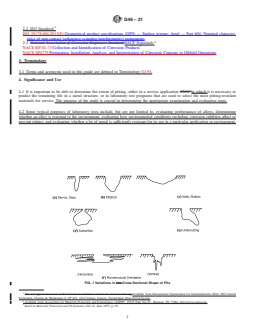
FIG. 1 Variations in Cross-Sectional Shape of Pits
4.3 Some typical purposes of field studies include, but are (20×) to photograph the corroded surface at this point, so that
not limited to, determining if pits are likely to grow and cause it can be compared with the clean surface after the removal of
leakorreleaseofprocessfluid,andassistingadeterminationof corrosion products.
whether to replace or repair damage from pits (remaining life 5.1.4.2 This preliminary visual inspection is typically per-
assessment). formed under ambient light, with or without the use of a
low-power magnifying glass or additional light source.
5. Identification and Examination of Pits
5.2 Cleaning/Pit Exposure:
5.1 Preliminary Visual Inspection—An initial visual exami-
5.2.1 Exposing the pits fully using recommended cleaning
nationofthecorrodedmetalsurfaceisusuallyconductedinan
procedurestoremovethecorrosionproducts(seePracticeG1).
as-received condition before any cleaning or destructive in-
5.2.1.1 Avoid solutions that attack the base metal exces-
spection.
sively.
5.1.1 It is important to distinguish between as-received,
5.2.1.2 Scrubbing with a stiff, nonmetallic bristle brush will
precorroded surfaces, post-hydrotest surfaces, and other sur- often enlarge the pit openings sufficiently by removal of
face conditioning, such as nitriding and nano coatings.
corrosion products or undercut metal, or both, making the pits
5.1.2 It is often advisable to photograph the corroded easier to evaluate;
surface so that it can be compared with the clean surface after
5.2.1.3 Itmaybeadvisableduringcleaningtoprobethepits
the removal of corrosion products.
with a pointed tool to determine the extent of undercutting,
5.1.3 The composition of the corrosion products may be of
tunneling, or other subsurface corrosion (Fig. 1).
value in determining the cause of corrosion, especially if the
5.3 Post-Cleaning Visual Inspection:
specimen has been exposed to an unknown environment.
5.3.1 Examine the cleaned metal surface to determine the
Where analysis of corrosion products is desired, follow rec-
extent of corrosion and the apparent location of pits as well as
ommended procedures for the removal of particulate corrosion
to identify areas of interest for further examination.
products (for example, NACE RP-01-73 ) and preserve them
5.3.2 Determineandnotethesize,shape(1, 2), aspectratio
for future identification.
(diameter/depth) (3), uniformity, and density of pits (corroded
5.1.4 Examine the corroded surface to determine the extent
area/total surface area) (1, 2), as needed. Pit size is often
ofcorrosionandtheapparentlocationofpitsaswellasidentify
defined as the diameter of the pit mouth for hemispherical pits
areas of interest for further examination.
orequivalentdiameter,[2×sqrt(area/π)],orattimesitcanrefer
5.1.4.1 It is often advisable to perform a more detailed
tothedepth,length,orwidthofthepit.Itisimportanttorecord
examination through a microscope using low-magnification
whichparameterisbeingmeasuredwhenreportingthepitsize.
6 7
NACE has been changed to AMPP, which may impact how this standard is Theboldfacenumbersinparenthesesrefertothelistofreferencesattheendof
labeled in the future. this practice.
G46−21
5.3.2.1 Pits may have various sizes and shapes, be distrib- (2)High levels of magnification (200× to 500×) may be
uted in a uniform or nonuniform manner, and be arranged in a required to identify dropout of fine grains because of inter-
dense or sparse pattern. All of these traits may be relevant to granular corrosion
the evaluation of the corrosion process.
5.5 Nondestructive Inspection—A number of techniques
5.3.2.2 Thediversenatureofinternalandexternalstandards
have been developed to assist in the detection of cracks or
and specifications for evaluating pitting corrosion may mean
cavities in a metal surface without destroying the material (5).
thatthelevelofimportanceoneachoftheabovecriterionmay
These methods are less effective for locating and defining the
be different for each document.
shapeofpitsthansomeofthosepreviouslydiscussed,butthey
5.3.3 Evaluation of pit density or the number of pits per
merit consideration because they are often used in situ, and
givenareacanbemadeeasierbytheuseofaplasticgrid.Place
thus are more applicable to field applications.
the grid, containing 3mm to 6mm squares, on the surface.
5.5.1 Radiographic—Radiation, such as X-rays, are passed
Count and record the number of pits in each square and move
through the object. The intensity of the emergent rays varies
acrossthegridinasystematicmanneruntilthedesiredsurface
with the thickness of the material. Imperfections may be
area has been covered. Obtain the average from all the
detected if they cause a change in the absorption of X-rays.
measurementsfromeachsquareforafinalmeasurementvalue.
Detectors or films are used to provide an image of interior
5.3.3.1 This approach minimizes eyestrain because the eyes
imperfections. The metal thickness that can be inspected is
can be taken from the field of view without fear of losing the
dependentontheavailableenergyoutput.Poresorpitsmustbe
area of interest.
as large as ⁄2% of the metal thickness to be detected. This
technique has only slight application to pitting detection, but it
5.3.3.2 Pit density will be affected if pit clusters, intercon-
nected pits, or the occurrence of pits within pits are treated as mightbeausefulmeanstocomparespecimensbeforeandafter
corrosion to determine whether pitting has occurred and
oneormultiplepits.Insomecases,thefractionofthetotalarea
coveredbypitscanbeconsideredasaparametermorerelevant whether it is associated with previous porosity. It may also be
useful to determine the extent of subsurface and undercutting
than pit density.
pitting (Fig. 1).
5.3.4 Evaluation of pit density can also be accomplished
5.5.2 Electromagnetic:
using available software that can post-process electronic im-
5.5.2.1 Eddy currents can be used to detect defects or
ages of the corroded surface. Electronic images can be set to a
irregularities in the structure of electrically conducting mate-
contrast threshold to delineate the corrosion pits from the
rials.When a specimen is exposed to a varying magnetic field,
noncorroded specimen surface. The number of pits can be
produced by connecting an alternating current to a coil, eddy
counted and divided by the actual area of specimen in the
currents are induced in the specimen, and they in turn produce
electronic image (4).
a magnetic field of their own. Materials with defects will
5.3.5 Other available software commonly used in profilom-
produce a magnetic field that is different from that of a
etryandtopographymeasurementswithbuilt-infunctionofpit
reference material without defects, and an appropriate detec-
measurement can also be used to determine the pit density.
tion instrument is required to determine these differences.This
5.4 Metallographic Examination—A visual examination of
method is typically not used on ferromagnetic materials.
the metal surface may show a round, elongated, or irregular
5.5.2.2 The induction of a magnetic field in ferromagnetic
opening, but it seldom provides an accurate indication of the
materials is another approach that is used. Discontinuities that
nature of any corrosion beneath the surface. Thus, it is often
are transverse to the direction of the magnetic field cause a
necessary to cross section the pit to see its actual shape and to
leakage field to form above the surface of the part. Ferromag-
determine its true depth and size. Several variations in the
netic particles are placed on the surface to detect the leakage
cross-sectioned shape of pits are shown in Fig. 1.
field and to outline the size and shape of the discontinuities.
5.4.1 Selectandcutoutarepresentativeportionofthemetal
Rather small imperfections can be detected by this method.
surface containing the pits and prepare a metallographic
However, the method is limited by the required directionality
specimen in accordance with the recommended procedures
of defects to the magnetic field, by the possible need for
given in Guide E3.
demagnetization of the material, and by the limited shape of
5.4.2 Examine the cross section microscopically.
parts that can be examined.
5.4.2.1 Determine whether there is a relation between pits 5.5.3 Sonic:
and inclusions/microstructure.
5.5.3.1 In the use of ultrasonics, pulses of sound energy are
transmitted through a couplant, such as oil or water, onto the
5.4.2.2 Determine whether the cavities might have resulted
metal surface where waves are generated.The reflected echoes
from metal dropout caused by intergranular corrosion,
are converted to electrical signals that can be interpreted to
dealloying, and so forth.
show the location of flaws or pits. Both contact and immersion
(1)Thediversenatureofinternalandexternalstandardsfor
methods are used. The test has good sensitivity and provides
evaluating pitting corrosion may mean that there is an impor-
instantaneous information about the size and location of flaws.
tance in measuring features related only to a specific form of
However,referencestandardsarerequiredforcomparison,and
attack. This means that there is a high level of importance in
training is needed to interpret the results properly.
discerning the characteristics of the attack observed to prevent
incorrectly weighting results. Determination and recordkeep- 5.5.3.2 An alternative approach is to use acoustic emissions
ing should follow standard requirements. in detecting flaws in metals. Imperfections, such as pits,
G46−21
generate high-frequency emissions under thermal or mechani- 6. Extent of Pitting
cal stress. The frequency of emission and the number of
6.1 Mass Loss—Metal mass loss is not ordinarily recom-
occurrences per unit time determine the presence of defects.
mended for use as a measure of the extent of pitting unless
5.5.4 Penetrant—Defects opening to the surface can be
general corrosion is slight and pitting is fairly severe. If
detected by the application of a penetrating liquid that subse-
uniform corrosion is significant, the contribution of pitting to
quently exudes from the surface after the excess penetrant has
total metal loss is small, and pitting damage cannot be
beenremoved.Defectsarelocatedbysprayingthesurfacewith
determined accurately from mass loss. In any case, mass loss
a developer that reacts with a dye in the penetrant, or the
can only provide information about total metal loss due to
penetrant may contain a fluorescent material that is viewed pitting but nothing about depth of penetration. However, mass
under black light. The size of the defect is shown by the
lossshouldnotbeneglectedineverycasebecauseitmaybeof
intensity of the color and the rate of bleed-out. This technique value; for example, mass loss along with a visual comparison
provides only an approximation of the depth and size of pits. of pitted surfaces may be adequate to evaluate the pitting
resistance of alloys in laboratory tests.
5.5.5 Other Profilometry and Topography Tools:
5.5.5.1 Different noncontact inspection tools (for example, 6.2 Pit Depth Measurement:
laser scanner, white-light interferometer, and digital three- 6.2.1 Metallographic—Pit depth can be determined by sec-
dimensional (3-D) microscope) are available to determine the tioning vertically through a pre-selected pit, mounting the
profile of the corrosion pit without having to cross section the cross-sectioned pit metallographically, and polishing the sur-
face. The depth of the pit is measured on the flat, polished
specimen.
surface by the use of a microscope with a calibrated measure-
NOTE 1—To capture the true shape and size of the corrosion pit using
ment system (for example, eyepiece reticle or digital imaging.
the noncontact inspection tools, the corrosion products need to be
The method is very accurate, but it requires good judgment in
removed.
the selection of the pit and good technique in cutting through
5.5.5.2 The laser scanner uses sticker targets placed on the
thepit.Itslimitationsarethatitistimeconsuming,thedeepest
surfaceofthespecimenasreferenceforthe3-Dreconstruction.
pit may not have been selected, and the pit may not have been
As the sample is being scanned, the laser scanner records the
sectioned at the deepest point of penetration.
realsurfacepointsinrelationtothestickertargetposition.The
6.2.2 Machining (7, 8):
collected data can be reconstructed to form the 3-D rendering
6.2.2.1 This method requires a sample that is fairly regular
of the corrosion pits using compatible laser scan software.
in shape, and it involves the destruction of the specimen.
Measure the thickness of the specimen between two areas that
5.5.5.3 Whitelightinterferometryusesthelightinterference
havenotbeenaffectedbygeneralcorrosion.Selectaportionof
producedbythesurfaceroughnessofthespecimen.Thesource
the surface on one side of the specimen that is relatively
emits white light that is separated by the beam splitter into
unaffected; then machine the opposite surface where the pits
measurement and reference beams. The reference beam is
are located on a precision lathe, grinder, or mill until all signs
reflected from the reference plane using a mirror, and the
of corrosion have disappeared. (Some difficulty from galling
measurement beam is incident to the specimen surface. The
and smearing may be encountered with soft metals, and pits
interference pattern in the charged-coupled device (CCD)
may be obliterated.) Measure the thickness of the specimen
image sensor is formed by the reflected beam that passed
between the unaffected surface and subtract from the original
through the reference mirror. The data can be reconstructed to
thickness to give the maximum depth of pitting. Repeat this
form the 3-D rendering of the corrosion pits using compatible
procedure on the unmachined surface unless the thickness has
interferometry software (4, 6).
beenreducedby50%ormoreduringthemachiningofthefirst
5.5.5.4 Adigital3-Dopticalmicroscopecanbeusedtoform
side.
the profile of the corrosion pit by stacking two-dimensional
6.2.2.2 This method is equally suitable for determining the
(2-D) images taken at different vertical heights (along z-axis).
numberofpitswithspecificdepths.Countthevisiblepits;then
The optical microscope captures the data in the 2-D plane
machine away the surface of the metal in measured stages and
(x-axis and y-axis) with single- image acquisition at each step
count the number of visible pits remaining at each stage.
alongtheverticalheight(z-axis).Adigital3-Drenderedimage
Subtract the number of pits at each stage from the count at the
is reconstructed using compatible software.
previousstagetoobtainthenumberofpitsateachdepthofcut.
5.5.5.5 Results from 3-D rendering can often be useful in
6.2.3 Micrometer or Depth Gage:
analyzing pit size, pit shape, and pit density.
6.2.3.1 This method is based on the use of a pointed needle
5.5.6 Caveats—Some of these nondestructive test methods
attached to a micrometer or calibrated depth gage to penetrate
maynotprovidesatisfactorydetailedinformationaboutpitting.
the pit cavity. Zero the instrument on an unaffected area at the
They can be used to locate pits and to provide some informa-
lipofthepit.Inserttheneedleinthepituntilitreachesthebase
tion about the size of pits, but some may not be able to detect
where a new measurement is taken. The distance traveled by
small pits, and confusion may arise in attempting to differen- the needle is the depth of the pit. It is best to use constant-
tiate between pits and other surface blemishes. Most of these
tension instruments to minimize metal penetration at the base
methods were developed to detect cracks or flaws in metals, of the pit. It can be advantageous to use a stereomicroscope in
but with more refined development they may become more conjunctionwiththistechniquesothatthepitcanbemagnified
applicable to pitting measurements. to ensure that the needle point is at the bottom of the pit. The
G46−21
method is limited to pits that have a sufficiently large opening the manual method above. As with standard optical
toaccommodatetheneedlewithoutobstruction;thiseliminates microscopy, one needs to: (1) use sufficient magnification to
those pits where undercutting or directional orientation has
observe pit features, and (2) check the validity of the equip-
occurred.
ment using pits with depths validated by independent means.
6.2.3.2 In a variation of this method, attach the probe to a Care should be taken to ensure the system is properly cali-
spherometer and connect through a microammeter and battery brated and attention should be paid to the influence of sample
to the specimen (8, 9). When the probe touches the bottom of typeandsurfaceconditiononhowaccuratelyandreproducibly
the pit, it completes the electrical circuit, and the probe
the system detects the correct number of pits, pit depths, areas,
movement is a measurement of pit depth. This method is
volumes, and so forth.
limited to very regularly shaped pits because contact with the
6.2.6 Laser Scanning Methods (see ISO 25178-
side of the pit would give a false reading.
604:2013(E))—This profilometry method uses lasers to scan
6.2.4 Microscopical—This method is particularly valuable
the metal surface and measure pit depth relative to the metal
when pits are too narrow or difficult to penetrate with a probe
surface.Theuseoflasersallowstheusertoscanlargeareasfor
type of instrument. The method is amenable to use as long as
inspection. However, the resolution required for pit depth
light can be focused on the base of the pit, which would not be
measurement may require parameter optimization (for
possible in the case of example (e)in Fig. 1.
example, scan speed/scan interval). In addition to ensuring
6.2.4.1 Useametallurgicalmicroscopewithamagnification
propercalibrationofthesystem,attentionshouldbepaidtothe
range from 50× to 500× and a calibrated fine-focus knob (for
reproducibility of measurements within a given sample, and
example, 1 division=0.001 mm). If the latter is not available,
the validity of the equipment should be confirmed using pits
a dial micrometer can be attached to the microscope in such a
with depths evaluated using independent means. While this
way that it will show movement of the stage relative to the
technology has been used successfully to evaluate surface
microscope body.
roughness/topography (10), real-world users have communi-
6.2.4.2 Locate a single pit on the metal surface and center
catedsignificantunder-reportingofpitdepth(<50%ofactual)
undertheobjectivelensofthemicroscopeatlowmagnification
when compared to analysis using 3-D optical methods. It is
(for example, 50×). Increase the objective lens magnification
recommended that pitting measurements (particularly depth)
untilthepitareacoversmostofthefieldunderview.Focusthe
from laser-scanning methods be reported as semiquantitative
specimen surface at the lip of the pit, using first the coarse and
unless verification procedures using independent methods are
then the fine-focusing knobs of the microscope. Record the
included to demonstrate accuracy
initial reading from the fine-focusing knob. Refocus on the
bottom of the pit with the fine-focusing knob and record the
7. Evaluation of Pitting
reading. The difference between the initial and the final
readings on the fine-focusing knob is the pit depth. 7.1 There are several ways in which pitting can be
6.2.4.3 Repeat the steps in 6.2.4.2 to obtain additional described, given a quantitative expression to indicate its
significance, or used to predict the life of a material. Some of
measurements or until satisfactory duplication has been ob-
tained.Therepeatabilityofpitdepthmeasurementsonasingle themorecommonlyusedmethodsaredescribedinthissection,
pit at four magnifications is shown in Annex A1. although it is often found that no single method is sufficient by
itself.
6.2.4.4 Avariation of the microscopical technique involves
the use of an interference microscope.Abeam of light is split,
7.2 Standard Charts (8):
and one portion is projected on the specimen and the other on
7.2.1 Ratethepitsintermsofdensity,size,anddepthonthe
a reference mirror surface. The reflected light from these two
basis of standard charts, such as those shown in Fig. 2.
surfaces is recombined, and interference fringes are formed
Columns A and B relate to the extent of pitting at the surface
that provide a topographical map of the specimen surface.
ofthemetal(thatis,ColumnAisameansforratingthenumber
Thesefringescanbeusedtomeasureverticaldeviationsonthe
ofsitesperunitareaandColumnBisameansforshowingthe
metal surface. However, the method is limited to the shallower
average size of these sites). Column C rates the intensity or
pits, that is, less than 25 µm, because the number of fringes
average depth of attack. A typical rating might be A-3, B-2,
increases to the point where they are difficult to count.
4 2
C-3, representing a density of 5×10 pits/m , an average pit
6.2.5 3-D Optical Microscopy Method—This method is
opening of 2.0 mm , and an average pit depth of 1.6 mm.
distinguishable from 6.2.4.2 in that analysis does not require
7.2.2 This method offers an effective means of communica-
manual use of the fine focus of a microscope. Rather, micro-
tion between those who are familiar with the charts, and it is a
scopes with computer-controlled capabilities are commercially
simple means for storing data for comparison with other test
available with corrosion pit measurement as an intended
results. However, it can be tedious and time consuming to
application. There are numerous advantages to this type of
measure all pits manually, and the time is usually not justified
analysis, including the reduction in time of analysis and the
ifdoingsobyhandbecausemaximumvalues(forexample,pit
ability to scan larger surfaces. Such digital equipment has the
depths) usually have more significance than average values.
additional advantage that it allows quantification of pitted
surface areas and pit diameters as well as provides depths and With the advent of automated surface scanners, profilometers,
and so forth, a large amount of detailed information regarding
pitshapes.Asymmetricpitsandtunnelingprocessesthatdistort
the pit shape will be as difficult to detect using this method as the number of pits, pit densities, depths, diameters, surface
G46−21
FIG. 2 Standard Rating Charts for Pits
areas, volumes, and so forth, can now be obtained in a more context for measurements, measurement setting for the maxi-
time-efficient manner making this process and analysis much
mum pit depth, and provision of results of verification
easier.
procedures, including reproducibility of measurement and
comparison between methods, for example, using both the
7.3 Automated Profilometers (AP)—There are a variety of
optical microscope with 3-D capability and the automated
commercially available systems that harness interferometry or
profilometers to measure the deepest pit.
laser technology to provide automated assessment of pitting
corrosion.These methods (discussed in 6.2.5 and 6.2.6) have a
7.4 Metal Penetration:
number of advantages and limitations and can be a useful tool
7.4.1 Measure the deepest pits and express metal penetra-
inassessingthesize,distribution,anddepthofcorrosionpitsif
tion in terms of the maximum pit depth or the average or
properly calibrated and verified. Large areas of samples can be
median of the 15 deepest pits, preferably all of these.
scannedusingthesemethods,andalargenumberofpitscanbe
Additionally, histograms can be used to help present pitting
evaluated much faster than is possible using manual methods.
data in various ways, which also assists in giving an overall
However,notethattheautomationthatmakesthesetechniques
picture of pitting activity that has taken place. This type of
attractive to the end user is not a substitute for the interpreta-
measurement is particularly significant when the metal is
tion of the collected data by an experienced corrosion profes-
associated with an enclosure for a gas or liquid, and a hole
sional. Care should be
...
This document is not an ASTM standard and is intended only to provide the user of an ASTM standard an indication of what changes have been made to the previous version. Because
it may not be technically possible to adequately depict all changes accurately, ASTM recommends that users consult prior editions as appropriate. In all cases only the current version
of the standard as published by ASTM is to be considered the official document.
Designation: G46 − 94 (Reapproved 2018) G46 − 21
Standard Guide for
Examination and Evaluation of Pitting Corrosion
This standard is issued under the fixed designation G46; the number immediately following the designation indicates the year of original
adoption or, in the case of revision, the year of last revision. A number in parentheses indicates the year of last reapproval. A superscript
epsilon (´) indicates an editorial change since the last revision or reapproval.
1. Scope
1.1 This guide covers the selection of procedures that can be used in the identification and examination of pits and in the evaluation
of pitting (See Terminologyexamination and evaluation of pitted metals. These G15) corrosion to determine the extent of its
effect.procedures include both nondestructive and destructive approaches.
1.2 The procedures covered in this guide include those that may be used in laboratory evaluations of corroded metal specimens
and field examinations and inspections.
1.3 The values stated in SI units are to be regarded as standard. The values given in parentheses after SI units are provided for
information only and are not considered standard.
1.3.1 Exception—In X1.2.1, mils per year (MPY) are regarded as standard for the target corrosion rate.
1.4 This standard does not purport to address all of the safety concerns, if any, associated with its use. It is the responsibility
of the user of this standard to establish appropriate safety, health, and environmental practices and determine the applicability of
regulatory limitations prior to use.
1.5 This international standard was developed in accordance with internationally recognized principles on standardization
established in the Decision on Principles for the Development of International Standards, Guides and Recommendations issued
by the World Trade Organization Technical Barriers to Trade (TBT) Committee.
2. Referenced Documents
2.1 ASTM Standards:
E3 Guide for Preparation of Metallographic Specimens
G1 Practice for Preparing, Cleaning, and Evaluating Corrosion Test Specimens
G15 Terminology Relating to Corrosion and Corrosion Testing (Withdrawn 2010)
G16 Guide for Applying Statistics to Analysis of Corrosion Data
G61 Test Method for Conducting Cyclic Potentiodynamic Polarization Measurements for Localized Corrosion Susceptibility of
Iron-, Nickel-, or Cobalt-Based Alloys
G193 Terminology and Acronyms Relating to Corrosion
This guide is under the jurisdiction of ASTM Committee G01 on Corrosion of Metals and is the direct responsibility of Subcommittee G01.05 on Laboratory Corrosion
Tests.
Current edition approved Oct. 1, 2018Aug. 1, 2021. Published November 2018October 2021. Originally approved in 1976. Last previous edition approved in 20132018
as G46 – 94 (2013).G46-94 (2018). DOI: 10.1520/G0046-94R18.10.1520/G0046-21.
For referenced ASTM standards, visit the ASTM website, www.astm.org, or contact ASTM Customer Service at service@astm.org. For Annual Book of ASTM Standards
volume information, refer to the standard’sstandard’s Document Summary page on the ASTM website.
Copyright © ASTM International, 100 Barr Harbor Drive, PO Box C700, West Conshohocken, PA 19428-2959. United States
G46 − 21
2.2 ISO Standard:
ISO 25178-604:2013(E) Geometrical product specifications (GPS) — Surface texture: Areal — Part 604: Nominal character-
istics of non-contact (coherence scanning interferometry) instruments
2.3 National Association of Corrosion Engineers Standard:NACE Standards:
NACE RP-01-73 Collection and Identification of Corrosion Products
NACE SP0775 Preparation, Installation, Analysis, and Interpretation of Corrosion Coupons in Oilfield Operations
3. Terminology
3.1 Terms and acronyms used in this guide are defined in Terminology G193.
4. Significance and Use
4.1 It is important to be able to determine the extent of pitting, either in a service application where in which it is necessary to
predict the remaining life in a metal structure, or in laboratory test programs that are used to select the most pitting-resistant
materials for service. The purpose of the study is crucial in determining the appropriate examination and evaluation steps.
4.2 Some typical purposes of laboratory tests include, but are not limited to, evaluating performance of alloys, determining
whether an alloy is resistant to the environment, evaluating how environmental conditions including corrosion inhibitor affect or
prevent pitting, and evaluating whether a lot of metal is sufficiently resistant for its use in a particular application or environment.
FIG. 1 Variations in the Cross-Sectional Shape of Pits
The last approved version of this historical standard is referenced on www.astm.org.Available from International Organization for Standardization (ISO), ISO Central
Secretariat, Chemin de Blandonnet 8, CP 401, 1214 Vernier, Geneva, Switzerland, https://www.iso.org.
Available from Association for Materials Protection and Performance (AMPP), 15835 Park Ten Pl., Houston, TX 77084, http://www.ampp.org.
Insert in Materials Protection and Performance,Vol 12, June 1973, p. 65.
G46 − 21
4.3 Some typical purposes of field studies include, but are not limited to, determining if pits are likely to grow and cause leak or
release of process fluid, and assisting a determination of whether to replace or repair damage from pits (remaining life assessment).
5. Identification and Examination of Pits
5.1 Preliminary Visual Inspection—An initial visual examination of the corroded metal surface is usually conducted in an
as-received condition before any cleaning or destructive inspection.
5.1.1 It is important to distinguish between as-received, precorroded surfaces, post-hydrotest surfaces, and other surface
conditioning, such as nitriding and nano coatings.
5.1.2 It is often advisable to photograph the corroded surface so that it can be compared with the clean surface after the removal
of corrosion products.
5.1.3 The composition of the corrosion products may be of value in determining the cause of corrosion, especially if the specimen
has been exposed to an unknown environment. Where analysis of corrosion products is desired, follow recommended procedures
for the removal of particulate corrosion products (for example, NACE RP-01-73 ) and preserve them for future identification.
5.1.4 Examine the corroded surface to determine the extent of corrosion and the apparent location of pits as well as identify areas
of interest for further examination.
5.1.4.1 It is often advisable to perform a more detailed examination through a microscope using low-magnification (20×) to
photograph the corroded surface at this point, so that it can be compared with the clean surface after the removal of corrosion
products.
5.1.4.2 This preliminary visual inspection is typically performed under ambient light, with or without the use of a low-power
magnifying glass or additional light source.
5.2 Cleaning/Pit Exposure:
5.2.1 Exposing the pits fully using recommended cleaning procedures to remove the corrosion products (see Practice G1).
5.2.1.1 Avoid solutions that attack the base metal excessively.
5.2.1.2 Scrubbing with a stiff, nonmetallic bristle brush will often enlarge the pit openings sufficiently by removal of corrosion
products or undercut metal, or both, making the pits easier to evaluate;
5.2.1.3 It may be advisable during cleaning to probe the pits with a pointed tool to determine the extent of undercutting, tunneling,
or other subsurface corrosion (Fig. 1).
5.3 Post-Cleaning Visual Inspection—Inspection: A visual examination of the corroded metal surface is usually beneficial, and this
is done under ordinary light, with or without the use of a low-power magnifying glass, to determine the extent of corrosion and
the apparent location of pits. It is often advisable to photograph the corroded surface at this point so that it can be compared with
the clean surface after the removal of corrosion products.
4.1.1 If the metal specimen has been exposed to an unknown environment, the composition of the corrosion products may be of
value in determining the cause of corrosion. Follow recommended procedures in the removal of particulate corrosion products and
reserve them for future identification (see NACE RP-01-73).
4.1.2 To expose the pits fully, use recommended cleaning procedures to remove the corrosion products and avoid solutions that
attack the base metal excessively (see Practice G1). It may be advisable during cleaning to probe the pits with a pointed tool to
determine the extent of undercutting or subsurface corrosion (Fig. 1). However, scrubbing with a stiff bristle brush will often
enlarge the pit openings sufficiently by removal of corrosion products, or undercut metal to make the pits easier to evaluate.
NACE has been changed to AMPP, which may impact how this standard is labeled in the future.
G46 − 21
5.3.1 Examine the cleaned metal surface under ordinary light to determine the approximate size and distribution of pits. Follow
this procedure by a more detailed examination through a microscope using low magnification (20×).extent of corrosion and the
apparent location of pits as well as to identify areas of interest for further examination.
5.3.2 Determine and note the size, shape (1, 2), aspect ratio (diameter/depth) (3), uniformity, and density of pits (corroded
area/total surface area) (1, 2), as needed. Pit size is often defined as the diameter of the pit mouth for hemispherical pits or
equivalent diameter, [2×sqrt(area/π)], or at times it can refer to the depth, length, or width of the pit. It is important to record which
parameter is being measured when reporting the pit size.
5.3.2.1 Pits may have various sizes and shapes, be distributed in a uniform or nonuniform manner, and be arranged in a dense or
sparse pattern. All of these traits may be relevant to the evaluation of the corrosion process.
5.3.2.2 The diverse nature of internal and external standards and specifications for evaluating pitting corrosion may mean that the
level of importance on each of the above criterion may be different for each document.
5.3.3 Determine the size, shape, and density of pits.Evaluation of pit density or the number of pits per given area can be made
easier by the use of a plastic grid. Place the grid, containing 3 mm to 6 mm squares, on the surface. Count and record the number
of pits in each square and move across the grid in a systematic manner until the desired surface area has been covered. Obtain the
average from all the measurements from each square for a final measurement value.
4.1.4.1 Pits may have various sizes and shapes. A visual examination of the metal surface may show a round, elongated, or
irregular opening, but it seldom provides an accurate indication of corrosion beneath the surface. Thus, it is often necessary to cross
section the pit to see its actual shape and to determine its true depth. Several variations in the cross-sectioned shape of pits are
shown in Fig. 1.
5.3.3.1 It is a tedious job to determine pit density by counting pits through a microscope eyepiece, but the task can be made easier
by the use of a plastic grid. Place the grid, containing 3 to 6-mm squares, on the metal surface. Count and record the number of
pits in each square, and move across the grid in a systematic manner until all the surface has been covered. This approach
minimizes eyestrain because the eyes can be taken from the field of view without fear of losing the area of interest.
5.3.3.2 Pit density will be affected if pit clusters, interconnected pits, or the occurrence of pits within pits are treated as one or
multiple pits. In some cases, the fraction of the total area covered by pits can be considered as a parameter more relevant than pit
density.
5.3.4 Metallographic Examination—Select and cut out a representative portion of the metal surface containing the pits and prepare
a metallographic specimen in accordance with the recommended procedures given Evaluation of pit density can also be
accomplished using available software that can post-process electronic images of the corroded surface. Electronic images can be
set to a contrast threshold to delineate the corrosion pits from the noncorroded specimen surface. The number of pits can be counted
and divided by the actual area of specimen in the electronic image (4in Methods ).E3. Examine microscopically to determine
whether there is a relation between pits and inclusions or microstructure, or whether the cavities are true pits or might have resulted
from metal dropout caused by intergranular corrosion, dealloying, and so forth.
5.3.5 Other available software commonly used in profilometry and topography measurements with built-in function of pit
measurement can also be used to determine the pit density.
5.4 Metallographic Examination—A visual examination of the metal surface may show a round, elongated, or irregular opening,
but it seldom provides an accurate indication of the nature of any corrosion beneath the surface. Thus, it is often necessary to cross
section the pit to see its actual shape and to determine its true depth and size. Several variations in the cross-sectioned shape of
pits are shown in Fig. 1.
5.4.1 Select and cut out a representative portion of the metal surface containing the pits and prepare a metallographic specimen
in accordance with the recommended procedures given in Guide E3.
5.4.2 Examine the cross section microscopically.
The boldface numbers in parentheses refer to the list of references at the end of this practice.
G46 − 21
5.4.2.1 Determine whether there is a relation between pits and inclusions/microstructure.
5.4.2.2 Determine whether the cavities might have resulted from metal dropout caused by intergranular corrosion, dealloying, and
so forth.
(1) The diverse nature of internal and external standards for evaluating pitting corrosion may mean that there is an importance
in measuring features related only to a specific form of attack. This means that there is a high level of importance in discerning
the characteristics of the attack observed to prevent incorrectly weighting results. Determination and recordkeeping should follow
standard requirements.
(2) High levels of magnification (200× to 500×) may be required to identify dropout of fine grains because of intergranular
corrosion
5.5 Nondestructive Inspection—A number of techniques have been developed to assist in the detection of cracks or cavities in a
metal surface without destroying the material (15). These methods are less effective for locating and defining the shape of pits than
some of those previously discussed, but they merit consideration because they are often used in situ, and thus are more applicable
to field applications.
5.5.1 Radiographic—Radiation, such as X rays, X-rays, are passed through the object. The intensity of the emergent rays varies
with the thickness of the material. Imperfections may be detected if they cause a change in the absorption of X rays. X-rays.
Detectors or films are used to provide an image of interior imperfections. The metal thickness that can be inspected is dependent
on the available energy output. Pores or pits must be as large as ⁄2 % % of the metal thickness to be detected. This technique has
only slight application to pitting detection, but it might be a useful means to compare specimens before and after corrosion to
determine whether pitting has occurred and whether it is associated with previous porosity. It may also be useful to determine the
extent of subsurface and undercutting pitting (Fig. 1).
5.5.2 Electromagnetic:
5.5.2.1 Eddy currents can be used to detect defects or irregularities in the structure of electrically conducting materials. When a
specimen is exposed to a varying magnetic field, produced by connecting an alternating current to a coil, eddy currents are induced
in the specimen, and they in turn produce a magnetic field of their own. Materials with defects will produce a magnetic field that
is different from that of a reference material without defects, and an appropriate detection instrument is required to determine these
differences. This method is typically not used on ferromagnetic materials.
5.5.2.2 The induction of a magnetic field in ferromagnetic materials is another approach that is used. Discontinuities that are
transverse to the direction of the magnetic field cause a leakage field to form above the surface of the part. Ferromagnetic particles
are placed on the surface to detect the leakage field and to outline the size and shape of the discontinuities. Rather small
imperfections can be detected by this method. However, the method is limited by the required directionality of defects to the
magnetic field, by the possible need for demagnetization of the material, and by the limited shape of parts that can be examined.
5.5.3 Sonics:Sonic:
5.5.3.1 In the use of ultrasonics, pulses of sound energy are transmitted through a couplant, such as oil or water, onto the metal
surface where waves are generated. The reflected echoes are converted to electrical signals that can be interpreted to show the
location of flaws or pits. Both contact and immersion methods are used. The test has good sensitivity and provides instantaneous
information about the size and location of flaws. However, reference standards are required for comparison, and training is needed
to interpret the results properly.
5.5.3.2 An alternative approach is to use acoustic emissions in detecting flaws in metals. Imperfections, such as pits, generate
high-frequency emissions under thermal or mechanical stress. The frequency of emission and the number of occurrences per unit
time determine the presence of defects.
5.5.4 Penetrants—Penetrant—Defects opening to the surface can be detected by the application of a penetrating liquid that
subsequently exudes from the surface after the excess penetrant has been removed. Defects are located by spraying the surface with
a developer that reacts with a dye in the penetrant, or the penetrant may contain a fluorescent material that is viewed under black
light. The size of the defect is shown by the intensity of the color and the rate of bleed-out. This technique provides only an
approximation of the depth and size of pits.
5.5.5 Other Profilometry and Topography Tools:
G46 − 21
5.5.5.1 Different noncontact inspection tools (for example, laser scanner, white-light interferometer, and digital three-dimensional
(3-D) microscope) are available to determine the profile of the corrosion pit without having to cross section the specimen.
NOTE 1—To capture the true shape and size of the corrosion pit using the noncontact inspection tools, the corrosion products need to be removed.
5.5.5.2 The laser scanner uses sticker targets placed on the surface of the specimen as reference for the 3-D reconstruction. As the
sample is being scanned, the laser scanner records the real surface points in relation to the sticker target position. The collected
data can be reconstructed to form the 3-D rendering of the corrosion pits using compatible laser scan software.
5.5.5.3 White light interferometry uses the light interference produced by the surface roughness of the specimen. The source emits
white light that is separated by the beam splitter into measurement and reference beams. The reference beam is reflected from the
reference plane using a mirror, and the measurement beam is incident to the specimen surface. The interference pattern in the
charged-coupled device (CCD) image sensor is formed by the reflected beam that passed through the reference mirror. The data
can be reconstructed to form the 3-D rendering of the corrosion pits using compatible interferometry software (4, 6).
5.5.5.4 A digital 3-D optical microscope can be used to form the profile of the corrosion pit by stacking two-dimensional (2-D)
images taken at different vertical heights (along z-axis). The optical microscope captures the data in the 2-D plane (x-axis and
y-axis) with single- image acquisition at each step along the vertical height (z-axis). A digital 3-D rendered image is reconstructed
using compatible software.
5.5.5.5 Results from 3-D rendering can often be useful in analyzing pit size, pit shape, and pit density.
5.5.6 Caveats—NoneSome of these nondestructive test methods may not provide satisfactory detailed information about pitting.
They can be used to locate pits and to provide some information about the size of pits, but they generally are not some may not
be able to detect small pits, and confusion may arise in attempting to differentiate between pits and other surface blemishes. Most
of these methods were developed to detect cracks or flaws in metals, but with more refined development they may become more
applicable to pitting measurements.
6. Extent of Pitting
6.1 Mass Loss—Metal mass loss is not ordinarily recommended for use as a measure of the extent of pitting unless general
corrosion is slight and pitting is fairly severe. If uniform corrosion is significant, the contribution of pitting to total metal loss is
small, and pitting damage cannot be determined accurately from mass loss. In any case, mass loss can only provide information
about total metal loss due to pitting but nothing about depth of penetration. However, mass loss should not be neglected in every
case because it may be of value; for example, mass loss along with a visual comparison of pitted surfaces may be adequate to
evaluate the pitting resistance of alloys in laboratory tests.
6.2 Pit Depth Measurement:
6.2.1 Metallographic—Pit depth can be determined by sectioning vertically through a pre-selected pit, mounting the cross-
sectioned pit metallographically, and polishing the surface. The depth of the pit is measured on the flat, polished surface by the
use of a microscope with a calibrated eyepiece. measurement system (for example, eyepiece reticle or digital imaging. The method
is very accurate, but it requires good judgment in the selection of the pit and good technique in cutting through the pit. Its
limitations are that it is time consuming, the deepest pit may not have been selected, and the pit may not have been sectioned at
the deepest point of penetration.
6.2.2 Machining (7, 8): (2, 3):
6.2.2.1 This method requires a sample that is fairly regular in shape, and it involves the destruction of the specimen. Measure the
thickness of the specimen between two areas that have not been affected by general corrosion. Select a portion of the surface on
one side of the specimen that is relatively unaffected; then machine the opposite surface where the pits are located on a precision
lathe, grinder, or mill until all signs of corrosion have disappeared. (Some difficulty from galling and smearing may be encountered
with soft metals, and pits may be obliterated.) Measure the thickness of the specimen between the unaffected surface and subtract
from the original thickness to give the maximum depth of pitting. Repeat this procedure on the unmachined surface unless the
thickness has been reduced by 50 % or more during the machining of the first side.
6.2.2.2 This method is equally suitable for determining the number of pits with specific depths. Count the visible pits; then
G46 − 21
machine away the surface of the metal in measured stages and count the number of visible pits remaining at each stage. Subtract
the number of pits at each stage from the count at the previous stage to obtain the number of pits at each depth of cut.
6.2.3 Micrometer or Depth Gage:
6.2.3.1 This method is based on the use of a pointed needle attached to a micrometer or calibrated depth gage to penetrate the pit
cavity. Zero the instrument on an unaffected area at the lip of the pit. Insert the needle in the pit until it reaches the base where
a new measurement is taken. The distance traveled by the needle is the depth of the pit. It is best to use constant-tension instruments
to minimize metal penetration at the base of the pit. It can be advantageous to use a stereomicroscope in conjunction with this
technique so that the pit can be magnified to ensure that the needle point is at the bottom of the pit. The method is limited to pits
that have a sufficiently large opening to accommodate the needle without obstruction; this eliminates those pits where undercutting
or directional orientation has occurred.
6.2.3.2 In a variation of this method, attach the probe to a spherometer and connect through a microammeter and battery to the
specimen (38, 49). When the probe touches the bottom of the pit, it completes the electrical circuit, and the probe movement is
a measurement of pit depth. This method is limited to very regularly shaped pits because contact with the side of the pit would
give a false reading.
6.2.4 Microscopical—This method is particularly valuable when pits are too narrow or difficult to penetrate with a probe type of
instrument. The method is amenable to use as long as light can be focused on the base of the pit, which would not be possible in
the case of example (e) in Fig. 1.
6.2.4.1 Use a metallurgical microscope with a magnification range from 5050× to 500× and a calibrated fine-focus knob (for
example, 1 division = 0.001 mm). If the latter is not available, a dial micrometer can be attached to the microscope in such a way
that it will show movement of the stage relative to the microscope body.
6.2.4.2 Locate a single pit on the metal surface and center under the objective lens of the microscope at low magnification (for
example, 50×). Increase the objective lens magnification until the pit area covers most of the field under view. Focus the specimen
surface at the lip of the pit, using first the coarse and then the fine-focusing knobs of the microscope. Record the initial reading
from the fine-focusing knob. Refocus on the bottom of the pit with the fine-focusing knob and record the reading. The difference
between the initial and the final readings on the fine-focusing knob is the pit depth.
6.2.4.3 Repeat the steps in 5.2.4.26.2.4.2 to obtain additional measurements or until satisfactory duplication has been obtained.
The repeatability of pit depth measurements on a single pit at four magnifications is shown in Annex A1.
6.2.4.4 A variation of the microscopical technique employsinvolves the use of an interference microscope. A beam of light is split,
and one portion is projected on the specimen and the other on a reference mirror surface. The reflected light from these two surfaces
is recombined, and interference fringes are formed that provide a topographical map of the specimen surface. These fringes can
be used to measure vertical deviations on the metal surface. However, the method is limited to the shallower pits, that is, less than
25 μm, because the number of fringes increases to the point where they are difficult to count.
6.2.5 3-D Optical Microscopy Method—This method is distinguishable from 6.2.4.2 in that analysis does not require manual use
of the fine focus of a microscope. Rather, microscopes with computer-controlled capabilities are commercially available with
corrosion pit measurement as an intended application. There are numerous advantages to this type of analysis, including the
reduction in time of analysis and the ability to scan larger surfaces. Such digital equipment has the additional advantage that it
allows quantification of pitted surface areas and pit diameters as well as provides depths and pit shapes. Asymmetric pits and
tunneling processes that distort the pit shape will be as difficult to detect using this method as the manual method above. As with
standard optical microscopy, one needs to: (1) use sufficient magnification to observe pit features, and (2) check the validity of the
equipment using pits with depths validated by independent means. Care should be taken to ensure the system is properly calibrated
and attention should be paid to the influence of sample type and surface condition on how accurately and reproducibly the system
detects the correct number of pits, pit depths, areas, volumes, and so forth.
6.2.6 Laser Scanning Methods (see ISO 25178-604:2013(E))—This profilometry method uses lasers to scan the metal surface and
measure pit depth relative to the metal surface. The use of lasers allows the user to scan large areas for inspection. However, the
resolution required for pit depth measurement may require parameter optimization (for example, scan speed/scan interval). In
addition to ensuring proper calibration of the system, attention should be paid to the reproducibility of measurements within a given
sample, and the validity of the equipment should be confirmed using pits with depths evaluated using independent means. While
this technology has been used successfully to evaluate surface roughness/topography (10), real-world users have communicated
G46 − 21
significant under-reporting of pit depth (<50 % of actual) when compared to analysis using 3-D optical methods. It is recommended
that pitting measurements (particularly depth) from laser-scanning methods be reported as semiquantitative unless verification
procedures using independent methods are included to demonstrate accuracy
7. Evaluation of Pitting
7.1 There are several ways in which pitting can be described, given a quantitative expression to indicate its significance, or used
to predict the life of a material. Some of the more commonly used methods are described in this section, although it is often found
that no single method is sufficient by itself.
7.2 Standard Charts (8): (3):
7.2.1 Rate the pits in terms of density, size, and depth on the basis of standard charts, such as those shown in Fig. 2. Columns
A and B relate to the extent of pitting at the surface of the metal (that is, Column A is a means for rating the number of sites per
unit area and Column B is a means for showing the average size of these sites). Column C rates the intensity or average depth of
4 2 2
attack. A typical rating might be A-3, B-2, C-3, representing a density of 5 × 10 pits/m , an average pit opening of 2.0 mm , and
an average pit depth of 1.6 mm.
FIG. 2 Standard Rating Charts for Pits
G46 − 21
7.2.2 This method offers an effective means of communication between those who are familiar with the charts, and it is a simple
means for storing data for comparison with other test results. However, it is can be tedious and time consuming to measure all pits,
pits manually, and the time is usually not justified if doing so by hand because maximum values (for example, pit depths) usually
have more significance than average values. With the advent of automated surface scanners, profilometers, and so forth, a large
amount of detailed information regarding the number of pits, pit densities, depths, diameters, surface areas, volumes, and so forth,
can now be obtained in a more time-efficient manner making this process and analysis much easier.
7.3 Automated Profilometers (AP)—There are a variety of commercially available systems that harness interferometry or laser
technology to provide automated assessment of pitting corrosion. These methods (discussed in 6.2.5 and 6.2.6) have a number of
advantages and limitations and can be a useful tool in assessing the size, distribution, and depth of corrosion pits if properly
calibrated and verified. Large areas of samples can be scanned using these methods, and a large number of pits can be evaluated
much faster than is possible using manual methods. However, note that the automation that makes these techniques attractive to
the end user is not a substitute for the interpretation of the collected data by an experienced corrosion professional. Care should
be taken when reporting quantitative results from these methods including providing statistical context for measurements,
mea
...