

ASTM F3190-21
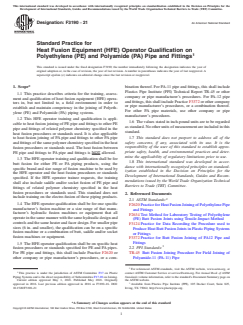
(Practice)Standard Practice for Heat Fusion Equipment (HFE) Operator Qualification on Polyethylene (PE) and Polyamide (PA) Pipe and Fittings
General Information
- Abstract
SIGNIFICANCE AND USE
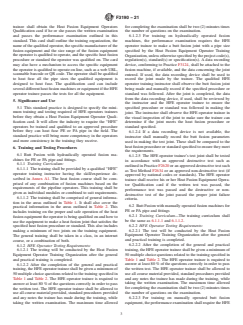
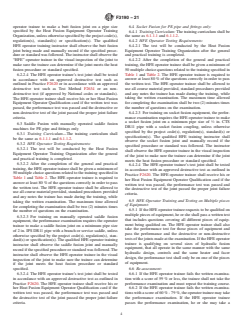
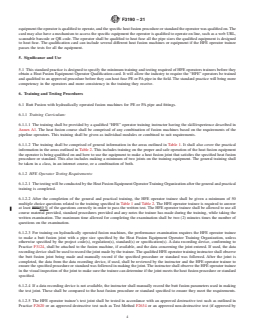
5.1 This standard practice is designed to specify the minimum training and testing required of HFE operators trainees before they obtain a Heat Fusion Equipment Operator Qualification card. It will allow the industry to require the “HFE” operators be trained and qualified to an approved procedure before they can heat fuse PE or PA pipe in the field. The standard practice will bring more competency in the operators and more consistency in the training they receive.
SCOPE
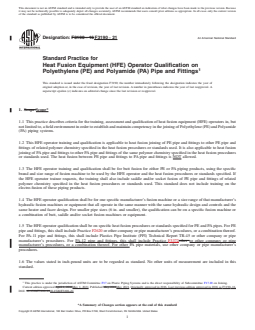
1.1 This practice describes criteria for the training, assessment and qualification of heat fusion equipment (HFE) operators in, but not limited to, a field environment in order to establish and maintain competency in the joining of Polyethylene (PE) and Polyamide (PA) piping systems.
1.2 This HFE operator training and qualification is applicable to heat fusion joining of PE pipe and fittings to other PE pipe and fittings of related polymer chemistry specified in the heat fusion procedures or standards used. It is also applicable to heat fusion joining of PA pipe and fittings to other PA pipe and fittings of the same polymer chemistry specified in the heat fusion procedures or standards used. The heat fusion between PE pipe and fittings to PA pipe and fittings is NOT allowed.
1.3 The HFE operator training and qualification shall be for butt fusion for either PE or PA piping products, using the specific brand and size range of fusion machine to be used by the HFE operator and the heat fusion procedures or standards specified. If the HFE operator trainee requests, the training shall also include saddle and/or socket fusion of PE pipe and fittings of related polymer chemistry specified in the heat fusion procedures or standards used. This standard does not include training on the electro-fusion of these piping products.
1.4 The HFE operator qualification shall be for one specific manufacturer’s fusion machine or a size range of that manufacturer’s hydraulic fusion machines or equipment that all operate in the same manner with the same hydraulic design and controls and the same heater and facer design. For smaller pipe sizes (6 in. and smaller), the qualification can be on a specific fusion machine or a combination of butt, saddle and/or socket fusion machines or equipment.
1.5 The HFE operator qualification shall be on specific heat fusion procedures or standards specified for PE and PA pipes. For PE pipe and fittings, this shall include Practice F2620 or other company or pipe manufacturer’s procedures, or a combination thereof. For PA-11 pipe and fittings, this shall include Plastics Pipe Institute (PPI) Technical Report TR-45 or other company or pipe manufacturer’s procedures. For PA-12 pipe and fittings, this shall include Practice F3372 or other company or pipe manufacturer’s procedures, or a combination thereof. For other PA pipe materials, use other company or pipe manufacturer’s procedures.
1.6 The values stated in inch-pound units are to be regarded as standard. No other units of measurement are included in this standard.
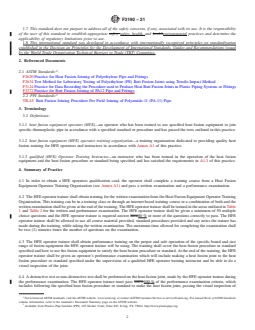
1.7 This standard does not purport to address all of the safety concerns, if any, associated with its use. It is the responsibility of the user of this standard to establish appropriate safety, health, and environmental practices and determine the applicability of regulatory limitations prior to use.
1.8 This international standard was developed in accordance with internationally recognized principles on standardization established in the Decision on Principles for the Development of International Standards, Guides and Recommendations issued by the World Trade Organization Technical Barriers to Trade (TBT) Committee.
- Status
- Published
- Publication Date
- 30-Apr-2021
- Technical Committee
- F17 - Plastic Piping Systems
- Drafting Committee
- F17.20 - Joining
Buy Documents
ASTM F3190-21 - Standard Practice for Heat Fusion Equipment (HFE) Operator Qualification on Polyethylene (PE) and Polyamide (PA) Pipe and Fittings
REDLINE ASTM F3190-21 - Standard Practice for Heat Fusion Equipment (HFE) Operator Qualification on Polyethylene (PE) and Polyamide (PA) Pipe and Fittings
Overview
ASTM F3190-21 establishes the minimum requirements for the qualification and training of Heat Fusion Equipment (HFE) operators working with Polyethylene (PE) and Polyamide (PA) pipe and fittings. Developed by ASTM Committee F17 on Plastic Piping Systems, this standard ensures that only trained and qualified personnel are authorized to perform heat fusion operations in the field. It applies to various fusion joining methods, including butt fusion, saddle fusion, and socket fusion, though it explicitly excludes electro-fusion.
By specifying detailed criteria for training, assessment, and ongoing operator competency, ASTM F3190-21 enhances the consistency, safety, and quality of heat-fused PE and PA piping system installations. This standard is relevant for utilities, contractors, manufacturers, and inspection organizations engaged in construction, maintenance, and repair of plastic piping systems.
Key Topics
HFE Operator Qualification:
Defines the structured process for obtaining a Heat Fusion Equipment Operator Qualification card, requiring successful completion of both written and performance examinations.Training Requirements:
Outlines the scope and content of operator training, including:- Health and safety protocols
- Safe equipment operation and maintenance
- Pipe and fitting handling and identification
- Detailed instruction on specified heat fusion procedures
Assessment Methods:
Specifies the use of both theoretical (minimum 50-question exam) and practical skills testing. Visual inspections and destructive or non-destructive testing are required for performance validation.Equipment Coverage:
Delineates qualification by specific equipment manufacturer and size range. Operators must train and test on the actual equipment and pipe sizes they intend to use in the field.Validity and Re-assessment:
The qualification card is valid for up to two years, after which retesting is required to maintain active status.
Applications
ASTM F3190-21 is widely adopted across industries where the reliable joining of thermoplastic pipe systems is critical. Key areas of application include:
Municipal Water and Gas Distribution:
Ensures safe and high-quality installations of PE and PA pipelines in public utilities.Industrial Piping Systems:
Applied in manufacturing, chemical, and process industries requiring competent fusion of plastic piping for fluids and gases.Field Construction Projects:
Mandates proper operator certification for contractors and installers performing heat fusion on-site, reducing the risk of joint failure and ensuring regulatory compliance.Operator Training and Certification Programs:
Used as the basis for developing and accrediting HFE operator training courses by manufacturers and specialized training organizations.Inspection and Quality Assurance:
Facilitates field audits and verification of operator credentials, supporting consistent best practices and safety standards.
Related Standards
To ensure comprehensive and up-to-date heat fusion practices, ASTM F3190-21 references several related standards, including:
- ASTM F2620 - Practice for Heat Fusion Joining of Polyethylene Pipe and Fittings
- ASTM F3124 - Practice for Data Recording the Procedure used to Produce Heat Butt Fusion Joints in Plastic Piping Systems or Fittings
- ASTM F3372 - Practice for Butt Fusion Joining of PA12 Pipe and Fittings
- Plastics Pipe Institute (PPI) TR-45 - Butt Fusion Joining Procedure for Field Joining of Polyamide-11 (PA-11) Pipe
- ASTM F2634 - Test Method for Laboratory Testing of Polyethylene (PE) Butt Fusion Joints using Tensile-Impact Method
For organizations committed to best practices in heat fusion operations, aligning with ASTM F3190-21 strengthens quality assurance, reduces operational risks, and supports ongoing workforce competency in plastic piping system installations.
Relations
- Effective Date
- 01-Nov-2023
- Effective Date
- 01-Mar-2015
- Effective Date
- 01-Nov-2013
- Effective Date
- 01-Aug-2012
- Effective Date
- 01-Nov-2011
- Effective Date
- 01-Dec-2010
- Effective Date
- 01-Dec-2009
- Effective Date
- 01-Mar-2007
- Effective Date
- 01-Dec-2006
Buy Documents
ASTM F3190-21 - Standard Practice for Heat Fusion Equipment (HFE) Operator Qualification on Polyethylene (PE) and Polyamide (PA) Pipe and Fittings
REDLINE ASTM F3190-21 - Standard Practice for Heat Fusion Equipment (HFE) Operator Qualification on Polyethylene (PE) and Polyamide (PA) Pipe and Fittings
Get Certified
Connect with accredited certification bodies for this standard

Institut za varilstvo d.o.o. (Welding Institute)
Slovenia's leading welding institute since 1952. ISO 3834, EN 1090, pressure equipment certification, NDT personnel, welder qualification. Only IIW Au
Sponsored listings
Frequently Asked Questions
ASTM F3190-21 is a standard published by ASTM International. Its full title is "Standard Practice for Heat Fusion Equipment (HFE) Operator Qualification on Polyethylene (PE) and Polyamide (PA) Pipe and Fittings". This standard covers: SIGNIFICANCE AND USE 5.1 This standard practice is designed to specify the minimum training and testing required of HFE operators trainees before they obtain a Heat Fusion Equipment Operator Qualification card. It will allow the industry to require the “HFE” operators be trained and qualified to an approved procedure before they can heat fuse PE or PA pipe in the field. The standard practice will bring more competency in the operators and more consistency in the training they receive. SCOPE 1.1 This practice describes criteria for the training, assessment and qualification of heat fusion equipment (HFE) operators in, but not limited to, a field environment in order to establish and maintain competency in the joining of Polyethylene (PE) and Polyamide (PA) piping systems. 1.2 This HFE operator training and qualification is applicable to heat fusion joining of PE pipe and fittings to other PE pipe and fittings of related polymer chemistry specified in the heat fusion procedures or standards used. It is also applicable to heat fusion joining of PA pipe and fittings to other PA pipe and fittings of the same polymer chemistry specified in the heat fusion procedures or standards used. The heat fusion between PE pipe and fittings to PA pipe and fittings is NOT allowed. 1.3 The HFE operator training and qualification shall be for butt fusion for either PE or PA piping products, using the specific brand and size range of fusion machine to be used by the HFE operator and the heat fusion procedures or standards specified. If the HFE operator trainee requests, the training shall also include saddle and/or socket fusion of PE pipe and fittings of related polymer chemistry specified in the heat fusion procedures or standards used. This standard does not include training on the electro-fusion of these piping products. 1.4 The HFE operator qualification shall be for one specific manufacturer’s fusion machine or a size range of that manufacturer’s hydraulic fusion machines or equipment that all operate in the same manner with the same hydraulic design and controls and the same heater and facer design. For smaller pipe sizes (6 in. and smaller), the qualification can be on a specific fusion machine or a combination of butt, saddle and/or socket fusion machines or equipment. 1.5 The HFE operator qualification shall be on specific heat fusion procedures or standards specified for PE and PA pipes. For PE pipe and fittings, this shall include Practice F2620 or other company or pipe manufacturer’s procedures, or a combination thereof. For PA-11 pipe and fittings, this shall include Plastics Pipe Institute (PPI) Technical Report TR-45 or other company or pipe manufacturer’s procedures. For PA-12 pipe and fittings, this shall include Practice F3372 or other company or pipe manufacturer’s procedures, or a combination thereof. For other PA pipe materials, use other company or pipe manufacturer’s procedures. 1.6 The values stated in inch-pound units are to be regarded as standard. No other units of measurement are included in this standard. 1.7 This standard does not purport to address all of the safety concerns, if any, associated with its use. It is the responsibility of the user of this standard to establish appropriate safety, health, and environmental practices and determine the applicability of regulatory limitations prior to use. 1.8 This international standard was developed in accordance with internationally recognized principles on standardization established in the Decision on Principles for the Development of International Standards, Guides and Recommendations issued by the World Trade Organization Technical Barriers to Trade (TBT) Committee.
SIGNIFICANCE AND USE 5.1 This standard practice is designed to specify the minimum training and testing required of HFE operators trainees before they obtain a Heat Fusion Equipment Operator Qualification card. It will allow the industry to require the “HFE” operators be trained and qualified to an approved procedure before they can heat fuse PE or PA pipe in the field. The standard practice will bring more competency in the operators and more consistency in the training they receive. SCOPE 1.1 This practice describes criteria for the training, assessment and qualification of heat fusion equipment (HFE) operators in, but not limited to, a field environment in order to establish and maintain competency in the joining of Polyethylene (PE) and Polyamide (PA) piping systems. 1.2 This HFE operator training and qualification is applicable to heat fusion joining of PE pipe and fittings to other PE pipe and fittings of related polymer chemistry specified in the heat fusion procedures or standards used. It is also applicable to heat fusion joining of PA pipe and fittings to other PA pipe and fittings of the same polymer chemistry specified in the heat fusion procedures or standards used. The heat fusion between PE pipe and fittings to PA pipe and fittings is NOT allowed. 1.3 The HFE operator training and qualification shall be for butt fusion for either PE or PA piping products, using the specific brand and size range of fusion machine to be used by the HFE operator and the heat fusion procedures or standards specified. If the HFE operator trainee requests, the training shall also include saddle and/or socket fusion of PE pipe and fittings of related polymer chemistry specified in the heat fusion procedures or standards used. This standard does not include training on the electro-fusion of these piping products. 1.4 The HFE operator qualification shall be for one specific manufacturer’s fusion machine or a size range of that manufacturer’s hydraulic fusion machines or equipment that all operate in the same manner with the same hydraulic design and controls and the same heater and facer design. For smaller pipe sizes (6 in. and smaller), the qualification can be on a specific fusion machine or a combination of butt, saddle and/or socket fusion machines or equipment. 1.5 The HFE operator qualification shall be on specific heat fusion procedures or standards specified for PE and PA pipes. For PE pipe and fittings, this shall include Practice F2620 or other company or pipe manufacturer’s procedures, or a combination thereof. For PA-11 pipe and fittings, this shall include Plastics Pipe Institute (PPI) Technical Report TR-45 or other company or pipe manufacturer’s procedures. For PA-12 pipe and fittings, this shall include Practice F3372 or other company or pipe manufacturer’s procedures, or a combination thereof. For other PA pipe materials, use other company or pipe manufacturer’s procedures. 1.6 The values stated in inch-pound units are to be regarded as standard. No other units of measurement are included in this standard. 1.7 This standard does not purport to address all of the safety concerns, if any, associated with its use. It is the responsibility of the user of this standard to establish appropriate safety, health, and environmental practices and determine the applicability of regulatory limitations prior to use. 1.8 This international standard was developed in accordance with internationally recognized principles on standardization established in the Decision on Principles for the Development of International Standards, Guides and Recommendations issued by the World Trade Organization Technical Barriers to Trade (TBT) Committee.
ASTM F3190-21 is classified under the following ICS (International Classification for Standards) categories: 23.040.20 - Plastics pipes; 23.040.45 - Plastics fittings. The ICS classification helps identify the subject area and facilitates finding related standards.
ASTM F3190-21 has the following relationships with other standards: It is inter standard links to ASTM F3124-23a, ASTM F3124-15, ASTM F2620-13, ASTM F2620-12, ASTM F2620-11, ASTM F2634-10, ASTM F2620-09, ASTM F2634-07, ASTM F2620-06. Understanding these relationships helps ensure you are using the most current and applicable version of the standard.
ASTM F3190-21 is available in PDF format for immediate download after purchase. The document can be added to your cart and obtained through the secure checkout process. Digital delivery ensures instant access to the complete standard document.
Standards Content (Sample)
This international standard was developed in accordance with internationally recognized principles on standardization established in the Decision on Principles for the
Development of International Standards, Guides and Recommendations issued by the World Trade Organization Technical Barriers to Trade (TBT) Committee.
Designation:F3190 −21 An American National Standard
Standard Practice for
Heat Fusion Equipment (HFE) Operator Qualification on
Polyethylene (PE) and Polyamide (PA) Pipe and Fittings
This standard is issued under the fixed designation F3190; the number immediately following the designation indicates the year of
original adoption or, in the case of revision, the year of last revision. A number in parentheses indicates the year of last reapproval. A
superscript epsilon (´) indicates an editorial change since the last revision or reapproval.
1. Scope* bination thereof. For PA-11 pipe and fittings, this shall include
Plastics Pipe Institute (PPI) Technical Report TR-45 or other
1.1 This practice describes criteria for the training, assess-
company or pipe manufacturer’s procedures. For PA-12 pipe
ment and qualification of heat fusion equipment (HFE) opera-
and fittings, this shall include Practice F3372 or other company
tors in, but not limited to, a field environment in order to
or pipe manufacturer’s procedures, or a combination thereof.
establish and maintain competency in the joining of Polyeth-
For other PA pipe materials, use other company or pipe
ylene (PE) and Polyamide (PA) piping systems.
manufacturer’s procedures.
1.2 This HFE operator training and qualification is appli-
1.6 The values stated in inch-pound units are to be regarded
cable to heat fusion joining of PE pipe and fittings to other PE
as standard. No other units of measurement are included in this
pipe and fittings of related polymer chemistry specified in the
standard.
heat fusion procedures or standards used. It is also applicable
1.7 This standard does not purport to address all of the
to heat fusion joining of PA pipe and fittings to other PA pipe
safety concerns, if any, associated with its use. It is the
and fittings of the same polymer chemistry specified in the heat
responsibility of the user of this standard to establish appro-
fusion procedures or standards used. The heat fusion between
priate safety, health, and environmental practices and deter-
PE pipe and fittings to PA pipe and fittings is NOT allowed.
mine the applicability of regulatory limitations prior to use.
1.3 The HFE operator training and qualification shall be for
1.8 This international standard was developed in accor-
butt fusion for either PE or PA piping products, using the
dance with internationally recognized principles on standard-
specific brand and size range of fusion machine to be used by
ization established in the Decision on Principles for the
the HFE operator and the heat fusion procedures or standards
Development of International Standards, Guides and Recom-
specified. If the HFE operator trainee requests, the training
mendations issued by the World Trade Organization Technical
shall also include saddle and/or socket fusion of PE pipe and
Barriers to Trade (TBT) Committee.
fittings of related polymer chemistry specified in the heat
fusion procedures or standards used. This standard does not
2. Referenced Documents
include training on the electro-fusion of these piping products.
2.1 ASTM Standards:
1.4 The HFE operator qualification shall be for one specific
F2620 Practice for Heat Fusion Joining of Polyethylene Pipe
manufacturer’s fusion machine or a size range of that manu-
and Fittings
facturer’s hydraulic fusion machines or equipment that all
F2634 Test Method for Laboratory Testing of Polyethylene
operateinthesamemannerwiththesamehydraulicdesignand
(PE) Butt Fusion Joints using Tensile-Impact Method
controls and the same heater and facer design. For smaller pipe
F3124 Practice for Data Recording the Procedure used to
sizes (6 in. and smaller), the qualification can be on a specific
Produce Heat Butt Fusion Joints in Plastic Piping Systems
fusion machine or a combination of butt, saddle and/or socket
or Fittings
fusion machines or equipment.
F3372 Practice for Butt Fusion Joining of PA12 Pipe and
Fittings
1.5 The HFE operator qualification shall be on specific heat
fusion procedures or standards specified for PE and PA pipes. 2.2 PPI Standards:
TR-45 Butt Fusion Joining Procedure For Field Joining of
For PE pipe and fittings, this shall include Practice F2620 or
other company or pipe manufacturer’s procedures, or a com- Polyamide-11 (PA-11) Pipe
For referenced ASTM standards, visit the ASTM website, www.astm.org, or
This practice is under the jurisdiction of ASTM Committee F17 on Plastic contact ASTM Customer Service at service@astm.org. For Annual Book of ASTM
Piping Systems and is the direct responsibility of Subcommittee F17.20 on Joining. Standards volume information, refer to the standard’s Document Summary page on
Current edition approved May 1, 2021. Published May 2021. Originally the ASTM website.
approved in 2016. Last previous edition approved in 2016 as F3190–16. DOI: Available from Plastics Pipe Institute (PPI), 105 Decker Court, Suite 825,
10.1520/F3190–21 Irving, TX 75062, http://www.plasticpipe.org.
*A Summary of Changes section appears at the end of this standard
Copyright © ASTM International, 100 Barr Harbor Drive, PO Box C700, West Conshohocken, PA 19428-2959. United States
F3190−21
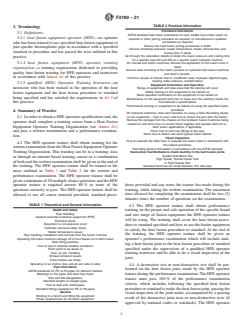
TABLE 2 Practical Information
3. Terminology
Procedure Information
3.1 Definitions:
ASTM standard heat fusion procedures for butt, saddle and socket fusion as
3.1.1 heat fusion equipment operator (HFE)—an operator
required or other joining procedure as required, or manufacturer’s qualified
procedures as required
who has been trained to use specified heat fusion equipment to
Discuss the heat fusion joining procedures in detail
join specific thermoplastic pipe in accordance with a specified
Discuss interfacial pressure, heater temperature, heater removal time and
standard or procedure and has passed the tests outlined in this
cooling time in detail
Go through the calculation details to obtain the fusion pressure and cooling time
practice.
for a specific pipe OD and DR on a specific fusion hydraulic machine
3.1.2 heat fusion equipment (HFE) operator training
On manual butt fusion machines, discuss the application of the fusion force in
detail
organization—a training organization dedicated to providing
Discuss data recording of the fusion process on hydraulic butt fusion machines
quality heat fusion training for HFE operators and instructors
and what it records.
in accordance with Annex A1 of this practice.
Common causes of failures that is, insufficient soak, improper alignment/gap,
heating under pressure, contamination
3.1.3 qualified (HFE) Operator Training Instructor—an
Equipment Information and Operation
instructor who has been trained in the operation of the heat Range of equipment and pipe sizes that the training will cover
Safety training on the equipment to be trained on
fusion equipment and the heat fusion procedure or standard
Basic operation information on the equipment to be trained on
being specified and has satisfied the requirements in A1.3 of
Maintenance on the equipment and how to make sure the machine meets the
this practice. manufacturer’s specifications
Performance training on equipment to be trained on using the specified fusion
procedure
4. Summary of Practice
On hydraulic machines, train each operator on using a Data Recording device
on the equipment – how to use it and how to review the joint after the fusion.
4.1 InordertoobtainaHFEoperatorsqualificationcard,the
Remove the carriage from the chassis on the hydraulic fusion machines being
operator shall complete a training course from a Heat Fusion
trained on and show how to connect them together and operate them for in-
Equipment Operator Training Organization (see Annex A1)
ditch fusion applications, if applicable.
Show how to butt fuse fittings to the pipe
and pass a written examination and a performance examina-
Teach how to detect and avoid typical fusion defects
tion.
Visual Inspection
How to evaluate the Data How to evaluate the fusion bead in accordance with
4.2 The HFE operator trainee shall obtain training for the
the trained procedure
written examination from the Heat Fusion Equipment Operator
Recording Device information in accordance with the ASTM standard
Training Organization. This training can be in a training class Destructive Test Methods to check ductility in the butt fusion joints
Guided Side Bend Test
or through an internet based training course or a combination
High Speed, Tensile Impact Test
of both and the written examination shall be given at the end of
In Field Tensile Test
the training. The HFE operator trainee shall be trained in the Standard bend test for small diameter, thin wall pipe
areas outlined in Table 1 and Table 2 for the written and
performance examination. The HFE operator trainee shall be
given a minimum of 50 multiple choice questions and the HFE
dures provided and any notes the trainee has made during the
operator trainee is required answer 80 % or more of the
training, while taking the written examination. The maximum
questions correctly to pass. The HFE operator trainee shall be
time allowed for completing the examination shall be two (2)
allowed to use all course material provided, standard proce-
minutes times the number of questions on the examination.
TABLE 1 Theoretical and General Information
4.3 The HFE operator trainee shall obtain performance
Health and Safety
training on the proper and safe operation of the specific brand
Pipe Handling
and size range of fusion equipment the HFE operator trainee
General personal protective equipment (PPE)
will be using. The training shall cover the heat fusion proce-
Electrical shock
Equipment is not explosion proof
dure or standard specified and how to use the fusion equipment
Hydraulic pressure safety topics
to satisfy the heat fusion procedure or standard. At the end of
Heater temperature issues
the training, the HFE operator trainee shall be given an
Pipe handling, installation and removal from the fusion machine
Operating the fusion machine carriage off of the chassis for in-ditch fusion
operator’s performance examination which will include mak-
Safe lifting practices
ing a heat fusion joint to the heat fusion procedure or standard
How to fuse in adverse weather conditions
specified under the supervision of a qualified HFE operator
Pinch point to be aware of
Fuel, oil, etc. handling
training instructor and be able to do a visual inspection of the
Exhaust emission issues
joint.
Facer blades are sharp
Operating on an incline (fore and aft and side to side)
4.4 A destructive test or non-destructive test shall be per-
Pipe Information
formed on the heat fusion joint, made by the HFE operator
ASTM standards for PE or PA pipes for different markets
Markings on the pipes and what they mean trainee during the performance examination.The HFE operator
Size and DR designations
trainee must pass 100 % of the performance examination
Standard lengths of straight pipes
criteria, which includes following the specified heat fusion
How to deal with coiled pipes
Standard fittings available for PE or PA pipes procedure or standard to make the heat fusion joint, passing the
General
visual inspection of the joint made, accompanied by a passing
Working in a trench and lifting the equipment
result of the destructive joint tests or non-destructive tests (if
Power requirements for all fusion equipment
approved by national codes or standards). The HFE operator
F3190−21
trainee shall obtain the Heat Fusion Equipment Operators for completing the examination shall be two (2) minutes times
Qualification card if he or she passes the written examination the number of questions on the examination.
and passes the performance examination outlined in this
6.1.2.3 For training on hydraulically operated fusion
standard. This card shall outline the training organization, the machines, the performance examination requires the HFE
name of the qualified operator, the specific manufacturer of the
operator trainee to make a butt fusion joint with a pipe size
fusion equipment and the size range of the fusion equipment specified by the Heat Fusion Equipment Operator Training
the operator is qualified to operate, and the specific heat fusion
Organization,unlessotherwisespecifiedbytheprojectcode(s),
procedure or standard the operator was qualified on. The card regulation(s), standard(s) or specification(s). A data recording
may also have a mechanism to access the specific equipment
device, conforming to Practice F3124, shall be attached to the
the operator is qualified to operate on line, such as a web URL, fusion machine, if available, and the data concerning the joint
scannable barcode or QR code. The operator shall be qualified
entered. If used, the data recording device shall be used to
to heat fuse all the pipe sizes the qualified equipment is record the joint made by the trainee. The qualified HFE
designed to heat fuse. The qualification card can include
operator training instructor shall observe the butt fusion joint
several different heat fusion machines or equipment if the HFE being made and manually record if the specified procedure or
operator trainee passes the tests for all the equipment.
standard was followed. After the joint is completed, the data
from the data recording device, if used, shall be reviewed by
5. Significance and Use
the instructor and the HFE operator trainee to ensure the
5.1 This standard practice is designed to specify the mini-
specified procedure or standard was followed in making the
mum training and testing required of HFE operators trainees
joint. The instructor shall observe the HFE operator trainee in
before they obtain a Heat Fusion Equipment Operator Quali-
the visual inspection of the joint to make sure the trainee can
fication card. It will allow the industry to require the “HFE”
determine if the joint meets the heat fusion procedure or
operators be trained and qualified to an approved procedure
standard specified.
before they can heat fuse PE or PA pipe in the field. The
6.1.2.4 If a data recording device is not available, the
standard practice will bring more competency in the operators
instructor shall manually record the butt fusion parameters
and more consistency in the training they receive.
used in making the test joint. These shall be compared to the
heat fusion procedure or standard specified to ensure they meet
6. Training and Testing Procedures
the requirements.
6.1 Butt Fusion with hydraulically operated fusion ma-
6.1.2.5 The HFE operator trainee’s test joint shall be tested
chines for PE or PA pipe and fittings.
in accordance with an approved destructive test such as
6.1.1 Training Curriculum:
outlined in Practice F2620 or an approved destructive test such
6.1.1.1 The training shall be provided by a qualified “HFE”
as Test Method F2634 or an approved non-destructive test (if
operator training instructor having the skill/experience de-
approved by national codes or standards). The HFE operator
scribed in Annex A1. The heat fusion course shall be com-
trainee shall receive his or her Heat Fusion Equipment Opera-
prised of any combination of fusion machines based on the
tor Qualification card if the written test was passed, the
requirements of the pipeline operators. This training shall be
performance test was passed and the destructive or non-
given as individual modules or combined to suit requirements.
destructive test of the joint passed the proper joint failure
6.1.1.2 The training shall be comprised of general informa-
criteria.
tion in the areas outlined in Table 1. It shall also cover the
6.2 Butt Fusion with manually operated fusion machines for
practical information in the areas outlined in Table 2. This
PE or PA pipe and fittings
includes training on the proper and safe operation of the heat
6.2.1 Training Curriculum—The training curriculum shall
fusion equipment the operator is being qualified on and how to
be the same as 6.1.1.1 and 6.1.1.2.
use the equipment to make a heat fusion joint that satisfies the
6.2.2 HFE Operator Testing Req
...
This document is not an ASTM standard and is intended only to provide the user of an ASTM standard an indication of what changes have been made to the previous version. Because
it may not be technically possible to adequately depict all changes accurately, ASTM recommends that users consult prior editions as appropriate. In all cases only the current version
of the standard as published by ASTM is to be considered the official document.
Designation: F3190 − 16 F3190 − 21 An American National Standard
Standard Practice for
Heat Fusion Equipment (HFE) Operator Qualification on
Polyethylene (PE) and Polyamide (PA) Pipe and Fittings
This standard is issued under the fixed designation F3190; the number immediately following the designation indicates the year of
original adoption or, in the case of revision, the year of last revision. A number in parentheses indicates the year of last reapproval. A
superscript epsilon (´) indicates an editorial change since the last revision or reapproval.
1. Scope Scope*
1.1 This practice describes criteria for the training, assessment and qualification of heat fusion equipment (HFE) operators in, but
not limited to, a field environment in order to establish and maintain competency in the joining of Polyethylene (PE) and Polyamide
(PA) piping systems.
1.2 This HFE operator training and qualification is applicable to heat fusion joining of PE pipe and fittings to other PE pipe and
fittings of related polymer chemistry specified in the heat fusion procedures or standards used. It is also applicable to heat fusion
joining of PA pipe and fittings to other PA pipe and fittings of the same polymer chemistry specified in the heat fusion procedures
or standards used. The heat fusion between PE pipe and fittings to PA pipe and fittings is NOT allowed.
1.3 The HFE operator training and qualification shall be for butt fusion for either PE or PA piping products, using the specific
brand and size range of fusion machine to be used by the HFE operator and the heat fusion procedures or standards specified. If
the HFE operator trainee requests, the training shall also include saddle and/or socket fusion of PE pipe and fittings of related
polymer chemistry specified in the heat fusion procedures or standards used. This standard does not include training on the
electro-fusion of these piping products.
1.4 The HFE operator qualification shall be for one specific manufacturer’s fusion machine or a size range of that manufacturer’s
hydraulic fusion machines or equipment that all operate in the same manner with the same hydraulic design and controls and the
same heater and facer design. For smaller pipe sizes (6 in. and smaller), the qualification can be on a specific fusion machine or
a combination of butt, saddle and/or socket fusion machines or equipment.
1.5 The HFE operator qualification shall be on specific heat fusion procedures or standards specified for PE and PA pipes. For PE
pipe and fittings, this shall include Practice F2620 or other company or pipe manufacturer’s procedures, or a combination thereof.
For PA-11 pipe and fittings, this shall include Plastics Pipe Institute (PPI) Technical Report TR-45 or other company or pipe
manufacturer’s procedures. For PA-12 pipe and fittings, this shall include Practice F3372other or other company or pipe
manufacturer’s procedures, or a combination thereof. For other PA pipe materials, use other company or pipe manufacturer’s
procedures.
1.6 The values stated in inch-pound units are to be regarded as standard. No other units of measurement are included in this
standard.
This practice is under the jurisdiction of ASTM Committee F17 on Plastic Piping Systems and is the direct responsibility of Subcommittee F17.20 on Joining.
Current edition approved April 1, 2016May 1, 2021. Published May 2016May 2021. Originally approved in 2016. Last previous edition approved in 2016 as F3190–16.
DOI: 10.1520/F3190–1610.1520/F3190–21
*A Summary of Changes section appears at the end of this standard
Copyright © ASTM International, 100 Barr Harbor Drive, PO Box C700, West Conshohocken, PA 19428-2959. United States
F3190 − 21
1.7 This standard does not purport to address all of the safety concerns, if any, associated with its use. It is the responsibility
of the user of this standard to establish appropriate safety safety, health, and healthenvironmental practices and determine the
applicability of regulatory limitations prior to use.
1.8 This international standard was developed in accordance with internationally recognized principles on standardization
established in the Decision on Principles for the Development of International Standards, Guides and Recommendations issued
by the World Trade Organization Technical Barriers to Trade (TBT) Committee.
2. Referenced Documents
2.1 ASTM Standards:
F2620 Practice for Heat Fusion Joining of Polyethylene Pipe and Fittings
F2634 Test Method for Laboratory Testing of Polyethylene (PE) Butt Fusion Joints using Tensile-Impact Method
F3124 Practice for Data Recording the Procedure used to Produce Heat Butt Fusion Joints in Plastic Piping Systems or Fittings
F3372 Practice for Butt Fusion Joining of PA12 Pipe and Fittings
2.2 PPI Standards:
TR-45 Butt Fusion Joining Procedure For Field Joining of Polyamide-11 (PA-11) Pipe
3. Terminology
3.1 Definitions:
3.1.1 heat fusion equipment operator (HFE)—an operator who has been trained to use specified heat fusion equipment to join
specific thermoplastic pipe in accordance with a specified standard or procedure and has passed the tests outlined in this practice.
3.1.2 heat fusion equipment (HFE) operator training organization—a training organization dedicated to providing quality heat
fusion training for HFE operators and instructors in accordance with Annex A1 of this practice.
3.1.3 qualified (HFE) Operator Training Instructor—an instructor who has been trained in the operation of the heat fusion
equipment and the heat fusion procedure or standard being specified and has satisfied the requirements in A1.3 of this practice.
4. Summary of Practice
4.1 In order to obtain a HFE operators qualification card, the operator shall complete a training course from a Heat Fusion
Equipment Operator Training Organization (see Annex A1) and pass a written examination and a performance examination.
4.2 The HFE operator trainee shall obtain training for the written examination from the Heat Fusion Equipment Operator Training
Organization. This training can be in a training class or through an internet based training course or a combination of both and the
written examination shall be given at the end of the training. The HFE operator trainee shall be trained in the areas outlined in Table
1 and Table 2 for the written and performance examination. The HFE operator trainee shall be given a minimum of 50 multiple
choice questions and the HFE operator trainee is required answer 80%80 % or more of the questions correctly to pass. The HFE
operator trainee shall be allowed to use all course material provided, standard procedures provided and any notes the trainee has
made during the training, while taking the written examination. The maximum time allowed for completing the examination shall
be two (2) minutes times the number of questions on the examination.
4.3 The HFE operator trainee shall obtain performance training on the proper and safe operation of the specific brand and size
range of fusion equipment the HFE operator trainee will be using. The training shall cover the heat fusion procedure or standard
specified and how to use the fusion equipment to satisfy the heat fusion procedure or standard. At the end of the training, the HFE
operator trainee shall be given an operator’s performance examination which will include making a heat fusion joint to the heat
fusion procedure or standard specified under the supervision of a qualified HFE operator training instructor and be able to do a
visual inspection of the joint.
4.4 A destructive test or non-destructive test shall be performed on the heat fusion joint, made by the HFE operator trainee during
the performance examination. The HFE operator trainee must pass 100%100 % of the performance examination criteria, which
includes following the specified heat fusion procedure or standard to make the heat fusion joint, passing the visual inspection of
For referenced ASTM standards, visit the ASTM website, www.astm.org, or contact ASTM Customer Service at service@astm.org. For Annual Book of ASTM Standards
volume information, refer to the standard’s Document Summary page on the ASTM website.
Available from Plastics Pipe Institute (PPI), 105 Decker Court, Suite 825, Irving, TX 75062, http://www.plasticpipe.org.
F3190 − 21
TABLE 1 Theoretical and General Information
Health and Safety
Pipe Handling
General personal protective equipment (PPE)
Electrical shock
Equipment is not explosion proof
Hydraulic pressure safety topics
Heater temperature issues
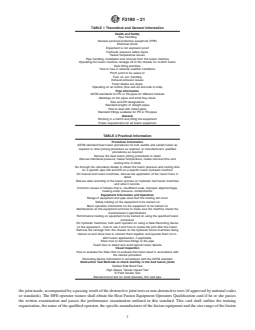
Pipe handling, installation and removal from the fusion machine
Operating the fusion machine carriage off of the chassis for in-ditch fusion
Safe lifting practices
How to fuse in adverse weather conditions
Pinch point to be aware of
Fuel, oil, etc. handling
Exhaust emission issues
Facer blades are sharp
Operating on an incline (fore and aft and side to side)
Pipe Information
ASTM standards for PE or PA pipes for different markets
Markings on the pipes and what they mean
Size and DR designations
Standard lengths of straight pipes
How to deal with coiled pipes
Standard fittings available for PE or PA pipes
General
Working in a trench and lifting the equipment
Power requirements for all fusion equipment
TABLE 2 Practical Information
Procedure Information
ASTM standard heat fusion procedures for butt, saddle and socket fusion as
required or other joining procedure as required, or manufacturer’s qualified
procedures as required
Discuss the heat fusion joining procedures in detail
Discuss interfacial pressure, heater temperature, heater removal time and
cooling time in detail
Go through the calculation details to obtain the fusion pressure and cooling time
for a specific pipe OD and DR on a specific fusion hydraulic machine
On manual butt fusion machines, discuss the application of the fusion force in
detail
Discuss data recording of the fusion process on hydraulic butt fusion machines
and what it records.
Common causes of failures that is, insufficient soak, improper alignment/gap,
heating under pressure, contamination
Equipment Information and Operation
Range of equipment and pipe sizes that the training will cover
Safety training on the equipment to be trained on
Basic operation information on the equipment to be trained on
Maintenance on the equipment and how to make sure the machine meets the
manufacturer’s specifications
Performance training on equipment to be trained on using the specified fusion
procedure
On hydraulic machines, train each operator on using a Data Recording device
on the equipment – how to use it and how to review the joint after the fusion.
Remove the carriage from the chassis on the hydraulic fusion machines being
trained on and show how to connect them together and operate them for in-
ditch fusion applications, if applicable.
Show how to butt fuse fittings to the pipe
Teach how to detect and avoid typical fusion defects
Visual Inspection
How to evaluate the Data How to evaluate the fusion bead in accordance with
the trained procedure
Recording Device information in accordance with the ASTM standard
Destructive Test Methods to check ductility in the butt fusion joints
Guided Side Bend Test
High Speed, Tensile Impact Test
In Field Tensile Test
Standard bend test for small diameter, thin wall pipe
the joint made, accompanied by a passing result of the destructive joint tests or non-destructive tests (if approved by national codes
or standards). The HFE operator trainee shall obtain the Heat Fusion Equipment Operators Qualification card if he or she passes
the written examination and passes the performance examination outlined in this standard. This card shall outline the training
organization, the name of the qualified operator, the specific manufacturer of the fusion equipment and the size range of the fusion
F3190 − 21
equipment the operator is qualified to operate, and the specific heat fusion procedure or standard the operator was qualified on. The
card may also have a mechanism to access the specific equipment the operator is qualified to operate on line, such as a web URL,
scannable barcode or QR code. The operator shall be qualified to heat fuse all the pipe sizes the qualified equipment is designed
to heat fuse. The qualification card can include several different heat fusion machines or equipment if the HFE operator trainee
passes the tests for all the equipment.
5. Significance and Use
5.1 This standard practice is designed to specify the minimum training and testing required of HFE operators trainees before they
obtain a Heat Fusion Equipment Operator Qualification card. It will allow the industry to require the “HFE” operators be trained
and qualified to an approved procedure before they can heat fuse PE or PA pipe in the field. The standard practice will bring more
competency in the operators and more consistency in the training they receive.
6. Training and Testing Procedures
6.1 Butt Fusion with hydraulically operated fusion machines for PE or PA pipe and fittings.
6.1.1 Training Curriculum:
6.1.1.1 The training shall be provided by a qualified “HFE” operator training instructor having the skill/experience described in
Annex A1. The heat fusion course shall be comprised of any combination of fusion machines based on the requirements of the
pipeline operators. This training shall be given as individual modules or combined to suit requirements.
6.1.1.2 The training shall be comprised of general information in the areas outlined in Table 1. It shall also cover the practical
information in the areas outlined in Table 2. This includes training on the proper and safe operation of the heat fusion equipment
the operator is being qualified on and how to use the equipment to make a heat fusion joint that satisfies the specified heat fusion
procedure or standard. This also includes making a minimum of two joints on the training equipment. The general training shall
be taken in a class, in an internet course, or a combination of both.
6.1.2 HFE Operator Testing Requirements:
6.1.2.1 The testing will be conducted by the Heat Fusion Equipment Operator Training Organization after the general and practical
training is completed.
6.1.2.2 After the completion of the general and practical training, the HFE operator trainee shall be given a minimum of 50
multiple choice questions related to the training specified in Table 1 and Table 2. The HFE operator trainee is required to answer
at least 80%80 % of the questions correctly in order to pass the written test. The HFE operator trainee shall be allowed to use all
course material provided, standard procedures provided and any notes the trainee has made during the training, while taking the
written examination. The maximum time allowed for completing the examination shall be two (2) minutes times the number of
questions on the examination.
6.1.2.3 For training on hydraulically operated fusion machines, the performance examination requires the HFE operator trainee
to make a butt fusion joint with a pipe size specified by the Heat Fusion Equipment Operator Training Organization, unless
otherwise specified by the project code(s), regulation(s), standard(s) or specification(s). A data recording device, conforming to
Practice F3124, shall be attached to the fusion machine, if available, and the data concerning the joint entered. If used, the data
recording device shall be used to record the joint made by the trainee. The qualified HFE operator training instructor shall observe
the butt fusion joint being made and manually record if the specified procedure or standard was followed. After the joint is
completed, the data from the data recording device, if used, shall be reviewed by the instructor and the HFE operator trainee to
ensure the specified procedure or standard was followed in making the joint. The instructor shall observe the HFE operator trainee
in the visual inspection of the joint to make sure the trainee can determine if the joint meets the heat fusion procedure or standard
specified.
...