

ASTM E3195-19
(Guide)Standard Guide for Body Armor Program Management
General Information
- Abstract
SIGNIFICANCE AND USE
4.1 This guide is intended for use by law enforcement, corrections, or other public safety agencies in planning and managing a body armor program. The overarching objective is officer safety and assisting with risk management.
4.2 This guide was developed via a collaborative partnership between local, state, and federal public safety agencies, body armor wearers, vendors, fitters, and unions (for example, Fraternal Order of Police). The purpose is to guide law enforcement, corrections, or other public safety agencies in planning and managing a body armor program.
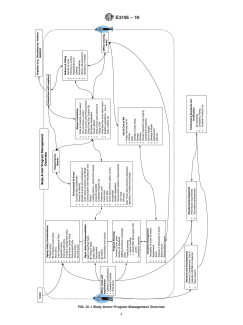
4.3 A graphical overview showing all aspects and interrelated activities of planning and managing a body armor program is provided in Appendix X1 of this guide.
SCOPE
1.1 The purpose of this guide is to assist law enforcement, corrections, or other public safety agencies in planning and managing a body armor program.
1.2 This guide addresses ballistic-resistant, stab-resistant, multi-threat, combination, concealable soft, hard plate, and tactical body armor.
1.3 This guide specifically includes the National Institute of Justice (NIJ) body armor program as a provider of performance standards, guidance, and certification for body armor. While many countries recognize the NIJ body armor program, applicable certification programs of other countries should be consulted.
1.4 This international standard was developed in accordance with internationally recognized principles on standardization established in the Decision on Principles for the Development of International Standards, Guides and Recommendations issued by the World Trade Organization Technical Barriers to Trade (TBT) Committee.
- Status
- Published
- Publication Date
- 31-Jul-2019
- Technical Committee
- E54 - Homeland Security Applications
- Drafting Committee
- E54.04 - Public Safety Equipment
Overview
ASTM E3195-19: Standard Guide for Body Armor Program Management provides a comprehensive framework for law enforcement, corrections, and other public safety agencies to plan, implement, and manage effective body armor programs. Developed collaboratively by local, state, and federal agencies, industry stakeholders, unions, and expert practitioners, this standard focuses on officer safety, risk management, and organizational best practices for body armor deployment. The guide addresses the full range of body armor types-ballistic-resistant, stab-resistant, multi-threat, combination, soft, hard plate, and tactical body armor-ensuring versatile applicability across varying operational needs.
Key Topics
- Program Policy Development: Guidance for agencies to establish policies covering all aspects of body armor management, including procurement, use, maintenance, and replacement.
- Roles and Responsibilities: Recommendations for assigning program leads, managers, procurement officials, fitters/measurers, training officers, and records managers to ensure accountability and efficient operations.
- Body Armor Selection: Reference to NIJ standards and use of the NIJ Compliant Products Lists (CPLs) to ensure armor meets nationally recognized certification and performance benchmarks.
- Measurement and Fitting: Emphasis on accurate wearer measurement and fitting practices, with specific references to ASTM E3003 and tailored approaches based on gender and officer needs.
- Inventory Management: Best practices for tracking, issuing, and maintaining body armor equipment, including documentation, replacement, recall, and disposal procedures.
- Training and Education: Recommendations for vendor-supported and agency-led training covering selection, fit, use, care, and record-keeping.
Applications
The ASTM E3195-19 standard is invaluable for:
- Law Enforcement Agencies: Enhancing officer safety by implementing structured body armor programs aligned with recognized standards.
- Corrections Institutions: Managing protective equipment for staff safety in high-risk environments.
- Public Safety Organizations: Establishing consistent policies and procedures for protective equipment, including wear protocols, reporting, and maintenance.
- Procurement Officials: Utilizing cooperative purchasing programs to acquire NIJ-certified body armor efficiently and economically.
- Union Representatives and Labor Groups: Engaging constructively in policy formation, ensuring member needs and safety are addressed.
- Training Officers and Safety Managers: Delivering required education and hands-on instruction to ensure proper body armor use and maintenance.
The guide further recommends agencies leverage available funding programs and spread procurement and replacement cycles to improve budget stability and operational readiness.
Related Standards
- NIJ Standard-0101.06: Ballistic Resistance of Body Armor – Defines performance requirements and testing methods for ballistic body armor.
- NIJ Selection and Application Guide 0101.06: Offers practical guidance for selecting appropriate ballistic-resistant armor.
- ASTM E3003: Practice for Body Armor Wearer Measurement and Fitting – Provides detailed guidance on fitting procedures and documentation.
- ASTM E3005: Terminology for Body Armor – Standardizes critical technical terms for consistent program management and communication.
- IACP Body Armor Model Policy: Templates and best practices for policy development, referenced for agency alignment.
Practical Value
Implementing ASTM E3195-19 supports agencies in reducing risk, enhancing workforce safety, and ensuring compliance with recognized performance and documentation standards. By adopting this framework, organizations can:
- Standardize body armor program management
- Maximize the lifespan and efficacy of equipment
- Ensure traceability and accountability for issued armor
- Empower staff through training and clear policies
- Streamline procurement and inventory processes
This standard is recognized internationally and aligns with World Trade Organization principles, making it a preferred resource for agencies seeking effective, modern body armor program management.
Key Keywords: body armor program management, law enforcement safety, ballistic-resistant armor, NIJ standards, body armor procurement, inventory management, ASTM E3195-19.
Relations
- Effective Date
- 01-Apr-2024
- Effective Date
- 01-Aug-2020
- Effective Date
- 01-Feb-2020
- Effective Date
- 01-Oct-2018
- Effective Date
- 01-Dec-2015
- Effective Date
- 01-Nov-2015
- Referred By
ASTM E3348/E3348M-22 - Standard Guide for Body Armor for Non-Law Enforcement First Responders - Effective Date
- 01-Aug-2019
Get Certified
Connect with accredited certification bodies for this standard

CIS Institut d.o.o.
Personal Protective Equipment (PPE) certification body. Notified Body NB-2890 for EU Regulation 2016/425 PPE.

Kiwa BDA Testing
Building and construction product certification.
Kmetijski inštitut Slovenije
Agricultural Institute of Slovenia. Soil testing, plant health, agricultural product analysis.
Sponsored listings
Frequently Asked Questions
ASTM E3195-19 is a guide published by ASTM International. Its full title is "Standard Guide for Body Armor Program Management". This standard covers: SIGNIFICANCE AND USE 4.1 This guide is intended for use by law enforcement, corrections, or other public safety agencies in planning and managing a body armor program. The overarching objective is officer safety and assisting with risk management. 4.2 This guide was developed via a collaborative partnership between local, state, and federal public safety agencies, body armor wearers, vendors, fitters, and unions (for example, Fraternal Order of Police). The purpose is to guide law enforcement, corrections, or other public safety agencies in planning and managing a body armor program. 4.3 A graphical overview showing all aspects and interrelated activities of planning and managing a body armor program is provided in Appendix X1 of this guide. SCOPE 1.1 The purpose of this guide is to assist law enforcement, corrections, or other public safety agencies in planning and managing a body armor program. 1.2 This guide addresses ballistic-resistant, stab-resistant, multi-threat, combination, concealable soft, hard plate, and tactical body armor. 1.3 This guide specifically includes the National Institute of Justice (NIJ) body armor program as a provider of performance standards, guidance, and certification for body armor. While many countries recognize the NIJ body armor program, applicable certification programs of other countries should be consulted. 1.4 This international standard was developed in accordance with internationally recognized principles on standardization established in the Decision on Principles for the Development of International Standards, Guides and Recommendations issued by the World Trade Organization Technical Barriers to Trade (TBT) Committee.
SIGNIFICANCE AND USE 4.1 This guide is intended for use by law enforcement, corrections, or other public safety agencies in planning and managing a body armor program. The overarching objective is officer safety and assisting with risk management. 4.2 This guide was developed via a collaborative partnership between local, state, and federal public safety agencies, body armor wearers, vendors, fitters, and unions (for example, Fraternal Order of Police). The purpose is to guide law enforcement, corrections, or other public safety agencies in planning and managing a body armor program. 4.3 A graphical overview showing all aspects and interrelated activities of planning and managing a body armor program is provided in Appendix X1 of this guide. SCOPE 1.1 The purpose of this guide is to assist law enforcement, corrections, or other public safety agencies in planning and managing a body armor program. 1.2 This guide addresses ballistic-resistant, stab-resistant, multi-threat, combination, concealable soft, hard plate, and tactical body armor. 1.3 This guide specifically includes the National Institute of Justice (NIJ) body armor program as a provider of performance standards, guidance, and certification for body armor. While many countries recognize the NIJ body armor program, applicable certification programs of other countries should be consulted. 1.4 This international standard was developed in accordance with internationally recognized principles on standardization established in the Decision on Principles for the Development of International Standards, Guides and Recommendations issued by the World Trade Organization Technical Barriers to Trade (TBT) Committee.
ASTM E3195-19 is classified under the following ICS (International Classification for Standards) categories: 13.340.10 - Protective clothing. The ICS classification helps identify the subject area and facilitates finding related standards.
ASTM E3195-19 has the following relationships with other standards: It is inter standard links to ASTM E3005-24, ASTM E3003-20, ASTM E3005-20, ASTM E3005-18, ASTM E3003-15, ASTM E3005-15, ASTM E3348/E3348M-22. Understanding these relationships helps ensure you are using the most current and applicable version of the standard.
ASTM E3195-19 is available in PDF format for immediate download after purchase. The document can be added to your cart and obtained through the secure checkout process. Digital delivery ensures instant access to the complete standard document.
Standards Content (Sample)
This international standard was developed in accordance with internationally recognized principles on standardization established in the Decision on Principles for the
Development of International Standards, Guides and Recommendations issued by the World Trade Organization Technical Barriers to Trade (TBT) Committee.
Designation: E3195 − 19
Standard Guide for
Body Armor Program Management
This standard is issued under the fixed designation E3195; the number immediately following the designation indicates the year of
original adoption or, in the case of revision, the year of last revision. A number in parentheses indicates the year of last reapproval. A
superscript epsilon (´) indicates an editorial change since the last revision or reapproval.
1. Scope 2.3 NIJ Documents:
NIJ SAG-0101.06 Selection andApplication Guide 0101.06
1.1 The purpose of this guide is to assist law enforcement,
to Ballistic-resistant Body Armor, December 2014
corrections, or other public safety agencies in planning and
NIJ Standard-0101.06 Ballistic Resistance of Body Armor,
managing a body armor program.
July 2008
1.2 This guide addresses ballistic-resistant, stab-resistant,
3. Terminology
multi-threat, combination, concealable soft, hard plate, and
tactical body armor.
3.1 The terms and definitions of Terminology E3005 apply
for the following terms: ballistic resistance, carrier, combina-
1.3 This guide specifically includes the National Institute of
tion armor, hard armor, hard armor plate, in conjunction with
Justice(NIJ)bodyarmorprogramasaproviderofperformance
armor, multi-threat armor, plate, soft armor, and stab resis-
standards, guidance, and certification for body armor. While
tance.
many countries recognize the NIJ body armor program, appli-
cable certification programs of other countries should be
4. Significance and Use
consulted.
4.1 This guide is intended for use by law enforcement,
1.4 This international standard was developed in accor-
corrections, or other public safety agencies in planning and
dance with internationally recognized principles on standard-
managing a body armor program. The overarching objective is
ization established in the Decision on Principles for the
officer safety and assisting with risk management.
Development of International Standards, Guides and Recom-
4.2 This guide was developed via a collaborative partner-
mendations issued by the World Trade Organization Technical
ship between local, state, and federal public safety agencies,
Barriers to Trade (TBT) Committee.
body armor wearers, vendors, fitters, and unions (for example,
Fraternal Order of Police). The purpose is to guide law
2. Referenced Documents
enforcement, corrections, or other public safety agencies in
2.1 ASTM Standards:
planning and managing a body armor program.
E3003 Practice for Body Armor Wearer Measurement and
4.3 A graphical overview showing all aspects and interre-
Fitting of Armor
lated activities of planning and managing a body armor
E3005 Terminology for Body Armor
program is provided in Appendix X1 of this guide.
2.2 IACP Documents:
IACP Law Enforcement Policy Center Body Armor Con-
5. Agency Policy Considerations
cepts and Issues Paper, January 2018
5.1 It is recommended that the agency develop policies
IACP Law Enforcement Policy Center Body Armor Model
addressing all aspects of body armor deployment and use
Policy, January 2018
throughouttheagency.Relevantpoliciesandrecommendations
are listed below, and a description of each is provided.
5.1.1 Top management should be responsible for the body
This guide is under the jurisdiction of ASTM Committee E54 on Homeland armor program.
Security Applications and is the direct responsibility of Subcommittee E54.04 on
5.1.2 Relevant resources for each policy include the Inter-
Personal Protective Equipment (PPE).
national Association of Chiefs of Police (IACP) documents,
Current edition approved Aug. 1, 2019. Published August 2019. DOI: 10.1520/
NIJ SAG-0101.06, and other model policies, such as those
E3195-19.
For referenced ASTM standards, visit the ASTM website, www.astm.org, or
developed by Lexipol, Municipal Research and Services
contact ASTM Customer Service at service@astm.org. For Annual Book of ASTM
Standards volume information, refer to the standard’s Document Summary page on
the ASTM website.
3 4
Available from InternationalAssociation of Chiefs of Police (IACP), 44 Canal AvailablefromNationalInstituteofJustice(NIJ),8107thSt.,NW,Washington,
Center Plaza #200, Alexandria, VA 22314, https://www.theiacp.org. DC 20531, http://nij.gov.
Copyright © ASTM International, 100 Barr Harbor Drive, PO Box C700, West Conshohocken, PA 19428-2959. United States
E3195 − 19
Center, Virginia Department of Criminal Justice Services, and contract production and resulting in lower contract prices
California Department of Justice. through the power of aggregation.
5.11 Training Policy:
5.2 Program Policy:
5.11.1 This policy states that the agency will provide or
5.2.1 This policy commits the agency to the establishment
require appropriate training in all aspects of the body armor
and operation of a program to manage all aspects of body
program. This training pertains to, but is not limited to,
armor, from procurement to wear, and commits top manage-
purchasing, armor measurement and fitting, care, inspection,
ment to participate in and support the body armor program.
auditing, and management.
5.3 Body Armor Protection Levels Policy:
5.12 Records Policy:
5.3.1 This policy states that the agency will set the body
5.12.1 This policy states the agency requirement to keep
armor protection levels for armor worn by its officers.
appropriate records, concerning all aspects of the body armor
5.4 Wear Policy:
program, and the retention period for records.The following is
some key information to include: the serial number of armor,
5.4.1 This policy states the conditions under which officers
model number, protection level, wearer identification, date of
are required to wear their body armor.
manufacture, date of issue, warranty period or end of warranty
5.4.1.1 It is recommended that the agency adopt a wear
date, and theft/loss response.
policy consistent with that of Section C of the IACP Body
5.12.2 Original documentation provided with each body
Armor Model Policy.
armor should be retained as a record.
5.4.1.2 The U.S. Department of Justice Bulletproof Vest
Partnership (BVP) has required a mandatory wear policy by
6. Program Roles and Responsibilities
law enforcement agencies receiving federal funds for the
6.1 Thissectiondescribesrolesforwhichtheagencyshould
purchase of body armor.
consider assigning responsibility within the body armor pro-
5.5 Union Engagement Policy:
gram. A single individual may be assigned to more than one
5.5.1 If there is a union, this policy states how the agency
role depending on the size of the agency.
will engage with the union.
6.2 Body Armor Program Lead—Thisroleisresponsiblefor
5.6 Inspection Policy:
setting policy and for overseeing the implementation and
operation of the body armor program.
5.6.1 This policy states that body armor shall be regularly
inspected by the wearer for damage, wear, and degradation and
6.3 Body Armor Program Manager—This role is respon-
may establish other policies on frequency of inspection and
sible for understanding agency policies and for
may name other responsible parties (for example, body armor
implementation,maintenance,operation,anddocumentationof
shall be inspected at rollcall by the sergeant, annual inspection
the body armor program.
shall be performed by a trained agency representative to
NOTE 1—This role is responsible for routinely checking online for NIJ
accurately gauge continued serviceability).
Safety Notices and Advisory Notices identifying potential or confirmed
safety concerns for a NIJ-certified body armor model.
5.7 Internal Audit Policy:
5.7.1 This policy states that there shall be periodic, docu- 6.4 Procurement/Contracting Offıcial—This role is respon-
mented internal audits of all aspects of the body armor
sible for all aspects of selecting and procuring body armor and
program. for coordinating with sales representatives and agency man-
agement to ensure needs are met and the acquisition process
5.8 Inventory Management Policy:
(bid obligations, engaging with sales representative, fitter,
5.8.1 This policy establishes an inventory management
measurer) is met. See Appendix X2 for body armor selection
program that includes but is not limited to: procurement,
considerations.
storage, deployment, replacement, and disposal/destruction.
6.5 Measurer/Fitter—This role is responsible for ensuring
5.9 Body Armor Carrier Policy:
that each officer is properly measured for body armor and that
5.9.1 This policy states the agency policy on body armor
thearmorfitsproperlyupondelivery.Thisrolemaybefilledby
carriers that includes but is not limited to: style, color, under
a qualified and trusted individual external to the agency. See
the uniform, over the uniform, and other details.
Appendix X3 for measurement and fitting considerations.
5.10 Procurement Policy:
6.6 Property Offıcer—This role is responsible for managing
inventory; issuing armor to individuals; tracking who has body
5.10.1 This policy states that the agency will procure armor
within the terms of their body armor management program. armor, who needs armor, and where surplus armor is located;
maintaining surplus body armor; and replacement, recall, and
5.10.2 It is recommended that the agency take advantage of
cooperative purchasing programs that allow agencies to share
procurement contracts, saving significant time and money in 6
One such program available in the U.S. is the National Association of State
Procurement Officials (NASPO) ValuePoint program which offers the opportunity
for agencies to take advantage of public cooperative contract for the purchase of
body armor. Details may be found at https://www.naspovaluepoint.org/
U.S. Department of Justice Bulletproof Vest Partnership available at ?gclid=EAIaIQobChMIqY7P1cL11wIVyUsNCh2-GwXCEAAYASAAEgLlR_D_
https://ojp.gov/bvpbasi/home.html. BwE#/current-contracts/search?term=body%20armor.
E3195 − 19
disposal of body armor. Appendix X4 provides inventory 7.1.1 Planning should include an estimate of the number
management guidance. and gender of officers requiring body armor.
7.1.2 Planning should include necessary staffing to fill the
NOTE 2—These responsibilities may be addressed in two ways depend-
ing on whether (1) body armor is purchased by the wearer and tracked by body armor program roles.
the agency or (2) body armor is purchased by the agency and issued to
7.1.3 Planning should be done periodically to ensure funds
wearers.
are available to procure or replace body armor as needed (for
6.7 Training Offıcer—This role is responsible for ensuring
example, planning in 5-year increments when warranties ex-
the body armor wearers are trained to understand how body
pire).
armor works, how it should fit, how it should be worn, how it
7.1.4 Planning should include budgeting for new body
should be cared for and maintained, and when it should be
armor prior to warranty expiration if shot, damaged, or
replaced. Appendix X5 provides training recommendations for
otherwise needs replacement.
body armor wearers.
7.1.5 To avoid straining annual budgets, agencies should
6.8 Records Manager—This role is responsible for main-
space the purchases out over time so that budgets do not have
taining documentation on each body armor issued to each
dramatic fluctuations and so that agencies do not have to
wearer, including date of issue; body armor model number,
measure, order, acquire, and fit body armor for all staff at one
serial number, protection level, size, and warranty period;
time.
wearer measurements; and other relevant details ensuring
7.1.6 Plans should address carrier replacements, repair
traceability of body armor.
costs, and maintaining surplus armor.
7.1.7 Available federal funding should be considered, such
7. Program Planning
as the Bulletproof Vest Partnership, the Byrne grant, and DHS
7.1 Managing a body armor program requires long-term
grants.
planning due to many factors, including individuals changing
jobs or leaving the agency, officer body shapes changing,
8. Keywords
ballistic threats changing, warranties expiring, and damage to
body armor. 8.1 body armor; law enforcement; program management
APPENDIXES
(Nonmandatory Information)
X1. PROGRAM MANAGEMENT OVERVIEW
E3195 − 19
FIG. X1.1 Body Armor Program Management Overview
E3195 − 19
X2. CONSIDERATIONS FOR SELECTION OF BODY ARMOR
X2.1 The NIJ Selection and Application Guide (SAG), standards.The CPLs are updated as armor models are added to
Chapter 4, Selection Considerations, should be consulted to and deleted from the list.
determine the officer’s protection needs for body armor and
X2.4.2 The appropriate CPL should be consulted before
optionsforstyles.TheSAGincludesinformationrelatedtolaw
armor is purchased. If it is agency policy, only listed armor
enforcement needs, levels of protection, gender, and carriers.
should be purchased.
X2.2 The Selection and Application Guide can be viewed
NOTE X2.1—T
...