

ASTM F1414-19(2023)
(Test Method)Standard Test Method for Measurement of Cut Resistance to Chainsaw in Lower Body (Legs) Protective Clothing
General Information
- Abstract
SIGNIFICANCE AND USE
5.1 The purpose of this test method is to provide a measurable criterion of performance about the level of cut resistance provided by different types of protective garments and protected coverings worn by chainsaw operators.
5.2 This test method is intended to show to what level a protective garment can offer resistance to the cutting action of a chainsaw.
5.3 The protection which can be demonstrated by the garments and coverings tested in accordance with this test method is achieved by: (1) the cut resistance of the material to cutting when put in contact with saw chain; (2) pulling a part of the material or yarns in the material so that they are drawn into the chain and drive mechanism to block the chain movement; (3) the fibers of the materials used to demonstrate both high resistance to cutting and the capacity to absorb rotational energy, so that chain speed can be slowed down sufficiently to stop the movement of the saw chain; or (4) any combination of these.
5.4 This test method does not purport to evaluate comfort of lower body protective garments.
5.5 In case of a dispute arising from differences in reported test results when using this test method for acceptance testing of commercial shipments, the purchaser and the supplier should perform comparative tests to determine if there is a statistical bias between their laboratories. Competent statistical assistance is recommended for the investigation of bias. As a minimum, the two parties should take a group of test specimens from the same lot of components to be evaluated. The test specimens should then be randomly assigned in equal numbers to each laboratory for testing. If a bias is found, either its cause must be determined and corrected or the purchaser and the supplier must agree to interpret future test results in light of the known bias.
SCOPE
1.1 This test method measures cut resistance of garments and devices worn to protect the lower body (legs) when operating a chainsaw.
1.2 This test method may be used to test for compliance to minimum performance requirements in established safety standards.
1.2.1 By agreement between the purchaser and the supplier, or as required by established safety standards, it will be decided if this test method will be used to determine one or both of the following: (1) chain speed 50 (CS50), and (2) success/failure (jamming/chain stop or no cut in less than 1.5 s) at specified chain speed.
1.3 This test method may be used to determine levels of protection for areas of coverage as stipulated in established safety standards.
1.4 The values stated in SI units are to be regarded as standard.
Note 1: The values stated in each system may not be exact equivalents; therefore, each system must be used independently of the other, without combining values in any way.
1.5 This standard does not purport to address all of the safety concerns, if any, associated with its use. It is the responsibility of the user of this standard to establish appropriate safety, health, and environmental practices and determine the applicability of regulatory limitations prior to use.
1.6 This international standard was developed in accordance with internationally recognized principles on standardization established in the Decision on Principles for the Development of International Standards, Guides and Recommendations issued by the World Trade Organization Technical Barriers to Trade (TBT) Committee.
- Status
- Published
- Publication Date
- 31-Oct-2023
- Technical Committee
- F23 - Personal Protective Clothing and Equipment
- Drafting Committee
- F23.20 - Physical
Overview
ASTM F1414-19(2023): Standard Test Method for Measurement of Cut Resistance to Chainsaw in Lower Body (Legs) Protective Clothing is a key international standard developed by ASTM International. This standard specifies a reliable test method for measuring the cut resistance provided by garments and devices worn to protect the lower body-specifically the legs-of individuals operating a chainsaw. It provides a quantifiable criterion for assessing chainsaw protective clothing, supporting workplace safety in industries such as forestry, arboriculture, landscaping, and emergency services.
Key Topics
- Cut Resistance Measurement: Establishes a method for objectively determining the ability of lower body protective clothing to resist cut-through when exposed to running chainsaw chains.
- Test Procedure and Equipment: Involves mounting garment specimens on a test apparatus simulating a human leg, use of a standardized chainsaw setup, and precise measurement of chain speed.
- Performance Criteria: Allows for assessment against minimum performance requirements, either by determining the mean chain speed at which cut-through occurs (CS50) or by pass/fail criteria such as jamming/chain stop at specified speeds.
- Specimen Preparation: Specifies guidelines for the preparation, conditioning, and mounting of test specimens to ensure reproducibility of results.
- Interlaboratory Consistency: Recommends protocols for resolving disputes in test results, including the use of statistical methods and comparative testing, to identify and correct biases between laboratories.
- Safety and Limitations: Clarifies that the test does not evaluate garment comfort or all possible safety concerns. Users are responsible for adhering to applicable health, safety, and environmental regulations.
Applications
- Personal Protective Equipment (PPE) Qualification: Manufacturers use this standard to validate the protective performance of chainsaw protective trousers, chaps, and leggings, ensuring they meet safety regulations.
- Regulatory Compliance: Enables regulatory bodies and employers to confirm that protective clothing meets or exceeds established minimum performance criteria for chainsaw cut resistance.
- Purchasing Specifications: Assists purchasers in objectively comparing and selecting lower body protective clothing based on standardized performance data.
- Research and Development: Informs the development and improvement of new chainsaw cut-resistant materials and garment designs by providing a benchmark performance test.
- Quality Assurance: Manufacturers and suppliers can use the test method as part of quality control to verify consistent product performance across production lots.
Related Standards
- ASTM D123 - Terminology Relating to Textiles: Provides standard definitions for textile terms used in this test method.
- ASTM F1494 - Terminology Relating to Protective Clothing: Establishes definitions relevant to PPE.
- ASTM D1056 - Specification for Flexible Cellular Materials-Sponge or Expanded Rubber: Referenced for certain apparatus components.
- ASTM D1776/D1776M - Practice for Conditioning and Testing Textiles: Outlines procedures for specimen conditioning.
- MIL-STD-105 - Sampling Procedures and Tables for Inspection by Attributes: Used for sampling plans.
- FS 5100-86 - Cloth, Duck, Nylon, Polyurethane Coated: Reference for materials used in apparatus construction.
Practical Value
Following the ASTM F1414-19(2023) Chainsaw Cut Resistance Test ensures that lower body protective clothing is rigorously evaluated for its effectiveness against chainsaw injuries. Adhering to this standard enhances workplace safety, supports compliance with global safety regulations, and builds confidence among users, buyers, and regulatory authorities regarding the quality and reliability of chainsaw PPE. The method’s acceptance and repeatability make it essential for anyone involved in the design, manufacture, selection, or regulation of chainsaw protective clothing.
For those seeking optimal chainsaw safety, referencing ASTM F1414 helps promote best practices in PPE selection and ongoing risk management.
Relations
- Effective Date
- 01-Nov-2023
- Effective Date
- 01-Nov-2023
- Effective Date
- 01-Nov-2023
- Effective Date
- 01-Nov-2023
- Effective Date
- 01-Nov-2023
Get Certified
Connect with accredited certification bodies for this standard

CIS Institut d.o.o.
Personal Protective Equipment (PPE) certification body. Notified Body NB-2890 for EU Regulation 2016/425 PPE.

Kiwa BDA Testing
Building and construction product certification.
Kmetijski inštitut Slovenije
Agricultural Institute of Slovenia. Soil testing, plant health, agricultural product analysis.
Sponsored listings
Frequently Asked Questions
ASTM F1414-19(2023) is a standard published by ASTM International. Its full title is "Standard Test Method for Measurement of Cut Resistance to Chainsaw in Lower Body (Legs) Protective Clothing". This standard covers: SIGNIFICANCE AND USE 5.1 The purpose of this test method is to provide a measurable criterion of performance about the level of cut resistance provided by different types of protective garments and protected coverings worn by chainsaw operators. 5.2 This test method is intended to show to what level a protective garment can offer resistance to the cutting action of a chainsaw. 5.3 The protection which can be demonstrated by the garments and coverings tested in accordance with this test method is achieved by: (1) the cut resistance of the material to cutting when put in contact with saw chain; (2) pulling a part of the material or yarns in the material so that they are drawn into the chain and drive mechanism to block the chain movement; (3) the fibers of the materials used to demonstrate both high resistance to cutting and the capacity to absorb rotational energy, so that chain speed can be slowed down sufficiently to stop the movement of the saw chain; or (4) any combination of these. 5.4 This test method does not purport to evaluate comfort of lower body protective garments. 5.5 In case of a dispute arising from differences in reported test results when using this test method for acceptance testing of commercial shipments, the purchaser and the supplier should perform comparative tests to determine if there is a statistical bias between their laboratories. Competent statistical assistance is recommended for the investigation of bias. As a minimum, the two parties should take a group of test specimens from the same lot of components to be evaluated. The test specimens should then be randomly assigned in equal numbers to each laboratory for testing. If a bias is found, either its cause must be determined and corrected or the purchaser and the supplier must agree to interpret future test results in light of the known bias. SCOPE 1.1 This test method measures cut resistance of garments and devices worn to protect the lower body (legs) when operating a chainsaw. 1.2 This test method may be used to test for compliance to minimum performance requirements in established safety standards. 1.2.1 By agreement between the purchaser and the supplier, or as required by established safety standards, it will be decided if this test method will be used to determine one or both of the following: (1) chain speed 50 (CS50), and (2) success/failure (jamming/chain stop or no cut in less than 1.5 s) at specified chain speed. 1.3 This test method may be used to determine levels of protection for areas of coverage as stipulated in established safety standards. 1.4 The values stated in SI units are to be regarded as standard. Note 1: The values stated in each system may not be exact equivalents; therefore, each system must be used independently of the other, without combining values in any way. 1.5 This standard does not purport to address all of the safety concerns, if any, associated with its use. It is the responsibility of the user of this standard to establish appropriate safety, health, and environmental practices and determine the applicability of regulatory limitations prior to use. 1.6 This international standard was developed in accordance with internationally recognized principles on standardization established in the Decision on Principles for the Development of International Standards, Guides and Recommendations issued by the World Trade Organization Technical Barriers to Trade (TBT) Committee.
SIGNIFICANCE AND USE 5.1 The purpose of this test method is to provide a measurable criterion of performance about the level of cut resistance provided by different types of protective garments and protected coverings worn by chainsaw operators. 5.2 This test method is intended to show to what level a protective garment can offer resistance to the cutting action of a chainsaw. 5.3 The protection which can be demonstrated by the garments and coverings tested in accordance with this test method is achieved by: (1) the cut resistance of the material to cutting when put in contact with saw chain; (2) pulling a part of the material or yarns in the material so that they are drawn into the chain and drive mechanism to block the chain movement; (3) the fibers of the materials used to demonstrate both high resistance to cutting and the capacity to absorb rotational energy, so that chain speed can be slowed down sufficiently to stop the movement of the saw chain; or (4) any combination of these. 5.4 This test method does not purport to evaluate comfort of lower body protective garments. 5.5 In case of a dispute arising from differences in reported test results when using this test method for acceptance testing of commercial shipments, the purchaser and the supplier should perform comparative tests to determine if there is a statistical bias between their laboratories. Competent statistical assistance is recommended for the investigation of bias. As a minimum, the two parties should take a group of test specimens from the same lot of components to be evaluated. The test specimens should then be randomly assigned in equal numbers to each laboratory for testing. If a bias is found, either its cause must be determined and corrected or the purchaser and the supplier must agree to interpret future test results in light of the known bias. SCOPE 1.1 This test method measures cut resistance of garments and devices worn to protect the lower body (legs) when operating a chainsaw. 1.2 This test method may be used to test for compliance to minimum performance requirements in established safety standards. 1.2.1 By agreement between the purchaser and the supplier, or as required by established safety standards, it will be decided if this test method will be used to determine one or both of the following: (1) chain speed 50 (CS50), and (2) success/failure (jamming/chain stop or no cut in less than 1.5 s) at specified chain speed. 1.3 This test method may be used to determine levels of protection for areas of coverage as stipulated in established safety standards. 1.4 The values stated in SI units are to be regarded as standard. Note 1: The values stated in each system may not be exact equivalents; therefore, each system must be used independently of the other, without combining values in any way. 1.5 This standard does not purport to address all of the safety concerns, if any, associated with its use. It is the responsibility of the user of this standard to establish appropriate safety, health, and environmental practices and determine the applicability of regulatory limitations prior to use. 1.6 This international standard was developed in accordance with internationally recognized principles on standardization established in the Decision on Principles for the Development of International Standards, Guides and Recommendations issued by the World Trade Organization Technical Barriers to Trade (TBT) Committee.
ASTM F1414-19(2023) is classified under the following ICS (International Classification for Standards) categories: 13.340.10 - Protective clothing. The ICS classification helps identify the subject area and facilitates finding related standards.
ASTM F1414-19(2023) has the following relationships with other standards: It is inter standard links to ASTM F1414-19, ASTM F1818-15(2022), ASTM F1494-23, ASTM F1897-20, ASTM F1458-15(2022). Understanding these relationships helps ensure you are using the most current and applicable version of the standard.
ASTM F1414-19(2023) is available in PDF format for immediate download after purchase. The document can be added to your cart and obtained through the secure checkout process. Digital delivery ensures instant access to the complete standard document.
Standards Content (Sample)
This international standard was developed in accordance with internationally recognized principles on standardization established in the Decision on Principles for the
Development of International Standards, Guides and Recommendations issued by the World Trade Organization Technical Barriers to Trade (TBT) Committee.
Designation: F1414 − 19 (Reapproved 2023)
Standard Test Method for
Measurement of Cut Resistance to Chainsaw in Lower Body
(Legs) Protective Clothing
This standard is issued under the fixed designation F1414; the number immediately following the designation indicates the year of
original adoption or, in the case of revision, the year of last revision. A number in parentheses indicates the year of last reapproval. A
superscript epsilon (´) indicates an editorial change since the last revision or reapproval.
1. Scope 2. Referenced Documents
2.1 The following documents form a part of this test method
1.1 This test method measures cut resistance of garments
to the extent referenced herein:
and devices worn to protect the lower body (legs) when
operating a chainsaw.
2.2 ASTM Standards:
D123 Terminology Relating to Textiles
1.2 This test method may be used to test for compliance to
D1056 Specification for Flexible Cellular Materials—
minimum performance requirements in established safety stan-
Sponge or Expanded Rubber
dards.
D1776/D1776M Practice for Conditioning and Testing Tex-
1.2.1 By agreement between the purchaser and the supplier,
tiles
or as required by established safety standards, it will be
F1494 Terminology Relating to Protective Clothing
decided if this test method will be used to determine one or
2.3 Military Standard:
both of the following: (1) chain speed 50 (CS50), and (2)
MIL-STD-105 Sampling Procedures and Tables for Inspec-
success/failure (jamming/chain stop or no cut in less than 1.5 s)
tion by Attributes
at specified chain speed.
2.4 Federal Standard:
1.3 This test method may be used to determine levels of
FS 5100-86 Type II, Cloth, Duck, Nylon, Polyurethane
protection for areas of coverage as stipulated in established Coated
safety standards.
3. Terminology
1.4 The values stated in SI units are to be regarded as
3.1 Definitions:
standard.
3.1.1 chainsaw, n—a portable, power-operated tool used for
NOTE 1—The values stated in each system may not be exact equiva-
cutting wood which has cutters linked in a chain.
lents; therefore, each system must be used independently of the other,
3.1.2 chain speed, n—the speed of synchronized movement
without combining values in any way.
of linked cutters around a guide bar and sprocket.
1.5 This standard does not purport to address all of the
3.1.3 chain speed 50 (CS50), n—for chainsaw protection,
safety concerns, if any, associated with its use. It is the
the mean speed at which cut-through occurs.
responsibility of the user of this standard to establish appro-
3.1.3.1 Discussion—This value establishes the relationship
priate safety, health, and environmental practices and deter-
between the probability of cutting through the protective
mine the applicability of regulatory limitations prior to use.
clothing (or foot protective device) and the speed of the saw
1.6 This international standard was developed in accor-
chain. For lower chain speeds, the probability of cut-through
dance with internationally recognized principles on standard-
approaches zero, while for higher chain speeds, the probability
ization established in the Decision on Principles for the
of cut-through approaches one.
Development of International Standards, Guides and Recom-
3.1.4 chain stop, n—the resulting action when a material
mendations issued by the World Trade Organization Technical
clogs (jams) the drive sprocket or slows the speed sufficiently
Barriers to Trade (TBT) Committee.
to prevent advancement of the saw chain.
1 2
This test method is under the jurisdiction of ASTM Committee F23 on Personal For referenced ASTM standards, visit the ASTM website, www.astm.org, or
Protective Clothing and Equipment and is the direct responsibility of Subcommittee contact ASTM Customer Service at service@astm.org. For Annual Book of ASTM
F23.20 on Physical. Standards volume information, refer to the standard’s Document Summary page on
Current edition approved Nov. 1, 2023. Published November 2023. Originally the ASTM website.
approved in 1992. Last previous edition approved in 2019 as F1414 – 19. DOI: Available from DLA Document Services, Building 4/D, 700 Robbins Ave.,
10.1520/F1414-19R23. Philadelphia, PA 19111-5094, http://quicksearch.dla.mil.
Copyright © ASTM International, 100 Barr Harbor Drive, PO Box C700, West Conshohocken, PA 19428-2959. United States
F1414 − 19 (2023)
3.1.5 cut resistance, n—in chainsaw testing, the ability of a 5.2 This test method is intended to show to what level a
material, while in contact with the linked cutters, to resist protective garment can offer resistance to the cutting action of
cut-through of the cutters of a moving saw chain independent a chainsaw.
of either jamming or chain stop.
5.3 The protection which can be demonstrated by the
3.1.6 cut-through, n—for chainsaw cut resistance, the action
garments and coverings tested in accordance with this test
of a running chainsaw after complete breakthrough of either a
method is achieved by: (1) the cut resistance of the material to
protective garment or protective device.
cutting when put in contact with saw chain; (2) pulling a part
3.1.6.1 Discussion—When a cut-through is effected, speed of the material or yarns in the material so that they are drawn
of the saw chain must be measured. into the chain and drive mechanism to block the chain
movement; (3) the fibers of the materials used to demonstrate
3.1.7 jamming, n—for chainsaw cut resistance, the clogging
both high resistance to cutting and the capacity to absorb
action manifested by a protective garment or a device that can
rotational energy, so that chain speed can be slowed down
produce a chain stop.
sufficiently to stop the movement of the saw chain; or (4) any
3.1.8 lower body, n—that part of the human body which
combination of these.
includes all portions between the waist and feet, not to include
5.4 This test method does not purport to evaluate comfort of
the feet.
lower body protective garments.
3.1.9 protective clothing, n—an item of clothing that is
5.5 In case of a dispute arising from differences in reported
specifically designed and constructed for the intended purpose
test results when using this test method for acceptance testing
of isolating all or part of the body from a potential hazard, or
of commercial shipments, the purchaser and the supplier
isolating the external environment from contamination by the
should perform comparative tests to determine if there is a
clothing.
statistical bias between their laboratories. Competent statistical
3.1.9.1 Discussion—For chainsaw cut-resistant protective
assistance is recommended for the investigation of bias. As a
clothing, the potential hazard is exposure to a running power
minimum, the two parties should take a group of test speci-
saw chain.
mens from the same lot of components to be evaluated. The test
3.1.10 saw chain, n—a closed loop of cutters linked together
specimens should then be randomly assigned in equal numbers
for use in a portable, power-operated tool.
to each laboratory for testing. If a bias is found, either its cause
3.2 For definitions of other textile terms used in this test must be determined and corrected or the purchaser and the
supplier must agree to interpret future test results in light of the
method, refer to Terminology D123.
known bias.
3.3 For definitions of other protective clothing terms used in
this test method, refer to Terminology F1494.
6. Apparatus
6.1 Apparatus consists of three main components:
4. Summary of Test Method
6.2 Specimen Holder:
4.1 Test specimens are securely mounted on a test apparatus
which simulates a human leg. 6.2.1 A stationary wooden cylinder having a diameter of
150 mm (6 in.) and a minimum length of 350 mm (14 in.) (see
4.2 A chainsaw, of specific characteristic and operating at a
Fig. 1).
designated speed, is brought into contact with the test speci-
6.2.1.1 The cylinder is covered with a vinyl nitrile foam
men.
having a thickness of 18 mm (0.71 in.) (see Fig. 1). This
4.2.1 The cutting action of the saw chain will achieve one of
covering shall have a density between 55 and 80 kg/m and its
the following results: (1) complete cut-through with chain stop,
resistance to a 25 % compression shall be between 10 and
(2) complete cut-through without chain stop, (3) no cut-
20 kPa measured in accordance with the testing procedure in
through with a chain stop, or (4) no cut-through without a chain
Specification D1056.
stop.
NOTE 3—Ensolite M, a synthetic foam rubber made of PVC and NBR,
4.3 Chain speed is measured electronically just prior to
meets the requirements stipulated in Specification D1056.
contact with test specimen. Chain speed is adjusted and
reported based on these measurements. 6.2.1.2 Two specimen attachment plates, each secured by
two screws to the wooden cylinder parallel to the axis of that
NOTE 2—Materials may be characterized by repeated testing at different
cylinder. Each plate is 75 by 25 mm (3 by 1 in.) (see Fig. 1).
speeds, followed by a calculation of CS50. Alternatively, for quality
6.2.1.3 The stationary wooden cylinder shall be attached to
control, results may be reported as pass or fail at one pre-selected chain
speed. a swivel mechanism that allows the mandrel to be moved to an
angle of either 45° or 90° to the vertical plane of the guide bar.
5. Significance and Use
Specimen must be securely attached to mandrel to prevent
movement of specimen.
5.1 The purpose of this test method is to provide a measur-
able criterion of performance about the level of cut resistance
provided by different types of protective garments and pro-
tected coverings worn by chainsaw operators. See Appendix X1 to review maintenance checklist.
F1414 − 19 (2023)
Item Quantity Description
FIG. 2 Specimen Holder (Attachment and Positioning)
A 1 steel plate 0.25 by 576 by 670 mm
B 2 steel plate 0.25 by 216 by 375 mm
C 2 steel plate 0.25 by 208 by 216 mm
D 1 steel tube 0.75 by ID − 1 mm OD by 172 mm
E 1 aluminum plate 0.5 by 4 by 14.5 mm
F 1 hardwood or white pine 152 by 400 mm
G 2 hinge 3 by 3 by ⁄16 in.
H 1 foam pad 15 by 180 by 360 mm + glue
I 6 threaded rod 0.40 by 16 by 120 mm
J 12 bolt 0.40 by 16 mm
K 8 wood screw 8 by 0.75 mm TR
L 1 steel axle 0.75 mm diameter × 350 threaded 0.75
mm × 10 mm × 80 mm at each end
M 2 pillow block VPS112 valuline browing
N 5 bolt 0.75 by 10 mm
O 1 hex bolt 0.75 by 10 by 70 mm
P 1 square 30 mm × 90 mm × ⁄16 × 75L
Q 1 stopping block 20 mm × 40 mm × 60L
R 1 lever support ⁄16 × 80 mm × 130 mm
S 1 lever 0.25 by 60 by 120 mm
T 1 axle 0.250
U 1 compression spring
V 1 micro-switch
W 1 safety shield pivoting on D
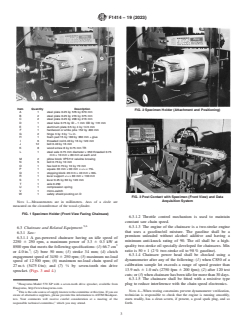
FIG. 3 Post Contact with Specimen (Front View) and Data
Acquisition System
NOTE 1—Measurements are in millimeters. Arcs of a circle are
measured on the circumference of the wood cylinder.
FIG. 1 Specimen Holder (Front View Facing Chainsaw)
6.3.1.2 Throttle control mechanism is used to maintain
constant saw chain speed.
5,6
6.3.1.3 The engine of the chainsaw is a two-stroke engine
6.3 Chainsaw and Related Equipment:
that uses a gasoline/oil mixture. The gasoline shall be a
6.3.1 Saw:
premium unleaded without alcohol additive and having a
6.3.1.1 A gas-powered chainsaw having an idle speed of
minimum anti-knock rating of 90. The oil shall be a high-
2250 6 250 rpm, a maximum power of 3.3 6 0.3 kW at
quality two-stroke oil specially developed for chainsaws. Mix
8500 rpm that meets the following specifications: (1) 66.7 cm
ratio is 50 + 1 (2 % two-stroke oil to 98 % gasoline).
or 4.0 in. ; (2) bore 50 mm; (3) stroke 34 mm; (4) clutch
6.3.1.4 Chainsaw power head shall be checked using a
engagement speed of 3450 6 250 rpm; (5) maximum no-load
dynamometer after any of the following: (1) when CS50 of a
speed of 12 500 rpm; (6) maximum no-load chain speed of
3 calibration sample lot exceeds a range of speed greater than
27 m ⁄s (5475 f ⁄m); and (7) ⁄8 by seven-tooth rim drive
13.9 m/s 6 1.0 m/s (2750 fpm 6 200 fpm); (2) after 120 test
sprocket. (Figs. 3 and 4.)
cuts; or (3) when chainsaw has been idle for more than 30 days.
6.3.1.5 The chainsaw shall be fitted with a resistive type
Husqvarna Model 570 XP with a seven-tooth drive sprocket, available from plug to reduce interference with the chain speed electronics.
Husqvarna, http://www.husqvarna.com.
NOTE 4—When testing constraints prevent dynamometer verification,
This is the sole source of supply known to the committee at this time. If you are
technician is responsible to check that the engine is running smoothly,
aware of alternative suppliers, please provide this information to ASTM Headquar-
ters. Your comments will receive careful consideration at a meeting of the starts readily, has a clean screen, if present, a good spark plug, and so
responsible technical committee, which you may attend. forth.
F1414 − 19 (2023)
6.4.3 The mounting mechanism of the chainsaw to the
bracket shall be fixed.
6.4.4 The guide bar falls perpendicular to the support axis
and exerts a static force of 15 N at the point of contact.
6.4.5 The vertical dropping distance to the point of contact
with foam is 50 mm (2 in.). The longitudinal axis of the guide
bar is virtually horizontal at the moment of contact (see Figs.
3 and 4).
6.4.6 A trigger release mechanism allows freefall without
initial acceleration (see Figs. 4 and 6).
6.5 Interfaced Data Acquisition System:
6.5.1 The cutting time between wires placed on the top and
bottom of the specimen is measured to 60.001 s.
6.5.1.1 These wires are connected to the circuitry.
6.5.2 The speed of the saw chain may be measured in metres
per second or feet per minute (63 %) by means of a magnetic
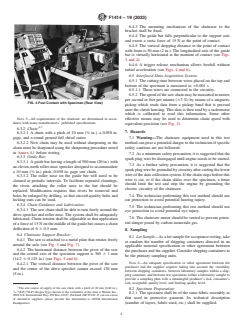
FIG. 4 Post Contact with Specimen (Rear View)
pickup which reads data from a pickup band that is pressed
onto the clutch housing. This data is then read by a tachometer
which is calibrated to read this information. Some other
NOTE 5—All requirements of the chainsaw are determined in accor- effective means may be used to determine chain speed with
dance with many manufacturers’ published specifications.
equivalent precision (see Fig. 3).
6,7
6.3.2 Chain:
7. Hazards
6.3.2.1 A chain with a pitch of 10 mm ( ⁄8 in.), a 0.058 in.
gage, and a round ground full chisel cutter. 7.1 Warning—The chainsaw equipment used in this test
method can pose a potential danger to the technician if specific
6.3.2.2 New chain may be used without sharpening or the
chain must be sharpened using the sharpening procedure noted safety cautions are not followed.
in Annex A1 before testing.
7.2 As a minimum safety precaution, it is suggested that the
6.3.3 Guide Bar:
spark plug wire be disengaged until engine needs to be started.
6.3.3.1 A guide bar having a length of 500 mm (20 in.) with
7.3 As a further safety precaution, it is suggested that the
an eleven-tooth roller-nose sprocket designed to accommodate
spark plug wire be grounded by circuitry after cutting the lower
a 10 mm ( ⁄8 in.) pitch, 0.058 in. gage saw chain.
wire of the data collection system. If the chain stops before this
6.3.3.2 The roller nose on the guide bar will need to be
wire is cut, or if the chain slides over the specimen, a timer
cleaned at periodic intervals. To facilitate repeated cleanings,
should limit the test and stop the engine by grounding the
the rivets attaching the roller nose to the bar should be
electric circuitry of the chainsaw.
replaced. Modification requires that rivets be removed and
holes be enlarged by drilling, so that aircraft-quality bolts and 7.4 The technician performing this test method should use
locking nuts can be used. ear protection to avoid potential hearing injury.
6.3.4 Chain Guidance and Lubrication:
7.5 The technician performing this test method should use
6.3.4.1 The saw chain shall be able to turn freely around the
eye protection to avoid potential eye injury.
drive sprocket and roller nose. The system shall be adequately
7.6 The chainsaw motor should be vented to prevent poten-
lubricated. Chain tension shall be adjustable so that application
tial danger posed by carbon monoxide gas.
of a force of 15 N on the middle of the guide bar causes a chain
deflection of 6 6 0.5 mm.
8. Sampling
6.4 Chainsaw Support Bracket:
8.1 Lot Sample—As a lot sample for acceptance testing, take
6.4.1 The saw is attached to a metal plate that rotates freely
at random the number of shipping containers directed in an
around the axle (see Fig. 5 and Fig. 7).
applicable material specification or other agreement between
6.4.2 The horizontal distance between the pivot of the saw
the purchaser and the supplier. Consider shipping containers to
and the central axis of the specimen support is 365 6 1 mm
be the primary sampling units.
(14.2 6 0.125 in.) (see Figs. 5 and 6).
NOTE 6—An adequate specification or other agreement between the
6.4.2.1 The vertical distance between the pivot of the saw
purchaser and the supplier requires taking into account the variability
and the center of the drive sprocket cannot exceed 130 mm
between shipping containers, between laboratory samples within a ship-
(5 in.).
ping container, and between test specimens within a laboratory sample to
provide a sampling plan with a meaningful producer’s risk, consumer’s
risk, acceptable quality level, and limiting quality level.
The sole source of supply of the saw chain with a pitch of 10 mm (0.40 in.),
8.2 Specimen Preparation:
⁄8, 72LP (73LP) Oregon Type, known to the committee at this time is Blount, Inc.,
8.2.1 The specimen shall be of the same fabric assembly as
4909 S.E. International Way, PO Box 22127, Portland, OR 97222. If you are aware
that used in protective garment. Its technical description
of alternative suppliers, please provide this information to ASTM International
Headquarters. (number of layers, fabric used, etc.) shall be supplied.
F1414 − 19 (2023)
Item Quantity Description
A 1 steel plate 0.25 by 576 by 670 mm
B 2 steel plate 0.25 by 216 by 375 mm
C 2 steel plate 0.25 by 208 by 216 mm
D 1 steel tube 0.75 by ID − 1 mm OD by 172 mm
E 1 aluminum plate 0.5 by 4 by 14.5 mm
F 1 hardwood or white pine 152 by 400 mm
G 2 hinge 3 by 3 by ⁄16 in.
H 1 foam pad 15 by 180 by 360 mm + glue
I 6 threaded rod 0.40 by 16 by 120 mm
J 12 bolt 0.40 by 16 mm
K 8 wood screw 8 by 0.75 mm TR
L 1 steel axle 0.75 mm diameter × 350 threaded 0.75 mm × 10 mm × 80 mm at each end
M 2 pillow block VPS112 valuline browing
N 5 bolt 0.75 by 10 mm
O 1 hex bolt 0.75 by 10 by 70 mm
P 1 square 30 mm × 90 mm × ⁄16 × 75L
Q 1 stopping block 20 mm × 40 mm × 60L
R 1 lever support ⁄16 × 80 mm × 130 mm
S 1 lever 0.25 by 60 by 120 mm
T 1 axle 0.250
U 1 compression spring
V 1 micro-switch
W 1 safety shield pivoting on D
NOTE 1—Measurements are in millimeters. Arcs of a circle are measured on the circumference of the wood cylinder.
FIG. 5 Chainsaw Support Bracket (Side View)
8.2.2 Four holes, 6 mm (0.25 in.) in diameter, shall be 8.3.2 Use at least three unconditioned specimens to deter-
punched into the specimen at the laboratory at the places mine CS50 of calibration pads.
specified. Use these holes to position and to fasten the
8.3.3 Use at least twelve unconditioned specimens and
specimen to the test apparatus. Construct a template for
twelve conditioned specimens if this test method is used to
consistency among specimens (Fig. 8).
determine the CS50 of performance pads.
8.3 Number of Specimens:
8.3.1 Use each specimen only once. Each leg of a paired
item can be considered a specimen.
F1414 − 19 (2023)
9.1.2 Stitch the inner pad material to the outer cover 25 mm
(1 in.) from the edge on all four sides.
9.2 Determine the accuracy of the test apparatus, before and
after each test lot, by verifying that the CS50 calibration
specimen is 13.9 m/s (2750 f/m) at 90°.
9.2.1 If CS50 deviates more than 61.0 m/s (200 f/m) the
saw chain must be resharpened to meet the specifications in
accordance with 6.3.2.
9.2.1.1 Any deviation in CS50 of 61.0 m/s (200 f/m)
requires that the problem be rectified and the test lot be redone
with the proper number of specimens.
10. Conditioning
10.1 The test specimen shall be subjected to three complete
rinse/agitation cycles in accordance with the following instruc-
tions:
10.1.1 A programmable front-loading washer/extractor shall
be used.
10.1.2 The rinse/agitation load shall be one half the rated
capacity of the washer. If ballast is needed to reach one-half
capacit
...